1. Floating wood slat panel behind the sofa
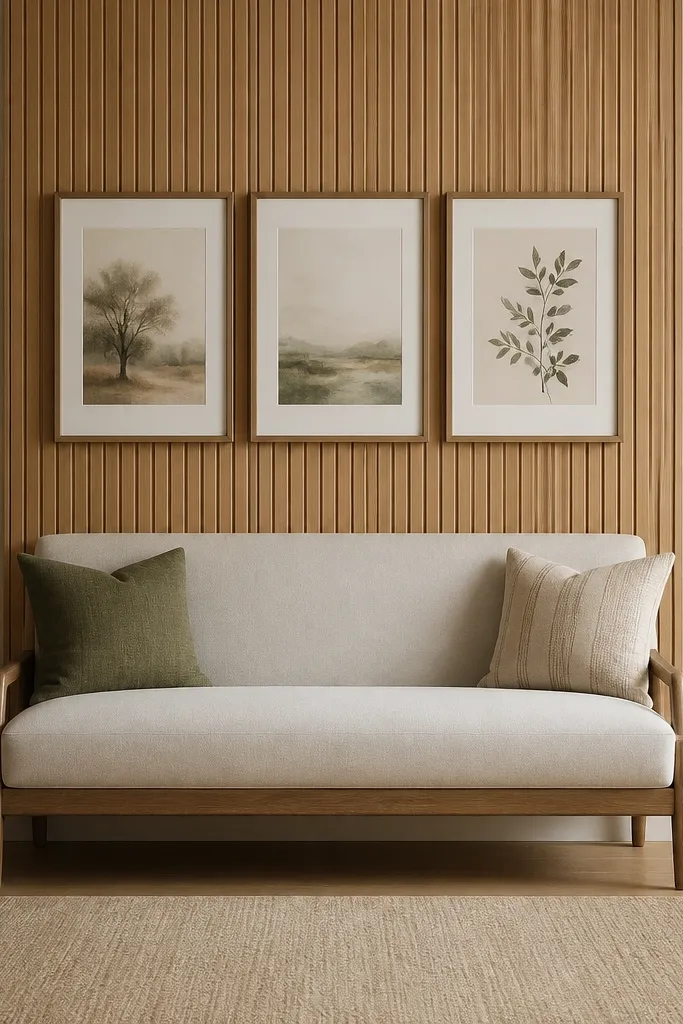
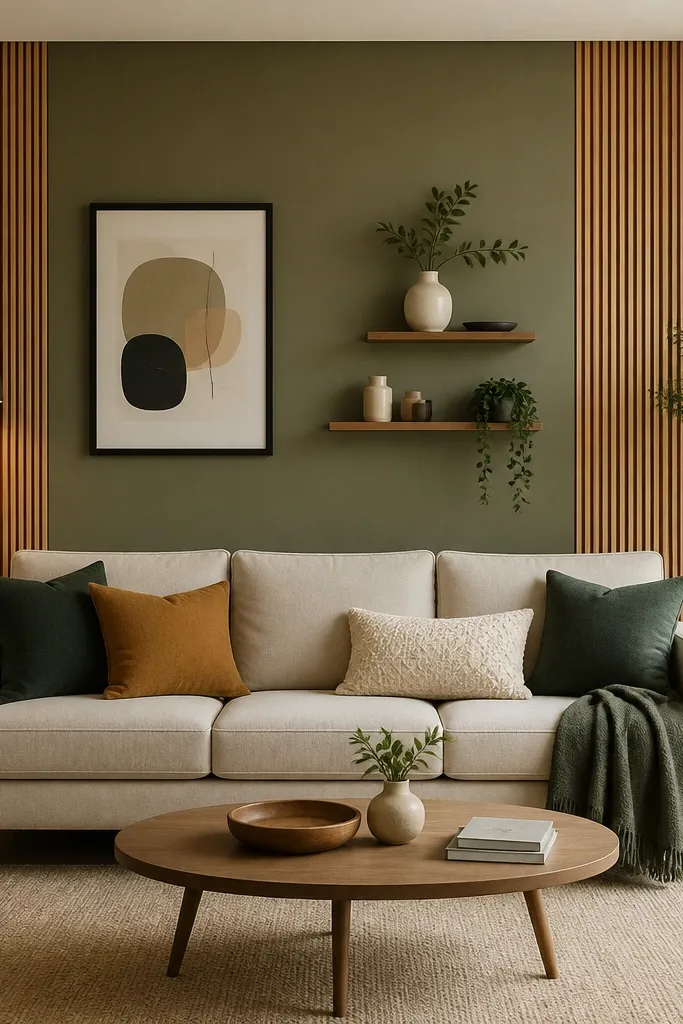
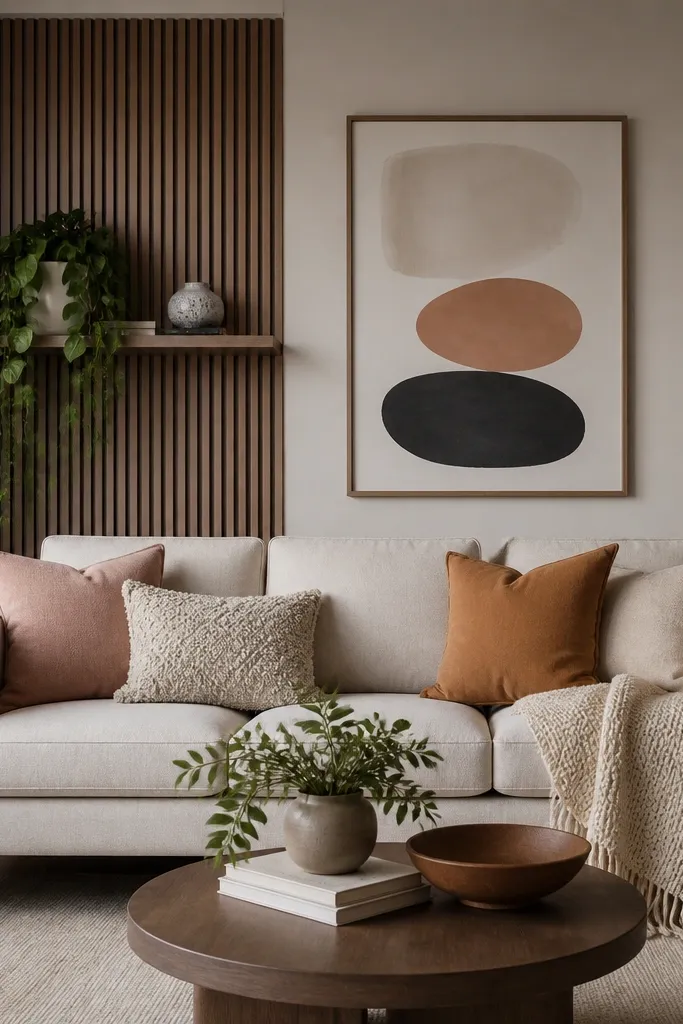
This layout makes the hall feel finished without adding clutter. Use horizontal slats in warm oak or walnut tone so they soften the hallway lighting and hide minor wall imperfections. The slat panel gives you a “hard” texture, while the framed prints add the gallery feel. It flatters most spaces because the slats add width and calm — especially helpful if your hallway is long and narrow. If your sofa is dark (charcoal, espresso), the lighter wood warms the scene; if your sofa is light, the wood adds structure so the wall doesn’t look blank.
Good to knowIf your hallway gets scuffs from bags, seal the slats with a matte clear coat so it wipes clean without shine spots.
Start by marking the sofa center line and mounting a slat panel that spans the sofa width plus 8 inches total, with the bottom of the slats about 10 inches above the sofa back. Use slats spaced 1.25 to 1.5 inches apart so the texture reads clearly at hallway distance. Paint or stain the surrounding wall in the same undertone family as the slats — I like warm greige or soft cream. Then hang two slim frames at eye level above the sofa, and place matching black sconces at each side edge of the panel, wired or plugged with cord covers if needed.
AvoidAvoid tiny slats that are too tight — they look like a craft project once you step back.
2. Oversized arched mirror with a slim console rail
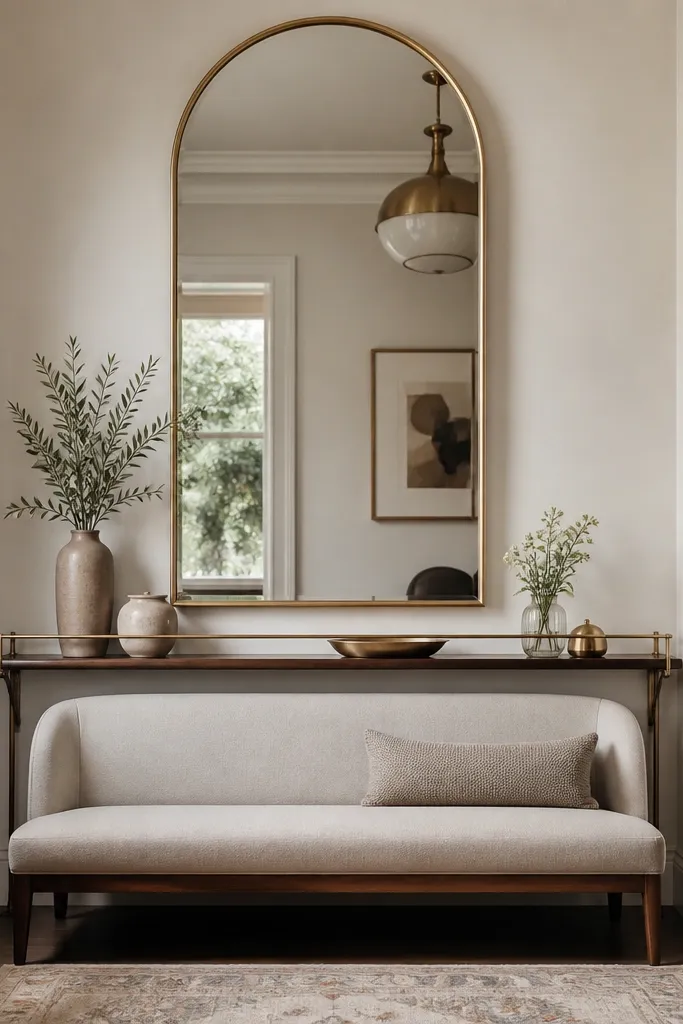
A mirror behind a hall sofa instantly fixes the “empty wall” problem and adds depth. Choose an arched shape because it echoes the curve of the sofa arms and makes the hallway feel softer. The thin gold frame keeps it from looking heavy, especially in narrow entries. This works best when your sofa back is low to medium and you want the wall to pull light across the corridor. If your skin tone reads warm (peachy undertones) or your decor uses brass, the gold mirror frame makes everything look cohesive under warm bulbs.
Good to knowUse warm white bulbs (2700K) in any sconces or ceiling lights; cool bulbs can turn gold frames green.
Hang the mirror so its center lands around 61 inches from the floor. Use mounting hardware rated for the mirror weight and keep the mirror width close to 60 to 70 percent of the sofa width. Add a slim console rail or ledge 6 to 8 inches above the top of the sofa cushions if you have space, or rest it at the same height as the sofa back for a clean line. Style with three items: one tall vase (8 to 10 inches), one candle in a glass holder, and one small tray that matches your frame metal.
AvoidDon’t place a wide, flat rectangle mirror over a curved-armed sofa — it looks mismatched from the doorway.
3. Picture ledge wall with layered frames in two sizes
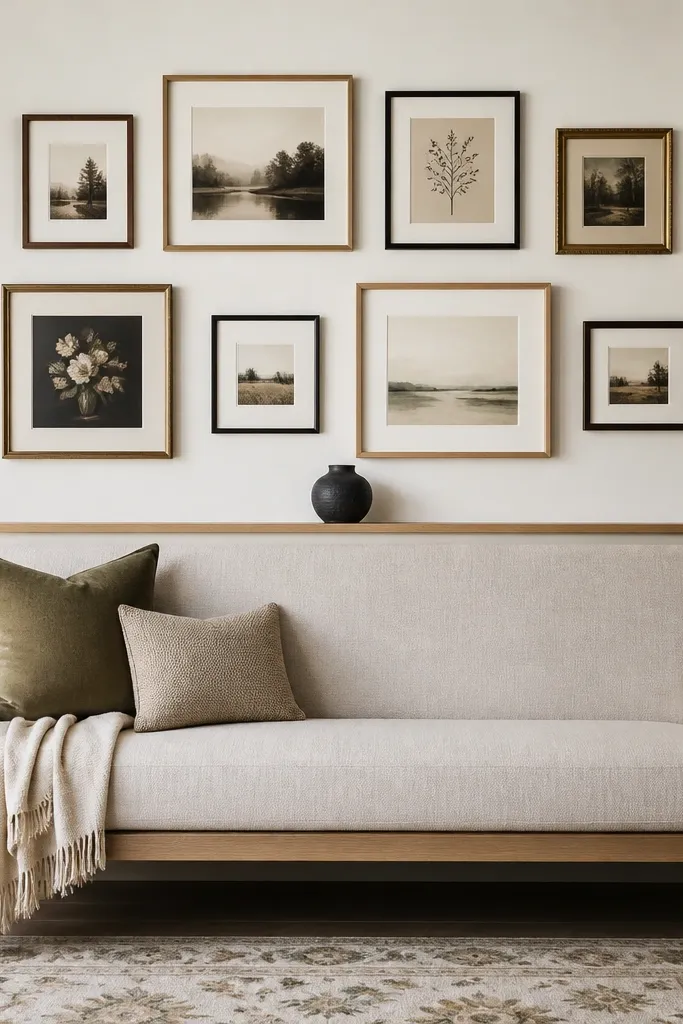
This is the most forgiving option if you like changing decor seasonally. A picture ledge gives you a bottom “anchor” and keeps art from drifting too high. Use two frame sizes so the wall looks planned: larger frames as the main anchors and smaller frames as supporting pieces. This flatters everyday living because you can swap photos, prints, and small objects without remounting everything. If you have kids or frequent guests, the ledge also helps you keep styling tidy instead of letting loose decor creep across the sofa.
Install a picture ledge that runs just wider than the sofa, typically sofa width plus 4 to 6 inches. Position the ledge so the top sits about 2 to 4 inches above the sofa back cushion line. Above, create a grid: place two large frames centered (each about 18x24 inches) and two to four smaller frames around them, keeping the vertical spacing consistent at roughly 2.5 to 3 inches between frame edges. Finally, style the ledge with a tray centered, then two small objects at the ends so the middle stays visually calm.
Use museum glass or acrylic for frames if the hallway gets bright sun; glare makes frames look cheap fast.
Avoid mixing frame finishes in every piece — pick one metal finish and repeat it.
4. Wainscoting panels with a centered gallery rail
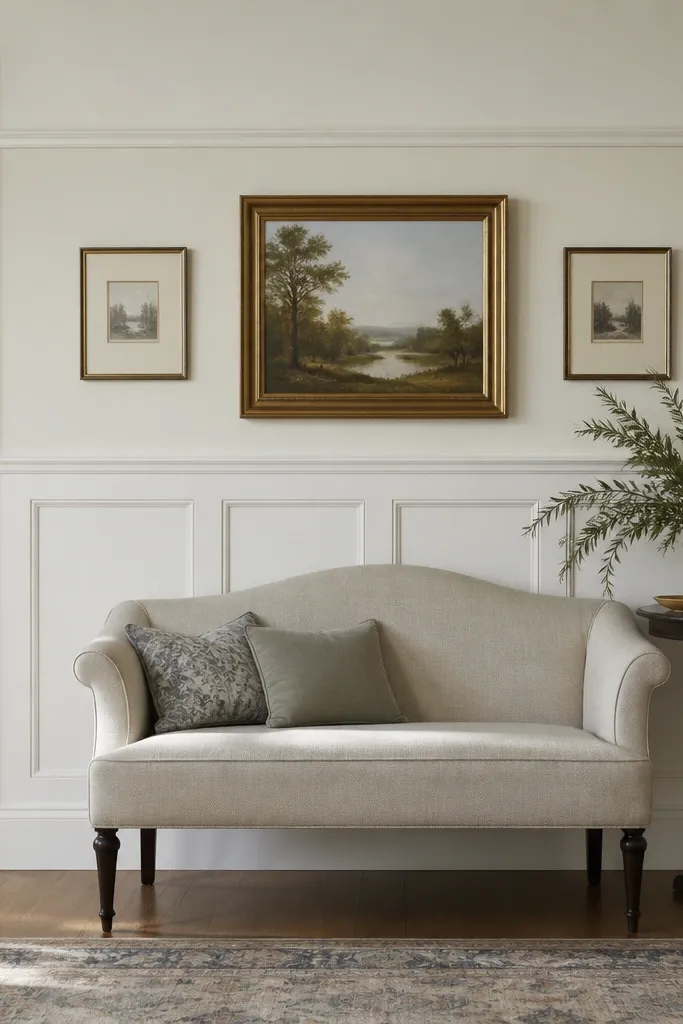
Wainscoting makes a hall sofa wall look like it belongs to a real home, not a rental. The panel lines add structure and hide small dents from life. Paint it crisp white or soft ivory, then mount a picture rail so the art hangs straight and stays aligned. This works especially well with sofas that have rolled arms or classic silhouettes. If your hallway gets dim, the white panels bounce light and keep the space from feeling heavy.
Measure your wall height and plan the panel height first. A common setup is 36 to 42 inches for the lower wainscot with the upper section for art and frames. Install chair rail or a picture rail around the top of the wainscot so frames hang at a consistent line. Center the main artwork above the sofa back at about 61 inches to the artwork’s center. Use two smaller prints to the left and right, leaving 4 to 6 inches between the larger frame edge and the smaller frames for breathing room.
Use a semi-gloss paint on the wainscot panels so you can wipe fingerprints from hallway traffic.
Don’t go too dark on wainscoting in a narrow hall — it shrinks the space visually.
5. Fabric wall paneling in a warm linen tone
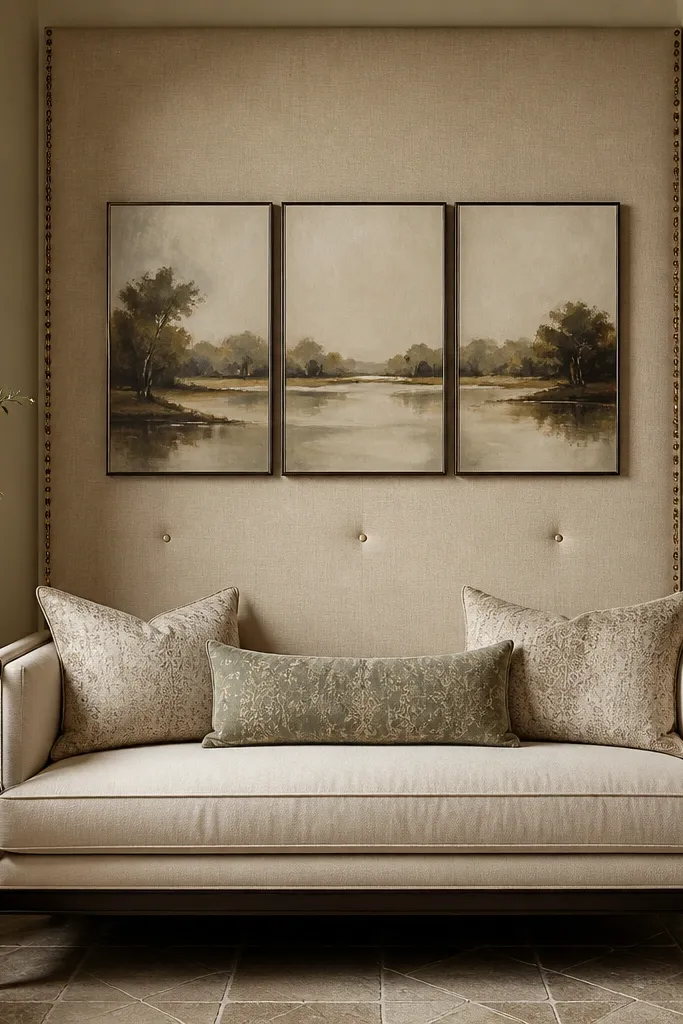
A fabric panel behind a sofa back makes the hallway feel cozy and quiet, like you turned down the noise. Choose a warm linen or oatmeal fabric with a matte weave; it absorbs light instead of reflecting it harshly. Add subtle tufting or a grid of buttons so the texture shows even from across the hall. This looks best with neutral sofas (cream, tan, light gray) and works well for people who want a softer look without wallpaper seams. If you have pets, the fabric also hides minor wall imperfections better than glossy finishes.
Start with a panel sized to the sofa width plus 6 inches total and height from about 10 inches above the sofa back to around 4 inches below the ceiling. Build it with a rigid backing (MDF) and wrap the linen taut, then staple on the back. Add nailhead trim along the edges or a simple centered button line if you want visual interest. Hang a triptych above the panel, keeping the center piece aligned with the sofa center line. Style the sofa with one textured cushion in a darker tone (camel or cocoa) so the wall panel and sofa look like one story.
Use a removable fabric cover if you can — a dry-cleanable slip makes life easier when the hallway gets messy.
Avoid shiny satin fabric — it looks slick and shows every light glare in hallways.
6. Tall vertical slat wallpaper strip with a centered art print
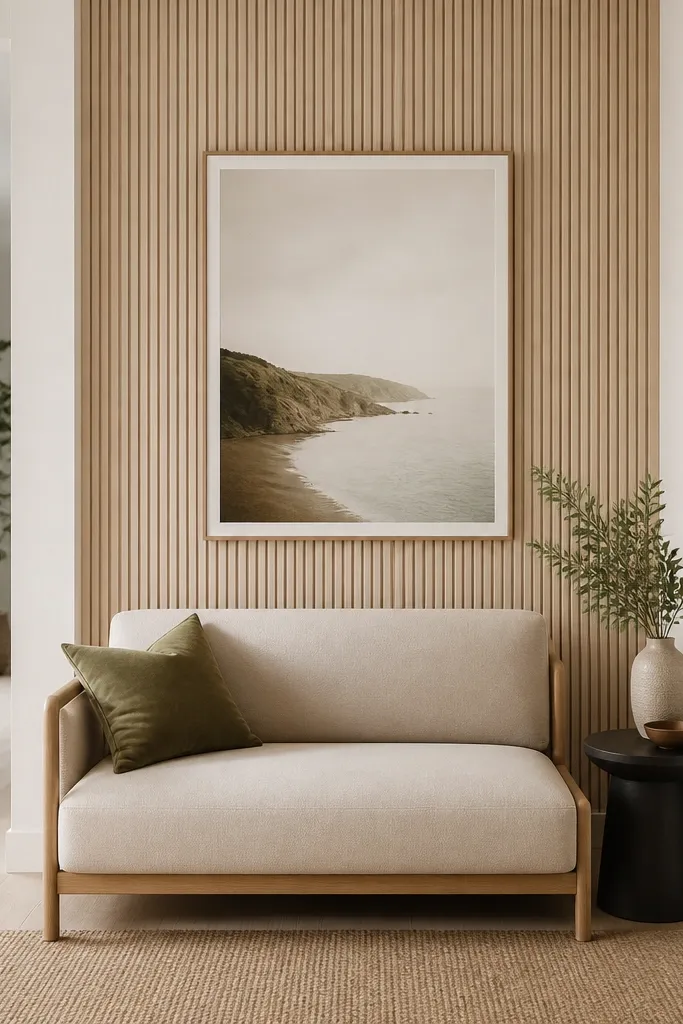
Vertical lines make ceilings feel taller, and that’s exactly what you want in most hallways. Use wood-look wallpaper with vertical slats for the “hard texture” layer without construction work. Keep it as a centered strip rather than covering the whole wall, so the rest can stay a simple washable paint. This flatters small spaces because it directs the eye up and reduces the feeling of blank wall. If your sofa is low and long, the vertical strip balances the horizontal shape and gives the wall a clear focal zone.
Paint the wall first in a washable eggshell (soft warm gray or cream). Apply wallpaper strip width at about 65 to 70 percent of the sofa width, centered on the wall. Start the strip so the bottom edge lands 10 to 12 inches above the sofa back, leaving a clean transition zone. Hang one large art print above at 61 inches center, using a frame that matches your hardware or mirror metal. Keep the palette to two tones: the wallpaper wood tone plus one accent color from the art.
Buy extra rolls and label them; matching pattern at the seam is where mistakes happen.
Avoid wallpaper with high-contrast knots if your hallway has bright lighting — the busy pattern reads messy fast.
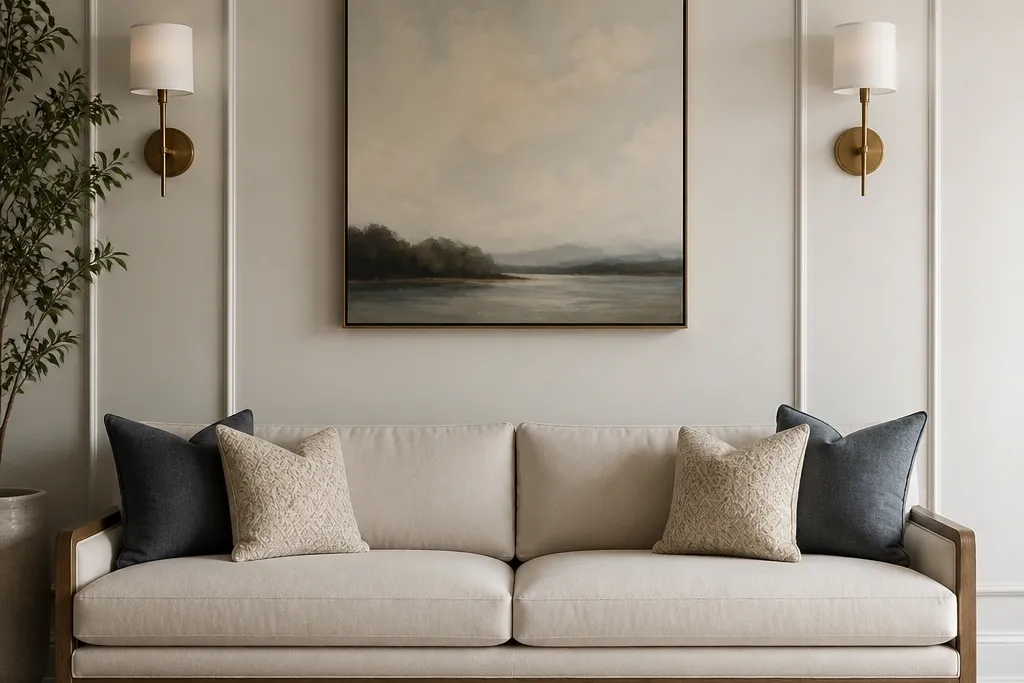
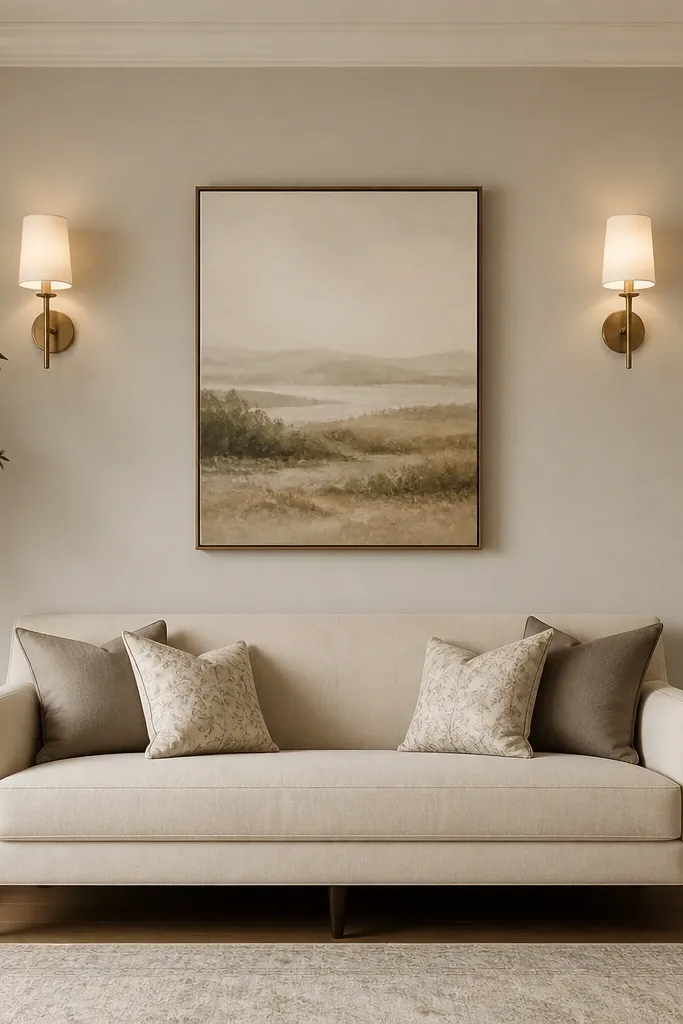
7. Symmetrical sconces with a centered large framed artwork
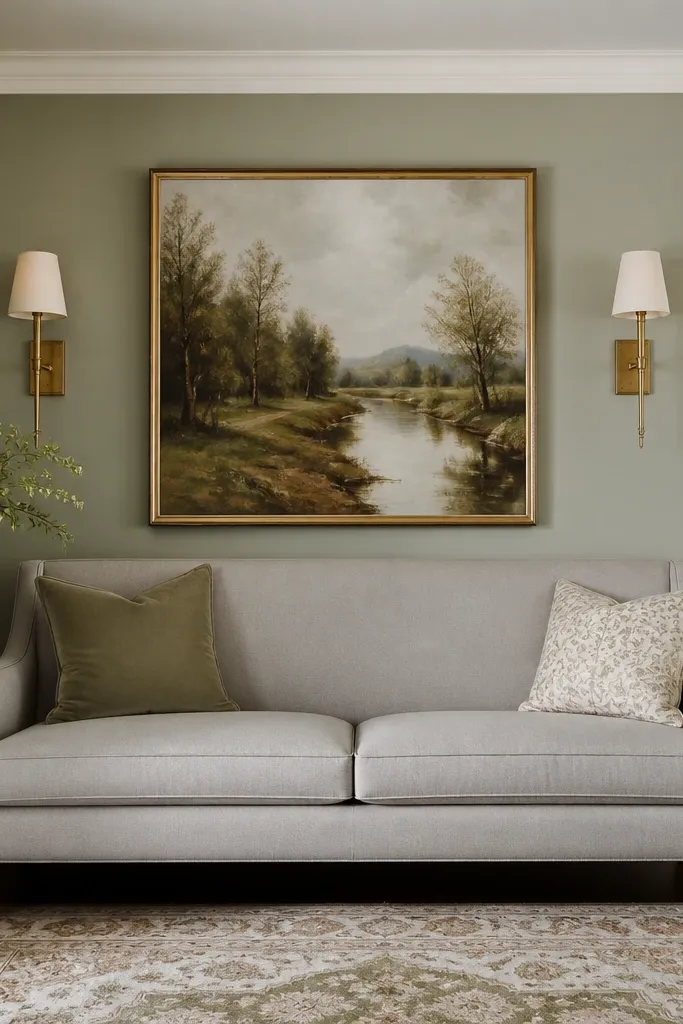
Symmetry makes a hall feel orderly, and that matters when people are walking through constantly. Two matching sconces create a built-in “frame” around the art, so your eye lands on the center every time. Use sconces with frosted or linen shades so the light stays soft, not harsh. This design flatters medium to dark sofas because the wall color and warm light add depth. If you have a long hallway, symmetry also helps the space feel less chaotic and more intentional.
Pick sconces that mount at 66 to 68 inches from the floor to the bottom of the shade. Center your large framed artwork behind the sofa at 61 inches center, then place the sconces so their inner edges line up roughly with the outer edges of the frame. Paint the wall in a soft color that matches the sofa undertone; sage works with gray sofas, warm greige works with tan sofas. Choose one frame finish — black or aged brass — and stick with it for any small accents on the sofa.
Use smart bulbs and set a warm scene for evenings; the wall art looks better when the sconces warm up.
Don’t mount sconces too high — if the shades sit above eye level, the wall looks unfinished.
8. Open shelving back wall with books and low baskets
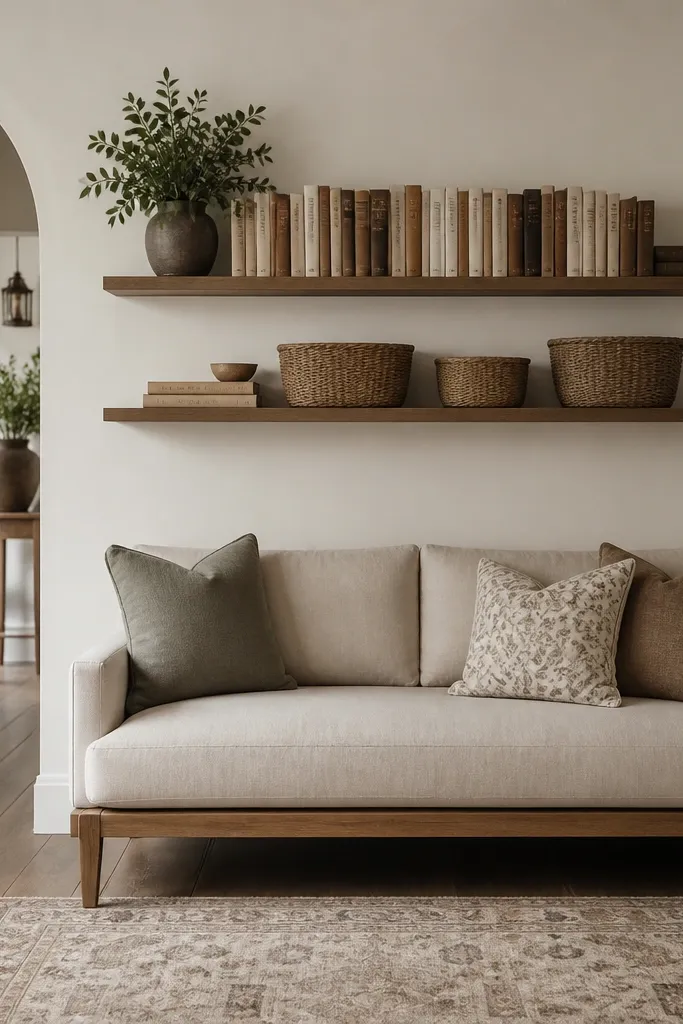
Open shelving gives you function right where people see it, and it keeps the sofa back wall from feeling like a dead zone. Use shallow shelves so the wall doesn’t look bulky in a narrow hall. Add books for vertical rhythm, then add woven baskets to soften the look and hide smaller items. This works best if you already own a few books or you’re willing to style them with color spacing. It also flatters tall, narrow sofas because shelves add height without overwhelming the floor.
Good to knowColor-stack books in groups of three — one light, one medium, one dark — so it looks intentional even when you change titles.
Install shelves that are about 8 to 10 inches deep, positioned so the bottom shelf sits around 8 to 10 inches above the sofa back. Keep the shelf run within the sofa width plus 6 inches total. Style the shelves in a simple pattern: alternate one book stack with one basket, and leave a little negative space between clusters. Place a small framed print between shelf sections or hang it directly above the sofa back at 61 inches center. Use one basket material like natural rattan across both shelves for cohesion.
AvoidAvoid shelves packed tight edge-to-edge; it reads cluttered from the doorway.
9. Shiplap-inspired board and batten with a fabric runner strip
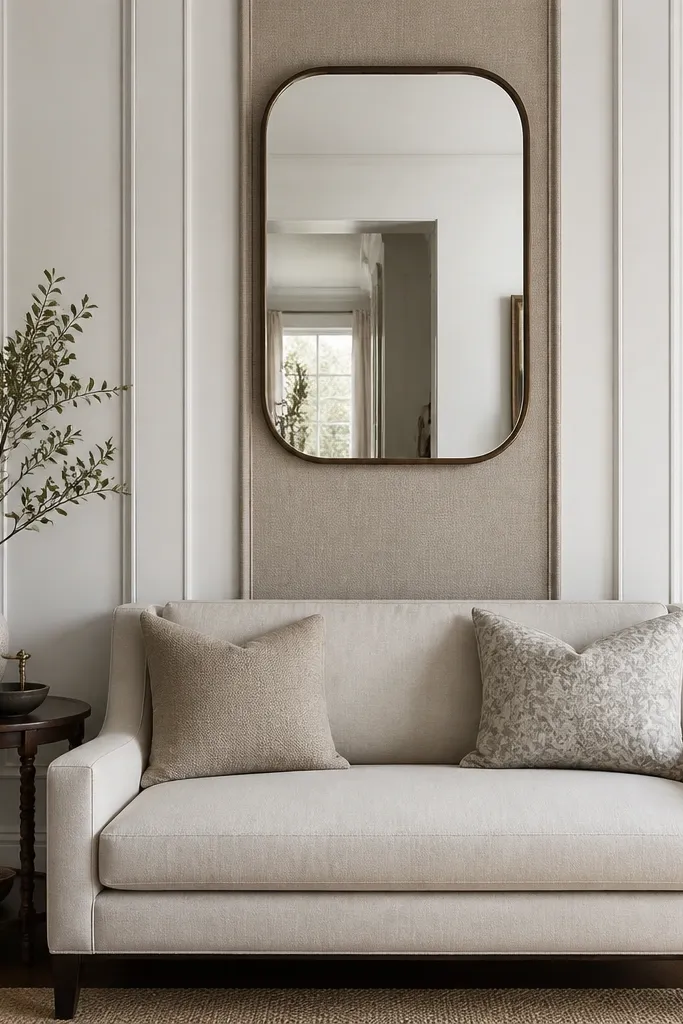
Board and batten adds strong vertical structure, and the fabric runner makes it softer. The runner is the secret in a hallway because it hides the “flat wall” effect and gives you a warm texture that looks good in every season. Paint the board and batten in a matte off-white so the shadows in the grooves stay crisp. This works well with sofas that have simple lines because the wall does the decorating. If your hallway lighting is cool, the fabric runner warms the overall feel.
Plan batten spacing around 12 inches center-to-center for a clean look, then run vertical battens centered behind the sofa. Use board and batten height so the lower boards start about 14 inches above the floor and stop around 8 inches below the ceiling. Cut and mount a fabric runner panel centered, about 18 to 24 inches wide and tall enough to cover most of the sofa back area. Hang a round or oval mirror above the runner at 61 inches center, keeping it one size larger than the runner width. Style the sofa with a single throw in a matching fabric family (linen or cotton blend).
Use foam-backed fabric for the runner so it doesn’t look wrinkly or wavy on the wall.
Avoid glossy paint on board and batten; it shows roller marks and looks cheap in hall lighting.
10. Gallery wall with three different frame colors and a black mat
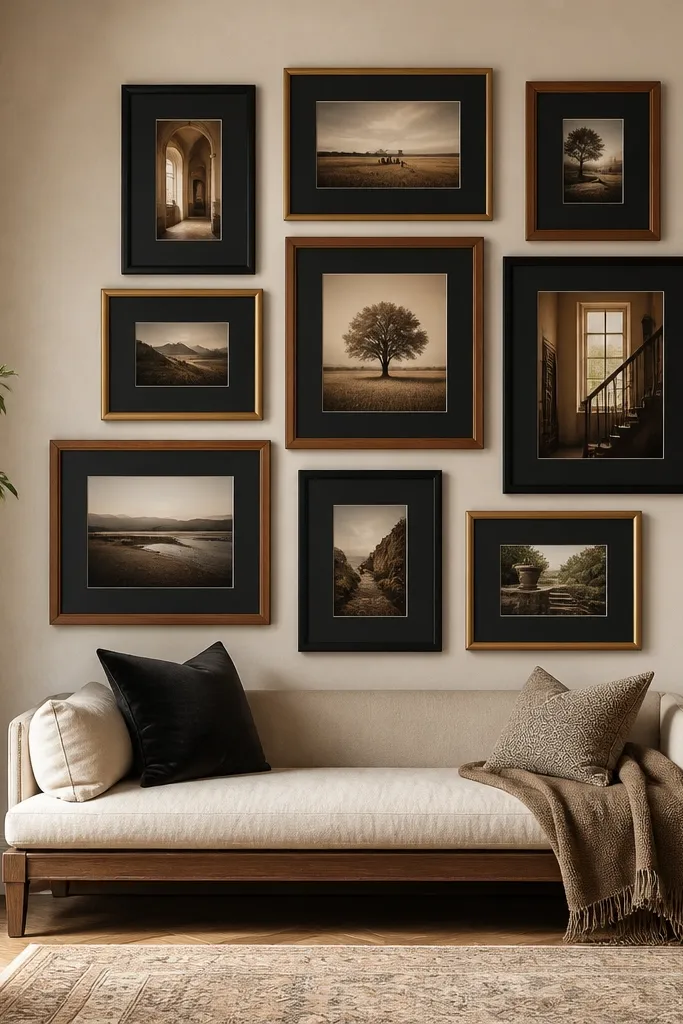
This is the “curated but not precious” look I keep coming back to. The trick is using one mat color — black — across all frames, even if frame metals differ. That makes the wall feel designed instead of random. Pick three frame colors that repeat in the room: black for hardware, warm wood for flooring tones, and brass for lighting. This works with almost any sofa color because the mat and frames sit on top as a layer. If your hallway furniture is mixed-material (wood legs plus metal accents), this design makes that mix look intentional.
Choose a frame group that spans the sofa width plus 10 inches total. Arrange one large piece centered at 61 inches center, with two medium frames flanking it and two smaller frames above corners. Keep the gaps between frames at about 2 inches using spacers or by measuring before mounting. Use a black mat for every frame so the artwork edges line up visually. Style the sofa with only one supporting accent: a single black ceramic vase or a brass tray to echo the frames.
Dry-fit the frames on painter’s tape first and step back every 3 minutes; hallway perspective changes how spacing reads.
Avoid white mats with bright hallway light — they can wash out the art and look flat.
11. Oversized fabric curtain panel wall for a soft backdrop
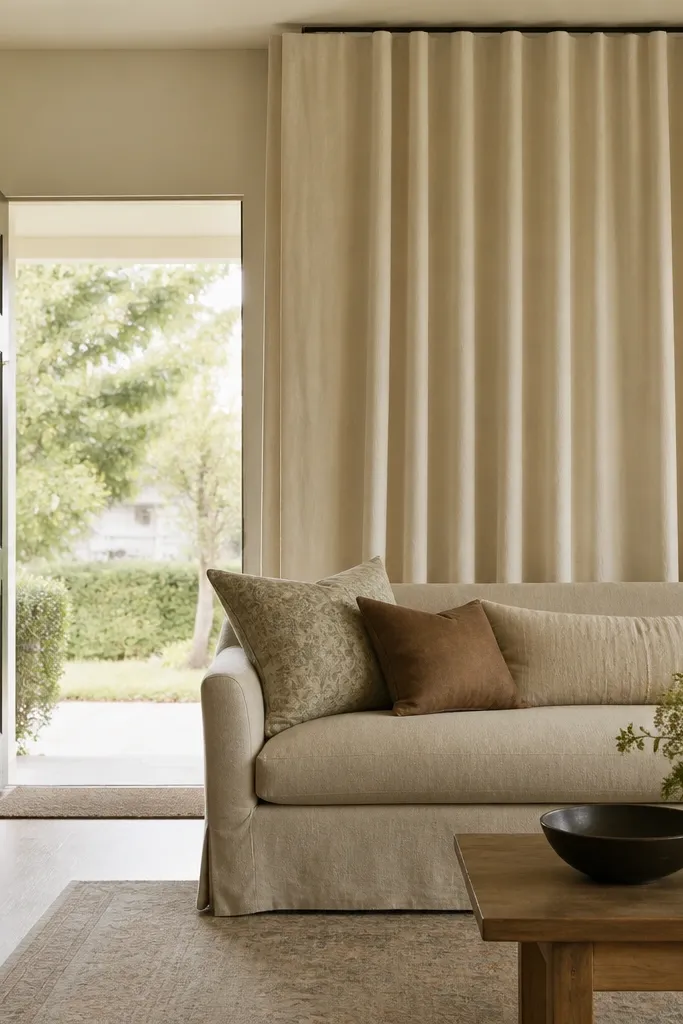
Curtain fabric behind a sofa back is a sneaky way to make a hallway feel more expensive without building anything. Thick linen or a linen-cotton blend looks tailored and hides wall flaws. The curtain also gives you flexibility for seasonal styling: swap tiebacks in summer for a lighter feel, then switch to darker tiebacks in winter. This works best with a hall sofa that has a low back or straight arms, because the curtain needs a clean line behind it. In houses with echo-y hallways, it even makes the space feel quieter.
Mount a ceiling track or rod 4 to 6 inches above the sofa back height so the curtain hangs from above the visual center. Use one continuous panel wide enough to cover the sofa width plus 6 to 10 inches on each side. Hang so the bottom reaches just above the floor or stops 1 to 2 inches above, depending on how busy your hallway is. Style with a centered large artwork above the curtain or skip art entirely and place a single mirror above. Tie back using a fabric band at about mid-height of the sofa back so the curtain looks intentional.
Iron the curtain once after hanging; hallway light shows wrinkles immediately.
Avoid thin sheers — they look like you ran out of fabric and the wall stays visually exposed.
12. Painted half-wall panel with a contrasting color block
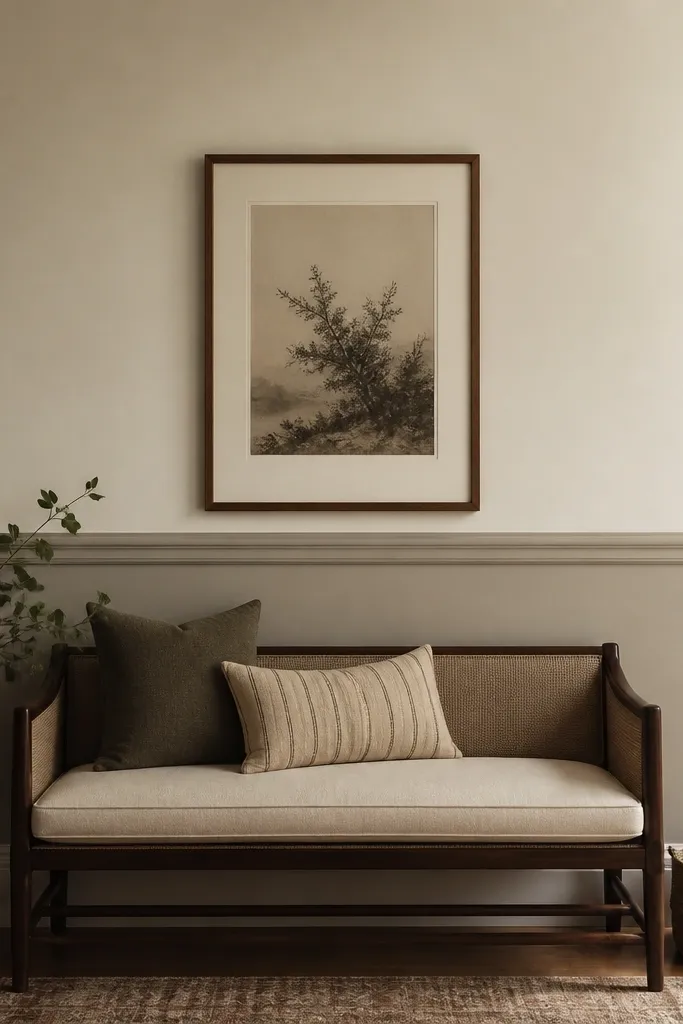
A two-tone wall is the simplest way to make the sofa back area look designed year round. Paint creates a clean boundary that makes the sofa feel anchored, and it’s easy to refresh later. Choose one warm neutral and one slightly deeper neutral so it doesn’t look like a kid’s craft. This works with any sofa color because the wall color does the heavy lifting. If you have artwork that’s colorful, the two-tone wall keeps it from fighting with the sofa.
Good to knowIf you’re unsure on the shades, buy two sample pots and paint 2-square-foot test blocks on the wall, then compare at night under hallway lights.
Tape a horizontal line behind the sofa at about 48 to 52 inches from the floor, then paint the lower section first. Use painter’s tape and keep the line crisp — press the tape edges with a credit card so paint doesn’t bleed. Let the paint cure fully before removing tape, then re-touch the edge with a small angled brush. Place your main framed art centered at 61 inches center, with the frame matching the room’s metal tones. Style the sofa with two objects only: one tray on one side and one tall candle on the other.
AvoidAvoid high-contrast bright colors in small halls — they turn the sofa wall into a distraction.
13. Stone-look peel-and-stick panel with a single statement mirror
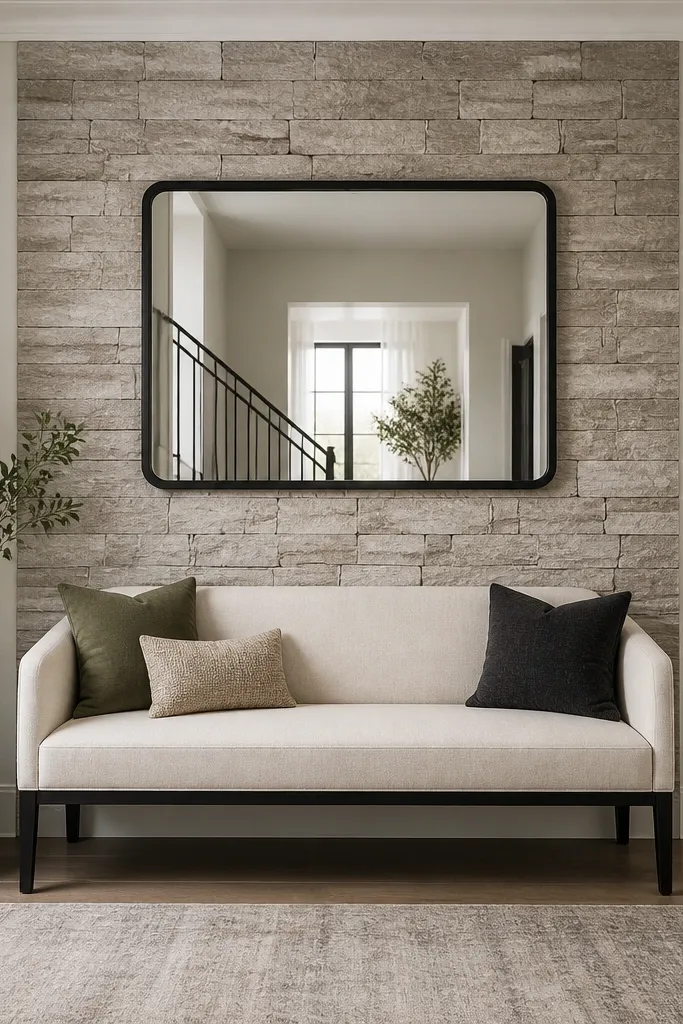
Stone-look panels add texture without construction, and they make a hallway feel grounded. I like the look behind a sofa because it gives you depth behind the seat without adding bulky furniture. Choose a neutral stone tone like warm limestone with subtle gray veining so it doesn’t fight with wood floors. This works best with modern or transitional sofas and with black or dark metal accents. If your hallway gets lots of daylight, the stone texture stays interesting even when you don’t change decor.
Clean the wall thoroughly, then apply peel-and-stick panel sections centered on the wall behind the sofa. Cover the area from about 10 inches above the sofa back up to around 18 to 20 inches tall, leaving space for art. Trim edges with a sharp utility knife and use a straight metal ruler for clean lines. Mount a statement mirror above at 61 inches center — rectangular with a black frame looks sharp with stone texture. Style the sofa with a single oversized ceramic bowl or tray so the wall texture stays the star.
Use a hair dryer on low heat to help stubborn edges stick flat around corners and seams.
Avoid glossy stone-look panels; they throw glare and look plastic fast.
14. Built-in look with a faux frame border around the sofa zone
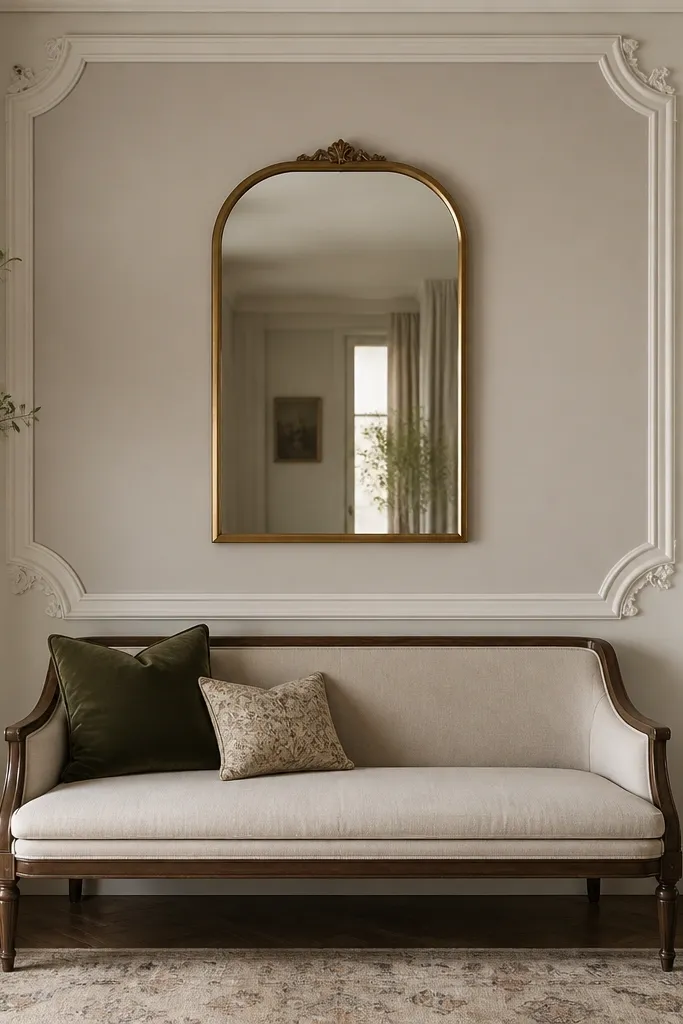
A faux frame border makes a plain wall look like it has built-ins. The border creates a “stage” for the sofa back wall so the eye has a clear shape to follow. I like this when you rent or when you don’t want to commit to full wallpaper coverage. It flatters smaller hallways because the framing lines add structure without adding volume. If your sofa has clean, modern lines, the frame border makes it feel designed and intentional.
Good to knowPaint the trim and wall together in one session if you can; it helps the sheen match at the border line.
Measure the sofa width and create an inner rectangle that’s sofa width plus about 10 inches total, centered on the wall. Use trim boards or pre-primed MDF strips painted the same color as the wall’s trim — usually soft white. Build an outer border that sits around the sofa back area and leaves 6 to 10 inches above and below for breathing room. Install a mirror inside the frame at 61 inches center, or place two medium prints if you prefer art. Keep the sofa styling minimal: one tall element and one low tray so the framed wall stays clean.
AvoidAvoid thick, chunky trim in narrow halls — it makes the wall feel smaller.
15. Macrame and wood dowel art cluster
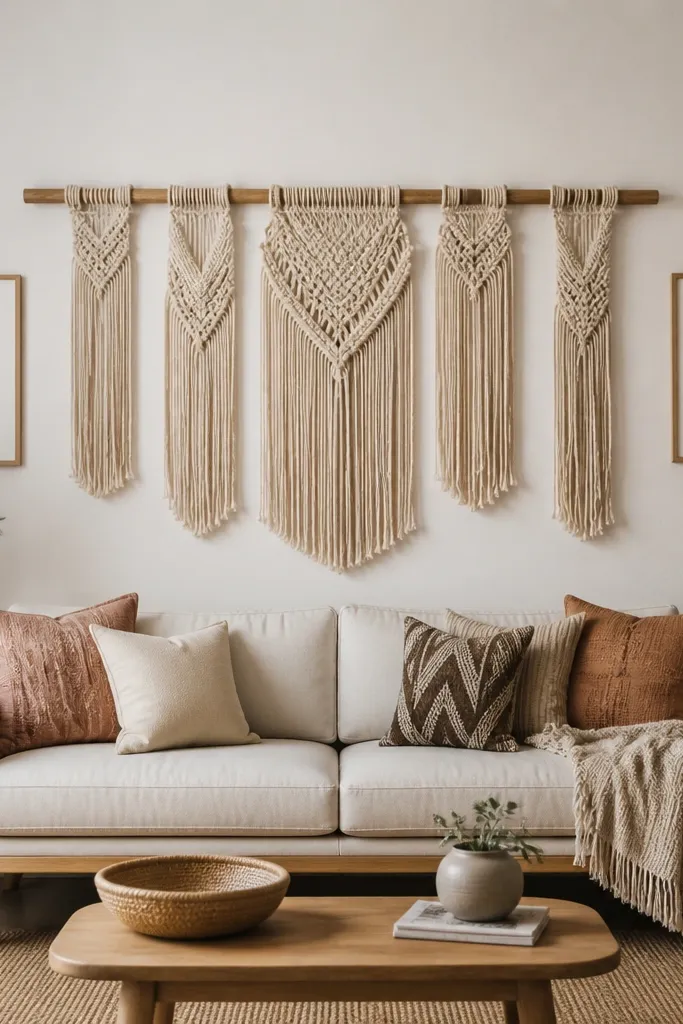
If your hall feels too stiff, fiber art softens it fast. Macrame over a sofa back wall brings texture that reads warm even when you keep colors neutral. Use natural cotton or cream rope so it doesn’t look beachy or costume-like. This works great with light wood floors, rattan accents, and sofas in oatmeal, camel, or light gray. It also flatters people who like a cozy look but don’t want a full gallery wall.
Good to knowDust macrame with a soft brush attachment before styling; hallway air makes fibers catch dust quickly.
Mount a sturdy wood dowel across the wall centered behind the sofa, with its ends aligned to the sofa outer edges plus 3 inches each side. Hang two larger macrame pieces in the center and one smaller on each side, keeping the total width within the sofa zone. Place a small framed print at 58 to 60 inches center on both sides to balance the hanging texture. Style the sofa with a single woven basket or rattan tray so the fiber theme repeats. Keep the rest of the decor smooth — ceramic, linen, or wood — so the macrame stays the focus.
AvoidAvoid black macrame in small halls; it turns into a shadow mass behind the sofa.
16. Metal grid panel with framed botanical prints
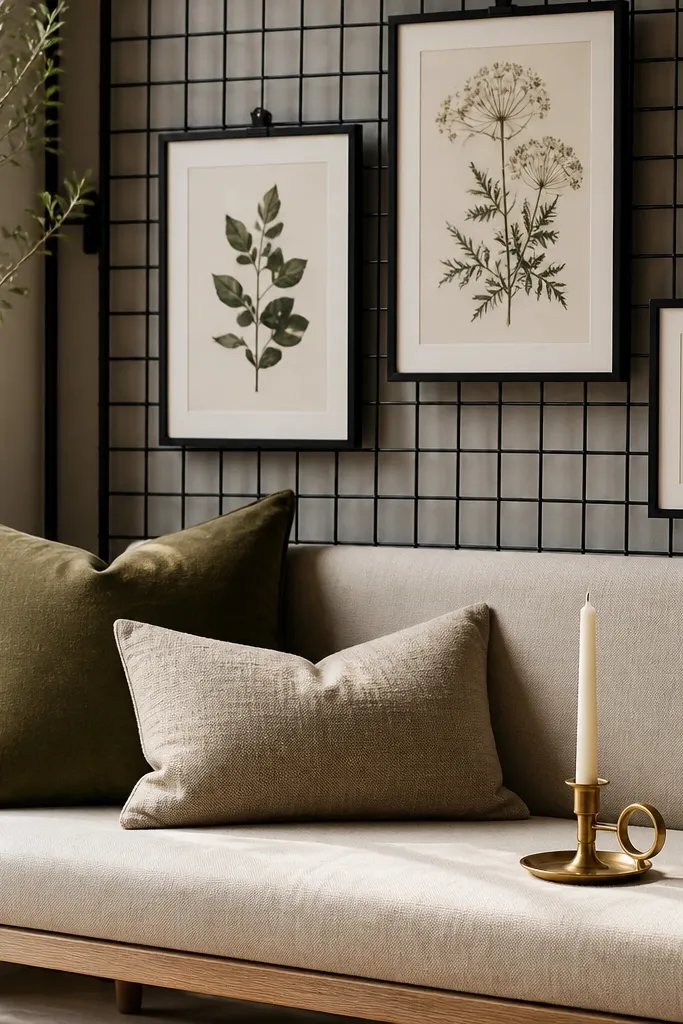
A metal grid panel makes the sofa back wall look architectural, and it’s surprisingly clean-looking when you keep the palette tight. Use matte black grid with a few framed botanical prints so the wall feels intentional instead of artsy-chaotic. This works best with light walls and sofas in cream, taupe, or light gray. The grid also helps you place frames at consistent spacing without measuring every time. If your hallway has lots of straight lines (doors, trim), the grid adds modern structure.
Mount the grid panel so it spans the sofa width plus 6 inches total, centered. Place it so the bottom sits about 12 inches above the sofa back. Pin or mount 5 to 7 framed prints, with one large botanical centered at 61 inches center. Keep all frames the same finish and size ratio to avoid visual noise. Style the sofa with one brass element and one black element, then stop — the grid already gives you texture.
Use thicker paper prints or art on board so the framed edges look crisp in hallway light.
Avoid mixing glossy and matte frames; the reflections look messy on the grid.
17. Tall cabinet backdrop with glass doors and warm interior lighting
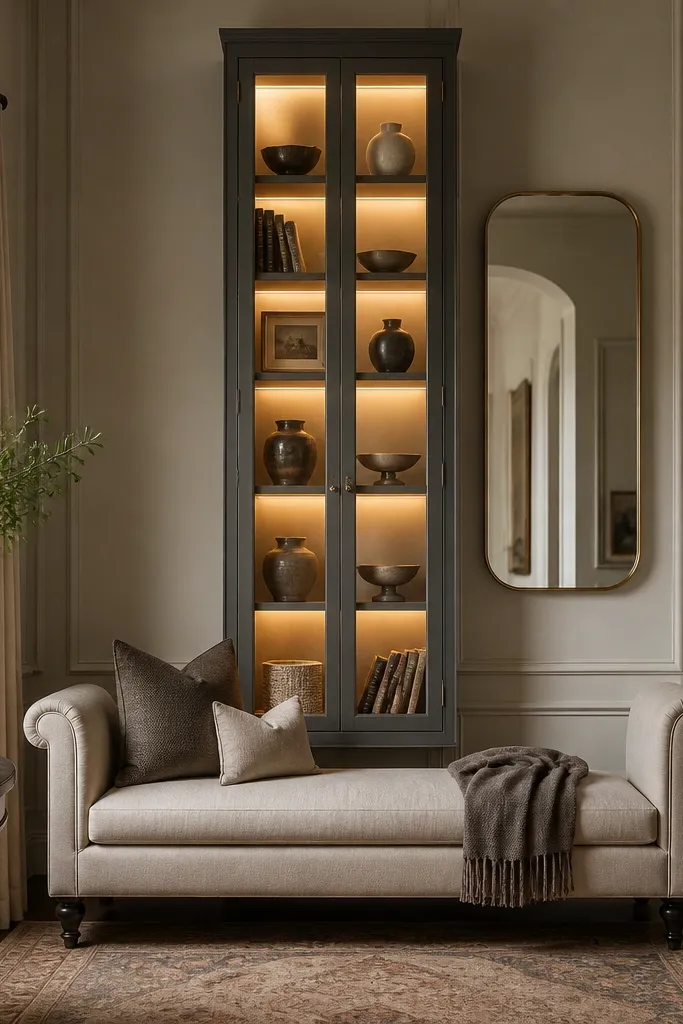
A glass-front cabinet turns the sofa back wall into a functional display. The warm interior lighting makes the hallway feel inviting even on dark mornings. Choose a cabinet in white oak or painted light wood so it doesn’t overpower the hall. This works best when your hallway is wide enough to handle a tall unit and when you have small decor you actually want to display. If your sofa is neutral, the cabinet gives you color and depth without needing more wall art.
Good to knowUse warm white LEDs around 2700K and a dimmer so the cabinet doesn’t look harsh at night.
Pick a cabinet width that matches the sofa width minus about 4 to 8 inches, so it doesn’t stick out past the sofa footprint. Place it centered behind the sofa and mount it level, then add warm LED strips inside the glass shelves. Install a mirror above the cabinet at 61 inches center to bounce light back into the hall. Style inside with three categories: one set of books stacked horizontally, one row of glass bottles, and one basket for small items. Keep the cabinet shelves about 60 percent full so it looks curated, not packed.
AvoidAvoid frosted glass if you want to see details — frosted makes everything inside look dull.
18. Layered peel-and-stick wallpaper panels with a centered gallery mirror
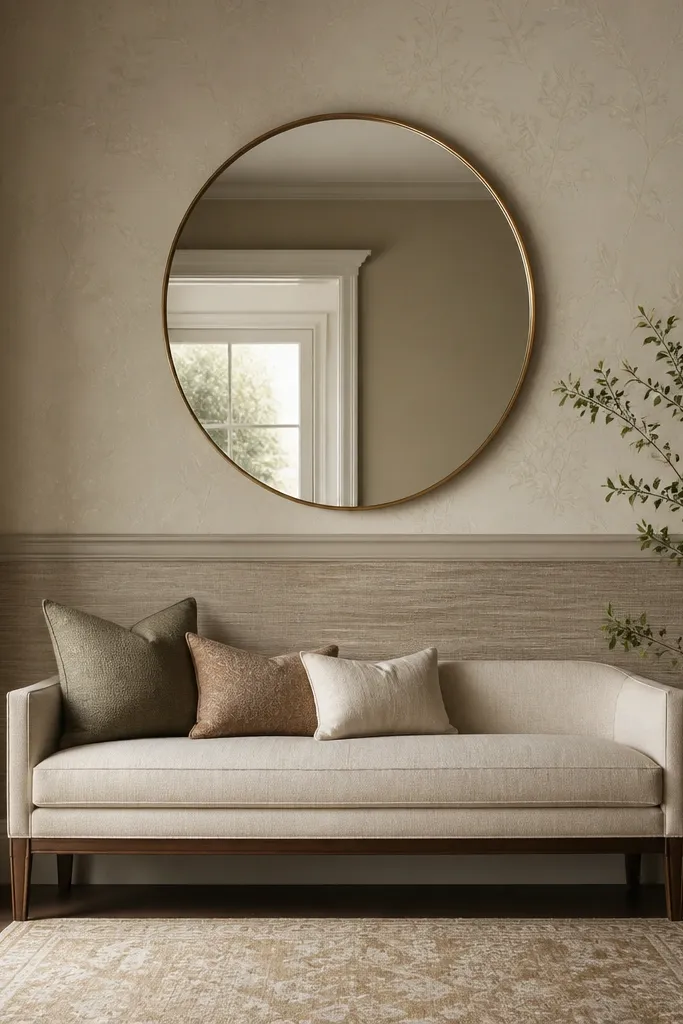
This is the “designer wall” look without the full commitment of wallpapering the entire hallway. Layered panels let you control where the pattern shows, so it doesn’t overwhelm a narrow space. Use one subtle pattern for the upper area and a texture-neutral for the lower area so the wall stays calm. This flatters sofas in solid colors because the wallpaper gives the wall movement. If you change seasonal pillows, the wall still looks cohesive because the pattern is controlled and not all-over.
Good to knowPress seams with a plastic seam roller and work slowly; hallway walls show bubbles more than living rooms.
Choose two peel-and-stick wallpapers: one with a small scale pattern and one with a neutral texture or tone-on-tone design. Apply the lower panel first, starting about 10 inches above the sofa back and ending around 10 inches below the art height zone. Apply the upper panel centered above it, aligning seams with a consistent vertical line on the sofa center. Hang a round mirror at 61 inches center so it visually ties the two wallpaper zones together. Style the sofa with two cushions that pull a color from the wallpaper and one solid cushion that matches the wall base color.
AvoidAvoid big floral all-over wallpaper in hallways — it reads busy when you pass quickly.
19. Stoneware plates on a low wall ledge
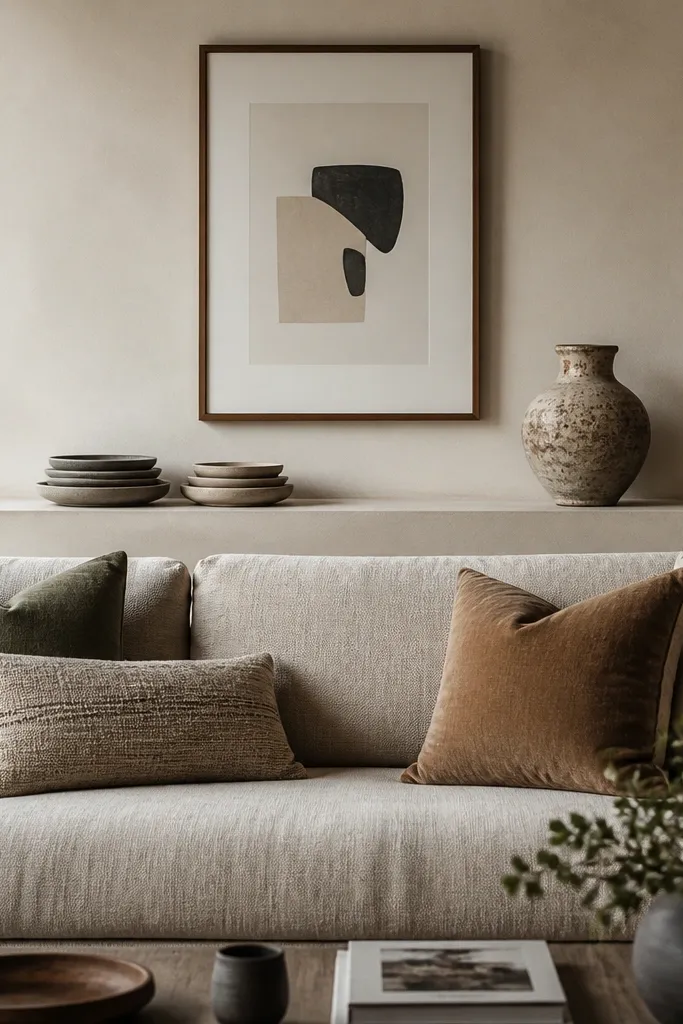
Plate styling looks surprisingly clean in hallways when you use it intentionally. A low ledge gives you a horizontal band of interest behind the sofa without taking up visual height. Use stoneware in cream, oat, and warm taupe so it feels grounded and year-round. This works best when your sofa back is medium height and you want decor that doesn’t block the wall view. If your hallway gets strong overhead light, plates also catch highlights in a soft, matte way instead of shining.
Install a ledge that runs the sofa width plus 4 to 6 inches total, centered. Set the ledge so its top is about level with the top of the sofa back cushion, or 1 to 2 inches above. Arrange three plates vertically stacked or leaned in a staggered way, using plate stands or small risers so they don’t slide. Add one vase or bud container at the center back of the ledge. Hang one framed print above the ledge at 61 inches center and keep the frame finish consistent with any other metal in the hall.
Use plate stands with felt pads; hallway vibrations and floor bumps can scratch the glaze otherwise.
Avoid mixing glossy plates with matte frames; the reflections make the arrangement look uneven.
20. Single large sculptural wall clock with a warm paint wash
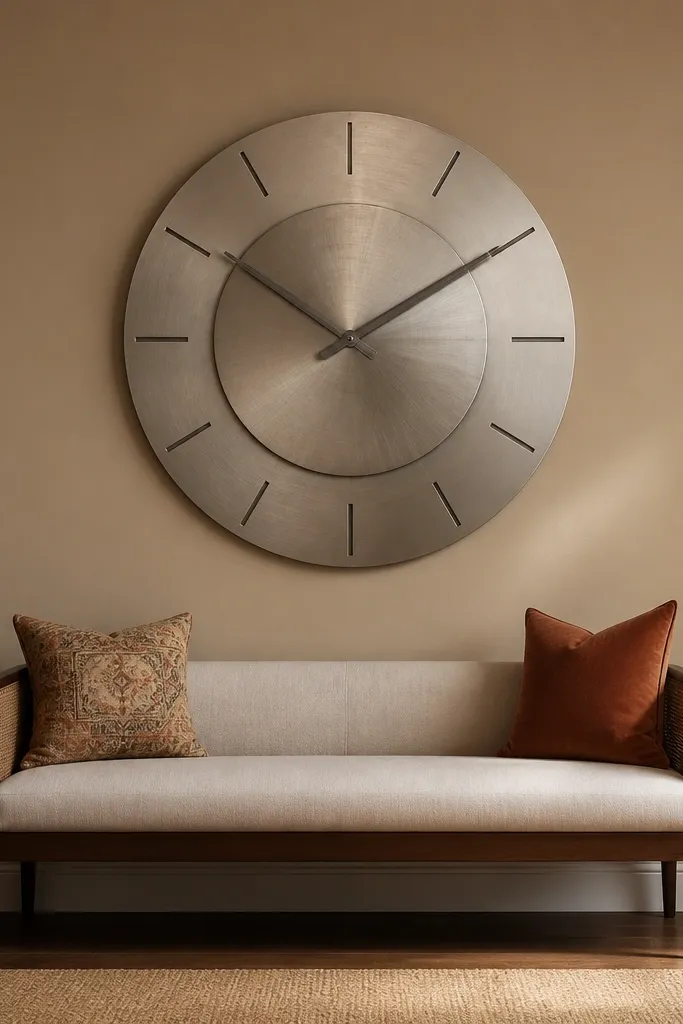
A sculptural clock gives you function and decor in one piece, which is rare for hall walls. The key is choosing a clock with a simple silhouette and a finish that matches your lighting hardware. Paint the wall behind it in a warm wash, like clay pink-beige or muted terracotta, so the metal doesn’t look cold. This works best with modern sofas and hallways that don’t have space for lots of frames. If your family is always running on time, you also get a practical reason to keep the wall looking intentional.
Good to knowUse a clock with a quiet sweep or a soft movement if the hallway is near bedrooms.
Paint a rectangular zone or full wall in your warm wash color, then decide where the clock goes. Mount the clock with its center at about 61 inches from the floor so it aligns with typical art height. Choose a clock diameter around 18 to 24 inches depending on sofa width — it should feel large but not cramped. If you add small frames, place them only on the sides at least 10 inches away from the clock edges. Style the sofa with one matching accessory: a brushed metal tray or a warm ceramic piece so the clock finish repeats.
AvoidAvoid tiny clocks — they look like you forgot to finish the wall plan.