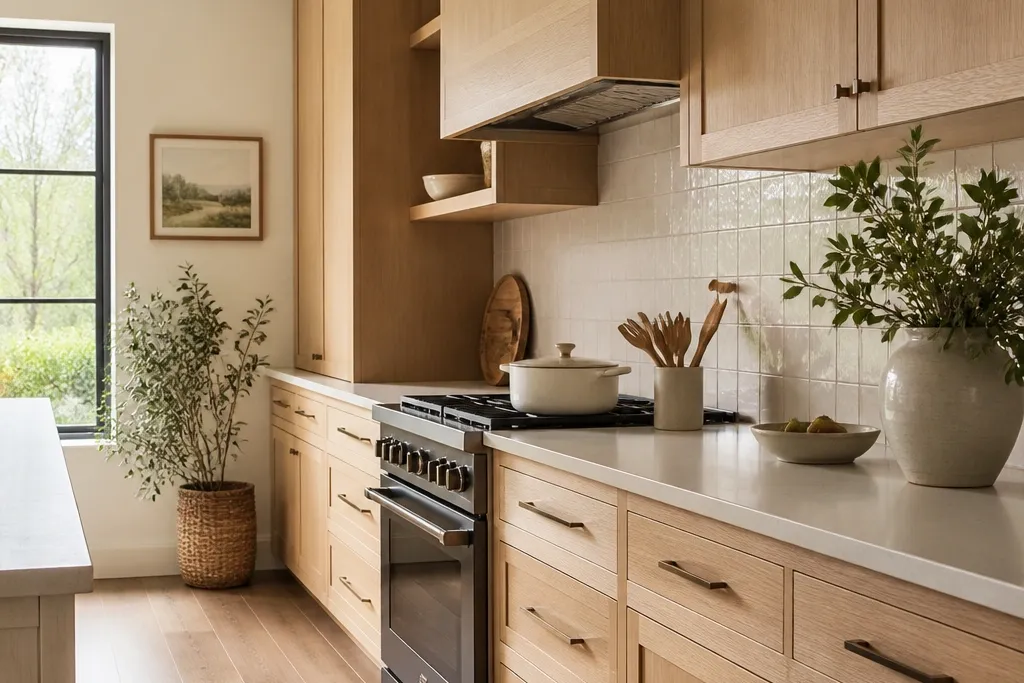
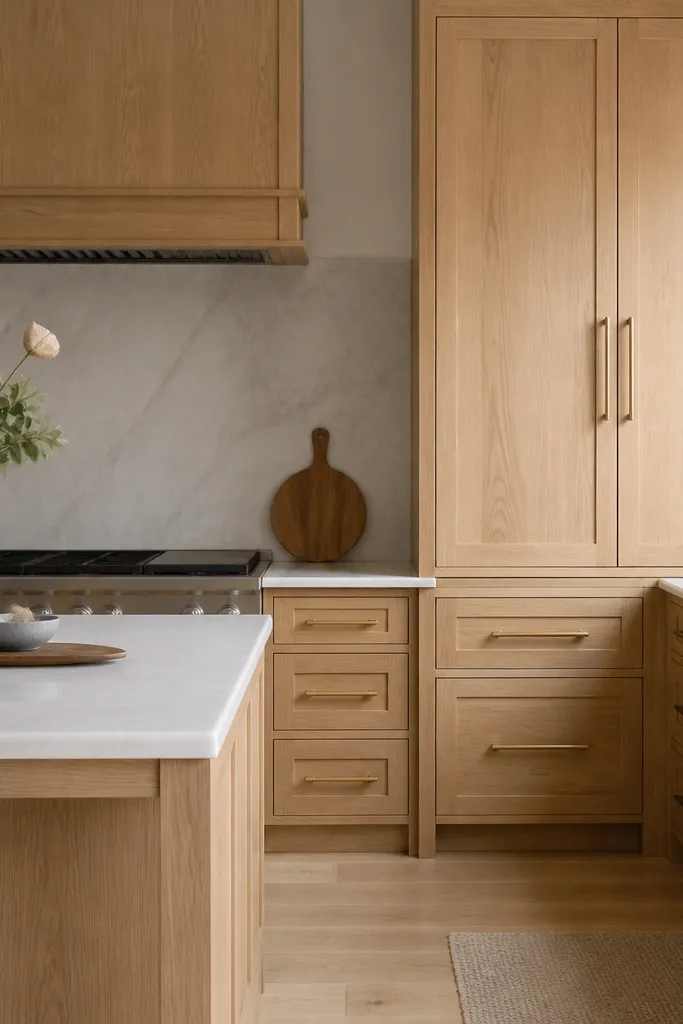
1. Creamy White Oak Shaker with Brushed Nickel Lines
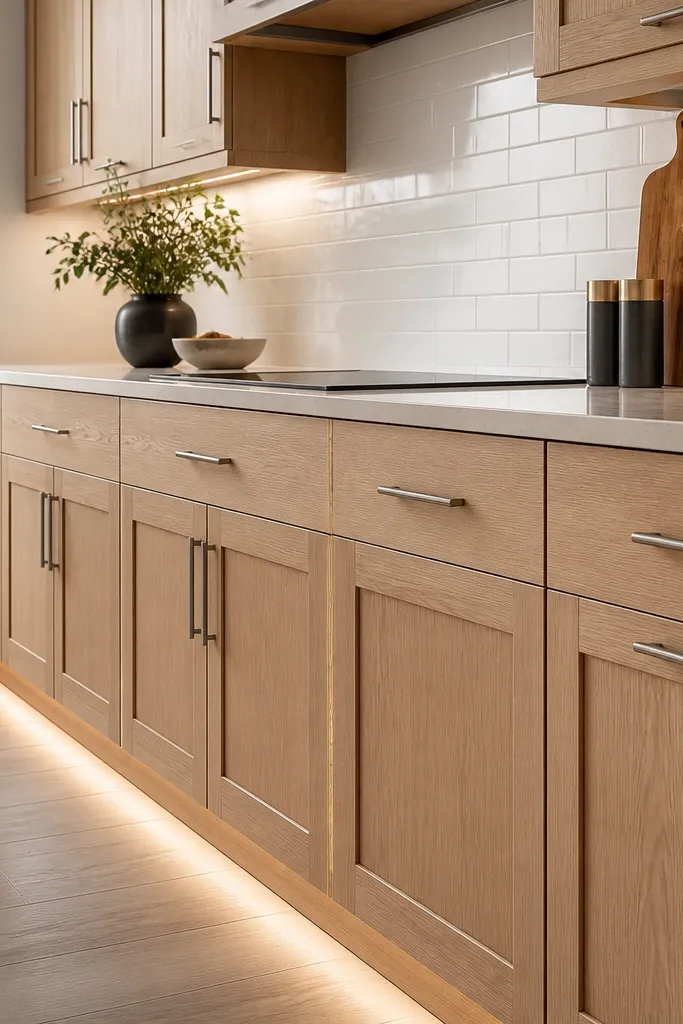
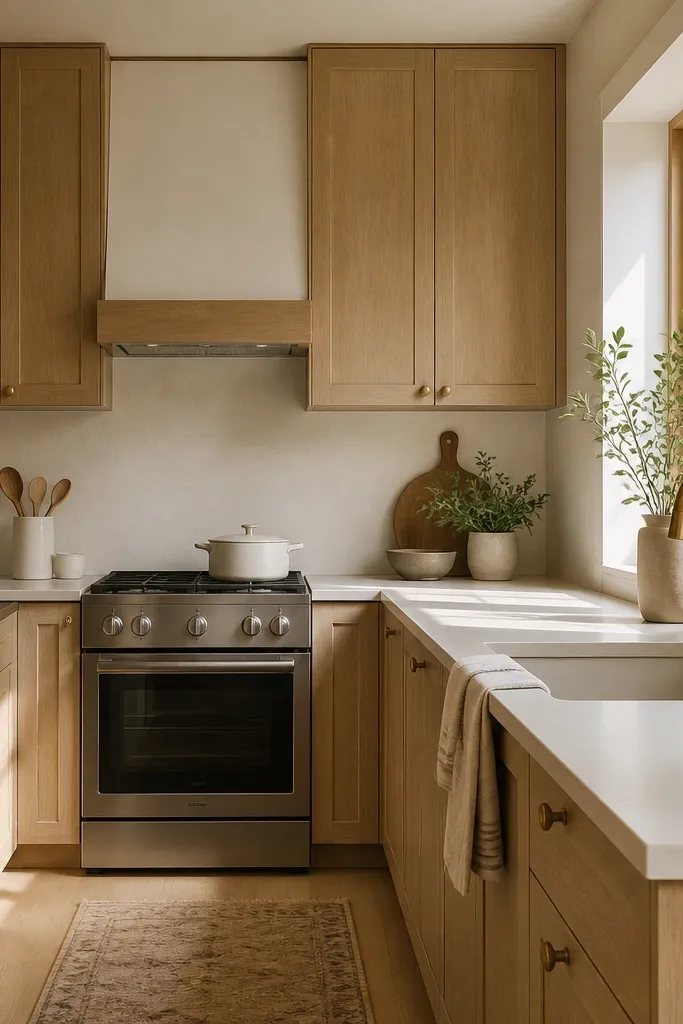
This look works because it keeps the oak tone creamy instead of yellow. The satin clear coat lets the grain show without turning shiny, and brushed nickel adds a clean, cool contrast that makes the white oak look brighter. It flatters kitchens with light walls and medium floors, especially if your dining set has white or light-gray upholstery. I’ve done this combo in small kitchens where people worry about cabinets making the room feel cramped — the matte sheen helps the space breathe. The styling principle is simple: smooth cabinet faces plus straight-line hardware plus a quiet backsplash.
Start by choosing white oak shaker doors with a satin or matte finish, then pick bar pulls in a brushed nickel finish sized about 5 inches long for 24-inch-wide doors. Install a light warm quartz countertop with minimal veining, and keep the backsplash to small-format white tile with light grout. Turn on under-cabinet lighting and aim it so it washes the toe-kick and doesn’t glare the cabinet fronts. Finish the dining area with white linen placemats and a simple woven runner so the textures match the cabinet’s calm look.
Good to knowUse 2700K bulbs under cabinets and in the dining area so the oak stays creamy, not peachy.
AvoidAvoid mirror-polished nickel — it makes the oak look more yellow and shows fingerprints.
2. White Oak Slab Cabinets with Matte Black Hardware
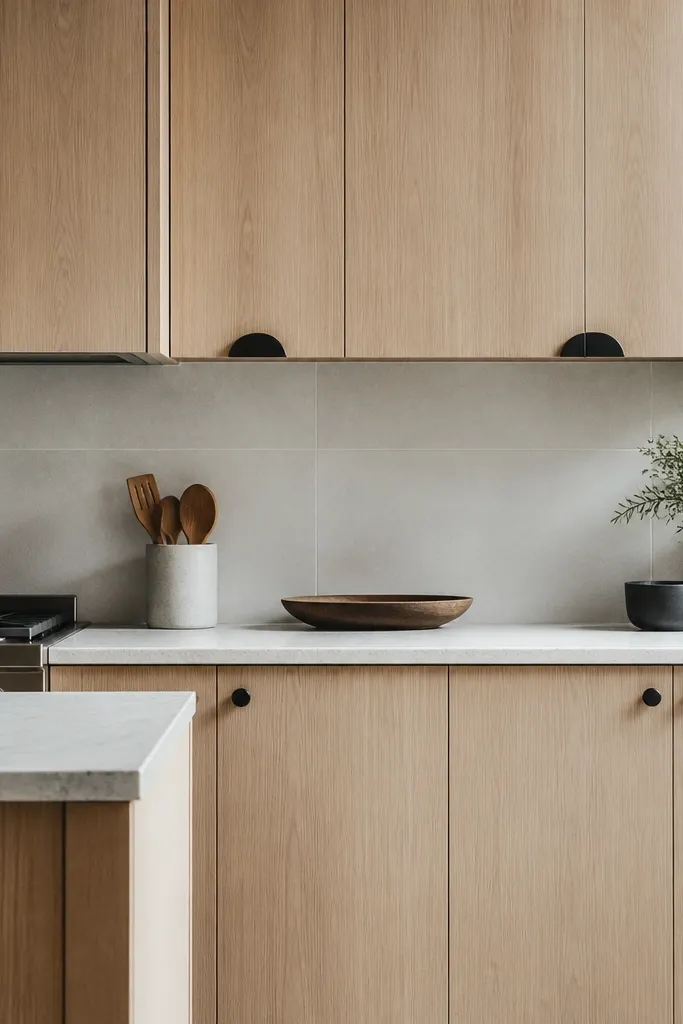
Slab doors look sharp, but beginners get tripped up by glare. Matte slab cabinets with matte black hardware avoids that problem because nothing reflects hard. The black pulls create a crisp rhythm and make the oak grain feel intentional instead of accidental. This is best for kitchens with modern dining chairs — think black metal legs or dark wood frames — because the hardware echoes that structure. I like it when the room has at least one other matte black element, like a faucet or pendant, so the look feels designed rather than random. The principle here is contrast that stays flat.
Choose slab doors with a matte clear coat and install them with consistent reveal gaps so the lines stay straight. Pick matte black bar pulls for uppers and knobs for drawers, keeping pulls centered vertically on each door. Use a honed countertop in pale stone (light gray or off-white) so it doesn’t compete with the oak. Add a light gray backsplash in large squares and grout in a matching cool tone. For the dining table, use black napkin rings and a simple ceramic centerpiece so the cabinet hardware feels connected.
Hang pendants with a frosted or seeded glass shade so the black hardware doesn’t look harsh.
Don’t pair slab cabinets with glossy black hardware — it turns the kitchen into a fingerprint magnet.
3. Two-Tone Dining Nook: White Oak Upper, Walnut Lower
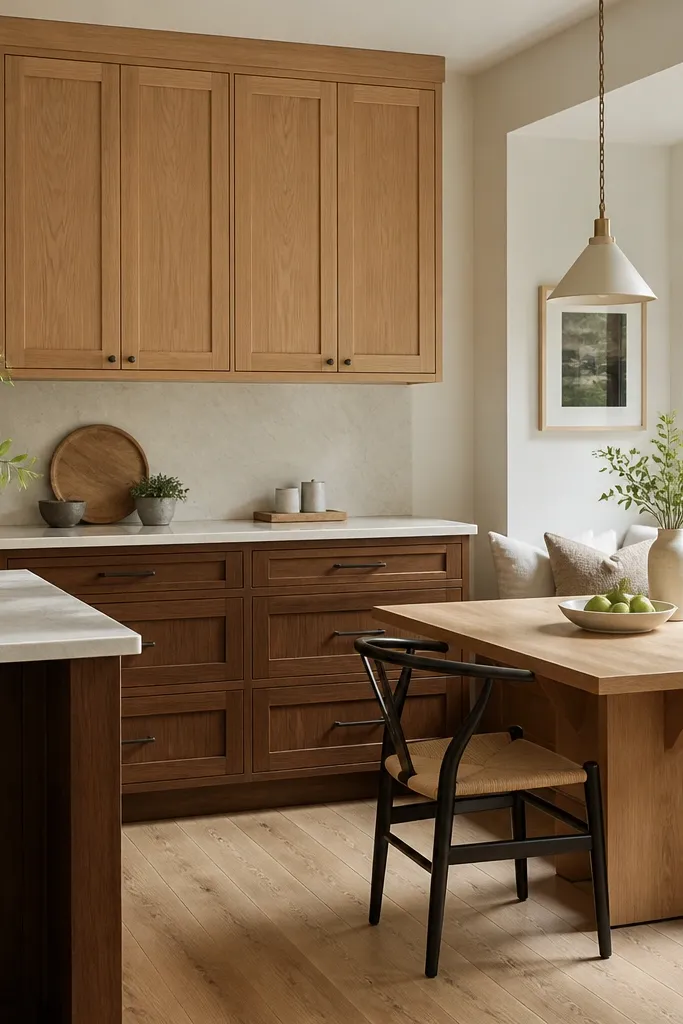
This look is the fastest way to make white oak feel expensive without going overboard. Keeping the uppers in white oak keeps the room bright, while walnut lowers add grounding weight. It flatters kitchens where you have a dining nook or breakfast bar — you want visual hierarchy so the zone reads intentional. The oak stays the star up high, and the darker base keeps the floor plan from feeling floaty. I’ve used this in kitchens with open shelving nearby, and it helps everything look curated because the lower tone repeats in the dining furniture. The principle is vertical contrast.
Order white oak shaker doors for the upper cabinets and choose a walnut stain for the lower cabinet boxes, matching the undertone to your dining wood. Use the same hardware finish across both — I prefer brushed nickel or aged bronze so it doesn’t clash with either wood. Install white oak uppers with a satin clear coat, then choose a countertop that bridges the two tones, like a light quartz with warm undertones. Add a simple backsplash, such as cream tile with a soft texture. Finish the nook with a bench cushion in oatmeal or light taupe and a woven placemat so the textures land between oak and walnut.
Good to knowIf your floor is warm brown, lean walnut slightly more red-brown; if your floor is cool gray, keep walnut more neutral.
AvoidDon’t use two tones with the same sheen — if one is glossy and one is matte, the mismatch screams.
4. White Oak Cabinets with a Calacatta-Style Quartz Counter
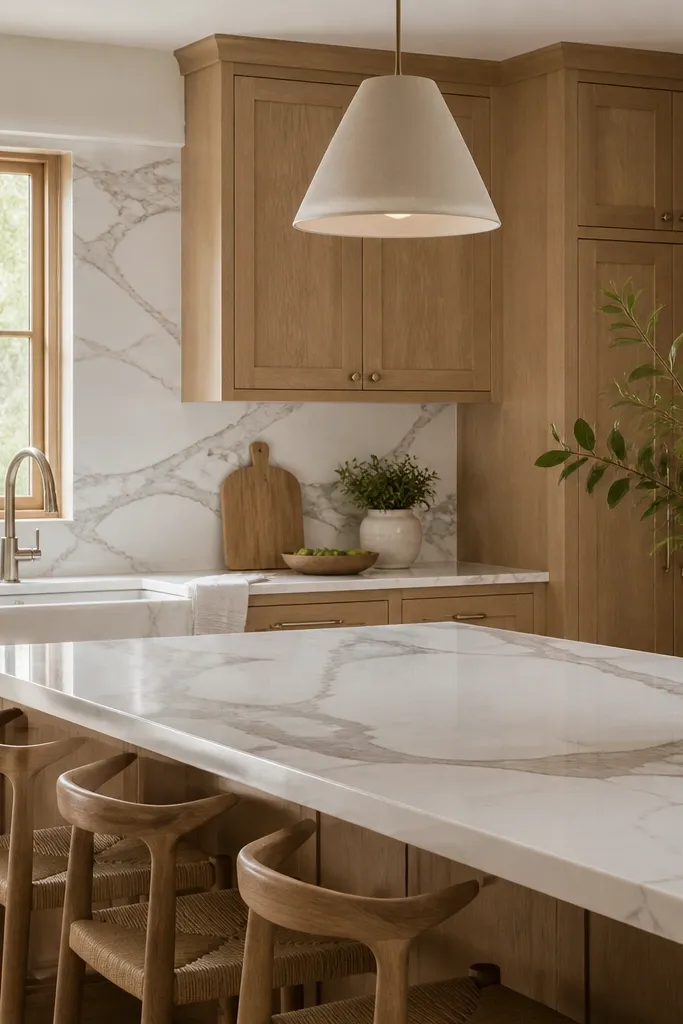
This combo makes the oak look clean and modern, not rustic. Calacatta-style quartz has dramatic movement, so you need a calmer cabinet face to keep the kitchen from feeling busy. White oak shaker doors provide that calm surface, and the satin finish keeps the grain readable under bright quartz. This works best for dining rooms with sleek silhouettes — spindle-back chairs, glass-topped tables, or simple upholstered benches. I’ve done it in kitchens where the dining area is visible through an open doorway, and the quartz veining ties the zones together. The principle is busy counter, quiet cabinets.
Pick white oak shaker doors with straight rails and install satin clear coat. Choose brushed nickel pulls in a medium size so they don’t fight the countertop pattern. Use a quartz with white base and bold gray veining, and keep backsplash to either a slab or small tile with minimal pattern. Add under-cabinet lighting so the veining looks crisp but doesn’t glare. In the dining area, use solid-color plates (white or light gray) and a gray runner to match the veining rhythm.
Set your pendant bulbs to 3000K if you want the quartz to look whiter without making the oak go too warm.
Avoid a patterned backsplash with a veined counter — it turns into one visual blur.
5. White Oak Cabinets with a Warm Greige Backsplash and Linen Shades
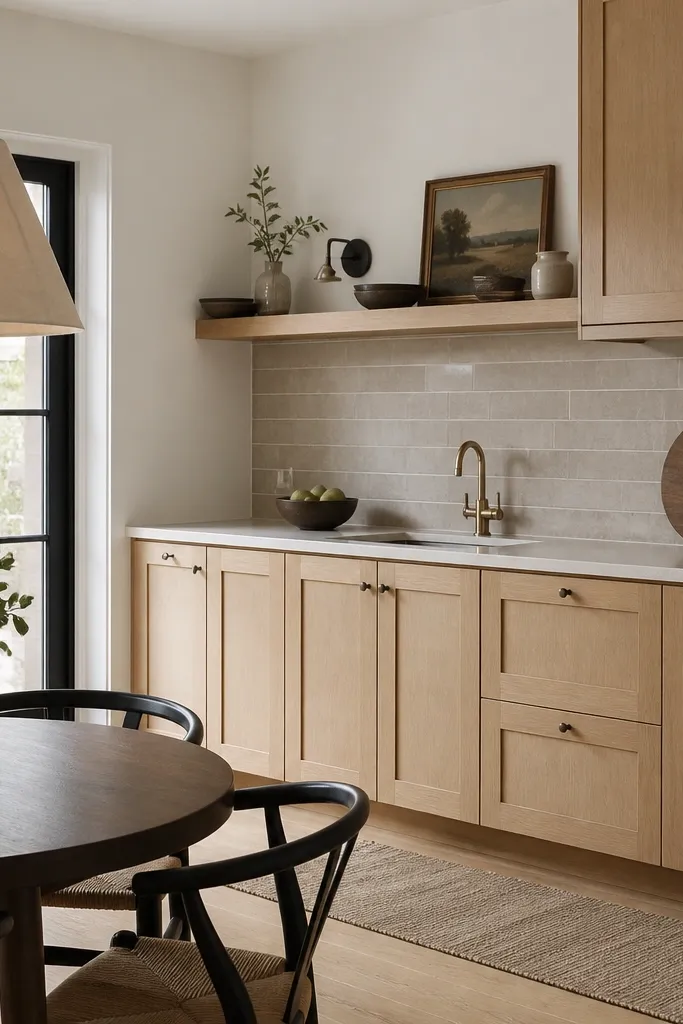
If you want “cozy” without going farmhouse-overload, this is the pair. White oak reads warm, and the greige backsplash adds a soft middle tone that keeps everything from leaning too yellow. Linen shades make the light diffuse, so the cabinet grain looks smooth instead of spotted. This flatters people with warm skin tones and kitchens that already have beige, cream, or soft taupe walls. I like it for beginners because the colors forgive mistakes — you don’t need perfect matching to make it look right. The principle is warm neutrals that sit at the same temperature.
Start with white oak shaker cabinets in satin finish and pair them with a warm greige backsplash tile, like a small staggered or mini brick layout. Choose hardware in aged bronze or brushed bronze so it doesn’t go cool and sterile. Keep your countertop in a light warm stone or quartz with subtle movement, not heavy veining. Install a pendant over the dining spot with a linen shade and bulb around 2700K. Style the table with oatmeal placemats, ceramic bowls in cream, and a wood tray that matches the oak undertone.
Good to knowUse warm grout (light greige) — it ties the backsplash into the cabinet tone.
AvoidAvoid cool white tile with warm oak — the grout and oak will fight under lighting.
6. White Oak Cabinets with Brass Bar Pulls and a Honey Pendant
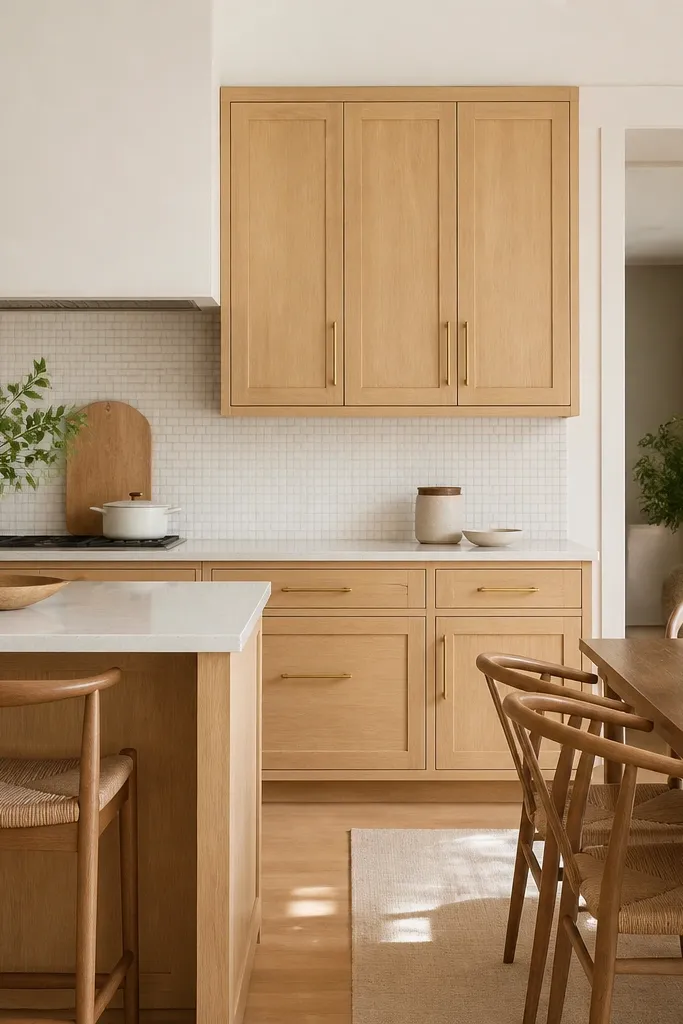
Brass makes white oak look like it belongs in a sunlit home. The trick is to keep the brass warm but not shiny — polished brass can work if you keep other surfaces matte. White oak’s grain looks golden under brass, so you want a countertop that’s light and warm to prevent the kitchen from going yellow. This look flatters kitchens with warm flooring and dining chairs with wood arms or brass accents. I’ve seen this combo in homes where people thought they didn’t want “gold” hardware, but once it’s paired with satin oak, it reads warm, not flashy. The principle is warm metal + warm light + matte wood.
Choose white oak shaker cabinets with satin finish, then install brass bar pulls sized for your door width (around 5 to 6 inches for mid-sized doors). Use a light beige quartz countertop with soft veining so it stays in the same color family. Keep backsplash to simple white tile with light grout, and add a warm honey pendant over the dining table. Match the faucet finish to the brass pulls. Finish by adding brass accents on the dining table like candle holders or a small utensil crock so the metal repeats.
Wipe brass hardware weekly with a microfiber cloth to keep it from dulling unevenly.
Don’t mix brass pulls with cool chrome faucets — the kitchen will look assembled in stages.
7. White Oak Cabinets with White Ceramic Tile Backsplash in Dark Grout
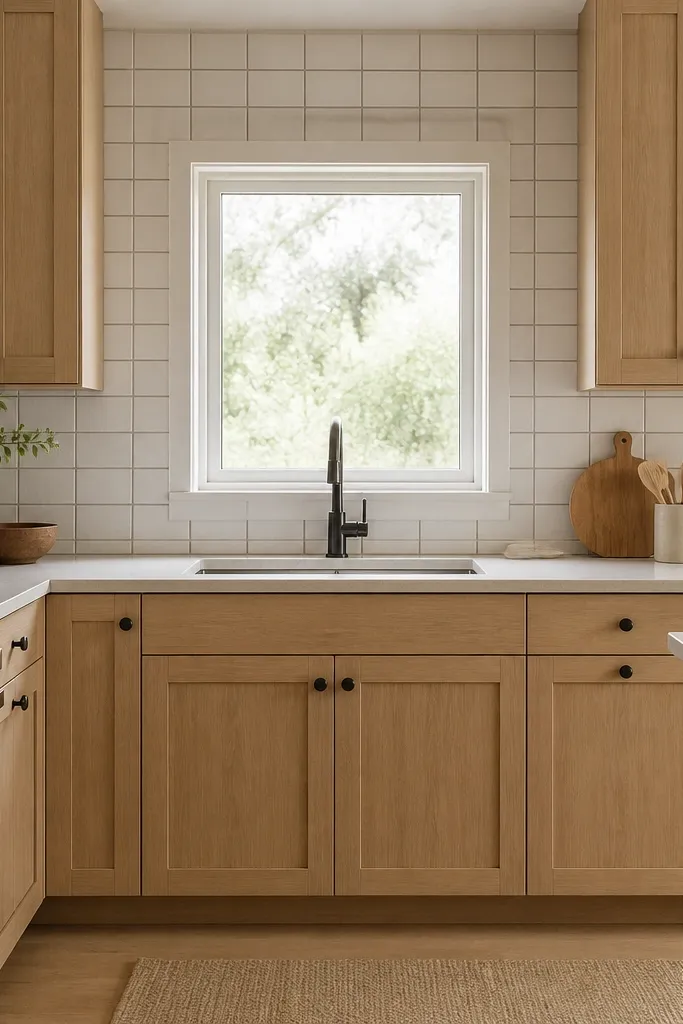
Dark grout lines make white tile feel graphic, and that’s what keeps white oak from blending into the background. The charcoal grout adds contrast without turning the room heavy, especially when the cabinets stay matte. This look is great for beginners because it hides minor wall imperfections — dark grout visually anchors the backsplash. It flatters dining spaces with black frames, black metal chairs, or dark table legs. I’ve used it in kitchens where the dining area is visible from the kitchen and needed a stronger design thread. The principle is high-contrast grout with calm cabinet faces.
Install white oak shaker cabinets with a matte finish and choose black hardware, like small knobs or slim pulls. Pick white ceramic tiles in a consistent size, then set them with dark gray grout lines for a crisp grid. Keep the countertop plain, like a light solid quartz, so the backsplash stays the pattern. Add under-cabinet lighting with a neutral bulb so the grout doesn’t look bluish. Style the dining table with black placemats and a simple white centerpiece to mirror the backsplash tile brightness.
Good to knowAsk your installer for grout color swatches in the exact lighting of your kitchen before they mix the batch.
AvoidAvoid mixing dark grout with warm honey lighting unless you want the grout to look almost brown.
8. White Oak Cabinets with Soapstone-Style Countertops
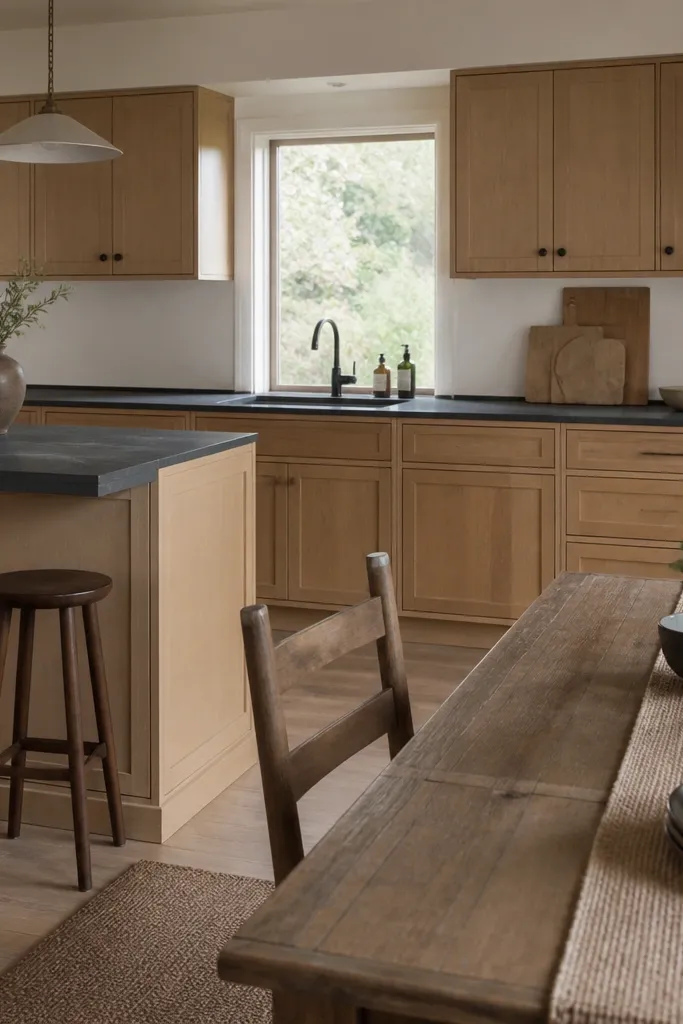
Soapstone-style counters pair with white oak in a way that feels quiet and expensive. The matte countertop surface doesn’t compete with the oak grain, and the soft gray adds balance to the warm wood. This look flatters people who like calm spaces and kitchens with neutral walls, like soft white or light gray. I’ve used it in homes where the dining area has natural linen and simple pottery — it looks cohesive without needing bold color. The principle is texture matching: matte wood + matte stone + gentle lighting.
Choose white oak shaker cabinets with satin finish and go with minimal pulls, like small round knobs in brushed nickel. Pick a soapstone-style countertop in soft gray with a lightly speckled look, and keep the backsplash to a simple sheet or small tile in a matching gray. Add under-cabinet lighting so the countertop doesn’t look flat. For the dining area, use gray ceramic plates, a woven runner, and a simple wooden utensil set that matches the cabinet undertone. Keep table textiles in linen or cotton, not shiny polyester.
Use neutral bulbs around 3000K if you want the gray to read true, not blue.
Don’t choose a glossy countertop with this cabinet finish — it breaks the matte, calm vibe.
9. White Oak Cabinets with a Sage Green Dining Accent
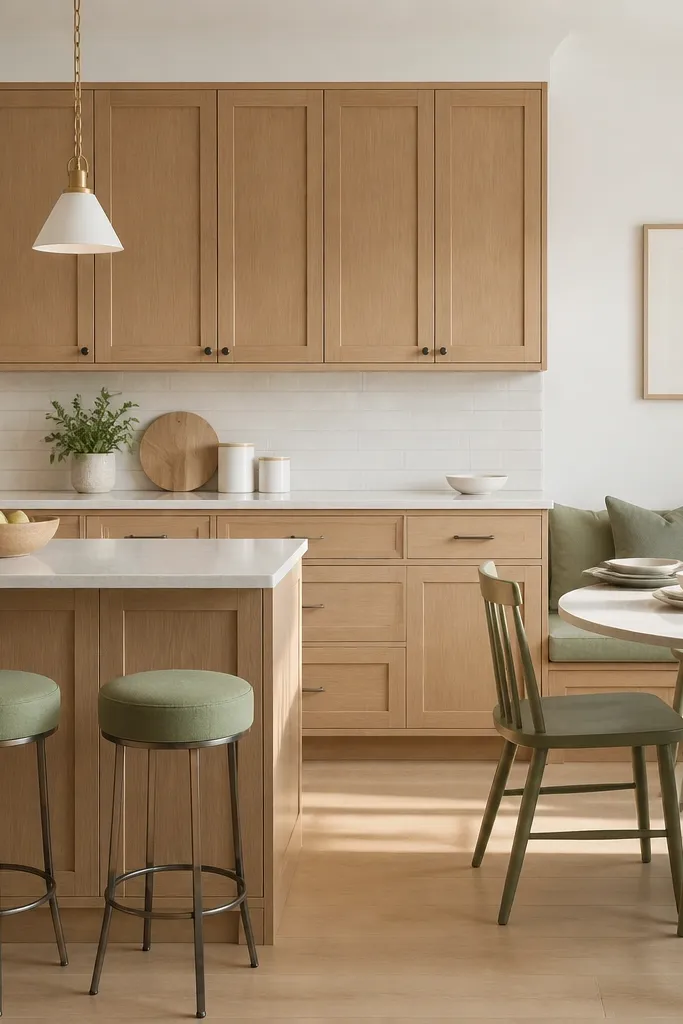
White oak likes green accents because it brings out the warm undertones in the grain. Sage is especially forgiving since it’s muted and doesn’t fight the wood. This look flatters kitchens where you want color without committing to a full painted cabinet — it’s easy to update later by swapping dining textiles. I’ve done this in real homes where the homeowner wanted “something different” but didn’t want to paint the kitchen. The principle is one muted color that repeats in the dining zone.
Install white oak shaker cabinets with satin finish and keep hardware in brushed nickel or soft bronze. Choose a backsplash in white or cream with minimal pattern. Add a sage green accent in the dining area through chair upholstery, a bench cushion, or even a sage runner. Pendant lighting should be warm, around 2700K, so the sage doesn’t turn gray. Set the table with white dishes and a light wood serving board so the oak and green feel tied together.
Good to knowPick sage with a yellow undertone, not blue — yellow-sage makes oak look creamier.
AvoidAvoid bright mint or neon green — it makes the cabinets look dull.
10. White Oak Cabinets with a Walnut Open Shelf Wall
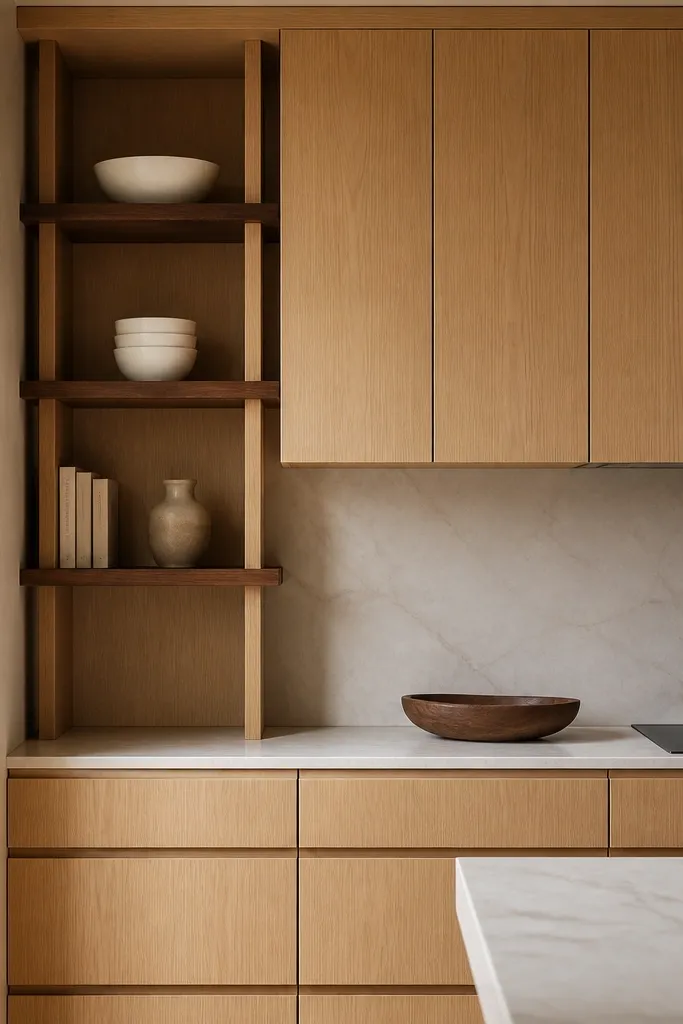
Open shelving can look messy fast, but pairing it with walnut turns it into a design feature. White oak cabinets stay neat and consistent, while walnut shelves add depth and a darker tone that makes the oak grain stand out. This look flatters kitchens with lots of natural light and a dining area with wood tones, like oak floors or walnut chairs. I’ve used this in kitchens where the dining area is close to the kitchen, so the shelf wall becomes a visual bridge. The principle is controlled display: open shelves only in one zone, not everywhere.
Keep your main cabinets in white oak shaker with satin finish and simple hardware, like brushed nickel. Choose walnut shelves with a clear matte finish so they don’t glare. Install the shelves in a single column or section so the rest of the kitchen stays closed. Style with matching white ceramics and keep items to three categories: bowls, a cookbook stack, and one plant or vase. In the dining area, use a wooden serving tray and linen napkins to repeat the walnut warmth without adding more patterns.
Good to knowUse shelf risers so items don’t sink to the bottom — it looks styled even on busy nights.
AvoidAvoid mixing too many colored mugs on open shelves — the oak kitchen turns visually loud.
11. White Oak Cabinets with a Black-and-White Tile Floor Pattern
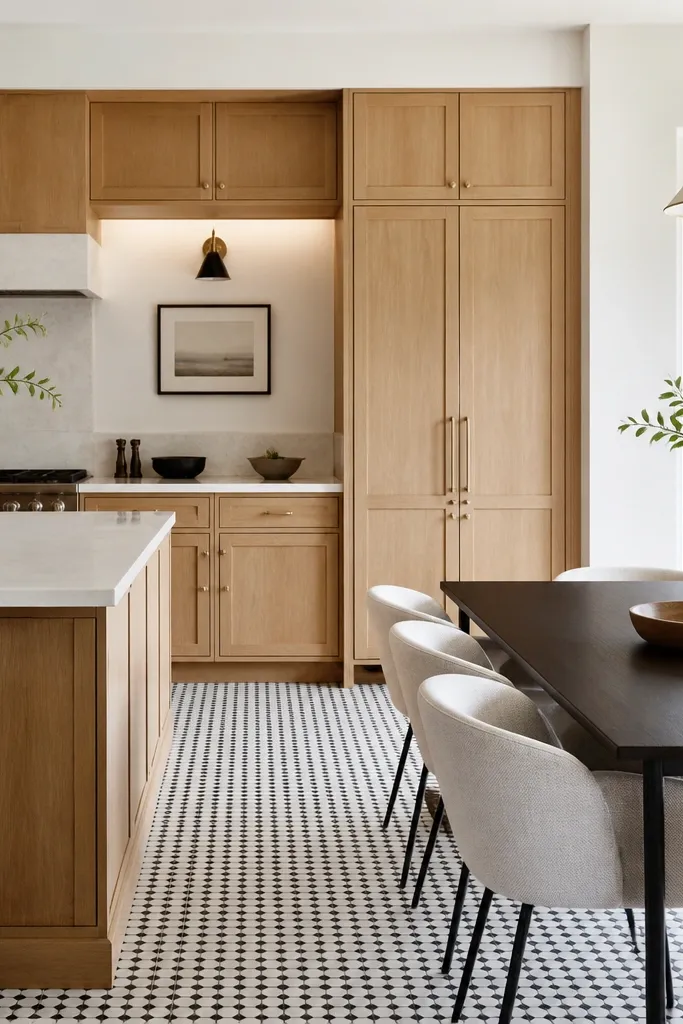
A patterned floor gives you instant character, and white oak keeps it from feeling like a showroom. The oak grain warms up the black-and-white contrast, so the room doesn’t feel cold. This look flatters people who like classic design but want it updated — the shaker doors keep it tidy, while the floor brings the personality. I’ve seen it work especially well when your dining chairs have black metal or black accents. The principle is letting one element carry the pattern while the cabinets stay calm and readable.
Install white oak shaker cabinets with satin finish and choose hardware in either brushed nickel or black to echo the floor. Keep the backsplash plain, like white subway tile with light grout, so your floor pattern remains the star. Choose a countertop that’s mostly white with minimal movement. In the dining area, use black metal chair legs and white cushions, then add a single black centerpiece tray to repeat the floor tones. Keep textiles in solids so the floor pattern doesn’t collide with more patterns.
Good to knowAdd one matte black element near the sink — faucet or soap dispenser — so the cabinet hardware doesn’t feel disconnected.
AvoidDon’t add a patterned backsplash if your floor is busy.
12. White Oak Cabinets with a Stacked Stone Backsplash Look
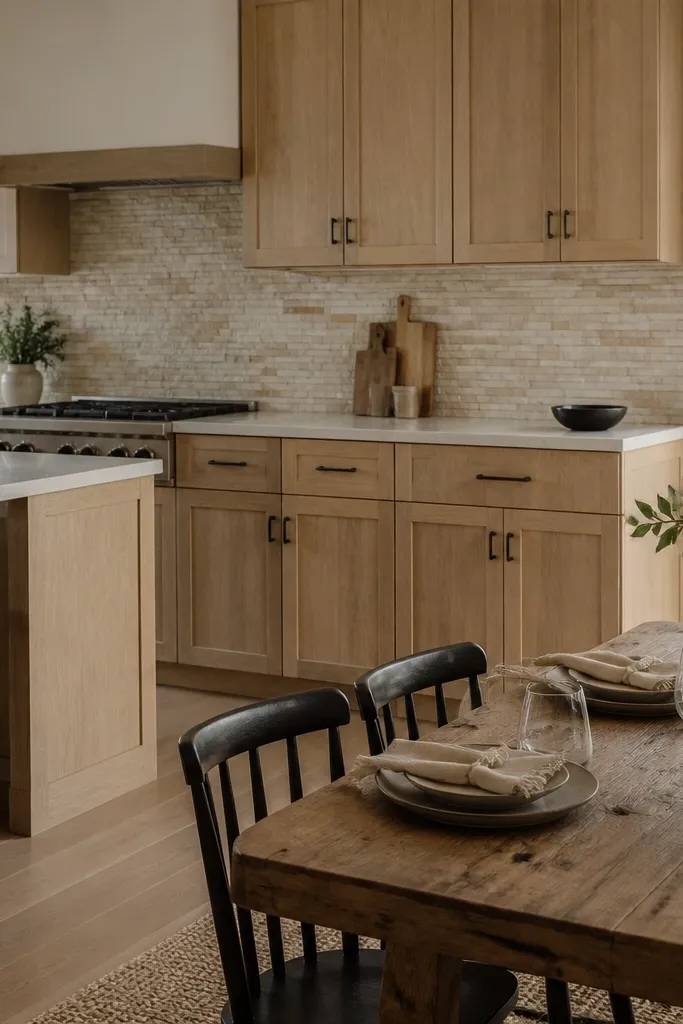
Stone behind the cook zone gives warmth and depth, and white oak makes the whole thing feel natural instead of heavy. The key is keeping cabinet faces smooth and matte so they don’t compete with the stone texture. This works well for kitchens where your dining area is close to the backsplash wall and you want the zone to feel cohesive. I like it when the dining table has a natural wood finish and the chairs are in neutral fabric. The principle is texture layering: textured backsplash + smooth cabinet fronts + warm neutrals.
Choose white oak shaker cabinets with satin finish and hardware in matte black or aged bronze. Install a stacked stone backsplash in light cream/tan so it reads warm but not orange. Use a countertop in a solid light color, like off-white quartz, and keep the grout between stone pieces consistent. Add under-cabinet lighting so the stone texture catches soft shadows. On the dining table, use a woven runner and ceramic dishes in cream or warm white. Keep centerpieces minimal — a wooden bowl or a simple candle cluster.
Seal the stone backsplash if your installer recommends it — it keeps cooking splatter from soaking in.
Avoid glossy stone — it reflects light sharply and makes the oak look dull.
13. White Oak Cabinets with a Light Blue Dining Color Thread
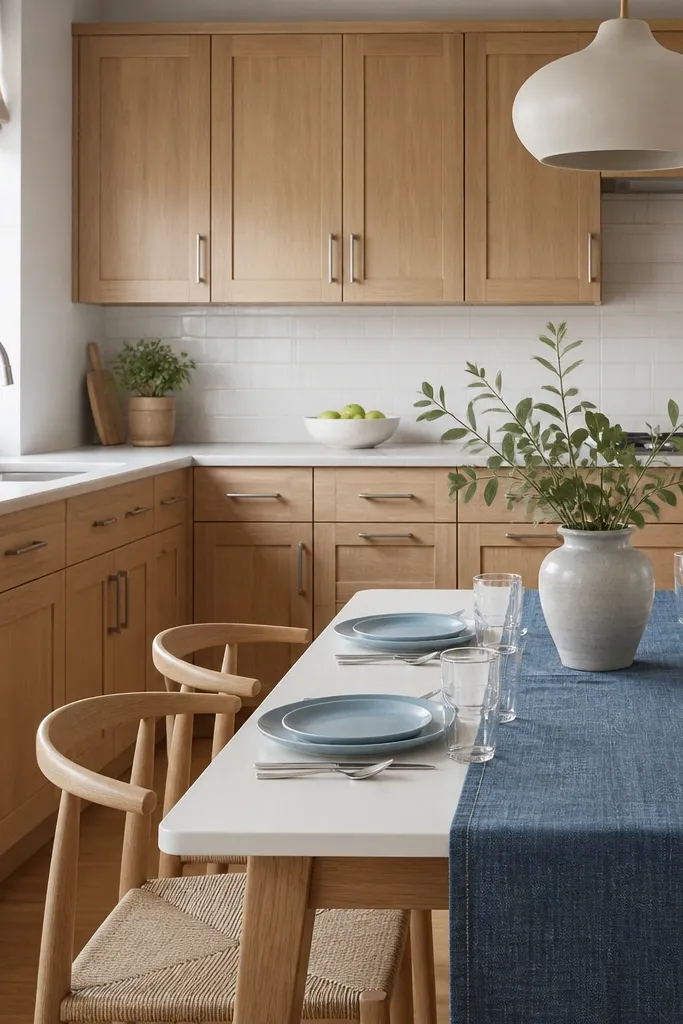
Light blue is one of the best “beginner colors” next to white oak because it’s airy, not loud. It makes the kitchen feel clean and calm, especially if your oak undertone is creamy. This look flatters dining spaces with white chairs or light upholstery and works well in homes with lots of daylight. I’ve tried bolder blues with oak and it can feel harsh, but a soft powder or periwinkle tone always lands nicely. The principle is color threading: repeat the same blue across dining items so the cabinets look intentional, not accidental.
Keep your cabinets in white oak shaker with satin clear coat and brushed nickel hardware. Choose a backsplash in white or soft cream and keep the countertop simple and light. Add light blue through dining plates, a runner, and a single decorative vase so it repeats at least twice. If you have a runner, pick one with a woven texture to echo the wood grain. Hang a pendant with a warm bulb and frosted glass so the blue doesn’t look washed out. Set place settings with white napkins and blue tableware for a consistent look.
Good to knowTest your blue textiles under kitchen lighting — some shades go gray at night.
AvoidAvoid navy or deep royal blue — it makes oak look older and darker.
14. White Oak Cabinets with a Monochrome Gray Counter and Warm Lighting
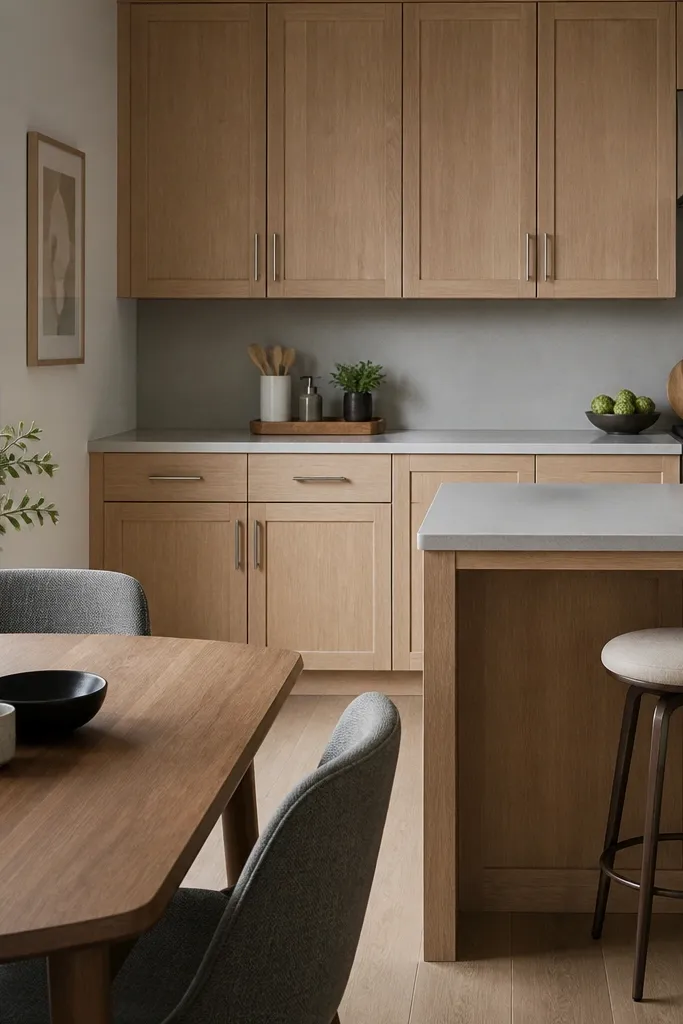
Monochrome gray is a clean partner for white oak because it doesn’t add competing patterns. Warm lighting keeps the oak from reading too pale, while the gray counter keeps the kitchen grounded. This look flatters dining spaces with gray upholstery and simple silhouettes, like straight-back chairs or upholstered benches. I like it when your walls are off-white, because the contrast feels crisp without looking stark. The principle is controlling visual noise: one neutral counter, calm cabinets, warm light.
Choose white oak shaker cabinets with satin finish and hardware in brushed nickel. Install a monochrome gray quartz countertop with very subtle texture and keep backsplash to a simple tile or slab in white. Use a warmer bulb around 2700K so the oak reads creamy. In the dining area, match gray upholstery and keep everything else mostly neutral. Add a warm wood table centerpiece and woven placemats to bring back texture. Keep dining accessories in matte finishes so the room doesn’t go shiny.
If your gray counter has a slight blue cast, swap to 3000K bulbs to warm it up.
Avoid cool, blue-toned backsplash tile — it makes the oak look washed.
15. White Oak Cabinets with a Brass Faucet and Copper Cookware Styling
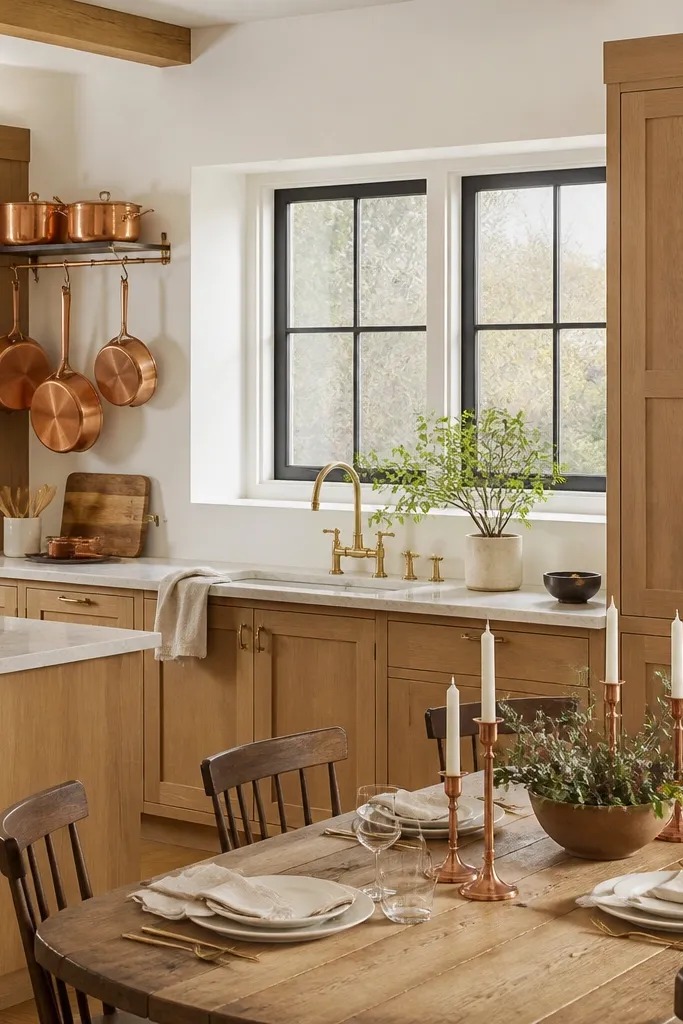
This is the “warm kitchen” look that still feels polished. Brass plumbing pulls the eye to the sink area, and copper cookware adds real texture and color depth. White oak keeps it from turning too industrial because the wood grain softens metal edges. This flatters kitchens where you cook a lot and want your cookware to look like part of the design. I’ve used it in open-plan homes where the dining area sees the kitchen — the metals repeat and make the whole space feel intentional. The principle is repeating warm metals in small, visible places.
Install white oak shaker cabinets with satin finish and choose brushed brass or polished brass hardware for drawers and doors. Add a brass faucet and match it to a brass towel bar or soap dispenser. Style a pot rack or open shelf with copper cookware and keep the copper pieces clean so they look uniform. Choose a light countertop, like warm white quartz, and keep the backsplash simple. In the dining area, add copper candle holders and warm white tableware so the metal repetition is obvious. Keep other accents in wood and linen, not shiny plastic.
Hang copper so handles line up — it looks curated even with a practical set.
Avoid mixing copper with chrome appliances — the kitchen looks pieced together.
16. White Oak Cabinets with a Deep Farm Sink and Black Fixtures
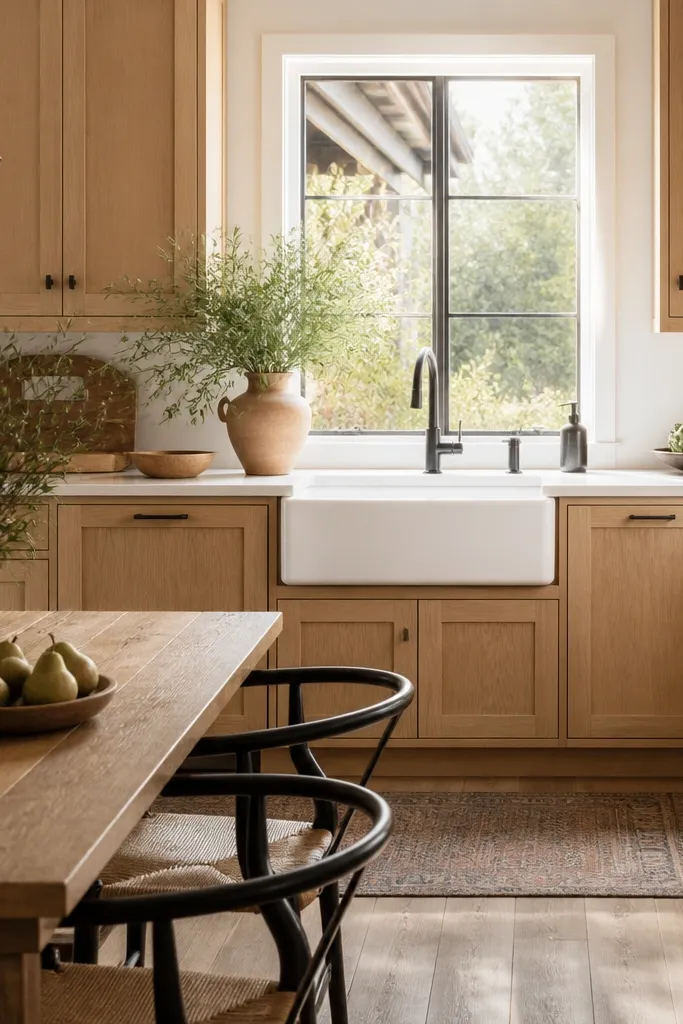
Farm sink + white oak is one of my favorite beginner-friendly combos because it hides small imperfections and looks good in real life. The deep sink emphasizes function, while black fixtures add contrast that makes the oak look warmer and more defined. If your dining room has black metal chair frames or dark wood, this look ties the two rooms together quickly. I’ve done this in homes where the owners wanted a farmhouse feel but didn’t want the cabinets to look “too country.” The principle is functional focal points with controlled contrast.
Pick white oak shaker cabinets with matte or satin finish so the doors don’t glare near the window light. Choose a white farmhouse sink with a matte or satin finish and install matte black faucet hardware. Keep the backsplash to white tile and light grout so the sink stays the focal point. Use a countertop with a simple edge profile, like a straight or eased edge, and keep the countertop color light. For the dining area, use a wooden table and black metal chairs, then add a woven runner and simple ceramic centerpiece. Keep the table setting neutral so the kitchen fixtures feel coordinated.
Choose sink accessories in matte black so they don’t look like random add-ons.
Avoid shiny chrome fixtures — they make the oak look less warm and more yellow.
17. White Oak Cabinets with a Soft White Quartz Waterfall Island
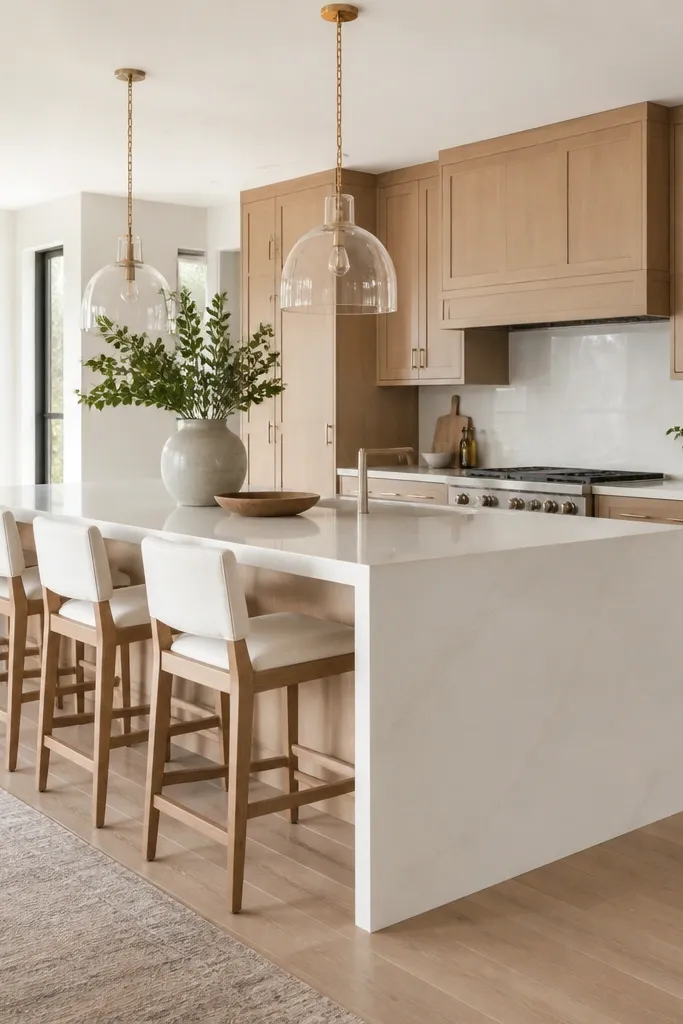
A waterfall island makes white oak feel modern without changing the cabinet style. The soft white quartz keeps the color palette bright, and because it’s smooth and continuous, it makes the oak grain look cleaner. This look is great for beginners because it’s hard to mess up — the island shape does the heavy lifting. It flatters kitchens with open sightlines to the dining area since the island becomes a visual anchor. I’ve used this in kitchens where the dining chairs are white or cream, and the result looks cohesive fast. The principle is one uninterrupted surface to balance wood grain.
Choose white oak shaker cabinets with satin finish and simple bar pulls in brushed nickel. Build the island with soft white quartz and a waterfall edge that runs from the top down the sides. Keep the backsplash minimal, like white tile or a light slab, so the island remains the hero. Add white upholstered bar stools with legs in a metal finish that matches your hardware. Under-cabinet lighting should run across the cabinet base so the waterfall edge doesn’t cast harsh shadows. Style the island with a wood tray, a white vase, and a small bowl in light stone.
Good to knowAsk for the quartz edge to be consistent on every side — uneven waterfall edges look cheap fast.
AvoidAvoid pairing waterfall quartz with a busy patterned backsplash — it looks crowded.
18. White Oak Cabinets with Glass-Front Upper Doors and Clear Hardware
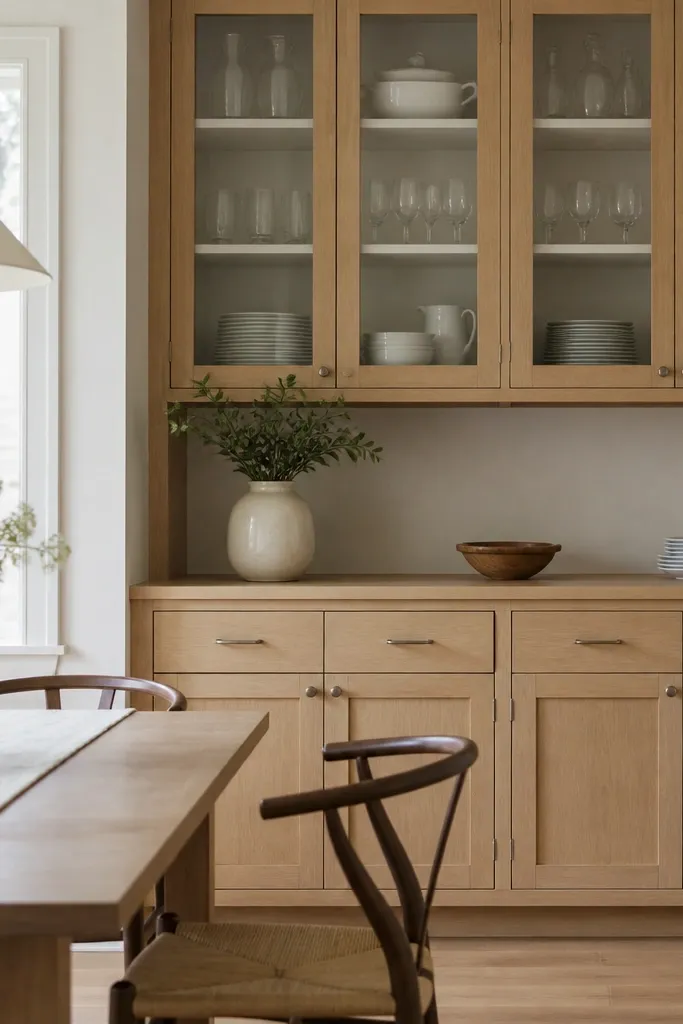
Glass-front uppers let you control what’s visible, and white oak frames that display in a warm, clean way. It flatters dining areas with open shelving vibes because it repeats the idea of curated items. I like this look when you have a family with a few “pretty” pieces — matching glassware, white bowls, or simple ceramic sets. The satin finish keeps the oak from looking shiny behind glass, and it stops the kitchen from feeling heavy. The principle is display with rules: only show items that match or repeat.
Choose white oak shaker cabinets and order glass-front doors for only the uppers closest to the dining zone. Use brushed nickel hardware and keep the pulls small so they don’t overpower the glass. Install white or light-colored shelves inside so the contents look bright. Fill with matching items: stack white plates, place a few clear tumblers, and add one small ceramic canister. Keep the countertop clear and use a simple backsplash so the glass doesn’t compete. In the dining area, mirror the glassware by using clear drinkware and a simple white table setting.
Good to knowUse shelf liners in a soft cream — it makes everything look warmer through the glass.
AvoidAvoid mixing dark and bright items behind glass — it looks like a storage shelf.