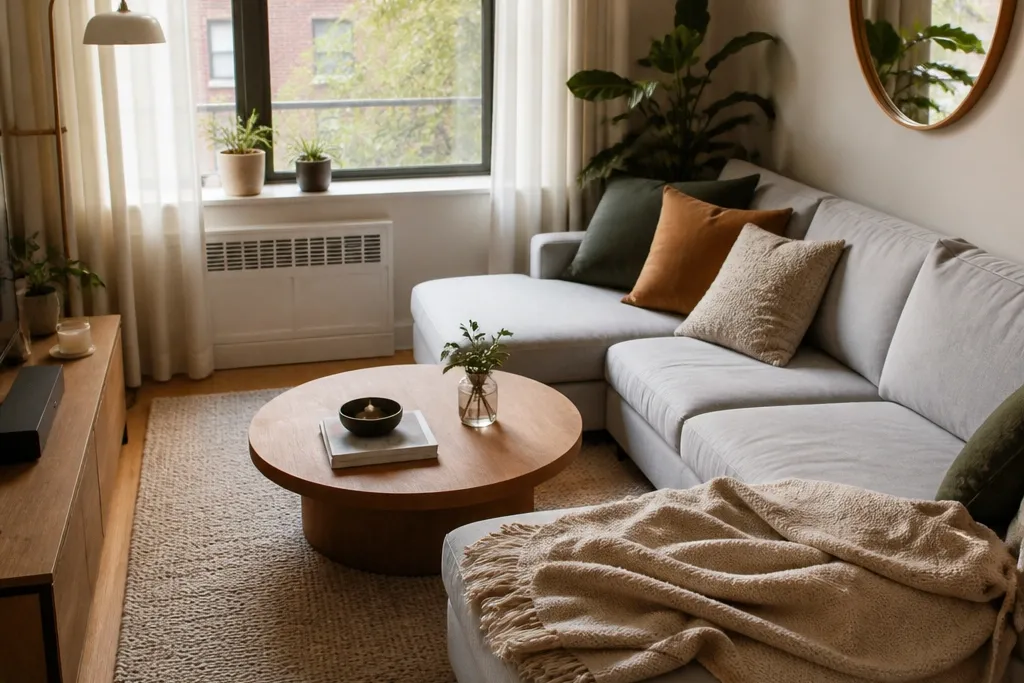
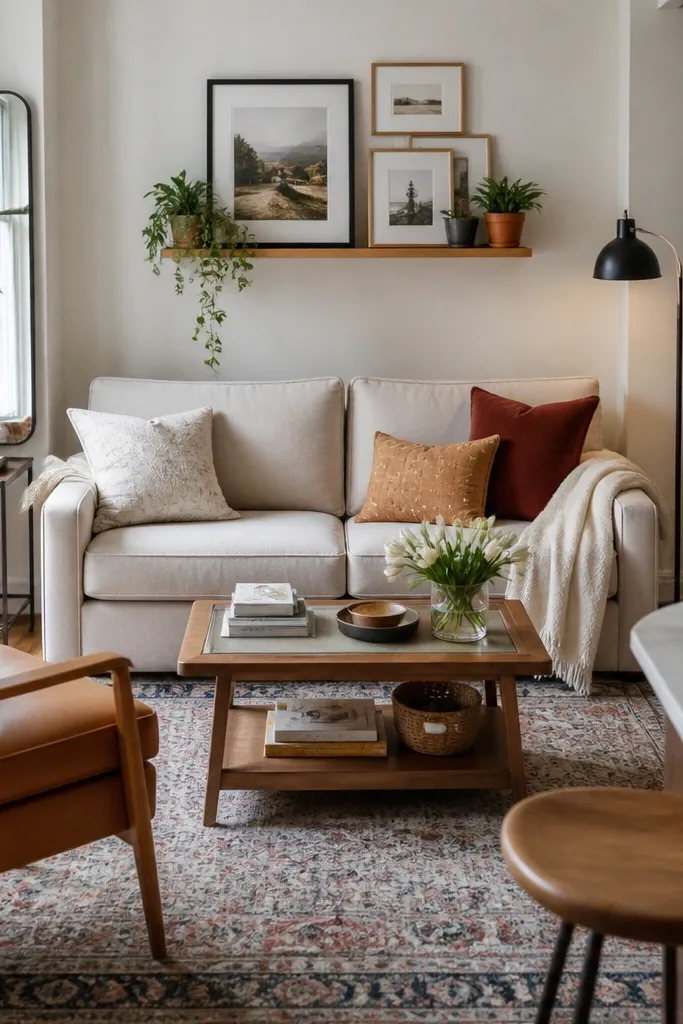
1. Round rug under a slim sofa for instant softness
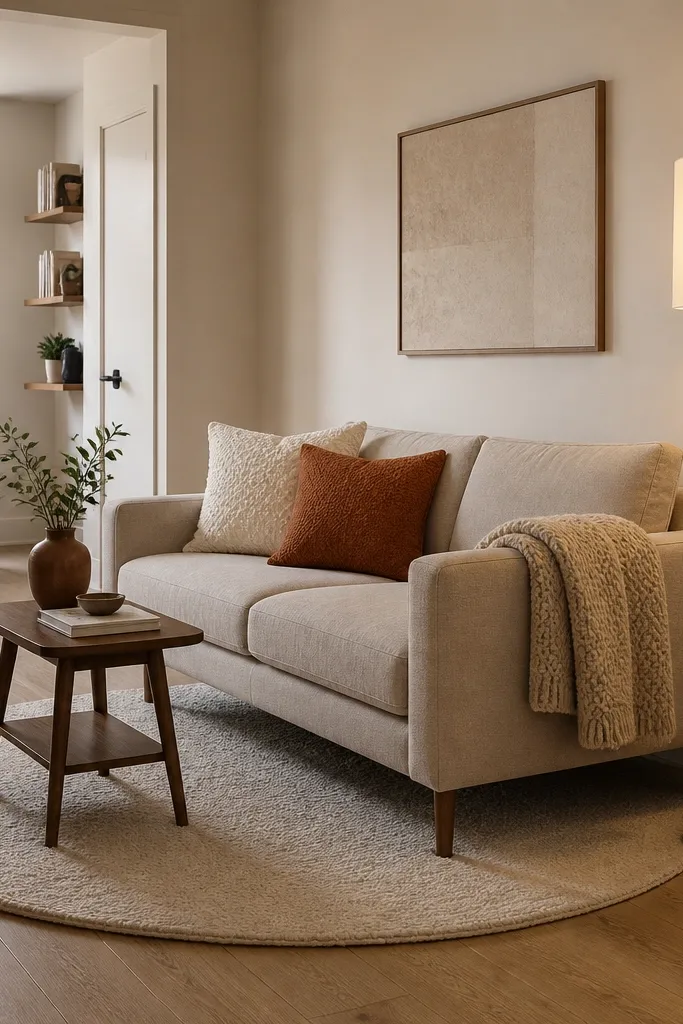
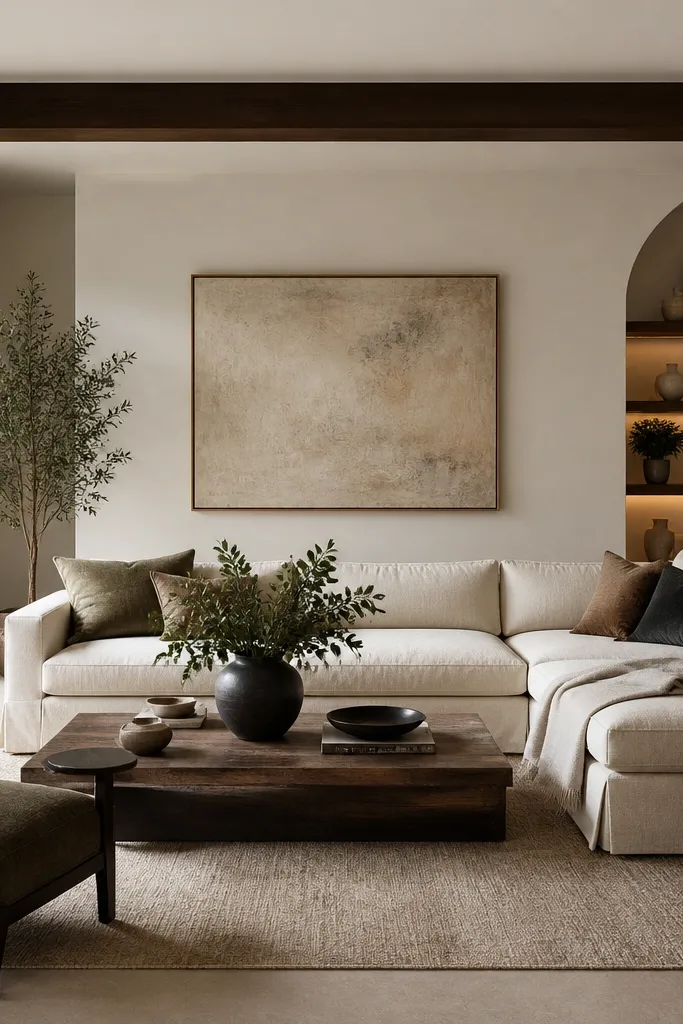
This setup makes the whole room feel softer because round shapes interrupt harsh corners. A round rug in cream or oat under a slim sofa reduces visual blockiness and makes the seating area feel like one warm “island.” I like it with a sofa that has slim arms and a raised base so the floor still shows around the rug. The warm neutrals keep it friendly, and the clay-toned cushions add warmth without turning the room orange. It works especially well in small rooms with one main focal wall, because the rug becomes the quiet anchor instead of your furniture competing for attention.
Start by measuring your seating zone and picking a rug diameter that reaches at least the front legs of the sofa. Place the sofa so the rug is centered under the seat, not pushed to one side. Then add a small side table with a dark wood top to ground the light rug — keep it under 45 cm wide so it doesn’t feel bulky. Hang sheer-to-light curtains in off-white and let them fall to just above the floor, then place a lamp on the side table or beside a chair. Finish with two pillows in different textures — one woven, one knit — and drape the throw over one arm at a slight angle.
If your room has a narrow layout, use a round rug even more aggressively — it makes the room look wider than a rectangle.
Avoid a rug that’s too small — you’ll see the floor gaps and the room looks unfinished.
2. Curtain panel trick: hang wider than the window
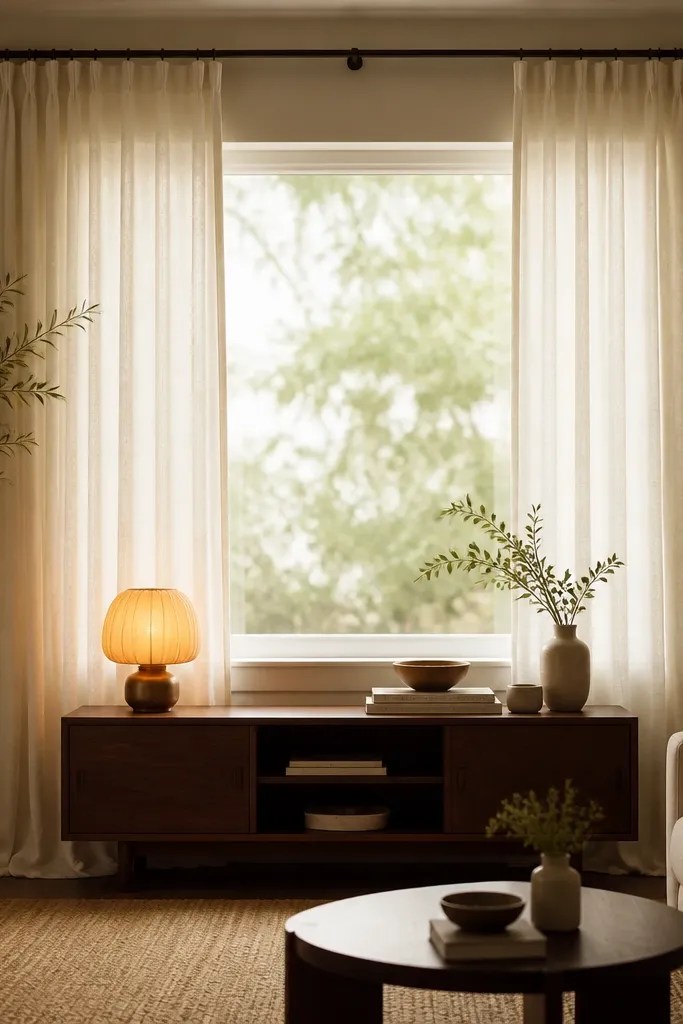
Start by measuring the window width and choosing a rod length about 25-40 cm wider on each side. Mount the rod so the curtain hem lands just above the floor or lightly kisses it. Use two panels per side if you want a fuller look — you want soft folds, not flat fabric. Add a warm bulb around 2700K near the curtain line so the fabric glows at night. Style the sofa with one patterned cushion in a small scale (like tiny checks) and one solid cushion in clay or caramel to echo the curtain warmth.
In a small living room, curtains are the fastest way to fake more width. When you hang panels wider than the window, your eyes read the wall as bigger, and the room looks calmer. I always choose a medium-weight fabric like linen blend or cotton voile with a slight body, not super thin sheers that cling and wrinkle. The warm off-white tone keeps the room cozy while still letting light bounce around. This works for almost every skin tone and decor style because it’s neutral and it softens hard edges around the window.
AvoidAvoid installing the rod exactly at the window width — it makes the room feel boxed.
Good to knowIf the curtains keep floating away from the wall, use small curtain weights sewn into the hem so the folds sit properly.
3. Two-tone wall art to keep the room from shrinking
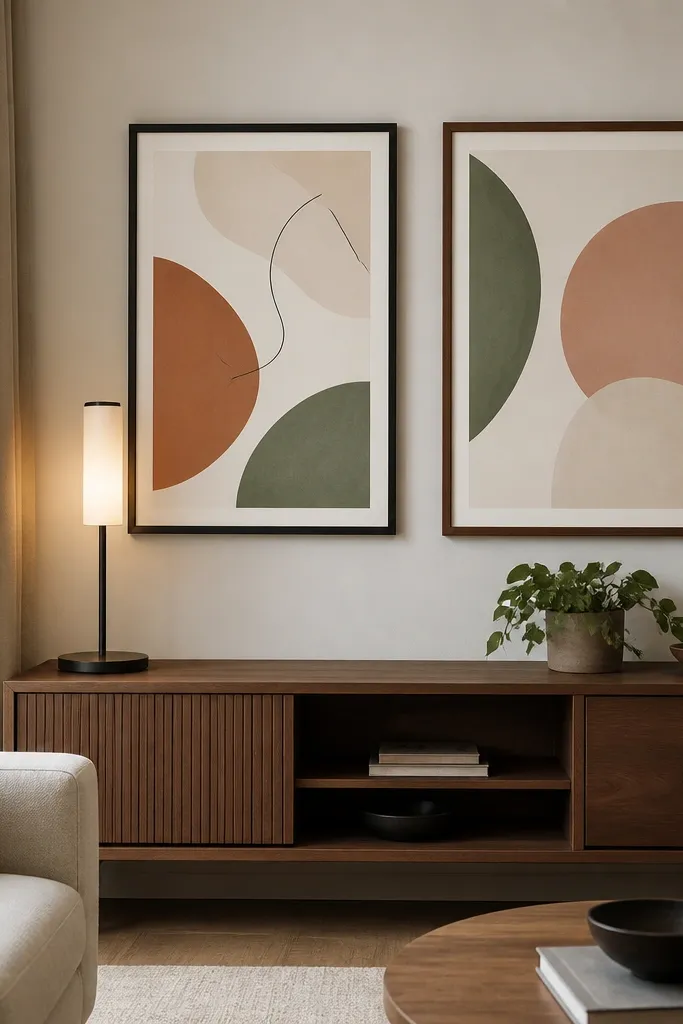
Start by choosing two pieces that share one dominant color — for example, cream backgrounds with terracotta shapes. Place them with a small gap between frames so it looks intentional, not random. Keep frame widths close in size so the wall doesn’t look lopsided. Mount the center of the pair around eye level — roughly 150-155 cm from the floor. Then repeat the accent color in your cushions or throw: one clay cushion and one cream cushion does the job. Add a small plant or candle on the console to give the art a “near-field” companion.
Small rooms need art that reads as calm, not busy. I like a two-tone art mix because it gives your eye a path to follow without adding clutter. Using cream as the base and terracotta or sage as the accent keeps the palette warm and cozy while still feeling modern. The frames in matte black or a warm wood finish add contrast without overwhelming the wall. This works well when you have a sofa and a TV on the same wall, because art can balance the visual weight above the console.
AvoidAvoid oversized art that forces you to cram furniture under it — it makes the wall feel too heavy.
Good to knowUse a tape layout on the wall for 10 minutes before drilling — your eyes adjust faster than you think.
4. Low media console plus floating shelf for vertical air
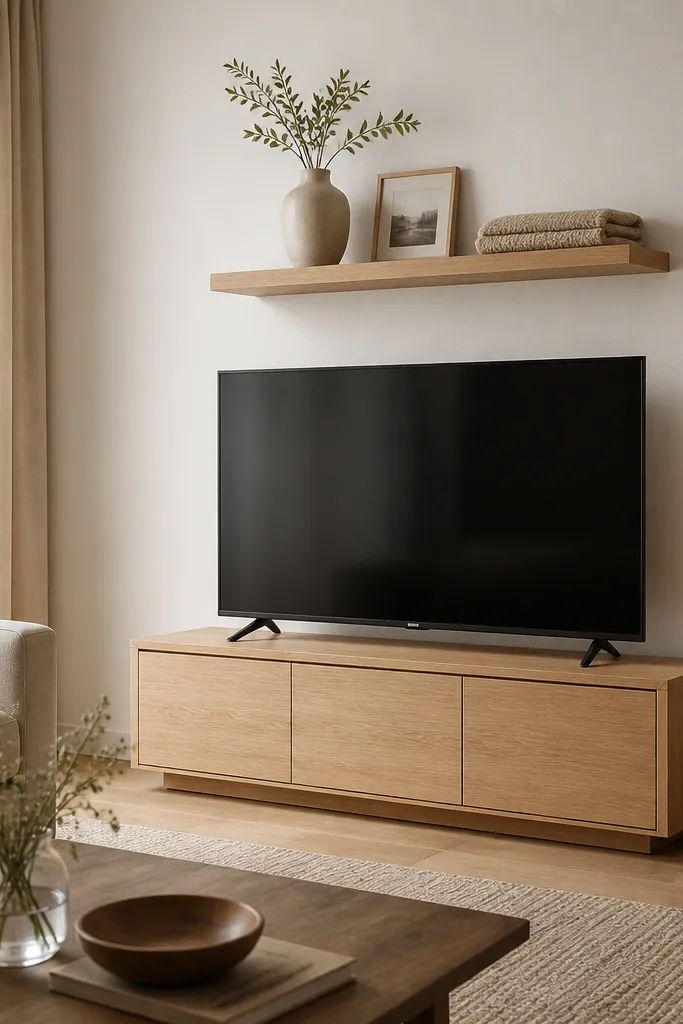
Start by choosing a console height around 35-45 cm so it stays visually light. Center the TV so it doesn’t crowd the console edges. Mount the floating shelf 20-30 cm above the TV frame, then keep items on it minimal — three objects max. Use one tall object like a narrow vase, one flat item like a frame, and one textural item like a folded knit. Style your sofa with a throw in the same tone as the ceramics or wood. Finish by placing a lamp on the opposite side from the shelf so you balance the light across the room.
This look works because it creates vertical rhythm while keeping the floor open. A low media console keeps the TV area grounded, and a floating shelf above adds storage without eating your sightlines. I use warm wood finishes and matte ceramics because they don’t reflect harsh light and they feel soft at night. It’s great for people who keep chargers, remotes, and small games out in the open — you get a place for them that doesn’t look messy. This also suits rooms with low ceilings, because the shelf adds interest higher up instead of piling stuff on the floor.
AvoidAvoid filling the shelf with many small things — it reads busy in tiny rooms.
Good to knowIf your shelf items look too small, swap one for a larger ceramic vessel — scale is the difference between cozy and clutter.
5. Corner reading nook with a chaise-style sofa
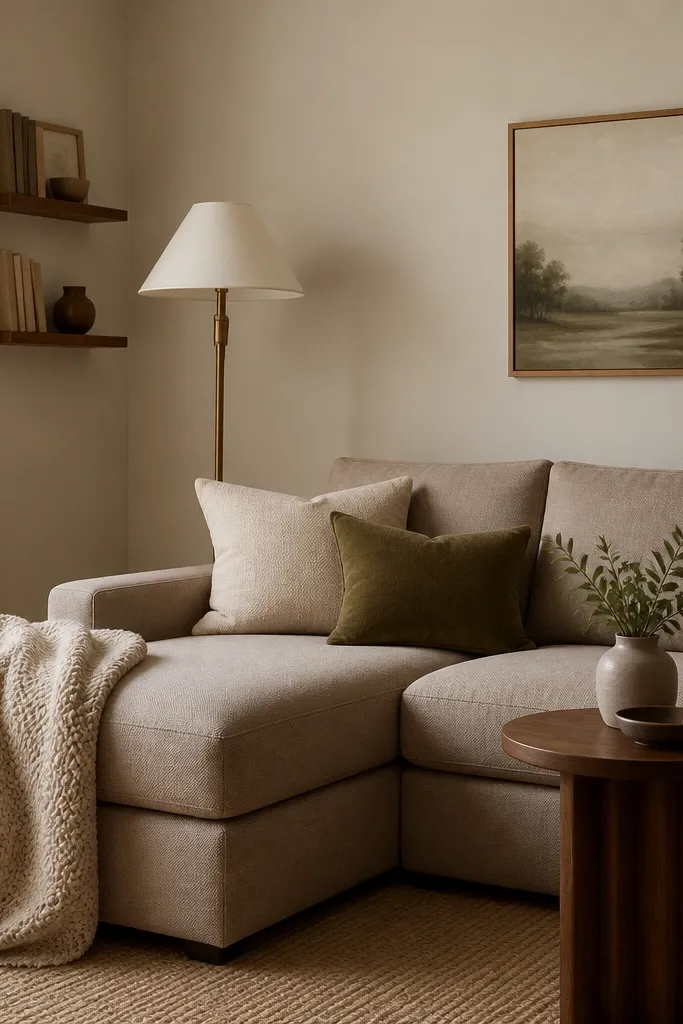
Start by pushing the chaise into the corner and leaving a clear path of at least 70 cm to the door or kitchen entrance. Place a small round side table so it sits within arm’s reach of the chaise — aim for 35-45 cm diameter. Add a floor lamp on the outer side of the nook and angle the light slightly toward the seating. Use a knit throw in oatmeal or cream and pillows in one accent color like olive. If you can, add a small rug runner under part of the chaise so the corner feels defined.
A corner nook is cozy because it turns unused space into a purpose. When you place a chaise sofa into the corner, you create a natural “nest” for reading and relaxing without blocking the main walkway. I like using olive or deep green accents here because they look warm next to cream walls and they hide dust better than light fabrics. This layout also works well if you have one window on the side wall, since the chaise lets you catch daylight while still feeling enclosed. It’s a strong choice for apartments where the living room doubles as a wind-down space after work.
AvoidAvoid placing the chaise too far into the room — you’ll lose the corner coziness and block circulation.
Good to knowUse a textured rug pad or thicker rug in corners so the nook feels cushioned instead of hollow.
6. Sofa + two mismatched chairs in the same fabric family
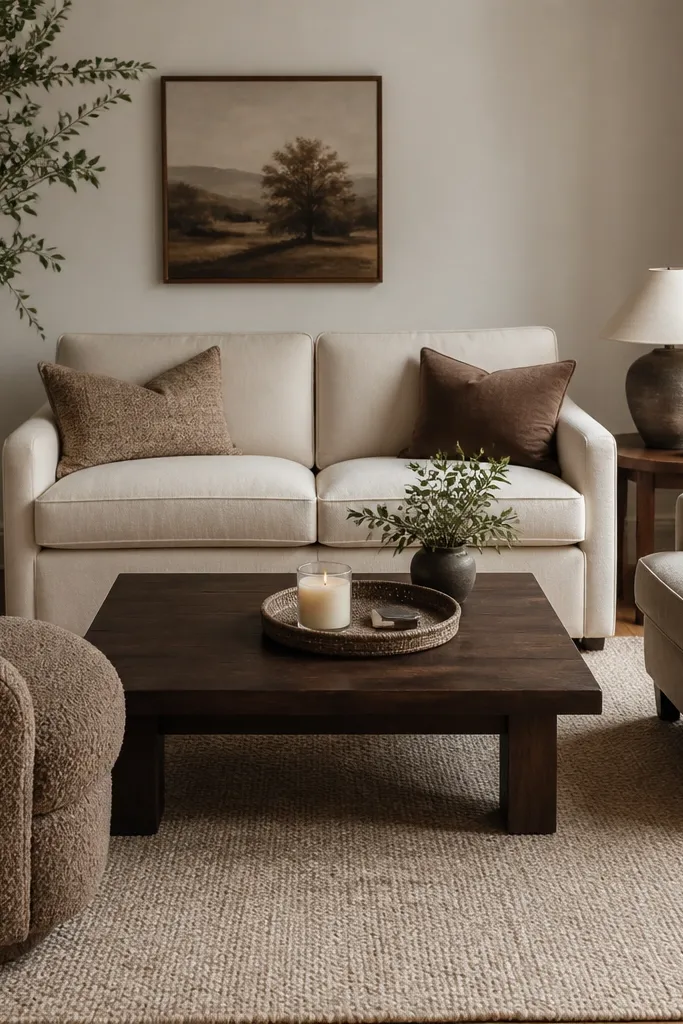
This is how you get a “collected” cozy look without buying a full matching set. I’ve done this in apartments where space is tight and the furniture has to do double duty for seating and styling. The trick is that the chairs look different, but they share the same warmth level — oat and taupe feel related, while cool greys don’t. Bouclé or boucle-like upholstery makes the room feel inviting because it catches light softly. It also flatters people who sit with relaxed posture — the seat back and texture feel forgiving after a long day.
Start by selecting one sofa in a neutral warm base like cream, then pick two chairs that both read warm. Keep chair heights within a few centimeters so the visual line stays clean. Place chairs at an angle toward the sofa rather than straight-on to open the room. Add a coffee table that’s slim and low, around 40-45 cm high, then use a tray to group items. Put the rug down first so it fits under the front legs of all seating. Finish with a throw blanket on the sofa and one matching cushion on each chair.
Tie the chairs together with one repeated detail — same color piping or same throw color on each chair.
Avoid mixing warm neutrals with bright cool tones like icy blue — it makes the room feel off.
7. Glass-front cabinet for dining overflow in the living room
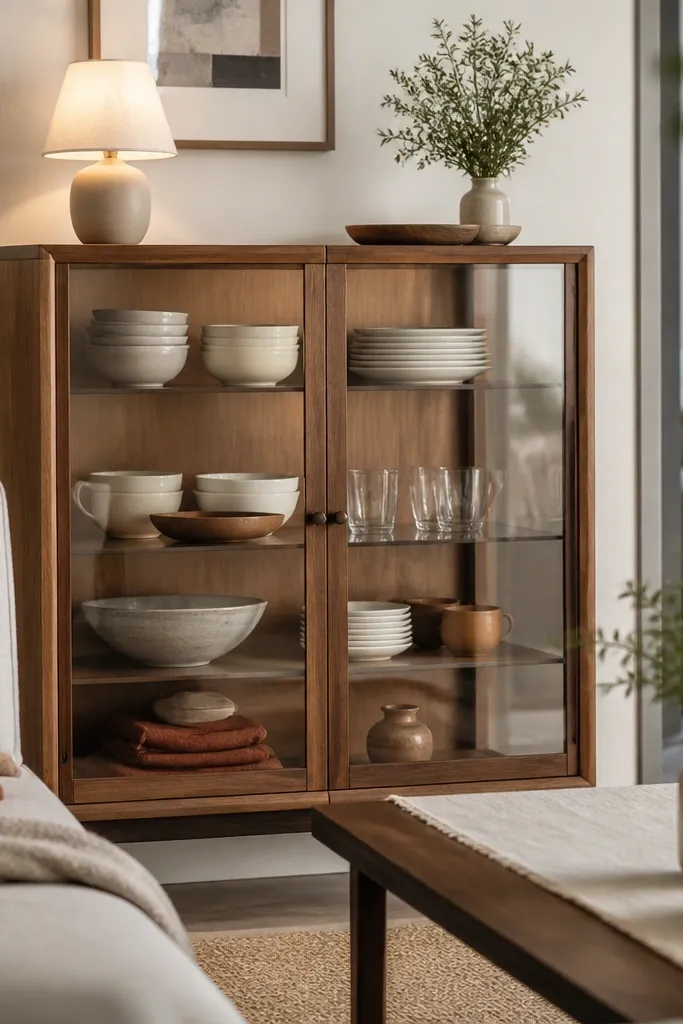
Start by choosing a cabinet with warm wood and clear glass doors — avoid glossy black if your lighting is warm because it can look harsh. Put the biggest items on the bottom and keep the top shelf airy. Stack plates straight and rotate serving bowls so you don’t get a random pile. Add folded napkins in one accent color like terracotta or burnt orange. Place a lamp on top with a fabric shade and keep the cord tidy. Style the coffee table with a simple linen runner and one candle so the cabinet top isn’t the only cozy texture.
If your apartment living room also stores dining stuff, a glass-front cabinet makes it look intentional instead of chaotic. I’ve lived with the “where do we put it all” problem, and closed storage can still feel heavy in small rooms. Glass lets you see order, and warm wood frames keep it cozy rather than office-like. Use it to hide the mess but keep the warmth visible through the contents. This works best when your dishes are mostly white or one coordinated tone, because the cabinet becomes a display.
AvoidAvoid mixing ten different plate patterns — the cabinet turns into visual noise.
Good to knowUse labels on the back of the shelves so you keep it neat without thinking about it.
8. Sofa table + runner for a narrow wall glow
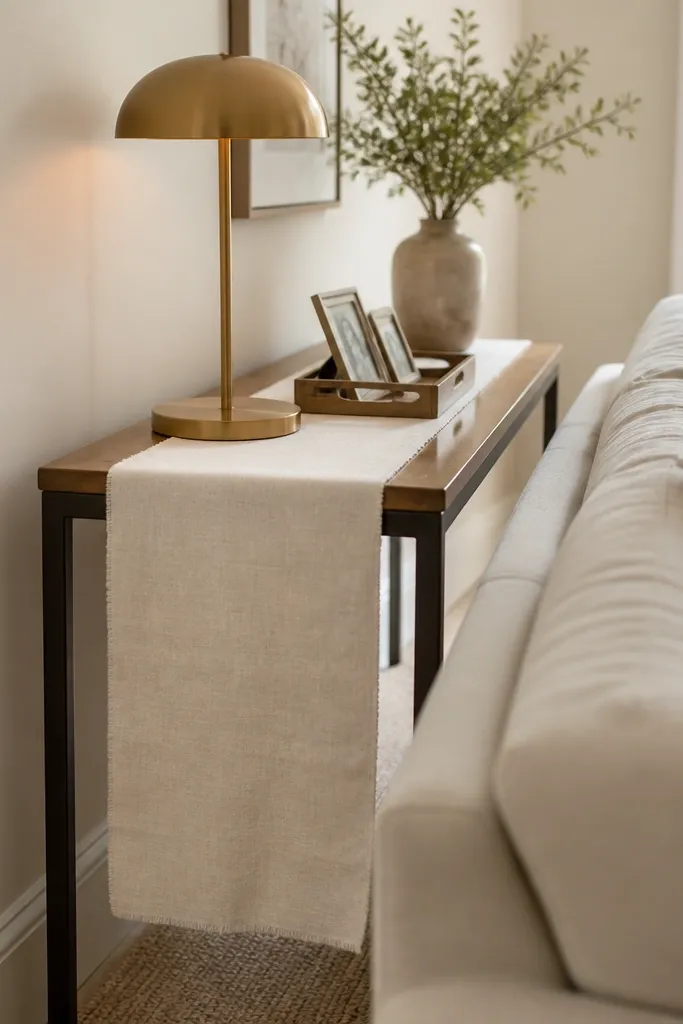
A slim sofa table turns an awkward wall into a lighting moment. In apartments, you often have one long wall that’s too narrow for a big bookcase, so you need something thin. I like a console table because it gives you surface area for lamps, trays, and decor without eating floor space. The linen runner adds softness and helps your eye read the table as part of the room, not a random add-on. This works in rooms where your seating is pushed forward and you need visual balance behind it.
Start by measuring the wall and choosing a console depth under about 25-30 cm. Place it behind the sofa with a gap of at least 10 cm so it doesn’t feel cramped. Add a linen runner that runs nearly the full length but leaves 5-8 cm on each side. Put a lamp on one end and a tray with two frames on the other. Keep the frames small — around 20x25 cm each — so the table stays airy. Finish by matching the runner color to your throw or rug tone.
If the room feels dark, use a lamp with a light shade and a slightly angled neck so the light hits the wall.
Avoid a console that’s too deep — it blocks the walkway and makes the room feel smaller.
9. Corner bookshelf styling with the 3-height rule
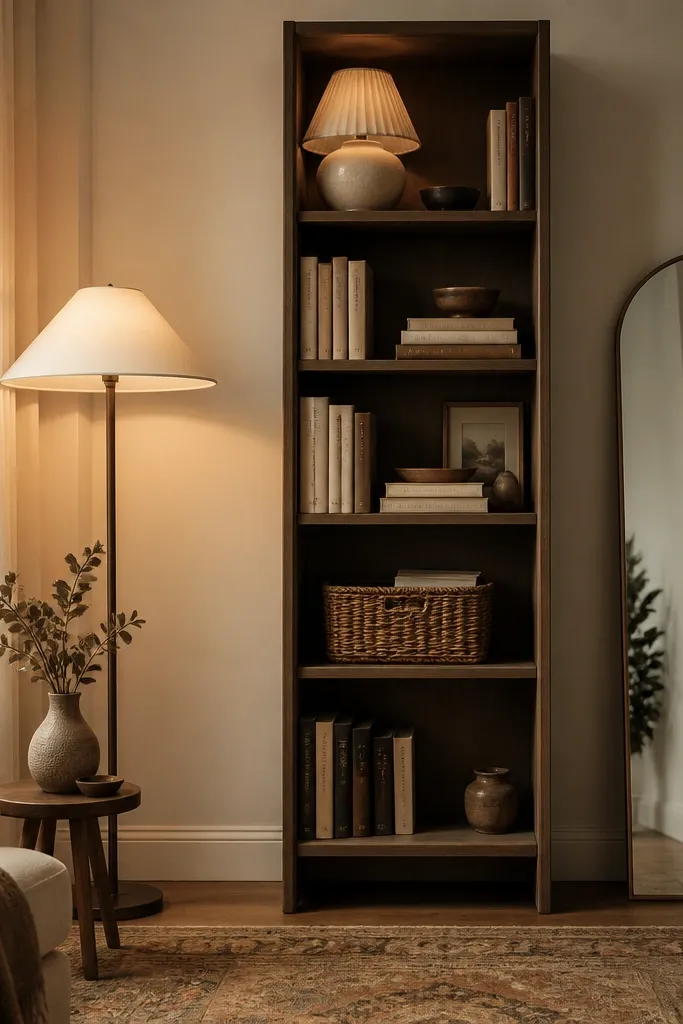
Bookshelves can make small rooms feel cluttered fast, so the styling has to be disciplined. I use the 3-height rule because it makes the shelf look intentional from across the room. You place items in a tall group, a medium group, and a low group, then keep the gaps consistent. Warm ceramics, woven baskets, and textured book covers make the corner feel cozy instead of showroom-ish. This is great for apartments where the living room is the main storage area and you want it to feel homey, not like a storage unit.
Start by sorting your books into one warm palette — cream covers, tan, and muted earth tones work well together. Stack horizontally only if you can keep the row heights similar. Place a tall ceramic vessel or small plant on the top shelf, then add a medium frame or candle holder. Put woven baskets on the lower shelf for blankets or extra throws. Leave one open space between groups so it breathes. Add a small mirror on the side if you can — not huge, just enough to reflect the lamp light into the room.
Use a woven basket for anything you don’t want to see — it makes the shelf look finished even when you’re busy.
Avoid stuffing every shelf edge with decor — the corner will look cramped.
10. Wood slat coffee table with a warm linen tray
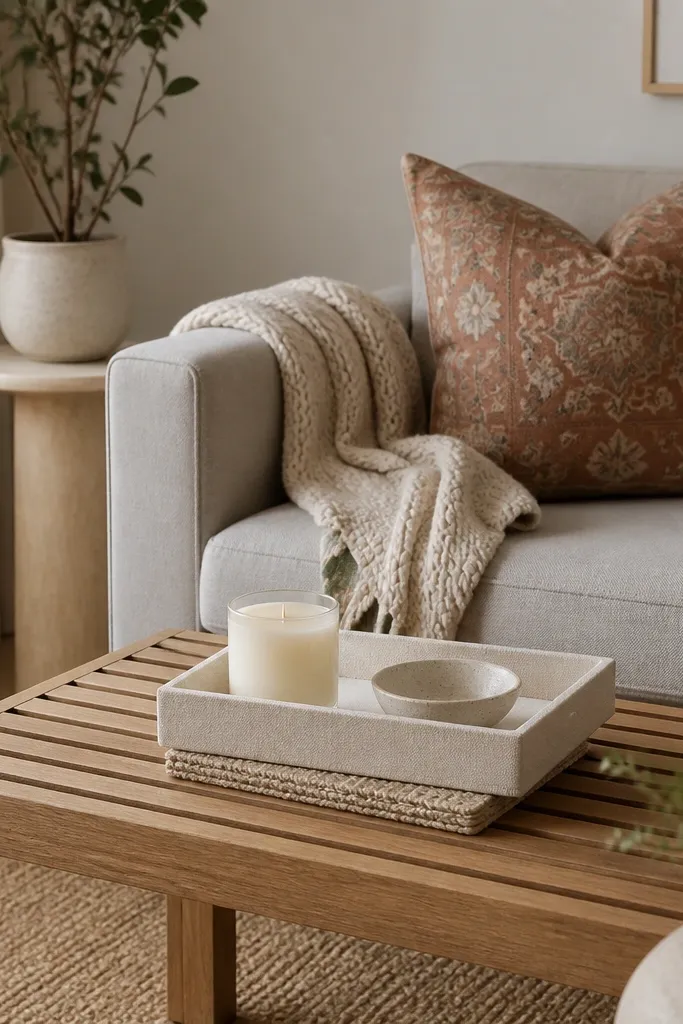
Start by choosing a coffee table height around 38-45 cm so it sits comfortably with a sofa and doesn’t dwarf your seating. Place it centered on the rug so the table legs sit within the rug edge or close to it. Add a cream linen tray that’s about 2/3 the table length. Put one candle and one small dish on the tray, then keep everything else off the surface. Add a knit throw with a visible weave next to the table to repeat texture. Finish by placing coasters so the tray doesn’t look random after you set down a mug.
A coffee table can either make your room feel tidy or messy, and most people pick the wrong finish. I like wood slat tops because they look lighter than solid blocks, and the gaps keep the table from feeling heavy. A warm linen tray turns random items into a styled moment. It also helps if you live with daily clutter — you can clear the table in 30 seconds by lifting the tray. The cozy effect comes from mixing materials: wood for warmth, linen for softness, and ceramic for visual calm. This works for any skin tone and decor style because it’s neutral and tactile.
AvoidAvoid a bare tabletop — it reads unfinished in small rooms.
Good to knowPick one tray color and stick with it — I’ve used cream linen for years because it hides wear and looks warm in every season.
11. Textured throw laddered on the side of the sofa
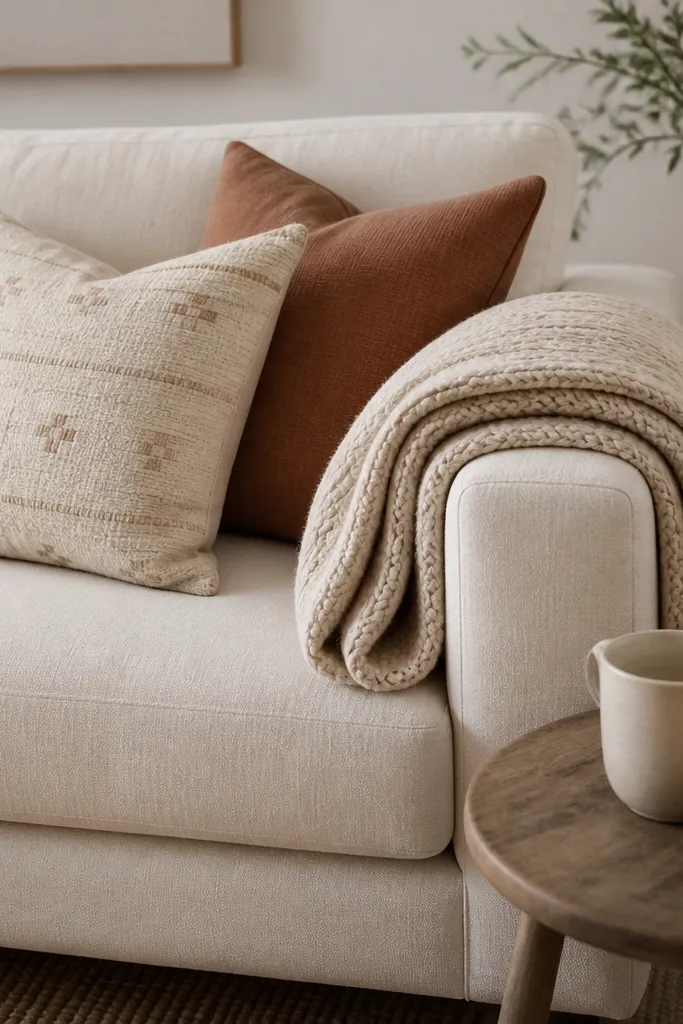
Start by choosing one throw with visible texture, not a thin blanket. Fold it in thirds, then stack two layers so the knit edge shows clearly from the room entrance. Place it on the sofa arm and let it drape about 15-20 cm down the side. Add two pillows: one solid in cream or clay, one with a subtle weave or small-scale pattern. Keep pillow sizes balanced, like 45x45 cm squares, so the arrangement doesn’t look lopsided. Then set a lamp nearby so the throw texture catches light in the evening.
Cozy isn’t about adding more stuff. It’s about making the texture obvious where your eyes land. A throw folded in layers along the sofa side arm looks planned and it gives the room a warm visual rhythm. I prefer chunky knit in oatmeal or light caramel because it shows texture under low light and doesn’t look flat. The pillows should match the throw warmth, not the exact color, so the room feels cohesive without being matchy. This looks good on living rooms used daily, because you can keep it casual while still looking styled.
AvoidAvoid random throw placement on the seat cushion — it looks like you tossed it there.
Good to knowIf your room is very small, use only one patterned pillow — texture does the work.
12. Mirrors on the side wall to bounce warm light
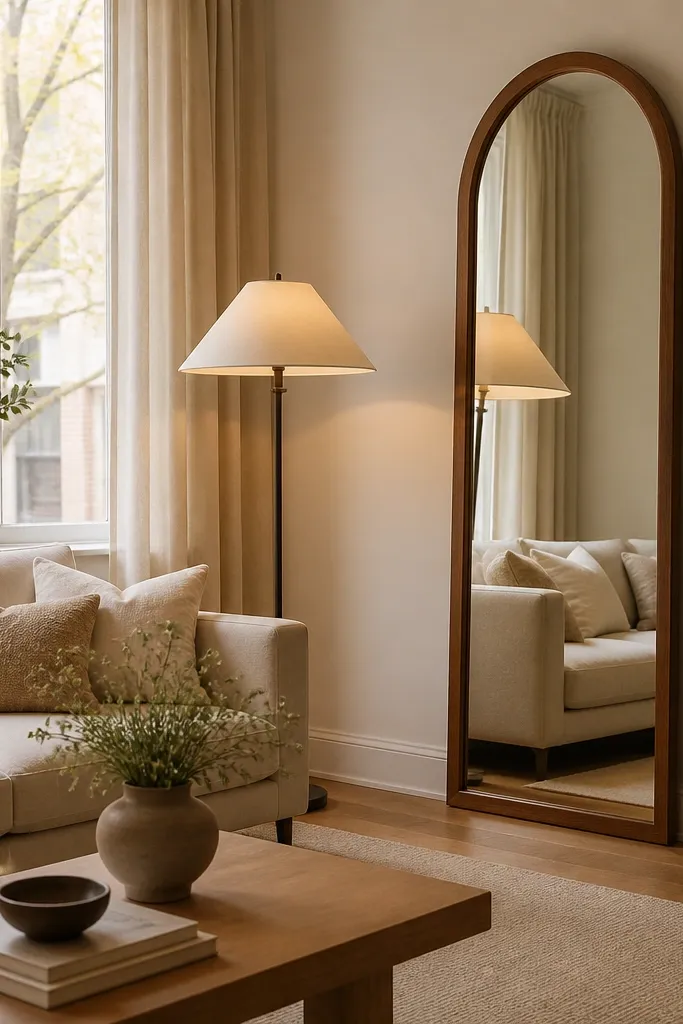
A mirror makes a small apartment living room feel less boxed because it reflects light and expands the visual depth. I’ve found side-wall placement works better than placing a mirror directly across from the TV — it reflects the room’s warmth instead of screen glare. Choose a mirror with a warm wood frame or a brushed brass edge so it looks cozy, not cold. Arched shapes soften the room’s lines, especially if your furniture has straight edges. This works well in rooms where the window is on a side wall or you don’t get much evening light.
Start by placing the mirror on the side wall where it can reflect a lamp or window, not a messy corner. Aim for mirror height around 140-160 cm so it catches enough light. Use a warm wood frame or thin brass frame — chunky silver frames can feel harsh in small rooms. Angle the mirror slightly if your wall isn’t perfectly straight. Then keep the palette consistent: cream sofa, beige rug, and one accent like clay. Style the area around it with one small plant or a slim floor lamp so the reflection looks intentional.
Wipe the mirror with a microfiber cloth right before guests — fingerprints show up fast under warm bulbs.
Avoid placing the mirror where it reflects clutter — it amplifies the mess.
13. Dining chairs pulled in as extra seating with slipcovers
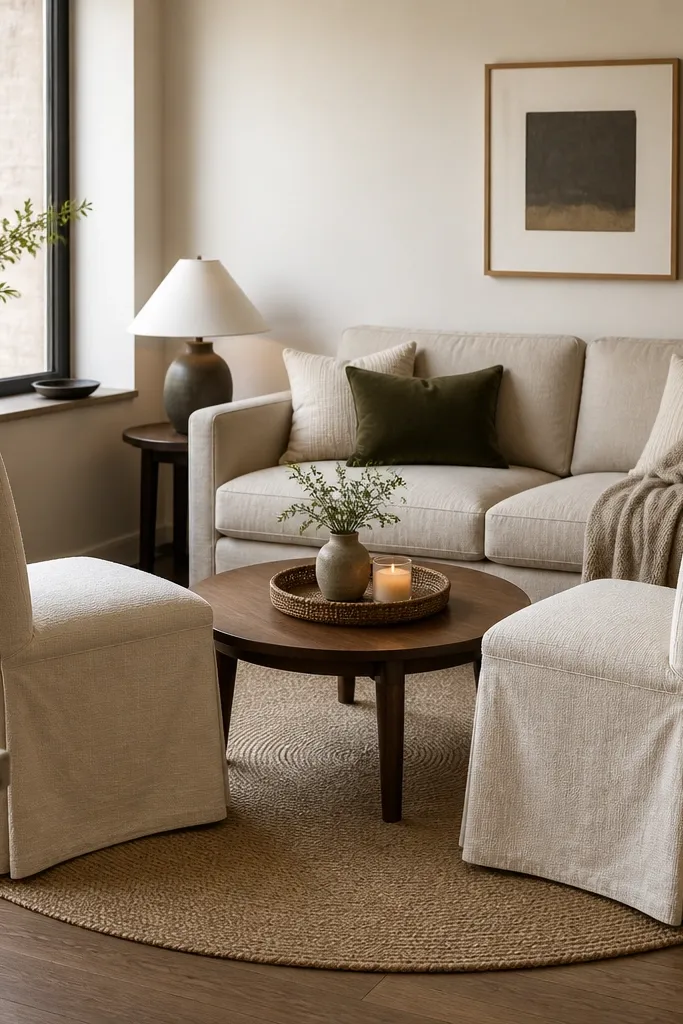
Start by picking slipcovers in a warm neutral and making sure the fabric has some texture, like twill or linen-look. Place the dining chairs at the sides of the coffee table so the seat backs face the sofa. Keep a small gap between chair legs and rug edges so it doesn’t look squeezed. Add a round or oval rug to soften the geometry and reduce the “square room” feel. Put one cushion on each chair in clay or olive to bring warmth back into the palette. Finally, hang a warm lamp near the seating so the chairs don’t look stark at night.
This works when your apartment doesn’t have room for a full living room seating set. Dining chairs are great because they’re slimmer than typical armchairs, and slipcovers make them look like they belong. I’ve used warm cream slipcovers with a textured weave because they hide everyday scuffs and still look clean. The cozy effect comes from consistent fabric and color, not from adding more furniture. It flatters small spaces because the chairs tuck in and don’t create bulky corners.
AvoidAvoid stiff, shiny slipcovers — they look plastic and kill the cozy vibe.
Good to knowChoose slipcovers with elastic hems — they stay tight after you move the chairs around.
14. Low lighting plan: 2700K bulbs, one floor lamp, one table lamp
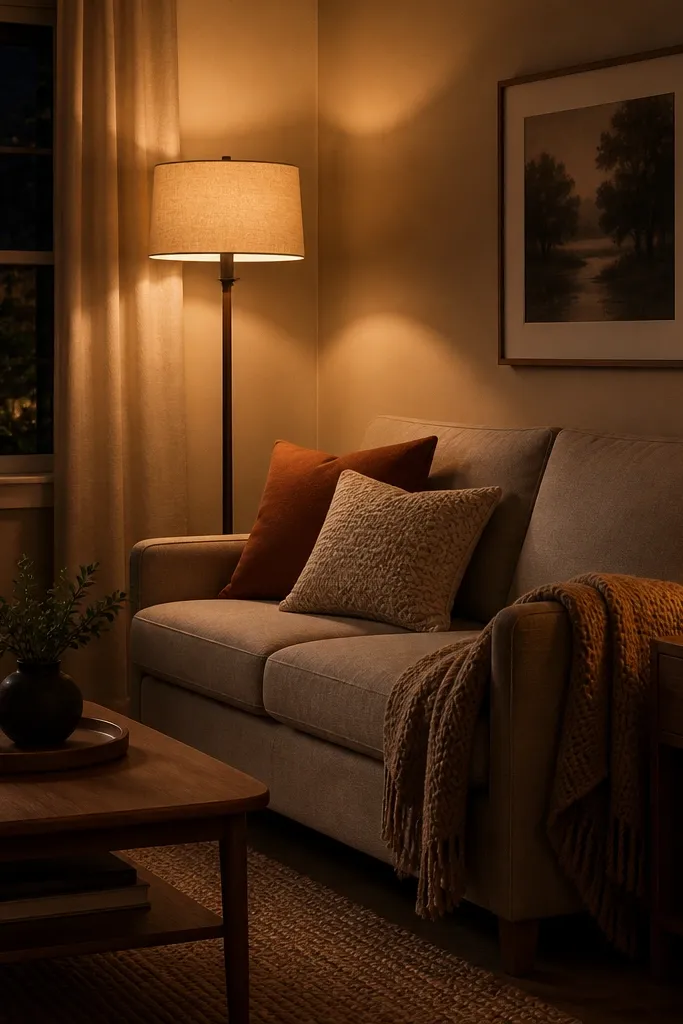
Start by turning off overhead lights and placing a floor lamp near the corner opposite your main seating. Add a table lamp on the side table or media console within 1-2 meters of the sofa. Use bulbs labeled 2700K and choose shades in cream, oat, or beige so the light spreads. Keep the lamp bases sturdy and weighted so they don’t wobble when you bump the table. Style the throw and cushions so they’re visible in the light area, not hidden in shadow. If you have a TV, angle one lamp away to avoid screen glare.
Cozy is mostly lighting, and in apartments it’s the one thing you can change without buying new furniture. I set up two light sources so you don’t get one harsh pool of brightness — it makes the room feel staged and small. I use 2700K bulbs in both lamps and keep the shades fabric, not glass. Warm light makes textured fabrics like knit throws and bouclé cushions look richer. This is the setup that makes the room feel inviting when you walk in after work, because your eyes don’t have to adjust from bright overhead lighting.
AvoidAvoid relying on one ceiling light — it makes small rooms feel flat and harsh.
Good to knowIf your overhead light is bright, swap it to a dimmable bulb first so you can keep the cozy look without rewiring.
15. Soft divider: tall plant + sheer curtain behind it
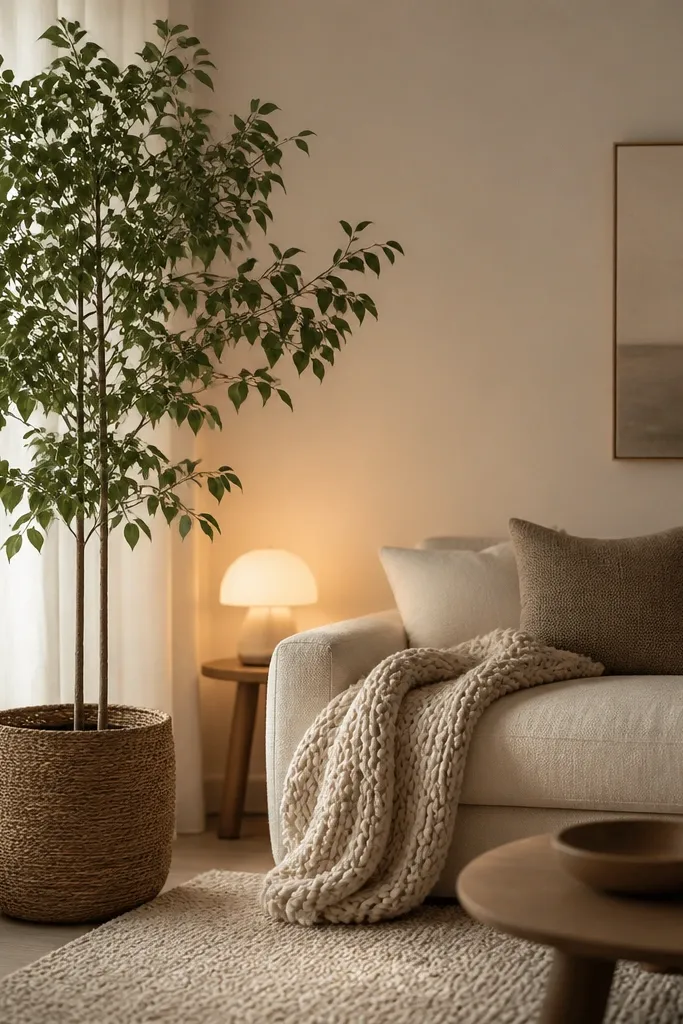
Sometimes your living room feels too open and you miss that cozy “enclosed” feeling. A tall plant placed like a divider creates a gentle boundary without blocking your view completely. I pair it with sheer curtains because the plant needs light behind it to look soft instead of silhouetted. The woven pot keeps the natural look warm and ties into the textiles. This setup works especially well in studio apartments where your living area bleeds into your kitchen or entry. It also makes the room look more intentional when your furniture layout isn’t perfectly symmetrical.
Start by choosing a plant that won’t flop — a fiddle-leaf or tall dracaena with upright stems works better than a trailing plant. Place it near the edge of your rug zone, about 20-30 cm away from the curtain wall so it doesn’t look stuck. Add sheer curtains behind the plant if you have a window or light source; let them hang naturally so they don’t look like a panel screen. Use a warm floor lamp nearby so the leaves pick up light at night. Style your sofa with one textured throw and keep pillow colors in cream plus one accent like deep olive. Finish by keeping the coffee table surface clear so the plant divider feels airy, not cluttered.
Choose a pot with a wide rim so the plant reads stable on camera and in real life.
Avoid a divider that blocks walking paths — if people have to squeeze around it, the room stops feeling cozy.