1. 2700K floor lamp with a linen shade
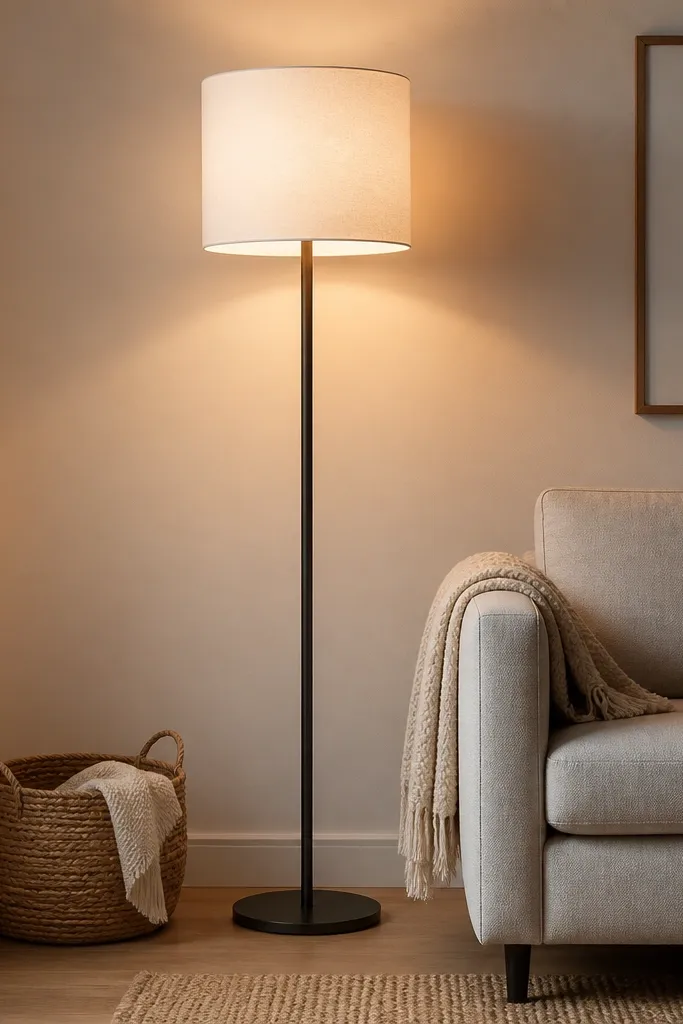
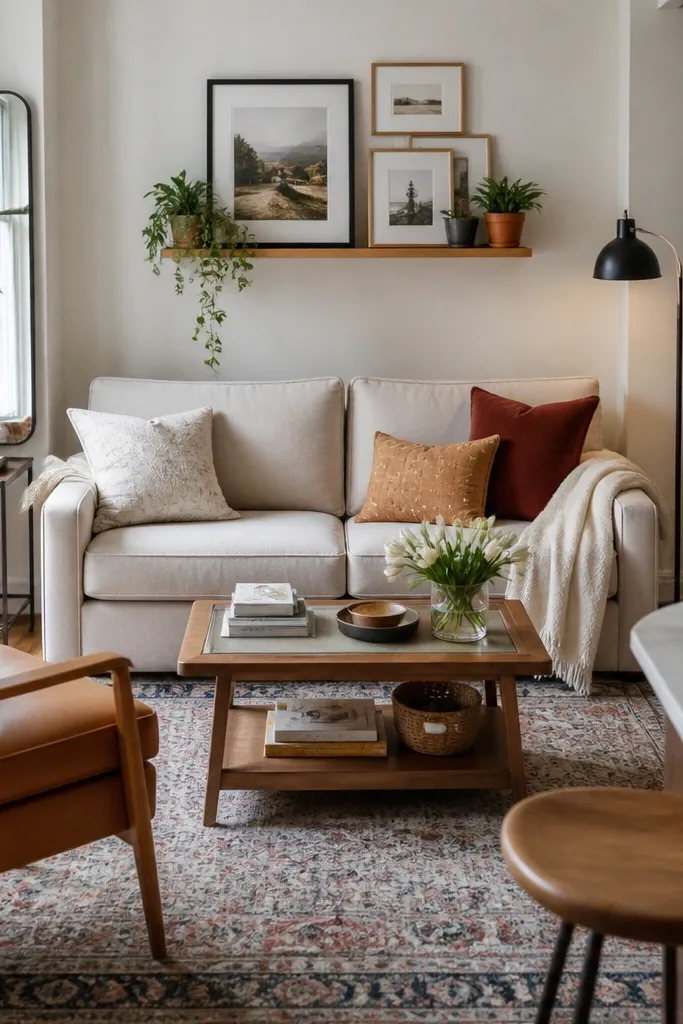
I always start with a warm lamp because it changes the whole room’s “skin tone.” Choose a linen shade in off-white or pale oatmeal so the light looks soft, not yellow. This works especially well next to grey, taupe, or white sofas because it adds warmth without making the room feel dusty. If your walls are cool white, linen light brings them closer to a creamy tone. The modern part comes from the simple drum shape and slim metal stem, not from fancy decor.
Start by replacing the bulb in your existing lamp with a 2700K bulb (you want the warm glow you see in cafés). Then set the lamp so it lights a corner of your seating — place it 12 to 18 inches from the sofa side, not behind it. Use a shade height that sits roughly at eye level when you’re seated, so the light lands on cushions and the rug. Finally, add one small lamp-adjacent texture: a knit throw folded over the sofa arm or a woven basket at the base.
If your lamp uses a standard bulb, pick one with a dimmer so you can lower the intensity at night.
Avoid 4000K bulbs — they make blankets look dull and the room feels colder.
2. 5x7 rug that sits under the sofa front legs
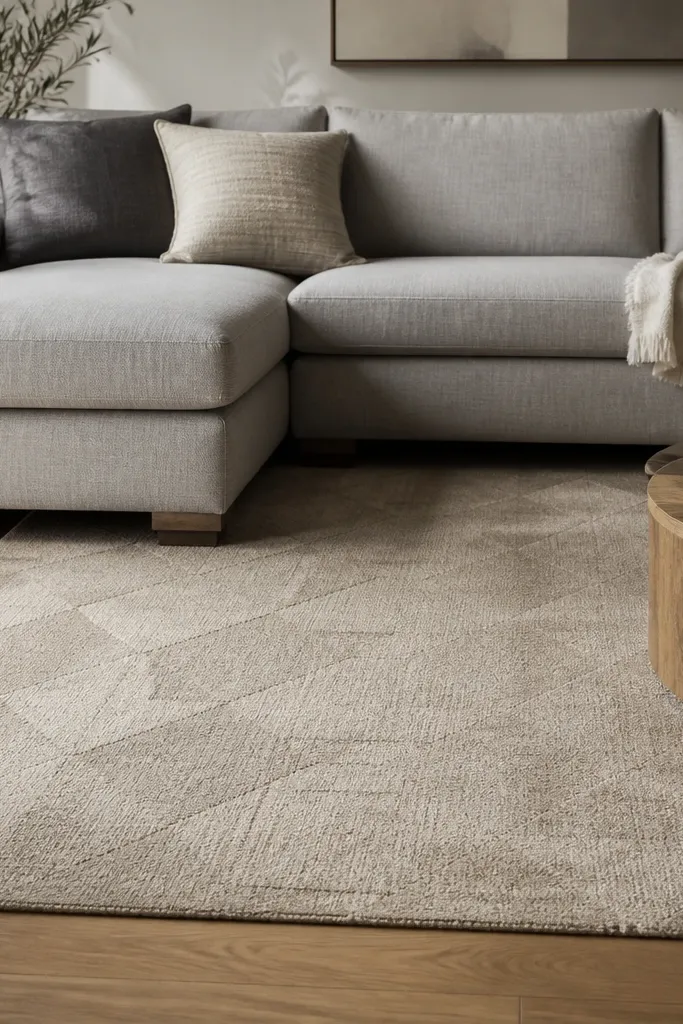
Measure your seating area and aim for a rug size where the front legs of the sofa sit on the rug — for many living rooms, a 5x7 is the sweet spot. Place the rug so its longest edge runs parallel to the sofa, then check that the rug doesn’t leave a big gap behind the sofa. If the pattern has direction, align it so the design sits straight with the room, not crooked to the sofa. Finish by adding a thin rug pad so it lays flat and doesn’t bunch at the edges.
A cosy living room needs a rug that anchors your seating, and the fastest way to get that “finished” look is correct sizing. A warm greige rug with a low-contrast pattern looks modern but still hides everyday life. This is flattering for rooms with white walls because the rug adds mid-tone warmth without shouting. If you have kids or pets, a slightly mottled pattern hides stains better than a flat solid. The key is that the rug should feel like it belongs under you, not like it’s sitting in the middle of the floor.
AvoidAvoid a rug that’s too small; it makes the seating look like it’s floating.
Good to knowIf you’re between sizes, go bigger — the extra width makes the room look calmer and more expensive.
3. Oatmeal knit throw with a visible fold over the arm
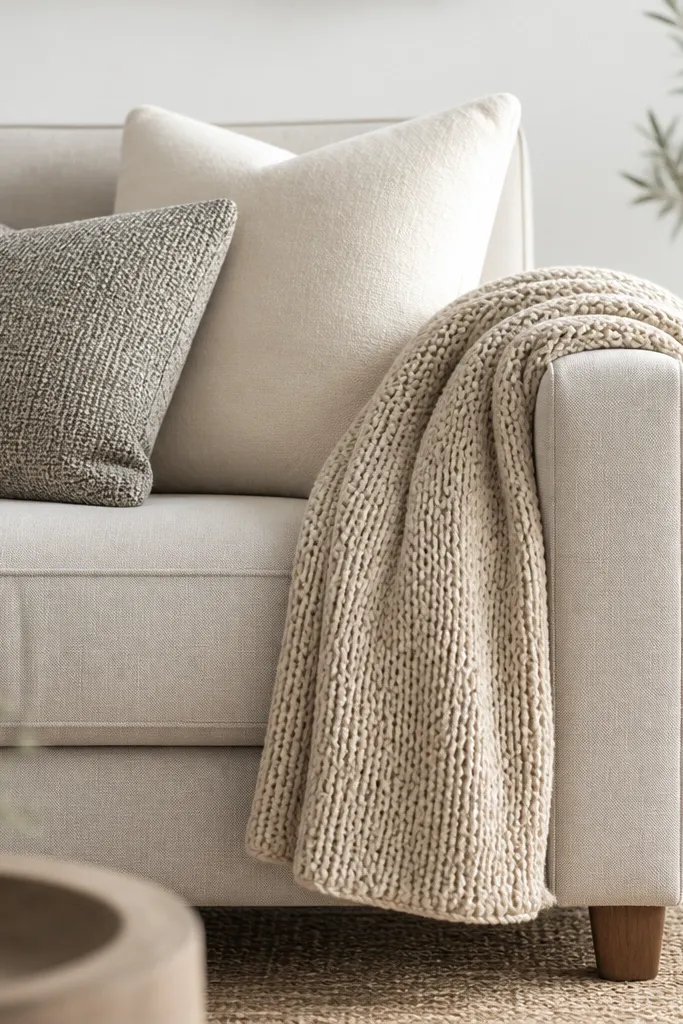
Start by choosing a throw that’s wide enough to cover the sofa arm with 8 to 12 inches of drop. Fold it once so the fold line is crisp, then drape the longer end down the side of the arm. Place it so it sits in front of the back cushions, not behind them, so it’s visible when you walk in. Pair it with one textured cushion in a warm grey or taupe — you want texture repetition, not three different textures fighting.
A knit throw is the easiest “cosy signal” because it reads tactile from across the room. Oatmeal or cream looks modern when the knit is chunky and slightly imperfect — it catches light in a way that smooth blankets don’t. This works for almost every skin tone and outfit color because neutrals don’t fight with your clothes or artwork. If your sofa is flat fabric, the knit adds depth and stops the room from looking sterile. I like throws that have a chunky weave and no shiny finish; they feel warm even in daylight.
AvoidAvoid thin fleece throws — they look cheap next to real knit and don’t catch light the same way.
Good to knowShake the throw out before you style it; a quick tug makes the weave lie flat.
4. Three cushions, one pattern, all in the same undertone
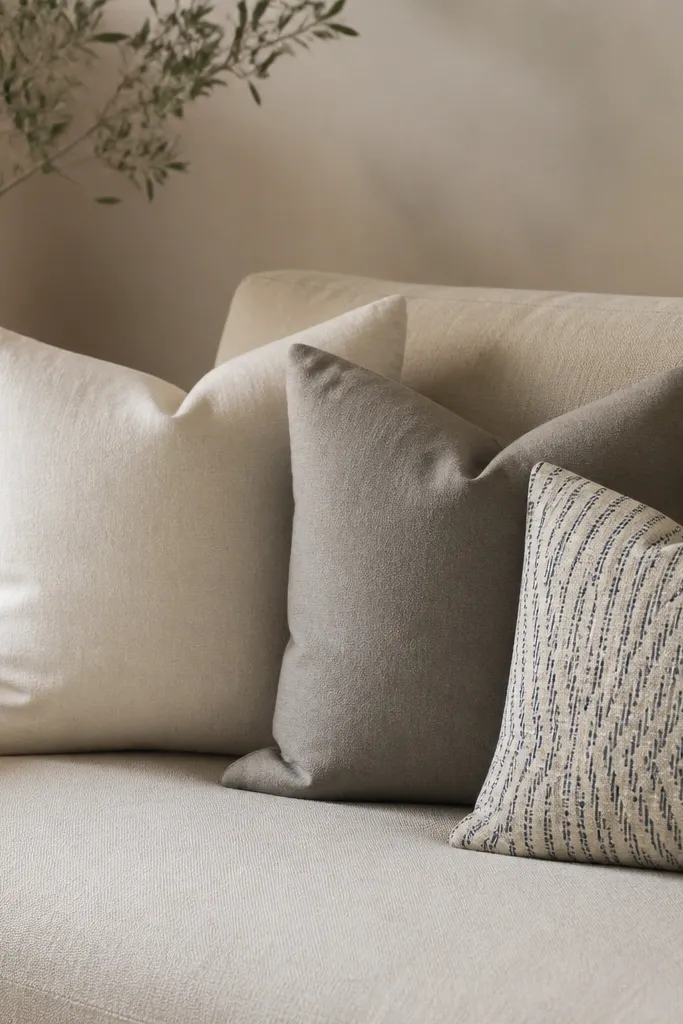
Cosy rooms look intentional when cushions look like a set, even if you mix pieces. I use three cushions because it’s enough to create depth without turning the sofa into a bed. Keep the undertone consistent — if you start with warm creams, choose warm greys and muted navy patterns, not cool blue greys. Patterns should be small-scale and low-contrast for modern cosy; big loud florals push it toward farmhouse. This arrangement flatters the body because it gives you a supportive back height and soft edges to sink into.
Start by placing two solid cushions against the back of the sofa — one cream, one warm grey. Add the patterned cushion in the middle or slightly off-center to create a focal point. Keep the sizes close: around 18x18 inches and 20x20 inches so the stack looks layered, not lumpy. Finish by aligning the seams and making sure the pattern cushion is the same height as the solids, so the sofa looks clean from the side.
If your patterned cushion is too bright, swap to a version with muted navy or charcoal lines.
Avoid mixing cool and warm neutrals together; your sofa will look like it’s dressed in the wrong season.
5. Charcoal blackout curtains with a light interior panel
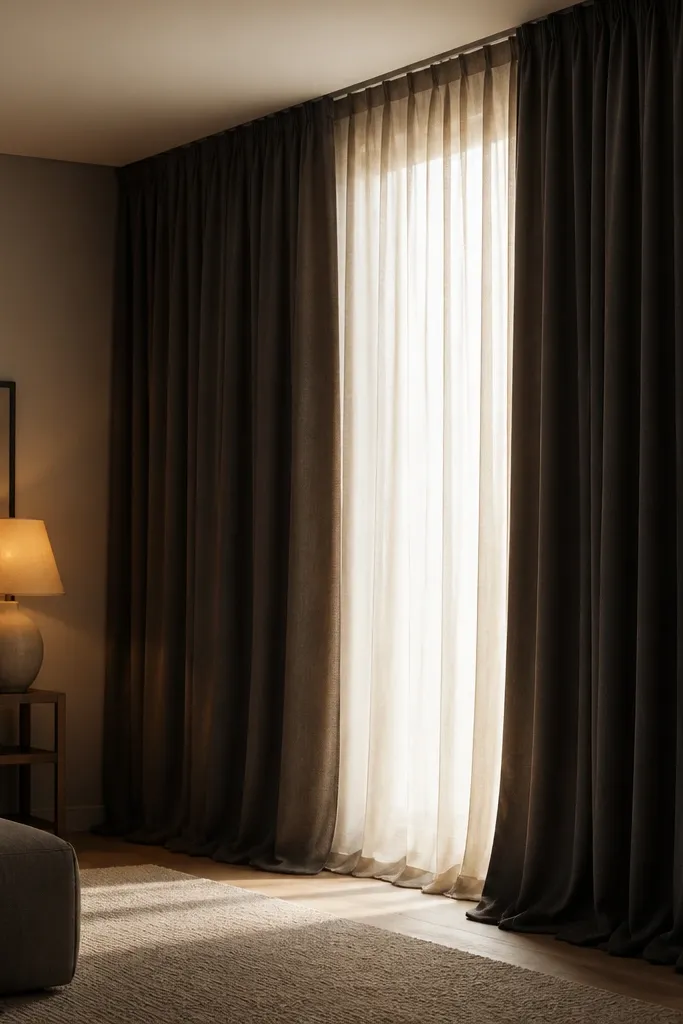
Measure from the floor to where you want the rod — I like mounting close to the ceiling, about 2 to 6 inches above the window frame. Choose panels that reach the floor and allow a small break or puddle so they don’t look like short cafe curtains. Use two panels per side so the fabric gathers and doesn’t leave light gaps. Then hang them so the folds stack neatly — pull them open once, then let them fall back into place before you judge the look.
Curtains are where cosy becomes real because they control light and sound. Charcoal or deep espresso looks modern and hides wrinkles better than lighter fabrics. If you use blackout lining, you get a softer evening mood because the room doesn’t stay washed out. For bright rooms, the dark outer layer adds depth; for darker rooms, choose charcoal with a warm brown undertone instead of true black. The effect is flattering because it frames the seating and makes your throws and art look richer.
AvoidAvoid curtain length that stops mid-calf — it makes the whole room feel unfinished.
Good to knowSteam or iron the top pleats; the crisp fold makes the room look designed even on a budget.
6. Mirror on the wall sized like a book, not a poster
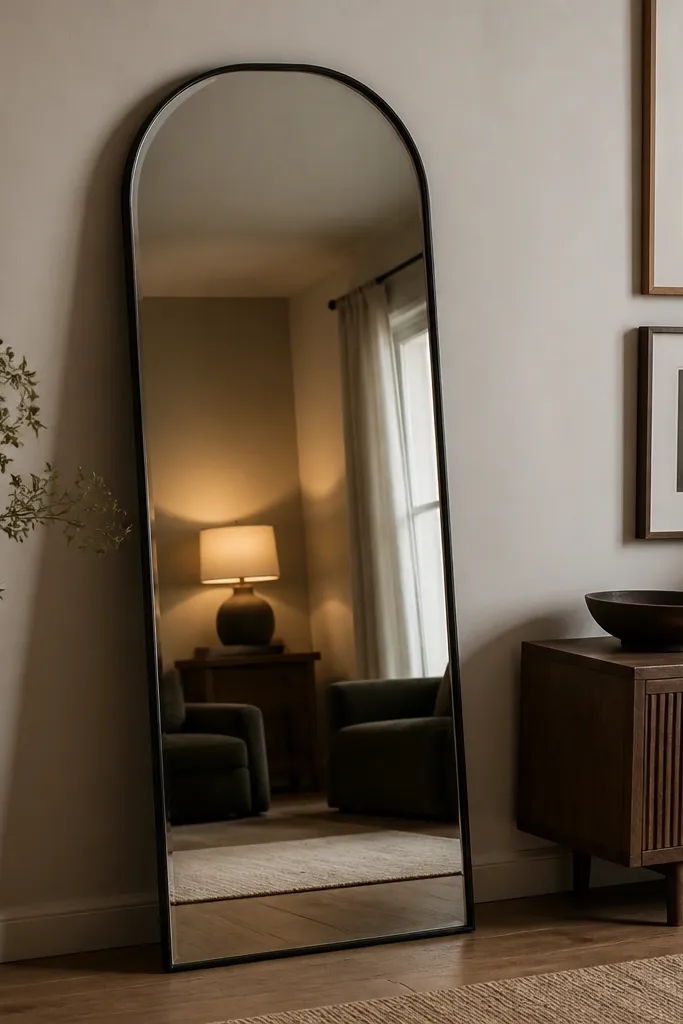
A mirror adds cosy by bouncing warm light and giving your eyes a break from flat walls. I like mirrors that are taller than they are wide — they make corners feel less tight without adding clutter. A thin black frame looks modern and works with charcoal accents, while gold frames can work if you already have warm wood or brass. This is especially flattering in rooms where the only light comes from one lamp; the mirror spreads it across the seating area. It also makes the room feel more “done” because it gives the wall a clear focal point.
Pick a mirror height that lands near eye level when you stand — around 60 to 68 inches from floor to the center of the mirror. Place it so it reflects either the lamp or a light-colored wall, not a messy corner. If you’re hanging it, use proper wall anchors for drywall and test the level before you drill. Style around it with one small framed print and keep the rest of the wall fairly empty so the mirror stays the star.
Wipe the mirror with a microfiber cloth right before photos — streak-free glass makes the whole room look brighter.
Avoid tiny mirrors; they look like an afterthought next to a sofa.
7. Wood tray coffee table styling with one "stack" only
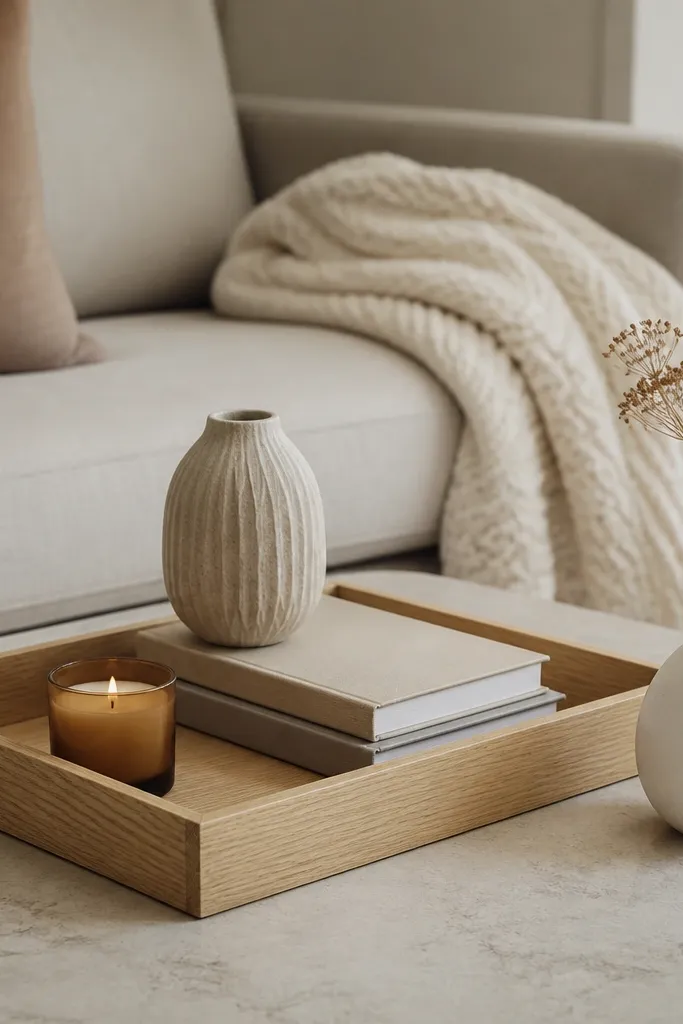
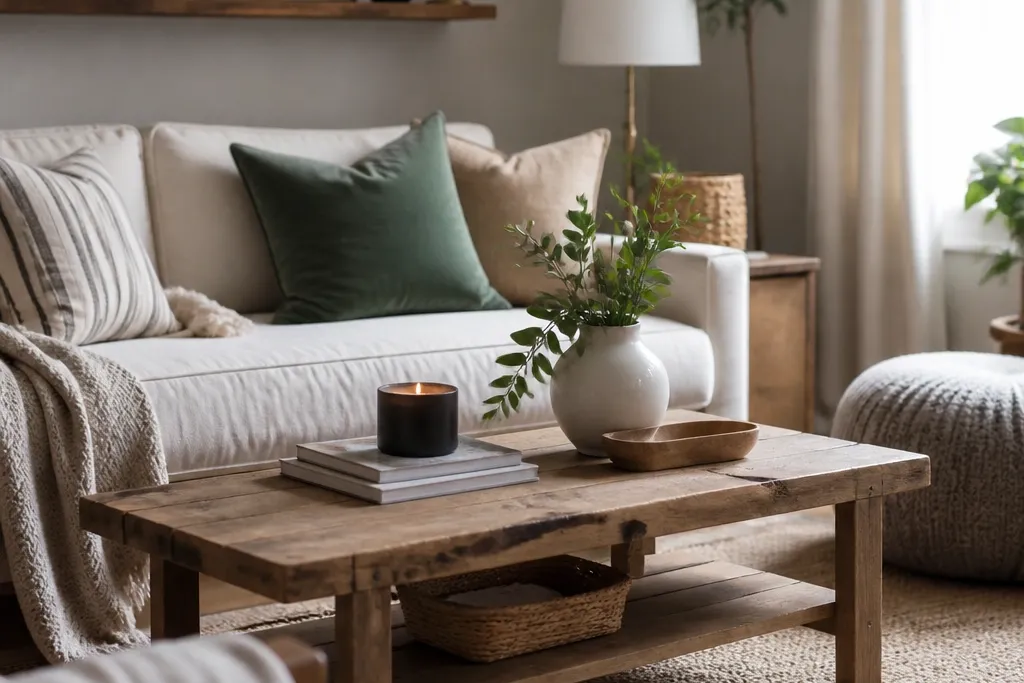
Start by clearing the entire coffee table, then place the tray in the center so it’s visually balanced. Add one stack of two books on the tray, then place a candle or small vase on top or beside the stack. Add one dried stem or a single plant leaf for height, keeping it under 10 inches tall so it doesn’t block the sofa view. Finally, wipe the tray and table surface so fingerprints don’t make it look neglected.
Cosy doesn’t mean messy, and coffee tables show it first. A wood tray controls the chaos by grouping small items into one tidy zone. I like light oak or walnut trays because they warm up grey or white rooms without looking rustic. Keep the number of separate items low — one stack of books plus one candle or one vase is enough. This flatters the room because it creates a calm surface where your eyes land, and it keeps the table from looking like a craft project.
AvoidAvoid scattering 8 small decor pieces; it reads clutter even if you think it’s “cozy.”
Good to knowUse book covers in neutral tones — cream, grey, or muted navy — so the tray doesn’t fight your cushions.
8. Matte ceramic candle holders in cream and sand
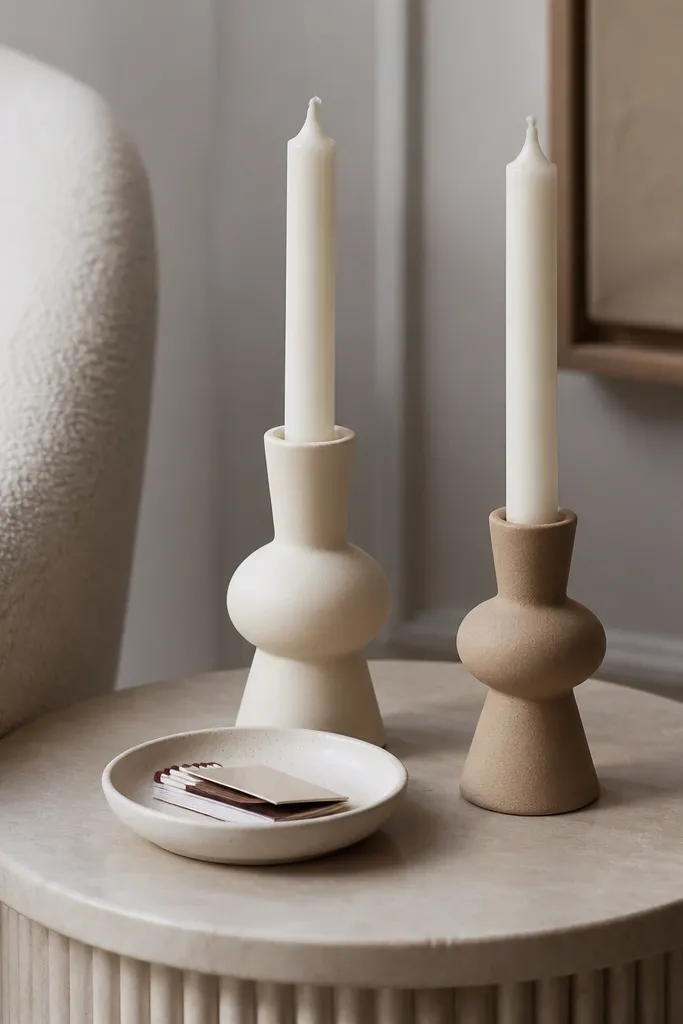
Start by placing one candle holder on a side table and the other on the coffee table or near a window ledge. Keep the candle heights similar, around 3 to 6 inches, so the arrangement looks intentional. Use a small match dish or a plain tray to hold matches so the table doesn’t look like it’s missing something. Trim wicks before lighting so the flame stays steady and doesn’t soot the ceramic.
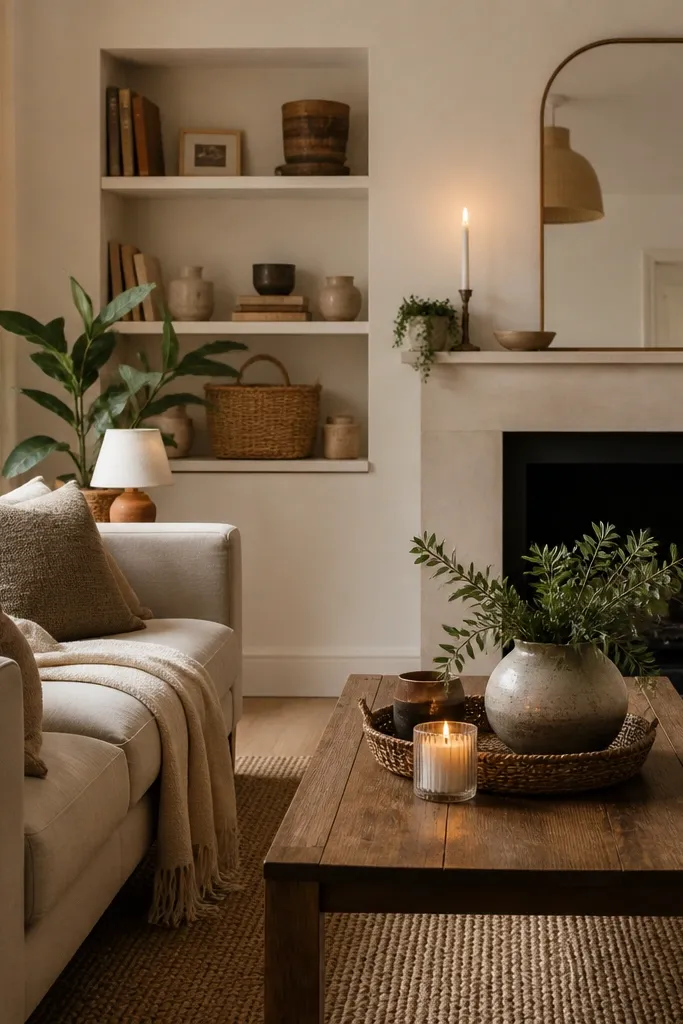
Candles make a room cosy in a way that bright decor never does. The trick on a budget is choosing matte ceramic holders, not glossy ones that look plastic. Cream and sand tones look modern and pair with both warm grey and charcoal. Unscented or mild scents keep the room from smelling like perfume — I prefer clean wax or a light vanilla if I use scent at all. Candlelight is also flattering; it softens shadows and makes skin tones look warmer when guests sit nearby.
AvoidAvoid heavily scented candles that overpower the room; cosy turns into headache fast.
Good to knowIf you burn candles often, rotate them weekly to keep the melt pool even.
9. Wall art in a grid of two prints, same frame color
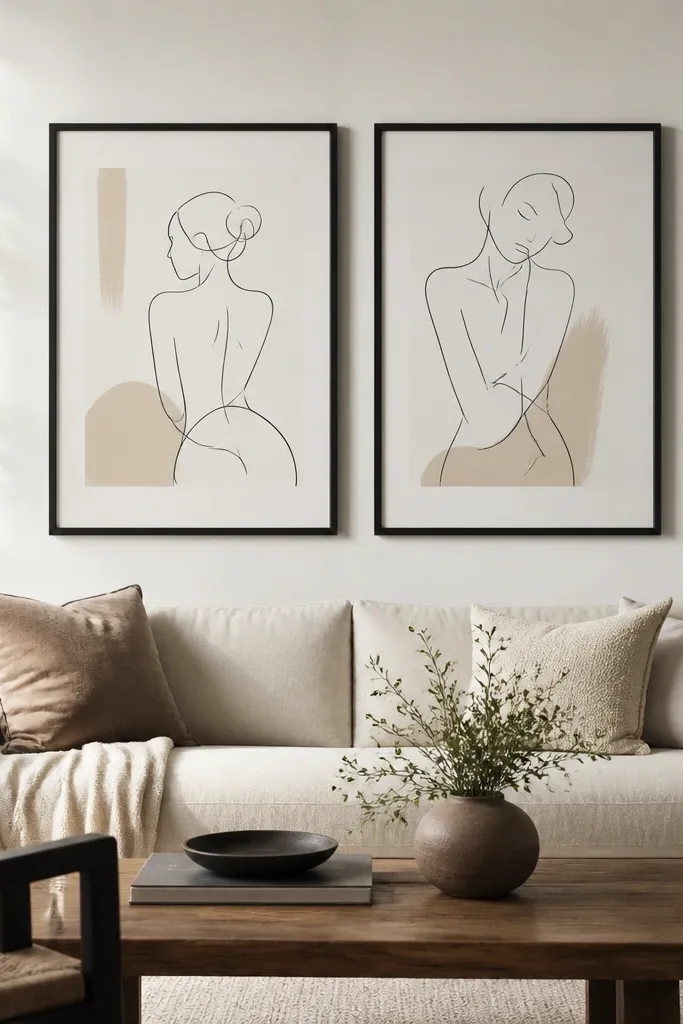
Modern cosy needs a little wall structure, and a two-print grid is the easiest upgrade. Matching frame colors make it look designed, even with prints you print at home or buy inexpensively. I like black frames because they connect to lamp bases and curtain hardware. The art style matters too: choose line drawings, abstract shapes, or subtle texture photos so it feels calm, not busy. This is flattering because it gives your eyes a soft focal point at sitting height, especially when your cushions and throws are neutral.
Start by choosing prints with the same color family — beige, cream, and charcoal work great together. Measure the width of the sofa and aim for the art to span about two-thirds of it. Hang the top of the frames so the center of the combined grid sits around 57 to 60 inches from the floor. Use a level and small wall anchors; then step back and adjust until both frames are perfectly parallel.
If your room is small, use larger frames rather than more pieces. Two big prints look cleaner than six tiny ones.
Avoid mismatched frame finishes; it makes the wall look like a pile of finds.
10. Corner plant with a floor stand and a textured pot
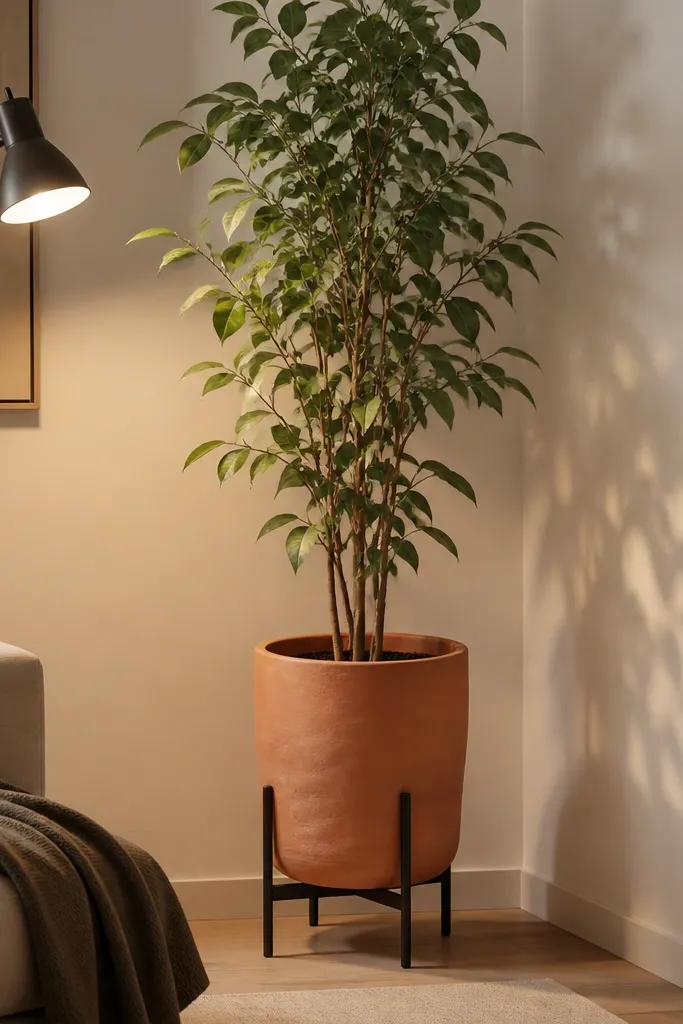
Start by choosing a plant with upright leaves, like a fiddle leaf style or a tall dracaena, so you get vertical interest. Place it in the corner where the wall meets the window or near the lamp so it catches light. Put the pot on a saucer or tray to protect floors, then add a small layer of decorative stones only if the soil looks messy. Finally, rotate the plant weekly so it stays symmetrical and doesn’t lean toward the light.
A plant adds cosy because it brings life and height without adding visual weight. I like a corner plant because it fills an awkward space and balances the sofa visually. Use a textured pot in terracotta or muted clay so it looks warm next to modern neutrals. A floor stand raises the plant so it doesn’t block your view or make the corner feel crowded. This works for many rooms because it adds color depth without competing with cushions and art.
AvoidAvoid shiny plastic pots; they look out of place next to fabric and wood.
Good to knowPick a pot texture you can repeat elsewhere — a woven basket or ceramic tray works well with terracotta.
11. Rattan or woven wall basket for one textured moment
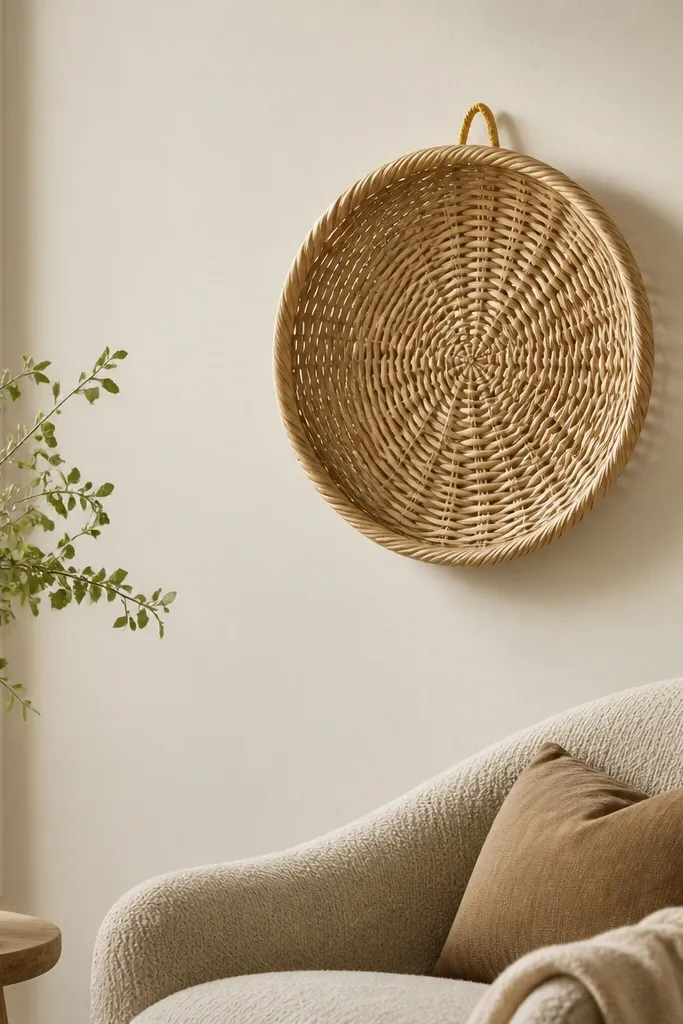
Pick a basket diameter around 12 to 18 inches so it reads clearly from the sofa. Hang it at about 60 inches from the floor to the center of the basket. If your wall is plaster or drywall, use the right anchor so the basket doesn’t tilt. Style the area beneath it with one simple item like a slim console vase or a single book stack so the basket stays the texture focus.
Woven baskets on the wall add cosy texture without taking floor space. I’m picky about this: one basket looks intentional, three baskets looks like a storage solution. Choose a light natural rattan or a straw weave so it warms up cool greys and white walls. The modern part is keeping everything else clean — simple frames, straight lines, no extra knickknacks. This is flattering because it adds softness around eye level and makes the room feel less flat.
AvoidAvoid dark brown baskets in a room that already feels heavy; they make the corner look smaller.
Good to knowDust the basket with a dry microfiber cloth so the weave looks crisp, not grey.
12. Sofa slipcover in warm white or oatmeal
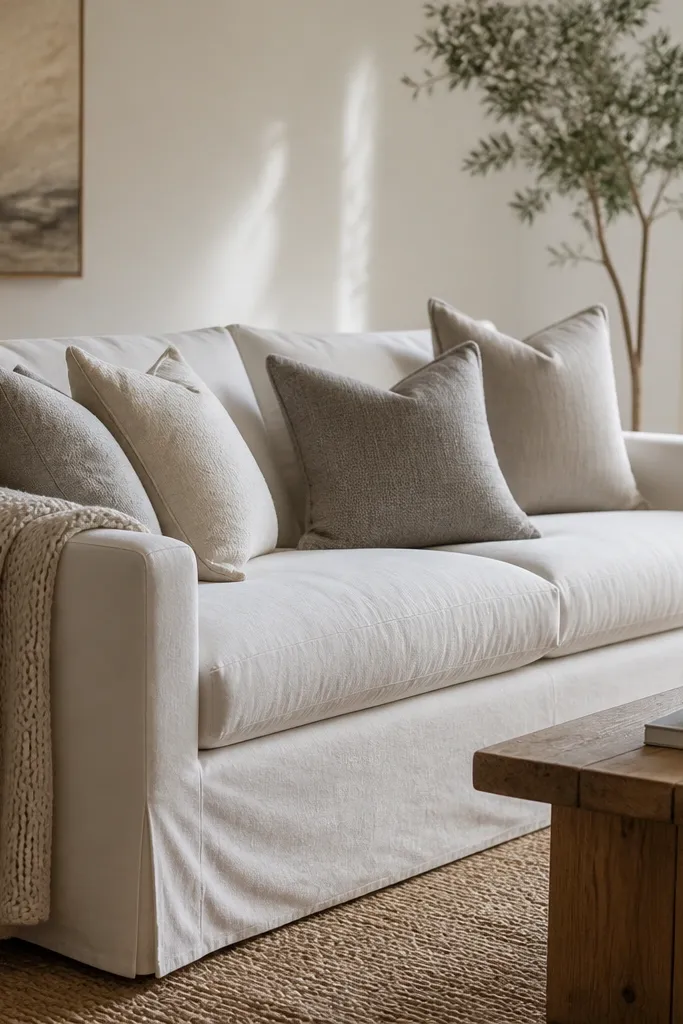
If your sofa is stained, sagging, or just looks tired, a slipcover makes the biggest difference per dollar. Warm white or oatmeal hides wear better than bright white, and it reads modern when the cover has a tailored fit. This works well for grey or cool-toned rooms because it adds warmth and softens the overall look. I’ve used this approach in busy households where the couch gets used daily — the slipcover takes the stress. The cosy effect comes from the clean base plus layered textures on top.
Choose a slipcover that fits your sofa shape, then pull it tight at the arms and seat so it doesn’t look baggy. Work from the back: smooth the cover across the backrest, then stretch and tuck at the bottom edge. Add cushion covers in warm grey and cream so the tones match the slipcover undertone. Finish by adding a knit throw and one patterned cushion so the slipcover doesn’t look plain.
If you have pets, look for slipcovers with a textured weave — it hides hair better than smooth fabric.
Avoid slipcovers that are too loose; saggy covers make the whole room look messy.
13. Low bookcase styling with 70/30 negative space
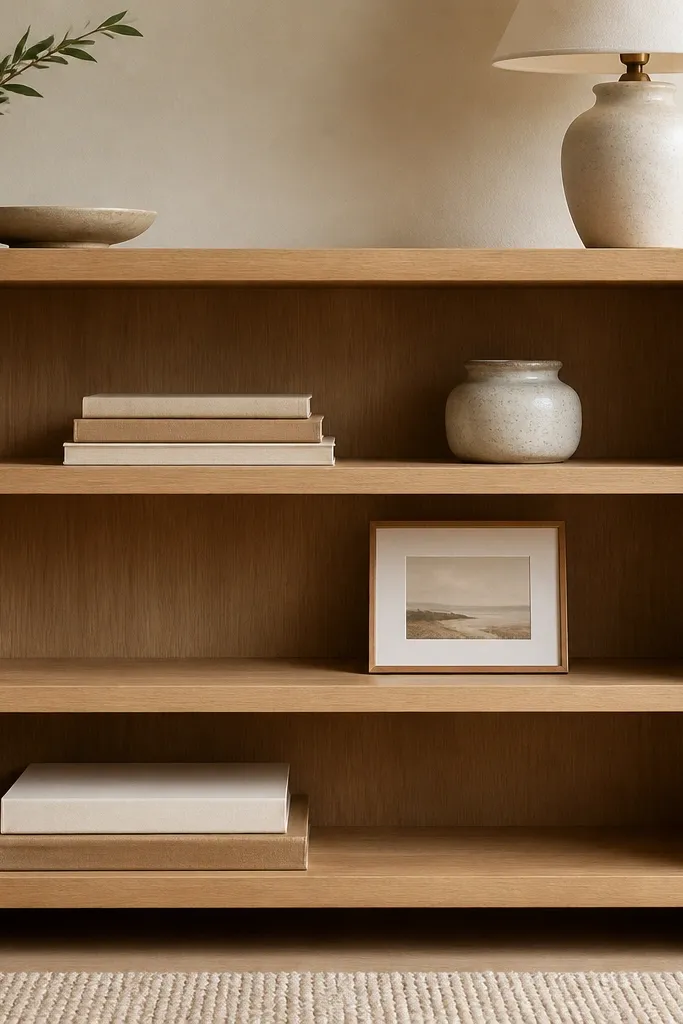
Modern cosy needs breathing room, and shelves are where people usually overfill. I style shelves with a 70/30 rule: about 70 percent empty space so the room stays calm. Keep colors in one family — cream, sand, warm grey, and charcoal — so everything looks collected. This is flattering because it reduces visual clutter and makes the room feel easier to live in. If your shelf is near the seating, the negative space also makes the cushions and art stand out more.
Start by removing everything from the shelves and wiping them down. Stack books horizontally and vertically, then place one small object per shelf — a jar, a small plant, or a framed photo. Keep larger decor items centered and leave the sides partly empty. Finally, step back and check from the sofa — if you can’t see a calm pattern, remove one more item.
Use book sizes like building blocks: two tall books at the back, one short stack in front.
Avoid lining up identical decor pieces; symmetry can look like you’re trying too hard.
14. Textured wallpaper panel behind the sofa (peel-and-stick)
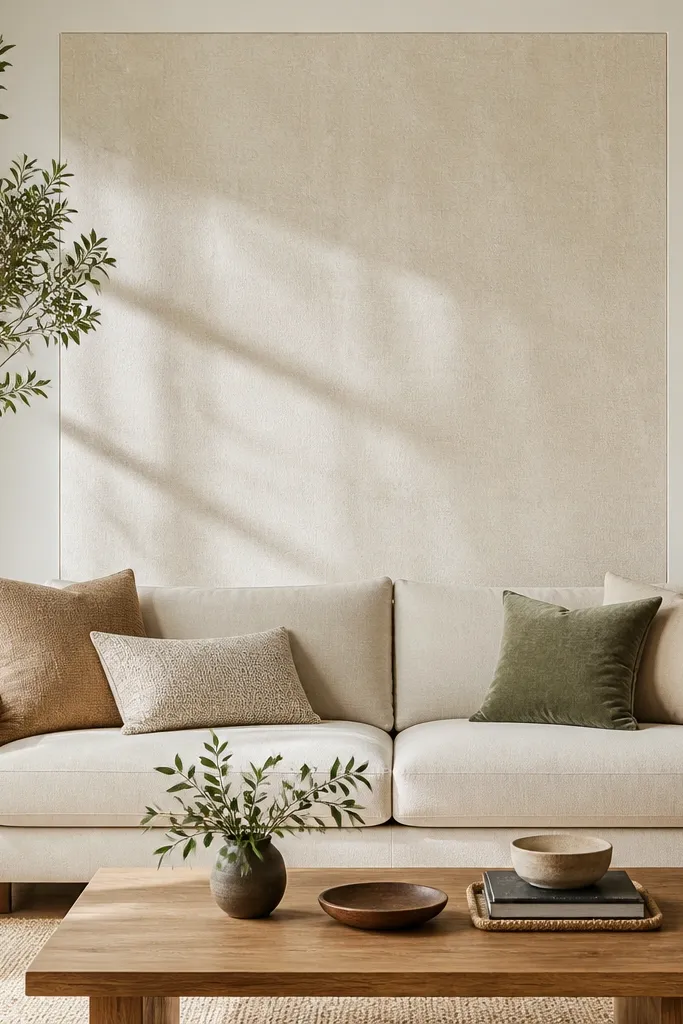
Pick a panel width that covers about the center third of your sofa, so it looks like a design feature, not a random patch. Clean the wall with a gentle cleaner and let it dry fully so the adhesive sticks. Start applying at the center line, smoothing as you go with a plastic smoother to avoid bubbles. Trim the edges carefully with a sharp utility knife, then add your art or mirror above the textured zone so everything looks aligned.
Texture on the wall changes the cosy feel because it adds shadow and depth even without extra decor. A peel-and-stick linen-plaster effect panel is an easy win when you don’t want to commit to full wallpaper. Warm cream texture works with modern furniture because it doesn’t add loud color. This is especially good behind a sofa because it frames your seating and makes cushions look more dimensional. The cosy effect is subtle but real — you see it in the way light hits the wall at night.
AvoidAvoid covering a whole room with high-contrast texture; it can feel busy and harder to style.
Good to knowChoose a texture that looks soft in daylight; if it’s too rough, it can look messy under lamp light.
15. Dining chair seat cushions in muted olive
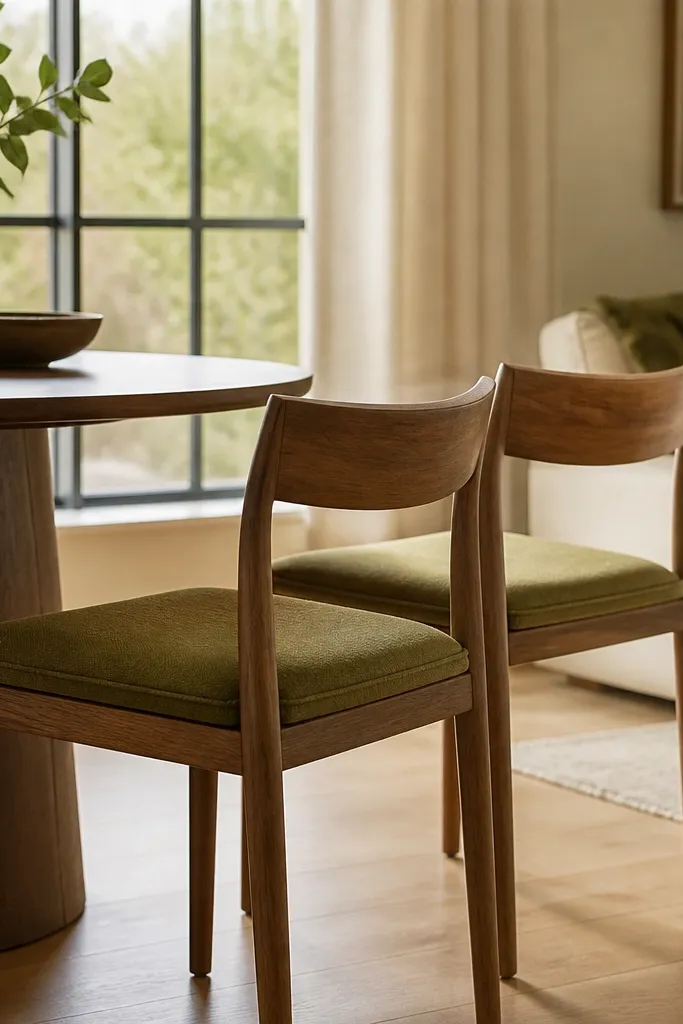
If your living room opens into dining, the cosy look travels through shared colors. Muted olive seat cushions add warmth and hide the everyday wear that comes with meals. I like this color because it works with cream, warm grey, and charcoal without turning the room into a farm theme. It also flatters a lot of skin tones when people sit down — olive makes warm undertones look extra golden. The modern feel comes from clean stitching and simple cushion shape, not tufting.
Measure your dining chair seats and get cushions that match the seat size, not oversized ones that curl at the edges. Choose a fabric with a matte finish and a muted olive tone, then repeat olive once in the living room with a small cushion or a throw. Place the dining cushions with the seam line centered so they look neat. Rotate cushions after a few weeks if you notice fading from direct sun.
If you can, pick covers with removable zippers so you can wash them when life happens.
Avoid bright green; it clashes with warm lighting and makes the room feel harsh.
16. Narrow runner rug in front of the seating area
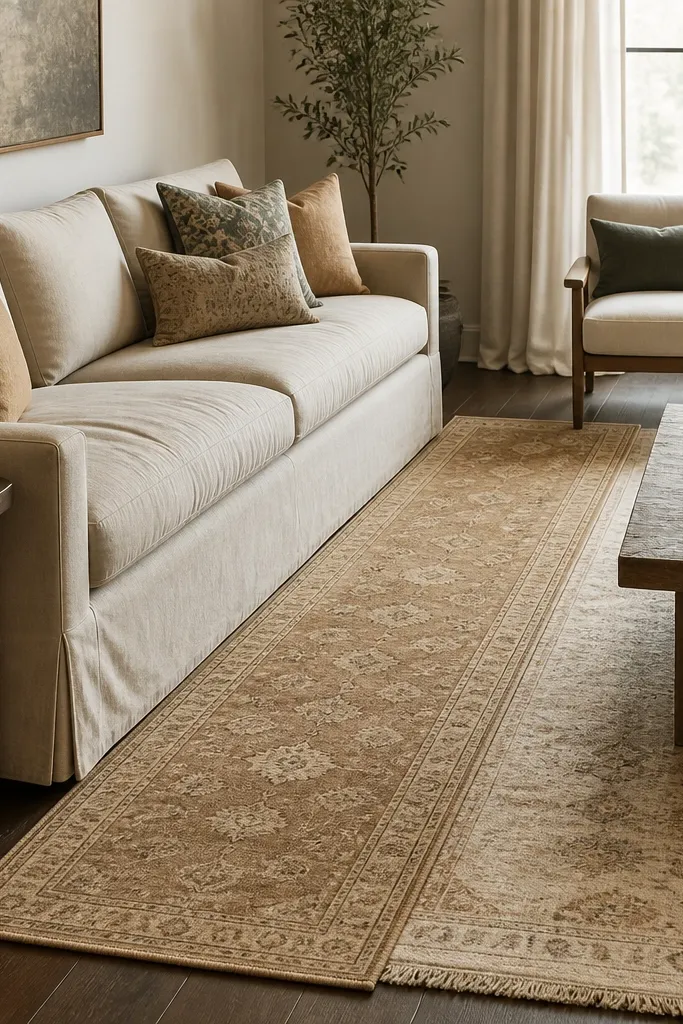
A runner rug can make a living room feel cosy because it adds a second layer of comfort underfoot. I like runners when the main rug is either patterned or a little plain — the runner adds warmth without competing. Choose warm tan, oatmeal, or camel with a low-contrast pattern so it looks modern. This works well in narrow layouts where you need a path from door to seating. It’s also practical: it protects high-traffic floor areas while keeping the room visually soft.
Start by placing the runner so it runs in the path people naturally walk — usually from a doorway toward the seating. Keep the runner centered under the coffee table line so it visually aligns with your furniture. Leave about 8 to 12 inches of main rug visible at the sides so it doesn’t look like everything is one big carpet. Use a rug pad under the runner to stop sliding and add comfort.
Match the runner’s undertone to your throw, not your wall color. Throw fabrics show the cosy theme better.
Avoid high-contrast black-and-white runners; they make warm rooms feel too graphic.
17. Modern cosy dining chandelier swap to a warm bulb look
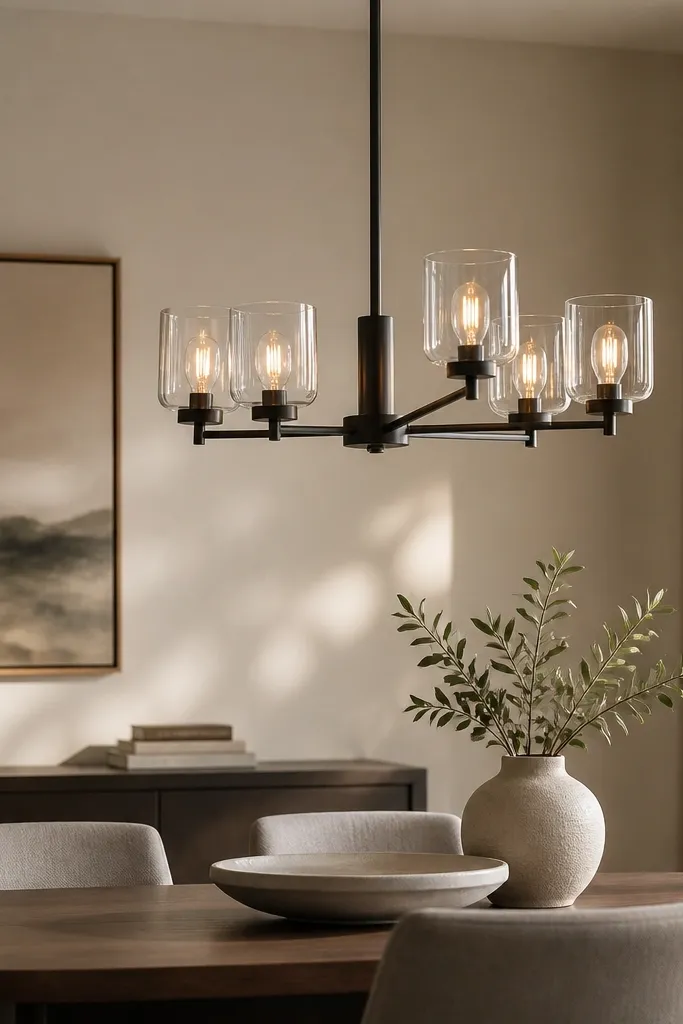
Start by turning off the breaker if you’re changing fixtures, then remove the old bulbs and replace with 2700K bulbs. If your chandelier uses exposed bulbs, choose a bulb shape that gives a soft glow through the shades. Test in the evening before you do any decorating — you want the warm tone to match your throws. Then style one side table or shelf with a candle so the warm light feels layered across both areas.
Even if your living room is the star, overhead light can ruin cosy. If you have a dining chandelier visible from the living area, swap the bulbs first. I like warm bulbs in the 2700K range with a soft shape so the light spreads instead of looking like a spotlight. This helps because overhead light changes the color of your walls and throws instantly. The cosy effect is in the shadows — they look gentle instead of crisp. It also makes modern fixtures look intentional rather than harsh.
AvoidAvoid cool white bulbs in any visible overhead fixture; they make everything look grey.
Good to knowDimmer switches make a huge difference; even a basic dimmer lets you shift from daylight to evening mood.
18. Side table with stacked magazines and one framed photo
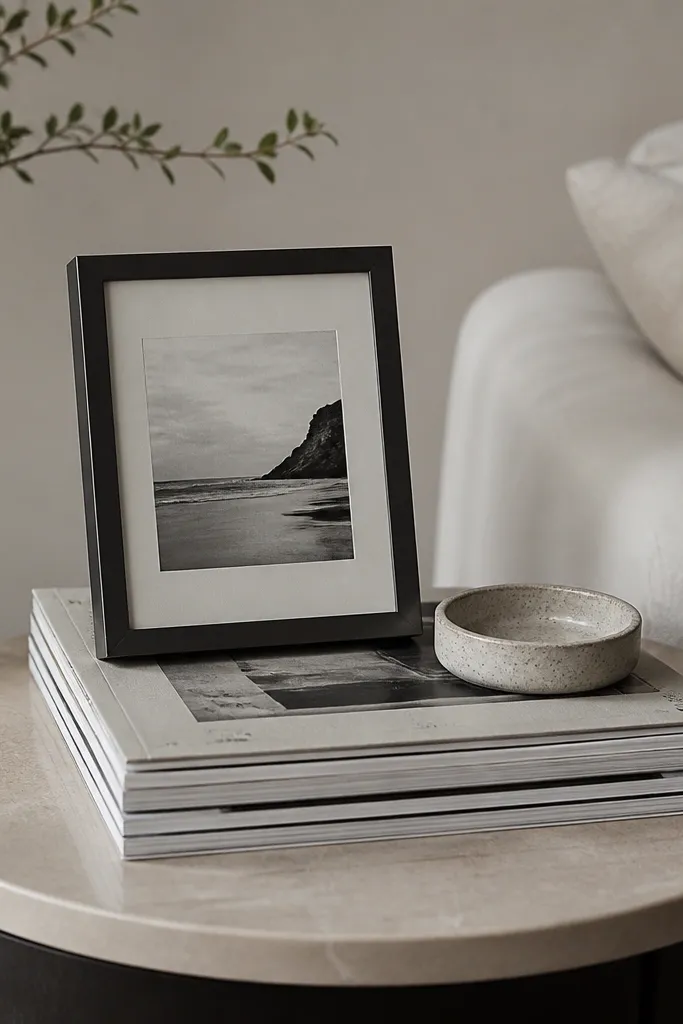
Start by choosing magazines with covers that match your palette — cream, warm grey, charcoal, and muted navy. Stack them at the back of the side table so the front edge stays neat. Place one framed photo on top, centered, and add a small dish or coaster beside it. Leave a clear space around the items so the tabletop doesn’t look crowded. Wipe the side table top and straighten the stack every few days if it gets bumped.
Small surfaces are where modern cosy gets personal without turning into clutter. I stack magazines because they add color control — you can pick covers that match your palette. Then I add one framed photo to give the room a human anchor. Keep the frame color consistent with your art frames, usually black. This styling is flattering because it keeps the surface at a comfortable viewing height, and it makes the room feel lived-in instead of staged. It also works for anyone who feels like they have “nothing to put out.”
AvoidAvoid leaving stacks too tall; tall stacks block light and make the table look unstable.
Good to knowIf magazine covers clash, wrap the stack in a plain kraft paper band so the colors stay controlled.
19. Sofa skirt in warm grey for a clean modern base
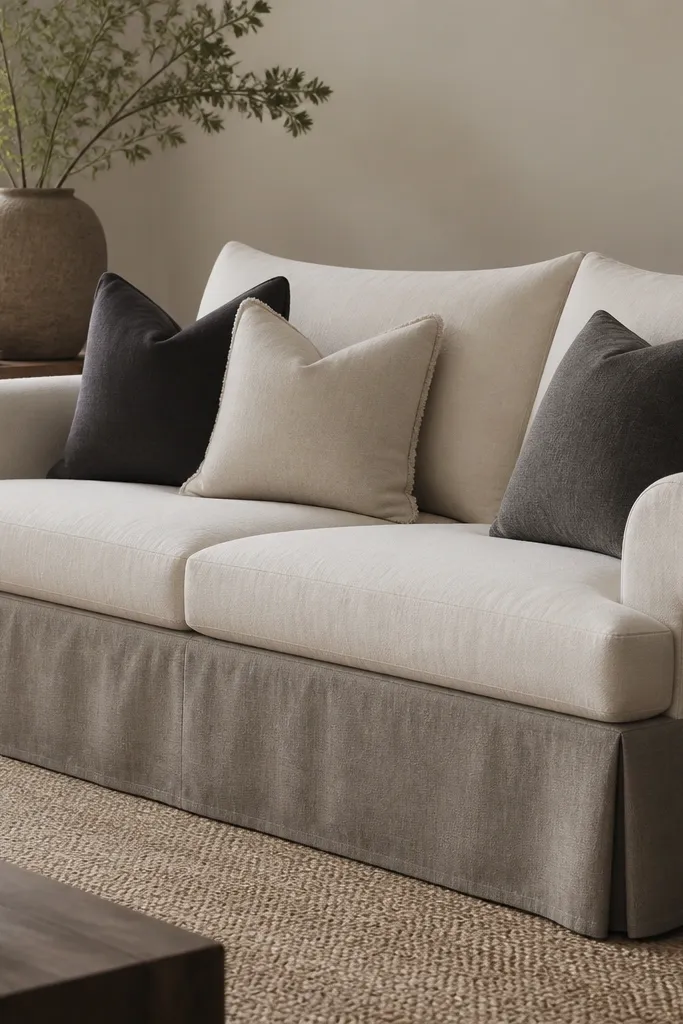
A sofa skirt sounds like a weird hack until you see it in person. It creates a clean, modern base and hides messy legs or under-sofa clutter that ruins the cosy vibe. Warm grey is forgiving and works with oatmeal throws, black frames, and natural wood. This is flattering in small rooms because it visually lowers the sofa and makes the seating look more grounded. It also helps if your sofa has uneven wear — the skirt covers the problem areas without you replacing the whole thing. The cosy effect comes from the clean lines plus soft textures on top.
Measure the sofa height from the floor to where the skirt should end, then choose a skirt with a matte fabric that hangs straight. Install or tuck it so it covers the entire bottom edge evenly, smoothing any wrinkles along the seams. Keep the skirt color close to the sofa fabric undertone so it blends naturally. Style above it with cushions and a throw that add contrast — for example, cream cushions and a charcoal patterned cushion for depth.
If you’re between sizes, go longer and let it skim the floor instead of stopping too high.
Avoid skirts that are too short; they look like a costume and make the sofa look cheap.