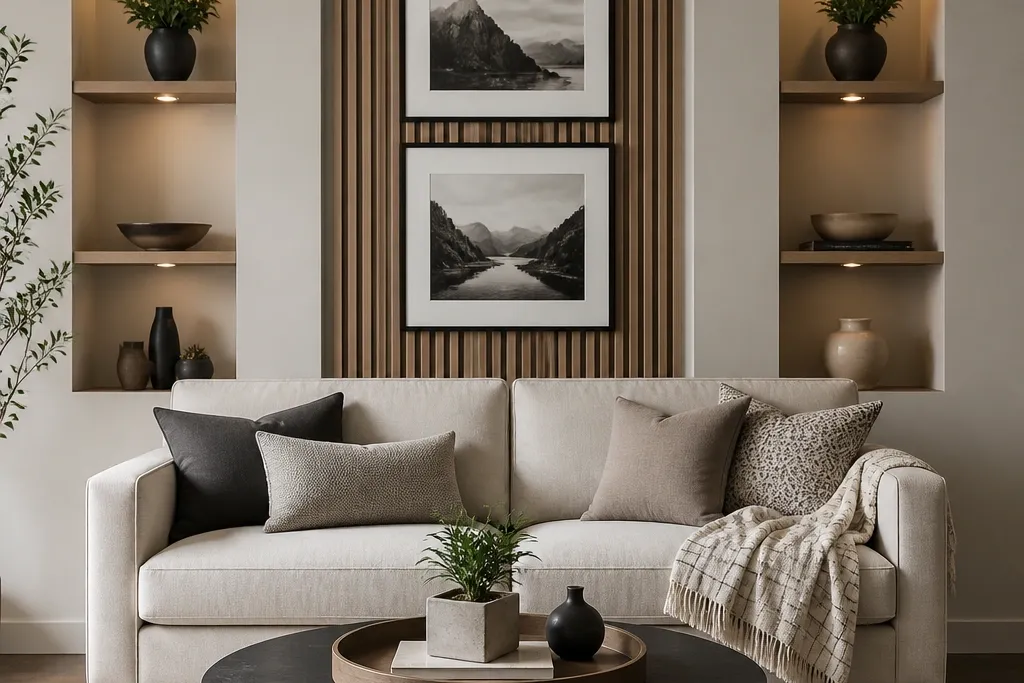
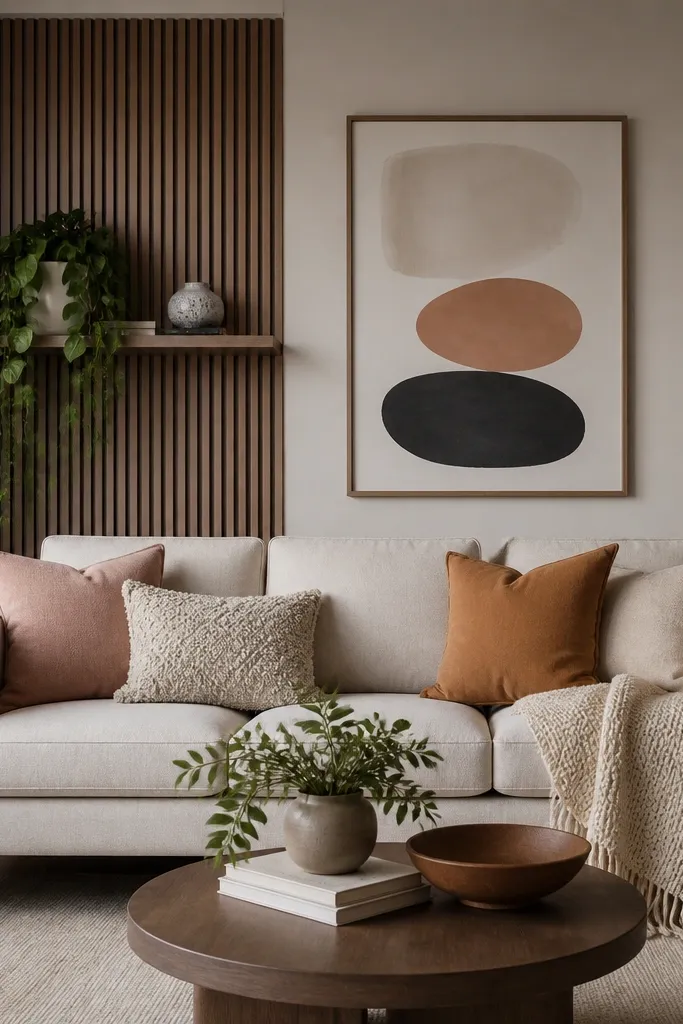
1. Tall framed art with a 2-inch bottom margin
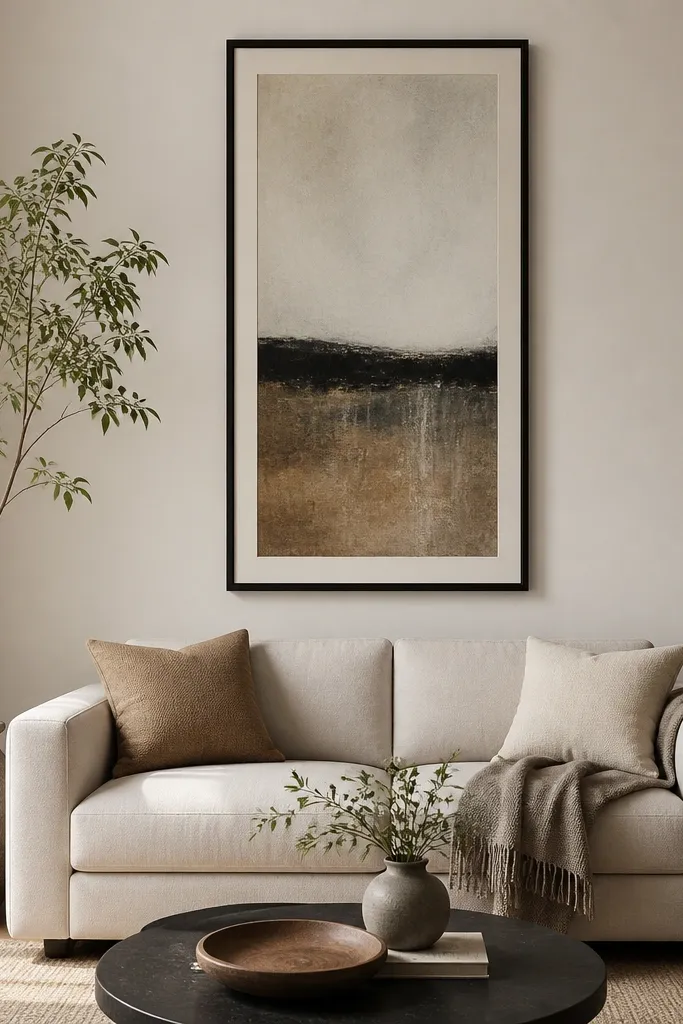
Start by centering the artwork to the sofa width, using painter’s tape to mark the exact edges. Hang it so the bottom of the frame sits about 2 inches above the top line of the sofa back cushions, then check from the doorway at eye level. Use a mat if your print is busy; a 2- to 3-inch mat keeps the look modern. Finally, keep the wall around it empty — no small shelves, no extra frames — so the focal point reads instantly.
This is the option I reach for when a small space needs calm. Choose a single tall piece (not a cluster) in a frame that has a flat, matte finish — matte black or warm gray. Keep the artwork mostly light-toned, with one muted accent (sage, clay, or smoky blue) so it doesn’t fight the sofa. It flatters most color palettes because it gives your eye one clean anchor behind the backrest, which makes the room feel organized even when you have limited square footage.
AvoidAvoid hanging it too low; a short artwork behind a taller sofa looks like it’s “dropping” the wall.
Good to knowIf your room feels dim, pick art with a bright off-white background and add a slim LED picture light that washes the frame evenly.
2. Oversized round mirror centered behind the sofa
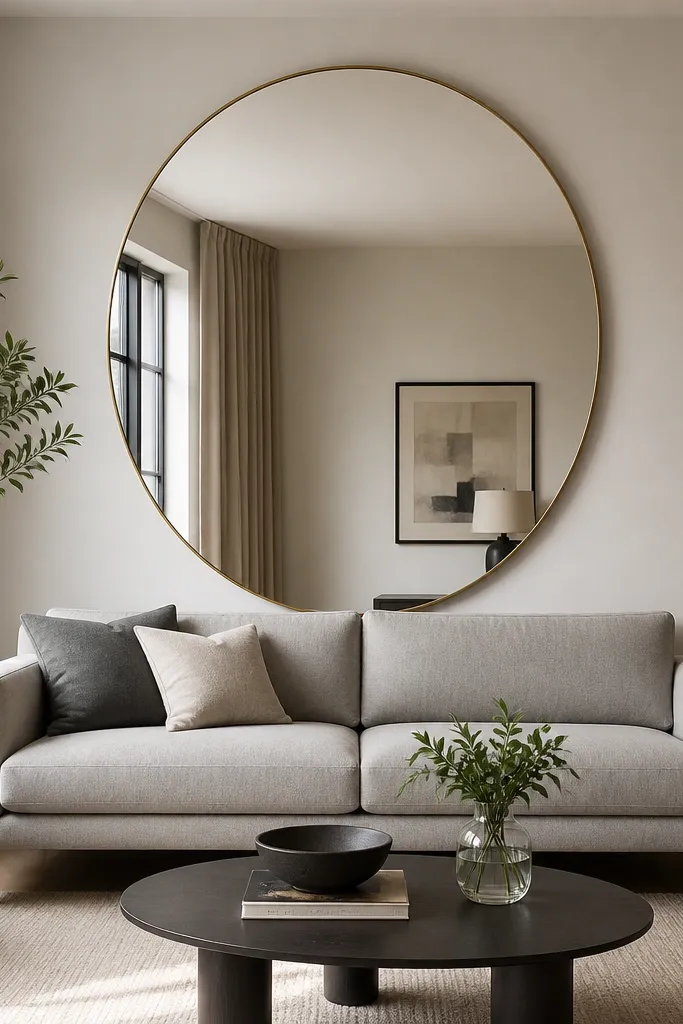
A mirror behind the sofa makes the room feel wider because it reflects the light and extends the wall’s visual line. I like a thin-rim mirror in brass or brushed nickel because it reads modern and doesn’t look like a heavy antique. Go for an oversized round shape — it softens hard angles and feels intentional in small spaces. This works especially well if your sofa back is 30 to 38 inches tall, because the mirror can “float” above it and visually lift the ceiling.
Measure your sofa width and choose a mirror that’s about 70% of that width for a balanced look. Center it on the wall, then hang so the top of the mirror sits 6 to 10 inches below the ceiling line. Use two wall anchors rated for the mirror’s weight and keep the mirror perfectly level — crooked mirrors read cheap fast. Style the rest of the wall with nothing but the mirror so the reflection stays clean.
Place a floor lamp or table lamp so its light hits the mirror at an angle; you get a bright “second light source” without adding more furniture.
Avoid placing small mirrors clustered together; one big round reads modern, while a cluster makes the wall feel cramped.
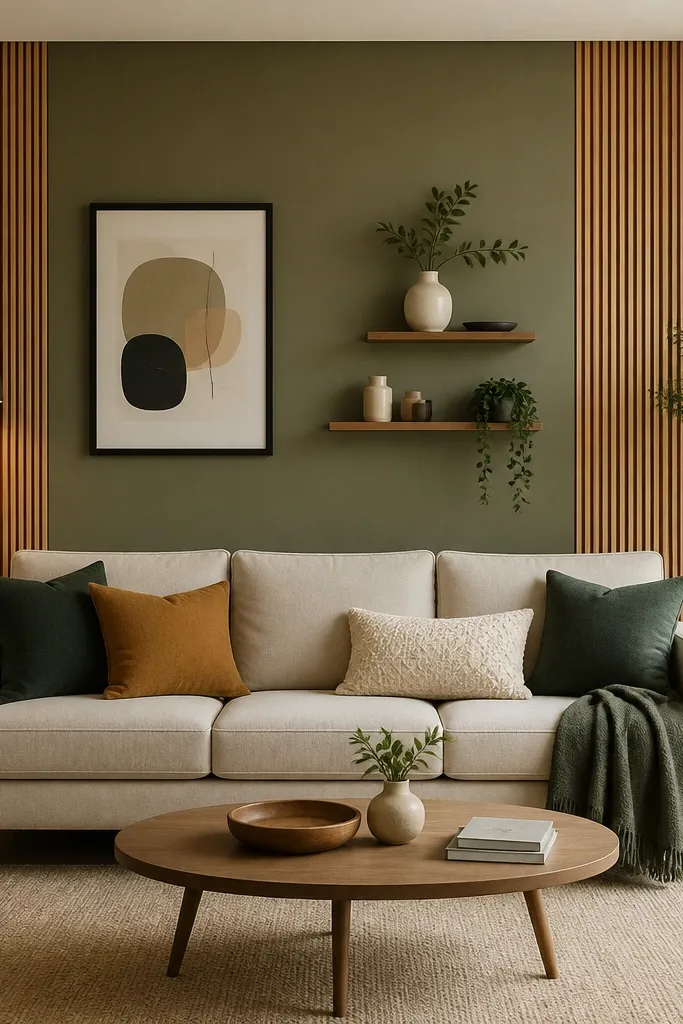
3. Vertical wood slat panel with a floating ledge
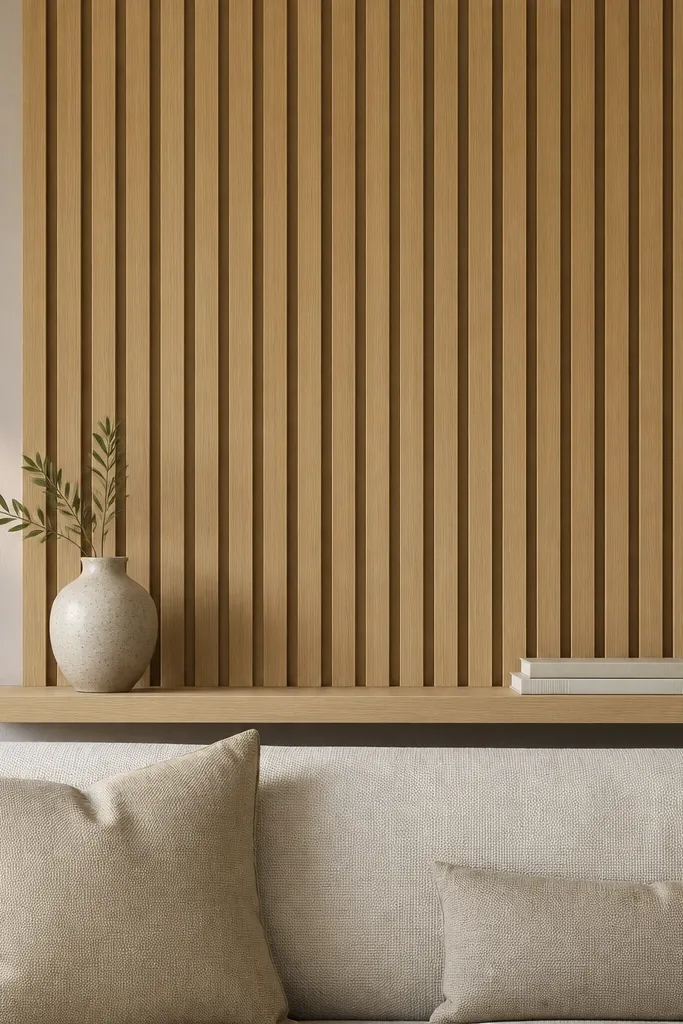
Vertical slats are the best way I’ve found to add height to a small room without raising your ceiling. Use light oak or walnut-toned slats with a matte finish so they catch light softly instead of looking glossy. The floating ledge gives you a place for one or two objects, but it stays minimal so the wall doesn’t become storage clutter. This flatters rooms with short sightlines because the lines pull your eye upward and make the wall feel taller than it is.
Start by marking a center line on the wall. Install slats in a tight, consistent spacing, usually around 2 to 2.5 inches between slat edges, and keep the panel height aligned with the sofa back plus an extra 10 to 18 inches. Mount a floating ledge 4 to 6 inches below the bottom edge of the slat panel. Style with one tall ceramic vessel or a slim plant, then stop — one object looks intentional; three objects look like you’re filling gaps.
If you’re renting, look for peel-and-stick slat panels and secure the top edge with command strips rated for the panel weight.
Avoid mixing wood tones; if the slats are oak, match the ledge and side tables to that same family.
4. Narrow gallery ledge with three framed prints
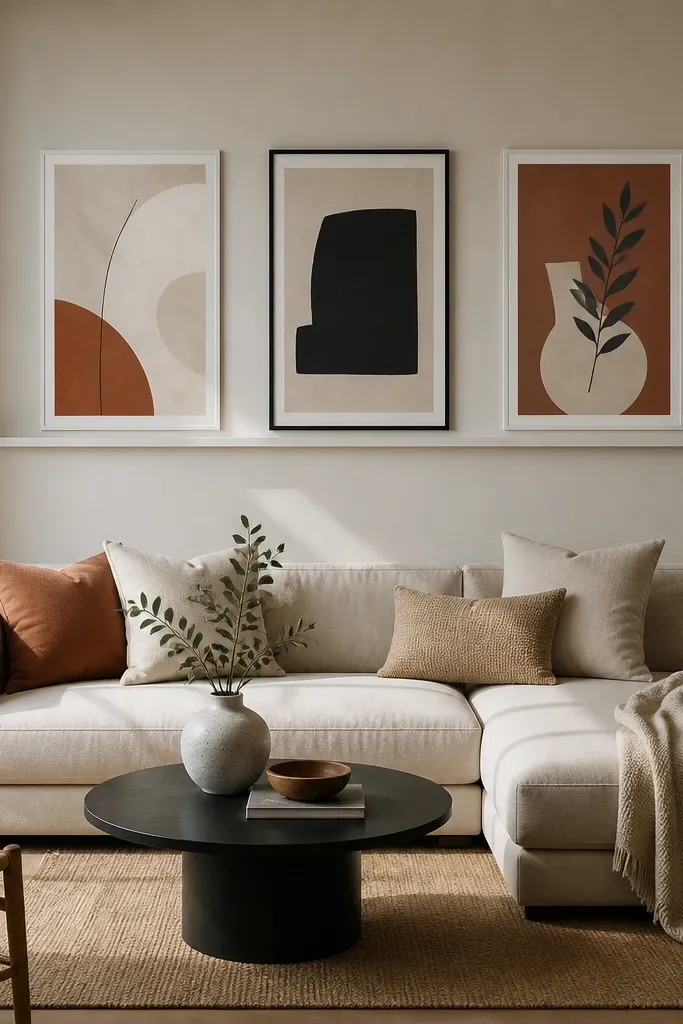
When you want personality but don’t want the wall to feel busy, a narrow ledge plus a small set of frames works. I keep it to three frames because it reads balanced behind a sofa and doesn’t overwhelm a small wall. Choose slim frames with a consistent width, and use art that shares a color family — cream, charcoal, and one warm accent. This is a great fit for people who want decor that changes seasonally, because swapping the prints is easy without redoing the whole wall.
Hang the ledge first, centered to the sofa width, at a height where the bottom of the lowest frame will sit about 8 to 12 inches above the sofa back. Use painter’s tape to map out the three frame positions, leaving equal gaps between them. Keep frames level and use the same frame depth so the wall plane stays clean. Finally, set one small item on the ledge only — a ceramic tray or a book stack — and let the art do the work.
Use frames with glass or acrylic that is non-glare; small rooms show reflections easily and glare makes it look messy.
Avoid mixing thick frames and thin frames; the mismatch makes the whole arrangement look accidental.
5. Textile wall art in a linen frame
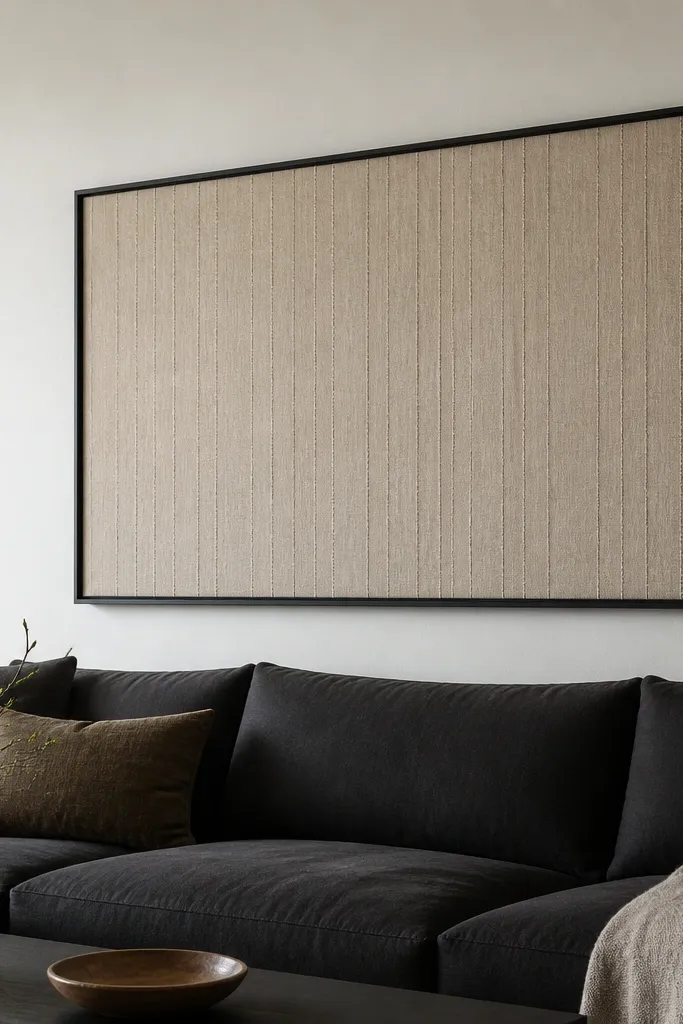
Textile art makes a modern room feel softer without adding clutter. Linen in warm oatmeal or greige looks expensive even when it’s simple, and the texture hides minor wall imperfections. It works best behind a sofa because it adds warmth to the “hard” furniture lines — especially if your sofa is leather or has a tight woven fabric. I recommend this when you want a calm look but your room needs something beyond flat paint.
Choose a textile piece that’s wider than half your sofa width and tall enough to reach above the back cushions. Stretch or select a framed piece with a slim profile, then hang it so the center of the textile lands around the middle of the sofa back height. Keep the wall paint matte and light so the texture stands out. Style the area with one throw blanket draped on the sofa arm that echoes the linen color, so the wall and seating feel connected.
If your linen frame catches light, angle it slightly by leveling carefully and cleaning the glass/acrylic with a microfiber cloth before hanging.
Avoid shiny faux silk textiles; they read dated and look cheap under daylight.
6. Wallpaper panel behind the sofa with a clean border
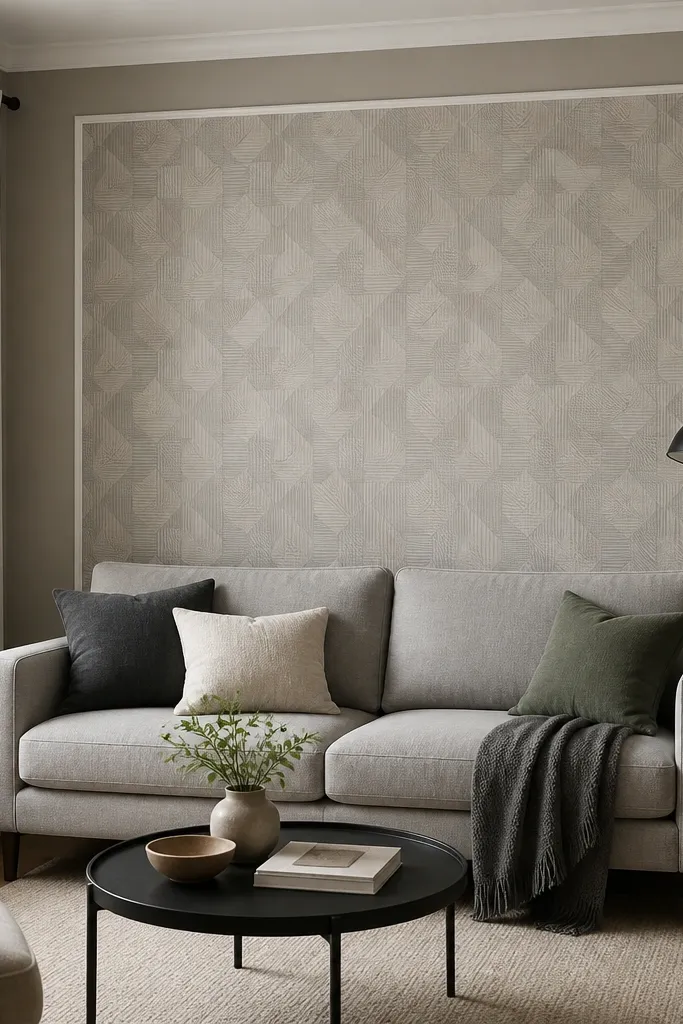
Wallpaper in a contained panel gives you impact without swallowing the whole wall. I like geometric patterns that are subtle in scale, with colors like dusty blue, taupe, or warm gray on an off-white background. The clean border trim keeps it looking architectural instead of like you ran out of wall space. This works especially well in small rooms because the panel creates a focal zone while the surrounding painted wall gives your eye breathing room.
Start by choosing a wallpaper with a repeat pattern that isn’t too busy — look for lines that are 1 inch or less in width. Measure a panel size that’s about 2 to 4 inches wider than your sofa on both sides, and tall enough to sit 6 to 10 inches above the sofa back. Apply painter’s tape borders first to lock in the shape, then install trim along the tape lines before papering if you want crisp edges. Finish by styling only one accent on the sofa — a throw pillow in the wallpaper’s main color.
Use a matte topcoat on the trim and keep the wallpaper away from direct sunlight so the print stays crisp longer.
Avoid wallpaper that’s too high-contrast; it can make a small room feel like it’s closing in.
7. Floating shelves in a single line with book spine color control
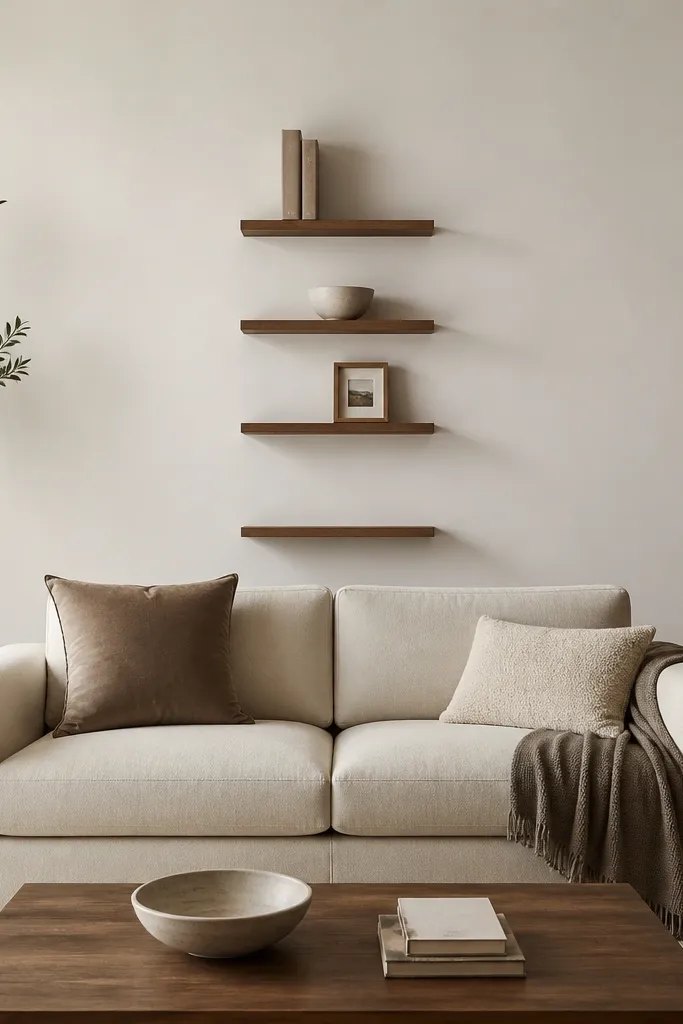
Shelves behind a sofa can look modern when you control the “color noise.” I keep the shelf line narrow and minimal, and I arrange books so their spines share a palette: cream, charcoal, and one muted green or rust. This makes the wall functional while still feeling clean. It flatters people who live with clutter on surfaces because the wall becomes the organized place instead of the coffee table.
Mark a center line and install shelves so the top shelf sits about level with the top of the sofa back or slightly above. Use shelf depth around 6 inches so items don’t look bulky. Arrange two books first, standing them upright, then add one ceramic object and one small frame. Leave empty space between objects — at least 2 to 3 inches — so the shelves look intentional rather than full.
If your books don’t match the palette, wrap them in plain brown paper or swap to matching covers; it changes the whole look.
Avoid stacking small decor in tight clusters; it looks like you’re filling space.
8. Oversized wall paneling in a grid (box molding)
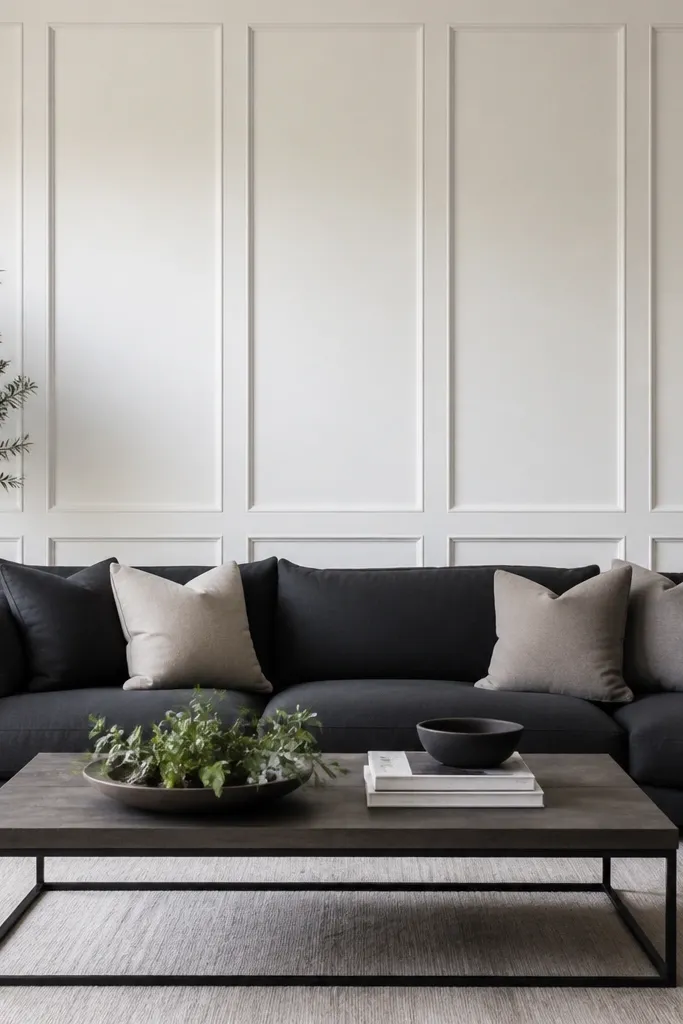
Box molding turns a blank wall into something architectural without adding furniture. In small rooms, the recessed shadows make the space feel deeper, which helps with that “flat wall” problem. I like matte white molding on a slightly warmer off-white wall because the contrast is soft, not harsh. This option flatters dark sofas and adds a calm, tailored feel that looks good in both daylight and evening lighting.
Decide on a grid that’s about 60 to 70% of the sofa width and centered behind it. Use 1x2 or similar trim for the frame and keep the recessed sections consistent — measure twice so the lines match. Paint everything the same color family: wall is warm off-white, molding is 1 shade brighter. After it dries, hang a simple piece in the center only if needed — otherwise let the molding be the focal point.
Use a bright LED bulb in the nearby lamp; the molding shadows look sharper without making the room feel gloomy.
Avoid high-gloss paint on the molding; it reflects light and can look plastic.
9. Tattersall-style patterned rug turned into wall art
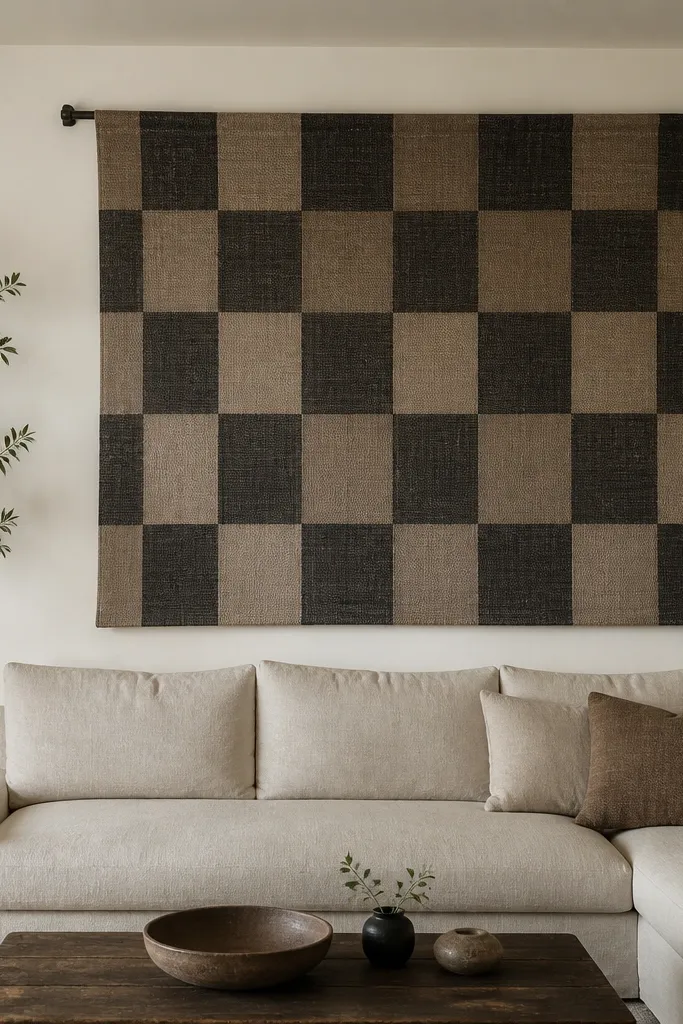
Choose a rug that’s at least 2/3 the sofa width and hang it with a simple rod or tension system. Mount the rod so the rug’s bottom edge sits around the height of the sofa back cushions minus 3 to 5 inches. Smooth the rug flat and use small clips at the top corners so it doesn’t curl. Style the sofa with plain pillows in the rug’s base color, like taupe or charcoal, and keep other wall decor out of the way.
I’m a fan of using a rug as wall art when you want texture and pattern without buying more frames. A muted check or tattersall pattern adds structure, and the woven fibers soften sound in small rooms. Keep the pattern in low contrast so it reads modern instead of country. This works especially well behind a sofa with smooth fabric because the rug’s texture balances the seat.
AvoidAvoid high-contrast black-and-white patterns; in a small room they start to look like flooring.
Good to knowSteam the rug lightly before hanging so the weave lays flat and doesn’t show ripples.
10. Two-tone paint stripes behind the sofa
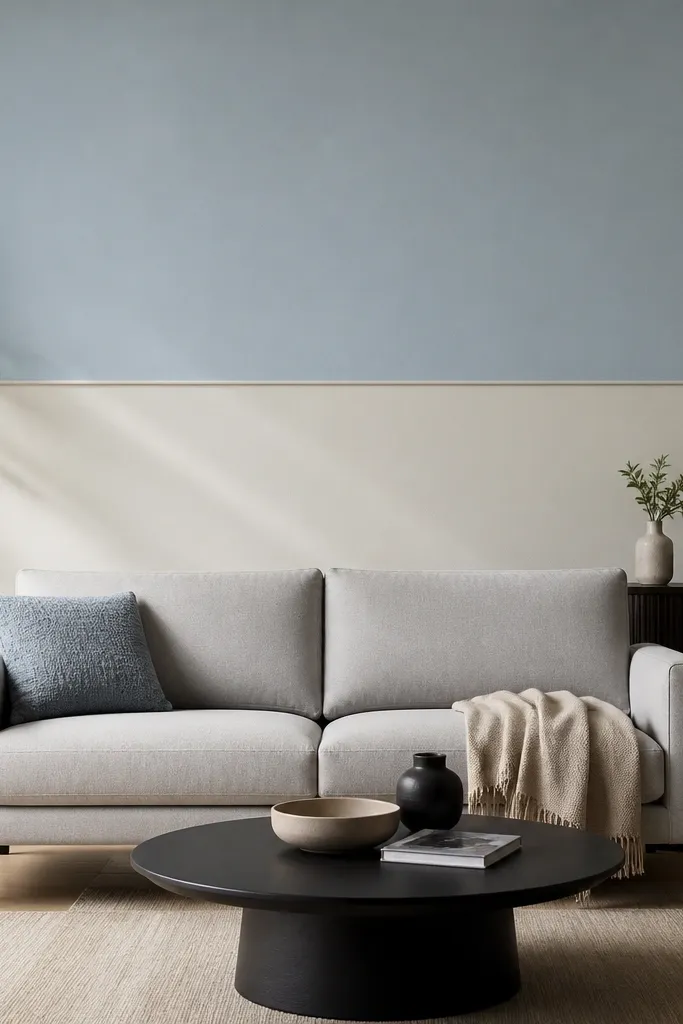
Tape off a stripe band that runs behind the sofa, not across the whole wall if your ceiling height is tight. Pick a stripe height that covers about 45 to 55% of the wall height, then use painter’s tape to create a crisp line. Paint the top band first, then remove tape after it’s dry to avoid peeling. Finish the bottom band with the same sheen (eggshell on both) so the line reads clean.
Paint stripes are a modern trick because they change the perceived height and width without adding objects. I like two-tone horizontal bands behind the sofa because they visually “frame” the seating area. Use a calmer top color and a warmer bottom neutral so the room feels grounded. This looks best with a sofa that has clean legs and a simple shape, and it flatters small rooms with low ceilings because the color separation controls the eye.
AvoidAvoid mixing matte and eggshell; the sheen difference makes the stripe look accidental.
Good to knowUse a small foam roller for the stripe edges so you don’t leave brush marks along the tape line.
11. Corner-to-sofa arch panel with warm wood frame
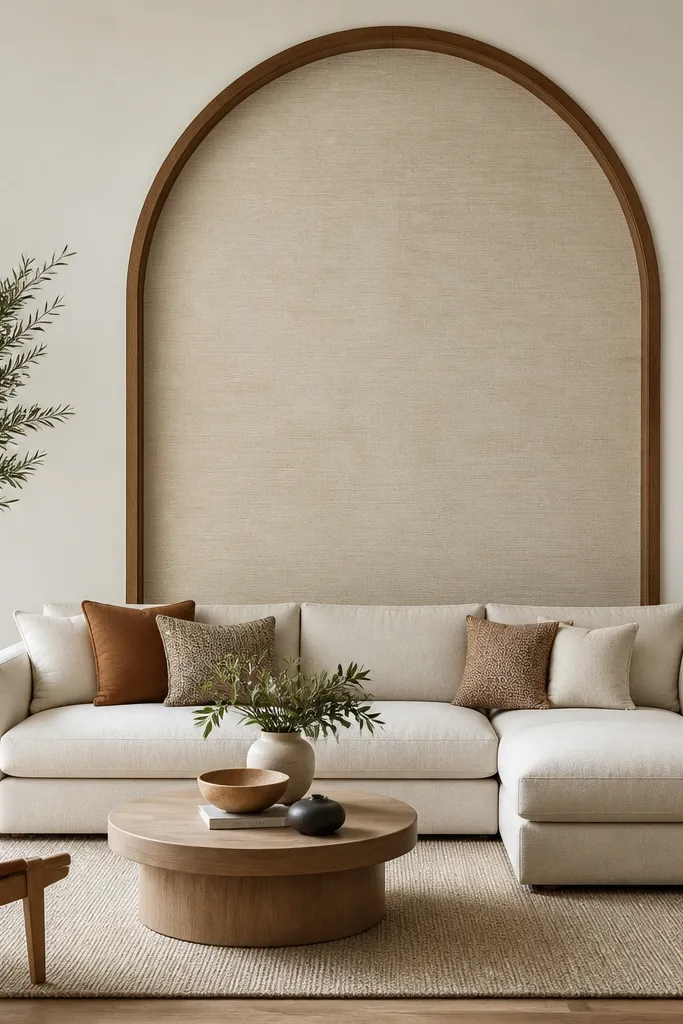
An arch panel adds a soft architectural shape that feels custom without building a full built-in. In small spaces, the arch gives you a focal curve that breaks up straight lines from the sofa and coffee table. Use warm wood for the frame to keep it cozy and modern, then fill the inside with a light textured material like linen or microcement-look paint. It flatters rooms that have angular furniture because the arch visually relaxes the whole setup.
Measure the sofa width and choose an arch width about 70% of that measurement. Mark the arch’s center and build or install the frame so the top of the arch sits 6 to 12 inches above the sofa back height. Keep the inside panel light so it doesn’t darken the room. Style the sofa with two pillows in neutral shades, then add one small warm accent like a terracotta vase on a side table to echo the wood.
If you’re DIYing, use pre-cut MDF arch pieces and sand edges smooth before priming — the finish quality shows through in the close-up.
Avoid dark wood arches on already-dark walls; it can make the room feel heavy.
12. Long horizontal art strip with matching console-height decor
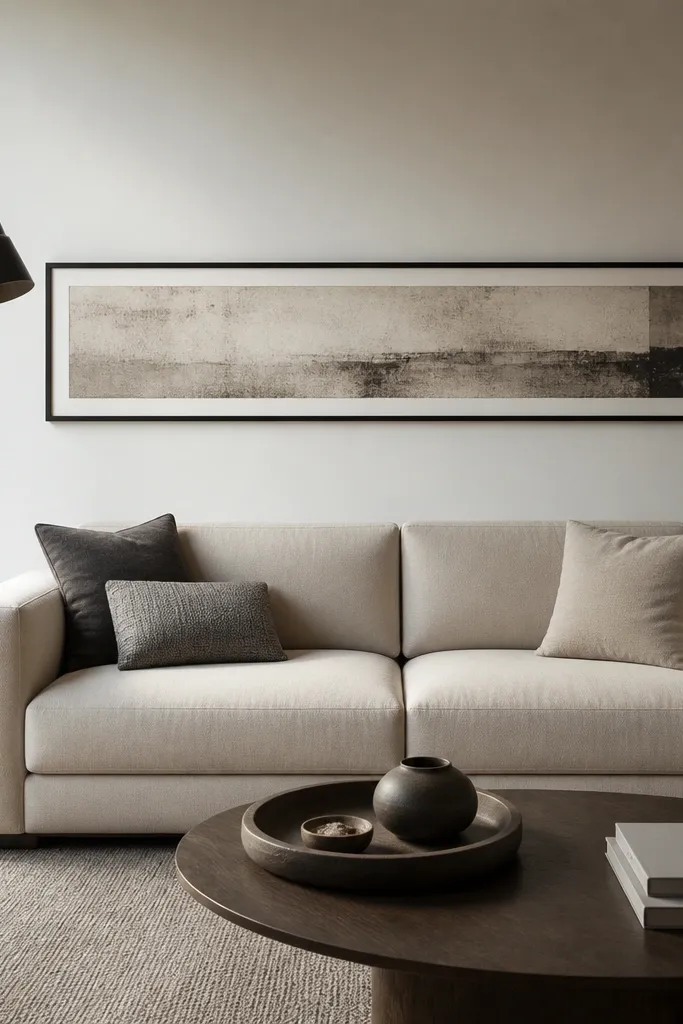
Pick a frame width that’s about 90 to 100% of the sofa width, so the art feels built for the seating. Hang it so the center of the frame lands around the sofa back cushion mid-height. Keep the frame slim and matte, and use a print with a limited palette: black, cream, and one muted color. Style the sofa with a low-profile lamp or one tray that aligns with the art’s height, so the room feels coordinated.
Horizontal art behind a sofa can make a small room feel wider because it stretches the visual line. I like this when the room is narrow and you want the wall to pull the eye left-to-right. Use one long piece with a simple graphic — line art, minimal landscape abstraction, or a clean typographic print in muted tones. This flatters modern minimal setups and works well with sofas that have low backs or deep seats because the horizontal line doesn’t compete with tall furniture legs.
AvoidAvoid stacking other wall items around it; the horizontal piece needs space to do its job.
Good to knowUse a level and measure from the sofa top cushion to the art center, not from the floor — sofa height is what your eye reads.
13. Wall-mounted TV cover panel with a decorative surround
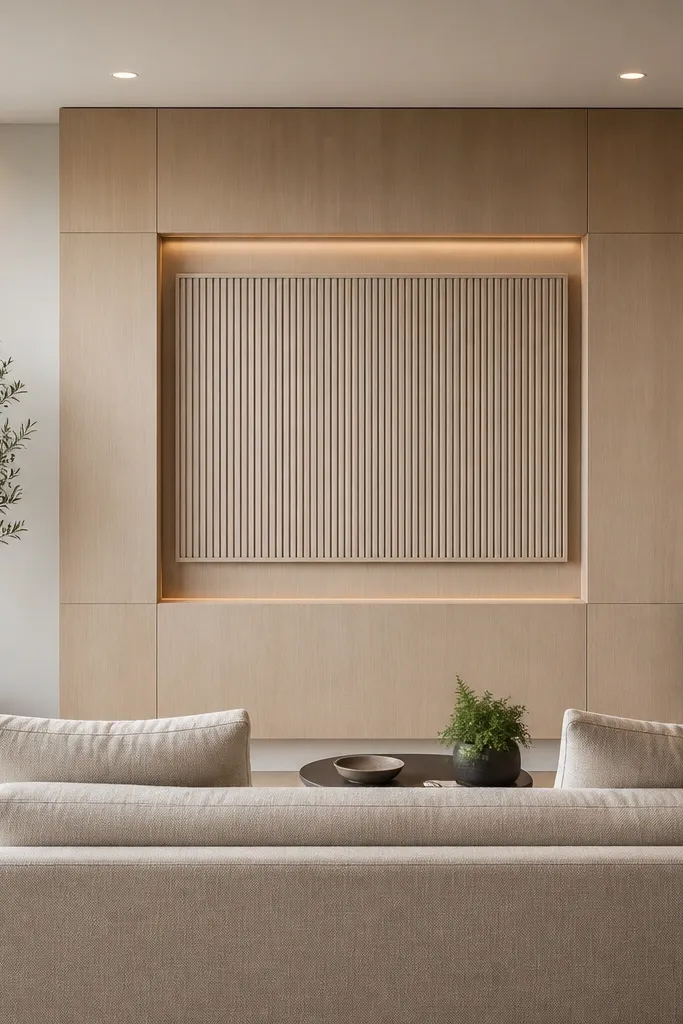
If you have a TV, the sofa back wall can look unfinished when the screen is off. A decorative surround makes the wall look intentional even when nothing is playing. Use a light wood or painted surround in a matte finish and keep the niche area simple. This works for small rooms because it reduces the “floating TV” feeling and gives your eye a frame to rest on behind the sofa. It also flatters people who want modern style without adding more wall clutter.
Choose a surround width that matches your sofa width, typically about 80 to 100% of it, and install it so the bottom edge aligns near the sofa back mid-height. Use a niche depth that looks slim — around 1 to 2 inches — so it doesn’t feel bulky. If you want extra lighting, add two small LED strips inside the niche corners and wire them to a dimmer. Style the sides with one small plant or framed photo on each side, keeping them under the height of the surround’s center.
Calibrate brightness on your TV so the off-screen surround doesn’t get washed out by overly bright settings at night.
Avoid glossy wood veneer; reflections on a TV wall make the surround look messy.
14. Micro-plaster feature wall behind the sofa with a single sconce
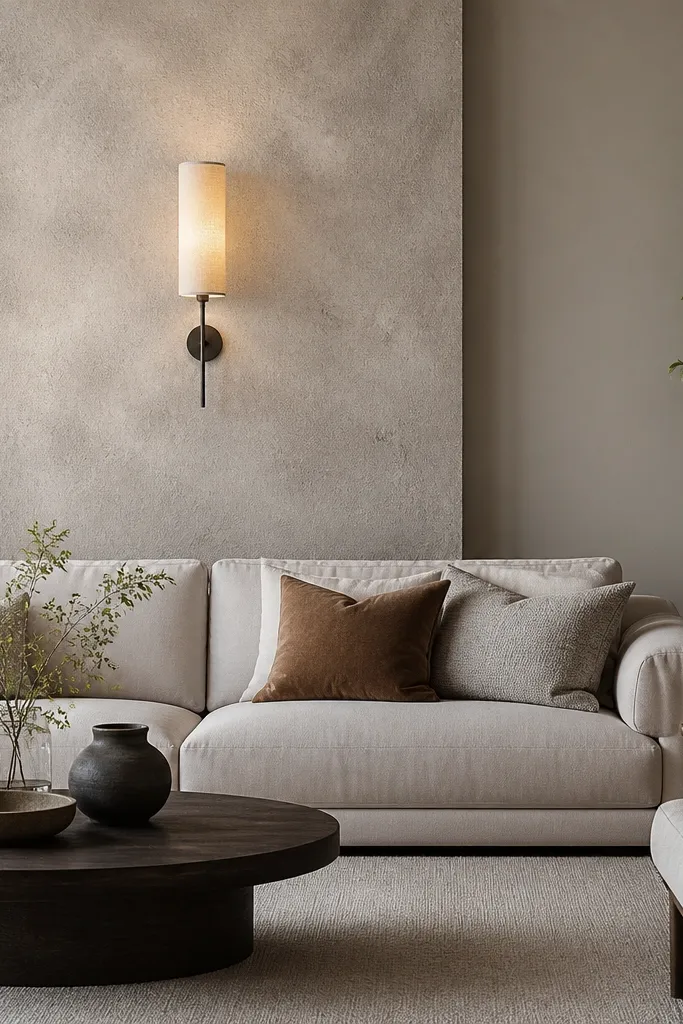
Textured plaster is my favorite “modern but not cold” move. It adds depth without pattern overload, and micro-plaster looks good even in small rooms because it’s neutral and tactile. Pair it with a single sconce so you get a warm pool of light right where your eye rests — behind the sofa. This works best with sofas in gray, cream, or dark charcoal because the plaster’s warmth balances those tones. If your room feels flat or your paint job looks too plain, this fixes it fast.
Mask off the area behind the sofa into a centered rectangle about 2 to 4 inches wider than the sofa on each side and tall enough to sit above the back cushions by 8 to 16 inches. Apply micro-plaster in thin passes and keep the trowel strokes consistent so the texture reads uniform. After it cures, paint surrounding wall in matte paint with a similar color family. Install the sconce so it sits 8 to 12 inches above the sofa back top and use a warm bulb around 2700K.
Test the plaster color on a scrap board in your room’s light; the warm concrete tones shift more than paint.
Avoid heavy contrast textures; very dark plaster behind a light sofa can make the whole room feel smaller.
15. Floating picture shelf plus vertical leaning panel art
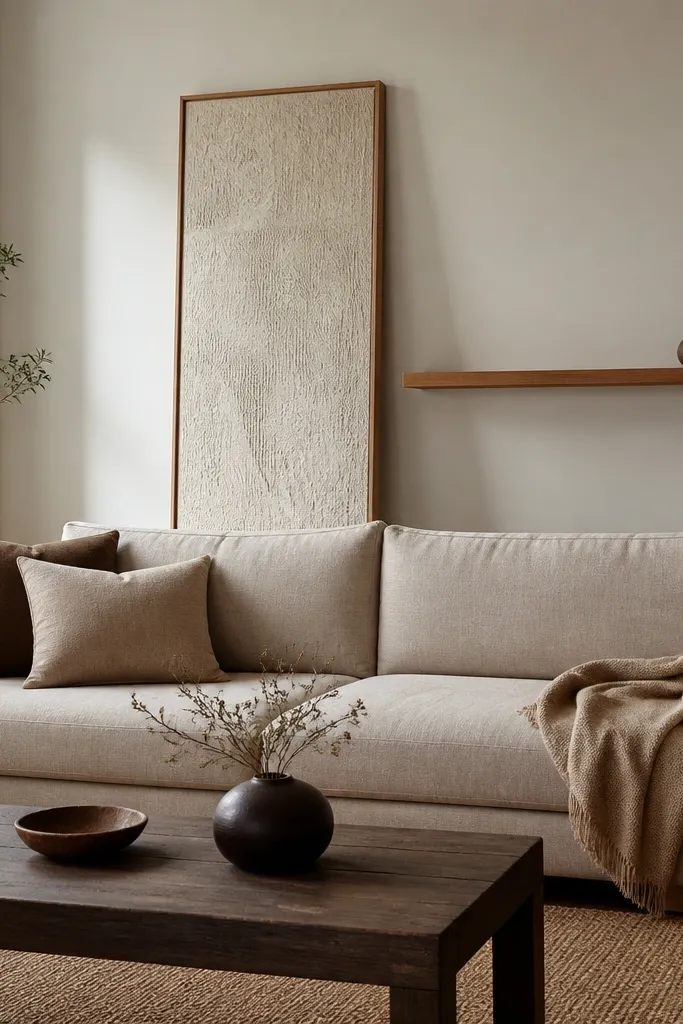
Install a floating shelf that’s narrower than your sofa width, centered, and mount it at a height where the shelf top sits slightly above the sofa back cushion level. Place a tall vertical panel art piece (light wood frame, textured art inside) leaning against the wall so its bottom sits near the top of the sofa back and its top reaches 6 to 10 inches above. Keep the panel’s left-right placement centered to the sofa so it doesn’t look like it’s drifting. Put one small object on the shelf — a ceramic cup or a slim candle holder — and leave the rest empty.
This is a modern, slightly artsy look that still feels controlled. The vertical panel adds height, while the floating shelf keeps small items from looking random. I like a leaning art panel because it creates a natural “shadow gap” that makes the wall feel layered without adding multiple frames. This works great for people who have a small sofa and want the wall to look styled but not symmetrical.
AvoidAvoid leaning panels that are too wide; a wide panel makes a small wall feel cluttered.
Good to knowUse felt pads between the panel and wall so it doesn’t scratch paint and so it sits stable.