1. 8x10 Anchor Color Bedding Set in Cream + Clay
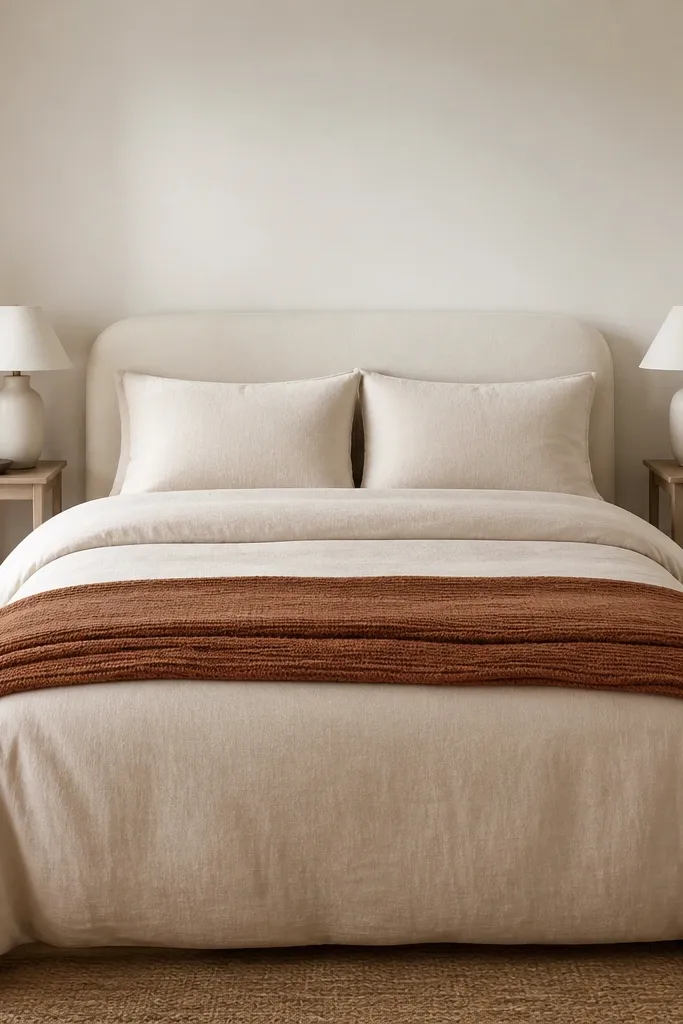
Start with a cream duvet cover because it bounces the room’s light and makes the bed look bigger without adding bulk. Add clay as the second color through one throw and two small accents, like a ceramic vase or a framed print with clay-toned matting. This palette looks cozy on both warm and cool skin tones because cream softens everything. I’ve seen it work especially well in rooms with north-facing windows where the light looks flatter — cream brings it back. The styling principle is repetition: you repeat the anchor color in at least three places so the eye doesn’t jump around.
Choose a duvet cover with a matte weave, not shiny satin, and keep it solid or with a very small dot texture. Lay the bed like this: duvet centered, then tuck a flat linen-blend throw at the foot so it shows 8-10 inches. Add two euro shams in cream and two standard pillows in the clay tone or a cream-and-clay stripe. Use 12-inch nightstands so the bed feels grounded instead of floating. Finish with warm white bulbs at 2700K and a cream lamp shade that doesn’t cast a harsh shadow.
Good to knowIf your walls are white, switch the anchor to clay and keep the duvet cream — the room feels warmer fast.
AvoidAvoid mixing heavy black patterns with cream in a tiny room; the contrast eats up the space.
2. Slim 12-Inch Nightstands with Drawer-Only Storage
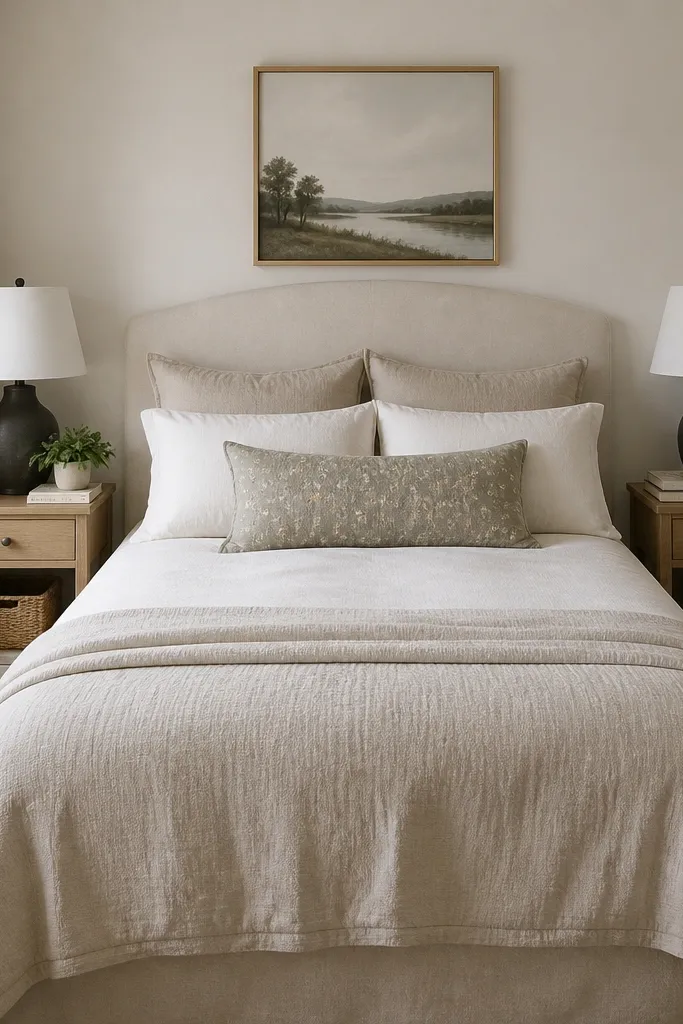
Nightstands are where small rooms usually fail because people add surface clutter. I recommend drawer-only storage for the items you don’t want visually competing: chargers, extra skincare, and a spare set of sleep masks. A 12-inch width is tight enough to keep the lane open, but wide enough for a lamp and a phone tray. This works for couples because both people can keep their daily essentials in their own drawer instead of sharing a chaotic pile. The principle is reducing “top clutter,” which makes the bed area feel calmer.
Pick nightstands that are 12-13 inches deep and 18-20 inches tall so the top doesn’t block the headboard visually. Keep the lamp base centered and leave 2-3 inches of empty space around it. Put a phone charger in the drawer, not on the surface, and use one small tray only for glasses or lip balm. If you need reading, choose a plug-in swing-arm lamp so you don’t add another bulky base. Place both nightstands at the same height; if one sits 1 inch higher, it looks messy in photos.
Use a fabric drawer organizer with two sections inside each drawer so items don’t tumble when you open it.
Skip open shelving for daily items; it turns into a visual junk rack quickly.
3. Headboard That Hits Eye Level with a Soft Fabric Back
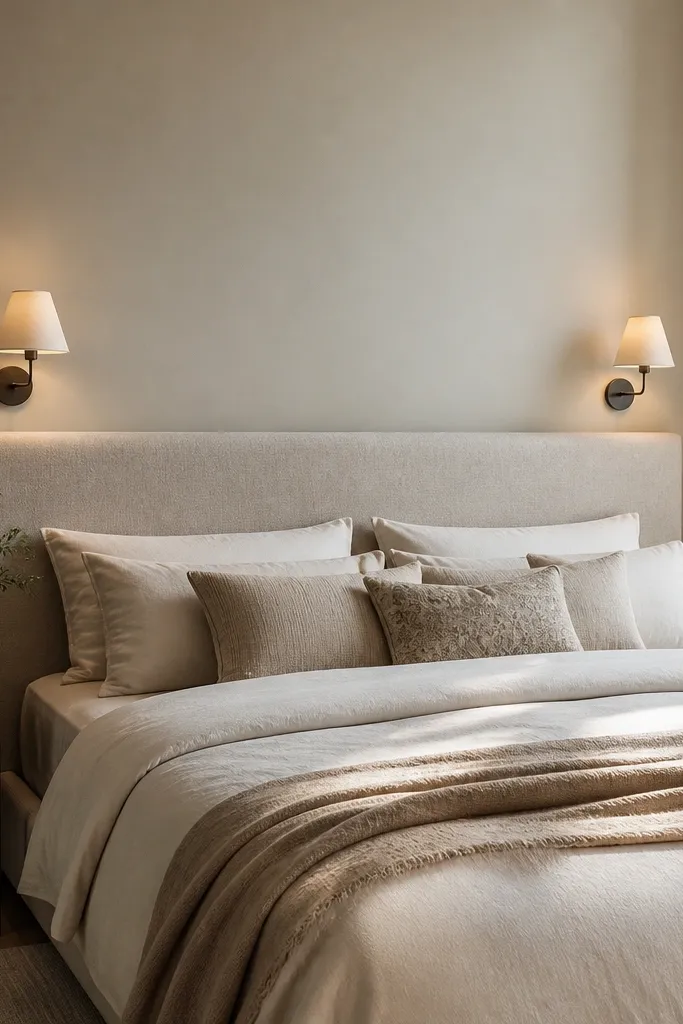
In a very small bedroom, the headboard is your strongest “structure” piece. I like a soft fabric headboard in light beige or warm taupe because it makes the wall behind the bed feel intentional rather than blank. When the headboard reaches eye level, it frames the bed without crowding the ceiling. This is flattering for couples because you can sit up and lean comfortably — fabric gives a little give. The styling principle is proportional comfort: you want height that supports your posture, not a tall slab that crowds the room.
Measure from the floor to where you sit back comfortably on the pillows, then aim for the headboard to reach that zone. For many couples, that lands around 42-48 inches from the floor for a queen bed. Choose a headboard with a flat back and no thick tufting ridges so it doesn’t look heavy. Keep pillow heights consistent: two standard pillows plus one slim lumbar or rolled pillow. Install wall sconces if you can, because they free nightstand space and keep the lighting focused on the bed area.
Good to knowUse a removable headboard cover in a cotton-linen blend if you have messy hair days; it wipes clean faster than you think.
AvoidAvoid glossy faux leather headboards; the shine reads cheap in small, dim rooms.
4. Ceiling-High Linen Curtains with a 4-Inch Break
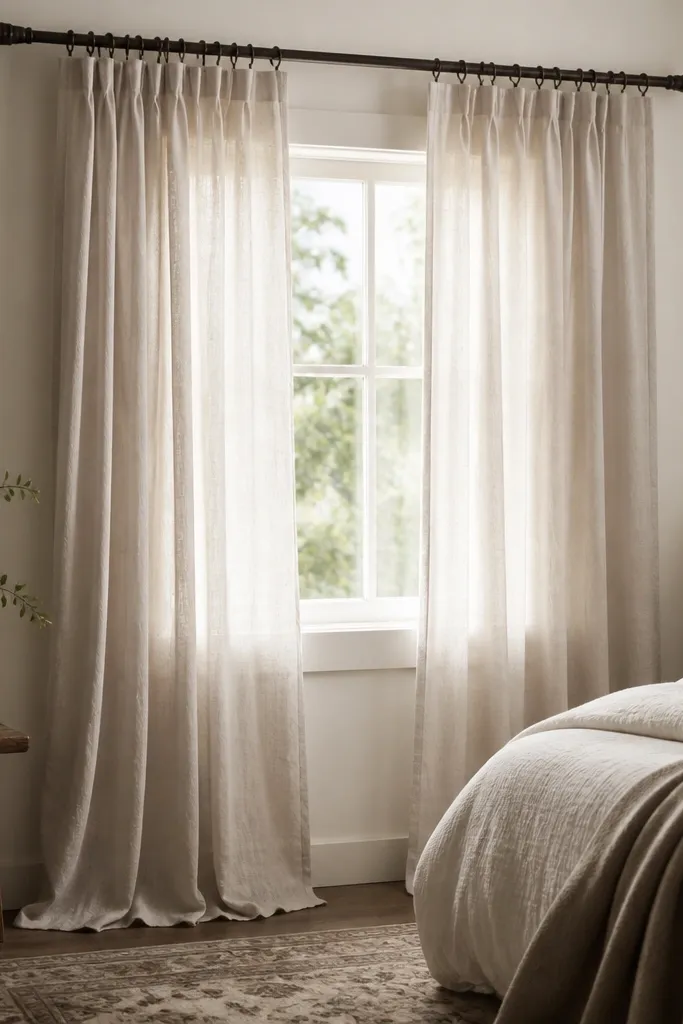
This is the easiest “bigger room” move I’ve done for couples. When you mount curtains close to the ceiling and extend the rod past the window edges, the eye reads more height and width. I use linen-blend curtains in oatmeal, sand, or warm white because they let light in without making the room look washed out. For couples, it also helps morning privacy without blocking the whole window — you still get daylight. The principle is optical framing: you trick the proportions using mounting height and generous width.
Mount the rod 4-6 inches above the window frame, and extend it 4-8 inches beyond each side. Choose panels that are 2x the width of the window so they form real folds when pulled. Hang them so they just kiss the floor or pool by about 1 inch; short curtains make the space feel chopped up. Use tiebacks only if your couple needs full open views; otherwise, keep them straight for a calmer look. If you have a radiator under the window, add a slimmer lining so the fabric doesn’t bunch.
Steam the curtains before hanging so the folds look intentional, not wrinkled.
Avoid curtain fabric that’s too thin and see-through; it forces you to add blinds and the layering looks cluttered.
5. Single Long Dresser with a Mirror Above (No Gallery Wall)
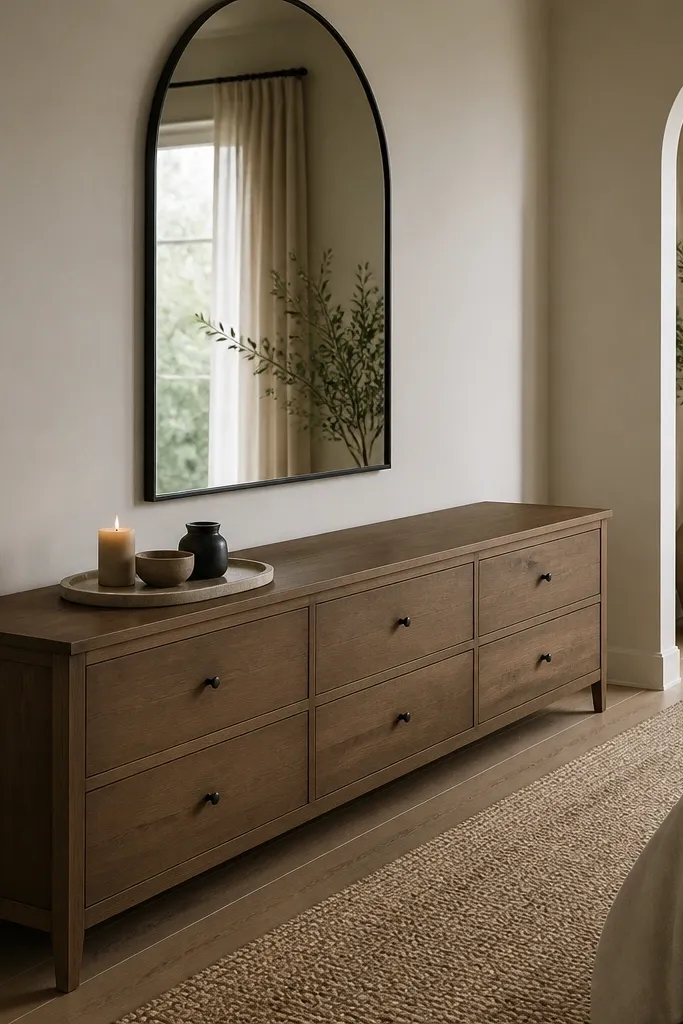
If you have a small bedroom, a mirror is one of the few decor pieces that changes the room’s shape. A long dresser keeps storage practical, and a large mirror above it reflects the light from the room back into the corners. I like arched or oval mirrors because they soften the geometry of tight spaces. This setup works for couples because it gives both people a place to do a quick check without crowding the nightstands. The principle is one strong reflective surface instead of many small items.
Pick a dresser that’s 16-20 inches deep and long enough to cover the wall stretch you have, usually 48-60 inches wide. Center the mirror above the dresser so it aligns with the middle drawer, not the lamp. Choose a mirror frame in black iron, warm wood, or a brushed brass finish — match it to your lamp bases. Keep the dresser top to one tray and one candle plus one small catchall. Leave the wall around the mirror bare so the reflection looks clean, not busy.
Good to knowAngle the mirror slightly so it reflects your window or the brightest lamp, not the bed clutter.
AvoidSkip a mirror directly opposite the bed if you hate seeing reflections at night.
6. One Oversized Art Print Behind the Bed
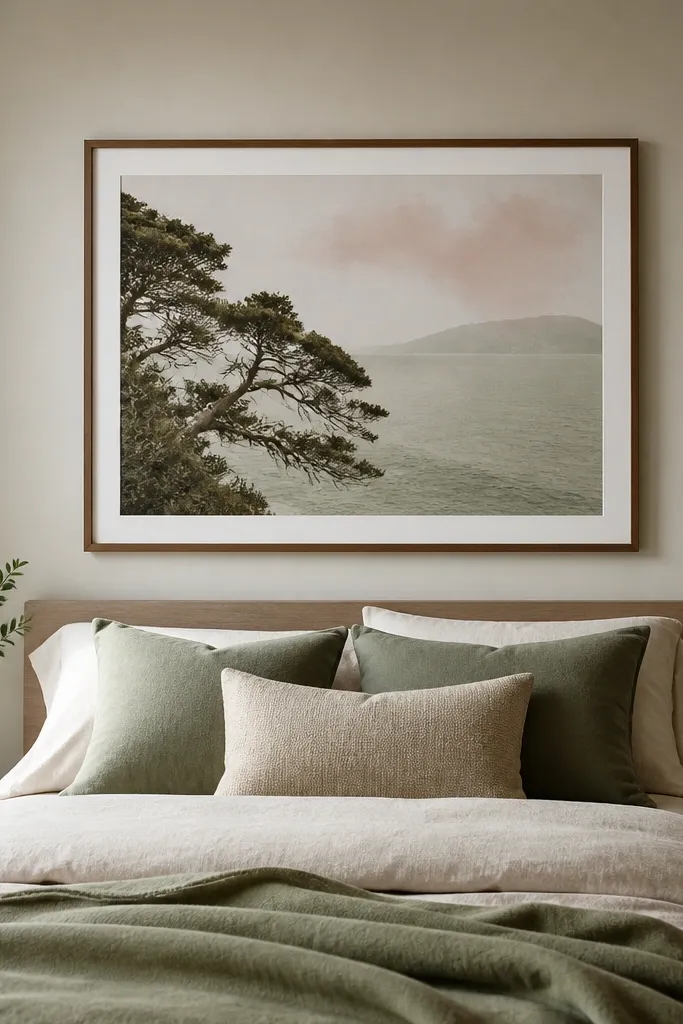
In tiny couple rooms, wall art often becomes a mess of frames. I prefer one oversized print centered behind the bed, because it gives the eye a single stopping point. Muted colors keep the room calm, and a slightly abstract or washed print looks softer than a high-contrast photo. This works well if your bed is already a focal point; the art supports it instead of competing. The principle is visual hierarchy: one big piece reads intentional even when everything else is small.
Choose art that’s about 2/3 the width of the bed. For a queen bed around 60 inches wide, look for a frame around 36-40 inches wide. Hang it so the center sits roughly 60 inches from the floor, adjusting for your pillow height. Use a simple frame with a thin lip so it doesn’t look bulky. Keep the bedding and curtains in the same color family as the art — sage with cream, or blush with warm white. Place the print so it doesn’t overlap the headboard too tightly; leave a small gap for a clean line.
Good to knowIf you’re nervous, use painters tape to mock the outline on the wall for a night before drilling.
AvoidAvoid three small frames in a row; it makes the wall feel chopped up.
7. Corner Reading Nook Chair with a 20-Inch Ottoman
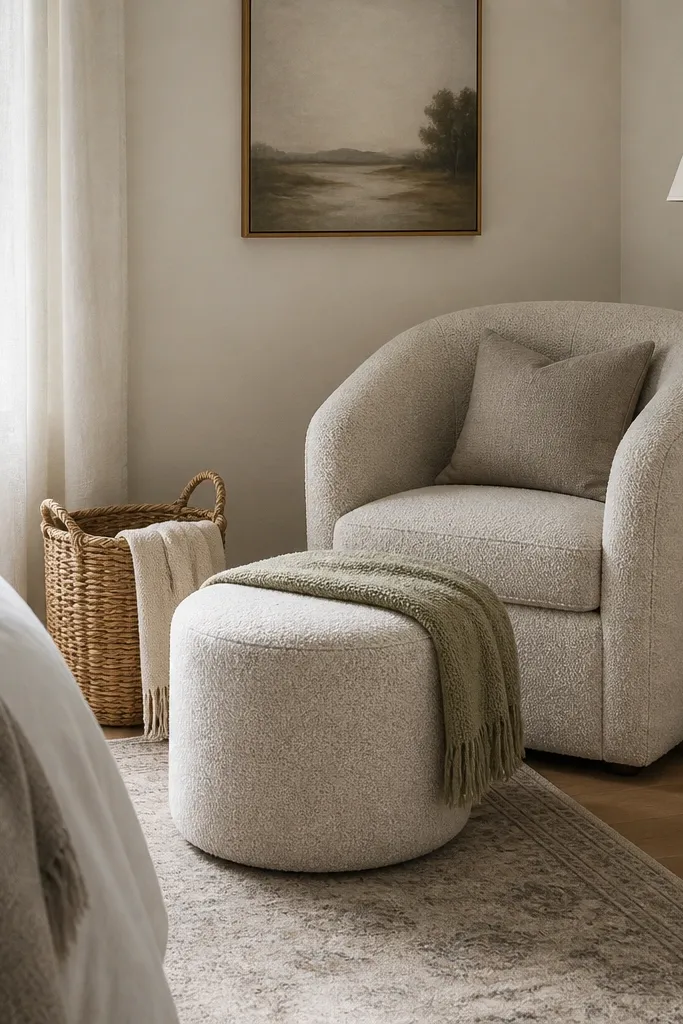
If your couple bedroom has a corner that never gets used, turn it into a reading spot. A tiny chair plus a 20-inch ottoman gives you a place to sit without eating up the entire room. I choose textured performance fabric in oatmeal or light gray because it hides lint and looks cozy. This is great for couples who read at night — one person can sit without climbing over the other. The principle is adding function in a dead zone, not on the main walking path.
Choose a chair with a seat height around 18-19 inches so it feels easy to get into. Place it in the corner with the back facing the wall, leaving at least 30 inches of clearance to the bed edge. Use a floor lamp with a slim pole or a small shade so it doesn’t crowd the ceiling. Add an ottoman that’s either under the chair or pulled out only when needed. Keep one woven basket for blankets so the chair looks tidy and the bed stays the main focus.
Good to knowUse a small wall outlet lamp or a smart plug so you don’t run an ugly extension cord across the floor.
AvoidSkip bulky armchairs; in small rooms, the arms steal the lane.
8. Under-Bed Rolling Bins in Two Sizes
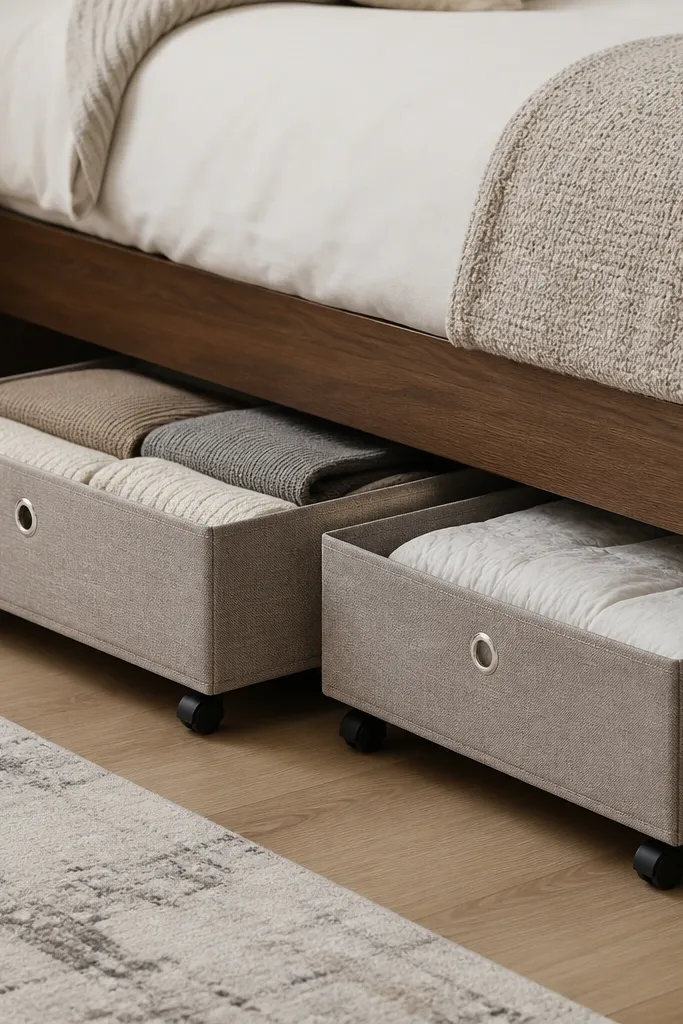
Under-bed storage changes how your bedroom looks every single day, not just during spring cleaning. Rolling bins let you pull things out without wrestling — that matters for couples because both people need easy access. I use two sizes so you separate bulky items from flat ones: tall for sweaters or off-season blankets, shorter for sheets and extra pillowcases. The bins also prevent “mystery piles” that gather at the foot of the bed. The principle is using hidden storage for the things that create visual noise.
Choose bins that match the bed clearance; measure the gap from the floor to the bed frame and subtract about 1/2 inch so wheels don’t scrape. Pick bin heights around 6-8 inches for flat linens and 10-12 inches for thicker blankets. Label the bins with a small fabric tag on the side so you can find things fast. Slide the taller bin toward the wall end, shorter bin toward the door end if you access it more. Keep only one category per bin so you don’t end up re-sorting every week.
Good to knowPut your most-used linens in the shorter bin and save the taller one for less frequent items.
AvoidAvoid fabric bins that collapse; they look fine at first and then turn into a wrinkled mess.
9. Bedding Layering with One Texture and One Solid
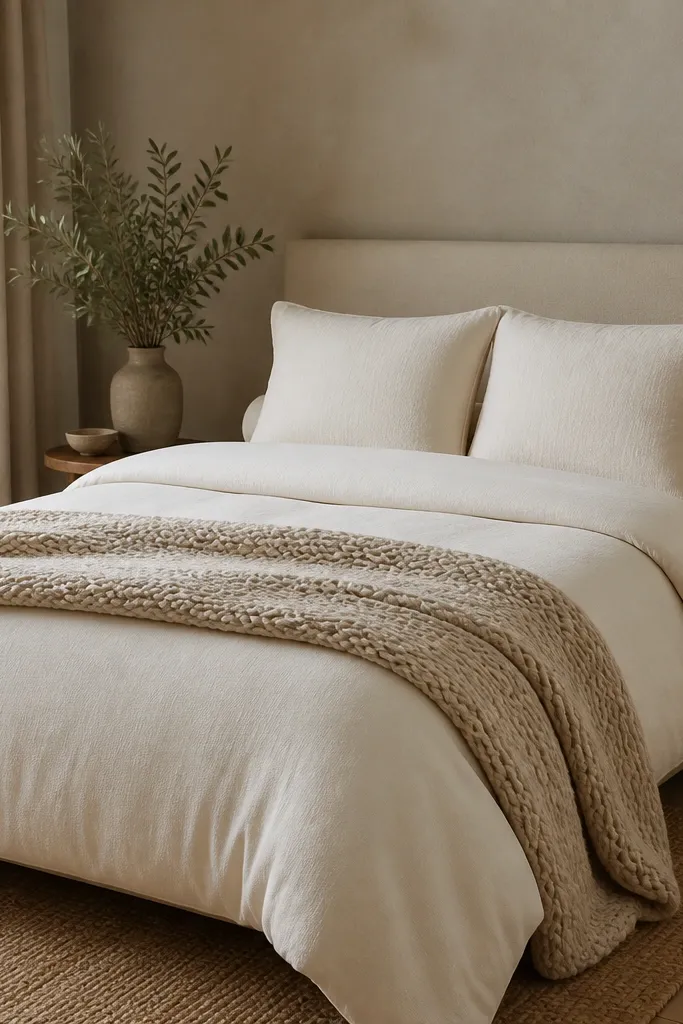
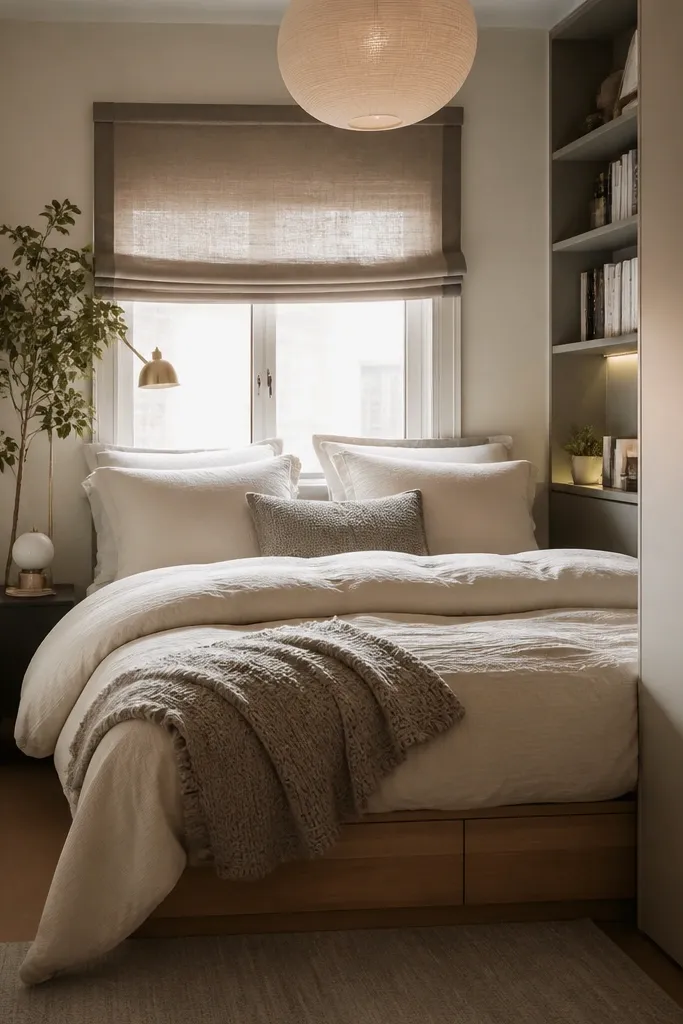
When couples try to make a tiny bed look “decorated,” they add too many layers and patterns. I keep it to one texture and one solid so the bed looks thick and cozy without looking busy. A chunky knit throw in oatmeal or sand adds warmth and a lived-in feel, while a solid duvet keeps the room visually calm. This layering flatters most body types because it makes the bed look inviting from standing height, not just from the bed. The principle is reducing pattern count and letting fabric texture do the work.
Start with a duvet cover in a solid neutral or a micro texture like subtle weave. Add one throw blanket — knit, boucle, or a heavyweight cotton — and fold it into a neat rectangle at the foot. Use two pillow shams matching the duvet, then add one accent pillow in the throw color. If you want a “hotel” look, add a thin mattress topper or a slightly thicker duvet insert so the bed doesn’t look flat. Tuck a rolled blanket behind the pillows on the side you can see from the doorway.
If your room is very bright, choose a slightly heavier duvet weight so the drape looks full.
Skip three different patterns on pillows; it makes the bed look like it’s wearing a costume.
10. Wall-Mounted Shelves for Couples Who Read in Bed
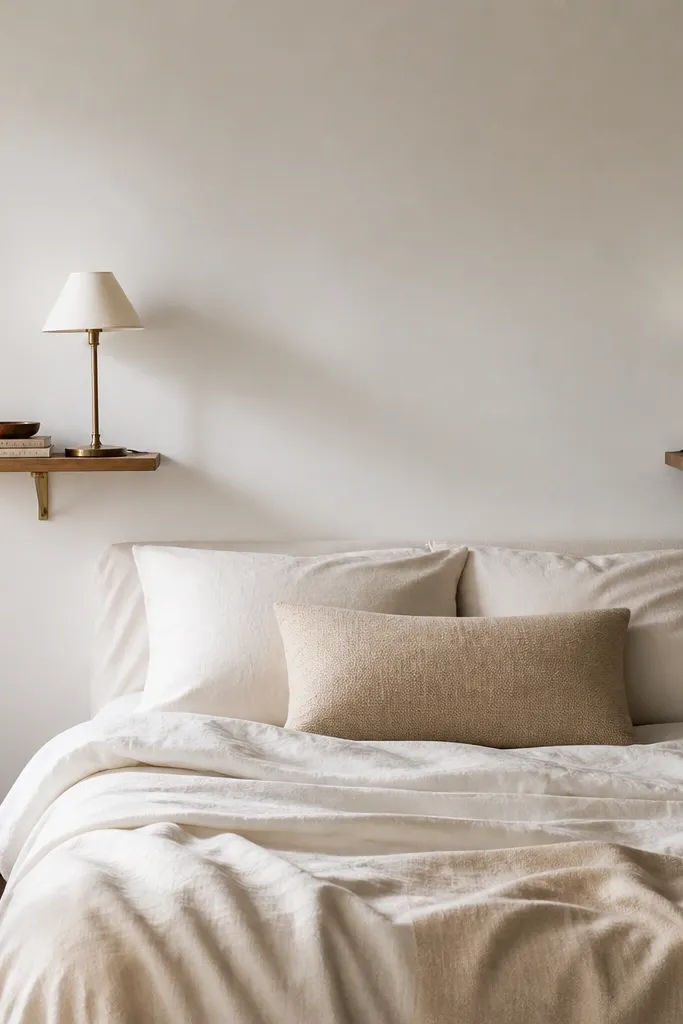
If you want nightstand space but you don’t have any, wall-mounted shelves are the fix I’ve used in tight layouts. They give each person a spot for their book, glasses, and a phone charger without a bulky table. I like shelves just wide enough for a book stack and a small lamp, not deep storage shelves that look like clutter. This works for couples because each side stays personal, even when the room is tiny. The principle is replacing horizontal surfaces with vertical ones.
Mount shelves above where a normal nightstand would sit, keeping the bottom around 48-52 inches from the floor. Use a shelf depth around 6-8 inches so books don’t overhang. Put a small tray on each shelf for daily items and keep cords tucked along the wall. Choose one warm lamp per side or use wall sconces if wiring allows. Stack books by height so they look neat instead of random piles.
Use a cable cover painted the same color as the wall so it disappears.
Avoid shelves too low; you’ll hit them with your shoulder when you sit up.
11. Door-Side Over-the-Door Organizer in Sage
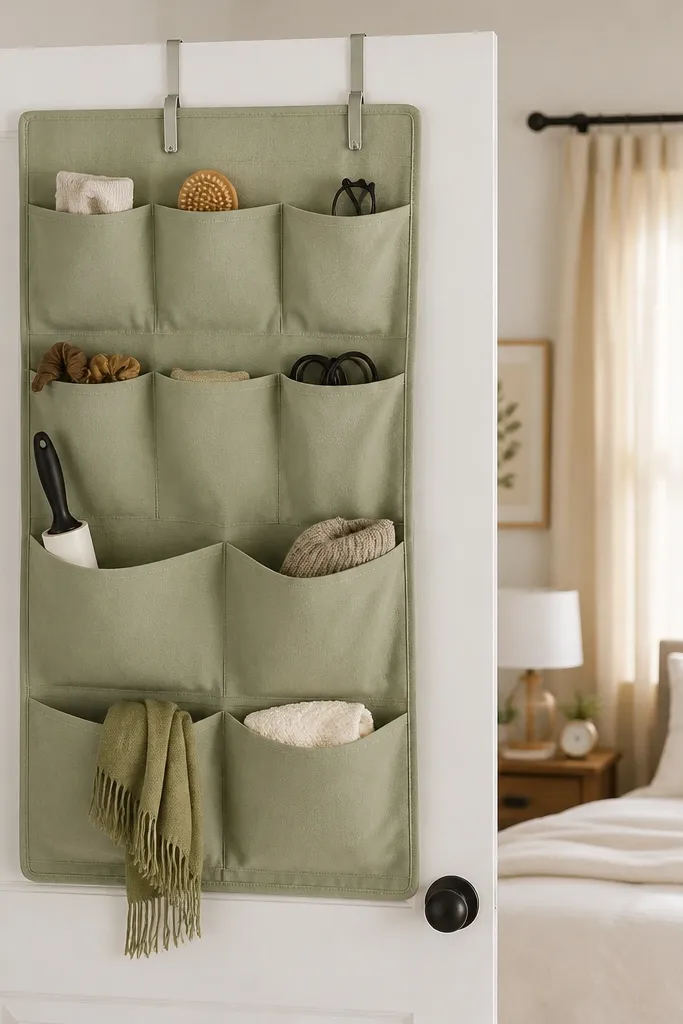
A bedroom door is free space you can claim without changing your furniture layout. I’ve used over-the-door organizers in small couple rooms to keep daily grooming items off the dresser and out of sight. Sage or muted green looks calm next to warm neutrals, and the fabric hides the “utilitarian” vibe. This works especially well if your dresser top gets crowded fast. The principle is moving small daily items into a hidden-but-accessible zone.
Pick an organizer with pockets sized for your routine: two larger pockets for hair tools or skincare, small pockets for accessories. Hang it on the inside door so it doesn’t block the closet opening. Keep the heaviest items in the bottom pockets so the organizer hangs straight. Add one small hook inside for a robe or bag handle if you use it. If the door swings into the room, confirm you have clearance — open the door fully and watch for any snagging.
Use fabric labels on the pockets so both partners know where things go.
Skip plastic-only organizers; they look stark and cheap in a cozy bedroom.
12. Ceiling Flush Light with a Warm Shade Diffuser
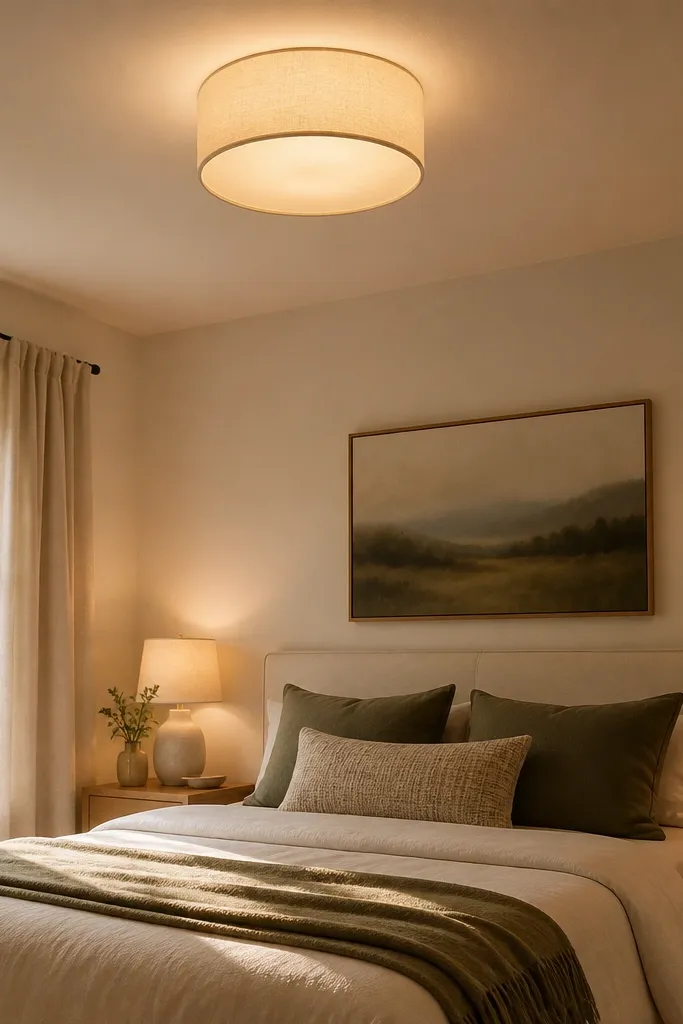
Small bedrooms feel smaller when the overhead light is harsh and directional. I use a flush mount with a diffuser so the light spreads across the ceiling and walls, then I add two warm lamps for evening. The effect is calmer shadows around the bed, which makes the room feel more intimate. This setup flatters couples because it reduces glare on skin and on mirrors. The principle is layered lighting: one general glow plus localized light where you need it.
Choose bulbs at 2700K warm white and avoid super bright lumens that turn the room gray. Pick a ceiling fixture with a shade that diffuses, not a bare bulb look. Set lamps on each side of the bed with shades in cream or warm beige. If you hate overhead brightness, use the ceiling light only for mornings and rely on lamps at night. Test it at 7pm with the bed made — shadows show up fast and you’ll know if it’s too harsh.
Good to knowUse a dimmer switch if you can; a 30-40% dim at night changes everything.
AvoidAvoid cool 4000K bulbs; they make bedding look dull and the room less cozy.
13. Two-Color Closet System with Matching Hangers
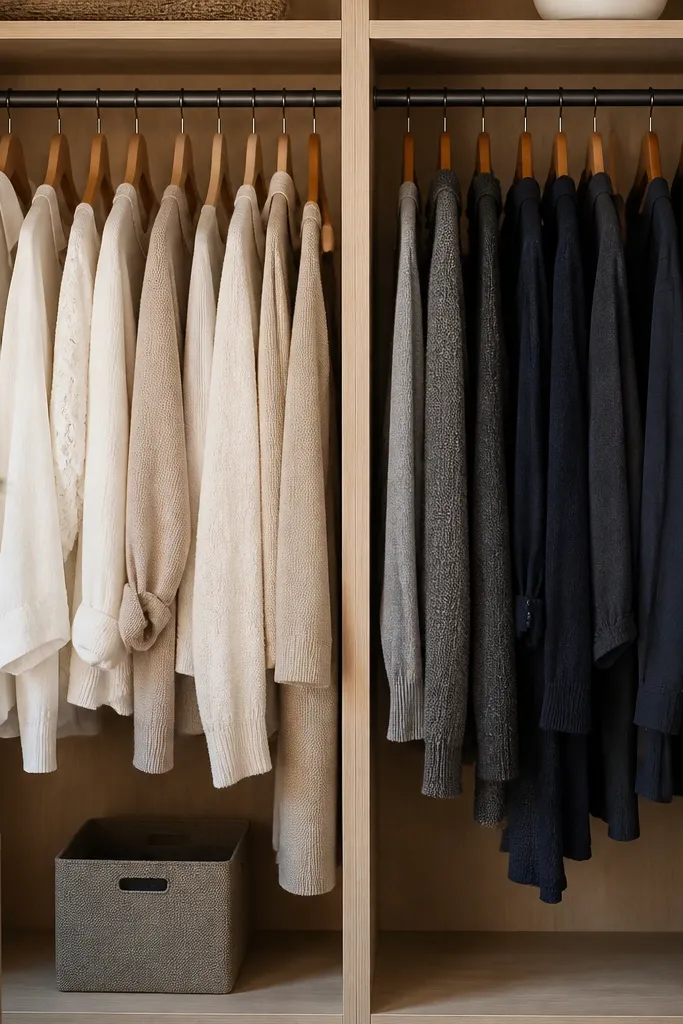
In tiny couple bedrooms, the closet mess leaks into the whole room visually. I fix this by using matching hangers and separating clothes by color family so the closet reads organized even when you open the door. Matching hangers remove the visual “noise” of different shapes and sizes. This works for couples because it creates a shared system without policing anyone’s style. The principle is visual consistency: a tidy closet makes the bedroom feel tidy even if the dresser top has a few items.
Buy one hanger type in bulk, like slim felt or slim metal, and use it for all shirts and dresses. Sort clothes into two zones: keep lighter neutrals on one side and darker pieces on the other. Add a shelf divider so folded items don’t spill into hanging space. Use bottom bins for shoes or workout gear so the closet floor stays clean. If you have a double closet, split by season instead of by person so both partners can rotate easily.
Good to knowHang one “landing” hook for accessories inside the closet so belts and bags don’t end up on chair backs.
AvoidSkip mixed hangers; the closet starts looking like a thrift store rack.
14. Floating Shelf + Bedside Ladder Light in One Corner
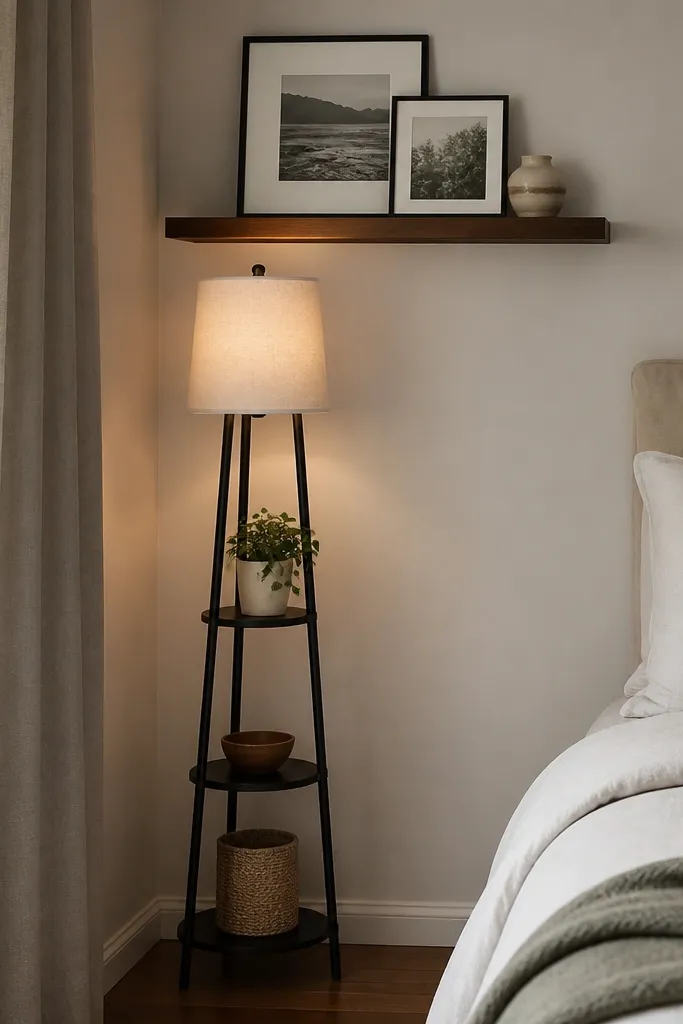
Corners are where small rooms hide their potential. A narrow ladder-style floor lamp takes up less floor area than a typical standing lamp because it’s tall and slim, and it gives you a cozy reading glow. Add a floating shelf above it for two framed photos or a small object so the corner feels styled but not cluttered. I like black lamp frames with warm shade fabric because it gives contrast without making the room feel harsh. This works well for couples because it creates a “third spot” besides bed and dresser — a place to pause. The principle is using one vertical element plus one small surface, so the corner looks intentional.
Place the ladder lamp about 10-14 inches away from the wall so the shade doesn’t press against paint and the light spreads. Mount a floating shelf above at about 65-70 inches from the floor so it’s visible when you stand in the room. Keep items on the shelf to two small pieces plus one thin book so the shelf doesn’t look crowded. Choose frames that match your mirror frame finish for cohesion. Use the lamp for reading and keep a small woven basket nearby for blankets so you’re not draping them on chairs.
Good to knowAim the lamp shade slightly toward the bed reading spot so light lands where your eyes are.
AvoidAvoid piling random decor on the shelf; in small rooms, one extra item reads as clutter.