1. Lift-Top Bed with Linen-Gray Storage
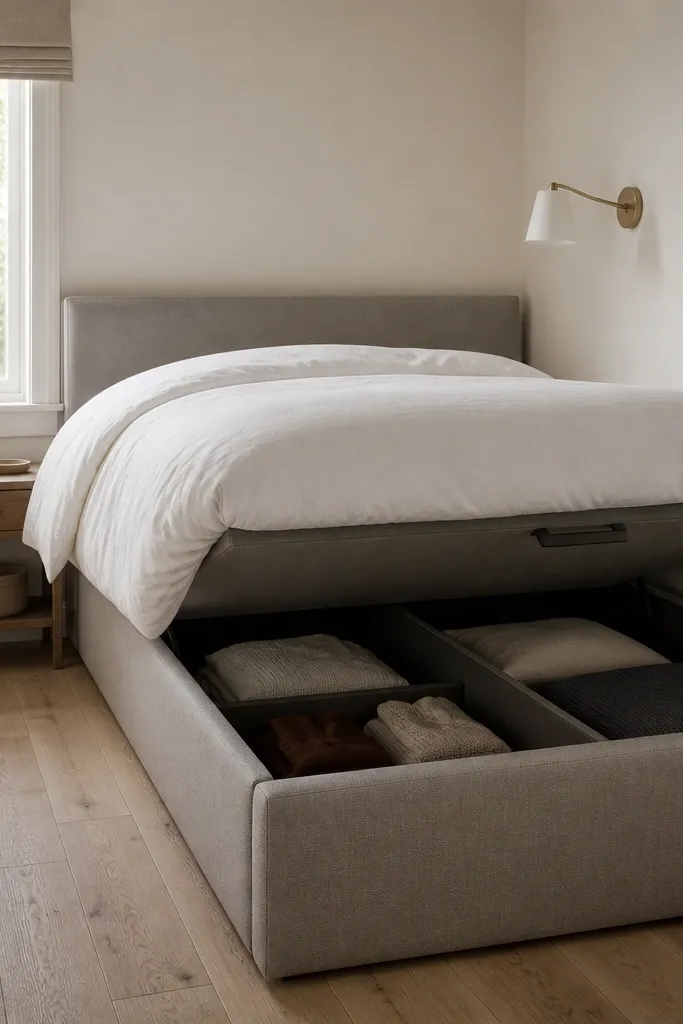
I love a lift-top bed in very small rooms because it gives you “closet volume” without building anything around the bed. Go for a linen-gray top panel because it hides scuffs and looks calmer than glossy wood when the lid is open for a minute. Store off-season blankets, extra sheets, and a spare set of winter pajamas in there so your closet stays visually light. This setup looks best when your bedding has one strong neutral and one small accent color, like warm white plus dusty blue, because it keeps the bed from looking bulky. It also works well if you’re short on drawer space and you need something you can access with one hand.
Start by choosing a lift-top frame that matches your mattress height so the lid doesn’t feel too low when you open it. Add a bedside table that’s no deeper than 12 inches, then place a thin tray on top for daily items. Keep the bed centered so you have at least 24 inches of walkway on the side where you get dressed. Finally, line the compartments with cotton bin organizers so items don’t pile up into a messy mound when you pull something out.
Use clear bins only inside the bed compartments. On the outside, keep fabric or solid-color organizers so the storage doesn’t look busy.
Don’t buy a lift-top bed with tiny compartments; you’ll end up leaving stuff on the floor because it never fits.
2. Platform Bed Drawers in Warm Walnut
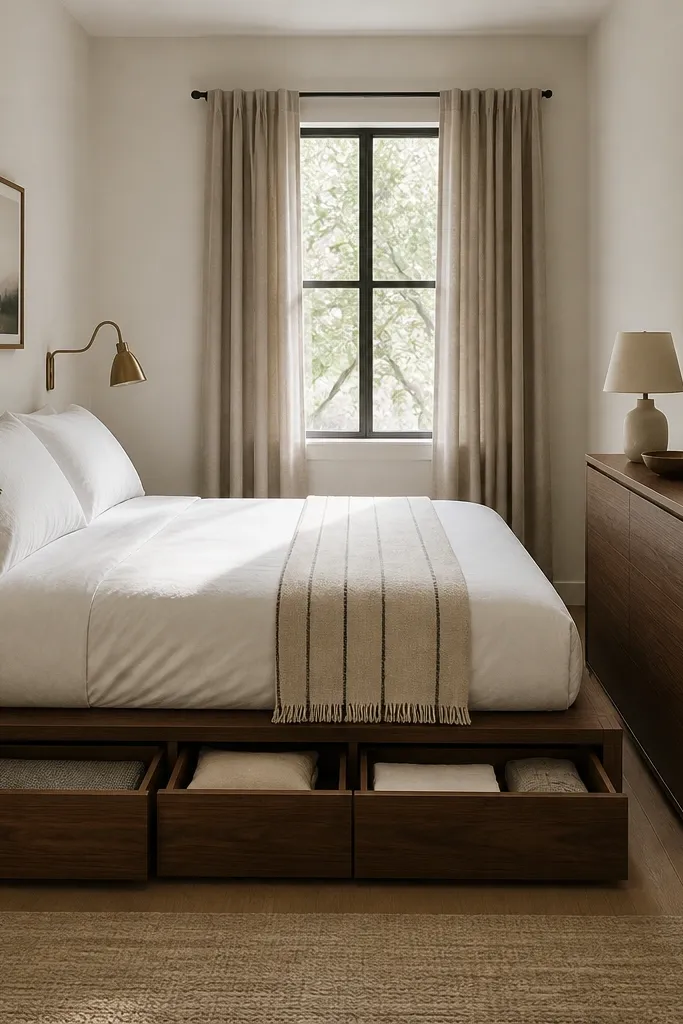
Drawers under a platform bed are my go-to for very small bedroom ideas with storage because they stay hidden until you need them. Warm walnut looks expensive even in a small footprint, and it pairs cleanly with white bedding and light floors. I use the drawers for folded clothes and bulky items like sweaters because the fabric stays stacked and you can see what you’re grabbing. If you have fair skin and cool undertones, walnut + white looks sharp and bright; if you have warmer undertones, add a beige throw and it reads cozy instead of “catalog sterile.”
Measure the drawer clearance next to your dresser and door. Aim for 3-4 inches of space between the drawer fronts and any wall trim so they slide without scraping. Choose a dresser that’s 14 inches deep, then mount a mirror that’s at least as wide as the dresser top. Style the top with one lamp and a single folded stack of throw blankets so the storage area doesn’t look like a dump spot.
Label the drawers with painter’s tape strips on the inside back — you’ll keep it organized without buying label makers.
Avoid mixing three wood tones; it makes tiny storage look messy even when it’s neat.
3. Ceiling-Height Shelf Wall for Seasonal Bins
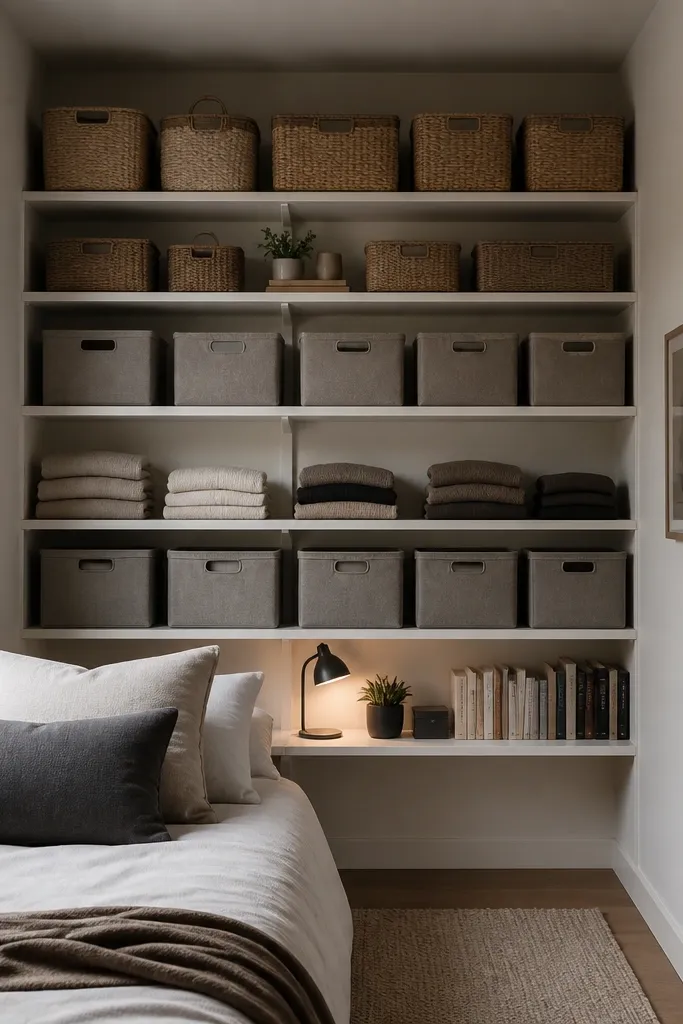
A ceiling-height shelf wall makes storage feel bigger because your eyes track upward. I use it specifically for seasonal bins and “not every day” items, so your room stays calm. Open shelves work when you keep the styling tight: bins match in color, stacks are aligned, and you don’t leave loose hangers out. For a small room, go with 10-12 inch deep shelves so you don’t lose walking space. This is great for people who wear a limited capsule wardrobe and want everything visible without a bulky closet door.
Start by marking stud locations and install a shelf rail or L-brackets for maximum stability — don’t rely only on drywall anchors. Set the top shelf about 6 inches below the ceiling so dust doesn’t collect and bins fit without wobble. Use woven bins in two sizes and keep them consistently oriented (lids facing out). Put the most-used items at eye level and the seasonal bins at the top; keep the bottom shelf mostly empty for a lighter look.
Choose one neutral bin color like oatmeal or natural seagrass so the wall reads cohesive.
Don’t fill every shelf — leaving a couple “breathing gaps” makes the room feel larger than it is.
4. Over-Door Organizer That Looks Like a Curtain Rod
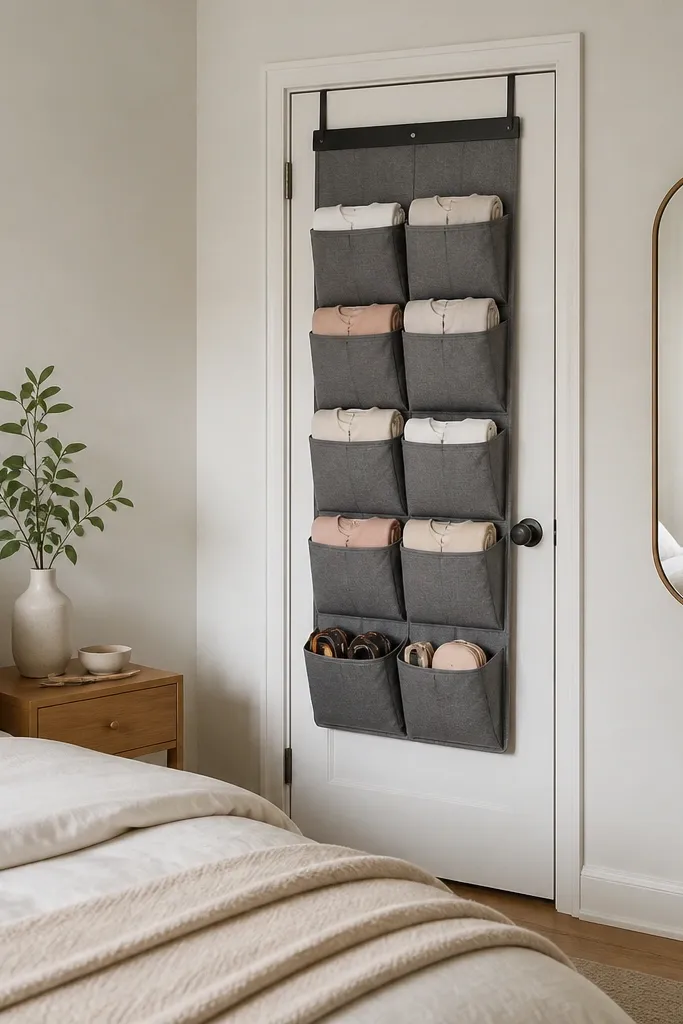
Over-the-door organizers are the sneaky win when you can’t drill and you still need daily storage. The trick is picking one with a structured top bar and pocket depth that doesn’t sag when you load it. I use it for undergarments, workout gear, and small accessories because those items multiply quickly in tiny rooms. When you choose a fabric color close to your wall (warm white or light beige), it disappears visually and reads like part of the decor. This setup suits renters and anyone who hates the look of plastic baskets.
Hang the organizer so the bottom edge sits above the floor by at least 2 inches — it keeps it from looking worn. Put heavier items in the lower pockets and lighter items up top so it stays flat. Pair it with a slim hook on the inside of the door for a robe or bag to keep the door area from turning into a pile. Finally, keep the door hardware and mirror frames in one metal finish, like matte black, so it looks intentional.
Use small fabric zipper pouches inside the organizer pockets for cords and hair tools so nothing spills out.
Skip the thin mesh pocket organizers; they look cheap fast and everything falls to the bottom.
5. Slim Dresser with a Full-Length Mirror Above
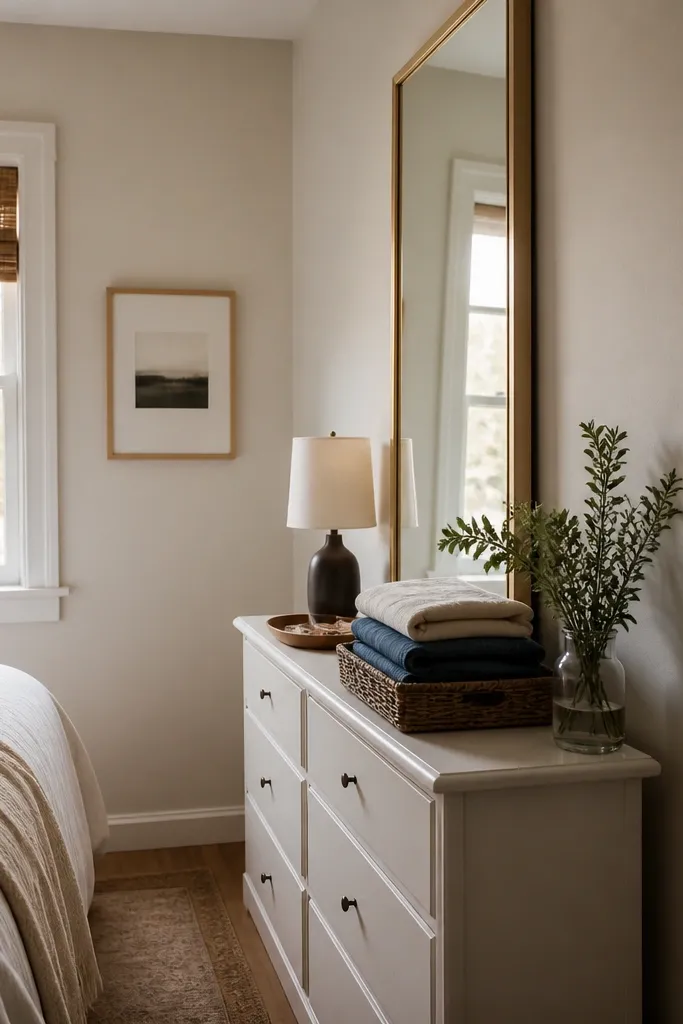
Start by placing the dresser on the longest wall you can, not the wall with the window — you want clear sight lines. Choose a mirror that’s tall enough to show you from head to mid-shin, and mount it securely to wall studs. Add a tray on top for daily items and keep everything else out of sight with drawer dividers. Use drawer liners in a neutral tone and fold clothes vertically in one drawer so you can find them fast.
A slim dresser is the best “real furniture” storage option when you want drawers but don’t have space for a wide unit. I keep it narrow at about 12-14 inches deep, then add a mirror above so you get light bounce and a dressed look. The mirror also helps you check outfits without needing a separate closet mirror. Soft white or pale oak dressers make the room feel brighter, and the drawers hide the mess you’d otherwise see. This setup flatters most room shapes because it adds storage along a wall without eating the walkway.
AvoidDon’t mount a mirror too low; in tiny rooms it makes the dresser look like it’s crowding the bed.
Good to knowPick one accent color for the tray and lamp base, like terracotta, so the mirror doesn’t feel like a random add-on.
6. Built-In Look Closet with Tension Rods and Fabric Dividers
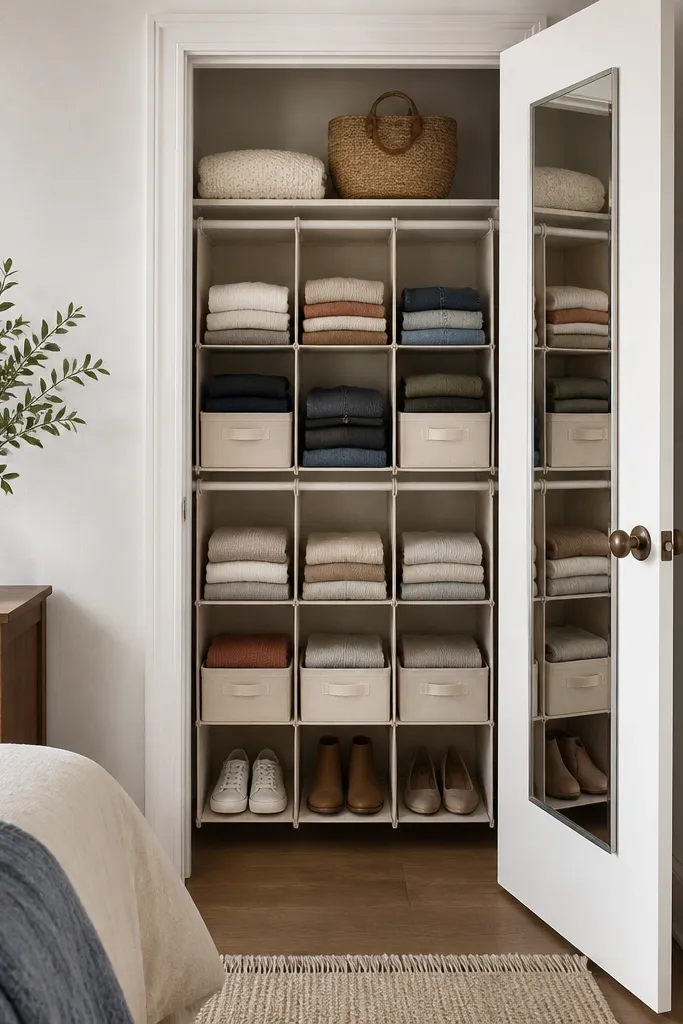
Start by measuring inside height and width so your rods don’t bow and your dividers fit squarely. Install two tension rods — one for hanging and one for lightweight hanging organizers — then add dividers to create 2-3 cubby sections. Use bins with the same fabric texture so they look like one system. Finish by adding a small hook bar inside the door for bags or scarves and place a mirror on the door for quick outfit checks.
If you have a closet alcove but it’s shallow, tension rods and fabric dividers give you a built-in look without renovation. The rods let you hang short items like shirts and skirts without needing a full wardrobe system. I use fabric dividers because they keep folded stacks from tipping in a small space. This is ideal for people who mostly hang a few items and fold everything else. The result looks tidy because bins are uniform and the closet door stays closed most of the time.
AvoidAvoid overloading the rods; if they sag, your storage will look messy even when you’re trying to be organized.
Good to knowUse matching hangers in one color so the closet looks calm when you do open it.
7. Floating Nightstand with Drawer and Cable Slot
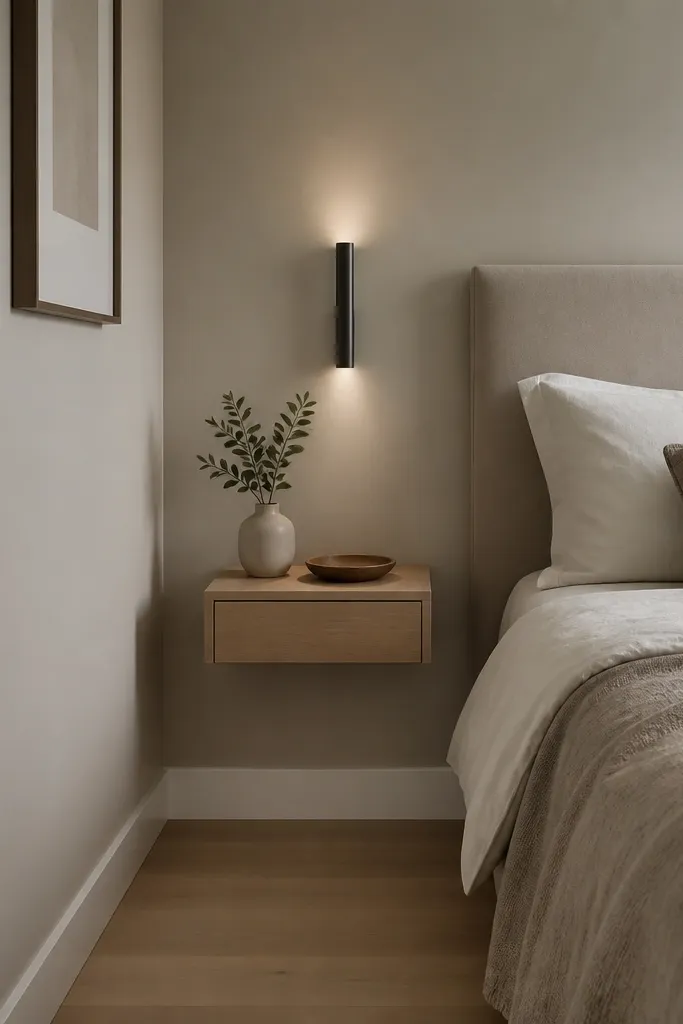
Start by mounting the nightstand so the top is about the same height as your mattress edge when you sit up. Drill into studs and use the included rail or template so it sits level. Add one wall sconce above or beside it to keep the bedside area bright without a bulky lamp base. Finally, run the charger cord through the cable slot and into a wall outlet so there’s no cord loop on the floor.
A floating nightstand is a small-room cheat code because it gives you a surface without eating floor area. I like nightstands with a drawer and a small cable cutout because charging cords are what usually turn a tidy room into a clutter magnet. Wall-mounted storage also helps if you’re short and struggle to reach high shelves — everything at bed height stays easy. Choose a matte finish like matte oak or painted off-white so it doesn’t reflect light harshly. This works especially well for bedrooms with narrow walking space between bed and dresser.
AvoidDon’t use a floating shelf with no front lip; your phone and glasses will slide off and you’ll stop using it.
Good to knowStore only bedtime items on the nightstand, not random daily stuff. Keep a separate small tray in the drawer for chargers and lip balm.
8. Under-Bed Rolling Bins in a Single Color Set
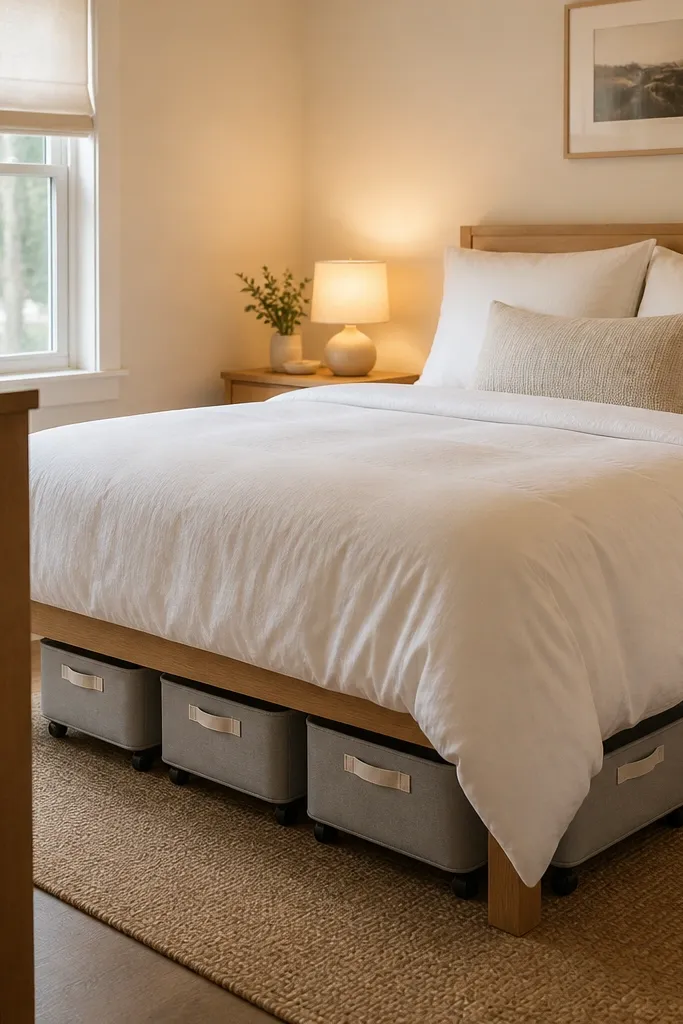
Start by checking the clearance under your bed. You need at least 3.5 inches of height for low-profile rolling bins to move without catching. Choose bins that are slightly shorter than the bed length so they slide out easily. Place heavier items in the bins closest to the doorway so you don’t have to wrestle them out. Label each bin with a fabric tag and keep the tag on the side facing the room.
Under-bed rolling bins are the easiest storage upgrade I’ve done in tiny rooms because they’re fast and they don’t require carpentry. Matching the bins in one color makes the whole setup look intentional, not like random storage. I use them for shoes, extra linens, and bulky sweaters that take up closet space. The wheels are worth it because you can pull one bin forward without tugging everything. This works for taller people too, because the bins stay low and don’t create awkward shelf reach.
AvoidAvoid mixing bin heights; uneven tops create a lumpy look when the bed skirt sits over them.
Good to knowPut your most-used under-bed item in the bin closest to the bed’s foot so you don’t move everything every week.
9. Corner Wardrobe with a Hanging Rail and Shoe Drawer
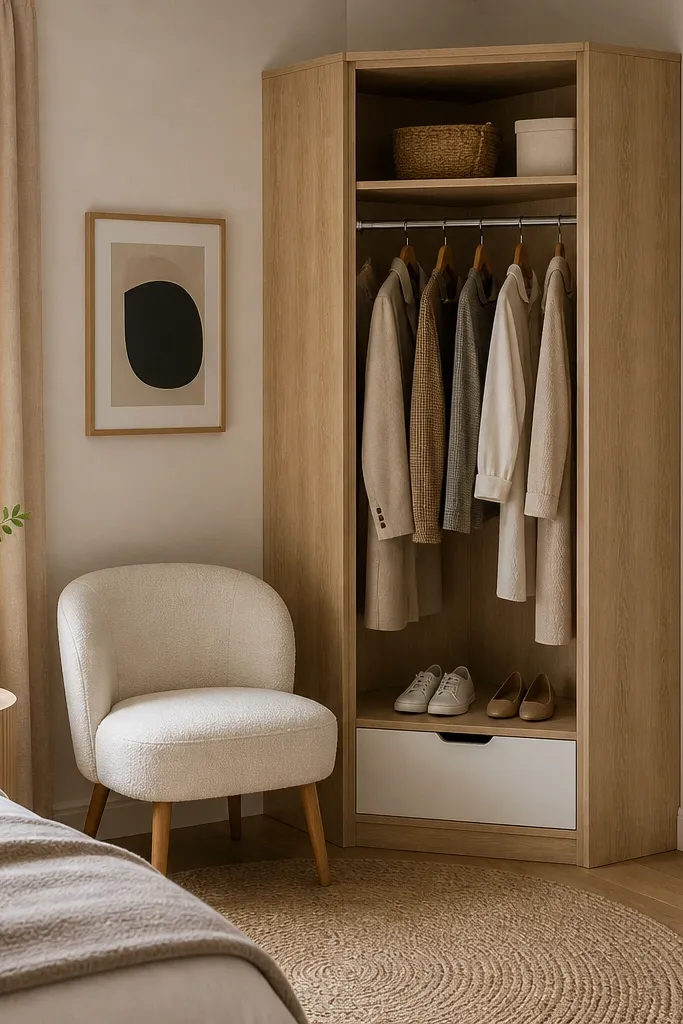
Corners are wasted space in small bedrooms, and a corner wardrobe unit turns that dead zone into real storage. I like the ones with a hanging rail because you can store shirts, dresses, and hanging accessories without a bulky closet door. Add the shoe drawer for everyday pairs so you don’t keep shoes by the door where they visually crowd the room. Light oak and white keep it bright, which matters in rooms that already have limited natural light. This setup works best for people with a modest shoe collection and a few hanging pieces.
Start by measuring the corner width at floor level and mid-wall height. Corner units need straight clearance for the doors or rails to work. Place the wardrobe so the hanging rail is perpendicular to the bed, giving you an easy reach. Use shoe bins in the bottom drawer to keep pairs from sliding. Style the top shelf with one basket for small items and keep everything else out of sight.
Hang one scarf or belt organizer on the side if you have narrow space — it adds storage without extra bulk.
Don’t choose a corner unit with doors that swing into your walkway; small rooms punish bad door clearance.
10. Bedside Cubbies with Fabric Baskets and One Drawer
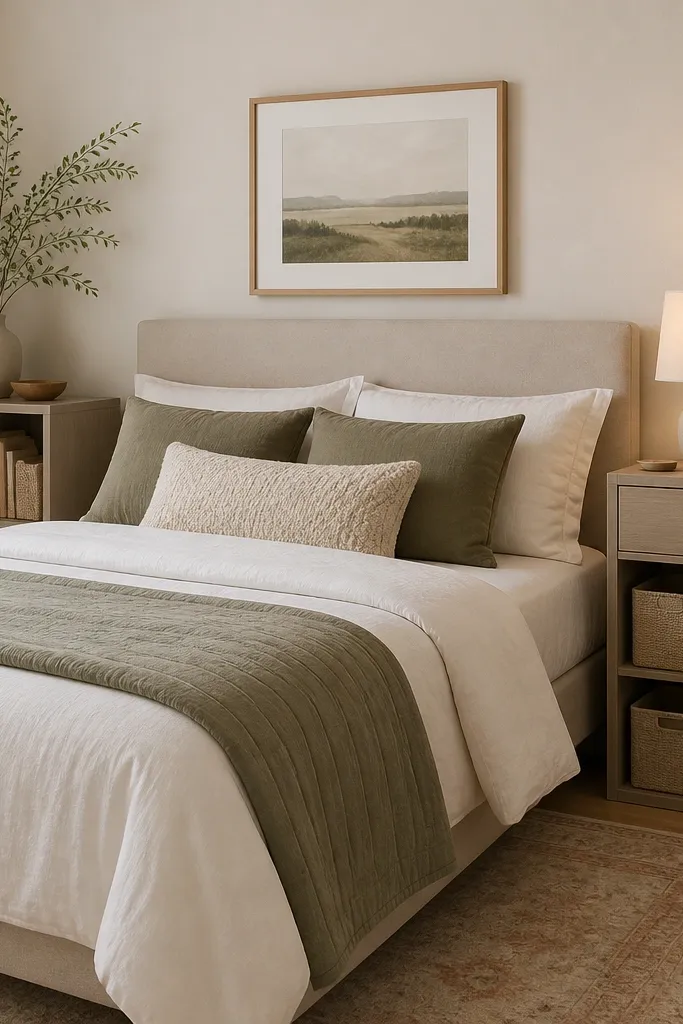
Start by choosing cubbies with a shallow depth so they don’t steal walkway space — 10-12 inches is a good target. Install them so the top is at about the same height as your mattress when you sit up. Place baskets in one cubby each, not the whole unit, so you don’t create a wall of fabric. Add one small drawer or basket for items you want completely hidden. Keep the lamp on the cubby top and run cords behind the unit.
Cubbies beside the bed are great when you want storage that matches the scale of your tiny room. Fabric baskets hide clutter and soften the look of open shelving, which keeps the room from feeling like a storage closet. I use one side for daily items — chargers, glasses, a book — and the other side for folded items like socks or sleepwear. This works for most body types because it keeps everything at reachable heights without bending down. It also looks balanced if your bed is centered and the cubbies are the same height.
AvoidAvoid open cubbies with no baskets; visible stacks look chaotic fast in tiny rooms.
Good to knowUse fabric baskets with the same weave pattern for a consistent look even if the colors vary slightly.
11. Wall-Mounted Peg Rail for Bags, Hats, and Light Layers
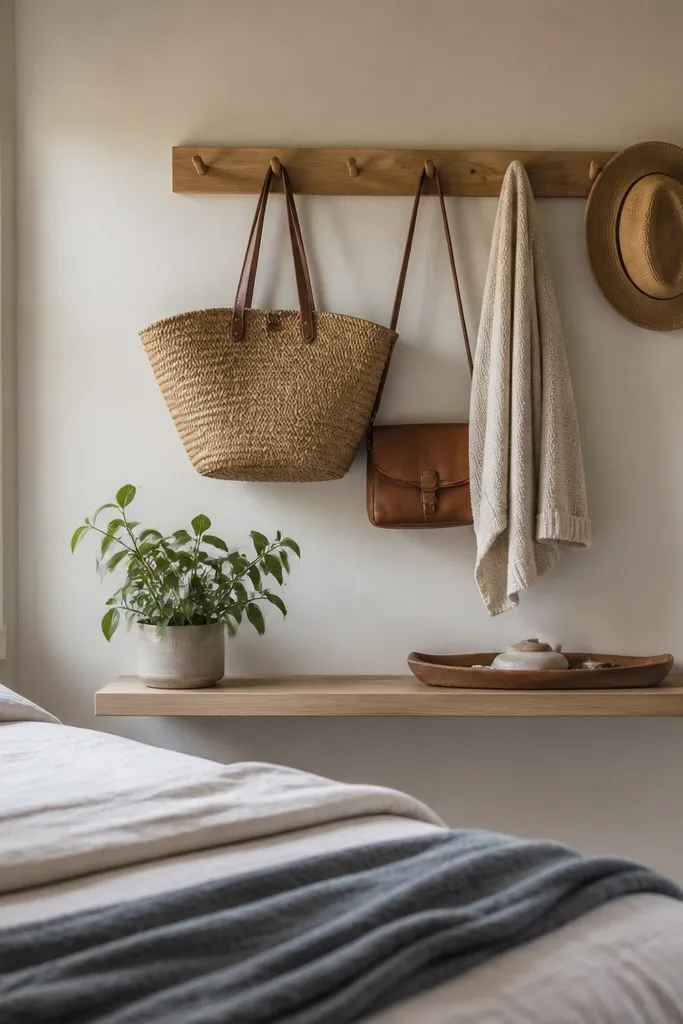
A peg rail is one of the cleanest ways to add storage without bulky furniture. I use mine for bags, hats, and light layers that would otherwise end up on a chair back. The hooks keep items visible and easy to grab, which matters when you’re working with limited closet space. Choose a rail in matte black or aged brass depending on your existing hardware, and keep hook count matched to your actual items so it doesn’t turn into a clutter rack. This works great for people who wear fewer heavy coats and need quick access to daily pieces.
Start by placing the rail on the wall closest to your door so you can hang items as soon as you come in. Position the top hooks so you can reach them comfortably — around 66-70 inches from the floor for most people. Add one narrow shelf below for keys and a small tray, then keep the rest of the wall clear. Hang heavier bags on the bottom hooks and lighter scarves higher. Finish by adding a small fabric bin on the floor under the rail for spare hats or gloves.
Use one hook shape for most items and one for hats so the wall stays organized visually.
Don’t hang everything on the rail — if your wall becomes a coat pile, it stops looking intentional.
12. Rolling Clothing Rack with a Fabric Cover
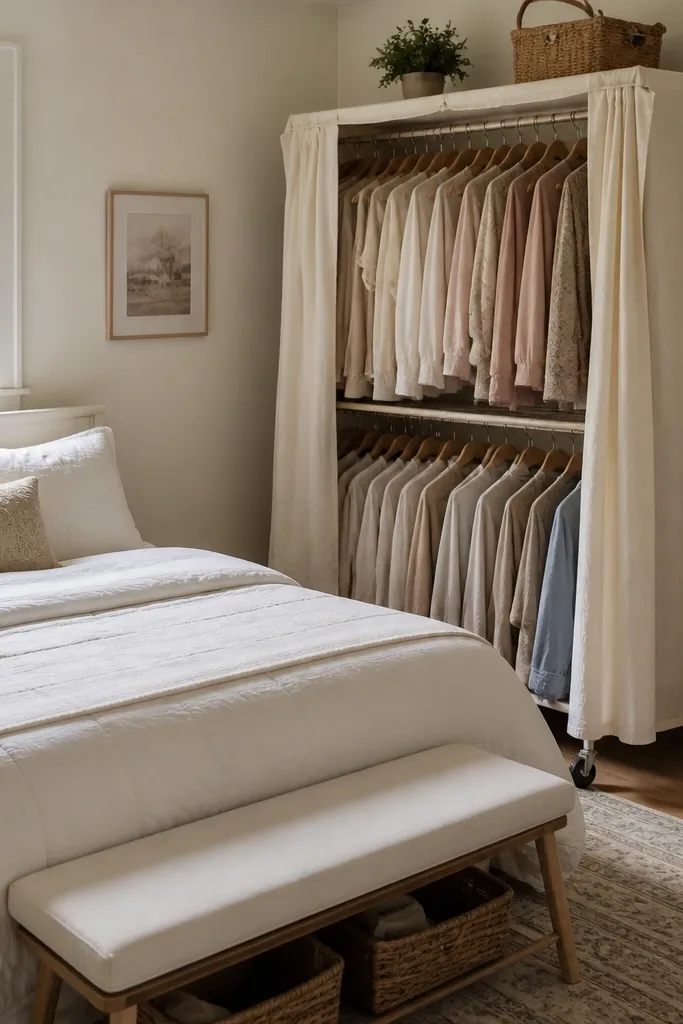
Start by placing the rack along a wall where it won’t block the bed walkway. Choose a rack height that lets the bottom tier stay above the floor by a few inches so it doesn’t collect dust. Use matching hangers and hang by category: shirts on one side, dresses on the other. Keep bottom tier for folded stacks in canvas bins. Add a small hamper nearby for laundry so you don’t store dirty items on the rack.
A rolling clothing rack works when your closet is too small or you want to see what you wear without digging through drawers. The fabric cover is what makes it look like decor instead of a laundry system. I use it for everyday outfits and work clothes so the room stays functional even when the bedroom doubles as a changing zone. Pick a rack in black or brushed steel, then choose a cover that matches your bedding color family. This is especially helpful for people who hate hanging everything in a closet and prefer a visible, tidy “current wardrobe.”
AvoidAvoid racks with thin wire shelves that bend under weight; they look unstable and cheap in photos and in real life.
Good to knowFold one set of outfits into a single fabric bin and label the bin by day so the rack stays calm.
13. Hutch-Style Dresser Top Storage with Hidden Drawer Fronts
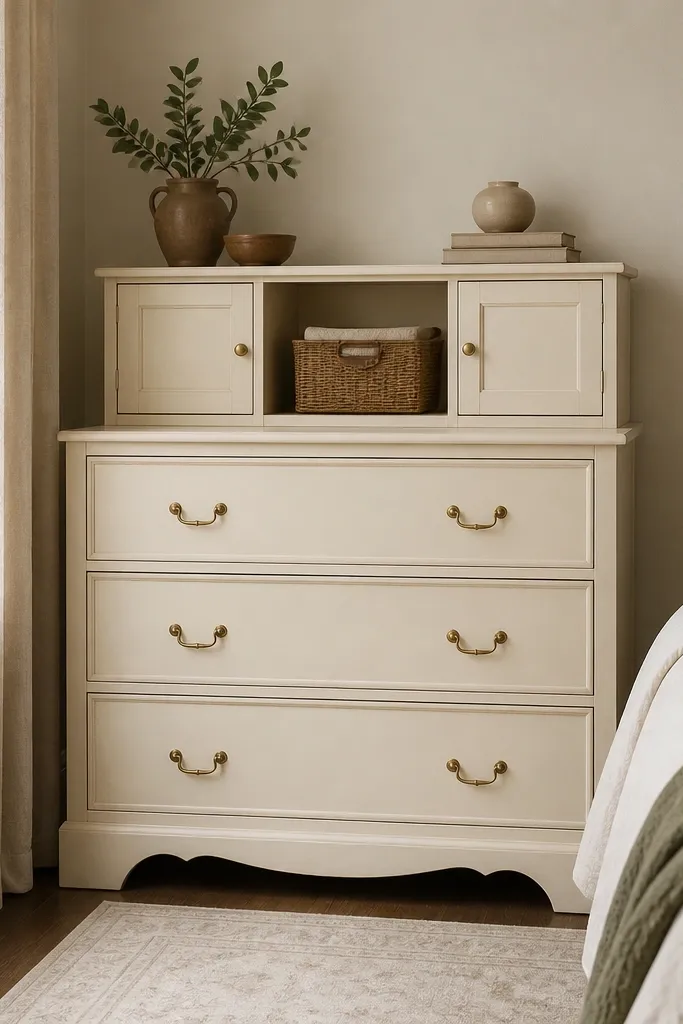
Start by measuring wall clearance above the dresser so you can open drawers fully. Place it across from the bed if you need more floor walkway — it keeps the room’s walking line clean. Style the open cubby with one basket and one stack of books that match in size. Keep the top surface minimal: one lamp and one tray. Store everyday items in the top drawers and seasonal items in the closed cabinets.
A hutch-style dresser is a clever way to add storage while keeping the footprint small. I like it for people who need drawers for underwear and closed cabinets for anything that looks messy. Closed fronts keep visual clutter down, which is everything in a very small bedroom. Choose cream or soft gray with brass or brushed gold handles because it looks warmer than plain white. This setup flatters rooms with a little more wall space because the hutch gives you vertical storage without making the bed area feel crowded.
AvoidAvoid hutch dressers with lots of tiny doors you never open — you’ll stop using them and the storage becomes dead space.
Good to knowUse drawer dividers in two sizes so socks and bras don’t turn into one tangled drawer.
14. Built-Like Wall Cabinets with Glass for Books and Keepsakes
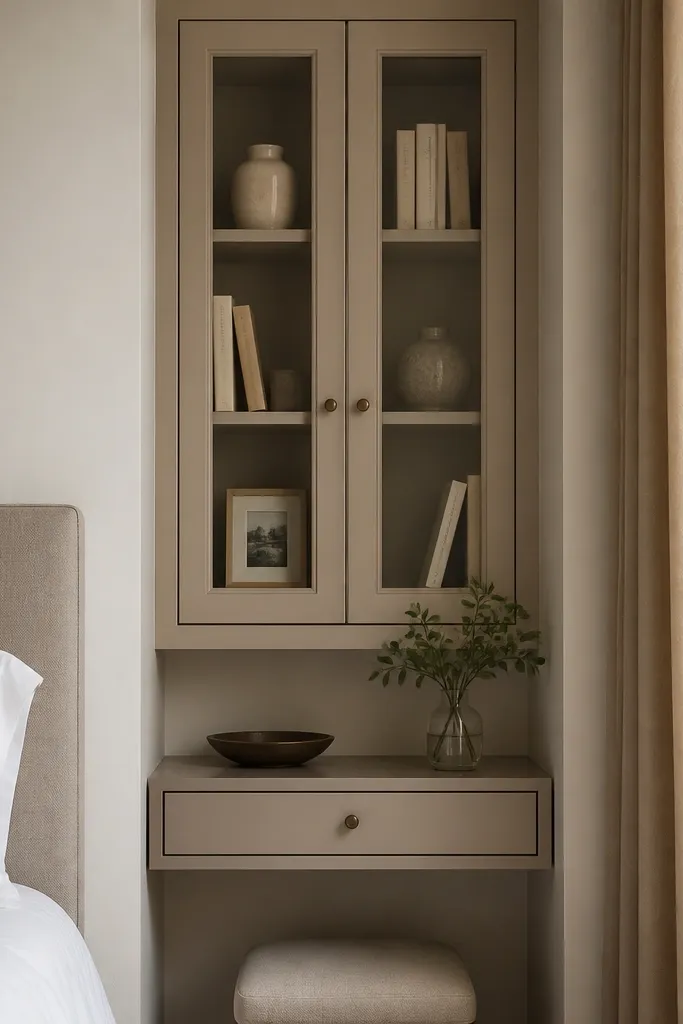
Start by anchoring cabinets to studs and keep them aligned so the wall looks straight. Choose cabinet depths around 8-10 inches so they don’t project into the room. Put the most-used books at eye level and store keepsakes behind glass so they stay dust-free. Use a slim console below for a lamp and one tray, then keep cords routed behind the console. Match cabinet hardware to your bed frame finish so everything reads coordinated.
Glass-front wall cabinets give you storage without making the room feel heavy. I use them for books, framed photos, and a few decorative items that are actually part of your daily routine. The glass lets you see what’s inside, so you don’t overbuy duplicates or shove things in randomly. Keep the contents curated: a few books stacked upright and a couple of objects, not a whole shelf of random knickknacks. This works well if you like a slightly styled look and you’re okay with maintaining it.
AvoidAvoid filling every compartment; full glass cabinets make tiny rooms feel crowded.
Good to knowAdd a thin shelf liner inside the cabinets so items don’t slide and look cleaner from the outside.
15. Under-Window Bench with Hidden Drawers
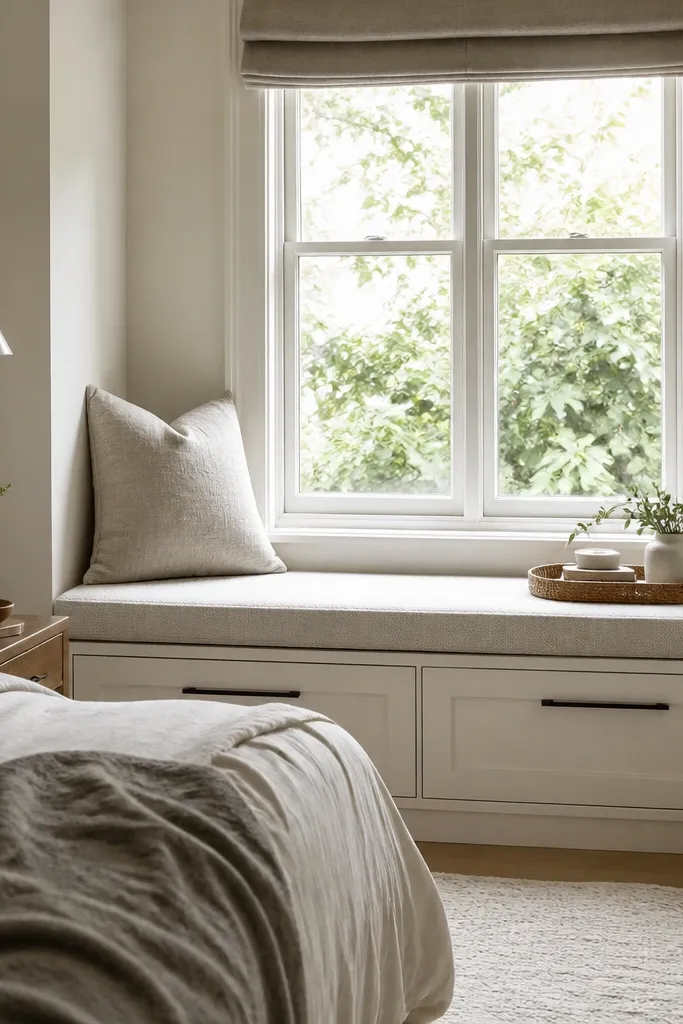
Start by measuring the window opening and the usable floor clearance so the bench sits flush. Build or buy a bench with internal storage that can hold folded blankets without forcing them. Use a cushion thickness around 2-3 inches so it feels comfortable but doesn’t crowd the window frame. Place a small side table or wall lamp to keep the reading area functional. Line the drawers with a neutral fabric liner and add a bin for cables or chargers.
An under-window bench is one of my favorite very small bedroom ideas with storage because it turns a “dead” window zone into seating and storage. The drawers or hinged storage under the bench are perfect for extra pillows, throws, and seasonal sweaters. I like a textured cushion fabric like bouclé or woven linen because it hides wear and makes the bench look cozy, not utilitarian. If your room has good natural light, this setup looks airy since the window brightens the storage area. It flatters most spaces because it doesn’t block the main walkway the way a standalone chair can.
AvoidAvoid benches that sit too high; you’ll lose legroom and it stops feeling like seating.
Good to knowStore pillows flat under the bench, not upright, so they don’t take up too much drawer space.
16. Tall Narrow Wardrobe with Sliding Doors
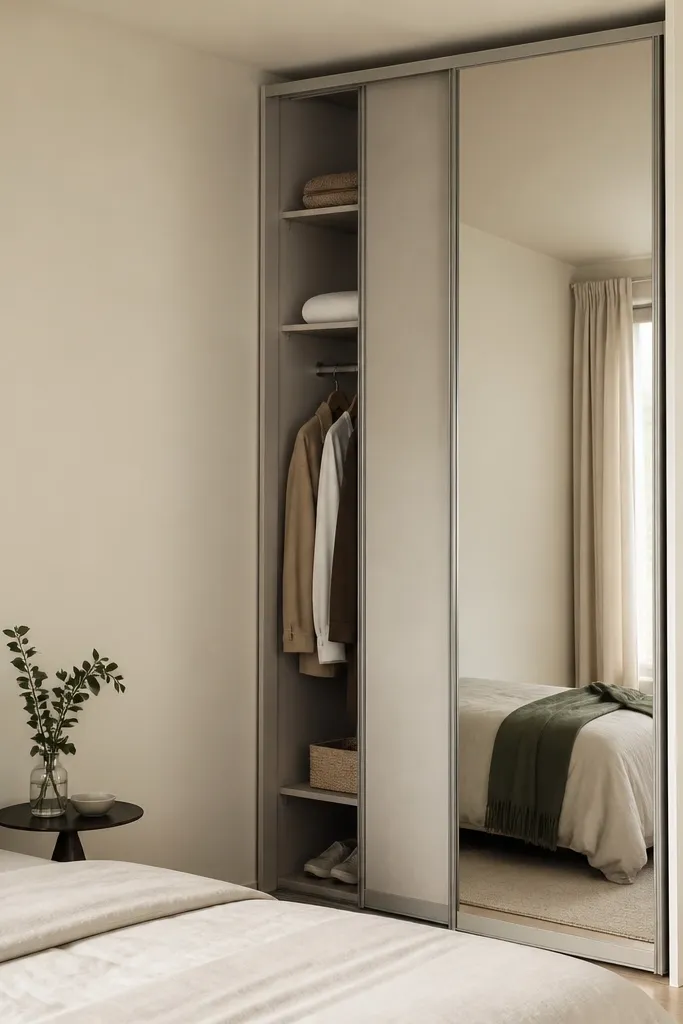
Start by choosing a wardrobe depth that fits your wall — around 20-22 inches is a workable target in many tiny bedrooms. Place it so the sliding doors don’t catch the bed corner when opened. Inside, add shelf dividers or bins so folded items stay stacked. Install a slim pull-out tray for socks or accessories if the wardrobe has unused space at the bottom. Add a small light inside the wardrobe if you can — it makes the unit feel premium and easier to use.
A tall narrow wardrobe with sliding doors is the best fix when your room has a narrow wall and you can’t waste space on door swing. Sliding doors keep the walkway clear, which makes the room feel bigger immediately. I like wardrobes that have one mirrored panel because it doubles the light and gives you a full-length check. Use inside shelves for folded items and keep the hanging section for dresses, shirts, and any pieces you wear often. This setup is great for anyone who owns more folded clothes than hanging clothes.
AvoidAvoid wardrobes with cheap soft-close that fails quickly; a loud door in a tiny room gets annoying fast.
Good to knowUse velvet or felt hangers for hanging items so shirts don’t slip and fall on the floor.
17. Storage Headboard with Built-In Hooks and Shelves
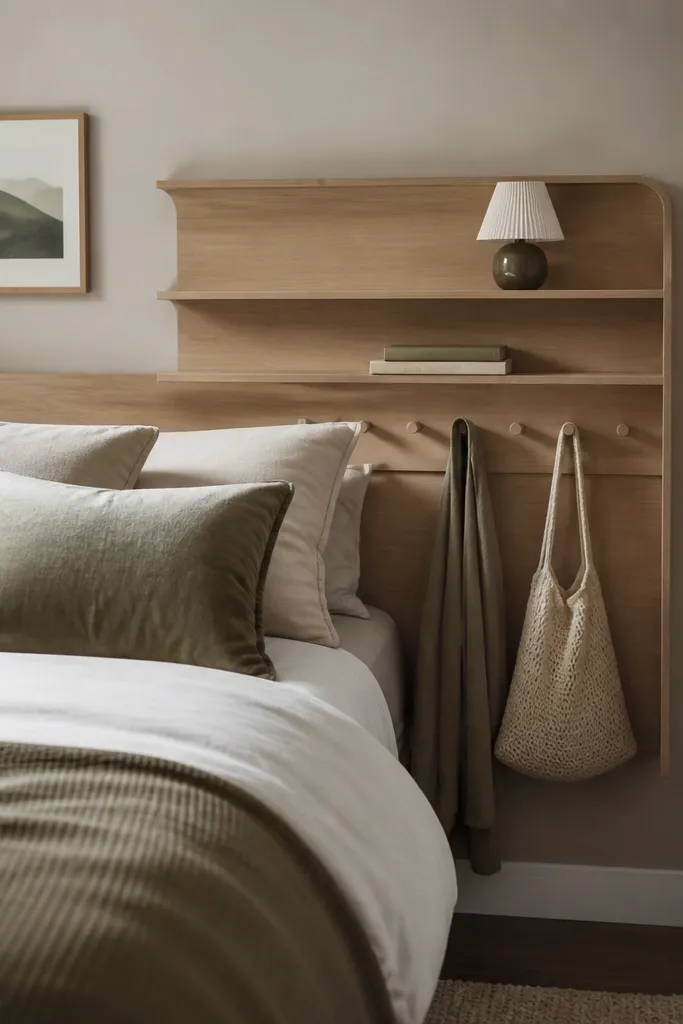
A storage headboard is a smart use of the only wall area that’s hard to store on in a small bedroom. I like headboards with narrow shelves because they give you a place for a book and a lamp without needing a bedside table at all. The hooks are perfect for a robe, a bag, or headphones so you don’t create piles elsewhere. This works well when your room is too tight for additional furniture, and it keeps the bed area visually tidy. Choose a headboard in a finish that matches your frame — walnut with walnut, matte black with matte black.
Start by measuring the space behind where you want the headboard hooks so your items don’t hit the wall outlet or window trim. Place the headboard so it’s centered and leaves a small gap to the wall if you need cord clearance. Add one small lamp on the shelf and keep the other shelf for a single stack of books. Hang only daily-use items on the hooks and store extra items in bins elsewhere. Keep the bedding simple so the headboard storage stands out.
Use a small tray on the shelf for small items like glasses — it prevents clutter and protects the finish.
Avoid headboards with deep shelves; they look bulky in tiny rooms and limit airflow behind your bed.
18. Wall-Mounted Desk with Drawer and Peg Storage
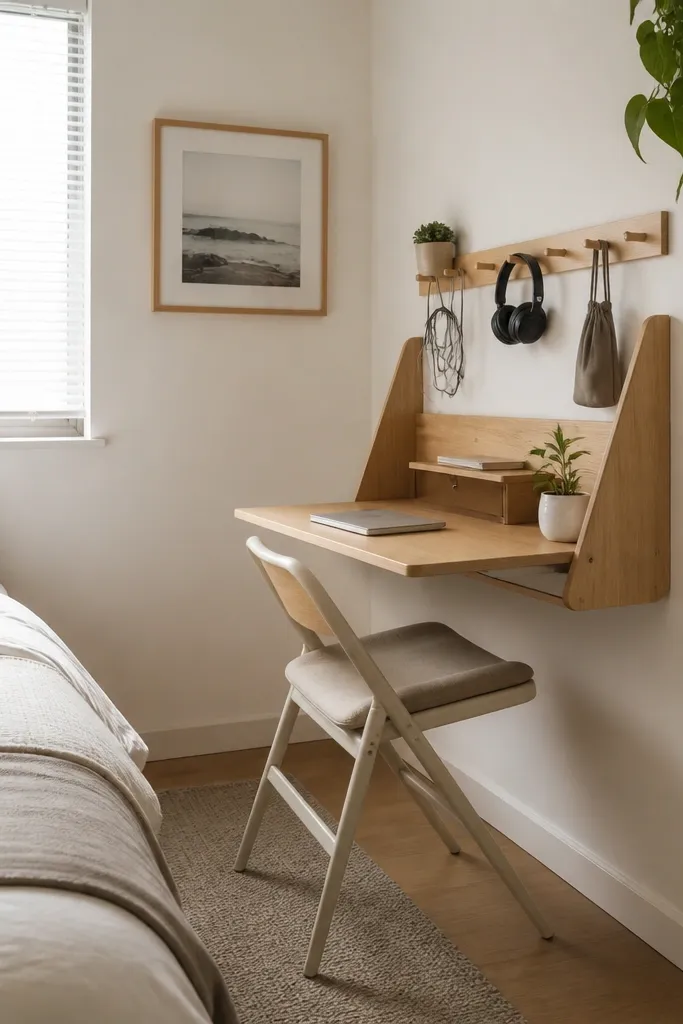
If your bedroom is also your work area, a wall-mounted desk is the storage solution that keeps your floor clear. The drawer gives you quick hideaway storage for pens, chargers, and notebooks so the desk surface stays clean. Add a peg rail above for headphones and a power cord organizer so cables don’t sprawl across the room. I like this setup when you have a narrow wall and you need a functional zone that doesn’t take over the room. It also helps people who get overwhelmed by clutter because everything has a home.
Start by mounting the desk at a height that matches your chair seat — if your chair is 17-18 inches high, align the desk surface around 29-30 inches. Install the peg rail above the desk so you can hang headphones and a small bag. Use one drawer organizer for tech items and a second for paper supplies. When you’re done working, close the desk so the room returns to “bedroom mode.” Keep a slim wall outlet nearby for charging so you don’t run cords across the floor.
Add a small felt strip to the drawer edges so paper and chargers slide smoothly without snagging.
Avoid desks that fold but leave a gap that catches your chair; that makes the setup annoying and you’ll stop using it.
19. Corner Floating Ladder Shelf for Light Storage
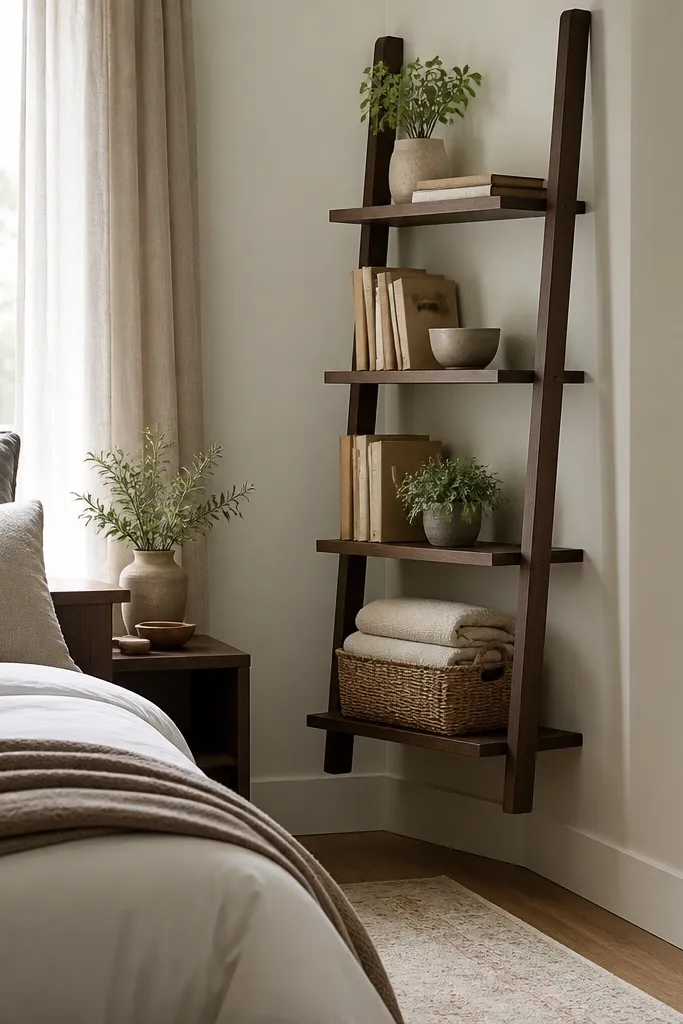
Start by finding studs in the corner and anchoring the ladder shelf securely. Keep the top shelf high enough that it feels intentional but not so high you can’t reach it — around 6-7 feet is a good upper range. Place books upright in one consistent size stack and keep baskets to one or two shelves. Add one small plant and a framed photo so the shelf looks lived-in. Keep the area around the shelf clear so it doesn’t feel crowded with the bed.
A floating ladder shelf is a storage option that doesn’t look like “storage” because the pieces are open and airy. I use it for light items like books, small baskets, and decor you actually enjoy seeing. In very small rooms, heavy cabinets can make walls feel too solid; the ladder format breaks up visual weight. Choose shelves in a light wood or matte white so they blend with the wall. This is best for people who have less need for bulky storage and want a tidy, decorative function.
AvoidAvoid cluttering every rung; the ladder looks best with negative space.
Good to knowUse fabric baskets with handles so you can pull items down without moving everything.
20. Mirrored Closet Door Panel for Instant Depth
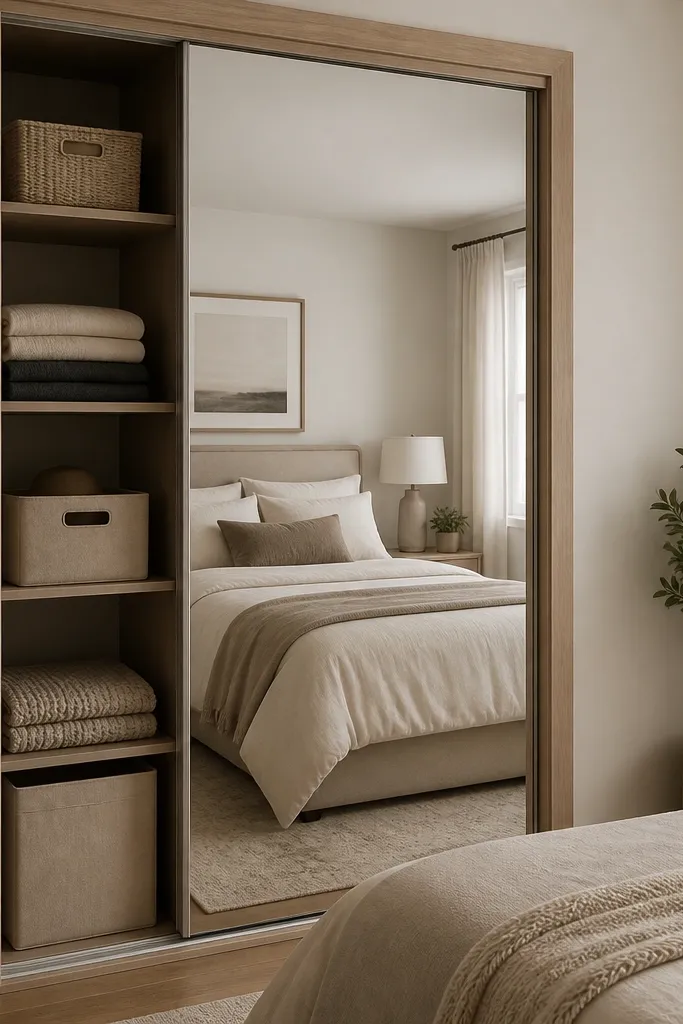
A mirrored closet door panel gives you storage and optical depth at the same time. I like it for very small bedrooms because it adds light bounce and makes the room feel longer. The storage stays inside the closet, so your floor doesn’t collect clutter. Use neutral bins inside so the reflection doesn’t show random color chaos. This works especially well for rooms with one main light source because mirrors spread it around. If you’re someone who gets ready in the bedroom, the mirror also saves you from buying a separate full-length piece.
Start by measuring your closet door width and height and confirming hinge clearance. Choose a mirror panel that has a thin frame so it doesn’t look bulky. Inside, install two shelf heights: one for folded items and one for bins. Keep hanging clothes to one side and folded stacks to the other so the reflection stays organized. Place a small, warm lamp across from the closet so the mirror catches the light instead of only reflecting dark corners.
Wipe the mirror weekly; tiny rooms show smudges quickly and it makes everything look less clean.
Avoid mirrored panels that distort — cheap glass makes the room feel warped and it kills the “clean” look.
21. Storage Stool at the Foot with Removable Tray
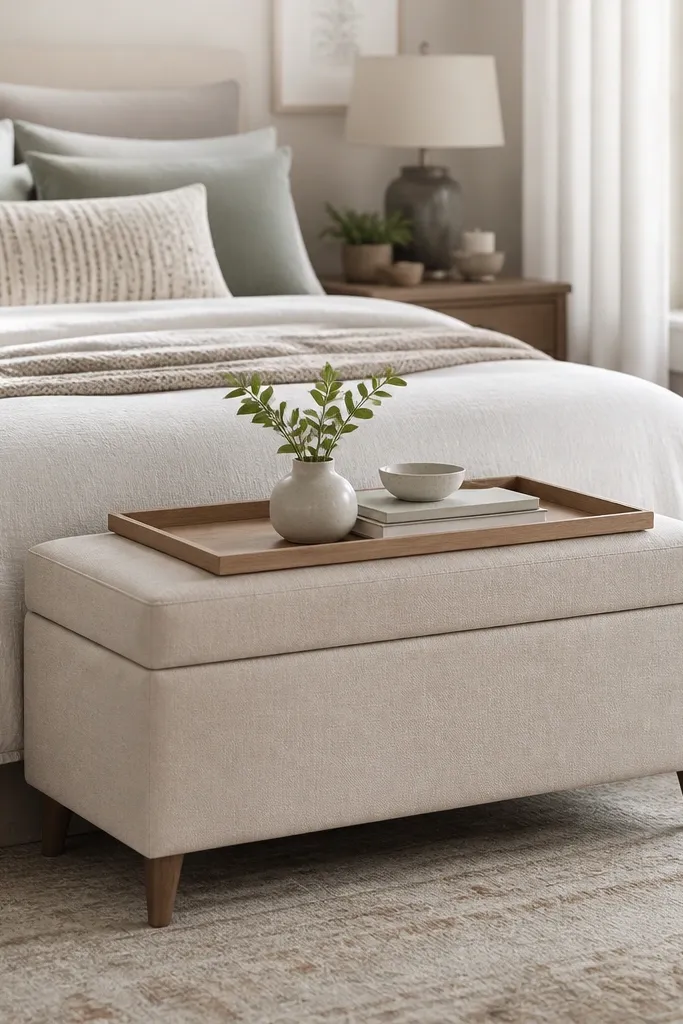
A storage stool at the foot of the bed is a practical way to add one more “home base” without adding a side table. I use mine for socks, small accessories, and a spare pair of slippers so it’s easy to grab before leaving. The removable tray keeps daily clutter contained and makes the top surface look styled. Choose a fabric like cotton canvas or linen blend because it hides wear and looks soft in a tiny room. This setup is great for anyone who sits at the bed edge to put on shoes and wants a place for small items that doesn’t become a pile.
Start by matching the stool height to your bed height so it feels stable when you sit. Place it centered at the foot with clearance so you can pull it out slightly if needed. Use the lid storage for folded items in one bin and keep the tray for daily items like a watch and lip balm. Add a small rug under the stool so it anchors visually and doesn’t slide around. Style the tray with one shallow dish and one small tray insert.
Keep only “out the door” items on the tray so you don’t end up storing laundry on it.
Avoid glossy faux leather stools; scuffs show quickly and cheap texture stands out in small spaces.
22. Peg + Shelf Combo Above the Dresser for Daily Items
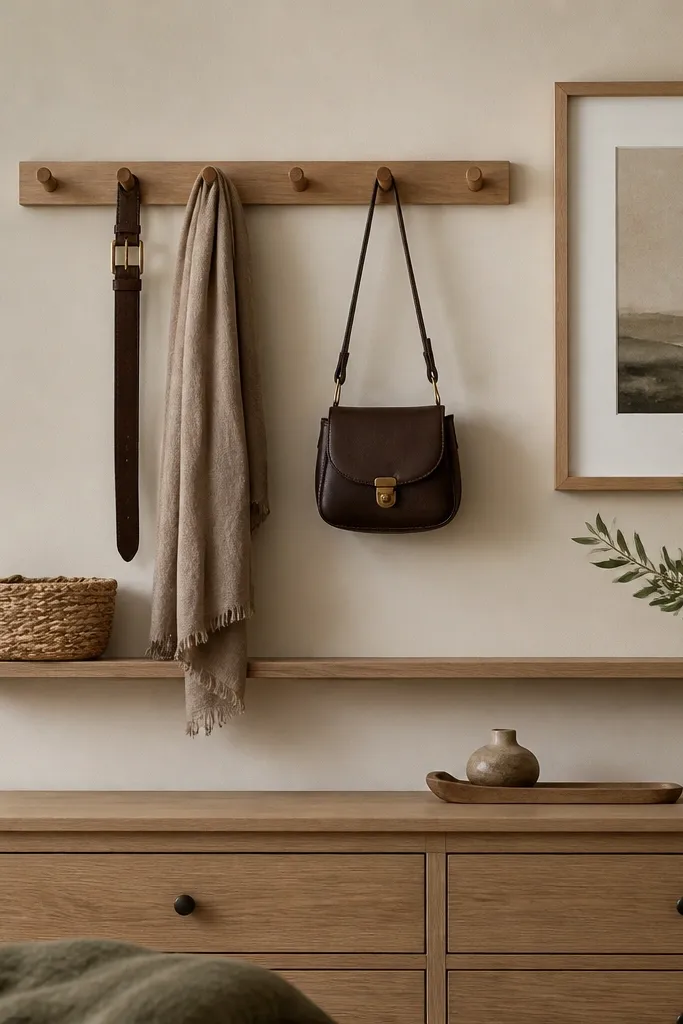
Start by installing the peg rail at about 68 inches from the floor so hooks are reachable without stretching. Mount the shelf 10-12 inches below the rail and keep it shallow at around 6-7 inches. Place a small basket on the shelf for small items and keep the rest of the surface empty. Hang only a few accessories so the wall stays visually calm. Match metal finishes across hooks, dresser hardware, and any lamp base.
This combo is my favorite for very small rooms because it organizes the “in-between” items that usually clutter the dresser top. The peg rail holds belts, scarves, and the bag you grab in the morning. The small shelf below stores everyday items you need while getting dressed. I like doing this instead of adding more drawers because the dresser already has storage, but the top stays messy. Keep the shelf narrow and the items light so the wall doesn’t feel crowded. It works well for people who want a clean surface and still need quick access to accessories.
AvoidDon’t hang bulky coats here; the wall will look crowded and you’ll stop using it.
Good to knowUse slim hangers or clips on the hooks for scarves so they don’t droop and look untidy.
23. Under-Bed Shoe Drawer Platform
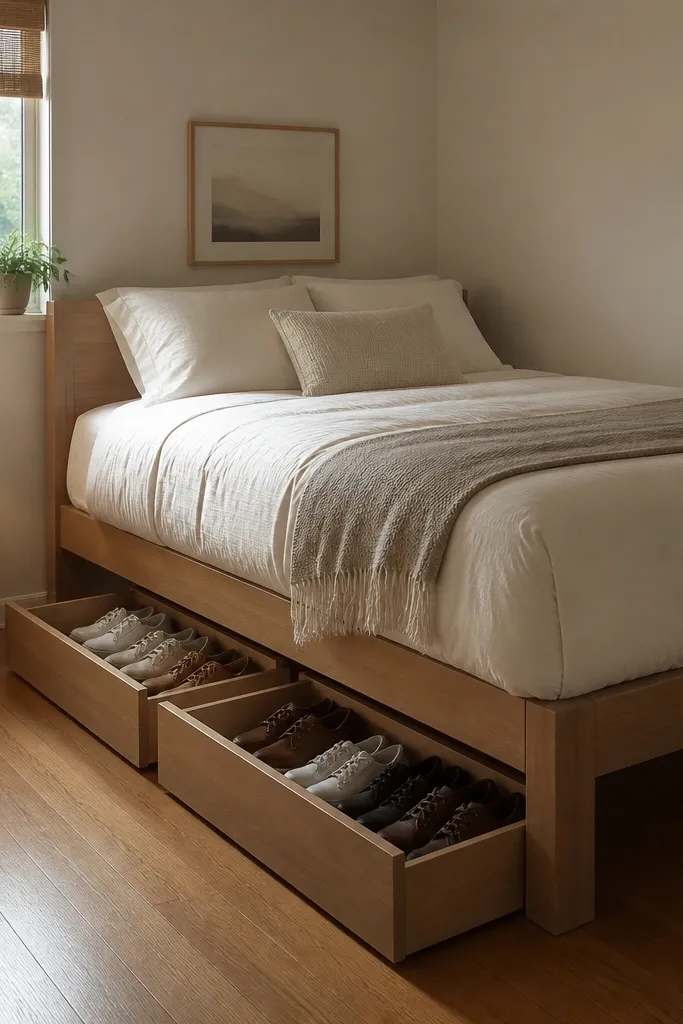
Start by choosing a bed frame with enough clearance for pull-out drawers — check the drawer height plus wheel clearance. Measure the distance from the bed base to the floor so the drawer doesn’t catch. Install or buy drawers that match the bed width, then add shoe dividers so pairs stay side-by-side. Place the drawer closest to your door for the shoes you wear most. Keep the top of the bed clear so it doesn’t compete with the storage at floor level.
Shoes are the fastest way to make a tiny bedroom look messy, even if your clothes are fine. Under-bed pull-out drawers solve that by keeping shoes out of sight but still accessible. I like shoe drawers with smooth gliding rails because you’ll use them daily. Keep each drawer for one category: sneakers and sandals in one, boots and flats in the other. Neutral drawer interiors make the storage feel calmer, and it keeps the room from looking like a closet exploded. This is a great setup for people who don’t want a shoe rack by the door.
AvoidAvoid cardboard dividers; they collapse under weight and ruin the neat look.
Good to knowUse thin, breathable shoe bags for seasonal pairs so they don’t smell up the drawer.
24. Hanging Closet Organizer in Two Zones with Liner
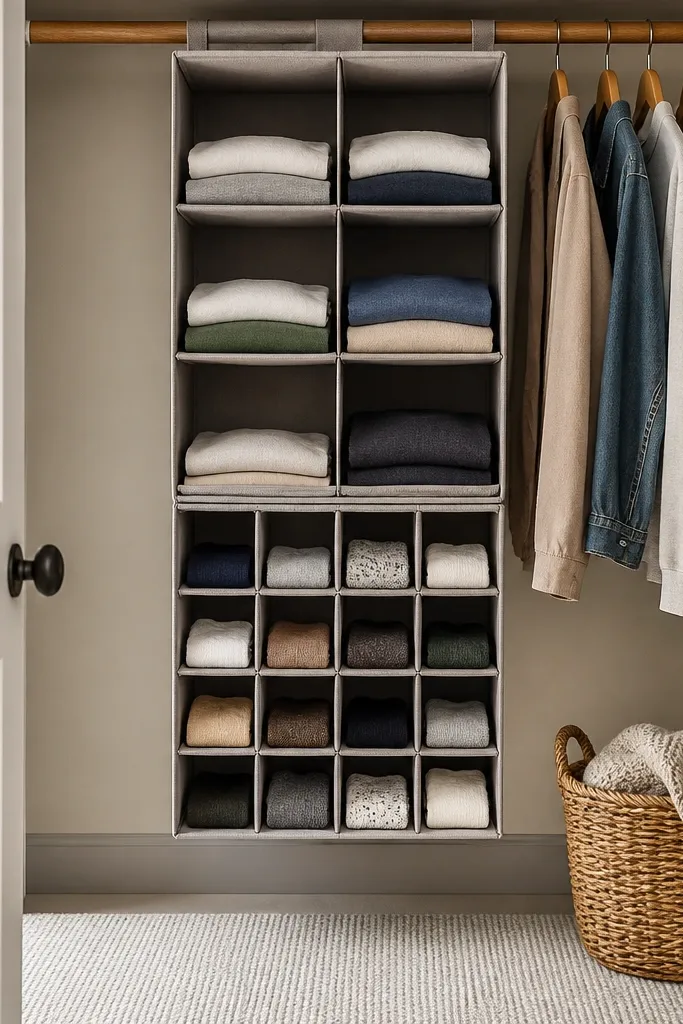
Start by removing the closet floor clutter so the hanging organizer sits flat. Attach the organizer to your rail and make sure it’s level so compartments don’t sag. Fill the top compartments with lighter items first and keep heavier stacks in the lower parts. Use small fabric pouches inside one compartment for things like hair ties and chargers. Finally, fold clothes the same way across compartments so the organizer looks uniform.
This is for people who have a closet but not enough shelf space and don’t want to rebuild the closet. A hanging organizer creates quick cubbies by using the hanging rail height you already have. I split it into zones: upper for folded tops and lower for socks or accessories, so you don’t rummage through everything. Add a fabric liner under it so small items don’t fall into the closet bottom area. This setup looks clean when you use a consistent bin color and keep the organizer centered on the rail.
AvoidDon’t cram tall items into short compartments; it warps the organizer and makes everything look sloppy.
Good to knowUse a fabric marker to write on the inside of one compartment label so you can find things fast without big labels.
25. Storage Dresser with Fabric Drawer Dividers and One Basket
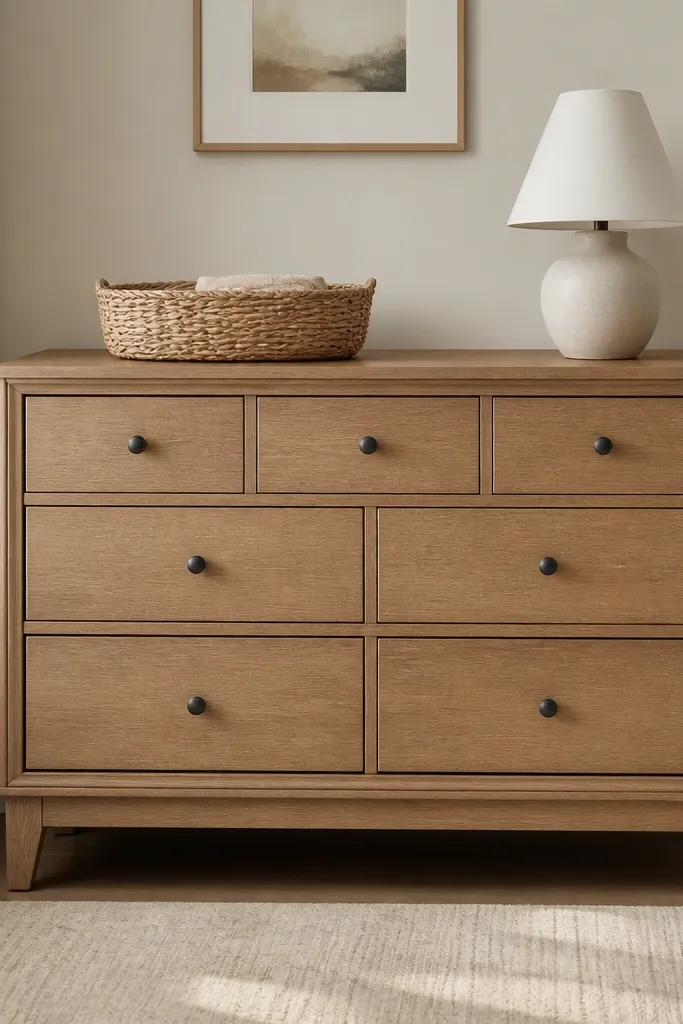
This is the boring-looking but effective approach: storage you can actually use. In very small bedrooms, drawers fail when they’re packed without dividers, because you end up digging and making a mess. I use fabric dividers because they look softer than plastic and they keep stacks from sliding. One basket on top holds daily items like a lint roller and hair product so the rest of the surface stays clean. Choose a dresser finish that matches your bed hardware so it looks like a single set. This setup is great for anyone who owns a mix of folded clothes and wants them sorted without extra shelves.
Start by measuring your drawer width and height so dividers fit without gaps. Install dividers into one drawer first and test how you fold your clothes — adjust before you do the whole dresser. Put socks and underwear in the smallest sections, then tops in the medium ones. Use one basket on top for items you reach for daily and keep it to a single basket. Store rarely used items in the bottom drawer where you don’t bump into them.
Fold T-shirts using the same width each time so drawer contents look aligned from the top.
Avoid leaving the top of the dresser empty or cluttered; one controlled basket keeps it tidy.
26. Two-Seat Wall Bench with Hidden Storage Under Cushions
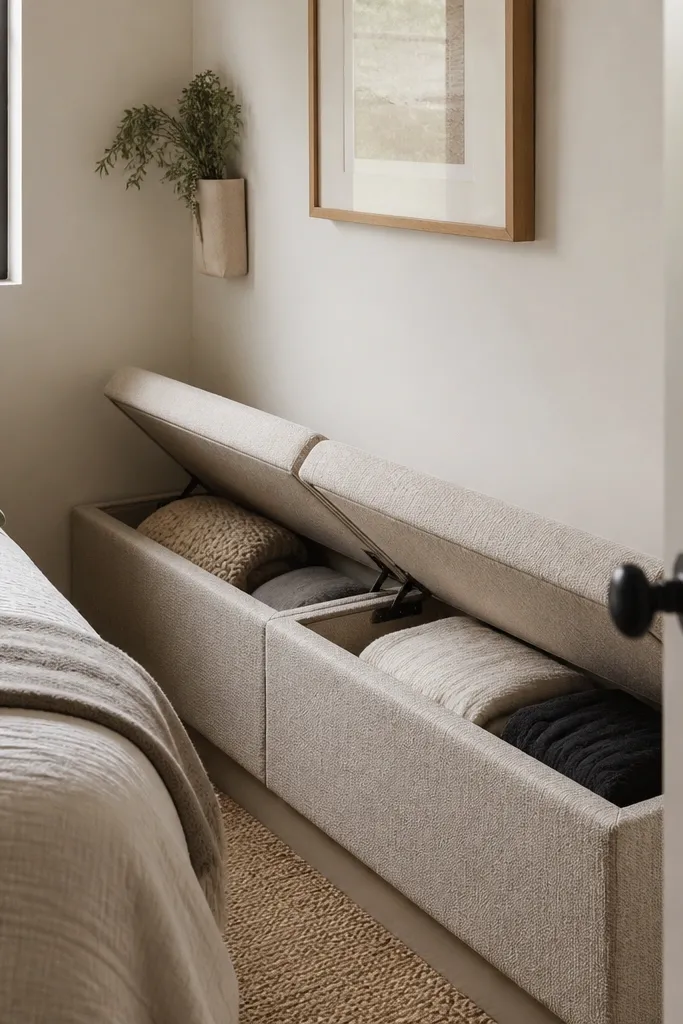
Start by picking a bench length that fits the wall without blocking the door swing. Install it securely and leave a small gap at the bottom so it’s easy to clean. Use lift-up cushions with interior compartments sized for folded blankets and bags. Add a small storage bin inside each compartment so items don’t spill across the bench. Finish with two throw pillows that match your bedding color palette and keep a small tray nearby for daily items.
A wall bench with hidden storage is a strong move when your room has a long blank wall and you need both seating and storage. I use the compartments for extra bedding and travel bags so they don’t take up closet space. The bench cushions make it feel like furniture, not storage, which matters in small rooms where everything looks bigger. Choose a textured fabric like performance linen so it doesn’t show every mark. This setup flatters people who like to sit and fold laundry or put on shoes — you gain a practical surface without adding another piece of furniture.
AvoidAvoid benches with shallow storage; you’ll end up using the floor anyway.
Good to knowUse vacuum-seal bags for bulky seasonal bedding inside the bench compartments to save space.