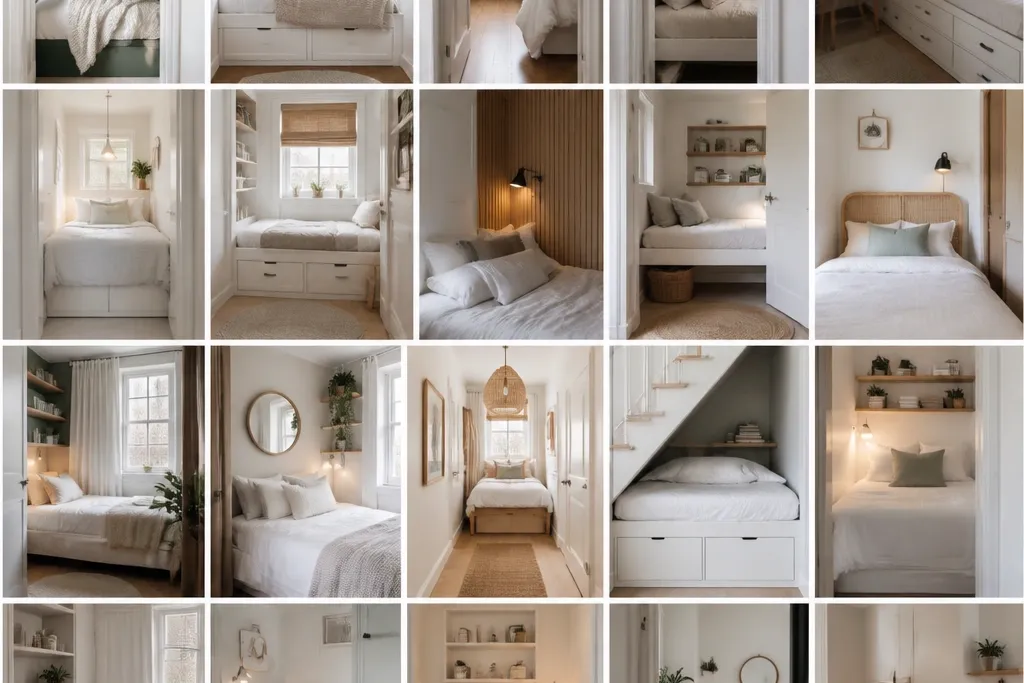
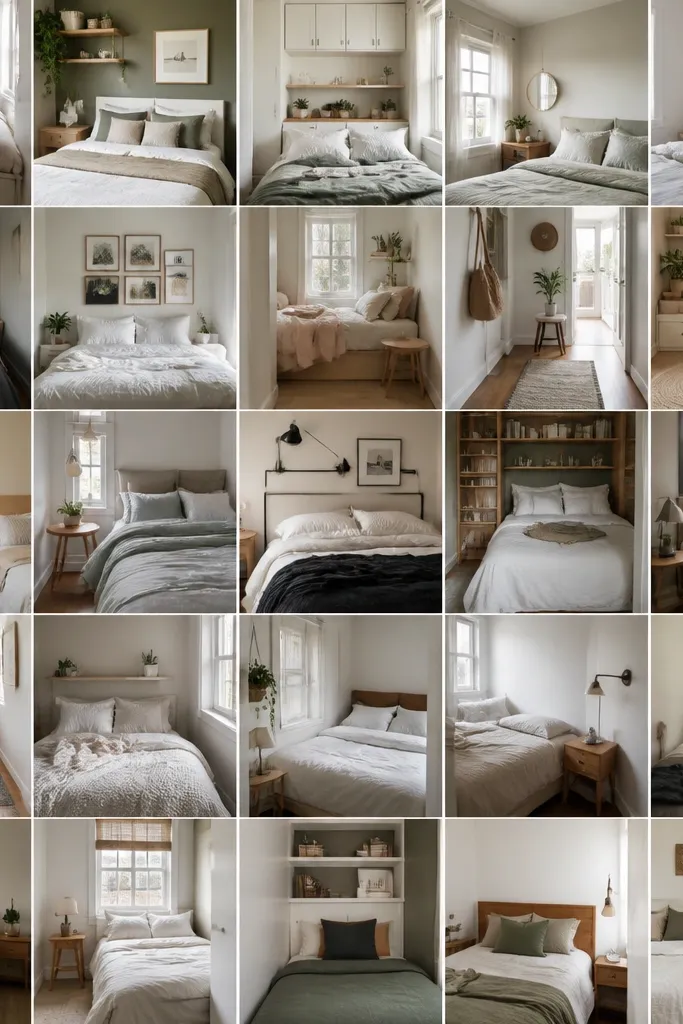
1. Wall-mounted nightstand shelf with plug-in sconces
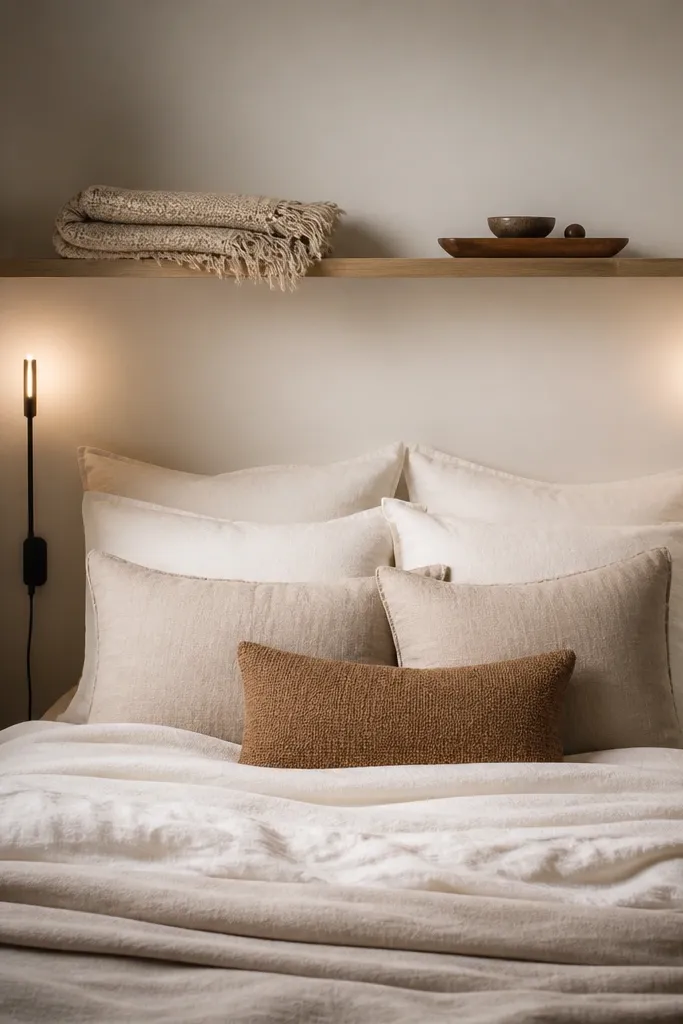
In a tight bedroom, the floor is sacred. A floating shelf gives you the “nightstand moment” without eating 10-18 inches of walkway width, and it keeps items at about waist-to-chest height instead of spilling across the floor. I like pairing a shelf in matte oak or warm walnut with cream linen bedding because the wood tone warms the room without looking heavy. The plug-in sconces look luxe because they’re slim and wall-mounted — no lamp bases to visually crowd the bed. This setup flatters most body types because it keeps the bed line clean when you sit up, and it works especially well for people who want their bedside routine (phone, book, water) without clutter.
Start by choosing a shelf depth of 7-9 inches so it doesn’t project into the walkway. Mount it so the top surface is about 28-30 inches from the floor, then center it with the bed headboard. Add two plug-in sconces with the light aiming downward toward the pillow area, not straight into your eyes. Finish with one small tray (ceramic or lacquer) and one slim decor item — keep the rest off the shelf so the wall stays visually calm.
Use a warm bulb around 2700K and dim them with a plug-in dimmer so the room looks expensive at night.
Don’t mount the shelf too low — if it sits below pillow height, it looks like storage from a hallway, not a bedroom.
2. Floor-to-ceiling linen curtains in warm greige
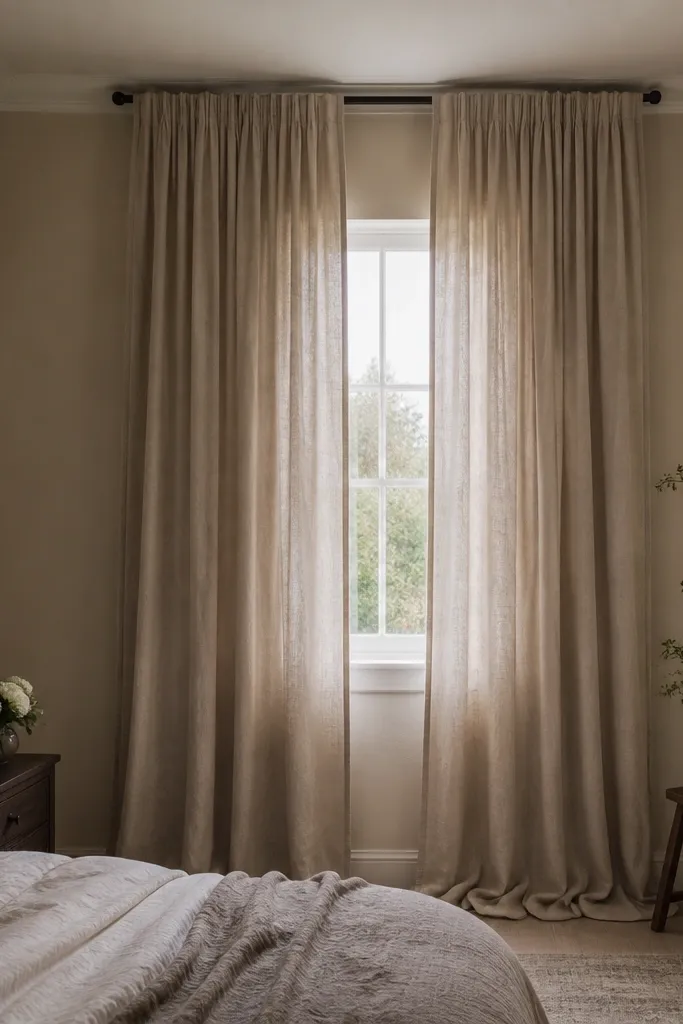
Curtains are the fastest way I’ve found to make a small bedroom feel taller, because they trick the eye into reading the window as a vertical feature. Warm greige linen (not cool gray) keeps the room from feeling sterile, especially with small spaces that get limited natural light. Linen also has that slightly textured look that reads high-end in close quarters because it catches light in a soft way. If you have darker skin tones, warm greige and ivory bedding make the overall palette flattering and skin-friendly without turning everything beige-flat. This works whether your bed is against a wall or centered, because the curtain height changes the room’s proportions regardless of layout.
Start by measuring from the ceiling down to the floor — I aim for 1-2 inches of puddle at the bottom in very small rooms so the fabric looks intentional. Mount the rod 3-6 inches above the window trim and as close to the ceiling as you can manage. Choose linen panels in a warm greige with a slight slub; hang them with rings or clips that let the fabric gather in soft folds. Pull the curtains fully closed so they overlap in the center by at least 4-6 inches.
Steam the curtains once after hanging so the folds drop naturally instead of looking stiff and cheap.
Avoid blackout-only vinyl-looking curtains; they reflect light hard and make tiny rooms feel smaller.
3. Mirror on the closet door with a brushed brass frame
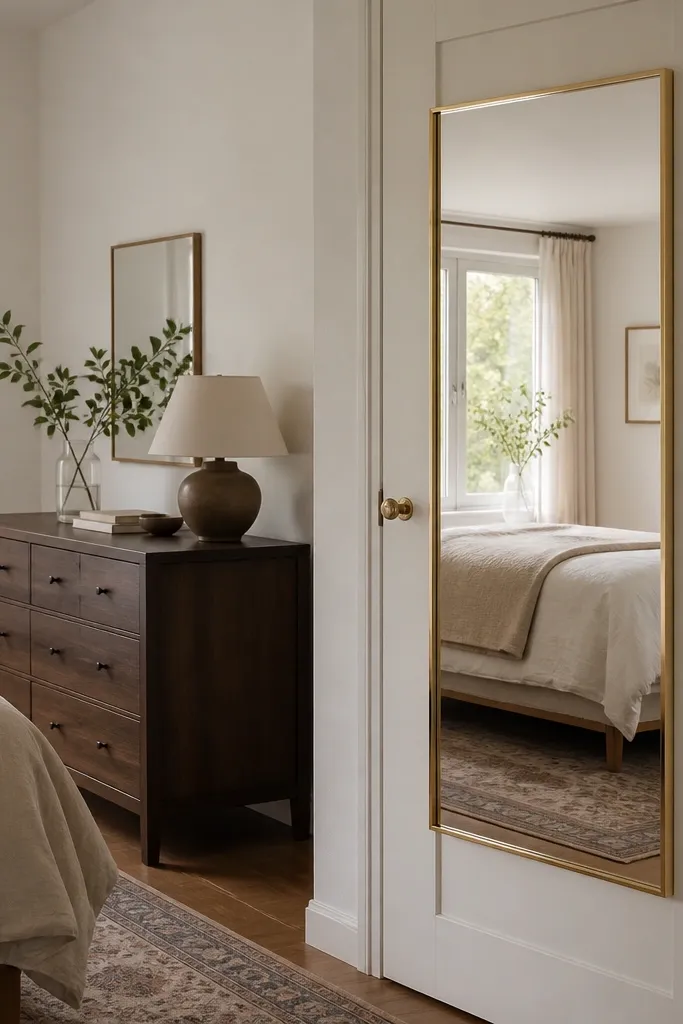
A mirror in a very small bedroom isn’t about “making it bigger” in a generic way — it’s about placing reflection where your eyes already travel: from the bed to the door and back. I like a brushed brass frame because it adds warmth and reads luxe without being flashy. When the mirror is on the closet door, it also hides the mess that usually collects around storage — hangers, lint, and random items. For people with fair to medium skin tones, warm metal and ivory textiles keep everything flattering and not washed out. This also works for anyone who needs a full-length check before work, since you get function and styling at the same spot.
Start by picking a mirror size that covers most of the closet door — ideally 18-24 inches wide and tall enough for a full face and shoulders view. Apply painter’s tape to mark where the frame will sit so it doesn’t block closet handles or hinges. Choose a frame with thin edges (about 1 inch wide) so it doesn’t visually thicken the door. Mount securely with the manufacturer’s hardware, then style the reflected area: keep only one lamp visible and remove any bulky items from the mirror’s line of sight.
Good to knowAngle the mirror so it reflects the window or lamp, not the floor; a reflection that shows clutter will ruin the luxe feel.
AvoidDon’t place a mirror directly opposite the bed if it reflects a messy corner — it turns your mess into a permanent background.
4. Low-profile upholstered bed with a slim headboard
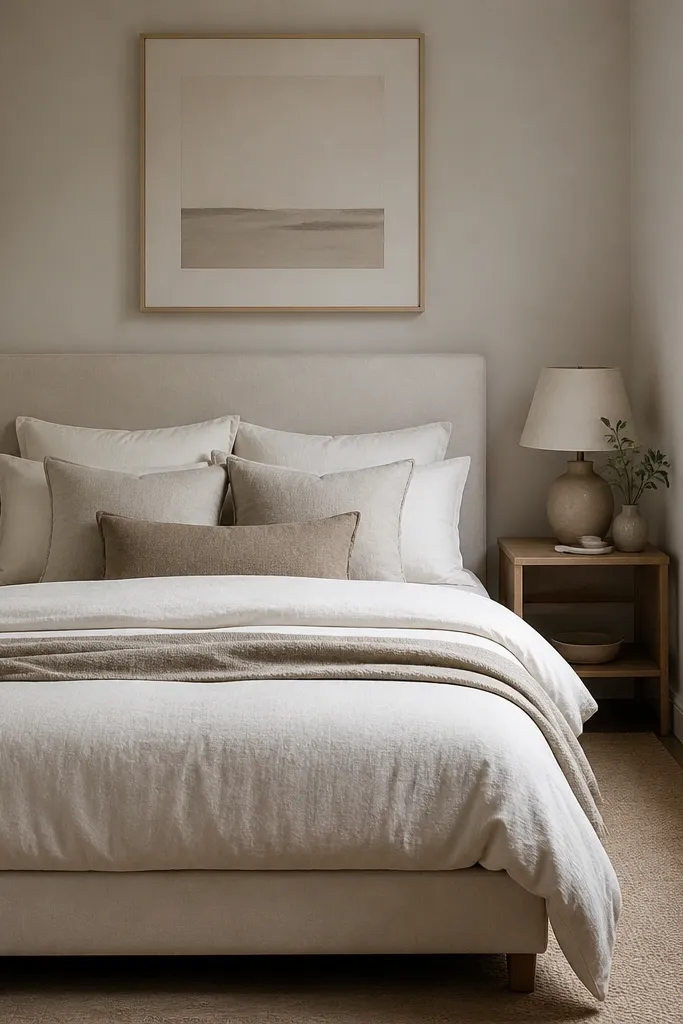
In tiny bedrooms, height is the enemy. A low-profile upholstered bed makes the room feel grounded because it reduces the vertical bulk you normally get from a high frame or thick headboard. I like a slim headboard because it gives you the “finished” look without turning the bed into a wall. Choose light oatmeal or oat-beige upholstery — not stark white — so it doesn’t show every shadow and lint speck. This is flattering for most body types because it keeps your eye line lower when you sit up, which feels more open. If you sleep with a higher pillow stack, the slim headboard still supports you without visually chopping the room.
Start by measuring the gap between the bed and the nearest wall — you want at least 18 inches for comfort on one side. Choose a bed frame height under 18 inches from floor to top of mattress edge if you can. Add a headboard pillow arrangement: two standard shams and one lumbar or Euro pillow, all in coordinated fabrics like linen and a matte woven. Finally, keep the bed skirt minimal or skip it; a clean side profile looks more luxe in small spaces.
Good to knowVacuum the bed base and under-bed area weekly; low frames make dust more visible than you’d think.
AvoidAvoid tall, winged headboards — they feel like furniture towers in a room this size.
5. One statement wallpaper panel behind the bed
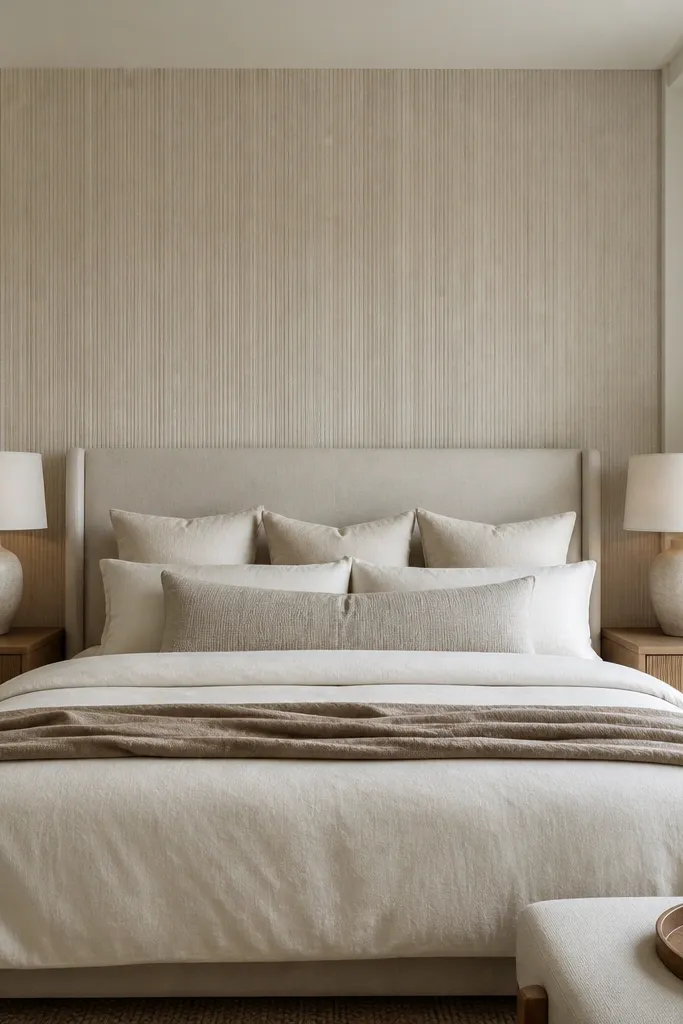
Wallpaper can look luxe in small bedrooms when you treat it like a focal point, not a full-room commitment. I’ve had the best results using a single panel behind the bed that matches the headboard width, so the rest of the room stays light and uncluttered. Tone-on-tone texture (vertical lines, embossed leaves, or subtle damask) reads expensive because it adds depth without fighting your bedding. Warm off-white and soft taupe make skin tones look natural, especially in the evening when walls glow differently. This works best when you have a headboard — even a slim one — because the wallpaper frames it like a gallery.
Start by measuring the wall area behind the headboard and choose wallpaper with a small repeat so the pattern lines stay crisp. Apply the paper so the center of the pattern aligns with the bed centerline. Keep the edges clean by trimming carefully at ceiling height and using a smoothing tool to remove bubbles. Then paint the surrounding walls in the same off-white family so the room doesn’t feel like it has two competing colors.
Good to knowUse a matte wall paint on the other walls; glossy walls next to textured wallpaper look cheap fast.
AvoidDon’t cover every wall — in a tiny room it turns into visual noise.
6. Glass and metal narrow dresser with matching hardware
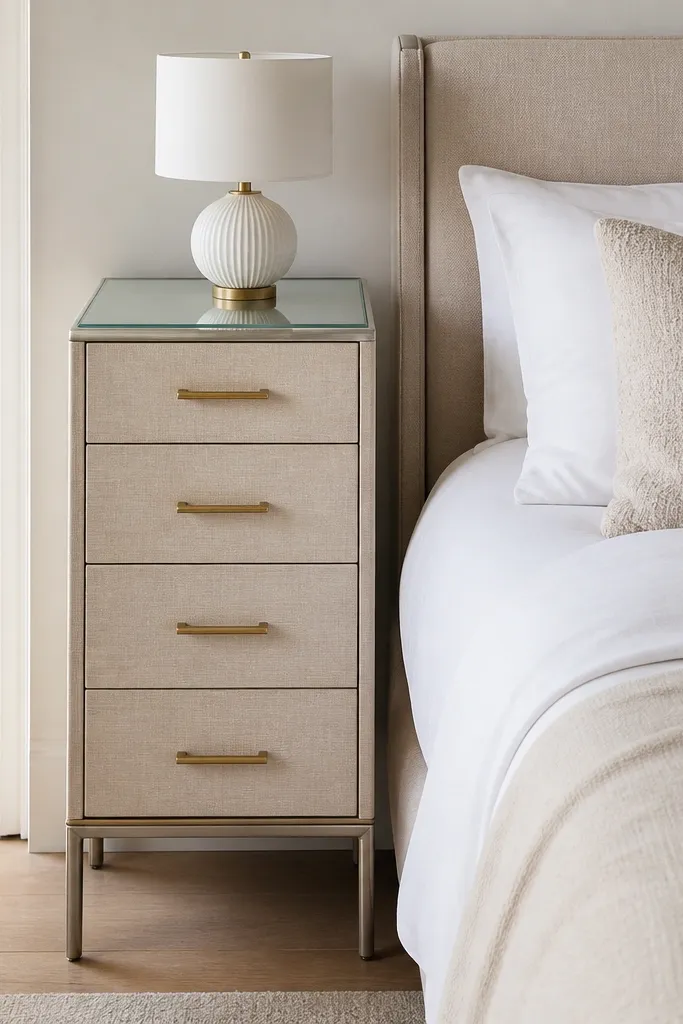
In a very small bedroom, you need storage but you also need visual lightness. A narrow dresser with a glass or frosted top makes the space feel less heavy because the top reflects light instead of blocking it. I pair this with brushed metal legs and matching drawer pulls so the hardware looks intentional and cohesive. Choose a width around 14-18 inches — anything wider starts to fight the bed and reduces walkway comfort. This setup works well for people who have a lot of small items (skincare, hair tools, jewelry) because you can keep them organized without stacking them on the floor. It also flatters darker woods or floors because the glass top brightens the corner.
Start by measuring the space between bed and wall; target a dresser depth of 14-16 inches if you can. Place it at the side you use most, usually the side closest to the closet or door access. Match metal finishes: if your curtain rod is brushed brass, choose brass pulls and a brass lamp base. Style the top with one tall item (lamp) and one flat tray; keep drawer fronts closed and avoid overloading the surface.
Good to knowUse drawer dividers made for narrow drawers so you don’t end up with a chaotic pile at the back.
AvoidAvoid chunky wooden dressers with thick trim; they look heavy in small rooms.
7. Bedding in monochrome ivory with one taupe texture layer
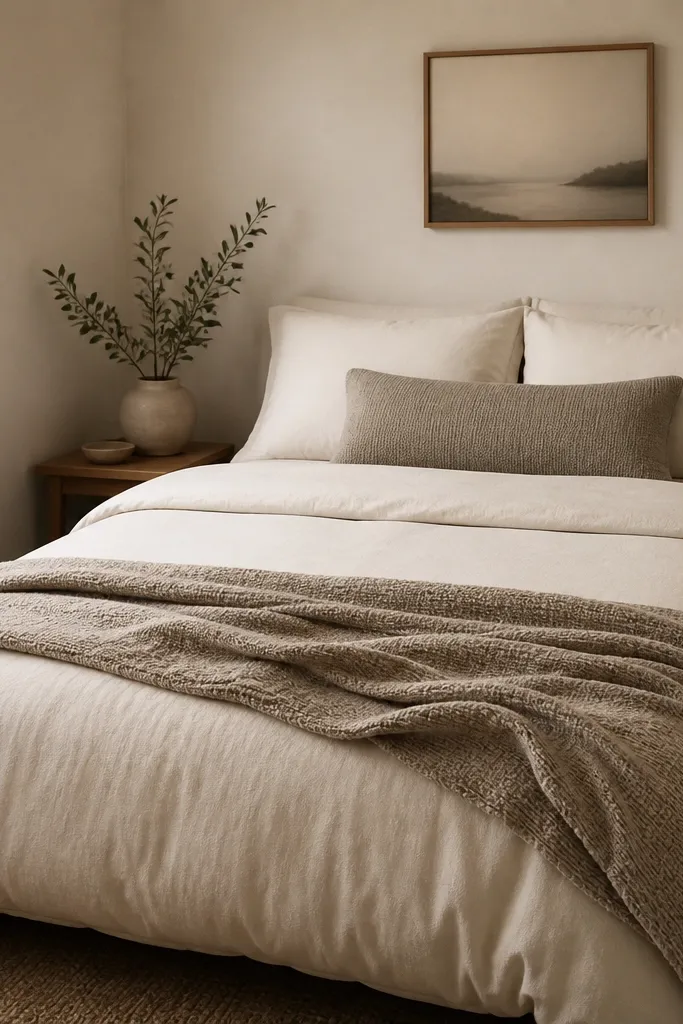
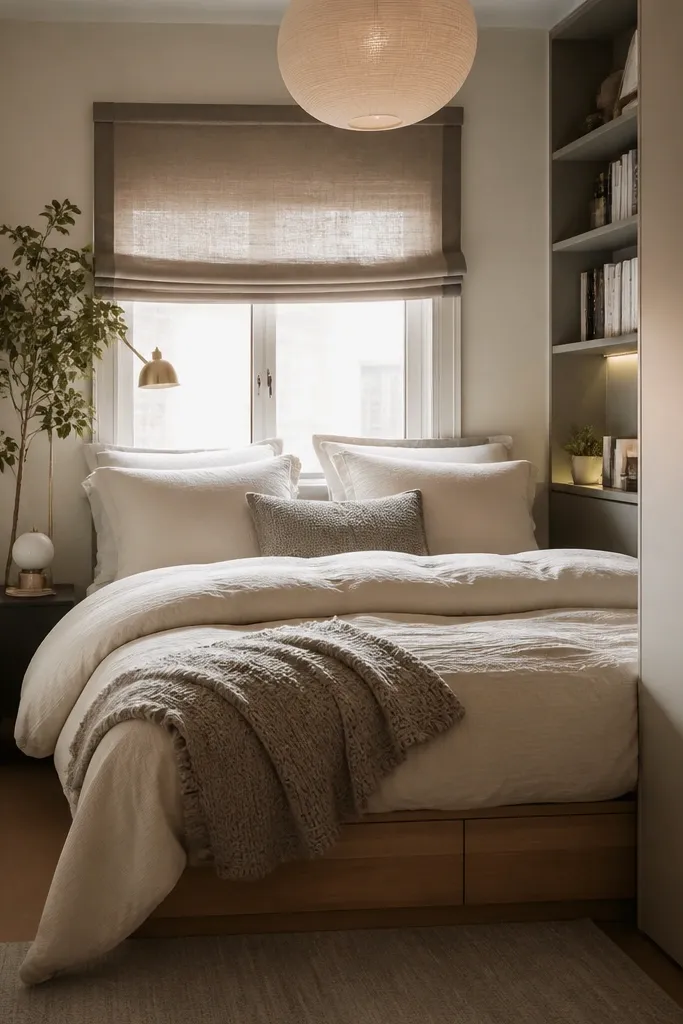
Luxe high-end bedrooms in small spaces don’t rely on loud patterns. They rely on tonal layering: one base color, then one texture contrast. I’ve recreated this look with ivory bedding — duvet and shams in matte cotton or linen — then added one taupe texture layer like a chunky knit throw or a suede-like faux suede pillow cover. The room looks expensive because the fabrics catch light differently, even when the palette stays calm. This works for every skin tone because it creates a neutral backdrop; the texture does the styling work. If you’re sensitive to visual clutter, monochrome is also easier to keep tidy because you can spot when something looks off.
Start by choosing one bedding set in true ivory, not bright white. Add a second layer: a taupe throw folded once at the foot, about one-third of the bed length. Arrange pillows with a simple rule: two standard or king shams, one lumbar, one accent cover — no more. Tuck the duvet edges so the bed looks tailored, then add a pillowcase that matches the texture layer so the contrast reads intentional.
Good to knowWash and dry bedding so it’s slightly soft and not stiff; crisp fabric looks hotel-like for a week, then it starts to feel harsh.
AvoidAvoid mixing too many patterns; in tiny rooms, prints compete with the furniture edges.
8. Matte black ceiling track lighting with warm dimmable bulbs
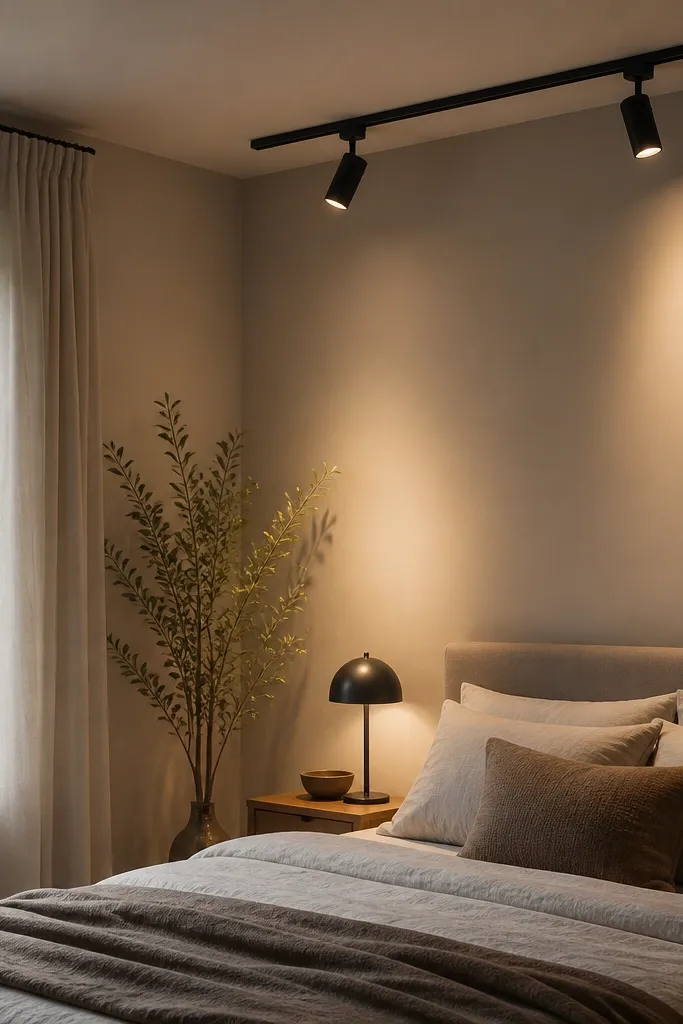
You can get a luxe look without adding more furniture by changing lighting placement. Ceiling track lighting keeps the floor clear and gives you control over where the light lands — especially important when your room is too small for big lamps. Matte black looks sharp against light walls and doesn’t bounce light around like shiny fixtures. I aim the spots at the wall behind the bed and the opposite corner so the room feels evenly lit, not like you have one bright hotspot. This is great for people who share the bed and want different lighting moods — dimming makes the room feel calmer. It also works if you have low ceilings because track hardware sits near the ceiling instead of hanging down.
Start by installing or using a track system with adjustable heads, then mount it 6-12 inches below the ceiling so it stays out of your line of sight. Choose 2700K bulbs and add a dimmer switch or dimmer module. Aim one head at the wall above the headboard and the other toward a neutral surface like the dresser top or art frame. Keep the rest of the room uncluttered so the light reveals texture and not random objects.
Good to knowUse a white card test: hold a piece of white paper where your bed is and adjust the angles until there’s no glare in your eyes.
AvoidDon’t use cool 4000K bulbs; the room will look clinical and smaller.
9. Mirrored tray vanity corner on a wall niche
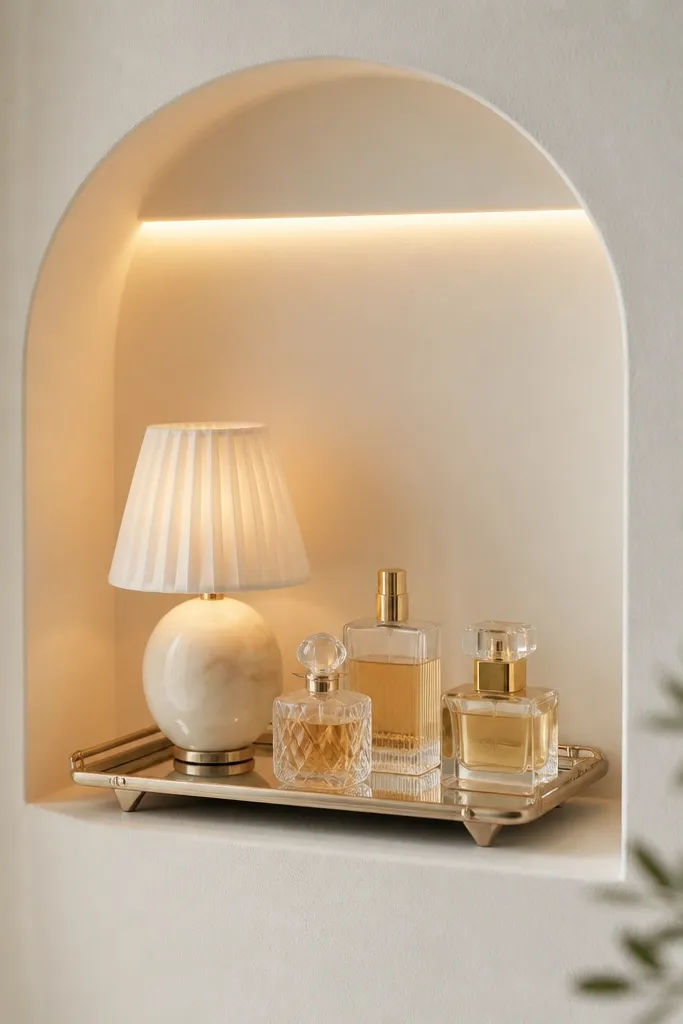
If you don’t have space for a full vanity, you can create a luxe grooming corner in a wall niche or even a slim recessed shelf. A mirrored tray reflects light and makes the items look intentional, like they belong in a boutique hotel. I like using a single compact lamp or a warm LED strip so the corner glows without needing floor space. This setup works especially well in very small bedrooms where the dresser top becomes a catch-all. It’s also flattering for makeup routines because the light is concentrated — you can see details without leaning over your bed. Choose a warm white wall so the mirror reflection stays soft, not blue.
Start by finding a niche height that sits around 36-44 inches from the floor for comfortable use while standing or leaning in. Place a mirrored tray on the top surface so everything stays in one footprint. Add a small warm light source: either a tiny lamp on the tray or an LED strip behind the tray edge. Style with 3-5 items max: one perfume, one skincare bottle, one brush cup, and one small dish for rings.
Wipe the mirror tray every week; fingerprints show more on mirrored finishes than on glass frames.
Avoid stacking products on different heights; it looks cluttered fast in tiny rooms.
10. Slim roller shade inside a ceiling-wide valance
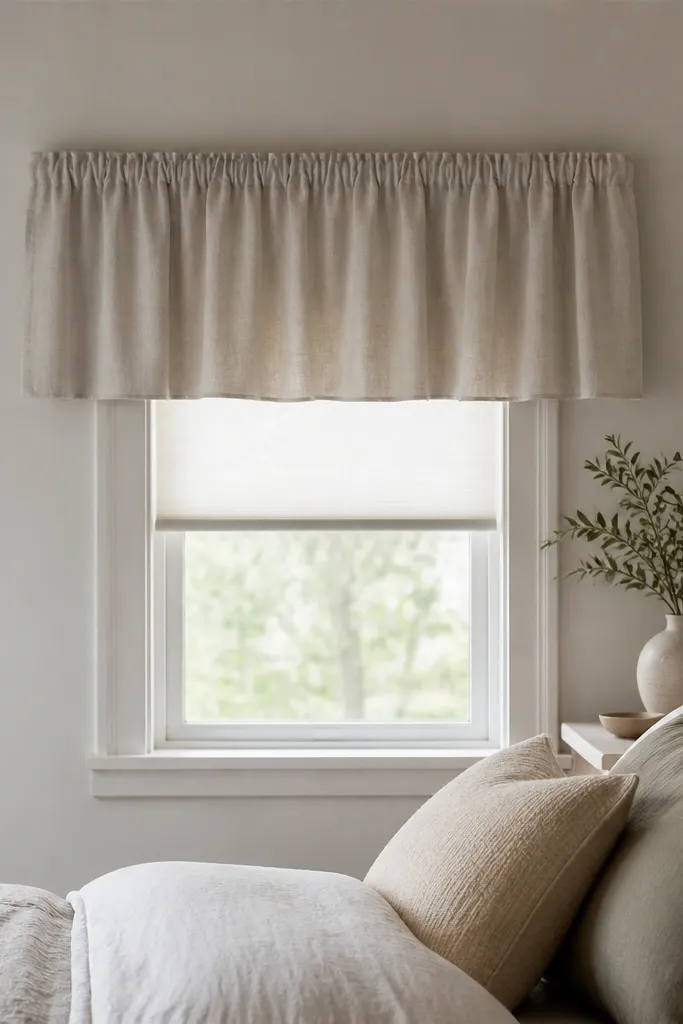
If you hate bulky curtains or your window sits too close to the bed, a roller shade plus a fabric valance keeps the look tailored. The shade controls light, and the valance adds that luxe designer finish by hiding the top hardware. I like off-white or warm cream because it blends with bedding and doesn’t create a hard contrast line. This works well if you have a dresser or bed right under the window since the fabric valance is flat and doesn’t take up extra width. It flatters small rooms because it keeps the window area visually contained instead of spreading curtains across the entire wall.
Start by installing a roller shade that fits inside the window casing — measure the interior width and height precisely. Then make or buy a valance panel that spans wider than the window by 6-12 inches on each side. Attach the valance high near the ceiling so it elongates the window area. Finish by pressing the fabric with steam and keeping the folds minimal so it reads clean.
Use a shade with a subtle texture rather than glossy fabric — it looks more expensive under warm bulbs.
Avoid thick, stiff valances; they look like store-bought blinds from across the room.
11. Corner reading nook with a wall swing arm lamp
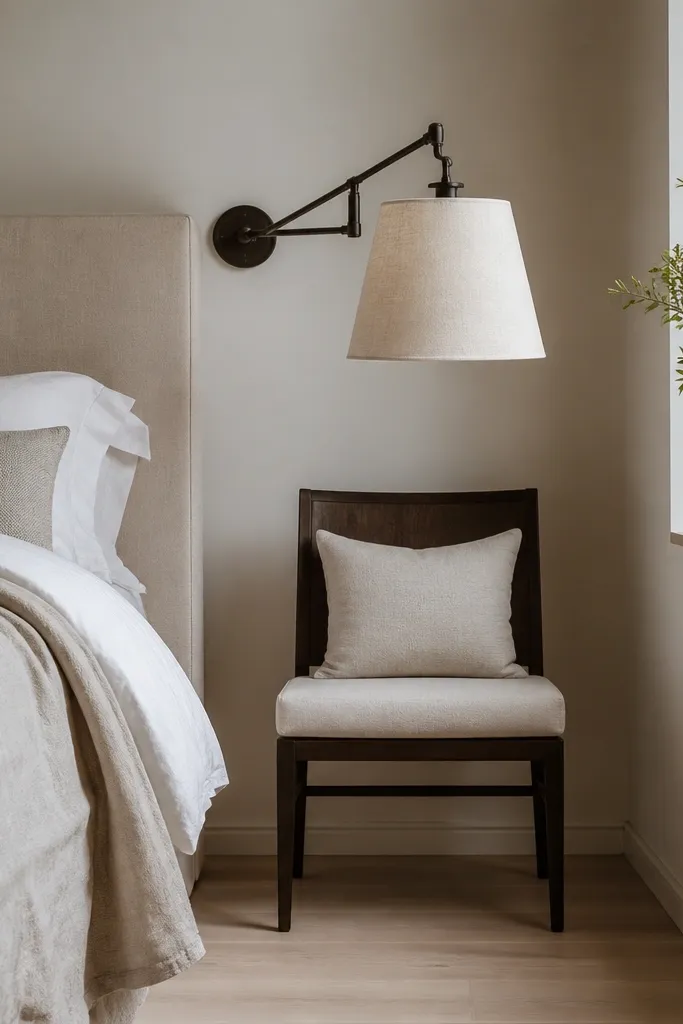
A reading nook in a tiny bedroom needs to be wall-powered, not floor-powered. A swing arm lamp lets you aim light exactly where you want it, and it doesn’t require a side table. I’ve used this setup in bedrooms where the only spare spot is a corner near the closet, and it instantly makes the room feel curated instead of purely functional. Choose a linen shade so the light spreads softly, and keep the lamp finish consistent with your other metals. This works best for people who read in bed or like to sit upright — the light angle is more comfortable than overhead lighting. It also flatters the room because the lamp line is vertical and doesn’t add visual weight like a floor lamp.
Start by placing a small chair or a slim upholstered stool with width under 22 inches in the corner. Mount the swing arm lamp so the shade sits about 18-22 inches above the seat cushion when extended. Use a warm bulb and set the arm so it doesn’t glare on the wall. Add one small side basket under the seat or beside it to store blankets, then keep everything else out of sight.
Pick a chair fabric that matches your bedding palette — it ties the nook to the bed without extra decor.
Avoid placing the lamp too low; if it points upward toward your face, it looks harsh and lowers the vibe.
12. Bedside floating ladder for folded throws
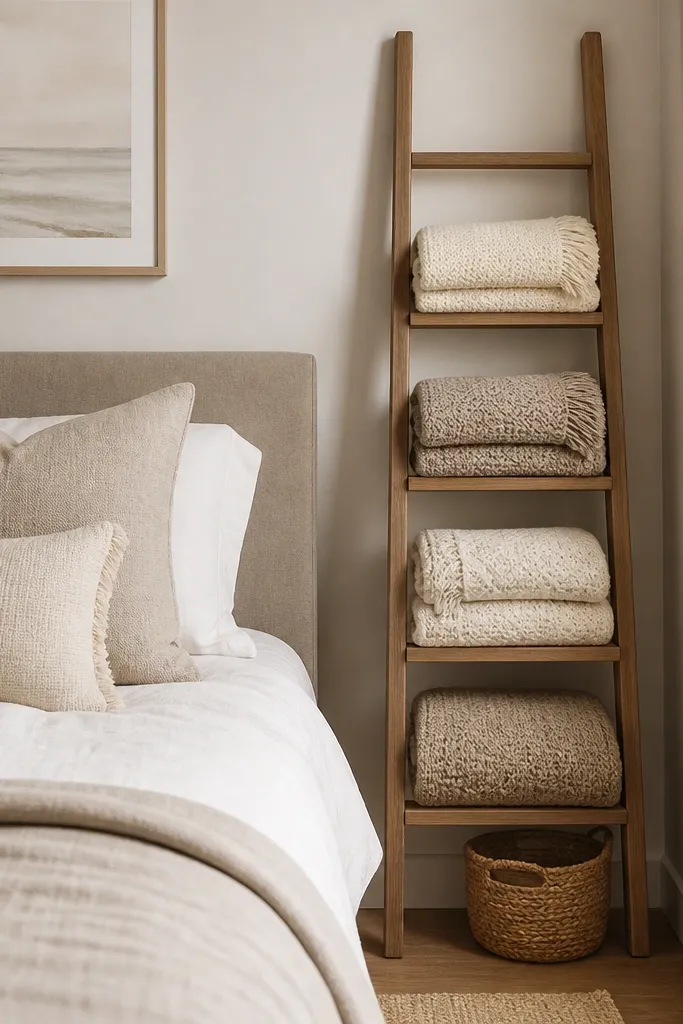
This is storage that looks like styling. A narrow wall ladder gives you vertical organization, so you don’t stack throws on the bed or floor where they make the room look messy. I like ladder shelves made from wood with a light stain or a slim metal finish, because thick chunky ladders feel heavy in small bedrooms. Folded throws in two neutrals create a luxe rhythm — you get texture without clutter. This works well for people with colder climates or frequent guests because you can keep extra bedding ready. It also flatters visually because the throws sit higher, leaving the floor clear.
Start by choosing a ladder width around 12-16 inches so it fits next to the bed without blocking movement. Mount it so the top rung is about 70 inches from the floor, then space the rungs so folds sit flat. Fold each throw into a consistent rectangle and place them by color — one warm neutral on top, the other on the lower rungs. Add a woven basket at the bottom for small items like charging cables or eye masks.
Use the same fold size for every throw so the ladder looks intentional from across the room.
Avoid hanging bulky blankets with uneven drape; it looks like laundry storage.
13. Slim gallery wall with one oversized frame
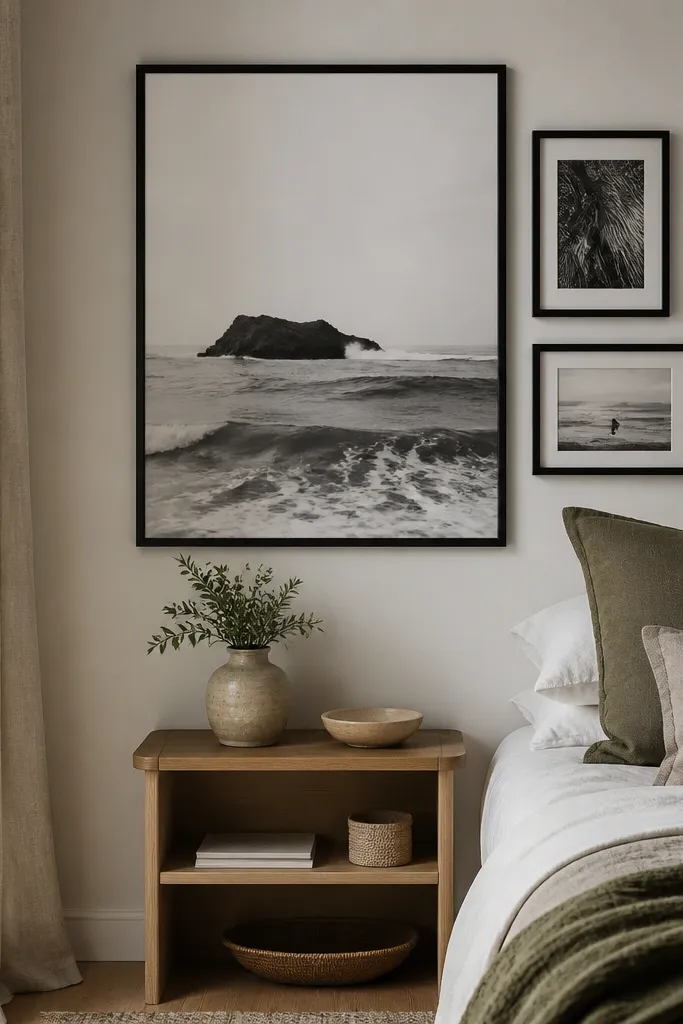
A tiny bedroom can handle art, but it needs restraint. One oversized frame creates a focal point that pulls the eye up and away from the bed’s compact footprint, which makes the room feel more designed. I use thin matte black frames or warm wood frames, then keep the art content simple — a botanical line drawing, a soft abstract in ivory and taupe, or a photo with lots of negative space. This flatters everyone because negative space in art mirrors the calm you want in the room. If your skin tone leans warm, warm wood frames look especially good; if you’re cool-toned, matte black frames give a clean contrast without turning the room gray.
Start by choosing art that is 24-36 inches wide for the main piece — bigger reads luxe in small rooms. Hang the center of the frame at about 57-60 inches from the floor. Add one small supporting frame only if there’s space; keep it at least 4-6 inches away from the main frame edge. Use the same frame finish for every piece so the wall doesn’t look like random thrift finds.
Use a level app and measure from the bed headboard so the art aligns with the centerline of the bed.
Avoid tiny frames in a dense grid; they look cluttered and busy in a small room.
14. Lacquered white dresser with brass ring pulls
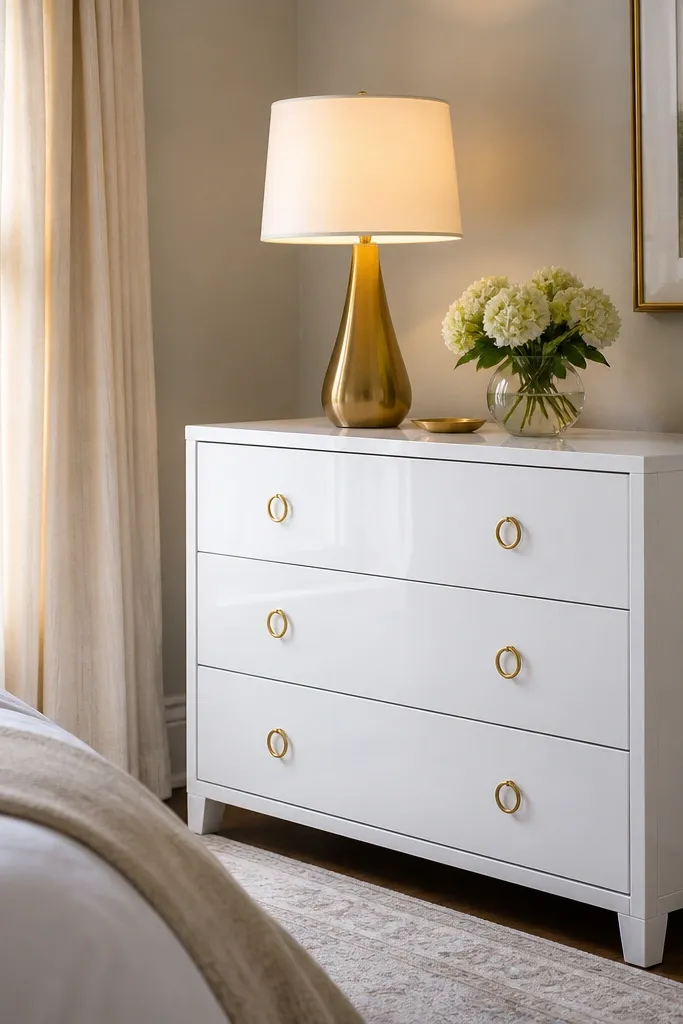
Gloss lacquer in small bedrooms sounds risky, but it looks luxe when the palette stays consistent and the dresser is narrow. The smooth finish reflects light softly and makes the storage look expensive, even if it’s just a 16-20 inch wide piece. Pair it with brushed or polished brass ring pulls for that boutique hotel feel. This works well for medium to dark floors because the white surface brightens the corner and makes the room feel cleaner. It also flatters the room by creating a smooth, uninterrupted surface — no busy wood grain that can feel chaotic next to a busy bed.
Start by choosing a dresser with clean lines and minimal trim — aim for 16-18 inches deep and around 30-36 inches wide. Place it where it doesn’t block the door swing, then keep the top styling minimal: one lamp and one flat tray. Match brass hardware across the room: choose brass drawer pulls, brass curtain rod finials, and a brass lamp base if possible. Wipe the lacquer weekly with a microfiber cloth so it stays streak-free.
Use a warm bulb and keep the lamp shade in a light fabric; harsh light on glossy surfaces can look shiny in a bad way.
Avoid mixing glossy black with glossy white; it makes the room look like two different styles fought each other.
15. Narrow chaise at the foot with a tailored throw
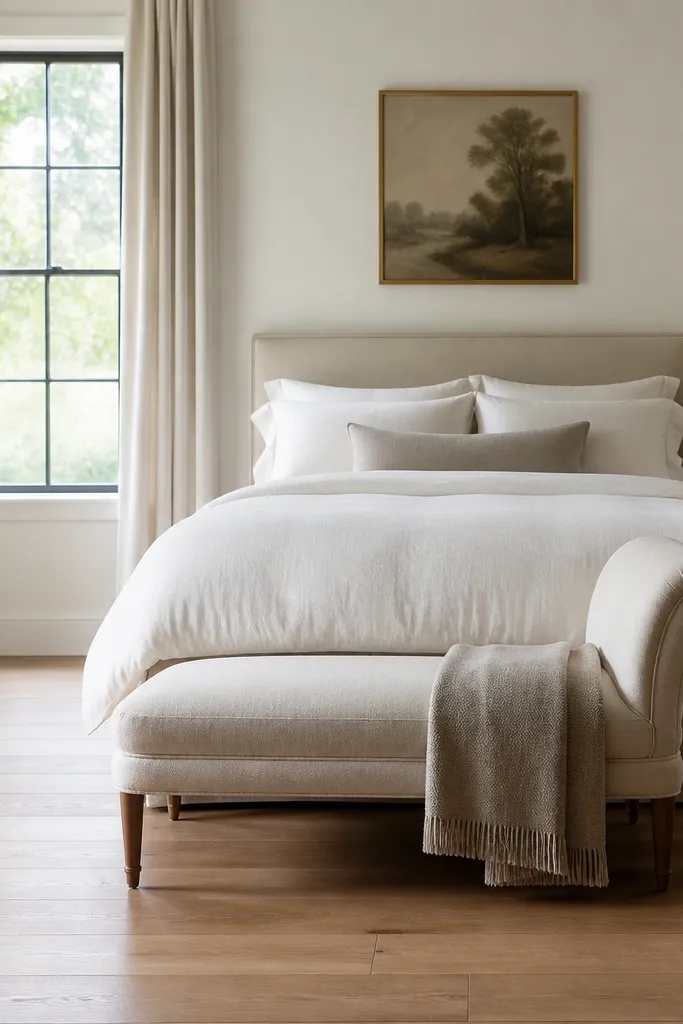
A chaise at the foot turns a small bedroom into a “living space” without adding a full extra chair. I like it only when it’s narrow enough that you can still walk around the bed comfortably — think bench width around 22-26 inches. Upholstery in light oatmeal or taupe looks luxe because it blends with bedding and doesn’t create a separate visual block. A tailored throw on top makes the chaise look styled instead of placed. This works for people who like to sit down while getting dressed; it’s also great for guests because it gives a place to set bags. The key is keeping the chaise low and slim so it doesn’t crowd the room.
Start by measuring the clearance between the bed foot and the wall or doorway — you want at least 24 inches clear. Choose a chaise or bench with slim legs so the floor stays visible. Place it centered at the foot of the bed, then fold a throw lengthwise over the top edge so it hangs evenly on both sides. Finish with one small accent pillow in a matching tone, and keep the rest of the floor bare.
Use a fabric that doesn’t snag easily, like tightly woven upholstery, if you have pets or wear jewelry often.
Avoid tall, wide ottomans; they swallow the tiny footprint visually.
16. Bedside cable-free setup with hidden charging drawer
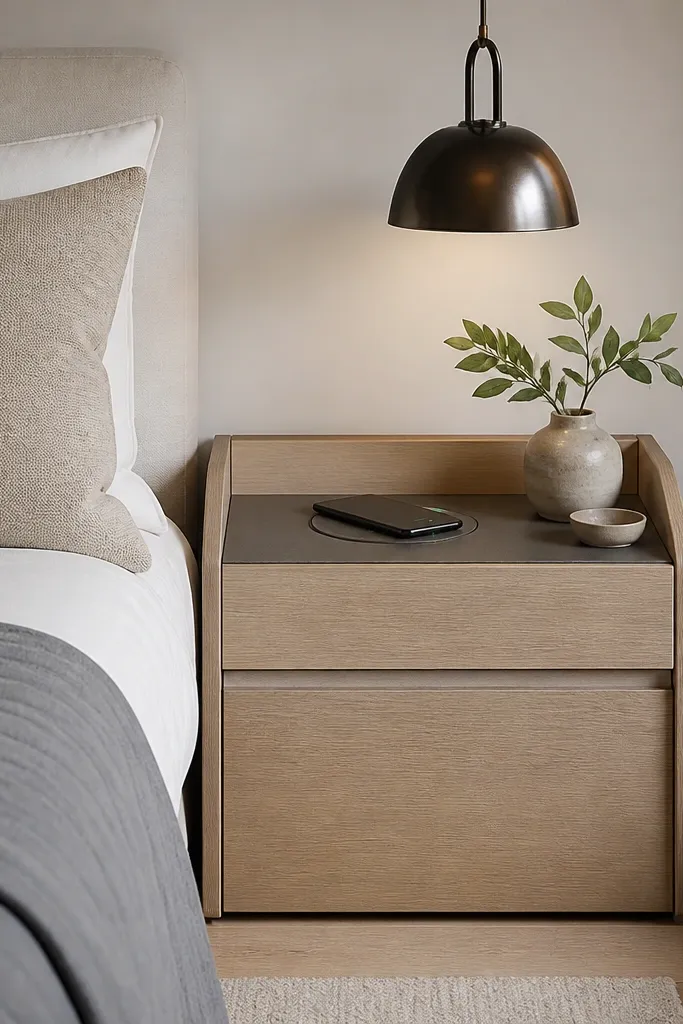
Cables are the fastest way a luxe bedroom turns messy. In small spaces, cords are always visible because there’s no distance to hide them, so I build a cable-free zone around the bed. A hidden charging drawer or a small charging station inside a nightstand keeps phones and devices in one place and makes the bed area look like a designed product photo. I like using a drawer unit in light wood or lacquer so it matches other surfaces. This setup flatters everyone because it makes your bedside routine feel orderly and reduces visual stress. It also works for people who use CPAP, humidifiers, or multiple devices — you can keep cords controlled.
Start by picking a small nightstand or drawer unit that has a back panel or space for a power strip. Install a power strip inside (or behind) the drawer and route the cable through a small grommet hole so it doesn’t snake on the surface. Add a charging pad that sits flat on the top surface, then close the drawer when you’re done. If you’re using a plug-in lamp, keep its cord routed along the wall behind the shelf edge.
Label your device chargers with small removable tags so you don’t end up with a cable pile after a few weeks.
Don’t let a loose power strip sit on the floor; it looks utilitarian and ruins the luxe vibe.
17. Textured rug runner under the bed with a 6-inch edge reveal
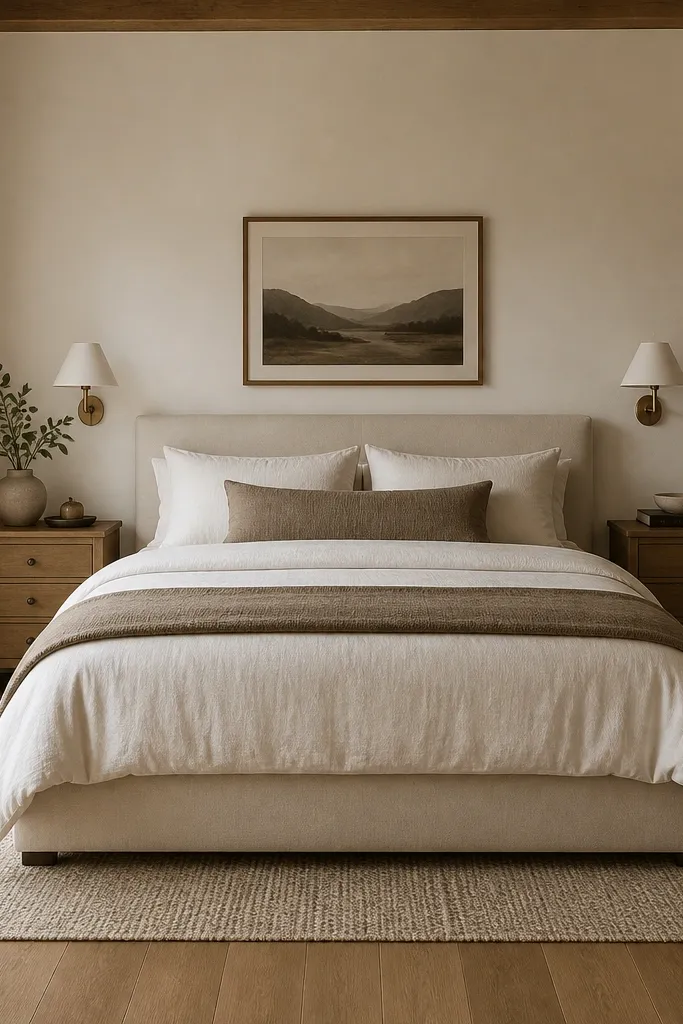
In a tiny bedroom, rugs can either ground the space or make it feel boxed in. I like using a runner or narrow rug that sits under the bed and leaves a consistent edge reveal, usually about 6 inches beyond the bed sides. Texture matters: a low-pile woven rug in warm ivory, oatmeal, or soft camel looks luxe because it adds depth without looking fuzzy. This also helps the bed look intentional, especially if your floor is cool tile or dark wood. It flatters the room by creating a soft boundary that makes furniture feel placed, not floating. If you have pets, low pile is easier to maintain and still reads upscale.
Start by measuring the bed footprint and decide how much rug should show on each side — aim for 6 inches if you have the space. Choose a rug with low pile and a subtle pattern so it doesn’t compete with bedding. Place it so the rug aligns with the bed centerline, then use rug grippers to prevent shifting. Finish by keeping the rug border visible under the bed but avoid letting it bunch up near the walls.
Vacuum with a suction-only setting or gentle brush to keep woven texture from flattening.
Avoid shag rugs in small rooms; they make the floor look uneven and feel harder to keep clean.
18. Slim plant shelf with a single tall leaf for height
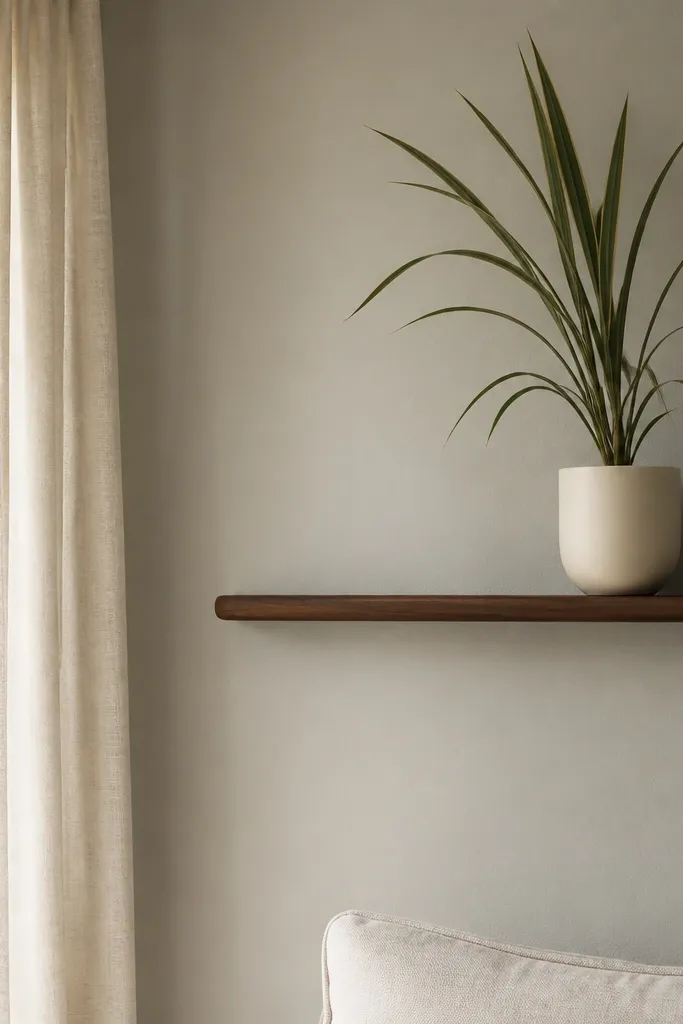
A single tall plant adds life without clutter, and in a very small bedroom it gives you a vertical element that balances a low bed. I prefer one plant instead of a cluster because multiple plants read like a hobby corner and can feel busy. Long leaves — like a snake plant or a ZZ plant — create a clean silhouette that looks expensive when placed in a matte ceramic pot. Choose cream or warm white pottery so it matches bedding and doesn’t clash with brass hardware. This works for people who want a calm, spa-like vibe, and it flatters the room by softening hard edges like doors and dresser corners. Just keep the plant where you can see it from the bed.
Start by placing a slim wall shelf 55-65 inches from the floor, so the plant sits above the visual line of the nightstand. Use a shelf depth under 8 inches so it doesn’t protrude. Pick a pot that fits the plant root ball with about 1 inch of extra space — too large looks sloppy. Style the base with nothing else — one plant, one pot, one clean line.
Rotate the plant every two weeks so it grows evenly and stays symmetrical.
Don’t add multiple small plants; the tiny bedroom will look crowded fast.
19. Statement ceiling fan cover with warm light kit
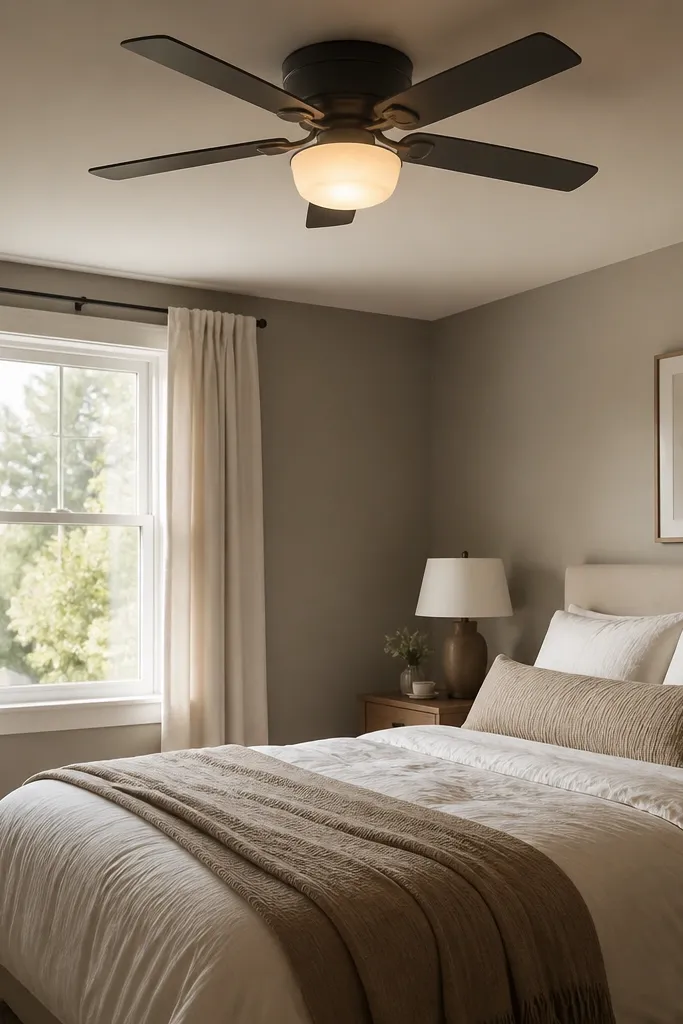
If you’re stuck with overhead lighting, you can still make it look luxe by choosing the right fixture style. A flush-mount ceiling fan with a frosted glass shade spreads light softly and keeps the fixture from looking bulky in a small ceiling height. I like matte finishes because they don’t glare, and I choose a warm light kit so the room stays flattering. This setup works when your bed is centered and you want one clean, functional light source. It’s also a practical upgrade: you get airflow without adding a floor fan that takes up space. For people who hate ceiling fixtures that feel harsh, frosted glass is the difference between “rental” and “designed.”
Start by matching the fixture finish to your hardware: if you have brushed brass, choose a warm metal tone or a finish that looks close. Install a warm bulb or a warm LED kit around 2700K. Keep the fan blades tidy and dust-free; tiny rooms show dust quickly. Then style the bed wall with a mirror or art so the light doesn’t become the only visual feature.
Wipe the frosted shade with a microfiber cloth every couple of weeks; film on glass makes warm light look dull.
Avoid shiny crystal-style fixtures; they throw glare and look too heavy for small bedrooms.
20. Clutter-proof open shelving with matching bins
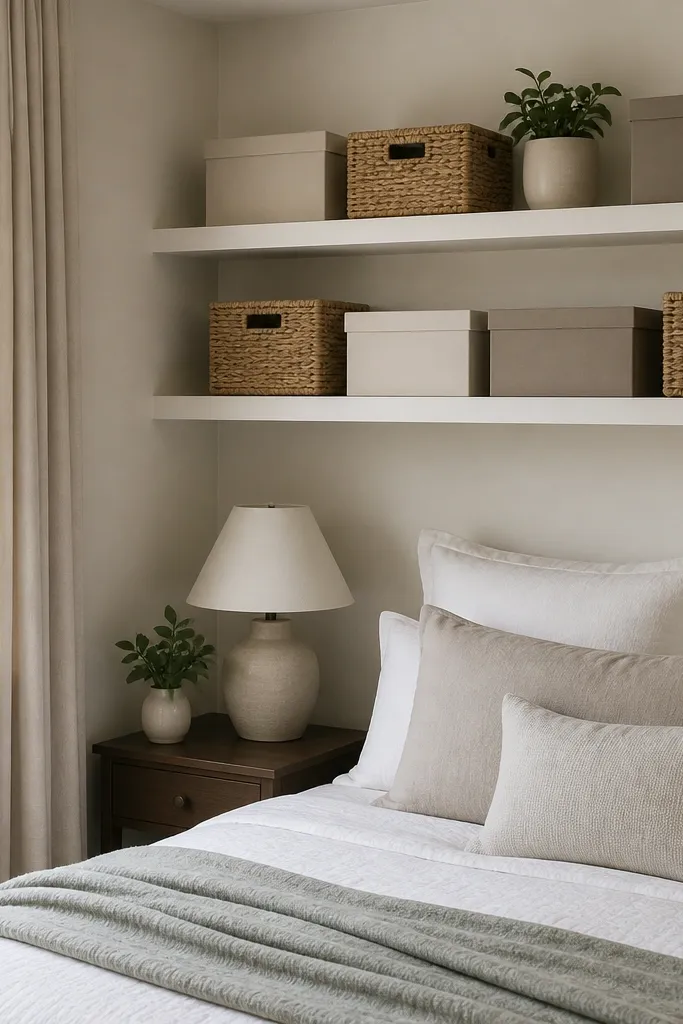
Open shelves can look luxe if you control what’s visible. The trick I use is matching bins in one or two neutrals so the shelf reads like a designed storage system, not a dumping ground. I like placing shelves above a dresser or along a wall that doesn’t face the bed directly, so you don’t see random objects when you lie down. Neutral woven bins with a tight weave look expensive in small rooms, especially with ivory and taupe bedding. This works for people who need to keep books, skincare, or folded clothes nearby but hate the look of messy piles. It also flatters the room by creating clean horizontal lines that balance a compact footprint.
Start by installing shelves with enough depth for bins — usually 10-12 inches deep. Space them so the top shelf sits around 72-80 inches from the floor and the lower shelf around 42-48 inches. Place identical bins on each shelf and limit what’s outside the bins to one decorative object max. Add a small book display only if the spines are a consistent color family, otherwise store them in bins.
Label bins with a tiny removable label inside the bin, not on the front, so it stays pretty.
Avoid mixing random sizes of baskets; mismatched storage makes shelves look improvised.
21. Monogrammed linen duvet cover and pillow shams in one tone
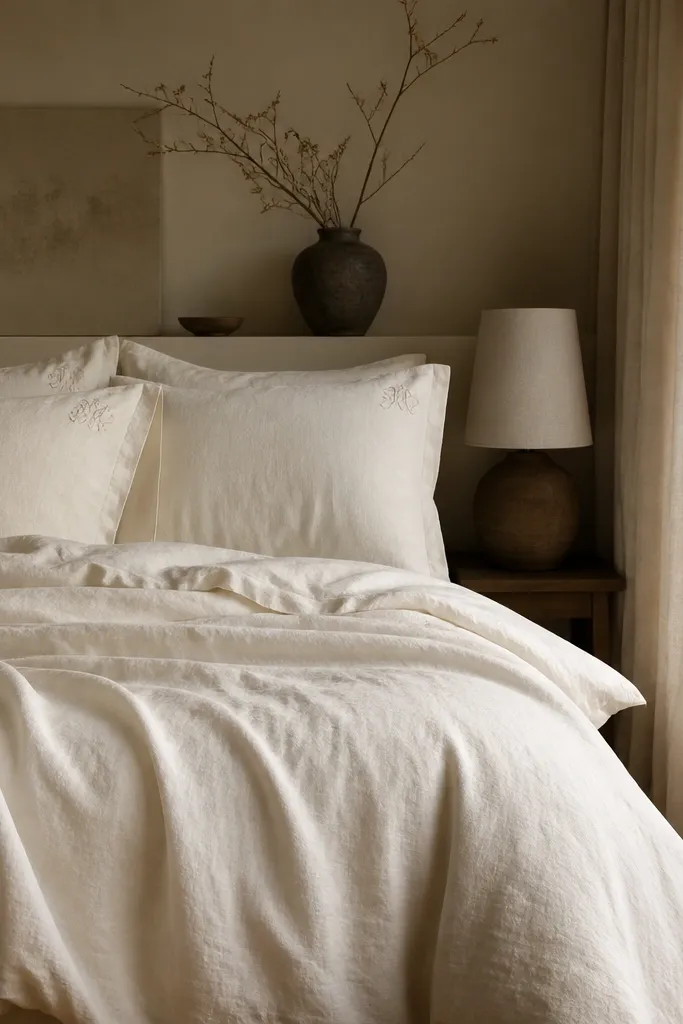
The luxe look in tiny bedrooms comes from the details you touch, not the furniture you can’t change. Linen bedding with a subtle monogram feels intentional because it adds a personal, tailored element without adding visual clutter. I stick to one tone across the duvet and shams so the room stays calm, then add a texture throw at the foot for contrast. Soft ivory linen reads expensive because it has natural slubs that catch light and hide wrinkles better than shiny cotton. This works for every skin tone because it doesn’t create harsh contrast like bright white. If you’re someone who changes bedding often, linen also holds up better with regular washing.
Start by choosing a linen duvet cover with a matte finish and a weight that drapes — not stiff. Order matching shams and keep the monogram placement consistent, about 2-3 inches from the corner seam. Add a single throw in taupe or oatmeal folded at the foot, then arrange pillows with shams flat and one accent pillow upright. Finish by smoothing the duvet edges so they sit evenly on both sides of the bed.
Iron only the top fold line after washing; full pressing makes linen look too crisp and less cozy.
Avoid heavy embroidery all over; in a small room it looks busy instead of tailored.
22. Narrow bench with hidden storage and a single cushion
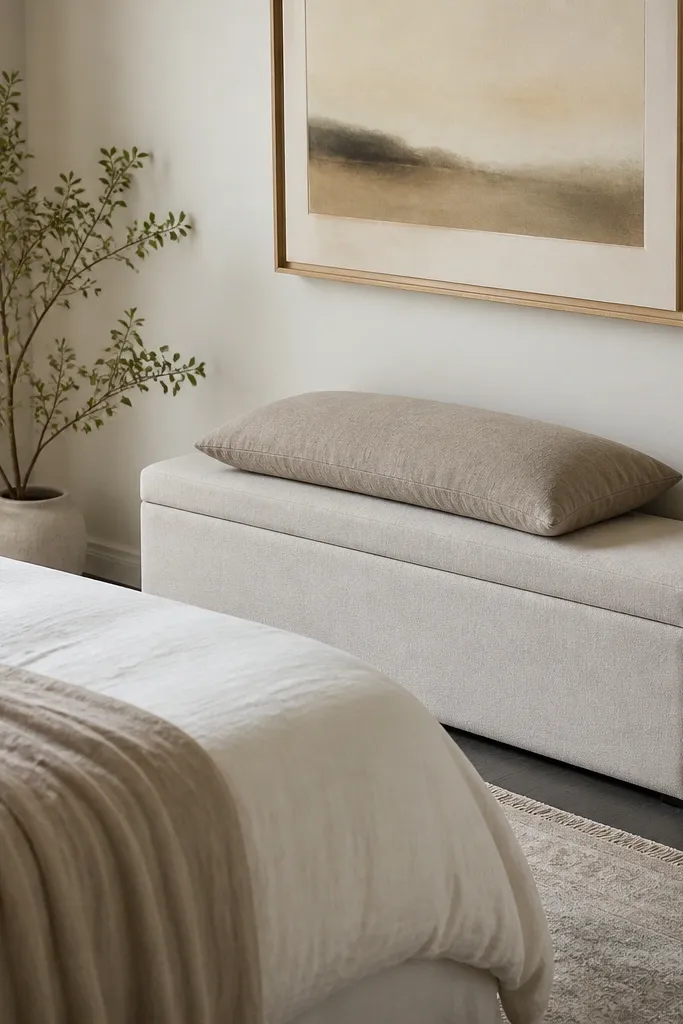
A hidden-storage bench turns the “dead space” near the bed into something useful without adding visual clutter. In small bedrooms, you need a place for extra blankets, laundry, or guest items that doesn’t look like a pile. I like benches that are upholstered and low, with fabric that matches the headboard or bedding palette so the bench disappears into the overall design. One cushion on top keeps the look luxe and minimal. This works for people who want a place to sit briefly and also need storage — it’s practical without looking like a storage bin. The hidden compartments also help keep the floor clear, which is what makes tiny rooms feel expensive.
Start by measuring the wall space next to the bed and choose a bench that’s about 48-60 inches long and under 18 inches deep. Place it flush against the wall with the cushion centered so it looks intentional. Choose upholstery in a matte fabric like cotton-linen blend or performance velvet in taupe. Store only bulky items inside and keep the top styling to one cushion and one small tray if you need it.
Good to knowUse a fabric liner inside the storage compartment so items don’t slide and the interior stays tidy.
AvoidAvoid benches with rough unfinished wood sides; even if it’s hidden, the look reads cheap.
23. Slim bedside cabinet with open lower niche and closed upper doors
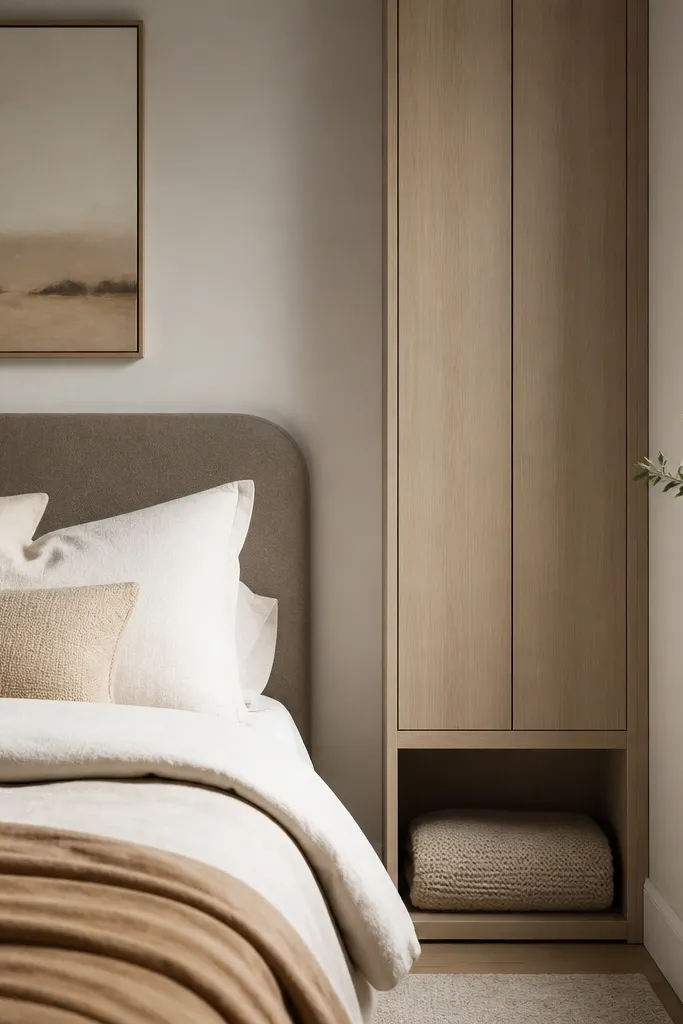
This cabinet layout is the best compromise when you want bedside access but hate visual clutter. The closed upper doors hide charging cords, skincare, and random items, while the open niche gives you one intentional spot for a throw or a book. I like slim cabinets with a depth under 14 inches so they don’t eat walkway space, and I choose finishes like warm walnut veneer or matte white lacquer. The luxe effect comes from the contrast of closed and open storage — it looks designed instead of purely functional. This setup works for people who use their bedside for more than one thing: lamp, book, and a small daily kit. It also flatters small rooms because the cabinet keeps vertical lines clean and doesn’t sprawl.
Start by measuring the gap between bed and wall and choose a cabinet depth of 12-14 inches. Place the cabinet so the top surface lines up with your ideal lamp height — usually around 24-26 inches from floor. Style the open niche with one folded blanket and one small object; avoid stacking multiple items. Keep the closed doors aligned and use matching knobs so the cabinet looks like a single piece, not a mix of parts.
Good to knowAdd felt pads under the open niche items so they don’t shift and make noise if you move at night.
AvoidAvoid cabinets where everything is open; in tiny rooms, open storage becomes a visual mess fast.