1. Low Platform Bed + Under-Bed Toy Bins in Warm Oat
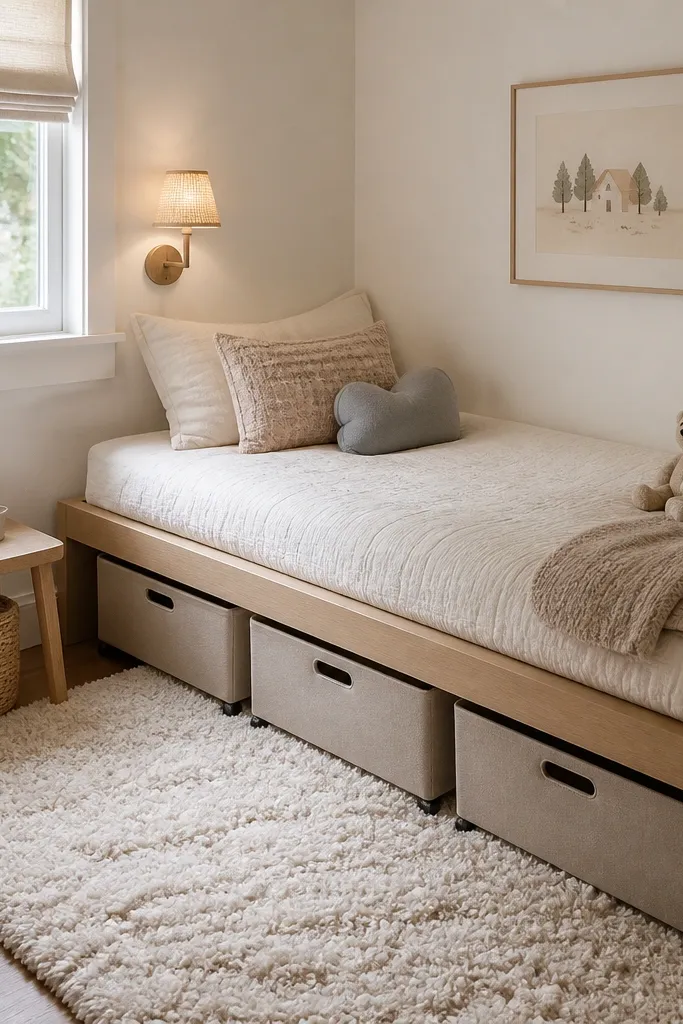
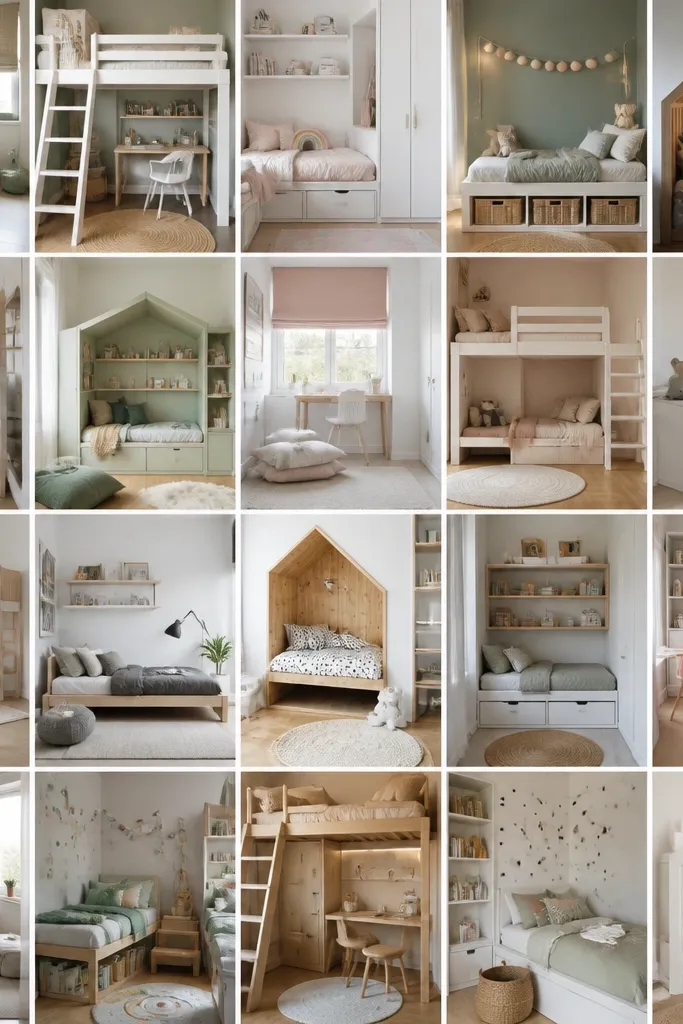
This setup looks cozy because the bed is low and the storage stays hidden. The cream bedding and warm oat bins soften the room without adding visual height, which matters in a tiny space. I like pairing light oak with off-white because it reads warm in the evening, especially under 2700K bulbs. Kids with medium to light skin tones often look best in this lighting because the warm cast makes the whole room feel calmer, not bluish. The styling principle is simple: keep the bottom half tidy and let fabric do the cozy work.
Start by choosing a low platform bed frame with legs no higher than about 6-8 inches so the bins fit under it. Then measure the space under the bed and buy bins that leave a 1-2 inch gap so they slide out easily. Stack bedding in a single color family (cream duvet, white pillowcases, one small accent pillow in dusty rose or sage). Finally, place the rug so it reaches at least under the front edge of the bed — about 6 inches beyond is a sweet spot so feet land on softness.
Good to knowUse rolling bins with fabric exteriors and plastic bottoms. You get a soft look but the bins still survive toy chaos.
AvoidAvoid open baskets under the bed — they look messy fast and make the room feel smaller.
2. Wall-Mounted Books + Picture-Ledge for a "Floating" Cozy Corner
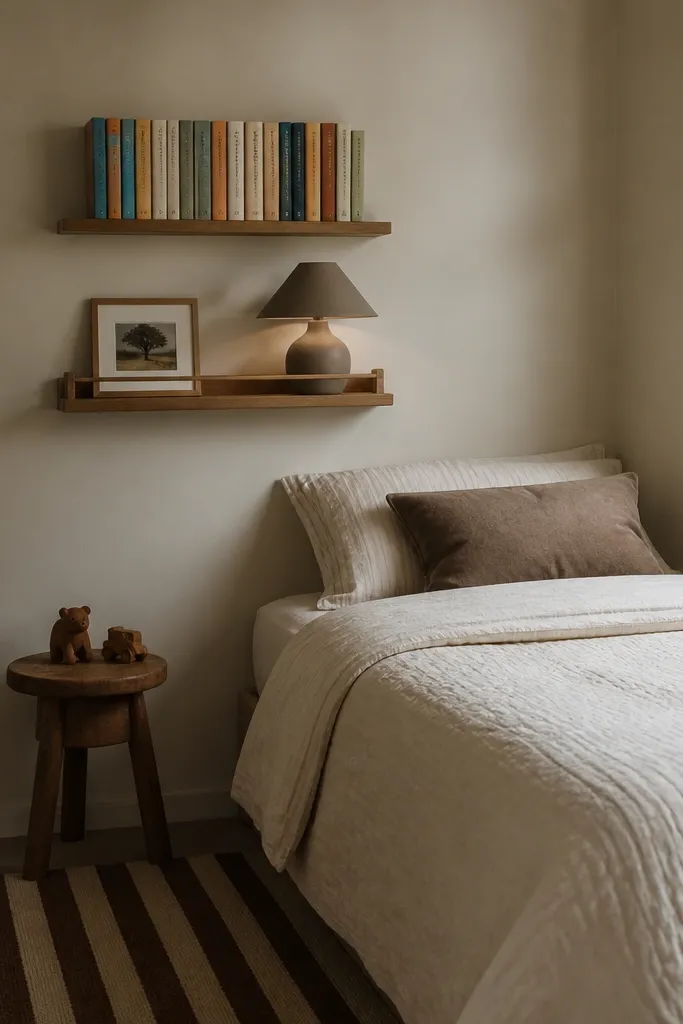
This idea makes the room feel bigger because it moves the visual weight up. The cozy part comes from repeating warm neutrals on the shelves: taupe lamp shade, cream books, and framed art with a light wood frame. I’ve used this in rooms where a freestanding bookshelf would block the doorway, and the kids still get instant access to books. It flatters kids who love calm routines because the reading spot looks intentional, not random. The principle here is a “single wall zone” so your eye lands in one place instead of scanning across clutter.
Start by marking the wall height for the lower shelf at about 18-24 inches from the floor if your child is 3-6, or 22-26 inches for older kids. Then mount shelves with a level so the book spines line up cleanly; use wall anchors for drywall. Style the top shelf with 12-18 board books in a tight row, then add one small decor item (a framed print or a nightlight) on the picture ledge. Finish by adding a narrow rug that runs under the reading area, not the whole room, so you keep walking space open.
Good to knowPick frames with warm white or light wood. They look cozy under warm bulbs and don’t clash with most kids bedding.
AvoidSkip mixing dark shelf wood with cool gray walls — it can make the whole room feel harsher.
3. Corner Daybed with Curtain "Bedroom Nest"
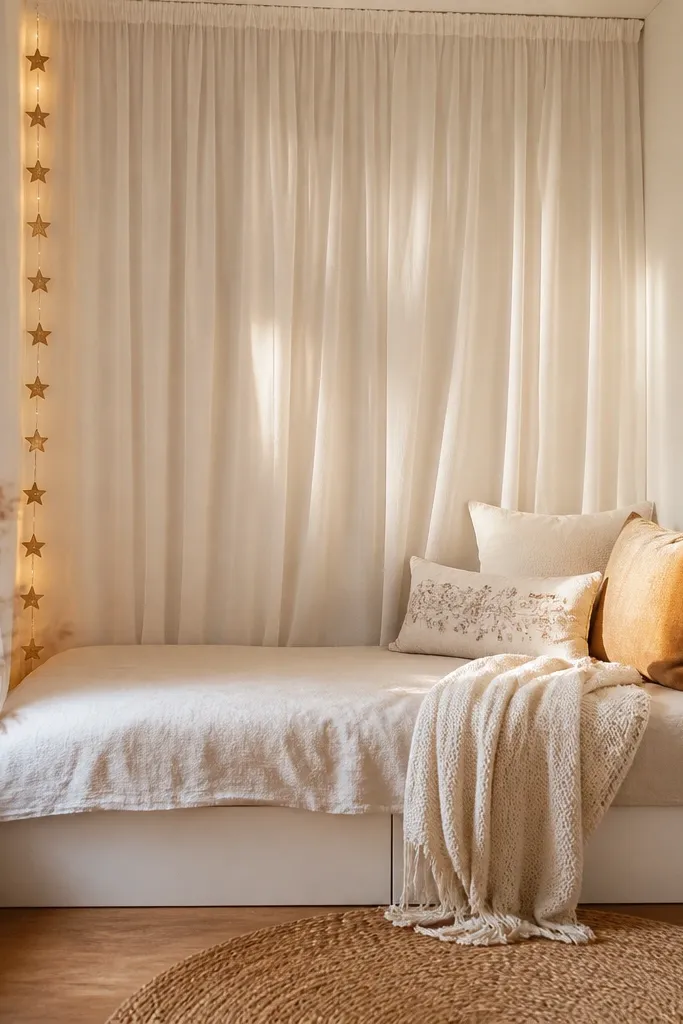
A corner daybed instantly creates a cozy “nest” because it gives kids a protected spot. The curtain softens the hard lines of a small room and makes the sleeping area feel separate from play. I like warm white sheers or linen-look curtains because they glow at night under a warm lamp without looking too formal. This works well for kids who get overstimulated at bedtime because the curtain acts like a visual boundary. The styling principle is separation: one cozy pocket in the corner so the rest of the room can stay practical.
Start by placing the daybed so it leaves at least a 24-inch clear path from the door to the opposite wall. Then hang the curtain on a tension rod or track mounted 6-8 inches above the daybed back so it drapes naturally. Layer: add a washable duvet cover in cream, then throw a smaller throw blanket in muted olive or dusty blue at the foot. Place a round rug under the daybed front edge, leaving about 8-10 inches of rug showing beyond the bed so the nook feels grounded.
Good to knowUse blackout curtains only if the room gets direct morning sun. Otherwise, sheers keep it airy and still cozy.
AvoidDon’t use heavy black curtains in a tiny room — they swallow light and make the corner feel smaller.
4. Fold-Down Desk + Wall Hooks Above the Rug
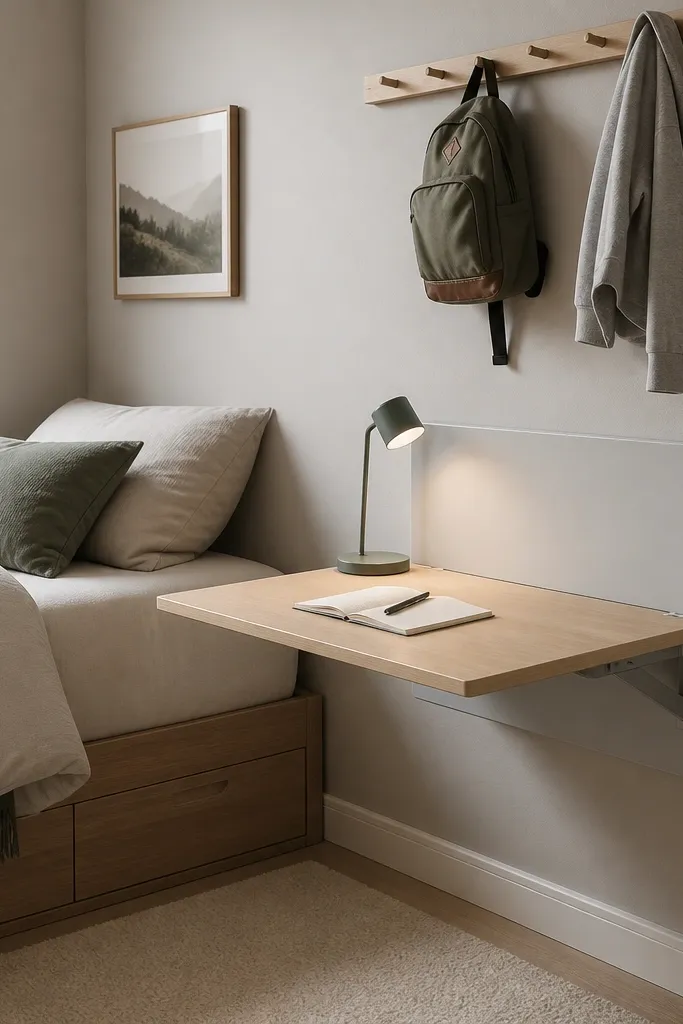
This layout keeps the room functional without sacrificing cozy. The desk is “there when needed” and disappears the rest of the day, so you don’t stare at clutter. I pair a fold-down desk with wall hooks because kids can hang backpacks immediately, which prevents piles from forming on the bed or chair. Warm cozy comes from a fabric rug and a soft lamp shade, not from more furniture. This works especially well for kids who do homework in short bursts — they need a clear surface, then the room should breathe.
Start by choosing a desk size that fits your wall section — aim for a top surface around 20-28 inches wide so it doesn’t block the bed. Mount it so the open desk edge sits above the rug or at least doesn’t scrape the rug pile. Add wall hooks 48-54 inches from the floor for backpacks so they hang without dragging. Finally, put a small basket under the desk for markers and paper, and keep it closed with a lid so the desk area stays neat.
Good to knowPut a small tray on the desk for the “daily items” (pencil, eraser, earbuds). It prevents the desk from turning into a catch-all.
AvoidAvoid a desk chair that’s too tall — it forces kids to sit awkwardly and the room looks cramped.
5. Matte Black Nightstand Swap for a Light Wood Ladder Shelf
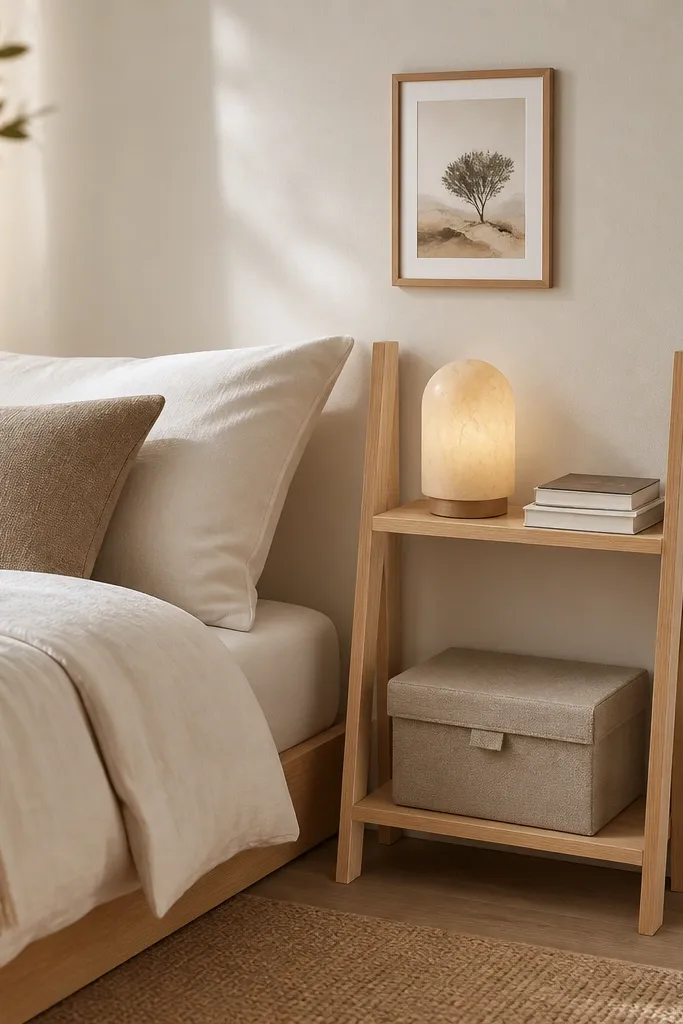
A ladder shelf gives you night storage without the bulky look of a wide dresser. I avoid dark nightstands in tiny rooms because they visually anchor the space and make it feel heavier. Light wood plus closed fabric bins reads cozy and clean even when kids throw things in quickly. This is great for kids who need a bedtime routine — books and a nightlight are visible, so they don’t rummage around. The principle is “controlled visibility”: show only what belongs at night, hide everything else.
Start by picking a ladder shelf width around 14-18 inches so it doesn’t crowd the side of the bed. Mount it securely or place it on the floor with level feet if it’s not wall-mounted. Style the top shelf with two or three books stacked and a nightlight with a fabric shade in warm beige. Put a closed fabric bin on the lower shelf for water bottles or pajamas. Add one small framed print above, centered over the ladder shelf, so the wall feels finished.
Choose closed bins with a removable lid. You can clean quickly without reorganizing the entire shelf.
Skip tall, open shelves beside the bed — they collect visual clutter and kill the cozy feeling.
6. Rounded Rug + Low Toy Storage in Sage for a Calm Color Plan
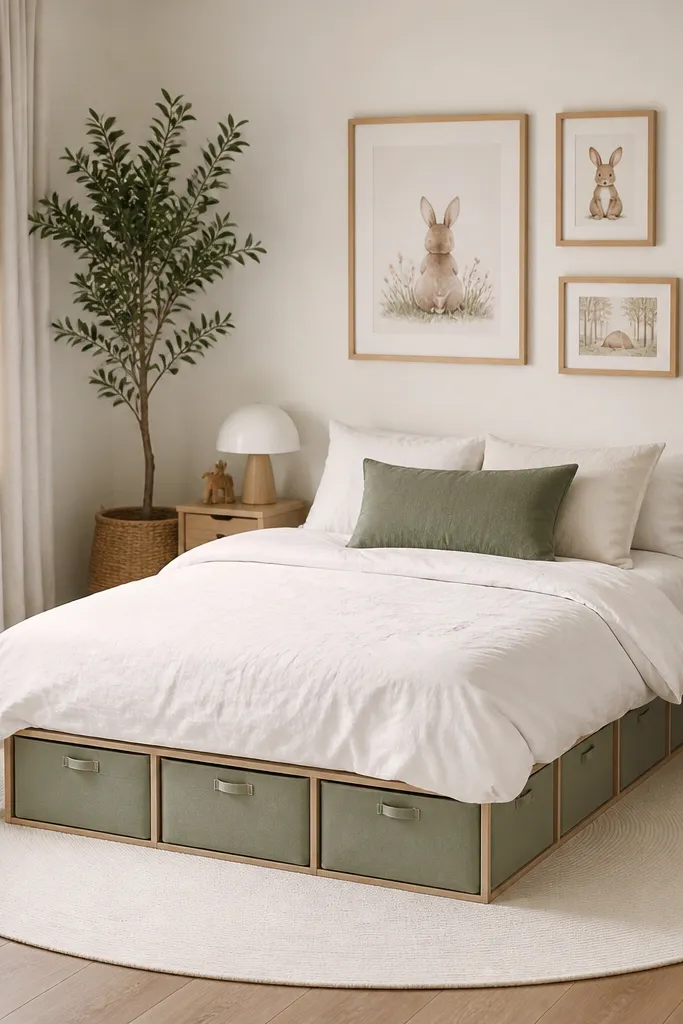
A rounded rug makes a tiny room feel softer because it removes sharp corners from the visual field. Sage works well as a cozy accent because it’s muted enough to relax the eye but still colorful. I’ve seen this color plan calm down rooms that were previously chaotic with bright primary colors everywhere. It’s flattering across skin tones because the room lighting stays warm and the green doesn’t cast harsh shadows. The principle is a restrained palette: one soft neutral base, one muted accent, and everything else stays light.
Start by choosing an oval or rounded rug size that fits between the bed and the play wall, leaving at least 10 inches of bare floor where kids walk. Then select two sizes of low storage cubes in sage — one for toys, one for art supplies — and keep the cube tops closed with fabric lids. Match your bedding accents: one sage pillow plus a sage throw folded at the foot. Place framed art in a consistent finish (light wood or white frames) and hang it at kid eye level — about 40-48 inches from the floor.
Good to knowUse a rug pad. In small rooms, rug slipping makes everything look sloppy fast.
AvoidAvoid bright neon sage or high-gloss paint — the room can feel aggressive instead of cozy.
7. Bedside Sconce on a Plug-In Timer for Instant Evening Warmth
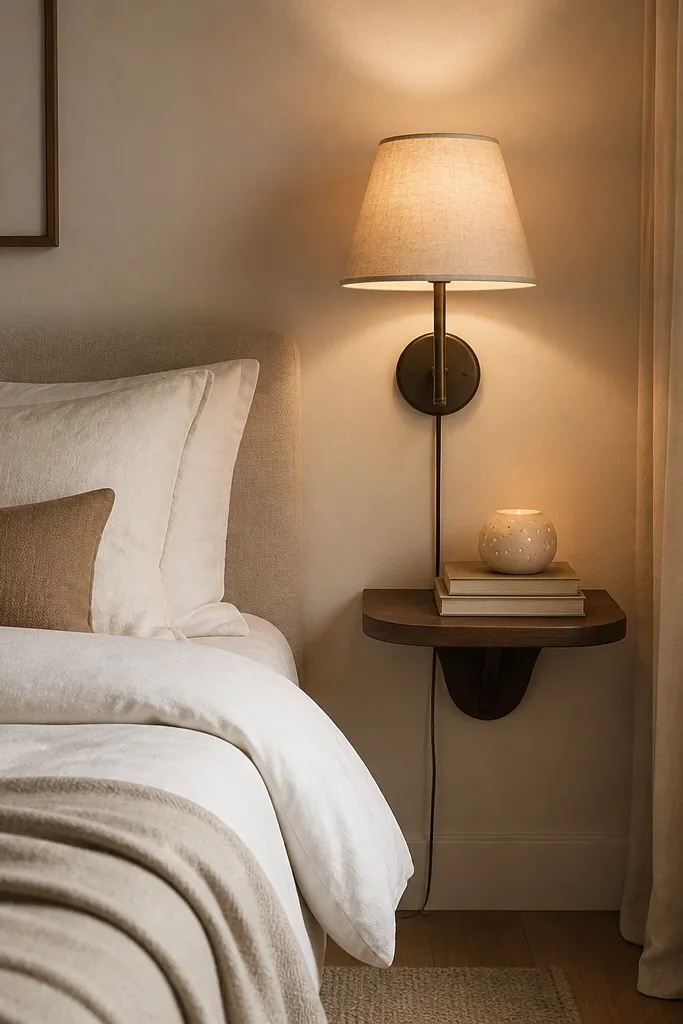
Lighting is where cozy becomes real, not just “cute.” A plug-in sconce on a timer creates the same warm light every night, so the room feels predictable and safe. I like fabric shades in warm beige because they diffuse the light and hide the bulb’s harshness. This helps kids who resist bedtime because the lighting cue becomes part of the routine. It also flatters the room’s textures — woven baskets and linen-look bedding look better in softer light. The principle is consistency: same warmth, same angle, every evening.
Start by picking a sconce with a fabric shade and a warm bulb rated 2700K. Plug it into a timer outlet so it turns on 20-30 minutes before bedtime. Mount it at about 36-44 inches from the floor so the light hits the pillow area, not the ceiling. Then keep the rest of the room lighting minimal: one overhead light off, only the sconce and maybe a small rug lamp. Finish with a small tray on the bedside shelf for a water cup and bedtime book so the area stays tidy.
Good to knowChoose a timer with a simple dial and fewer modes. The kids don’t need a gadget menu at bedtime.
AvoidSkip cool white LED bulbs — they make bedding look gray and kill the cozy mood.
8. Closed Toy Cabinet Under a Gallery Wall of Family Photos
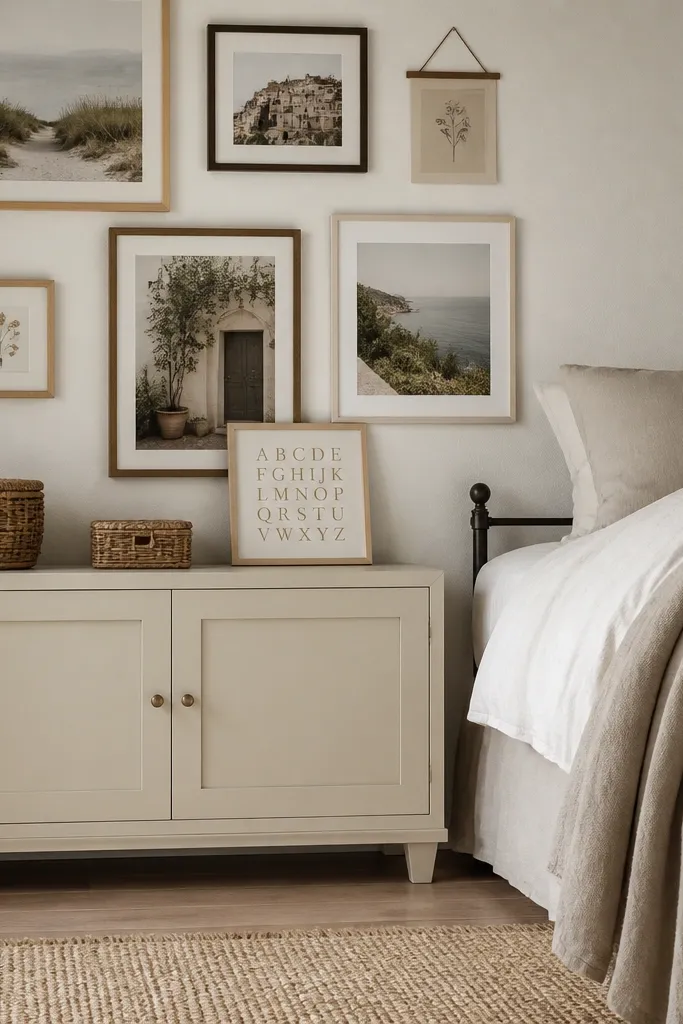
This is one of my favorite tiny-room tricks because it makes the wall do double duty. The gallery wall adds warmth and personality, while the closed cabinet hides the toy mess that would otherwise ruin the cozy look. I like cream cabinets because they blend with the wall color and don’t create a heavy block. Kids feel comfort when they see familiar faces, and the room looks intentional even when toys are everywhere behind the doors. The principle is visual separation: display the story on the wall, conceal the chaos below.
Start by painting the wall a warm off-white so frames and cabinet hardware look cohesive. Choose a cabinet height that keeps the top shelf around 28-32 inches from the floor so kids can’t easily climb it. Arrange frames in a tight grid with mostly vertical rectangles and a couple of squares; keep frame colors consistent. Style the cabinet top with only two items: one basket and one framed print, leaving negative space. Put a small rug in front of the cabinet so the cabinet doesn’t feel like an island.
Use picture frames with real glass if you can. It looks clearer and less plastic-y under warm light.
Avoid mixing too many frame finishes — mismatched metals make the wall look cluttered fast.
9. Over-the-Door Organizer for Stuffed Animals and Craft Supplies
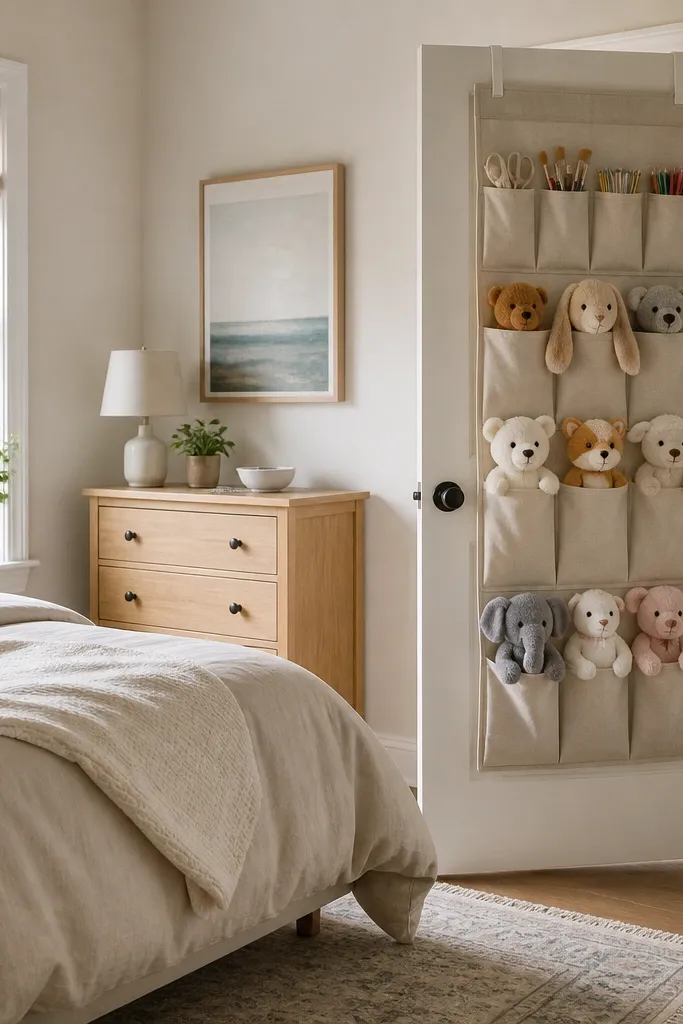
This works because it turns unused space into storage without adding furniture footprint. Stuffed animals are the easiest things to hide in these organizers, and kids can still “shop” their collection by grabbing from the pockets. Cozy comes from keeping the visible surfaces calm — bed, rug, and wall stay neat. I also like this for craft supplies because it stops crayons from wandering onto the floor. The principle is vertical storage that doesn’t fight your bed or desk layout.
Start by measuring the door width and buying an organizer that matches it exactly so the pockets don’t sag. Hang it so the bottom pocket sits about 8-10 inches above the floor for toddlers, higher if your kid is older and needs reach. Sort stuffed animals by size: small on top pockets, medium in the larger sections. Put craft supplies in the smaller pockets so they don’t spill out when kids grab one item. Add a washable bin inside the organizer’s lower section for paper so it doesn’t get wrinkled.
Use clear labels on the inside pockets. Kids learn the system in a week if the labels match what’s inside.
Skip fabric organizers with deep, floppy pockets — they look messy and sag in two months.
10. Twin Loft with a Play Tent Underneath
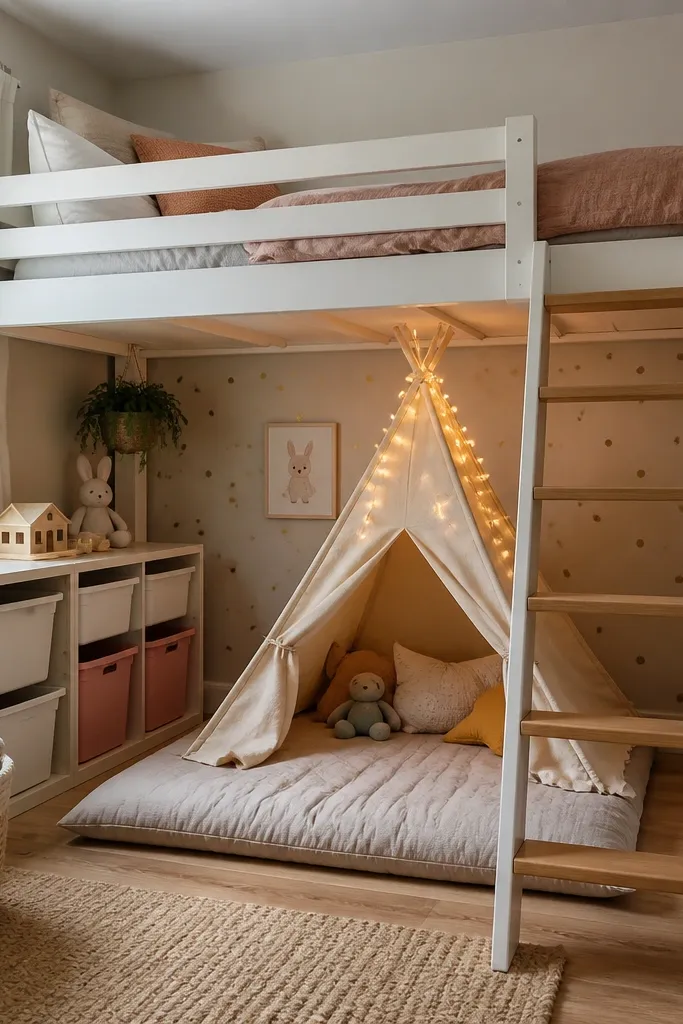
A loft bed creates a second “room” in the same footprint, which is why it feels cozy even when the bedroom is tiny. The play tent underneath makes the area feel like a secret space, and kids use it without you constantly cleaning up. I like cream canvas tents because they match neutral bedding and look warm under soft lighting. This is best for kids who love imaginative play and for families that want a clear separation between sleep and play. The principle is dividing zones: sleeping above, cozy play below, with storage lining the perimeter.
Start by placing the loft so the ladder is near the door side, not in the middle of the walkway. Add a thick foam mat or low-pile rug under the tent so it feels cushy under bare feet. Choose tent poles and stakes that fit your ceiling height; leave at least 6 inches clearance from the loft edges. Put a row of low bins along one wall for toys so they don’t spill into the tent space. Wrap the tent area with warm fairy lights or a small battery lamp, and keep the rest of the room lighting dim at night.
Use battery lights inside the tent instead of plugging cords across the floor. You get cozy glow without trip hazards.
Avoid loft bedding that’s too dark — it makes the under-tent area feel like a cave.
11. Cocoon Curtains Around a Floor Mattress in a Tiny Corner
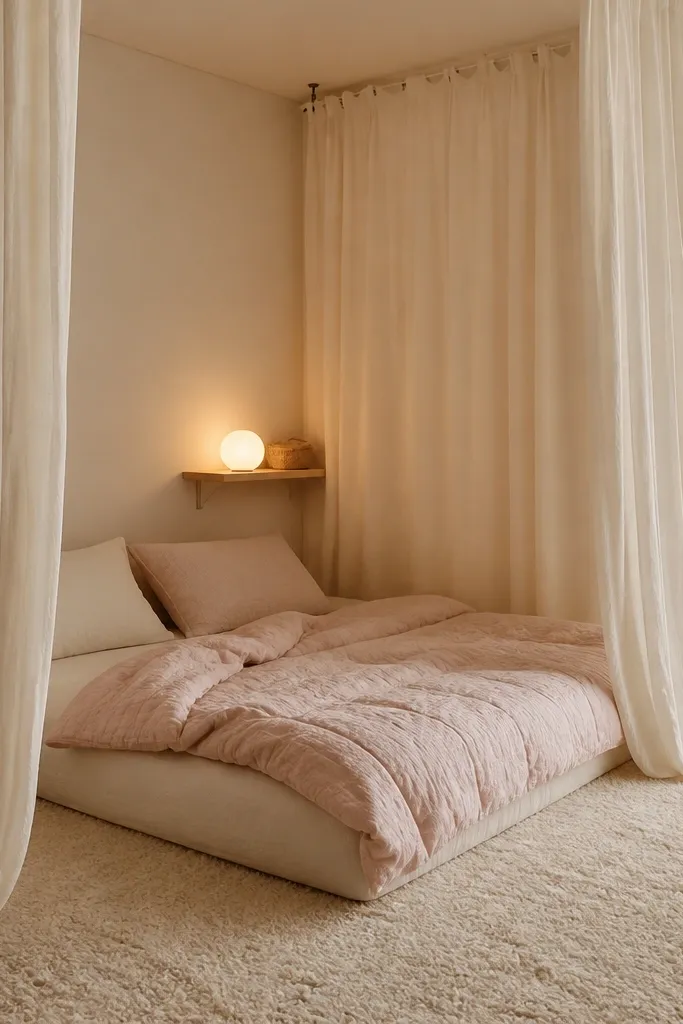
A floor mattress is the cozy move in a very small kids room because it keeps the bed from dominating the space. Curtains create a private pocket, and that sense of privacy makes bedtime feel less like “sleeping in a corner.” I use warm white curtains because they catch light and look soft, not stiff. This works well for kids who need comfort at night — they like the “hug” feeling. The styling principle is softness plus boundary: the curtain creates a frame, the bedding creates the warmth.
Start by placing the mattress with one side against the wall so you can hang curtains on two sides without blocking walking space. Use ceiling hooks or a small ceiling track so the curtains fall naturally and don’t drag on the floor. Keep bedding simple: one quilt with a small pattern or no pattern, and two pillows — one standard and one smaller decorative pillow. Add a thick rug that extends 12-18 inches beyond the mattress edges so the floor feels warm when kids get up. Put a wall shelf at kid height for a book and nightlight so the only “stuff” near the bed stays intentional.
Good to knowChoose curtains with a washable fabric. Kids will spill water on the corner eventually.
AvoidDon’t use curtains that touch the floor. They get dirty fast and look worn in a month.
12. One-Color Bedding Set with a Single Pattern Cushion
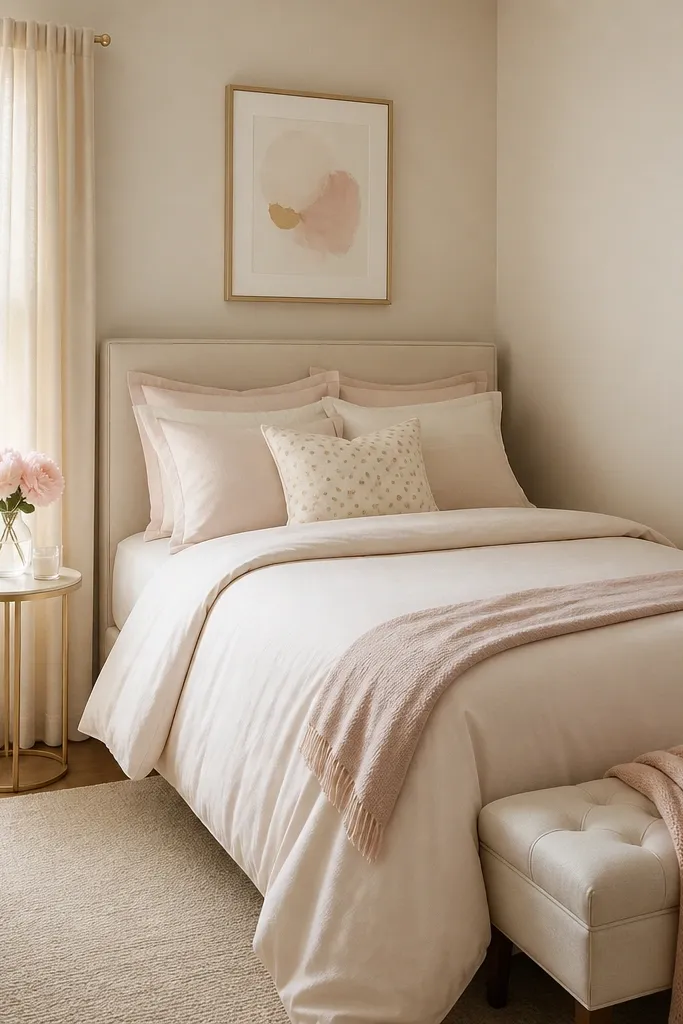
This is the quickest way I know to make a small kids room look cozy without clutter. When bedding is mostly one color, the room feels calm and the eye doesn’t bounce around all day. A single pattern cushion adds personality without the visual noise of multiple prints. I like blush or warm terracotta with cream because it looks good under warm light and doesn’t make skin tones look washed out. The principle is repetition: repeat the same color family in bedding, rug, and one accessory so the room reads cohesive.
Start by picking one main bedding color and sticking to it for duvet and sheet — cream base with blush if you want extra warmth. Add one pattern cushion sized about 16x16 inches, and keep it the only patterned item on the bed. Choose a rug that matches the bedding base, not the cushion color, so the room feels grounded. Add one closed storage bench or bin nearby with a matching neutral fabric. Finish by keeping wall art limited: two frames max above the bed so the wall doesn’t crowd the bed line.
Match your pillowcase color to your fitted sheet. It sounds boring, but it makes the whole set look more expensive.
Avoid mixing three different patterns on a tiny bed — it looks busy no matter how cute the prints are.
13. Storage Bench at the Foot of the Bed with a Removable Lid
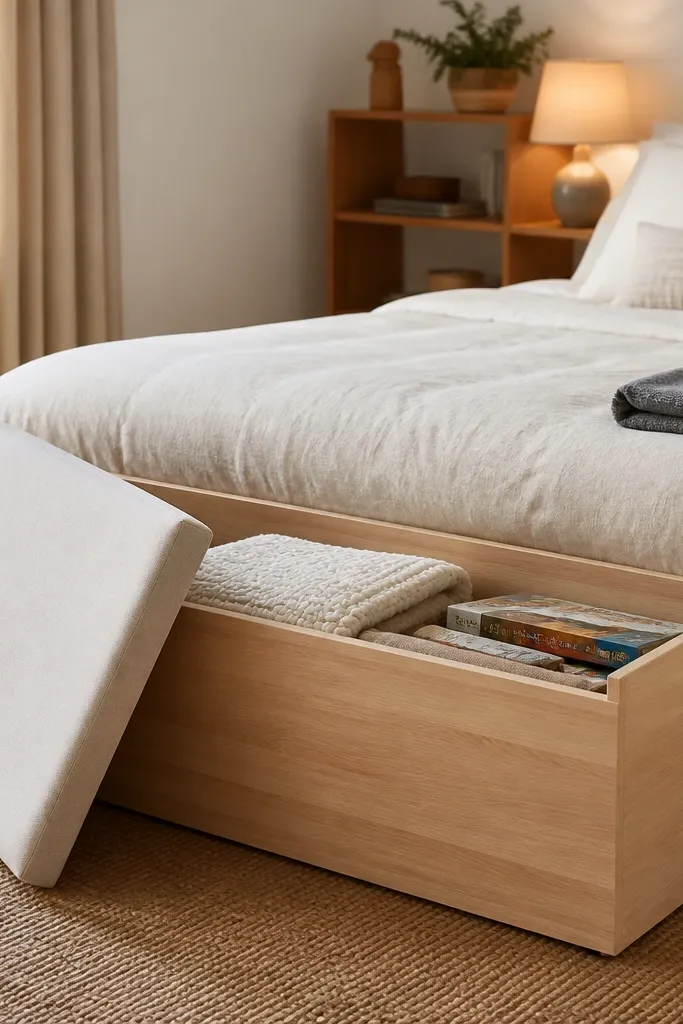
A storage bench is cozy because it gives you “seated comfort” and hides the daily mess in one place. In tiny rooms, kids toss things on the bed or floor, so having a catch-all you can close makes a huge difference in how calm the bedroom looks. I like benches with fabric lids because they soften the look and feel kid-friendly. This also works for kids who like to change blankets often — they can grab what they want without dumping bins everywhere. The principle is a one-door rule: one item you can close quickly when the room needs to look good.
Start by measuring the width of the bed and buying a bench that’s about 2-4 inches shorter so it doesn’t block the bed sides. Place the bench centered at the foot so kids can sit down to put on socks. Use a removable lid insert or a simple divider so blankets stay folded and games don’t get squished. Style the bench top with one folded throw and keep the rest empty. If the room has a rug, put the bench legs on the rug so it looks like part of the cozy zone, not floating.
Good to knowAdd two fabric handles to the inside so kids can open it without wrestling the lid.
AvoidAvoid benches with thin, scratchy fabric. They snag and look worn quickly.
14. Reading Nook Shelf + Bean Bag in a Narrow 2-Foot Strip
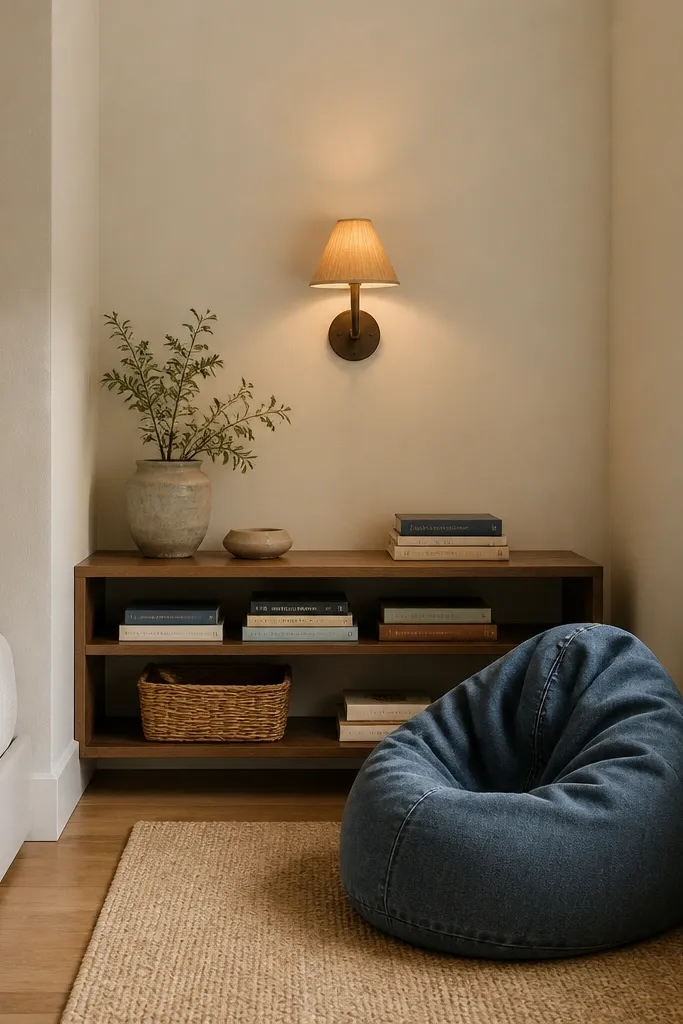
A narrow strip is where cozy hides in very small rooms. When you dedicate one 2-foot area to reading, the rest of the room can stay more open without feeling empty. The bean bag makes the nook feel casual and soft, which is exactly what kids interpret as cozy. Muted denim looks great with cream bedding and doesn’t clash with most toy colors. The principle is micro-space planning: you’re not trying to furnish the whole room, you’re creating one lovable spot.
Start by measuring the strip width — if it’s 22-26 inches, keep furniture under 18 inches wide so kids can walk past comfortably. Mount a low shelf at about 24-30 inches from the floor and keep the books visible but not overflowing. Add a small square rug 3x3 or 3x4 under the bean bag so the nook feels defined. Place the bean bag so it doesn’t block the door swing. Finally, use one small basket under the shelf for bookmarks or small toys so the shelf stays neat even on busy days.
Good to knowChoose a bean bag cover that zips off. Wash it once and you’ll stop worrying about spills.
AvoidSkip shelves that are too high. Kids can’t reach them, so the nook turns into storage instead of reading.
15. Warm White + Blush Accent Wall with a Low Gallery Rail
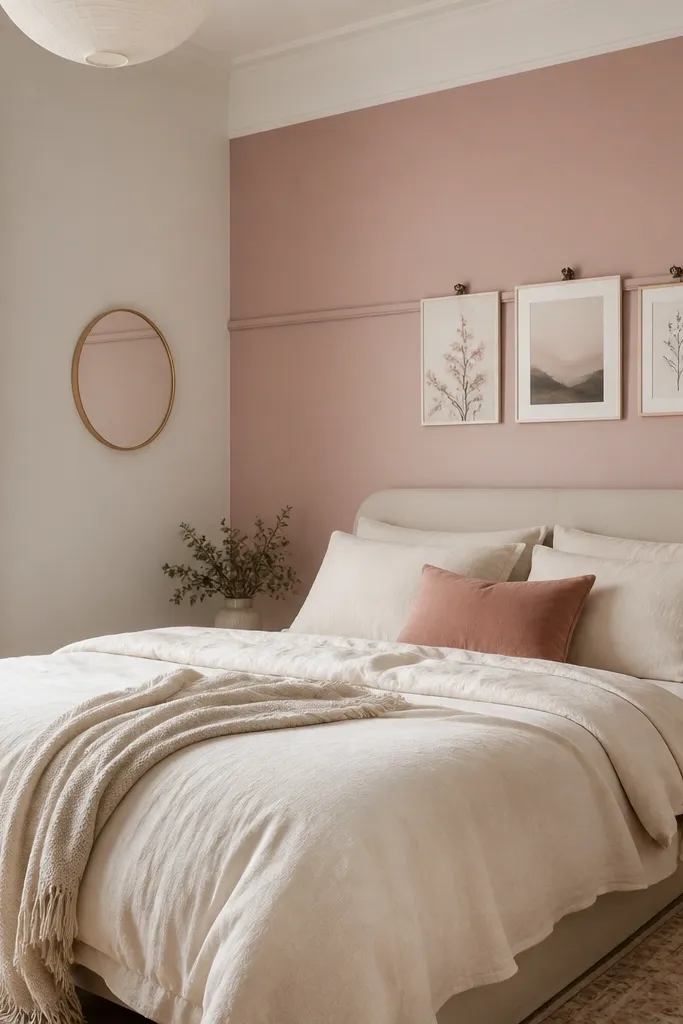
Color does the heavy lifting here, and it’s the reason this looks cozy in tiny rooms. Warm white walls reflect light without going stark, while a blush accent panel adds warmth that still feels kid-friendly. The low gallery rail keeps art at kid eye level, so the room feels personal rather than like an adult decorated it. A small round mirror helps bounce warm light around the room, making the space feel less cramped. The principle is one accent surface, not a whole rainbow of patterns.
Start by painting the main walls warm off-white and choose one accent rectangle behind the bed in blush. Make the accent panel about the width of the bed plus 8-12 inches on each side so it frames the sleeping area. Install a low gallery rail at about 40-44 inches from the floor for frames that kids can “see” and talk about. Keep the bed bedding cream and add one blush throw pillow plus a simple blush-toned blanket. Place a round mirror in the opposite corner from the light source so it catches lamp glow, not overhead glare.
Use matte paint on the accent wall. Satin or gloss can look shiny and less cozy in small bedrooms.
Avoid bold stripes on all walls — the pattern crowds the room and makes it feel smaller.