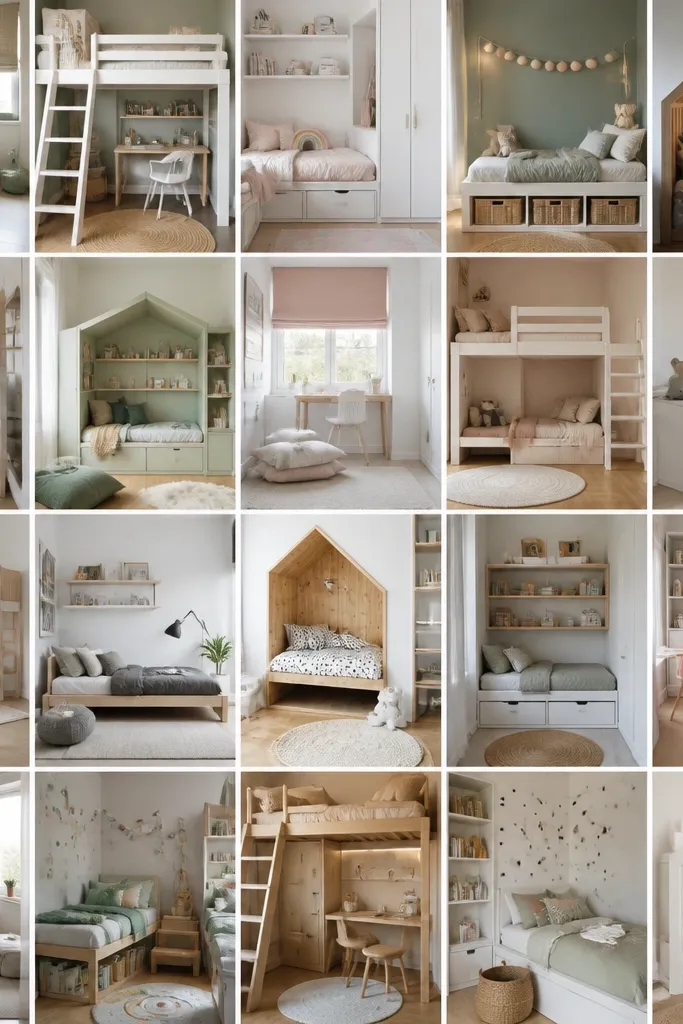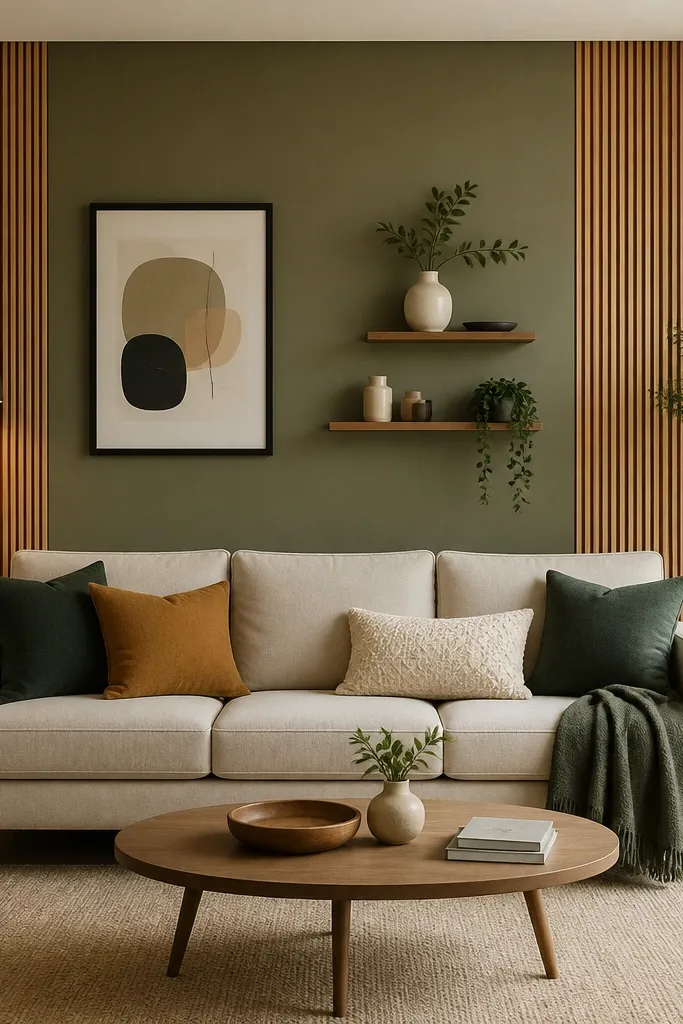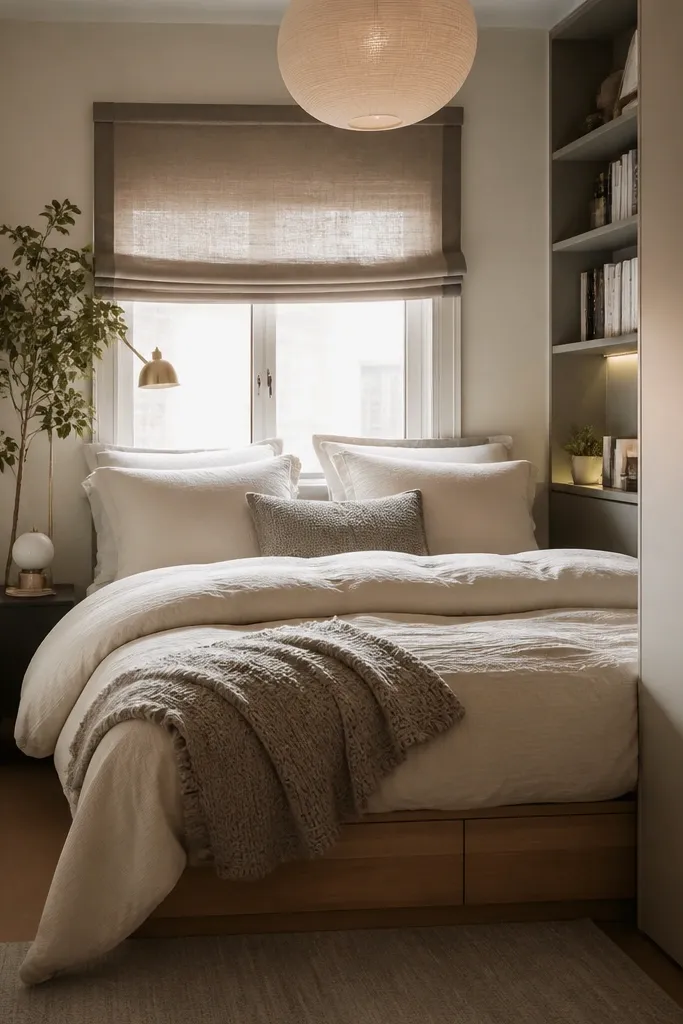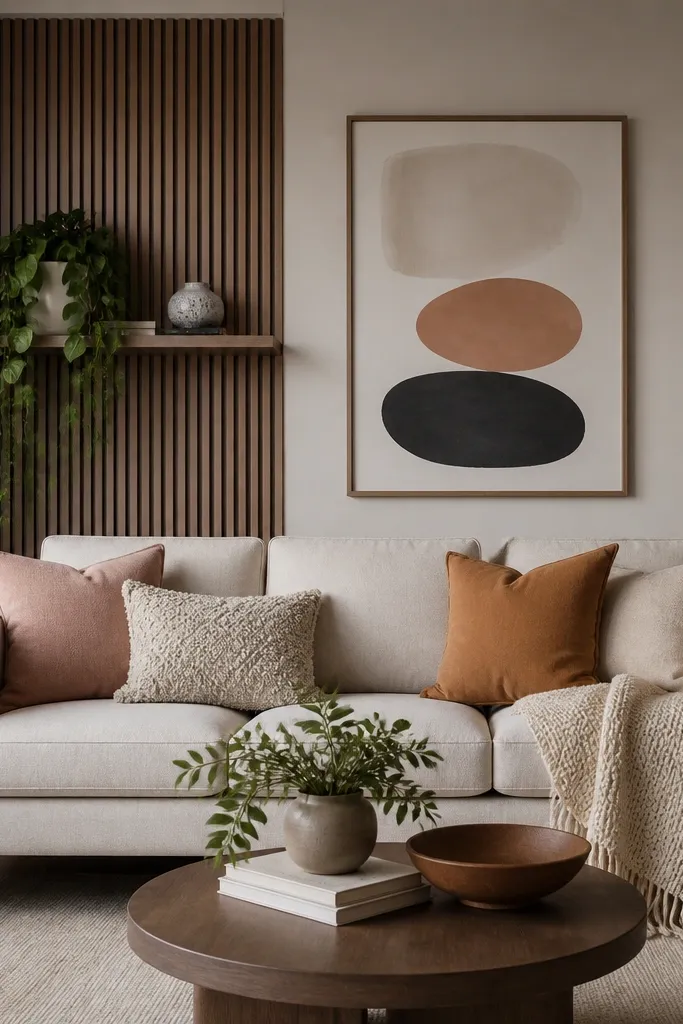
1. 20cm-deep headboard shelving wall
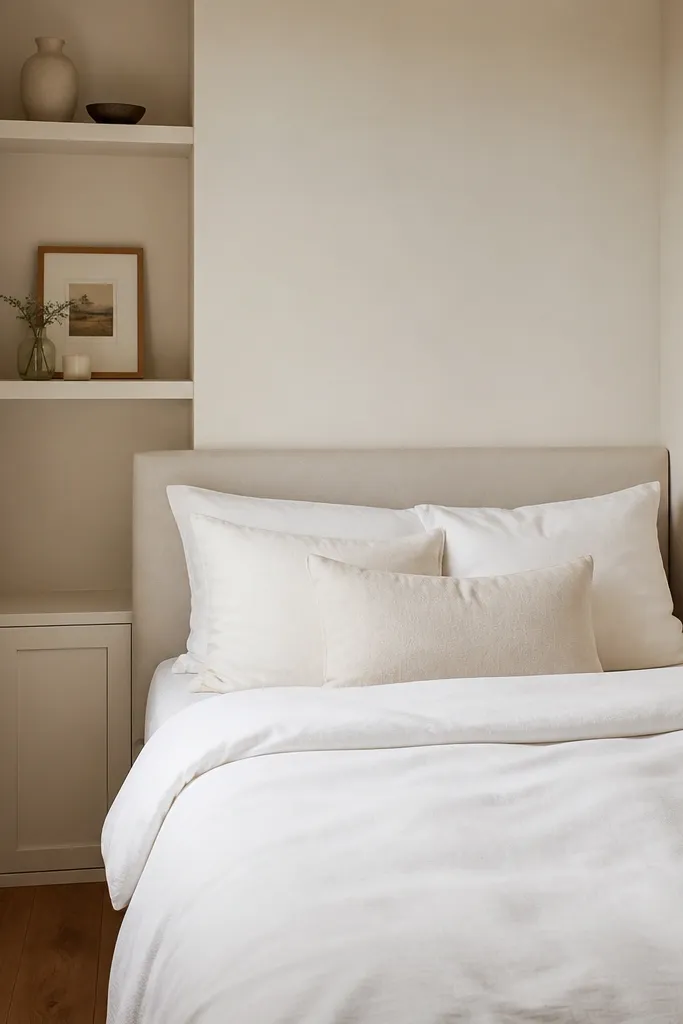
This is the storage-first look that makes a tiny double bedroom feel calmer. The shelves sit at head height so your eye reads “designed wall” instead of “room full of stuff,” and the shallow 20cm depth keeps you from losing floor space. I like it most in warm white or greige rooms because it doesn’t cast a heavy shadow — the shelves feel like part of the architecture. It also flatters people who need bedside storage but hate clutter; you get surfaces for a lamp and book without turning the bed into a dumping zone. Keep the bedding in a light tone so the wall doesn’t compete.
Good to knowUse LED strip lights inside the shelf base, not overhead lighting, so the wall glows softly at night.
Start by marking where the bed headboard edge lands, then measure the wall area above it so shelves don’t stick out past the bed width. Choose shelving units or build a frame with a 20cm depth and paint the inside back panel the same colour as the wall. Place the top shelf at about 1.25m high so you can reach books without crouching. Finally, style with one lamp, one book stack, and one framed print; leave the rest empty so it stays airy.
AvoidAvoid deep shelves or lots of knick-knacks on every surface — that’s what makes it feel cramped.
2. Ceiling-height curtains on an overhanging track
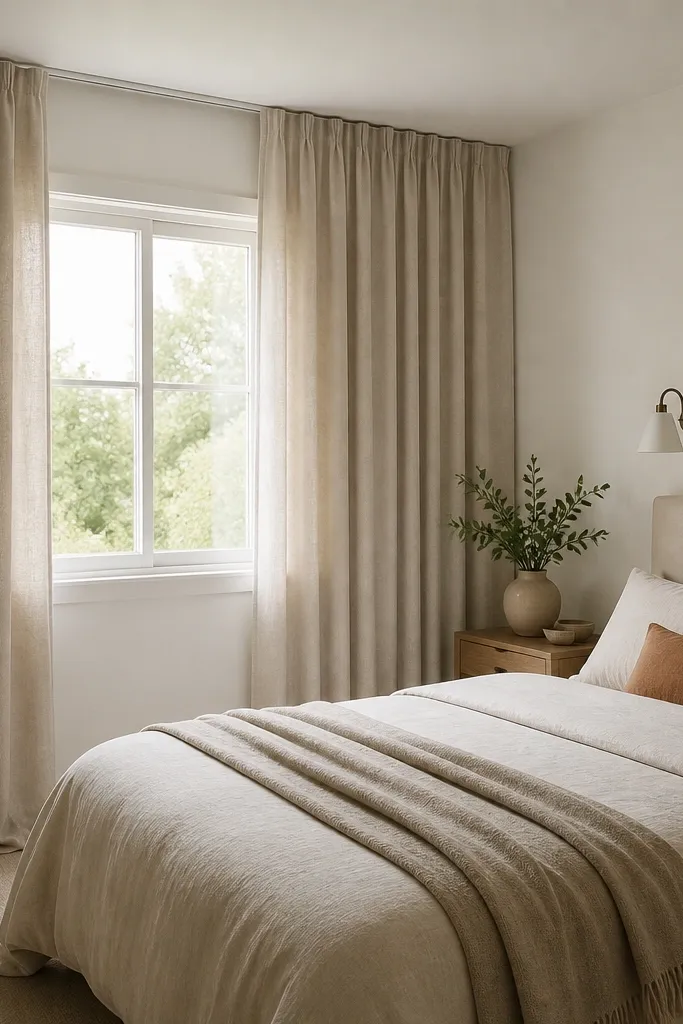
Ceiling-height curtains are my go-to budget trick for making a small double look taller. When the track sits near the ceiling and the curtain width covers more than the window, the room stops looking like it has a small opening and starts looking like it has a full-height wall. Oatmeal, cream, and light greige work best because they blend with the walls and don’t chop the space. This style flatters anyone who has a narrow window or a low ceiling, because it creates vertical lines without needing a tall headboard. It also looks good with both light and medium skin tones because the fabric reads warm and gentle.
Good to knowIf you’re on a budget, buy two panels per side and gather them at the track; it looks fuller and more expensive than thin single panels.
Start by measuring from the ceiling down to the floor and add 2-5cm for a light puddle. Mount the track 5-10cm above the window frame and extend it 15-25cm beyond each side of the window so the fabric can close without gaps. Choose a curtain fabric with some weight — a cotton-linen blend or thick voile — so it hangs straight. Then install tiebacks only if you need them; otherwise keep the curtain full-length for the tall look.
AvoidSkip short curtains that end at the sill or just above it — that instantly makes the room feel smaller.
3. Low platform bed with skirted duvet zone
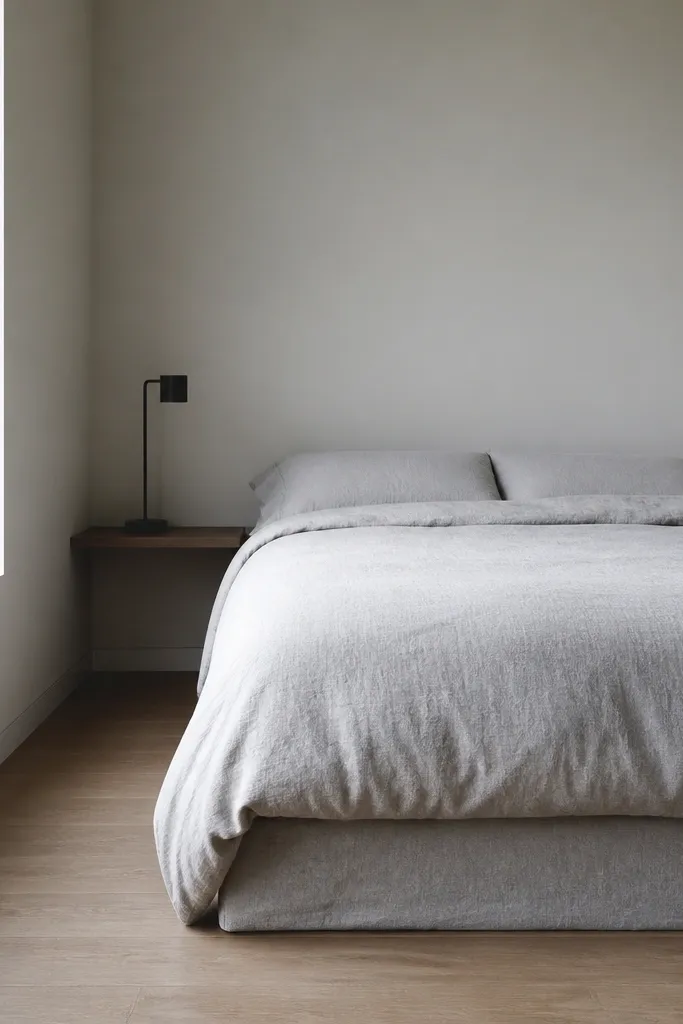
Low platform beds change the whole visual height in a small double. When the bed sits closer to the floor, the room doesn’t feel “filled” from bottom to top, and you get more open air around the walls. A tonal duvet and a light dust-skirt trick the eye into reading one calm block rather than separate pieces. I like this for people who feel visually overwhelmed by clutter; it makes the bed zone look tidy even when you’re not perfectly organized. It also looks great if you have a light or warm-toned skin complexion because the grey reads soft, not icy, in daylight.
Good to knowAdd a washable under-bed storage box in a matching grey so you can close everything away without adding visual weight.
Start by choosing a platform bed with minimal legs or a frame that keeps the mattress low. Use a duvet cover in one light grey family and add a thin bed skirt or dust cover that matches the duvet — same shade, slightly different texture is fine. Place two pillows only: one standard and one slightly smaller decorative in the same tone. Finally, keep the bedside surface slim and clear so the bed reads clean from the doorway.
AvoidAvoid tall, bulky bed frames with thick posts — they eat vertical space in tiny rooms.
4. Mirror placed to reflect the window corner
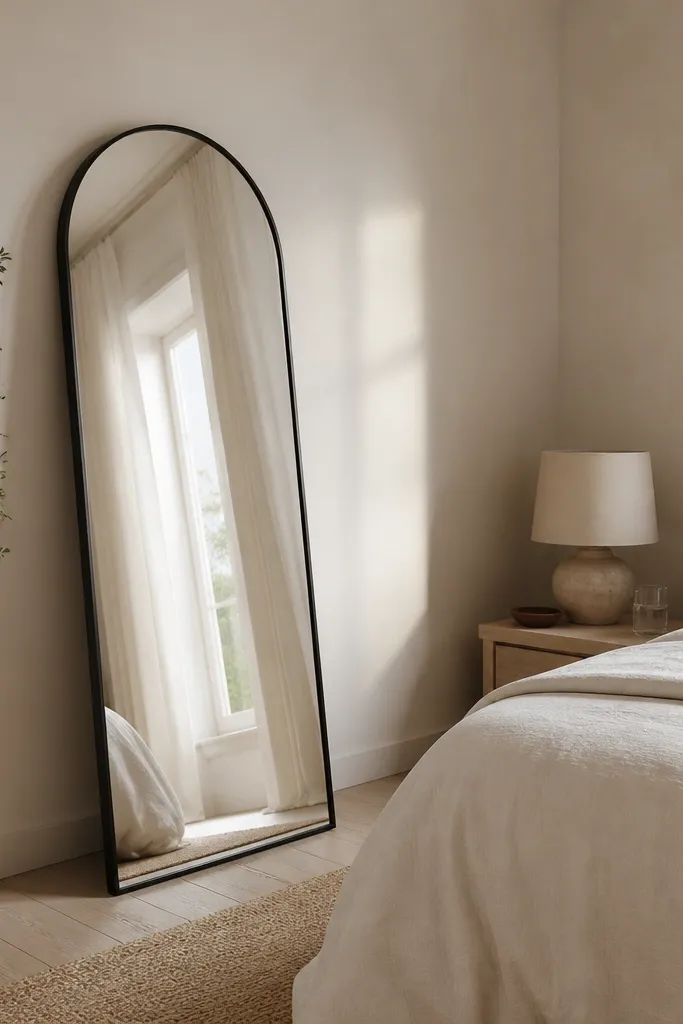
A mirror that reflects the window corner makes a small double feel brighter within minutes. The point isn’t “more light” in a vague way — it’s that the mirror doubles the visible window area, so your brain reads the room as larger. I prefer a thin black or brushed metal frame because chunky frames look heavy in small spaces. This works especially well for rooms with one main light source, because you get softer light spread instead of harsh brightness. It also looks flattering in photos, because the mirror gives a clean vertical line that doesn’t fight the bed.
Good to knowCover the mirror edges with a microfiber cloth while styling so you wipe fingerprints before guests see it.
Start by standing at the door and finding where the window is visible from your main viewpoint. Place the mirror so it reflects that window area, not the messy corner of the room. Use painter’s tape to outline the spot on the floor and wall, then move the mirror until the reflection is bright and straight. If you have uneven floors, use felt pads under the base so it doesn’t wobble, and keep the mirror height at least 150cm for a full reflection.
AvoidDon’t place the mirror facing a clutter pile or laundry basket — the reflected mess is what kills the effect.
5. Floating bedside shelf with plug-in lamp
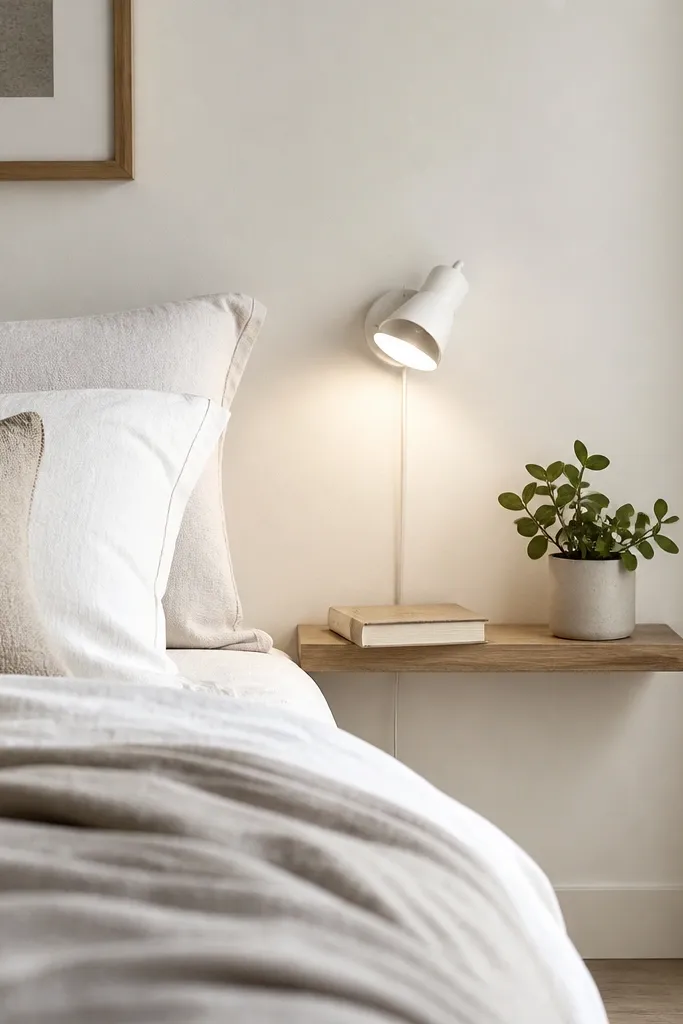
Floating bedside shelves are the budget solution when you don’t have space for a bedside table. You get a surface for a lamp and water glass without blocking the walk path beside the bed. Pair it with a plug-in lamp or a slim reading light so you don’t need extra wiring. This works for people who like a clean look and hate visual clutter. It also flatters darker bedding setups because the light wall behind the shelf keeps the area from feeling heavy.
Good to knowUse a plug-in lamp with a dimmer so bedtime light is soft even in a tiny room.
Start by choosing a shelf that’s about 25-30cm deep and 60-80cm wide, so it holds a lamp and one book without feeling wide. Install it 65-75cm above the floor, roughly aligned with the top of your mattress. Place the lamp near the outer edge so your hand can reach it without knocking items. Finally, keep only three objects on the shelf: lamp, book, and one small plant or candle holder.
AvoidSkip a shelf that’s too deep — it looks bulky and steals space from the wall.
6. One-color bedding with texture swap
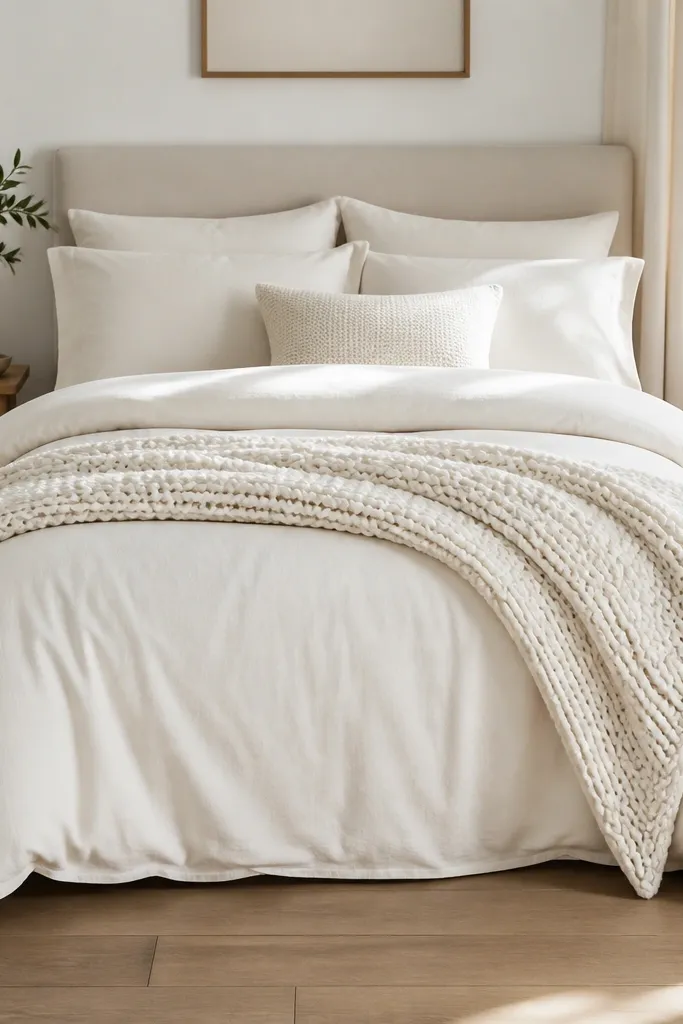
If you want the “tidy hotel room” look on a budget, run one bedding colour and change texture instead of adding patterns. In very small bedrooms, busy prints fight for attention and make the bed look bigger. I’ve had the best results with warm whites, oatmeal, and light greige because they read clean and don’t show wrinkles as harshly as stark white. This suits almost everyone, but it’s especially flattering if you have warm skin tones or you wear earthy colours; the whole room looks cohesive. The texture swap keeps it from looking flat.
Good to knowSteam the duvet cover and pillows once a week; in small rooms, wrinkles show faster because everything is close.
Start by picking one base duvet colour — oatmeal, warm white, or pale greige. Then choose a throw in the same colour family but a different material, like chunky knit or faux shearling. Add two pillow covers and one accent pillow with a simple texture, like waffle or linen slub. Keep the bed skirt minimal or skip it if your bed is low; you want clean lines from the doorway.
AvoidAvoid mixing three different patterns (stripes, florals, and checks) — it makes the room feel visually loud.
7. Shiplap-style peel-and-stick behind the bed
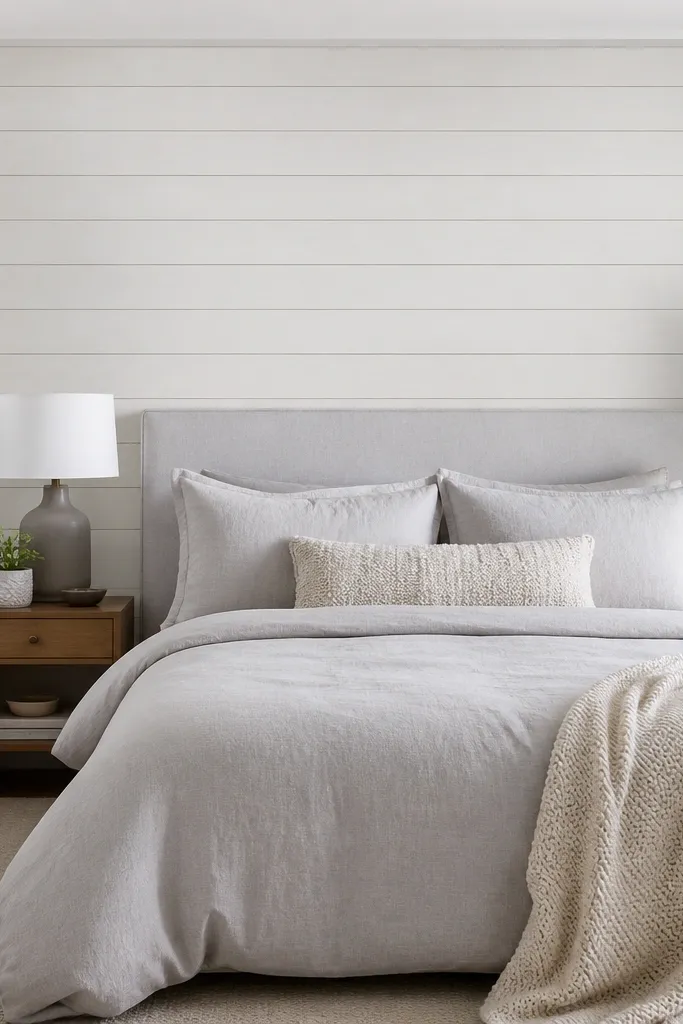
A peel-and-stick feature wall behind the bed gives you the “designed” look without the mess of painting. Horizontal wood-look panels add a soft texture and pull focus to the bed zone, which is where your eye lands first when you enter. I like light tones like pale oak or driftwood because they brighten the wall and don’t darken the room. This approach flatters people who want a warmer look but don’t want to commit to full wall paint. It also looks great in photos because the texture catches light gently.
Good to knowChoose matte panels, not glossy — glossy wood-look shows every uneven patch in tiny rooms.
Start by cleaning the wall so the adhesive sticks properly — wipe with a damp cloth and let it dry fully. Measure the bed width and centre the paneling so the feature wall matches your bed proportions. Apply the panels in straight lines, using a level for the first row, then work outward. Finish by trimming edges with a craft knife and seal the top border with a thin line of clear caulk if your wall has gaps.
AvoidDon’t cover the entire room with panels — one section behind the bed is enough.
8. Tall wardrobe with mirrored doors and slim handles
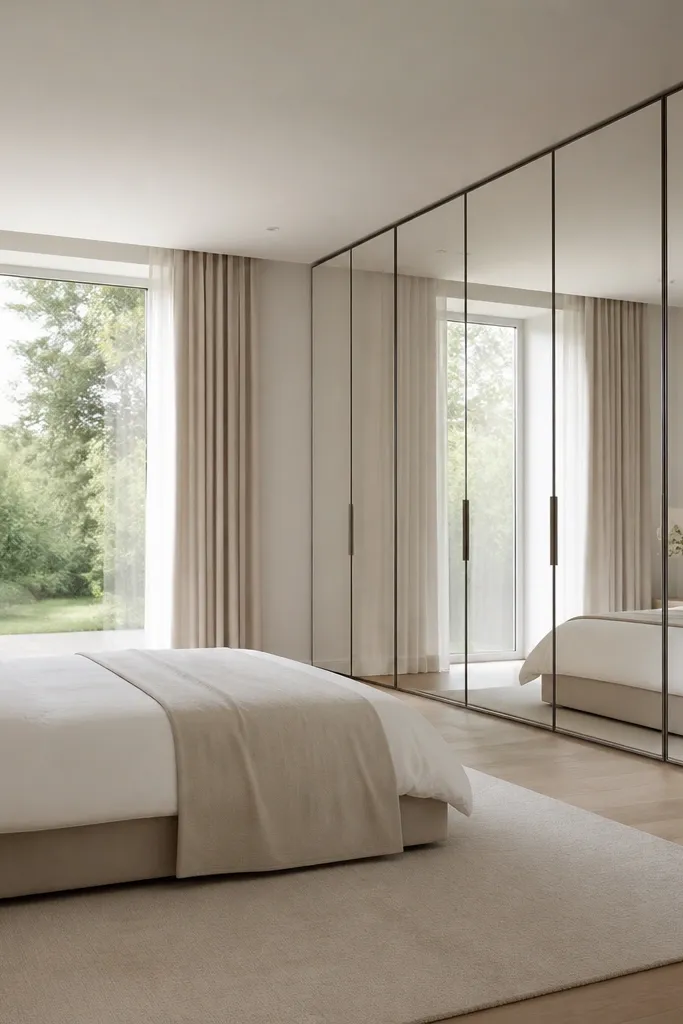
A tall wardrobe makes a small double work because it uses height instead of floor space. Mirrored doors add light and make the wall feel longer, which helps when your room has a cramped layout. I like thin frames and slim handles because they look lighter than thick plastic borders. This is ideal for people who need lots of hanging space and don’t want a dresser taking up the floor. The mirrored surface also flatters the “morning getting ready” routine since you can check outfits without extra mirrors.
Good to knowAdd a cheap LED strip inside the wardrobe to make it feel brighter and easier to use at night.
Start by measuring the wall length and leaving at least 2-3cm clearance for the door swing. Choose mirrored doors with vertical lines, then install the wardrobe as close to the wall as you can. Use inside organizers: one hanging rail for everyday clothes, one for suits or dresses, and two shelves for folded items. Keep the outside area empty — no baskets on the floor — so the mirror effect stays clean.
AvoidAvoid mirrored doors that are too dark or too reflective — they can look harsh and show dust.
9. Rug that runs under the bed and stops before the door
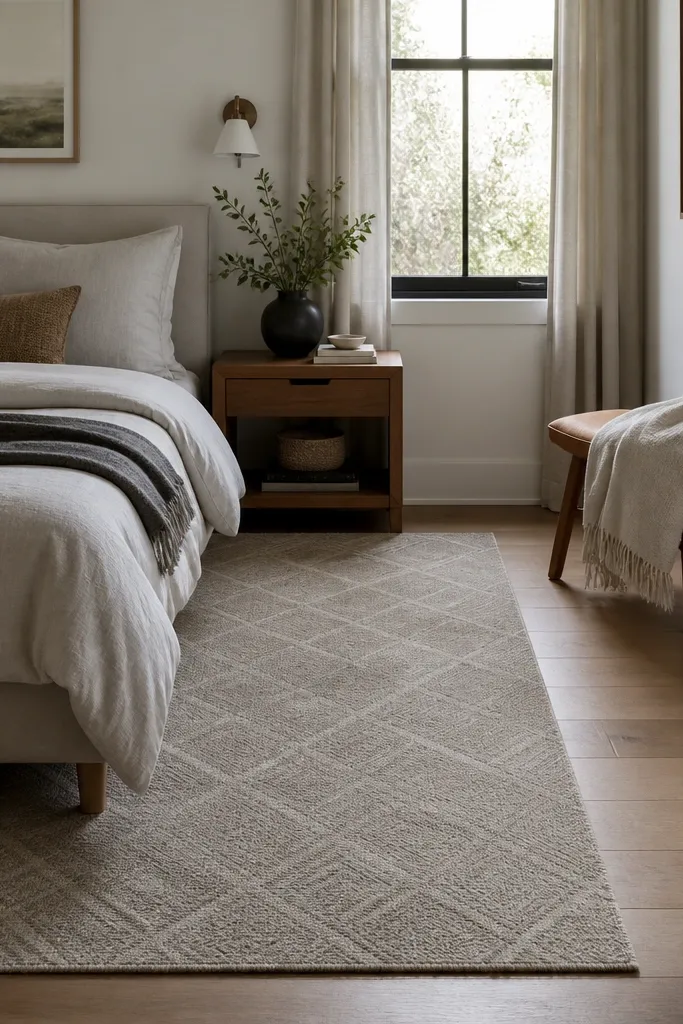
A small double needs rug placement that creates a “zone,” not a random patch of fabric. When the rug runs under the front of the bed and stops before the door, you get a defined sleeping area without trapping the doorway. Light greige works because it blends with most bedding tones and doesn’t show dust as quickly as bright white. This flatters people with busy floors or patterned laminate because the rug quiets the visual noise. It also makes the room feel more finished, like the bed has a proper base.
Good to knowUse non-slip rug pads; they keep the rug flat and prevent the “bunching” that makes small rooms look chaotic.
Start by moving the bed and measuring the footprint you want under the front edge and side. Choose a rug with a low pile so it doesn’t catch on bed legs or door thresholds. Place the rug so the front half of the bed sits on it, while the doorway still has clear traction. Finally, align the rug so one edge runs parallel to the bed frame — crooked rugs look messy in tiny rooms.
AvoidSkip very dark rugs — they shrink the floor visually in a small double.
10. Slim dresser with top tray and one drawer for clutter
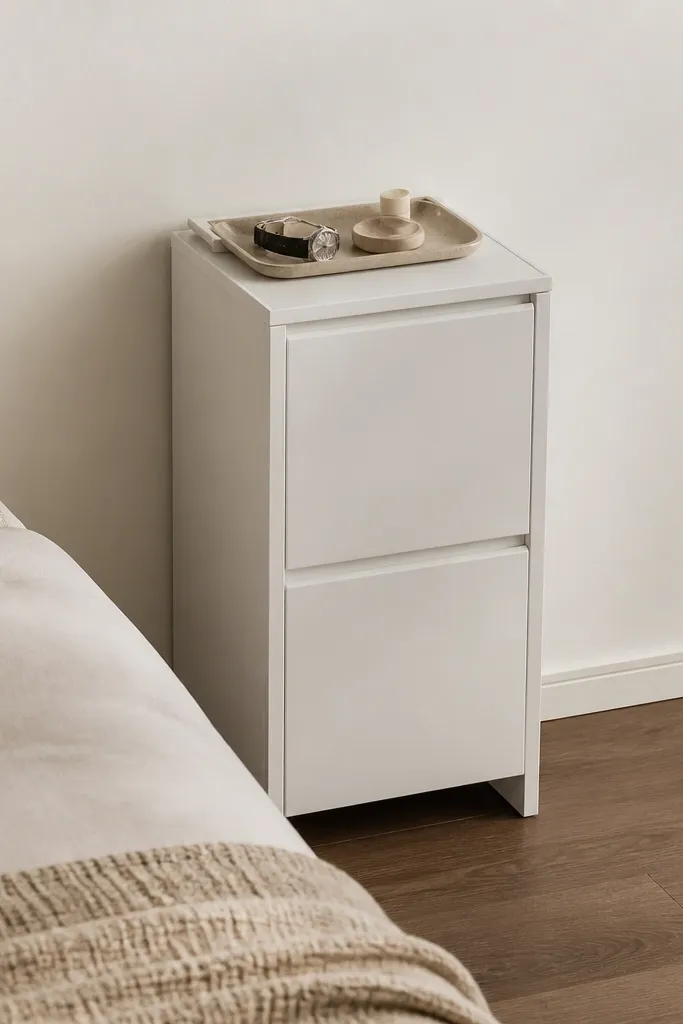
A slim dresser solves the “where do I put stuff” problem without eating the room. The key is depth — under 40cm — so you don’t feel like you’re walking past a block. A top tray keeps daily clutter contained and visually calm, which matters in small doubles where surfaces are close to the bed. I like matte finishes in white or soft greige because they don’t reflect light harshly. This layout flatters anyone who has lots of small items and needs a place for them that doesn’t turn into piles.
Start by measuring the wall length and the gap between the bed and where the dresser sits; aim for at least 55-60cm walkway. Choose a dresser with 30-40cm depth and two drawers so you can separate clean clothes from small daily items. Add a removable tray on top that’s about 25-30cm wide so it fits inside the visual line of the dresser. Finally, use one drawer only for “clutter” — make it easy to close, not easy to leave open.
Label the inside of the clutter drawer with a small piece of masking tape so you remember where things go.
Avoid stacking bags and baskets on top — that turns a slim dresser into a bulky sightline.
11. Corner desk instead of bedside storage
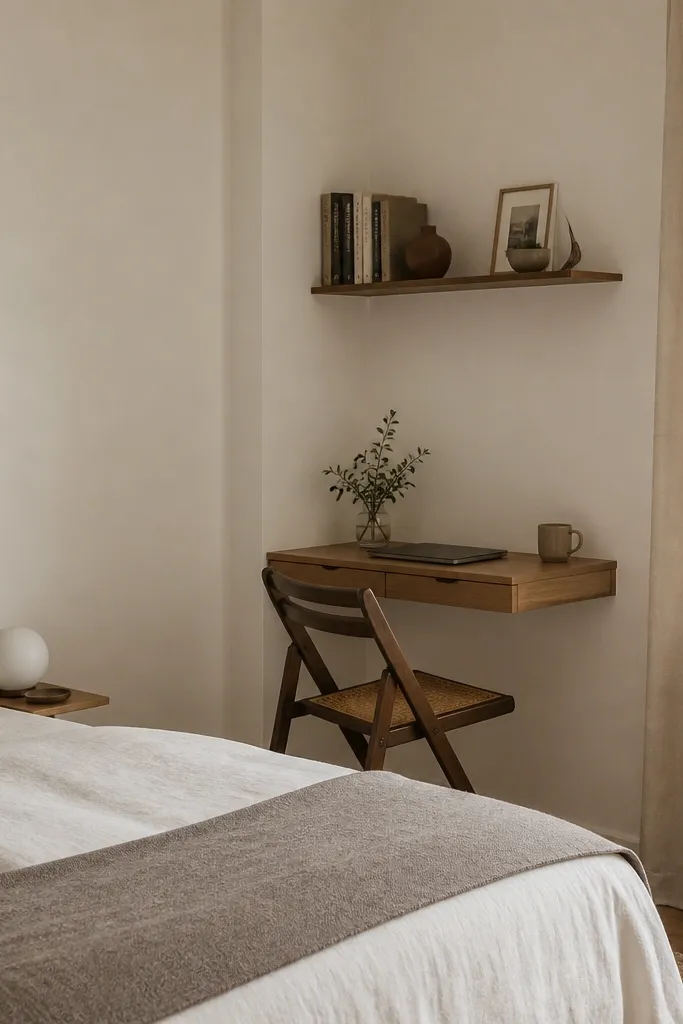
A corner desk works when your small double is also your work spot. The trick is using the corner, not the wall beside the bed, because corners are where the room already feels wasted. A wall-mounted desk keeps the floor open, and a small shelf above it adds vertical storage without a heavy unit. This is ideal if you need a laptop station but don’t want to bring in a full office setup. It also flatters people who like clean, minimal styling because the desk can be kept almost empty during the day.
Good to knowUse a clip-on monitor stand if you have a laptop so the screen doesn’t force you to sit too low.
Start by choosing a desk depth of 40-50cm, measured to fit your laptop and a notebook. Mount it so the desktop is about 72-75cm high for a typical chair height, then test with your chair before drilling. Keep cables tidy with a small cable clip under the desk. Place a single small lamp and a tray for pens; leave the rest of the desk surface clear to keep the room feeling bigger.
AvoidSkip a desk that sits in the walkway beside the bed — it makes the room feel narrow every time you move.
12. Black metal bed frame with warm white bedding
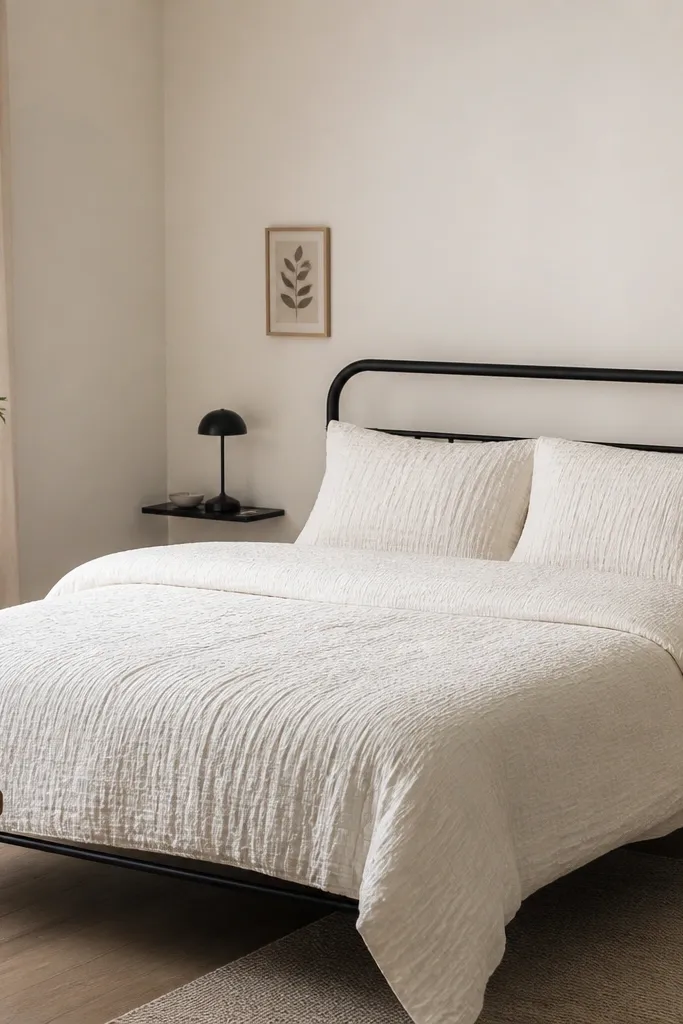
A black metal bed frame gives you crisp lines without the bulk of a thick wooden frame. In a small double, the visual “thickness” matters — metal looks lighter, and the open spaces in the frame help the room breathe. Pair it with warm white bedding so the look stays soft and not harsh. This is great if you want a modern style but your room is too small for heavy furniture. It also flatters a wide range of wall colours because black anchors the design while warm white keeps it friendly.
Good to knowSwap to a warm bulb (2700K) in your bedside light so black metal doesn’t look cold at night.
Start by choosing a bed frame with slim bars and a low profile. Keep bedding warm white and add one texture element like a waffle throw or a linen-look duvet cover. Use a single artwork above the bed in an off-white mat so it doesn’t overpower the wall. Style with one lamp and one tray only — no extra decor on the bedside area.
AvoidAvoid shiny black frames and glossy finishes — they show dust and look harsh in tiny rooms.
13. Bedside swing shelf for reading without a table
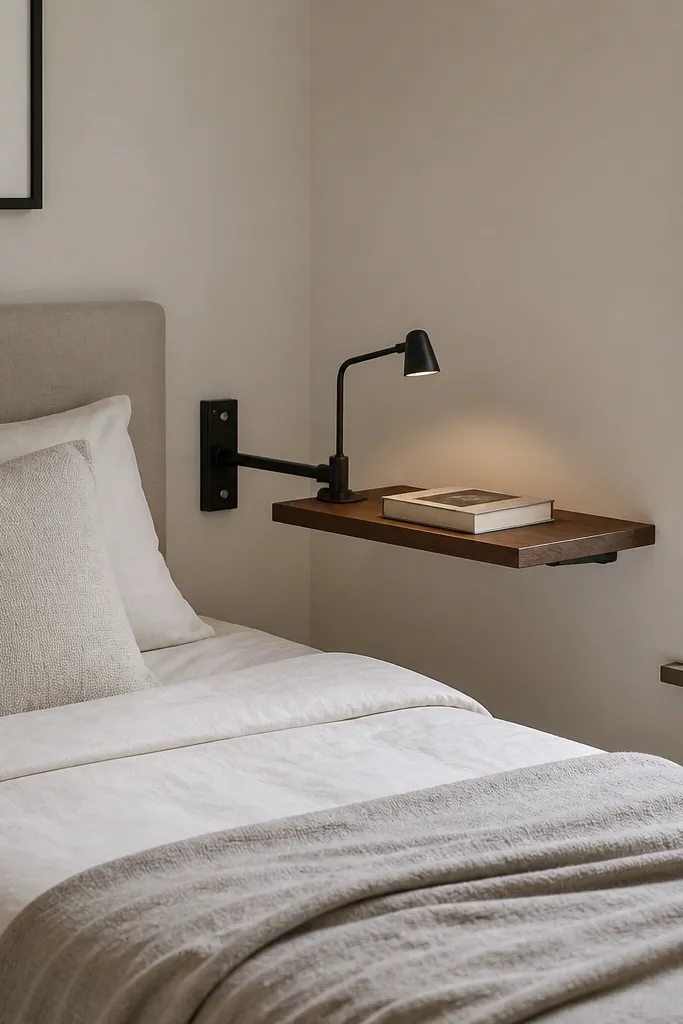
A swing shelf is a clever budget move when you want a bedside surface but you don’t want a fixed table. It tucks back against the wall, so your walk path stays clear and your room doesn’t feel blocked. It also gives you a dedicated reading spot, which helps keep the bed area tidy. I like this for people who live with books and water glasses near the bed but hate seeing them piled up. The look stays minimal and calm, especially if you match the shelf colour to the wall.
Good to knowPaint the shelf the same colour as the wall with a satin finish so it blends in and looks intentional.
Start by measuring the space beside your bed so the swing shelf clears the mattress when it’s extended. Choose a shelf with a small footprint, around 25-35cm wide, and mount it near the height of your pillow so it’s reachable. Add a reading light on the wall or a small lamp that doesn’t require a table base. Finally, place only one book and a coaster; everything else goes away to under-bed storage.
AvoidAvoid shelves that stick out too far when extended — they hit your elbows and ruin the practical benefit.
14. Under-bed rolling drawers in matching fabric bins
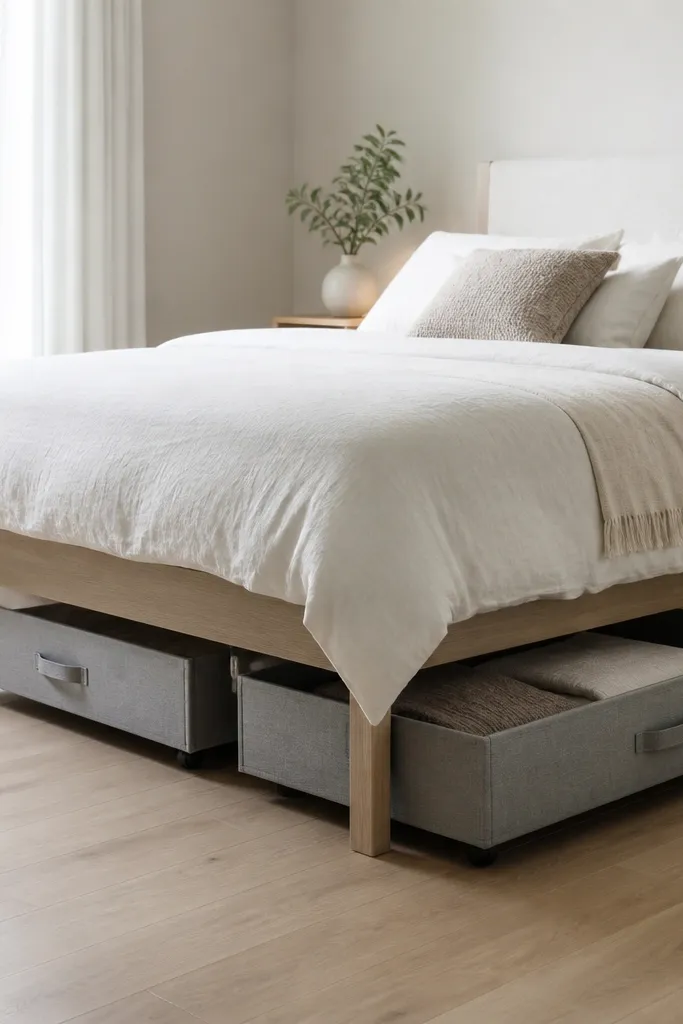
Under-bed storage is the budget win because it removes visual mess from the room’s lowest zone. In a very small double, you feel clutter more because everything is close to eye level. Rolling drawers or fabric bins make it easy to access clothes without lifting heavy boxes. I like matching fabric bins in grey or oatmeal because they look cohesive even if you can spot them through a slightly raised bed. This setup flatters anyone who folds clothes and needs a quick reset at night.
Good to knowLabel the drawer fronts with a small strip of masking tape so you don’t rummage for five minutes every morning.
Start by checking the height between your bed frame and the floor, then measure the maximum drawer height you can fit. Choose bins or drawers that roll smoothly and fit the exact length under your bed. Organize by category: everyday tops in one, folded jumpers in another, and linens in a third. Finally, keep the bed skirt or dust cover minimal so the drawer area stays hidden but accessible.
AvoidSkip random loose boxes under the bed — they slide around and look messy fast.
15. Two-tone paint: light top, slightly deeper bottom
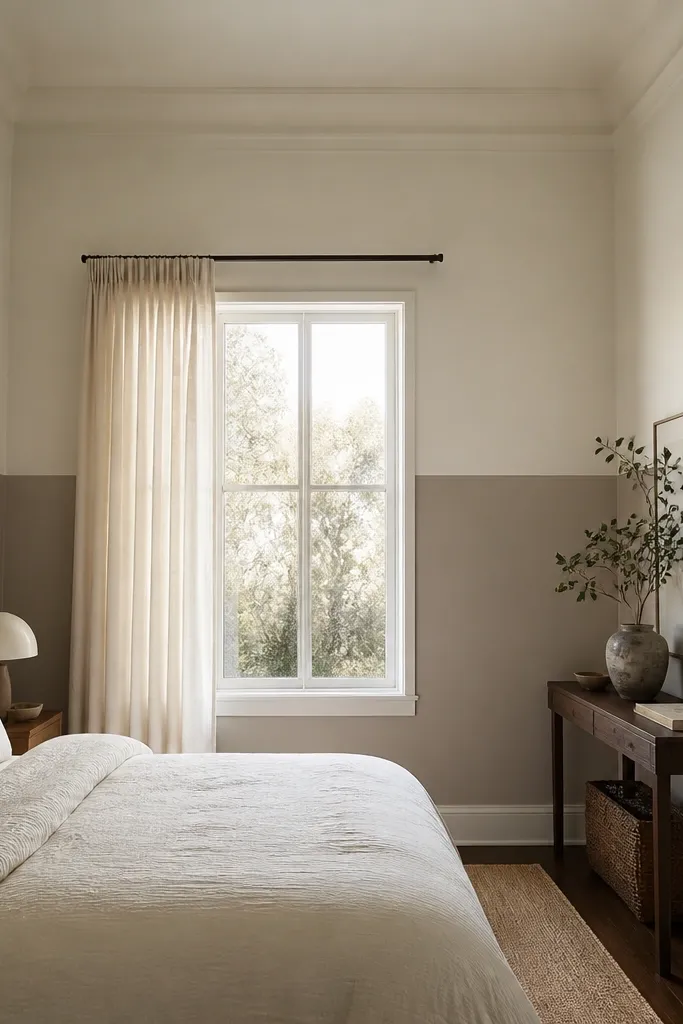
Two-tone paint makes walls feel taller when you place the darker tone lower. The darker bottom anchors the room, while the lighter top pulls the eye upward, which is exactly what you want in a small double. Use a muted greige or soft mushroom brown — nothing too dark or saturated. This flatters rooms with one window because the lighter top keeps the light feeling airy. It also looks good with both warm and cool bedding tones as long as the undertones match.
Start by choosing a light warm white and a deeper greige that is 2-3 shades darker, not a dramatic contrast. Tape a horizontal line at about 1.1m-1.2m from the floor and use a spirit level to keep it straight. Paint the top first, let it cure, then paint the bottom and remove tape carefully while paint is slightly tacky. Add a matte finish to both colours so the wall doesn’t show every scuff.
If you can’t paint, use painter’s tape and peel-and-stick vinyl wall panels for the bottom band.
Avoid a high-contrast line near the bed height — it chops the room visually.
16. Textured wallpaper strip behind the chair-height zone
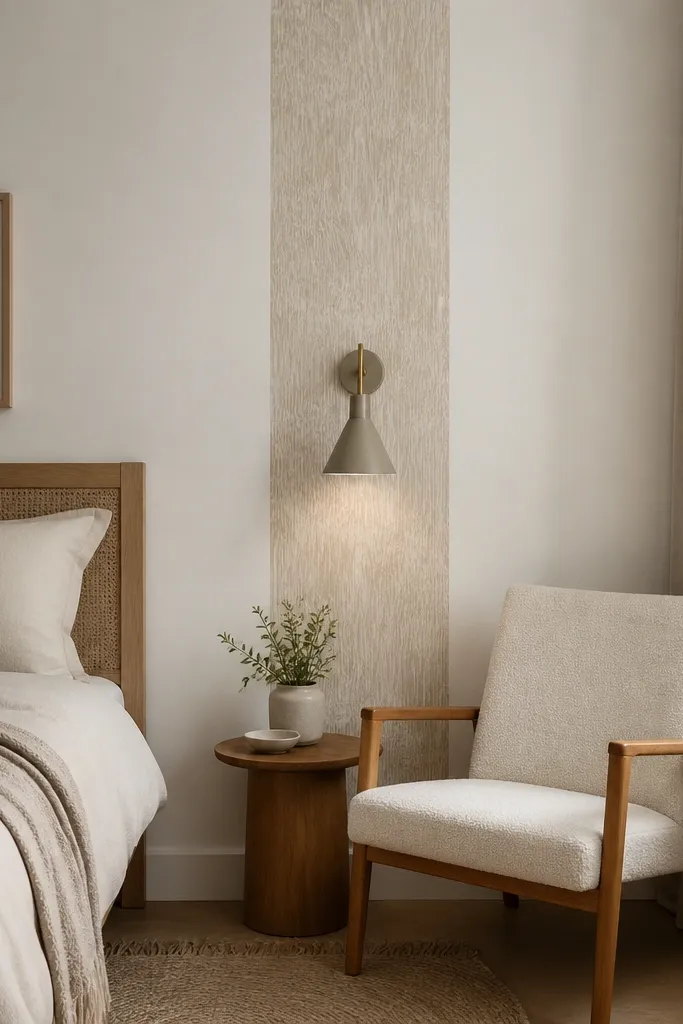
A single wallpaper strip gives you the “feature wall” feeling without covering the whole room. In a small double, one vertical section adds depth and draws the eye upward, especially if it’s placed near the bed or a reading nook. I like beige-cream textures like grasscloth look or raised linen patterns because they don’t look busy. This works for people who want personality but don’t want bold colours that make the room feel smaller. It also flatters photos because the texture catches light gently instead of reflecting it.
Good to knowUse a soft white ceiling paint around the top edge so the wallpaper doesn’t look cramped against the ceiling.
Start by picking a strip width around 50-70cm so it frames the bed or the space beside it. Measure the wall height from floor to near ceiling and cut the wallpaper strip with a small extra for trimming. Apply with paste if it’s non-paste wallpaper, or use the adhesive method if it’s peel-and-stick, pressing edges with a smoothing tool. Finally, keep everything else plain: one artwork and simple bedding so the texture is the star.
AvoidAvoid large busy patterns across the whole room — they make the walls feel closer.
17. DIY gallery ledge with picture ledges over the bed
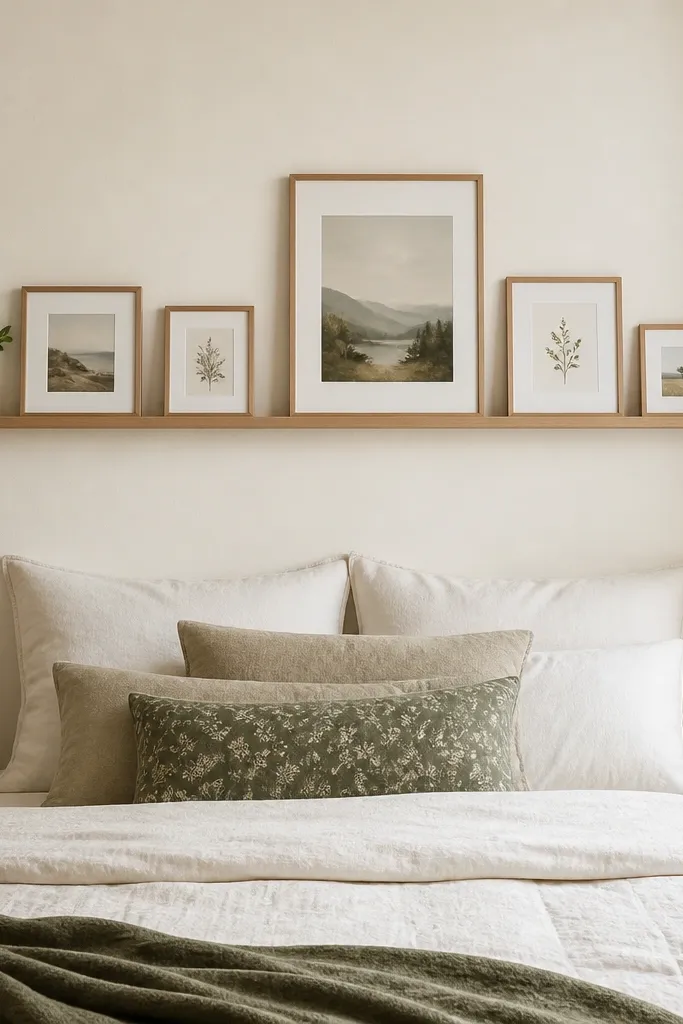
A simple gallery ledge above the bed adds personality without taking up floor space. It’s also a smart budget move because you can use affordable frames and thrift prints, and it still looks intentional if you follow a consistent layout. I like this when the bed wall needs something but you can’t hang heavier shelves beside the bed. The light wood and white mats keep the look soft and bright, which matters in very small doubles. It flatters anyone who wants a styled bedroom but needs to keep surfaces clear below.
Good to knowUse picture ledges with a lip so frames can’t slide forward when someone brushes past the wall.
Start by measuring the bed width and choosing a ledge length that matches it, plus a little extra on both sides. Mount the ledge above the headboard so the bottom edge sits about 10-15cm above the top of the headboard. Arrange frames on the ledge before installing if possible, then keep the largest frame centered. Use 5-7 small frames total so it doesn’t feel crowded, and stick to one mat colour for cohesion.
AvoidSkip mixed frame colours and random sizes — that looks cheap faster than you think in a small room.
18. Single statement pendant over the bed zone
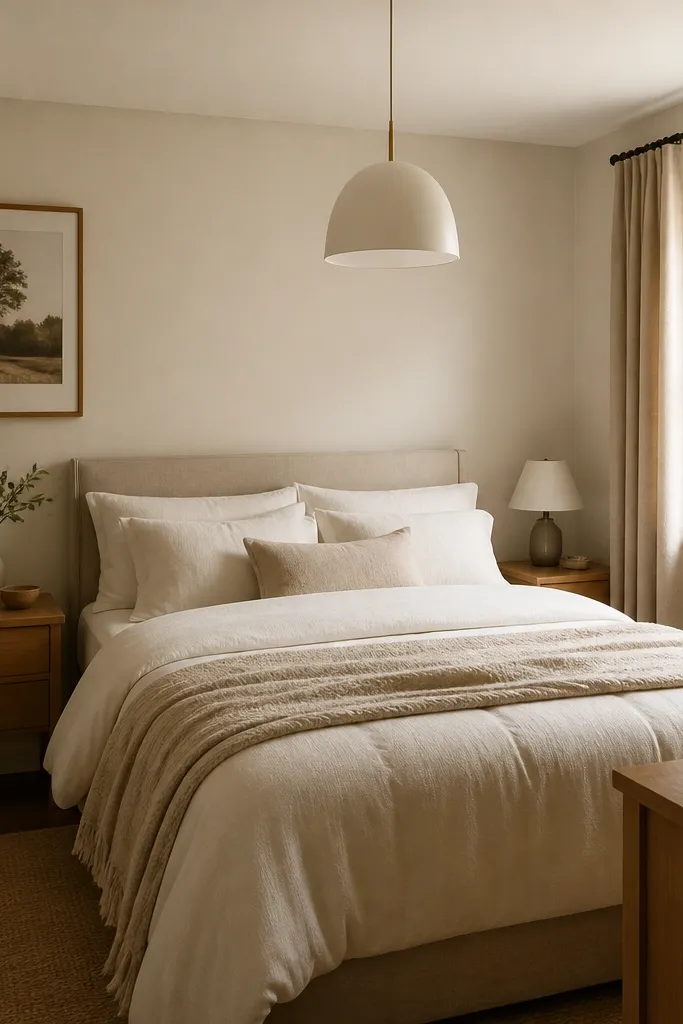
In tiny bedrooms, lighting placement is design. A single pendant centered over the bed makes the bed zone feel intentional and draws focus upward, which makes the room feel more composed. I like a matte white shade or soft fabric shade because it spreads light gently and doesn’t create harsh reflections on mirrors or glossy paint. This works best if you already have a wall light or bedside lamp plan, because the pendant shouldn’t be the only light if you read in bed. It’s flattering for people who want a calm, cozy vibe without adding more furniture.
Good to knowUse a dimmable bulb so the room shifts from bright setup light to soft bedtime light.
Start by finding the exact midpoint of the bed and marking where the pendant cord should hang. Choose a shade diameter around 25-35cm for a small room so it doesn’t dominate the ceiling. Install so the bottom of the shade sits about 60-70cm above the mattress when you’re in bed. Then keep the rest of the lighting simple: one bedside lamp or wall reading light, not multiple bright bulbs.
AvoidAvoid oversized pendants that hang too low — they make ceilings feel lower.
19. Wardrobe with interior shelf dividers and one visible open shelf
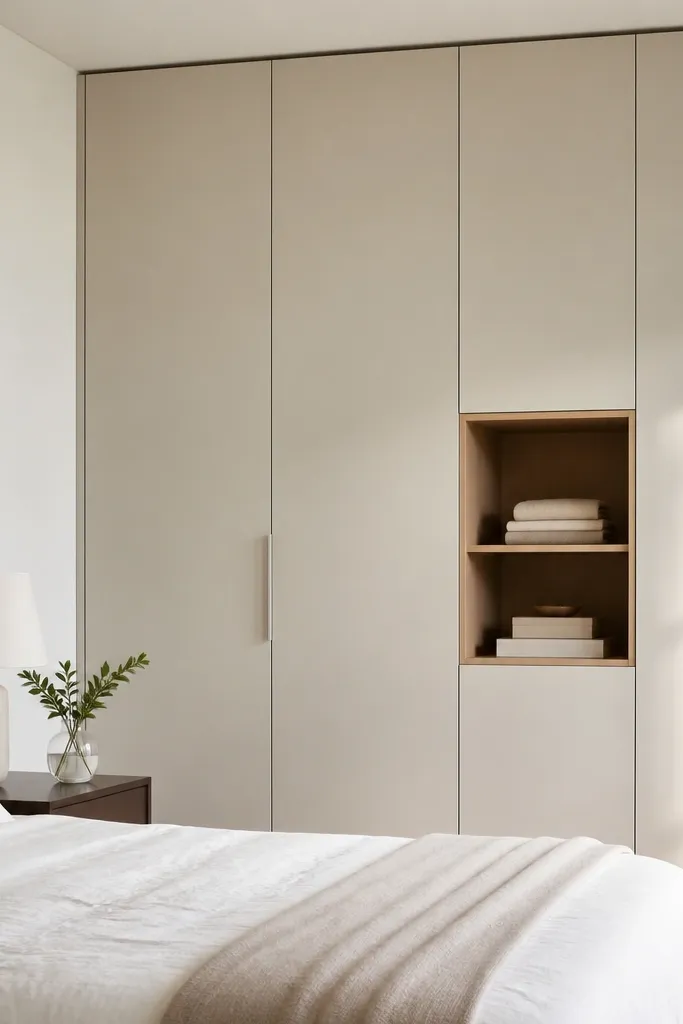
A tiny double bedroom looks better when the storage inside is organized, even if you rarely see it. Shelf dividers make folded clothes sit flush, so you don’t get that bulging, messy look that leaks out at the edges. I like keeping one small open cubby inside the wardrobe — it gives you a “designed” glimpse without exposing everything. This works for people who need to keep laundry and daily items handled but don’t want the room to feel like a storage unit. It also flatters small spaces because the visible order makes the whole room feel controlled.
Good to knowUse slim wire dividers for adjustable shelves so you don’t waste space as your clothes change.
Start by measuring your shelf widths and buying dividers that fit snugly, leaving no big gaps. Fold items the same size and place them vertically on the shelves so stacks stay neat. If you have a wardrobe with doors, keep the open cubby limited to one type of item like towels or a single basket of essentials. Finally, place a small fabric label on the cubby so it looks tidy instead of random.
AvoidAvoid overfilling shelves — overflowing storage shows even through doors and makes the room look smaller.
20. Corner plant stand with a single low plant
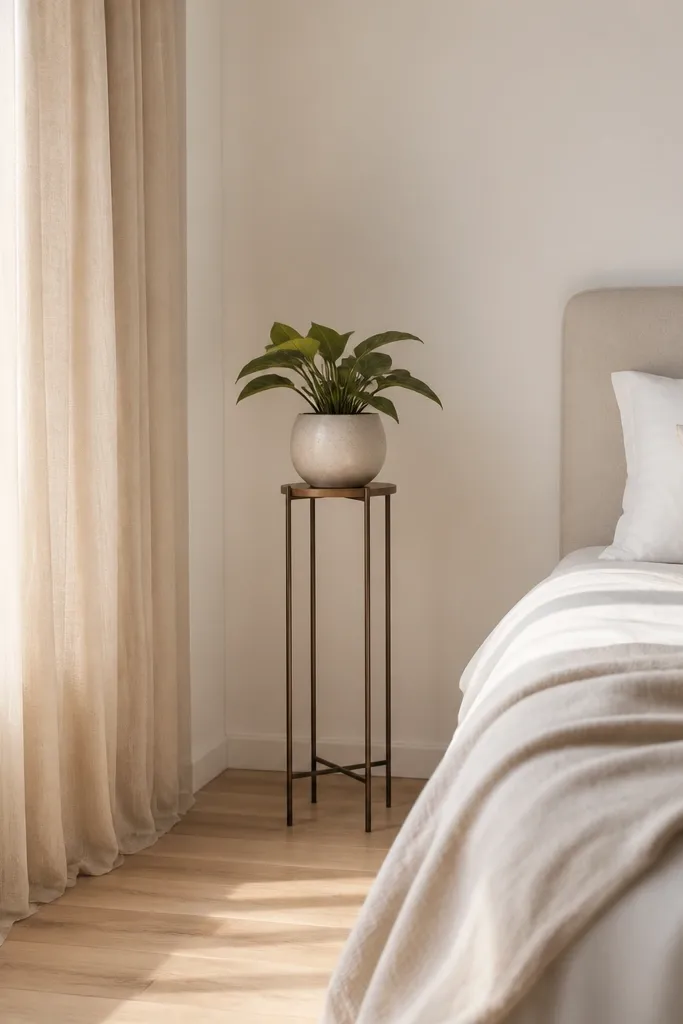
A single plant gives warmth and softness, and in a small double it’s better than adding multiple decorative objects. When it sits in a corner, it doesn’t fight the bed or the doorway, and it creates a gentle focal point that feels lived-in. I like low plants — pothos in a hanging pot or a small snake plant — because they don’t crowd the room visually. This is flattering for anyone who wants a cozy look without colour-heavy decor. It also makes the room feel more “real,” especially if your bedding and walls are neutral.
Good to knowIf you use artificial plants, pick one with matte leaves and no shine — glossy fake leaves look cheap fast.
Start by choosing a corner that doesn’t block the walk path, usually the corner opposite the bed side. Use a plant stand that’s narrow — around 25-30cm wide — or place the pot directly on the floor if you want it even lighter. Pick a ceramic pot in cream, terracotta, or soft grey to match your bedding tones. Water the plant and wipe the leaves so it looks fresh; then style with only one plant and no extra figurines.
AvoidAvoid tall plants that reach near the ceiling — they can make the room feel boxed in.