1. Headboard That Reaches the Ceiling Line
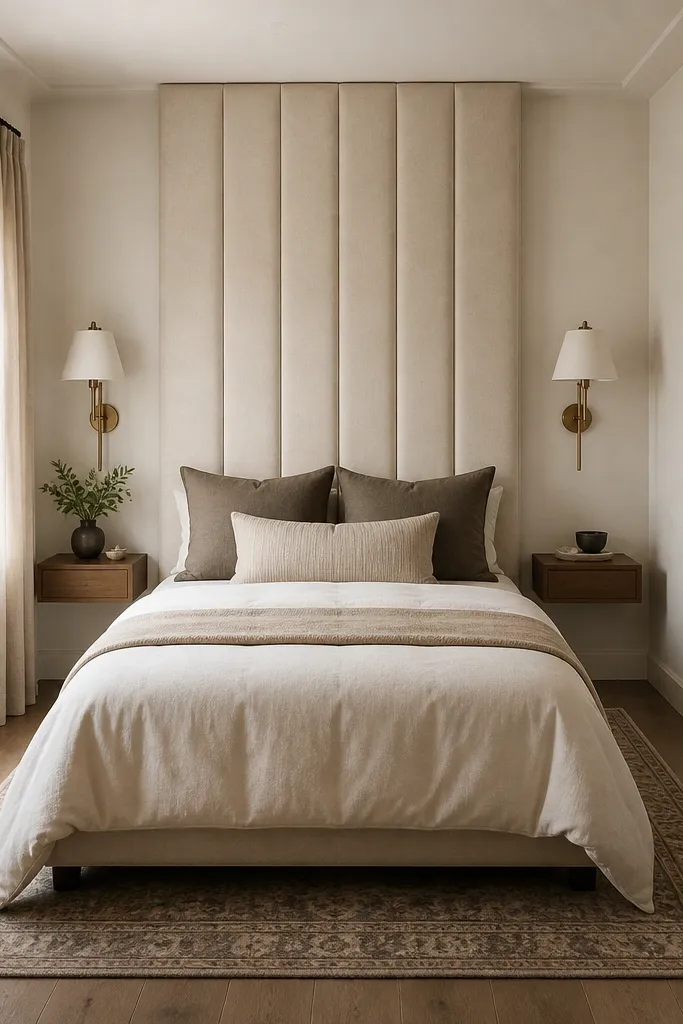
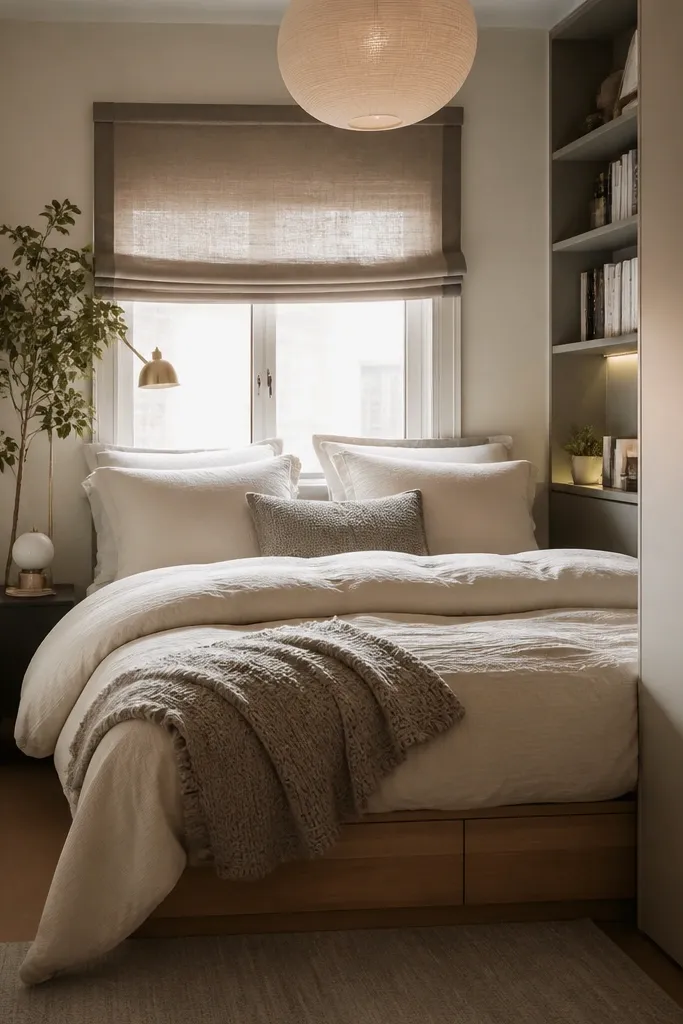
I did this in a 9x11 room by swapping a short bedframe headboard for an upholstered one that visually climbs. The fabric was a light oatmeal with a matte weave, so it reflects soft light without looking shiny. This works best for couples because both sides feel “finished” — you don’t get one partner staring at bare wall while the other has decor. If you have warm undertones in your skin or hair, oatmeal reads flattering and calm under lamps. The styling principle is vertical continuity: you’re tricking the eye into reading the wall as taller, not the room as smaller.
Start by centering the bed so the headboard has a full wall behind it. Then hang two wall sconces or picture lights so their light centers sit about 52-60 inches from the floor, not at random heights. Add a tall curtain rod mounted 3-6 inches from the ceiling line, even if your windows are small. Finally, keep the bedding in one light base color (oat, cream, or pale greige) and add one darker throw pillow set on the far side of the bed so the eye stays smooth.
Good to knowIf your headboard is shorter than you want, use a tall framed art piece behind it in the same neutral tone to extend the visual height.
AvoidAvoid mixing a tall headboard with short curtains — it makes the ceiling look lower.
2. Floating Nightstands With a Shared Charging Rail
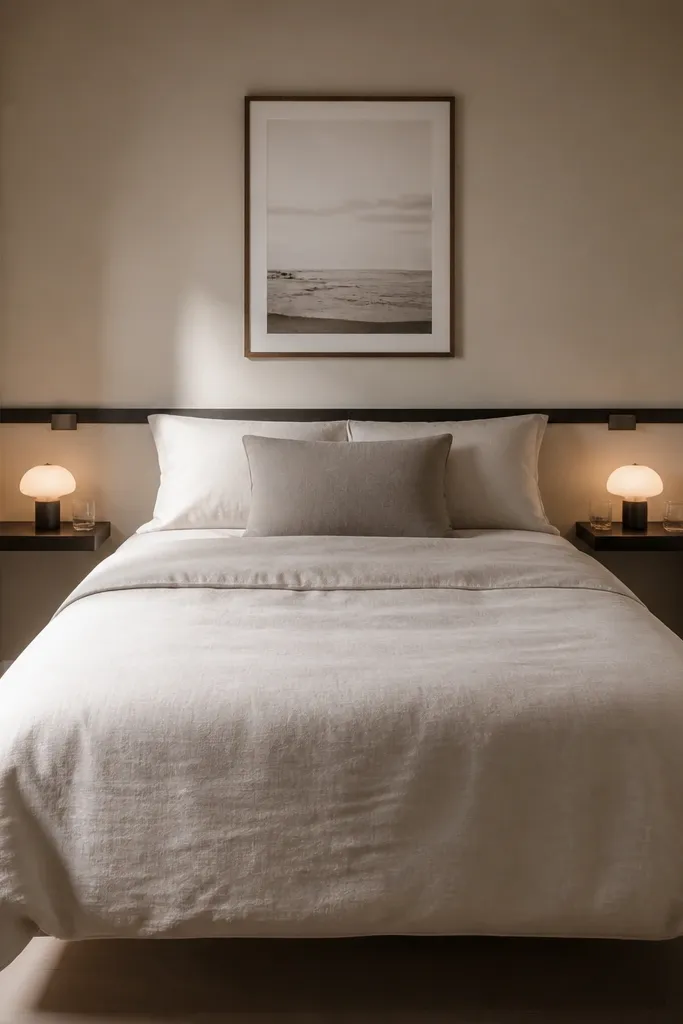
This is the setup that fixed my “always messy nightstand” problem. Floating nightstands remove the bulky visual weight of traditional legs, and a shared charging rail keeps both partners from scattering chargers across the room. Use wood with a warm medium tone (walnut or oak stain) so it doesn’t look cold next to your bedding. This looks especially good if one partner uses a phone for reading and the other uses a tablet, because you can mount one cable and keep both devices tidy. The principle is to keep the visual surface minimal and make storage do the work.
Start by picking two shelves that are the same width and height, even if the items on them differ. Mount them so the shelf tops land around 24-26 inches from the floor, which matches most bed heights. Then install a slim cable channel from the rail down behind the shelf area so cords never loop on the tabletop. Finally, place lamps with similar shades and heights so the symmetry feels intentional, not accidental.
Use one long power strip with USB ports hidden inside a small box behind the headboard line so you only have one “power” footprint.
Avoid leaving a tangle of cords visible — in tiny rooms it reads like clutter instantly.
3. Ceiling-Mounted Curtains to Pull the Room Up
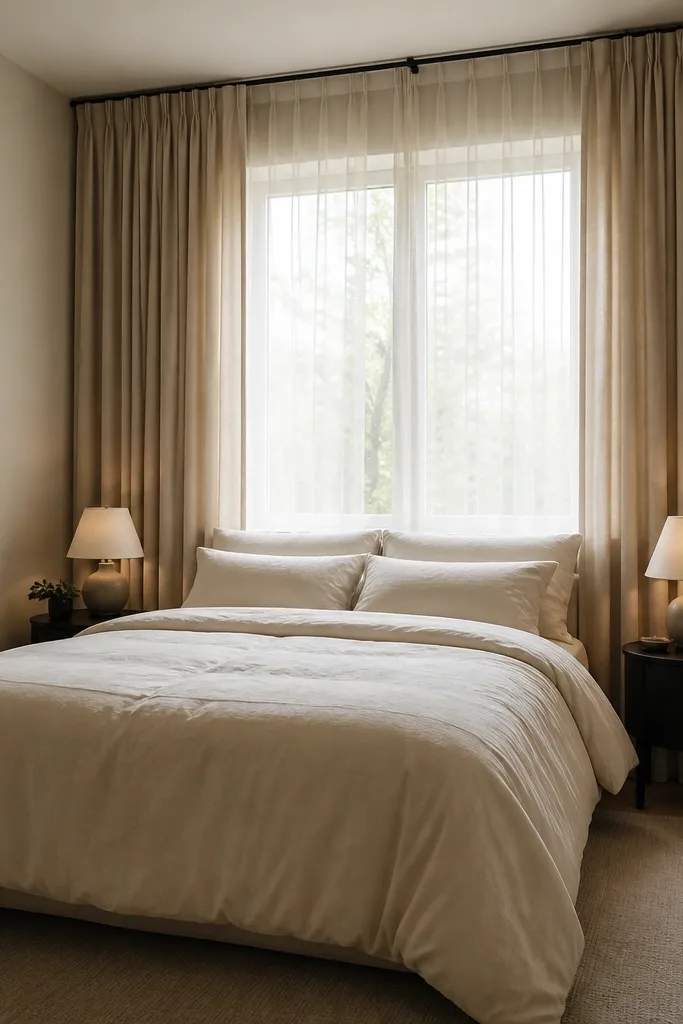
When you hang curtains lower, your ceiling looks lower too. In my place, moving the rod up about 4 inches changed the room from boxy to airy even though the walls didn’t move. I used thick linen-blend panels in warm white with a slight slub, so the fabric has body and doesn’t cling. This styling flatters couples because it creates one shared “soft frame” for both sides of the bed. The principle is scale: in small rooms, tall fabric reads larger and makes walls look longer.
Start by measuring from the ceiling down to the floor and add 1-2 inches for a gentle pool. Then mount the rod 3-6 inches above your window trim, and use brackets long enough to clear the curtain fabric when it opens. Choose panels that are 1.5-2 times the window width so they stack nicely. Finish by keeping the bedding colors light and letting the curtains carry the texture, not prints.
Steam the curtains hard before hanging, then let them dry fully — the first week they look crisp if you do this.
Avoid thin sheers with no fullness — they don’t create that upward visual pull.
4. One Rug That Unifies Both Bedsides
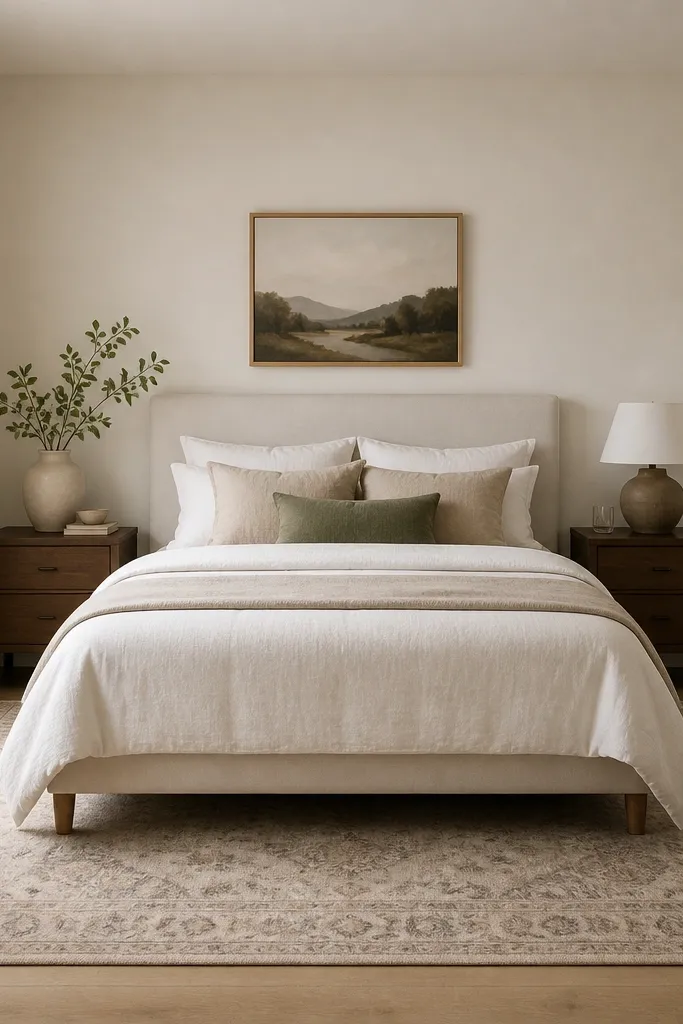
Rugs are where couples' rooms usually fall apart visually. If you use a tiny rug that stops at the bed edge, each partner’s side looks like a separate zone. I replaced a 2x3 rug with a 5x7 low-pile rug and the room instantly looked “together.” Choose a neutral with slight texture so it doesn’t show dust instantly, especially if one of you has pets or tracked shoes. This helps both people because it creates a shared landing area when you step out of bed. The principle is continuity: one surface that spans the width makes the room feel bigger.
Start by placing the rug so at least the front legs of the bed sit on it, not just the middle. If your bed is against the wall, aim for the rug to extend 12-18 inches past each side of the bed. Then keep the rug tone close to your wall color, but not identical. Finish by matching one bedding accent to the rug — a throw pillow in the same undertone keeps the palette tight.
If you hate vacuuming, choose low-pile and pair it with a rug pad that has grip, not foam that slides.
Avoid high-pile shag — it eats space visually and makes the room feel softer in the wrong way.
5. Sconce Lighting Instead of Two Lamps
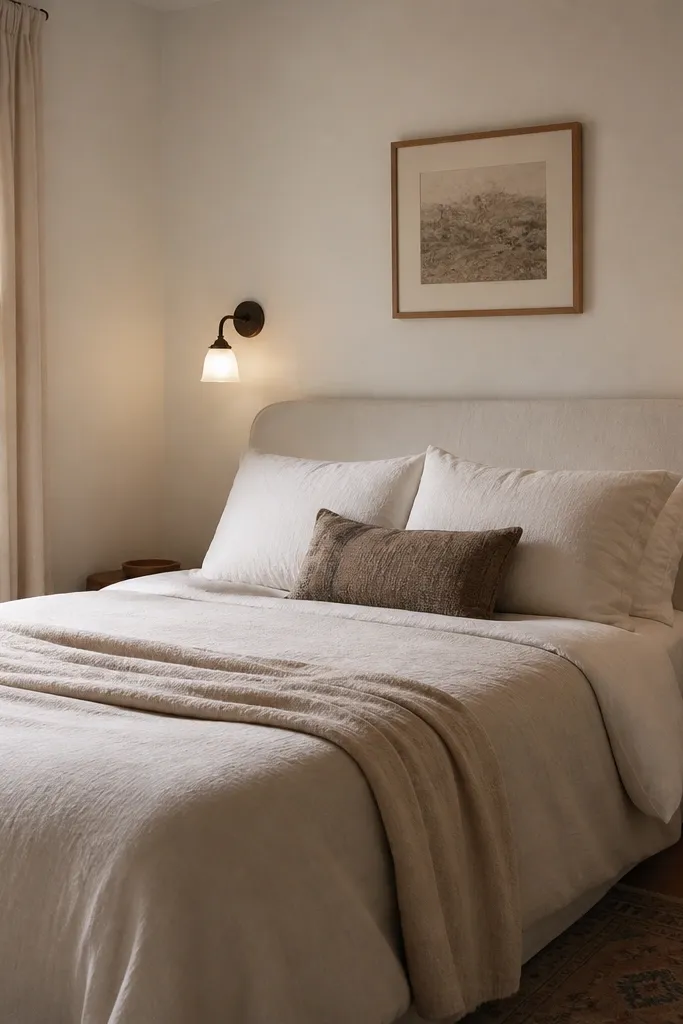
Two table lamps in a tiny room create two separate bright hotspots and make clutter look worse. I switched to matching sconces and the whole bed wall looked styled, not crowded. Use warm bulbs around 2700K so skin tones look natural; cool bulbs make small rooms feel harsher. This is great for couples who read in bed at different times because sconce light reduces glare on your partner’s face. The principle is light layering without adding objects.
Start by mounting sconces at a height where they light the pillow area, usually around 48-54 inches from the floor. Then remove the nightstand lamps and replace them with one small tray each side for essentials. Keep the bulbs the same wattage and shade size so the light feels symmetrical. Finally, add one hidden dimmer if you can, or at least use smart bulbs so bedtime brightness is adjustable.
If you can only do one sconce, put it on the side that gets hit by morning light so the room feels balanced after sunset.
Avoid mismatched shade sizes — the room reads uneven fast.
6. Bedding in One Shade Family With Two Textures
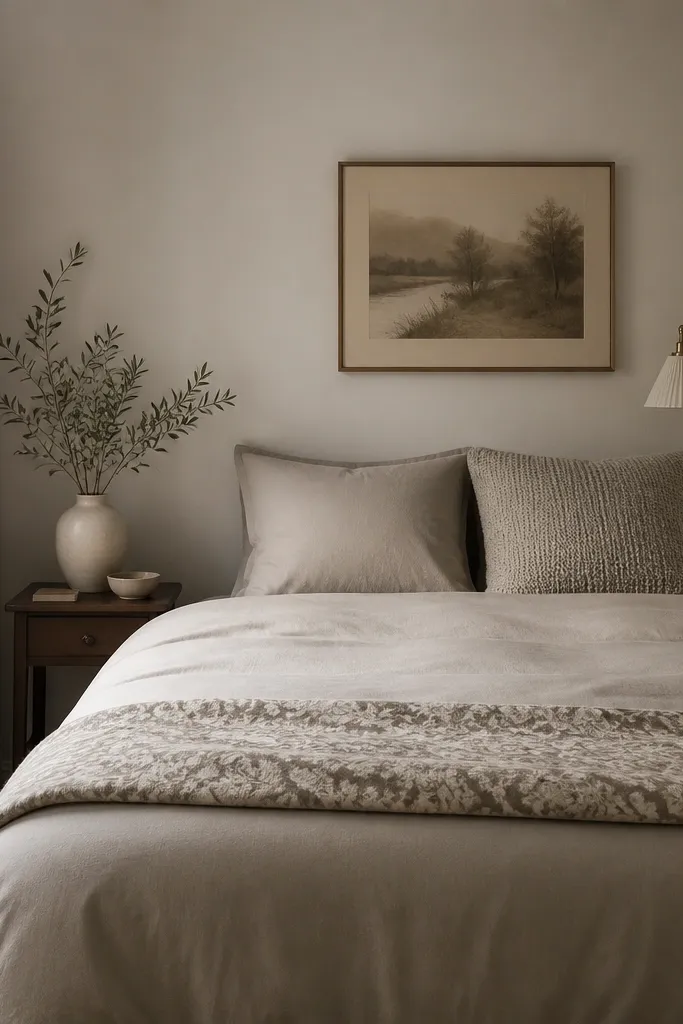
When I see tiny couple rooms look messy, it’s usually because the bedding has too many competing colors. I keep the duvet and pillow covers in one shade family and change only the texture. For my room, that meant a greige duvet and two pillow textures: smooth percale and a knit cover that catches light. This flatters both people because it doesn’t fight with skin undertones or hair color; everything looks calm under warm lamp light. The principle is visual calm: fewer colors, more tactile variation.
Start by choosing one base shade from your wall paint or curtains, then match bedding to it within one undertone. Add two textures only: one crisp cotton and one knit or bouclé. Keep the pillow count to 4 total on the bed to avoid “extra” surfaces. Finish with a throw blanket in the same palette but slightly darker, placed at the foot for a clear, tidy look when you walk past.
Good to knowIf your duvet looks flat, add a duvet cover with a subtle weave — it reads richer without adding color.
AvoidAvoid mixing more than one bold print — it makes small rooms look busy even if the items are “nice.”
7. Mirror Placement That Doubles the Daylight Without Doubling Mess
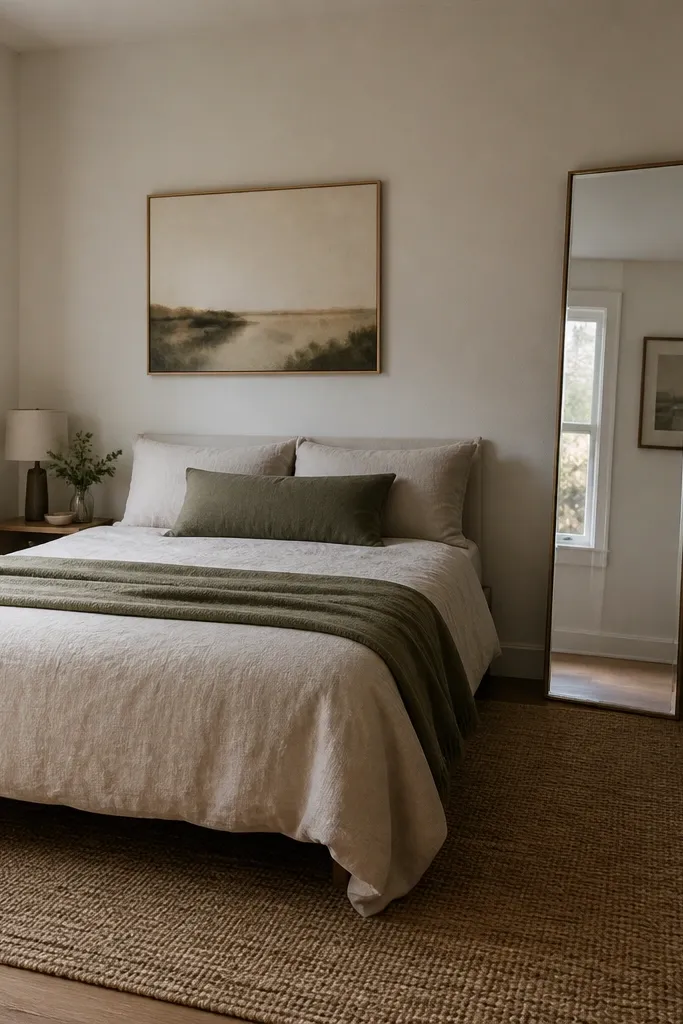
Mirrors work in small bedrooms, but only if they reflect something calm. In my before photo, the mirror caught the open closet and made the room feel like it had extra clutter. After, I moved the mirror so it reflected the window and a blank wall with one framed print. Choose a narrow frame in black metal or light wood so it doesn’t look oversized. This helps couples because both partners see a tidy reflection during getting-ready without turning the room into a storage display. The principle is controlled reflection: you’re multiplying light, not your stuff.
Start by moving a mirror around the room while you stand in the doorway and check what it reflects. Place it so the reflection includes the window or a bright wall area, and excludes open baskets. Use a tall mirror that’s at least 60 inches high so it reads as vertical, not a small tabletop accessory. Finally, keep one clean focal item in the reflection — a single art frame works better than multiple shelves.
Good to knowTape the mirror’s final spot for a day and watch how the reflection changes at morning and evening light.
AvoidAvoid placing a mirror opposite clutter or a laundry basket — it turns every mess into a second mess.
8. Wardrobe Makeover With One Color-Coordinated Rail
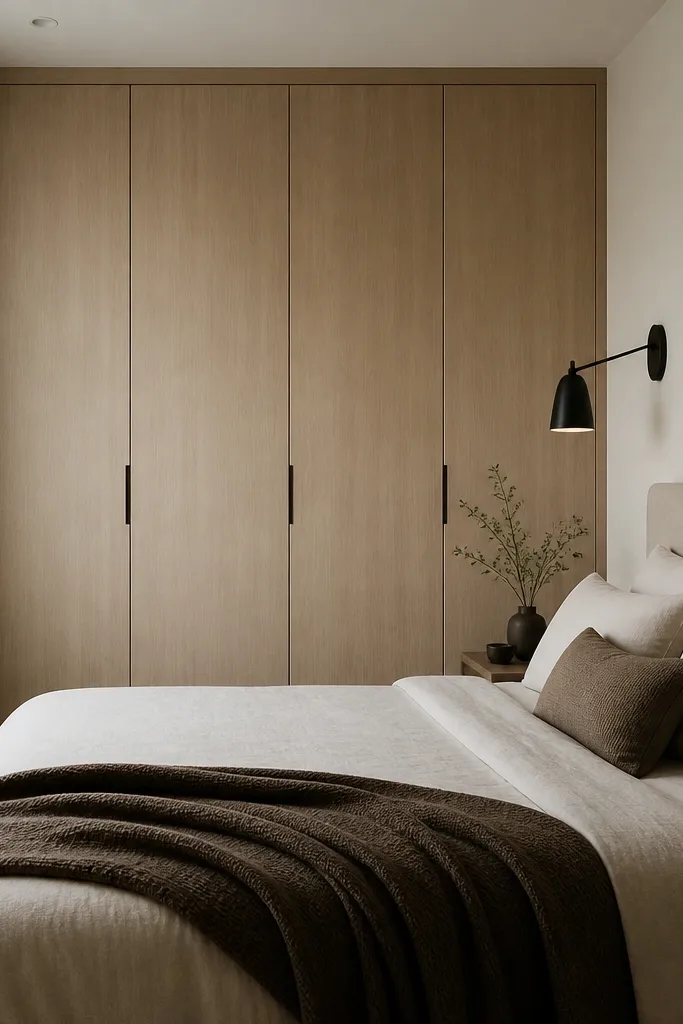
In tiny couple rooms, storage is part of the look, not a separate chore. I fixed the “clothes everywhere” vibe by coordinating hang colors and using uniform hangers so the closet reads like one clean surface. Use a single color family for visible hang items — I went with warm whites, oatmeal, and soft greys. This flatters both partners because it reduces the visual contrast between different styles and colors you both own. The principle is sorting for sightlines: what’s visible should look intentional, even if the inside is simple.
Start by pulling everything out and sorting into three piles: hang, fold, and donate. Then replace mixed hangers with matching slim hangers so the closet doesn’t look like a yard sale. Add one slim rail for everyday shirts and move seasonal pieces to a higher shelf. Finish by folding towels or sweaters into identical bins or baskets, even if they’re basic.
If you can’t close the closet door fully, use a tension rod behind it with one curtain panel in a neutral tone.
Avoid leaving a mix of hanger colors and random prints — small rooms read that as chaos.
9. Bedside Storage That's the Same Height on Both Sides
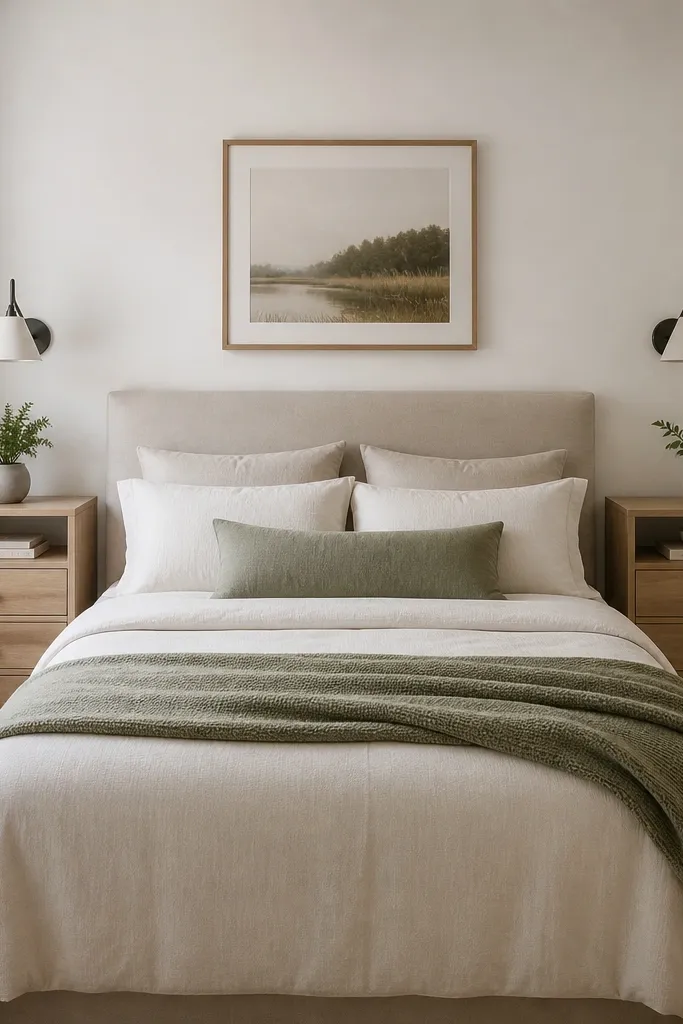
Couple bedrooms feel tense when one side looks “done” and the other looks like overflow. I learned this the hard way when one partner had a real nightstand and the other had a stack of books. After I replaced both sides with matching drawers at the same height, the whole room looked fair and calm. Use a matte finish wood or painted finish in soft white so it doesn’t glare under lamps. This works for couples with different routines because both sides get the same landing space for water, chargers, and a book. The principle is symmetry by function, not by decoration.
Start by measuring the top of your current bedframe and aiming for nightstand height within 1 inch of the mattress height. Then choose two units with the same width so the bed feels centered between them. Place a small tray on each top surface and keep it limited to three items max. Finally, add matching drawer pulls or handles so the hardware ties both sides together visually.
Good to knowIf you share a bedside lamp, still keep one small tray each so you don’t end up with one shared pile.
AvoidAvoid one tall stack of decor and one empty side — it makes the room feel lopsided.
10. Under-Bed Drawers for the Stuff That Clutters at Night
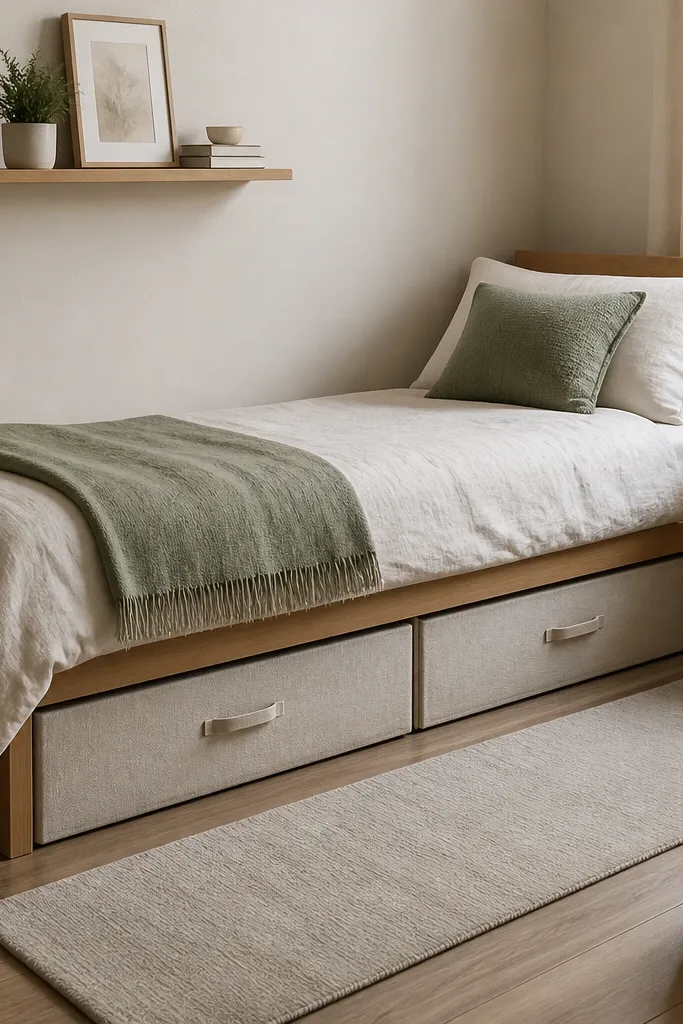
Night clutter doesn’t come from nowhere. It comes from “temporary” items — extra blankets, charging bricks, and the thing you swear you’ll put away tomorrow. I added under-bed drawers and watched the room stay clean even when we were tired. Use light-colored drawers in sturdy fabric so they don’t look heavy. This is especially helpful for couples because each person’s “quick grab” items have a home, so you don’t merge everything into one messy pile. The principle is storage that’s easy enough to use, not just pretty.
Start by measuring the clearance under your bed and buy drawers that slide smoothly without scraping. Then label the drawers by person or by category, like “reading” and “extra throws.” Place the most-used items in the front drawer for each side, and keep seasonal blankets in the back. Finally, avoid bed skirts that hide the front edge; you want quick access, not extra fabric that makes it harder to slide drawers.
Good to knowPut a small LED puck light inside the drawer area if you keep a late-night routine — it makes finding things fast.
AvoidAvoid deep drawers that fight you — if they don’t slide easily, you’ll stop using them.
11. Art Above the Bed With a Clean Vertical Center
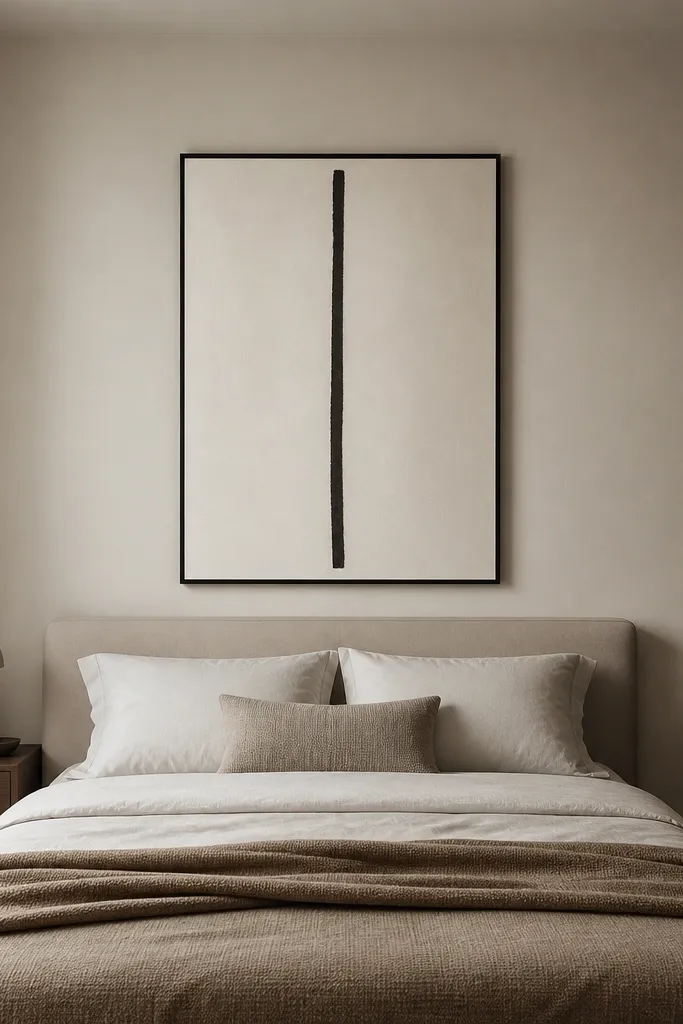
In very small bedrooms, art placement is about breathing room. I used one large piece centered above the bed instead of a gallery wall that filled the wall with visual noise. The frame was thin black, and the print had a mostly light background with one darker vertical element to keep the eye moving upward. This is great for couples because it doesn’t create “who picked what” arguments; it’s one shared focal point. The principle is one focal, not many — and it should sit high enough that your eyes stay on the art, not on clutter around it.
Start by measuring the width of your bed and aim for art width about 60-80% of the bed width. Hang the center of the frame about 58-62 inches from the floor so it lands around eye level when seated. Then keep the rest of the wall blank — no shelves, hooks, or small frames competing. Finish by matching one color from the art to a pillow or throw so the look feels intentional.
Good to knowIf you have two different art tastes, pick a neutral piece and match it with one pillow each in your favorite accent color.
AvoidAvoid tiny art above a large bed — it looks lost and makes the room feel smaller.
12. Rethink the Nightstand Surface to 3 Items Max
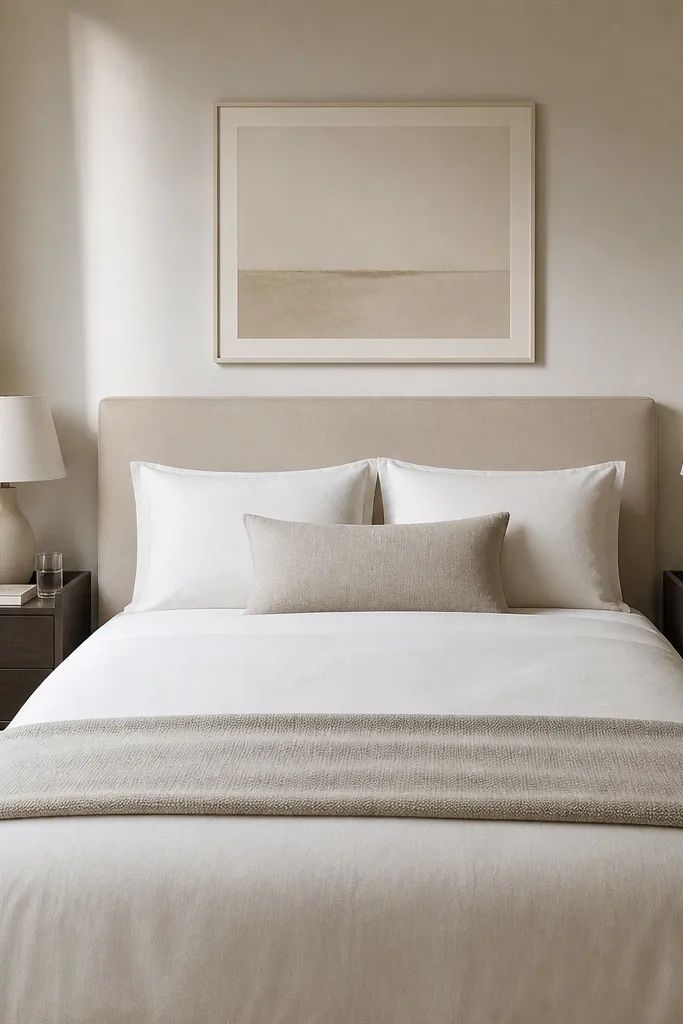
This is the rule I follow after doing multiple small-room makeovers: the nightstand top holds 3 items max. I learned it because I used to place a candle, a coaster set, and random decor, then wonder why the room looked cramped. When you limit the top to lamp, reading item, and one “daily use” object, the room reads tidy even when you’re busy. It works for couples because both sides get the same system, so nobody feels like they’re living with the other person’s clutter. The principle is visual restraint at eye level.
Start by clearing both nightstand tops completely and wiping the surfaces. Add one tray per side and place your lamp on it so the cord goes straight down behind the drawer. Then add one book or tablet stand and one daily item like a water glass. Finally, store chargers and small items inside drawers, not in a basket on top.
Use a small coiled cable strap inside the tray so the charging cable doesn’t flop over the edge.
Avoid leaving “just for now” items on the top — tiny rooms punish that habit fast.
13. Two Matching Throws for Different Bed Temperatures
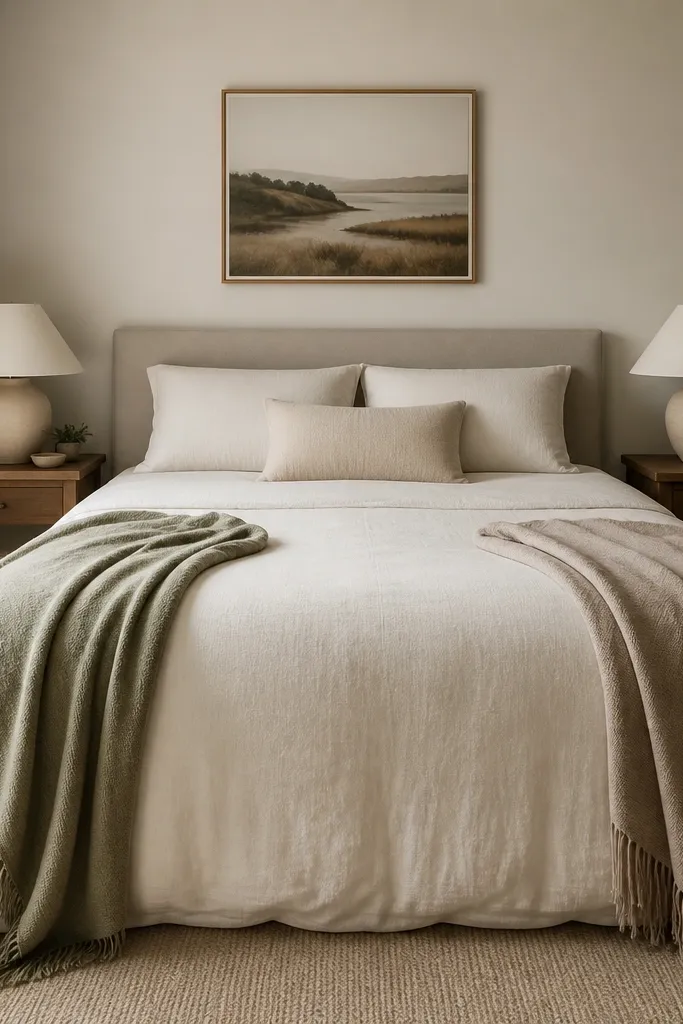
Couples fight over blankets because one person runs warm and the other runs cold. I solved it by using two matching throws so you can adjust without pulling everything off the bed. The throws in my setup were both in the same color family but different textures: one smooth cotton throw, one chunky knit. This keeps the look unified while still letting each person control comfort. It flatters couples because both sides look intentional, not like one extra blanket is “the cold person’s thing.” The principle is controlled personalization.
Start by choosing two throws that share one color and only differ in texture or weave. Place the warm throw on the side that gets more sun or feels warmer and the cooler throw on the other side. Fold them the same way each morning so the symmetry stays consistent. Keep the rest of the bed simple: one duvet, four pillows max, and no extra decorative layers at the foot beyond one folded throw if you want it.
If your throws shed lint, run a lint roller on them once before you put them on the bed.
Avoid mixing totally different colors — it breaks the calm look in a tiny room.
14. Mirrored Closet Door or Sliding Panel to Hide Clutter
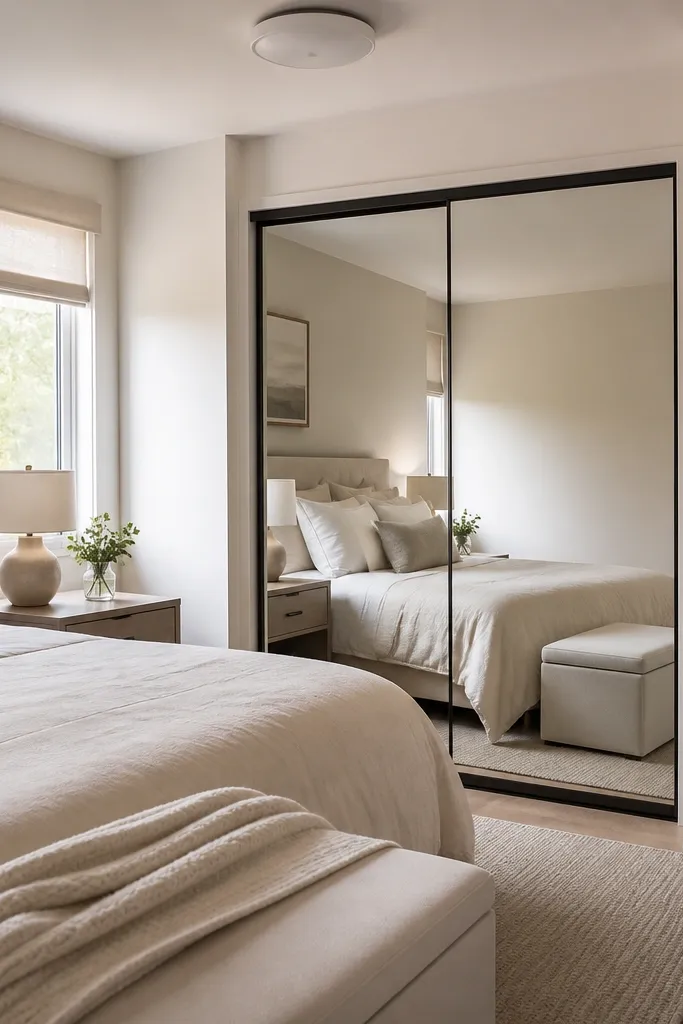
In my smallest apartment room, the closet door was a constant problem because it either showed mess or blocked the light. Swapping to mirrored sliding doors made the room feel bigger, and it hid the daily clutter because the reflection looks like a wall, not a storage area. Use mirrored panels with a simple frame so it doesn’t look ornate. This works for couples because getting dressed feels less chaotic — you see your outfit without scanning the whole room. The principle is hiding clutter while still adding dimension.
Start by measuring your closet opening and checking the track compatibility if you’re replacing doors. If you can’t replace, use a removable mirror panel on a track that fits your door size. Position the bed so the mirror reflects a clean area like a lamp and art, not laundry or open shelves. Keep the closet inside organized with bins so when the door moves, you aren’t exposing chaos.
Good to knowChoose a mirror with a slight tint or soft finish if you hate harsh reflections at night.
AvoidAvoid mirrors that reflect a pile of shoes or an open hamper — it ruins the effect.
15. Light Wall Paint + Darker Bedding to Create Depth
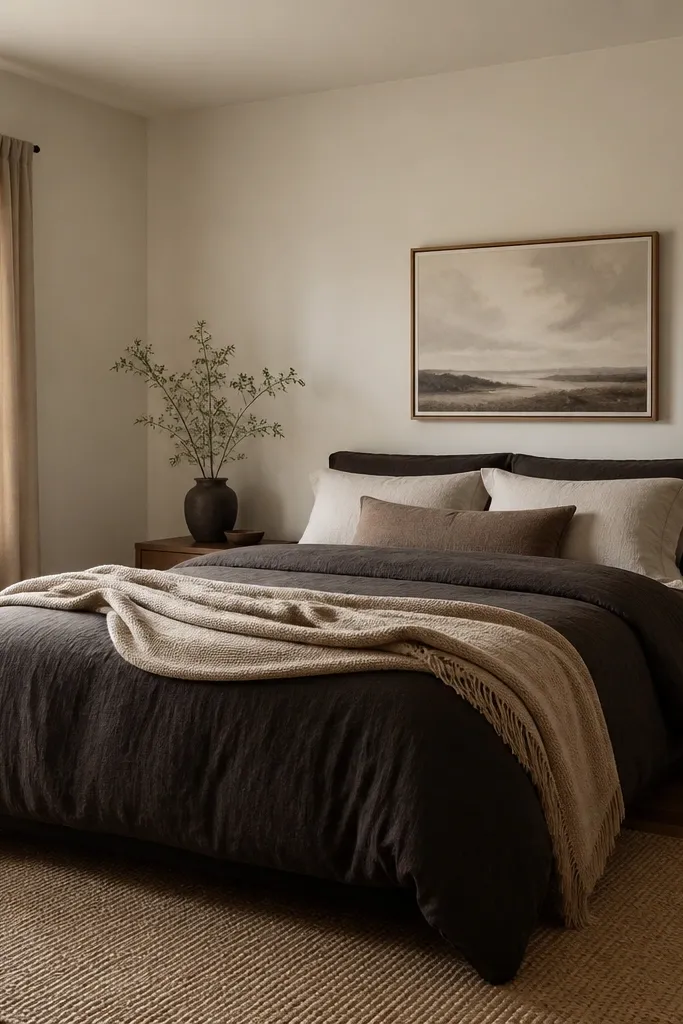
This is the move I use when a tiny room feels bland or flat. I painted the walls a warm off-white and then used a darker duvet to anchor the bed visually. The dark bedding gives the eye a strong base, while the light walls keep the ceiling from looking low. This flatters couples because the contrast makes both people’s clothing look more defined in photos and in the mirror. The principle is contrast control: one dark anchor, one light background.
Start by choosing a wall color that reads warm, not gray, so the room doesn’t feel cold. Then pick a duvet in charcoal, deep brown, or muted navy — something that looks soft, not glossy. Add pillows in cream or oatmeal and keep the throw in a warm tone that matches the wall undertone. Finally, choose a rug that sits between the two tones so the floor doesn’t look separate from the bed.
Good to knowIf you go dark on the duvet, use a mat finish and avoid shiny satin — it shows every wrinkle in a small room.
AvoidAvoid dark walls with bright white bedding — it makes the room feel like a box.
16. Slim Bench at the Foot With Hidden Storage
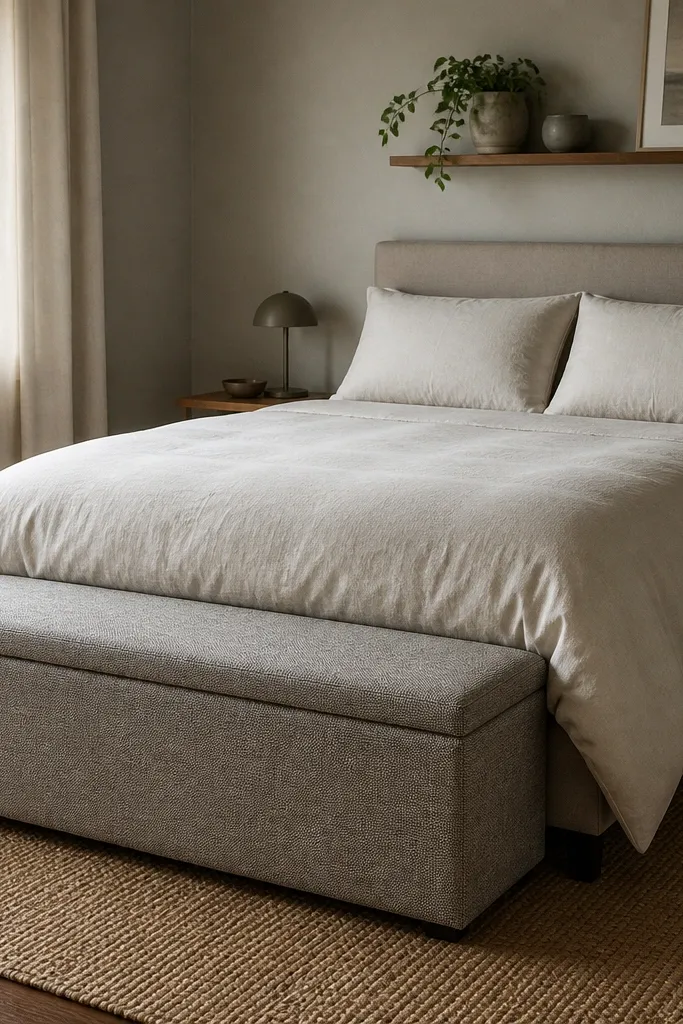
A foot-of-bed bench sounds like “extra furniture,” but the right one makes the room feel organized. I used a slim bench with hidden storage in a tight space so we could drop a throw, a laundry bag, and a couple of folded pajamas without seeing them. Choose a bench that’s about 14-16 inches deep so it doesn’t block walking space. The upholstery should be textured — linen or a woven cotton — so it doesn’t look slippery or cheap. This works for couples because you get one shared landing spot for clothing while still keeping the bedside clean. The principle is one controlled drop zone.
Start by measuring the clearance between the bench and any wall or dresser. Aim to keep at least 24-26 inches of walking space, then pick a bench that fits. Place it centered at the foot of the bed and keep the bench cover color close to your rug or pillows. Finally, store bulky items inside the bench and keep only one small decorative object on the top if you need it.
Good to knowUse a fabric laundry bag inside the bench so you can pull it out without unpacking everything.
AvoidAvoid a deep bench that sticks out past the bed footprint — it crowds the room instantly.
17. One Dresser, Two Identical Mini Stations
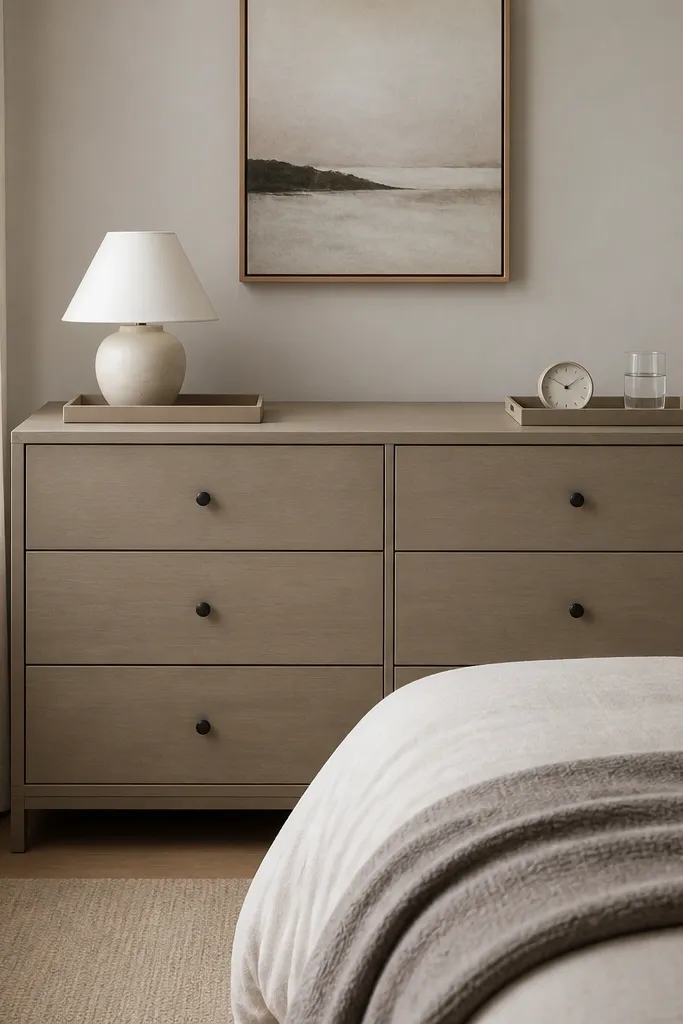
If you have a narrow room, a full second nightstand can be impossible. I solve it with one shared dresser and two identical mini stations on top. This gives both partners their own “zone” without adding a second bulky table. Use matching trays and keep the lamps similar in height so the light and visual rhythm feel even. This flatters couples because both people get their own practical spot for nighttime items. The principle is personal zones without extra furniture volume.
Start by placing the dresser so you can still open drawers without blocking the walkway. Then add two trays side-by-side, leaving a small gap between them for airflow and visual balance. Put a lamp on one tray and a reading light or small globe lamp on the other, keeping bulb color warm. Keep the rest of the dresser top empty and store charging items inside drawers or in a small organizer bin.
Use battery-free night clocks or smart plugs so you don’t need visible extra cords on top.
Avoid stacking random decor on the dresser top — it looks like a storage shelf in miniature rooms.
18. Bedside Bookshelf Wall With Closed Doors
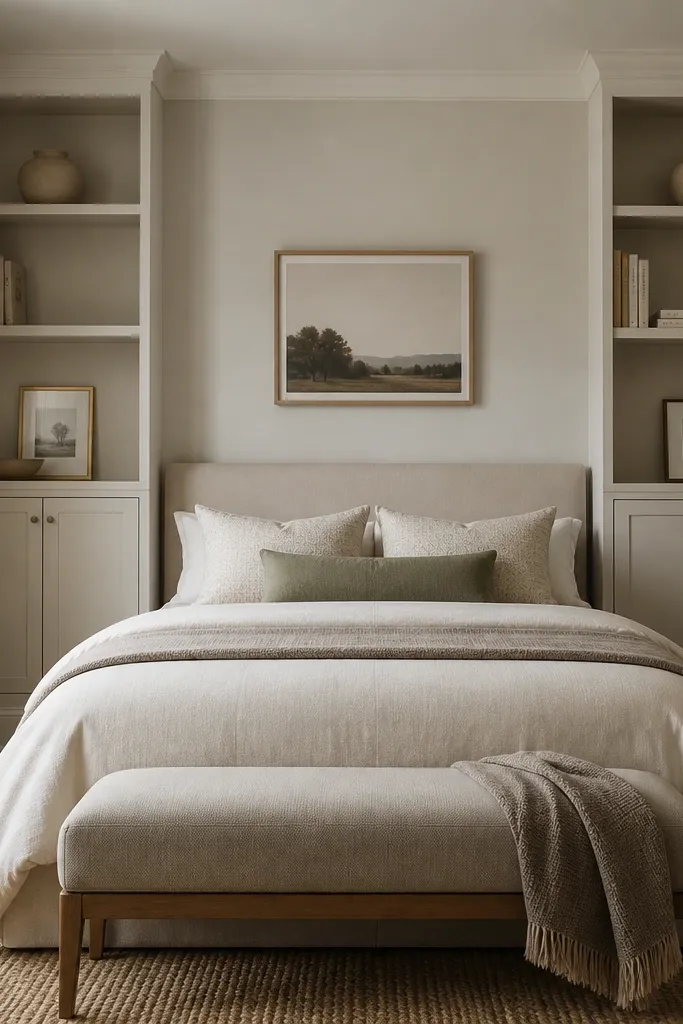
Open shelves are risky in tiny couple bedrooms because they collect everything you touch at night. I fixed this by using a mix: closed doors for the messy stuff and open shelves for a tight set of items. In my room, the open shelves hold 6 books total, two frames, and one small plant, and the rest stays behind doors. This works for couples because it keeps both partners from adding personal items to the same shelf chaos. The principle is selective visibility: display a little, hide the rest.
Start by choosing a shelving unit depth that won’t block your walking path, typically 10-12 inches deep for small rooms. Then place the bed so the shelf wall doesn’t create a tight corner near the foot. Add door fronts to store chargers, extra linens, and daily clutter. Style the open shelves in a vertical rhythm: books stacked by height, frames aligned to eye level, and nothing taller than the shelf line.
Use bookends in the same metal finish across the shelf so it looks intentional, not random.
Avoid filling open shelves with baskets and loose items — it looks cluttered even when it’s “organized.”