1. Tall framed art that lands at sofa-back height
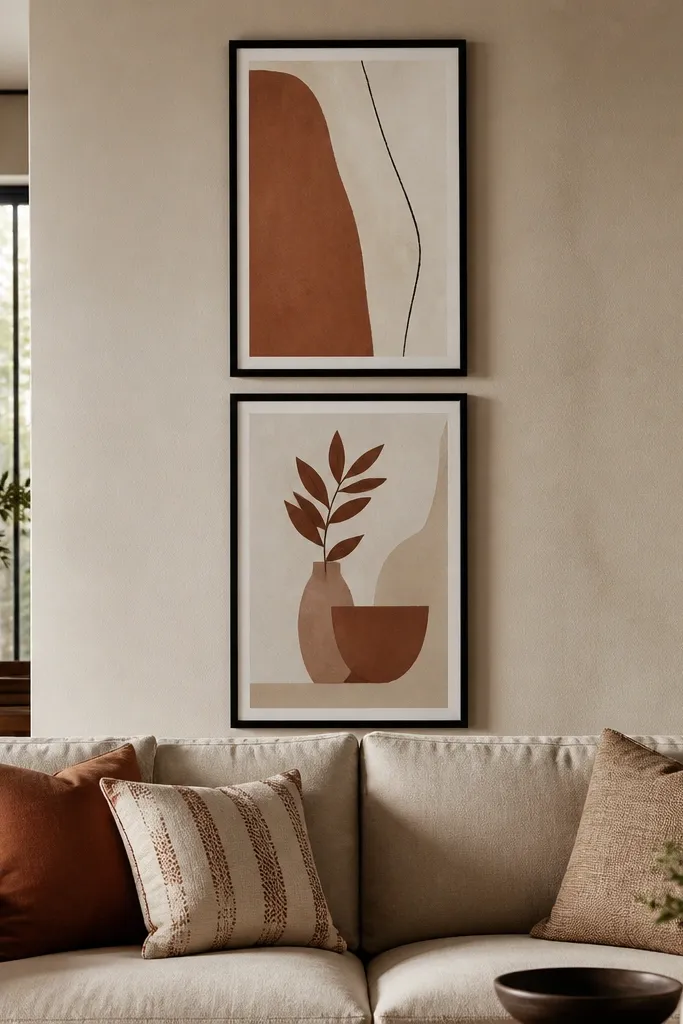
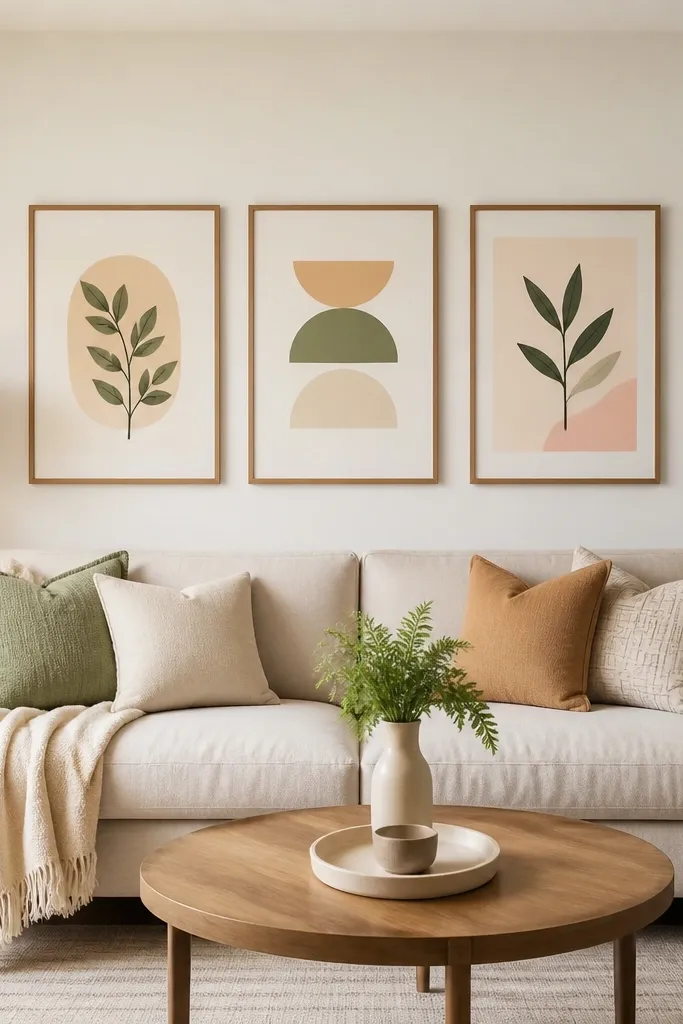
I like tall art because it fixes the “empty rectangle” feeling without clutter. Choose one piece that’s about as tall as your sofa back plus a little extra, or stack two prints so the combined height reaches roughly from just above the sofa back to near eye level. Matte frames in black, dark oak, or aged brass look cozy instead of glossy. This works especially well for people with lighter skin tones and warm undertones because the terracotta and cream pigments reflect soft light on your face when you’re sitting. It also flatters small rooms because the vertical lines visually stretch the wall upward.
Start by centering your art over the sofa — measure the wall and mark the midpoint. Hang the bottom of the art band about 4 to 6 inches above the sofa back, then check from the couch with your phone camera so you see it in real proportion. Use frames with a width around 1 to 2 inches so they don’t look flimsy. If you’re stacking two pieces, keep the gap between frames at about 2 to 3 inches for a clean, intentional look.
Pick art with one warm accent color that matches something in your room — like rust pillows or a caramel throw.
Avoid glossy frames and tiny art — they make the wall feel cheap and the sofa looks disconnected.
2. A sofa-back gallery rail with 9-inch spacing
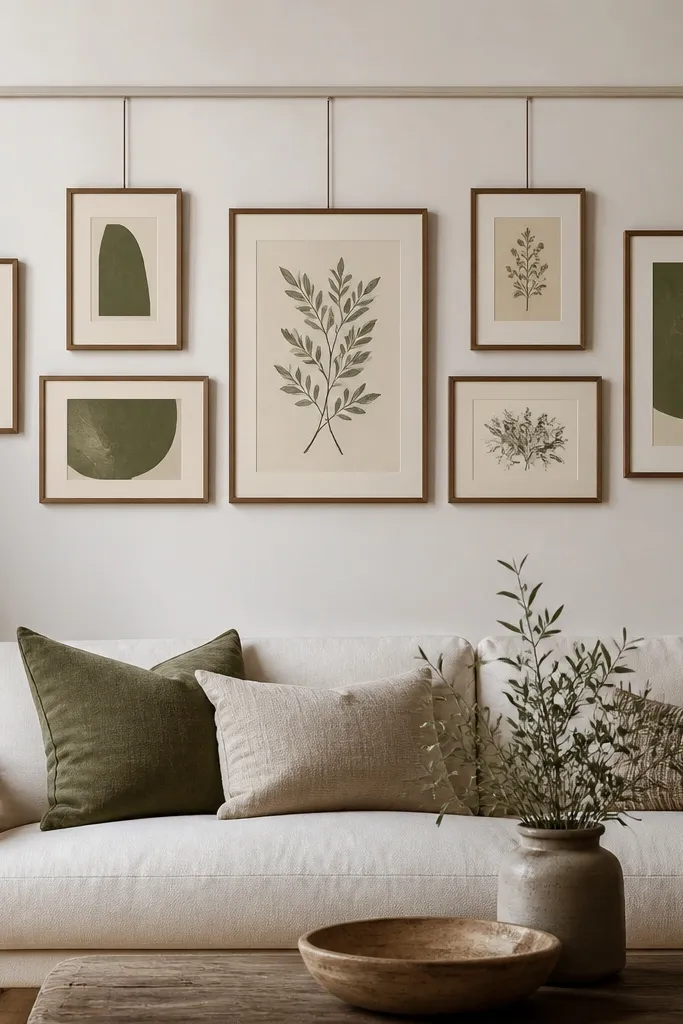
A gallery rail is the cozy version of “curated” without the fuss. When you hang frames from a rail, you control height precisely and you can tweak spacing after you live with it for a day. I’ve used this in rooms where the sofa sits slightly off-center, and the rail lets you balance the wall without redoing everything. Choose artwork in a tight palette: cream backgrounds, soft green, and one muted rust or navy accent. This flatters most skin tones because the wall colors bounce warmth instead of harsh contrast. It also suits homes with kids or pets because you can swap one frame fast when something gets bumped.
Start by installing a picture rail or using a heavy-duty French cleat system at the right height. Place the center of your arrangement so it aligns with the sofa centerline. Build your gallery as a rectangle band: keep all tops within a 6 to 8 inch range so it reads cohesive. Hang the largest frame first, then place the next two sizes around it, leaving about 9 inches between the centers of frames for breathing room.
Use a mix of mediums (one sketch, one textured print, one photo) so the wall feels cozy in daylight and at night.
Skip random frame heights with no shared band — it turns into a cluttered wall instead of a designed one.
3. Wood slat panels with warm white paint around them
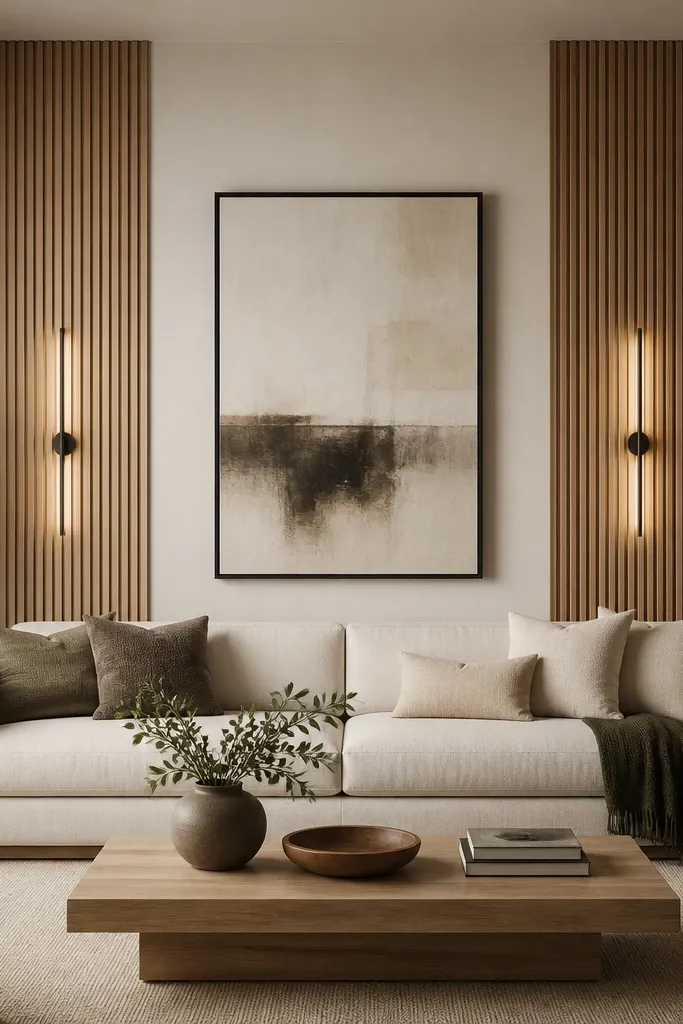
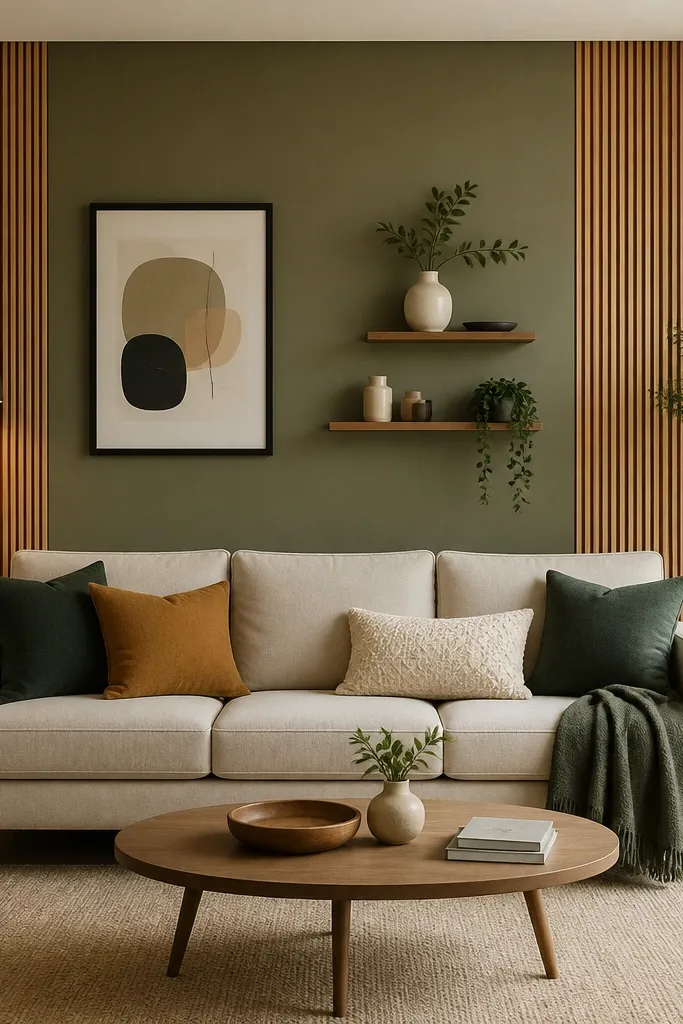
Wood slat panels make a wall feel warmer in a way paint alone can’t. I did this behind a sofa that had a flat, low back, and the room immediately looked more finished. Keep the slats vertical — they make the wall feel taller and they soften the edges of the sofa. Pair light oak slats with a warm white surrounding wall so the whole area reads cozy, not cabin-like. This is flattering if your decor leans neutral, because the slats add warmth without adding loud color. It also works well for rooms with lots of hard surfaces since wood adds acoustic softness.
Start by marking your wall center and dry-fitting slat spacing on the floor so you don’t guess. Use slats about 1.5 to 2 inches wide with a 0.5 to 0.75 inch gap, then mount a backing track or use adhesive and brad-nail method if you’re skilled with it. Paint the surrounding wall first, then install slats after the paint dries so you get crisp edges. Finish by adding one centered piece — mirror or art — and two slim sconces at about 60 inches from the floor to the center of the light.
Choose a matte oil-rubbed stain for the slats; the slight sheen makes it look expensive under lamp light.
Don’t use dark walnut slats with cool gray walls — the contrast reads cold and heavy.
4. Half-height paneling with fabric-like wall paint
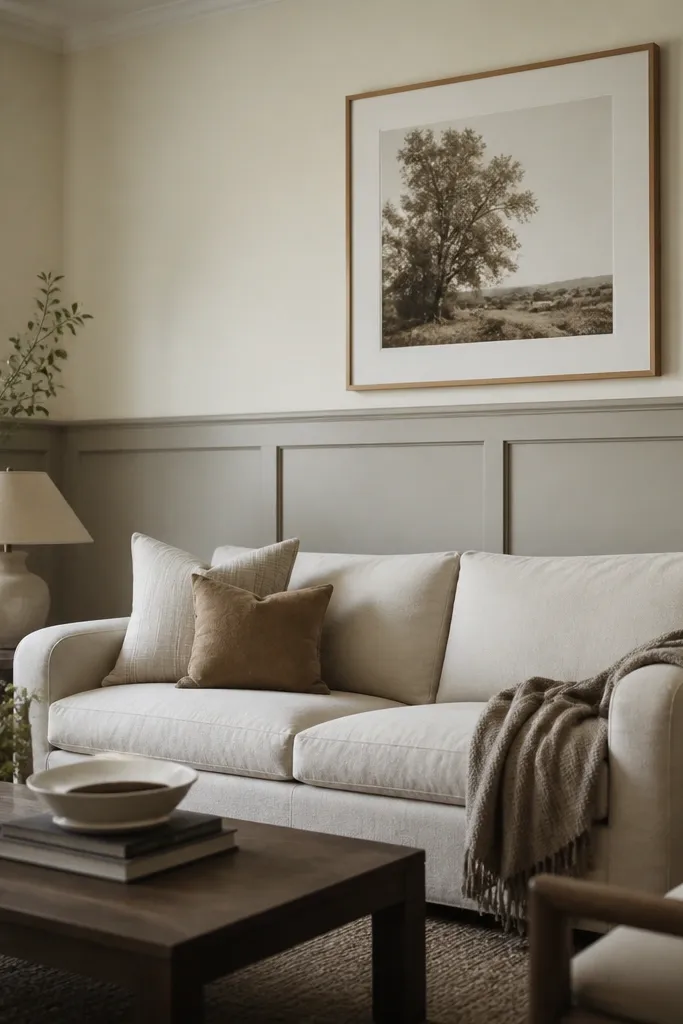
Half-height paneling is cozy because it creates a built-in look without taking over the whole room. I used it in a narrow living room where full-height wallpaper would have made it feel smaller. The trick is the paint finish: choose a matte or eggshell with warmth, not a shiny wall paint. The paneling line acts like a visual shelf for your eye and makes the sofa feel “placed” rather than floating. This works for people with cooler undertones too because warm greige doesn’t cast a blue tint. It also looks good in both modern and traditional homes.
Start by measuring the sofa back height and setting the paneling line about 8 to 12 inches above the sofa cushions. Install simple chair-rail style trim or MDF panels, then paint the lower section first. Use the same warm white for the upper section so the transition feels intentional. Hang one large artwork centered in the upper section, and keep its bottom edge around the paneling line for balance.
Use painter’s tape to mask a clean line and press the tape down with a plastic ruler so the edge stays sharp.
Avoid high-gloss paint on panel trim — it looks plastic and kills the cozy feel.
5. A warm mirror over a narrow console
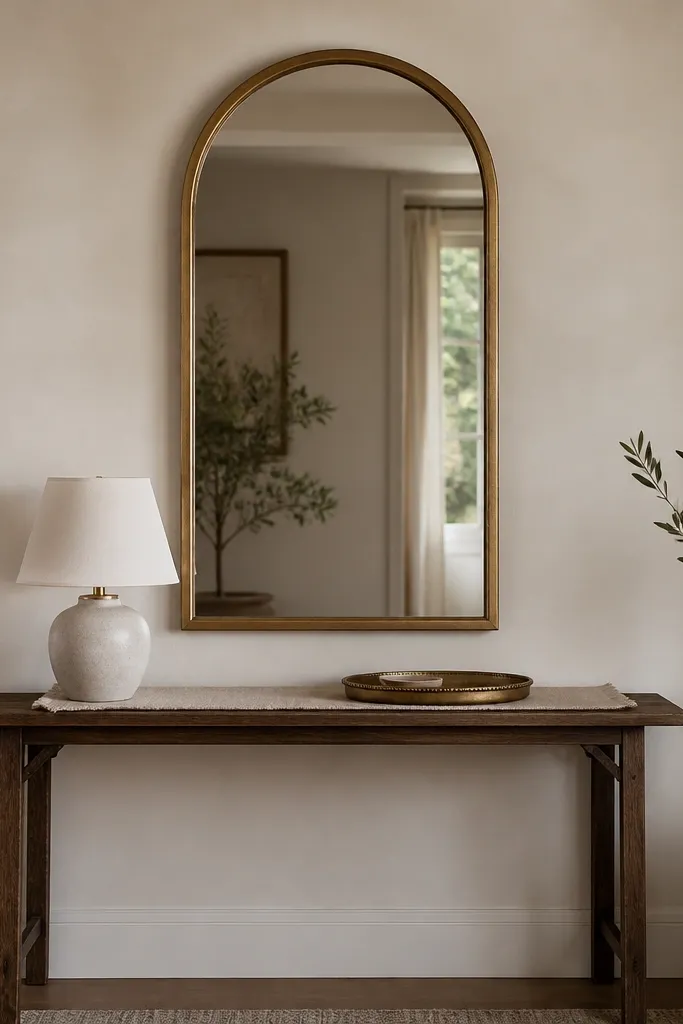
A mirror behind the sofa is one of the quickest ways I’ve found to make a room feel bigger and cozier at the same time. The console adds depth and gives you a place for warm textures like linen and ceramic. I like mirrors with soft curves or a thin, warm frame because they don’t look harsh. The reflected light makes skin tones look warmer when you’re sitting — especially if your lamps are on a warm bulb. This setup is great for living rooms that lack natural light, because the mirror bounces it back into the space.
Start by choosing a console that’s about 10 to 14 inches deep and roughly as wide as the sofa’s seat width. Place it centered and leave 2 to 4 inches between the sofa back and the wall if you can. Hang the mirror so its bottom edge is around 8 to 10 inches above the console top. Style the console with a tray (for order), one lamp, and one height piece like a small vase — keep everything within the mirror’s width.
Use a warm 2700K bulb in the lamp so the mirror reflection reads golden, not white.
Skip oversized mirrors that reach above eye level — they can look like a bathroom retrofit.
6. Linen drapes hung wide behind the sofa
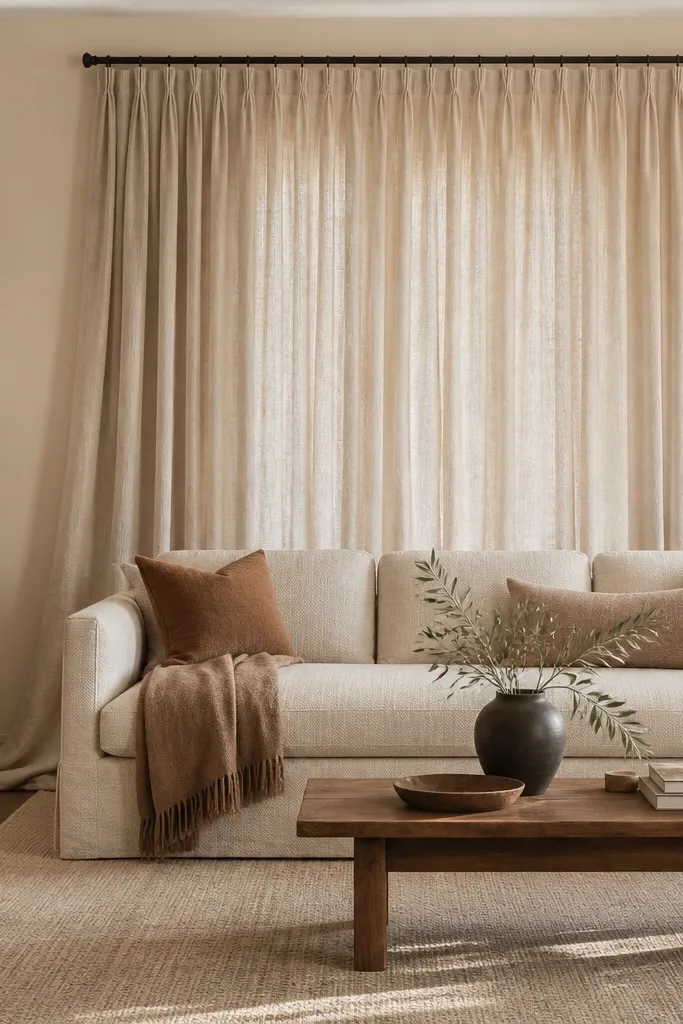
Drapes behind a sofa create coziness because they add softness and movement. I’ve done this in apartments where walls felt too bare and paint didn’t feel like an option. Hang linen in a warm neutral like oatmeal, sand, or light taupe, and choose a fabric with weight so it doesn’t look papery. The drapes also make skin tones look warmer because the fabric reflects soft, diffuse light. If your sofa is dark, linen lightens the whole area without making it feel stark. This works best when the sofa is pushed close enough to the wall that the drapes don’t look like they’re floating.
Start by installing the curtain rod 4 to 6 inches above the sofa back height. Mount the rod wide — aim for at least 12 inches beyond each sofa arm so the fabric frames the couch. Use panels that reach within 1 to 2 inches of the floor or puddle slightly if you want extra coziness. Add tiebacks only if you want it open; otherwise, let it hang straight and keep folds even by spacing rings or hooks consistently.
Press the linen with a steamer and let it dry while hanging — the folds look better than steam-then-folding.
Don’t hang short curtains that stop at the sofa back — it makes the whole wall look unfinished.
7. Woven wall baskets in a single centered column
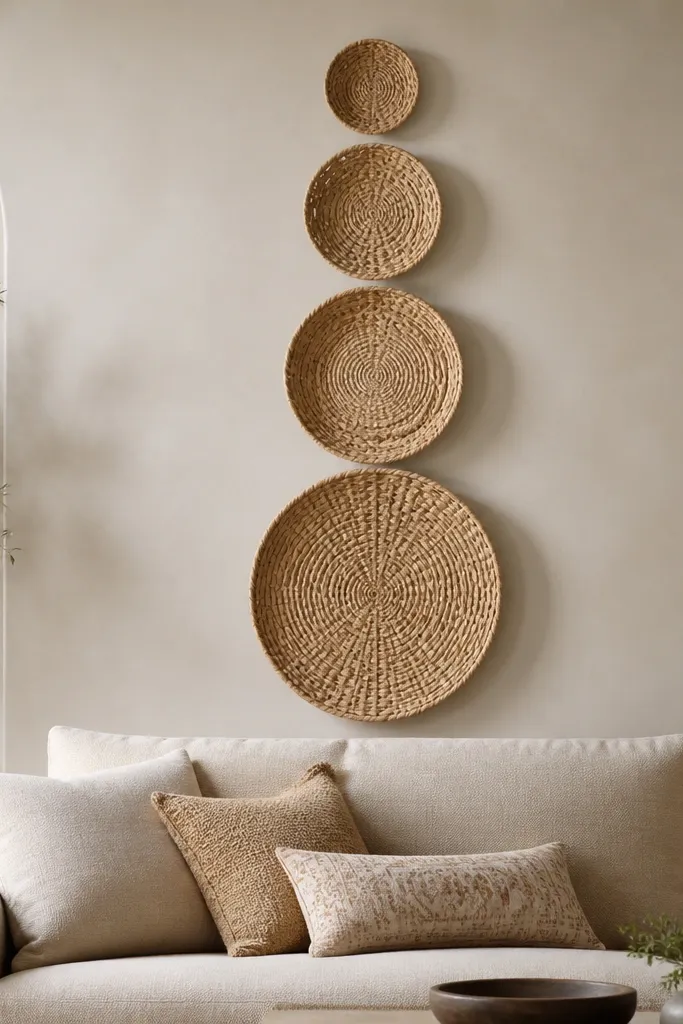
Baskets work because they add texture without visual clutter. I like mounting them in one centered column instead of scattering them because it reads intentional and cozy. Use natural fibers like seagrass, rattan, or jute in honey and warm straw tones. The woven pattern makes a wall feel handcrafted, and it softens the harshness of a leather or dark fabric sofa. This looks great on both warm and cool skin tones because the fibers are neutral and don’t cast color shadows. It’s also a smart choice if you want something flexible — swap one basket for a different season and the whole vibe changes.
Start by choosing 3 to 5 baskets, with the largest roughly the width of your sofa’s center cushion. Mount the largest basket first at about the sofa-back midline. Place the next baskets above with a 2 to 4 inch gap so you can see the weave in between. Keep all basket backs aligned to one center point and use matching hooks or a simple grid rail for consistent spacing.
Good to knowAdd one small ceramic wall hook below the largest basket for a tiny bundle of dried herbs.
AvoidAvoid mixed basket colors like whitewashed plus deep black — it looks mismatched instead of cozy.
8. Peel-and-stick wood tiles in a vertical stripe behind the sofa
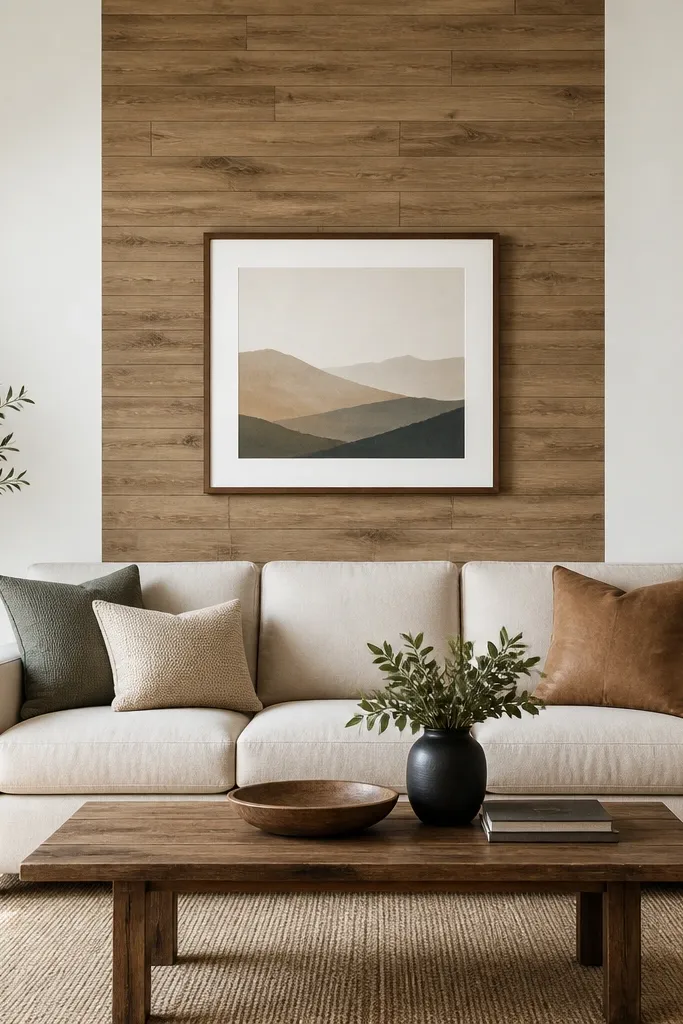
This is my go-to renter-friendly trick when you want real texture but you don’t want to commit to a full panel wall. A single vertical stripe creates a focal point and keeps the rest of the wall calm. I’ve used the wood-look tiles in light oak tones so the stripe adds warmth without overpowering. It looks cozy even with minimal decor because the texture is already doing the work. This flatters smaller rooms because it adds interest without covering the entire wall. It also works for sofas in dark colors since the stripe brightens the center visually.
Start by measuring the stripe width — aim for about 30 to 40 percent of the wall width and keep it centered on the sofa. Clean the wall with isopropyl alcohol and let it fully dry so the adhesive bonds. Apply tiles from bottom to top in straight lines, using a level and smoothing tool to prevent bubbles. After the stripe is set, hang your art or mirror centered on the stripe, and keep the piece’s width about the same as the stripe.
Use a hair dryer on low heat to help tiles lie flat around edges and prevent lifting.
Skip applying on dusty walls — the stripe will peel in a couple months and look patchy.
9. A built-in look with two floating shelves and a picture ledge
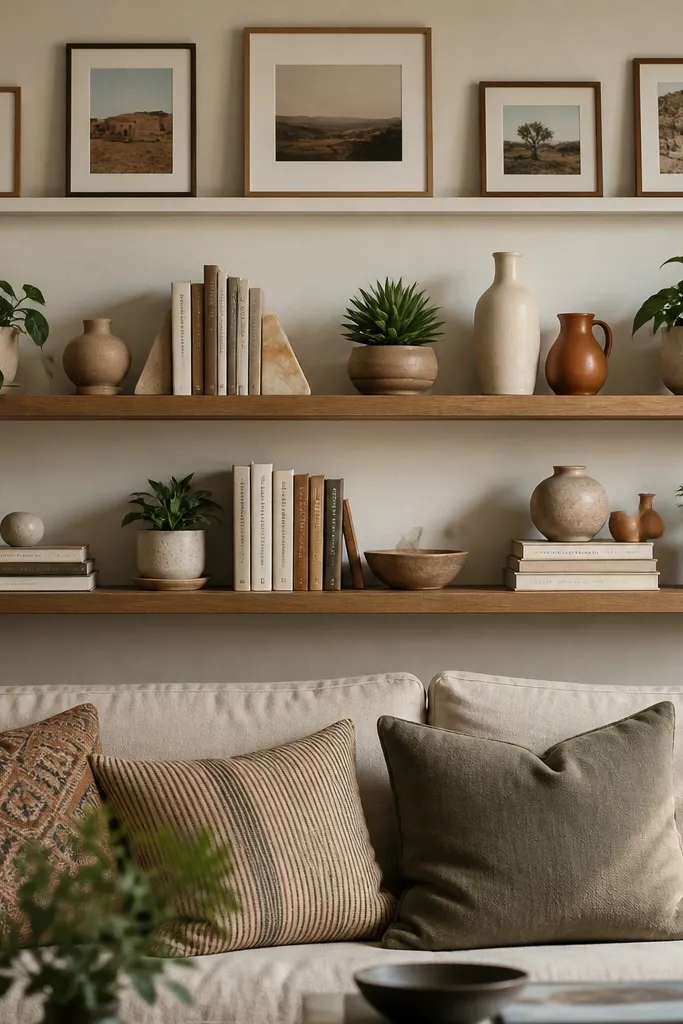
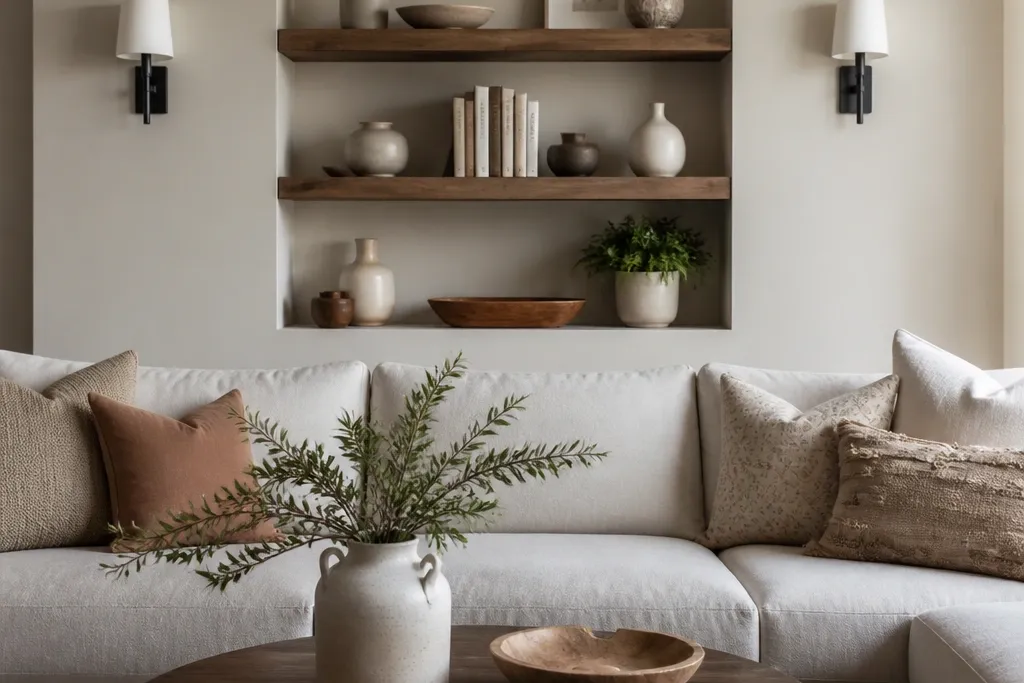
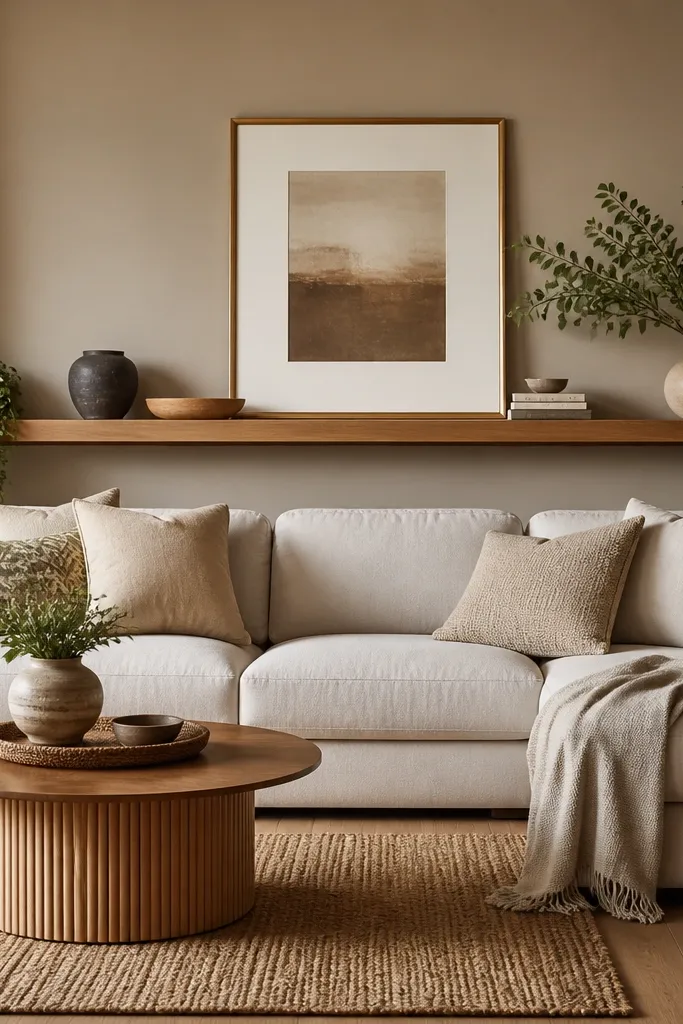
Floating shelves make a sofa back wall feel finished because they add three-dimensional structure. I love this setup when your sofa sits close to the wall — you get depth without needing a console. Use warm wood or a matte painted finish that matches your trim. Styling matters: keep items grouped by height so the wall looks intentional instead of random. This works for most rooms because you can scale the shelf length to your sofa width. It also flatters lighter upholstery because the shelves add warmth and shadow lines behind the couch.
Start by installing the bottom shelf at about 10 to 12 inches above the sofa back top. Mount the second shelf 8 to 10 inches above the first so you get a cozy vertical rhythm. Add a picture ledge or hang a small framed piece between the shelves for a focal anchor. Style in this order: largest book stacks first, then one plant or vase, then small objects that repeat a color (like cream ceramics). Keep all shelf items within a 6 to 8 inch band centered to the sofa.
Choose books with matching spine colors (cream, tan, muted green) so the shelf reads cohesive from across the room.
Avoid overloading with small decor — it turns into clutter and the wall loses the cozy effect.
10. Large fabric wall panel with double-sided mounting
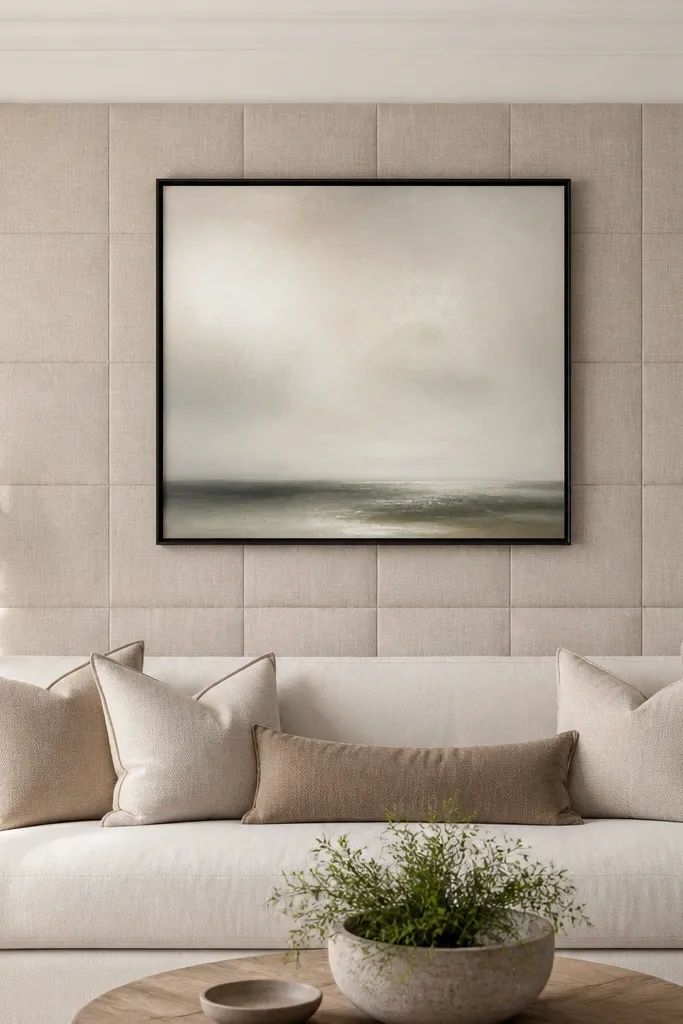
An upholstered panel behind the sofa is the most “cozy in one move” option I’ve tried. It softens the sound, adds depth, and makes the wall look like part of the seating. I’ve used oatmeal linen because it hides minor wall imperfections and it reads warm against most sofa colors. If your sofa is dark, the panel gives a cushiony contrast without brightening too much. It also flatters people with deeper undertones because the warm fabric doesn’t cast harsh shadows. This idea works best when you want the wall to feel calm and tactile, not busy.
Start by choosing a panel size about 60 to 80 percent of your sofa width and roughly from 8 inches above the sofa back to a bit above eye level. Mount with a French cleat or strong wall anchors designed for the panel’s weight — don’t rely on small adhesive squares. Pull the fabric tight on the frame so it looks smooth from the couch, not wrinkled. Finish by adding one centered artwork above the panel or a slim sconce on each side to frame the upholstered rectangle.
Use a panel with a subtle texture (like boucle or quilted linen) so it catches light without glare.
Skip shiny velvet panels — they look dramatic but they can read cold and show every reflection.
11. Corner-to-center console with two lamps and a tall vase
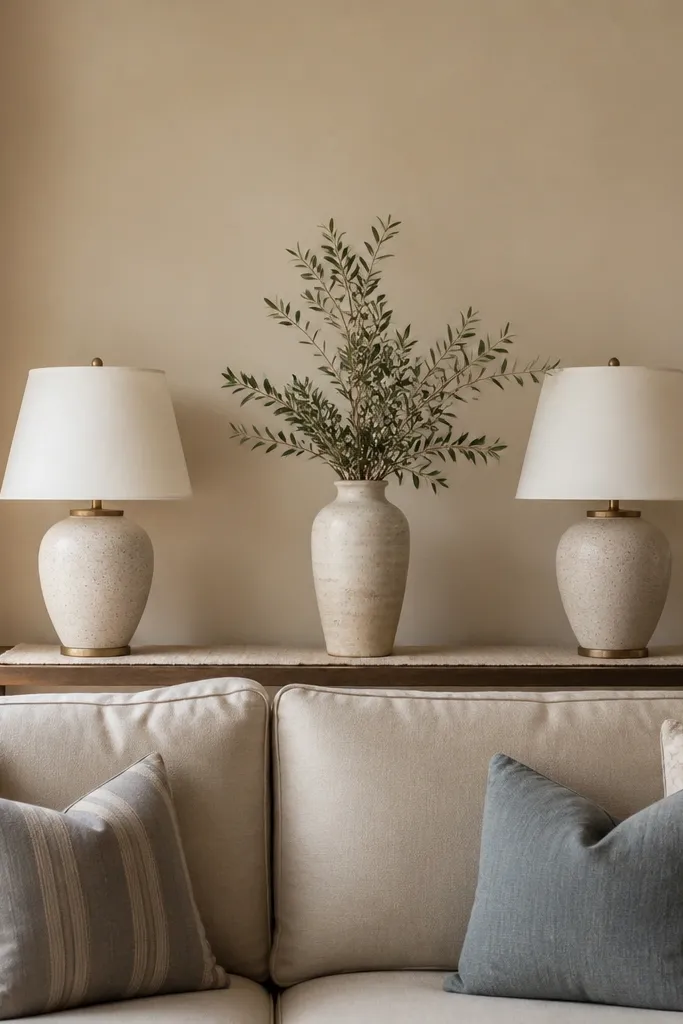
This is cozy because it layers light and height right where your eyes rest. Two lamps make the room feel balanced, and a tall vase adds vertical interest so the wall doesn’t feel flat. I like this when you have open shelving elsewhere in the living room — the console becomes the controlled, styled area. Choose lamps with warm shades in cotton or linen so the glow is soft. This setup flatters almost any skin tone because it makes the whole seating zone feel warm and dimensional. It also works well for evening use since the wall reads finished even after lights go down.
Start with a console height that puts the lamp shade bottom around the sofa-back midline. Center the console behind the sofa and keep it about 10 to 12 inches deep so it doesn’t overwhelm the walkway. Place two lamps at the left and right thirds of the console, then add a tall vase or dried branch arrangement in the middle. Hang one large art piece or mirror above the console so it spans about the same width as the console top.
Use matching lamps but vary the shade fabric texture slightly (one smooth cotton, one linen) for cozy contrast.
Avoid one lamp in the center — it creates a shadowy wall and the sofa area looks dim.
12. Painted arch mural centered behind the sofa
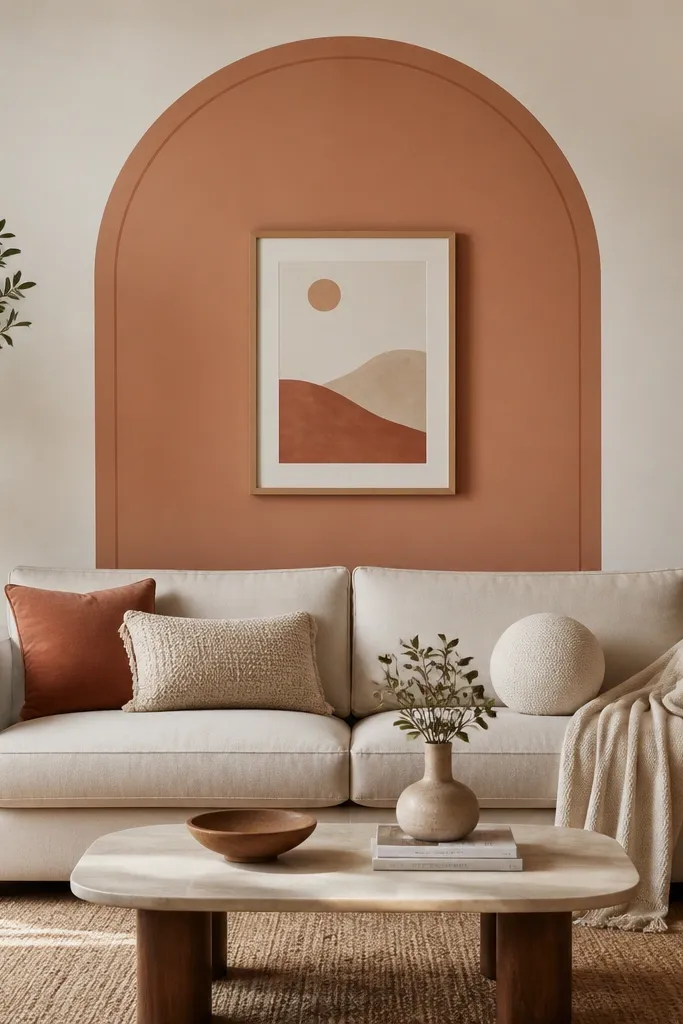
A painted arch is cozy because it frames your seating like a built-in doorway. I did a clay arch behind a sofa in a small rental and the room felt instantly styled without adding clutter. Pick one warm color, then use a slightly deeper shade for the inner line so it reads dimensional. This is especially flattering on sofas with neutral fabrics because the arch adds warmth without changing your furniture. It also looks good on both warm and cool undertones because the clay sits between beige and terracotta — it doesn’t go too orange. The arch shape gives your eye a place to rest.
Start by finding the center of the wall and marking the arch width at about 70 percent of your sofa width. Use painter’s tape to create the arch outline, then paint the outer arch first with a matte wall paint. Add a second, thinner inner line in a slightly deeper clay once the first coat is dry. Place a small piece of art inside the arch or keep it empty and hang nothing if your sofa already has bold pillows.
Use a foam roller for the arch fill so you get a smooth, cozy matte finish with fewer brush marks.
Skip freehand arches — crooked edges show from the couch and it looks DIY in a bad way.
13. Vertical picture panels with three large frames
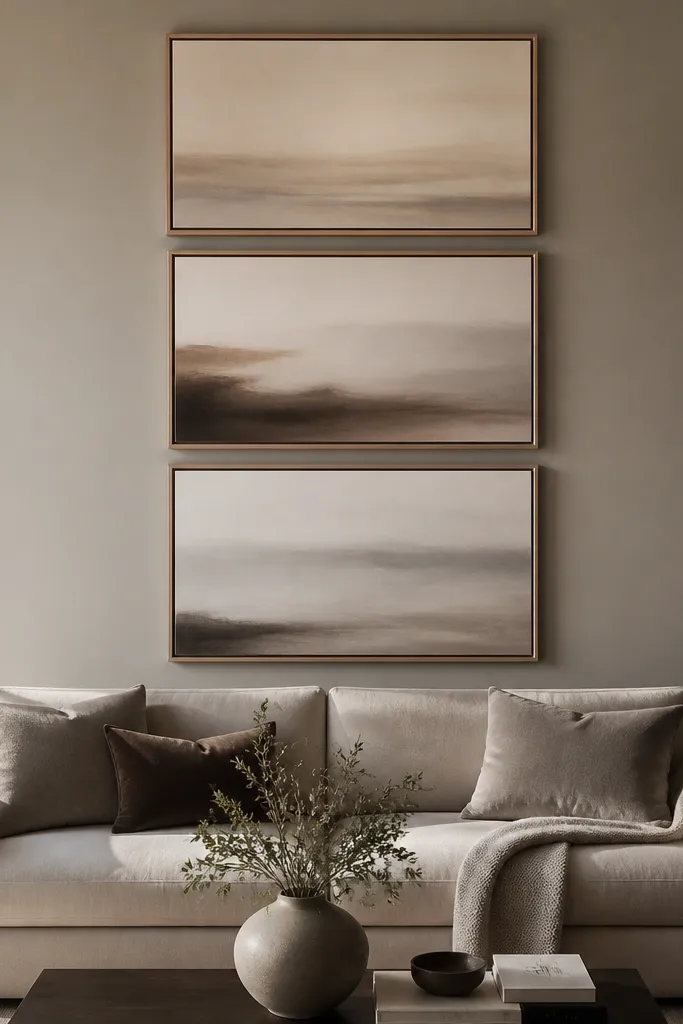
When your sofa back wall is narrow, three large frames in one vertical stack looks cozy and intentional. I prefer this over tiny mixed galleries because it keeps the wall from feeling like a gallery wall that grew out of control. Use matching frame sizes and consistent matte art so the whole column reads calm. This works beautifully for people who like minimal decor but still want warmth. It also flatters darker sofas because the neutral gradients soften the contrast. The vertical layout makes the wall feel taller, which is great for apartments with lower ceilings.
Start by choosing three frames that match in width, then decide their combined height so the stack sits centered behind the sofa. Hang the middle frame first at about eye level when seated, then place the top and bottom frames with equal gaps. Keep the stack width around 55 to 70 percent of the sofa width. Use matte art with light backgrounds to avoid heavy glare and pick frames in a warm finish like walnut, oak, or dark bronze.
Put the same art type in all three frames — for example, all textured prints — so it reads cohesive from across the room.
Avoid mixing frame colors and mat styles — it makes the stack look like different purchases.
14. Sofa-back lighting with two wall sconces on a dimmer
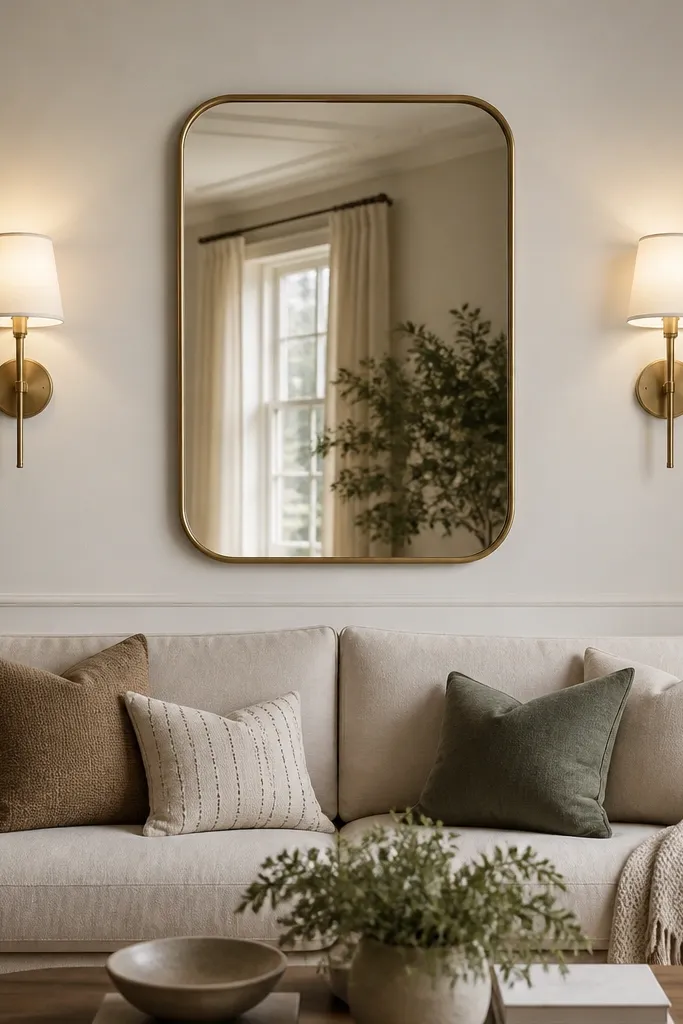
Lighting is what turns a cozy wall from “pretty in daylight” to “snug at night.” Two sconces flanking a mirror or art piece makes the sofa area feel framed and warm without relying on floor lamps. I always choose wall sconces with shades in linen or cotton because the light spreads softly. This flatters skin tones because it reduces harsh overhead lighting and gives you a gentler glow. It also works in rooms where you don’t want to place lamps on tables. If your sofa is near a corner, sconces are especially helpful because they keep surfaces clear.
Start by deciding your center focal point — mirror or art — then mark where each sconce will sit about 10 to 14 inches away from the focal piece’s edges. Mount the sconces so the center of the bulb or shade sits around 60 to 66 inches from the floor. Wire to a dimmer so you can lower brightness for evening. Place a mirror or art centered between the sconces and keep the rest of the wall simple so the lighting reads intentional.
Good to knowUse warm LED bulbs around 2700K and test brightness before finalizing the dimmer settings.
AvoidSkip bare bulbs or high-gloss shades — the light looks harsh and the wall won’t feel cozy.
15. Narrow vertical shelves with books and a fabric runner
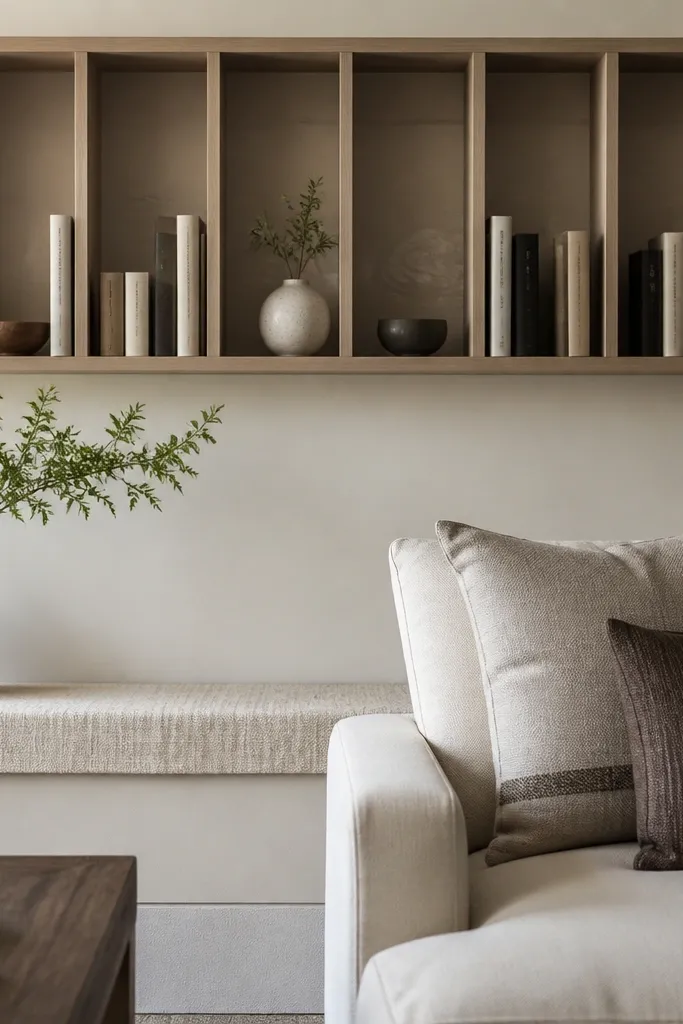
Vertical storage behind a sofa makes the wall feel like part of your living space, not just a backdrop. I like narrow shelves because they add height and shadow without taking over the room. Use upright books with spines facing out for a cozy, lived-in look, then soften with one fabric element like a folded runner or a small basket. This flatters rooms with neutral furniture because the books bring warmth and color in controlled amounts. It also helps if your living room has lots of blank wall space and no place to store throws. The wall becomes functional, and that makes it feel more comfortable every day.
Start by building or buying a narrow shelving unit that’s about 8 to 12 inches deep and centered behind the sofa. Keep the shelf height so the top lands around the middle of your sofa back height plus a few inches. Arrange books upright first, then add a couple of small decor pieces — one ceramic, one basket, one plant. If you have a lower shelf or ledge, top it with a folded fabric runner so the whole setup looks soft, not like a storage closet.
Good to knowUse bookends in matching metal or wood — they keep the cozy look tidy without looking staged.
AvoidAvoid leaving empty shelves randomly — either fill a shelf with one type of object or remove it from the plan.