1. Mirror on the short wall with a slim black frame
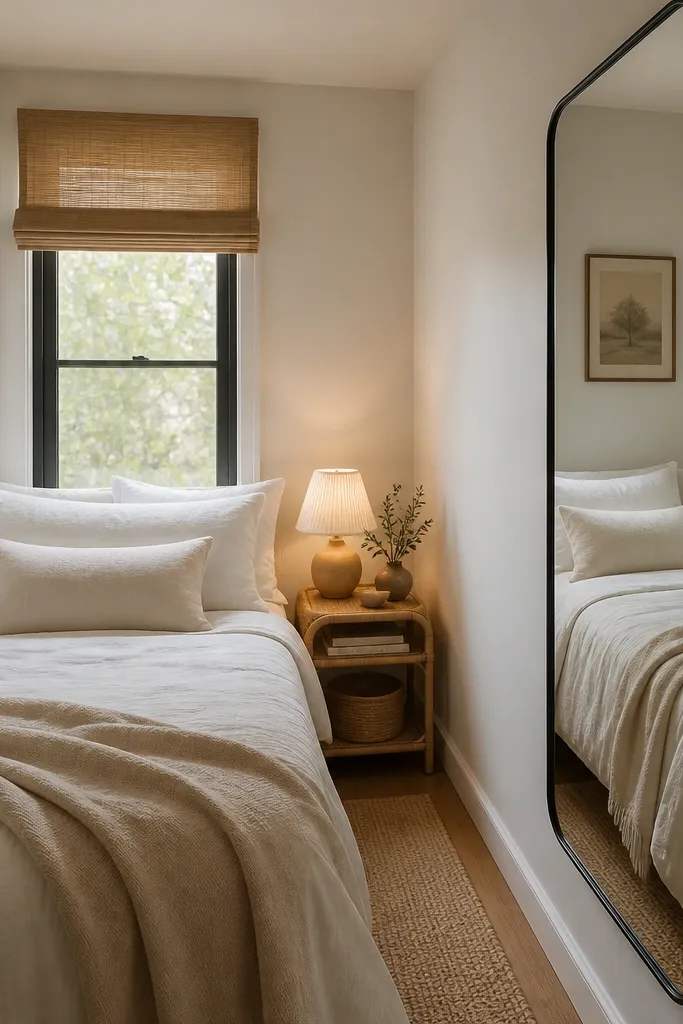
I place the mirror on the short wall because it bounces light back across the bed line, which makes the room feel longer. The thin black frame matters — it reads crisp instead of chunky, and it matches common hardware like bed frames and curtain rods. I like white bedding with a warm beige or oatmeal throw because it stays bright but not sterile. This setup looks great on most skin tones because the palette is neutral and the warm lamp light brings out undertones. If your room has cool daylight, the beige throw and warm lamp keep everything from feeling gray.
Start by choosing a mirror that is tall but not wide — around 24x60 inches works well in tight rooms. Mount it so the bottom edge sits about 10-12 inches above the floor, then angle it so it reflects the window or the brightest light source. Place a slim nightstand (not wider than 14-16 inches) on the bed side so the mirror doesn’t compete. Dress the bed with a white duvet cover, add one textured layer like a oatmeal throw, then keep wall decor minimal — one small framed print near eye level. Finish with a warm bulb lamp (2700K) so the mirror reflections look golden, not blue.
If you can, wipe the mirror daily for the first week — smudges show up fast in small rooms with strong light.
Avoid a thick, ornate mirror frame because it visually adds depth where you need breathing room.
2. Curtain illusion: floor-length sheer + one linen panel
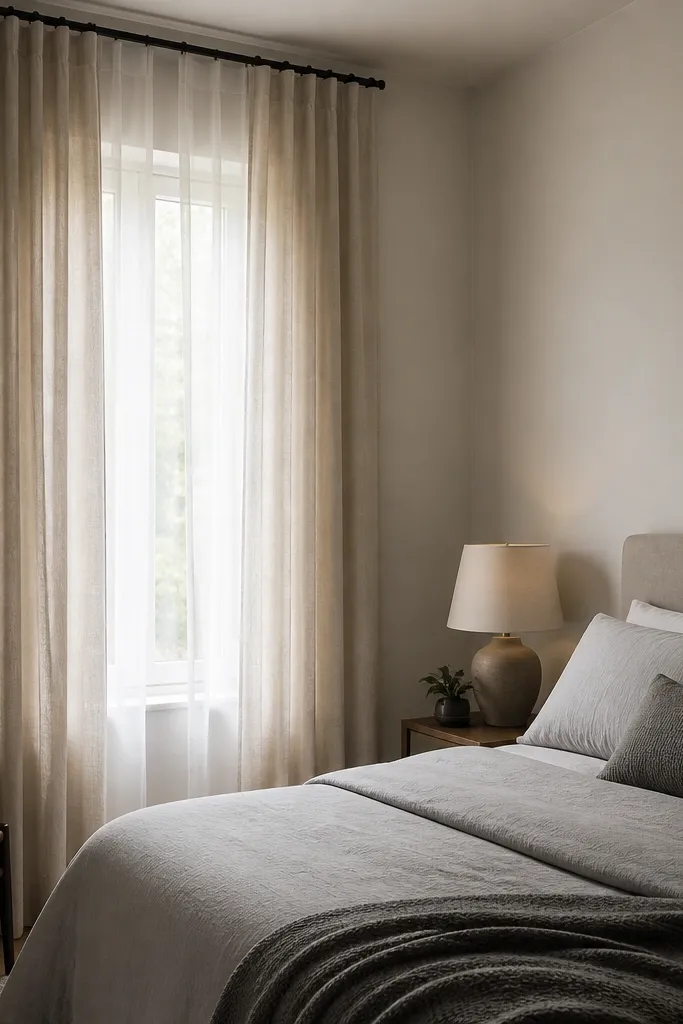
This is the look I use when the room feels short. Hanging curtains high makes the wall feel taller, and the sheer layer keeps the daytime light moving so the room doesn’t go dim. I pair a white sheer with a single linen panel in sand or oatmeal because it looks airy but still grounded. It’s flattering for people who like a calm, spa-like vibe — it reduces harsh shadows and makes the lighting on your face softer in photos. If your skin tone runs warm, the sand linen looks especially natural; if you’re cool-toned, keep the linen closer to oatmeal than yellow.
Start by measuring from the floor to the ceiling and decide your rod height — I aim for 4-6 inches above the window casing, sometimes closer to 8 inches if the ceiling is low. Use a tension-rod or real rod with rings that glide easily, and hang a sheer panel first so it frames the window. Then add one linen panel on the outside edge so you still get shape without heavy bulk. Keep the hem long — puddling 1-2 inches above the floor looks intentional, but don’t drag. Style the bed with one solid color duvet (white, light gray, or cream) and one textured accent pillow in a similar neutral so the curtains don’t fight your bedding.
Iron or steam the curtains before hanging — crisp folds make the whole room look higher-end instantly.
Avoid short curtains that stop at the window sill; they make the ceiling look lower and the room smaller.
3. Bedside height swap: wall shelf + plug-in sconce
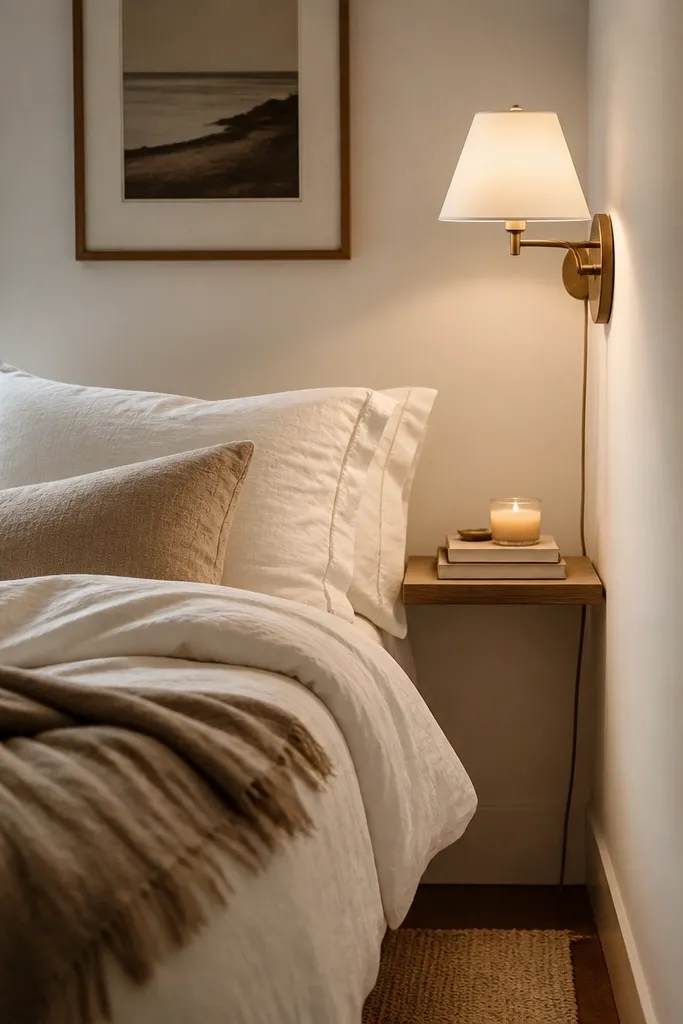
When floor space is tight, a wall shelf beats a nightstand every time. It keeps the visual line open and gives you a place for the only things that matter at bedtime: light, a book, and a glass of water. I like wall shelves that are 6-8 inches deep and painted the same color as the wall, usually warm white or soft greige. The plug-in sconce adds that cozy glow without taking up any footprint. This combo looks good for any room orientation because it doesn’t matter where your bed lands — the light always lands at the right height.
Start by removing the nightstand and checking clearance when you sit up in bed. Mount a floating shelf at about 24-28 inches from the floor so your hand reaches comfortably. Place a small lamp alternative like a plug-in sconce above it at roughly eye level when you’re lying down. Keep objects minimal: one book, one small tray, one candle or salt lamp. Dress the bed with a duvet in cream or white, then add a single throw blanket folded at the foot or side so texture is visible even without a bulky bedside surface.
Run a small cable channel along the baseboard if you can — the clean line looks designed, not temporary.
Avoid a shelf that’s too deep; it reads like a mini nightstand and eats the airy look.
4. One-color bedding with a single textured accent
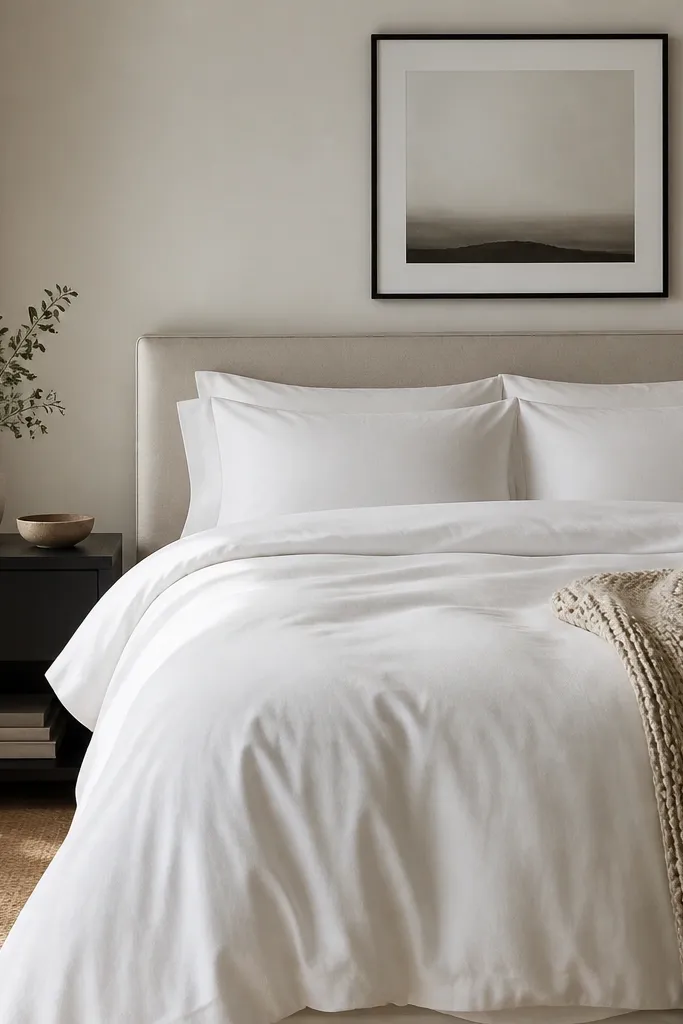
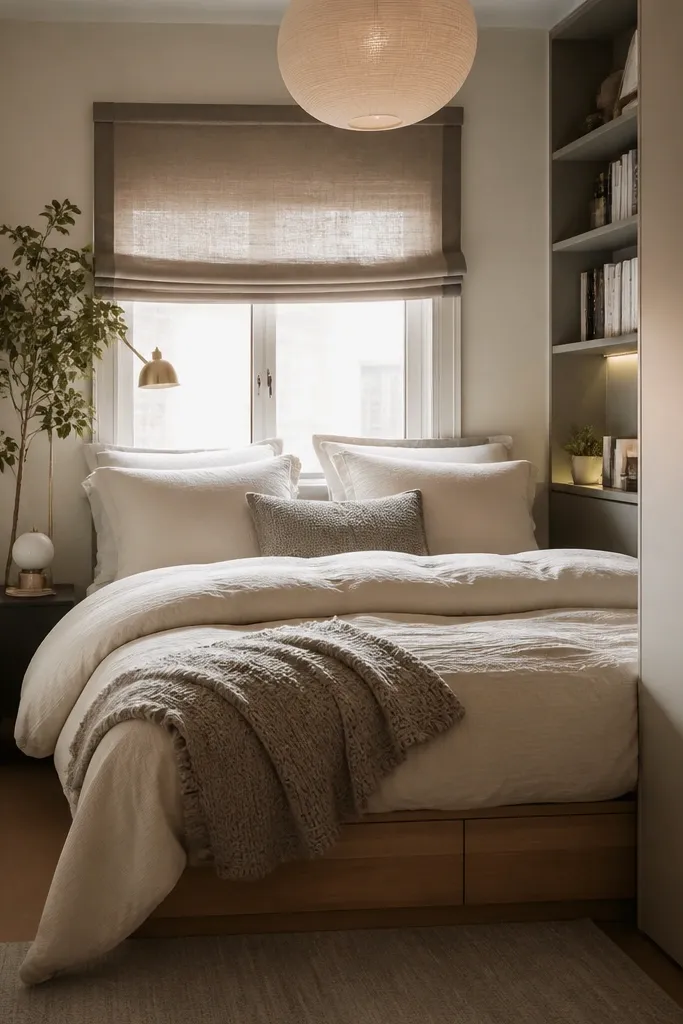
This is the easiest aesthetic win in a tiny room because it reduces visual edges. When your bedding is one color family, your eyes stop jumping around and the space feels calmer. I use all-white or all-cream because it reflects light, then I add texture with a knit throw in oatmeal, taupe, or light camel. The textured piece is what gives the room depth, not the number of patterns. This setup is flattering in daylight and at night because the warm throw catches lamp light and looks soft against skin.
Start with a duvet cover that matches your wall temperature — if your room is warm, choose cream; if it’s cool, choose bright white. Layer sheets that match the duvet so there are no harsh color breaks. Add two standard pillows and one smaller decorative pillow only if it matches the same tone. Drape the knit throw so it hangs over the side of the bed by about 10-14 inches, not fully folded flat. Finish with one framed print above the bed and keep the frame color consistent with your hardware, like black or brushed brass.
Good to knowShake out the throw and let it look slightly imperfect; tight folding makes it look staged.
AvoidAvoid mixing three patterns on small bedding — tiny rooms can’t hide busy designs.
5. Gallery wall at bed height with 3 frames only
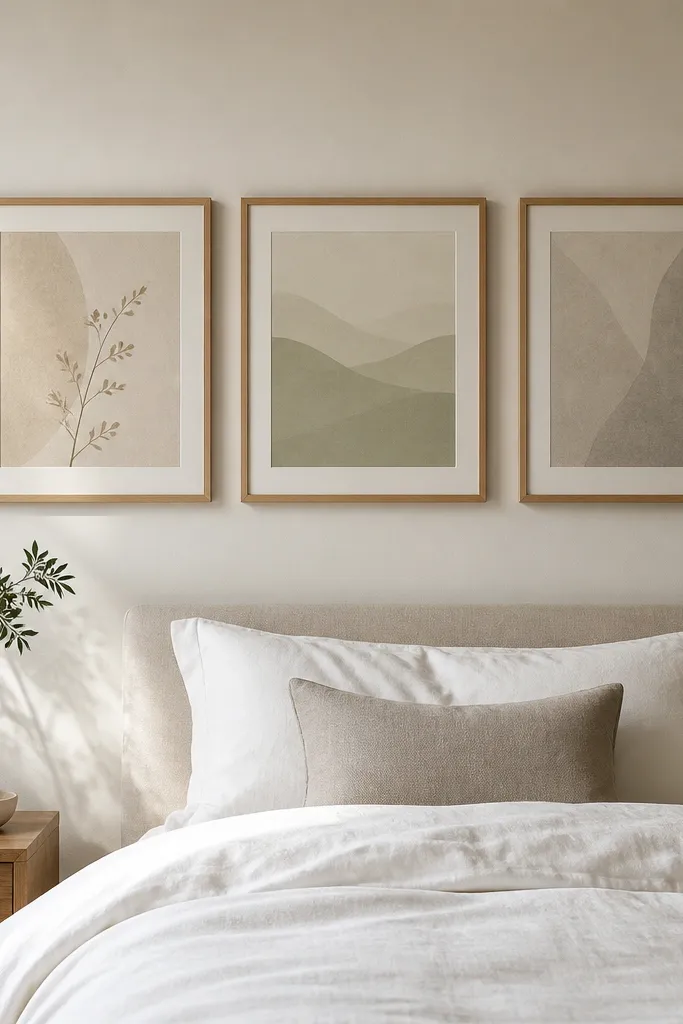
In a small bedroom, a gallery wall is risky if you go overboard. I stick to three frames because it reads intentional without crowding the wall. The prints should be muted — sage, warm gray, and beige — so the palette stays cohesive and doesn’t compete with your bedding. Light wood frames look warmer than black in tiny rooms, especially if you have a lot of white walls. This setup is great if you want an aesthetic that looks calm in the morning and still pretty at night with lamp light.
Start by marking the center point above your bed, then hang the middle frame first. Place the top of the middle frame so it sits about 58-62 inches from the floor, then align the other two at equal spacing. Use frames that are the same size so the wall looks orderly. Choose prints with similar contrast levels — not one bright neon and two pale prints, because that imbalance looks messy. Style the bed with one neutral duvet and a single throw in one of the print colors, like sage or taupe, so the wall and bed feel connected.
Good to knowMeasure the spacing with painter’s tape on the wall before you drill any holes.
AvoidAvoid mixing frame sizes; mismatched sizes in a tiny room look like clutter.
6. Headboard trick: peel-and-stick wall panels behind the bed
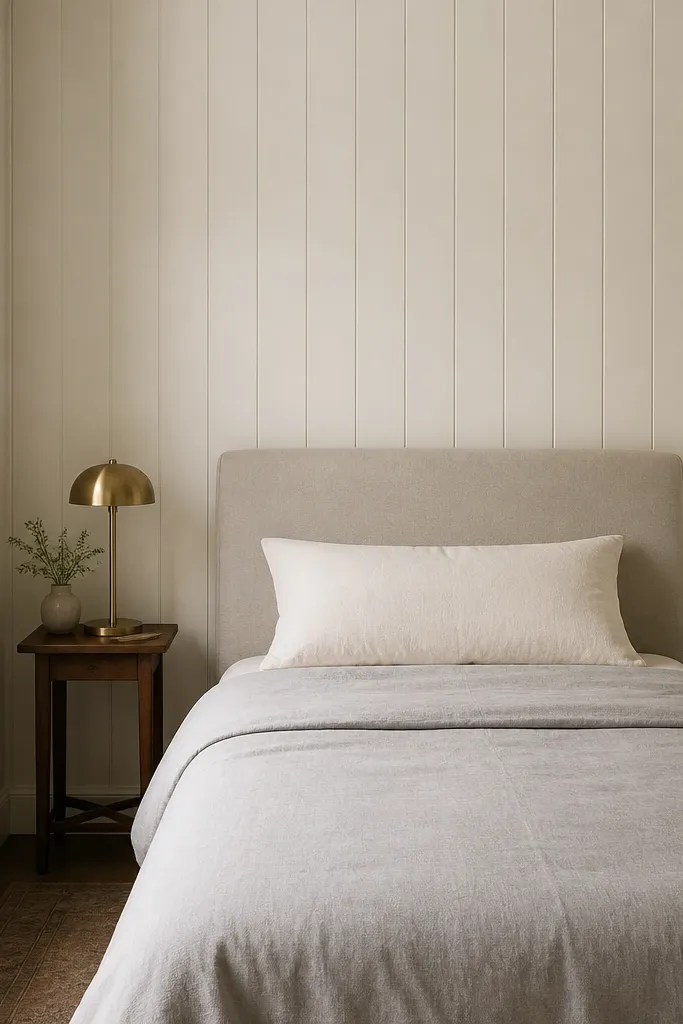
Textured wall panels behind the bed make the whole room look more expensive without adding furniture. I like warm white panels with vertical lines because they add height and depth even in flat lighting. The texture also helps your bedding show up better, since smooth walls can make everything look flat. This works for most people because it’s neutral and doesn’t pull color away from your skin tone when you’re photographed in the room. If your room is small and lacks natural light, the warm white texture is more forgiving than stark bright white.
Start by cleaning the wall thoroughly and letting it dry completely so the panels stick. Plan the layout so the center panel lines up with the bed center, not the window or door. Press each panel firmly from the center outward to avoid bubbles. If the wall has outlets, cut carefully and dry-fit before peeling the backing fully. After installing, keep the bed styling simple: one solid duvet, one textured pillow or throw, and a lamp with a warm shade to make the panel shadow lines look soft.
Good to knowRun your hand across the panels after installation; any lifting edges will show immediately.
AvoidAvoid glossy panels — they catch glare and make the room look harsher.
7. Rattan + white: a light nightstand that doesn't swallow the room
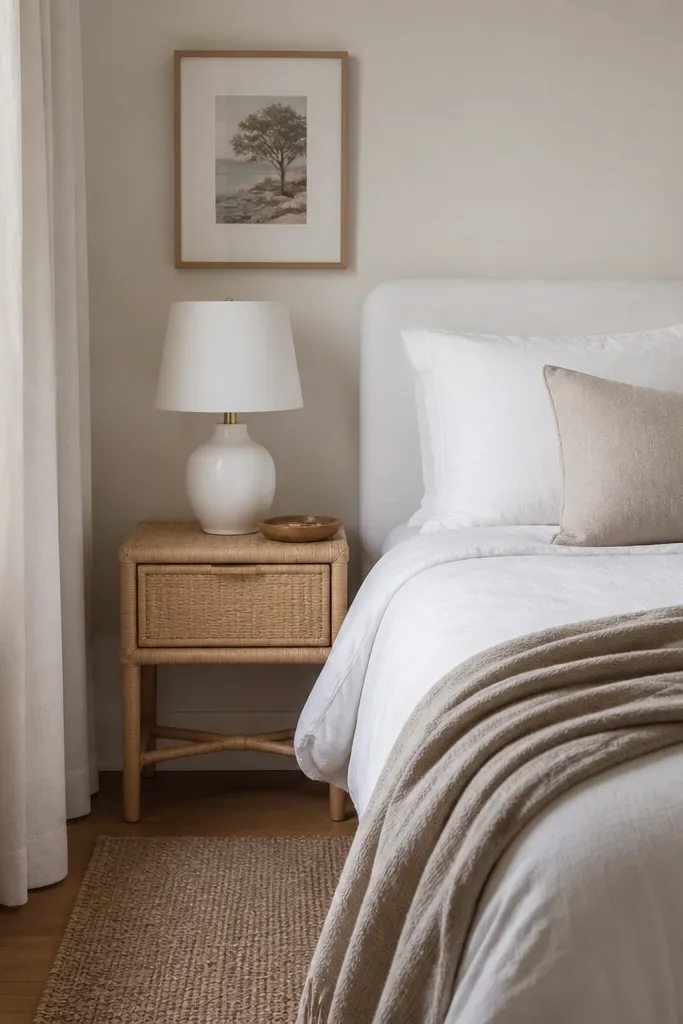
A light rattan nightstand adds warmth without visual weight. The woven texture breaks up the blocky look of a small room, and the slim legs keep the floor looking open. I pair rattan with white ceramic and warm neutrals because it looks airy instead of beachy. This combo flatters most skin tones in mirror reflections because it doesn’t add heavy color cast. It also photographs well since the natural texture shows detail even when your lighting is basic.
Start by choosing a nightstand that is under 16 inches wide and has visible legs. Place it flush to the bed side so you don’t create a messy gap. Add a white lamp with a fabric shade; keep the lamp base simple so the woven texture stays the star. Put a small tray on top to corral essentials — one dish for jewelry or a bottle for skincare. Dress the bed with white sheets and add a taupe throw in a knit or waffle weave so the room has one clear texture besides rattan.
Use a tray, even if it’s just a small ceramic one; it stops the top from looking cluttered.
Avoid dark wood nightstands in tiny rooms unless the walls are also dark — the contrast can feel heavy.
8. Floating book ledge behind the headboard line
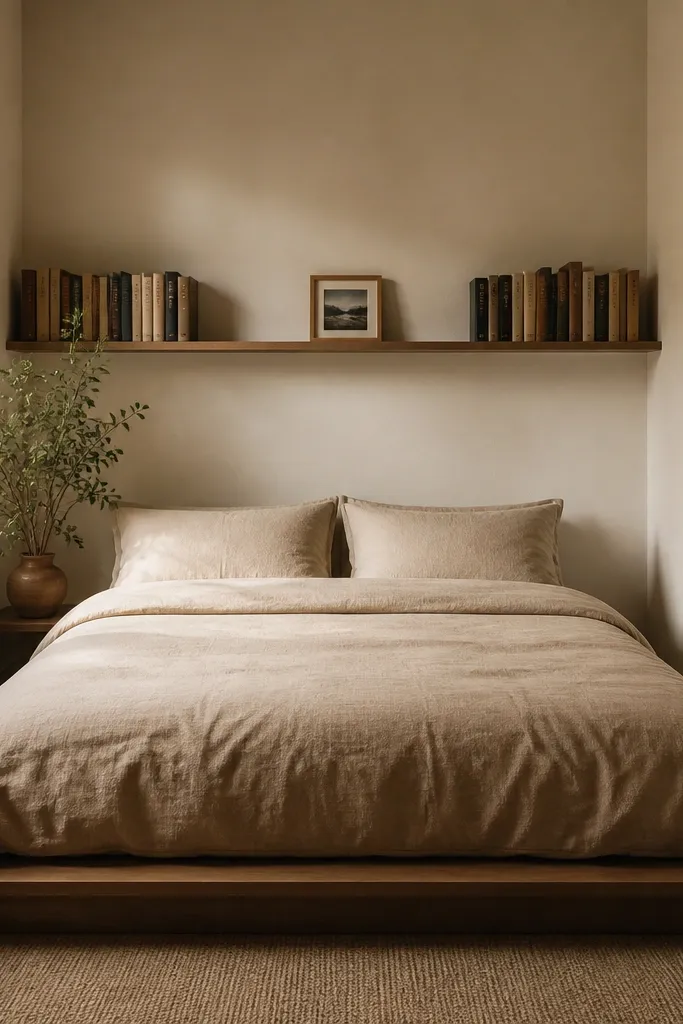
This idea gives you the “designed shelf” look without taking up nightstand space. A narrow ledge above the headboard works because your eyes read it as wall decor, not storage. I keep it minimal: a few books with consistent neutral covers, one framed photo, and maybe a small plant if the light is right. The effect is cozy and intentional, especially if you like that lived-in look. It also flatters the room because it keeps the bottom half clean and open.
Start by measuring the width of your bed and choosing a ledge that’s about 80-90% of that width. Mount it so the bottom edge sits around 8-12 inches above the headboard, not too high. Stack 4-6 books with spines facing out, then add one small frame centered. If you use a plant, pick one that stays compact like a faux olive branch or a very small real plant with low light tolerance. Style the bed with beige or oatmeal bedding and a single lighter pillow so the shelf colors don’t overpower the scene.
Good to knowKeep book spine colors to two neutrals and one muted accent so the shelf looks curated, not random.
AvoidAvoid stacking too many books; in small rooms it looks like clutter fast.
9. Low bed frame + long runner rug for instant length
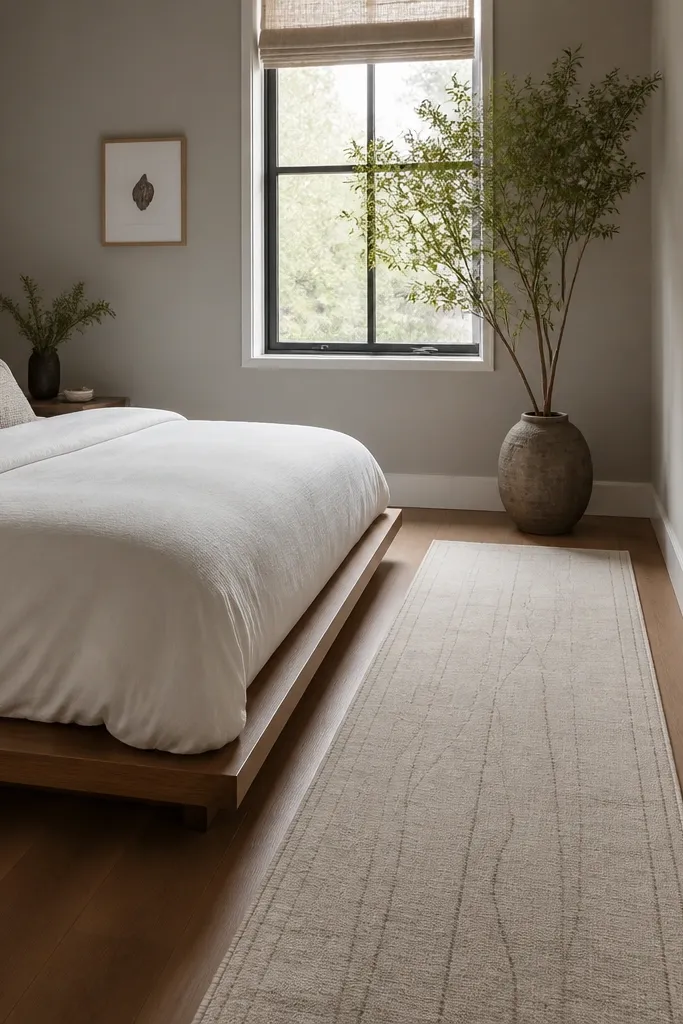
A low bed frame makes the room feel taller because there’s less visual bulk between floor and bed. Pair that with a long runner rug and your eye gets a length cue instead of a width cue. I choose runners in light beige or warm gray so the floor still reads bright. This is one of the cleanest Very Small Bedroom Ideas aesthetic 2 looks because it uses geometry — lengthwise lines — to trick the space. It also looks good for anyone who wants their room to feel tidy and calm.
Start by pulling the bed slightly away from the wall if you can, even 1-2 inches, so the rug edges and bed line look intentional. Choose a runner that is long enough to reach past the foot of the bed by 12-18 inches. Place the rug so it runs straight and centered under the bed line. Keep the rug pattern subtle so it doesn’t fight your bedding texture. Finish with a slim rug pad underneath so it doesn’t slide and you get clean edges.
Good to knowVacuum the runner edges weekly — lint shows up fast on light rugs in small rooms.
AvoidAvoid a short rug that stops under the bed; it cuts the room visually.
10. Corner bench with storage drawers under the window
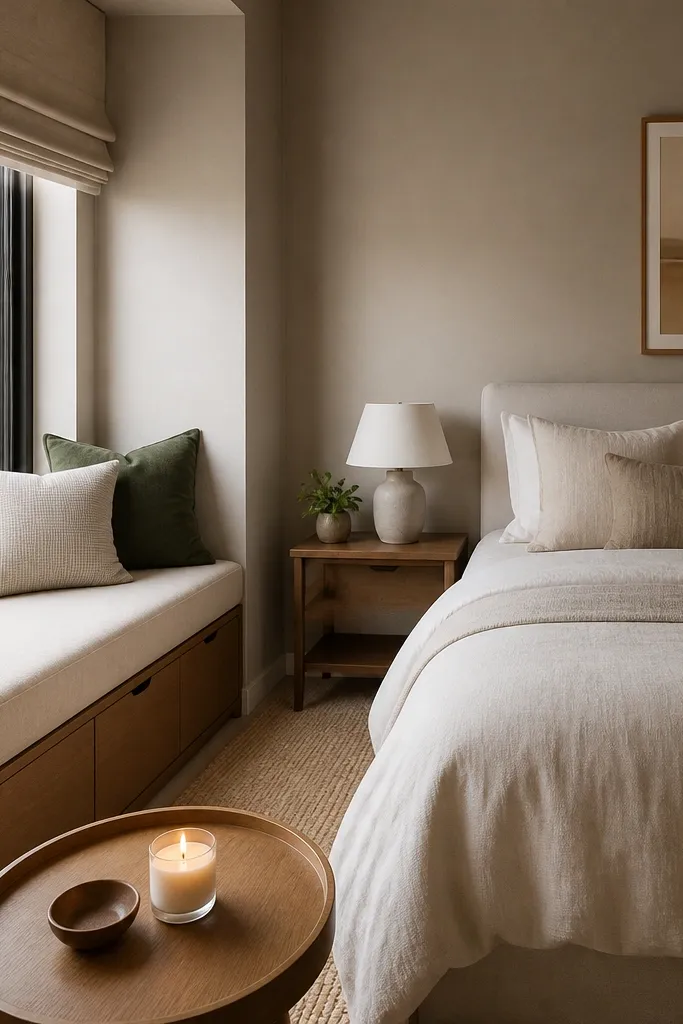
If your bed blocks the floor, you need storage that doesn’t add clutter. A corner bench under the window gives you a place for blankets, extra pillows, or even seasonal clothes without adding a bulky dresser. I like benches with light fabric upholstery in oatmeal or light gray because they blend into a small room instead of looking heavy. The drawers keep the room looking clean, which is where the aesthetic really comes from. This setup works for people who like a soft, cozy look but hate visible mess.
Start by measuring the space under the window and choose a bench that leaves at least 2 inches of clearance from any trim. Place the bench so it aligns with the window center, then add a cushion in a neutral fabric. Store items you need less often — extra duvet sets, spare throws, and off-season shoes. Add one small tray on top for a candle and a book so it looks styled, not utilitarian. Style the bed with one calm color duvet and a throw that matches the bench cushion tone.
Good to knowUse fabric bins inside the drawers; they prevent items from shifting and wrinkling your linens.
AvoidAvoid dark, high-gloss benches — they reflect light harshly and make the corner feel crowded.
11. Textile layering: waffle throw + knit pillow + satin sheen sheet
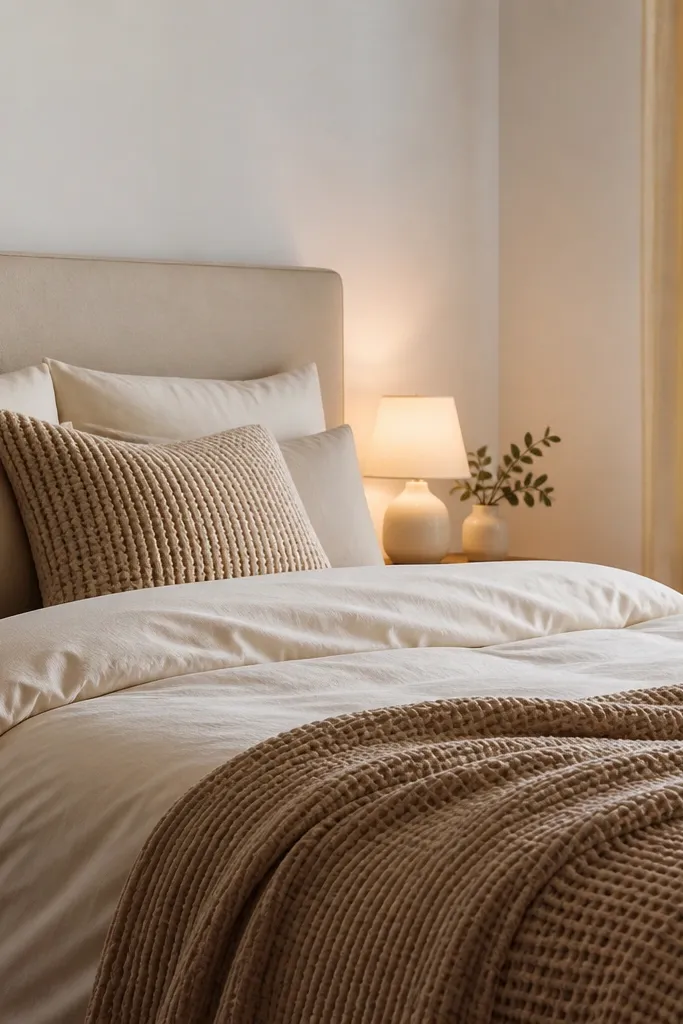
Texture is the shortcut to a high-end look in small spaces because you don’t need extra furniture. I build texture in three levels: smooth base (slight sheen sheet or duvet), waffle throw for structure, and a knit pillow for softness. The satin sheen catches light in a gentle way, so even a small lamp looks more flattering. This feels good visually and in touch — your eyes and hands both get something to notice. It also works across skin tones because the neutrals stay warm and don’t create harsh color casts.
Start with a duvet cover in cream or warm white with a smooth finish. Add a waffle throw folded over one side of the bed, about 16 inches long so the weave texture is clear. Place one knit pillow behind it, then keep the remaining pillows matching the duvet for calm. Use a lamp with a fabric shade so the sheen doesn’t look too shiny. Keep your wall decor minimal and choose one color from the throw to echo in a frame or small art print.
Good to knowWash and dry the throw separately so the weave stays crisp, not flattened.
AvoidAvoid mixing too many textures with different weights; it makes the bed look messy instead of styled.
12. Paint color plan: warm white walls with one soft sage accent panel
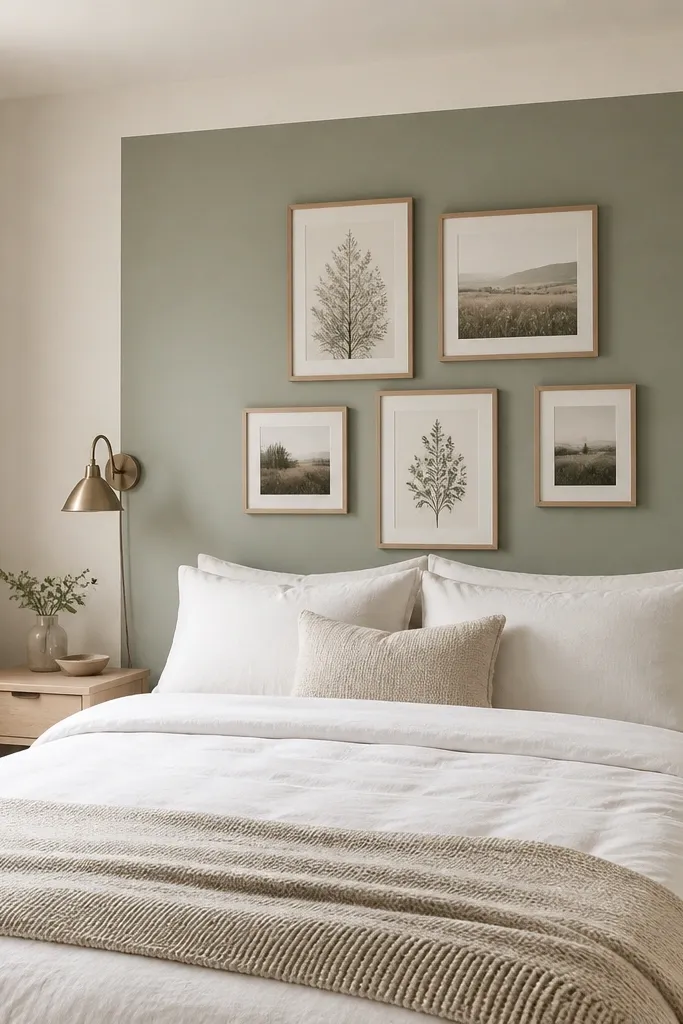
A single soft accent panel behind the bed creates depth without changing the whole room’s color temperature. Warm white walls keep the room bright, while sage adds a calm note that looks good with both warm and cool lighting. I like keeping the accent in a rectangle rather than painting the entire wall because it frames the bed and adds focus. This aesthetic looks especially flattering if you wear warm neutrals or gold jewelry, since sage pairs well with that warmth. It also makes the bed look like a deliberate focal point, even with minimal decor.
Start by choosing warm white for the main walls, then pick a sage that looks gray-green, not yellow-green. Tape off a rectangle behind the bed — leave 2-3 inches of border around the bed’s width so it feels intentional. Paint the accent area first, then the walls, so you get cleaner edges. After it dries, hang art or frames centered on the bed so they visually sit on the accent panel. Style the bed with white bedding, then add one throw in oatmeal or light taupe and a small pillow in sage or a related neutral.
Good to knowTest the sage on a sample board and look at it at night under your lamp — the undertone matters.
AvoidAvoid a saturated green accent; it can feel overpowering in a small room.
13. Acrylic or glass side table with a linen shade lamp
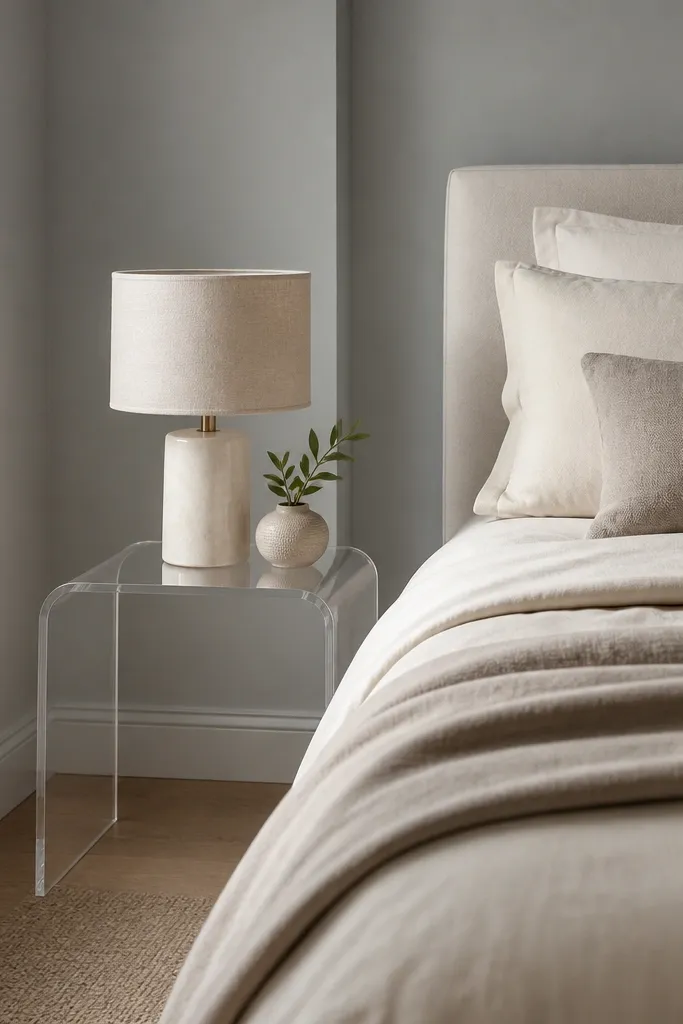
Glass and acrylic side tables are my go-to when you need function without visual clutter. They let light pass through, so the room stays airy even when you add a lamp and a phone charger. A linen shade softens the light and keeps the room cozy, so it doesn’t feel like a showroom. I pair acrylic with neutral bedding and a taupe throw because it looks warm and grounded. This works well for people who like clean lines but still want softness at night.
Start by choosing a table with clear legs or a clear top, ideally under 16 inches wide. Place it next to the bed so it lines up with the bed frame edge — alignment matters more than you think in small rooms. Add a linen drum shade lamp with a warm bulb (2700K). Keep the top small: a phone stand, a small tray for rings, and one book. Dress the bed with cream duvet and taupe throw, then add one decorative pillow with a subtle texture like cotton-linen blend.
Good to knowWipe acrylic with a microfiber cloth and a dedicated glass cleaner so it stays crystal clear.
AvoidAvoid placing too many items on the glass surface; reflections make clutter look louder.
14. Color-matched baskets for under-bed storage
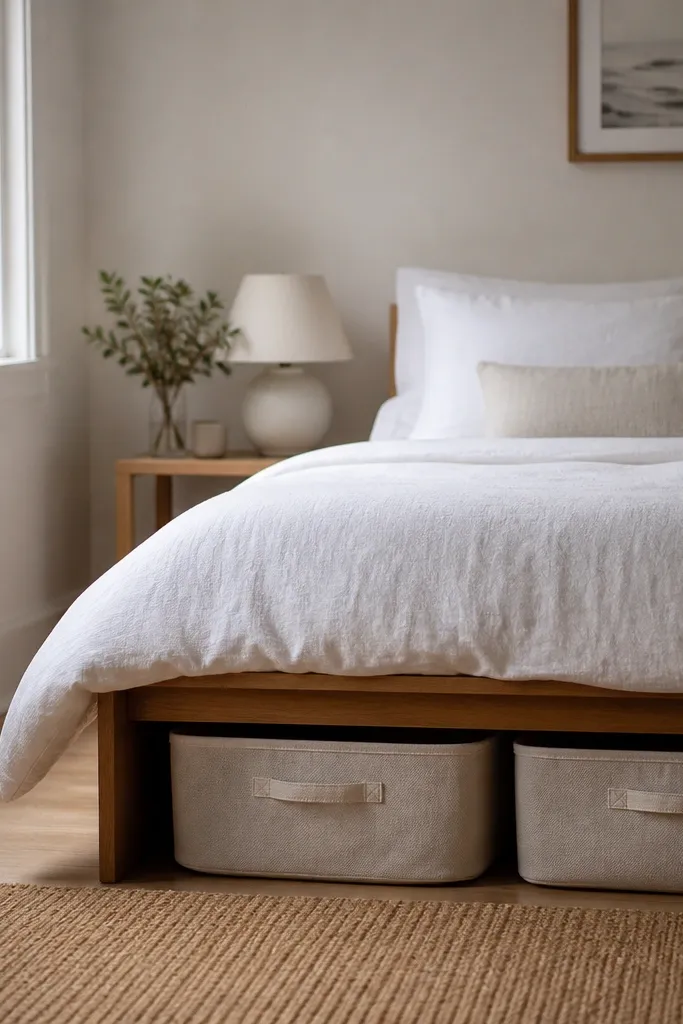
Under-bed storage is where aesthetics either wins or collapses. I use baskets that match the room’s main neutral so the storage disappears into the look. Light fabric baskets in oatmeal, cream, or soft gray keep the room bright, and the handles make it easy to pull things out without ripping. This is a practical aesthetic: your room stays visually calm because the mess lives out of sight but still organized. It flatters people who like a minimal look, and it works for warm or cool rooms since the neutrals are balanced.
Start by measuring the clearance under your bed — you need to know height, not just width. Choose baskets that leave a small gap on each side so they slide in and out easily. Line them up so the handles face the same direction for a clean look. Add one basket for extra linens and one for seasonal items so you don’t shuffle everything each week. Style the bed with white or cream bedding and add a throw in the same tone as the basket fabric so everything reads cohesive.
Good to knowLabel the inside with a small piece of painter’s tape on the basket rim; it’s hidden but saves time.
AvoidAvoid mismatched storage bins in different colors; in tiny rooms it reads like clutter even when everything is inside.
15. Rug + bedding palette match using one shared undertone
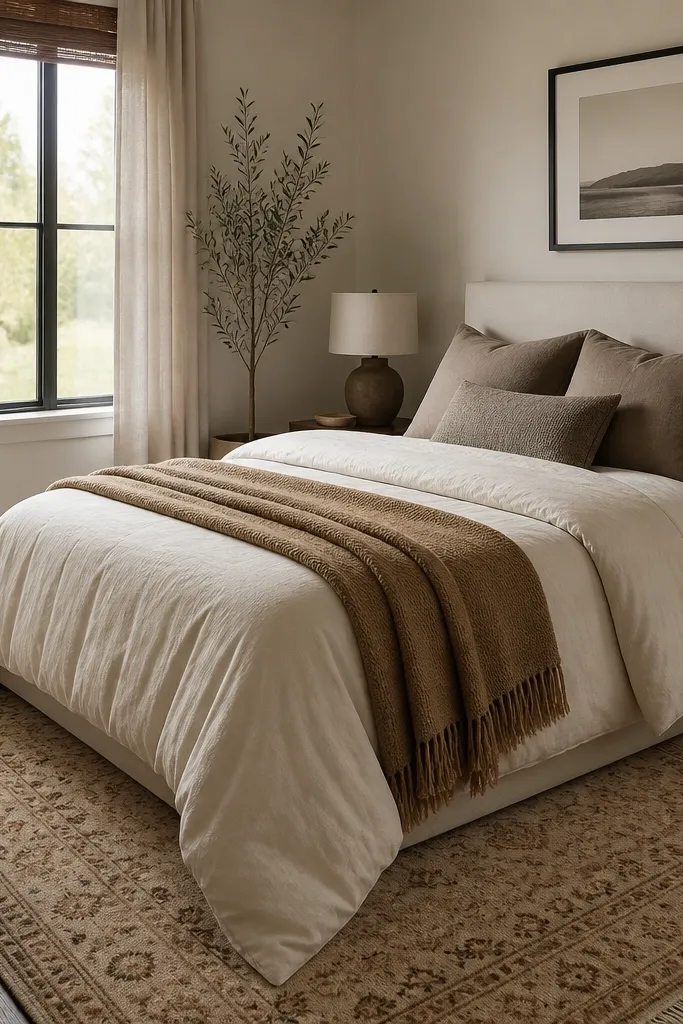
When you match undertones instead of exact colors, the room looks expensive without looking matchy. I pick a rug first, then choose bedding that shares the same warmth level — warm beige rug with cream bedding, not stark white. The shared undertone makes the bed look grounded and keeps the room from feeling like separate zones. This is one of the best Very Small Bedroom Ideas aesthetic 2 approaches if you have a patterned rug already and don’t know how to style around it. It also flatters skin tones because warm neutrals look natural in daylight and warm lamp light.
Start by identifying the dominant undertone in your rug. If the rug is warm beige, choose a duvet in cream or off-white; if it’s cool gray, choose soft white with a gray cast. Add two pillow colors only: one that matches the duvet and one that repeats a secondary rug color. Place the rug so the bed sits centered on it — aim for at least 6-10 inches of rug visible on each side. Finally, add a woven throw in a tone pulled from the rug’s lighter area so the texture ties everything together.
Hold the duvet fabric next to the rug in daylight — if they clash, swap the duvet, not the rug.
Avoid picking bedding colors that are the exact opposite temperature of your rug; the mismatch makes the room feel smaller.
16. Slim dresser replacement: wall-mounted floating cabinet
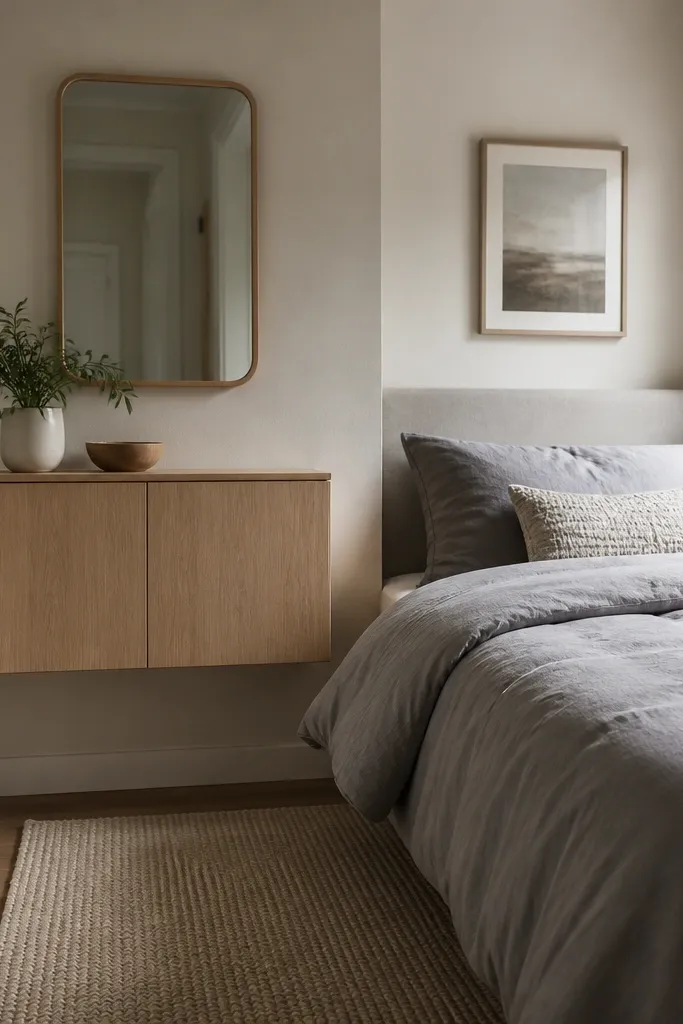
A floating cabinet gives you the storage you need without the floor clutter that makes small rooms feel tighter. I like light wood fronts because they warm up white walls and look good next to neutral bedding. The mirror above it is small but placed high, so you get reflection without taking over the room. This setup is great if your bedroom is narrow and you need a place for folded clothes and a few daily items. It also looks clean for people who don’t want to see a lot of open shelving.
Start by finding a cabinet depth under 12 inches so it doesn’t feel like a block on the wall. Mount it high enough that you keep walking clearance and still get a clean line — I aim for about 6-10 inches above the floor. Add a small wall mirror above it, centered, so it reflects the bed or window. Store folded items in drawer inserts or small fabric dividers so the cabinet doesn’t look chaotic. Style the bed with a duvet in a neutral gray or warm cream and add one accent pillow in a color pulled from your cabinet wood tone.
Good to knowUse soft-close hinges if you can — the doors feel premium and quieter in a small space.
AvoidAvoid a cabinet that’s too wide; it can visually push the wall inward.
17. Bedside plants with a wall planter, not a floor pot
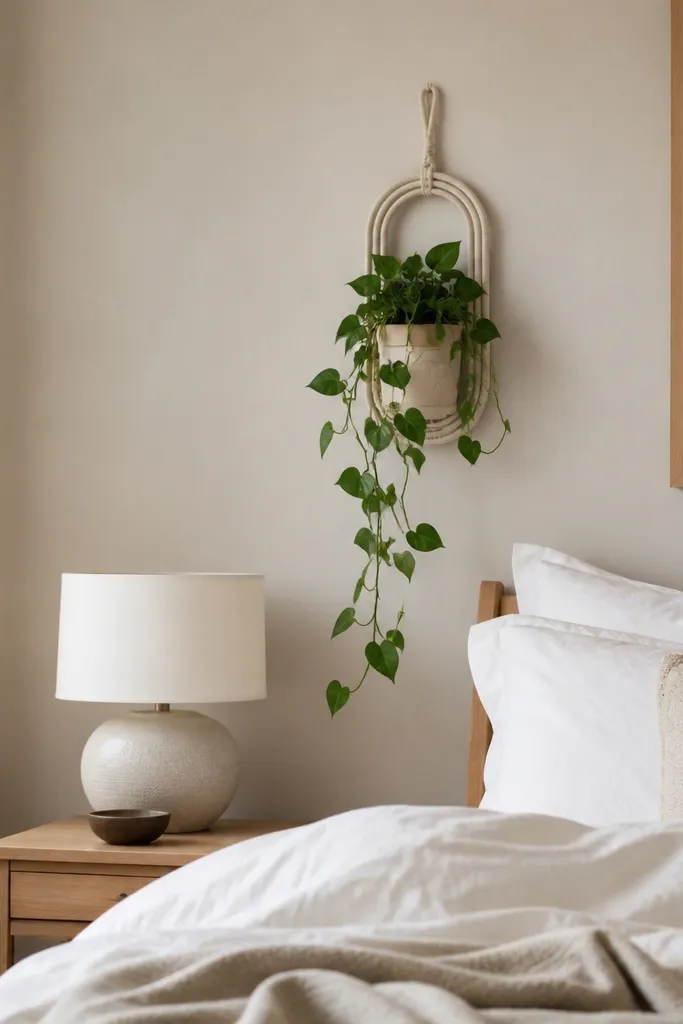
Plants can make a tiny bedroom feel alive, but a floor pot steals space fast. A wall planter keeps the plant at eye level without taking up the walking path, and trailing leaves soften hard edges in small rooms. I like ceramic wall planters in warm white or matte terracotta because they match neutral bedding and look good with warm light. This setup is flattering for photos because the green adds life without adding visual weight. If you have allergies or you hate watering, choose a faux trailing plant — it still gives the aesthetic softness.
Start by choosing a planter that mounts securely and doesn’t stick out more than 4-6 inches from the wall. Place it next to the bed where you can see it when you’re sitting up, usually around 48-60 inches from the floor. If it’s trailing, let the leaves fall down naturally and trim only if the plant becomes too wide. Style the bed with a neutral duvet and add one small woven basket on the floor or shelf only if you need it. Keep the rest of the room decor minimal so the plant reads as the accent, not one of many accents.
Dust the leaves with a damp cloth weekly; dusty leaves look sad fast in small rooms.
Avoid placing a plant on the nightstand if you also need a lamp; the top will feel overcrowded.
18. Black-and-cream styling with one brass accent
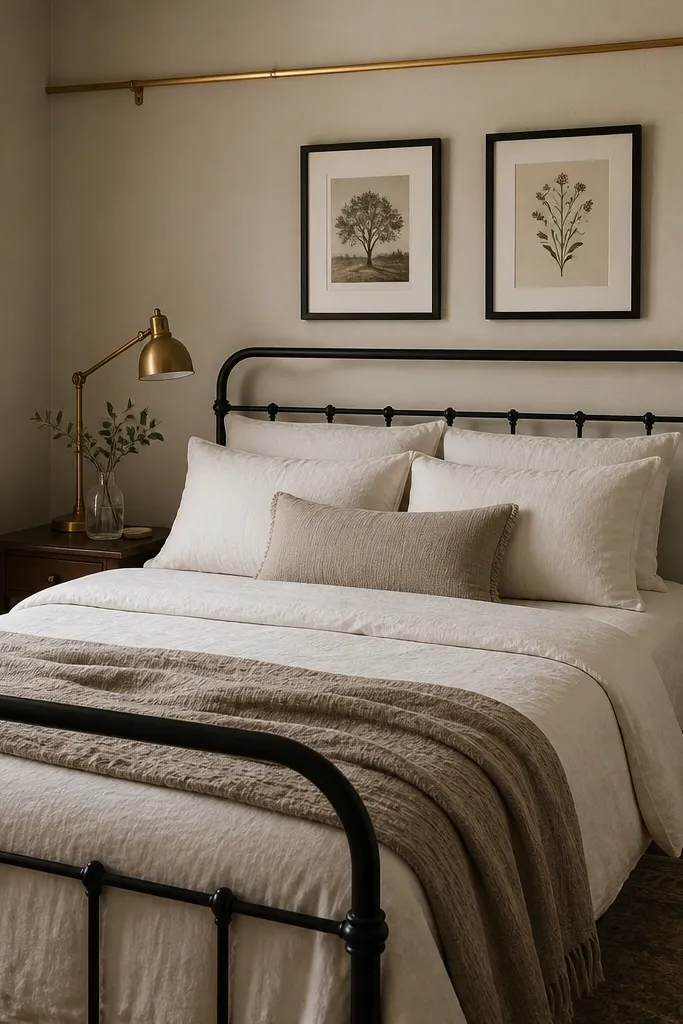
This is my favorite contrast combo for small bedrooms because it reads crisp without looking harsh. Black metal gives definition, cream bedding keeps the room bright, and one brass accent adds warmth so the black doesn’t feel cold. I keep it to one brass item — usually a lamp base or a single small tray — so the room doesn’t turn into a mixed-metal mess. This palette is flattering for most skin tones because it doesn’t cast strong color shadows. It also makes your bed look like the main event even when the room is tiny.
Start with a black metal bed frame or black hardware like a curtain rod. Use cream bedding with a light taupe throw in knit or waffle texture so it doesn’t look flat. Add two black-framed prints above the bed or one larger print with a black frame — keep the style consistent. Place a brass lamp on a slim table and add one small brass tray for jewelry. Keep your nightstand objects neutral so the metals stay the focus.
If you have both black and brass, repeat brass once more in a tiny way — like a brass candle holder — so it looks intentional.
Avoid using multiple competing metals like silver, gold, and brass all at once in a small room.
19. Folded throw at the foot with a rolled edge
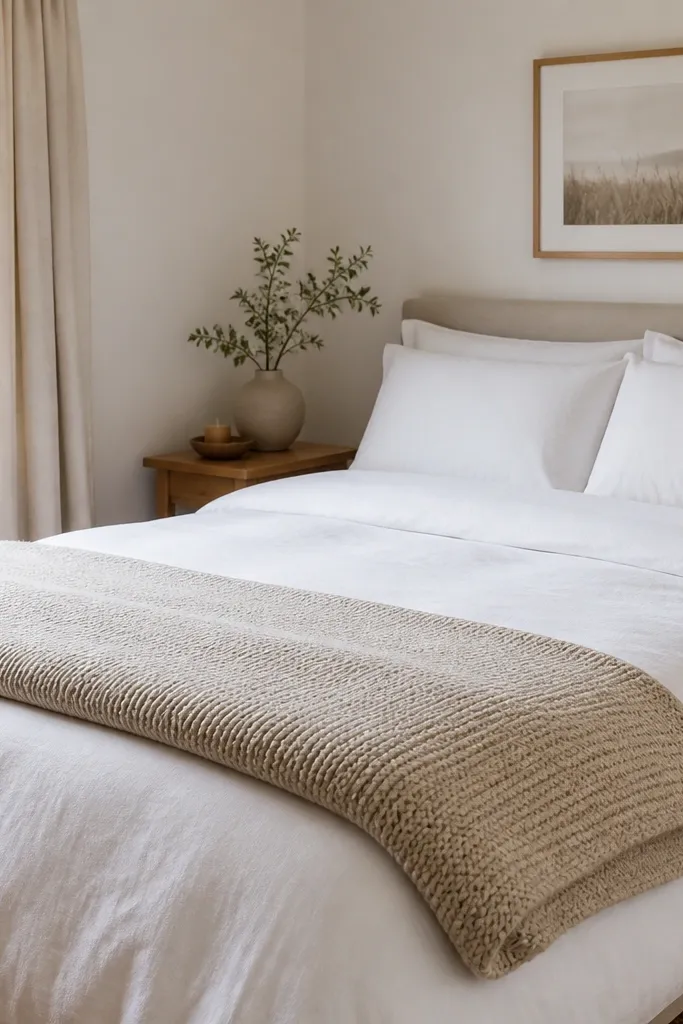
This styling trick makes a small bed look lived-in but controlled. A rolled edge gives the throw a clean silhouette, which matters in tiny rooms where you can’t hide messy bedding. I use oatmeal knit because it looks soft and catches light in a gentle way. The rolled fold also makes the bed look wider since it creates a horizontal line at the foot. This aesthetic is flattering for anyone who likes cozy without prints — it looks good in daylight and at night.
Start with a white duvet cover so the rolled throw stands out. Fold the throw in half, then roll the top edge tightly about 1-2 inches to create a neat band. Place the throw at the foot of the bed so it covers about 12-16 inches of the duvet, centered. Add two matching pillows behind it and keep the rest of the bed clean — no extra decorative clutter. If you want a little more color, add one small pillow in a muted taupe tone that matches the throw.
Good to knowRoll the edge the same height every time; uneven rolls make the whole bed look sloppy.
AvoidAvoid stacking throws on top of each other; it makes the bed look thick and can overwhelm a small room.
20. Nightstand tray rule for a clean look
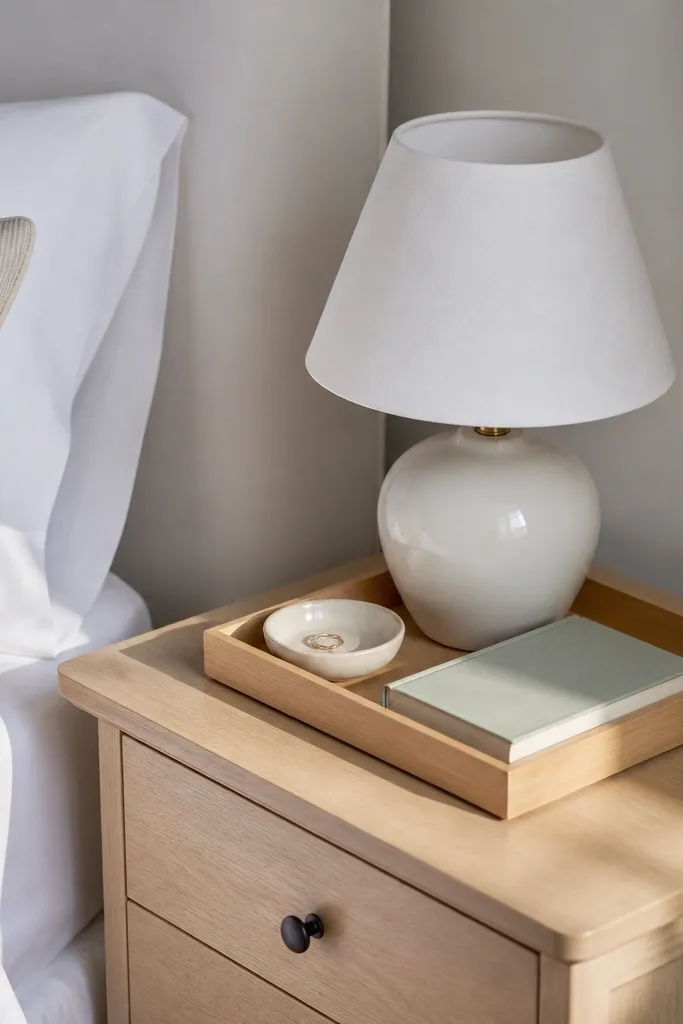
This is the fastest way I’ve found to make a small bedroom look aesthetic even when you have real life stuff on the bedside. A tray forces you to choose a small set of items and keep the rest off the surface. I use light wood trays with a matte finish because they don’t reflect glare and they match neutral bedding. The empty space on the nightstand is what reads as intentional. It’s flattering in photos because it reduces visual noise near the face when you’re lying down.
Start by clearing the nightstand completely for one evening. Choose one tray that fits the top surface with at least 1 inch of space around it. Add only three items: a lamp base or candle, one dish for rings or lip balm, and one book stack. Keep cables out of sight — use a cable clip under the tray or route the charger behind the nightstand. Style the bed with a neutral duvet and one textured throw so your room stays cohesive without needing more decor.
Good to knowIf your tray is wood, wipe it with a damp cloth and dry immediately so it doesn’t look dusty.
AvoidAvoid using a tray with high gloss; it shows fingerprints and makes a small room look messy.