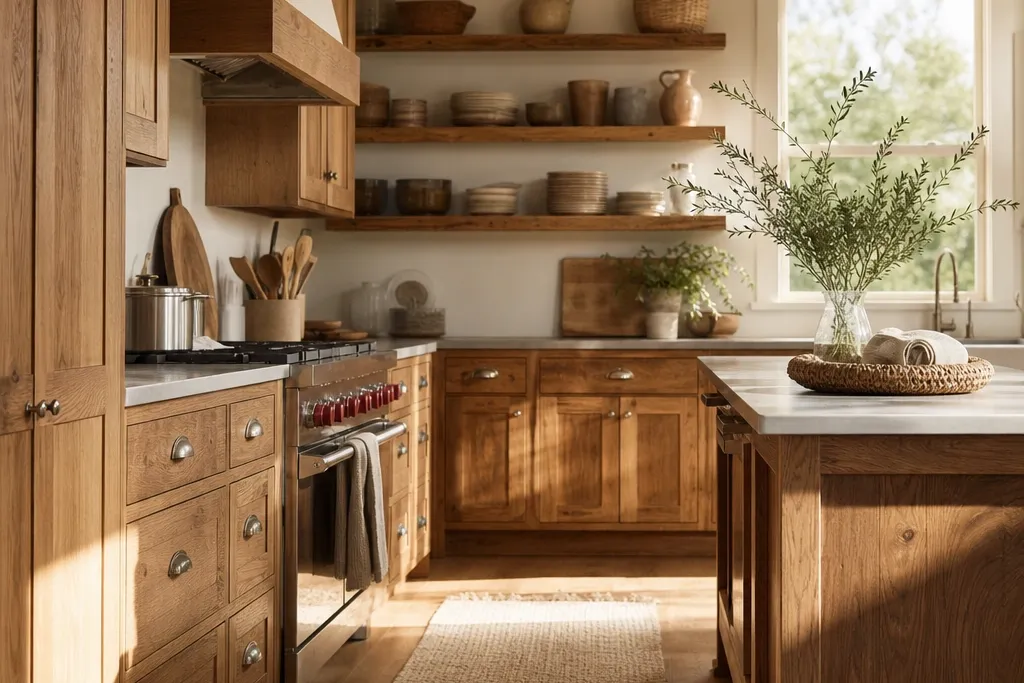

1. Matte creamy white oak uppers with arched glass inserts
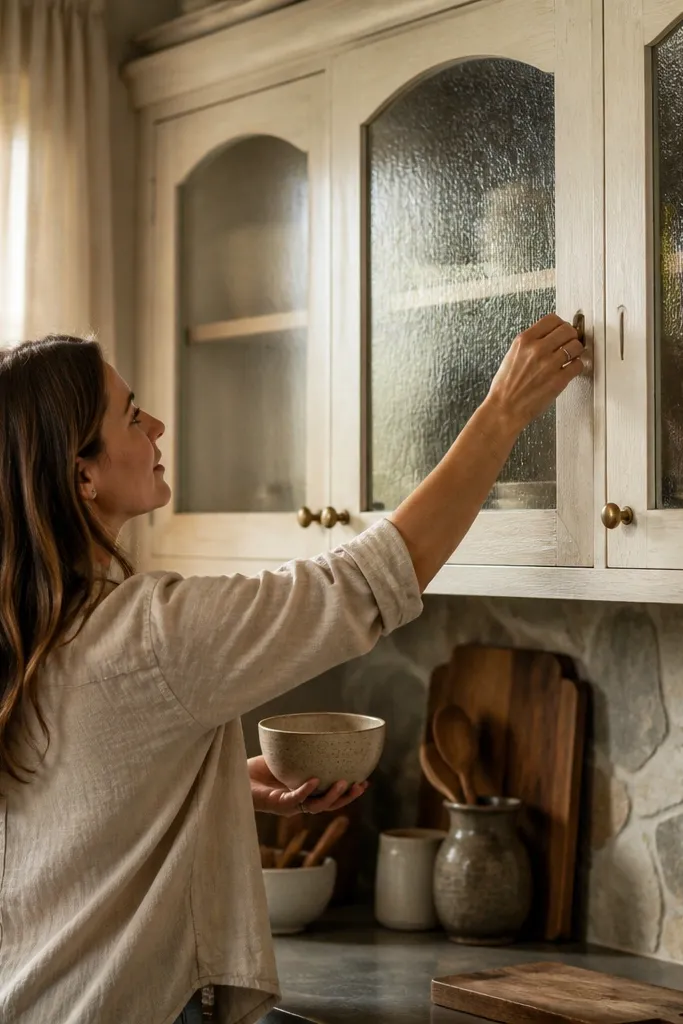
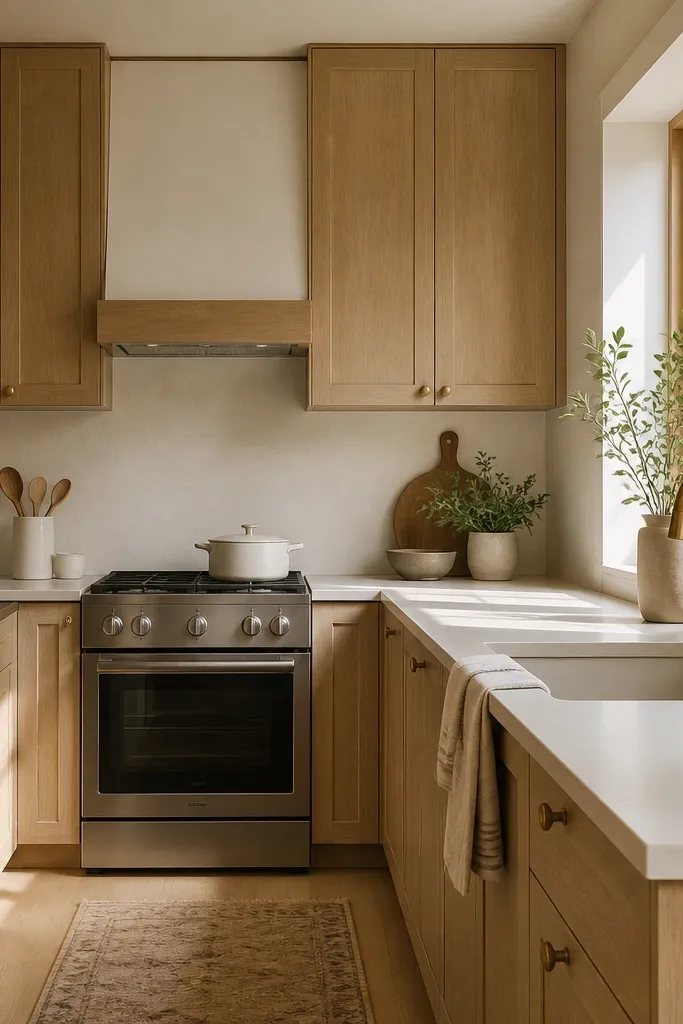
Start with matte creamy white oak on the uppers because it reads like warm furniture, not like a painted finish. The arched glass inserts add softness without turning the kitchen into a display case. Use frosted or lightly seeded glass so the contents blur — that keeps the look cozy even when you’re not perfectly stocked. Brushed brass knobs make the warmth feel intentional and not rusty. This look flatters kitchens with lots of daylight and people who want a calm, lived-in feel for weeknight dinners.
Install white oak uppers with arched glass inserts and keep the finish satin-matte so the grain doesn’t glare. Pair them with white or off-white countertops that are not pure blue-white. Add brushed brass hardware — choose pulls for drawers and knobs for doors so the rhythm feels consistent. Style the inside with matching ceramic bowls and a single woven tray on the lower shelf. Finally, keep the backsplash simple, like light subway tile with light grout so the cabinets stay the hero.
Use frosted glass and don’t overfill — three to five items per shelf looks cozy, not crowded.
Avoid clear glass with visible clutter; it makes rustic cabinets look messy instead of cozy.
2. White oak shaker cabinets with oil-rubbed bronze pulls and black accents
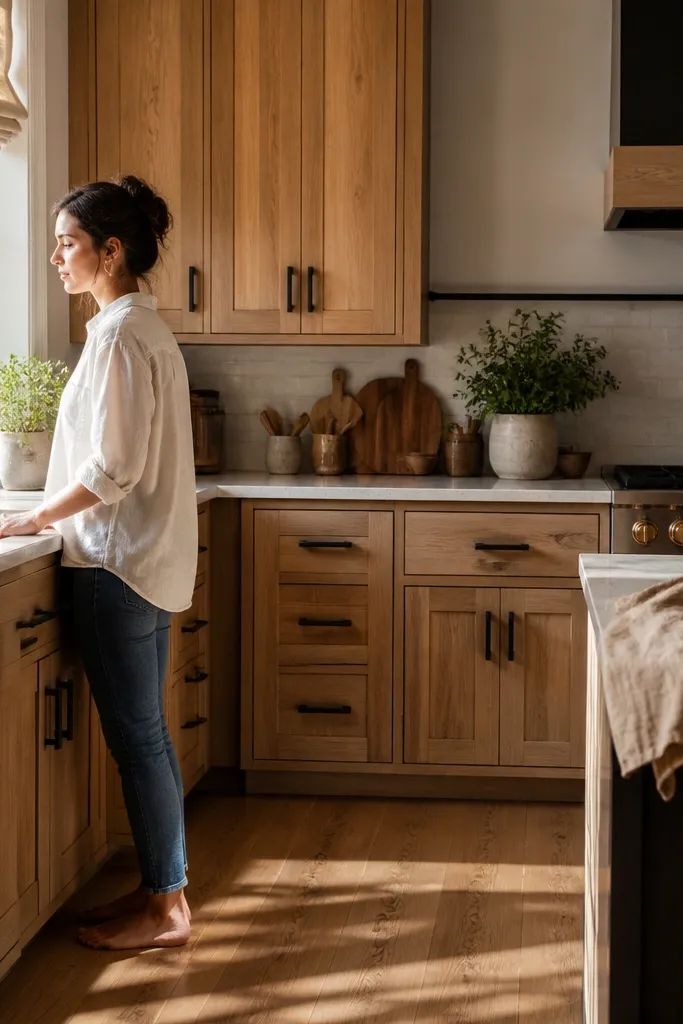
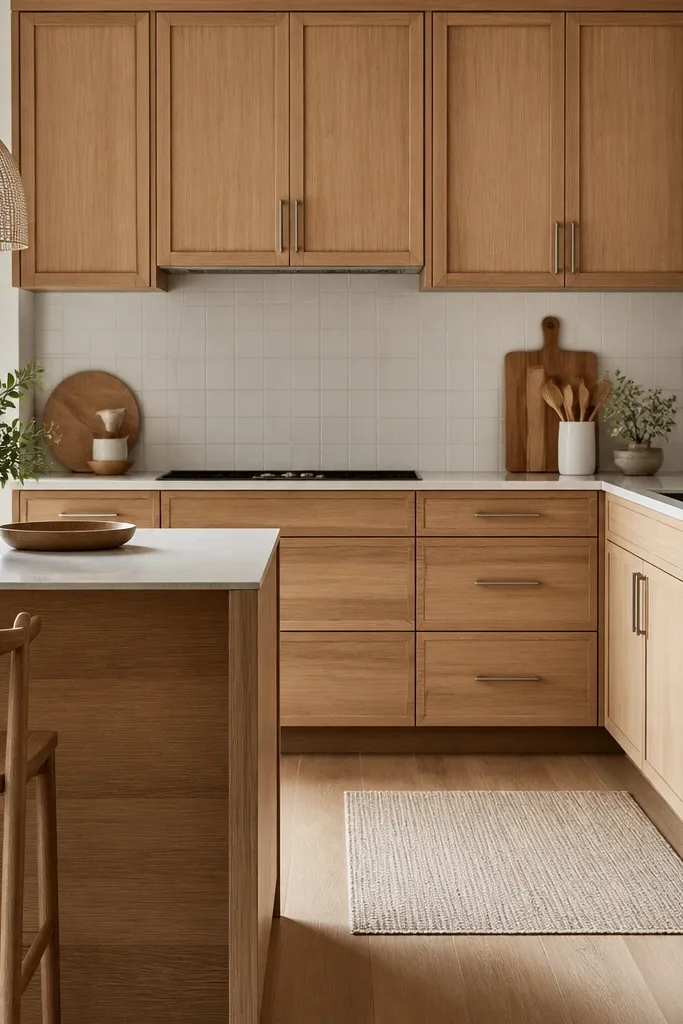
This is cozy-with-attitude: shaker doors in white oak plus oil-rubbed bronze hardware makes the grain look deeper and warmer. The black accents anchor the room so the cabinets don’t float. I like this look for kitchens that get bright sun because the dark hardware gives the eye a place to rest. It also flatters warm skin tones in dining photos because the overall palette stays earthy instead of icy. It works especially well if your dining chairs have black or dark wood legs.
Choose white oak shaker cabinets with a light-to-medium grain, then finish with an oil-rubbed bronze pull set. Use bar pulls about 5 to 6 inches long on drawers, and matching knobs or smaller pulls on doors. Pair with a white countertop and a black gooseneck faucet. Add one black element on the dining side: a black metal pendant or a black-framed mirror near the table. Keep the backsplash in warm white tones so the black doesn’t overpower the oak.
Good to knowPick one black finish and repeat it twice — faucet and pendant — for a tidy, cozy look.
AvoidDon’t mix polished chrome with oil-rubbed bronze; it kills the rustic warmth fast.
3. Two-tone oak lowers with white uppers and beadboard details
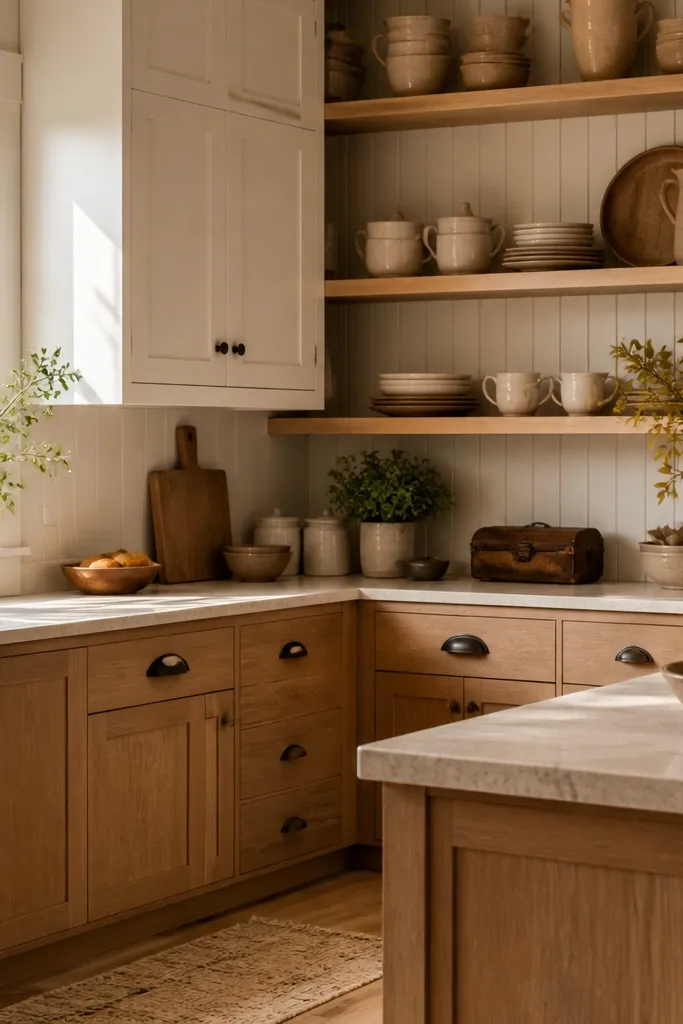
Two-tone kitchens can feel fussy, but this combo feels cozy because the oak goes where you touch and use. Keep uppers white with a soft matte paint and add beadboard panels inside to bring texture without adding visual weight. The white lowers are harder to keep clean visually, so I put oak on the bottom where wear happens and grain helps hide small scuffs. This look flatters small kitchens because the visual upper weight stays light. It also suits people who want a cozy dining vibe without committing to all-oak.
Install white uppers first and keep them matte, not satin. Add beadboard inserts behind glass or in open shelves to create texture. For lowers, choose white oak with a natural matte clear coat and keep the grain consistent across doors. Use warm brushed nickel or brushed brass hardware so it bridges the white paint and oak. Style the counter with a single oak tray and one ceramic canister set so the oak theme repeats.
Good to knowMatch the cabinet baseboards or toe-kick color to the white uppers so the two-tone split looks intentional.
AvoidAvoid two-tone with glossy paint; shiny white plus oak grain reads harsh, not cozy.
4. Full-height pantry oak cabinets with soft-close and wood shelves
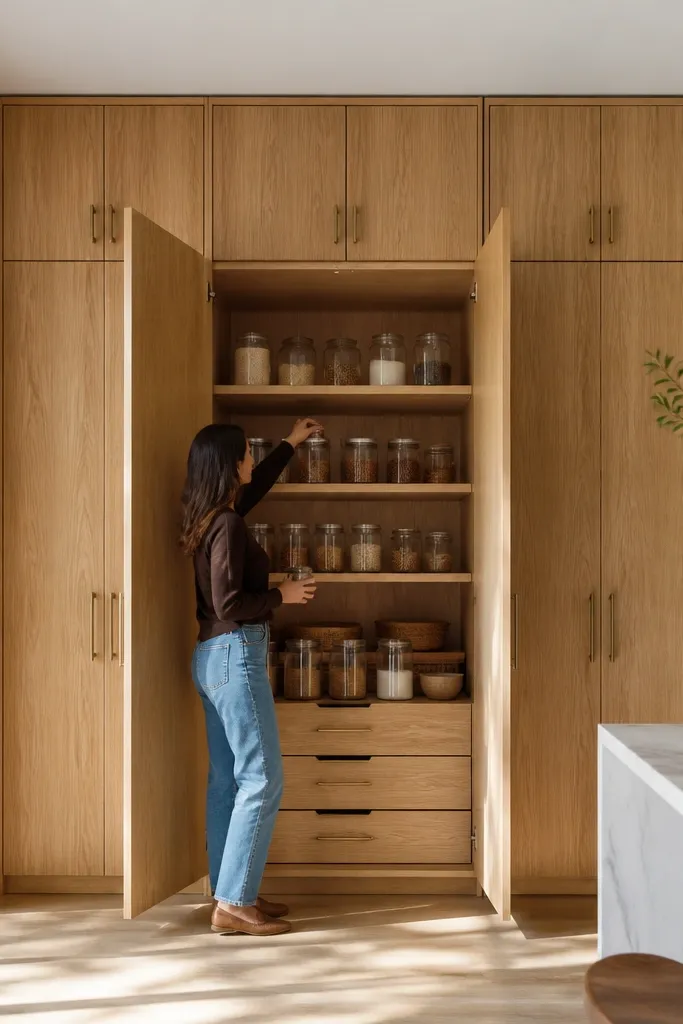
Full-height pantry cabinets make a kitchen feel cozy because they create one continuous “home” wall. White oak with visible grain gives the pantry warmth, and the height makes the room feel taller and calmer. I like this look when the kitchen is open to dining because it creates a visual boundary without a hard divider. It flatters tall ceilings and also works in standard rooms if the doors reach close to the crown line. It’s great for families who need storage but want it to look like furniture, not bins.
Choose full-height white oak pantry cabinets with wood shelves inside, not wire racks. Install soft-close hinges and use a single long pull per door so the lines stay clean. Keep the finish satin-matte and avoid heavy distressing that turns the oak gray. Add warm LED strip lighting inside the pantry so jars glow gently at night. On the dining side, repeat the wood tone with a cutting board on a wall hook or a wooden bread box on the counter.
Good to knowUse labels on a small chalkboard tag or white labels with black text — it reads cozy, not chaotic.
AvoidSkip mixed shelf colors inside the pantry; mismatched woods make it look like leftover parts.
5. Distressed white oak cabinets with warm white backsplash and linen shades
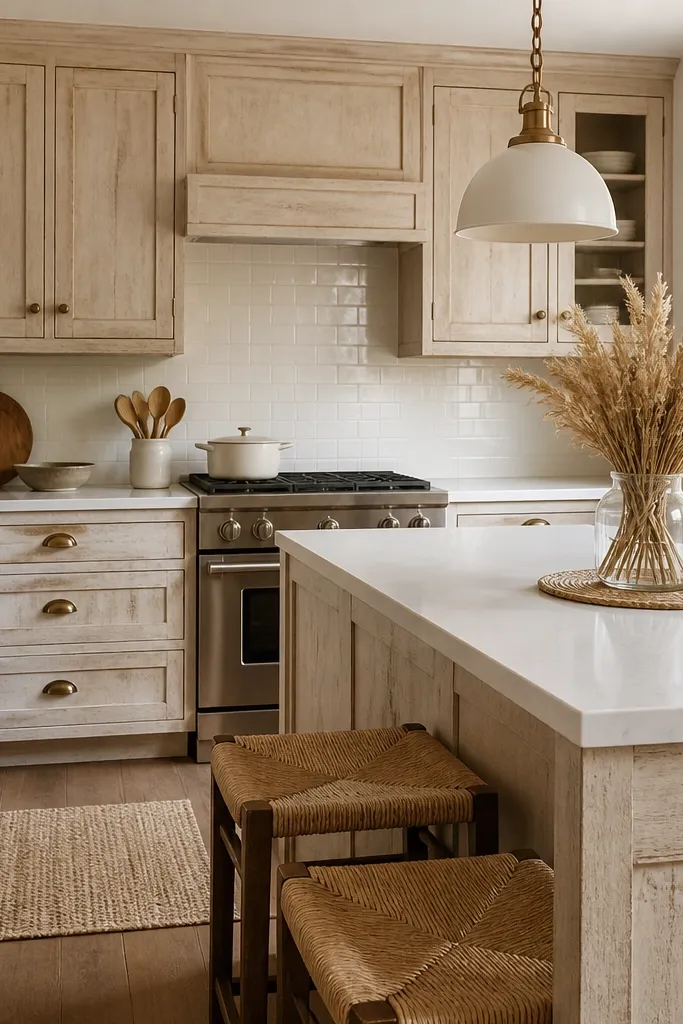
Distressed white oak can look amazing when the distress is light and controlled. I look for distress that shows in the grain, not paint chipping — it should feel like “old wood,” not “damaged.” When paired with warm white backsplash tile and linen shades, the kitchen turns soft and inviting. This look flatters homes with natural light because the texture catches it in a gentle way. It also works for people who want cozy without going farmhouse-jerky on every surface.
Choose cabinets with subtle distress and a warm clear coat so the oak stays creamy. Pair with warm white backsplash tile, like off-white subway with light sand grout. Use brushed brass or dark bronze hardware to match the warm tone of the distress. Add linen roman shades in oatmeal or natural flax for window softness. On the table, use a woven placemat and one ceramic centerpiece to repeat the texture theme.
Keep distress only on the cabinet fronts; don’t distress your countertops or backsplash too or it starts to look busy.
Avoid heavy distress plus very bright cool-white walls; it makes the cabinets look gray and worn out.
6. White oak cabinets with rift-sawn grain and simple bar pulls
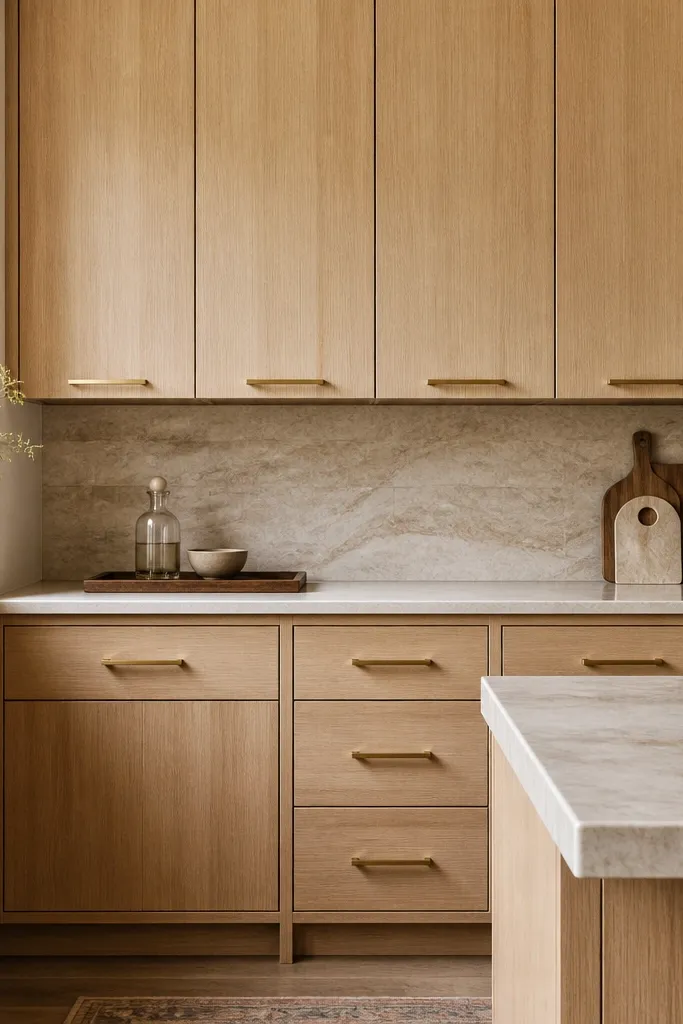
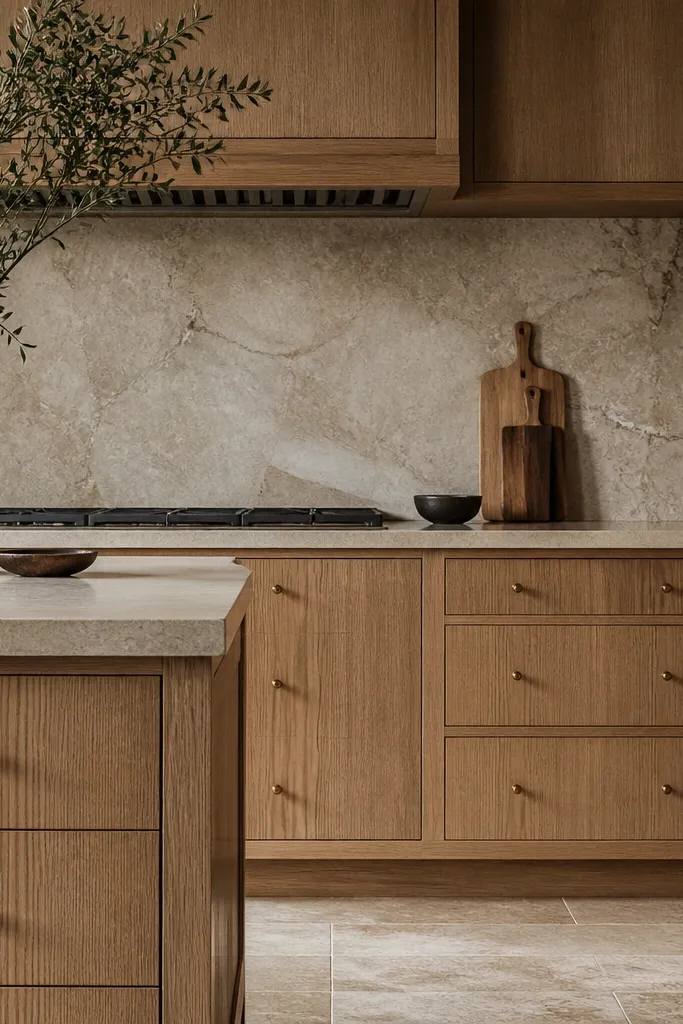
If you want rustic cozy without the visual chaos, rift-sawn white oak is the move. The grain lines are straight and controlled, so the cabinet still feels warm but not busy. Pair that with simple bar pulls and you get a kitchen that looks “crafted,” even when it’s lived in. This look flatters modern dining chairs and also makes small kitchens feel orderly. People who hate clutter will like this because you can style the room with fewer items and it still looks intentional.
Pick rift-sawn white oak with a matte finish and keep the door style simple — shaker or slab with a slight bevel. Install bar pulls about 6 inches long and keep the same hardware finish across the kitchen. Choose a light stone countertop with warm undertones, not icy gray. Add one woven basket under a counter shelf or inside a corner cabinet for texture. Style the dining side with a single wood tray and matching wooden utensils.
Good to knowUse the same pull length for every drawer so the cabinet lines stay calm from across the room.
AvoidDon’t combine rift-sawn oak with ornate, chunky handles; it breaks the clean grain story.
7. Rustic oak cabinets with a soft white countertop and warm brass faucet
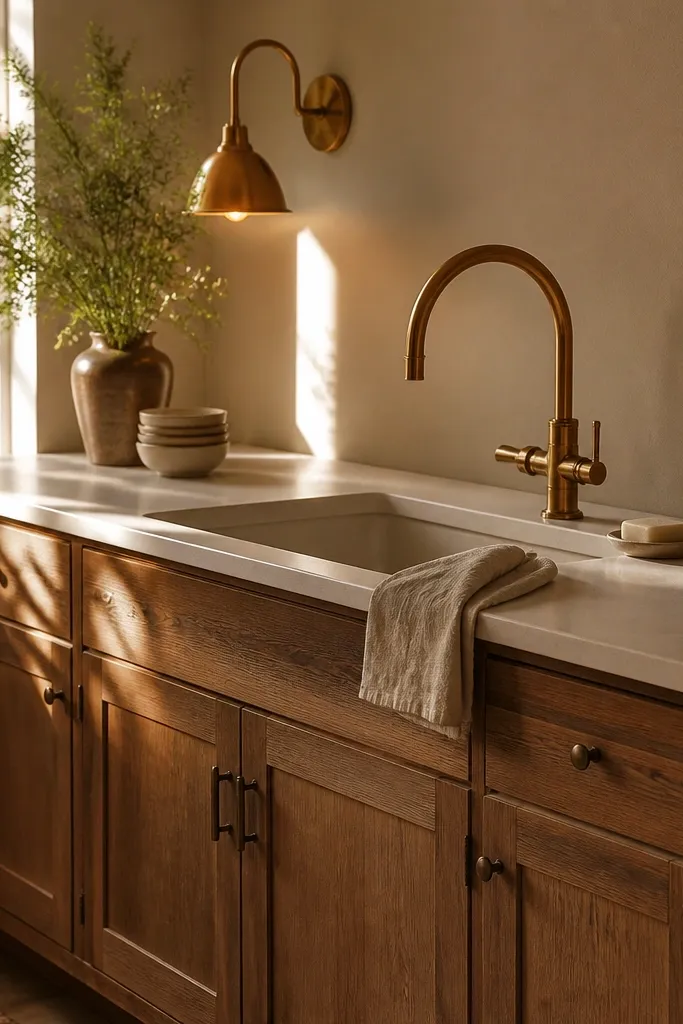
This is cozy through color temperature. The oak brings warmth, the soft white countertop keeps it gentle, and a warm brass faucet ties it together. I’ve used this combo in kitchens where everything else was beige and it still looked updated because the brass has that golden glow. It flatters dining spaces with cream upholstery or light wood floors. If your goal is “cozy dinner,” not “rustic cabin,” this is the one.
Choose white oak cabinets with a warm clear coat and minimal distress. Use rounded knobs or short pulls in warm brass, not bright polished. Pair with soft white quartz or solid surface that has a creamy undertone. Install a warm brass faucet and pick a brass soap dispenser for consistency. Keep the backsplash in a light neutral with subtle texture so the brass and oak have something calm to sit on.
Match brass tones: faucet and cabinet hardware should be the same warmth level, not one yellow and one dull.
Avoid icy white countertops with warm brass; the contrast reads off and less cozy.
8. Open shelving on top with white oak cabinets below
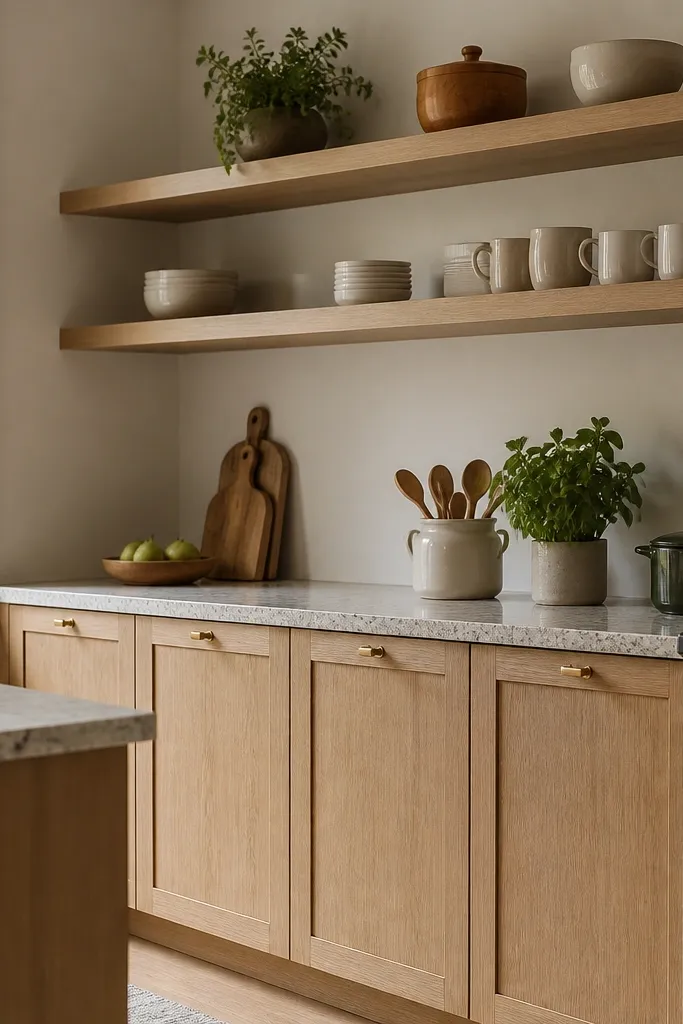
Open shelving makes rustic white oak kitchen cabinets cozy because it lets the grain breathe and it gives you a styling surface. Keep the open shelves in white oak too so everything feels connected, then let the bottom cabinets stay closed for a clean base. This is perfect if you love to set out a few daily-use pieces like mugs, bread plates, or small bowls. It also flatters kitchens that feel cramped — the open shelves reduce “boxiness.”
Install white oak cabinets on the bottom with matte finish and shaker doors. Replace the top row of uppers with open shelves in the same oak tone and thickness. Use shelf brackets that look simple and sturdy, then space shelves so larger platters fit. Put three to four matching items on each shelf — I stick to one pattern and one color family. On the table, add a matching wood bowl or tray so the open shelf styling repeats in dining.
Good to knowHang mugs by handle color, not by matching pattern — it looks curated even when you rotate mugs.
AvoidSkip too many items per shelf; open shelves look cozy with restraint, not with clutter.
9. Corner cabinet with glass doors and a wood-framed window look
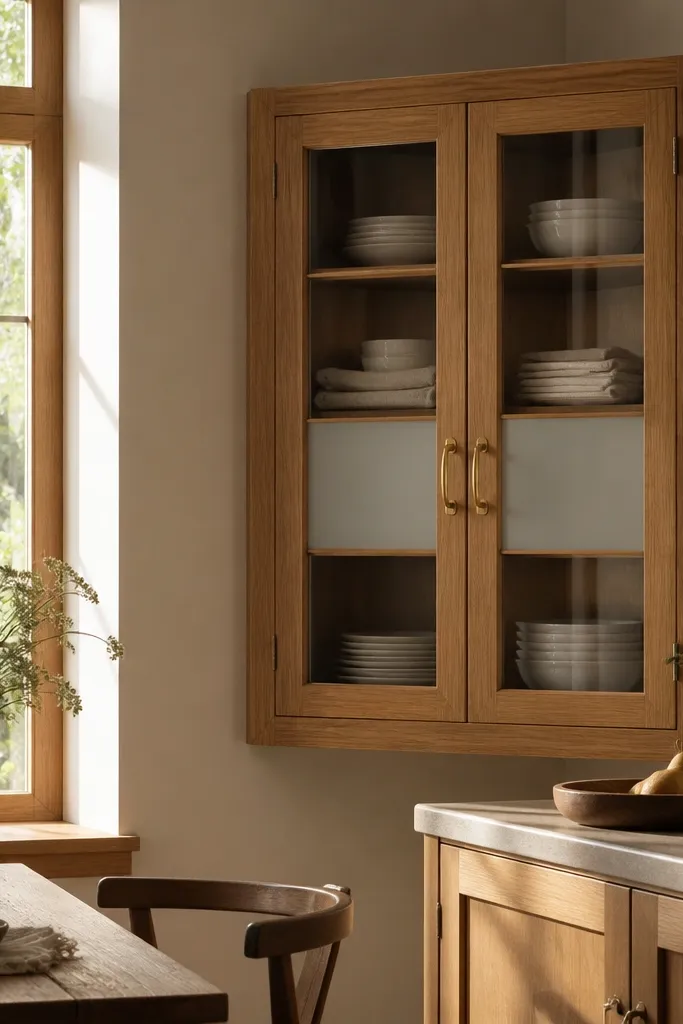
Corner cabinets can look awkward, but a wood-framed glass door makes it feel like built-in furniture. White oak framing warms the glass, and the frosted panel keeps the plates from looking like random storage. This works great for cozy dining setups because it’s like having a mini display for everyday dishes. I recommend this when your kitchen opens to a dining room and you can see the corner from the table. It flatters small kitchens because the glass adds depth without making the space feel heavy.
Choose a corner cabinet with a white oak frame and lightly frosted glass panels. Install wood or wood-look shelves inside so everything matches the cabinet tone. Use slim, warm brass hinges and hardware so the frame stays clean. Set a small wooden riser inside and stack plates by size, then place one ceramic serving bowl on top. Finish the look by adding a matching wood cutting board near the corner — same tone, same “family.”
Use one ceramic color inside the corner cabinet to create a calm focal point from the dining table.
Avoid clear glass with mixed dishware; it makes the corner look like storage.
10. White oak cabinets with a light-gray glaze wash and matte hardware
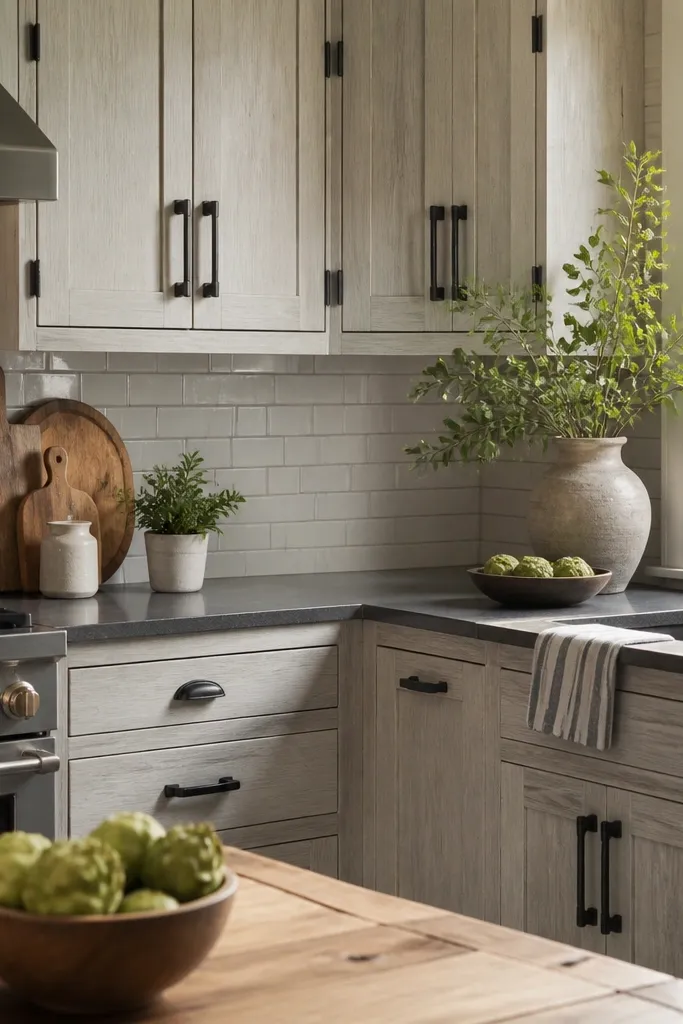
A light-gray glaze wash is how you get rustic without going fully distressed. The glaze sits in the grain and creates shadow lines, so the cabinets look deeper even in a smaller kitchen. Pair it with matte black hardware to keep the contrast clean. This look flatters homes with cool undertones like light gray tile floors, and it helps grayer kitchens feel cozy instead of sterile. If you love rustic but hate “orange wood,” this is the compromise.
Choose white oak cabinets finished with a subtle gray glaze, then keep the clear coat matte. Install matte black pulls and knobs with a simple profile. Pair the cabinets with a light countertop that has warm veining or creamy highlights so the gray doesn’t turn cold. Add warm 2700K under-cabinet lighting so the glaze reads soft, not chalky. Style the dining side with a gray-and-cream table runner and a small black metal candle holder.
Turn on under-cabinet lights at night once — if the glaze turns chalky, you need warmer bulbs.
Avoid glossy glaze finishes; they reflect overhead glare and kill the cozy shadow effect.
11. Shaker white oak cabinets with tray ceiling vibe using crown trim
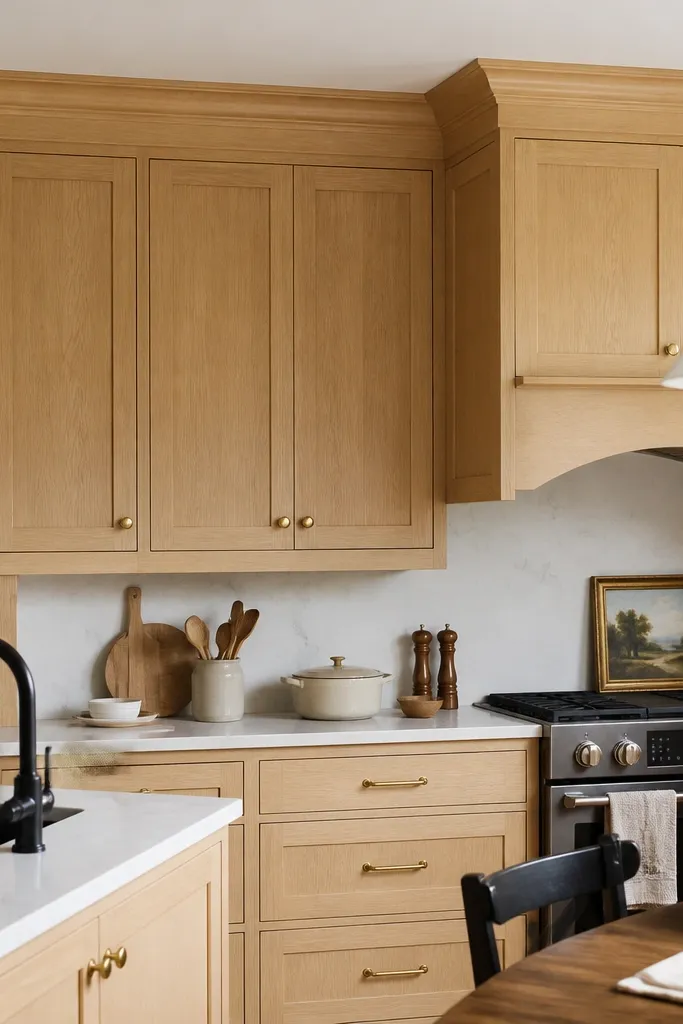
Crown trim is cozy when it’s done in scale, not when it’s overdone. On shaker white oak cabinets, a simple crown with a small shadow gap makes the whole kitchen feel finished and calmer. I’ve installed this in older homes where the ceiling line was uneven — the trim hides it visually and makes the cabinets look built-in. It flatters dining areas with classic chair backs because the crown echoes that traditional shape. This look also helps if you want rustic cozy but your home leans more traditional than farmhouse.
Pick shaker white oak cabinets with a matte finish and keep the door profile crisp. Add crown molding that matches your ceiling paint, usually warm white. Install a small return piece at the ends so the line looks continuous. Use brushed brass hardware and keep the pulls consistent across drawers and doors. Add one tray on an open shelf with a linen runner underneath so the new “finished” look still feels soft.
Keep the crown simple and painted — wood crown can darken the space and fight the oak warmth.
Skip oversized crown if your ceiling is low; it makes the kitchen feel top-heavy.
12. White oak cabinets with a farmhouse sink and soft brass accessories
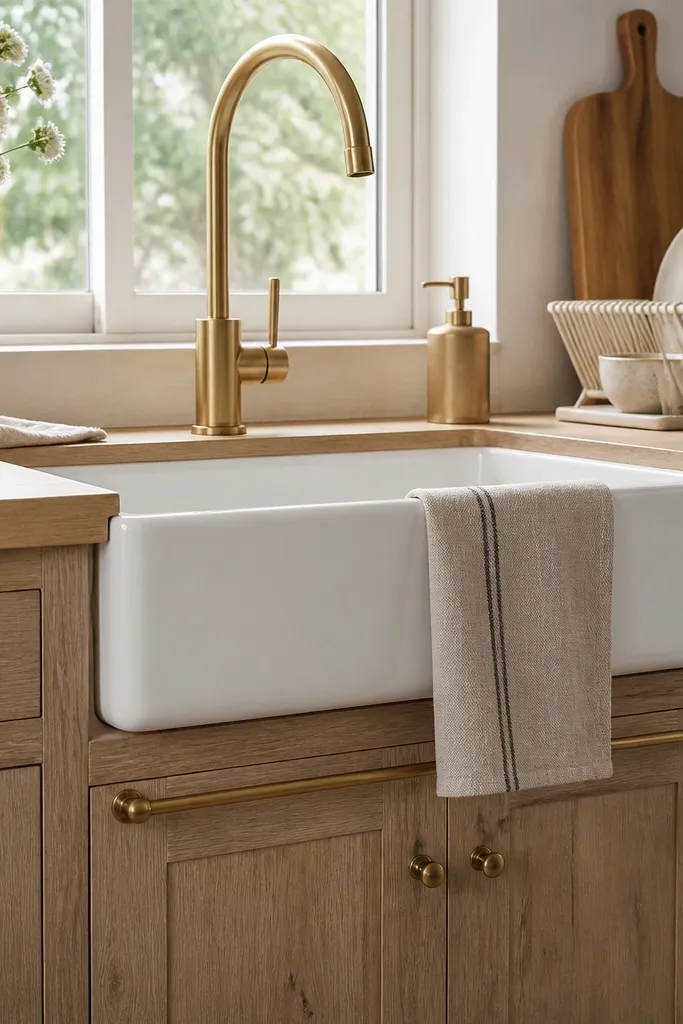
A farmhouse sink makes the kitchen feel lived-in fast, and white oak cabinets make it feel warm instead of country-clutter. I like soft brass accessories because they look cozy in photos and don’t feel like a trend. The apron sink also creates a gentle focal point between cabinets and countertop. This look flatters people who host dinners because the sink area becomes the “work station” you can style. It’s great for kitchens with white or cream walls and light floors.
Choose white oak cabinets with a clean shaker face and matte finish. Install a farmhouse sink in white fireclay or a warm off-white, then pair it with a soft brass faucet. Add a brass soap tray and a matching toothbrush holder so the metal repeats. Use a light backsplash like small square tile with warm grout. Style the counter with one cutting board and one ceramic utensil crock — keep it to two items so the sink area stays cozy.
Use an off-white sponge and tea towel in the same undertone as your sink so the sink area looks coordinated.
Don’t pair a farmhouse sink with chrome everything; it reads cold next to oak.
13. White oak cabinets with rattan counter stools and warm woven storage
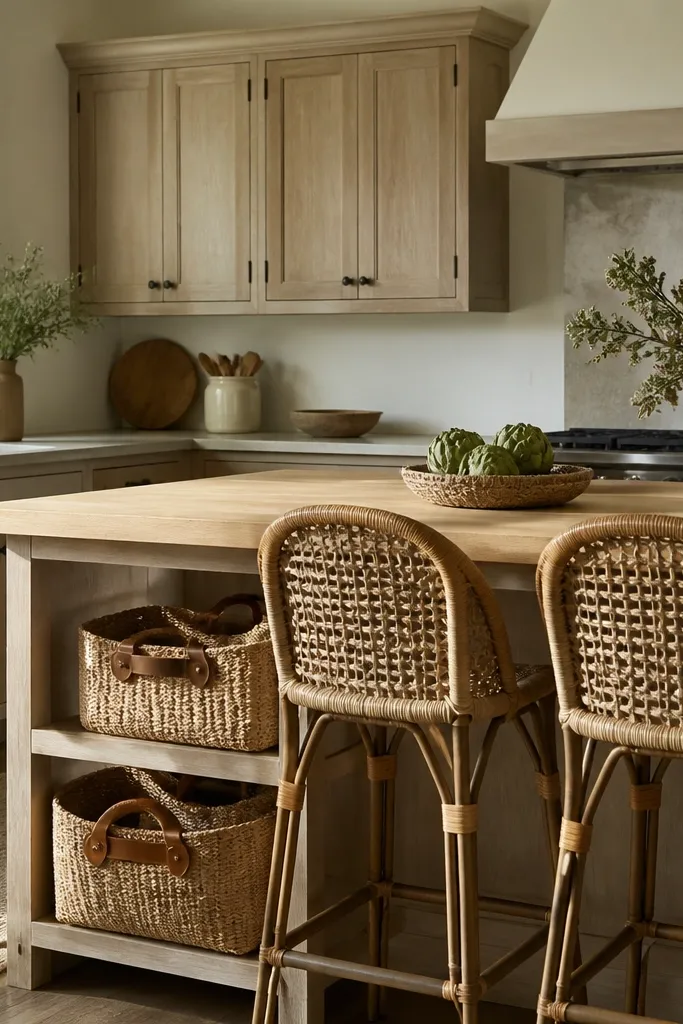
Cozy doesn’t come only from wood — it comes from texture you can feel with your eyes. When I pair rustic white oak kitchen cabinets cozy with rattan and woven baskets, the grain looks softer and the room feels forgiving. The rattan also adds a light, airy pattern that balances the cabinet mass. This look flatters kitchens with neutral floors and people who want a “morning coffee” corner. It works especially well if your dining chairs are already woven or have cane details.
Choose white oak cabinets with a consistent matte finish and simple hardware like round knobs in brushed brass. Add woven baskets inside open cubbies or under a shelf for daily items. Place two rattan counter stools with seat height that matches your island bar — aim for about 11 to 12 inches from stool seat to countertop edge. Style the dining table nearby with a woven placemat set and a wood tray. Keep your countertop clutter to a couple of items: one canister, one tray, one small plant.
Good to knowMatch basket color to your floor or rug — light natural rattan for warm floors, darker rattan for espresso floors.
AvoidAvoid bright white baskets; they can look plastic and make the oak feel less warm.
14. White oak cabinets with a warm white tile backsplash and handmade ceramic accents
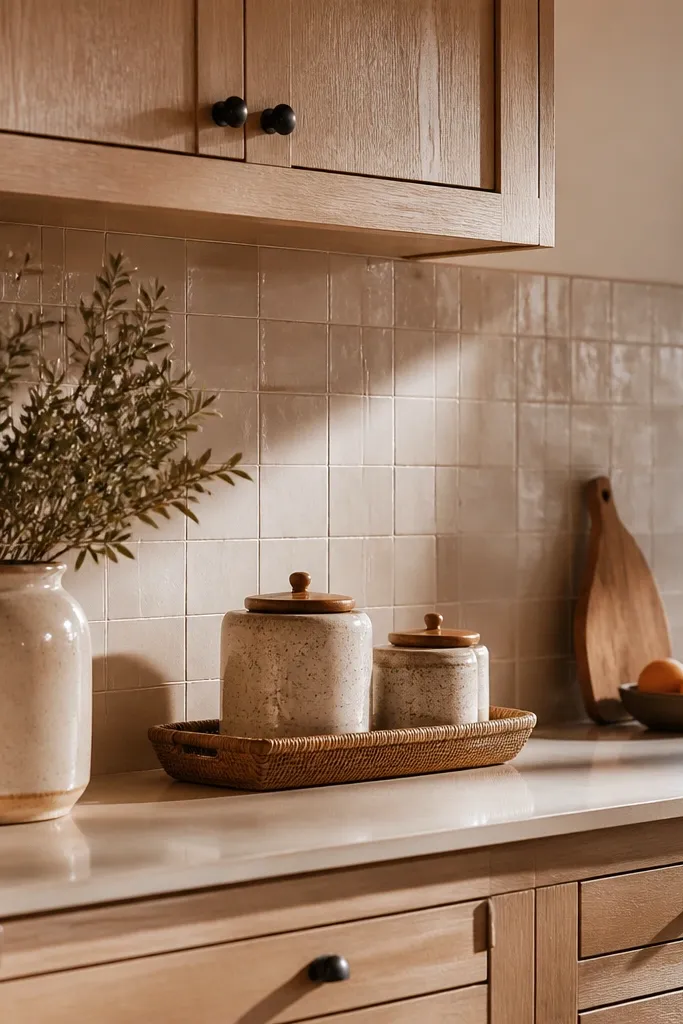
This is cozy through material honesty. Warm white tile gives you a clean background, but it’s not sterile because it has slight texture and warmer grout. Handmade ceramic accents add small imperfections that make the room feel human. White oak brings the grain warmth, and the ceramics bring color depth without loud patterns. This look flatters kitchens with white walls and light floors and works for people who want a cozy dining vibe without heavy farmhouse styling.
Pick rustic white oak cabinets with a matte clear coat and shaker doors for a steady line. Install a warm white backsplash tile with a sand or warm gray grout to avoid stark contrast. Add handmade ceramic canisters in muted clay tones — think terracotta-warm beige, not bright orange. Use warm brass hardware so the metal repeats with the ceramics. On the dining side, add one ceramic centerpiece bowl and a small cloth napkin set in a neutral linen.
Good to knowChoose ceramic shades that match the oak undertone: creamy oak pairs with beige-clay ceramics; grayer oak pairs with greige clay.
AvoidDon’t choose glossy ceramic accents; they reflect overhead light and look less cozy.
15. Dark walnut countertop paired with rustic white oak cabinets
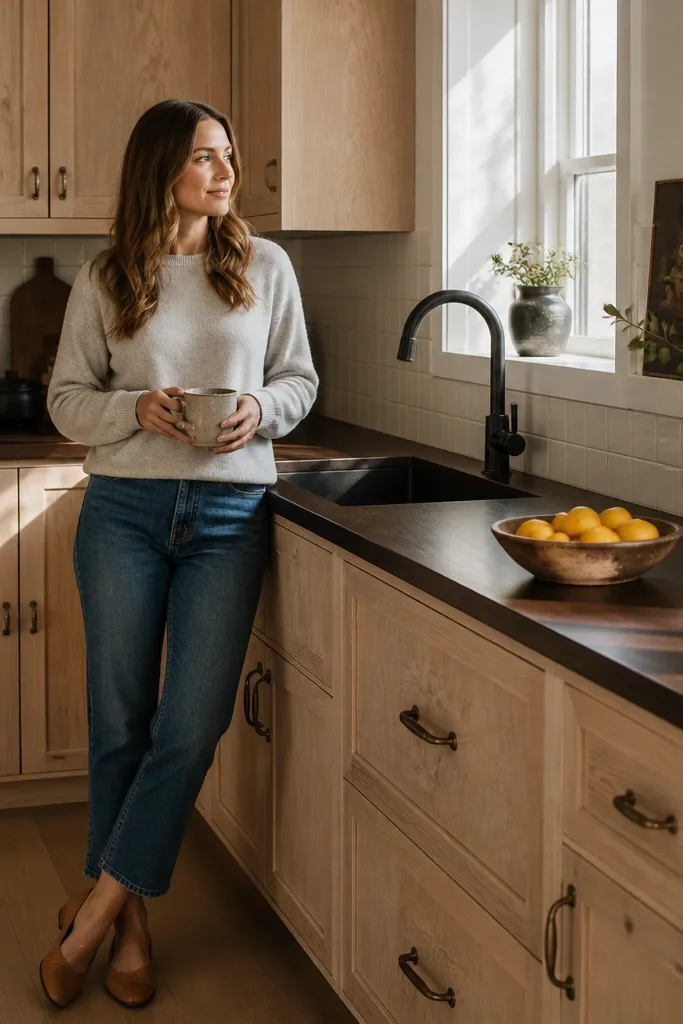
A dark walnut countertop turns rustic white oak kitchen cabinets cozy because it adds a second wood note that feels grounded. The oak stays light and warm, while walnut adds depth without turning the room into a dark cave. This combination flatters kitchens with light walls and lets you keep the cabinetry from feeling washed out. It also looks great for dining photos because the countertop becomes a warm stage for plates and linens. If your dining chairs are dark wood or leather, this pairing is a strong match.
Install rustic white oak cabinets with a matte finish and minimal distress so the grain stays readable. Choose a dark walnut countertop with a satin finish, not high-gloss. Use brushed brass pulls for a warm metal bridge. Pick a backsplash in cream or warm white ceramic tile with irregular texture for warmth. Style the counter with a walnut cutting board and one ceramic bowl, then keep the rest of the counter clear.
Good to knowKeep your dish colors in earth tones — cream, terracotta, olive — so the walnut and oak don’t compete.
AvoidAvoid pairing dark walnut with cool gray backsplash; it makes the oak look gray too.
16. White oak cabinets with soft rounded pulls and warm taupe walls
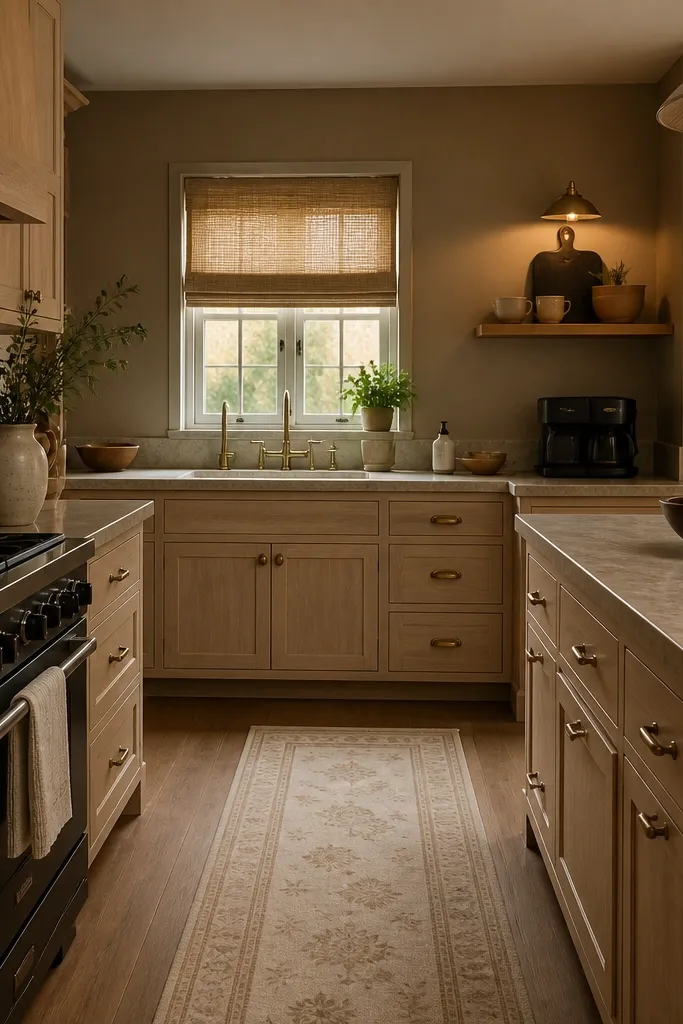
Warm taupe walls make rustic white oak feel cozy because they blend the cabinets into the room instead of making them contrast-sharp. Rounded pulls in brushed brass keep the lines friendly. I like this look for people who find stark white walls too cold at night. It also flatters kitchens with darker floors because taupe softens the contrast. When you pair taupe walls with oak grain, the room feels like it has furniture-level warmth.
Paint the walls a warm taupe and test it with your kitchen lighting — 2700K bulbs matter here. Choose white oak cabinets with matte finish and simple shaker or framed panel doors. Install rounded bar pulls — keep them consistent across drawers and doors. Use an off-white backsplash with warm grout so the taupe doesn’t clash. On the dining table, use beige linen napkins and a neutral runner, then add one small wood tray as the repeat material.
Hang one white dish towel next to the range and see how it looks under evening light; if it turns gray, adjust with warmer textiles.
Avoid bright cool-gray walls; they make the oak undertone fight instead of blend.
17. White oak cabinets with open lower shelves and closed uppers
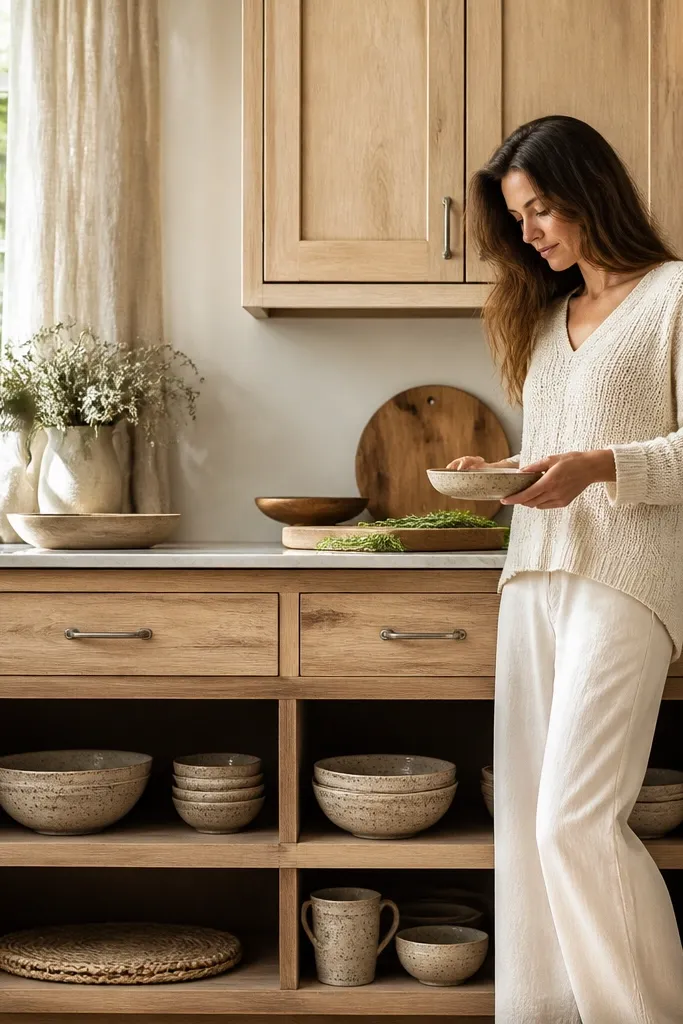
Open lower shelves create cozy access where you actually grab things — mugs, bowls, and everyday dishes. Keeping uppers closed keeps the visual noise down and keeps the kitchen feeling tidy. White oak on the open shelves is important because it makes the shelves look like furniture, not like unfinished storage. This look flatters small kitchens because open shelves lighten the lower visual weight. It also works well if you want a cozy dining setup without adding lots of decor.
Install closed uppers in white oak with matte finish and consistent hardware. For the lower section, leave a few bays as open shelves using the same oak shelves and brackets. Space shelves so plates stack flat and bowls have breathing room. Use matching jars in one or two colors and keep labels consistent. Style the dining area with one matching ceramic color and a small wood bread board placed where you can see it from the table.
Keep open shelves to essentials you use weekly; rotate out seasonal pieces so it stays calm.
Don’t mix random dish patterns on open shelves; it looks more cluttered than cozy.
18. White oak cabinets with a light green ceramic tile backsplash
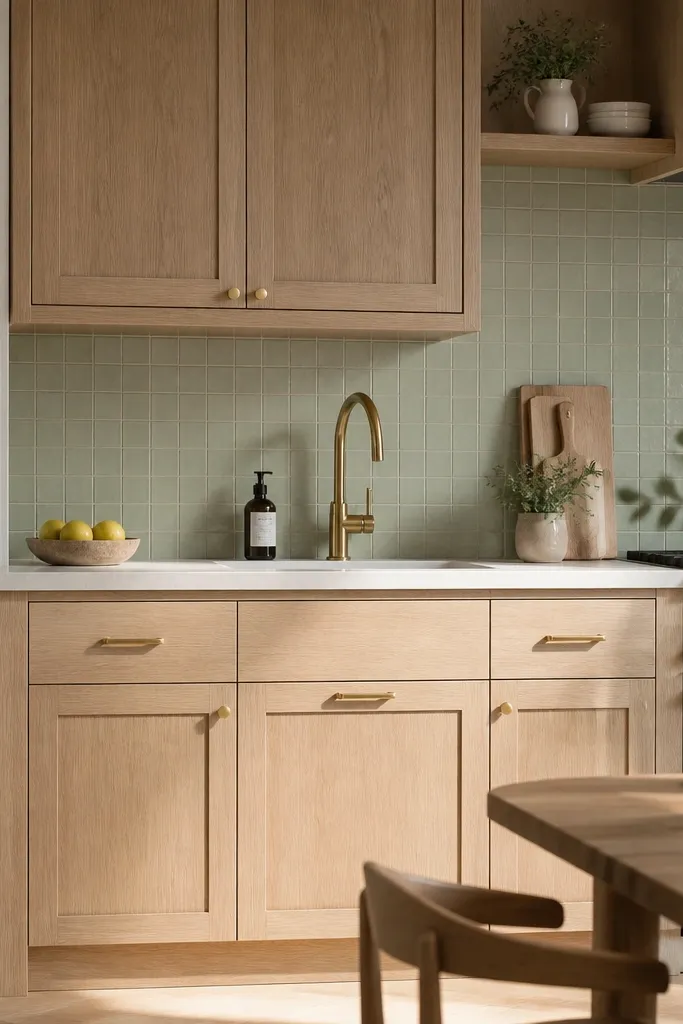
Muted light green tile makes rustic white oak feel cozy because it adds softness and a gentle nature note. The key is choosing a green that leans gray or sage, not bright mint. With white oak cabinets, sage reads warm and calm instead of playful. This look flatters kitchens with white walls and neutral floors and it makes the dining area feel fresh without looking beachy. I’ve seen this pairing make kitchens feel “still warm” even on cloudy days.
Pick white oak cabinets with matte finish and simple hardware like brushed brass. Choose a sage or muted light green ceramic tile, ideally small format like 2x4 or 3x6 with subtle variation. Use a warm white or light sand grout so it doesn’t look harsh. Pair with a cream countertop and a brass faucet or brass cabinet hardware. Add dining styling: a sage linen runner or napkins and a ceramic bowl in a clay tone.
Good to knowUse one green item on the table only — napkins or runner — so the backsplash stays the main green note.
AvoidAvoid bright, saturated mint tile; it makes oak look orange and less cozy.
19. Rustic white oak cabinets with textured linen curtains and an oak breadboard board
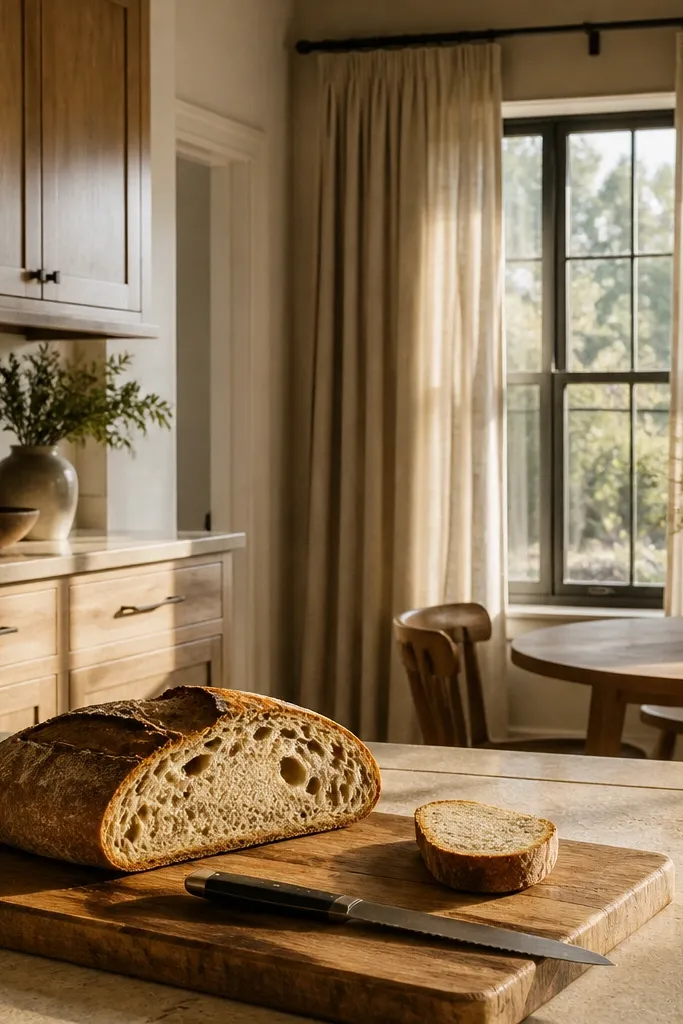
Textured linen is the fastest way I know to make rustic white oak kitchen cabinets cozy because it softens the hard lines of doors, drawers, and backsplash. The oatmeal linen works with oak undertones and doesn’t compete with grain. I like this look when you have a window near the dining area because the curtain texture reads like warmth even from across the room. It flatters kitchens that feel a little too bright because fabric cuts glare. It also gives you a place to add warmth without changing your cabinets.
Hang oatmeal or natural flax linen curtains with a simple rod and light folds, not stiff sheers. Keep the oak cabinets matte and choose hardware that’s warm metal like brass or dark bronze. Place an oak breadboard on the counter and use a ceramic bread basket so wood and ceramic repeat. Add one small plant in a clay pot near the window for a cozy “morning light” feel. On the dining table, use linen napkins in the same oatmeal family.
Good to knowSteam the linen once after hanging — the difference between wrinkled and softly pressed is huge for cozy.
AvoidAvoid thin polyester curtains; they flutter flat and look cheap next to real oak.
20. White oak cabinets with a built-in coffee station niche in matching wood
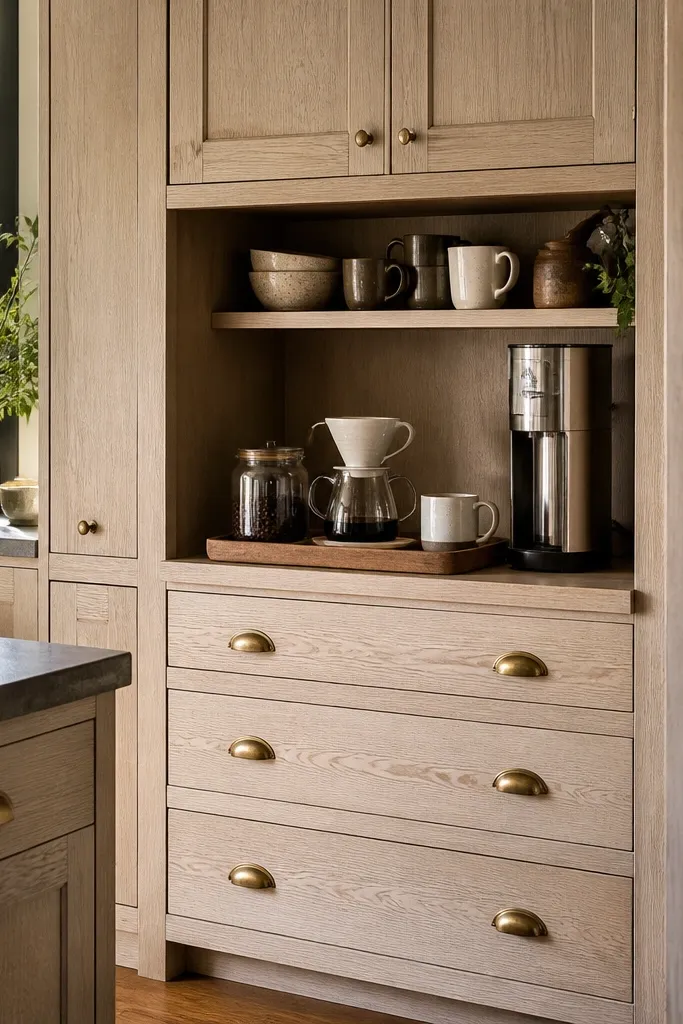
A coffee station niche is cozy because it creates a daily ritual spot, and the niche makes it look intentional instead of random. When that niche is built in matching white oak, it ties the kitchen together like furniture. I like brushed brass hardware and a small tray in matching wood to keep the space warm and not cluttered. This look flatters people who host weekend brunch because you can set out mugs and a few pastries without hunting for storage. It also works well in kitchens where the dining area is close and you want one tidy focal point.
Plan the niche inside the white oak run — keep it about 30 to 36 inches wide so mugs fit without crowding. Install a small shelf at mug height and keep a lower shelf for canisters. Add outlets and a cord cover so the area looks clean. Use matching wood accessories: one tray, one utensil holder, and a small canister set. Style it with two to three items only, then repeat the same tray wood on the dining table for consistency.
Good to knowUse a mug rack or shelf that matches the oak — metal racks can make the niche feel cold fast.
AvoidDon’t leave outlets exposed; it kills the cozy, built-in look.