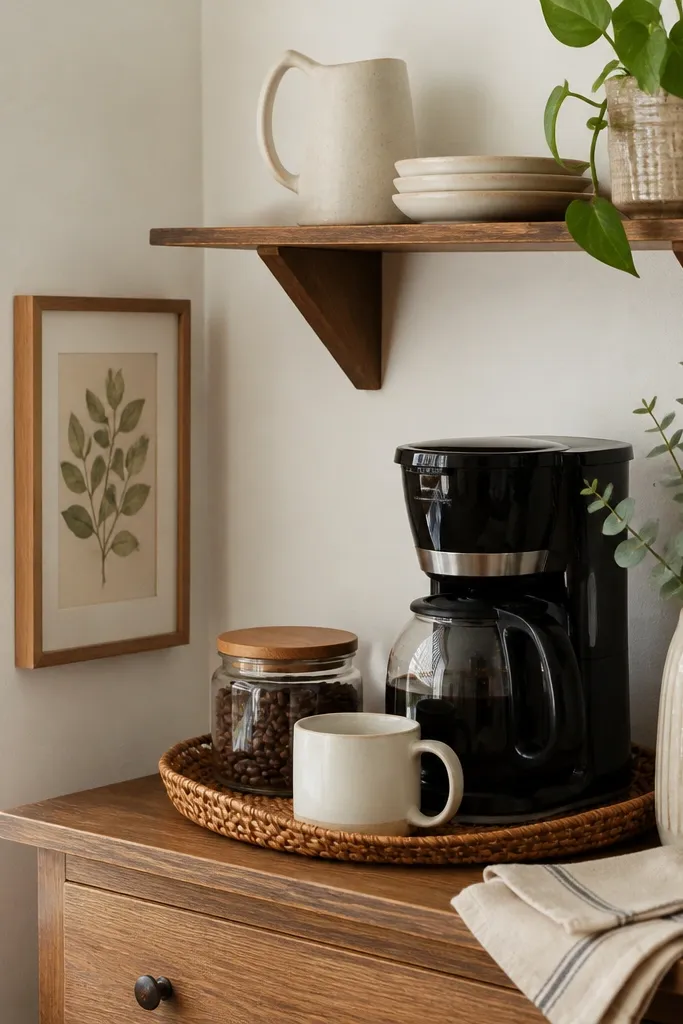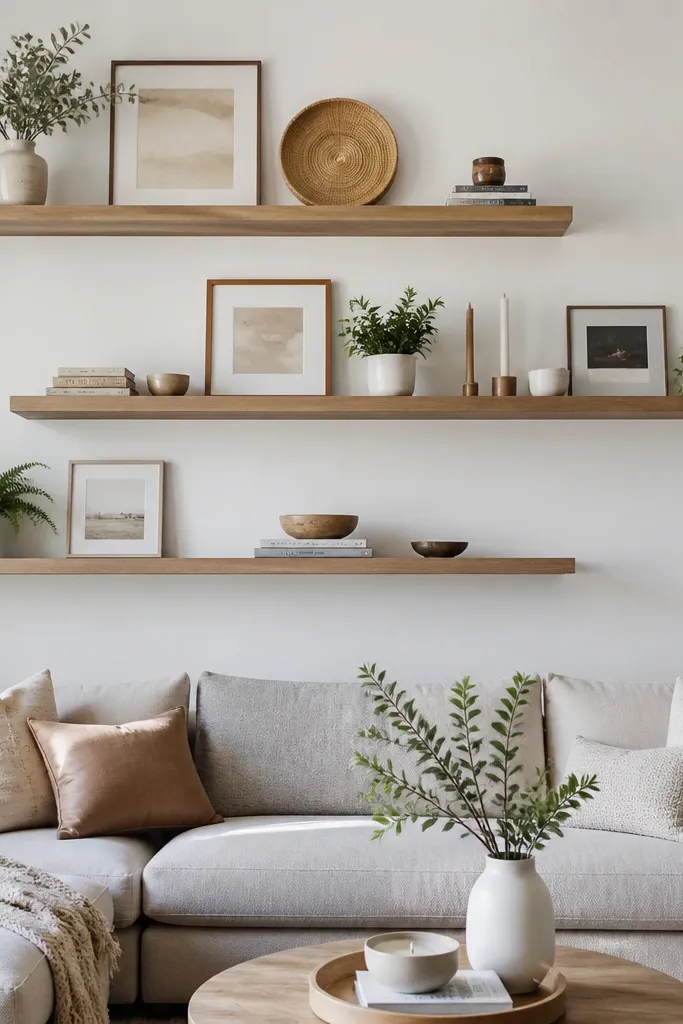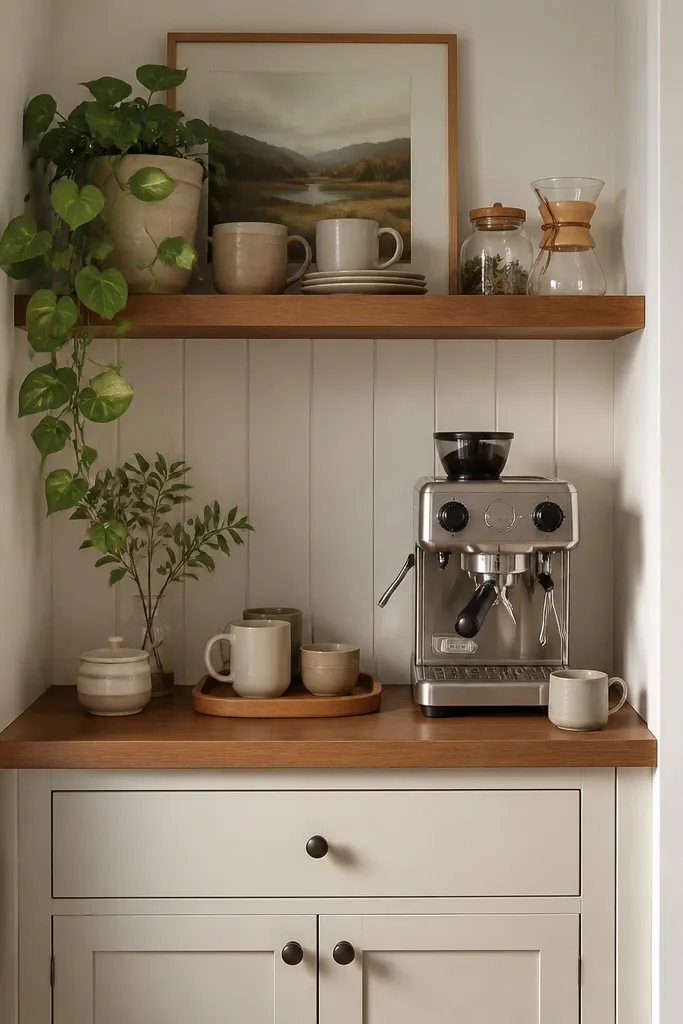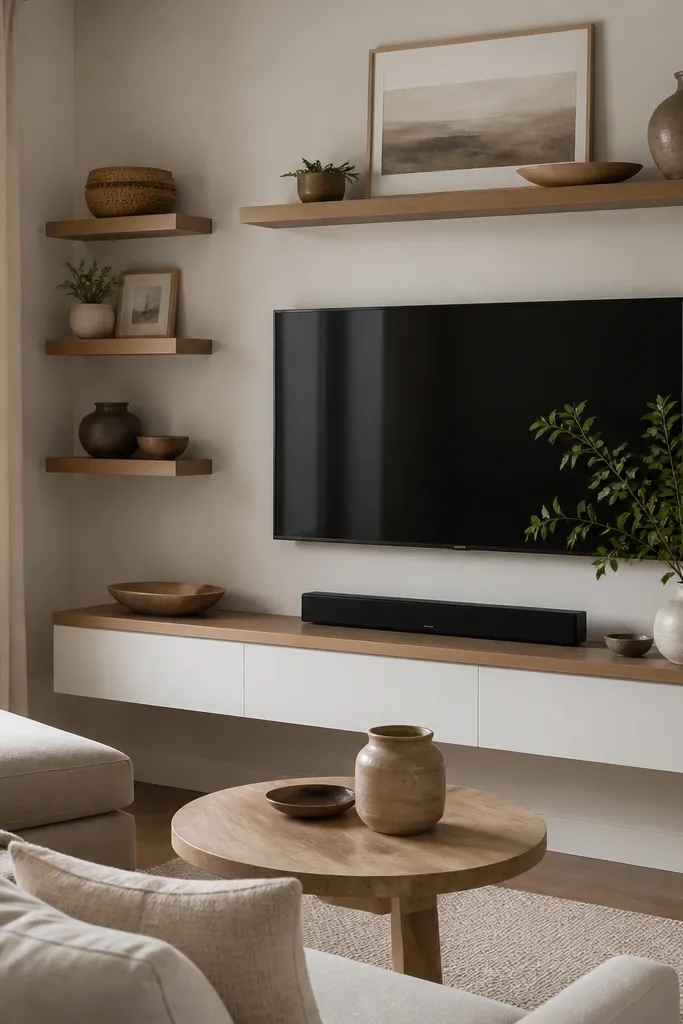
1. Two-Anchor Ceramic Line with Slim Vases
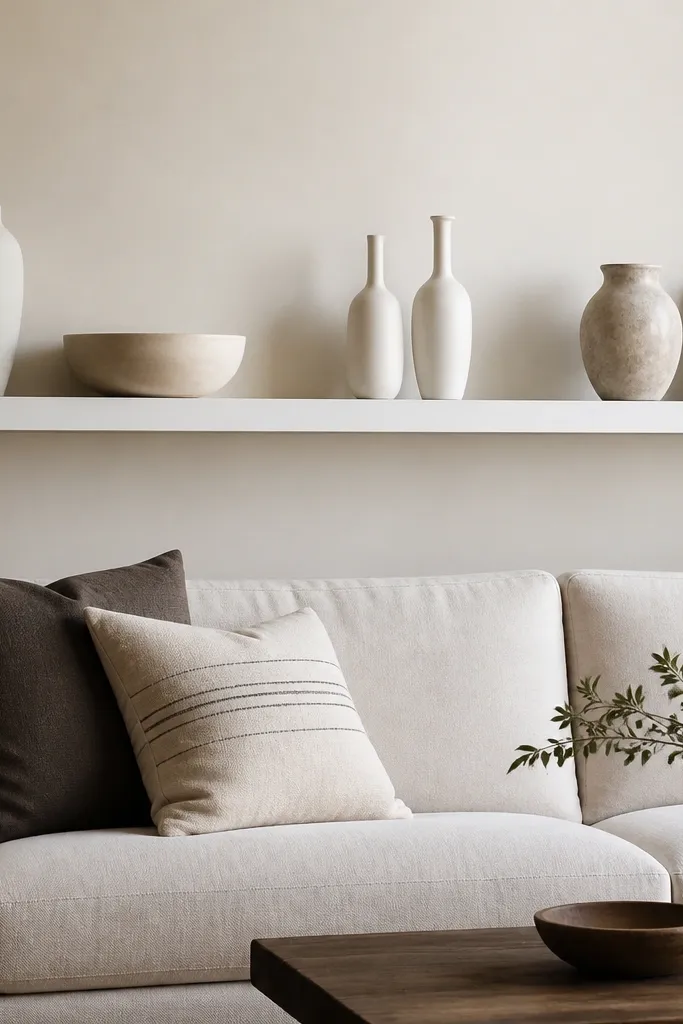
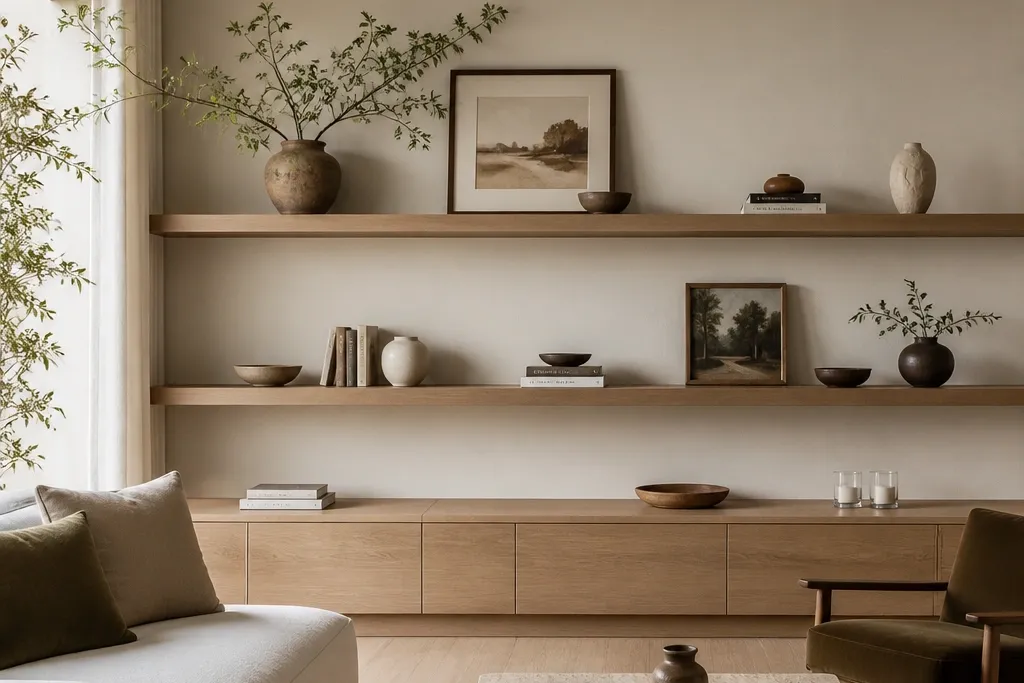
This Floating Shelves Living Room aesthetic long shelf styling works because it uses a calm color family and a predictable silhouette. The low anchors are wide and heavy-looking, so your eye has a stable starting point, then the slim vases add vertical lift without clutter. I’ve used this in living rooms with neutral sofas and light walls, and it flatters the space because nothing competes with upholstery texture. It also looks good with medium to deep skin tone artwork prints because the cream and stone tones keep the palette warm instead of gray.
Good to knowUse matte ceramics, not glossy — matte hides fingerprints and makes the shelf look curated even on busy weeks.
Start by placing your two biggest ceramic pieces at the far left and near center-right, leaving at least 8 inches from the shelf ends. Then add one slim vase between each anchor, keeping the vase openings facing forward so they catch light evenly. Add a small bowl or tray to connect the low pieces, and set a single framed print near one end so the line doesn’t feel symmetrical to the point of stiffness. Finish by stepping back from the couch and adjusting gaps until you see three “breathers” where the shelf is mostly empty.
AvoidAvoid mixing too many colors at once. Three neutrals is fine; six neutrals that all feel different will look accidental.
2. Book Stacks with Rotated Spines and One Oversized Frame
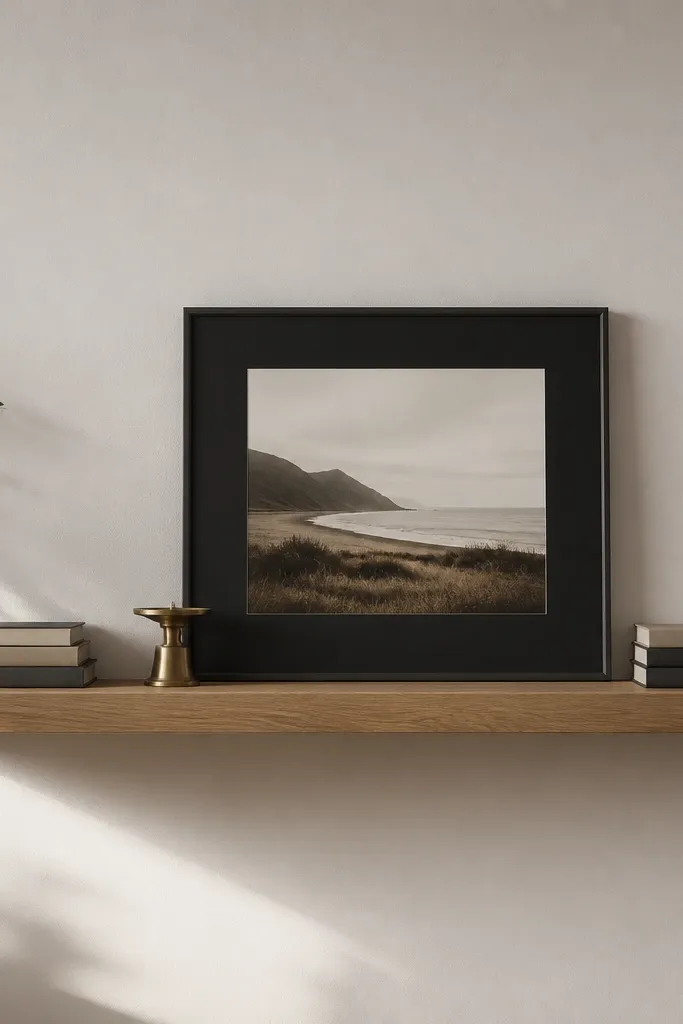
This look is for living rooms that need structure. The books give you height variation and a built-in grid, while the oversized frame acts like a focal point the eye can lock onto. I’ve done this in rooms with busy wall art elsewhere, and the shelf stays calm because the books are muted and the frame is the only “image” element. It flatters warm undertones in oak or honey wood because charcoal and beige covers create contrast without going cold.
Start by stacking books into two uneven groups — one with 3 books, one with 2 — so the shelf doesn’t mirror itself. Rotate the spines so you see color blocks, not specific lettering, then set the stacks about 6 inches from the shelf edges. Place the large frame in the center, leaning it slightly back against the wall so it doesn’t sit flat and shadow weirdly. Add one small brass or black object near the frame bottom corner, then leave at least 10 inches of empty space between the frame and each book stack.
Pick book covers that share the same paper tone (cream or off-white) so the display reads cohesive from across the room.
Don’t use shiny book covers or bright neon spines — they reflect light and make the shelf look like a display case.
3. Low Tray Styling with Layered Candles and Linen Texture
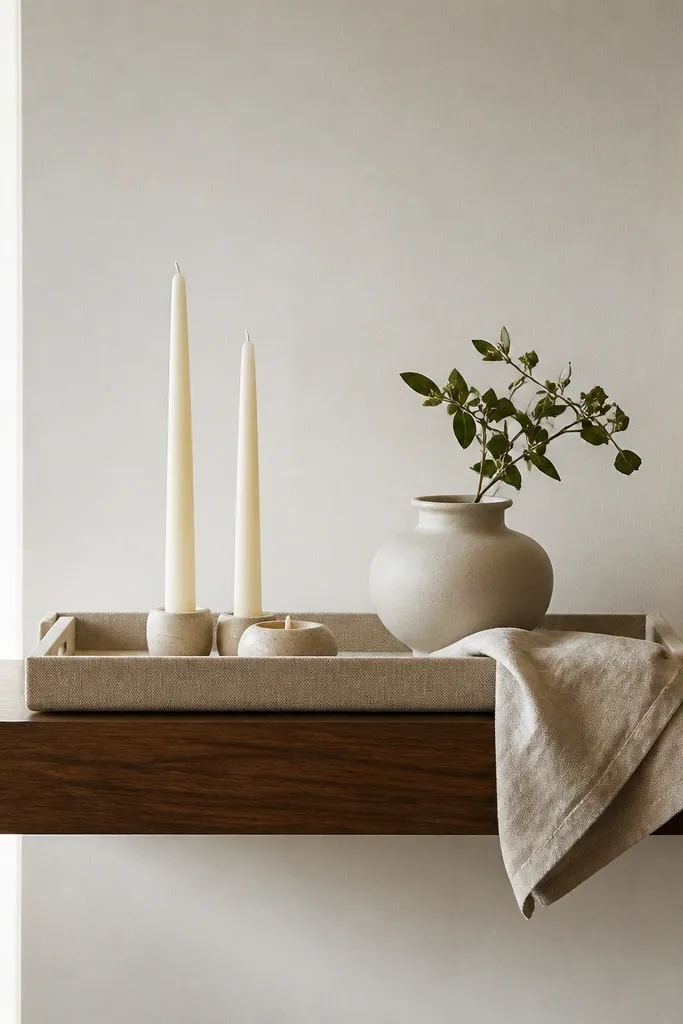
This is the Floating Shelves Living Room aesthetic long shelf styling that makes a room feel soft without adding clutter. A low tray anchors everything at one height, and the candles create vertical interest. Linen texture adds visual warmth, and it pairs especially well with beige, oatmeal, and warm gray walls. I’ve used this in smaller living rooms where you want the shelf to look styled but not bulky, because the objects sit close to the shelf surface and keep the visual weight low.
Start by centering the tray so you have equal “empty” shelf space on both sides. Place the larger candle holders toward the back corners of the tray, then set a smaller candle holder in the middle front. Drape the linen napkin so one edge hangs over the tray lip by about 2 to 3 inches. Add a short vase behind the tray, then place a thin frame at the far right end only — one frame is enough. Keep the left side slightly calmer by using only small objects there.
Use unscented candles with matte wax. Glossy wax looks wet under living room lighting.
Avoid stacking tall candles directly next to a vase. The silhouette becomes too tall too fast and looks top-heavy.
4. Mirror Backlight Look with Tall Clear Glass
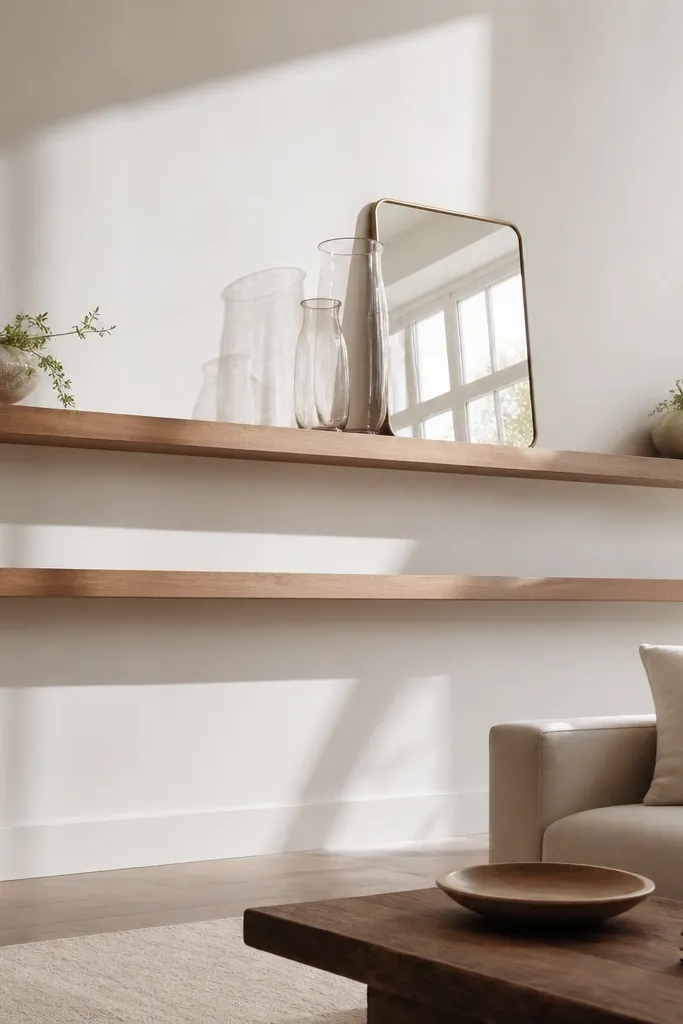
If your living room feels dark, this Floating Shelves Living Room aesthetic trick works because clear glass and reflective surfaces spread light across the shelf line. The mirror creates depth, so the shelf looks longer and more layered even when you keep decor minimal. I like this with white or light oak shelves, because the glass edges show up sharply. It also flatters rooms with darker couches, since the glass adds brightness without fighting the upholstery color.
Good to knowWipe clear glass with a microfiber cloth right before styling. Smudges show up instantly on camera flash.
Start by placing a small leaning mirror behind the center, not touching the shelf front edge. Position two tall clear glass vases in front of the mirror, spaced so they’re about 14 to 18 inches apart for a long run. Add low planters at both ends, keeping them under 6 inches tall. Leave at least one big empty section on the shelf — I aim for 12 inches of open space between a planter and the nearest vase. Step back and make sure the mirror reflection doesn’t show clutter from the room below.
AvoidSkip foggy or heavily tinted glass. It kills the light effect and makes the shelf look dull.
5. Gallery-Led Shelf with Picture Ledges and Mini Sculptures
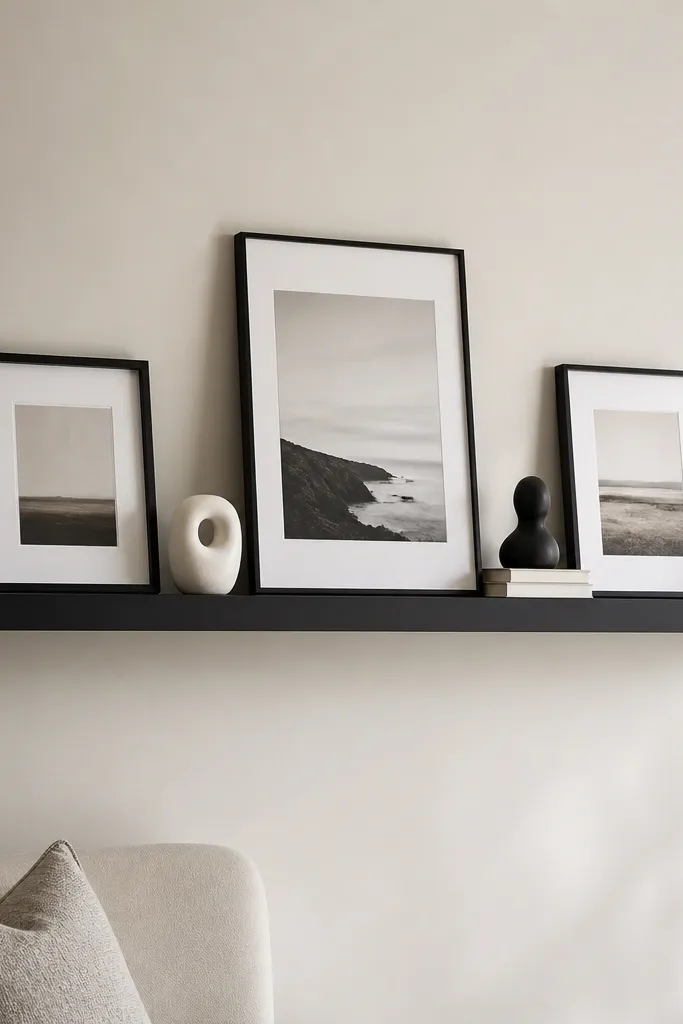
This look is for people who love art but hate a chaotic shelf. Picture-ledge frames create a gallery rhythm, while mini sculptures keep the shelf from feeling like a row of flat photos. I’ve styled this in living rooms with neutral walls and a bold sofa, and it keeps the decor from competing with the couch. The black shelf ties the whole thing together, and the white-black object mix reads modern without feeling cold.
Start by planning your frame sizes: one large center print, two smaller prints flanking it. Set the largest frame first, then place the smaller ones so there’s 6 to 8 inches between frame edges. Add mini sculptures at the bottom corners of each frame, not in the middle — that keeps the art the hero. Use one small book stack under the left frame to create a gentle height bump. Finish with one ceramic sphere at each end so the composition feels complete when you look from the couch.
Keep all frames the same color finish. Mixed frame metals scream “thrift haul” instead of intentional styling.
Don’t cram frames edge-to-edge. Tight spacing makes it look like the frames are bracing for impact.
6. Greenery Runner with Two Planters and One Hanging Trailing Stem
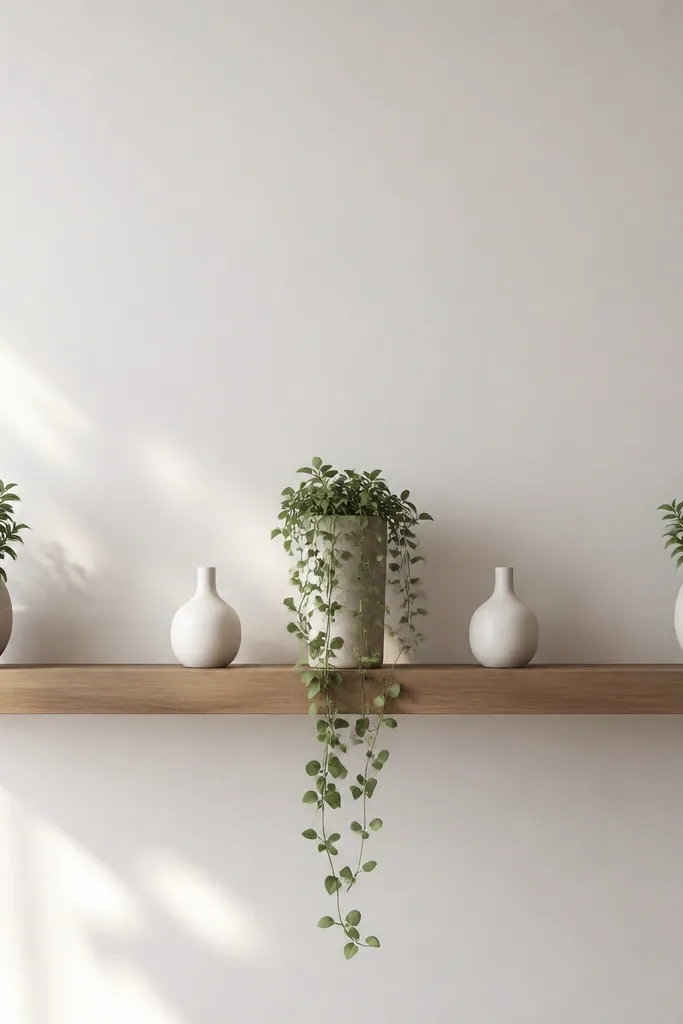
This Floating Shelves Living Room aesthetic long shelf styling works because plants create natural vertical rhythm and soften hard lines. The two identical planters keep it orderly, while one trailing stem adds movement so the shelf doesn’t feel static. I’ve done this in living rooms with wood floors and warm off-white walls, and the green pops without turning the palette into a jungle. This also flatters rooms where you want a “fresh” look without changing furniture.
Good to knowIf you’re using faux plants, trim the stems so the trailing piece falls in one main line, not a tangled mess.
Start by placing the two matching planters at the ends, leaving 5 to 7 inches between them and the shelf edges. Put the taller middle planter in the center and angle it slightly so the trailing stem falls toward the middle front. Add two small white vases on either side of the middle planter, each 6 to 8 inches away from it. Keep empty shelf space around the plants — I use one open gap of about 10 inches between each cluster. Lightly mist faux greenery or use real plants only if you can maintain light access.
AvoidAvoid using three different planter shapes. The shelf looks like items were grabbed quickly, not styled.
7. Stoneware Bowls with One Tall Branch Vase
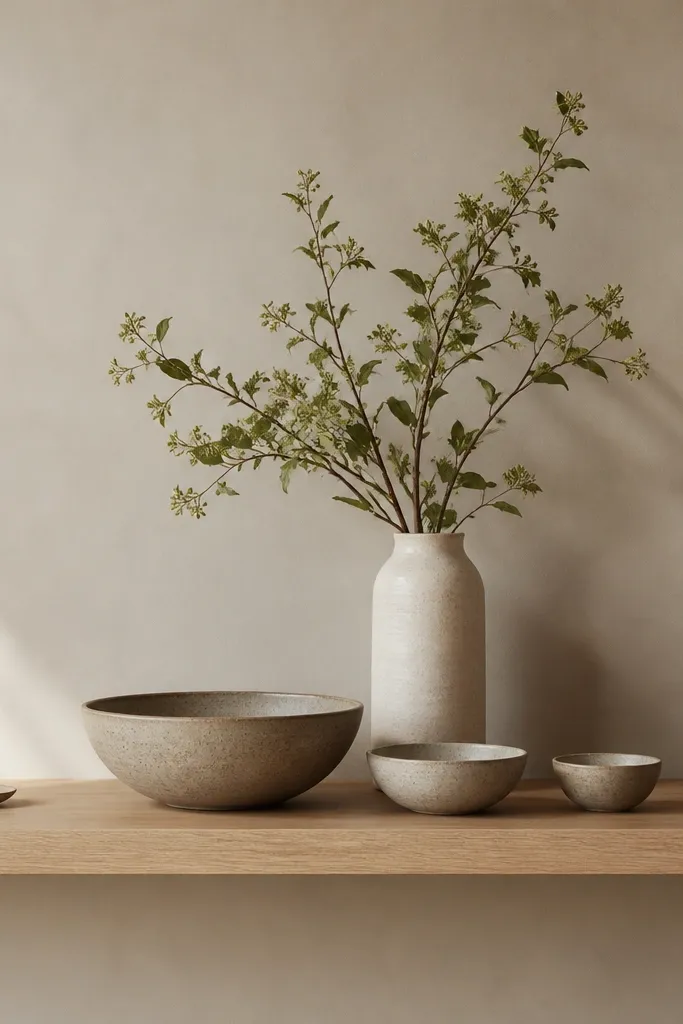
This is a clean, grounded Floating Shelves Living Room aesthetic long shelf styling for people who like neutral texture. Stoneware bowls add tactile variety, and the single tall branch vase gives you height without adding more clutter. I like it for living rooms with beige rugs and light wood furniture because the earthy tones blend without overpowering. It also works well when you have a lot going on elsewhere, like a large TV or busy curtains, since it keeps visual noise low.
Start by placing the largest stoneware bowl first, slightly left of center, with its rim facing forward. Put the medium bowl in the center and the small bowl to the right, keeping about 8 inches between bowl edges. Insert the branch arrangement behind the bowls so the tallest point rises at least 6 inches above the top shelf line of the bowls. Add a tiny dish at one end only, and leave the other end empty for balance. Adjust spacing until the bowls feel like a gentle arc across the shelf.
Use branches that match your room’s undertone — driftwood gray for cool rooms, warm brown branches for warm rooms.
Don’t add extra small trinkets around the bowls. They break the calm texture-focused look.
8. Nautical Rope Accent with Dark Blue Jars
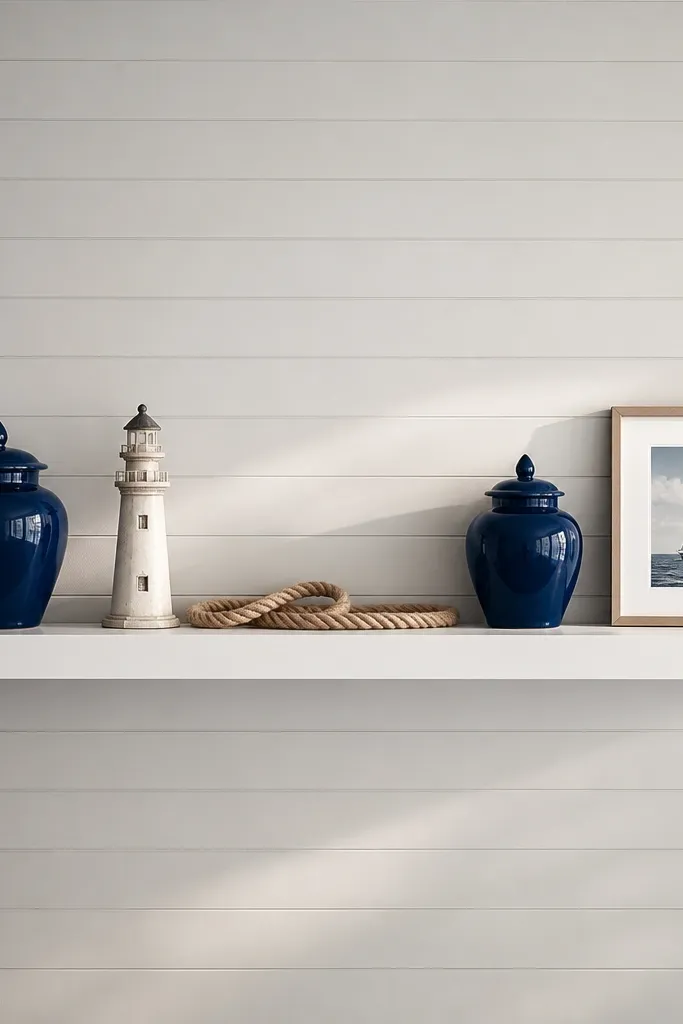
This look is for beachy homes or anyone who wants a coastal vibe without making it theme-y. The dark blue jars anchor the shelf with color, and the rope adds a tactile accent that reads intentional instead of decorative clutter. I’ve used this in living rooms that already have navy throw pillows, and it ties the palette together quickly. It also flatters warm skin tones in family photos because the cream and navy combo keeps skin looking natural, not washed out.
Start by placing the two dark blue jars at opposite ends, about 6 inches from each shelf edge. Lay the rope loosely in a center curve, with one end tucked under the rope coil so it doesn’t look like it was tossed. Set a small cream figurine near the rope’s highest point, then add one framed nautical photo at the far right end. Keep the shelf mostly empty between the rope and jars — aim for 12 inches of open space. Adjust the rope curve so it visually points toward the center of the room.
Use real rope fibers if you can handle dust — they look better than synthetic cord and photograph better too.
Avoid mixing too many nautical items like shells plus anchors plus ships. One rope accent is enough.
9. Black-and-White Typography with Stacked Picture Books
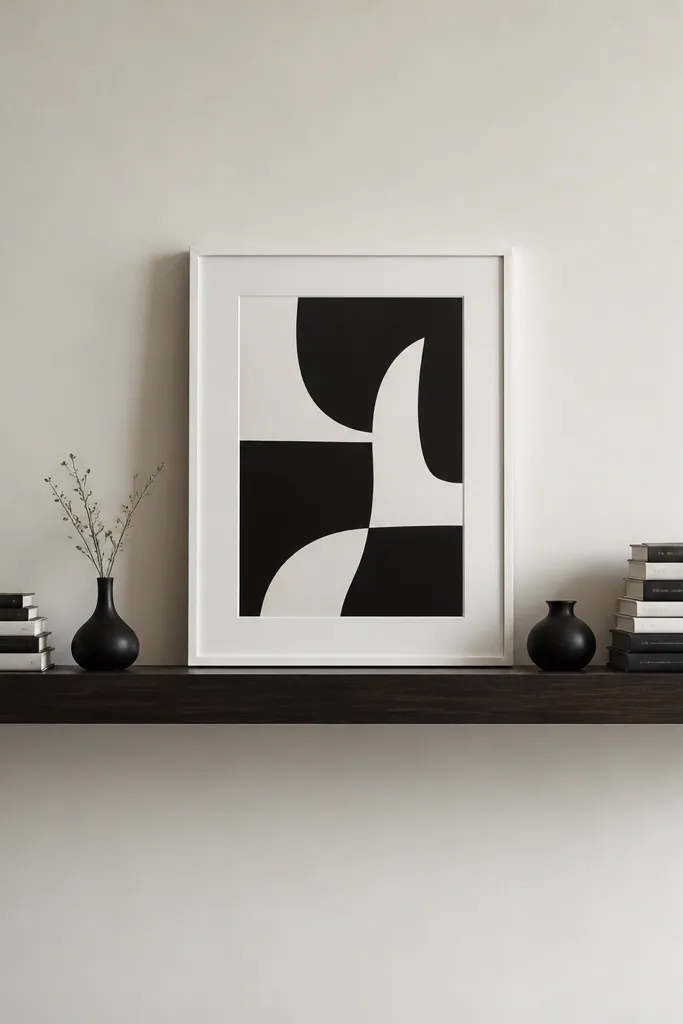
This Floating Shelves Living Room aesthetic long shelf styling looks sharp because it uses one graphic language: typography and grayscale. When you repeat black and white across books, frames, and small vases, the shelf looks designed even if you don’t add color. I’ve done this in modern living rooms with gray sofas and it makes the wall feel intentional instead of plain. It flatters cool lighting too — the high contrast holds up in evening light.
Start by creating two book stacks at the ends, one 3 books and the other 4 books, so one side reads slightly taller. Place a thin-framed typographic print in the center, leaning it back a touch so it doesn’t cast a dead-flat shadow. Add one small black vase next to each book stack, about 4 to 6 inches away from the books. Keep the middle shelf area clear around the print — don’t add extra figurines. Finish by checking symmetry from the couch, not from standing directly under the shelf.
If your books have readable titles, rotate them so the titles face inward or downward.
Don’t let the stacks lean or sit uneven. Crooked books scream “temporary” instead of styled.
10. Color-Block Vases with One Neutral Tray
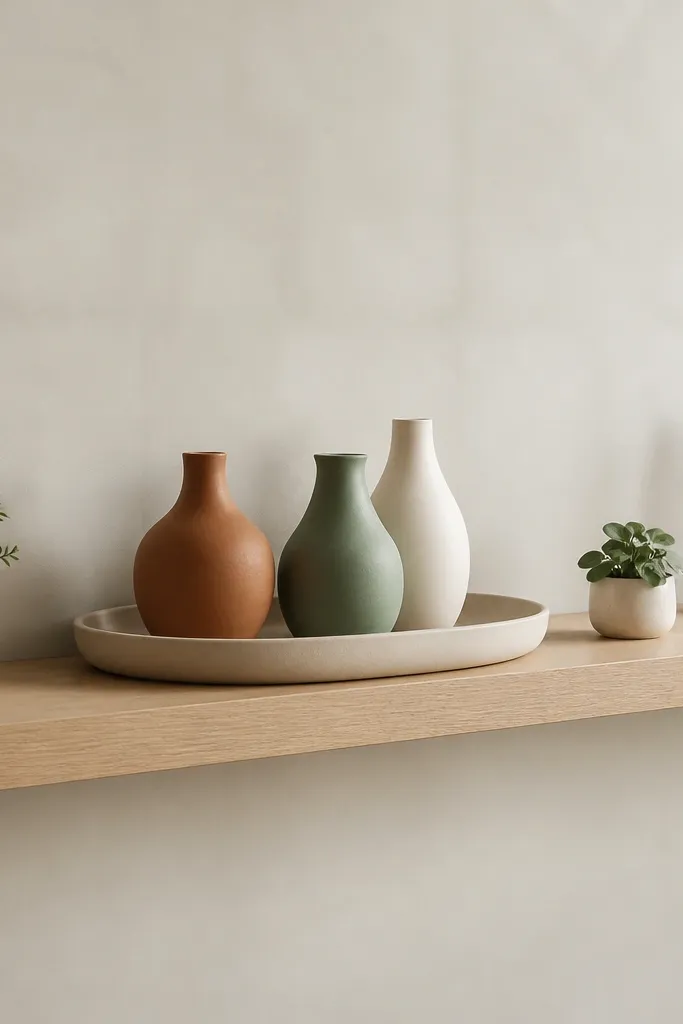
This is the best Floating Shelves Living Room aesthetic long shelf styling when you want color but still want it to look grown-up. A neutral tray keeps the color block contained, so the shelf doesn’t look like a craft table. The vases create a clean gradient in tone — warm terracotta, soft sage, then creamy white — which looks good with most skin undertones in photos. It also works in living rooms that already have one accent color, because you’re repeating it in a controlled way.
Start by placing the beige tray centered so it anchors the color cluster. Arrange the three vases on the tray like a triangle: one in front center, one left back, one right back. Keep at least 3 inches between vase bases so they don’t touch and blur together. Put small ceramic planters at each end, then add one gold-framed photo only at the right side. Leave the far left end slightly emptier than the far right so the photo feels like a finishing touch.
Choose ceramic vases with matte glaze. Gloss makes terracotta and sage look muddy under warm bulbs.
Avoid adding more than one patterned item. One solid color cluster beats mixed patterns on a long shelf.
11. Layered Lighting with a Small Table Lamp on a Shelf
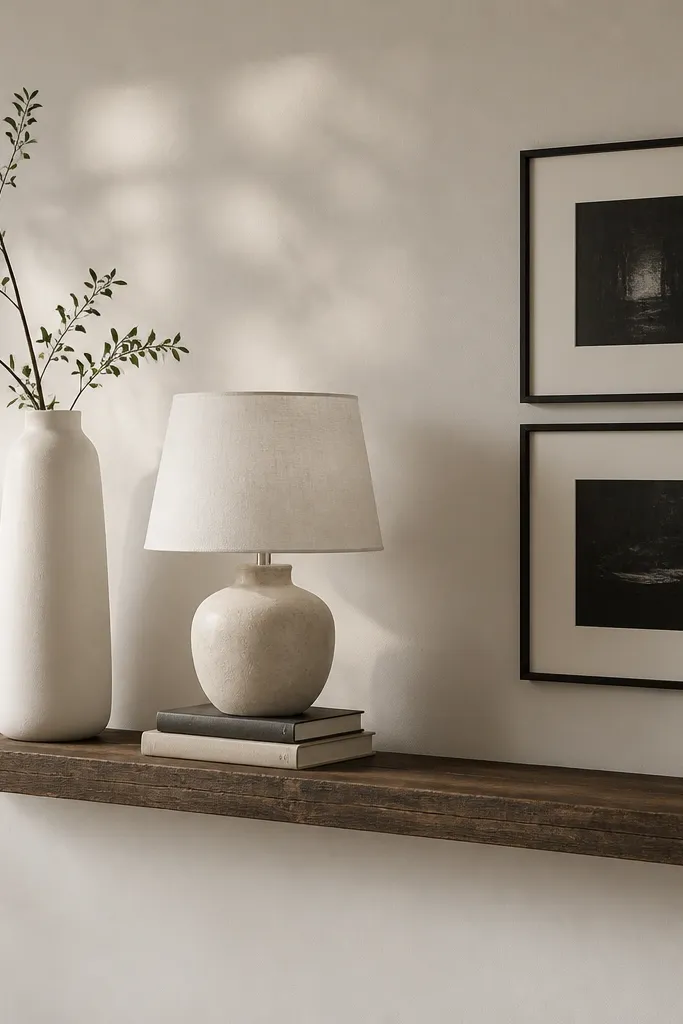
Yes, you can do shelf lighting, and it looks designer when it’s one lamp, not a whole lighting setup. The lamp gives you warm glow at eye level, and the shade adds softness that makes the whole room feel calmer. I’ve styled this in living rooms where ceiling lighting is harsh, and it immediately changes how the shelf looks after dark. The cream linen shade reads friendly with warm skin tones, and the white vase keeps the palette airy.
Start by placing the small table lamp on the shelf so the base sits about 10 inches from the nearest wall edge. Put the tall white vase behind the lamp, centered, so the vase rises above the shade height by roughly 2 to 4 inches. Add two black framed photos on the right side in a vertical stack, with one small gap between them. Place a couple of slim books under the lamp base if you need height so the shade sits level with your couch back line. Leave at least 12 inches of empty space between the lamp cluster and the framed photos.
Use a lamp with a stable base and a cord that routes neatly down behind the shelf bracket area.
Avoid using a lamp that’s too tall. If the shade hits your window line, it looks accidental.
12. Brass Tray with Glass Ornaments and a Single Green Accent
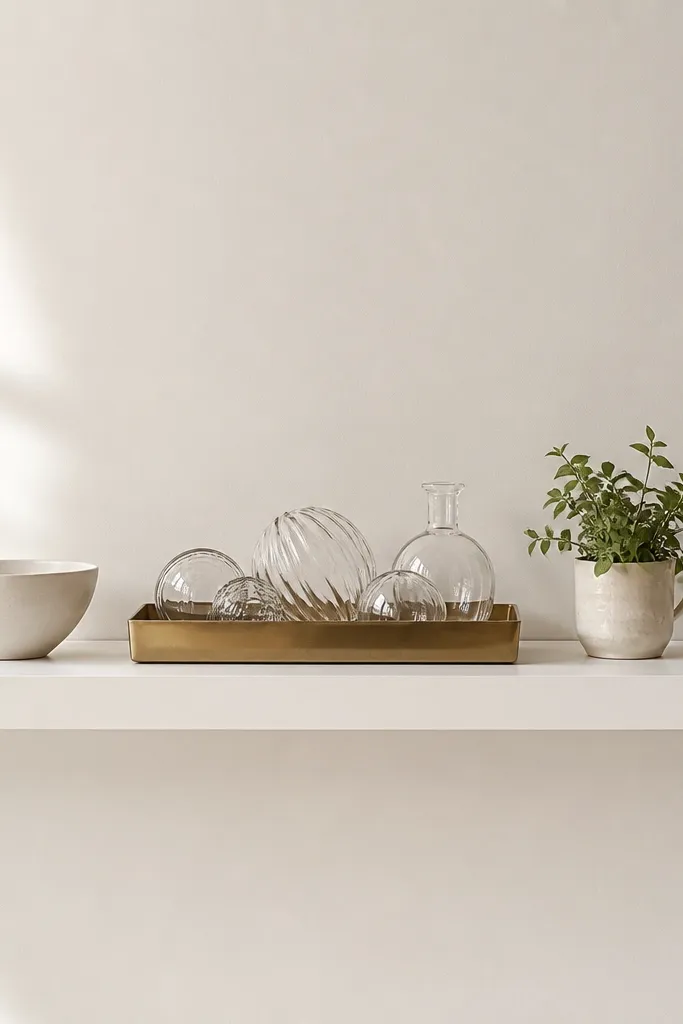
This look is for people who like clean sparkle without turning the shelf into holiday decor. Brass tray = warmth, clear glass = light reflection, and one green accent = color balance. I’ve used this in living rooms with white walls and brushed metal fixtures, and the shelf matches the room’s hardware without feeling matchy. It also flatters darker upholstery because the brass and glass brighten the visual weight.
Good to knowWipe glass and brass with the same microfiber cloth each time. Smudges make brass look dull fast.
Start by setting the brass tray in the center, leaving equal space on both sides — about 14 inches to the shelf ends. Arrange 3 to 5 clear glass ornaments inside the tray, with one slightly taller piece in the back. Put a matte white bowl on the left end, then place the small green plant on the right end. Keep the plant container small so it doesn’t compete with the tray. Check from the couch and adjust ornaments so their reflections don’t create chaotic glare.
AvoidDon’t add multiple green items. One plant is enough to keep the look intentional.
13. Monochrome Sculptural Stack with Oversized Vase
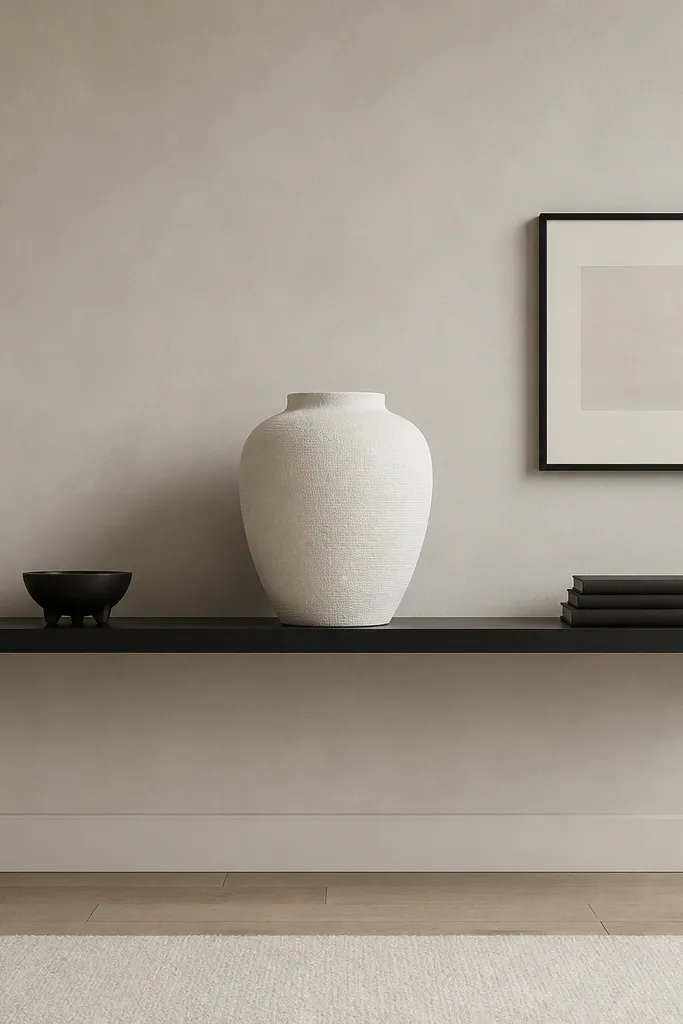
This Floating Shelves Living Room aesthetic long shelf styling is bold in the best way. One oversized vase dominates the composition, and monochrome objects give you contrast without color chaos. I use this when the living room has strong shapes — like a low-profile sectional or a black metal coffee table — because the shelf echoes those lines. It also photographs cleanly because the eye knows where to land: the big vase.
Start by placing the oversized vase at the center, then build outward with smaller items at opposite sides. Put a black sculpture bowl on the left, and a black book stack on the right, keeping each about 8 to 10 inches away from the vase. Add one thin black frame above or behind the right-side cluster, leaning it slightly so it catches light. Leave the far ends mostly empty; I keep only one tiny object per end at most. Make sure the tallest point is the vase, not the frame.
If your shelf is long, don’t feel forced to fill it. Empty space looks expensive when the anchor piece is right.
Avoid using two oversized vases on the same shelf. Two big anchors fight and the shelf looks heavy.
14. Layered Wood and Rattan Look with Woven Basket and Small Candles
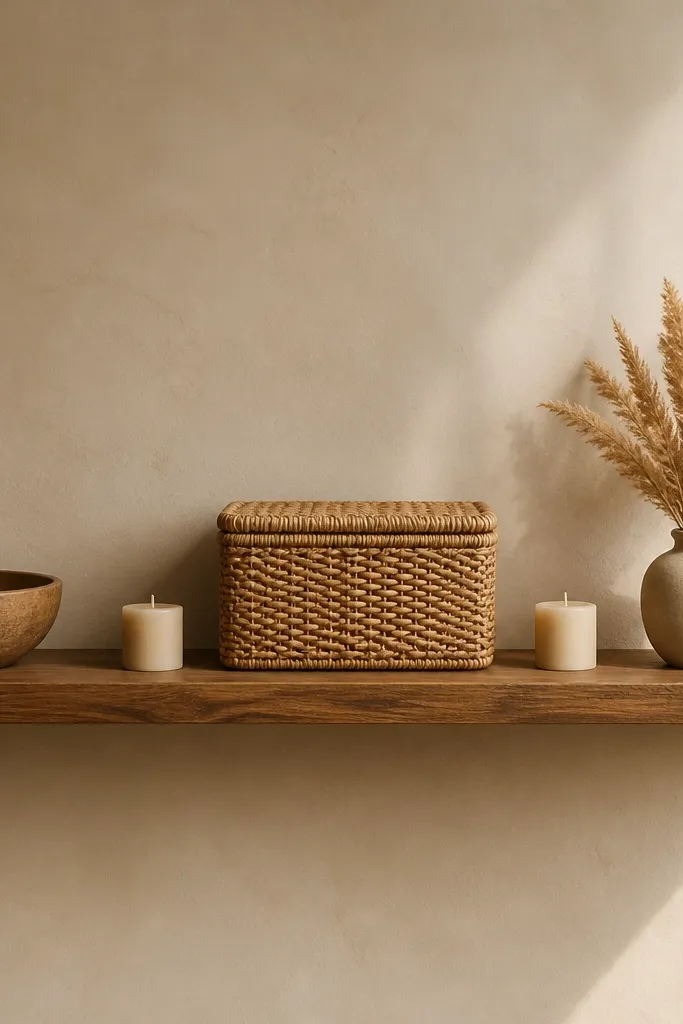
Warm wood and woven texture make a living room feel lived-in, not staged. This Floating Shelves Living Room aesthetic long shelf styling uses rattan and wood so the shelf matches natural fibers in rugs, throws, and curtains. I’ve styled this for people who want cozy without going farmhouse-cute — the look stays neutral and grown-up when the shapes are simple. It also flatters earthy decor palettes and keeps the room looking soft under warm lamp light.
Good to knowIf your rattan looks too new, rub it lightly with a dry cloth to knock down the shine.
Start with the woven basket centered, then place the two small candles on either side of the basket so they’re symmetrical but not identical. Add a wooden bowl on the left — slightly lower than the basket so it doesn’t look like a second anchor. On the right, add a small ceramic vase with dried grass, but trim the grass so it doesn’t exceed the shelf height by more than 3 to 4 inches. Keep the palette to three tones: warm wood, tan rattan, and cream. Leave 10 to 12 inches of empty space between the basket and the ends.
AvoidAvoid mixing rattan with lots of shiny metal. The contrast makes the shelf feel mismatched.
15. Asymmetrical Tall-Short Rhythm with One Leaning Art Piece
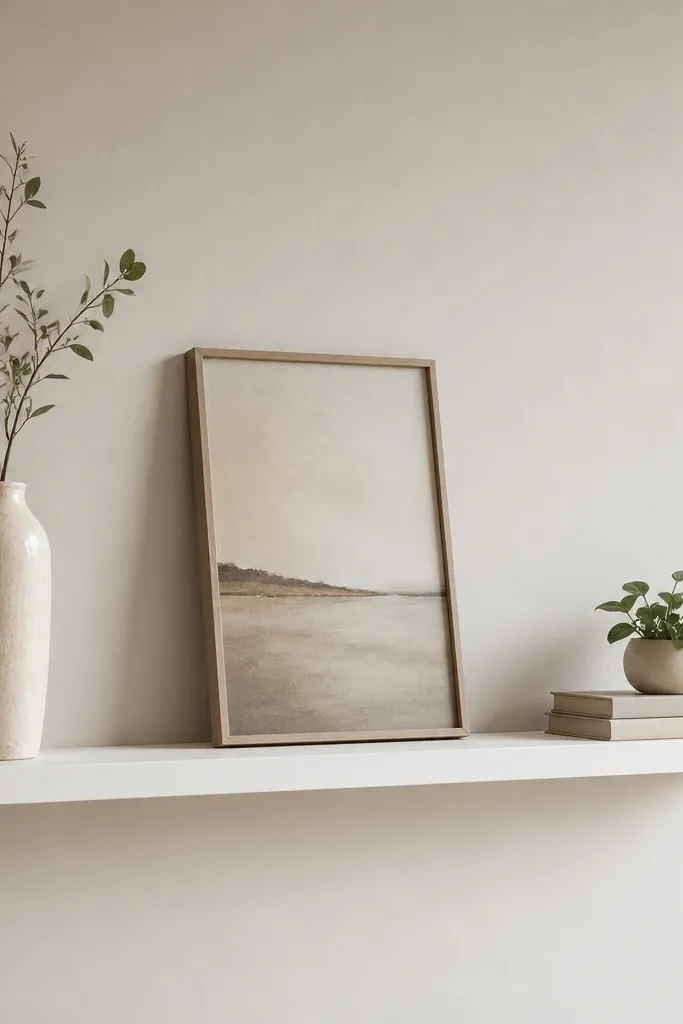
This look is the one I use when a living room has an asymmetrical element like an offset chair or a corner cabinet. The tall-short rhythm creates motion, and one leaning art piece adds personality without crowding. I’ve styled it in small apartments where symmetry feels stiff, and it makes the shelf feel relaxed while still intentional. It also works with a wide range of skin tones in framed family photos because the shelf stays light and doesn’t introduce harsh colors.
Start by placing the tall ceramic vase on the left, keeping it about 7 inches from the shelf edge. Set the leaning framed art near center-right, angled so the top leans slightly toward the room. On the right, stack two short books and place a small plant in front of the books, not behind them. Keep a clear empty gap between the vase and the leaning art — around 12 inches. Finish by adding one tiny ceramic dish at the far right end only if the composition feels too empty.
Angle the leaning frame by eye while standing from the couch, not from directly under the shelf.
Avoid placing the tallest item on the far right if your couch is centered. It pulls the whole composition toward the corner.