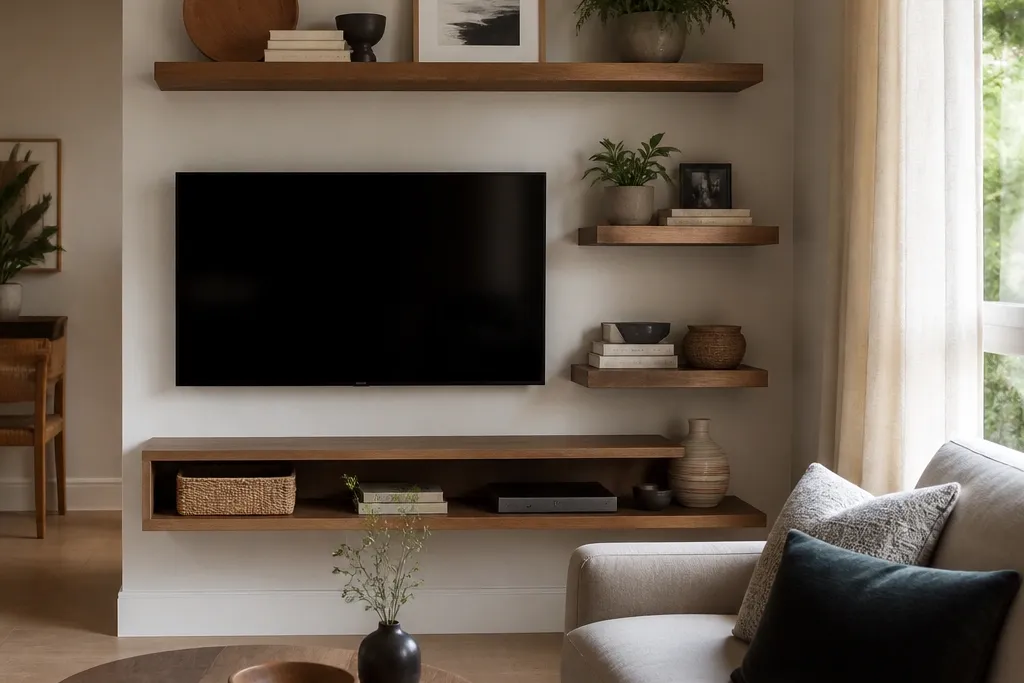
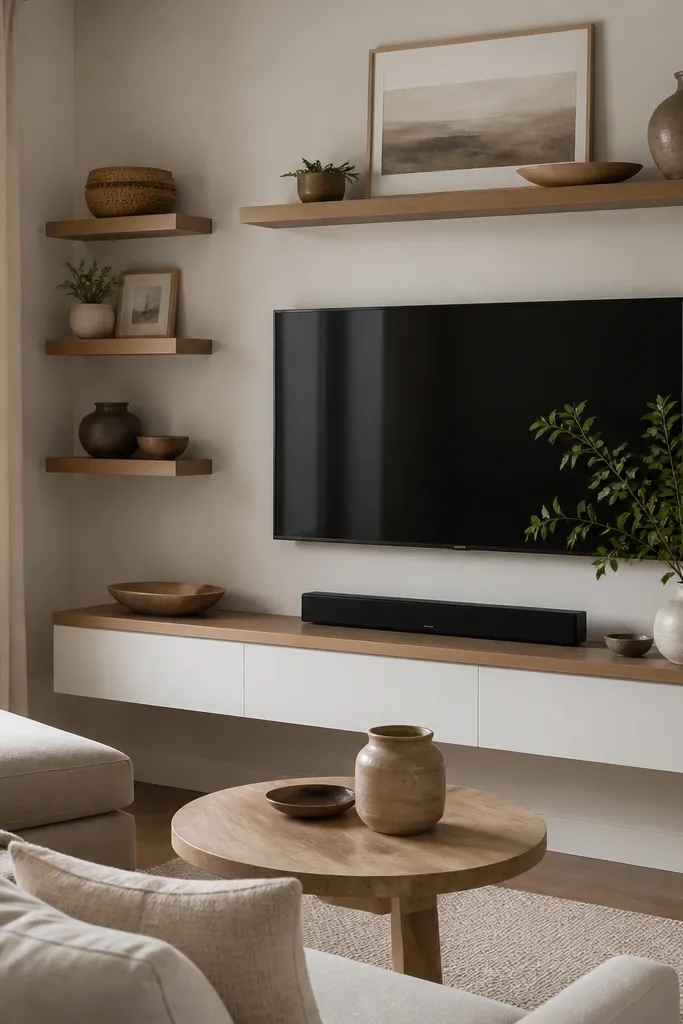
1. Two-Shelf TV Frame with 6-Inch Accent Landing
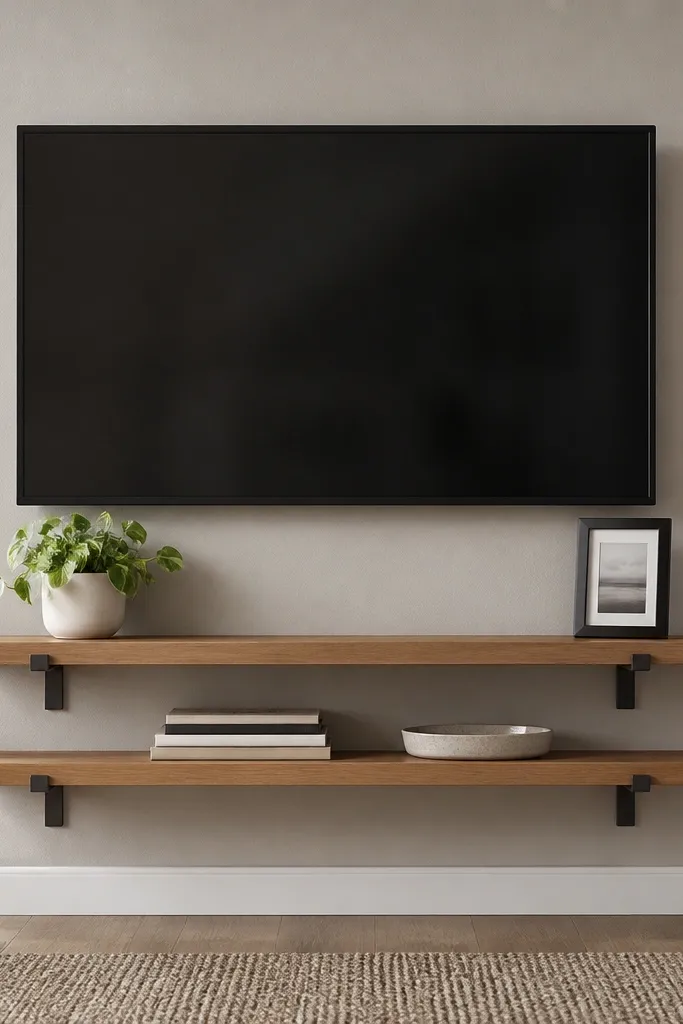
This layout is the fastest way to make a small TV wall feel neat without turning it into a clutter shelf. The warm oak tops soften the black TV screen, and the matte black brackets visually disappear against a darker or neutral wall. I use this when the room is narrow and you need the wall to read clean from the doorway. It flatters most rooms because the shelves stay close to the TV, so the eye doesn’t travel too far left or right. Styling stays calm: one plant and one book stack keeps it from looking crowded.
Start by marking your TV centerline, then place the first shelf so its top edge lines up about 2 inches below the TV bottom. Install a second shelf 10-12 inches below the first so you get a comfortable gap for decor. Use 6-inch deep shelves so items don’t project past the TV’s visual width. Style the upper shelf with one vertical element (like a plant) and one flat element (like a frame) so your shapes don’t fight. Keep the lower shelf mostly horizontal: books flat, tray centered, and one small object on each side.
Use picture-frame glass or a simple matte frame color like black or white so the shelf doesn’t compete with the TV glow.
Avoid putting multiple tall items on both shelves — it makes the wall look top-heavy.
2. Staggered Ladder Shelves Flanking a Centered TV
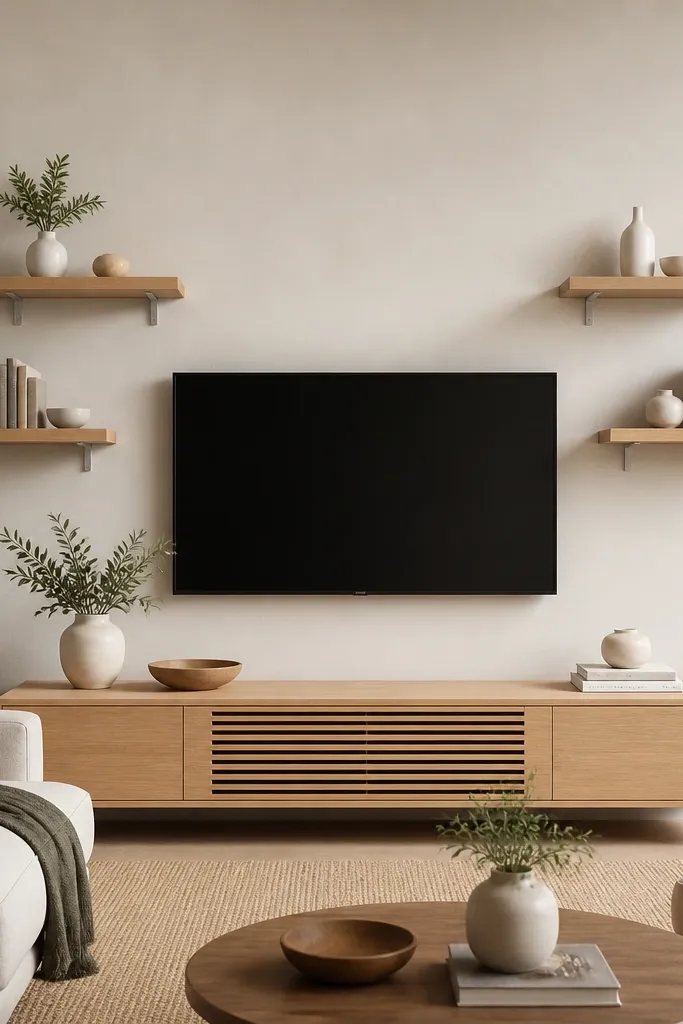
When your space is small but your wall is long, laddering shelves helps the eye move smoothly instead of jumping from shelf to shelf. The stepped layout creates depth without adding more shelf length, which is the trick in tight bedrooms and narrow living rooms. I like thin metal brackets here because they look airy and don’t thicken the wall visually. This works best when you have a TV centered and you want the shelves to feel like they belong to the same design system. It also flatters rooms with a lot of vertical features like curtains or tall lamps.
Start by placing the middle TV and then draw two vertical guides on the wall at equal distances from the TV center. Install the left and right shelves in pairs so the outer shelves sit a little lower than the inner ones. Keep shelf depth at 6-7 inches, and alternate shelf lengths so the longest shelf sits closest to the TV. Style by placing one object per shelf bay — a white vase on the higher shelf and books on the lower shelf. Finish with a small tray in the center bay so the whole pattern ties back to the TV.
Pick one repeating object shape (for me it’s round white vases) so the ladder looks intentional even when you rotate decor.
Skip bulky storage bins on stepped shelves — they kill the light, airy effect.
3. Book-Ledged TV Wall with Deep 10-Inch Shelves
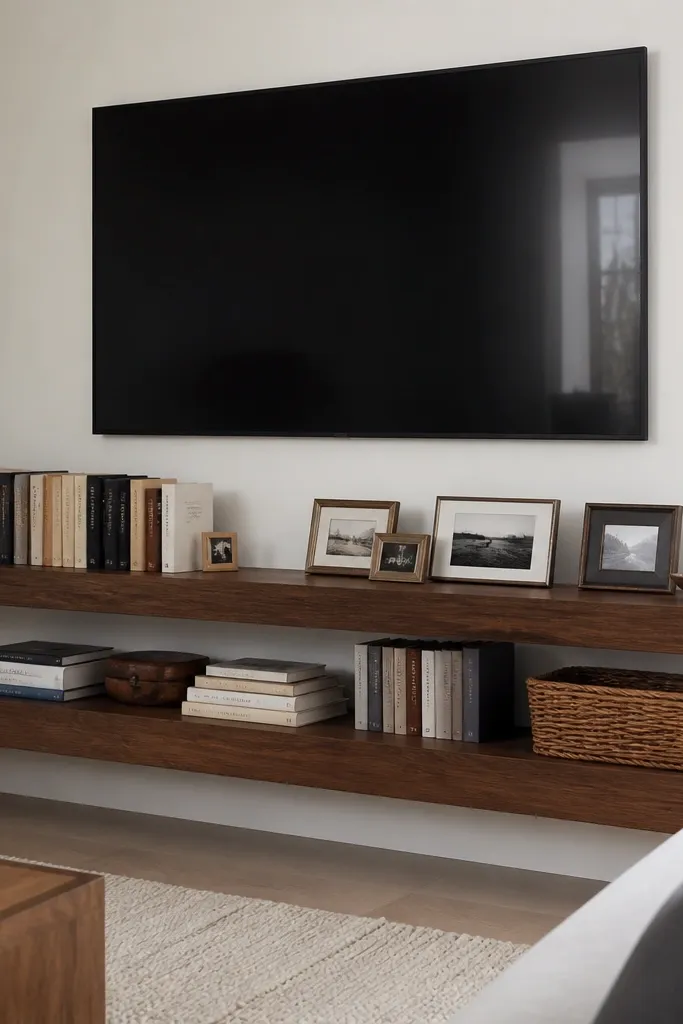
If you want the TV wall to do double duty as reading storage, deeper shelves are the honest answer. Ten-inch depth lets books stand without tipping, and it gives you enough room for a basket without the basket looking squeezed. Walnut stain adds warmth in bedrooms where the walls are often cooler-toned. This setup flatters people who like books with visible spines and want the wall to feel lived-in, not staged. It also hides cable clutter because you can style around the area where cords run.
Start by installing the TV first, then measure the gap between the TV bottom and where you want the top shelf to sit. Mount the first 10-inch shelf so it lands about 3-4 inches below the TV bottom, leaving a clean visual line. Add a second 10-inch shelf 11-14 inches below the first for book height. Style top shelf with books standing upright plus one photo row along the back edge. On the bottom shelf, place the woven basket near the TV-right side and keep the left side mostly open for balance.
Good to knowUse bookends in a single finish like black metal so the spines look crisp even when titles change.
AvoidDon’t mix shelf depths on the same wall — it makes the whole thing look accidental.
4. Floating Picture-Ledge Pair for a Soft TV Wall
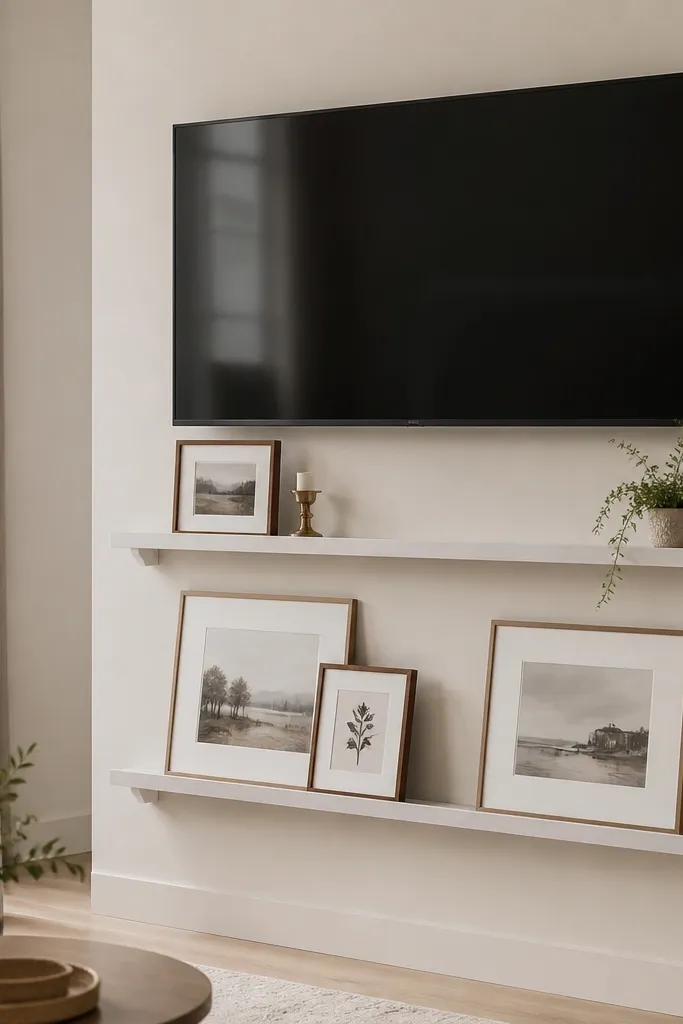
This is for people who want the TV wall to feel like a gallery wall without the heavy shelf look. Narrow picture ledges create a gentle frame around the TV, and the off-white finish makes small rooms feel brighter. I’ve used this in bedrooms with cream walls where black shelves would look too harsh. It flatters light skin tones and warm undertones in decor because the off-white base makes everything look cleaner. The styling stays minimal and calm, which helps the room feel restful even with a TV.
Start by choosing two ledges that are about 4 inches deep, not wider. Mount the top ledge 4-5 inches below the TV bottom, and mount the second ledge 9-10 inches below that. Use off-white ledges with slim brackets so the hardware doesn’t show. Place framed prints flush to the back edge and keep frames all the same size or same mat color. Add one small brass object on the right side to catch light, then leave more negative space than you think you need.
Good to knowStick to white mats or no-mat prints so the shelf doesn’t look busy next to the TV.
AvoidAvoid stacking too many small frames — the ledge turns into a clutter pile fast.
5. Corner-Start Shelves That Wrap the TV Side
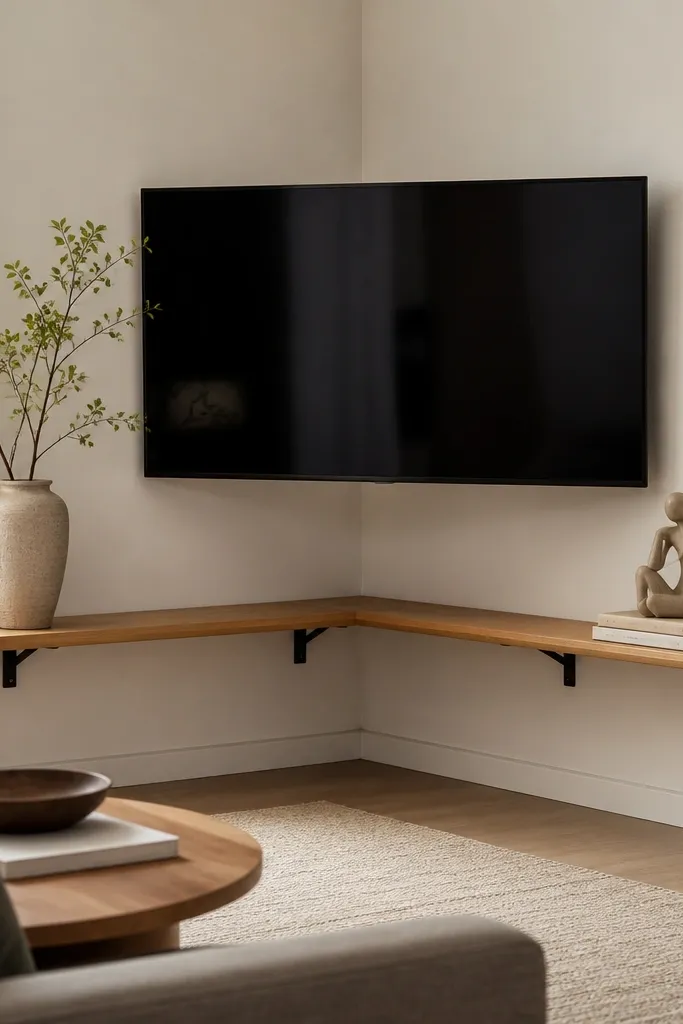
In small spaces, corner walls are a gift because you get extra surface area without taking up the room. Wrapping shelves around the TV side makes the wall feel larger and reduces the “flat poster” look of a single centered TV. I like light oak here because corners often catch shadows; wood warms them up. This flatters rooms with L-shaped layouts and makes it easier to style without reaching too far across the wall. You also get a more believable flow when you have a doorway or hallway near the TV wall.
Start by identifying the corner line and centering the TV so it still looks intentional from the main seating position. Install the first shelf along the corner side at about chest height when standing, roughly 52-56 inches from the floor to the shelf top. Add a second shelf on the other side at a slightly different height so the corner doesn’t look like a mirror. Keep both shelves 6-7 inches deep. Style the corner side with one tall item and one flat item; style the other side with a book stack and one sculpture.
Use the same shelf depth on both sides so the wrap looks deliberate, not like two different projects.
Skip tiny decor on corner shelves — it gets lost in the angle and looks cheap.
6. Oversized Center Shelf with Two Side Mini-Shelves
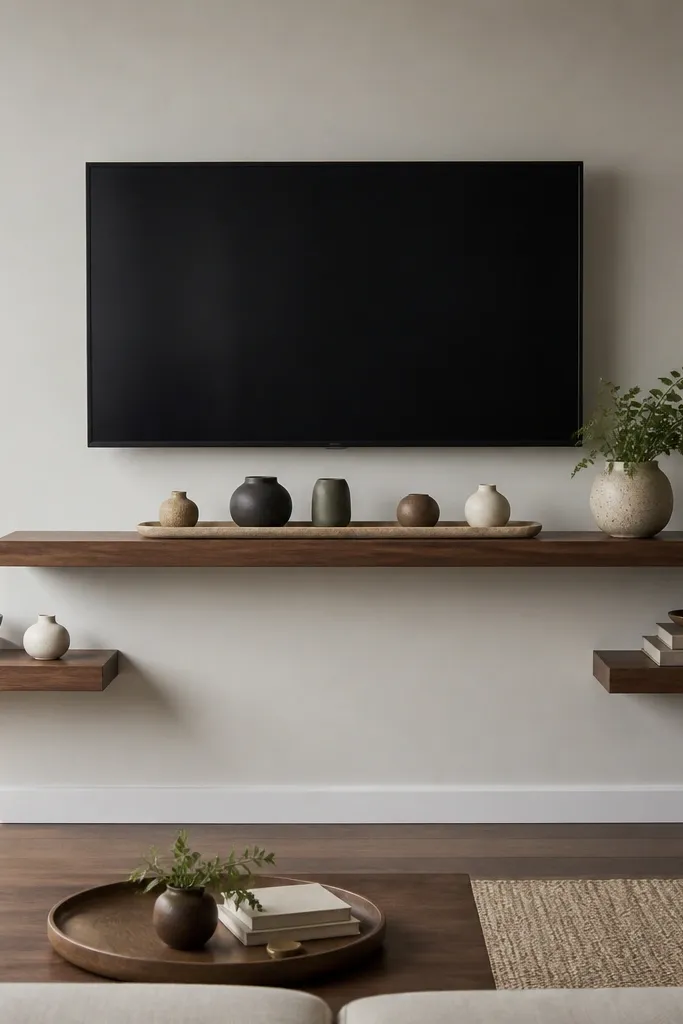
This layout is great when you want one strong focal shelf and you don’t want the wall to feel like a grid. The oversized center shelf anchors the eye under the TV, and the mini-shelves add personality without stealing attention. I use walnut when the room has beige walls or warm gray carpet because it adds depth without going dark-dark. This flatters small spaces because it keeps most of the wall uncluttered. Styling is controlled: a runner tray plus a few objects looks intentional even when you swap items weekly.
Start by installing the center shelf so it sits 3-4 inches below the TV bottom. Make it the widest shelf you can fit cleanly under the TV, leaving about 2 inches from each side wall. Mount two mini shelves 12-14 inches below the center shelf, one on each side, keeping them about 8-10 inches shorter than the center shelf. Keep depth at 6 inches for all shelves. Style the center shelf with a long tray centered under the TV and place one decor group on the tray, one plant next to it.
Use a runner tray or long ceramic platter so small objects don’t scatter visually across the shelf.
Avoid placing matching decor groups on all three shelves — it looks like a store display.
7. Symmetry with Three Horizontal Shelves Under TV
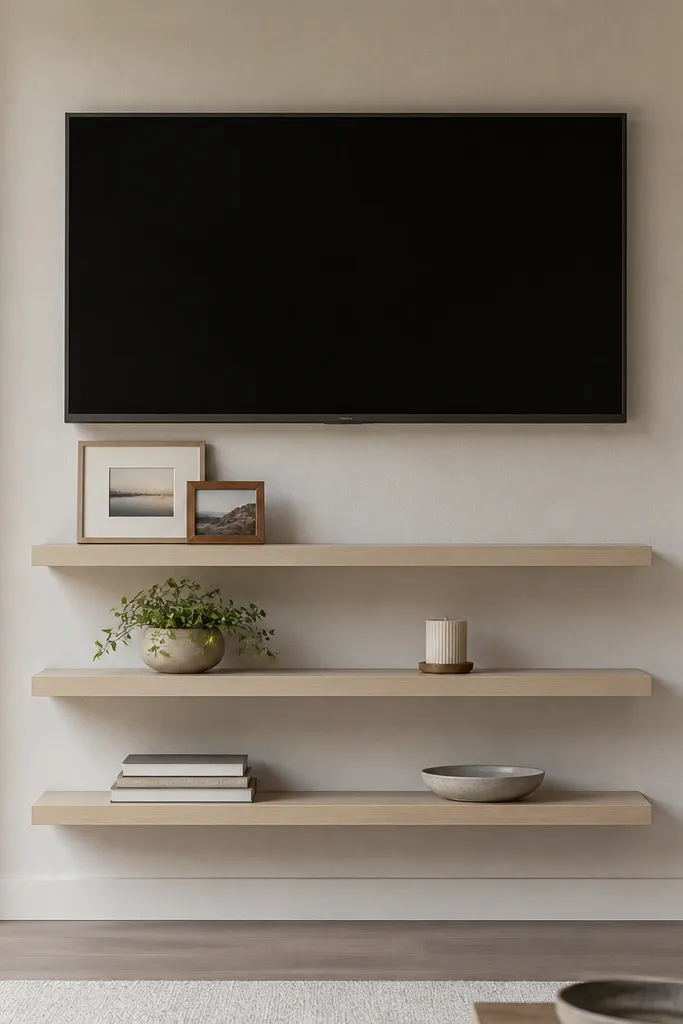
Three horizontal shelves create a clean, balanced look in small spaces because the wall pattern is predictable. Symmetry is your friend when the room is tight and you need visual calm. I like white oak with light brackets because it brightens narrow rooms and makes the TV feel less heavy. This setup flatters people who like tidy decor and want the wall to look good from across the room. It also works well when you have a mirror or framed art nearby, since everything reads as a coordinated grid.
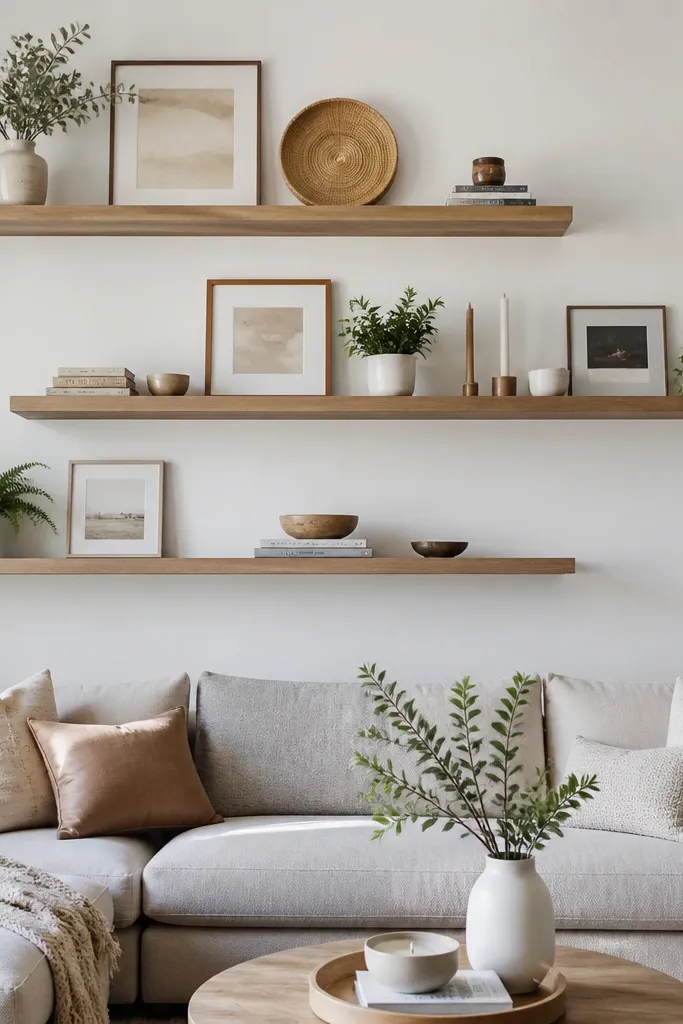
Start by placing the TV centerline and mounting the TV level. Install the top shelf 5 inches below the TV bottom, then install the middle shelf 10 inches below the top shelf. Mount the bottom shelf another 10-12 inches below the middle shelf. Keep all shelves 6-7 inches deep. Style with two framed photos on the top shelf, then one plant plus one candle holder in the middle, then a book stack and a single bowl on the bottom.
Keep frames all the same size so the symmetry doesn’t break even when you change what’s inside.
Skip uneven spacing between shelves — it makes the whole wall look crooked.
8. Floating Shelf + Media Drawer Combo Look
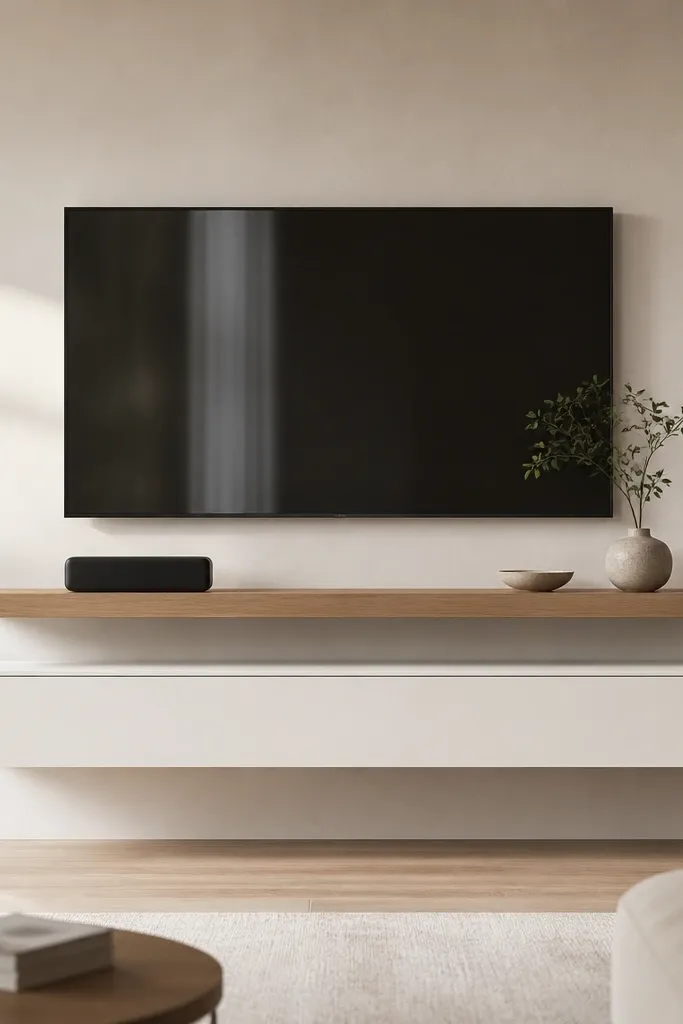
This is the best “I need storage but hate consoles” solution. The floating shelf gives you a place for decor and soundbar accessories, and the drawer keeps the rest hidden, which is key in small spaces. I’ve done this in bedrooms where the wall clutter made the room feel smaller even with a neutral color palette. The contrast of oak shelf and white drawer keeps it light, not heavy. The look flatters anyone who likes clean surfaces and minimal styling.
Start by mounting the drawer first so you know the vertical spacing for the shelf. Place the drawer so the top edge sits around 12-14 inches below the TV bottom. Install the floating shelf 5-6 inches above the drawer top, keeping depth at 6-7 inches. Route cables behind the drawer for a clean drop into the TV zone. Style the shelf with one small speaker centered and one decor object at the side, then leave the rest empty.
Good to knowUse a slim cable raceway behind the drawer so the cord line disappears behind the shelf.
AvoidAvoid putting clutter on the drawer top — the clean look dies fast.
9. One Long Shelf, TV Center, and Off-Center Styling
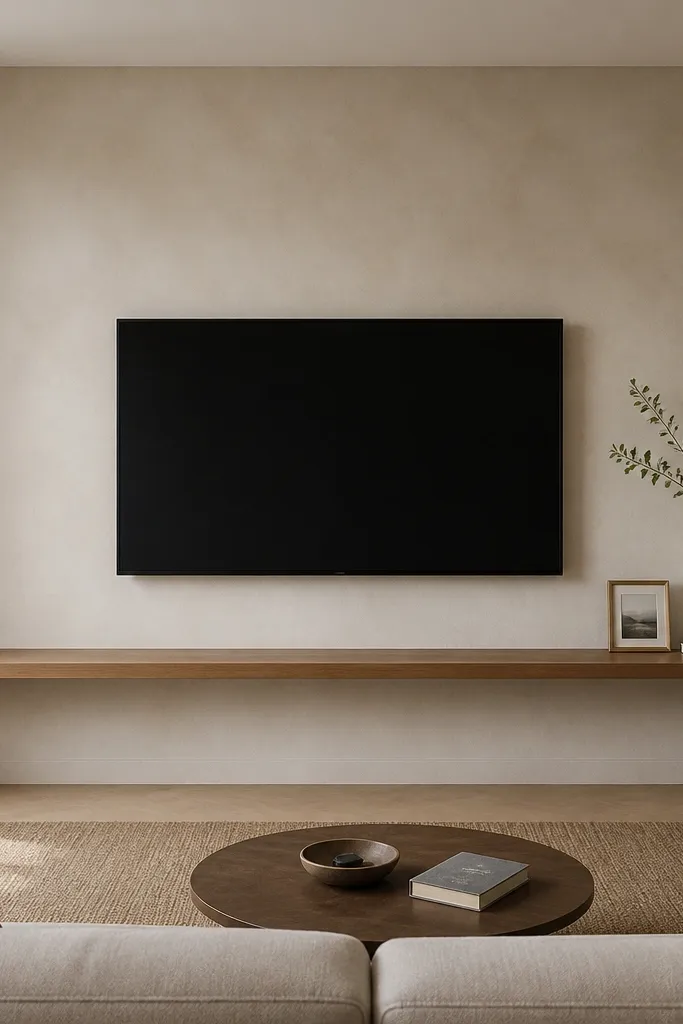
This is a trick I use when the wall is small and you don’t want shelves to fight for attention. The shelf length gives you the storage surface, but leaving negative space makes it feel designed, not crowded. I like this with matte black brackets and light wood because the shelf reads like a single line under the TV. It flatters rooms with busy patterns elsewhere because it doesn’t add more visual noise. You also get flexibility since you can move the decor cluster without remounting anything.
Start by installing one shelf directly under the TV, centered, at about 4-5 inches below the TV bottom. Choose depth around 6 inches so the shelf doesn’t stick out into the room. Keep the shelf length so it stops about 2 inches from each side trim. Style by placing your main cluster on the right side only, leaving 40-50% of the shelf empty. Use one tall item, one medium frame, and one low book stack so the cluster has height variation without spreading too wide.
If you’re worried it looks empty, add one small object near the empty side but keep it under 3 inches tall.
Avoid mirroring the cluster on both sides — that symmetry makes small spaces feel even busier.
10. Tiered Floating Shelves with Vertical Book Spine Wall
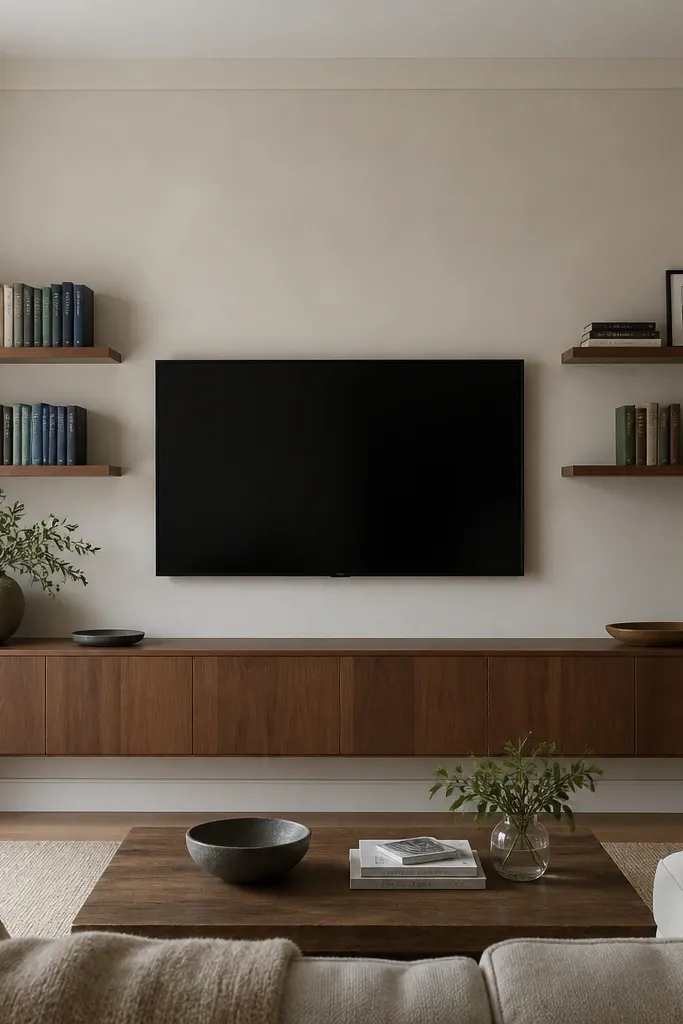
Vertical book spines make a wall feel taller, and that’s exactly what you need in a small space. Tiering shelves outward gives you a gentle arc that looks intentional even when the wall has doors or windows. I like walnut for the shelf tops because it makes book covers look richer and keeps the wall from looking flat. This works best if you like books or you’re willing to keep a small curated set of spines. It flatters people who want the TV wall to feel warm and lived-in, not sterile.
Start by installing two shelves closest to the TV on each side, keeping them about 7 inches deep. Mount the next tier shelf 6-8 inches higher, so the outside edges rise. Space the left and right tiers evenly so the TV feels centered against the pattern. Style the left side with standing books aligned to the front edge, then add one narrow frame on the second tier. On the right side, repeat the book spine idea but keep frames fewer so the wall doesn’t get cluttered.
Good to knowUse book spine colors in two families only (like cream + black, or tan + navy) so the wall stays cohesive.
AvoidDon’t mix tall lamps with books on the same tier — it looks crowded in small rooms.
11. Floating Shelf Rail with Hanging Planter Line
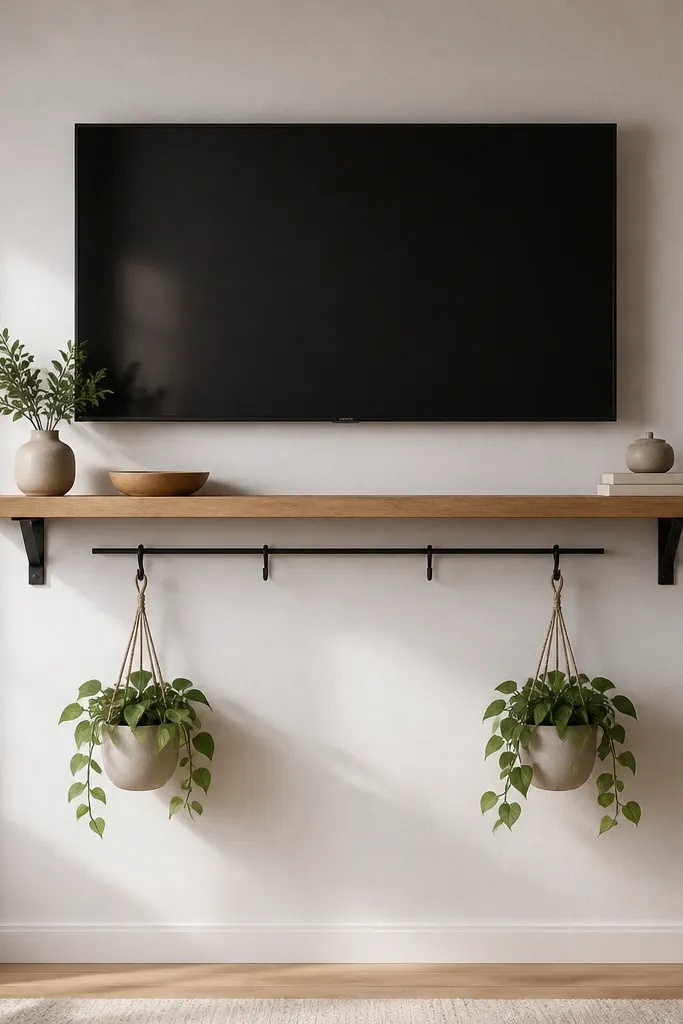
If your small space needs softness but you don’t want more shelf clutter, this is the move. The shelf stays relatively clean, and the hanging planters add life without taking up horizontal surface. I’ve used this in bedrooms where bedside shelves were already full, and the hanging line gave plants a place to live. It flatters people who like greenery but hate dusting lots of tiny objects. The result looks cozy and a little artsy while still reading as a TV wall design.
Start by mounting your main floating shelf 5-6 inches below the TV bottom, depth 6-7 inches. Install two small hook rails or screw-in hooks under the shelf underside at equal distances from the TV centerline. Hang planters with cords or chains that keep the pots about 6-8 inches below the shelf lip. Use one pot color family like matte white or dark ceramic so it looks intentional. Style the shelf top with only one flat item like a slim tray and keep the rest empty so the hanging plants are the focal point.
Good to knowChoose plants with similar leaf shapes so the hanging line looks even, like pothos or small trailing ferns.
AvoidAvoid long, uneven cord lengths — they make the whole line look messy.
12. Thick Floating Mantel Shelf with Two Small Side Shelves
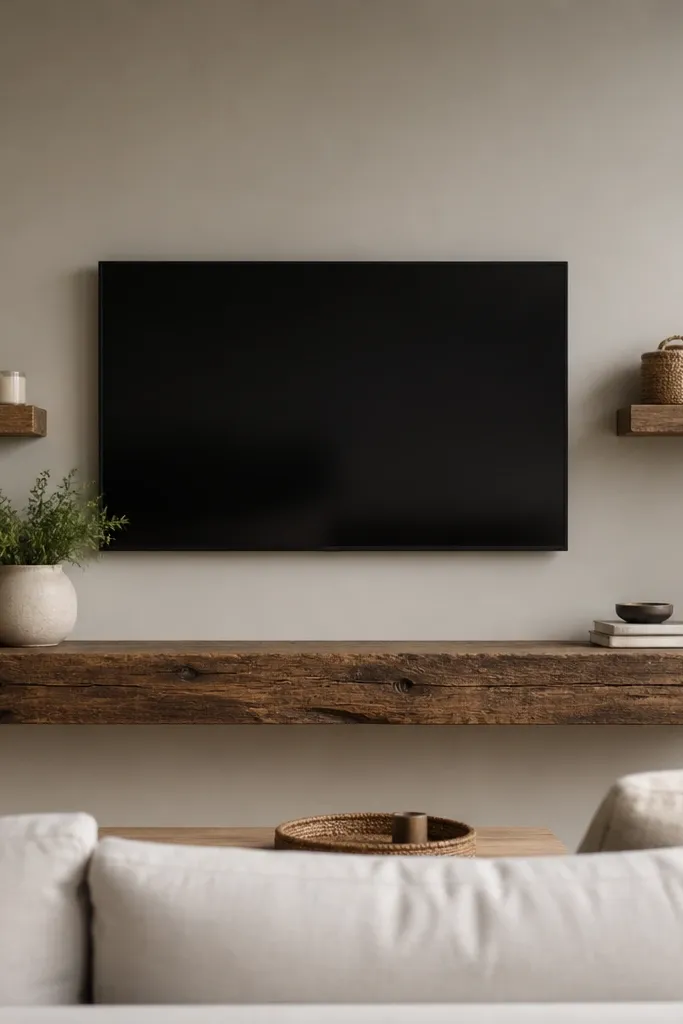
Thick mantel-style shelves make the TV wall feel grounded, and that matters when the room is small because thin shelves can look flimsy. The thick shelf reads like furniture, not like floating hardware. I like reclaimed-style wood because the grain adds texture without needing a lot of decor. This layout flatters rooms with neutral walls and simple bedding, where texture brings warmth. It also works if you have kids or pets because thicker wood feels more substantial and doesn’t look as delicate.
Start by installing the thick shelf so it sits 3-4 inches below the TV bottom, with depth around 9-10 inches. Use the same thickness across the shelf so it looks like one piece. Mount two smaller side shelves at about 50-54 inches from the floor to shelf top, keeping them 6 inches deep. Style the thick shelf with a low decor tray centered and one book stack on each side, then keep the side shelves practical: one basket and one candle each. Leave clear space between the thick shelf objects and the side shelves so the wall doesn’t look crowded.
Paint the wall behind the thick shelf area a slightly warmer white if you can — it makes the wood grain pop.
Avoid glossy finish on thick shelves — it shows dust and fingerprints.
13. Floating Shelf Grid Above a Low Console Line
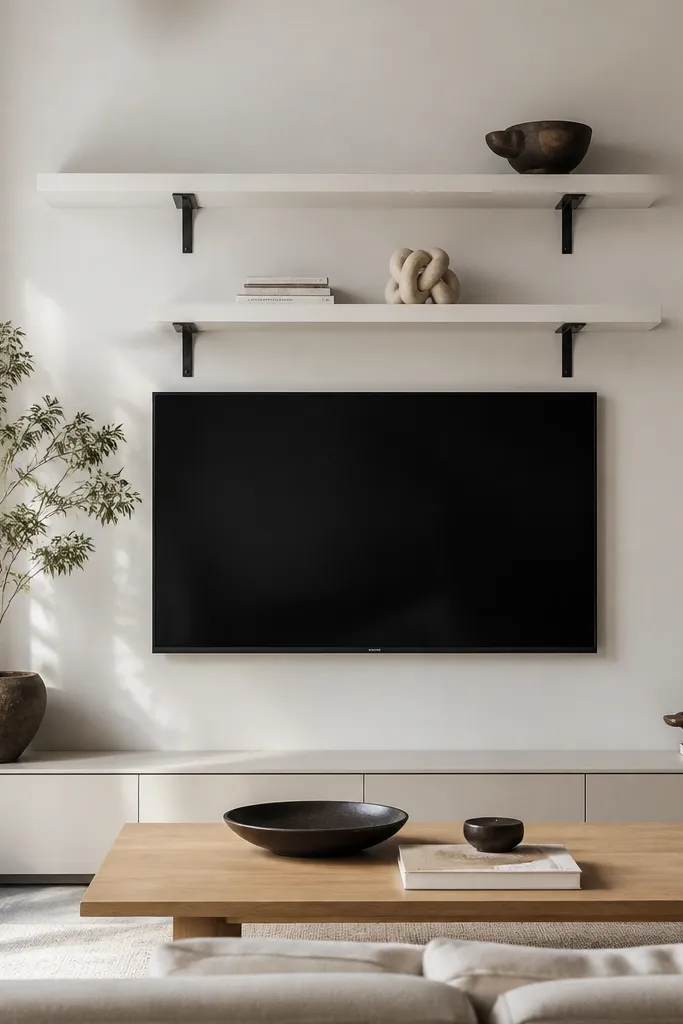
A small space often needs storage that doesn’t crowd the floor, and a shelf grid above the TV keeps the visual energy higher. I’ve used this in rooms where the TV is low and the wall needs structure without adding a tall bookcase. White shelves with black brackets keep the look crisp and modern, especially when the wall is light. This flatters people who like clean lines and don’t want a lot of small objects. It also works well when you want to display just 4-6 items total for a tidy look.
Start by mounting the TV at your comfortable eye line, then measure where the shelf grid can sit without touching the TV frame. Install the wider shelf first, centered, about 2-3 inches below the TV bottom edge. Add the shorter shelf above it, about 6-8 inches higher, keeping depth at 6 inches. Use concealed brackets or minimal bracket lines so the grid looks intentional. Style the bottom shelf with a low stack of books and one sculpture, then style the top shelf with one plant and one framed print.
Keep your decor count low: one plant, one frame, two book stacks. The grid does the work.
Avoid adding more than two items per shelf — the grid turns into visual noise.
14. Wide TV Wall Shelf with Centered Speaker Channel
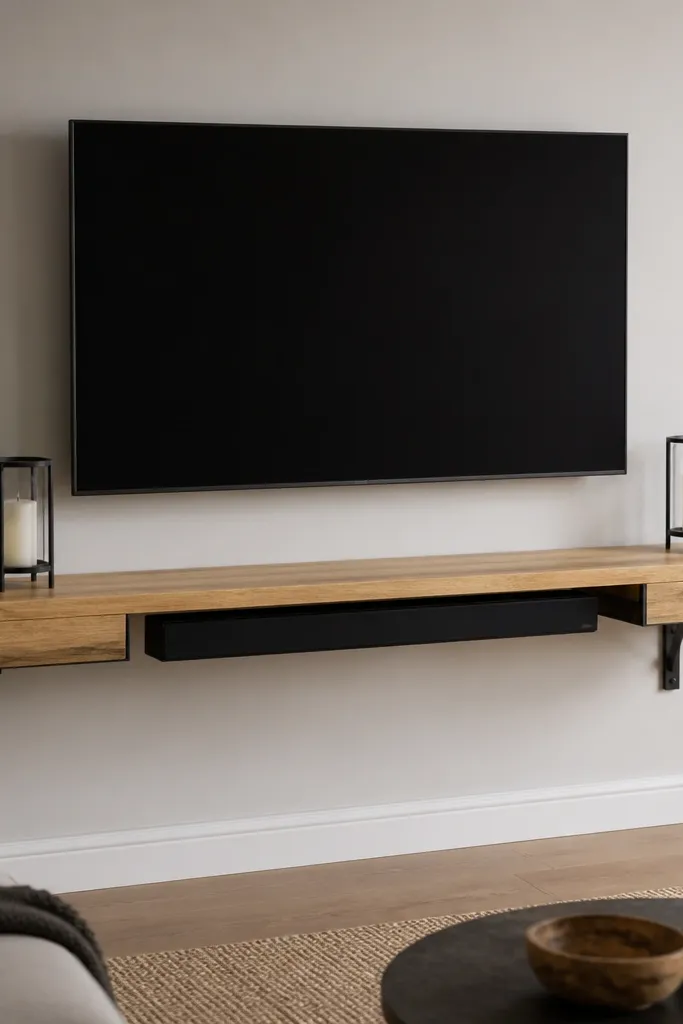
This layout is for people who care about soundbar placement and want the TV wall to look intentional even when the tech is visible. A wide shelf with a centered “channel” makes the wall feel designed around the speaker line, not around random decor. I like oak here because it warms up the tech and keeps the wall from looking like a showroom. This flatters small spaces because you get one big styling surface instead of several narrow shelves that crowd the wall. It also works well in bedrooms where you want a clean, centered night routine setup.
Start by mounting the TV and then dry-fit the soundbar placement so you know the center line. Install a wide shelf 4-5 inches below the TV bottom, depth 7 inches. Keep the shelf centered and leave equal empty space on both sides for balance. Style the left and right sides with matching candle holders and place a small plant on one side only to prevent symmetry overload. Keep the center under the shelf line open for the speaker area so cables and tech don’t look piled.
Good to knowUse identical candle holders or identical bookends — matching pairs make a small wall look styled quickly.
AvoidAvoid placing decor directly in front of vents or speaker openings — it blocks airflow and looks messy.
15. Floating Shelf Row with Hidden Cable Slot
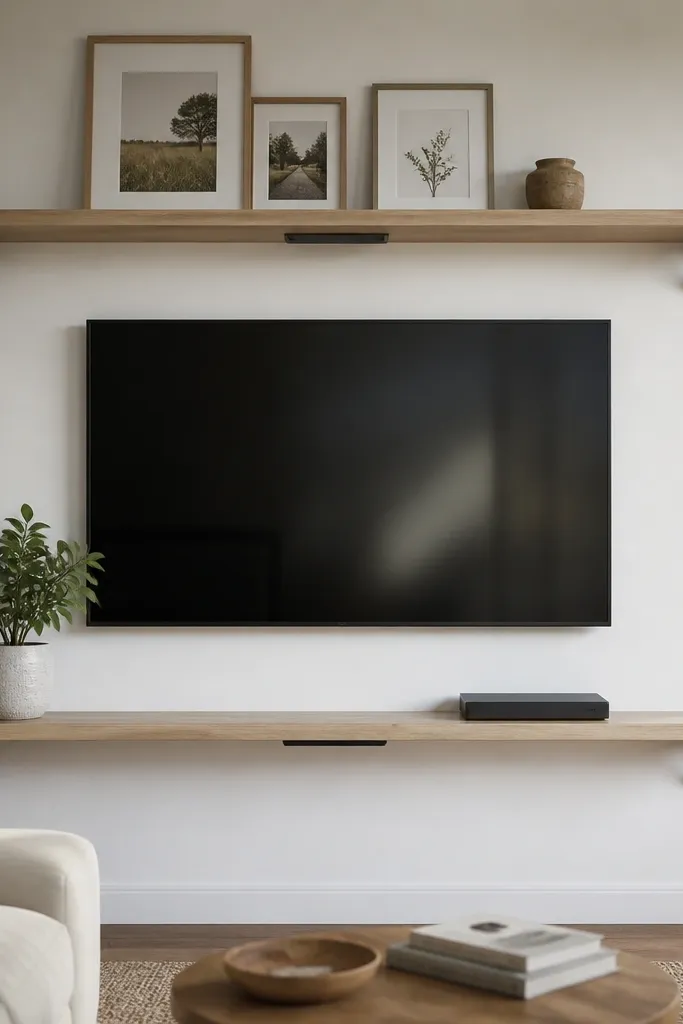
Cable visibility kills the look of floating shelves in small spaces, and this idea solves that with a physical slot line. I’ve mounted this type of setup where the outlet was off to one side, and the cable line looked messy until I planned a hidden route. The slot keeps cords tucked and makes the shelf styling look clean even when you have a game console or streaming box. It flatters rooms where you need tech on display but still want the wall to look calm. The wood tone keeps the tech from feeling harsh.
Start by running your cables behind the wall or along a raceway to the general shelf height area. Install the bottom shelf first at about 10-12 inches below the TV bottom, depth 6-7 inches. Install the upper shelf 7-9 inches above the bottom shelf, centered. Add a cable slot or small channel piece under the shelf near the center so cords drop straight down. Style the upper shelf with flat frames and one small decor object, then style the lower shelf with one plant and one slim storage box.
Use velcro cable ties and leave a gentle service loop behind the slot so you can pull devices out without redoing everything.
Avoid letting cords drape over the shelf back edge — it shows and makes the whole wall look rushed.
16. Vertical Frame Shelf Above TV for Small Rooms
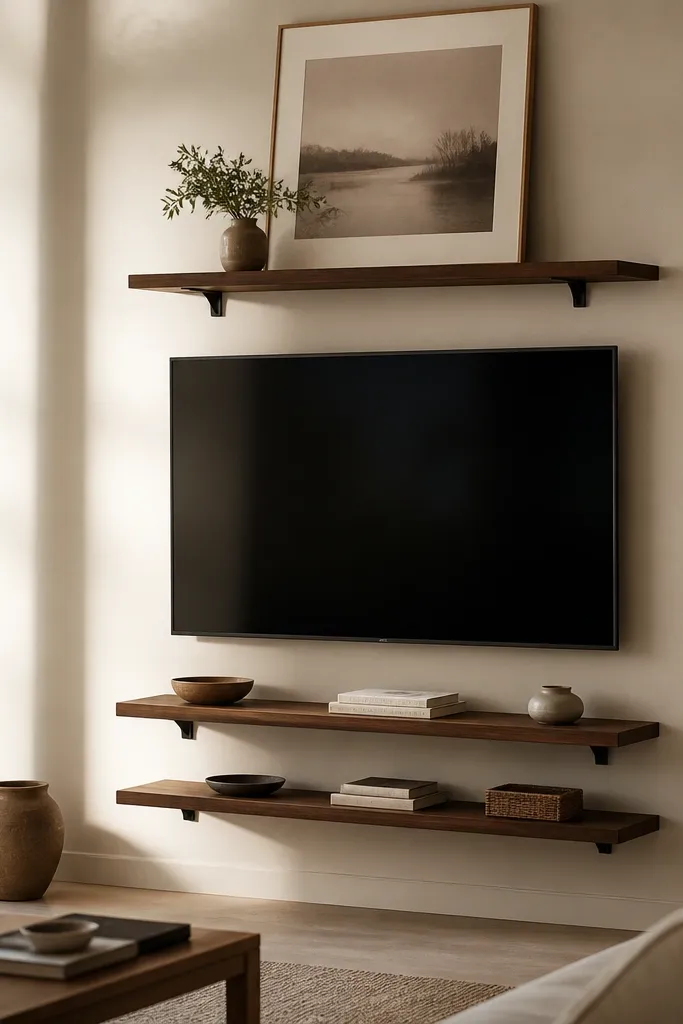
Sometimes a small space doesn’t need more horizontal shelf clutter. Putting one shelf higher above the TV adds a frame effect and draws the eye upward, which makes ceilings feel higher. I’ve used this when the wall has a low TV stand nearby and the area under the TV already feels crowded. Walnut keeps the upper shelf from looking flimsy. This layout flatters rooms with good wall space above the TV and people who like one statement piece. It also works if you want the shelves to feel like decor first, storage second.
Start by mounting the TV, then find a spot above it where a shelf can sit without hitting artwork or ceiling light. Install the upper shelf so its bottom edge is about level with the TV top border, depth 6 inches. Mount two lower narrow shelves 9-10 inches below the TV bottom, keeping them about 12-14 inches long each. Style the upper shelf with one large framed piece or a tall vase, then style the lower shelves with one small tray and one book stack each. Keep objects small and spaced out so the wall doesn’t look heavy.
Good to knowChoose one statement frame on the upper shelf and leave the lower shelves quieter — it keeps the design from turning into a collage.
AvoidAvoid stacking heavy frames on narrow shelves — thin shelves sag if you overload them.
17. Floating Corner Bookshelf Pair Under TV
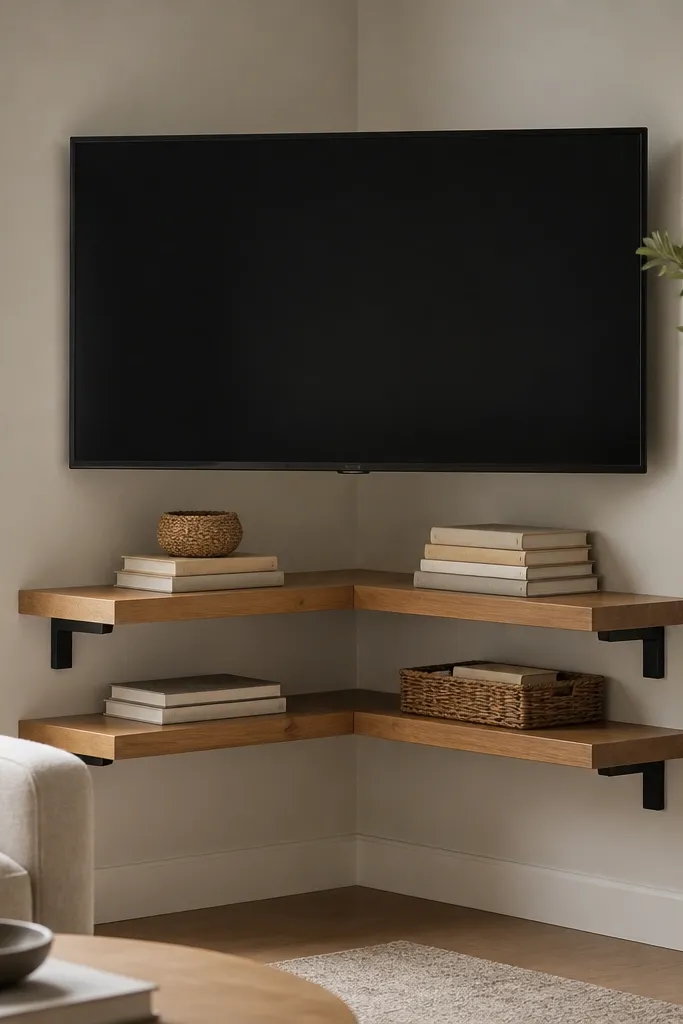
This is a clever way to get book storage without putting long shelves across the whole wall. The L-shape under the TV adds structure and makes the wall look intentional even when you only style a few items. I’ve used it in small apartments where the wall width is limited by a doorway or window trim. Warm oak keeps the corners from looking cold and makes the books feel part of the decor. It flatters people who want functional display but hate clutter lines.
Start by centering the TV and then pick the two nearest studs in each direction for the corner shelf supports. Install the left corner shelf at about 6-7 inches below the TV bottom, depth 6-7 inches. Install the right corner shelf at the same height for symmetry, or drop one side by 1-2 inches if the wall has an uneven trim line. Use an L-shaped corner piece if you want the shelves to look connected. Style with books stacked vertically for the corner angle and place one woven basket at the corner point.
Good to knowUse small book sizes with similar spine height so the corner doesn’t look lopsided.
AvoidAvoid large decor on corner shelf edges — it looks like it’s about to slide off.
18. Matte Black Shelves with Light Wood Decor Blocks
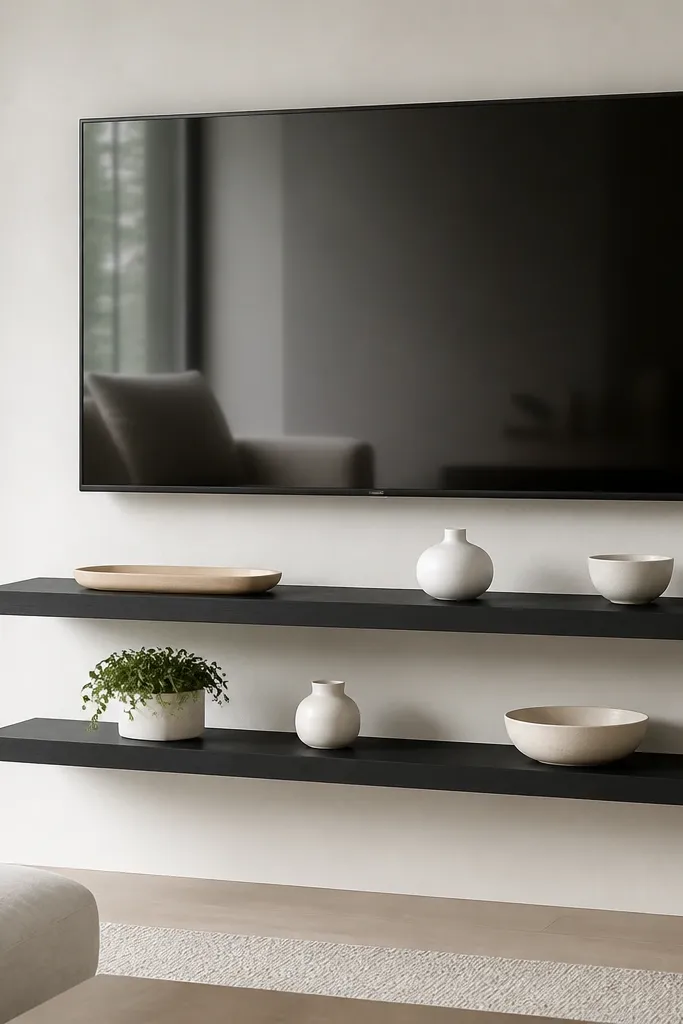
Dark shelves can work in small rooms if you keep the decor light and the shelf count low. Matte black brackets and shelf tops add a crisp, modern look, and the light decor blocks prevent the wall from feeling heavy. I’ve done this in bedrooms with white walls and it looks sharp without feeling dramatic. It flatters people who like a monochrome base and want decor that feels calm. The styling principle is contrast: dark shelf, light objects, and one plant to soften edges.
Start by installing two 6-inch deep matte black shelves so the top shelf sits 4-5 inches below the TV bottom and the second shelf sits 10-12 inches below it. Keep everything centered under the TV so the wall reads as balanced. Style the top shelf with a pale wood tray and one white ceramic piece, plus one thin framed photo on the far edge. Style the bottom shelf with a small plant in a white pot and a single stack of books. Leave the rest of the shelf empty so the black line stays clean.
Use ceramic colors like off-white, bone, or light gray so they match the shelf without looking washed out.
Avoid dark decor pieces on dark shelves — the wall turns into a black blob.
19. Floating Shelf + Vertical Slat Back for TV Zone
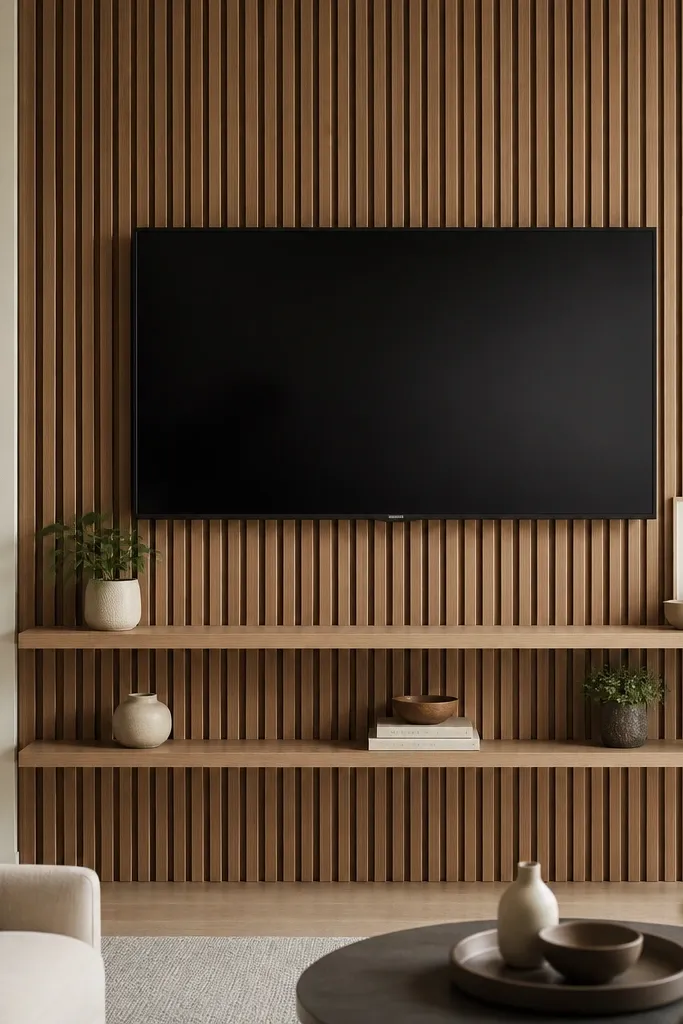
A slat panel behind the TV makes even simple floating shelves look intentional, because the wall has texture. In small spaces, this gives you depth without adding more furniture. I’ve used this when the room’s walls feel too plain and the TV looked like it was pasted on. The slats also help hide slight imperfections in mounting and make the shelves feel like part of a built-in. This flatters rooms with neutral bedding and simple decor because the texture does the work. It also photographs well, which matters if you care about how it looks in real life and in pictures.
Start by installing the vertical slat panel first, centered behind the TV. Mount the TV on the slat backing so the screen feels framed by texture. Then install two floating shelves under the TV, depth 6-7 inches, with brackets that match the wood tone or stay hidden. Place the top shelf 4-5 inches below the TV bottom and the second shelf 10-12 inches below. Style by aligning frames and decor to the slat lines so the wall looks structured, not random.
Choose slat spacing around 1.5-2 inches apart so it looks modern and not like a fence.
Avoid mixing too many wood tones — keep shelf wood and slat wood in the same family.
20. Asymmetrical Floating Shelves with One Heavy Anchor
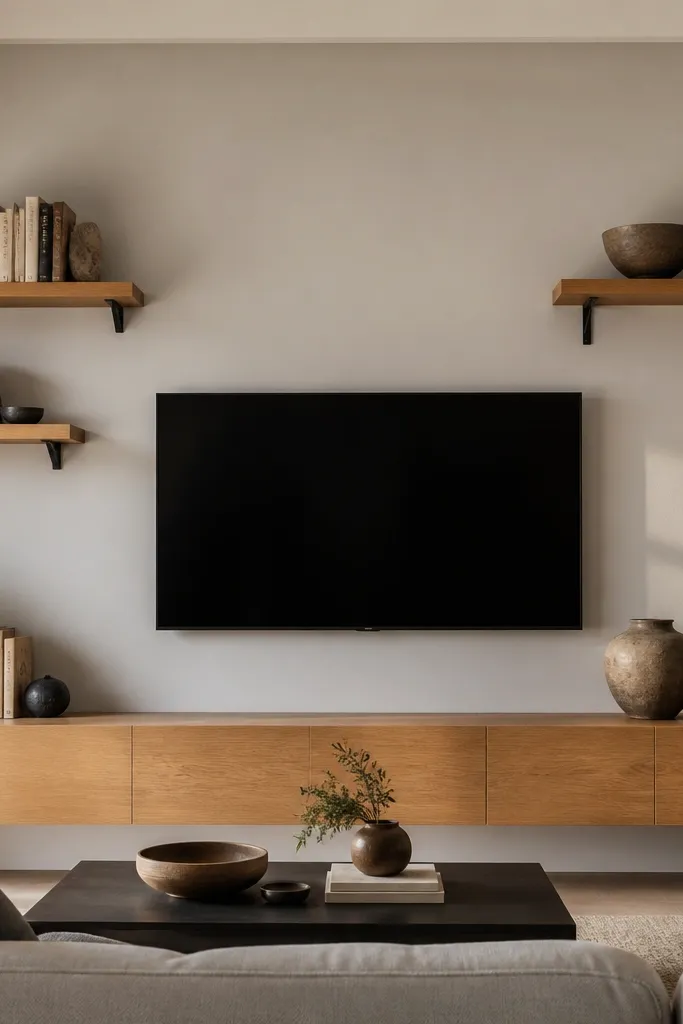
Asymmetry works when you control the weight distribution. In a small space, one heavy anchor item makes the wall feel stable even if the shelves aren’t perfectly mirrored. I used this layout in a bedroom where the bed is offset from the TV wall, and symmetry looked awkward from the side angle. Warm oak keeps it cozy, and black brackets keep the hardware from drawing attention. This flatters people who like curated decor and don’t want a “catalog perfect” look. The styling principle is one anchor, one supporting group, and one quiet space.
Start by placing the TV slightly off center if your room demands it, then mount shelves based on a single anchor point under the TV. Install two shelves on the left at different heights, one about 4 inches below the TV bottom and the second about 12 inches below that. Install one shelf on the right at about 10 inches below the TV bottom, keeping it shorter and 6-7 inches deep. Style the right shelf with one large ceramic bowl centered and one small frame. On the left shelves, stack books and place a small lamp base or candle so the left side has visual weight but stays tidy.
Use a single large object as your anchor instead of many small ones — it reads more intentional in tight rooms.
Avoid heavy items on the far end of a floating shelf — it can stress the mount and looks unsafe.