1. Tall Mirror + Woven Basket Pair (Corner Light Catch)
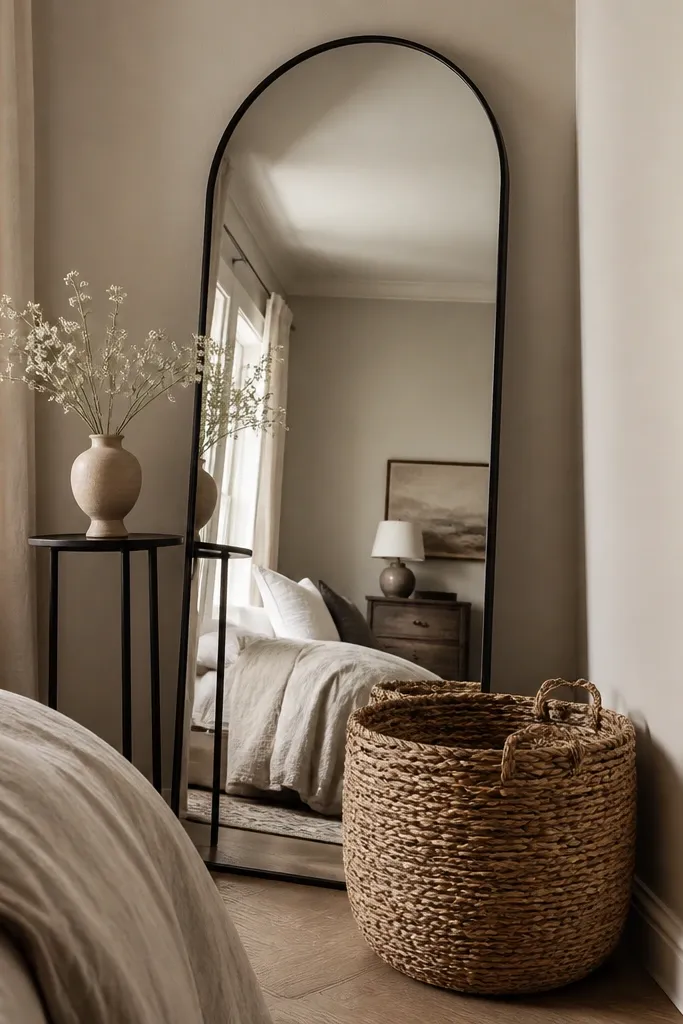
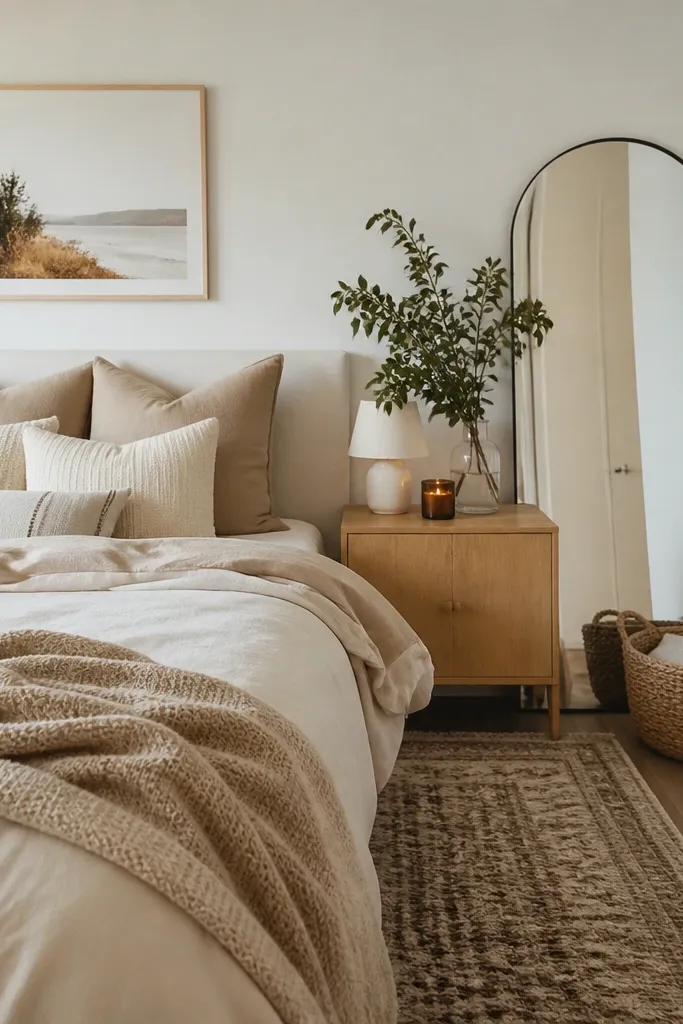
Start by placing the mirror where you can see it from the bed — usually 2 to 6 inches away from the wall so it catches light. Use a small non-slip pad under the mirror feet, then angle it slightly toward the room (about 10 to 15 degrees). Next, position the woven basket on the floor in the mirror’s lower field so it visually “fills” the blank corner space. Finish by adding one small ceramic vase or a folded linen throw on a narrow table at about 20 to 30 inches tall. Keep the vase color to white, cream, or stone gray so the mirror stays the star.
I love this combo because a tall mirror makes the corner feel taller and the basket makes it feel grounded. Choose a mirror with a frame in black matte or natural wood so it doesn’t look like random wall art. The basket should be a real woven texture — seagrass or jute — because it adds pattern without shouting. This setup looks best in bedrooms with light walls and any wood tones, and it flatters rooms that feel narrow because the mirror pulls light across the space. The styling principle is height contrast: reflective vertical + textured vertical, then one small soft accent to keep it from looking showroom-clean.
AvoidAvoid a mirror with a thick glossy frame; it makes corners look dated and cheap next to matte textures.
Good to knowIf the mirror is heavy, use two wall anchors on the frame or a proper anti-tip strap — corners tip faster than you think.
2. Floor Lamp + Linen Shade + Tray Table
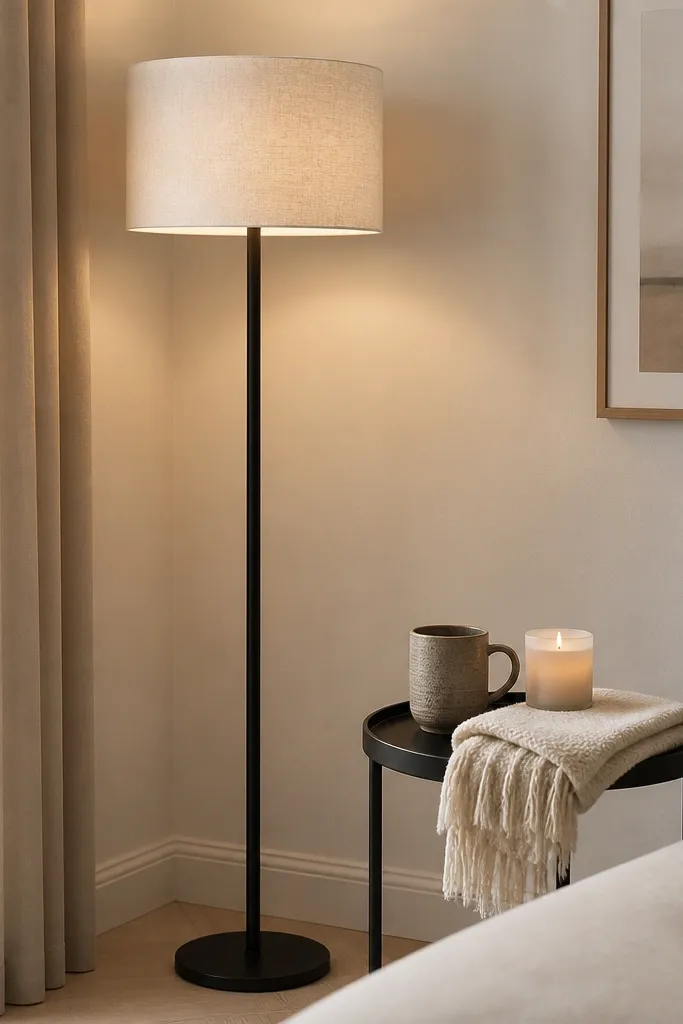
Start by choosing a lamp height so the shade bottom sits around eye level when you’re standing — typically 58 to 66 inches total height. Place the lamp 6 to 10 inches from the wall to let light spill. Add a tray table or small side table that’s low enough to keep the corner airy — aim for 16 to 22 inches tall. Put a tray on top (black metal, light wood, or white ceramic) and style with one candle, one small plant or branch, and a folded throw edge peeking out. Keep the tray items to three pieces max so the corner doesn’t look cluttered.
This is the corner setup I reach for when the bedroom feels too quiet. A floor lamp gives you usable light and the linen shade softens everything — shadows look warmer, and the corner feels cozy even in the daytime. I like drum shades in ivory or oatmeal because they don’t compete with bedding patterns. This works especially well for people who read in bed or want a soft glow without a harsh overhead light. It flatters most wall colors because linen absorbs glare instead of reflecting it. The principle is function plus texture: a practical light source paired with one tactile element you can style.
AvoidSkip a lamp with a patterned shade if your bedding already has patterns; it makes the corner busy.
Good to knowUse a warm bulb around 2700K and test it at night before you commit to the placement — corner light changes fast.
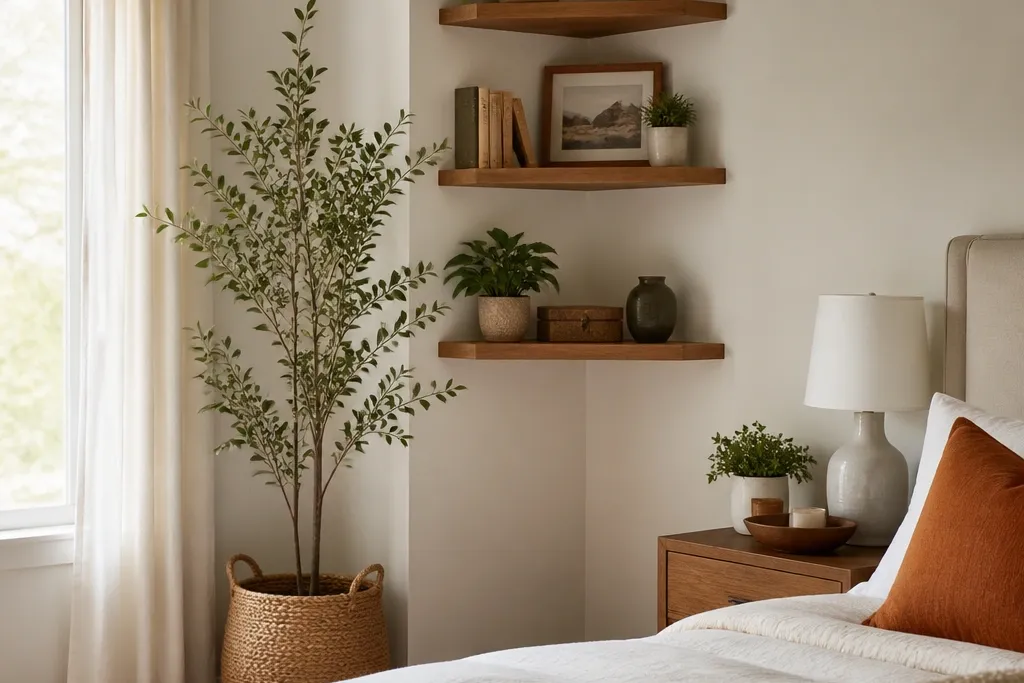
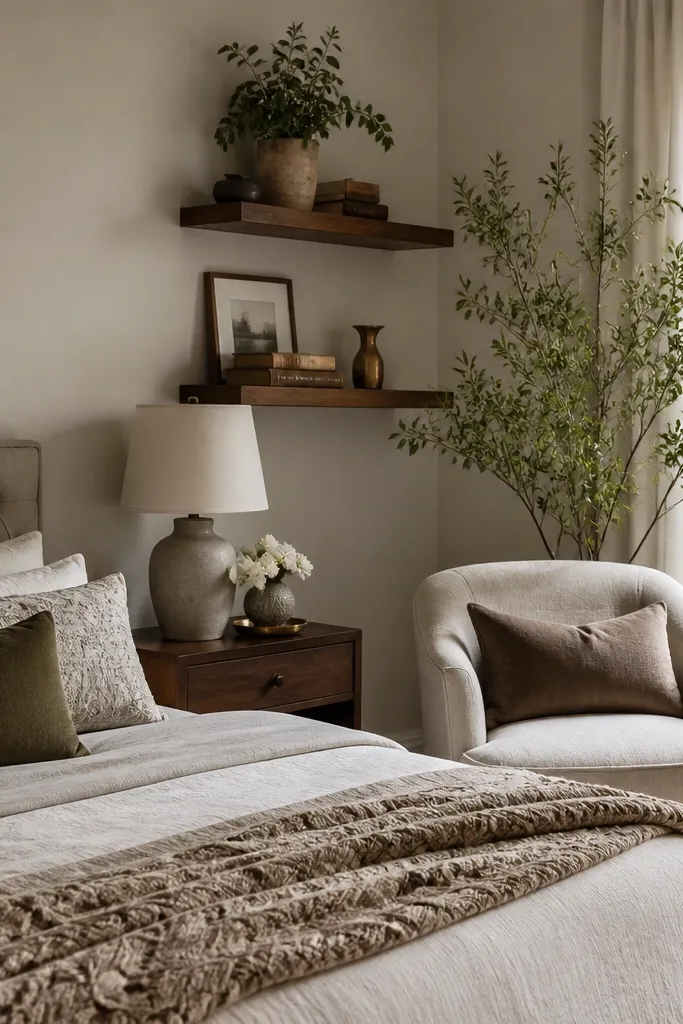
3. Corner Gallery Shelf With Two Heights
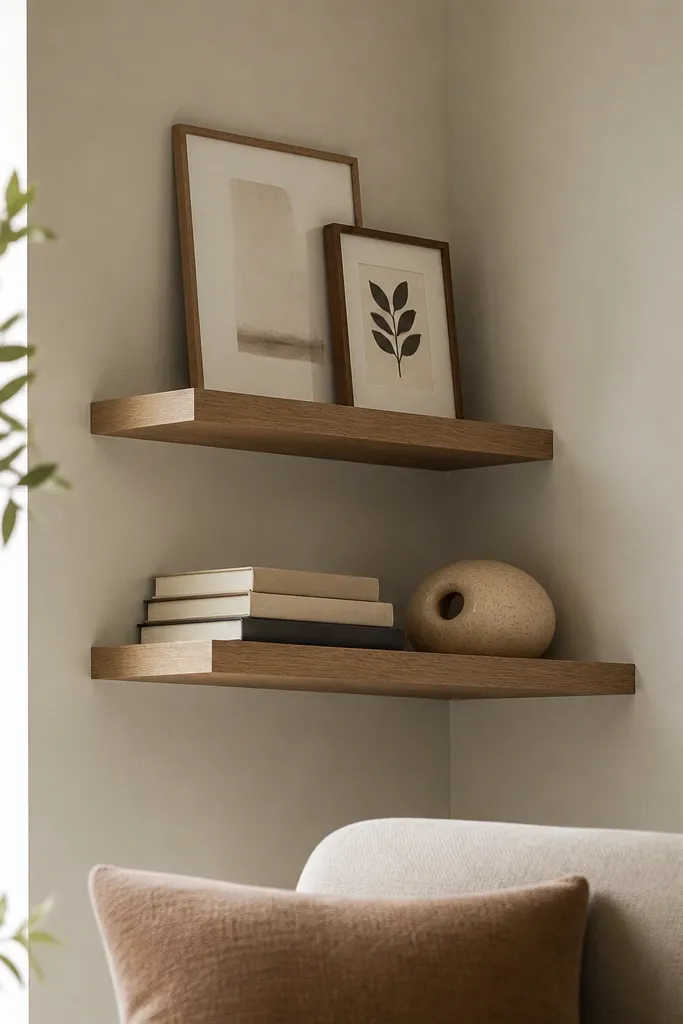
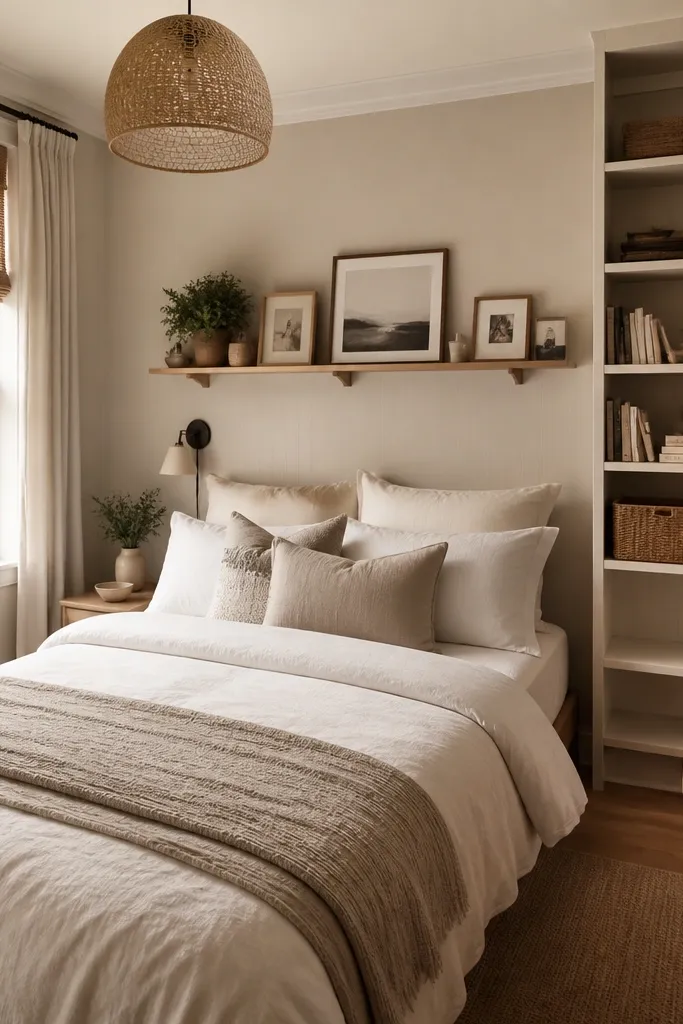
If your bedroom corner is blank wall space, shelves give you control without taking up floor area. I place two shelves at different heights because a single shelf looks like a mistake; two levels create a gentle rhythm. Use a wood finish that matches your bed frame or nightstand, and choose frames in the same color family. This works best for bedrooms with clean lines and minimal clutter, and it flatters people who like personal photos or travel art because it lets you curate. The principle is repetition: matching frame finishes and consistent spacing between objects keeps it from looking random.
Start by measuring the corner wall and marking studs or using proper anchors for the shelf bracket. Install the lower shelf first at about 48 to 52 inches from the floor, then mount the second shelf 10 to 14 inches higher. Arrange books vertically on the bottom shelf first, then add one taller object like a ceramic vase or a small sculpture. On the top shelf, place two small frames side-by-side with a gap of about 2 to 3 inches, then add one greenery stem or mini plant. Keep frames all the same size or close — mix only if the sizes differ by less than 25%.
Lay everything out on the floor before you hang anything. If you can’t make it look good on the floor, it won’t look good on the wall.
Don’t crowd the shelves with more than five items total; corners look messy fast when items are small.
4. Tall Plant + Slim Side Table (No-Fuss Green Corner)
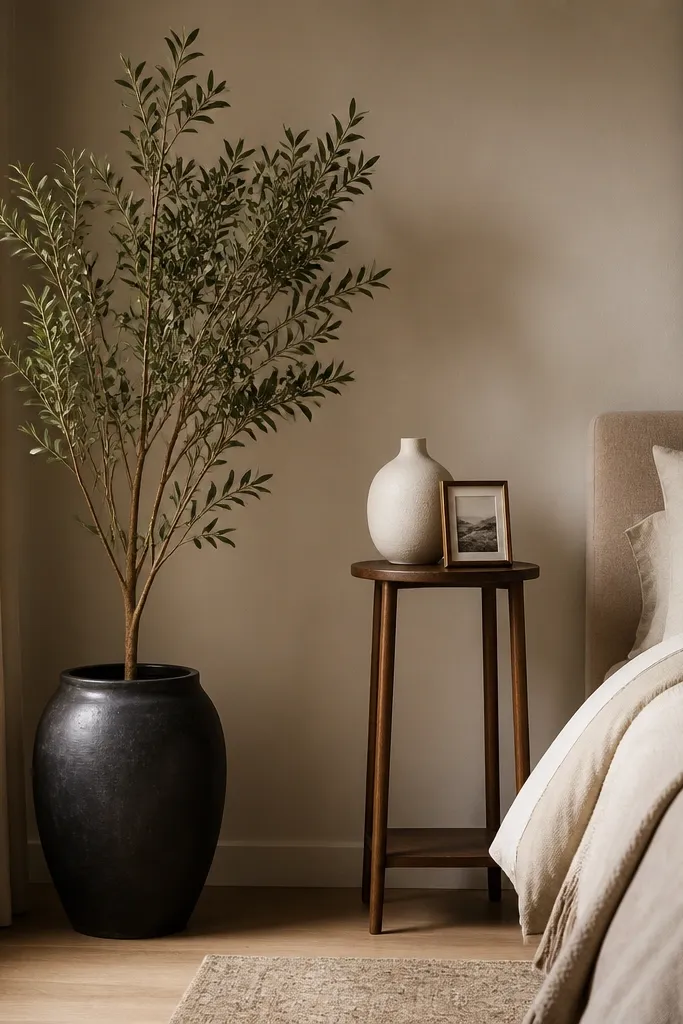
A tall plant makes a bedroom corner feel alive without needing seasonal swapping every week. I use either a real plant that you can keep alive or a high-quality faux that’s thick and not shiny; the corner is always visible, so cheap faux looks obvious. Put the plant in a pot that matches your metal finish — black pot for black hardware, white pot for lighter decor. This setup flatters bedrooms with neutral bedding because the green adds the color pop. The principle is vertical shape: a plant with strong leaves that reach upward makes the corner look intentional even from across the room.
Start with a slim side table about 12 to 18 inches wide so it doesn’t block the walkway. Place the plant pot behind or slightly behind the side table so the plant reads as the tallest element. Keep the table height around 24 to 28 inches, then style the tabletop with a single white or cream vase plus one photo frame. Add one small texture item like a folded linen napkin or a small tray under the vase. For year-round, swap only the plant’s top styling: a few branches for winter, a small blush stem for spring, then back to neutral greens.
Rotate the pot 1/4 turn every two weeks so the leaves keep a natural shape instead of leaning.
Avoid plants with glossy leaves in matte decor rooms; the shine looks like plastic.
5. Corner Bar Cart With One Season Swap
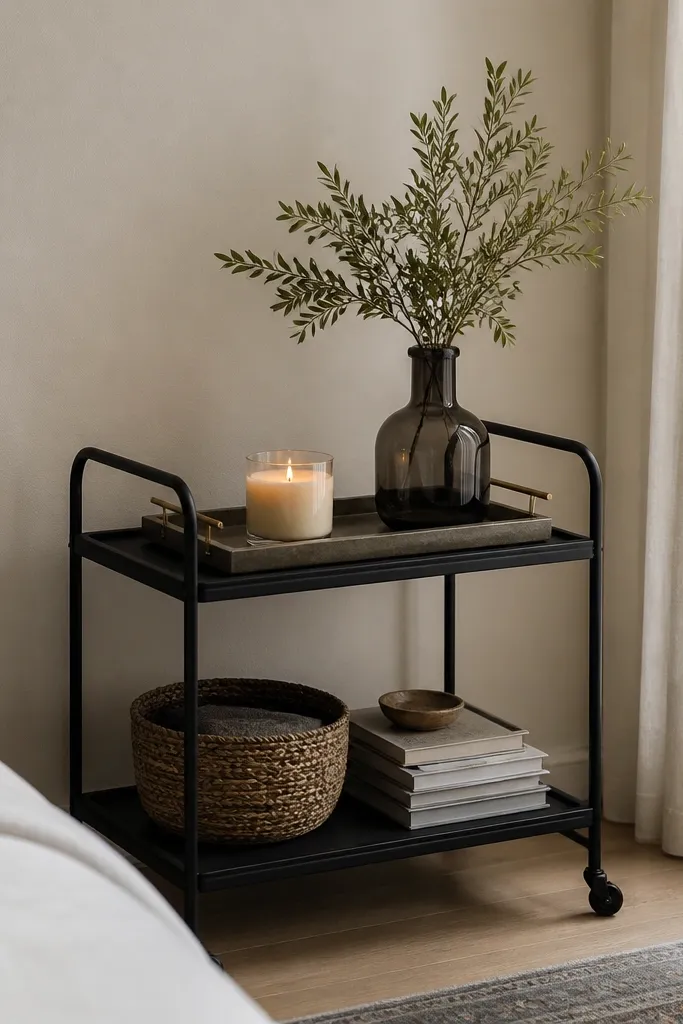
A bar cart in a bedroom corner is one of my favorite “grown-up” ways to add storage and styling at the same time. It works because the cart has built-in levels, so your corner already has height and layers without extra furniture hunting. Choose a cart with matte metal and simple shelves so it doesn’t look like a party prop. This setup flatters people who like neat piles — books, trays, and a candle — because the shelves keep things contained. The principle is controlled clutter: use trays and baskets so you can change what’s on top without starting over.
Move the cart into the corner with the widest side facing the room. Position the cart so it sits about 2 to 4 inches away from the wall, then place a round tray on the top shelf. On the tray, choose three items max: a candle, a small vase, and either a match holder or a tiny dish. On the lower shelf, add a woven basket for blankets or extra throws, plus two books stacked. For seasonal changes, swap the vase stems and candle color — warm whites and cedar in fall, airy whites and light greens in spring.
If the cart wobbles, add felt pads under each foot. A stable cart looks 10x more expensive.
Don’t put tall items on the top shelf that reach past the cart handle; it crowds the corner visually.
6. Upright Throw Ladder With Folded Blankets
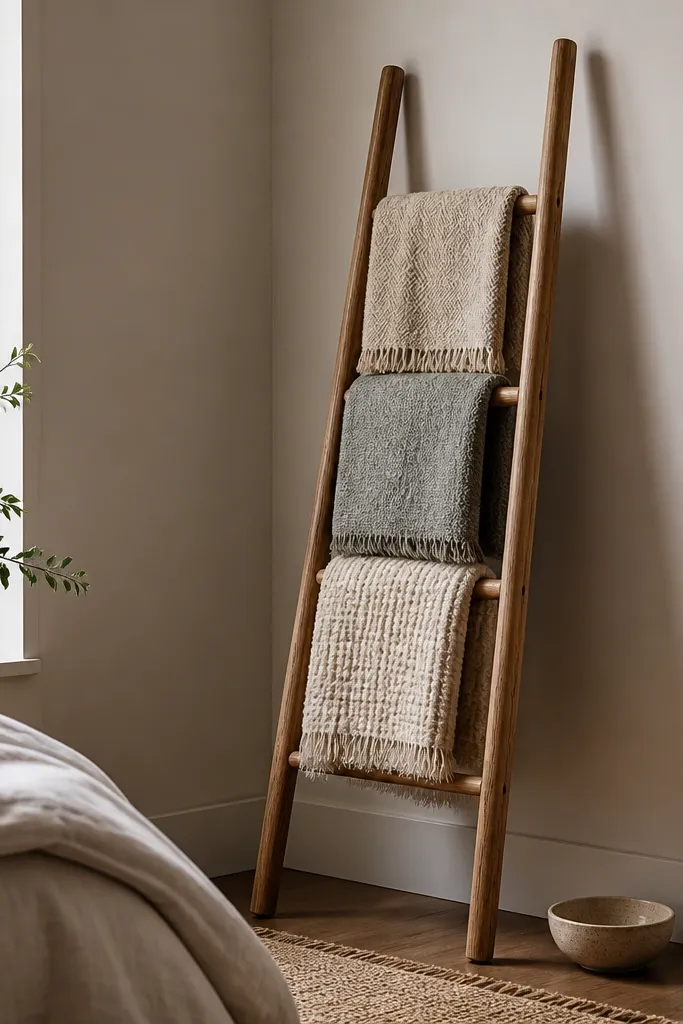
Start by choosing a ladder width that fits your corner — usually 14 to 20 inches wide. Lean it so the top rung sits around 6 to 8 inches below the ceiling for a clean look. Fold three blankets so they’re all the same width, then drape them across different rungs — don’t stack them all on one rung. Add a small floor detail like a ceramic bowl or a small basket at the base to hide the ladder’s feet. Keep blanket colors in one family: cream with taupe, or white with gray, then add one seasonal accent throw folded on top.
This corner idea is simple and it looks good year-round because blankets are already seasonal. A throw ladder creates intentional texture without adding a bunch of small objects. I like a light oak ladder for warmer rooms and a black ladder for cooler, crisp palettes. It flatters bedrooms where you want a lived-in feel but still like things to look tidy. The principle is vertical organization: the ladder gives you height and a built-in “display,” so you don’t need extra decor clutter.
AvoidAvoid mismatched thicknesses piled together; it makes the ladder look lumpy instead of styled.
Good to knowIron or steam the blankets before folding — a crisp fold makes the whole corner look intentional.
7. Corner Bench With Cushion + Decorative Tray
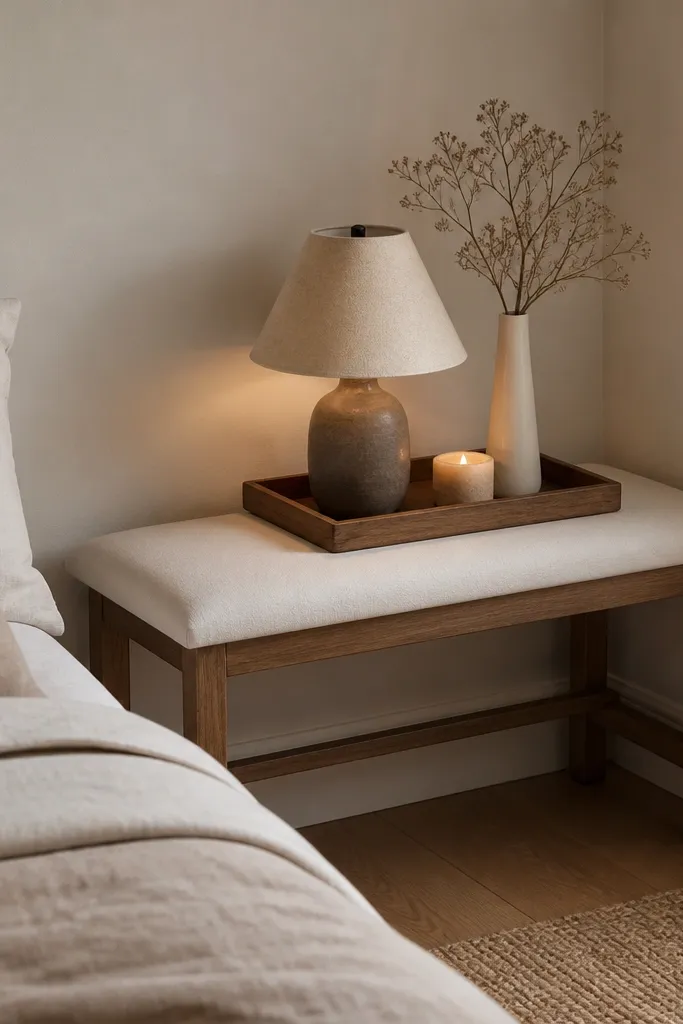
A bench in a corner is practical, but the real win is that it creates a “landing spot” for morning routine items. I use a bench that’s narrow enough to slide into the corner without blocking the room, then style it like a mini dresser. Choose a cushion in a solid linen or subtle weave so the corner doesn’t compete with patterned bedding. This flatters bedrooms that need extra seating or a place to lay clothes without a full dresser upgrade. The principle is a functional surface: you get storage vibes and styling in one piece.
Start by placing the bench so it faces into the room, with the back edge aligned to the wall corner. Use a cushion that’s about 2 inches thick and fills most of the bench top without hanging over. Add a tray in wood or matte black on top, then place a small candle and a slim vase on the tray. Keep the tray centered, not pushed to the edge, so it looks balanced. For year-round, switch the tray’s candle and vase stems, but keep the bench cushion color stable.
If your bench is fabric, use a washable cover and keep a spare in the closet for quick changes.
Skip tiny benches with no depth; shallow tops make trays look precarious.
8. Stacked Books + Oversized Ceramic Planter (Sculptural Corner)
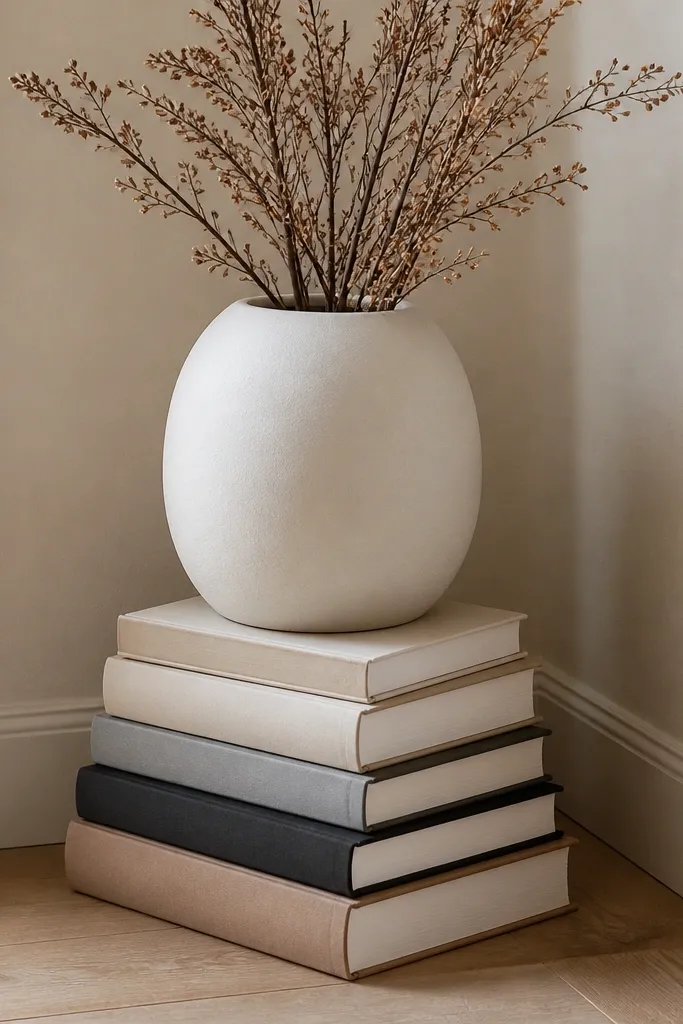
This is my go-to when you want a corner that looks designed but you don’t want furniture. Stacked books add height fast, and a big planter gives the corner a strong focal point. I choose matte ceramic in white, oatmeal, or soft gray because the finish looks calm next to bedding. This works best for bedrooms with minimal clutter and neutral walls, and it flatters rooms with darker furniture because the planter brightens the corner. The principle is scale: one oversized object beats ten small ones for corner impact.
Start by placing a base book stack on the floor — about 10 to 14 inches tall. Use books with similar spine colors or wrap them with a plain paper cover so the spines don’t steal attention. Set the oversized planter on top, then add a small cluster of dried branches or a single stem arrangement. Keep the plant material height proportionate — aim for the top of the branches to reach about 48 to 60 inches from the floor. For seasonal changes, swap between dried wheat in fall, bare branches in winter, and light airy stems in spring and summer.
Use museum putty or a small non-slip pad under the planter so it doesn’t slide when you bump the stack.
Avoid glossy planters; they catch light in a way that looks cheap next to matte textiles.
9. Corner Rug Runner + Micro Nightstand Styling
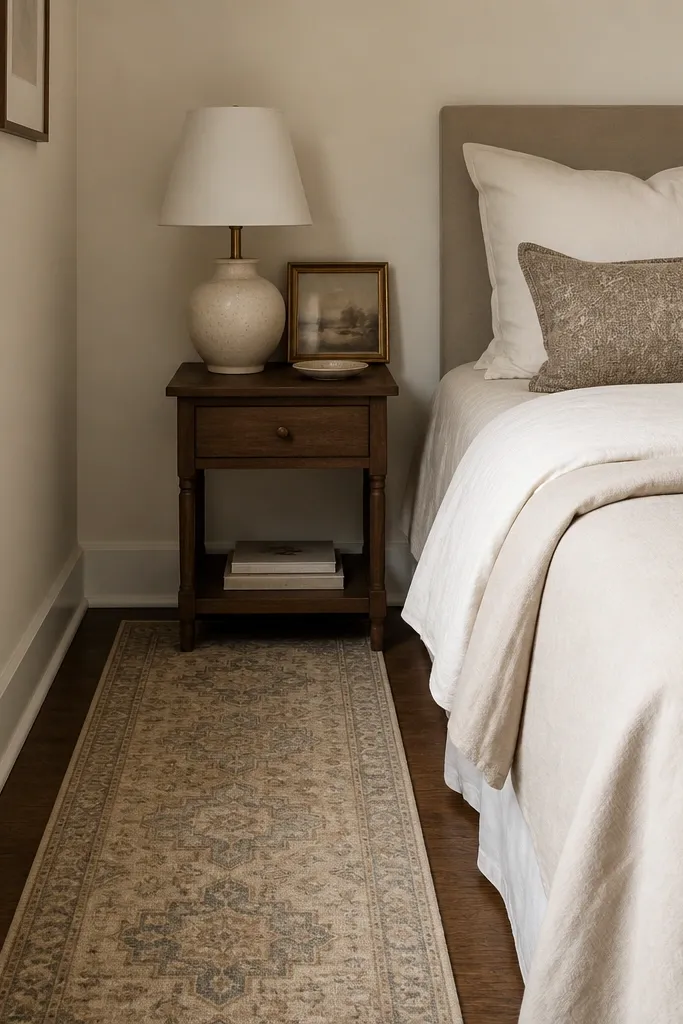
Start by measuring from the corner to the edge of where you want the runner to stop — usually 4 to 7 feet. Choose a runner width around 2 feet so it doesn’t swallow the room. Lay it so the pattern is aligned with the bed or the main wall, not crooked to the corner. Then place a small nightstand at the corner, keeping the top height around 24 to 26 inches. Style with one lamp, one small tray, and one framed print. For seasonal swaps, change the lamp shade color or the tray items, not the runner.
Sometimes the corner looks wrong because the floor isn’t anchored. A narrow rug runner that starts at the corner and extends into the room makes the space feel intentional, and it also softens the sound of footsteps. Pair that with a micro nightstand so the corner has one small functional point. I like runners with low-contrast patterns because they won’t fight your bedding. This idea flatters bedrooms with hardwood or tile floors and makes them feel warmer without adding a full rug. The principle is boundary: the runner creates a visual line that makes the corner look designed.
AvoidSkip thin runners that curl up; corner rugs that don’t lie flat look sloppy fast.
Good to knowTape the runner edges with double-sided rug tape for the first week to stop sliding while you settle the layout.
10. Hanging Wall Pocket + Floor Basket (Vertical Storage Corner)
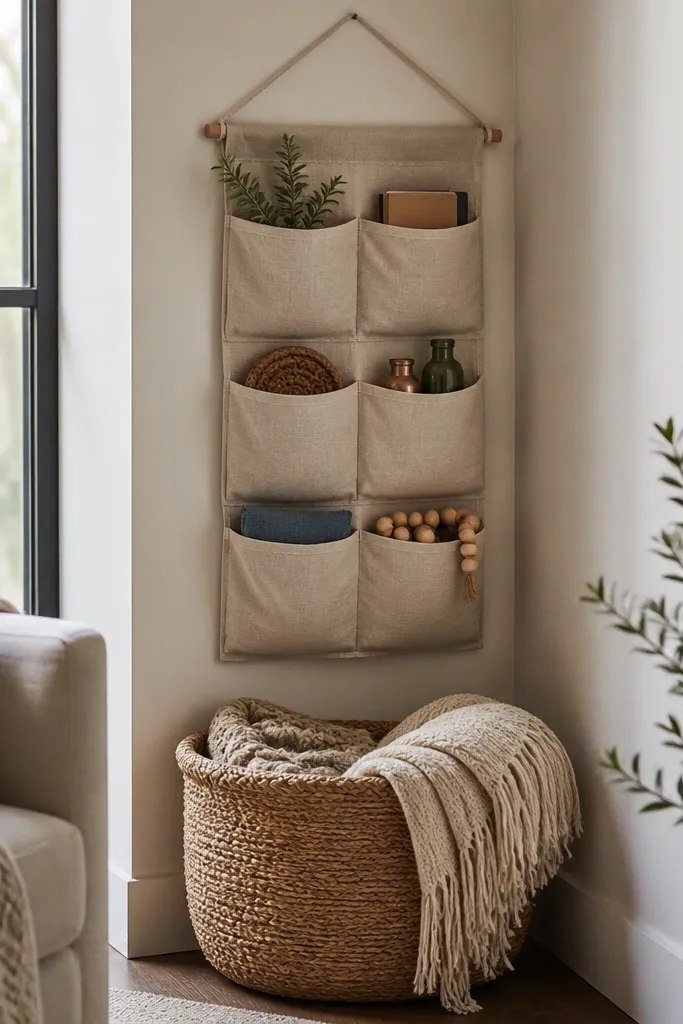
This is for people who want the corner to do something. A hanging wall pocket uses vertical space that you normally waste, and a basket below keeps the floor clean. I like wall pockets in canvas or linen because they look soft, not utilitarian. This corner setup flatters small bedrooms because it keeps bulky items off the floor while still making the corner look cozy. The principle is layered storage: wall pocket for small daily items, basket for overflow blankets.
Start by mounting the wall pocket so the bottom edge sits around 45 to 55 inches from the floor — high enough to stay tidy, low enough to reach. Use a level and anchor into studs when possible. Place the floor basket directly under the pocket so the basket mouth lines up with the pocket’s bottom section. Add one or two items to the pocket — like a small notebook and a linen scrunchie bundle — and keep them neutral. For year-round styling, swap what’s inside the basket: winter throws in heavier textures, summer throws in lighter cotton.
Choose a wall pocket with closed tops or flaps. Open pockets look messy once you add daily items.
Don’t mount it too low; items spill out and the corner starts looking cluttered.
11. Corner Curtain Panel + Rod Mounted Above Bed Height
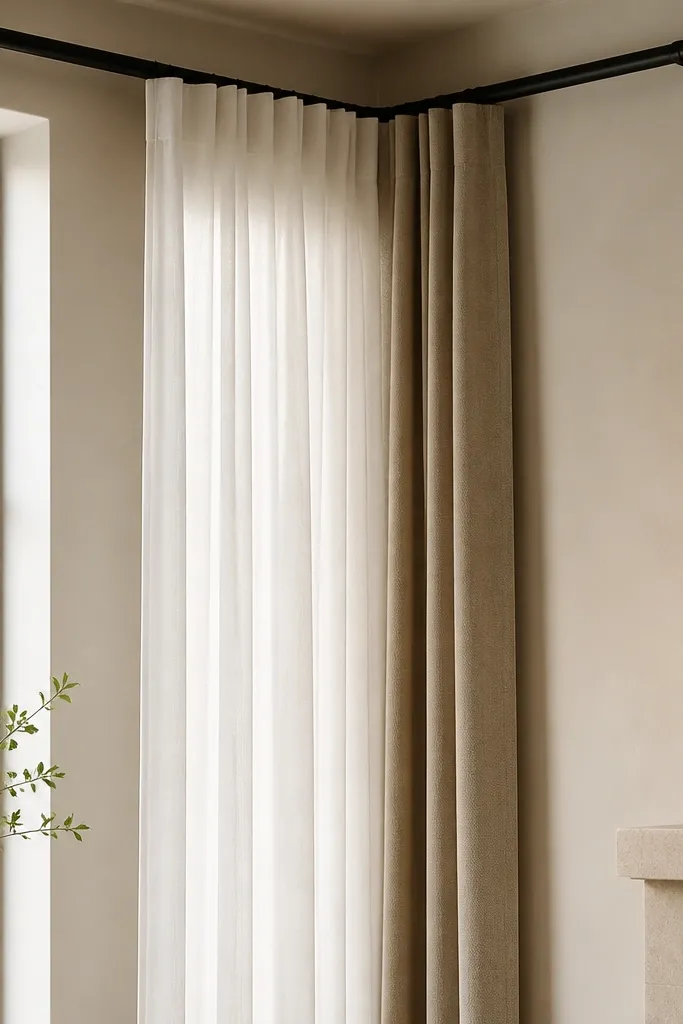
This one sounds fancy, but it’s just fabric doing the job of architecture. A corner curtain panel creates softness and frames the corner so it doesn’t look like an empty gap. I use a two-layer approach: sheer white for light diffusion and a heavier linen panel behind for shape. This flatters bedrooms with windows nearby and also helps awkward corners that don’t hold furniture well. The principle is framing: fabric defines the corner like a picture frame defines a wall.
Start by measuring from the corner wall to the point where you want the fabric to land — usually 24 to 36 inches across. Mount the rod high, around 6 to 10 inches above where your bed headboard would be, so the panel hangs with a long vertical line. Use one sheer panel and one linen panel behind it, with the linen slightly wider. Let the fabric pool lightly at the bottom — about 1 to 2 inches — so it looks styled, not installed. For year-round, keep the sheer the same and swap the linen panel color: warm oatmeal for winter, airy sand for summer.
Hang the panel using rings or clips that slide smoothly. A stuck curtain makes the corner feel neglected.
Avoid cheap polyester sheers; they look shiny and the corner loses softness.
12. Corner Lantern Display With Three Candle Heights
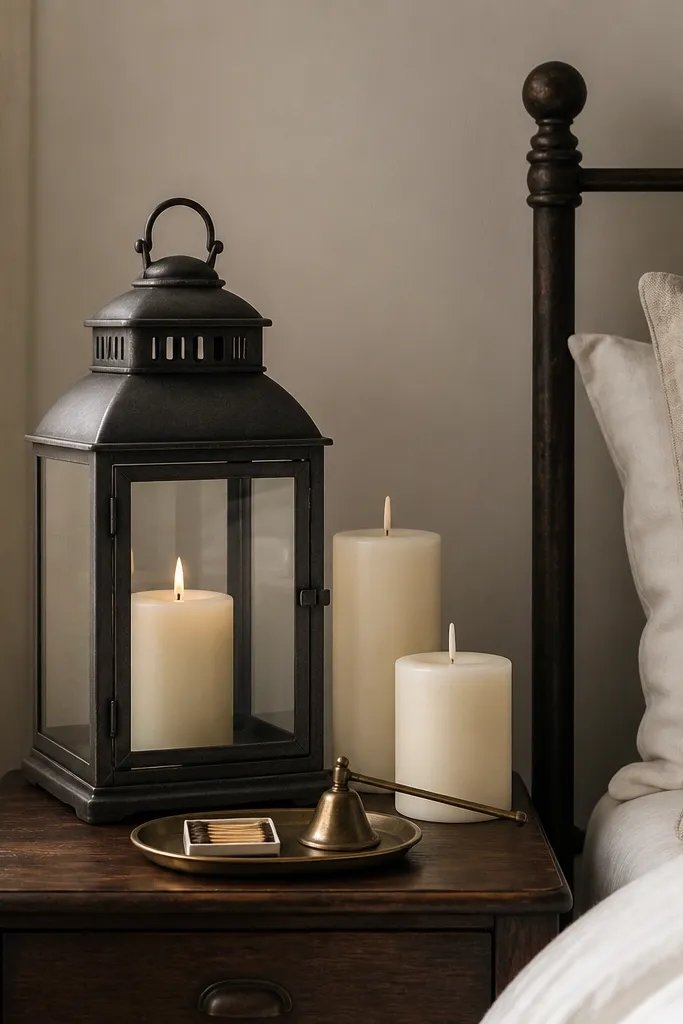
Start by placing a small side table in the corner, then set the lantern on the table’s back half so it doesn’t block the view when you walk in. Use one large pillar candle inside the lantern if it’s made for that, or place it beside. Add two more candles on a tray — one tall and one shorter — keeping the tallest about 2/3 the table height. Put matches and a snuffer on the tray so it looks intentional. For year-round, swap candle covers or swap wicks only if you use lantern inserts; otherwise change the candle color seasonally: ivory for fall/winter, pale green or white for spring/summer.
If your bedroom corner feels too daytime-plain, candle height solves it. A lantern gives you a contained glow, and three candle heights create a natural visual pyramid. I like black or aged brass lanterns because they work with both warm and cool palettes. This setup flatters bedrooms where you want cozy evenings without adding a lot of decor pieces. The principle is controlled lighting: you’re styling with light sources, not random objects.
AvoidDon’t mix candles with wildly different styles; it makes the lantern look like a temporary craft project.
Good to knowUse flameless candles during the day and switch to real ones at night for the best “always good” look.
13. Floating Corner Shelf With Leaning Picture Frame
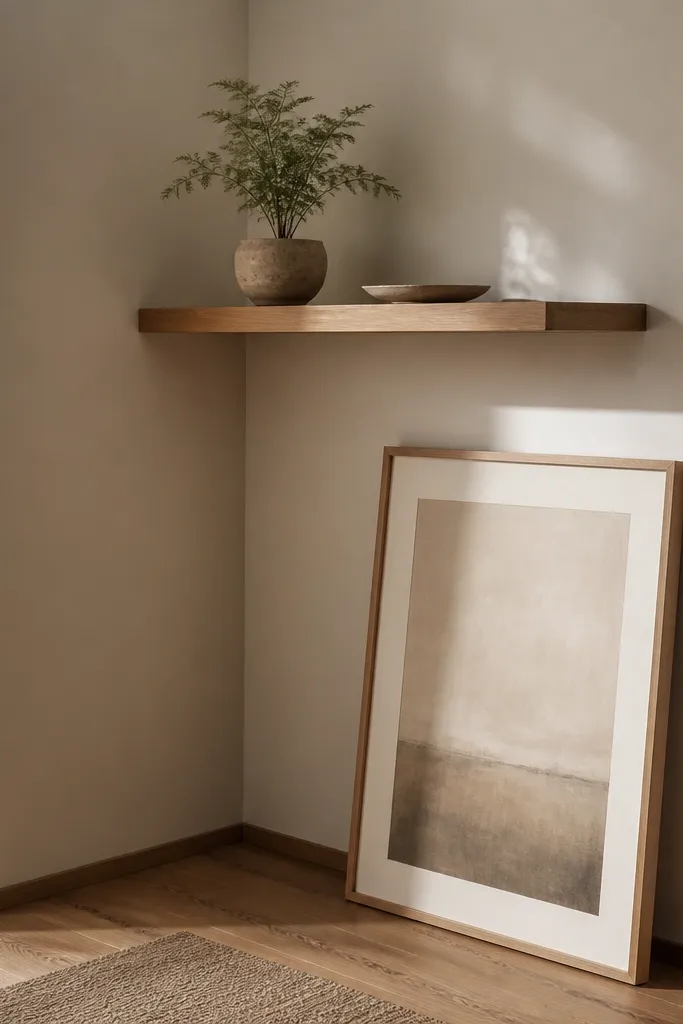
Lean + shelf is a smart way to use corner walls without making the floor crowded. The leaning picture frame adds height and personality, while the shelf holds a small curated set that stays neat. I like a shelf with a light finish and a tray in ceramic or matte wood. This flatters bedrooms with minimalist bedding because the corner becomes the “art moment” without clutter. The principle is balance: one big vertical element plus a small horizontal platform.
Start by installing the floating shelf at about 58 to 62 inches from the floor. Put a ceramic tray on the shelf first, then add one small plant or a bud vase. Next, lean a larger frame against the wall in the corner, positioning it so the bottom edge sits 6 to 10 inches above the floor for a clean line. Keep the frame’s color the same as your shelf finish or at least in the same metal family. Style the frame with a simple print — white mat with black text works well — then for seasonal changes swap only the small shelf plant or vase stems.
Use picture frame bumpers or felt pads so the frame doesn’t scratch the wall and doesn’t slide.
Skip tiny frames that look lost next to the shelf; corners need scale.
14. Corner Nightstand Turned Into a Styling Station
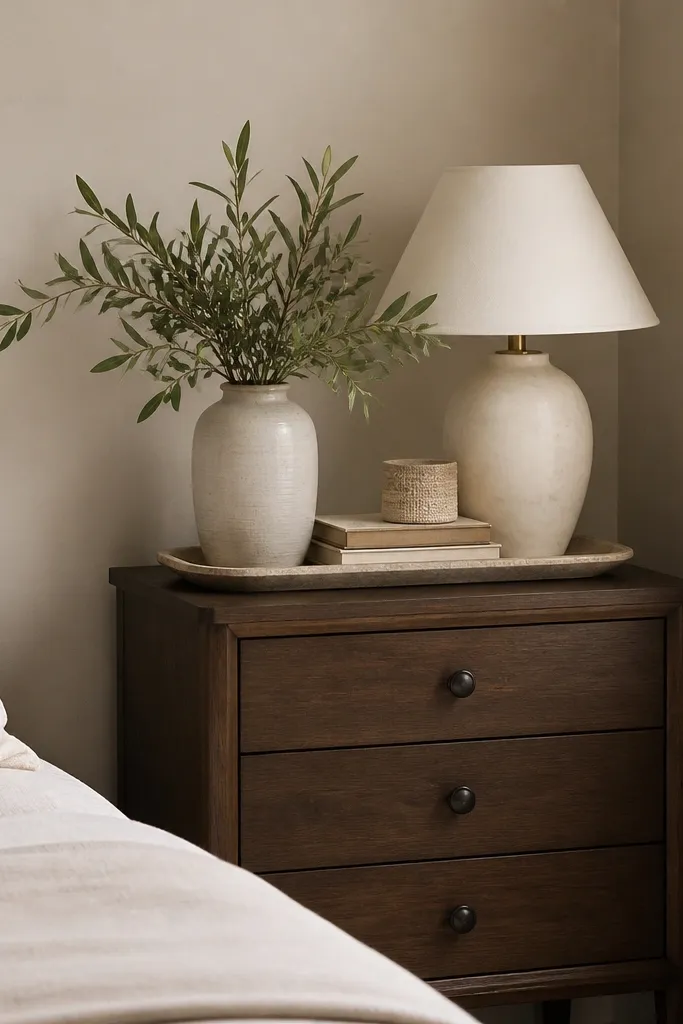
Start by pushing the nightstand into the corner so one side aligns with the wall — don’t leave a big gap. Place a lamp so the light doesn’t hit the wall directly at an harsh angle; keep the shade centered over the nightstand surface. Add a long tray across the top, then set a slim vase in the center and a small candle to one side. Stack two books at the back corner of the tray so they act like a height riser. For year-round styling, switch the vase stems and the candle wrap while keeping the tray and book colors steady.
This is a practical corner move when you already own a nightstand but don’t love its placement. Put it in the corner and style it like a dressing table: tray centered, lamp near one side, and items that touch the tray edges. I like long trays because they make the top look organized instead of scattered. This flatters bedrooms where the bed sits away from the wall corner and you need a “home base” for nighttime items. The principle is containment: everything gets placed inside one defined boundary.
AvoidAvoid leaving the top half empty; corners look unfinished when the nightstand top has no focal point.
Good to knowWipe the tray and the nightstand with a damp cloth before styling. Dust makes everything look older than it is.
15. Corner Shelving Unit With Closed Baskets and One Open Stack
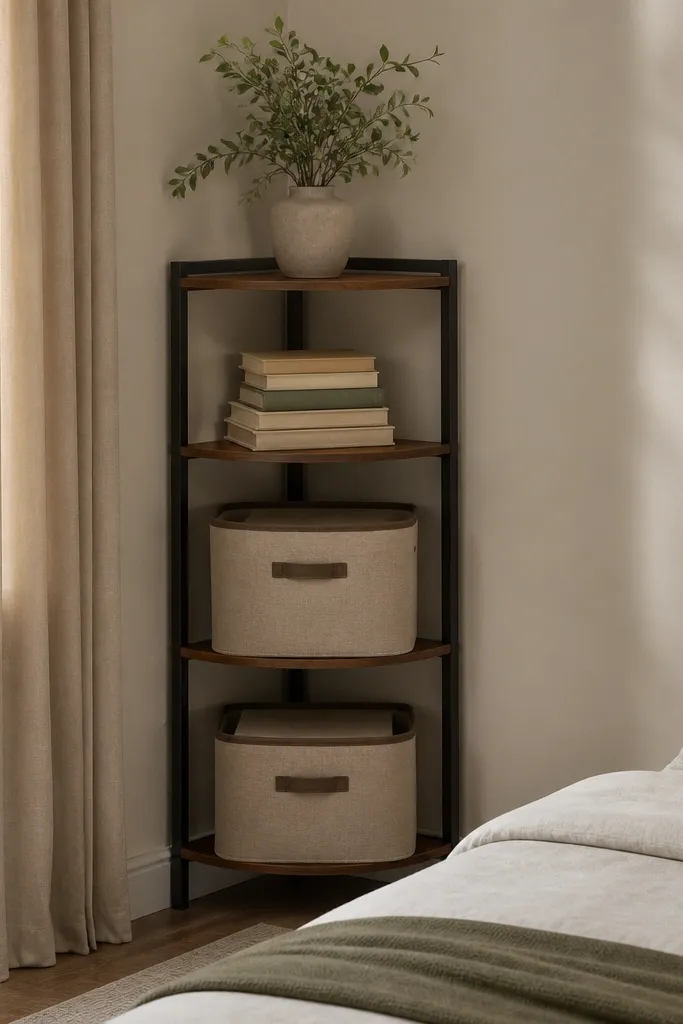
Start by choosing a corner shelving unit that fits your space without blocking doorways — aim for a unit width that leaves at least 28 inches clearance where you walk. Place closed baskets on the lower shelves first, filling them evenly so the basket fronts line up. On the top shelf, create one open stack: books stacked and then a single tall vase or a small sculpture in front. Keep the top shelf items to three pieces max. For year-round, swap the vase and one basket insert color, but keep basket style and shelf spacing the same so it looks consistent.
If you want your corner to look good even when life is messy, go for storage with a visual plan. Closed baskets hide clutter, and one open stack keeps the corner from looking like a storage closet. I prefer fabric baskets in oatmeal or gray because they blend with bedding colors and don’t look harsh. This setup flatters bedrooms where you store blankets, extra pillows, or seasonal linens. The principle is one open zone: everything else stays tucked away.
AvoidDon’t use too many different basket colors; it breaks the calm and makes the corner feel chaotic.
Good to knowLabel the baskets with small tags on the inside rim — you’ll actually keep the corner tidy.