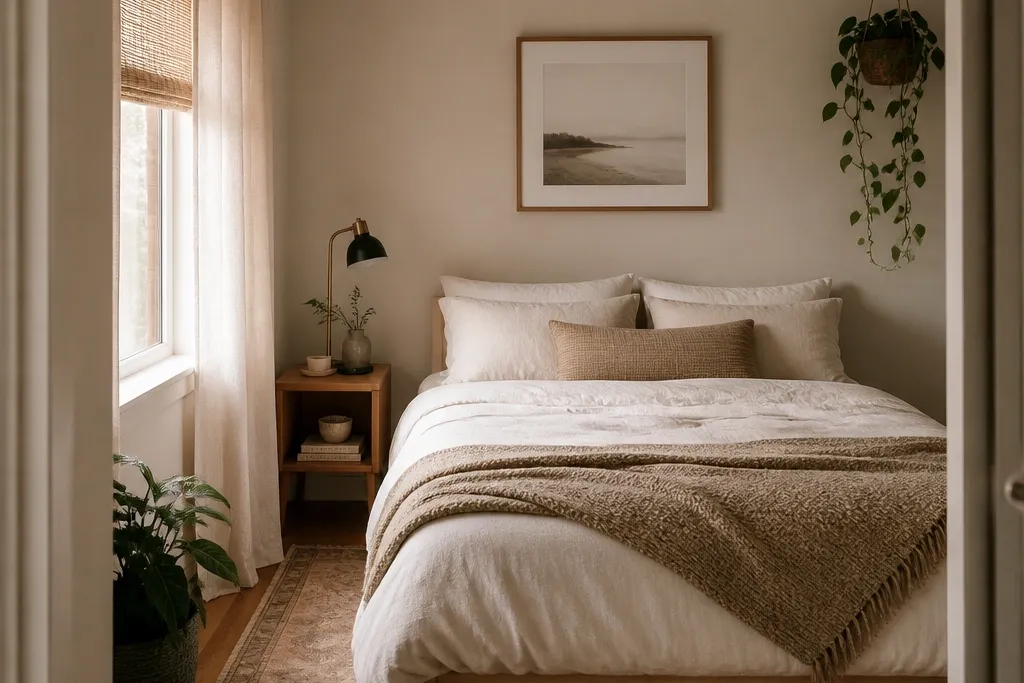
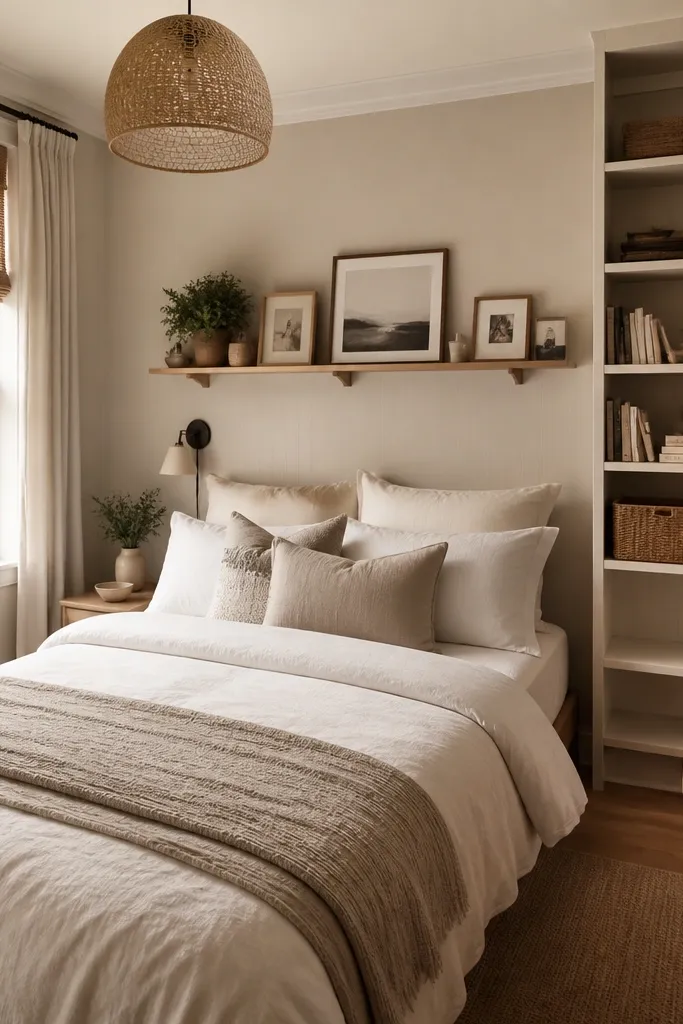
1. Swap the bulky dresser for a wall-mounted media shelf
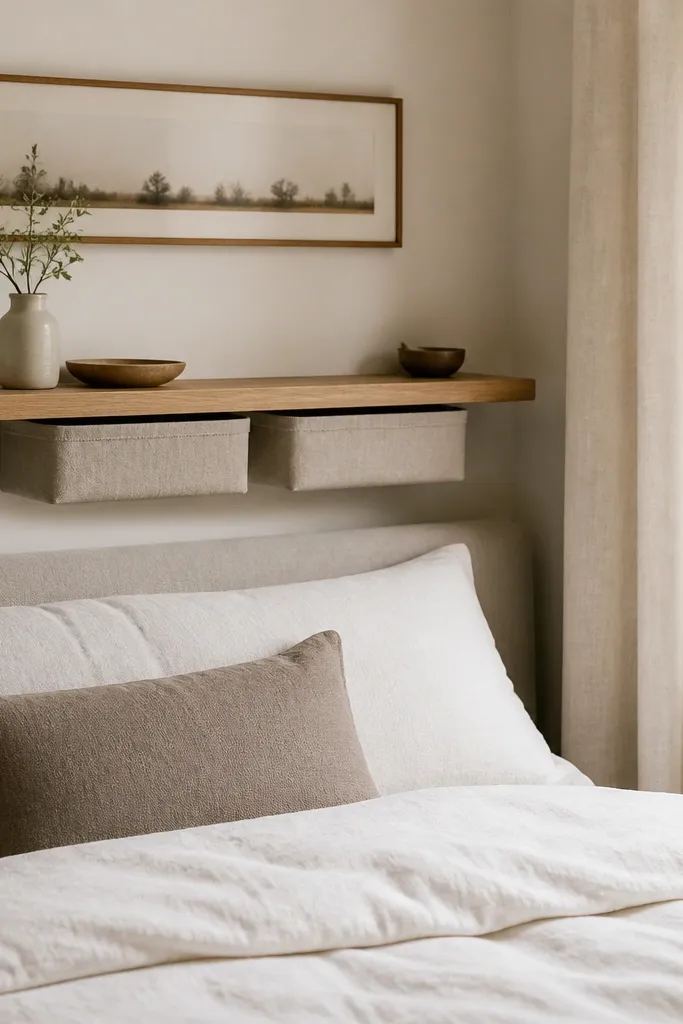
In small bedrooms, a traditional dresser adds a big dark rectangle at eye level. A wall-mounted shelf breaks that block into a thin line, so the room reads as taller and more open. I like light oak or painted white because they reflect room light instead of absorbing it. This layout flatters rooms with low ceilings and also works well for people who need surface space for a lamp and a book but hate visual clutter. The styling principle is to keep your “storage footprint” off the floor and out of the main line of sight from the door.
Start by removing the dresser and measuring the wall space left behind. Mount the shelf so its bottom edge lands about 36 inches from the floor if you’re putting decor on it, then keep the shelf depth around 8 to 12 inches so it doesn’t feel heavy. Place two fabric baskets under the shelf lip for remotes, charging cords, and small daily items, then add one slim lamp or a book stack on the top. Finish by centering the shelf under the wall art you plan to hang so the bed area looks intentional.
Use a matte finish shelf and baskets — glossy surfaces show dust and fingerprints fast.
Avoid a shelf deeper than 14 inches; it starts to look like a dresser again.
2. Lean-in mirror over the nightstand for instant depth
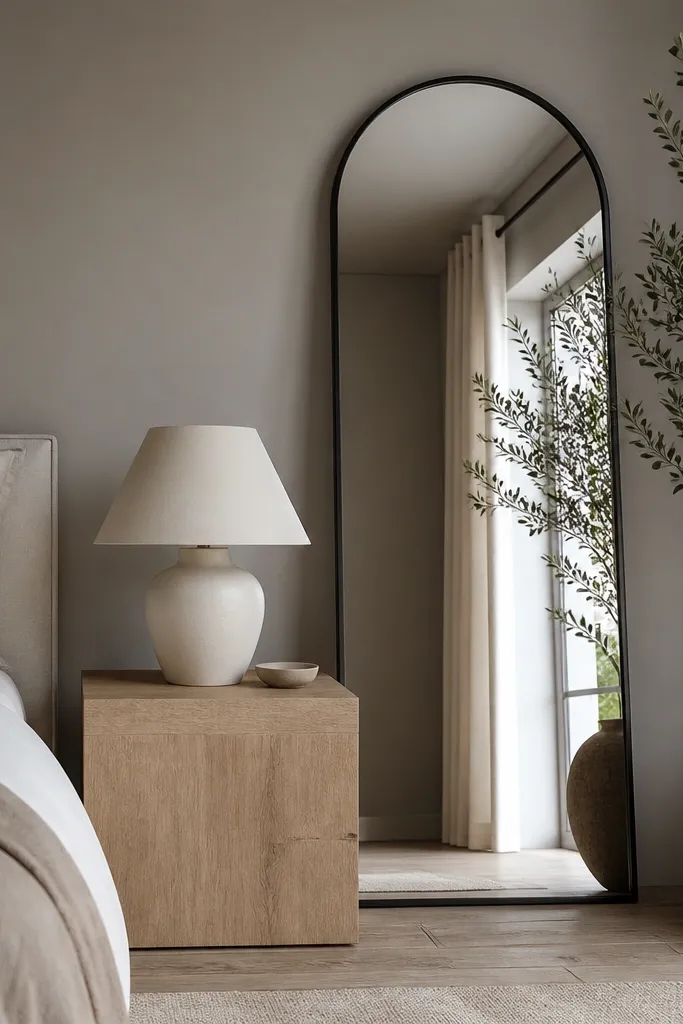
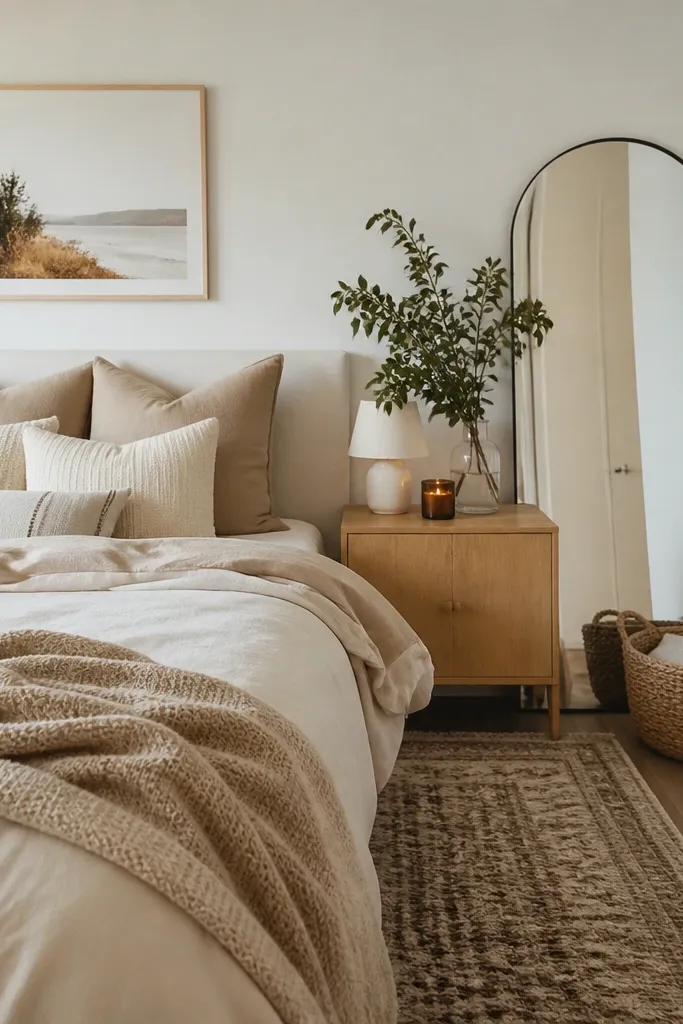
A mirror works in small rooms because it turns one wall into two visual planes. The key is placement: put it where it reflects either the window light or the bed area, not a cluttered corner. I prefer a slim black or brushed brass frame because it reads airy, and the arch shape makes the room feel less boxy. This is great for anyone who wants brightness without changing furniture. The principle is to add depth with one strong reflective piece, then keep the rest of the surfaces calm.
Start by standing in the doorway and choosing the wall that gives the best reflection of light. Lean the mirror so it sits about 4 to 6 inches above the nightstand height, then adjust until you see the window or the duvet color in the reflection. If you’re hanging it instead of leaning, mount the top edge so the mirror center lines up roughly with your eye level when seated. Style the nightstand with one lamp and one tray so the reflection doesn’t multiply clutter.
Wipe the mirror with a microfiber cloth and a tiny bit of glass cleaner — streak-free glass makes the reflection look brighter.
Don’t place the mirror facing a laundry hamper or messy chair; the reflection magnifies it.
3. Choose a headboard that lifts the bed visually
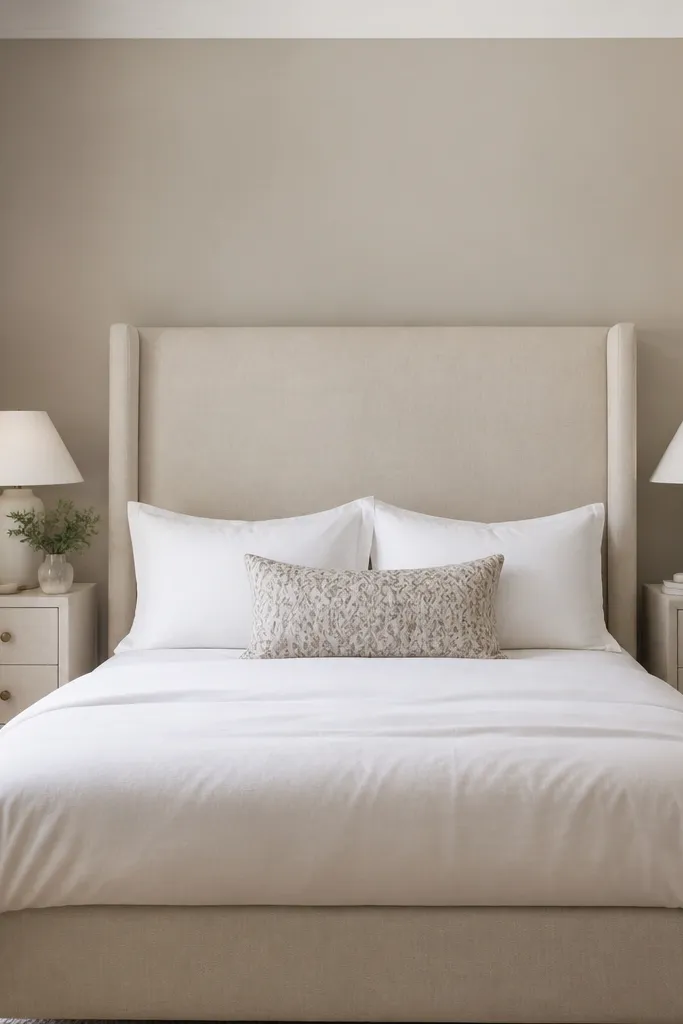
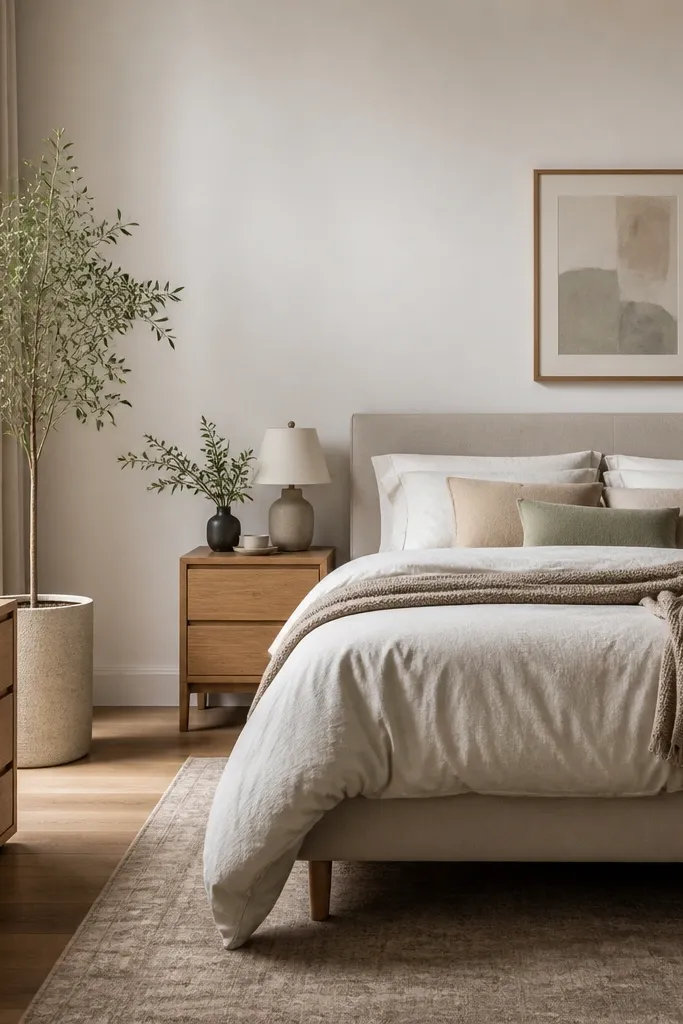
A headboard changes how heavy the bed feels. In tight rooms, a taller upholstered headboard makes the bed look anchored and draws the eye upward, which makes the floor feel less crowded. I’ve had the best results with oatmeal, sand, or light taupe fabric because it plays well with almost any bedding color. This look flatters cool and warm skin tones because the neutral fabric doesn’t compete with your complexion in photos and mirrors. The principle is to give the bed a clean “vertical line” so you don’t need lots of wall decor.
Start by measuring your mattress width and choose a headboard that matches it or is up to 2 inches wider each side. Place the bed so there’s at least 24 inches of walkway on one side if you can. Keep the nightstands the same height as the mattress top minus about 1 to 2 inches so the bed edge looks aligned. Layer bedding with a light duvet and one textured throw to keep the headboard from feeling too flat.
If your room is cramped, use a headboard that doesn’t have deep nailhead trim; it catches shadows and can look busy.
Avoid dark, glossy, or heavily tufted headboards — they read heavy in small rooms.
4. Hang curtains from ceiling height, not the window
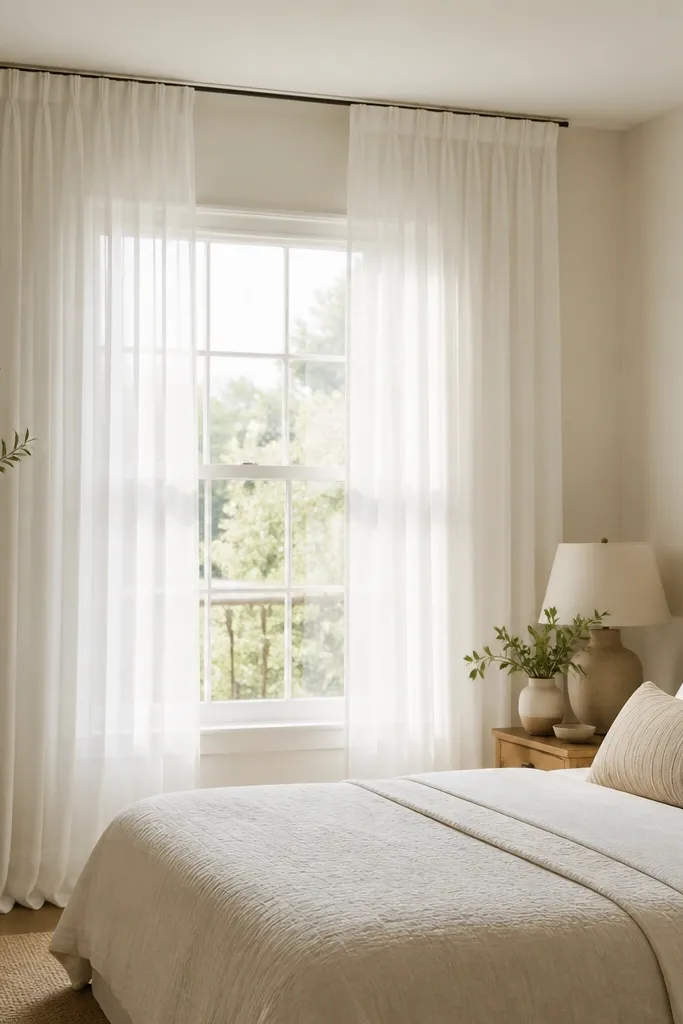
This is one of the fastest ways to make a small bedroom feel taller. When curtains start near the ceiling, your brain measures the room as vertical instead of horizontal. Sheer panels add softness without blocking light, which matters if your window is the room’s only bright spot. I like white-on-white with a slight warmth so it doesn’t look icy. This works especially well for anyone with low ceilings or a narrow window wall. The principle is to extend the “frame” of the window upward and let fabric create a gentle glow.
Good to knowSteam the panels right after hanging — the first crease you see is the one that stays.
Start by measuring from the ceiling to where you want the hem to land; for a clean look, aim for the curtains to skim the floor with a slight break. Install the rod 4 to 8 inches above the window frame and 2 to 4 inches wider on both sides so fabric doesn’t hug the glass. Use sheer panels that are at least 1.5 times the window width for fullness. Then add a simple tieback only if you need it; otherwise let the panels hang naturally.
AvoidDon’t mount the rod at the window trim level; it shrinks the wall visually.
5. Use a narrow runner rug instead of a full square rug
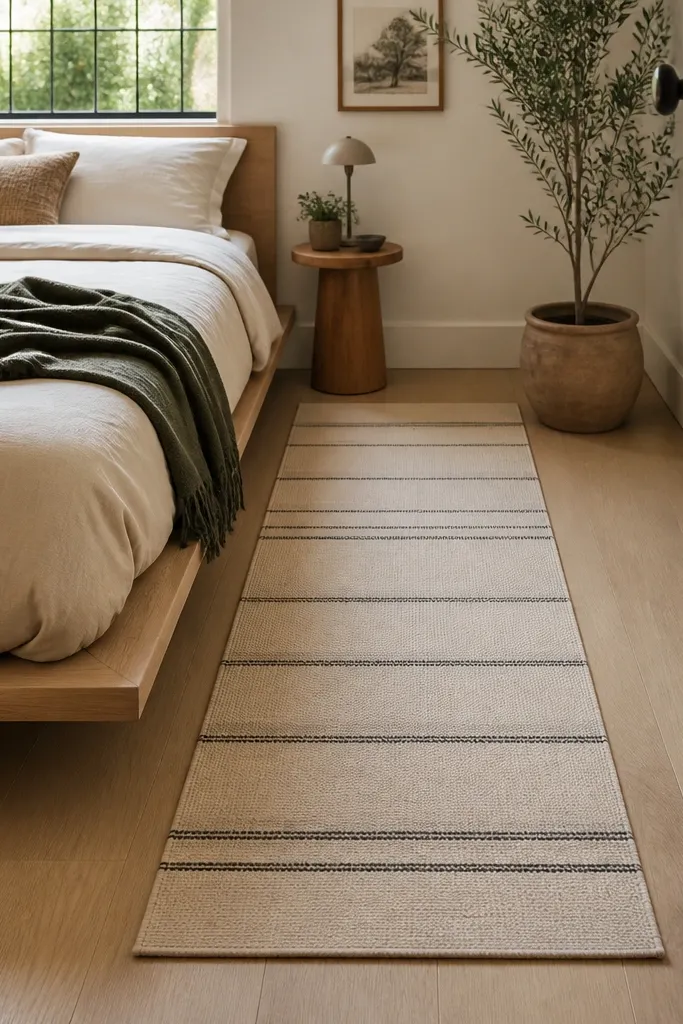
Many people think they need a big rug, but in small rooms that can swallow your floor and make the space feel tighter. A runner placed lengthwise adds warmth and guides your eye without covering every inch. I’ve used light beige or oatmeal with thin lines because it doesn’t compete with bedding patterns. This is friendly for rooms where you need clear walking paths. The principle is to use rug shape to control movement — lengthwise placement makes the room feel longer.
Good to knowUse a rug pad with grip — runners slide more than you think on wood floors.
Start by pulling the bed out just enough to place the rug squarely. Choose a runner width between 24 and 30 inches, then position it so the rug extends about 12 to 18 inches beyond the foot of the bed. Keep the runner centered on the bed so your floor lines look straight. Finish by matching one rug color (like beige or stripe navy) in a pillow or small frame so everything looks connected.
AvoidAvoid shag rugs in tiny rooms; the pile adds visual noise and makes edges look messy.
6. Create a one-color bedding palette with a textured throw
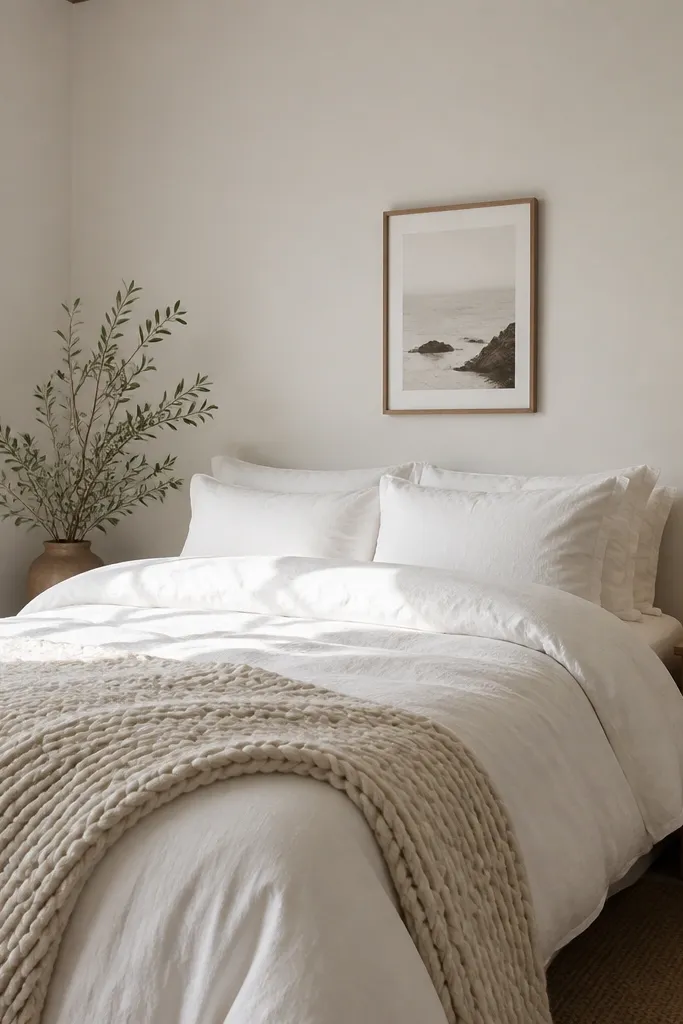
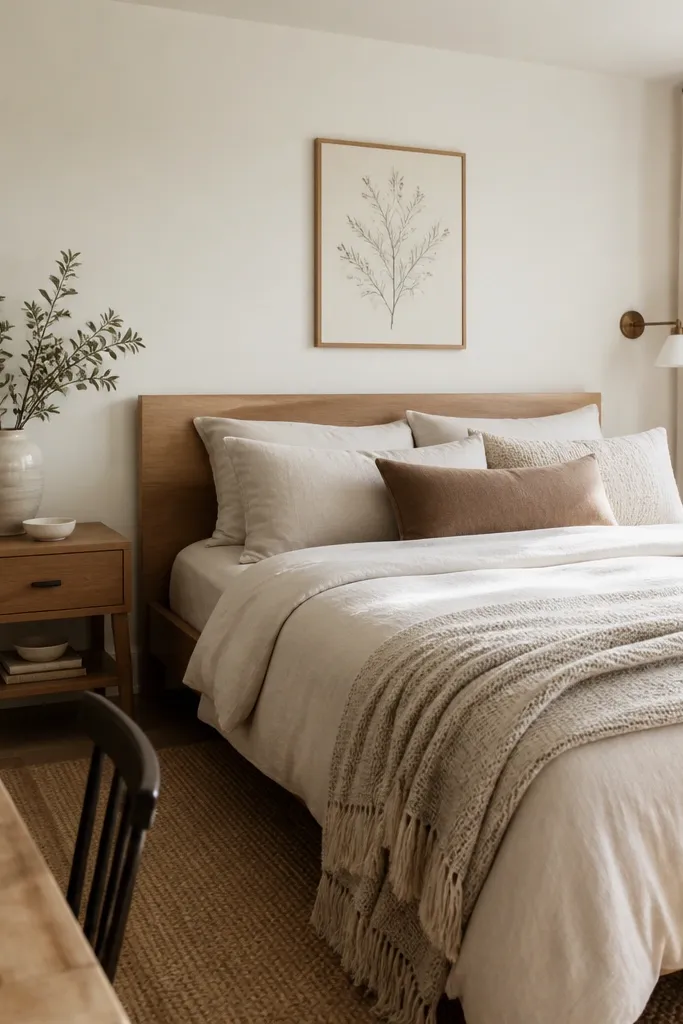
In small bedrooms, too many colors make the room feel like it’s constantly changing. I keep bedding in one main color family, then add interest with texture instead of pattern. A white duvet plus a chunky cream throw gives depth you can feel when you walk by. This works for every skin tone because neutrals read clean and don’t clash with your surroundings. The principle is to reduce color noise and let materials do the talking.
Good to knowShake out the throw before styling — knit throws look better with a little loft.
Start by picking one base color for the duvet and sheets — white, warm ivory, or light greige. Add a throw or blanket with a different texture like chunky knit, waffle weave, or a linen/cotton blend. Keep pillow patterns minimal: either all solid or one small subtle stripe on a single pillow. Place the throw folded over the foot of the bed and make sure it’s centered so it looks intentional, not accidental.
AvoidAvoid mixing multiple bold patterns in a bed this size; it makes the room feel visually crowded.
7. Install a floating bedside shelf for phone and book
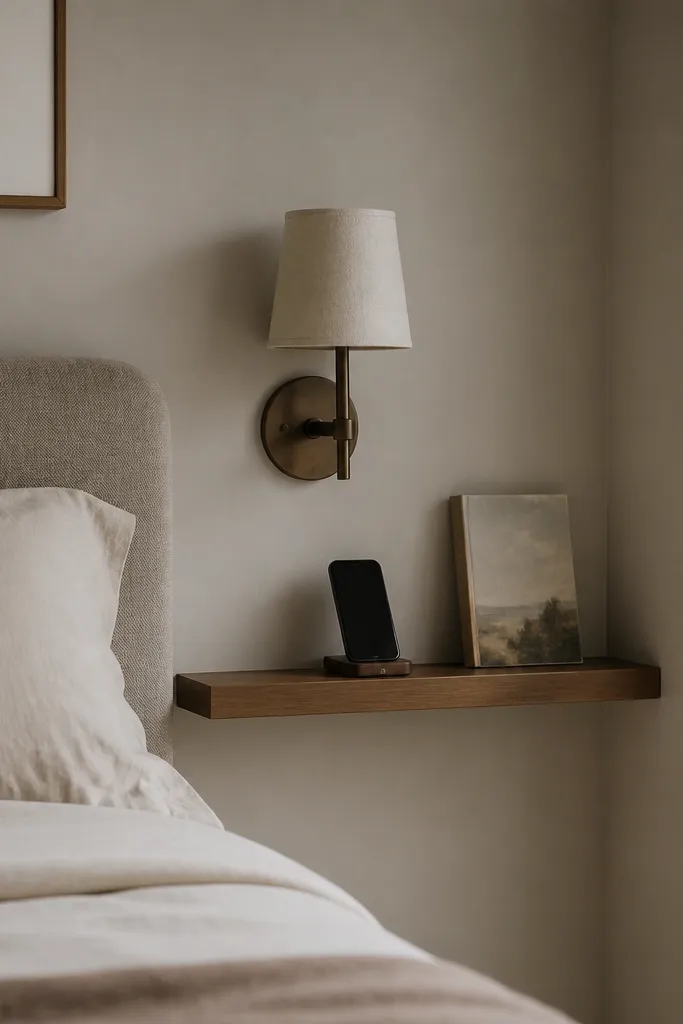
If your room is tight on floor space, a floating shelf gives you the function of a nightstand without the bulk. It also keeps your bedside visual line clean, which matters when you have limited wall space. I like thin shelves in light wood or matte white so they disappear into the wall. This setup is great for people who live with a phone, a book, and a glass of water at night. The principle is functional storage at eye level while freeing the floor for movement.
Good to knowUse a shelf lip or a small raised edge so your phone doesn’t slide at night.
Start by measuring the top of your mattress and decide where you want your phone to sit — usually 4 to 8 inches above mattress height. Mount the shelf so it’s level and centered near where you’d place a bedside lamp. Add a small wall sconce on the same wall so you don’t need a bulky lamp base. Style the shelf with one charging station, one book, and a small tray for a ring or hair tie.
AvoidDon’t mount the shelf too low; it ends up feeling like clutter instead of a bedside surface.
8. Pick a round nightstand to soften corners
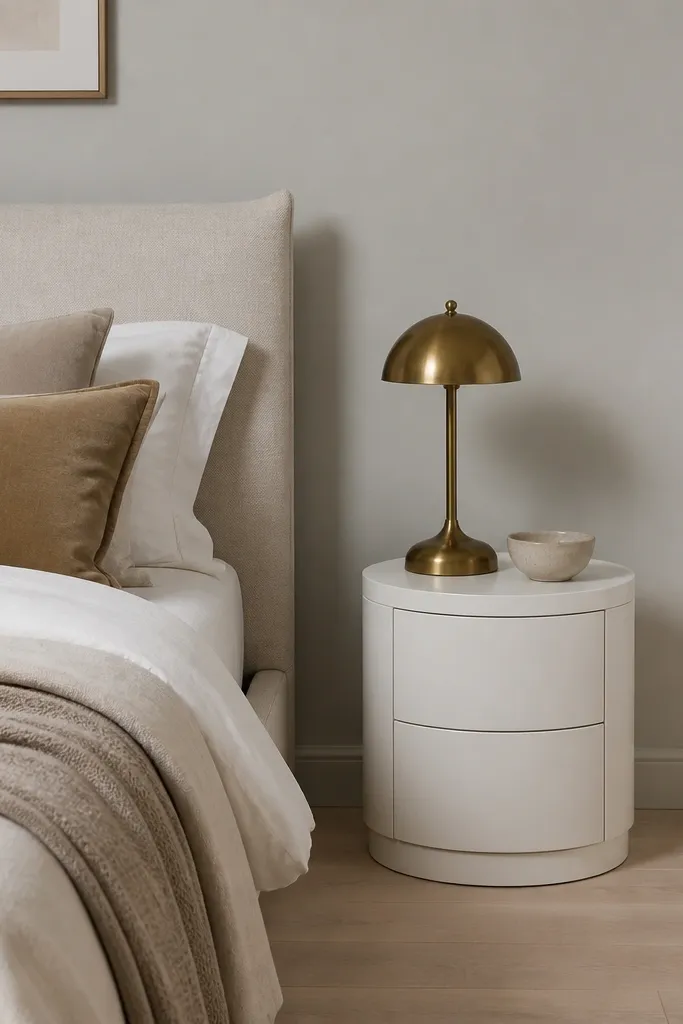
Square furniture can make small rooms feel boxy, especially when you already have a boxy bed frame and rectangular artwork. A round nightstand adds a gentle curve that visually reduces harsh edges. I’ve found this works well if your room is narrow because you gain a little “walking clearance” around the bedside area. It also looks good with both modern and farmhouse styles because the shape does the smoothing. The principle is to use one curved element to soften the room’s geometry.
Good to knowMatch the nightstand finish to your picture frames or hardware so the shape looks intentional.
Start by choosing a nightstand diameter between 14 and 20 inches so it doesn’t overpower the bed. Place it so its edge sits about 2 to 3 inches away from the bed side — tight enough to feel connected, open enough to walk past. Keep the lamp base small and the shade tall enough to reach just above pillow height. Use a single tray on top to corral daily items and keep the round surface from looking messy.
AvoidAvoid oversized round tables; a big diameter steals floor space fast.
9. Hang a grid of 3 small frames with exact spacing
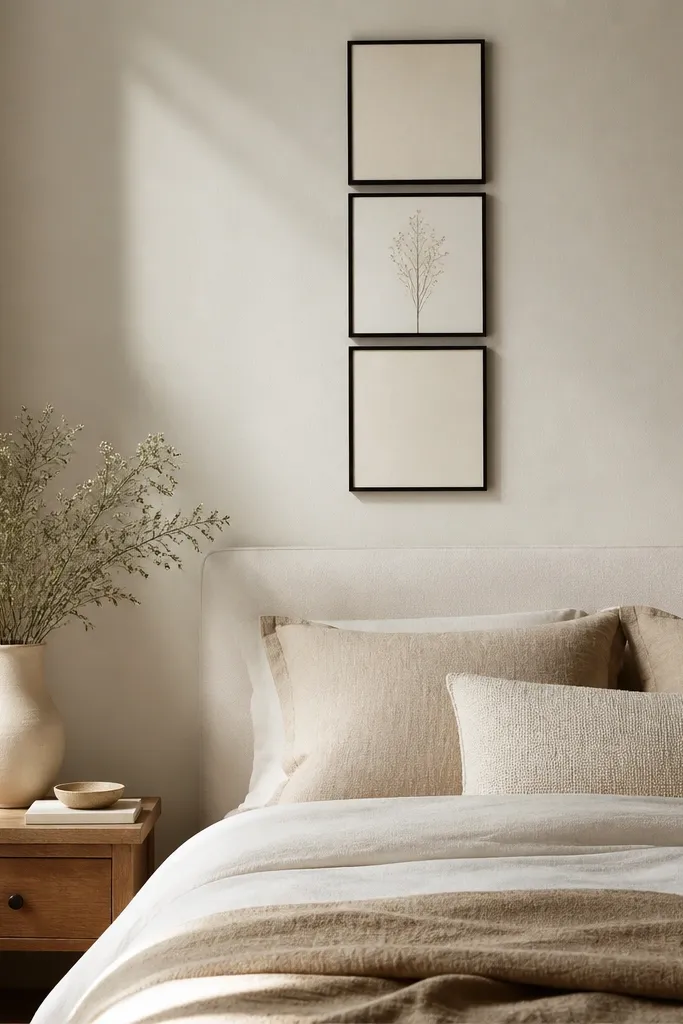
A small room can still handle wall art, but only if it’s sized and spaced correctly. A 3-frame grid gives you structure without the chaos of a big gallery wall. I use thin frames in black or matte brass because they look light and don’t bulk up the wall. This is flattering in rooms with busy wallpaper too, because the art stays simple. The principle is to keep the wall art consistent in size and spacing so it reads as one design block.
Good to knowUse a paper template on the wall for hammer-and-nail placement; it stops you from guessing.
Start by measuring the wall width above your headboard; the art block should be about 70 to 80 percent of that width. Lay the frames on the floor and set spacing between frames at 2 inches using painter’s tape. Center the block over the bed so the bottom edge of the art lands about 6 to 10 inches above the top of the headboard. Use prints with a shared color — like cream background with muted sage and charcoal — so the set looks cohesive.
AvoidAvoid mixing frame sizes wildly; it looks random in a small wall.
10. Use long, narrow shelves for books and baskets
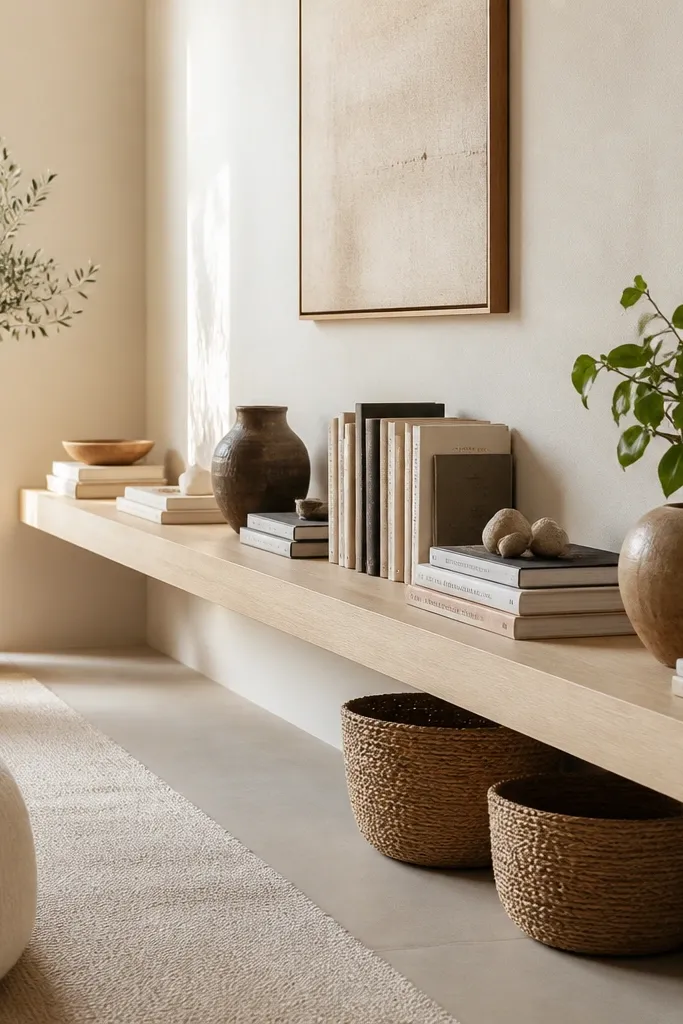
Books add height and personality, but shelves can also make a small room feel cluttered. Long, narrow shelves let you spread items in a controlled line instead of stacking a messy tower. I’ve used this in rooms where the closet door takes up too much wall space for anything else. It also looks great when you group books by color — not every spine, just the visible range. The principle is to keep the shelf line clean and use baskets to hide the “random” items.
Start by measuring the wall and picking a shelf length that leaves at least 6 inches of space on each side for visual breathing room. Keep shelf depth around 6 to 8 inches so books don’t look like a display case. Arrange books upright first, then add a few laid flat for variation. Place baskets underneath or in a lower ledge for items you don’t want visible — like chargers, extra socks, and spare bedding.
Use bookends in the same finish as your frames so the shelf reads tidy from across the room.
Avoid storing loose items on open shelves; they collect dust and look busy fast.
11. Replace a floor lamp with a plug-in wall sconce
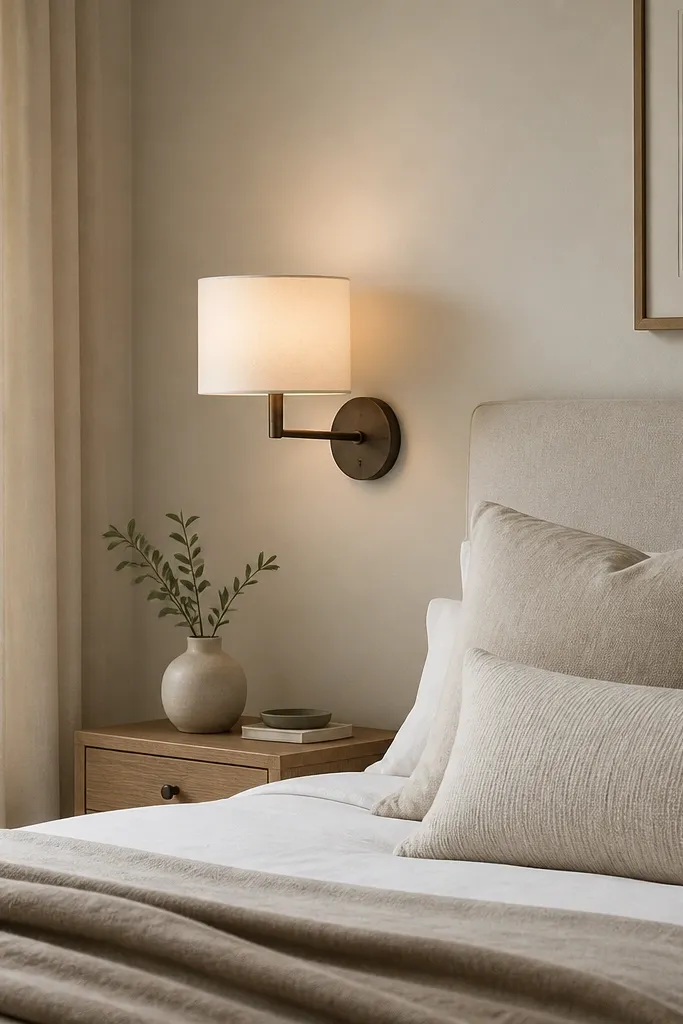
Floor lamps steal walking space in small bedrooms and create an extra “object” near the bed. Wall sconces keep the floor clear and move light where you actually need it: beside your head and hands. I like plug-in sconces when there’s no easy wiring because they let you test placement before committing. This works well for anyone who reads at night because the light is angled toward the bed area. The principle is to use light as a layout tool — it directs attention and makes the room feel finished.
Good to knowChoose a warm bulb around 2700K so the room feels cozy instead of blue.
Start by sitting on the bed and holding your phone flashlight where you want reading light. Mark the wall point about 8 to 10 inches above pillow height. Install the sconce at that spot, then keep the shade size small enough that it doesn’t hit your head when you sit up. If you’re using a plug-in, route the cord along the baseboard and secure it with clear clips so it disappears.
AvoidAvoid placing the sconce too high; it turns into overhead light instead of bedside light.
12. Paint the bed wall a soft tone-on-tone shade
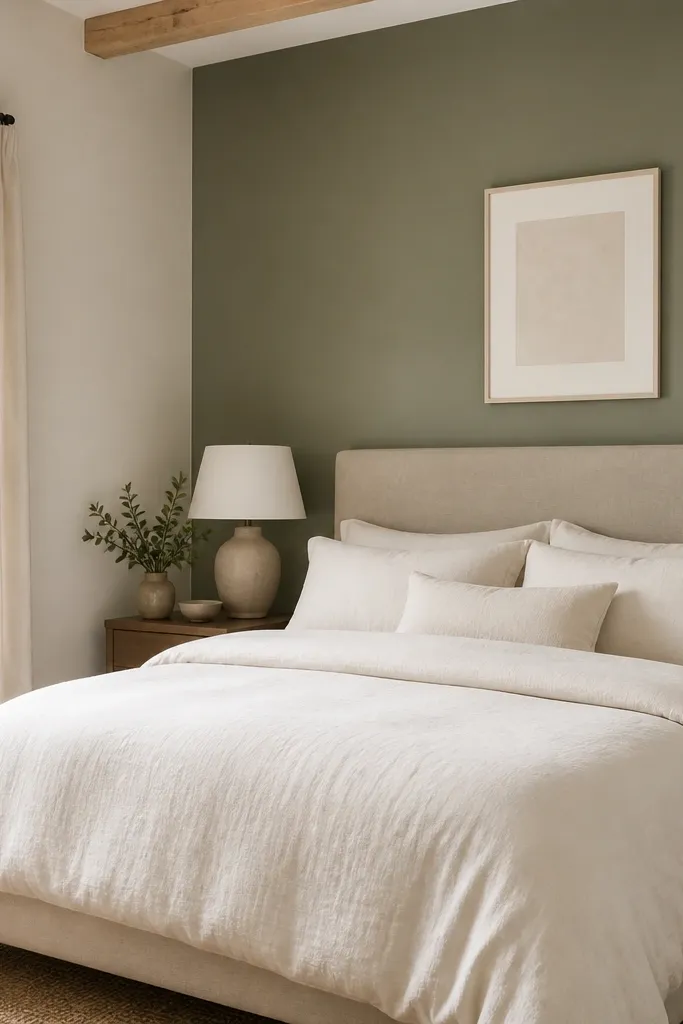
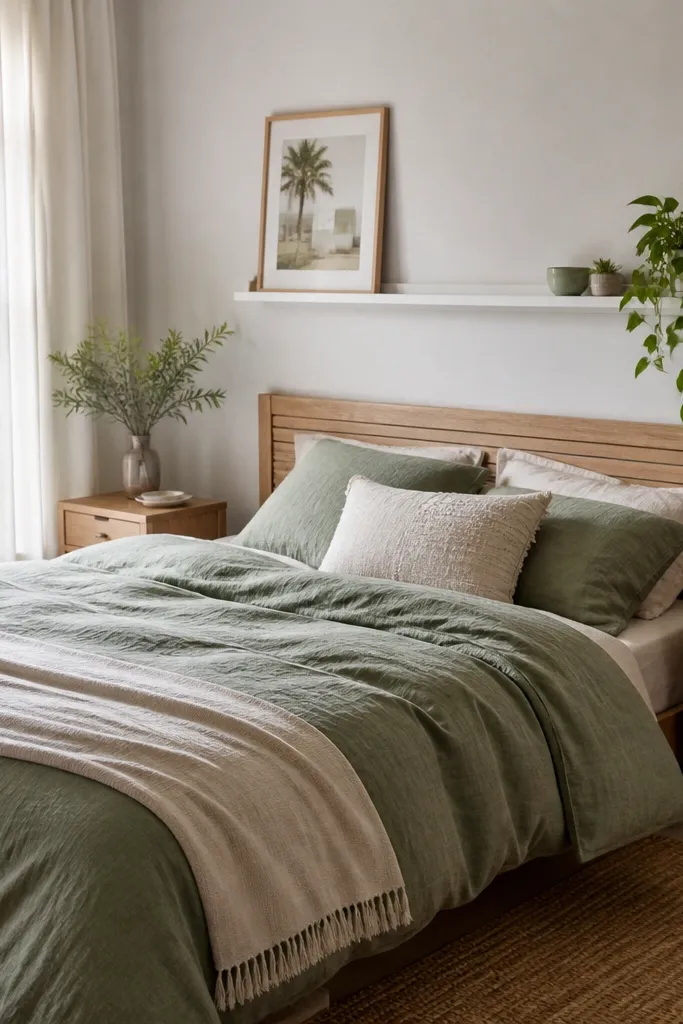
A color change behind the bed makes the room feel designed even when you have limited space. I like tone-on-tone because it adds depth without looking like a bold accent wall that can shrink the room. Muted sage, dusty blue, and warm clay all look good with white bedding and light wood. This is especially flattering in small rooms because it creates a focal point so you don’t need lots of decor. The principle is to concentrate “visual weight” on one wall and keep the rest light and quiet.
Good to knowTest the paint on the wall next to the bed at night with the lamp on; the shade changes under warm light.
Start by masking the wall and choosing a paint that is 1 to 2 shades deeper than your other walls. I aim for a satin or eggshell finish for small bedrooms because it wipes clean and doesn’t glare. Paint the bed wall only and keep trim the same bright white as the rest of the room. Then style the bed with neutrals and add one small accent color from the paint — like a sage pillow or a clay ceramic on the nightstand.
AvoidAvoid high-saturation colors; they make the room feel smaller and louder.
13. Layer a sheer overlay on a solid duvet for airiness
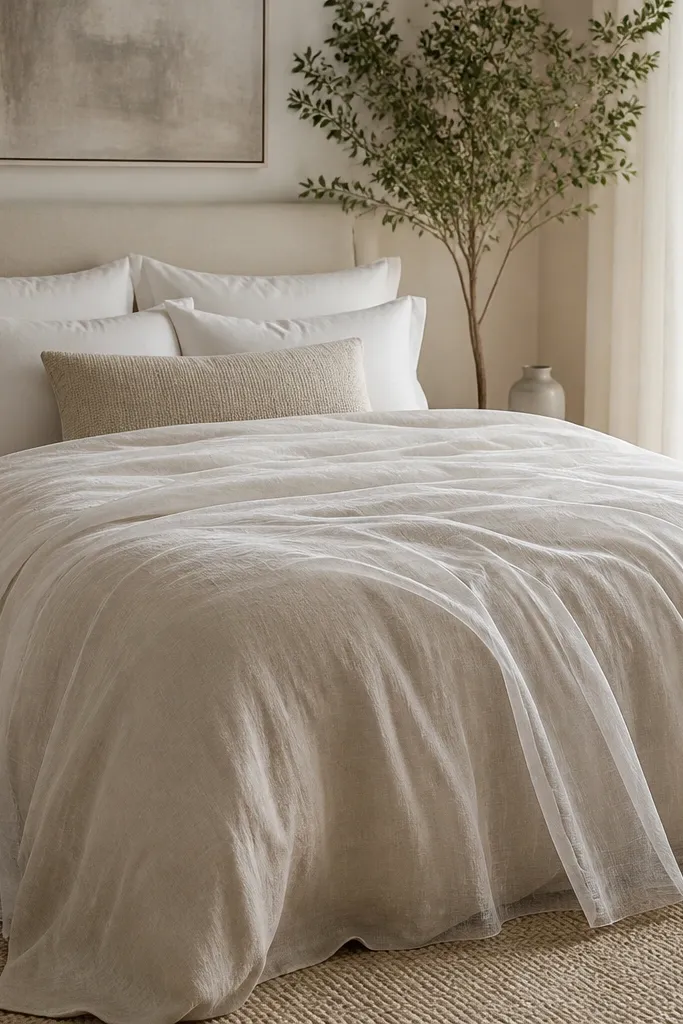
Sheer fabric adds movement and makes the bed look lighter without changing furniture. I use this when the room feels too heavy from wood tones or dark walls. The overlay creates a “floating” effect over the duvet, so your eye reads softness instead of bulk. This looks great for people who like a cozy, slightly romantic look but still want a clean bed. The principle is to add one translucent layer that reduces visual weight.
Good to knowUse fabric clips instead of pins — they leave fewer marks and hold better on smooth duvets.
Start by choosing a solid duvet in a neutral base like oatmeal, greige, or soft taupe. Drape a sheer overlay fabric — like voile or lightweight cotton — across the top so it falls evenly on both sides. Pin the overlay at the back corners with fabric clips so it doesn’t slide, then fold any extra at the foot. Keep pillow covers solid to avoid competing patterns and add one texture element like a waffle weave throw.
AvoidAvoid sheer fabric that’s too slippery; it bunches and looks uneven within a day.
14. Install a peg rail for bags and robes by the door
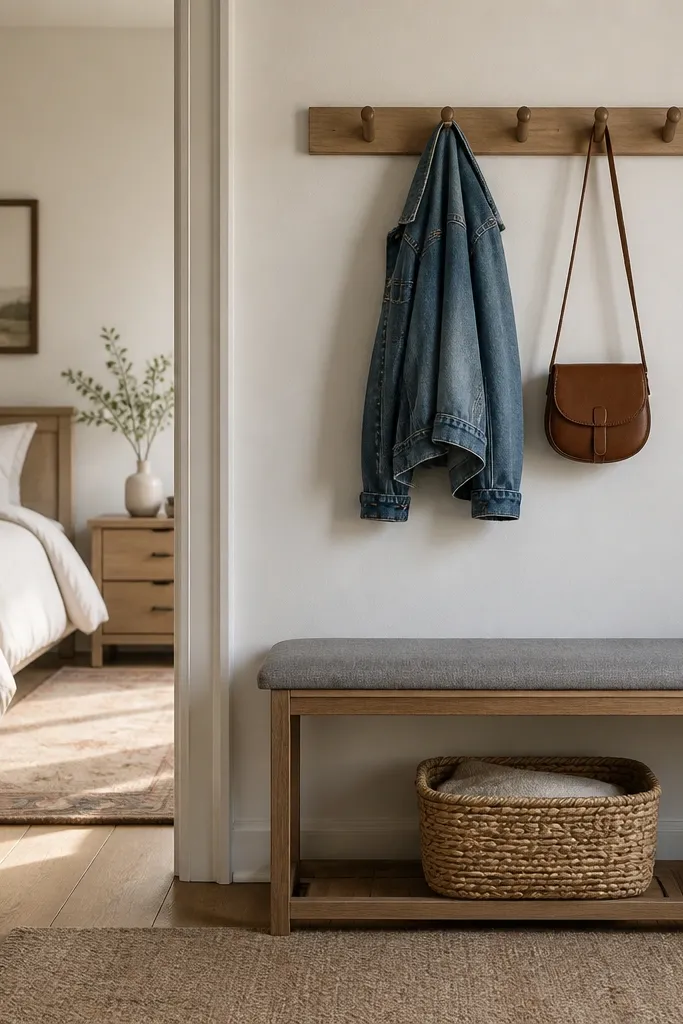
Clutter on the floor and chair backs makes a small bedroom feel chaotic. A peg rail gives you vertical organization that looks tidy even when it’s in use. I like a simple metal or stained wood rail with evenly spaced hooks because it looks intentional. This works for entry-adjacent bedrooms where you store backpacks, robes, and daily bags. The principle is to keep daily items off the bed and off the floor — your room stays visually calm.
Start by selecting a rail length that fits your wall segment near the door — 24 to 36 inches is plenty. Mount the hooks so they’re reachable without bending too far: about 60 inches from the floor to the top of the rail. Add a narrow bench or shoe basket below so “take-off” items land in one spot. Style with one or two bags and a robe, then keep the rest of the hooks empty so the wall doesn’t look crowded.
Use color-coordinated hangers or one type of hook styling so the rail looks cohesive.
Avoid hanging tall items too close together; it turns into a tangled block of fabric.
15. Put your mirror on a sliding stand near the closet
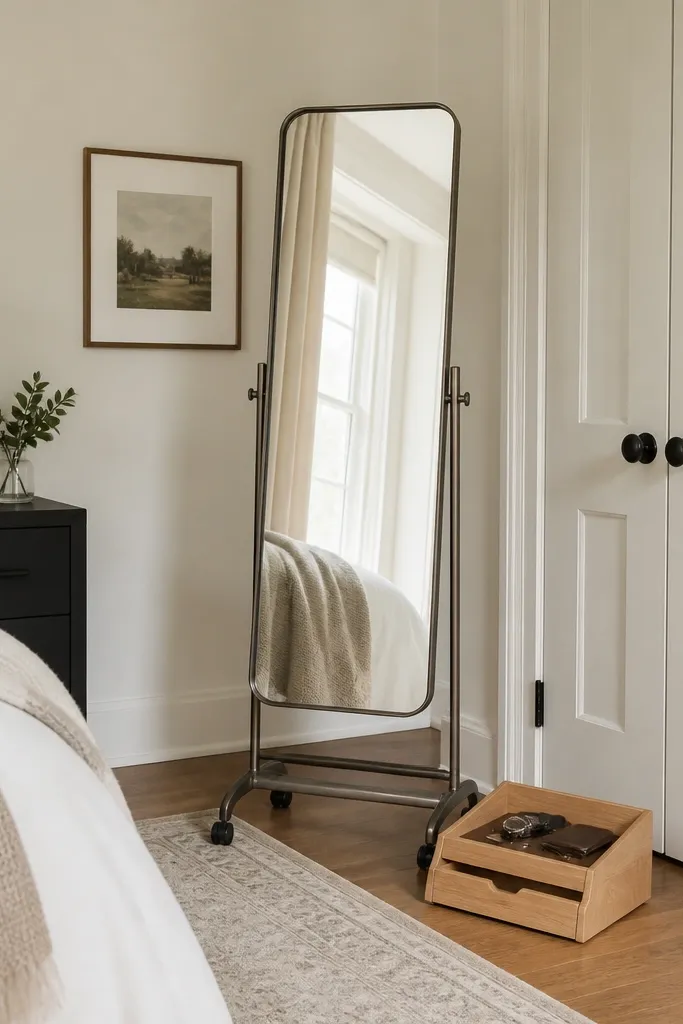
If you rent or you don’t want to drill yet, a rolling or sliding mirror is a practical small-room move. It gives you the same depth trick as a wall mirror, but you can reposition it based on your daily routine and lighting. I’ve used this in bedrooms where the closet is the only wall that reflects daylight. It’s also friendly for people who switch bedding seasonally because you can angle the mirror to highlight the new colors. The principle is flexibility without visual clutter — the mirror moves, the room stays controlled.
Good to knowAdd a felt pad under the stand wheels so it doesn’t roll when you need it stable.
Start by choosing a mirror frame that matches your hardware — brushed brass with brass knobs, black frame with black handles. Place it next to the closet so it doesn’t block the walkway when you open doors. Angle it about 10 to 20 degrees toward the bed so it reflects duvet tones, not the floor. Add a small valet tray nearby for keys and jewelry so the mirror area looks like a purposeful corner, not a random spot.
AvoidAvoid mirrors with thick, ornate frames in tiny rooms; they look heavy.
16. Use a low-profile bed frame and hide storage in drawers
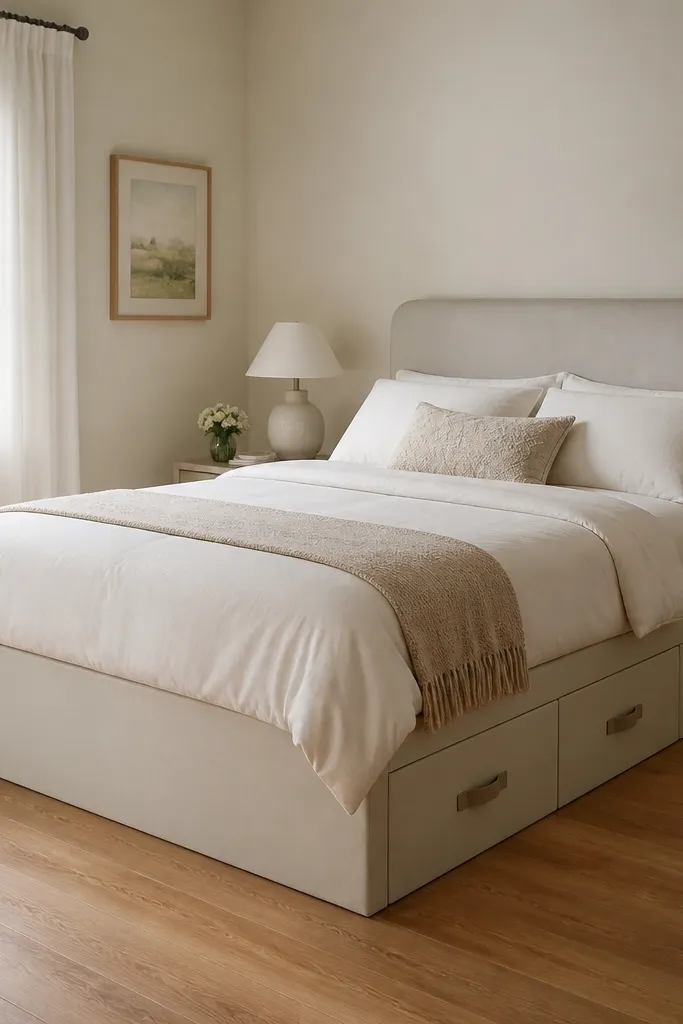
A low bed frame makes a room feel less crowded because it lowers visual weight near the floor. Storage drawers keep the clutter out of sight, which matters when you don’t have much closet space. I like fabric pulls in oatmeal or taupe because they blend with bedding instead of looking like hardware. This is a great solution for tight bedrooms where you need extra storage but hate bulky dressers. The principle is to keep your floor line clean and your storage hidden.
Good to knowUse drawer dividers so smaller items don’t turn into a “digging” mess.
Start by measuring your bedroom and making sure the bed drawers can fully open without scraping the wall. Choose a mattress height that keeps the top of the mattress about level with your nightstand — usually 24 to 28 inches from the floor depending on your mattress. Load drawers with seasonal items, extra bedding, and shoes — keep daily items in drawers near the door side if possible. Style the bed with a fitted sheet and duvet in light tones so the low frame doesn’t look stark.
AvoidAvoid overstuffing drawers; when they bulge, they look messy even if they’re closed.
17. Rethink the closet: add a second rod and slim hangers
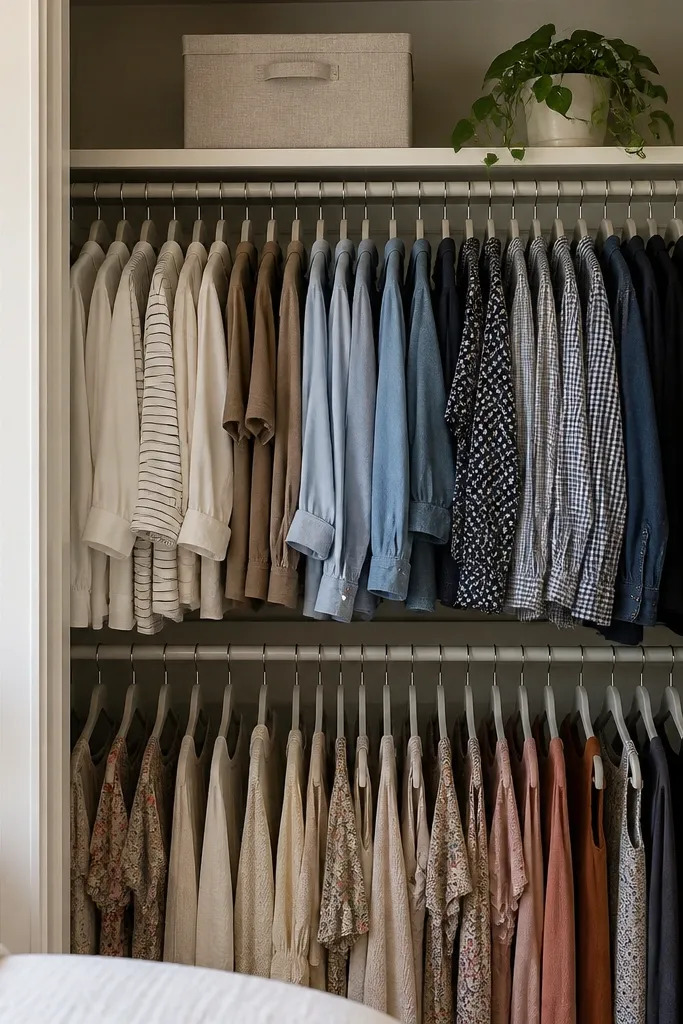
A small bedroom feels smaller when your closet is a mess, because you end up with bags and clothes on chairs and floors. Adding a second rod doubles hanging space without adding furniture. Slim hangers keep your clothes from turning into a bulky wall of fabric, and that makes the closet feel organized. I’ve done this in bedrooms with narrow closets where a dresser was the only other option. The principle is to create storage that doesn’t spill into the room.
Good to knowUse matching hangers in one color; it makes the closet look neat even when you open the door.
Start by measuring your closet height and choose a second rod position so you still have clearance for long items under the top rod. Install the rod brackets level and secure them into studs if possible. Swap to slim hangers and keep shirts and pants on the same side so you can find things fast. Add one labeled bin for bulky items like sweaters or scarves and keep the top shelf for seasonal storage only.
AvoidAvoid leaving bulky coat hangers mixed in; they create gaps and make the closet look uneven.
18. Make a DIY floating gallery ledge for small decor
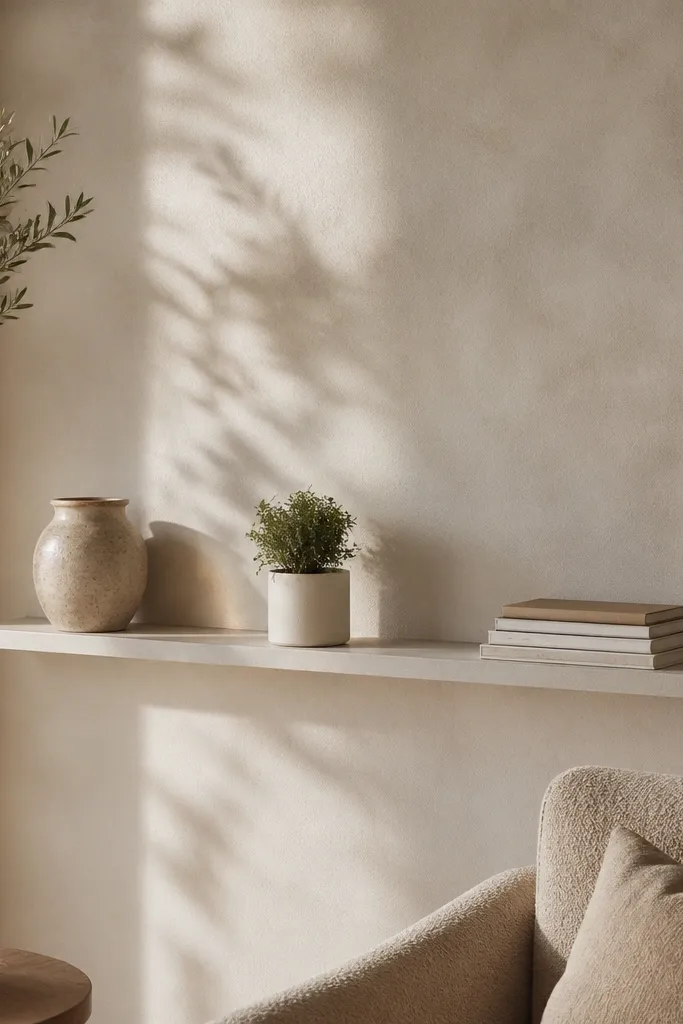
A ledge gives you a place for small decor without turning the wall into a full picture frame situation. In a small bedroom, spacing matters more than the number of items. I like ledges that are shallow — around 5 to 7 inches — because anything deeper starts to look like furniture. This is great for bedrooms where you want personality but you don’t have space for a lot of wall hanging. The principle is negative space: leave gaps so the decor looks curated, not piled.
Start by marking the wall height where the ledge will sit — usually around 48 to 52 inches from the floor if it’s near the bed. Mount the ledge level and keep it narrow so it doesn’t dominate. Style with three items max: one taller item, one medium, and one small — then add one book stack flat. Keep the color palette tight: cream, sage, and black works beautifully with most neutral bedding.
Use museum putty or small pads under ceramic pieces so they don’t slide and scratch the ledge.
Avoid lining up items along the back edge; move them forward a bit so they look like they’re sitting, not floating.
19. Turn a narrow bench into a foot-of-bed styling station
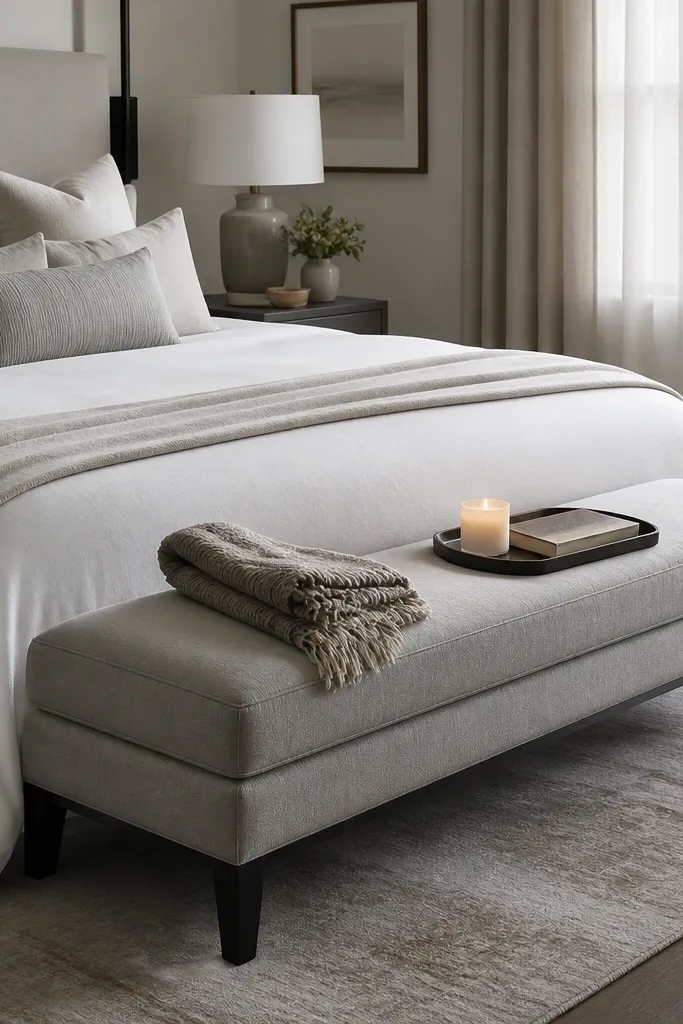
In a small room, you need one “landing spot” for daily items and a styling surface that doesn’t take over the room. A narrow bench at the foot provides both. I like light upholstery because it softens the bed area and adds seating without visual heaviness. This works well for anyone who wants a hotel-like bed look but has limited space for a full dresser. The principle is to add one functional furniture piece that also completes the bed styling.
Start by choosing a bench length that’s about 60 to 70 percent of your bed width. Place it centered at the foot of the bed so there’s a small gap on each side for visual balance. Add a folded throw on top and keep the rest of the surface empty except for one tray. Choose bench fabric in a durable weave like linen-look or tightly woven cotton so it doesn’t look worn quickly.
Keep the throw fold simple — crisp corners look better in small rooms than messy drapes.
Avoid benches with tall backs or thick legs; they crowd the floor line.
20. Use a bedside wall organizer pocket for tiny items
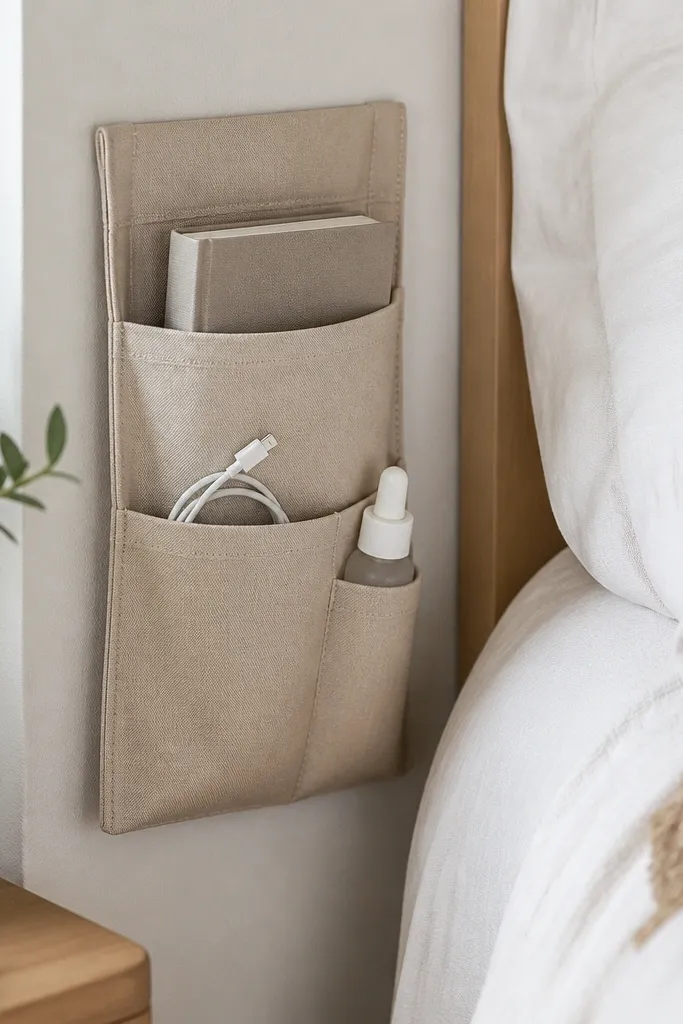
Small bedrooms suffer from “micro clutter” — the stuff that shows up on the nightstand because there isn’t a place for it. A fabric organizer pocket keeps those items upright and contained. I’ve used this in rooms where the nightstand is tiny or replaced by a shelf. It looks neat because it’s vertical and matches the wall color. This is especially helpful if you use skincare or have a lot of nighttime items. The principle is to create a hidden-in-plain-sight storage zone beside the bed.
Start by placing the organizer where you can reach it while lying down, usually 8 to 12 inches beside your pillow. Choose a pocket organizer with compartments deep enough for your book and phone, then align the top edge about level with your headboard mid-height. Load it with the few items you reach for daily and leave the rest out. Keep the organizer fabric in a neutral tone so it doesn’t look like a random accessory.
Wipe the organizer weekly with a lint roller — fabric pockets collect fuzz fast.
Avoid stuffing every pocket; a full organizer looks messy and bulges.
21. Pick one bold pillow and keep everything else solid
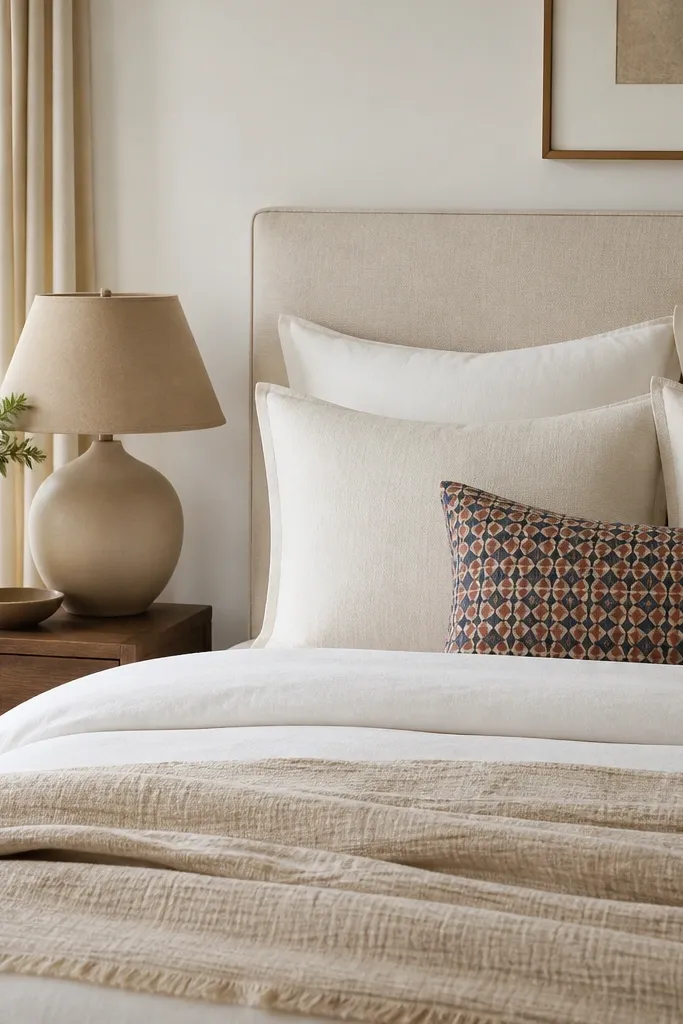
When your room is small, pattern spreads quickly. I use one bold pillow as the only pattern so your eyes have a focal point without turning the bed into a busy display. Muted navy with terracotta accents looks good with light wood and warm neutrals. This also flatters people with varied skin tones because the pillow pattern sits away from your face visually and doesn’t clash with lighting. The principle is controlled contrast: one pattern, one texture, calm solids around it.
Good to knowCheck the pillow pattern under your bedside lamp; if it turns too dark, swap to a lighter background print.
Start by laying out your pillows: two standard pillows in solid white or cream. Add one patterned pillow in front, then keep any decorative lumbar pillow in a solid color that matches the pattern. Place the patterned pillow slightly higher than the others so it reads as the focal point. Style the duvet so it stays smooth — no extra throws that add competing textures.
AvoidAvoid adding patterned curtains and patterned bedding at the same time; it makes the room feel cramped.
22. Hang a tall, narrow plant shelf for vertical softness
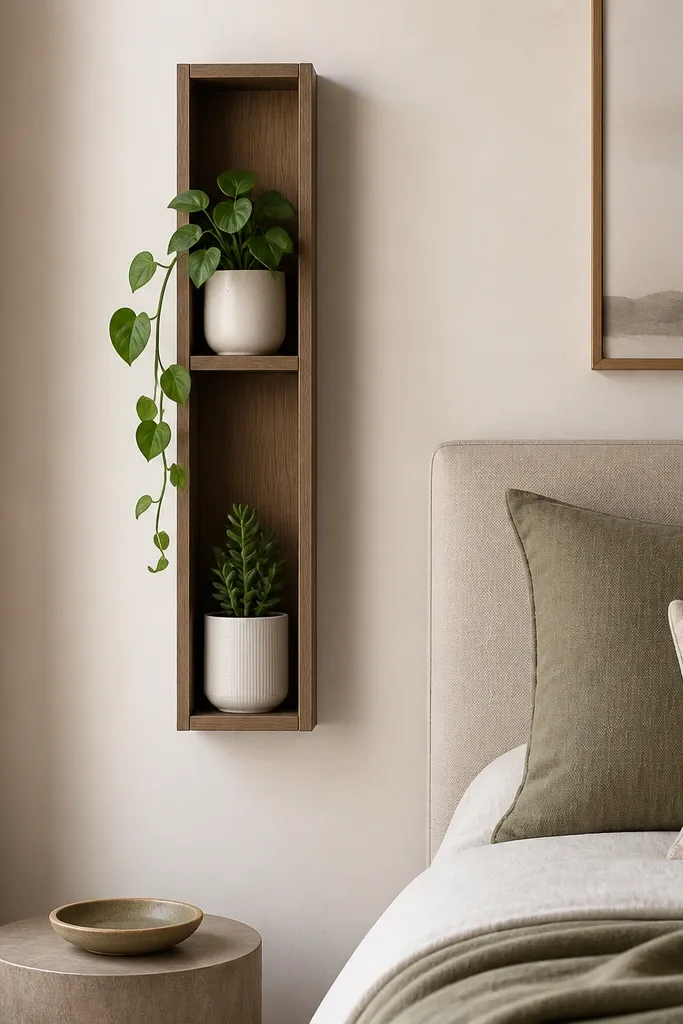
Plants add softness, but in a small bedroom they can overwhelm if you use large planters on the floor. A tall, narrow wall shelf keeps greenery up and out, and it adds vertical movement that counters the boxy feeling of tight corners. I prefer white planters and matte ceramic because they match neutral bedding and don’t look dirty as fast. This works well if you want warmth and calm without adding more furniture. The principle is vertical placement — use height to create a breathable look.
Good to knowRotate the pots every two weeks so the leaves stay symmetrical and full.
Start by picking a shelf width around 6 to 8 inches so it stays delicate. Mount it beside the bed at a height that keeps the top plant below eye level when sitting — around 52 to 60 inches from the floor. Use two plants with different shapes: one upright (like a small snake plant) and one trailing (like a pothos cutting). Water lightly and use a saucer or cache pot so drips don’t stain the shelf.
AvoidAvoid dark, glossy planters in small rooms; they look heavy and show water spots.
23. Create a clean entry landing with a wall hook + small tray
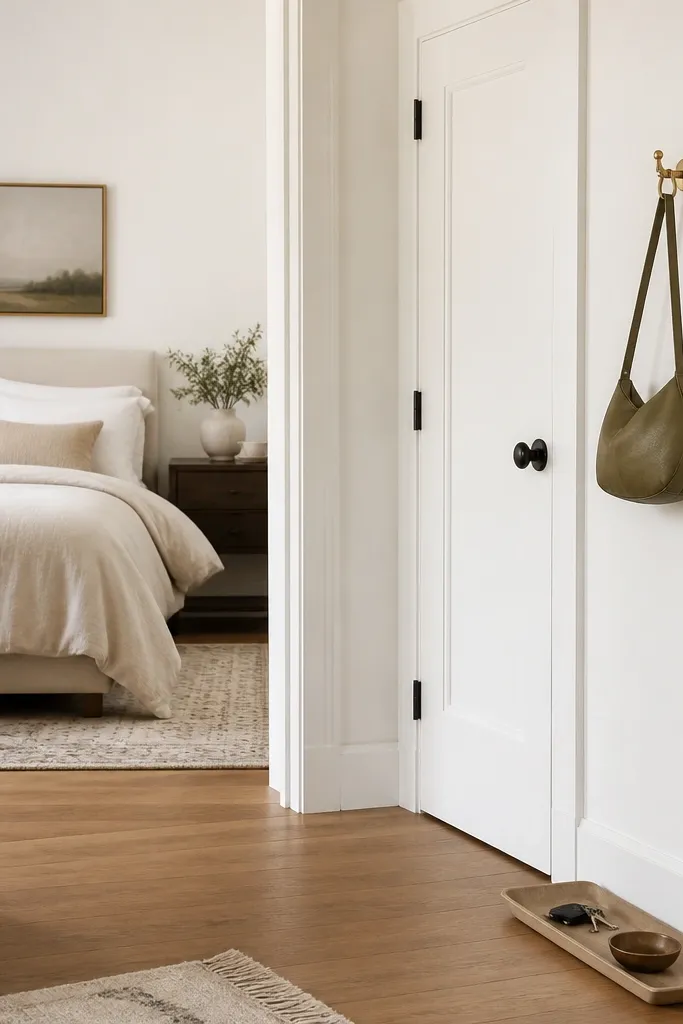
This is the part people ignore, then wonder why the room feels messy even when the bed looks good. A bedroom entry landing keeps keys, random receipts, and daily accessories from migrating to the nightstand and floor. I like a single hook plus a small tray because it sets a clear rule: items go here or they go nowhere. This is perfect for small bedrooms that also act as an office hangout or drop zone. The principle is to create one controlled “gravity point” for clutter.
Good to knowUse a tray with a lip so items don’t slide off when you set them down quickly.
Start by choosing a spot within arm’s reach of the door, usually on the wall side where you walk in. Install one sturdy hook and keep it at about 62 inches from the floor. Put a narrow tray or small basket at the base and line it with a neutral cloth or paper liner. Make it part of your routine: keys go in the tray, bag goes on the hook, and anything else gets put away immediately.
AvoidAvoid using a big open basket; it looks like storage and collects random stuff.
24. Swap to a duvet cover with a hidden button placket
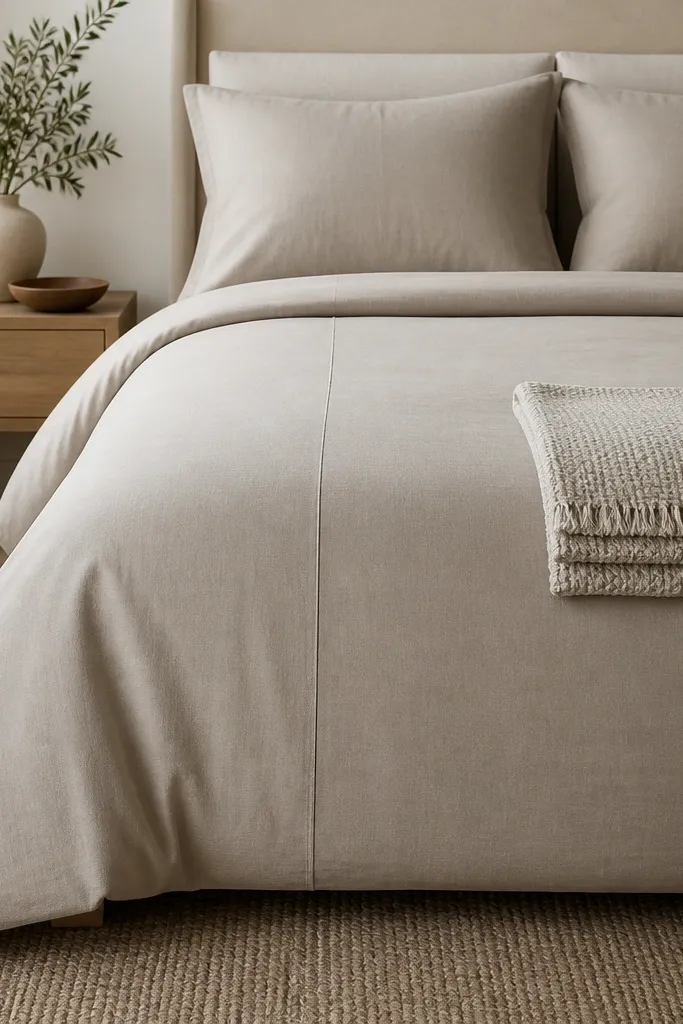
Small rooms feel messy when bedding has visible openings, bunching, or uneven edges. A duvet cover with a clean, hidden closure keeps the front line straight, and that makes the bed look crisp even when you don’t change decor often. I’ve used covers in cotton percale or linen-look blends because they hold shape and don’t cling to your body at night. This look works for anyone who wants a tidy hotel vibe without extra styling. The principle is to reduce visual wrinkles and keep the bed’s silhouette clean.
Good to knowIron just the top edge after washing; that small effort makes the bed look freshly made for days.
Start by choosing a duvet cover fabric that has structure: percale cotton or linen-look with a matte finish. Put the duvet inside and shake it out so corners reach the inside edges — don’t fight it once you’ve buttoned it. Tuck the duvet edges under the mattress so you don’t see gaps along the sides. Style pillows in matching solids and fold one throw at the foot with a straight edge that lines up with the duvet seam.
AvoidAvoid silky satin duvet covers; they slide and wrinkle fast in small bedrooms.
25. Use slim vertical wall panels instead of a full headboard
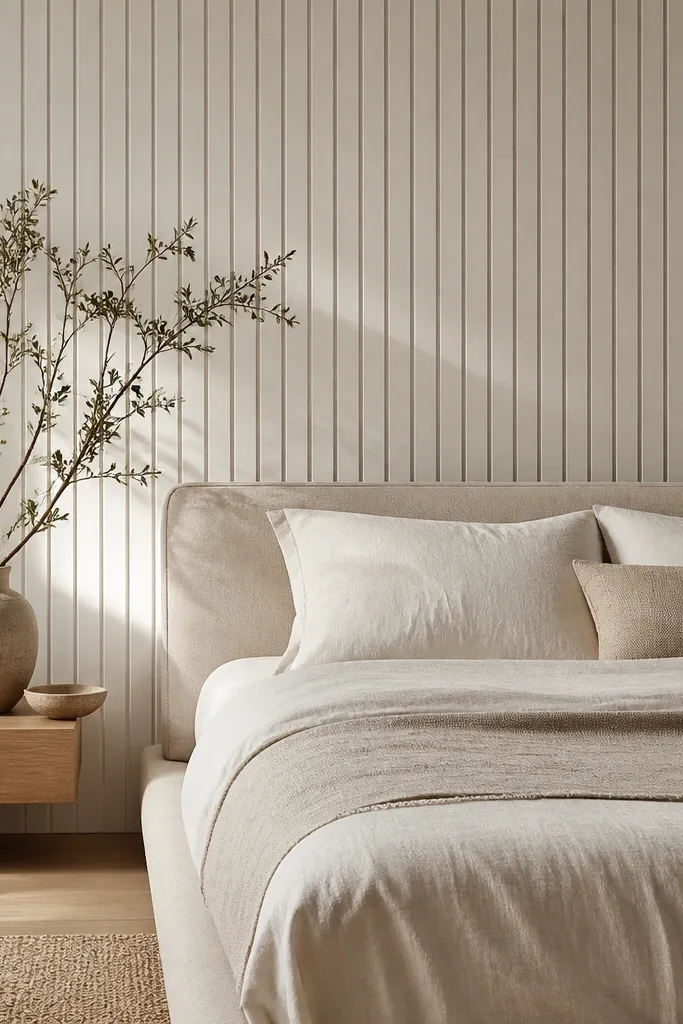
If you don’t want a big headboard taking up visual space, vertical wall panels create the same “anchoring” effect. Vertical lines draw the eye upward, and the slight texture makes the wall feel finished even with minimal art. I’ve done this in rentals where headboards aren’t an option, and it looks expensive without being bulky. It flatters rooms that already have a lot of furniture because it replaces a single large item with a wall treatment. The principle is to add dimension behind the bed without adding more furniture footprint.
Start by measuring the bed width and installing panels that cover roughly the same width as the head area. Keep panel depth shallow so it doesn’t look like a thick wall feature — aim for 1/2 inch or less. Paint panels off-white or warm white so they blend with trim and look cohesive. Style the bed with a simple head cushion and one centered artwork above so the wall panels stay the main texture.
Use a matte paint on the panels; gloss highlights uneven installation lines.
Avoid thick 3D panels in small rooms; they create heavy shadows and can look cluttered.