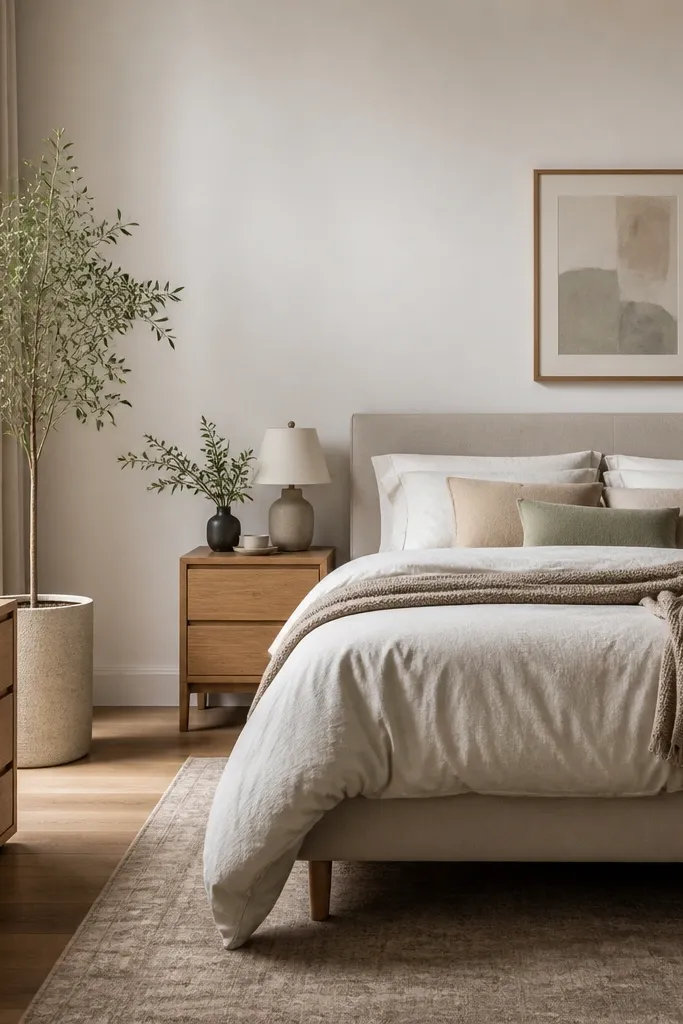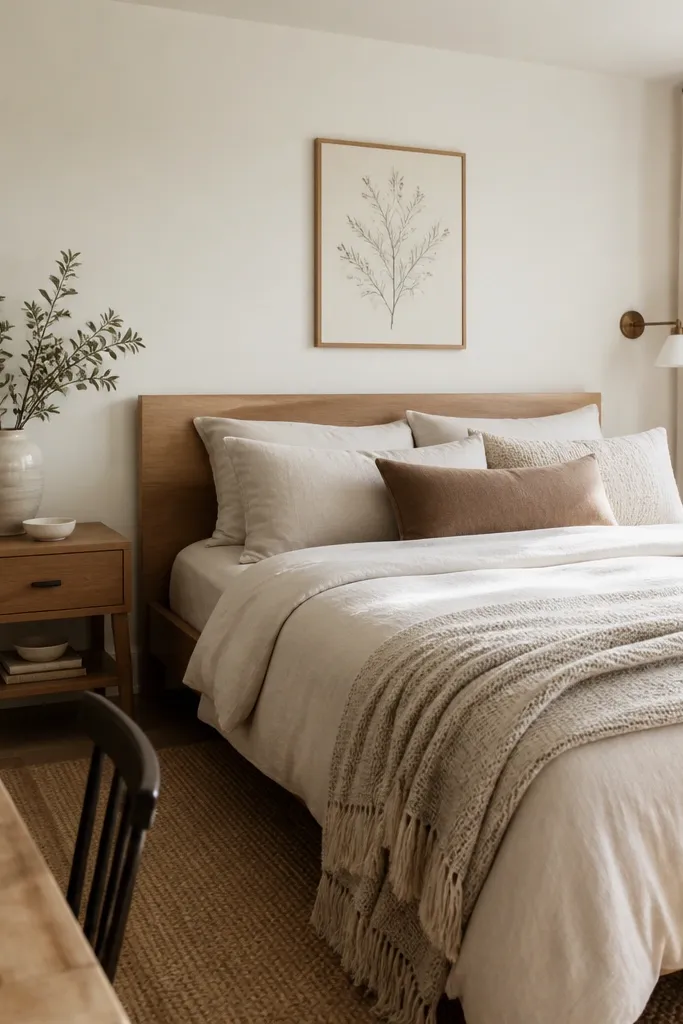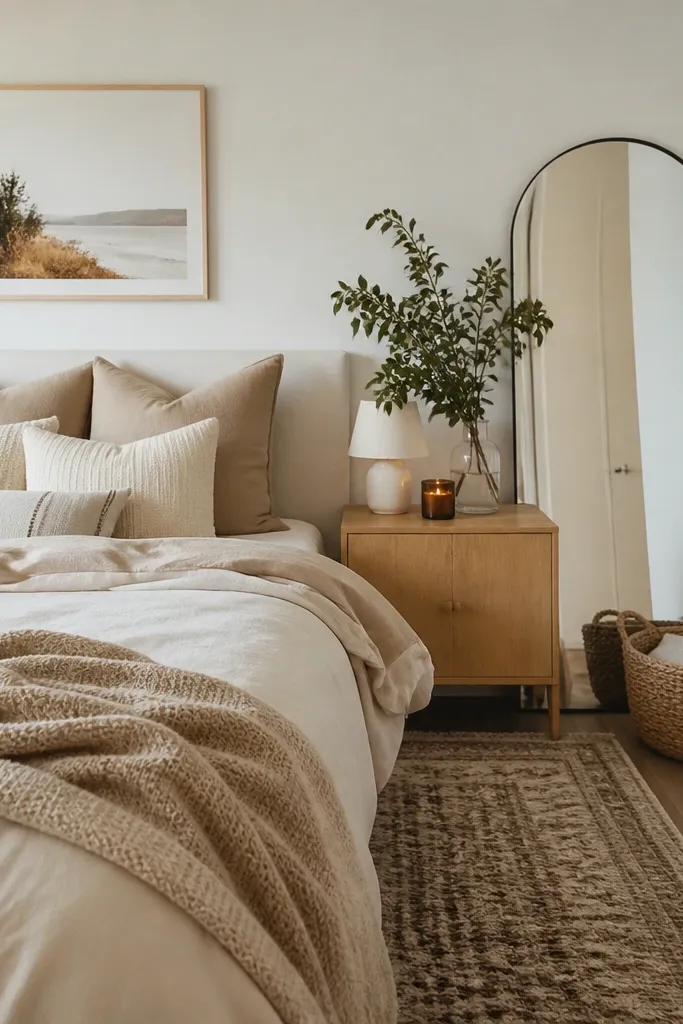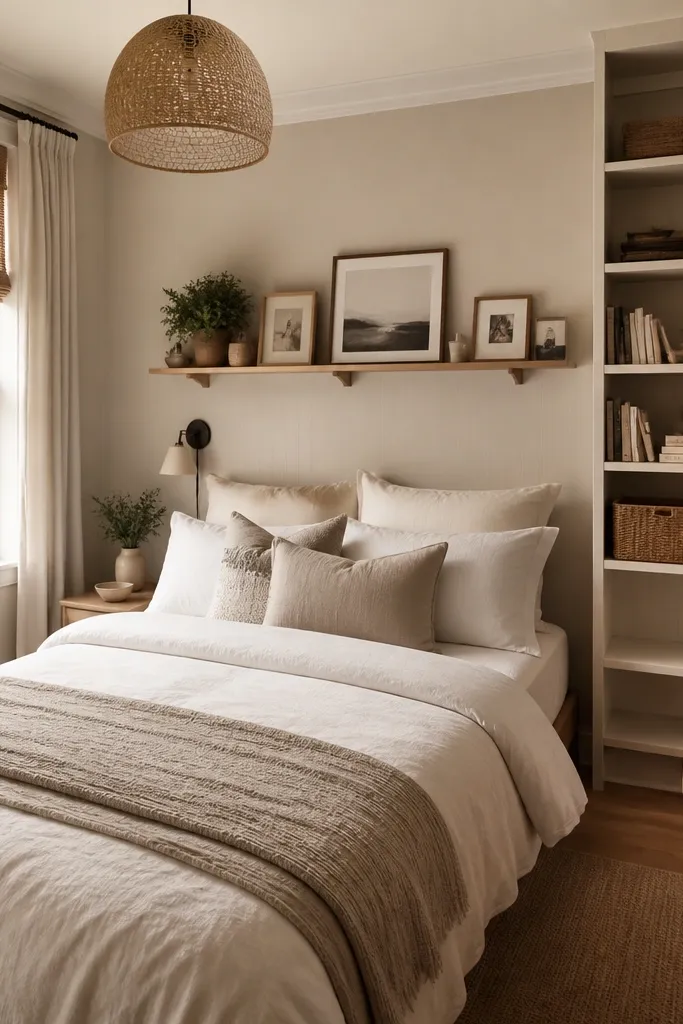
1. Off-white wall + warm grey headboard panel look
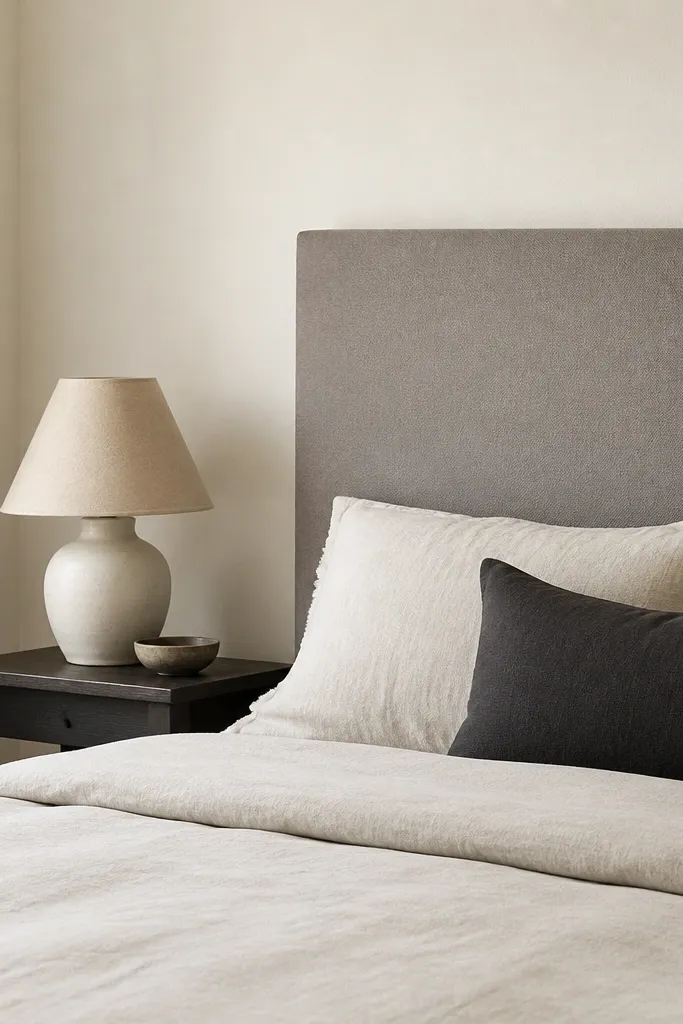
Start with an off-white wall that isn’t icy — I like the ones that sit between ivory and greige because they flatter both warm and cool skin tones when you’re taking mirror shots. Then create a headboard “panel” using a foam sheet covered in warm grey matte fabric or thick felt. This gives you that upholstered look without buying a full headboard. The effect is clean and calm, so your bedding colors stay true instead of turning grey. It also works in small rooms because the panel is centered and doesn’t visually crowd the space.
Measure your bed width and cut the panel so it sits about 3-4 inches wider than the mattress on each side. Mount it at head height — roughly 24 to 28 inches from the floor to the top edge for most Indian beds. Cover the foam with warm grey fabric and stretch it tight, then staple the back neatly to a thin plywood backing. Style the bed with a cream duvet or bedsheet, add one charcoal cushion, and finish with two plain off-white cushions to keep the look balanced. Finally, place the lamp on the side table so the light bounces off the off-white wall.
Choose a matte fabric for the panel. Glossy upholstery makes the room look cheap fast in daylight.
Don’t use a bright white wall with cool grey bedding — the contrast turns everything harsh.
2. Terracotta accent wall with white bedding
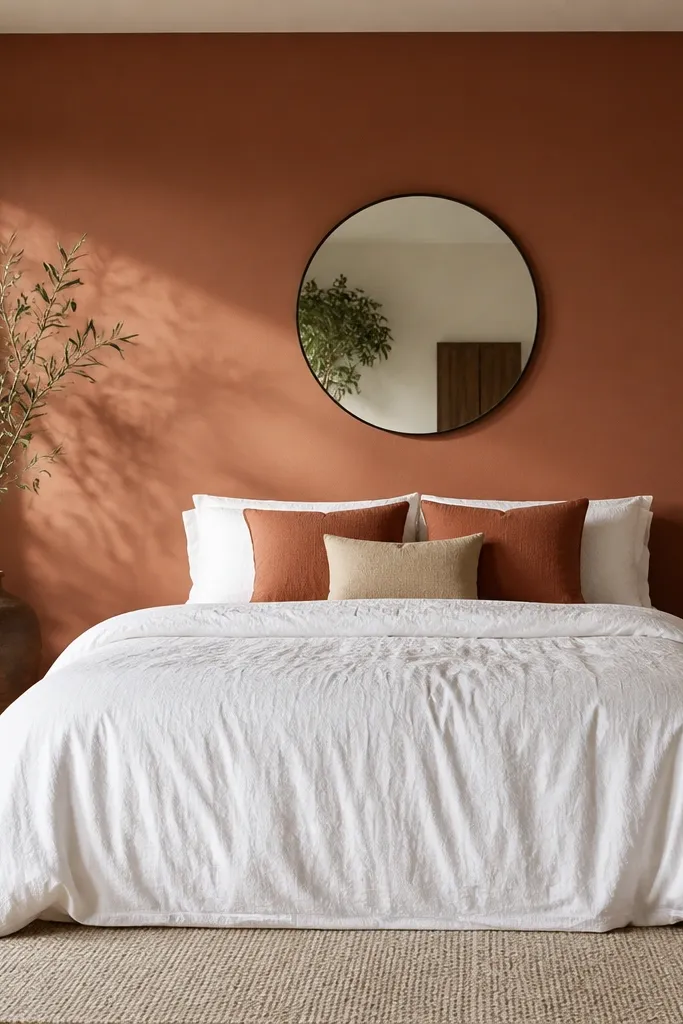
Terracotta on one wall is the fastest way I’ve found to make a room feel styled without adding more furniture. It looks warm in Indian sunlight and it makes white bedding look brighter instead of stark. Terracotta also flatters people with warm undertones, but it still works for cooler undertones when you keep the rest of the room neutral. The key is to keep the bedding mostly white and let the accent show up in two pillows or a small throw. This gives a clean, intentional look rather than a “random paint job.”
Good to knowIf your wall gets strong sun, use semi-matte paint. It hides uneven patches better.
Tape a straight border on the wall and paint only one full wall in a muted terracotta shade — not orange-red. Let it dry fully, then apply one light coat if you see patchiness under sunlight. Keep the bed styling white: use a white duvet cover or bedsheet in cotton or cotton-sateen so it doesn’t look shiny. Add two terracotta pillow covers and one beige cushion to soften the edges. Place a light jute or off-white rug under the front half of the bed so the terracotta doesn’t feel heavy.
AvoidDon’t paint the entire room terracotta. One wall is enough to avoid a cramped feel.
3. Curtain upgrade with layered sheers + blackout
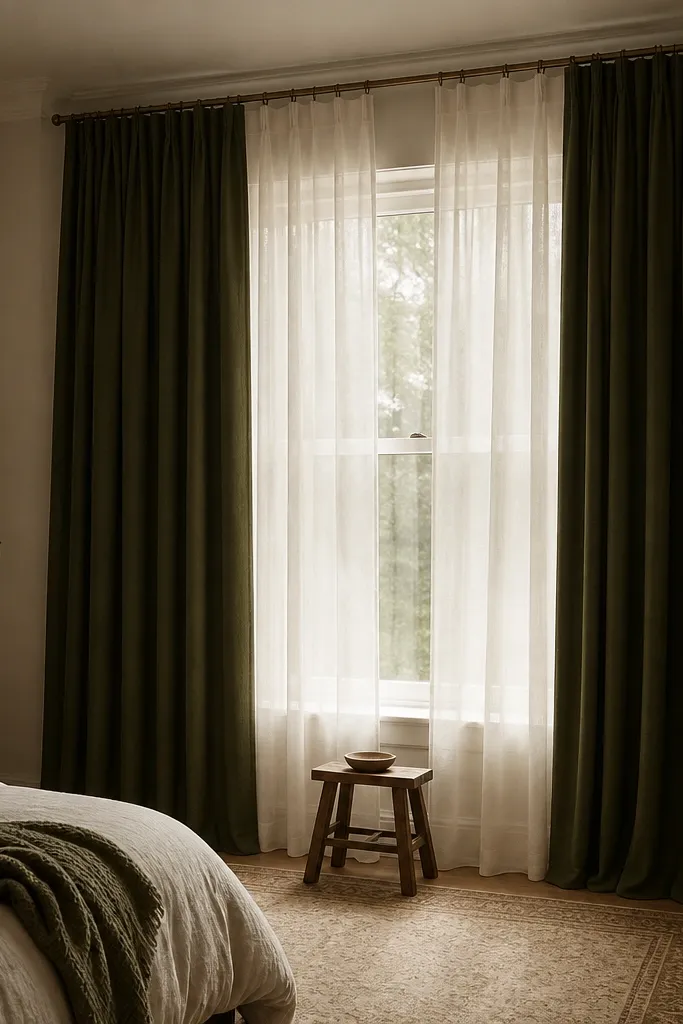
Curtains change a bedroom more than people expect because they frame the light. I’ve made budget rooms look taller by mounting the rod high and letting the fabric fall from near the ceiling. Layering sheer plus blackout gives you day and night control: the room looks airy in the day, and cozy at night. Olive blackout works beautifully with off-white walls and warm wood furniture, and it doesn’t feel loud. This setup also photographs well because the lines look straight and the folds are consistent.
Hang the curtain rod 4 to 6 inches above the window frame and extend it 8 to 12 inches wider on both sides. Use an off-white sheer panel first so it covers the window completely when closed. Then hang olive blackout curtains on the outside layer, with enough width to create folds — aim for at least double the window width in fabric. Keep the curtain length touching the floor with a slight puddle of about half an inch for a soft look. Style the rest of the room neutral so the curtain becomes the main vertical element.
Steam the curtains or press them lightly before installation. Fresh folds look expensive.
Don’t use curtain fabric that’s too thin and see-through at night. It ruins the cozy effect.
4. Jute rug + small pattern runner under the bed
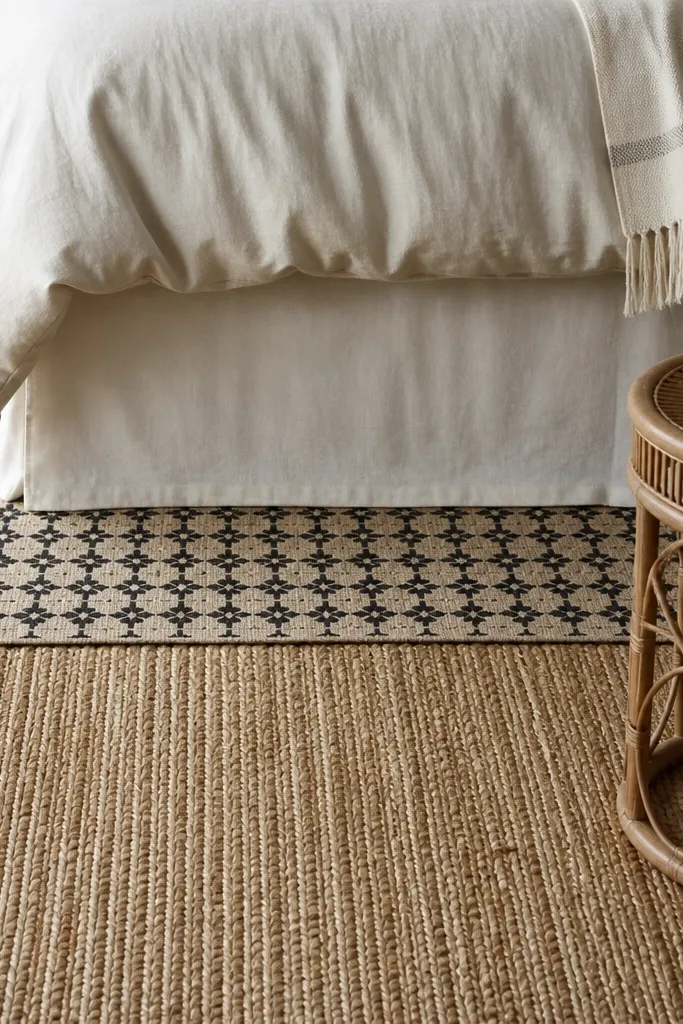
A jute rug brings texture that makes budget furniture look intentional. It also hides minor floor imperfections, which matters in Indian homes where floors can be uneven. Pairing a large plain jute base with a small patterned runner creates depth without clutter. I like this look for people who want a calm, earthy vibe but still want some detail near the bed. It flatters most palettes because jute sits between beige and warm grey.
Good to knowUse a rug pad or thin anti-slip sheet under the jute. It stops sliding on smooth floors.
Measure the bed footprint and choose a jute rug that extends at least 18 inches beyond the bed on the sides. Keep the rug plain, natural, and matte. Then add a runner under the front half of the bed, about 12 to 18 inches wide, aligned with the center of the bed. Pick a runner with small repeating patterns so it doesn’t fight the bedding. Finish by placing a rattan or wood side table so the textures match.
AvoidDon’t pick a jute rug with heavy glossy coating. It looks plastic under light.
5. Bed layering with one duvet + two pillow sizes only
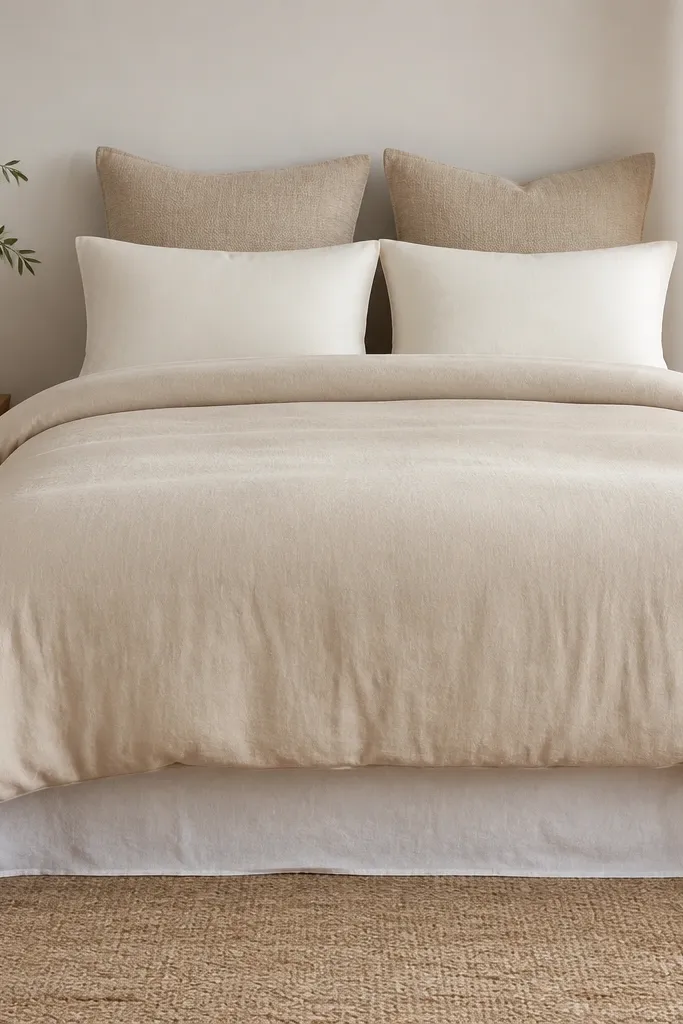
This is my go-to “looks styled fast” method because it avoids the messy 8-pillow situation that often looks busy. When you layer with one duvet and stick to two pillow sizes, the bed silhouette looks clean from across the room. Beige and cream tones look soft on camera and in real life, and they don’t clash with most wardrobe colors. The bed becomes the focal point without overpowering the room. This works best for small to medium bedrooms where you need visual calm.
Good to knowPress the duvet cover flat before placing it. Wrinkles make even good fabric look cheap.
Choose a duvet cover in one solid color — light beige, oatmeal, or off-white. Add a bed skirt or flat sheet in the same family so the bottom edge looks smooth. Place two standard pillows directly against the headboard. Behind them, add two square cushions that are slightly larger, around 18x18 inches or 20x20 inches, in a sand or slightly darker shade. Leave the top corners neat — tuck the duvet slightly so it creates crisp lines.
AvoidDon’t mix three different tones of grey. The bed looks dull and messy.
6. DIY rope mirror frame on a plain white wall
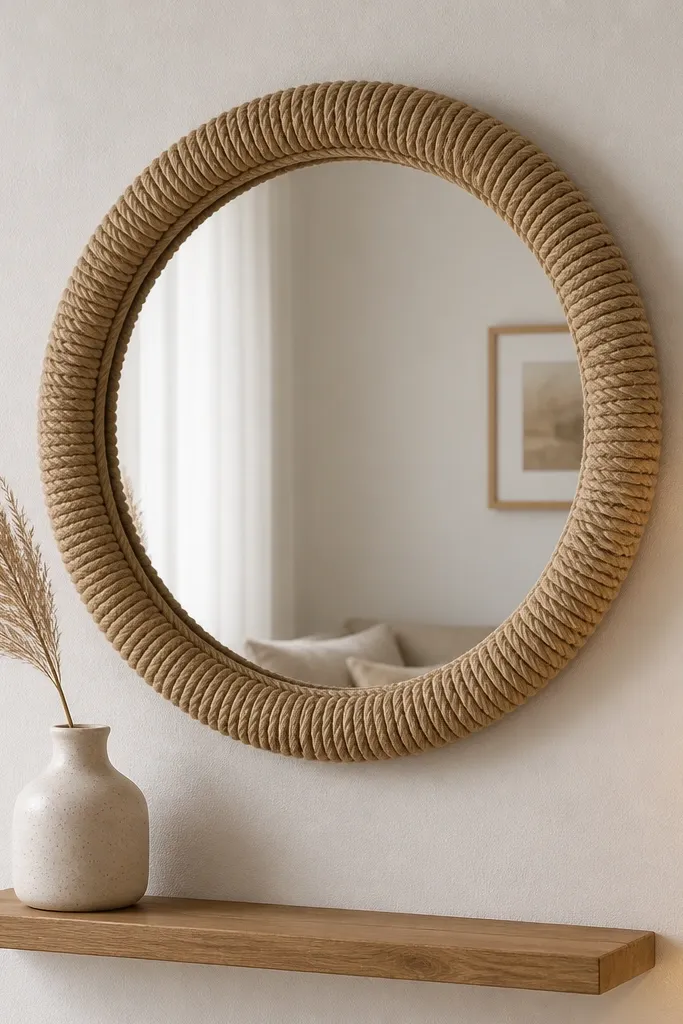
A rope-framed mirror gives you that coastal-meets-Indian handmade vibe without expensive art. The texture catches warm light and adds depth to a plain wall, which is exactly what budget bedrooms need. Round mirrors also soften boxy furniture lines and make the room feel bigger by reflecting window light. This looks great if your room has simple furniture and you want one statement piece. It also works for small bedrooms because the mirror expands the visual space.
Buy a plain round mirror (the glass size can be 18 to 24 inches). Wrap jute rope around the outer edge with hot glue in tight coils, keeping the thickness consistent. Leave a small gap at the back edge for mounting hardware. Mount it at eye level — usually around 58 to 62 inches from the floor. Style below with one narrow shelf and only two items: a small ceramic vase and one dried branch. Keep the rest of the wall empty so the texture stays the hero.
Use a matte rope, not shiny sisal. Shiny rope looks fake under indoor lights.
Don’t hang the mirror too high. If it’s above eye level, it looks like random decor.
7. Wall shelves in white MDF with one wood plank look
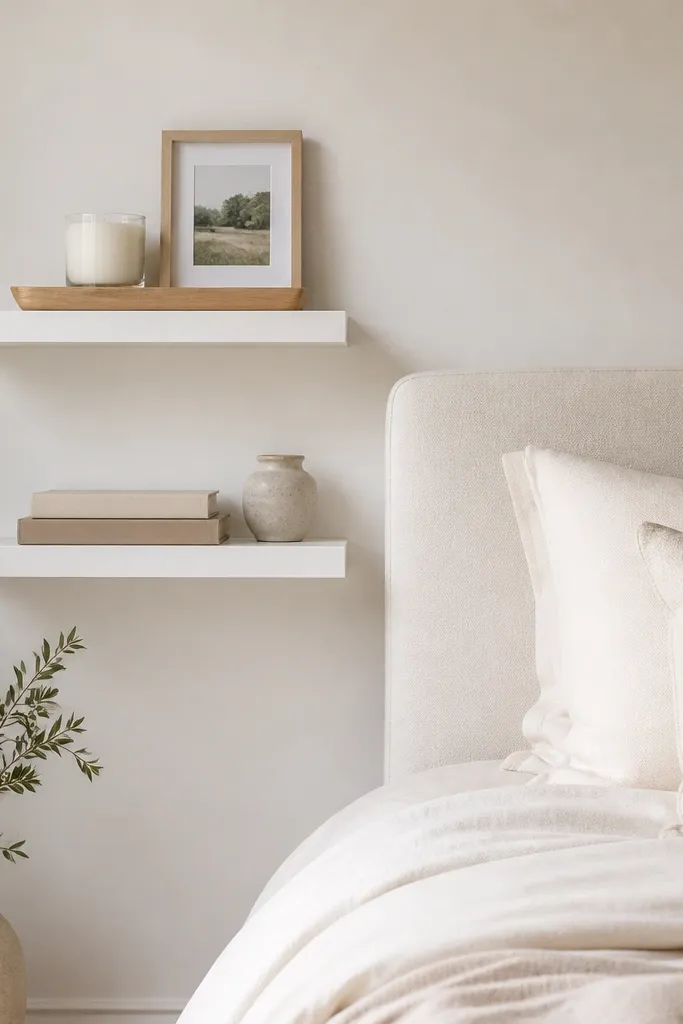
Floating shelves are the most cost-effective way to make a bedroom feel designed. The trick is to keep the shelf styling strict: few items, repeated shapes, and one warm wood element. White shelves brighten the wall and make the room feel clean. Wood accents add warmth so it doesn’t look like a rental. This is flattering for bedrooms that already have a wardrobe or study corner because shelves reduce clutter on the bed and table. It also helps if you’re trying to make the room look taller since the shelves sit high and keep the floor clear.
Mark the wall at two heights: one shelf around 14 to 16 inches above the floor, the other around 48 to 52 inches. Use a level and install white MDF shelves with hidden brackets so the underside stays clean. Keep shelf depth around 8 to 10 inches so items don’t look cramped. On one shelf, place a stack of 2 to 3 books and a small pot. On the other shelf, use a wood plank tray and place only a candle jar and one photo frame. Keep all items in beige, white, and one wood tone.
Use command strips only for temporary setups. For a mirror or heavier items, screw brackets into studs or strong anchors.
Don’t overfill shelves. Three items per shelf looks intentional; five starts looking like storage.
8. Washi tape wall stripes behind the bed (temporary wow)
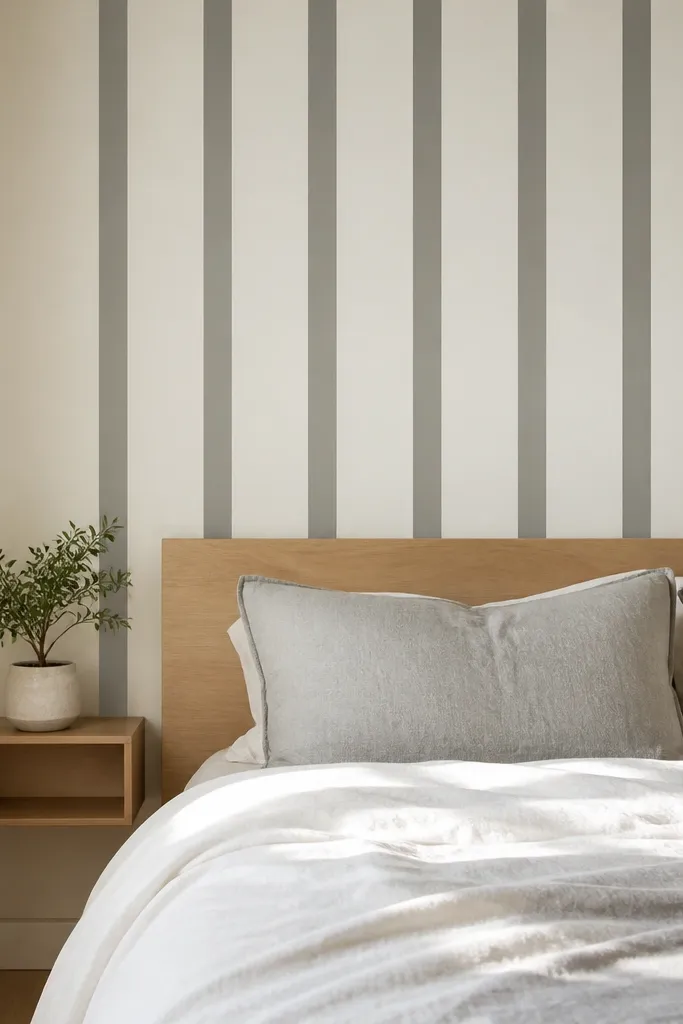
If you rent or you hate committing to paint, washi tape stripes give you an instant room interior bedroom budget friendly upgrade. Vertical stripes pull the eye upward and make low ceilings feel less heavy. Grey tape on off-white walls looks modern in Indian bedrooms, especially when you have warm wood furniture. The best part is control: you can remove it later without damaging the wall. This works well when your bedding is neutral because the stripes become the main visual pattern.
Clean the wall first so the tape adheres properly. Mark a starting line and apply vertical stripes in the area behind the bed headboard, keeping the pattern centered. Use tape widths of about 2 inches and gaps of about 2 inches for an even look. Press each strip firmly along the edges so it doesn’t lift. After you place the stripes, style the bed with a white or cream duvet and one grey accent pillow. Add one small plant or frame to balance the busy area behind the bed.
Warm the tape edges with your fingers after sticking. It improves adhesion and reduces lifting at corners.
Don’t make the stripes uneven or random. The “imperfect” look usually reads as sloppy, not artsy.
9. Matte black bedside lamp + warm bulb color trick
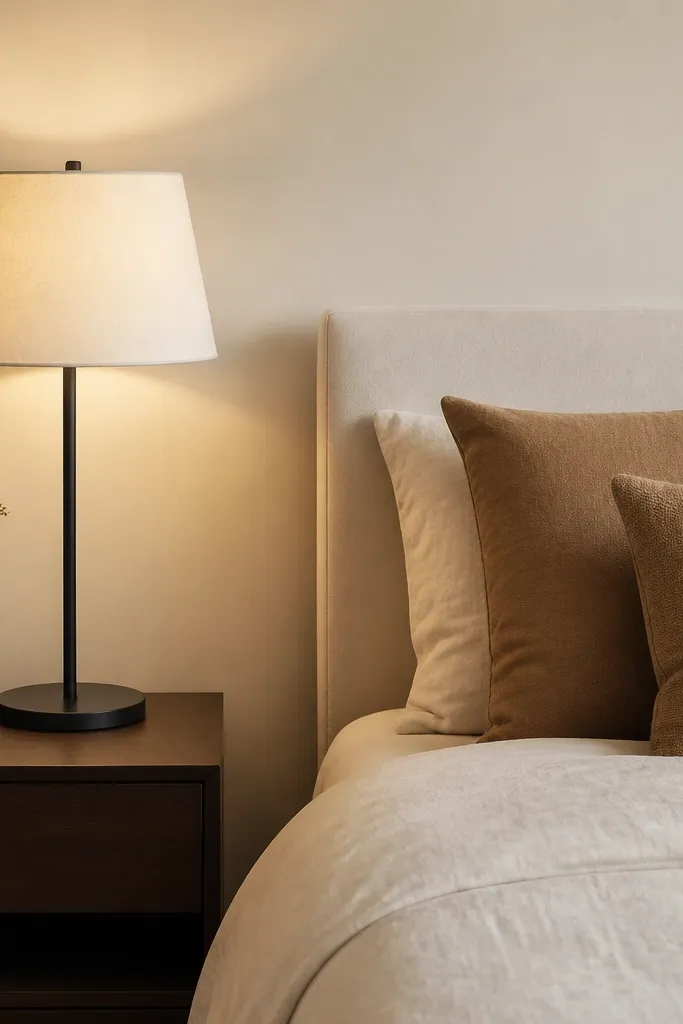
Lighting is where budget rooms start looking high-end fast, and the reason is color temperature. A matte black lamp body looks sharp against light walls, but it also hides fingerprints and dust better than glossy finishes. Use a warm bulb so the room feels cozy instead of harsh. Warm light makes beige, terracotta, and olive look richer without changing your decor. This works in bedrooms because you want relaxed evening lighting for sleep routines, not bright overhead glare.
Good to knowTurn off the ceiling light for one evening and check the room. If the corners look dead, move the lamp or add a second small light source.
Pick a matte black lamp with an off-white or beige lampshade. Use a warm bulb around 2700K; if the bulb box says “warm white,” that’s the one you want. Place the lamp on the bedside table so the light hits the wall behind you at an angle. Keep the shade height around 10 to 12 inches so it doesn’t block your view when you lie down. Style with one warm-toned accessory nearby — a ceramic tray or small vase — so the light has something to reflect.
AvoidDon’t use a cool white bulb. It makes beige look yellow-green and kills the cozy vibe.
10. Rattan headboard look using slatted panel + paint
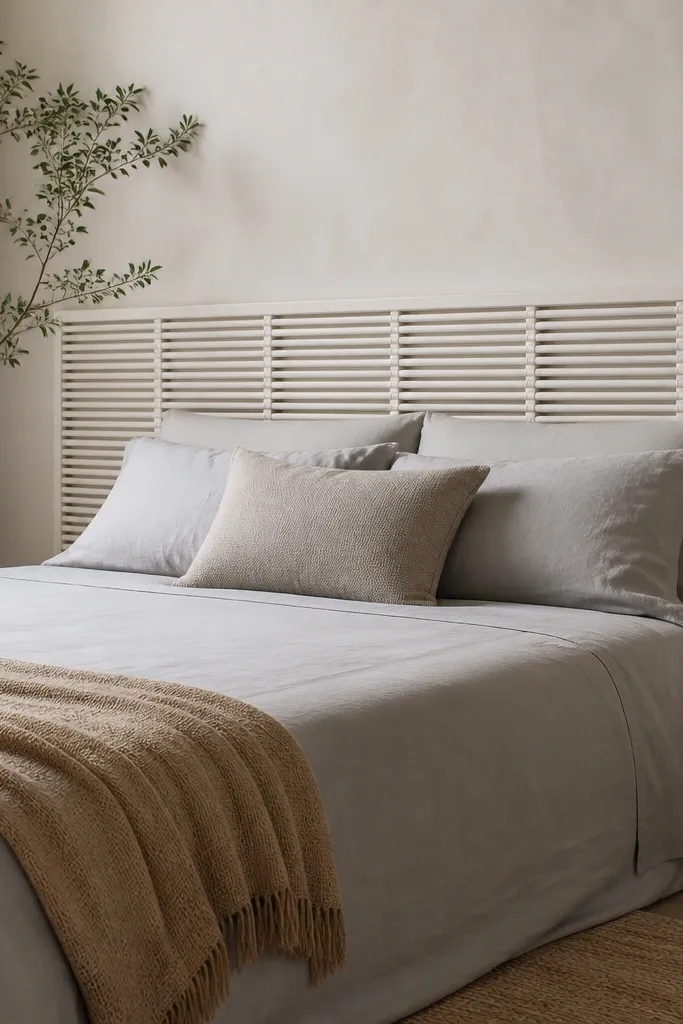
You can get that airy rattan look without buying actual rattan furniture. A slatted panel painted in off-white or warm cream gives the same texture and shadow play on the wall. In bedrooms, the shadow lines add depth without adding color noise. This looks best when your walls are light and your bedding has one neutral tone. It flatters people who want a calm, airy vibe and it also works for both small and larger rooms because the pattern is vertical and structured. It’s also easy to coordinate with most Indian wood shades.
Buy a slatted wooden panel or create one using thin wooden strips attached to a backing board. Paint it in warm off-white with a matte finish. Mount it behind the bed so the slats sit centered and aligned with the mattress edges. Keep the bed styling simple: light grey bedsheet, one beige throw folded at the foot, and two plain cushions. Add one natural texture like a jute or sisal rug so the slat pattern doesn’t feel isolated. Keep your bedside accessories in beige, white, or wood tone.
Dry brush one tiny layer of warm beige over the off-white paint for a softer, less stark look.
Don’t paint it glossy. Sheen makes the slats look like plastic.
11. Wardrobe-free storage with under-bed boxes + wall hooks
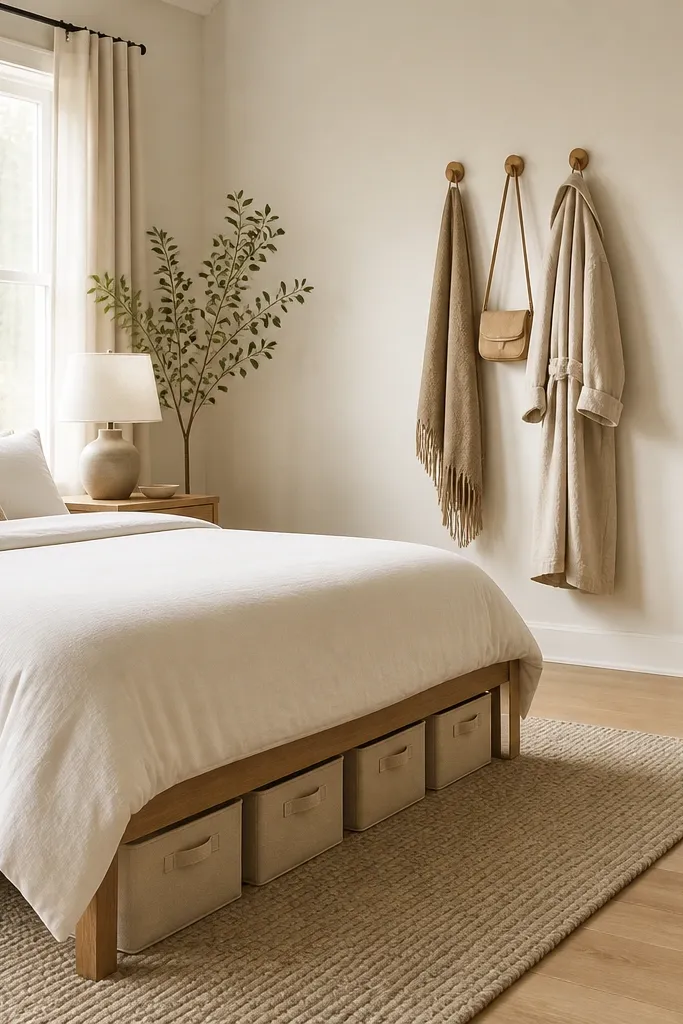
A budget bedroom starts looking expensive the moment clutter disappears. If you can’t change your wardrobe, you can control what shows up. Under-bed fabric boxes hide the ugly stuff — extra bedsheets, sweaters, and spare towels. Wall hooks near the entry or beside the bed give you a place for everyday items, so they don’t pile up on chairs. This setup makes the room feel larger and calmer because the floor stays visually clear. It’s also great for people with small wardrobes or shared spaces.
Measure the under-bed gap and choose fabric boxes with a low profile — about 5 to 7 inches tall clearance. Place one box for seasonal linens and one for clothes you rotate. Label the outside with a small cloth tag or marker so you can find items fast. Install wall hooks near your daily path: either behind the door or on the side wall close to the bed. Use 3 to 4 hooks max so the wall doesn’t look busy. Keep a folded throw on one hook and a small bag or robe on another.
Use fabric boxes with a stiff base. Soft collapse makes them look messy even when they’re new.
Don’t let under-bed boxes spill out or stick out. Straight edges look tidy.
12. Mirror + dresser tray styling for a clean vanity corner
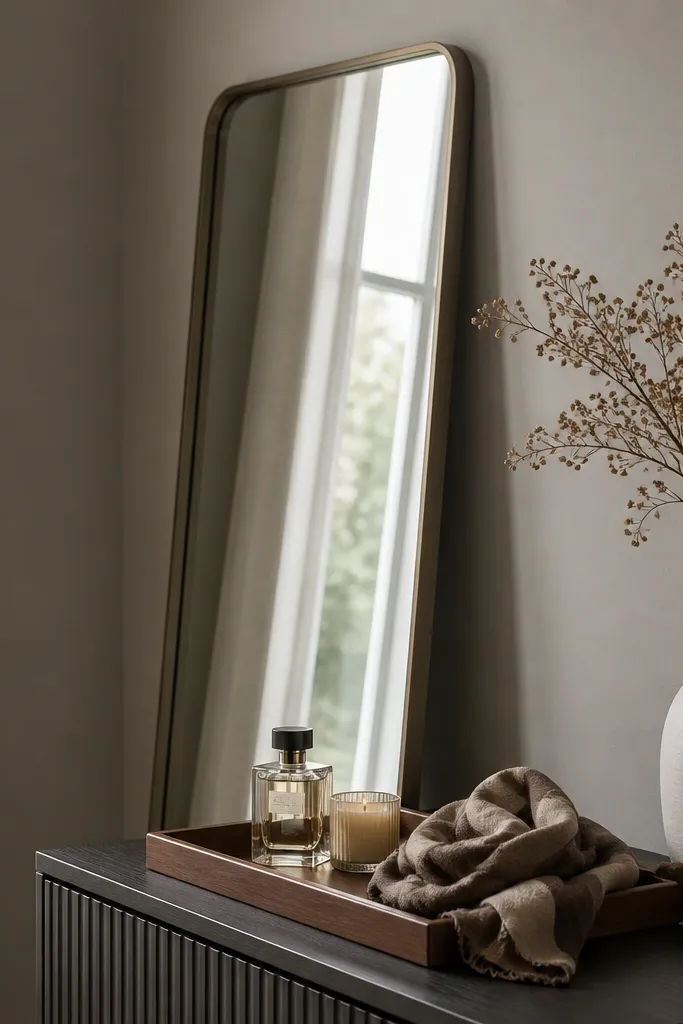
If your bedroom has a corner that collects random items, styling it as a mini vanity makes the whole room look intentional. A tall mirror adds height and reflects light, so even a small room feels brighter. The rectangular tray is the secret because it forces items into one clean boundary. I like wood-tone trays because they match Indian furniture and don’t clash with beige or grey walls. This works for people who want a practical setup for daily prep without installing a full dressing unit.
Pick a narrow console or dresser that’s about 12 to 16 inches deep so it doesn’t eat the walkway. Lean a tall mirror behind it — around 60 to 70 inches from the floor to the bottom edge. Place a rectangular tray on the console and keep only three items on it: one fragrance bottle, one candle or small jar, and one folded scarf or compact organizer. Add one small framed photo or a simple plant near the mirror base, not on the tray. Keep the wall color soft — warm grey or off-white — so the mirror reflection looks smooth.
Wipe the tray and mirror with a microfiber cloth every 2-3 days. Dust shows on mirrors instantly.
Don’t scatter items across the console. If you can’t pick it up and put it back on the tray, it’s too much.
13. Gallery wall with 6 frames in one size and one theme
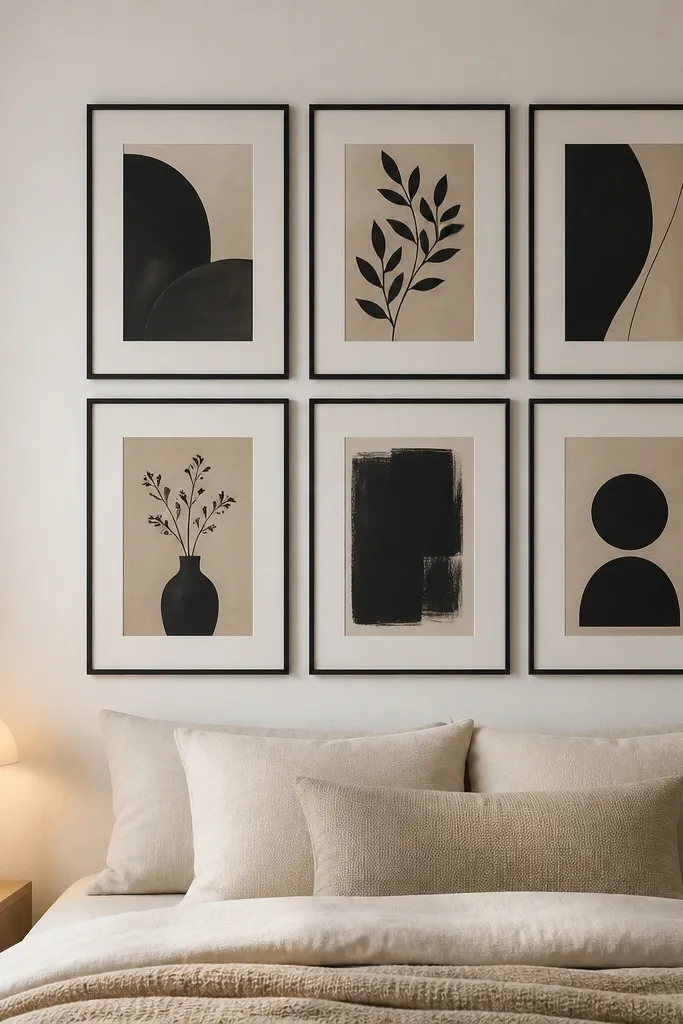
Gallery walls look expensive when they’re consistent. I’ve learned this the hard way — mixing frame sizes and colors makes a bedroom look like leftover decor. Stick to six frames, all the same size, and one finish. Choose prints that match your palette: beige, black, and warm greys with simple line art or minimal typography. This gives you a controlled focal point behind or beside the bed without clutter. It also works for people who want personality but don’t want bright colors dominating the room.
Choose six frames all the same size, like 10x12 inches or 8x10 inches, in matte black or matte wood. Arrange them on the floor first in a 3x2 pattern so you know the spacing. Mark the wall with painter’s tape and keep the center height around 60 inches from the floor. Hang the frames using a level for each row so the grid stays straight. Use prints in beige and black — avoid multicolor posters. Style the rest of the bed with neutral bedding so the gallery wall doesn’t fight patterns.
Use spacers or painter’s tape to set equal gaps between frames. Eye-level symmetry matters more than you think.
Don’t hang frames at random heights. Even one crooked frame makes the whole wall look messy.
14. Folded throw at the foot with one matching accent color
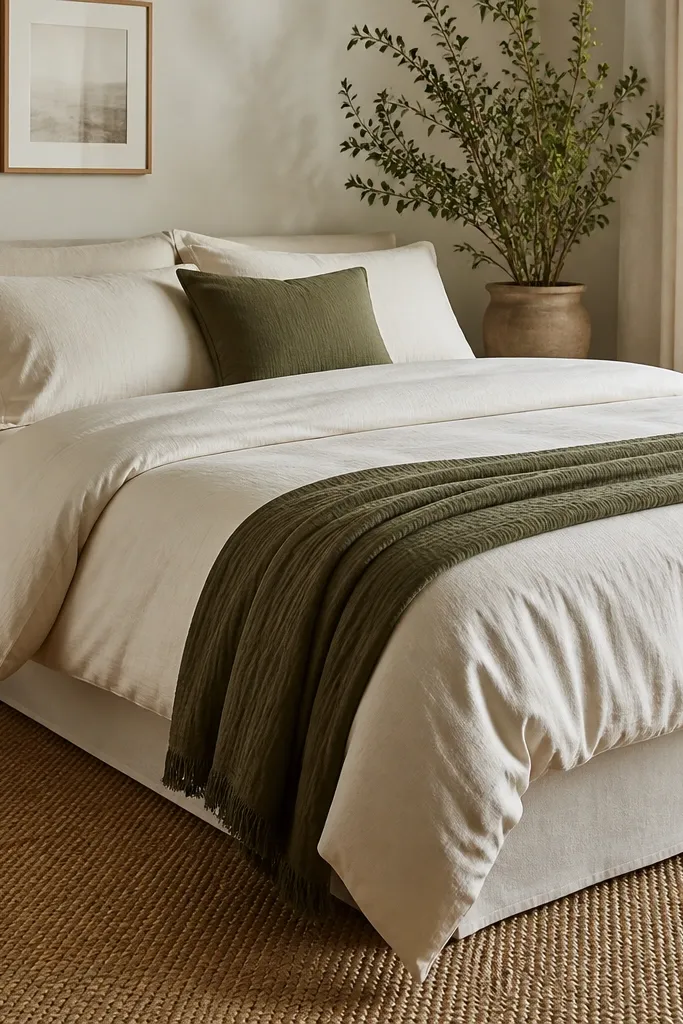
A folded throw at the foot gives structure to a bed without adding more layers that look busy. I like using a single accent color in the throw and one matching pillow so the room looks coordinated. Olive, rust, and mustard throws work well in Indian bedrooms because they sit between earth tones and warm neutrals. This styling is also forgiving — even if your bedding isn’t perfect, the throw creates a “finished” look. It flatters people who prefer understated decor but still want warmth and texture.
Good to knowUse a throw with visible weave — cotton-linen blend or chunky knit. Flat fabric looks cheap when folded.
Pick a throw in your chosen accent color — olive or rust looks great with cream and off-white. Fold it in thirds and place it centered at the foot of the bed, about 8 to 10 inches from the bottom edge so it doesn’t look like it’s fallen. Use two pillows in cream and add one accent pillow in the same throw color. Keep the duvet solid and matte, not shiny. If you have a bed skirt, match it to the duvet so the bottom line stays clean. Finish by adding one small accent item like a ceramic tray or a lamp base in the same undertone.
AvoidDon’t use a bright accent color with a grey-heavy room. It makes the bedroom feel unbalanced.