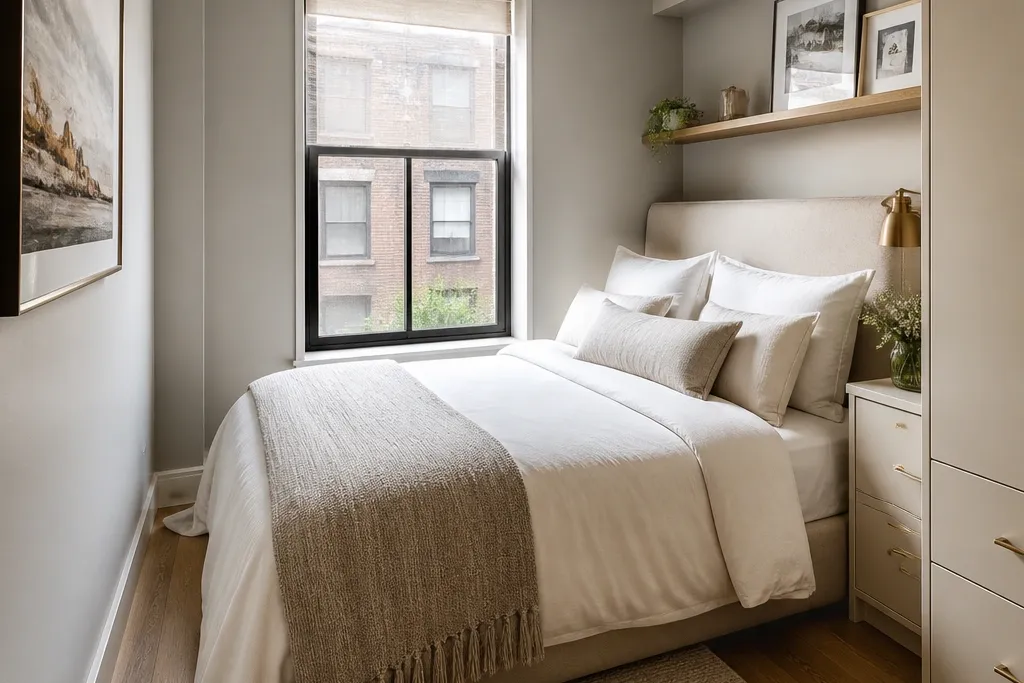
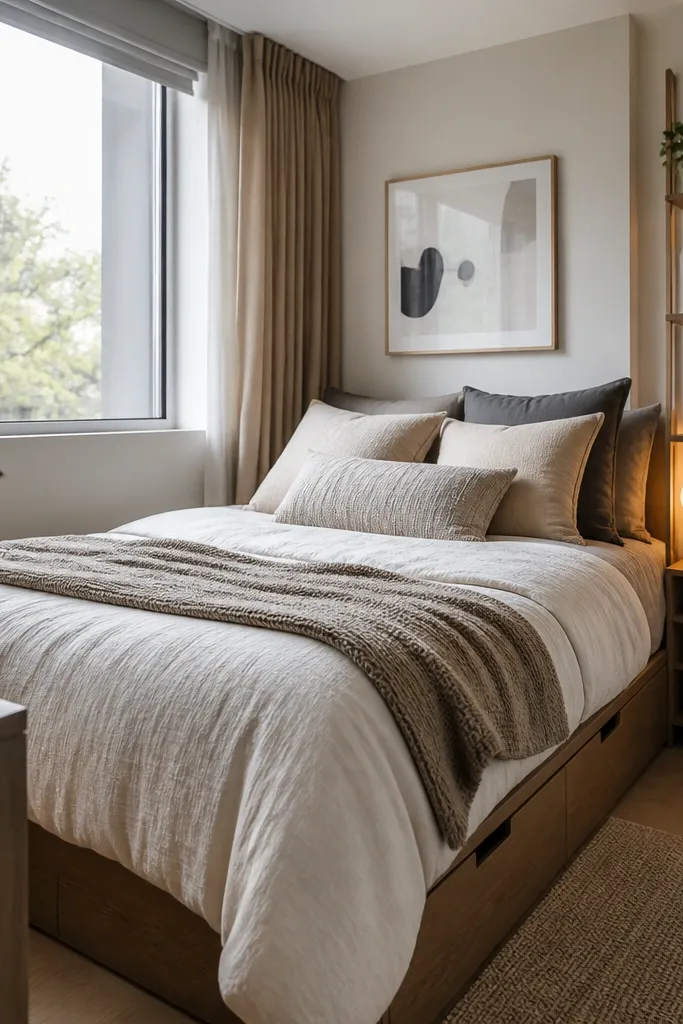
1. Linen-upholstered low platform bed with wall-mounted nightstand
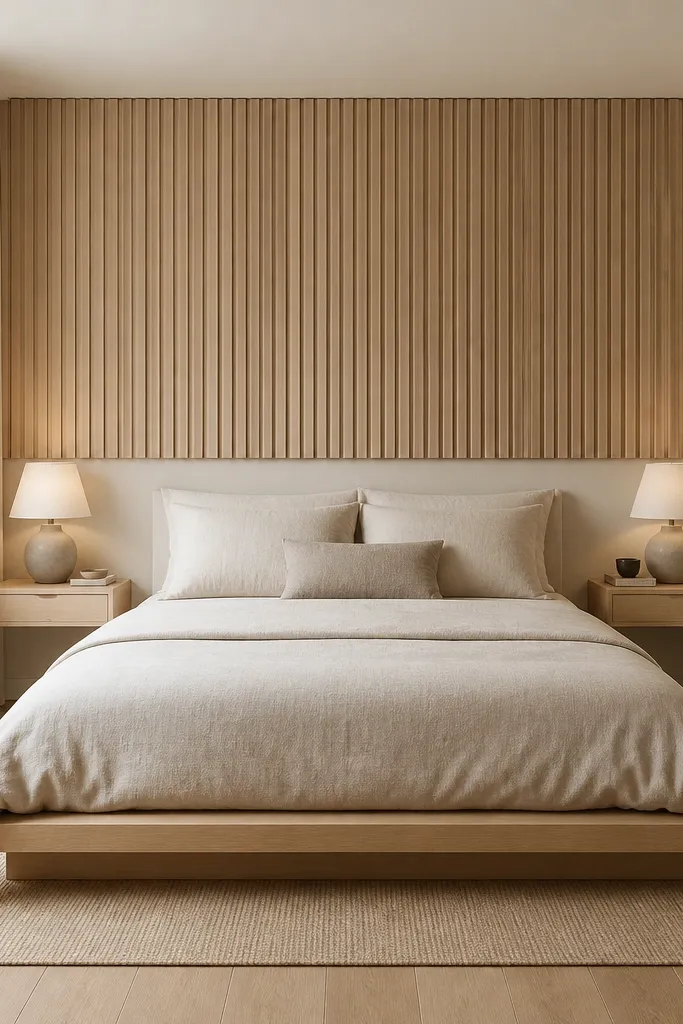
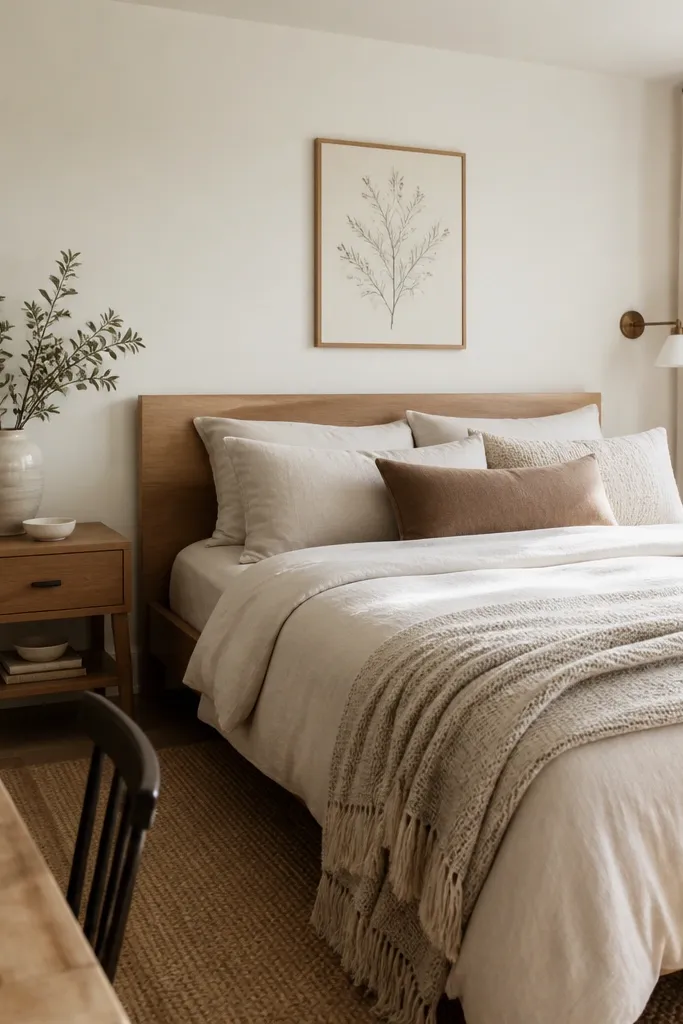
This setup works because the bed stays visually low and the nightstand floats, so the room has more “breathing room” at floor level. I’ve used a low platform bed with oatmeal or warm cream linen because it reads soft, not bulky, even in tight rooms. The wall-mounted nightstand keeps the edges straight and reduces clutter on the floor. It flatters people who want a calmer look and it’s forgiving if your bedding wrinkles a bit — linen still looks intentional. The styling principle is vertical continuity: you keep the eye moving up the wall instead of down at heavy furniture legs.
Start by choosing a bed width that matches your clearance — in a small room, a 140 cm wide bed is often tight, so consider 120-135 cm depending on your walkway. Mount the nightstand 45-50 cm above the floor so the lamp switch is reachable when you’re lying down. Use one slim lamp per side, not two tall ones, and keep cords hidden in a white cable raceway. Layer bedding with a flat sheet in off-white, then a duvet cover in oatmeal, and add one textured throw folded at the foot. Finally, anchor the bed wall with a single large artwork piece centered above the headboard, not a gallery grid.
Choose linen with a slightly slubby weave; it hides small imperfections better than smooth satin.
Avoid bulky carved wood nightstands that touch the rug edge — they make the room feel smaller fast.
2. Mirrored wardrobe door with soft gray bedding
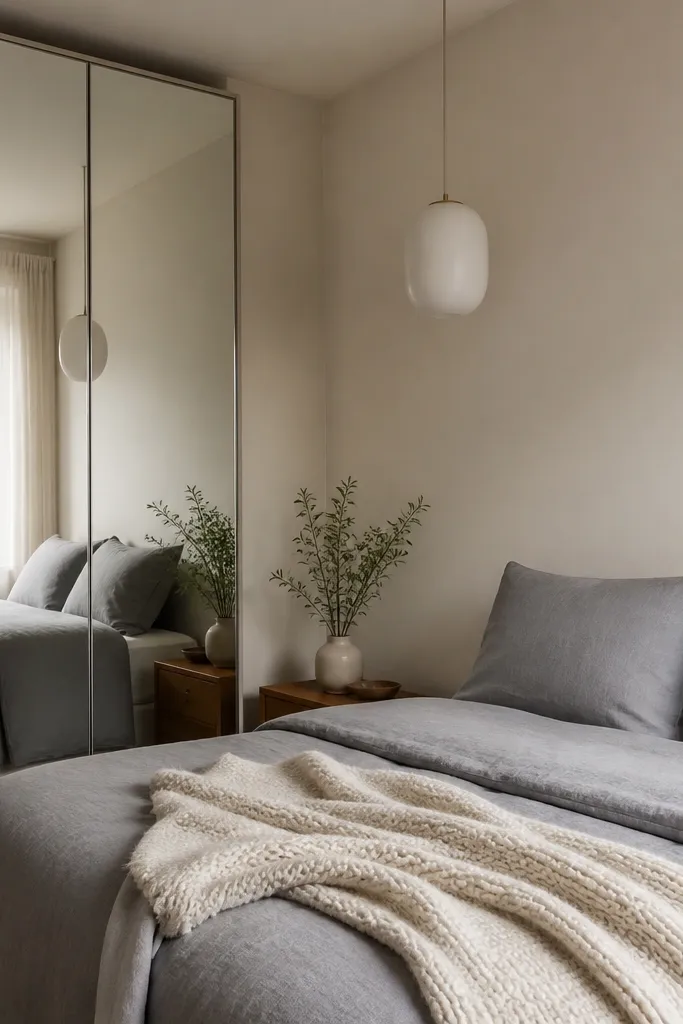
Mirrors in a small room interior bedroom compact layout are the simplest way I’ve found to double the perceived light without adding more furniture. The wardrobe mirror is especially effective because it’s tall and positioned where you naturally look when you enter. Gray bedding keeps the reflection from looking harsh, and the cream throw adds warmth so the mirrored surfaces don’t feel cold. This combo looks great on cooler-toned skin and also works if your hair is dark, because the gray gives contrast without being too dramatic. The principle here is controlled reflection: you want bright reflection, not chaos from tiny objects.
Measure your wardrobe height and install full-height mirror doors so you don’t get a chopped reflection. Paint walls warm off-white (not stark white) so the mirror reflects a softer tone. Keep bedding in one main color family: soft gray duvet, gray pillowcases, then a cream throw. Add a narrow bench or chair only if it doesn’t block the mirror view from the door. Place one small tray on the dresser or nightstand and keep it to three items max: lamp, book, and a small candle.
Angle the bed so you catch daylight in the mirror — even a small shift changes how the light travels.
Skip small, scattered decor around the mirror — tiny items multiply in reflection and look messy.
3. Tall open shelving behind a desk nook
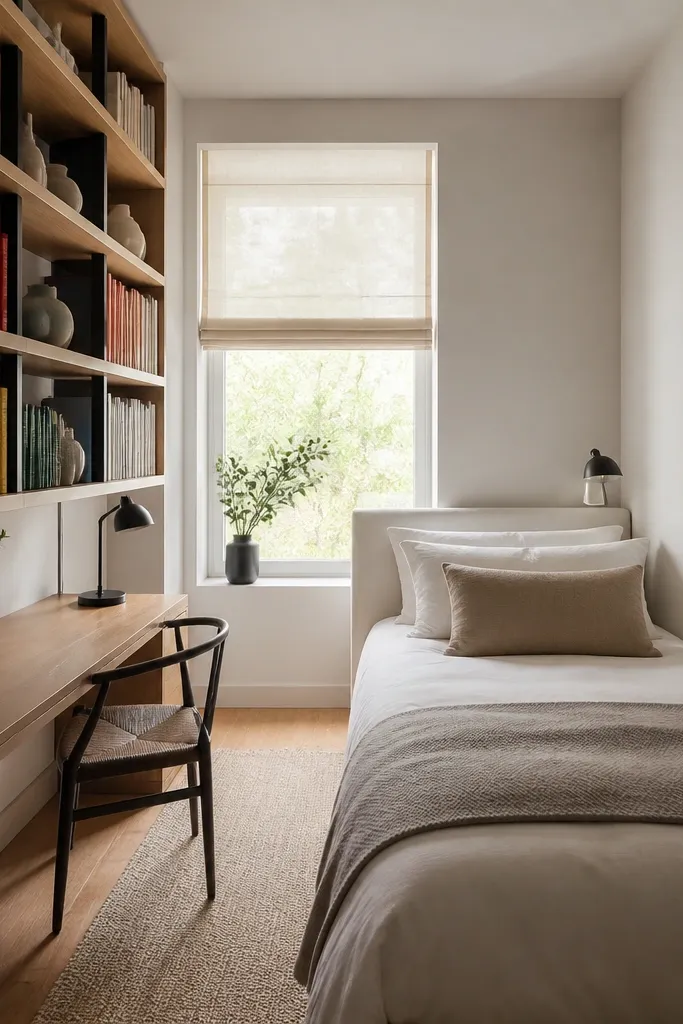
When your bedroom doubles as a work corner, open shelving behind the desk nook makes the space feel taller and more organized. I like tall shelving with a light back panel because it bounces light and keeps dark items from swallowing the room. The bed stays simple so the shelving becomes the visual structure. This works well for people who like curated order but don’t want closed cabinets that feel heavy in a small room. The principle is separation: you define zones with different visual weight — desk wall with shelving, bed wall with calmer surfaces.
Start by positioning the desk so your chair can roll or slide without bumping the bed path. Install shelving up to near the ceiling but leave a 5-10 cm gap so it doesn’t look cramped at the top. Use baskets for unsightly items but keep the baskets the same color (white or natural cane). On the desk, keep a slim monitor stand or a lap tray storage box so cables don’t sprawl. Style the shelves with a rhythm: two books stacked, one vertical object, then a blank space — repeat instead of filling every square.
Use shelf lighting strips on the underside of the top shelf; the room looks warmer instantly at night.
Don’t fill every shelf with identical-sized items — a fully packed look reads messy in small rooms.
4. Curtains that reach the floor and the ceiling
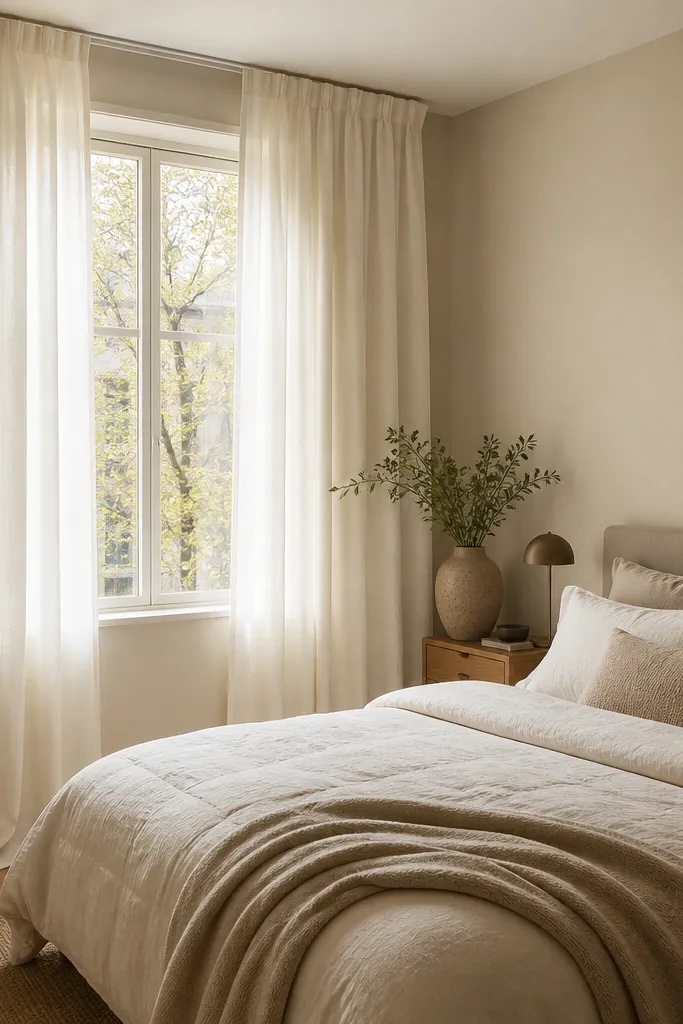
Floor-to-ceiling curtains are my go-to for small rooms because they visually stretch height. A ceiling-mounted rod creates the illusion that the ceiling is higher, even if it isn’t. I choose warm white linen blend because it moves with light and doesn’t look shiny. This makes the room flattering for almost any color palette: warm woods, brass accents, and soft grays all play well. The principle is "continuous vertical line" — you remove the visual break between window and wall.
Measure from ceiling to floor and add 5-8 cm for a gentle puddle so the fabric doesn’t look cut off. Extend the rod 20-30 cm past the window frame on each side to widen the window. Use curtain rings or a track with smooth gliding so the folds fall evenly. Pair with a roman shade only if you truly need blackout; otherwise, keep it simple with full curtains. Style the bed with one tone and one texture, like a stone-beige duvet and a chunky knit throw.
Good to knowSteam the curtains before hanging; even cheap fabric looks expensive when the folds are crisp.
AvoidAvoid short curtains that stop at the window sill — they visually shrink the room.
5. Two-tone paint: warm off-white walls with sage lower band
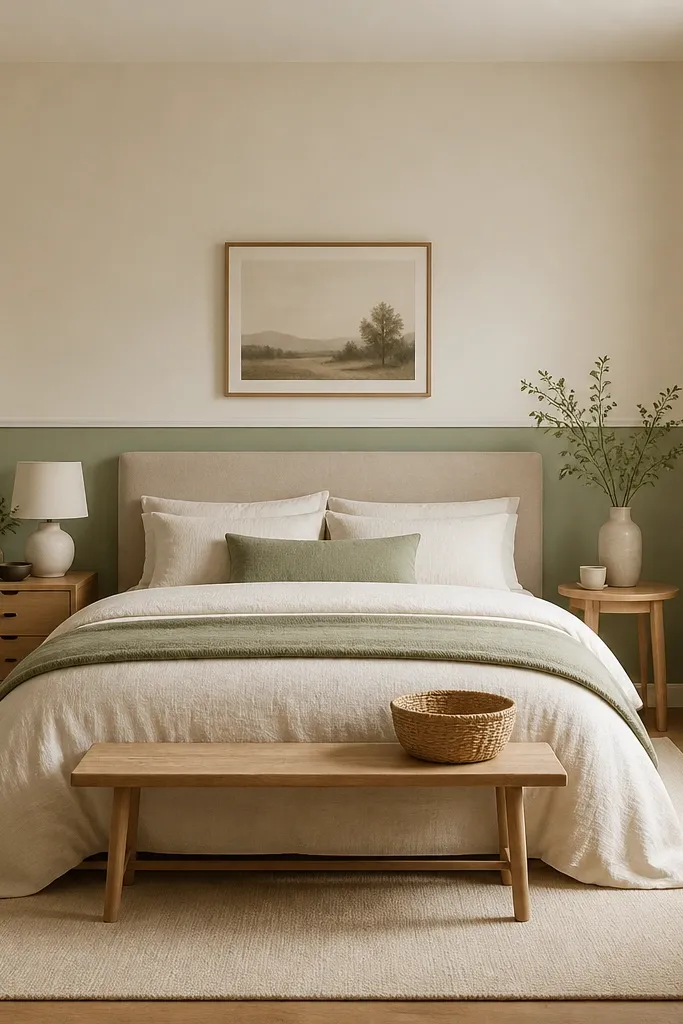
Two-tone paint works when you use it to control the eye, not to decorate randomly. I’ve done a warm off-white upper wall with a sage lower band on compact bedrooms because it grounds the room without making it heavy. The lower band hides scuffs near the floor and keeps the room from feeling sterile. This palette looks great with warm skin tones and also makes cool skin tones feel less washed out. The principle is proportion: keep the lower band around 25-35% of wall height so the ceiling still feels tall.
Tape the wall at the height you want the band to end — for most bedrooms, that’s about 85-105 cm from the floor. Use a matte paint on both sections, but keep the finish consistent so the line looks clean. Paint the upper first, let it cure, then roll the sage band carefully with a 5 cm angled brush for crisp edges. Choose bedding in cream, oat, or light tan so it blends instead of fighting the green. Add one brass or black metal accent (lamp base or mirror frame) so the palette has contrast.
Good to knowUse painter’s tape with a firm press and remove tape while paint is still slightly tacky for the cleanest line.
AvoidDon’t make the sage band too tall — if you push past 40%, the room starts to feel squat.
6. Compact platform bed with under-bed drawers and a pull-out hamper
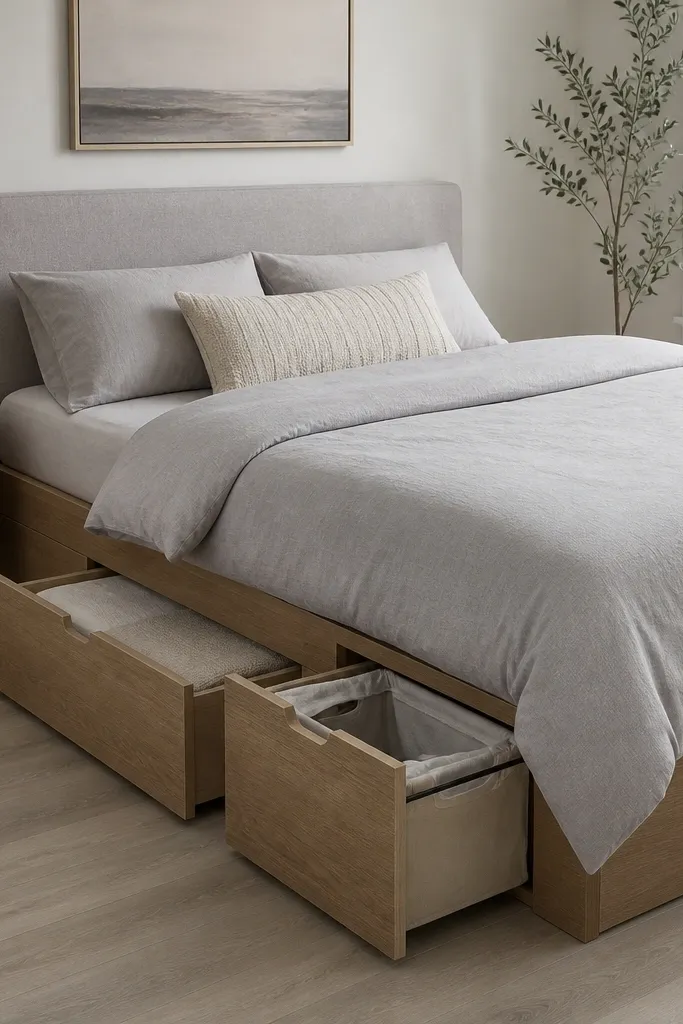
Under-bed storage is the only place I trust for bulky items in a small room interior bedroom compact layout. When drawers are integrated into the bed frame, you don’t lose floor area to separate units. I like under-bed drawers in a smooth wood finish because they slide quietly and don’t snag fabric. A pull-out hamper is a lifesaver for laundry piles, and it keeps your bedroom surface calm. This setup flatters anyone who hates visible clutter — you get storage without the visual weight of cabinets. The principle is hiding bulk, not hiding everything.
Choose a bed frame height that matches your storage — you want enough clearance to slide bins and drawers without forcing them. Measure your tallest item (winter blankets or towels) and buy drawers or inserts that fit with a 2-3 cm tolerance. Add a pull-out hamper drawer if you have frequent laundry; place it near the entry side so you don’t carry baskets across the room. Use a thin mattress topper to keep the bed comfortable even with a slightly lower frame. Style the bedside with one shallow tray and a lamp, leaving the rest of the surface empty.
Use fabric bins with handles inside the drawers — it makes sorting laundry faster and reduces rummaging.
Avoid mismatched storage bins in every drawer; it looks chaotic when the bed drawers are partly open.
7. Soft boucle headboard with a single vertical wall sconce
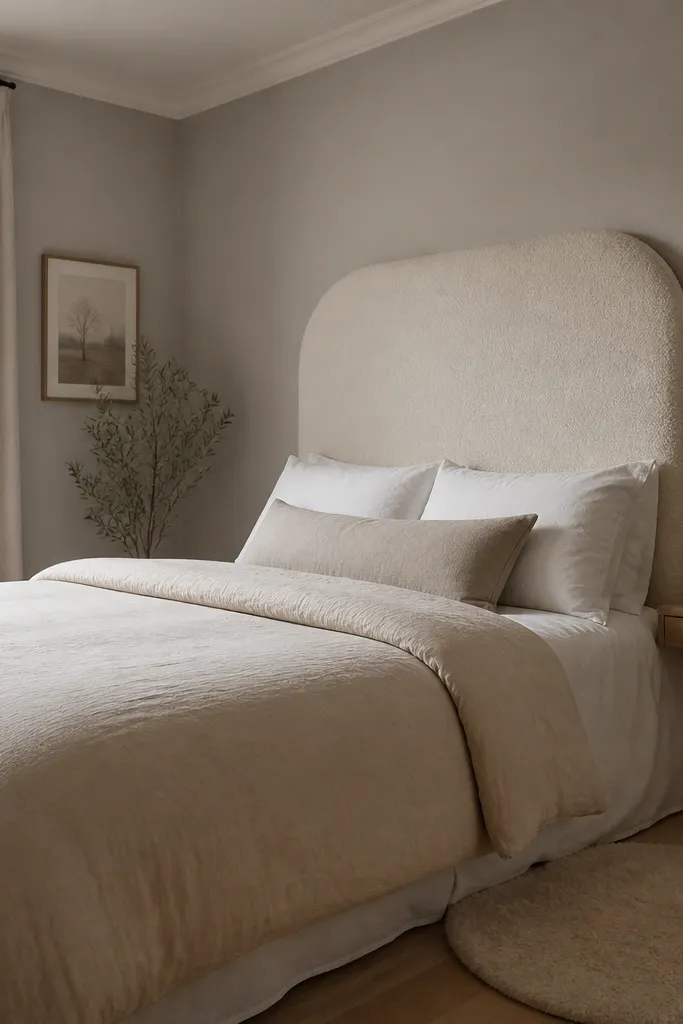
A boucle headboard makes a small room feel expensive without taking up extra space. Boucle catches light in a gentle way, so the wall area looks fuller and the bed feels like the focal point. I pair it with one vertical wall sconce because it keeps the nightstand minimal. If you’re someone who likes reading in bed, this setup is practical and it doesn’t clutter the floor. It looks especially flattering on warm undertones because cream boucle softens everything around it. The principle is texture focus: you put visual interest in one place and keep the rest clean.
Pick a headboard size that spans most of the bed width but doesn’t overhang the edges by more than 5 cm. Mount the sconce about 120-130 cm from the floor, and aim the light slightly downward so it doesn’t glare. Use bedding in white or cream, then add one beige throw with a different texture (knit or ribbed cotton). Put a small round rug (80-100 cm) under the bedside area only, not under the whole bed if the room is very tight. Keep the nightstand to a single tray and a book stack with the spines facing forward.
Good to knowChoose a warm bulb around 2700K and a dimmer if you can; the boucle texture looks better at night.
AvoidDon’t add two table lamps if you’re keeping the nightstand small — the light sources start to feel crowded.
8. Rattan panel room divider to create a reading corner
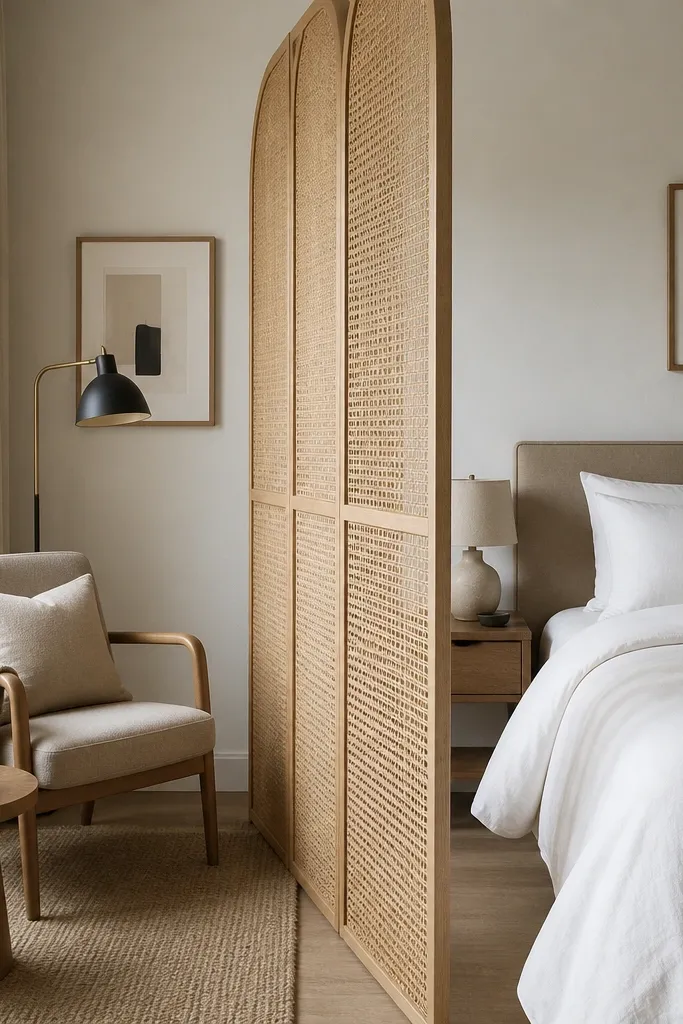
A room divider sounds like it would shrink a small bedroom, but the right one actually adds depth. Rattan panel dividers have an open weave, so they break up the wall without blocking light. I’ve used them to create a real reading corner, which makes the room feel purposeful instead of one long box. This works well if you have a long, narrow room where the bed dominates. The principle is layered zones: you split the space visually, then keep furniture light within each zone.
Place the divider so it creates a corner for the chair — leave at least 70 cm from the chair to the bed edge for movement. Choose a divider height around 150-170 cm so it’s tall enough to define the zone. Keep the chair compact (about 55-65 cm seat width) and use a floor lamp with a slim pole. Keep the bed side minimal: one headboard, two pillows, and a throw folded at the foot. For styling, hang one small framed print on the divider side at eye level so it feels like part of the design.
Use a light throw on the chair in the same color family as your bedding so the divider doesn’t feel separate.
Avoid solid wood dividers — they block light and make the room feel smaller.
9. Gallery wall with 5 frames and a strict color palette
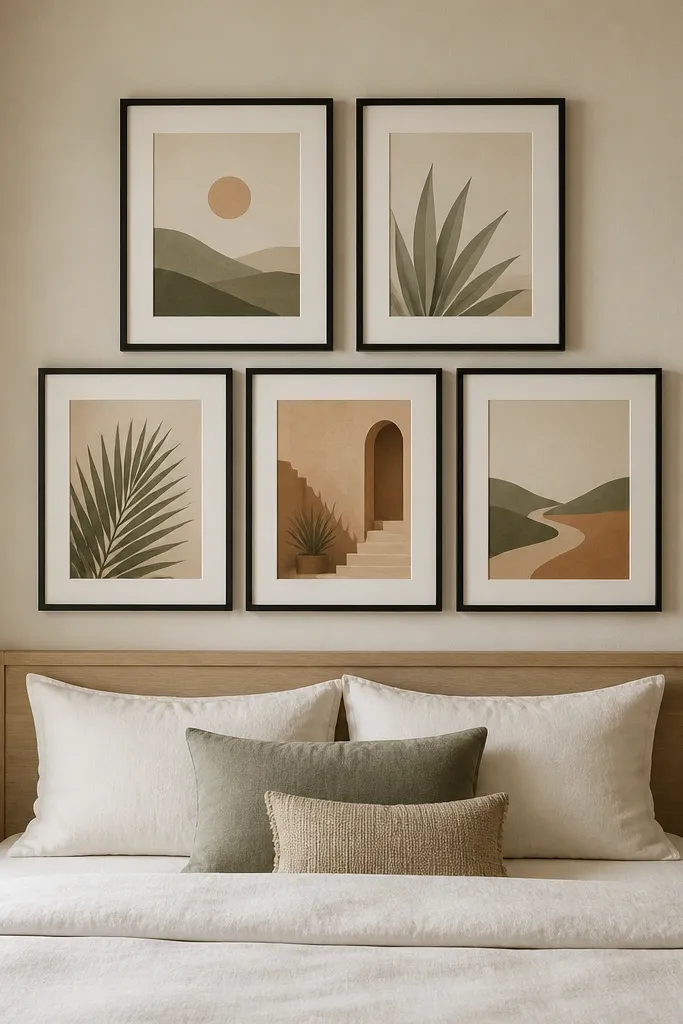
A gallery wall can work in a small room if you keep it controlled. I like exactly five frames because it gives you visual interest without the busy feeling that comes with 8-12 pieces. Identical black frames create a clean line, and a white mat keeps the prints bright. This looks great for bedrooms with neutral bedding because the wall becomes the color feature. It flatters people who like a curated, slightly modern look without going full minimal. The principle is repetition: same frame, same mat, same spacing.
Measure the bed width and target the gallery area so it spans roughly 70-90% of the bed width. Arrange five frames in a 2-2-1 layout and keep consistent gaps (about 4-6 cm). Use a level and painter’s tape to map the layout before drilling. Pick prints with the same lightness range so nothing punches too loud — sand and sage are safer than bright jewel tones. Style the bed with one solid color duvet and one textured throw so the wall doesn’t compete.
Dust your frames before hanging; smudges show up fast on matte black in small rooms.
Skip mixed frame finishes — brass, chrome, and wood together make the wall look cluttered.
10. Soft monochrome green bedding with a black-and-wood nightstand
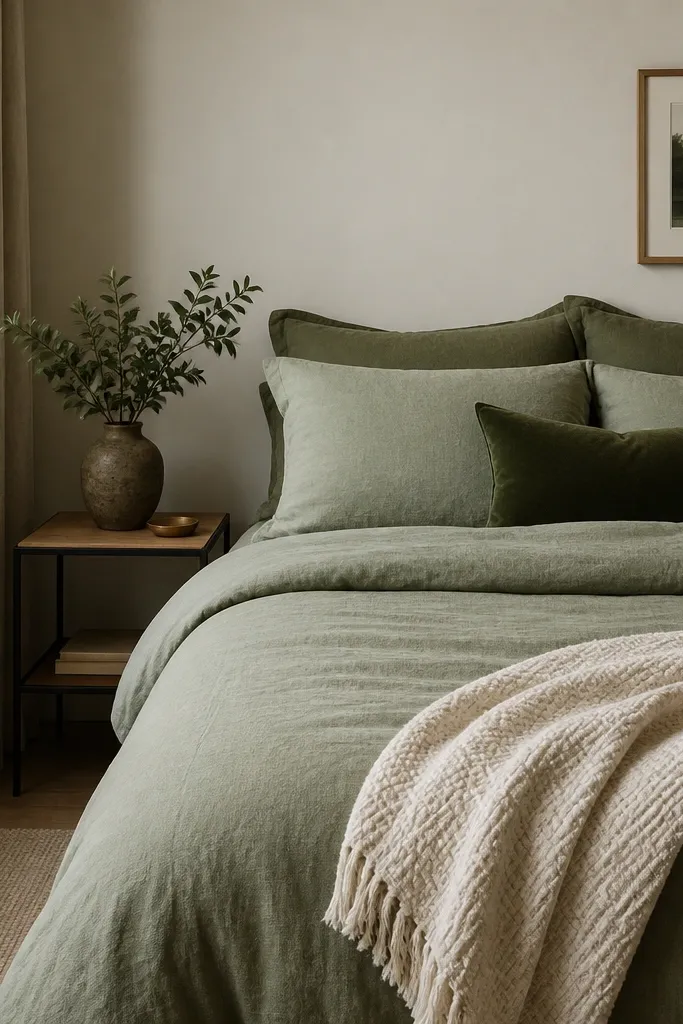
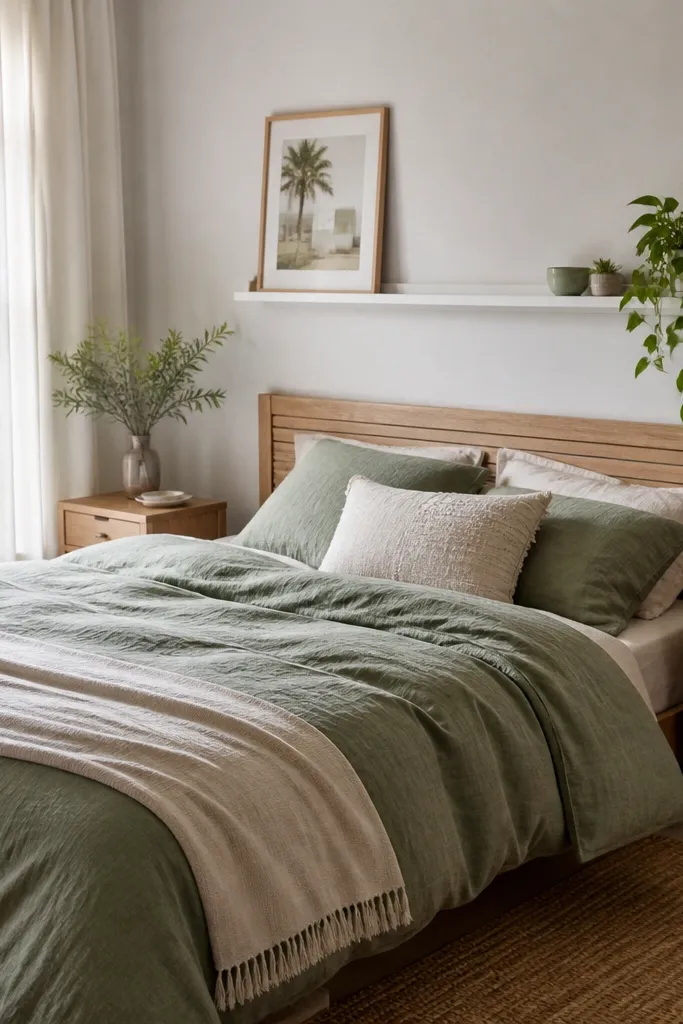
Monochrome bedding makes a small room interior bedroom compact feel bigger because you remove visual breaks. I’ve done muted greens from sage to dusty forest, and it looks calm instead of loud. The black-and-wood nightstand adds just enough contrast so the palette doesn’t blur into the walls. This combination looks flattering on most skin tones because green sits well next to warm neutrals. The principle is tonal layering: you vary shade and texture, not random colors.
Choose one base green for the duvet, then add two pillow shades in the same family. Keep the throw in a warm off-white or cream with a visible knit texture. Use a nightstand with open space underneath or slim legs so it doesn’t feel heavy. Add one lamp with a linen shade in the same warm tone as the throw. Finish the look with a rug that repeats one of the greens — a muted olive or sage in a low pile.
If your room feels chilly, switch to a warmer bulb and add a slightly thicker duvet cover — it changes how the green reads.
Avoid bright neon green in small rooms — it looks harsh and makes the walls feel closer.
11. Low dresser with a long mirror and a single candle tray
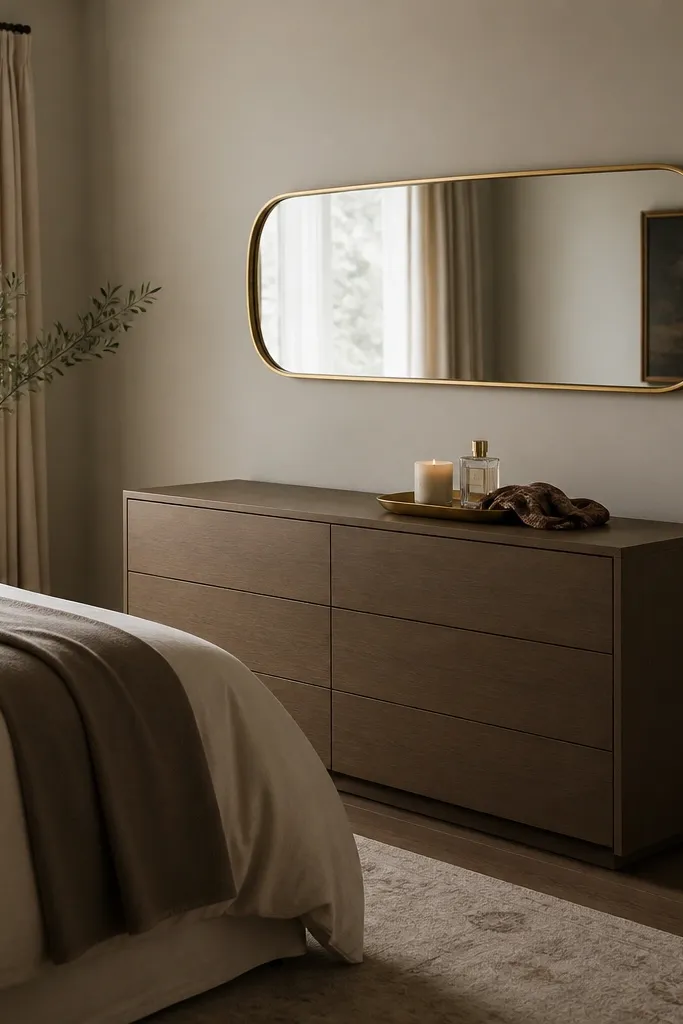
A long mirror above a low dresser changes the way the room “reads” instantly because it stretches the wall horizontally. I like thin gold or brushed brass because it adds warmth without looking bulky. Keeping a single tray on top is a real styling rule — it stops the dresser from turning into a catch-all. This setup works for people who need storage for clothes but don’t want a tall wardrobe. The principle is reduce items, increase intentional placement.
Pick a dresser height that leaves room under the mirror line — around 75-85 cm tall is ideal for most rooms. Hang the mirror so its center sits about 150-160 cm from the floor if you’re viewing it from standing height near the door. Place the dresser so it doesn’t block the bed walkway; leave 70 cm if possible. Style the top with a single tray and keep it to three items max. Add one framed print near the dresser corner or a small wall sconce so the wall doesn’t feel empty.
Good to knowUse a long mirror even if your wall is narrow; the horizontal line helps the room feel wider.
AvoidDon’t hang a tall mirror directly above a cluttered dresser — the reflection multiplies every small item.
12. Bedside storage ladder for towels and books
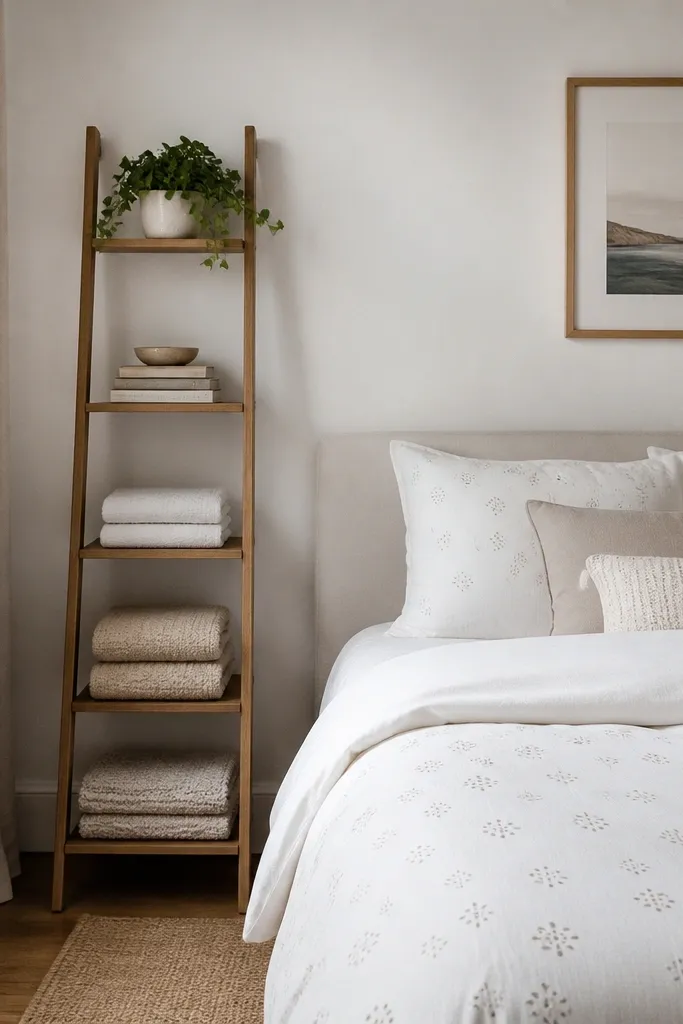
A slim storage ladder is a smart way to add vertical function without buying a full cabinet. I use it when I need extra “in-between” storage like towels, a spare throw, or books I grab daily. It looks light because it’s open, and it also gives you a place to hang textured items that make the room feel cozy. This works best in compact bedrooms where your floor is already taken by a rug and a chair. The principle is using vertical, open storage with a tight color story so it doesn’t look like random household stuff.
Choose a ladder width around 35-45 cm so it doesn’t steal walkway space. Place it near the bed side where you have the most wall clearance, not in the middle of the room. Fold towels in the same size and color family — I like off-white and warm beige — then place them on the rungs like stacks. Use two hooks if you want to hang a light robe or small bag. Keep the rest of the room neutral and let the ladder carry texture. Finish with one small framed photo or print above the ladder so it looks designed, not temporary.
Good to knowWrap the ladder feet with felt pads; it stops scuffs and keeps the room looking cared for.
AvoidAvoid a ladder that’s too dark and too wide — it reads heavy in small rooms.
13. Hexagon tile-effect wallpaper on the bed wall
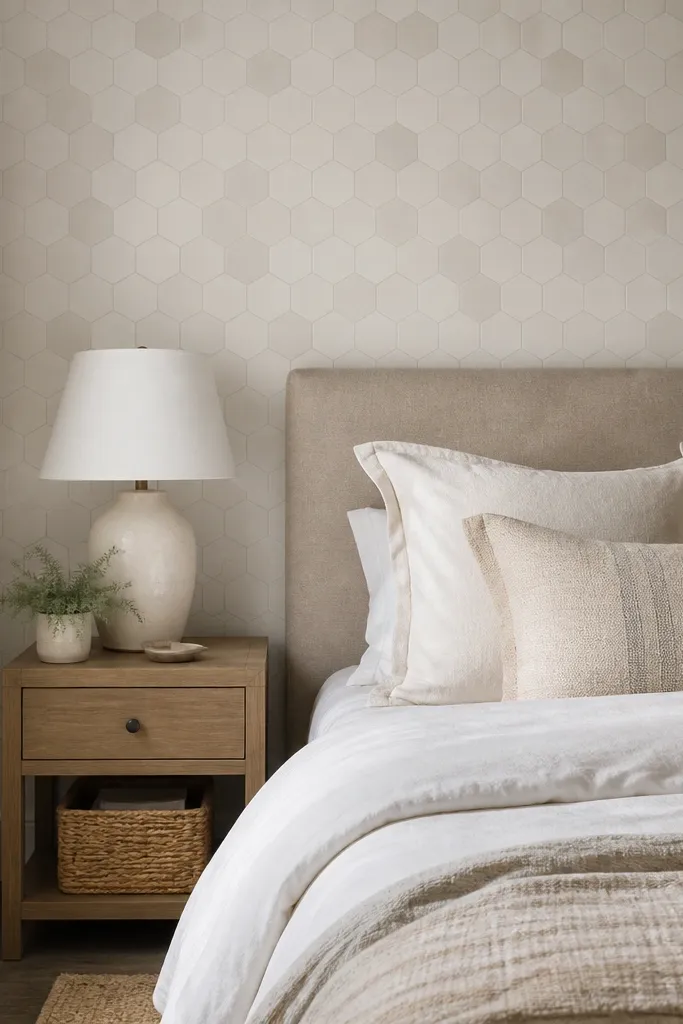
Patterned wallpaper behind the bed adds depth without adding furniture volume. The key is choosing a pattern that has low contrast and a matte finish, because high-contrast wallpaper can make walls feel too busy. I’ve used a hexagon tile-effect design in warm white and pale gray because it reads like texture from a distance, not like a print. This looks good for people who want a feature wall but don’t want bright colors. The principle is distance readability: the design should still look calm when you glance at the bed from across the room.
Cover only the bed wall, not the whole bedroom. Measure the wall and buy extra by at least 10% for pattern alignment waste. Apply the wallpaper with a good smoothing tool and keep seams tight at eye level. Use bedding in warm neutrals like cream, light taupe, or pale oatmeal so the wallpaper stays the star. Add one woven basket under the bedside for throws so the texture theme continues without adding more pattern.
Good to knowUse a single large artwork piece above the bed instead of multiple small frames; it keeps the patterned wall from feeling crowded.
AvoidDon’t choose glossy wallpaper — it catches light and can make small rooms look uneven.
14. Rug-first layout with a 160x230 rug and no clutter edges
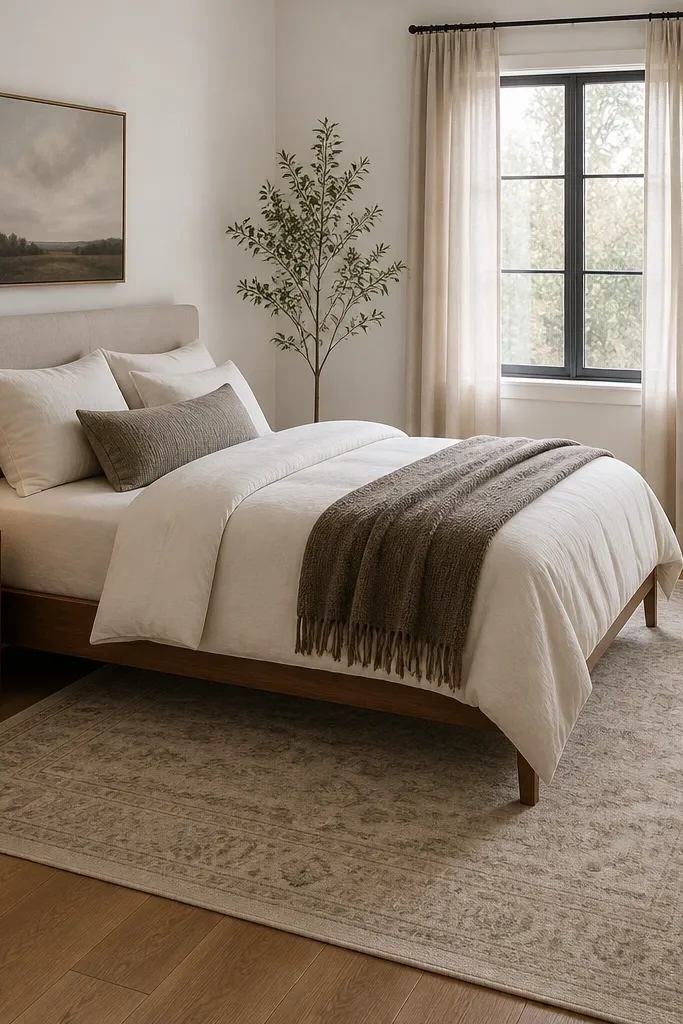
I always start with the rug when designing a small room interior bedroom compact layout because it sets the visual boundaries. A bigger rug than you think — like 160x230 — makes the floor area feel continuous. When furniture sits on the rug, the room looks planned instead of like pieces were squeezed in. This layout flatters people who want a soft, hotel-like feel without heavy drapes or lots of decor. The principle is continuity: fewer “bare floor gaps” makes the room look larger.
Measure your bed size and aim for the rug to extend at least 20-30 cm beyond the sides of the bed. Place the bed so the front legs land on the rug, not on bare floor. If you have a chair, keep its front legs on the rug too so it feels connected. Use a low-pile rug for easy vacuuming and to avoid bunching under furniture. Style the rest of the room with minimal contrast: light walls, one warm wood tone, and a single accent color in bedding or art.
Trim the rug pad to match the rug size; too-thick pads make the rug edge curl.
Avoid a tiny rug that only fits under the bed — it breaks up the floor and shrinks the room.
15. Floating desk under a wall shelf with a reading lamp
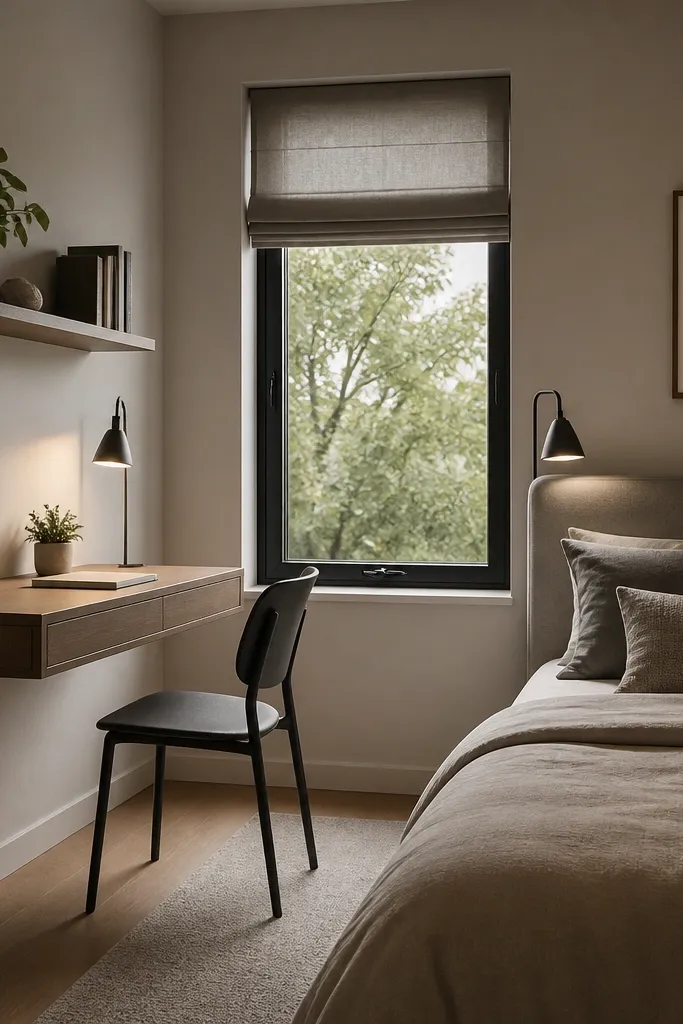
A floating desk is the cleanest solution when you want function without eating floor space. I like placing the desk under a shelf because it creates a built-in look and keeps your everyday items within arm’s reach. The lamp keeps the task area bright, while the bed stays visually calm. This works best for compact bedrooms where you still want to work or study but don’t want a bulky office setup. The principle is vertical stacking: desk below, storage above, and empty floor in between.
Mount the desk 75-78 cm above the floor if you’re using a standard chair height, then test with your chair before drilling final holes. Add a shelf above for a plant, a notebook, and a small tray for pens. Use cable management: adhesive clips along the wall and a power strip hidden behind the desk. Keep the desk surface clear — one lamp, one notebook, one small organizer. Style the bed with a neutral duvet and one textured throw so the desk area doesn’t turn into the only busy zone.
Use matte white desk brackets or paint them the same color as the wall so they disappear.
Avoid a desk that’s too wide for the room; if it blocks the walkway, the whole layout feels cramped.
16. Narrow entry console behind the bed wall with a bench
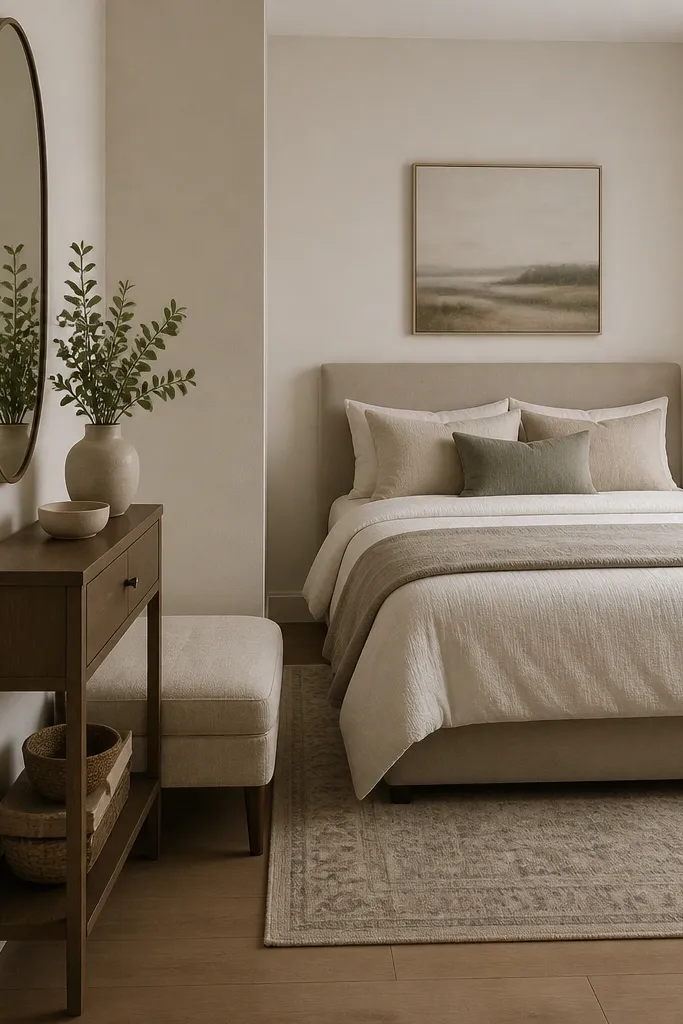
In many small bedrooms, the real problem is the entry — shoes, bags, and coats end up on the bed or chair. A narrow console behind the door fixes that and keeps your bedroom surfaces clear. I’ve used consoles around 30-35 cm deep so they don’t block movement, especially with a small bench that can slide in. Add a mirror above the console and the entry light spreads into the room. This works for people who live with coats, bags, and daily items right at bedtime. The principle is preventing mess at the source.
Choose a console depth of 30-35 cm and keep the bench seat depth under 35 cm so it slides in neatly. Mount hooks on the wall above the console for coats and a small bag, then place a tray on the console for keys. Put a slim basket on the open shelf for shoes or a spare throw. Hang a mirror so it reflects the bed wall light, not the floor. Style the bedroom with one consistent wood tone across console, bed frame, and a small photo frame to keep the room calm.
Use a wipeable tray with a raised edge for daily drops; it keeps the console looking neat.
Skip a deep console — 45 cm and up makes the door area feel tight every single day.
17. Black metal bed frame with white bedding and warm wood floor
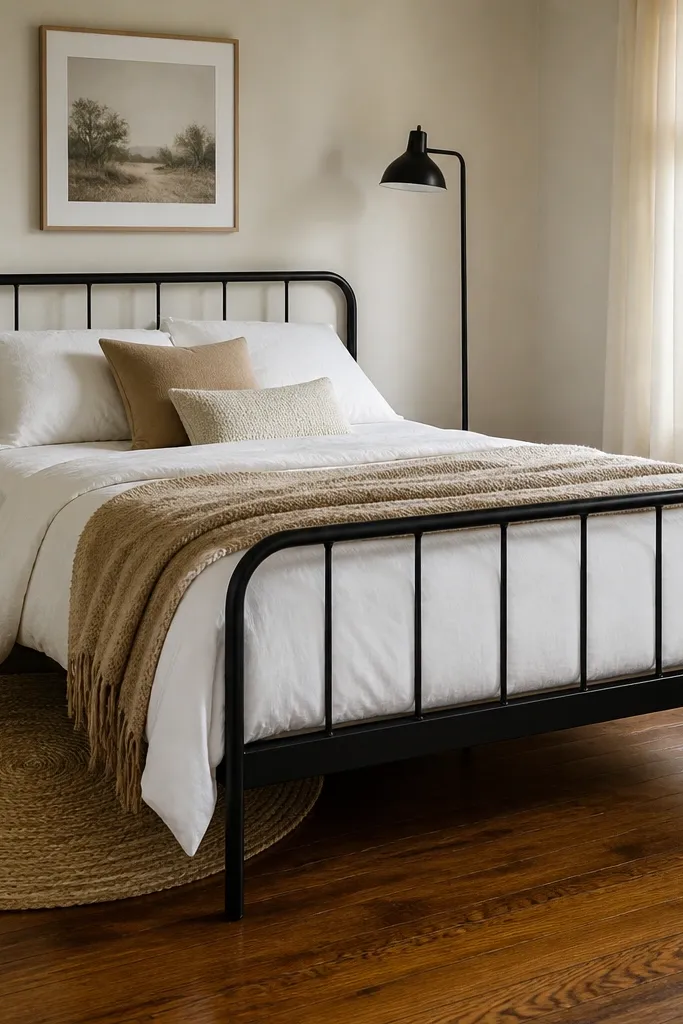
Thin black metal lines make small rooms look sharper because the furniture reads lighter. When you pair black metal with crisp white bedding, you get contrast without bulky shapes. I’ve done this in rooms with warm wood floors and it looks clean and modern without feeling cold. It flatters people with darker hair because the black frames the face area visually. The principle is line control: thin frames create structure, and white bedding keeps the space bright.
Pick a bed frame with minimal thickness and slats, not a thick upholstered frame. Use a white duvet cover and pillowcases in percale or cotton sateen that doesn’t look shiny. Add a warm beige throw to soften the contrast and tie into wood tones. Choose lighting with black metal and a linen shade so it matches the bed frame. Keep the rug small and round under the bedside only if the room is extremely tight; otherwise, use a neutral runner or a larger area rug for continuity.
Dust the metal weekly; black frames show fingerprints fast and it ruins the crisp look.
Avoid mixing black metal with heavy rustic wood furniture in the same room without repeating one metal finish elsewhere.
18. Bedside table in the corner with a round mirror above
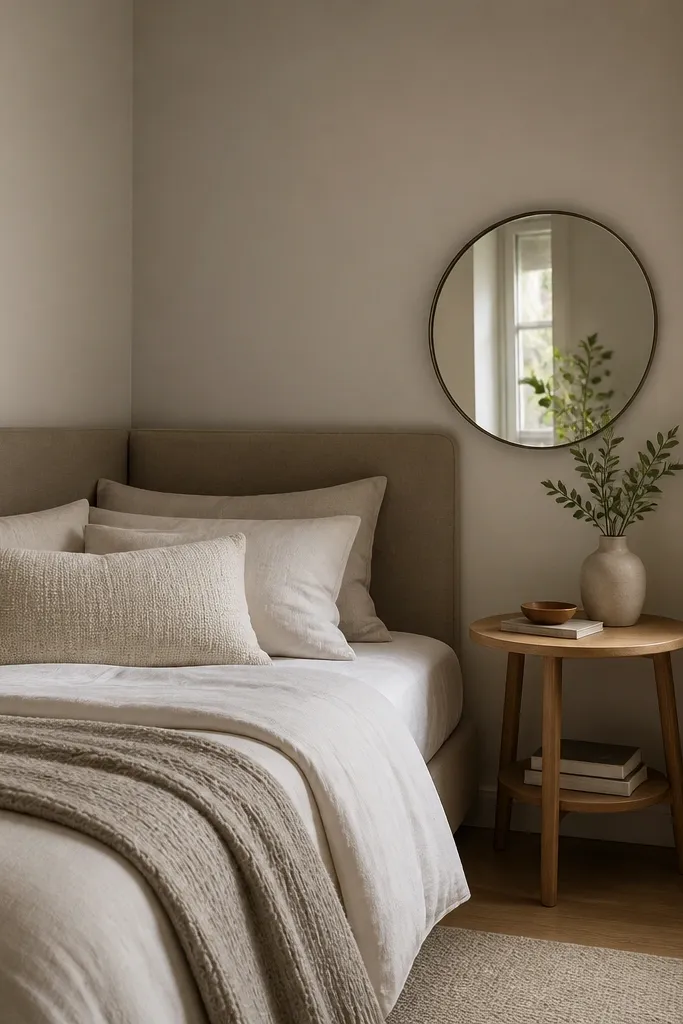
Corner placement is underrated for small room interior bedroom compact layouts because it frees the wall side for movement. A round mirror adds softness and avoids the harsh geometry that can happen with square furniture in tight rooms. I like placing the bedside table in the corner when there’s no room for a traditional side table because it still gives you lamp space. This works best for people who read in bed but don’t need a big surface. The principle is using the “dead space” corner instead of forcing standard furniture.
Push the bed slightly toward the wall so there’s clearance for the corner table when you walk in. Choose a bedside table diameter around 35-45 cm so it doesn’t block the bed edge. Mount the round mirror so its center is about 155 cm from the floor and it reflects the ceiling light or window. Use a slim lamp with a cord routed along the wall. Keep the corner table styling to one small tray and one book — you want a tidy surface at all times.
Good to knowIf you can, choose a bedside table with a drawer; corner spaces are where clutter hides.
AvoidAvoid a corner table that’s too tall — you’ll lose lamp visibility and it looks top-heavy.
19. Wardrobe wall with sliding doors and a recessed bench
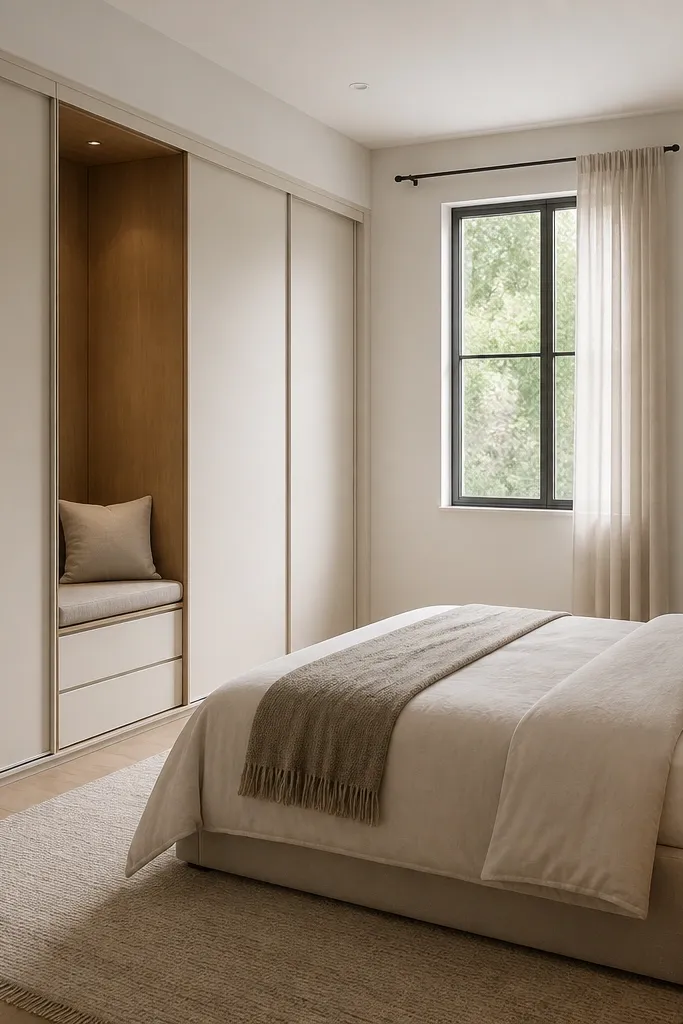
Sliding doors solve the door-swing problem that always shows up in compact bedrooms. A wardrobe wall with sliding doors keeps the room usable even when you move around at night. The recessed bench is a smart storage and styling trick because it gives you a place to sit while dressing without adding a bulky chair. I’ve used this in rooms where the only spot for a chair was near a wardrobe, and it looked cleaner than any freestanding bench. The principle is built-in efficiency: you create function inside the wall lines.
Measure the wardrobe opening and install sliding doors that overlap enough to close gaps cleanly, typically 2-5 cm overlap. Add a recessed bench seat depth around 35-40 cm so it’s comfortable but not bulky. Choose a cushion in a durable fabric like cotton canvas or performance linen. Keep the bench styling minimal: one folded throw or one small cushion that matches your bedding. On the bed side, use a simple headboard and one wall art piece so the built-in wall stays the star.
Good to knowUse soft close hardware on drawers inside the wardrobe; it makes the room feel quieter and more polished.
AvoidAvoid swinging doors in a tight entry zone — they steal space you need daily.
20. Small bedroom monochrome with warm wood floor and a single accent color throw
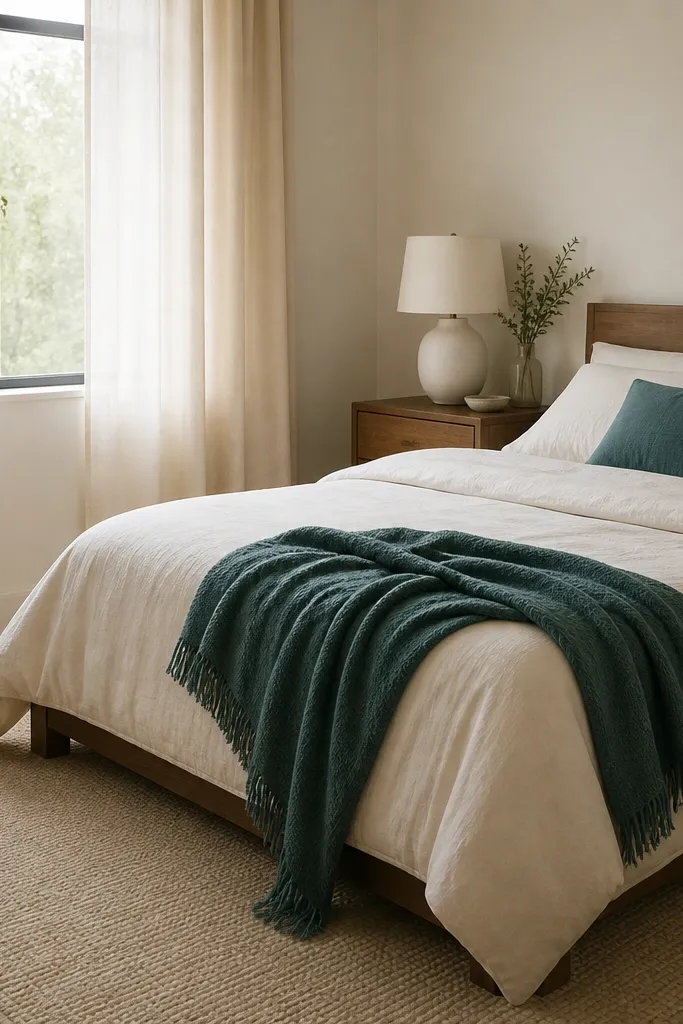
Monochrome neutrals make a small room interior bedroom compact layout feel calm because your eyes don’t get caught by too many different colors at once. I’ve done this with warm wood floors and cream bedding, then added one accent color through a throw and one small item on the dresser. This is the quickest way to look styled without overthinking. It flatters almost everyone because the neutrals sit close to skin tones and the accent adds energy. The principle is “one accent, repeated once” — you repeat it just enough to feel intentional.
Pick one neutral base: warm off-white walls, cream duvet, and a beige rug. Choose one wood tone and stick to it across bed frame, dresser, and shelf brackets. Add one accent color throw, like teal or terracotta, and match it with one smaller item — a vase, a frame, or a single pillow. Keep metal finish consistent, either all brass or all black. Style by leaving surfaces mostly empty: one lamp, one book stack, one tray. If you add art, choose a simple print with the accent color included so it ties in.
Use textured neutrals like knit, linen, and woven baskets; flat smooth surfaces look colder in small rooms.
Avoid multiple accent colors spread across the room; it makes the space feel busy even if the pieces are individually nice.