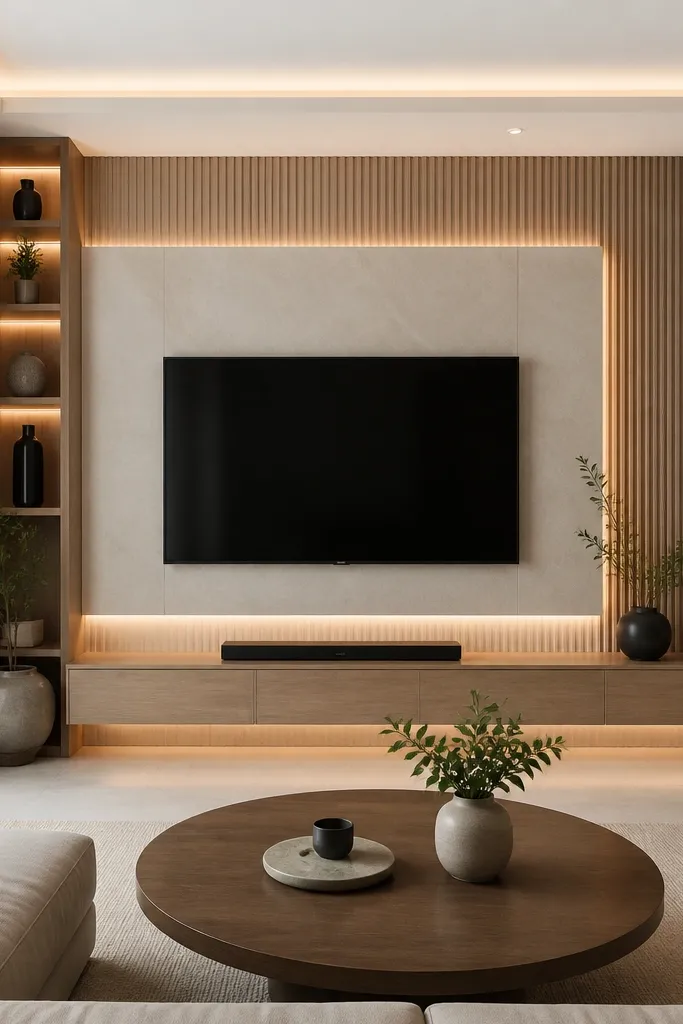
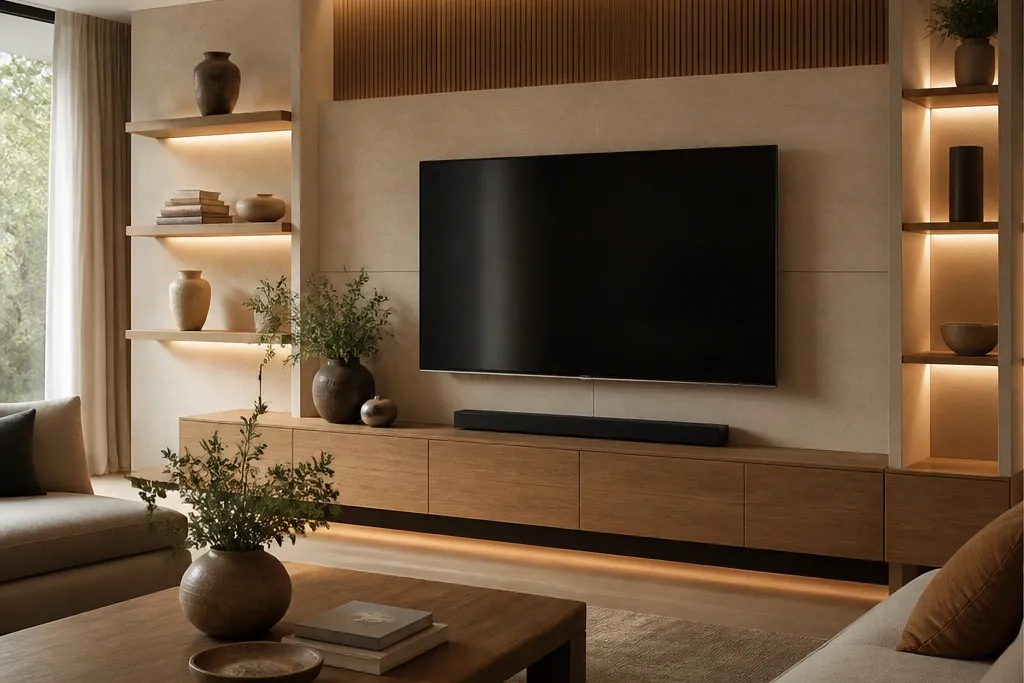
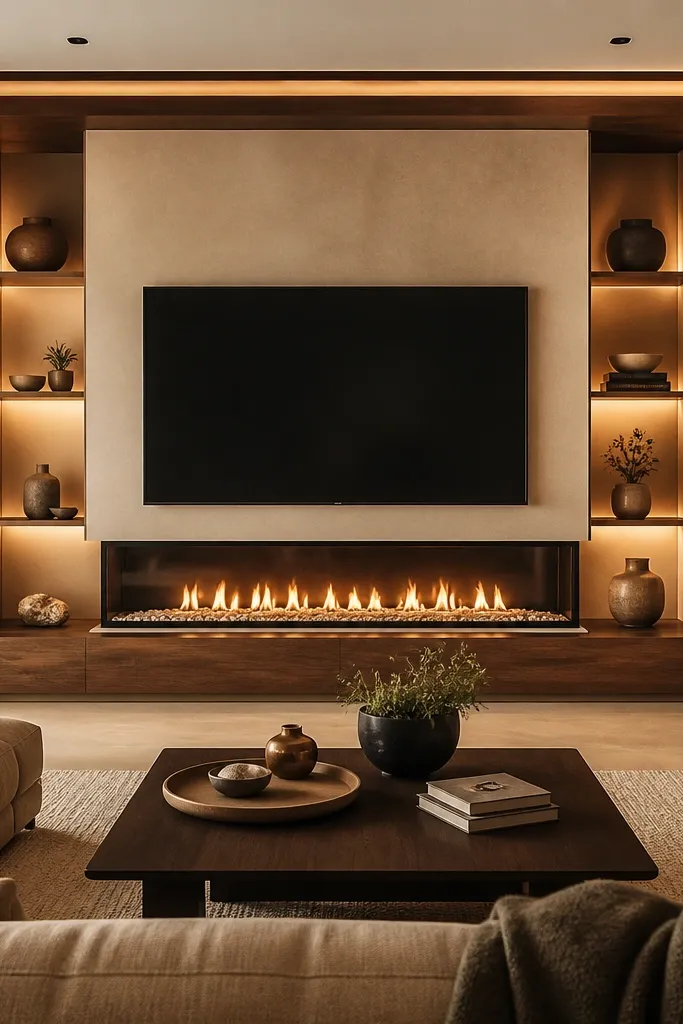
1. Walnut slat backdrop with a floating TV frame
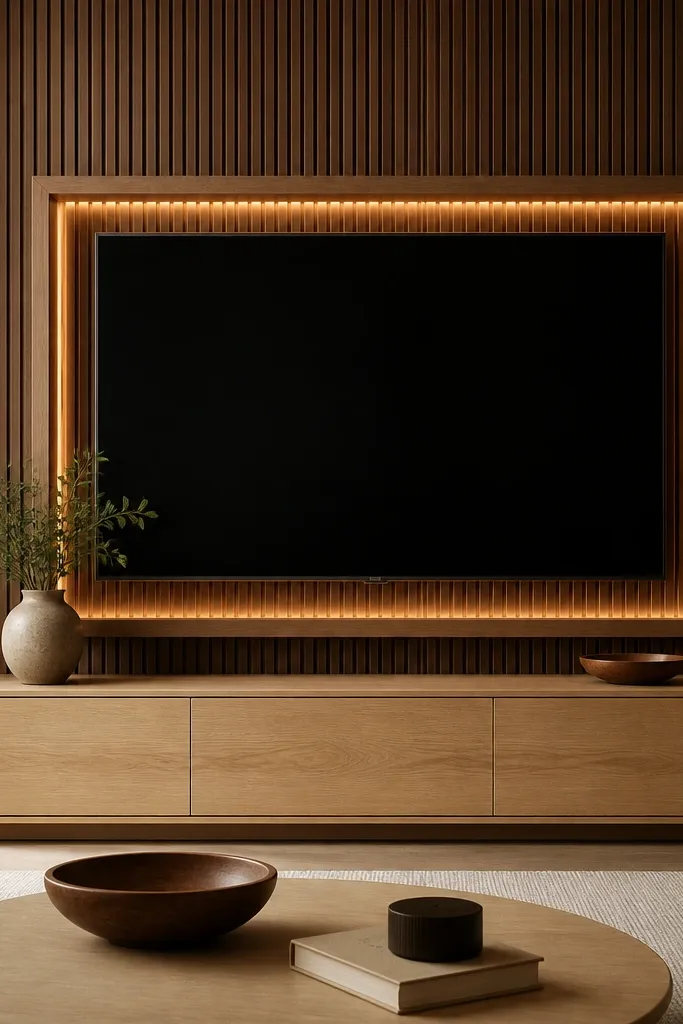
This setup makes the TV look built-in because the slats create depth and the frame gives it a “window” on the wall. I like walnut slats at about 1.5 to 2 inches wide with 0.5-inch gaps, finished in a low-sheen oil so it doesn’t go shiny. The warm brown flatters most rooms, especially if your floors are oak, honey-toned, or have beige undertones. It also works well for people with cooler gray furniture because the wood warmth balances the palette. The luxury feel comes from clean lines and consistent spacing, not from adding more stuff.
Start by marking the TV centerline and dry-fitting the slat grid on the floor. Install slats first, keeping the gaps uniform so the wall looks precise. Then build a floating frame around the TV opening using 3/4-inch face trim, leaving a 1/8-inch reveal so the TV doesn’t look jammed. Add a 2700K LED strip behind the inner edge of the frame, and route the power through the wall cavity or a raceway behind the console. Finish by styling the console with two slim lamp bases and one tray so the area looks styled, not staged.
Good to knowIf you want extra cozy, add a thick woven runner or chunky throw blanket in the same color family as the slats and let it show on the seating side.
AvoidDon’t use very glossy walnut veneer — it looks cheap under TV light because it reflects harsh hotspots.
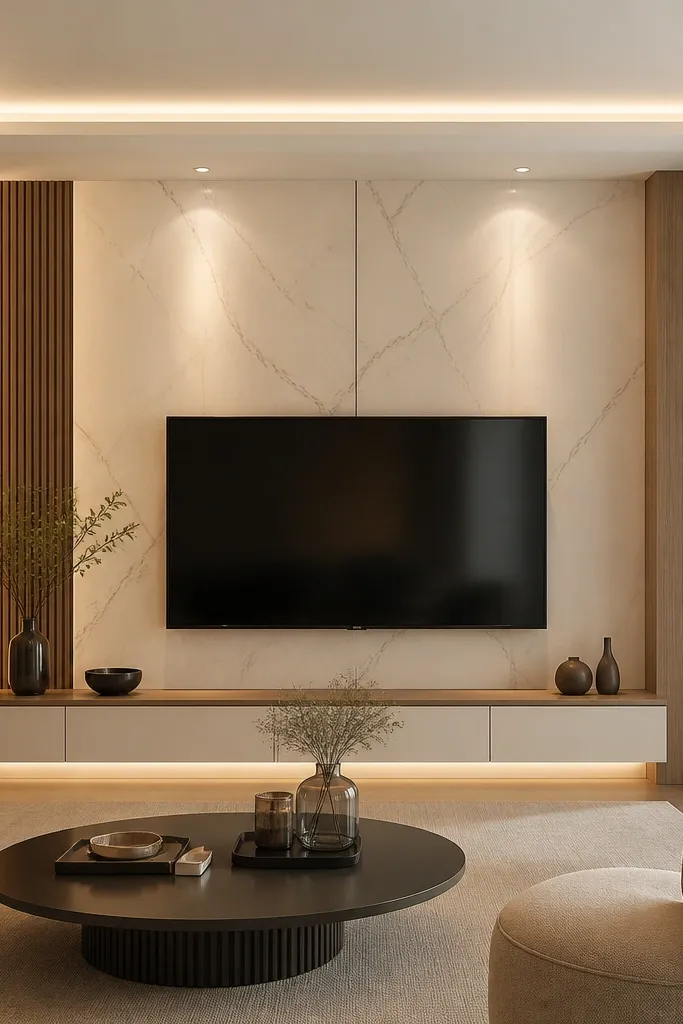
2. Travertine-look panel wall with a bronze mirror accent
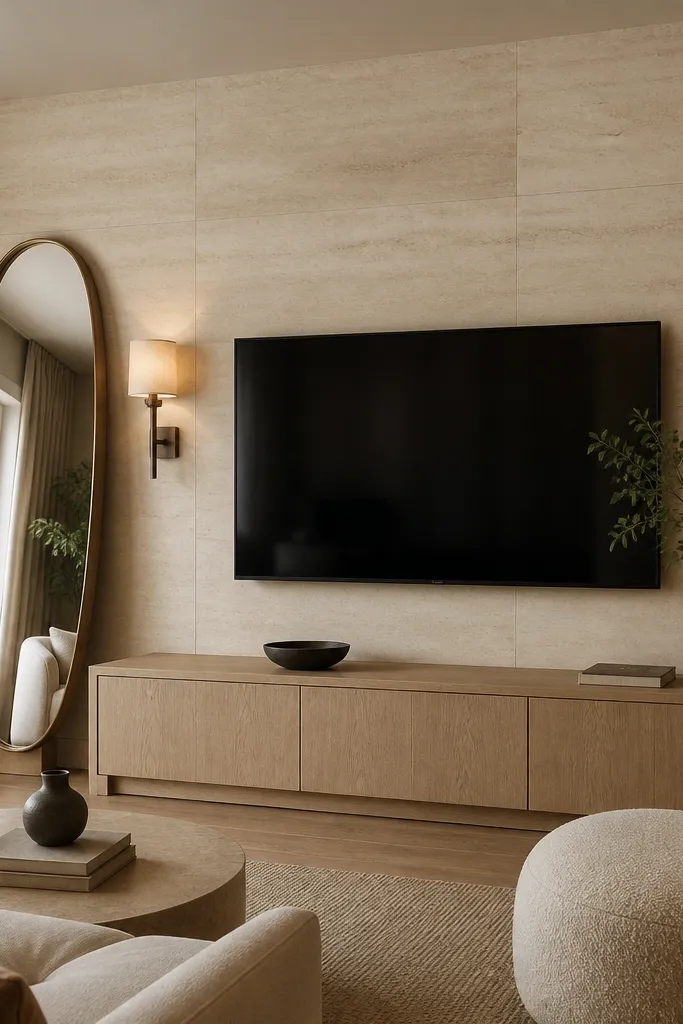
Stone-look panels read luxurious because the surface has natural variation. I’ve used travertine-look sheets in a creamy base with taupe veining, and it photographs like real stone without the weight and mess. The bronze mirror adds warmth and a soft reflective layer, which makes the TV area feel deeper and more curated. This is a great match if your room has light walls, cream upholstery, or brass fixtures already. The styling principle is layering one textured matte surface with one warm reflective surface so the wall doesn’t look flat.
Start by choosing a stone-look panel that has a creamy base rather than stark white. Install the panels in a full-height section behind the TV and extend it at least 8-12 inches wider than the TV on both sides. Mount the TV so the bottom edge sits about 18-24 inches above the console top, then place a bronze oval mirror on one side at eye level when seated. Add two warm sconces or one wall-wash light aimed across the panel so the veining shows. Style the console with a single tall plant in a ceramic pot and one low tray in bronze or aged brass.
Use warm bulbs (2700K) and aim the light across the stone, not straight at the TV screen.
Avoid cool gray stone-look panels — they turn the whole wall “hospital” under TV glow.
3. Upholstered boucle niche around the TV
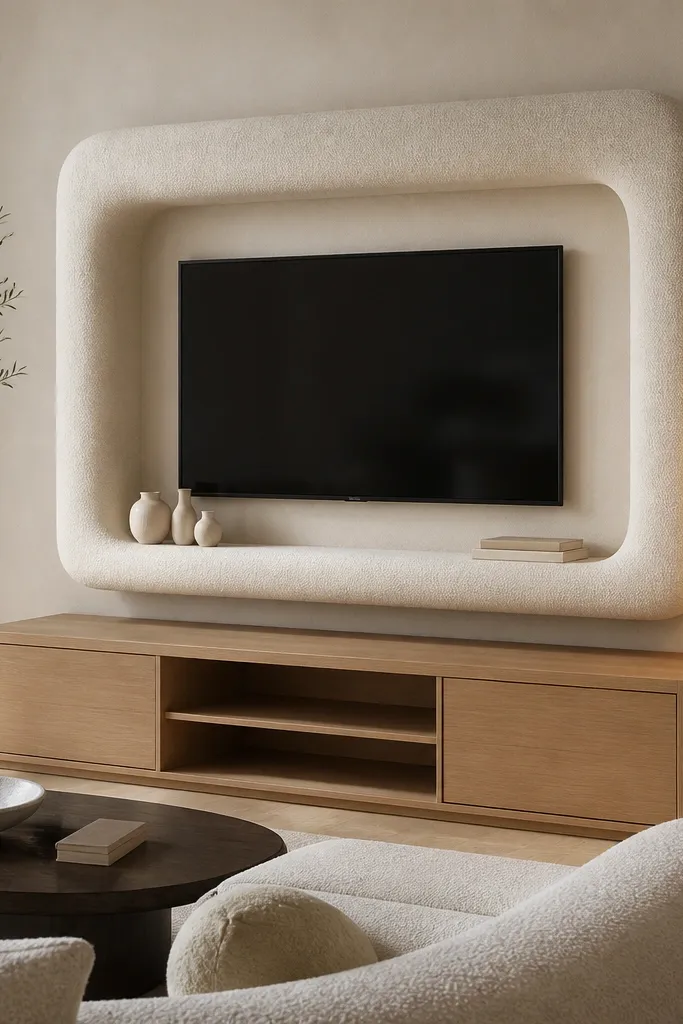
Boucle is the quickest way I know to make a TV wall feel cozy warm luxury, because it absorbs glare and adds a soft tactile look. The ivory tone keeps it bright, and the padded niche makes the TV feel like part of the furniture. This works especially well for people with dark floors or heavy curtains because the fabric lightens the room visually. It also flatters warm skin tones and beige undertones in walls, since boucle reads creamy rather than stark. The principle is texture-led design: when the wall itself is soft, you need fewer decorative objects.
Start by building a simple MDF or plywood backing board the exact size of your TV niche, then wrap it with 2-inch foam batting for that plush border. Cut the boucle so the nap direction stays consistent across the frame — it makes the wall look intentional. Mount the niche to the wall with hidden brackets and leave a small gap around the TV for airflow. Add a warm LED channel behind the niche border rather than lighting directly behind the TV. Finish by placing a slim console in light oak and using one large art piece or mirror nearby to balance the softness.
Choose boucle with a tight, uniform loop — loose boucle pills faster around high-touch areas like near consoles.
Don’t go with bright white boucle — it picks up TV reflections and looks washed out.
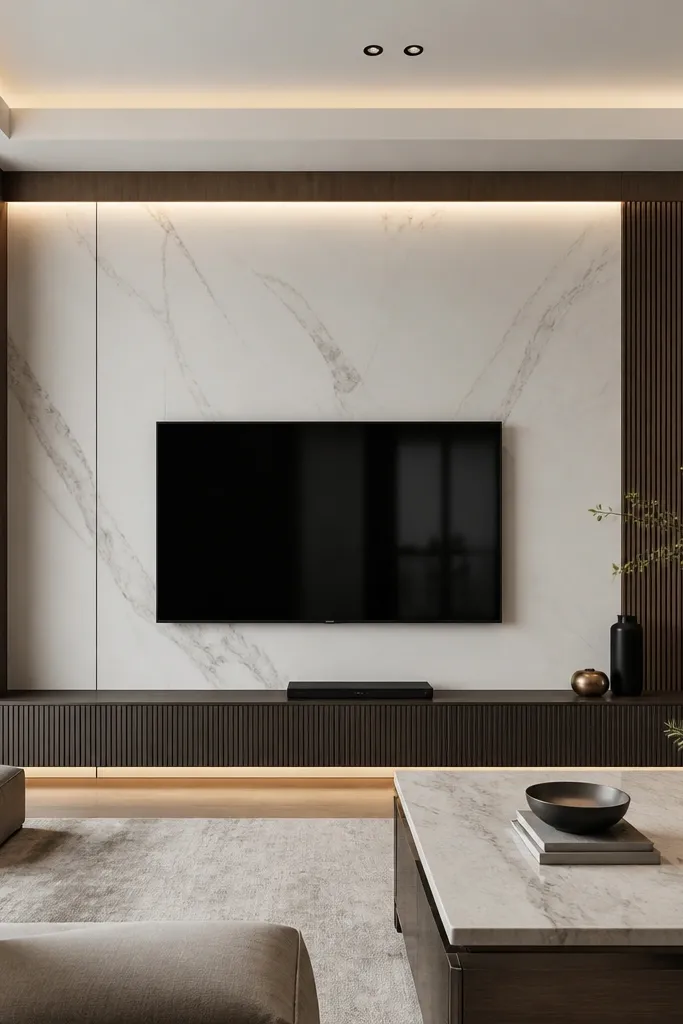
4. Fluted panel frame with a warm white oak console
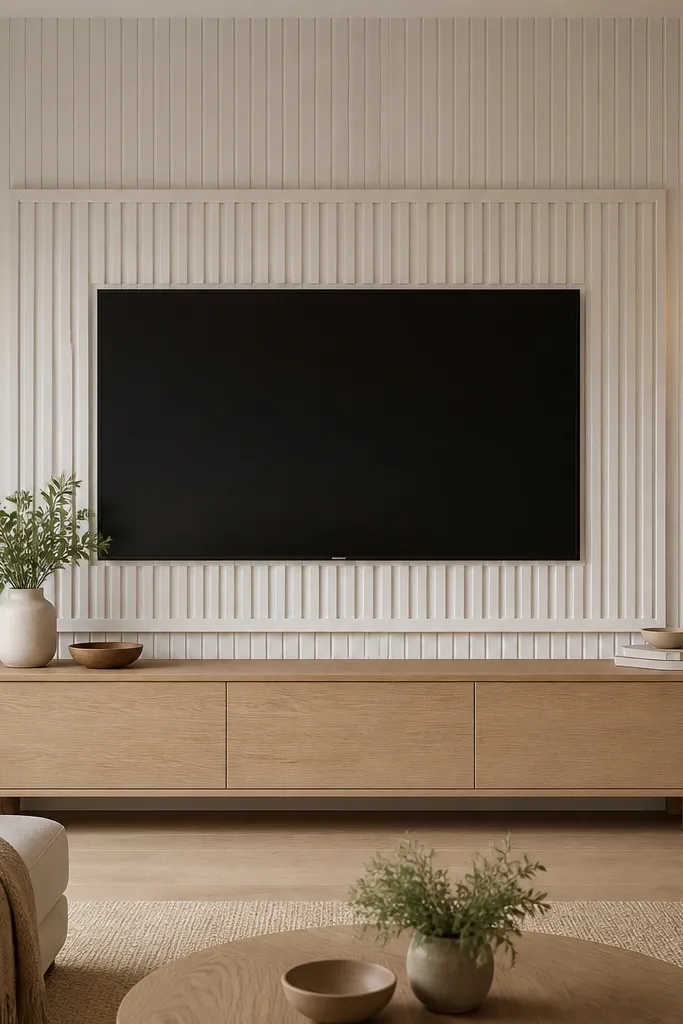
Fluted panels bring structure without looking rigid, and that reads luxurious in a way that feels modern but still warm. I like warm white flutes rather than pure white because they don’t show every shadow line like stark paint does. Pairing the surround with a white oak console keeps the palette coherent and gives you that “custom millwork” look. This is great for rooms that already have neutral furniture and need a little vertical interest. The principle is repetition: fluting echoes trim details and makes the TV area feel designed as a unit.
Start by picking a fluted panel system with consistent flute width, then dry-fit around the TV to keep the spacing even. Paint the surround in a warm white with a matte or eggshell finish so it doesn’t glare. Mount the TV inside the frame, keeping the TV centered and leaving a 2-3 inch margin on all sides. Install one sconce on each side at about 60 inches from the floor to the center of the bulb, then aim them slightly inward. Style the console with two matching ceramic candlesticks and one low book stack so the flutes remain the star.
If your room is small, go thinner on the frame depth so it doesn’t visually shrink the wall.
Skip high-gloss paint on flutes — it highlights imperfections and makes the wall look like cheap rental trim.
5. Painted wood slat half-wall with a soft plaster upper
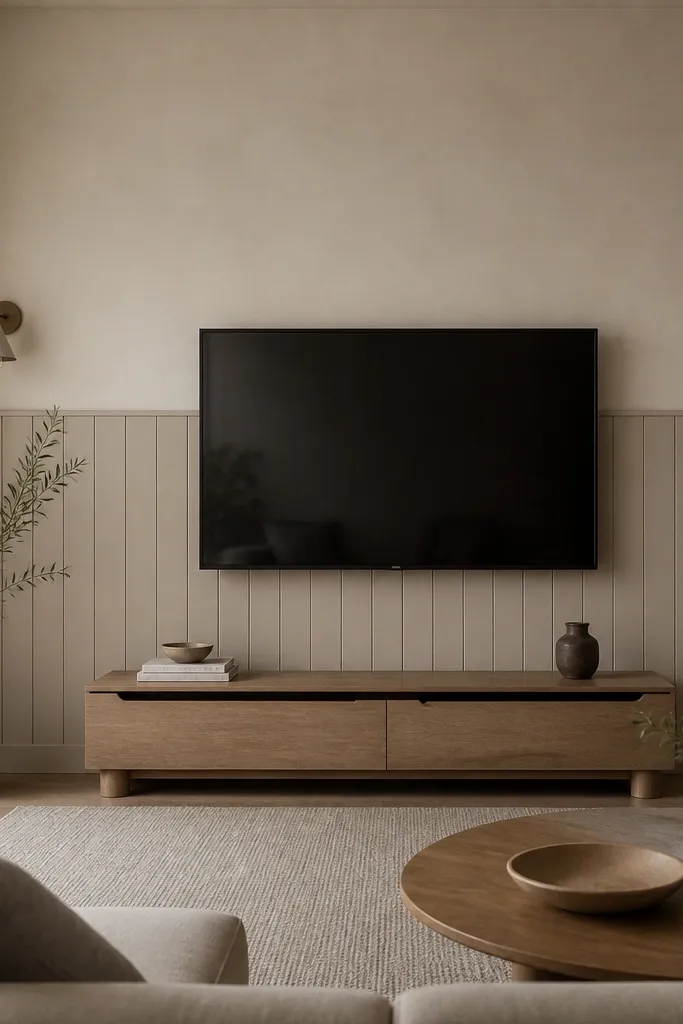
This design is cozy because it gives your eyes a place to rest. The lower slats add warmth and texture where the furniture sits, while the plaster upper stays calm so the TV area doesn’t feel busy. I did this in a room with a lot of beige, and the seam line made everything look intentional instead of random color blocks. It flatters both warm and cool neutrals because the greige is balanced. The luxury feel comes from keeping the palette tight and using two finishes with different reflectivity.
Start by choosing two tones that are close: one warm greige for slats and one cream for plaster, with a difference of about 1 shade. Install slats on the lower section, keeping them level with your console top as the visual reference. Apply smooth plaster or plaster-look paint above the seam, then sand lightly for a velvety feel. Mount the TV so it sits centered and slightly above the seam, then run a recessed LED line along the back of the console shelf for glow. Style with a rug under the console front edge and keep decor minimal — one large ceramic vase plus a small framed photo.
Good to knowUse painter’s caulk to create a crisp seam between slats and plaster; the clean line is where the luxury look lives.
AvoidDon’t pick two tones that are too far apart — the wall starts looking like a DIY patchwork.
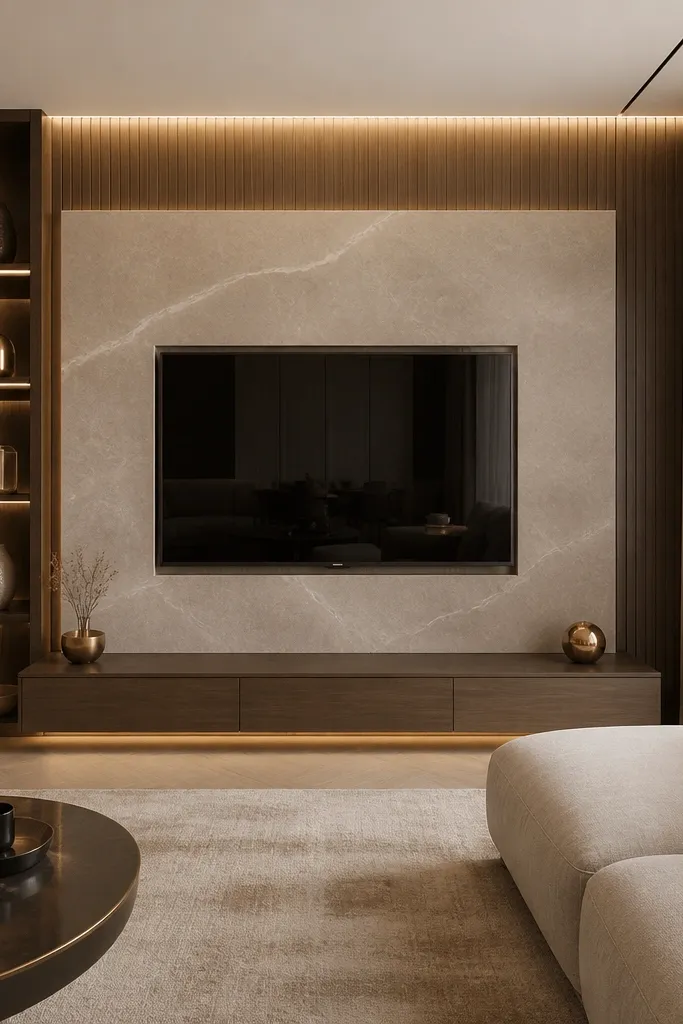
6. Dark walnut paneling with warm brass line lighting
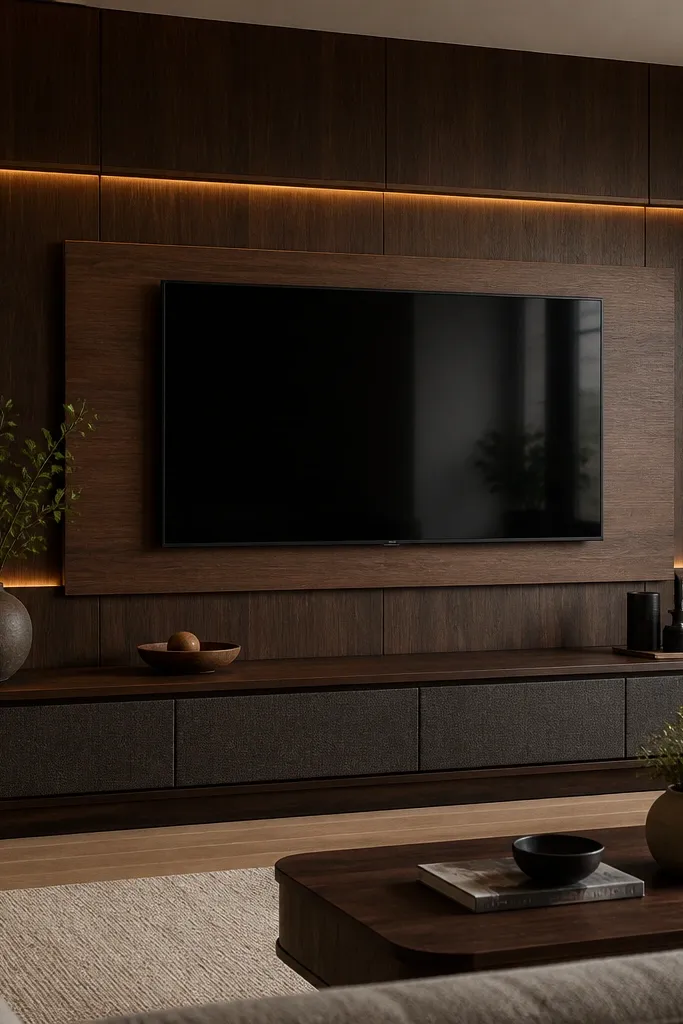
If you want “luxury lounge” vibes, dark walnut plus warm brass line lighting is the fastest path. I’ve installed this look in homes with lots of natural light, and it still feels cozy because the lighting is warm and the panels are matte. The brass channels add a controlled sparkle without turning into scattered decor. This works best when your room has warm metals like brass, honey gold, or warm copper, and it flatters cream, caramel, and camel textiles. The principle is restraint: the wall is the statement, so you keep the TV frame simple and the console quiet.
Start by selecting walnut panels with a low sheen, ideally oil-rubbed so they don’t glare under the LEDs. Install a slightly lighter walnut rectangle behind the TV to create a subtle halo effect. Add brass channels only where you want the eye to rest — I do one horizontal line above and one vertical line beside the TV to frame it. Mount the TV and hide the wire in a recessed raceway along the panel seam. Style the console with fabric drawer pulls or minimal hardware, then add one tall floor lamp with a warm fabric shade to soften the dark wall.
Good to knowDim your line lights to match the room mood — bright linear LEDs remove the cozy effect.
AvoidAvoid cheap gold foil trim — it looks like costume jewelry next to real wood.
7. Blackened steel TV gallery with warm wood shelves
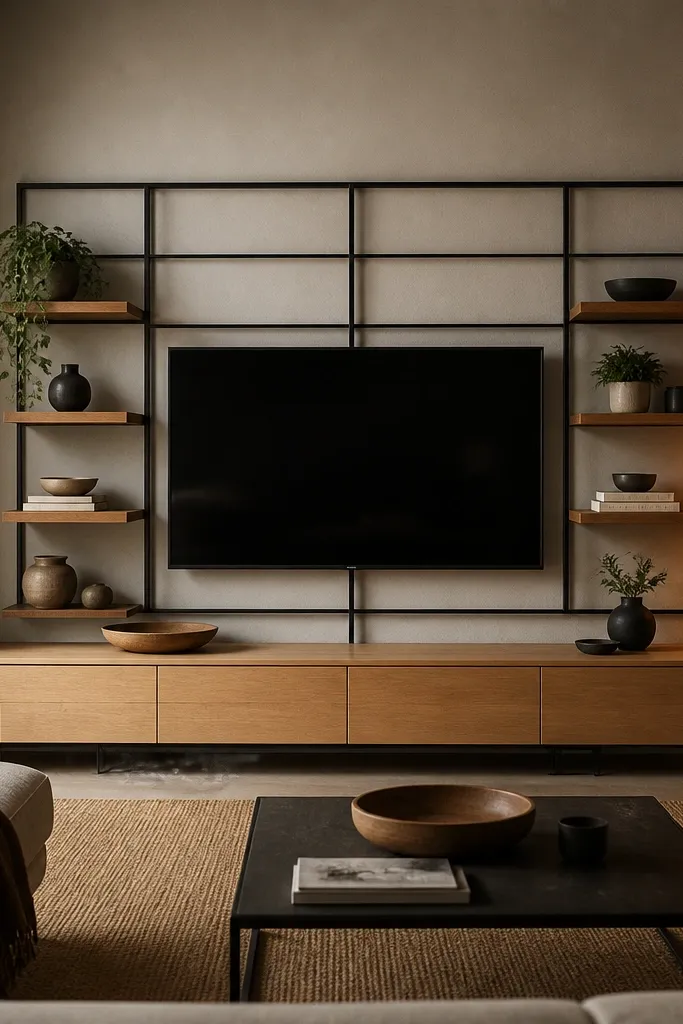
This is the “industrial but cozy” look I keep coming back to. The blackened steel gives you that gallery feeling, while the warm wood shelves keep it from feeling cold. I’ve done it in rooms where the couch is gray or charcoal and the floors are medium oak — the steel grounds the space and the wood warms it back up. It’s flattering for people who like a sharper design line but still want comfort at night. The principle is contrast in materials: metal frame around the TV, wood where your eyes land when you’re relaxing.
Start by building or buying a steel grid frame with clean right angles, then mount it so it sits 2-4 inches wider than the TV. Install warm wood shelves (walnut or oak) on the left and right sides, keeping each shelf depth around 8-10 inches so items don’t look crowded. Mount the TV inside the grid and route cables through the wall behind one vertical steel member. Add a small LED puck light under each shelf to create a warm glow on objects. Style with one taller piece per shelf (like a ceramic vessel) and keep the rest to small books or a single candle holder.
Use matte black bulbs or warm diffused LEDs so the steel doesn’t reflect harsh points.
Don’t overload the shelves — too many items makes the frame look like a storage rack.
8. Cream panel molding grid with a warm light rail
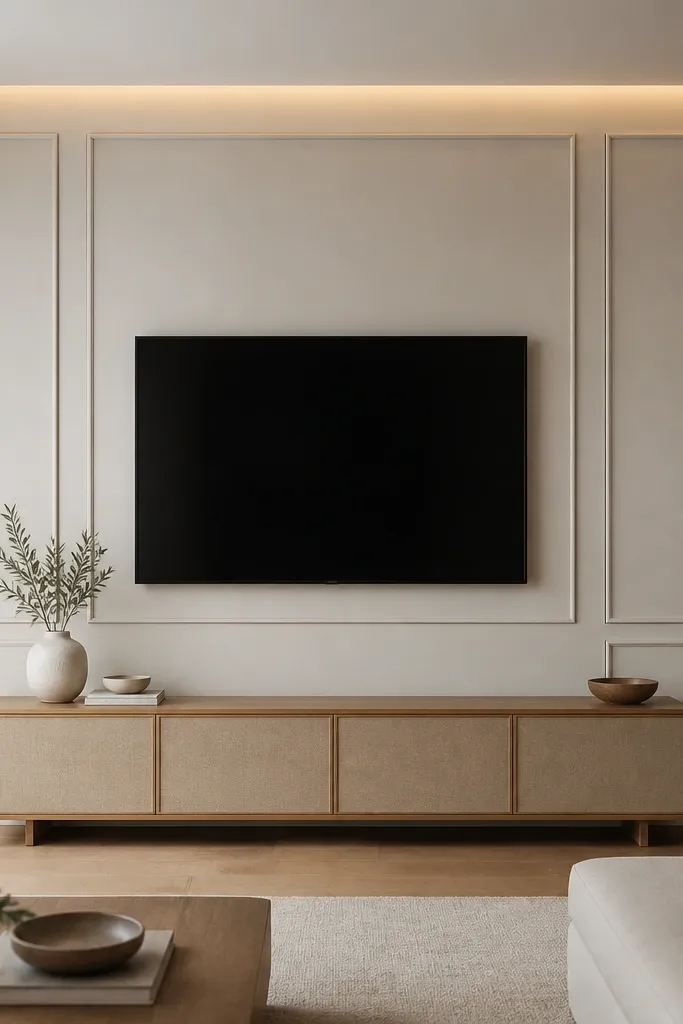
Molding grid walls feel luxurious because they look architectural, not decorative. I like a cream base with subtle shadow lines created by a slightly different sheen, because the TV area gains depth even in daylight. Add a warm light rail and the wall stops feeling flat at night. This works beautifully in rooms with traditional pieces, but it also looks modern when you keep the styling minimal. The principle is geometry: consistent panel sizes make the TV feel placed, not pasted.
Start by measuring your TV width and designing a grid that’s about 1.5 times the TV width. Install molding with uniform spacing and keep the inside reveals consistent so shadows look even. Paint the wall in an eggshell and the mold in a matte or satin with the same color family so the wall doesn’t look like two random paints. Mount the TV centered and add a hidden LED strip in a cove above the TV panel — 2700K with a diffuser. Finish with a console that has simple lines and one soft texture element like a linen basket for remotes.
Use painter’s tape to mask molding edges and get a razor-clean paint line; that’s where the expensive look comes from.
Skip overly ornate molding profiles — they look busy next to a flat screen.
9. Stone-look fireplace-style surround without the fireplace
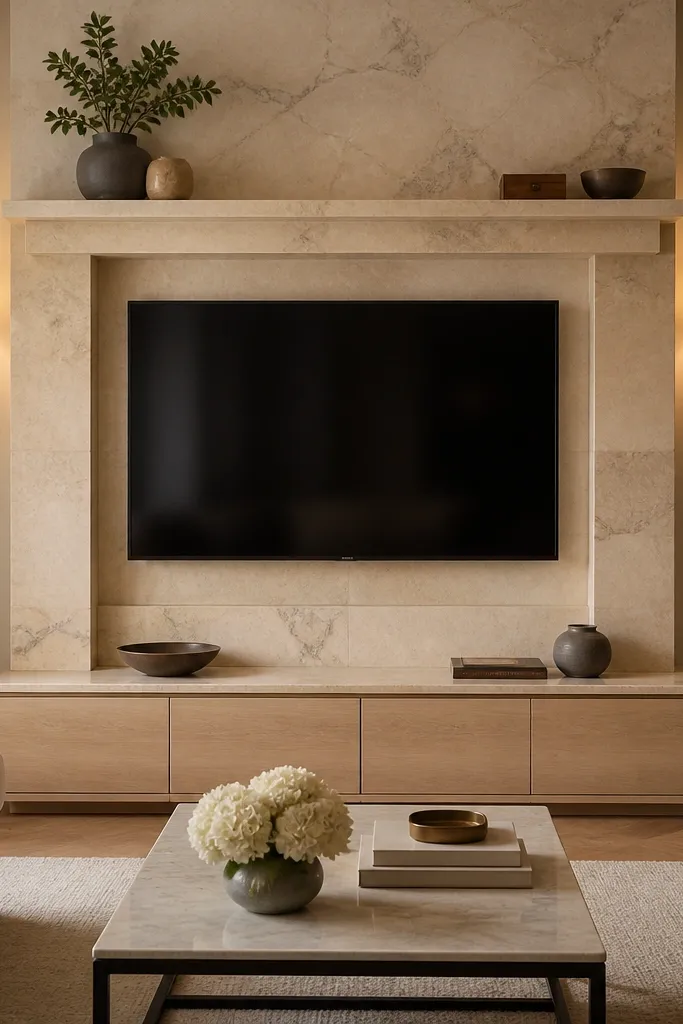
This is one of my favorite tricks for cozy warm TV wall design luxury because it gives you a built-in focal point like a real fireplace. The mantel shape creates a natural “resting place” for decor, and the stone texture adds warmth even if your room is mostly neutral. I used this in a condo where installing an actual fireplace wasn’t possible, and the TV area immediately looked like a destination. It flatters people who like classic shapes but want a modern TV layout. The principle is using a fireplace silhouette to frame the screen and control visual weight.
Start by choosing a stone-look material in warm beige, then build a surround with a mantel shelf depth of 7-9 inches. Mount the TV centered within the surround, leaving clearance so the TV doesn’t sit too close to the stone surface. Install two sconces or one warm wall-wash light to bring texture forward in the evening. Place a low console below with a natural wood finish so it doesn’t compete with the stone. On the mantel, style with one tall candlestick and one medium-height framed art piece, then leave space — the empty space is part of the luxury.
Good to knowKeep the mantel styling to two items max; too many objects fight the stone texture.
AvoidDon’t use cool gray stone — it makes the mantel silhouette look harsh.
10. Round-edge walnut TV niche with hidden cable channel
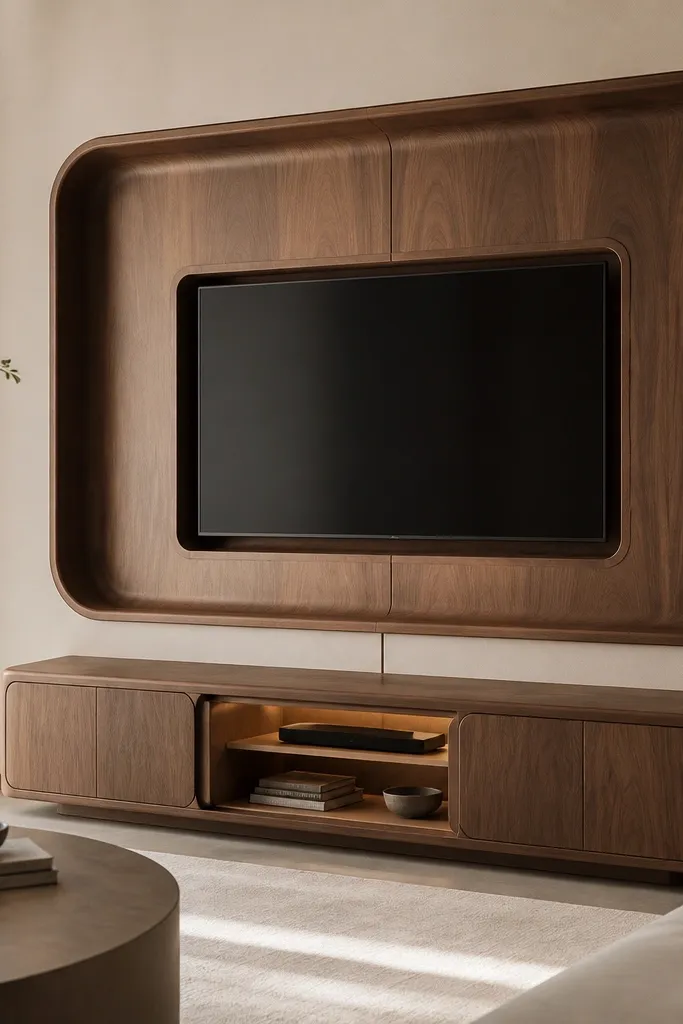
Rounded edges read expensive because they look custom and they soften the geometry of the TV. I’ve installed this niche style in homes where the rest of the furniture has curved arms or rounded coffee tables — the wall matches that comfort. Walnut keeps it warm, and the recessed niche makes the TV feel like it belongs there. The hidden cable channel matters because luxury walls look clean even up close. The principle is comfort in form plus cleanliness in execution.
Start by building the niche frame with rounded trim pieces so the corners don’t look like sharp MDF. Install the niche over a backing board, then add a recessed cable route behind the right or left vertical seam. Mount the TV so it sits 1-2 inches inside the niche and use a slim spacer so the screen doesn’t touch the wood. Add a warm LED strip along the inside base of the niche, not behind the screen. Finally, match the media console to the niche trim and keep the console doors or drawers closed so the wall stays visually calm.
If your TV remote keeps getting lost, place a small magnetic remote holder inside the niche’s lower edge so it’s always in the same spot.
Avoid visible cable loops — even one exposed coil ruins the luxury feel.
11. Warm white plaster wall with a large arched TV frame
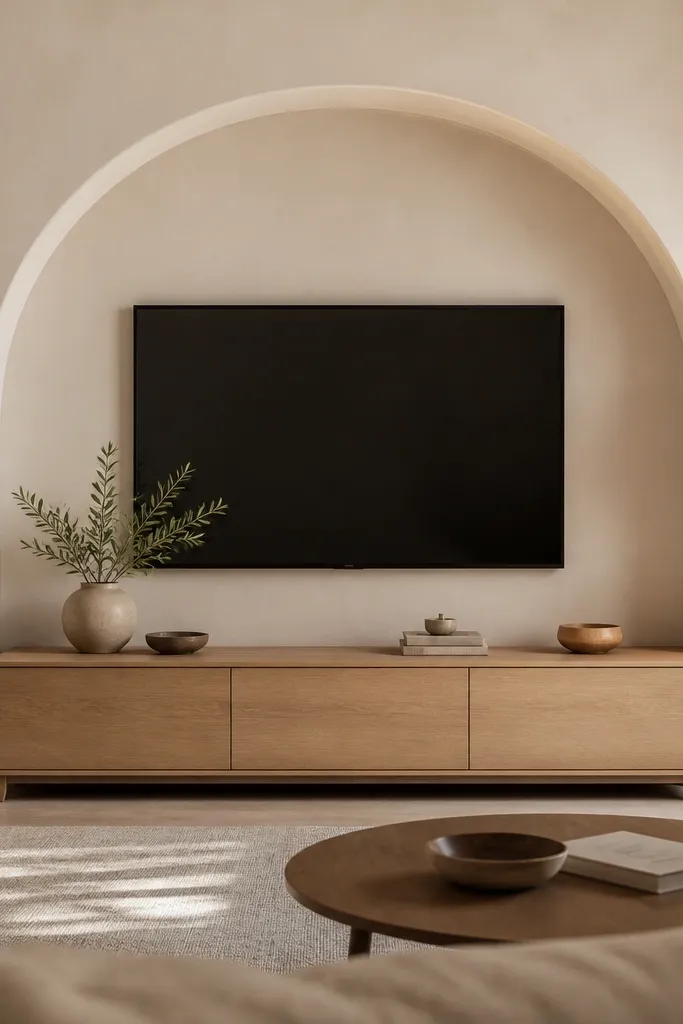
An arch frame instantly makes the TV area feel more human and less like a mounted appliance. Plaster keeps it soft and cozy because it doesn’t reflect glare, and warm white makes the space feel bright without looking sterile. I like this design in rooms with neutral sofas, cream rugs, and warm metal accents because it ties everything together visually. It also works well if you have a long wall — the arch creates a focal point that feels intentional. The principle is contrast in shape and finish: one smooth, calm plaster background with one defined frame line.
Start by choosing plaster-look paint with a true matte finish and a warm undertone. Mark the arch height so the top of the arch sits about 10-14 inches above the TV top, then build a frame with 3-4 inch wide trim. Paint the frame trim one shade darker or use the same color with a slightly different sheen so the edge reads without being high-contrast. Mount the TV centered inside the arch and keep the wall around it clean. Style the console with one low tray and one tall vase, and let the arch do the heavy lifting.
Use painter’s tape to create a crisp frame edge; plaster textures hide sloppy lines less than paint does.
Don’t make the arch too small — it looks like a decorative sticker instead of a real frame.
12. Two-tone paneling with walnut bottom and cream upper
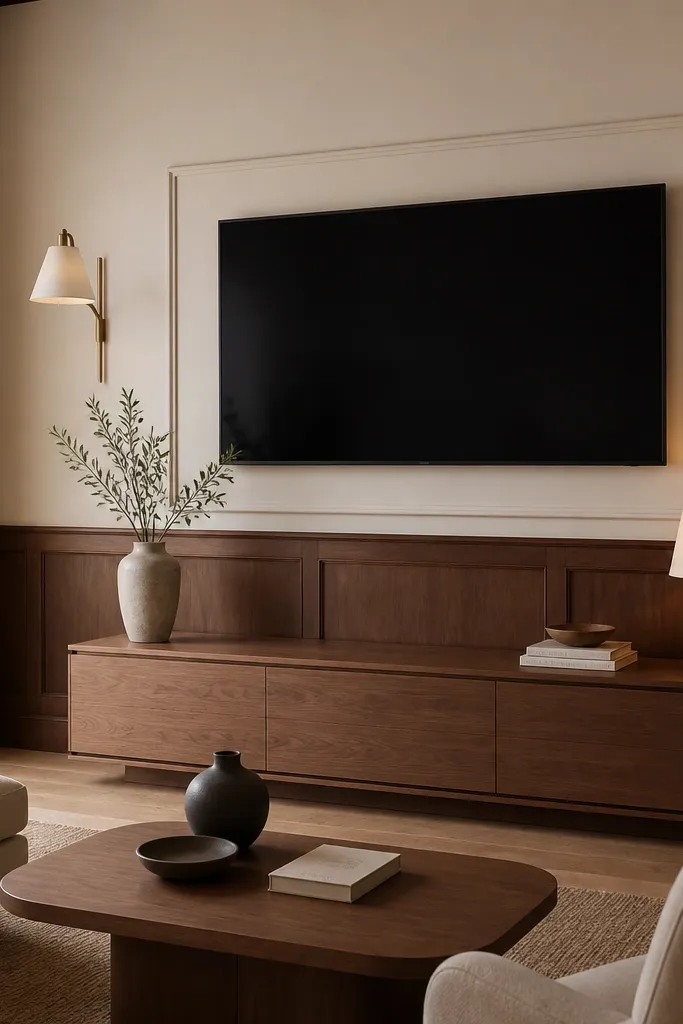
Two-tone paneling looks custom because it gives the wall a built-in structure. Walnut on the bottom half grounds the room and makes the TV feel anchored, while the cream top keeps it bright and cozy. I’ve used this in living rooms with lots of beige and it stops the space from looking flat. It flatters people who want warmth but don’t want the whole wall to be dark. The principle is visual weight control: heavier color lower, lighter color higher.
Start by deciding a split height around 40-48 inches from the floor, then install walnut paneling below. Paint or finish the upper section in a warm cream eggshell with matte panels if you want extra softness. Add a simple rectangular frame around the TV on the cream section, using trim that matches the walnut panel thickness. Mount the TV centered, then place a matching walnut console below with doors or drawers. Style the room with warm neutrals and one texture element like a chunky knit throw so the wall color doesn’t feel isolated.
Good to knowKeep the trim thickness consistent across both tones so the seam looks intentional.
AvoidAvoid mismatched undertones — walnut with too-red undertones can look off next to warm cream paint.
13. Rattan and wood hybrid wall behind the TV
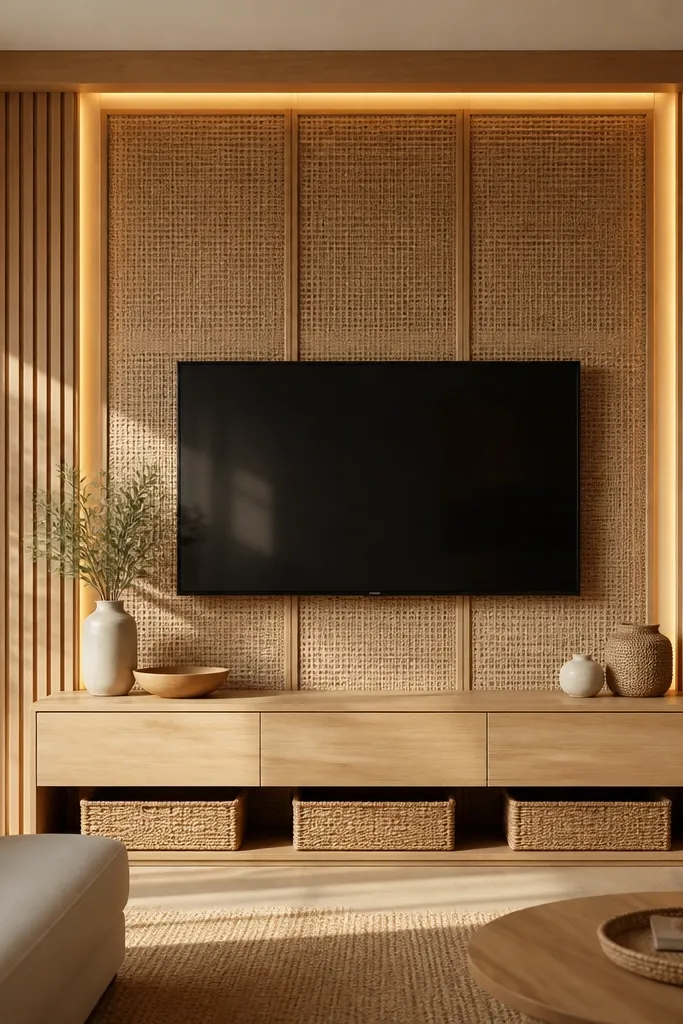
Rattan adds softness and texture without the heaviness of stone, and that makes the TV wall feel cozy warm instead of showroom-cold. I like hybrid walls where the rattan is framed with wood so it looks designed, not like a blind. This works great for rooms with warm whites, beige walls, and natural wood floors. It also looks flattering in photos because rattan texture catches warm light. The principle is using one airy texture behind the TV and keeping everything else simple so it doesn’t look busy.
Start by building a wood frame around the TV area, leaving a 1-2 inch margin so the rattan panel sits back from the TV plane. Install rattan mesh or a rigid rattan panel inside the frame at a shallow depth so it still feels like a wall, not a screen. Mount the TV centered, and add warm LEDs along the inner edges of the wood frame rather than directly behind the rattan. Use a light oak console and keep decor to woven baskets and one ceramic object. If your room is very bright, add a dimmer so the rattan doesn’t look too golden at night.
Good to knowChoose rattan with a tight weave; loose weave reads more fragile and less luxury.
AvoidDon’t use rattan as loose wallpaper behind a TV without a frame — it warps and looks patchy.
14. Candlelit sconce wall with neutral linen paneling
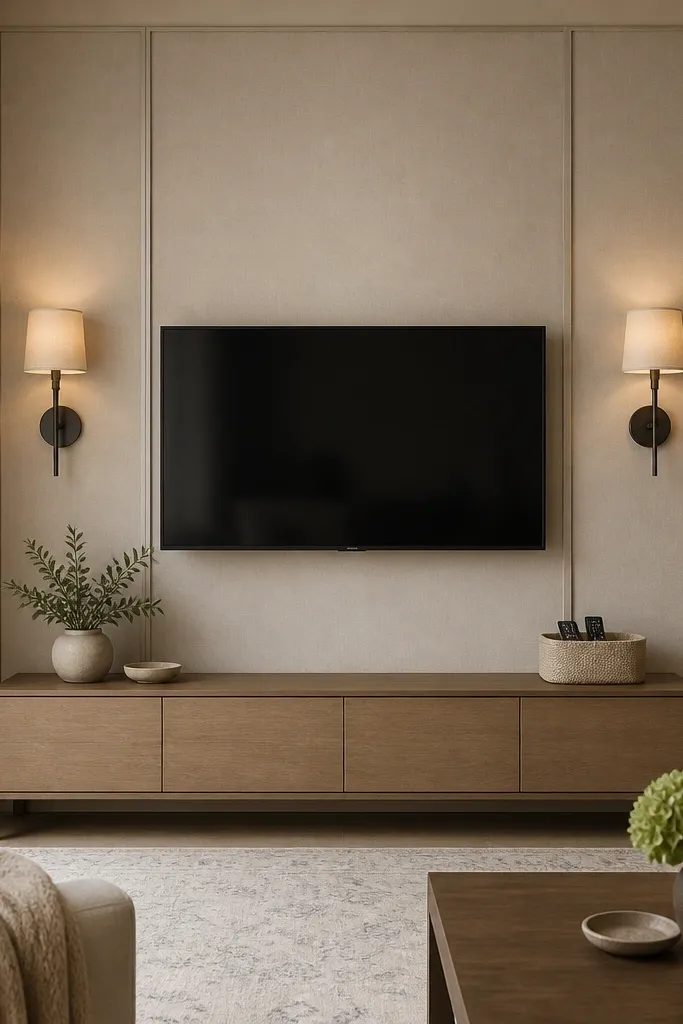
Linen paneling is the “quiet luxury” version of a cozy TV wall. It absorbs glare, looks warm in the evening, and it makes the whole space feel like you can exhale. I’ve used linen in taupe and oatmeal tones, and it plays nicely with both warm wood and black metal furniture. It’s especially good if your room has polished floors that reflect light — linen cuts that glare. The principle is fabric-led background plus gentle lighting so the TV doesn’t look like the only hard surface in the room.
Start by stretching linen over a rigid backing board and leaving it taut so it doesn’t sag. Install the panel behind the TV, keeping the panel edges hidden under trim for a clean look. Mount the TV centered and add two sconces at matching heights, about 60 inches to the bulb center. Use 2700K bulbs with a frosted cover so the light feels candle-like. Style the console with one low tray, one basket, and a small lamp base — keep it low so the linen texture stays the main visual.
If your linen looks wrinkly, iron the fabric before stretching — wrinkles read sloppy on a flat wall.
Skip glossy wall sconces with bare bulbs — they create harsh hotspots on the linen.
15. Walnut and cream picture frame molding around the TV
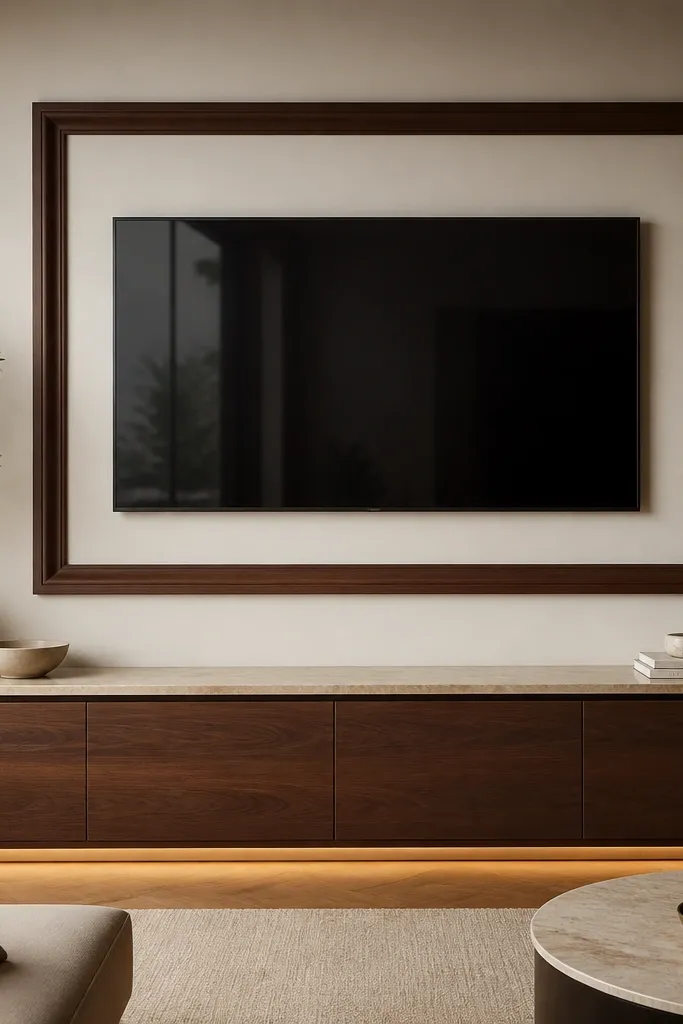
This look makes the TV feel like framed art, which is why it reads luxury even in simple rooms. The cream background keeps it bright, while the walnut frame adds warmth and depth. I like this when the rest of the decor is minimal because it gives you a single clear focal point. It also flatters people who want a cozy warm TV wall design luxury look without going full stone or full wood. The principle is a picture-frame border with consistent trim widths so the TV sits inside a “mat.”
Start by painting the wall a warm cream eggshell, then install walnut molding at two widths: a thin inner border and a thicker outer border. Keep the inside opening sized so there’s 2-3 inches of frame visible on each side of the TV. Mount the TV on a bracket that sits flush so it doesn’t push the screen forward beyond the frame. Add a small LED strip under the console or inside a shallow shelf to create a warm glow that doesn’t hit the screen directly. Style with a stone or marble tray, one sculptural object, and one framed print that matches the walnut tone.
Use a laser level when installing the frame — even a 1/8-inch drift shows in photos.
Don’t use thin, flimsy MDF trim without priming — it chips and looks weak next to real wood.
16. Oversized round mirror behind TV glow for depth
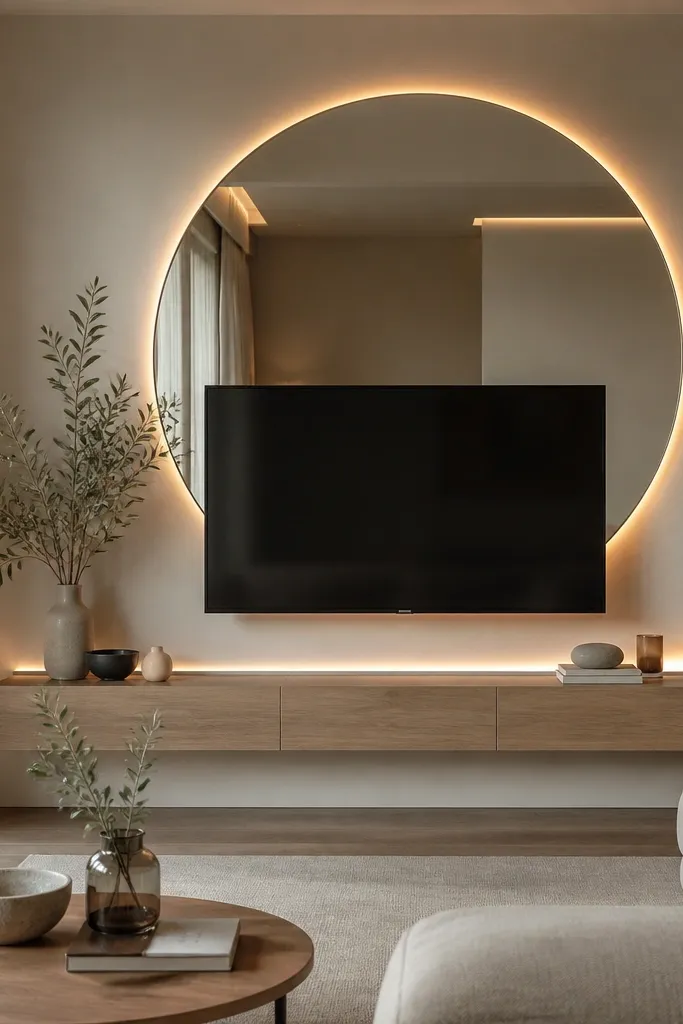
A mirror behind the TV area adds depth because it reflects the warm light and makes the wall feel larger. I don’t mean a mirror directly behind the screen — that’s distracting. Instead, I place a large round mirror centered above or slightly behind the TV plane so it catches the wall lighting and creates a soft halo. This looks great in smaller living rooms where you need the wall to feel bigger. The principle is controlled reflection: one mirror surface, warm light, and minimal clutter so it doesn’t turn into chaos.
Start with a neutral wall base in warm white or soft greige so the mirror reflection doesn’t look icy. Mount the TV centered, then install a large round mirror about 8-12 inches above the TV top or slightly offset to one side. Add a warm LED strip behind the mirror edge or use a mirror with integrated warm lighting. Keep the console simple and light-colored so the reflection doesn’t darken the scene. Style with two items only on the console — one tall piece and one low tray — so the mirror reflection stays clean.
Good to knowChoose a mirror with a thick frame in aged brass or warm bronze; thin frames look cheap in warm lighting.
AvoidAvoid placing the mirror too low — reflections land on the TV screen and show glare.
17. Built-in bookcase sides with hidden LED toe-kick
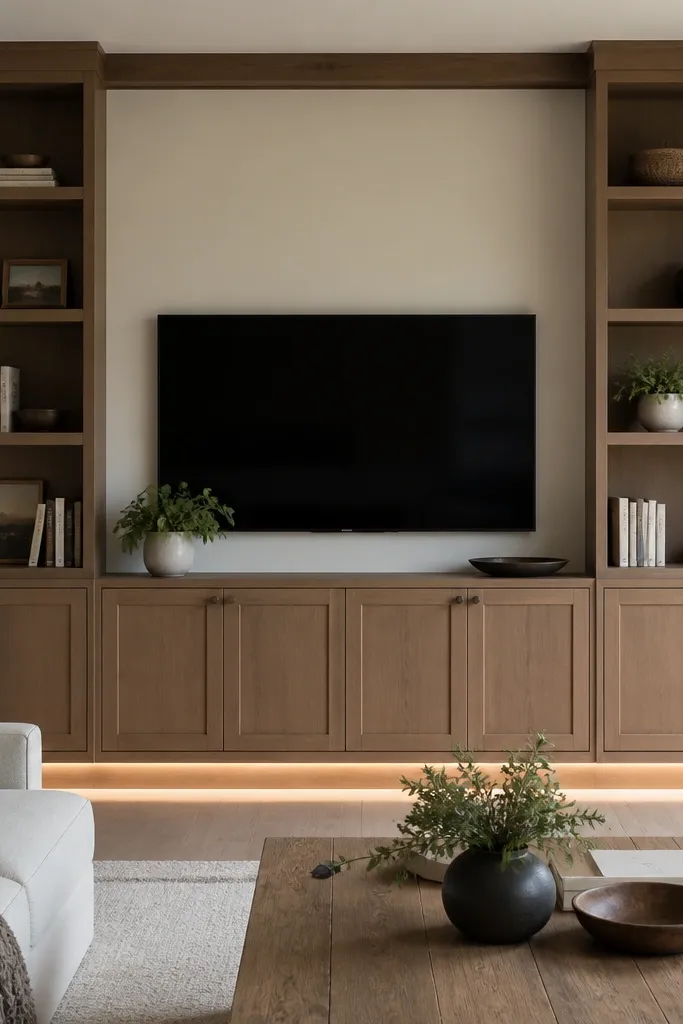
Built-in bookcase sides make a TV wall feel complete because they replace blank wall space with storage and styling surfaces. The toe-kick LED adds a warm glow at floor level, which makes the wall area feel cozy at night. I’ve done this in rooms where the sofa is close to the wall — the glow wraps around the base and softens the whole sight line. It also works for people who like to display books, ceramics, and framed photos without clutter. The principle is vertical framing plus low lighting that doesn’t shine directly at the TV.
Start by planning the bookcase columns so each side has one taller section and one lower cabinet section. Keep shelf spacing around 10-12 inches if you want books and 8-9 inches for decor. Install warm wood shelves and paint the back panel a warm cream so items pop. Mount the TV centered between the columns, then add a hidden LED strip in the toe-kick along the base — 2700K with a diffuser. Style the shelves with a pattern: one stack of books, one framed piece, one ceramic item per shelf, repeated across the columns.
Good to knowUse shelf back lighting only if you can diffuse it — direct LEDs make plastic look cheap.
AvoidDon’t leave the cabinet interiors bare — empty black boxes look unfinished.
18. Large warm plaster art panels with a slim floating TV mount
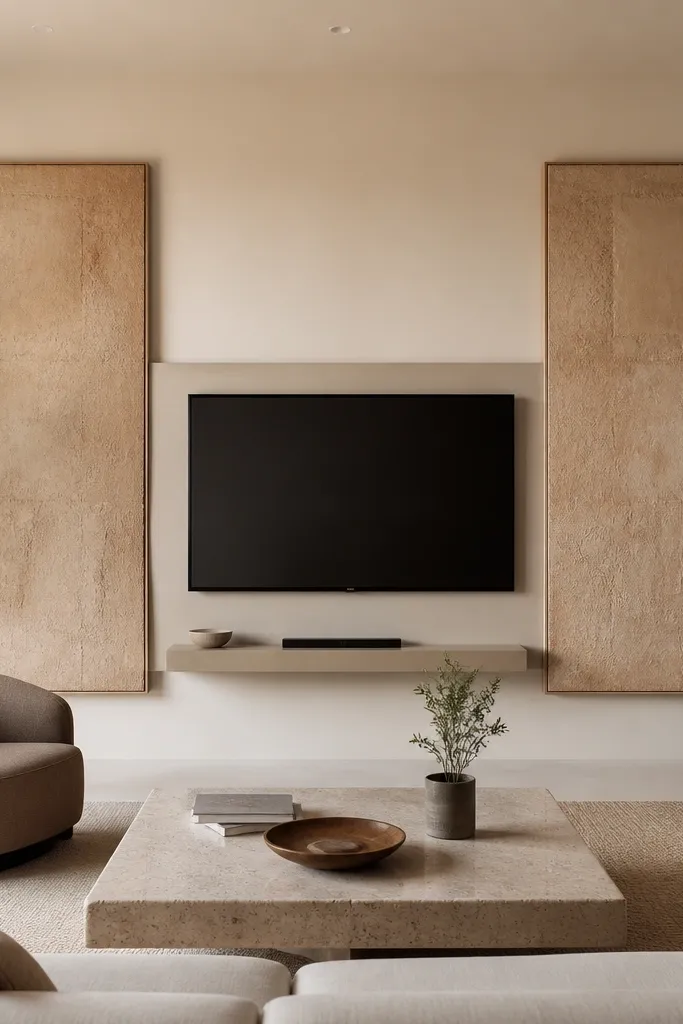
This design is luxury because it treats the TV wall like a gallery wall, not a media wall. Large plaster art panels create soft texture and a “framing” effect even if you keep the TV mount minimal. I’ve used this when clients hate clutter and want a calm backdrop that still looks expensive up close. Warm plaster in oatmeal or soft sand tones reads cozy and hides minor wall imperfections. The principle is negative space: let the panels and light do the work, and keep decor to a minimum.
Start by painting the base wall in a warm neutral matte or eggshell. Install two large plaster panels left and right of the TV area, leaving a clear gap so the TV remains centered and the panels don’t crowd it. Mount the TV on a slim backing plate so it sits flush to the wall. Add a small warm LED strip under the floating shelf or behind the TV mount area for subtle glow. Style the shelf with one object only — a ceramic bowl or a small framed print — and keep the rest of the wall empty.
Good to knowChoose plaster panels with gentle texture, not heavy peaks; heavy texture casts shadows that can look harsh around a bright screen.
AvoidAvoid placing panels too close to the TV — you lose the gallery framing effect.
19. Terracotta tile wall with a cream mantel shelf
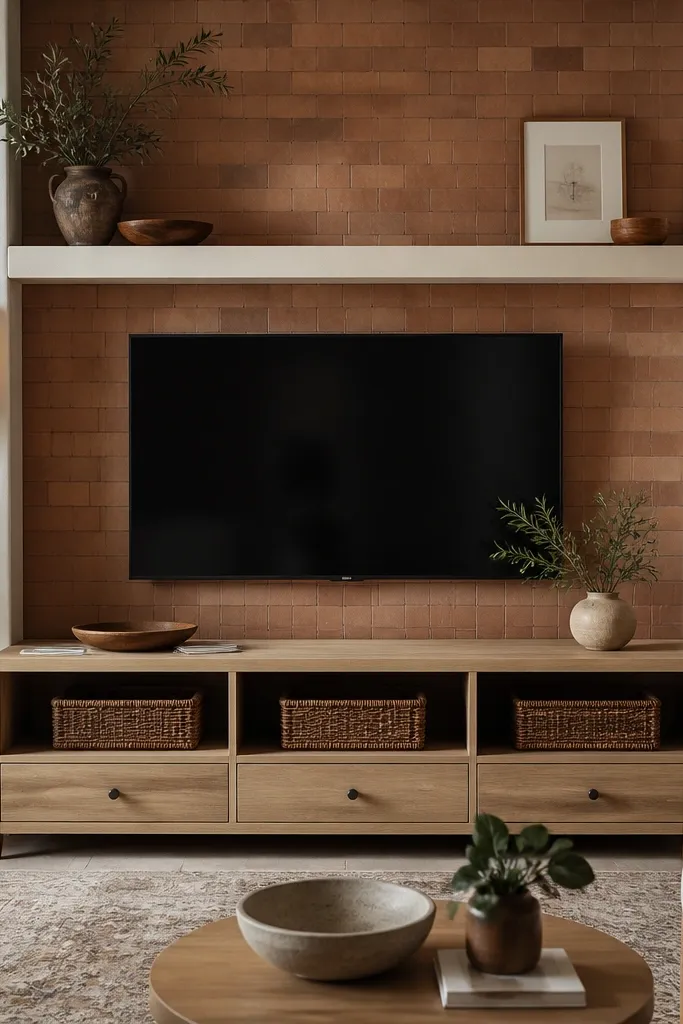
Terracotta tile makes the TV wall feel like a warm room in a Mediterranean house, which is exactly the cozy warm TV wall design luxury vibe I want at night. The clay color is naturally warm, and tile texture adds depth without needing extra decor. I like pairing terracotta with cream trim and light oak because it looks grounded and not trendy. This works well for people who have warm-toned rugs, caramel leather, or beige upholstery. The principle is color temperature: tile does the warming for you, so you don’t have to rely on heavy dark finishes.
Start by choosing small-format terracotta tiles, like 3x6 or 4x4, with a matte finish so glare doesn’t hit the TV. Install the tile wall behind the TV and extend it about 10-14 inches wider than the screen on both sides. Mount the TV centered and add a cream mantel shelf with a slight overhang, about 6-8 inches deep. Add warm sconces on either side at equal heights to make the tile pattern look intentional. Style the mantel with a simple ceramic vase and one framed piece, then keep the console to woven baskets and one tray.
Use grout in a warm sand tone, not gray — gray grout cools the wall instantly.
Skip glossy terracotta tile — it reflects the TV and makes the wall look cheap fast.
20. Rustic oak beam accent with warm LED wash
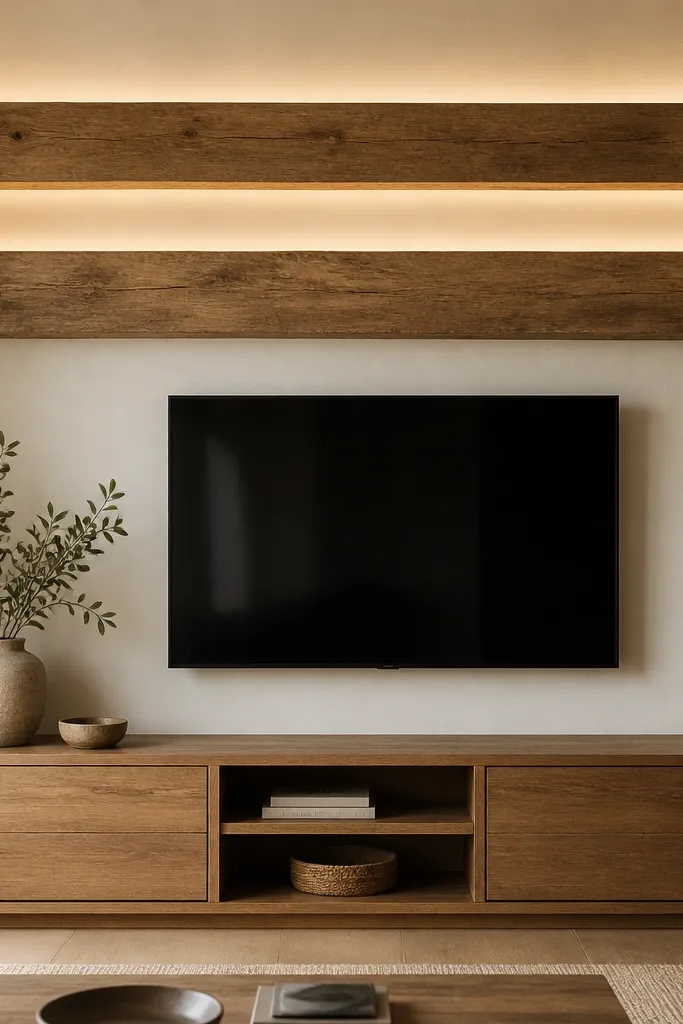
Beams give you a built-in feel without full paneling, and that reads luxury because it looks like the room has structure. I like rustic oak beams with visible grain and a satin finish, paired with a warm off-white background so the beams don’t overpower. The warm LED wash behind the beams adds a glow that makes the wall feel deeper and cozier in the evening. This works for rooms with high ceilings or when you want the TV area to feel grounded. The principle is using one strong architectural element and one warm light layer.
Start by painting the wall in a warm off-white eggshell with good coverage. Mount two oak beams horizontally, keeping them parallel and spacing them so the top beam sits about 6-10 inches above the TV top. Install LED behind the beams, aiming the light upward and slightly inward so it washes the wall, not the TV screen. Mount the TV centered and level, and add a console in oak with simple doors or drawers. Style the area with a couple of low decor pieces — one textured basket and one small lamp — so the beams remain the hero.
Good to knowAnchor the beams with real depth, not thin trim — 1.5-2 inches thick looks believable.
AvoidDon’t mount beams too low — it makes the TV area feel cramped.
21. Warm gray limewash wall with minimal frame molding
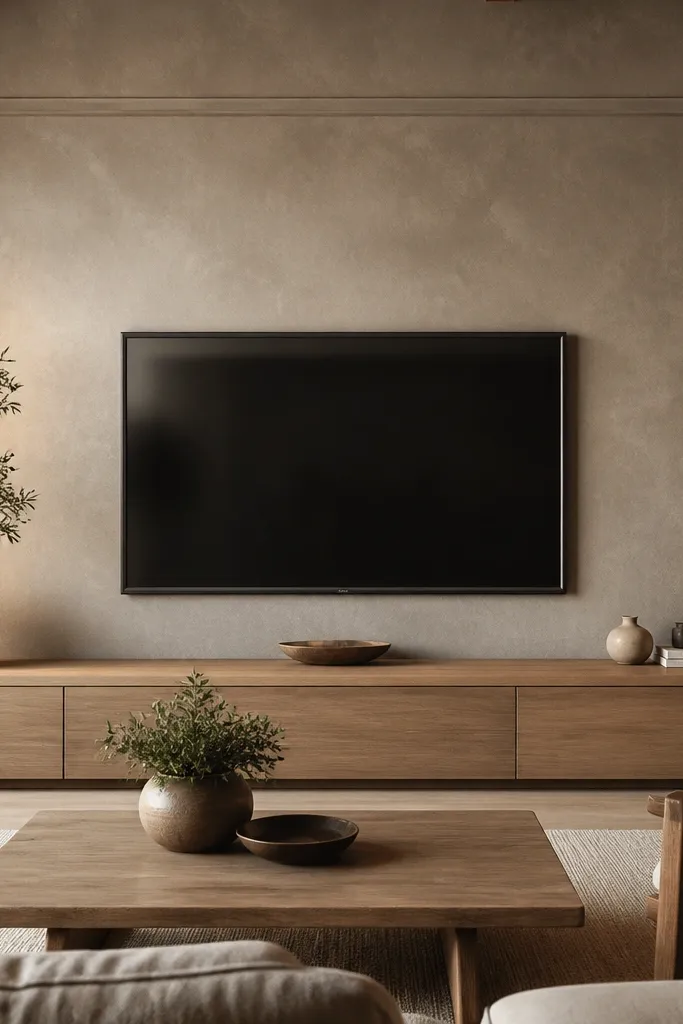
Limewash texture makes a TV wall feel lived-in and expensive at the same time. The uneven, cloudy surface catches light softly, so it looks cozy even when the room lighting is dim. I used a warm gray limewash in a room with white trim and it didn’t feel cold because the undertone leaned beige. This design flatters modern furniture too because it adds texture without adding a lot of shapes. The principle is “single texture, single trim”: let the wall texture do the work and keep the frame thin.
Start by prepping the wall so it’s smooth enough for limewash to look even, then apply limewash in thin layers for that cloudy depth. Paint a thin frame around the TV using the same color family but slightly warmer, with a satin finish so the frame edge reads. Mount the TV centered and flush, and add a warm LED strip behind a slim shelf below or in a shallow recess near the TV. Style the console with one tall plant and one small tray, then keep the rest of the wall empty. Choose a rug with warm fibers so the limewash doesn’t fight cool tones.
Test limewash in a small corner at night and in daylight; undertones show up differently under TV lighting.
Avoid flat, dead paint over textured walls — it looks like a patch after limewash.
22. Microcement TV wall with warm wood floating shelf
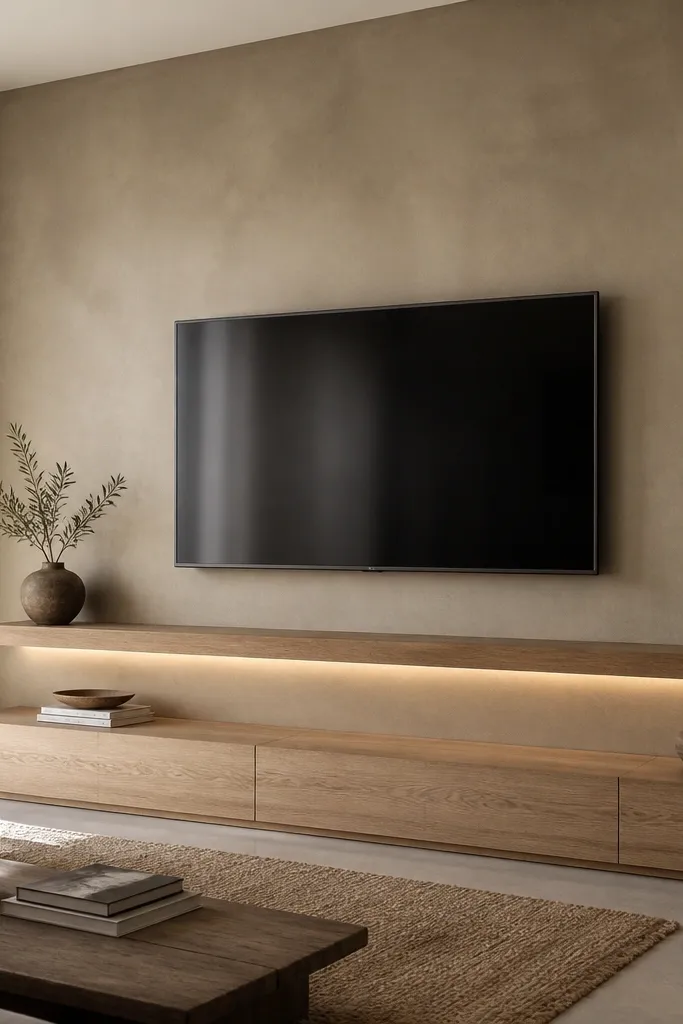
Microcement reads luxury because it’s smooth but textured, and it has a muted warmth that doesn’t glare. I like warm taupe for this look because it makes the TV area feel cozy without turning dark. The floating wood shelf adds warmth and gives you a place to style without covering the wall. This is a strong choice if you want a clean, modern look but still want warmth for evenings. The principle is matte texture plus a single warm wood line so the wall looks expensive up close.
Start by finishing the wall in microcement or microcement-look coating in a warm taupe tone with a matte top coat. Mount the TV centered and keep the wall around it clean and minimal. Install a floating shelf in warm oak or walnut, about 8-10 inches deep, positioned 6-10 inches below the TV bottom edge. Add a 2700K LED strip under the shelf with a diffuser so it glows softly on the wall. Style with a slim stack of books and one ceramic piece, then stop — the texture already does the visual work.
Use diffused LED tape, not bright bare strips, so you don’t see LED dots on the microcement.
Avoid cool gray microcement — it reads cold and makes the room feel sterile.
23. Walnut slat + fabric-wrapped side panels for soft symmetry
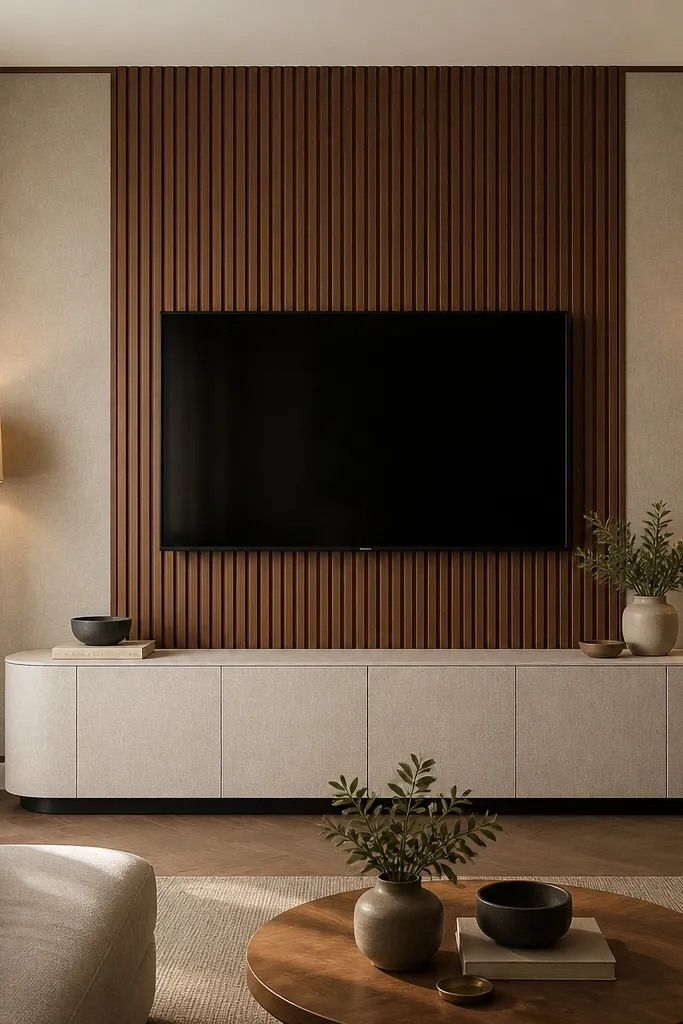
This is one of those setups that feels luxurious in motion, not just in photos. Walnut slats give structure behind the TV, and fabric-wrapped side panels add softness at eye level. I’ve used this in rooms where people sit close to the wall and the fabric makes the whole area feel warmer and more comfortable. It flatters warm neutrals and looks good with both wood and metal furniture because the fabrics act like a buffer. The principle is symmetry with different materials: structured center, soft sides, and warm light to tie it together.
Start by installing walnut slats in a centered rectangle that’s about 10-14 inches wider than the TV. Build two fabric-wrapped side panels and mount them so they align vertically with the slat area, leaving a consistent gap between materials. Use oatmeal or warm taupe fabric with a tight weave so it doesn’t look fuzzy or cheap. Mount the TV on the slat backing and keep the TV level with the center of the fabric panels. Add warm wall sconces or a floor lamp and style the console with one woven basket and one low tray so the fabric textures stay the focus.
Good to knowPick fabric that matches a curtain or throw already in your room so the wall doesn’t look like an add-on.
AvoidDon’t use slippery shiny fabric — it catches light and makes the wall look less cozy.
24. Soft green plaster wall with warm wood frame and amber light
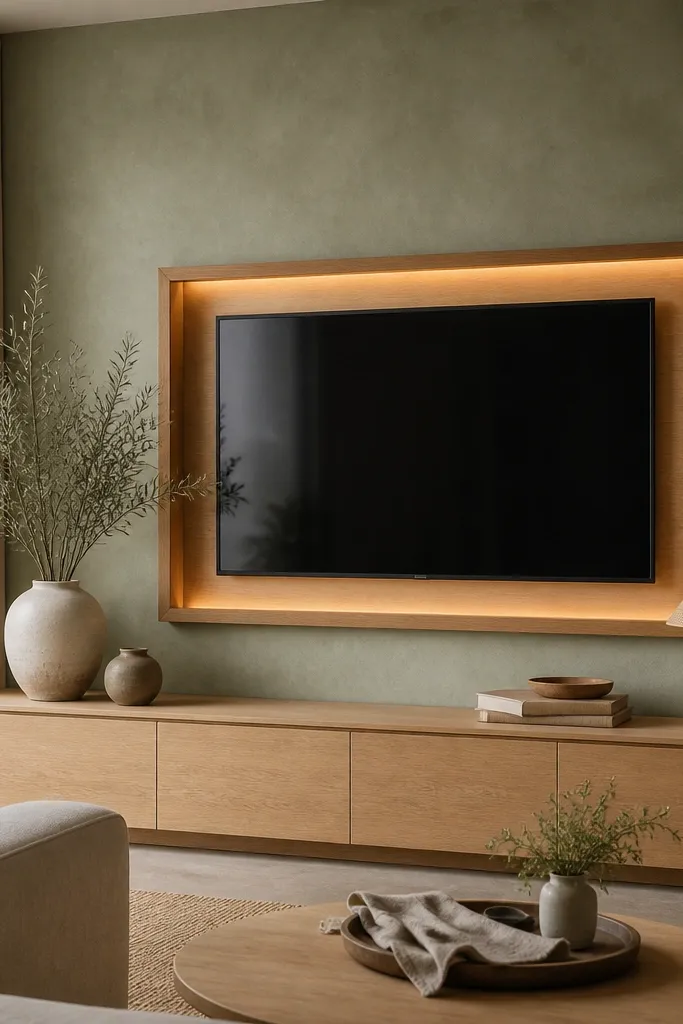
Soft green plaster is cozy because it feels like a calm room color, not a gray wall. When you pair it with warm wood framing and amber-leaning warm light, the TV wall becomes inviting instead of just decorative. I’ve used sage plaster in rooms with beige sofas and it made the space feel more expensive without adding heavy dark furniture. It also flatters people who want color but don’t want loud paint. The principle is warm framing around a colored background so the TV sits inside the color field.
Start by choosing a sage plaster or limewash finish with a muted undertone — not neon, not blue-green. Frame the TV with warm oak trim about 2-3 inches wide, and keep the inside opening sized so you see a consistent border. Install 2700K LEDs behind the frame with a diffuser, and if you have control, set the dimmer so the wall glows amber in the evening. Mount the TV centered and level, then place a light oak console below with linen baskets to hide remotes. Style with one tall plant and one framed art piece in a warm frame tone.
Good to knowIf your sage looks too cool, warm it up with a wood frame and amber-dim lighting instead of changing the whole paint color.
AvoidAvoid bright sage with high sheen — it looks trendy but not cozy under TV light.