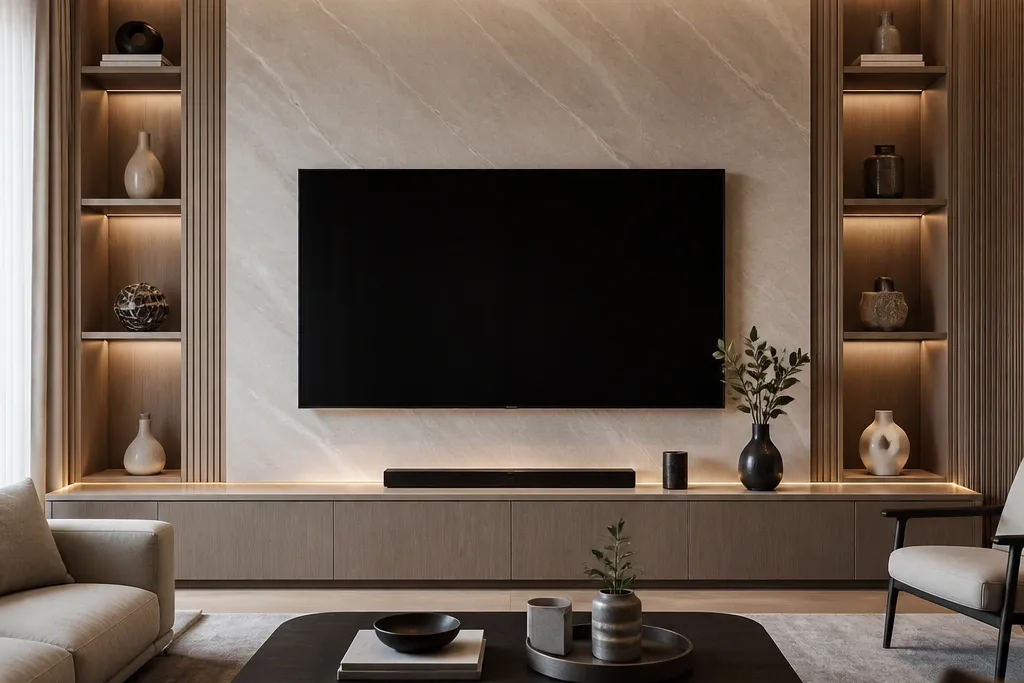
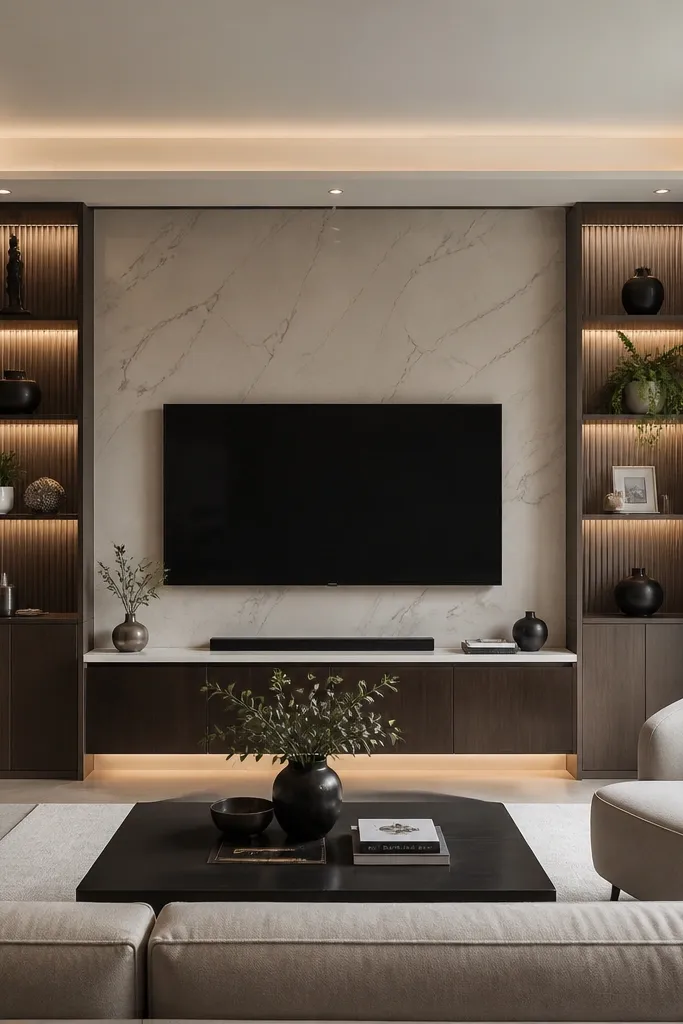
1. Warm Oak Slat Frame With Linen Backdrop
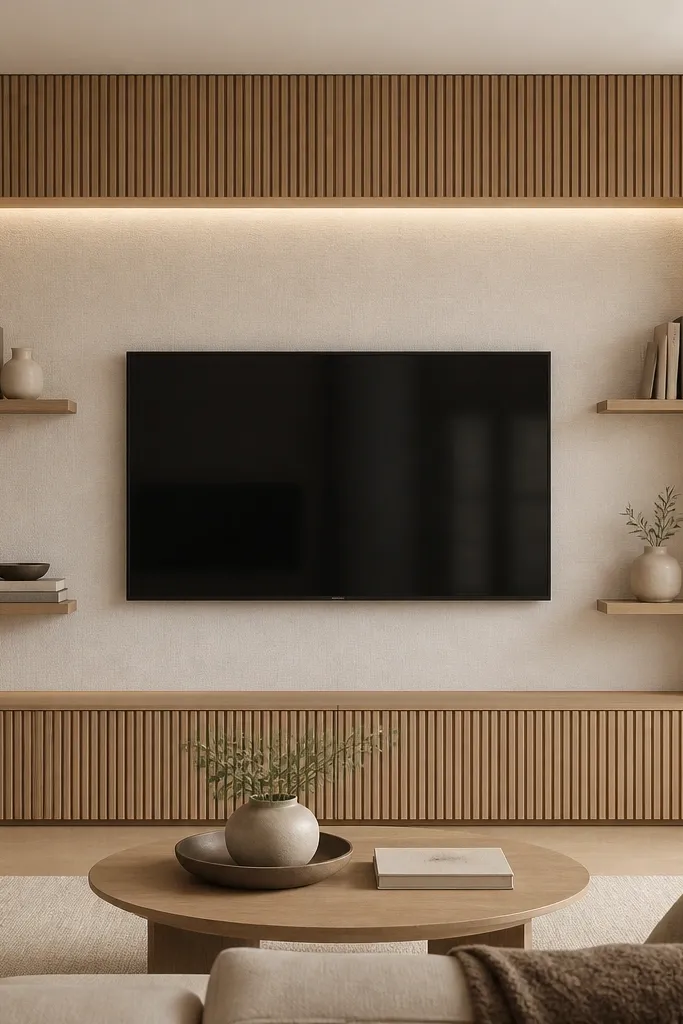
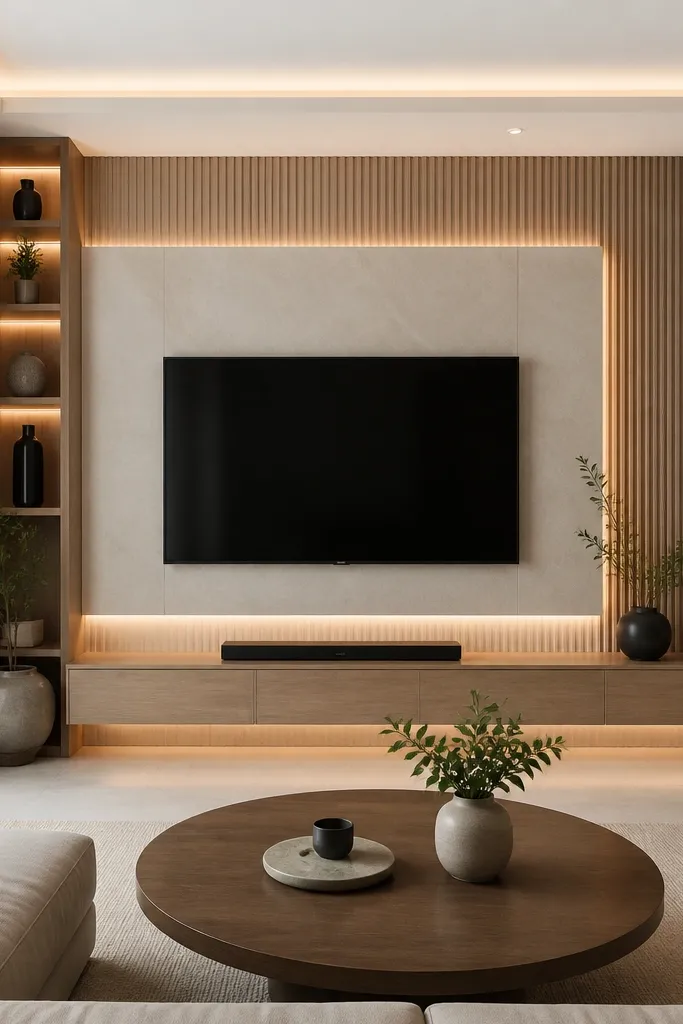
Start by marking a centered rectangle that’s about 10-14 cm wider than your TV on each side, so the frame reads intentionally even from across the room. Mount 1x2 inch oak slats vertically with a 2-3 cm gap, then paint the back wall area a soft off-white with a matte finish. Add a warm LED strip or recessed puck lights along the inside perimeter of the frame — aim light across the slats, not straight at the screen. Style the shelves with one tall object per side (a book stack or a slim ceramic), one medium piece (a framed print or small sculpture), and one low touch (a tray or taper candle holder). Keep the color palette to oak + cream + one accent color like clay or sage.
This setup is my go-to for year round luxury TV wall design because the wall still looks calm when the screen is black. The warm oak slats add depth without feeling heavy, and the linen-texture panel keeps reflections low, which matters if your room has any window glare. I like it best in living rooms with medium to warm undertones in the flooring (oak, maple, beige tile) because the wood tone blends instead of competing. If your skin tone runs warm or golden, the cream linen makes you look naturally brighter in photos taken in that space.
AvoidAvoid high-gloss paint behind the TV; it looks great for 10 minutes and then turns into glare city.
Good to knowUse a phone flashlight at night and check reflections on the TV — if you see bright streaks, reduce sheen on the surrounding panel or shift the light angle lower.
2. Plaster Column Panels With Black Center Niche
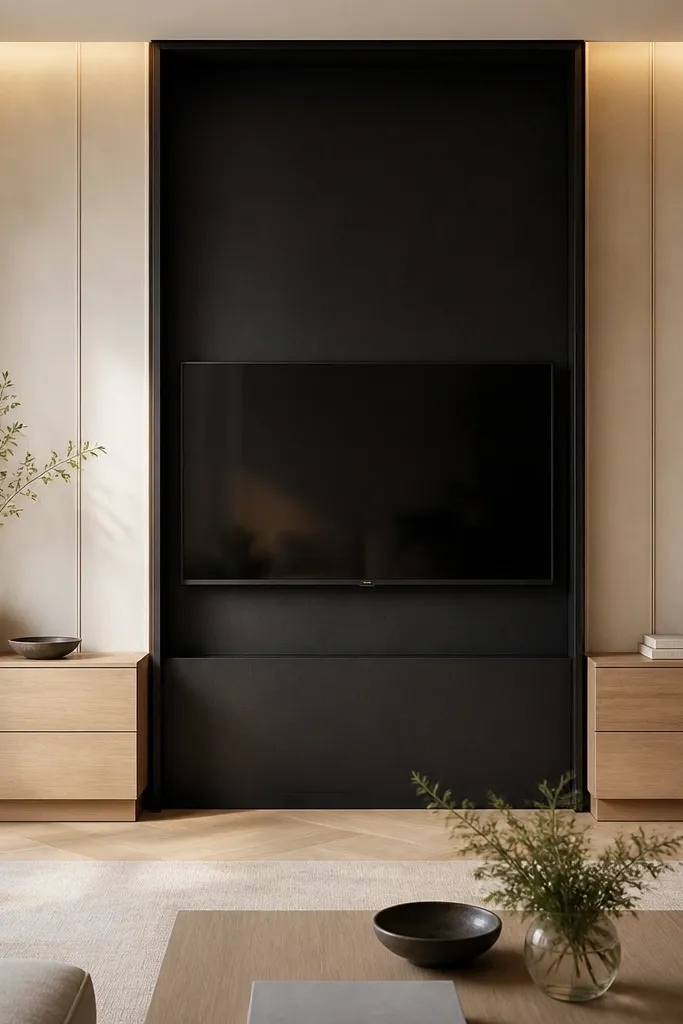
I love this look when the room wants structure. The plaster columns add shadow depth, and the black niche makes the TV feel framed and intentional. It works especially well if your living room has neutral walls and you want a “built-in” vibe without visible clutter. For people who like clean lines (and who hate busy shelves), the narrow niche and symmetrical side cabinets keep the whole wall feeling controlled.
Start by painting your whole wall in a warm off-white matte, then install two vertical column panels flanking the TV zone. Build a centered niche in black — either with drywall and paint or with a ready-made MDF niche kit — and keep the interior matte so it doesn’t reflect. Mount the TV so its bottom edge sits around 45-50 cm above the media console surface if you’re sitting at a typical couch height. Add grazing lights: place two recessed fixtures so they shine up and across the plaster columns, not at the screen. Finish by adding matching cabinet doors or open shelving at equal distances from the niche, then keep decor to pairs: one ceramic on the left and one on the right with the same scale.
Choose one accent material for decor (black metal, light oak, or white ceramic) and stick to it across both sides so the wall reads cohesive.
Don’t put patterned wallpaper behind the niche; the plaster shadows already give texture and the patterns fight.
3. Marble-Effect Tile Band and Floating Console
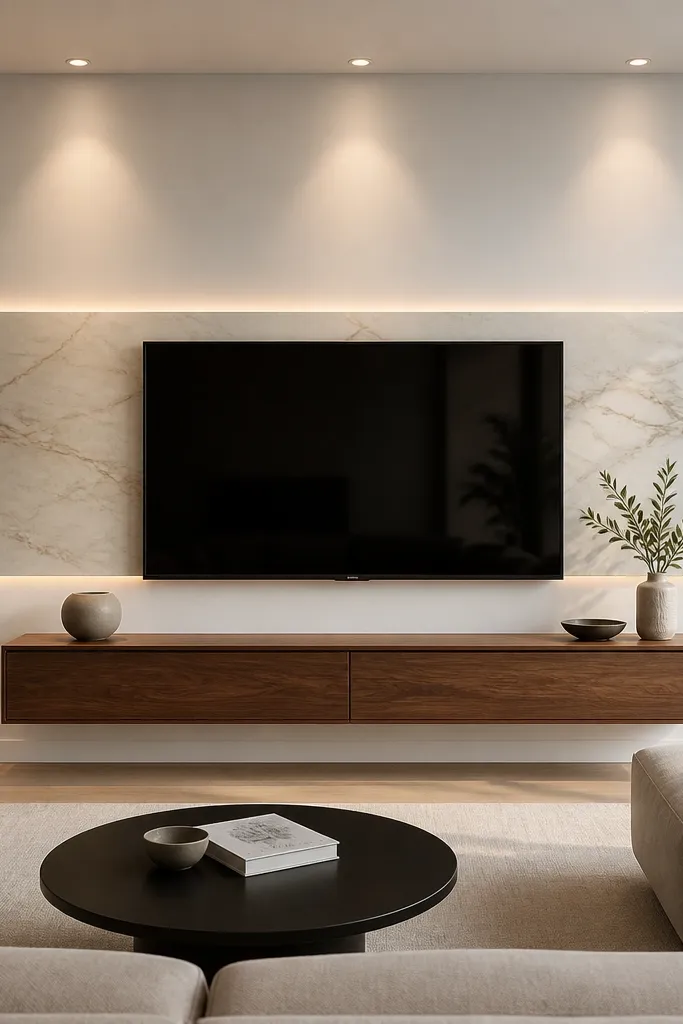
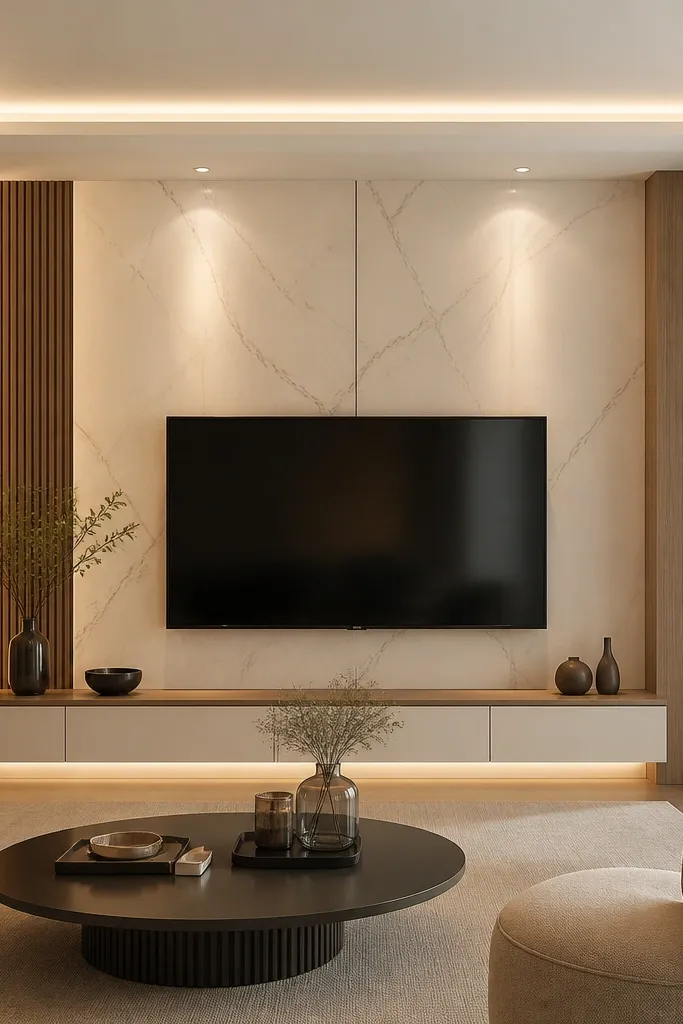
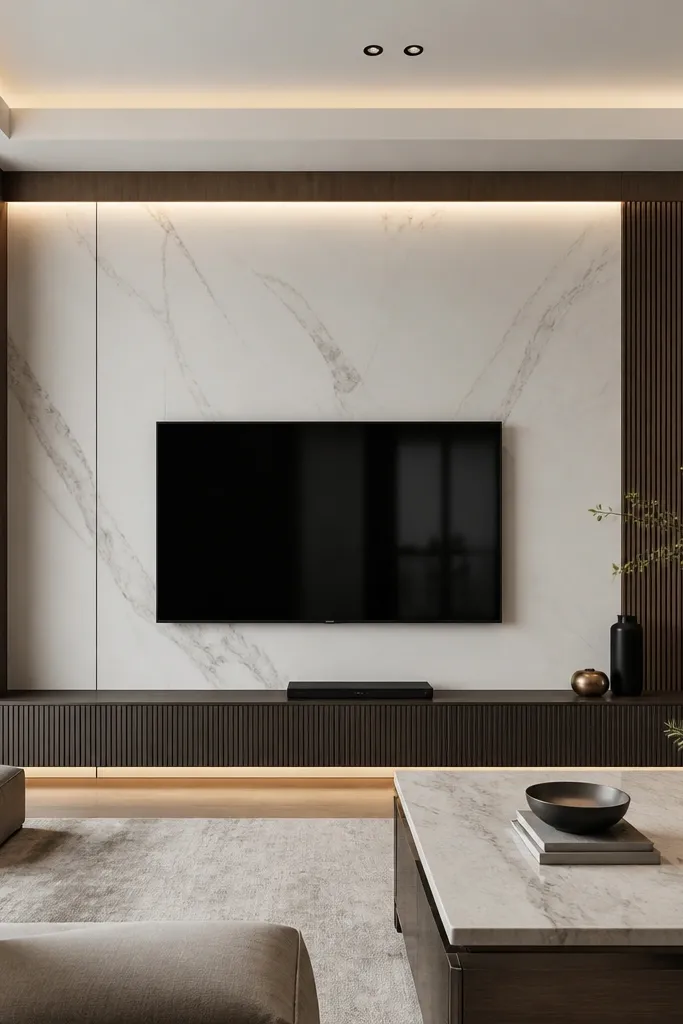
Start by selecting a marble-effect tile with a consistent veining direction so the band looks intentional. Install the tile band at TV height so it sits behind the screen and extends 15-20 cm beyond each side of the TV frame. Keep the surrounding wall warm white matte to reduce glare and make the veining stand out. Mount a floating walnut console so there’s 6-10 cm of clearance from the floor for an airy look. Add two recessed lights or a linear LED strip above the console aimed upward to graze the tile band. Style the console with one low tray centered, a pair of matching candle holders, and a single medium artwork or frame on the wall if you have space above.
This is a luxury look that stays tasteful even when you change seasonal decor. The marble-effect band gives you that high-end feel without covering the entire wall in expensive-looking material. I’ve used it in homes where the owner wants “hotel” energy but hates heavy stone installations — it keeps the wall lighter visually. If your palette is already warm (tan, camel, walnut), the tile band ties everything together and makes the TV look like part of a designed feature wall.
AvoidAvoid tiny tile mosaics for this band; they look fussy and cheap fast compared to a clean slab-like pattern.
Good to knowPick tile veining that doesn’t look like it’s “random confetti” — consistent direction reads more expensive in person.
4. Tall Bookshelf Flanking a TV With Hidden Cable Slot
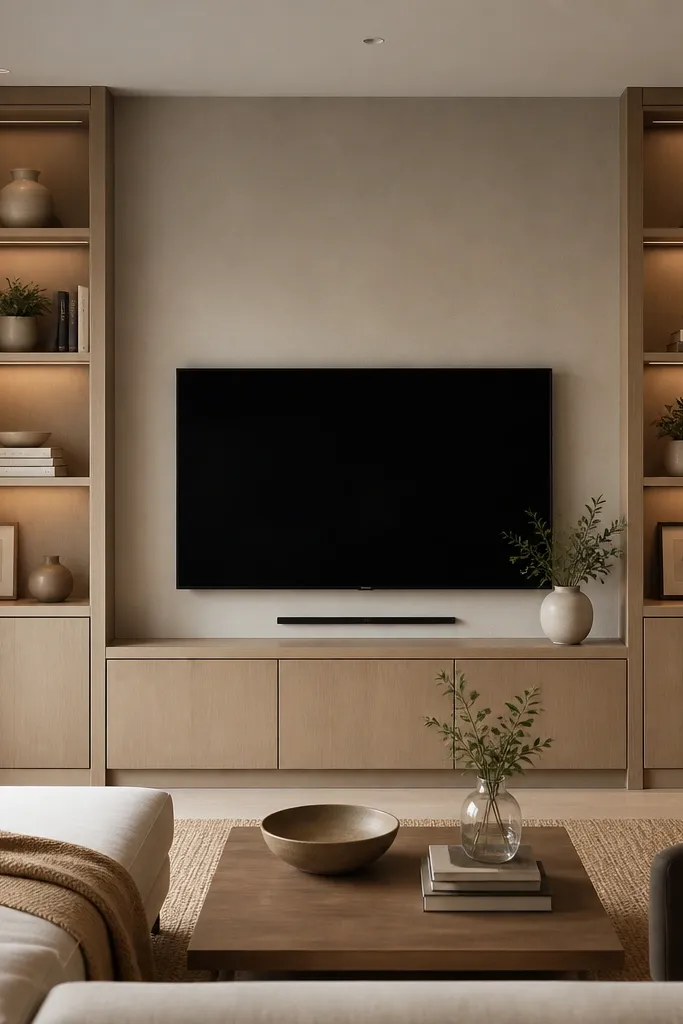
Start by building or buying two tall units with the same shelf depth so the TV zone looks centered and balanced. Mount the TV so it aligns with the middle shelf height and leave a small gap above the TV for a frame or trim piece. Add a hidden cable slot: route wires behind the center wall section and bring them down through a concealed opening so no cables hang near the bottom. Install warm LED strip lights inside the shelf bays — keep the LEDs dimmer than you think, around 2700K, so it feels cozy not clinical. Style by grouping: one vertical book stack per side at the same height, then one medium frame or vase, then a low object like a tray or small basket.
When you live with the TV wall every day, you need storage that looks good even when the shelves aren’t perfect. Flanking tall shelves around the TV creates a “library built-in” feel, and it hides the chaos that usually shows up near media consoles. This works best in rooms with a longer sightline, where you can see the full height of the bookshelves and feel the symmetry. If you own a lot of books or framed photos, this design makes your own collection part of the luxury.
AvoidAvoid crowding every shelf — empty space is what makes the wall look designed instead of stuffed.
Good to knowUse book spines as your “accent color” system — pick three spine colors you repeat on both sides.
5. Matte Black Picture Rail With Layered Art Panels
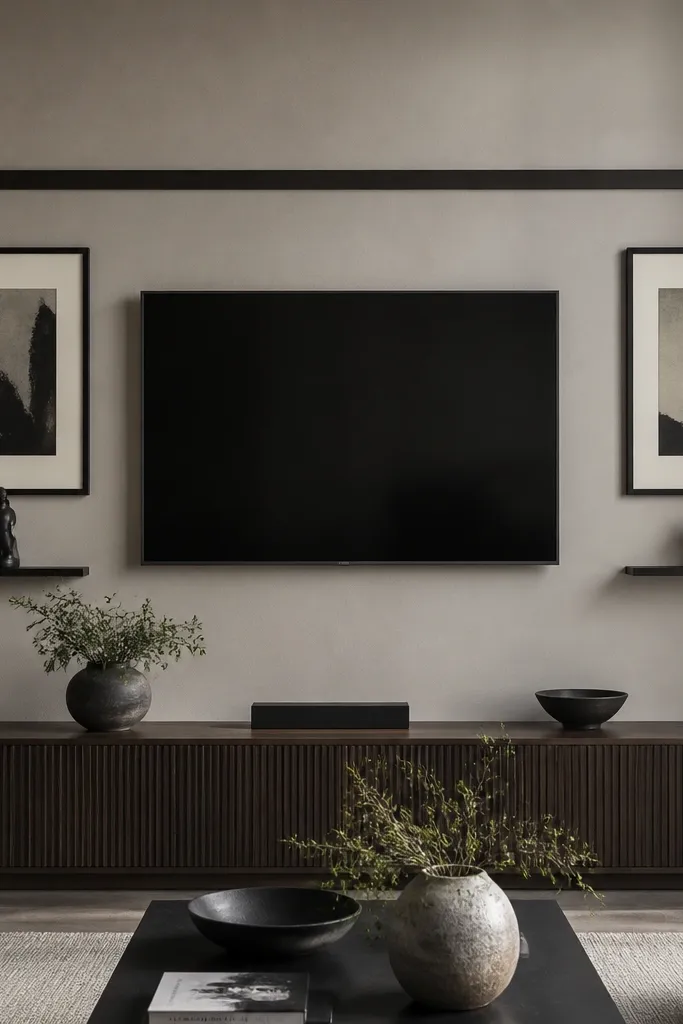
If you love swapping decor by season, this is the easiest luxury system I’ve built. The picture rail creates a clean line and lets you hang art like you’re curating a gallery, while the TV sits in the middle like the main piece. It works well for people who change throw pillow colors, new rugs, or seasonal wreaths and want the wall to keep up without a full remodel. The matte black rail also hides minor wall imperfections and gives you a strong frame even when the TV is off.
Start by painting the wall in a warm white matte so the black rail and frames pop without glare. Install a matte black picture rail at a height where the top edge sits about 10-15 cm above the TV’s top — then make sure it’s level across the whole wall. Mount the TV so the center of the screen lands roughly at eye level from your couch position. Hang two matching framed pieces on each side of the TV, using off-white mats and black frames for consistency. Add small shelves above the console and keep items low and spaced; use one metal finish (black or brushed steel) across both sides. When you swap seasons, keep the same frame sizes and just change the art or small objects.
Choose frames with the same glazing finish (matte or semi-gloss) to prevent glare differences across seasons.
Don’t use mixed frame colors like gold + black + wood on the same wall; it reads chaotic fast.
6. Rattan Screen Divider Behind the TV Zone
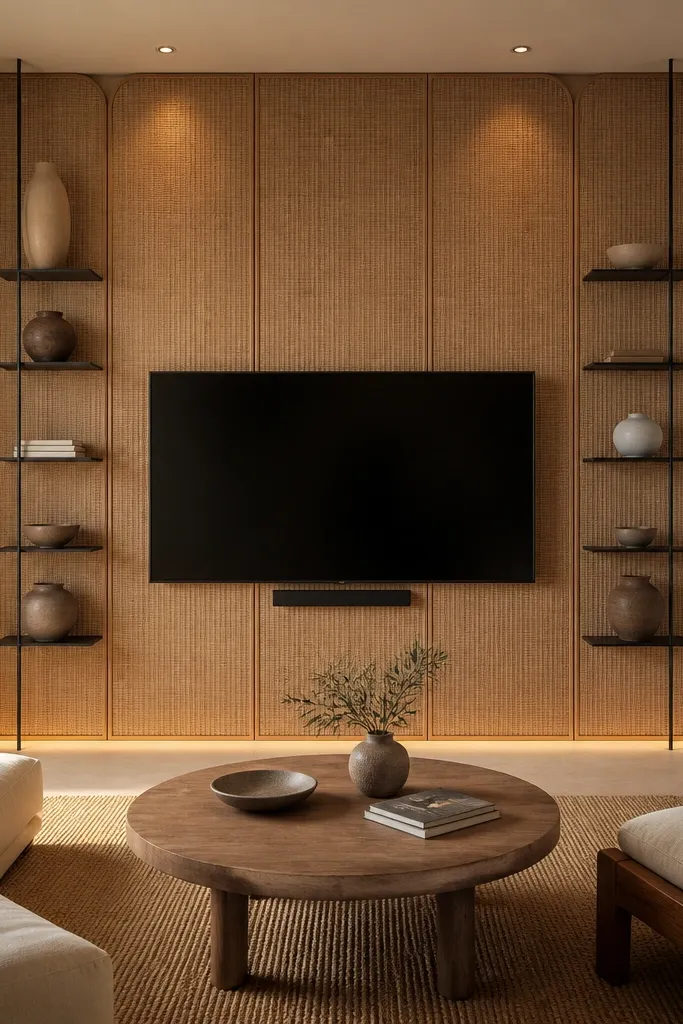
Start by choosing a rattan screen with a tight weave and a frame you can mount securely to the wall studs. Position it so it covers the TV zone plus a 10-15 cm border on each side, then center the TV in front of the screen opening. Mount the TV with a flush wall plate, but leave a small air gap so the screen doesn’t press against the back of the TV. Add lighting: one warm floor lamp aimed toward the wall and one small recessed or track light to light the rattan from above. Style the shelves with neutral ceramics (cream, sand, or light clay) and keep the number of objects low so the weave stays the star.
This one surprised me the first time I did it. A rattan screen behind the TV makes the wall look styled even when the TV is off, and it adds texture without making the room feel heavy. I recommend it when your living room is already warm and light — think beige walls, light oak floors, cream textiles — because rattan needs that backdrop to look intentional. It flatters people with warm undertones because the weave throws golden shadows that warm up the whole face area in photos.
AvoidAvoid loose, oversized rattan with big holes; it looks cheaper and the background texture becomes distracting.
Good to knowUse a matte TV screen cover or anti-glare setting at night if you see weave reflections.
7. Sculptural Plinth Mantel and Two Candle Niches
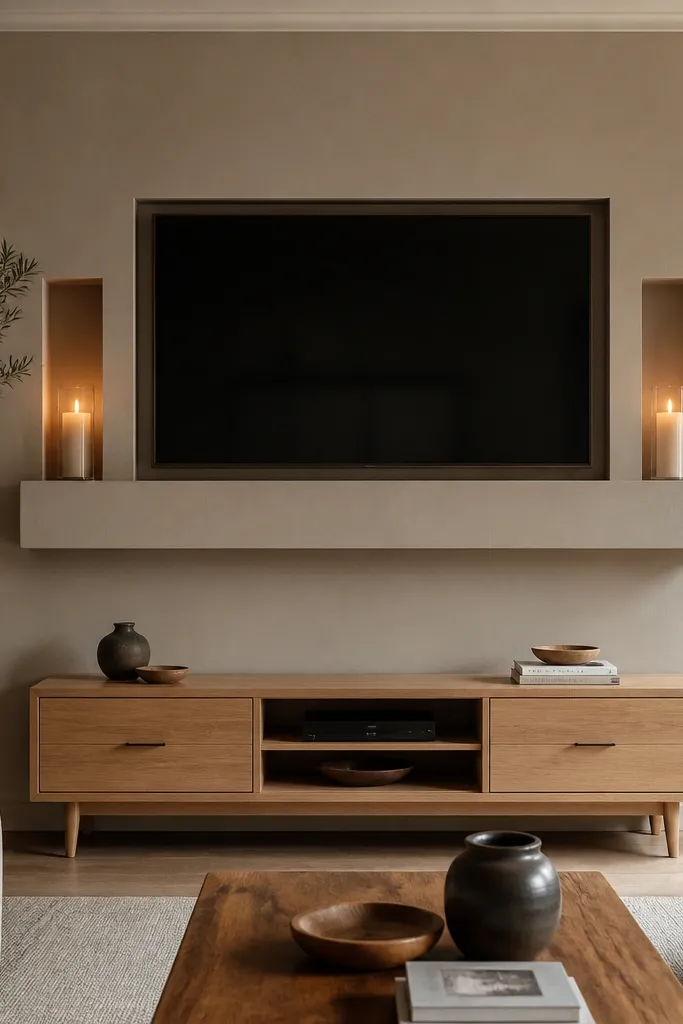
Start by installing a mantel shelf that’s deep enough to hold a small decor line — around 12-16 cm depth looks right under a wall-mounted TV. Paint the wall greige matte, then build or mount two narrow candle niches beside the TV, keeping them the same height. Mount the TV so there’s a 10-15 cm gap between the TV bottom and the top of the mantel shelf. Add warm LED candles inside the niches and keep the brightness low so it feels like ambience. Style the mantel with one long low item across the center (a ceramic tray) plus two matching accents at either end, then add one framed photo or small sculpture above the mantel if the room allows.
This is luxury for people who like a “frame and glow” look. The mantel shelf creates a visual base under the TV, so the screen looks like it’s part of a fireplace moment even when you don’t have one. The two candle niches make the wall feel finished at night, and they help the room look styled even when you’re not actively arranging decor. It’s especially good in rooms with neutral furniture and light wood — the shelf reads warm and architectural.
AvoidAvoid too many mantel objects; this design looks best when you can see the shelf surface.
Good to knowMatch candle niche finish to your TV mount hardware (both black or both brushed steel) so it looks intentional.
8. Two-Tone Wall Panels With Walnut Veneer Center
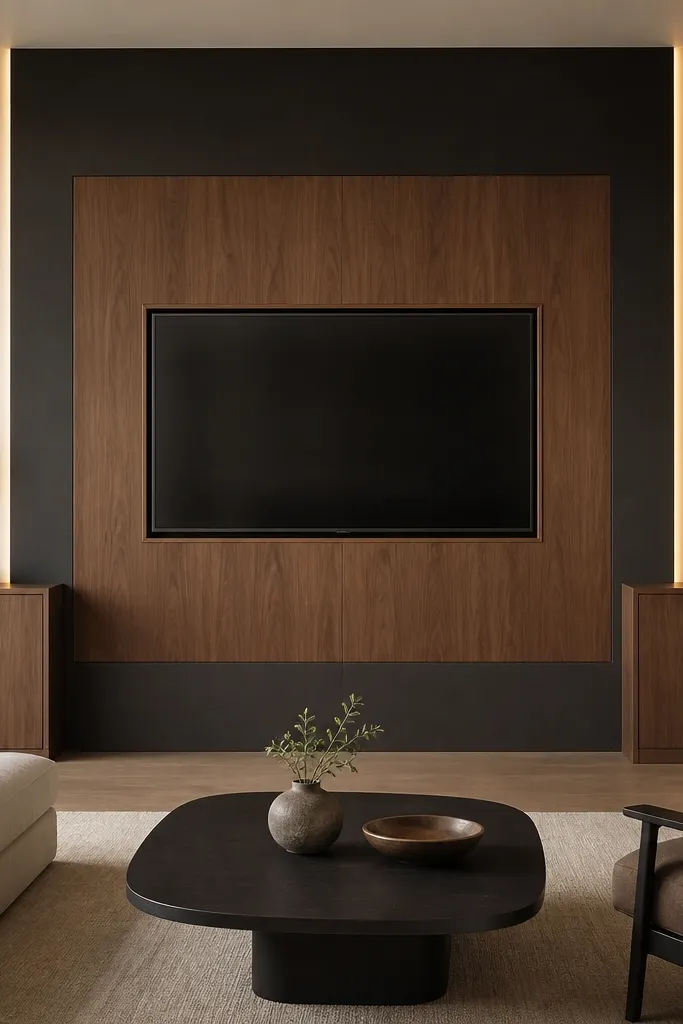
Start by painting the wall in warm white matte. Mask off the TV zone border and paint a charcoal panel area around it, keeping the border width around 20-30 cm depending on wall size. Mount a walnut veneer panel in the center and trim it with slim molding in the same finish as your TV mount. Install LED strips on the inside edge of the charcoal border, facing inward, so you get a soft glow along the walnut. Under the TV, place matching walnut cabinets and use brass pulls or handles that match your lamp bases. Style with one brass tray or brass picture frame on each side so the metal repeats symmetrically.
Two-tone paneling is the fastest way I’ve found to make a TV wall feel custom without going full built-in. Walnut veneer in the center gives you warmth and depth, while the charcoal border makes the screen zone feel grounded. This works best if your furniture has dark wood or brass accents; it matches those tones instead of fighting them. If you wear gold jewelry or your room has brass lamps, this design makes everything look pulled together because the metals repeat.
AvoidAvoid mixing cool gray charcoal with warm walnut without adjusting — it can look muddy.
Good to knowUse the same brass tone across the whole room (lamp, cabinet pulls, decor) so the wall doesn’t look like it came from different shopping trips.
9. Linen-Covered Wall Panels With Slim Gold Trim
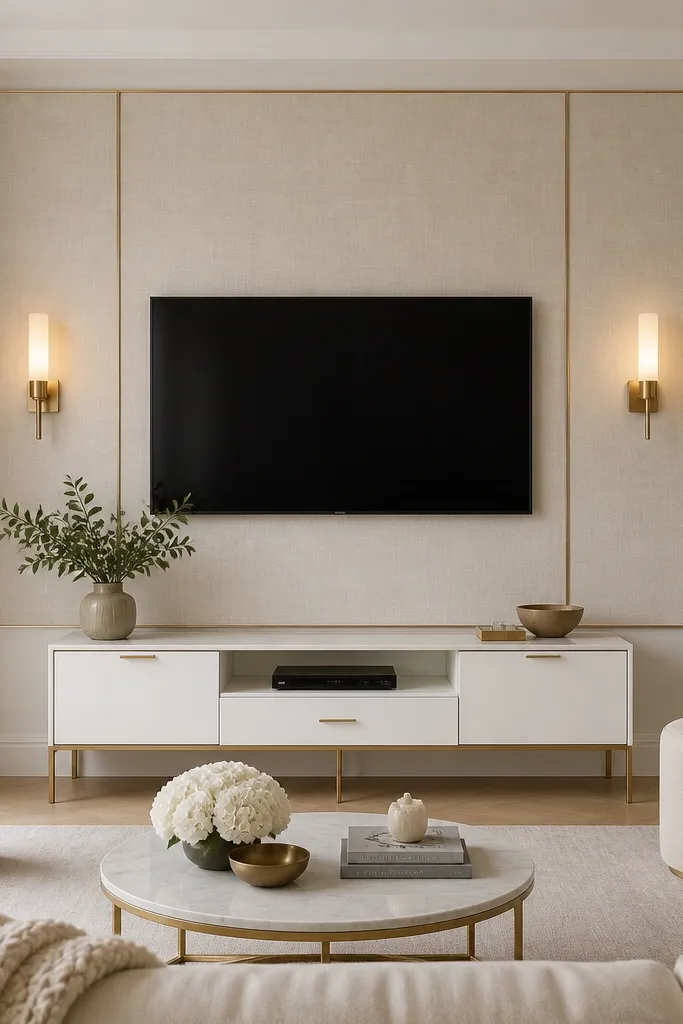
This is the luxury look when you want the room to feel soft, not hard. Linen wall panels reduce harsh reflections, and the gold trim gives you that “dressing room” feel without adding clutter. It works great in rooms with fabric-heavy pieces like boucle chairs, velvet pillows, or layered rugs because it keeps the textures in the same family. If your home is already light and airy, the linen makes the TV wall feel like part of the room’s fabric system.
Start by measuring a rectangle around your TV that’s about 30-40 cm wider than the screen on both sides. Build or buy linen-covered panels and outline them with thin gold metal trim. Mount the TV inside the rectangle, keeping a small gap around the edges so the trim is visible. Install two warm sconces on either side of the panel at eye level height so the light grazes the linen texture. Use a white console with slim gold legs for balance under the TV, then place one low textured object (a woven basket) on each side to echo the linen. Keep wall decor minimal: one framed print or a small mirror on each side if you have space.
Pick linen with a tight weave; loose weave looks casual up close.
Avoid bright white linen that reads blue — it can make the gold trim look yellow.
10. Oak Frame With Built-In Recessed Shelves
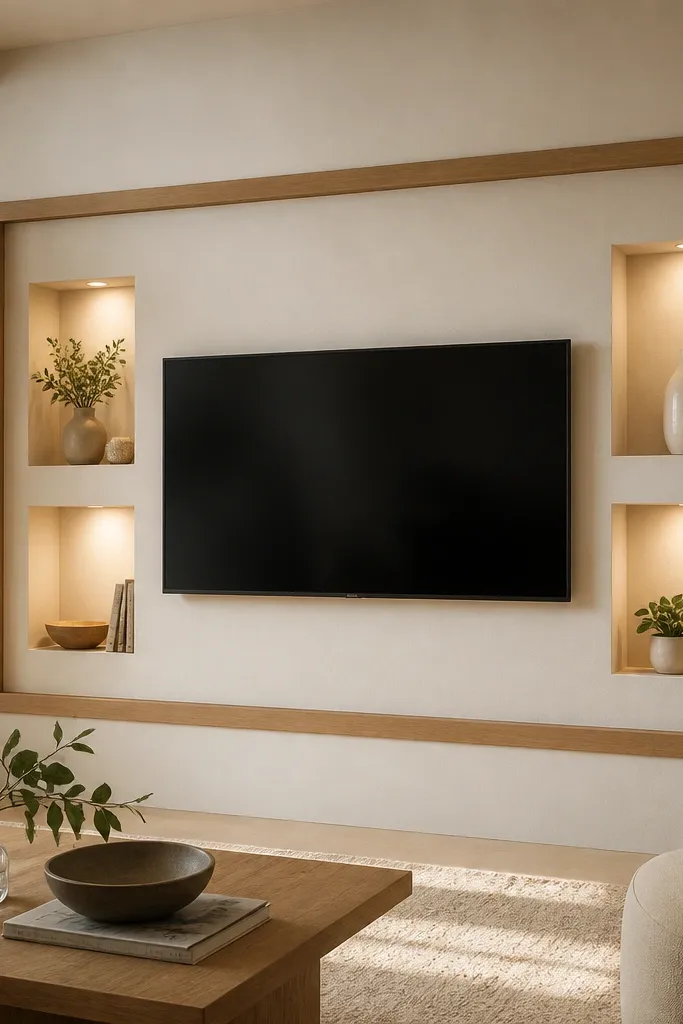
Start by installing the oak perimeter frame first — keep it level and symmetrical, with the TV centered inside. Cut recess shelf openings into the frame sides so the shelves sit about 8-12 cm deep, then add warm LED puck lights inside each recess. Mount the TV so its center aligns with the middle shelf line, giving you a balanced vertical rhythm. Paint the wall behind everything in off-white matte so the oak and recess lighting stand out. Style by placing one larger object in each high recess (a tall vase or sculptural bookend) and one smaller object in each low recess (a candle, small bowl, or compact framed photo). Leave at least 40% of shelf space empty.
Recessed shelves around a TV make the wall look finished because you’re building a display system, not stacking objects on top of a console. The oak perimeter gives warmth and a clean border, and the recessed shelves hide clutter by forcing everything to sit in the same visual plane. I like this for families because you can keep the shelves styled but not delicate — objects sit back in the recess and look tidy even when life gets busy. It also works in rooms with kids because the TV wall stays structured instead of turning into a catch-all.
AvoidAvoid recessed shelves that are too shallow; objects look like they’re floating and read cheap.
Good to knowUse the same color of ceramic on both sides even if the shapes differ — the wall looks intentional instantly.
11. Blackboard Paint TV Zone With Chalk Art Frames
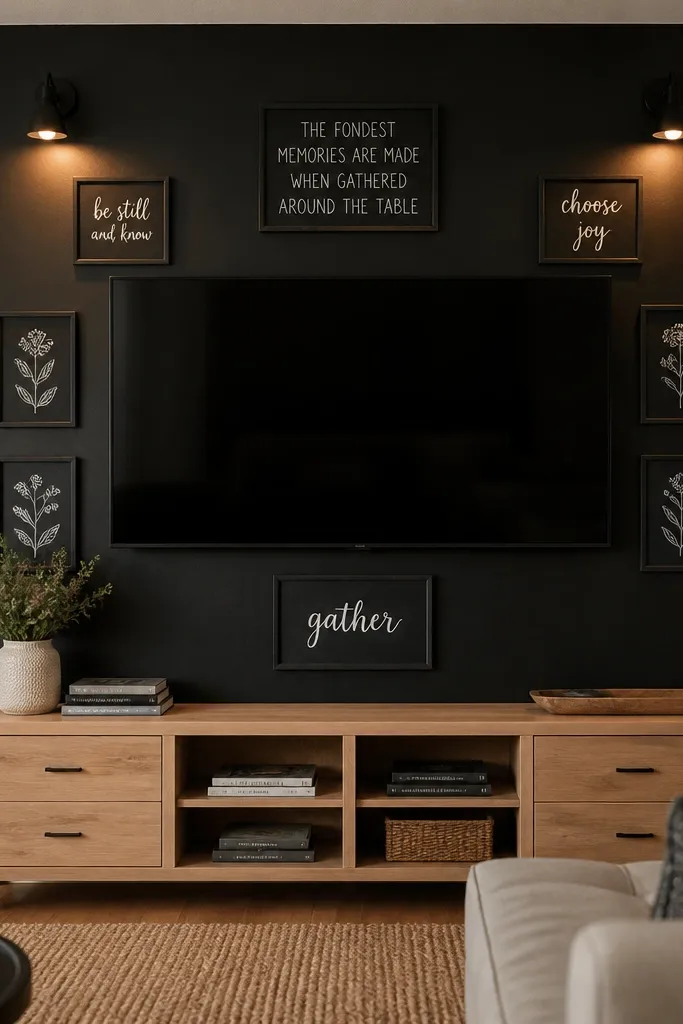
Start by taping a rectangle around where the TV will sit and painting it with a true chalkboard paint in matte black. Let it cure fully, then lightly dust the surface before using chalk so it doesn’t smudge. Mount the TV with a wall plate and keep the blackboard border visible around it by 8-12 cm on each side. Frame the chalk art with thin black or wood frames — hang or place them above and to the sides of the TV. Style the console with one neutral tray and two objects in light wood or ceramic, so the blackboard becomes the visual anchor. Keep the rest of the room palette light: cream, oatmeal, or warm gray.
This is for people who want personality without clutter. The matte blackboard paint absorbs light, so glare stays low, and the TV zone reads like a designed feature instead of a flat wall. When the TV is off, you can swap the chalk art seasonally — I’ve done spring florals, summer quotes, and fall leaf sketches — and the wall always looks “done.” It’s best in casual living rooms where you don’t mind a little playful texture paired with clean lines.
AvoidAvoid glossy chalk markers on blackboard paint; they look like stickers and catch glare.
Good to knowUse a damp microfiber cloth between seasonal changes to keep the surface smooth and reduce chalk dust buildup.
12. Cream Paneling With Beveled Trim and Soft Sconces
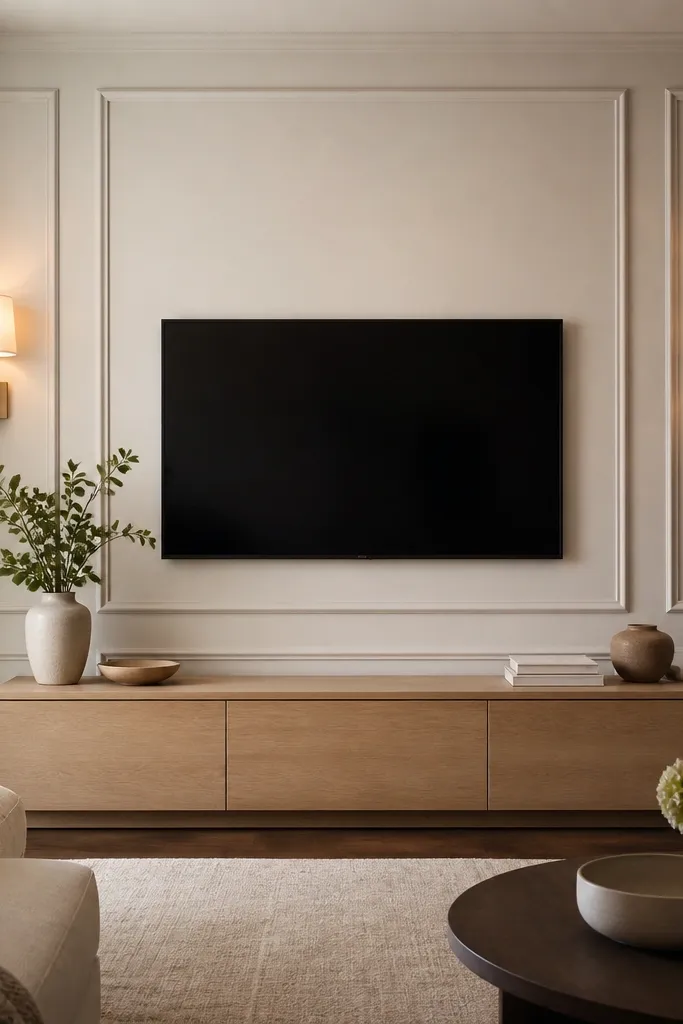
Classic raised paneling makes a TV wall look expensive because it’s architecture, not decor. The beveled trim creates shadow lines that stay attractive in daylight and at night. I like this when your room furniture is traditional or transitional — it matches crown molding vibes without adding more trim everywhere. If your wall is tall or has high ceilings, the vertical panel rhythm makes the TV feel scaled instead of small.
Start by marking a grid for your paneling around the TV zone — keep the main rectangle centered and about 25-35 cm wider than the TV on each side. Install flat MDF panel sections and add beveled trim so you get visible shadow edges. Paint everything in a warm cream matte or eggshell, then mount the TV inside the main rectangle. Add two sconces with fabric shades at symmetrical heights so the light lands on the panel edges, not straight into the TV. Use a low white oak console, then style it with a pair of identical lamps or candle holders if the room allows. Keep wall decor minimal since the paneling already does the heavy lifting.
Choose sconce bulbs around 2700K and dim them — paneling looks best with soft light, not bright overhead glare.
Avoid flat, untrimmed board-and-butt paneling; it reads temporary unless the bevel shadows are visible.
13. Smoked Glass Shelves Over a White Stone Backdrop
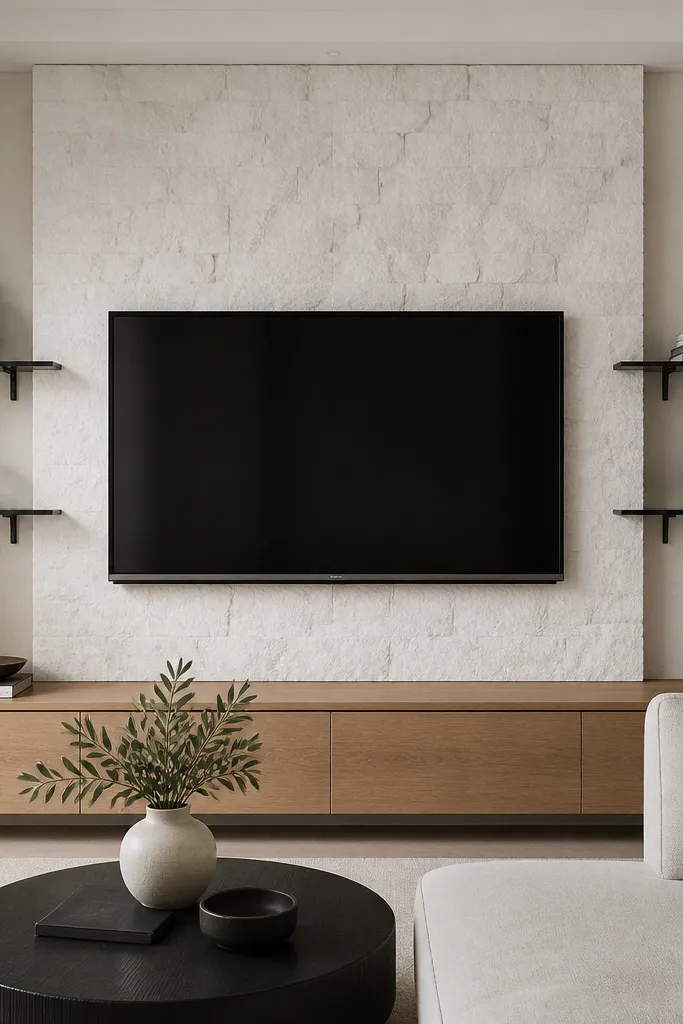
Start with a stone-look wall panel or peel-and-stick panels that have realistic veining and a matte finish. Mount the TV centered on the stone backdrop, leaving consistent margins around the screen. Install two smoked glass shelves on both sides at the same heights — one upper, one lower — and use slim black brackets so the supports disappear. Style with one clear element (a small glass vase) and one matte element (black ceramic) on each shelf so you get contrast. Keep decor sizes similar on both sides to maintain symmetry. Add a small LED strip behind the TV or under the stone ledge if you want extra glow, but keep brightness low to avoid reflection on the glass shelves.
Smoked glass looks luxury because it holds light without reflecting it harshly. The white stone-look backdrop gives you organic texture, and the TV sits like a sleek centerpiece. This works when you want the wall to feel bright but still upscale — smoked glass keeps it from feeling stark. If you have dark furniture or black metal accents in the room, this design ties everything together without adding visual weight.
AvoidAvoid clear acrylic shelves; they look plastic next to stone texture.
Good to knowWipe smoked glass with a glass cleaner right before styling — fingerprints show up instantly under warm lights.
14. Giant Round Mirror Above TV With Side Gallery Ledges
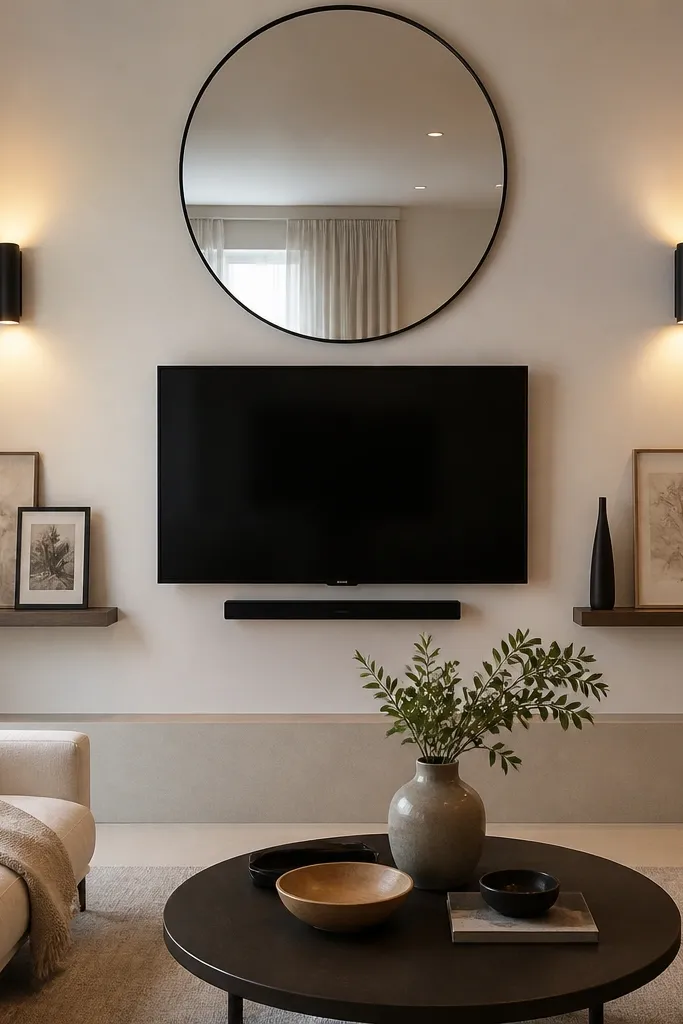
Start by painting the wall warm white matte so the mirror and frames pop without glare. Mount the TV centered and keep the top edge of the TV about 20-25 cm below where the mirror bottom will sit. Hang a large round mirror with a thin black frame above the TV, centered on the screen. Add two narrow gallery ledges on each side at slightly different heights so the decor feels collected, not stacked. Use matching frames or photo pieces on both sides, then add one slim vase on each side in the same finish (black, cream, or clear glass). Keep decor low — avoid tall clutter that competes with the mirror.
This is a luxury trick I use when the TV wall feels too flat and you don’t want heavy paneling. The big round mirror adds depth and makes the wall feel like a designed photo spot, even when the TV is off. It also helps reflect light around the room, which makes the wall look brighter at night. This works best if your living room has a seating arrangement that lets you see the mirror without it hitting your eyes while you watch TV.
AvoidAvoid placing a mirror too close to the TV; the reflection in the screen can ruin your viewing.
Good to knowChoose mirror glass with an anti-glare backing if you get evening light; it keeps reflections softer.
15. Gallery Wall Grid With TV Center and Neutral Frames
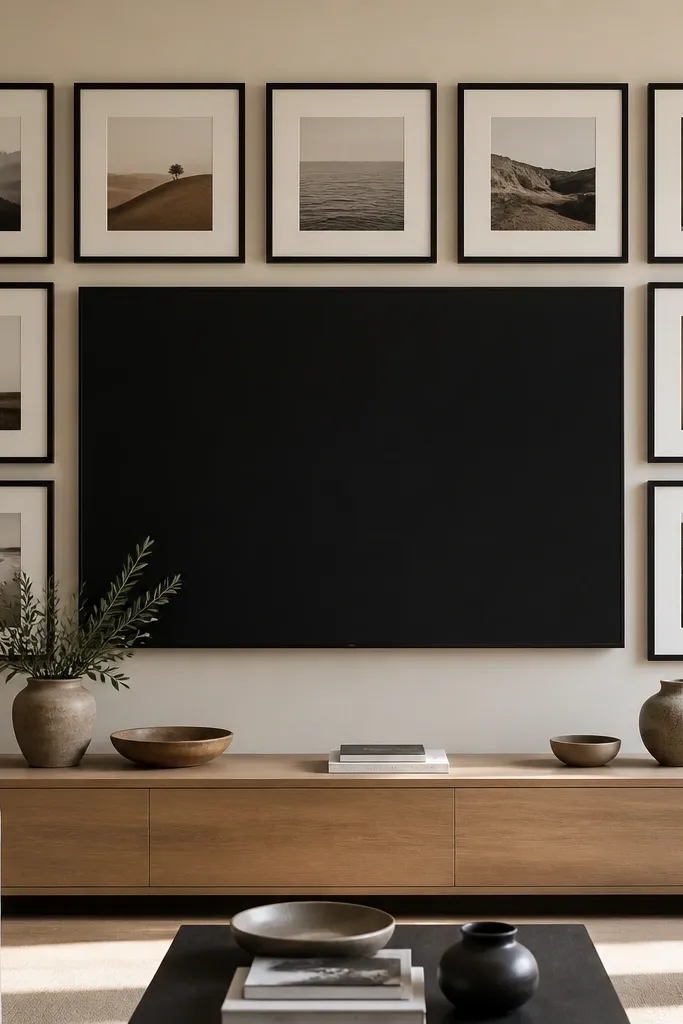
Start by choosing 6-10 frame sizes in one consistent finish and mat color — I like off-white mats with black frames for a clean contrast. Decide your grid first: measure the TV and build a centered layout where the TV takes the place of one frame, with equal spacing around it. Use a laser level to keep every frame aligned — crooked gallery walls look messy fast. Mount the TV first, then hang the frames around it, keeping the outer edges level. Style the console with one long tray and two low objects in matching tones, like cream ceramic and black metal. Swap prints by season while keeping the frame sizes and spacing the same.
A gallery wall around the TV is luxury when it’s controlled. This design works because the frames create a consistent rhythm, and the TV becomes part of the composition instead of interrupting it. I recommend it for people who already collect art prints or family photos and want everything to look intentional. It also works well in rentals because you can adjust the frames without rebuilding the wall.
AvoidAvoid mixing frame widths; even small differences show up once the TV is on and you notice the wall.
Good to knowPrint your seasonal art on the same paper weight so the texture looks consistent across the year.
16. Stone-Look Wall With Floating Media Credenza and Brass Accents
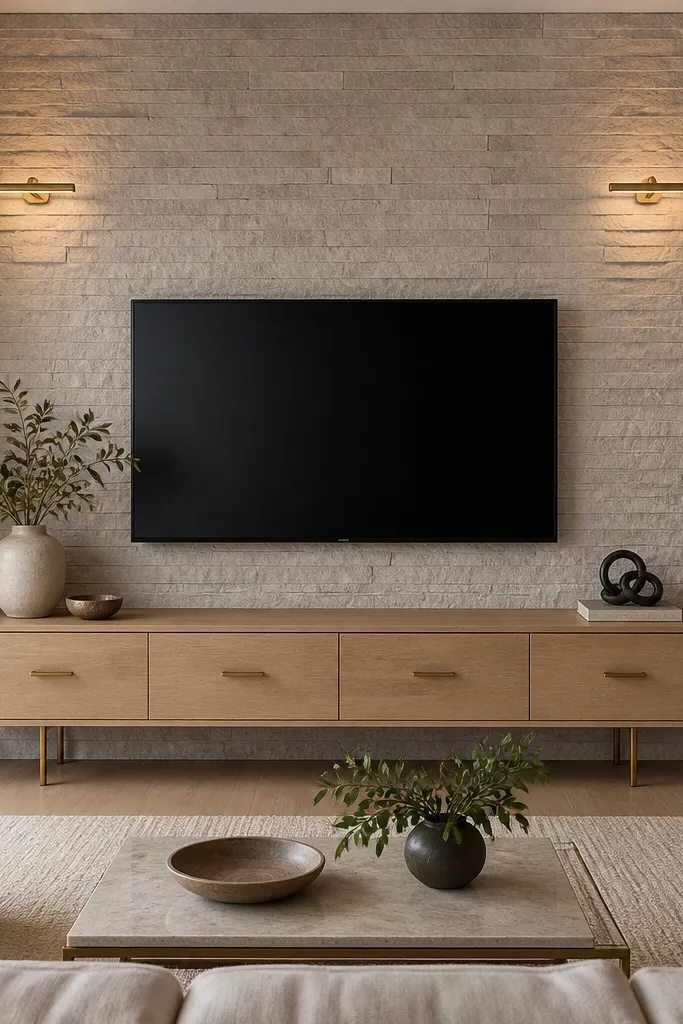
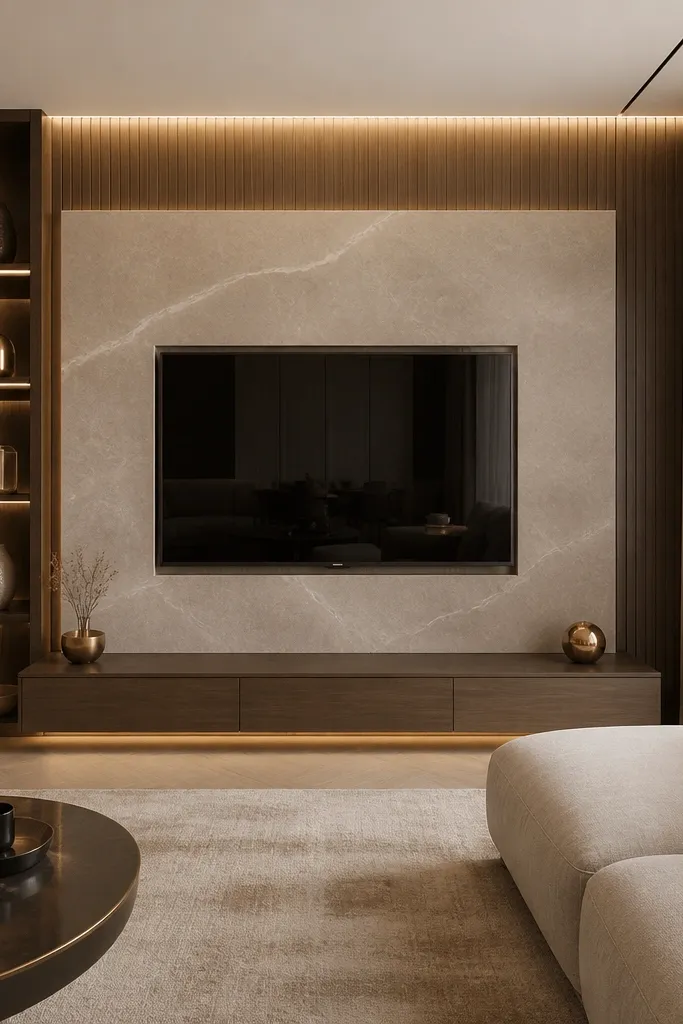
Start by covering the TV feature wall with matte stone-look panels or tiles, keeping grout lines subtle if you’re using real tile. Mount the TV centered, and keep a slim gap between the TV and any surrounding trim so the screen looks clean. Install a floating credenza with brass legs so you get a visual lift off the floor. Add brass picture lights on either side of the TV aimed upward toward the stone texture, not toward the screen. Style the credenza with a slim speaker or soundbar in the center, then two small decor items on the left and right: one brass or gold-finished piece and one neutral ceramic. Keep cables inside the credenza — use a cable box and route into the back panel so the wall stays crisp.
This one reads luxury because it gives you a whole “stage set,” not just a frame. The stone-look wall adds organic texture, and the floating credenza keeps the bottom light and airy. Brass accents warm everything up, and they look great with both warm and cool palettes depending on your bulbs. I like it for people who want a clean, modern wall but still want it to feel soft and expensive when the TV is off.
AvoidAvoid glossy stone-look surfaces; they cast reflections that fight the TV image.
Good to knowChoose warmer bulbs (2700K) with stone texture; cooler bulbs make the stone look gray and flat.
17. Textured Wallpaper Accent Side Panels Around a Neutral TV Frame
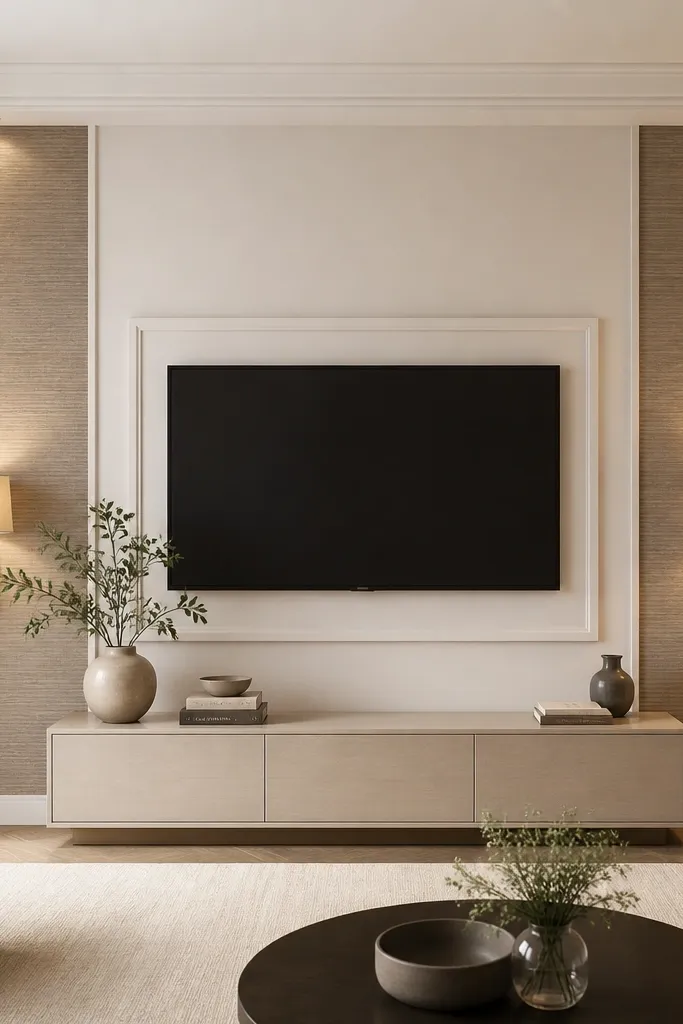
Start by painting the main wall warm white matte. Install wallpaper accent panels only on the left and right sides of the TV zone, keeping the center area smooth for a clean frame. Use a simple white trim or MDF border around the TV so the screen looks like it sits in a picture mat. Mount the TV centered, then add a low console that matches the wall trim color. Style the console with two matching decor objects on each side of the center — I like cream ceramic and taupe linen for cohesion. Add warm lighting from sconces or a floor lamp so the wallpaper texture throws soft shadows.
This is a smart compromise when you want luxury texture but you don’t want the whole wall busy. The textured wallpaper panels on both sides create depth and make the TV feel framed, even when the screen is off. It works well in rooms with plain furniture because the wall adds interest without turning into a pattern explosion. If you’re sensitive to loud visuals, choose subtle texture — like woven grasscloth effect or lightly raised linen pattern — and keep the TV frame neutral.
AvoidAvoid bold wallpaper behind the TV screen area; it can create visual noise and distract from the image.
Good to knowRun your fingernail across the wallpaper texture in-store; if it feels too slick, it won’t read as luxury in low light.
18. Black Metal and Light Wood Floating Shelves With Negative Space
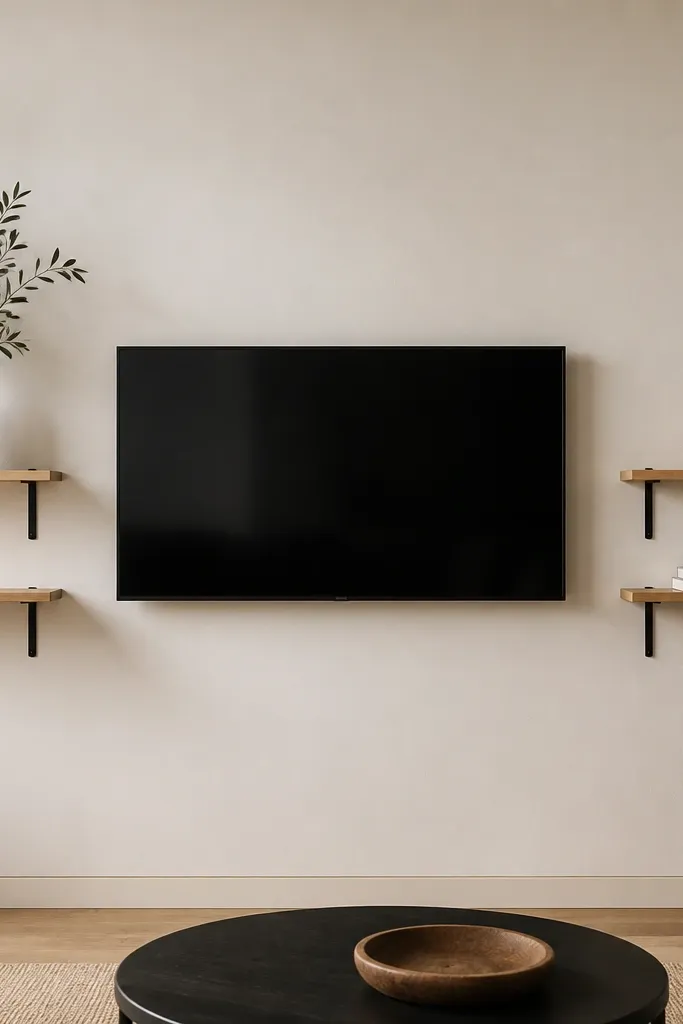
Start by mounting the TV centered and keeping the wall paint a warm neutral matte. Install two floating shelves on each side, but keep the shelves narrow — about 20-25 cm deep — so they don’t look like furniture. Put the upper shelf so its height aligns with the top third of the TV, and the lower shelf aligns near the bottom third. Use identical black metal bracket styles and place them at the same spacing on both sides. Style with repeat-and-reverse: tall plant or sculpture on the left, tall plant or sculpture on the right, but different shapes; then one medium book stack and one small ceramic per side. Leave at least 50% of shelf surface empty for the luxury look.
Negative space is what makes floating shelves look expensive. The black metal brackets add crisp contrast, while light wood keeps it warm and not sterile. This design works best when your decor style is minimal and you like clean lines, because the shelves only need a few pieces to look intentional. It also photographs well because the wall stays calm — the TV becomes the center, and the shelves frame it without clutter.
AvoidAvoid filling every shelf spot; dense decor makes floating shelves look like a weekend DIY.
Good to knowPick one plant pot color and one book spine color to keep the shelf styling consistent year-round.
19. Built-In Window-Style Sash Frame Around the TV
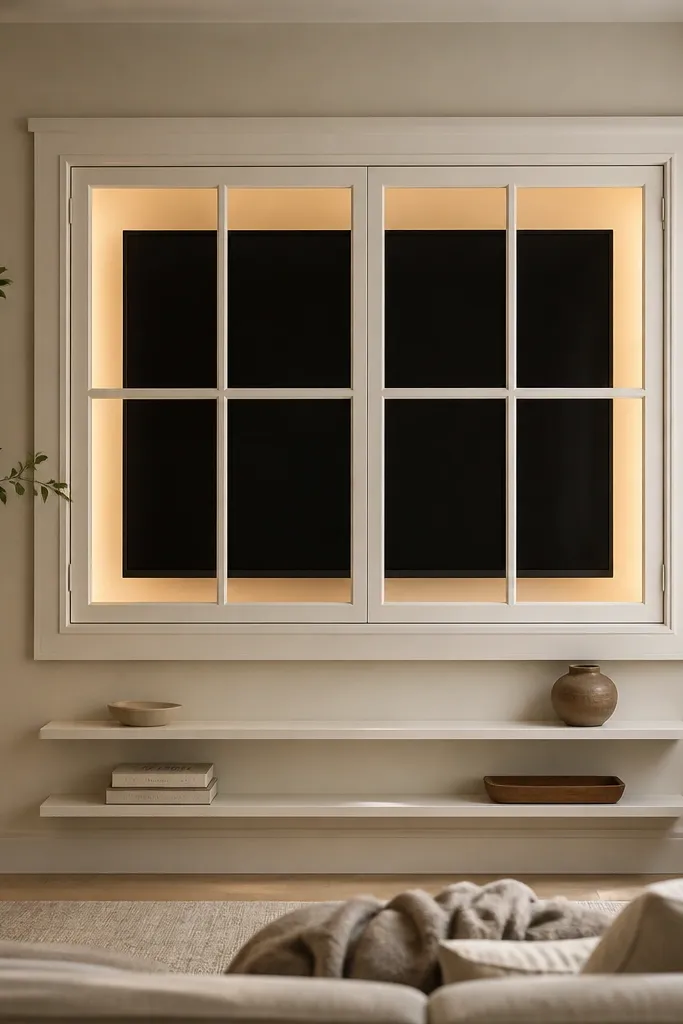
Start by building a large window sash frame around the TV, with muntins that form 4-6 rectangles across the screen area. Use white paint with a satin finish on the frame so it catches light gently without glare. Mount the TV centered and slightly inset so the frame lines are visible on all sides. Add warm LED light behind the frame edges — aim it at the wall so you get a halo effect, not a bright LED dot. Install a slim console or media cabinet beneath, then add matching decor: a pair of framed photos or small mirrors on both sides of the TV window frame. Keep your accessories neutral and limited — this design already has pattern lines from the muntins.
Window-style framing makes a TV feel architectural and old-world without turning the room dusty. The muntin grid brings structure and symmetry, and the TV looks like it belongs on that wall. This works in homes with traditional trim, crown molding, or classic furniture silhouettes, but it also works in modern rooms if you keep the frame crisp and the decor minimal. If your home has light floors and white trim, this design makes the TV area look finished and intentional.
AvoidAvoid heavy ornate trims; the muntin grid already gives detail.
Good to knowUse the same grout-like spacing for muntins across the whole frame; uneven spacing reads off even if the craftsmanship is good.
20. Oversized Fabric Wall Panel Behind TV With Hidden Track Lighting
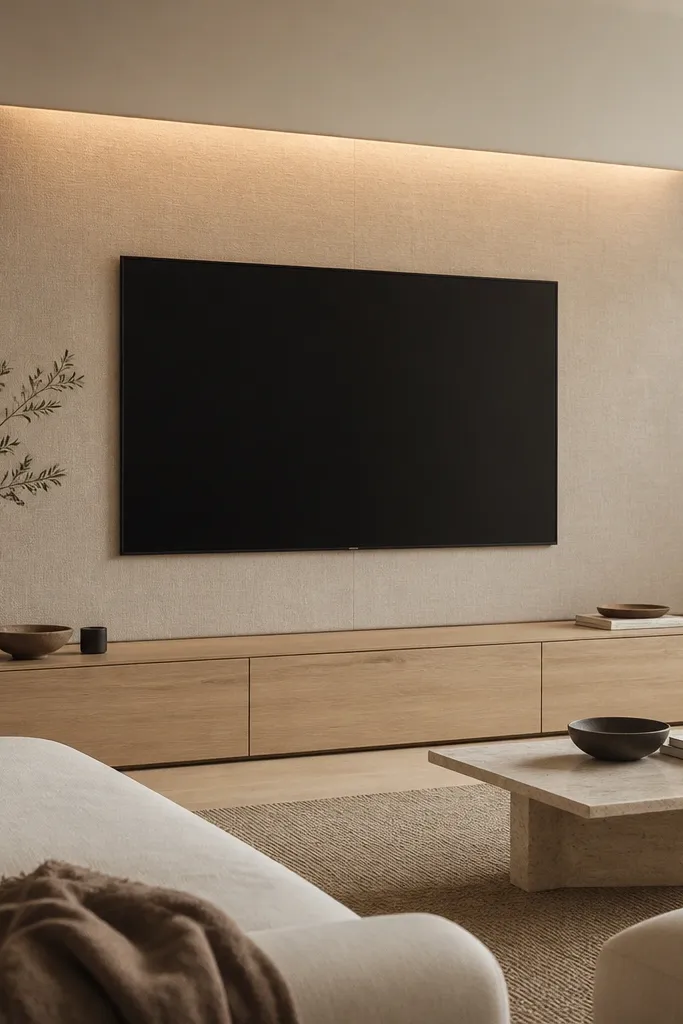
Start by choosing a thick upholstery fabric in oatmeal, taupe, or warm beige with a tight weave. Build a large panel that extends 20-30 cm beyond the TV on each side and covers the area around the screen, then mount it securely to the wall. Mount the TV slightly inset so the fabric edges show cleanly. Install hidden track lighting above the panel so the light washes down the fabric, not toward the screen. Use a simple light wood console underneath and keep decor low: one tray in natural wood, one ceramic vase, and one framed photo on each side. Keep colors consistent across both sides so the fabric panel stays the main luxury texture.
This is cozy luxury that still looks high-end when you turn the TV off. A big fabric panel absorbs light and softens the room, so the wall doesn’t look stark. I like it most in living rooms where you already have upholstered furniture — it keeps everything in the same tactile family. It also flatters people in warm lighting because fabric texture makes the scene look softer and less harsh than hard plaster.
AvoidAvoid thin linen-like sheers; they look delicate and cheap when stretched flat.
Good to knowUse removable fabric covers or plan for easy cleaning; living rooms get spills and you want the wall to stay fresh.