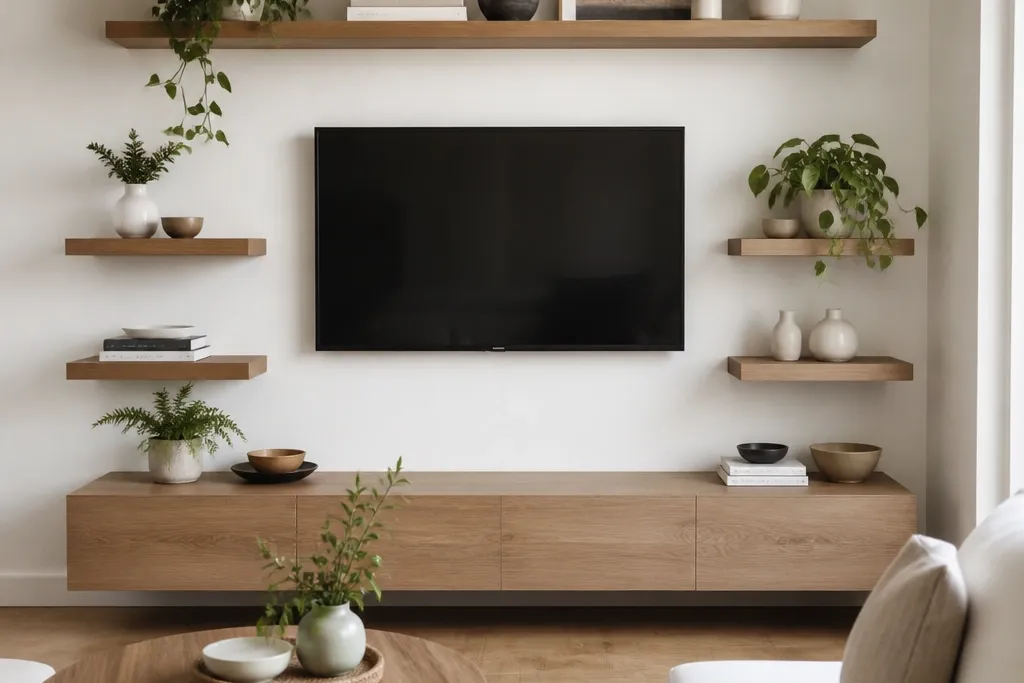
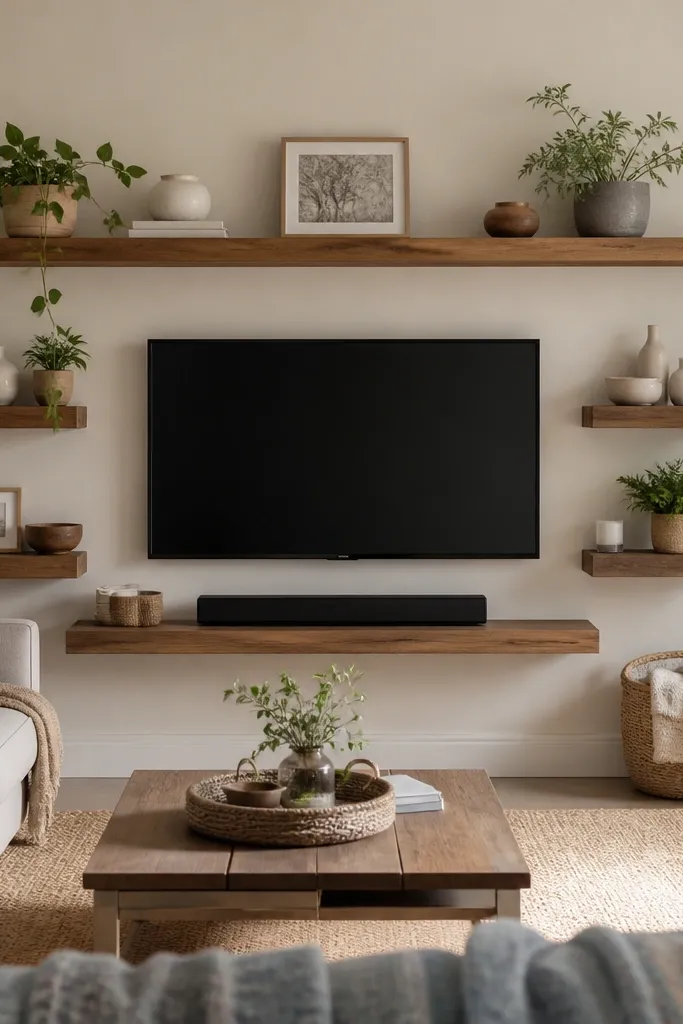
1. Two-Shelf Frame with a Center Soundbar Tray
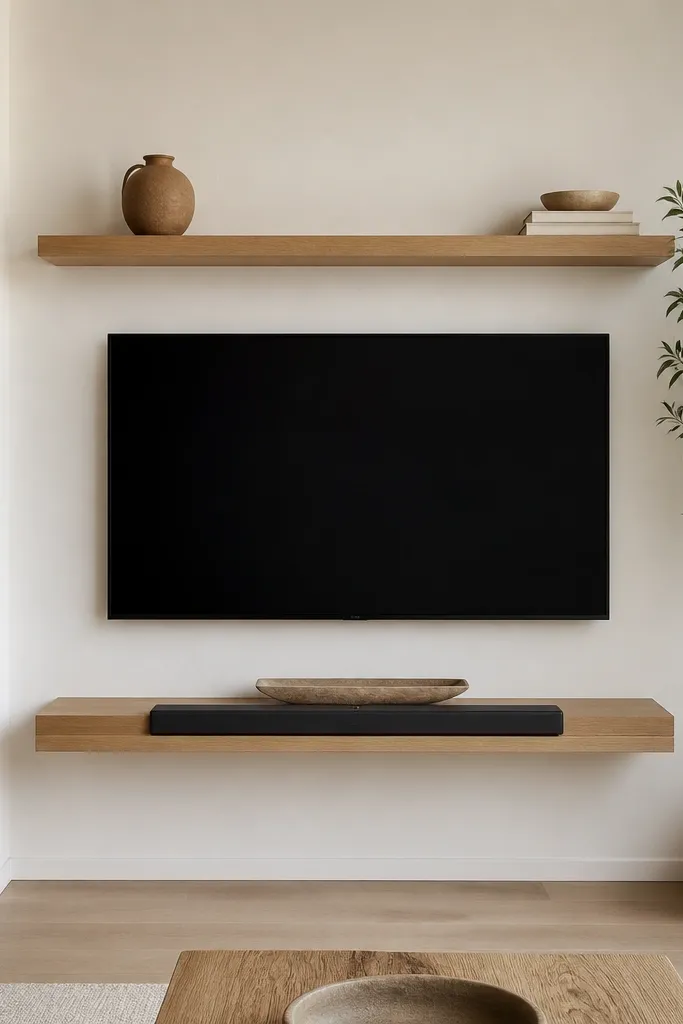
This setup looks custom because it frames the TV like a picture within a window. I like it for renters because you can keep the decor light and still make the wall feel finished. Use 6 to 8 inch deep shelves in light oak or white oak grain — the warm tone makes the TV feel less “stuck on a blank wall.” On the lower shelf, place a shallow tray (black or smoked glass) so cables and small items stay hidden. It flatters small rooms because the shelf spacing stays tight and the center stays clean, which makes the TV read as the anchor.
Start by marking the TV center height at 40 inches from the floor, then mount the TV bracket and level the screen. Install two floating shelf rails into studs — keep the top shelf about 3 to 5 inches above the TV’s top edge, and the bottom shelf about 6 to 10 inches below the TV’s bottom edge if you have a soundbar. Set a centered tray on the lower shelf first, then place a low decor stack on the left and a taller plant on the right end. Finish by adding one small framed print or a thin vase on each end of the top shelf, leaving the center mostly empty.
Good to knowUse felt pads under the tray so it doesn’t slide when you dust. Keep at least one end taller than the rest to prevent a flat, “sticker” look.
AvoidDon’t pile decor on the lower shelf — if it touches the soundbar area, the wall looks crowded fast.
2. Vertical Ladder Shelves with a Wide TV Mount
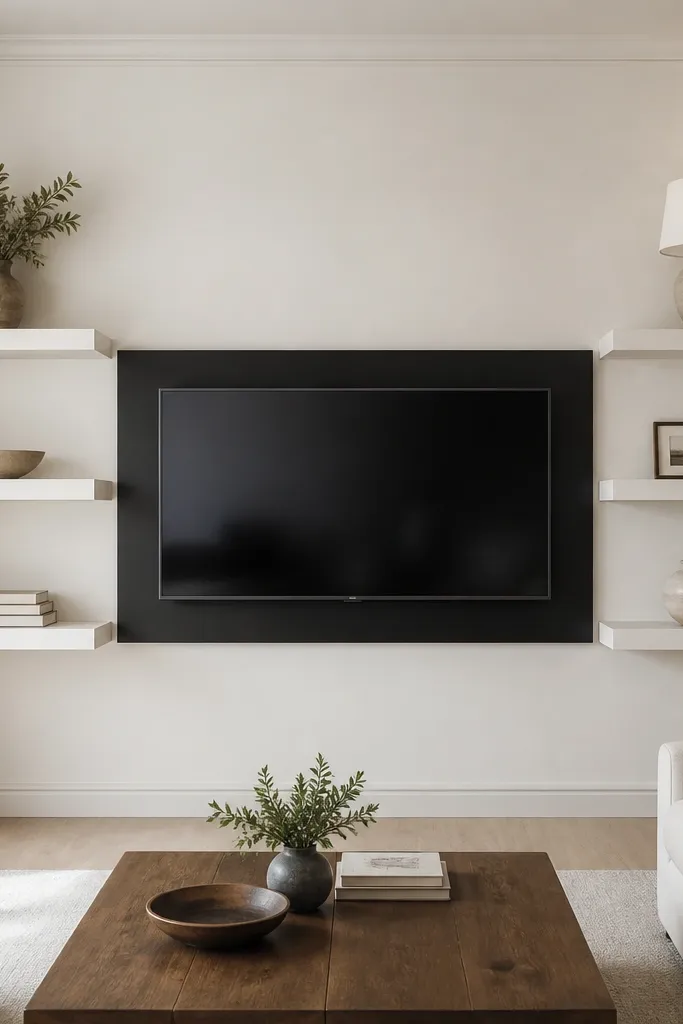
Ladder shelves make the wall feel taller, which helps when your living room ceiling is low. This works especially well if your TV is wide and you want the shelves to guide the eye upward instead of spreading left and right. I’ve used painted shelves in soft white because they calm the whole layout and let the TV look crisp. The ladder pattern also gives you natural landing spots for decor without making the TV feel buried. It’s a great choice if you like a slightly more styled look but still want a renter-friendly clean finish.
Begin by installing two vertical side rails or bracket lines into studs, leaving enough room so the TV mount doesn’t interfere with bracket placement. Set the TV so its center lands around 42 inches from the floor, then place the shelves so the lowest shelf edge is about level with the top of the media console (or 10 inches above the top of the console if you don’t have one). Use 6 inch deep shelves for the ladder rungs to keep it airy. Style by putting books horizontally or stacked on the left, then a taller lamp or vase on the right, and keep the area directly beside the TV mostly clear.
Good to knowStagger heights: don’t align every shelf to the same level or it starts looking like storage units. Keep at least one shelf empty for breathing room.
AvoidAvoid mixing three wood tones; ladder shelves look best when the shelf color stays consistent.
3. Corner-Adjacent TV with a Single Long Floating Shelf
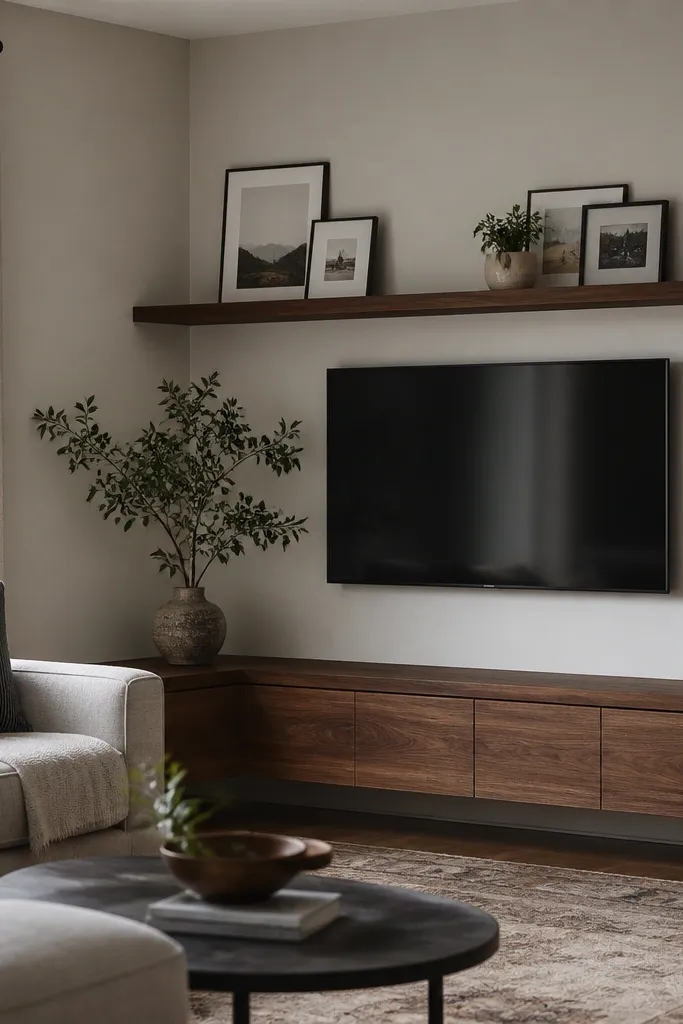
This one is for the classic renter problem: your TV wall is actually a corner wall, so you can’t spread shelves evenly across a full wall. One long floating shelf above the TV keeps the layout clean and makes the room feel intentional. I like walnut-stained wood here because it adds warmth without adding visual bulk. If you’re worried about shelf clutter, this design helps because you only have one “surface” to style. It flatters small rooms and awkward corners by reducing the number of lines on the wall.
Measure the TV width and extend the shelf 2 inches beyond each side, or more if the corner allows it. Mount a single shelf rail into studs — in a corner, you’ll often hit two stud lines, so use them both for better load distribution. Keep the shelf about 4 to 6 inches above the TV’s top edge so it doesn’t look like a shelf is “covering” the screen. Style with a row of three items: a frame on the far left, a small plant or candle in the center, and a low bowl or figurine on the far right.
Use picture frames with the same mat color (white or black) so the shelf looks curated even when you keep it simple.
Don’t install the shelf too high; if it’s more than 8 inches above the TV, it reads like a random ledge.
4. Mirrored Back Panel Behind Floating Shelves
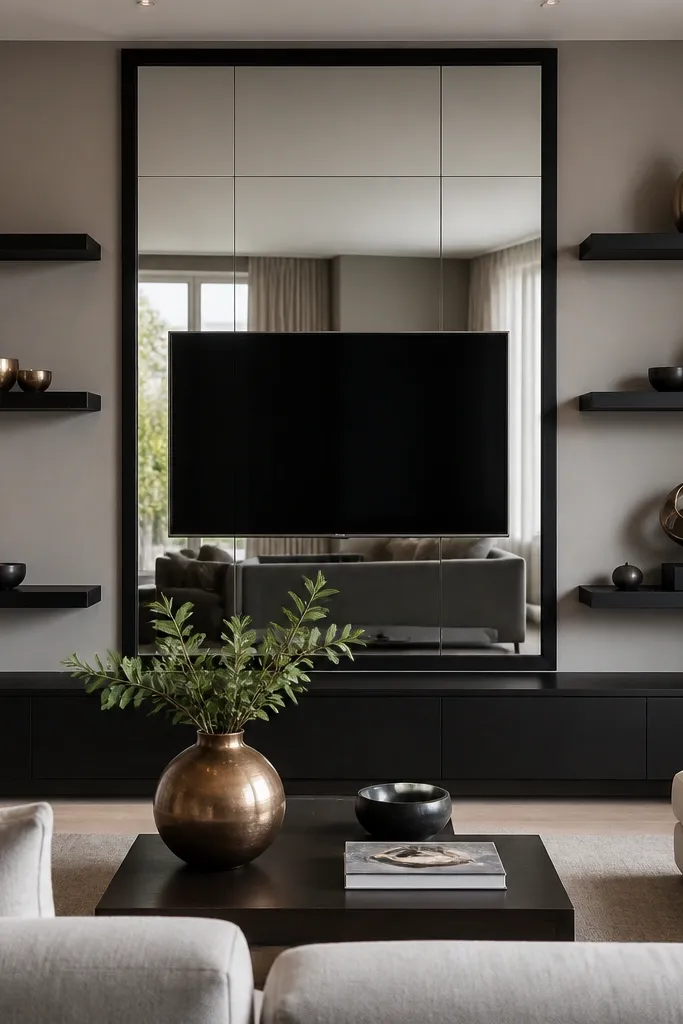
If your space feels dark, a mirrored back panel turns floating shelves into a light trick. The mirror reflects the room and makes the wall feel deeper, which is the last thing you want to miss in a small rental. I like this look with black shelves because it frames the mirror cleanly and hides smudges better than light paint. Keep decor metallic in small doses — brass, champagne gold, or brushed steel — so it looks intentional instead of flashy. This style flatters people who like a modern look and want the TV wall to feel like a feature without adding a bulky unit.
Start by installing a mirror panel on the wall in the area behind the TV, leaving a few inches of clearance around the TV edges and shelf bracket locations. Mount floating shelves into studs on the left and right sides of the TV, using 6 to 7 inch deep shelves so the mirror stays the visual focus. Place shelves so the top shelf lines up about 3 to 4 inches above the TV’s top edge, and the bottom shelf sits 6 to 8 inches below the TV’s bottom edge. Style by placing one metallic vase on the outer corner of each shelf, then keep the center area clear so the mirror reflection does the work.
Use a microfiber cloth with a tiny bit of glass cleaner every couple of weeks; mirrors show dust fast. Keep the shelves mostly empty for that crisp, high-end feel.
Avoid heavy, colorful decor on both shelves — the mirror already adds visual noise.
5. Staggered Height Shelves with a Gallery Wall Bridge
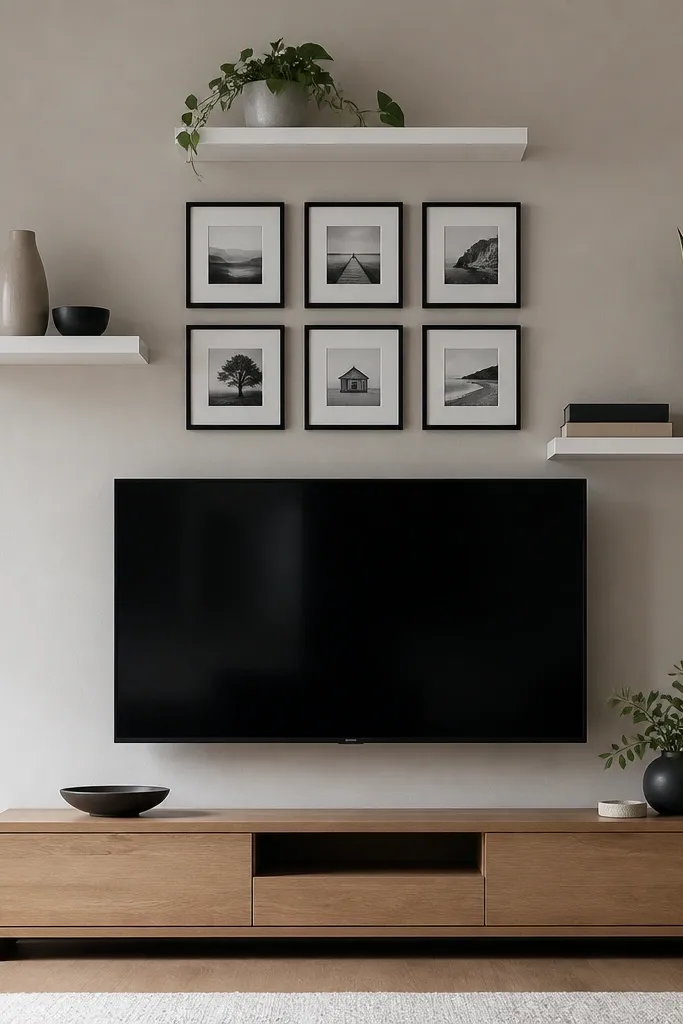
This is the “I want personality but I rent” solution. Staggered shelves keep the TV wall from looking flat, and the gallery wall bridge fills the negative space without turning it into a full media console. I’ve done this in apartments where the walls are slightly crooked — staggering shelves hides the imperfections better than a perfectly symmetrical layout. White shelves keep everything light, while black frames add contrast. It’s great if you want to display family photos and you don’t want to give up the TV as the anchor.
Mount the TV first and level it. Install two floating shelves on the left and right at different heights, then add a third shelf above the TV — keep the top shelf 3 to 5 inches above the TV’s top edge. Leave at least 2 inches of wall space between the shelf edges and the framed gallery so the lines don’t blur together. Style the shelves with one tall item (plant or vase) on the highest shelf, then two book stacks on the lower shelves, and keep frames smaller on the wall so the TV stays dominant.
Use the same frame size for every piece in the gallery so it reads organized from across the room.
Don’t hang large art too close to the shelves; if frames touch shelf brackets, it looks cramped.
6. Built-In Look with Three Shelves and a Center TV Niche
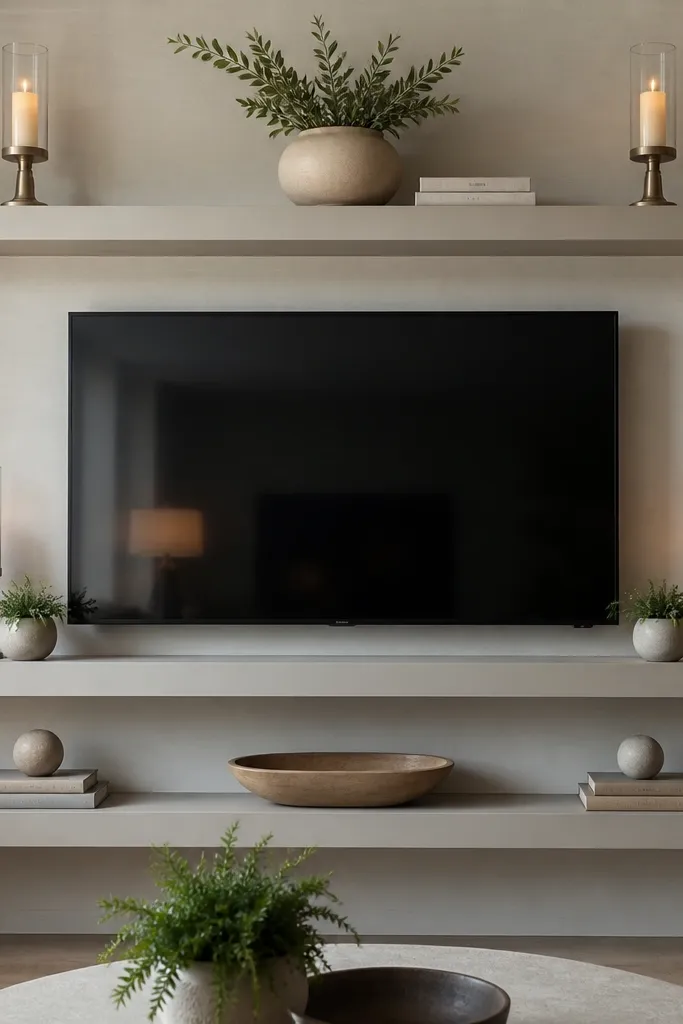
A three-shelf stack makes the TV wall look built-in, even when you’re using renter-friendly mounts. The trick is spacing: you want the shelves to feel like they belong to the TV, not like separate ledges. I like this with painted shelves in a warm off-white (not bright white) because it blends with rental walls that have slight undertones. Symmetry matters here. If you like order, the mirrored decor on both sides gives you a polished look without needing a lot of items.
Start with the TV bracket so the screen center lands around 40 to 41 inches from the floor. Install the top shelf first, then the middle shelf so its edge visually aligns near the TV’s side edges, and the bottom shelf so there’s 8 to 12 inches between the bottom shelf and the TV bottom. Use 7 to 8 inch deep shelves for this look so the proportions feel substantial. Style symmetrically: one identical candle holder (or small vase) on each side of the top shelf, then a matching book stack on each side of the middle shelf, and a tray with one decor piece centered on the bottom shelf.
Measure the distance from the TV edge to each shelf end so it stays balanced even if your wall isn’t perfectly straight.
Avoid mismatched decor heights on both sides; symmetry breaks instantly when one side is taller.
7. Floating Shelf + Curtain Rod Illusion Behind the TV
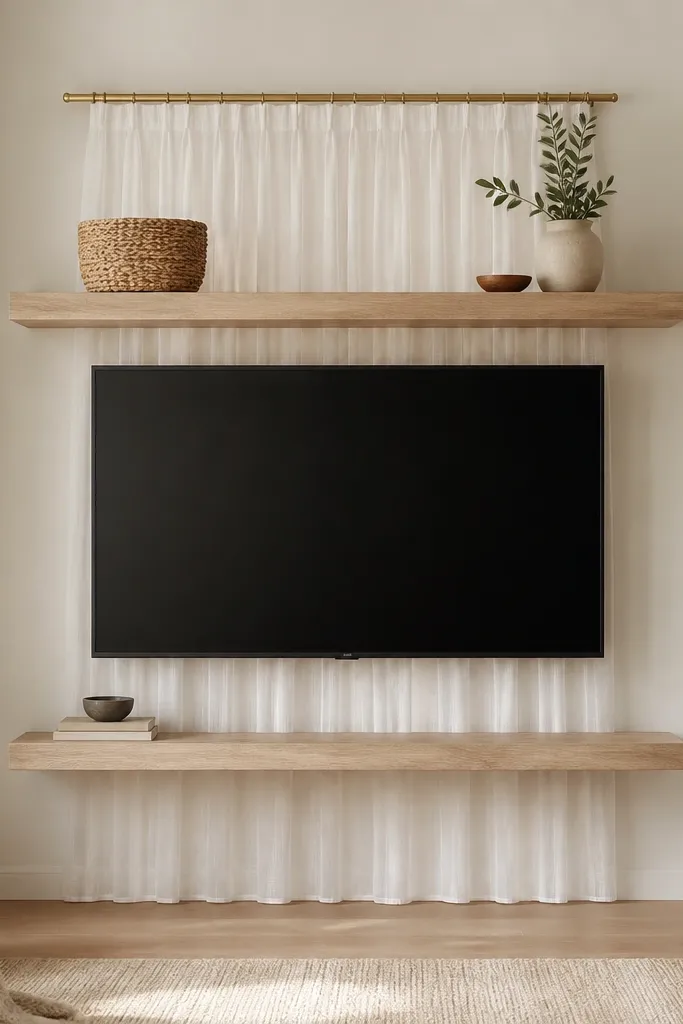
This is one of my favorite tricks for renters because it gives you softness without building a whole backdrop. The sheer curtain behind or slightly around the TV area makes the wall feel layered, and it makes the floating shelves look more intentional. I used light oak shelves paired with a sheer off-white curtain because it keeps the room bright. This works well for anyone who hates the “flat wall + black TV” look. It’s especially flattering in rooms with warm lighting, because the fabric catches light and makes everything calmer.
Mount a curtain rod a few inches above the TV top and extend it past the TV width by 4 to 6 inches. Hang the sheer fabric so it drapes behind the TV area, then install two floating shelves into studs — one 4 to 6 inches above the TV top edge and one 8 to 10 inches below the TV bottom edge. Choose shelf depth around 6 to 7 inches so the shelves don’t overpower the curtain’s softness. Style by placing one woven basket on the lower shelf and a small ceramic piece on the top shelf, then keep the center area clear so fabric does the visual work.
Good to knowIron the curtain panel before hanging. Wrinkles make the whole setup look temporary.
AvoidAvoid thick, heavy curtains; they block light and make a small room feel tighter.
8. Dark Wood Shelves with a Light Stone TV Wall Accent
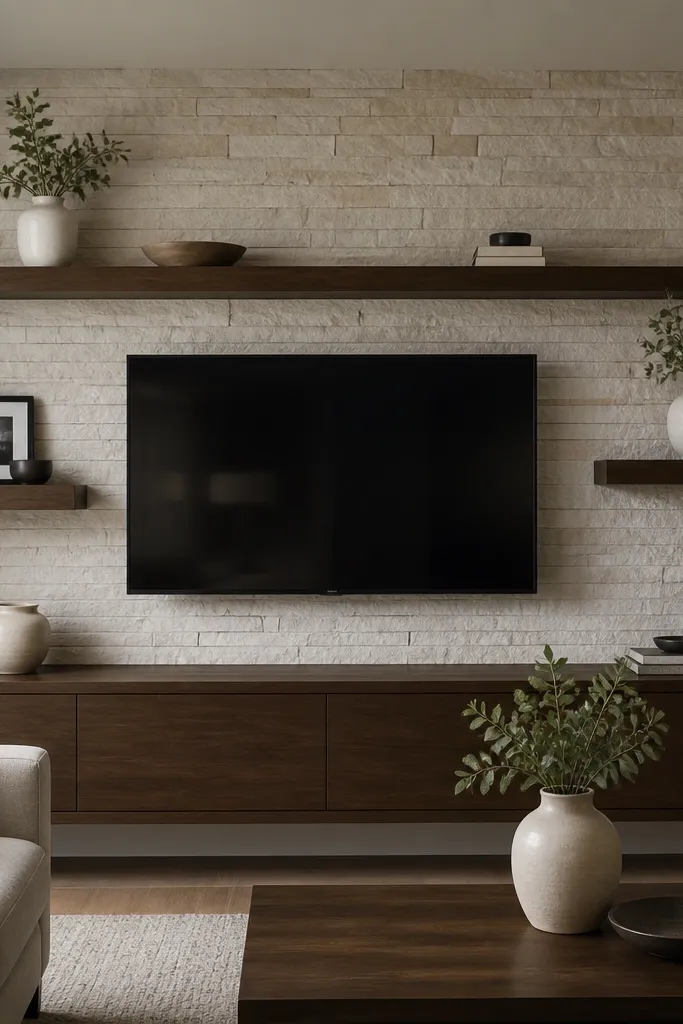
Contrast is the whole point here. Dark wood shelves against a lighter stone accent makes the TV wall feel high-end without needing a full fireplace-style surround. I’ve used faux stone peel-and-stick panels in rentals because you can remove them later, and the texture makes the wall look finished. Pair dark walnut shelves with white or cream decor so the shelf surfaces look clean from the couch. This layout flatters people who want a more dramatic look but still need a small space to feel open.
First, install the light stone accent panel behind the TV, keeping it flat and smooth around the mounting bracket. Mount the TV so the center sits around 42 inches from the floor. Install two floating shelves into studs — top shelf 3 to 4 inches above the TV top edge, side shelf pieces or a second shelf line on the outer edges if your wall allows. Use 6 to 8 inch deep shelves in dark walnut. Style with one cream vase or candle on the left, a black frame on the right, and keep the center minimal.
Good to knowUse matte decor finishes. Glossy items reflect light and can look messy against stone texture.
AvoidDon’t use dark decor on dark shelves; the wall turns into one heavy block.
9. Floating Shelves for a Rotating Media Setup with Pull-Out Cables
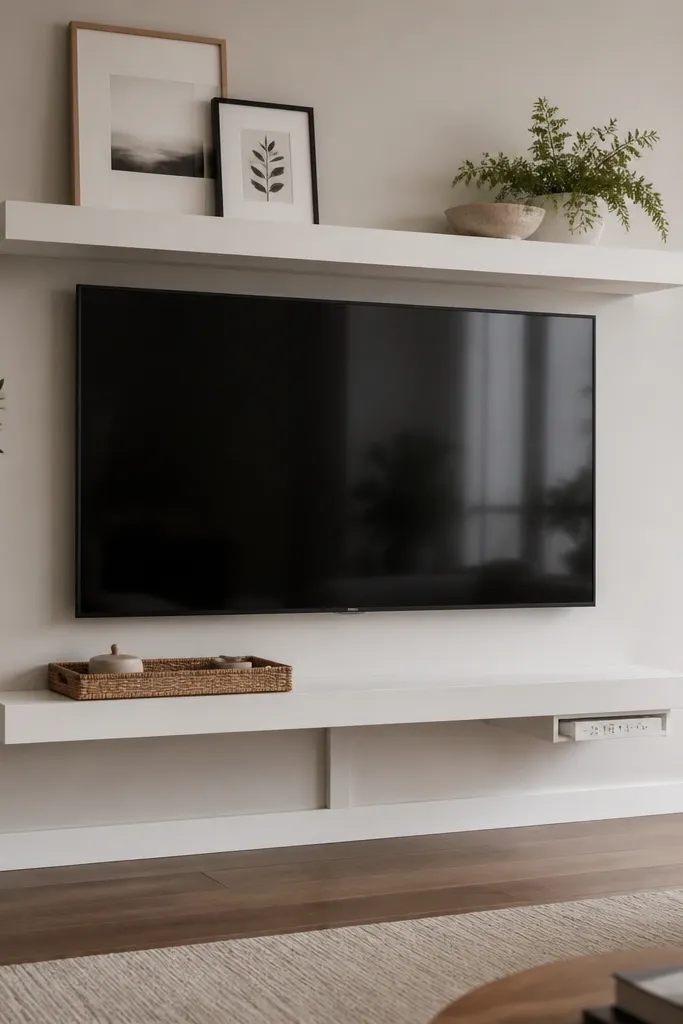
This is the renter version of a “clean media wall” that doesn’t drive you crazy. When your cables are visible, floating shelves start looking like clutter shelves. I like this approach because the shelves still look light, but the power and HDMI mess stays hidden behind a cable channel under the lower shelf. White shelves keep the wall airy, and the simple decor makes the TV feel like it belongs. It flatters anyone who uses streaming boxes, game consoles, or a soundbar and wants quick access without ripping the wall apart.
Mount the TV first and run cables down the wall to a location behind where the lower shelf will sit. Install the lower floating shelf with a cable channel under it so plugs land behind the shelf front line. Place the top shelf 4 to 6 inches above the TV top edge, and leave the bottom shelf 6 to 10 inches below the TV bottom for cable access. Style the shelves with one tray on the lower shelf and a small framed photo plus a thin vase on the top shelf. Keep the lower shelf surface light so you can reach the pull-out power strip easily.
Good to knowUse Velcro cable ties and label each cord with painter’s tape. You’ll thank yourself the first time you swap devices.
AvoidAvoid stuffing cables behind the TV mount. Heat and tension make them fail faster and look worse.
10. Narrow Shelves with Tall Decor Columns on Both Sides
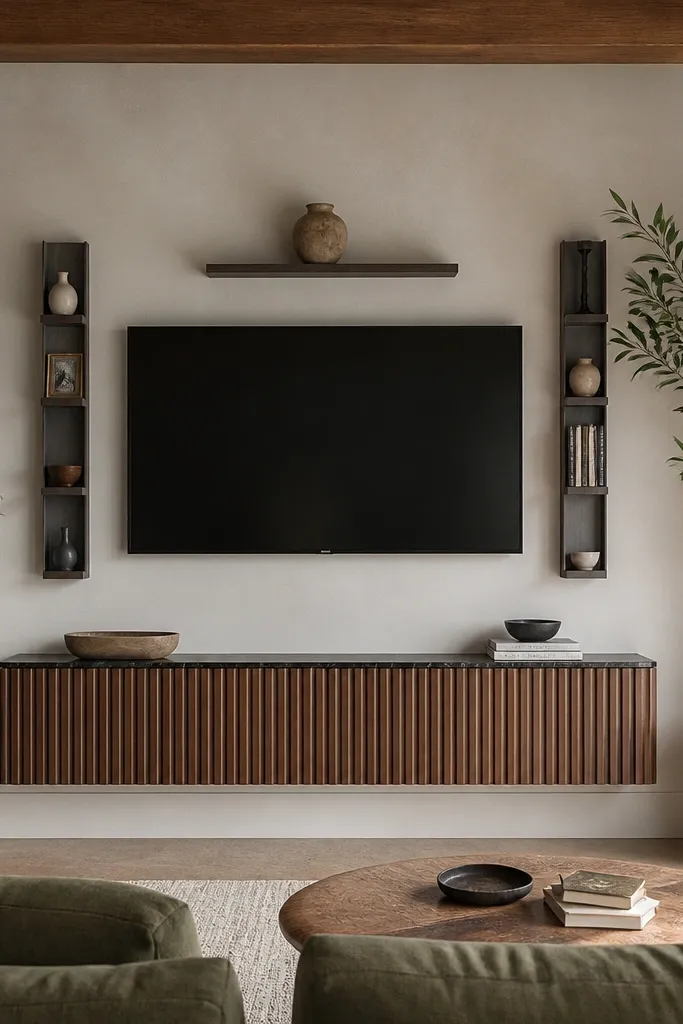
Narrow shelves keep the wall delicate, and tall decor columns add height without adding bulk. This is a strong choice for renters because you get visual interest even with minimal shelf surfaces, and you don’t fight the “small room” problem. I prefer 5 to 6 inch deep shelves here because deep shelves start to feel like furniture. The tall decor columns make the TV feel centered and framed. This look flatters people who like a clean aesthetic but still want the wall to feel lived-in.
Start by installing the TV mount so it’s level and centered, then mark shelf bracket spots into studs. Add one small shelf above the TV (about 3 to 4 inches above the TV top edge) and two narrow shelves on the sides at the same height as the top shelf or slightly lower. Keep side shelf depth to 5 to 6 inches. Style tall columns: on the left shelf, stack two to three books and top with a small ceramic vessel; on the right, place a taller plant or a slim vase with stems. Leave a clear gap between decor and the TV edge so the wall doesn’t look crowded.
Good to knowPick decor with vertical lines — tall vases and book spines — so the shelf doesn’t look like it’s floating empty.
AvoidDon’t put wide, flat decor on narrow shelves. It makes the shelf look too small for the TV.
11. Floating Shelves with a Built-In Shelf Ladder for Remotes and Games
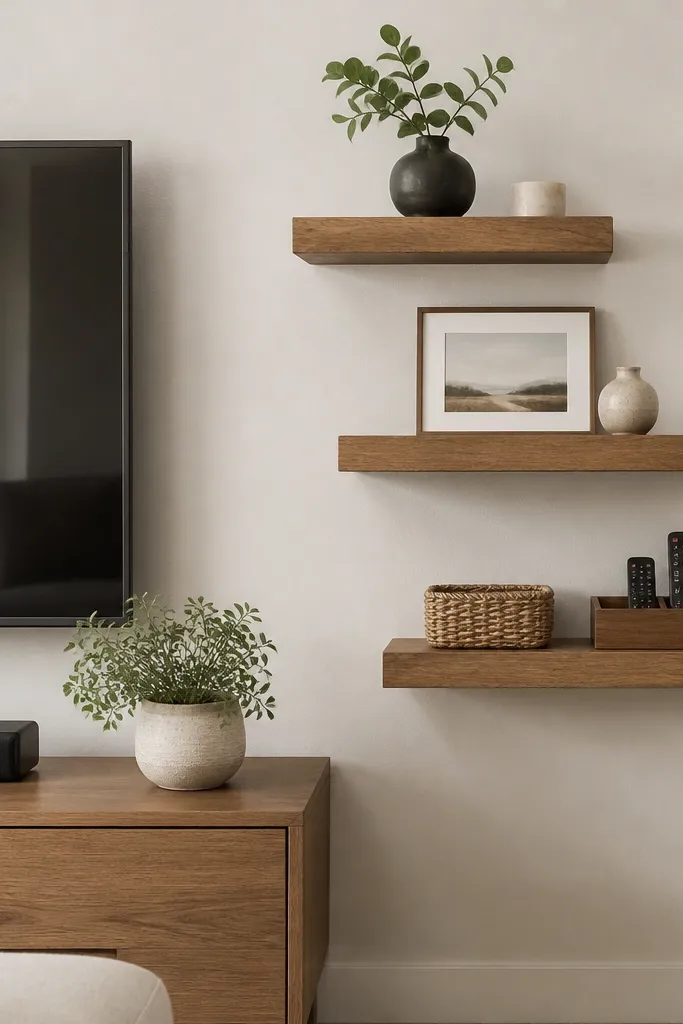
If you actually use the living room, this is the layout that makes your TV wall work day-to-day. The step ladder arrangement gives you a lower “landing” surface for remotes and games without looking like a junk drawer. I like medium oak shelves because they hide minor scuffs from everyday use. Keep the decor on the top shelves more decorative, and the bottom shelf practical. This setup flatters busy households and anyone who hates clutter on the coffee table.
Mount the TV first and keep the center around 40 inches from the floor. Install three shelves: bottom shelf about 8 to 10 inches below the TV bottom, middle shelf about 4 to 6 inches above the TV bottom, and top shelf 3 to 5 inches above the TV top edge. Use 7 to 8 inch deep shelves for the bottom shelf so organizers fit. Add a slim remote tray and a small fabric basket on the bottom shelf, then style the middle shelf with two book stacks and one small plant. Keep the top shelf lighter with one framed print and a tall, narrow candle holder.
Use a fabric basket with a neutral color like oatmeal or charcoal. It hides mess without looking heavy.
Avoid placing bulk electronics on the bottom shelf. It makes the wall look like storage.
12. Floating Shelves with a TV-Wide Book Rail Under the Screen
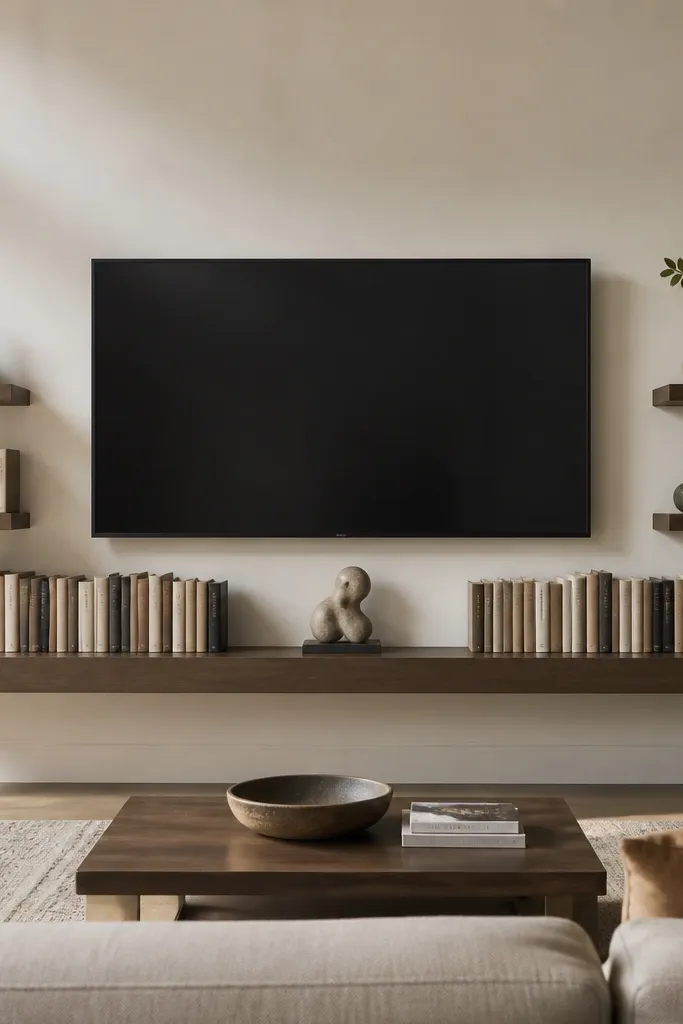
This design makes the TV wall feel like a library corner. The book rail under the TV gives you instant styling, and it hides the media clutter you’d otherwise see. I like it with a TV mount that holds the screen slightly higher, so the book rail has breathing space. Use shelves in white oak or painted white to keep the wall bright, and pick book spines in a limited palette: black, cream, and one muted color like sage or terracotta. It flatters renters because it looks intentional even if you swap books seasonally.
Mount the TV bracket so the TV bottom edge leaves enough room for the book rail shelf — typically the TV center is around 42 inches and the bottom edge lands around 30 inches. Install the wide shelf under the TV into studs, using 8 inch depth so books stand steady. Add two smaller shelves on the sides at the same height as the top of the book rail for balance. Style by arranging books upright in a neat row, then place a small sculpture or candle in the center gap. Keep side shelf decor minimal: one frame and one small plant each side.
Good to knowUse bookends or stack books in matching heights so the rail looks straight from the couch.
AvoidDon’t mix tall and short books randomly. The rail starts looking like a stack you haven’t organized.
13. Floating Shelves with a Thin Floating Media Console Look
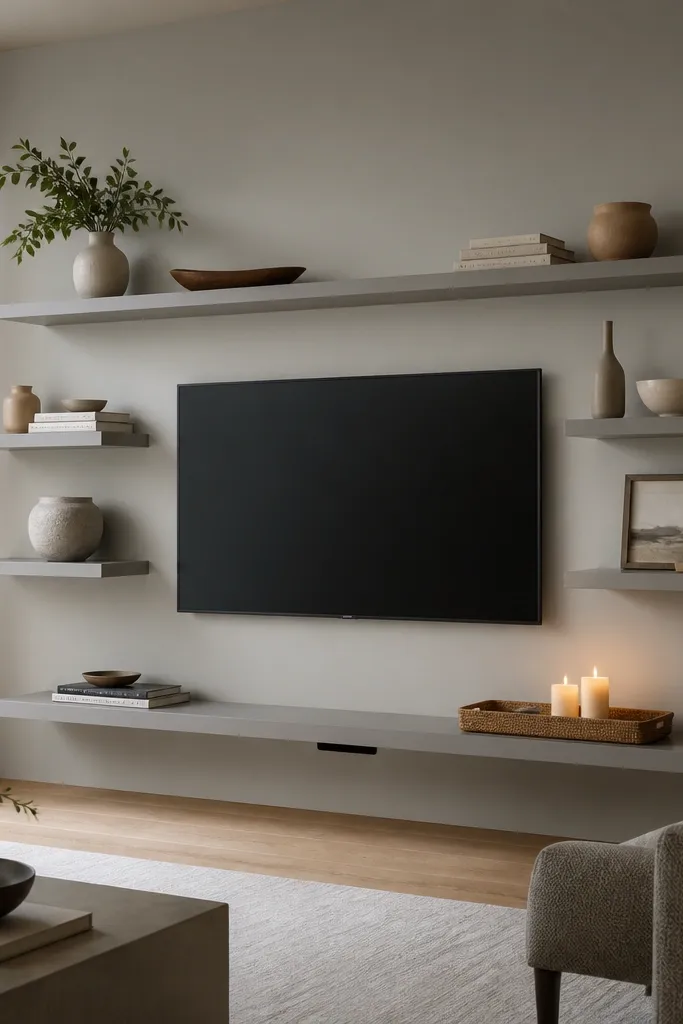
When you want the TV wall to look sleek, combine floating shelves with a low, narrow media surface. The wall reads cleaner because you don’t have a bulky cabinet competing with the shelves. I like soft gray paint because it hides tiny scratches that happen in rentals, and it pairs well with warm wood decor. This layout is flattering for small rooms because it keeps the floor visually open. It also makes the TV feel like it’s part of a designed system, not just mounted hardware.
Install a thin media console shelf or a low floating platform under the TV, leaving 2 to 4 inches between it and the TV bottom edge. Mount the TV first at about 40 to 43 inches center height, then install the floating shelf rails above — one shelf 4 to 6 inches above the TV top edge and another shelf slightly offset above the left side (only if your wall layout supports it). Use 6 to 7 inch deep shelves for the top surfaces. Style the low console with a cable-friendly tray and one plant or candle, then keep the top shelf decor to two items max so the wall stays sleek.
Good to knowIf you use a soundbar, mount it so the center sits behind the TV opening line and keep the console surface clear of extra remotes.
AvoidAvoid thick, chunky shelf boards. They make the “floating” illusion look fake.
14. Round Decor Styling on Floating Shelves for a Softer Look
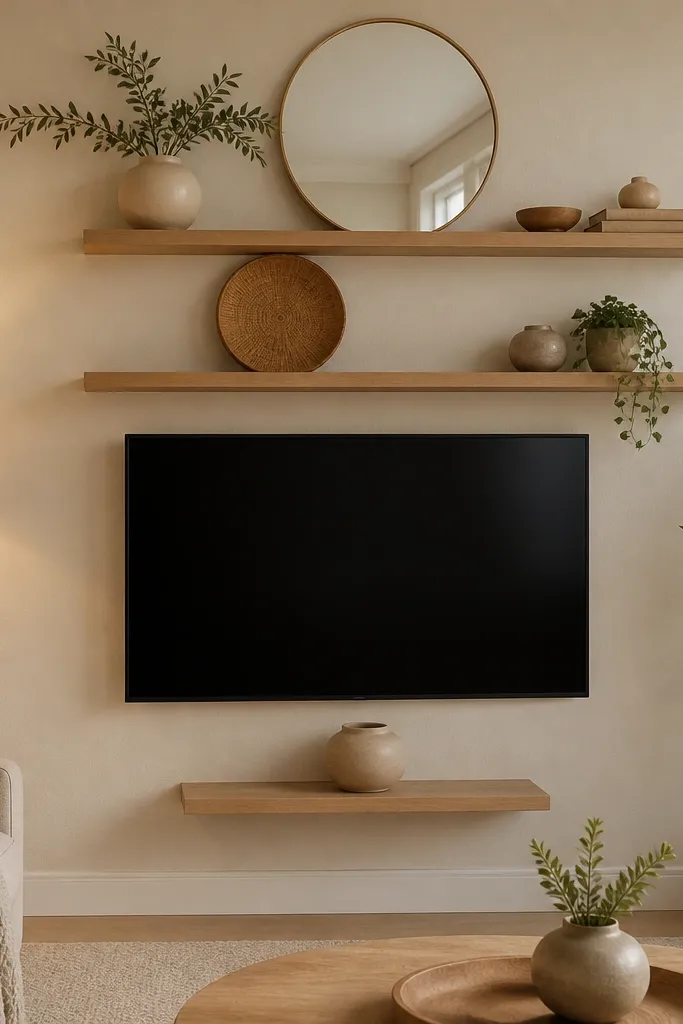
Hard angles can make a TV wall feel harsh, especially in small spaces. I use round decor shapes to soften the whole composition around the flat screen. This works best with light oak shelves because the wood grain warms up the wall and makes the round objects look intentional. Keep the color palette neutral — cream, sand, and black accents — so the TV remains the focus. This style flatters anyone who wants cozy instead of sharp, and it’s easy to maintain because round objects look good even when you rotate them seasonally.
Mount the TV first and center it, keeping the TV center around 41 inches from the floor. Install two floating shelves above the TV in a 6 to 8 inch depth, with the top shelf 3 to 5 inches above the TV top edge and the second shelf 6 to 8 inches above it. Add a smaller shelf below the TV only if your cable situation stays clean — place it 8 to 10 inches below the TV bottom edge. Style by placing a round mirror or frame on the left shelf, a round ceramic vase on the right, and a circular tray in the center on the lower shelf. Keep one side slightly taller with a small plant or candle to balance the circle shapes.
Match the shelf hardware finish to one decor accent (black hardware with black tray, for example) so it looks planned.
Avoid mixing too many geometric decor shapes. The wall starts to feel like random items on ledges.
15. Painted Gradient Shelf Back with Floating Steps
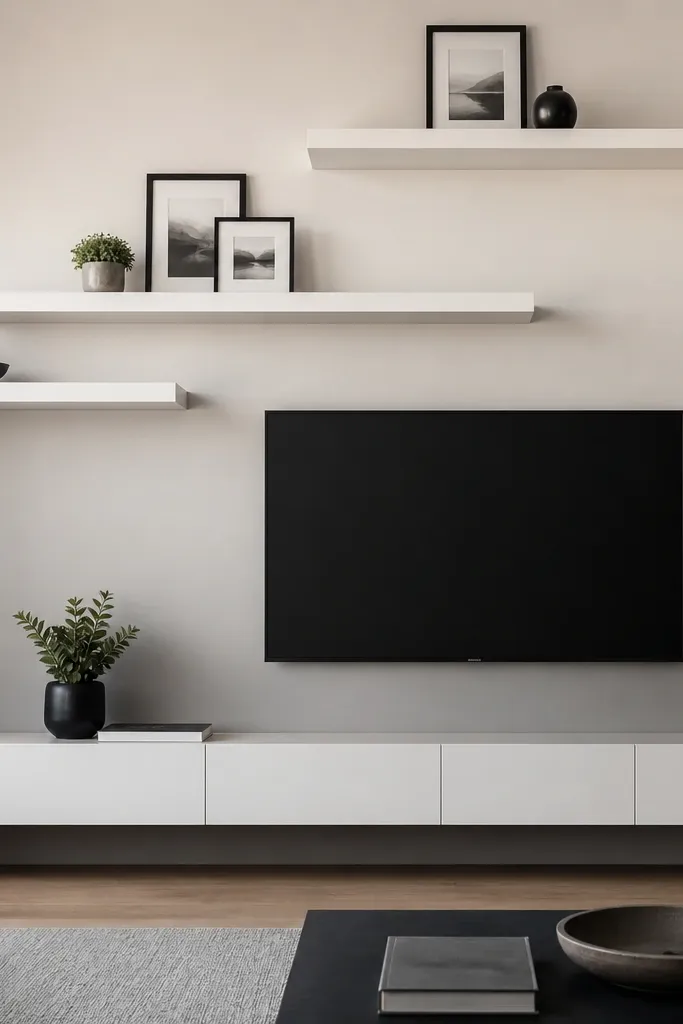
Color gradients make floating shelves feel like part of a designed wall, not just hardware. I’ve done this in rentals by painting a simple two-tone gradient on the wall behind the TV area, then installing white shelves so they pop. The gradient doesn’t need to be fancy — it’s the soft shift in tone that adds depth. This works well when your rental walls are plain and you want a “designer” feel without wallpaper. It flatters people who like calm, modern interiors and want the TV wall to feel less stark.
Tape off a rectangle behind the TV area and paint the top portion one shade and the lower portion a slightly deeper shade, blending with a sponge so the transition stays soft. Let it dry fully, then mount the TV centered with the usual 40 to 43 inch center height. Install three floating shelves in a stepped layout: one above the TV, one slightly to the right at a lower height, and one on the left at a matching height to keep balance. Use 6 to 7 inch deep white shelves so the gradient remains visible. Style with two black frames and one small green plant, keeping the center shelf surface mostly empty.
Test your paint shades on a small area first. The wrong undertone can make the gradient look muddy next to the TV.
Avoid sharp brush lines in the gradient. Clean blending is what keeps it from looking DIY.