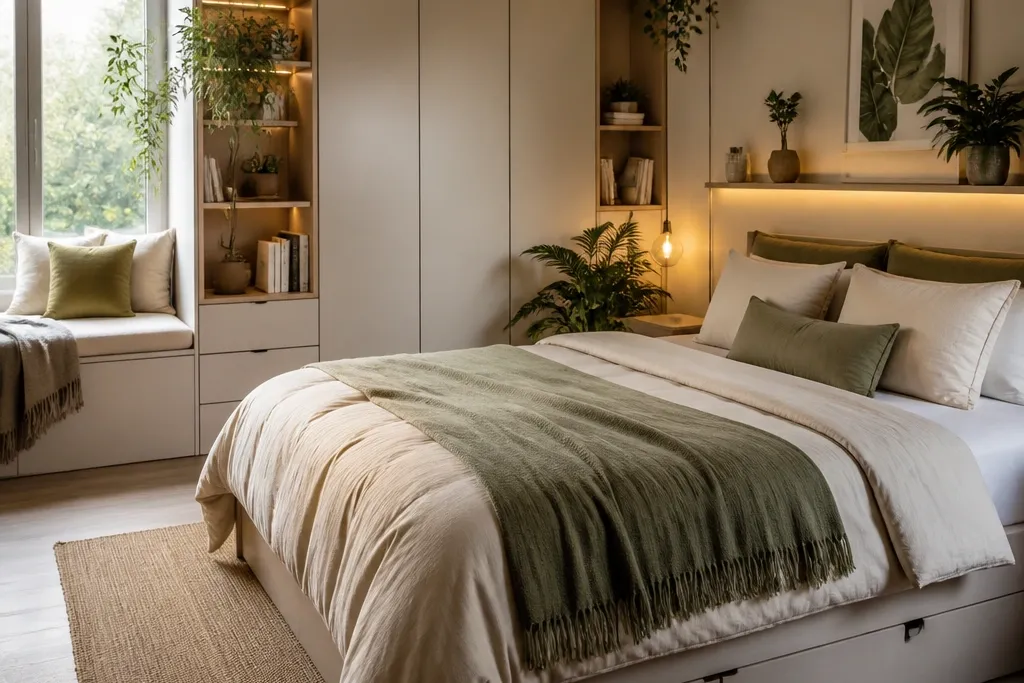
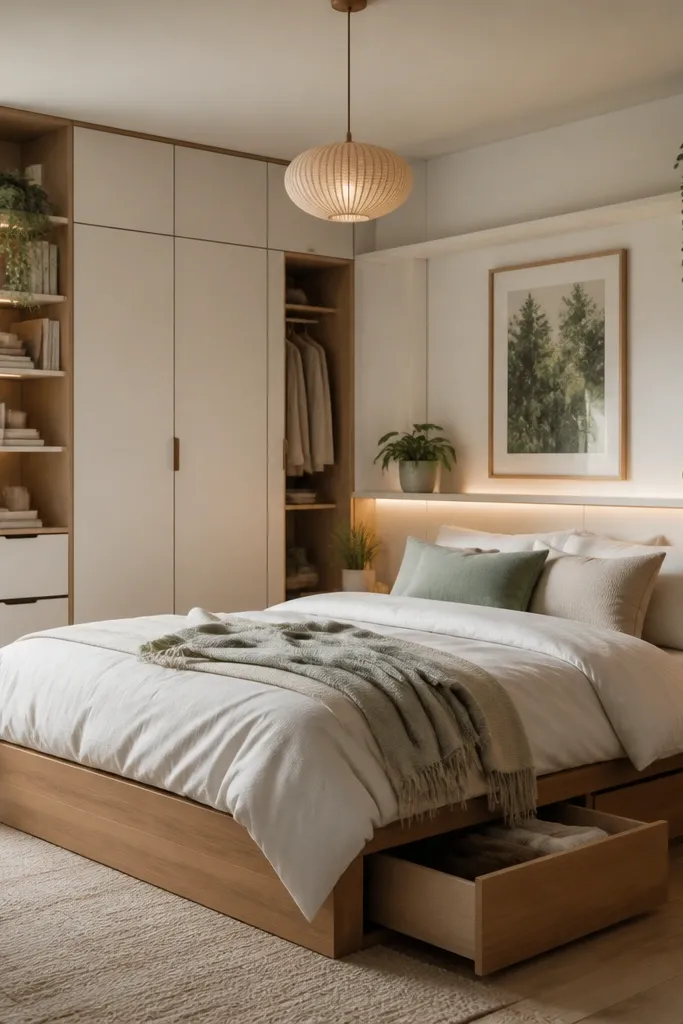
1. Bedside ladder shelf with hanging pothos
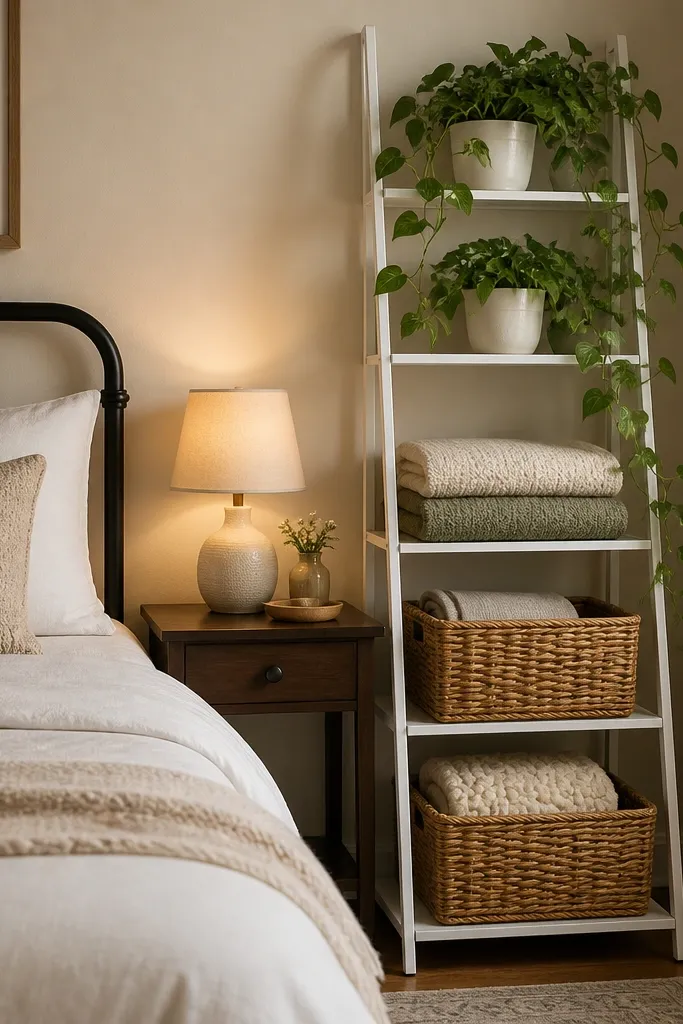
Start by placing the ladder shelf so the middle rung lines up around your mattress height — about 20-24 inches from the floor for most beds. Add two pothos in 4-6 inch pots on the top rungs, then add one basket per side for small items like chargers, sleep masks, and spare socks. Mount or position your lamp so the light hits the wall behind the ladder, not straight at the bed. Finally, run a cord cover along the shelf’s side or tuck the plug behind the lower rung so you don’t see a dangling wire.
This layout works because the ladder shelf gives you vertical storage without stealing nightstand space. Pothos is forgiving and spills softly, which makes the bed area feel lush instead of “utilities.” I like doing this with a light bed frame — white oak or matte white — because the green reads crisp under warm lighting. If you have fair skin and cool undertones, the white planters and warm bulb combo looks extra flattering in photos. The key styling principle is height layering: shelf plants sit higher while vines fall into the visual space beside your pillow.
AvoidSkip using a ladder shelf with a glossy finish if you hate glare; it makes the lamp light look harsh and cheap.
Good to knowPick a pothos that already has long trailing stems so you don’t wait months for the look. Use a saucer under each pot and empty it weekly — it keeps the shelf looking clean.
2. Floating wall shelves over the nightstand with a wall sconce
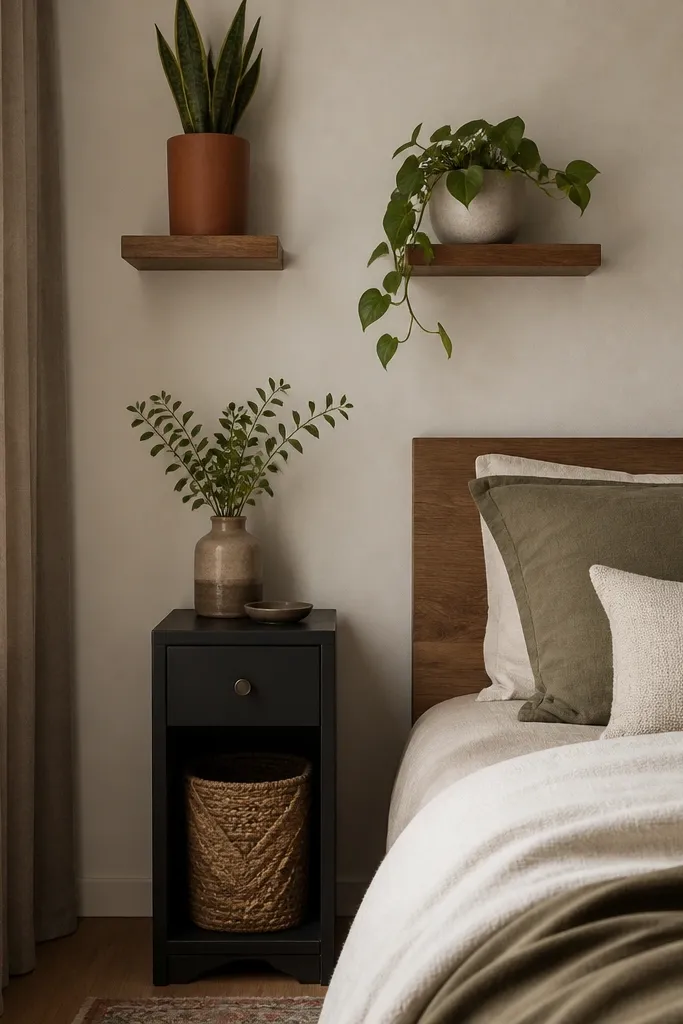
Start by choosing shelves that are 6-8 inches deep so they don’t feel like ledges. Place the snake plant on the higher shelf corner closest to the wall sconce so it catches light. Keep the trailing plant slightly lower so it visually “pulls” toward the bed, not straight up. Then set the nightstand to one side and use a single woven basket for storage — aim for one container, not five small ones. Install the sconce so its light cone hits the wall first; that’s what makes the room feel soft.
This one is for people who hate bulky furniture next to the bed. Floating shelves keep your floor open and give you a place to put plants at eye level, which looks intentional when you’re lying down. Snake plant and a compact trailing plant work well because they don’t sprawl everywhere. Under warm wall-sconce light, terracotta and matte ceramics look cozy, especially if your bedding is cream, oatmeal, or soft gray. The styling principle is “plant framing”: the shelf acts like a picture frame above your sleep area.
AvoidDon’t overload the shelves with tiny decor; plants need breathing room or they look like clutter.
Good to knowUse a light-colored shelf bracket or paint the wall behind the shelves the same color as the wall so the plant becomes the focus. If your cords show, hide them inside a slim raceway along the baseboard.
3. Storage bench at the foot of the bed with a floor lamp and fern
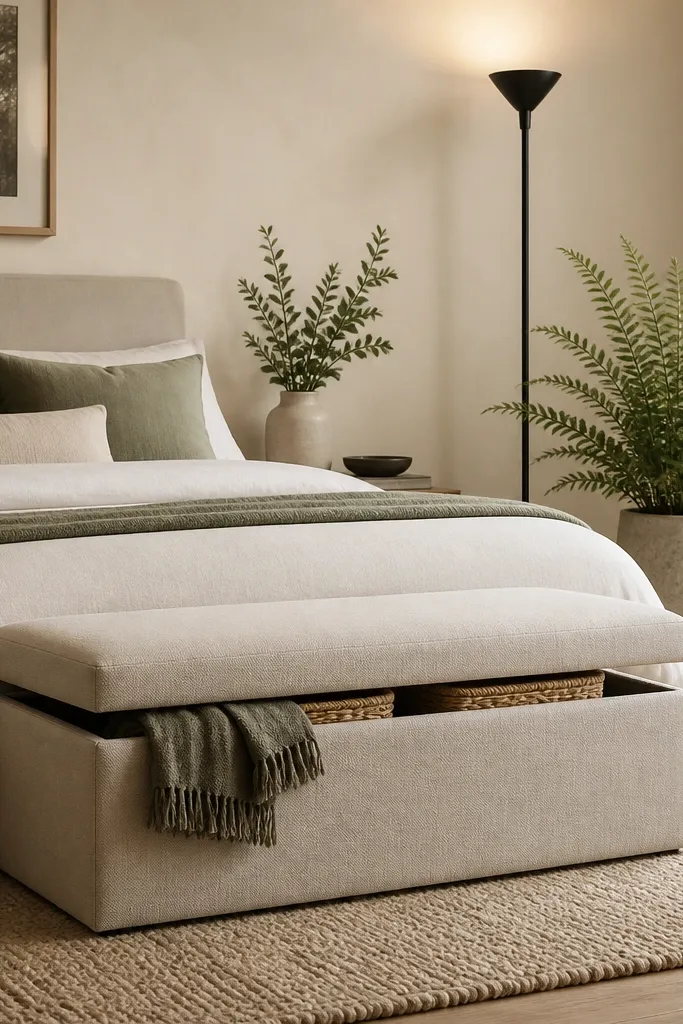
Start by pushing the bench so it sits about 2-3 inches away from the bed frame, leaving enough room to pass without catching your ankles. Place the fern in a tall pot on the bench’s far end so it doesn’t block your sitting spot. Use a floor lamp with a drum shade or a shade that’s open at the top, and aim it upward so it washes the ceiling. Keep the bench lid closed most of the time and add storage baskets inside with labels or matching fabric. Choose bedding in a warm neutral tone to keep the fern from looking too “green on green.”
I like this setup for bedrooms that need one “anchor piece” and a clear walkway. The storage bench hides linens, extra blankets, and even seasonal clothes. Ferns look dramatic under upward light, because their fronds catch the glow and look fuller. If your bedroom furniture is dark wood or black metal, the warm beige bench softens the whole look. The principle here is contrast: closed storage at the bottom, airy plant texture above, and upward lighting to add height.
AvoidSkip glossy plant pots on a bench near fabric; condensation can transfer and stain.
Good to knowMist the fern once in the morning and wipe the pot rim; it prevents water spots that can make the bench look worn.
4. Rattan cabinet nightstand with built-in shelf planter
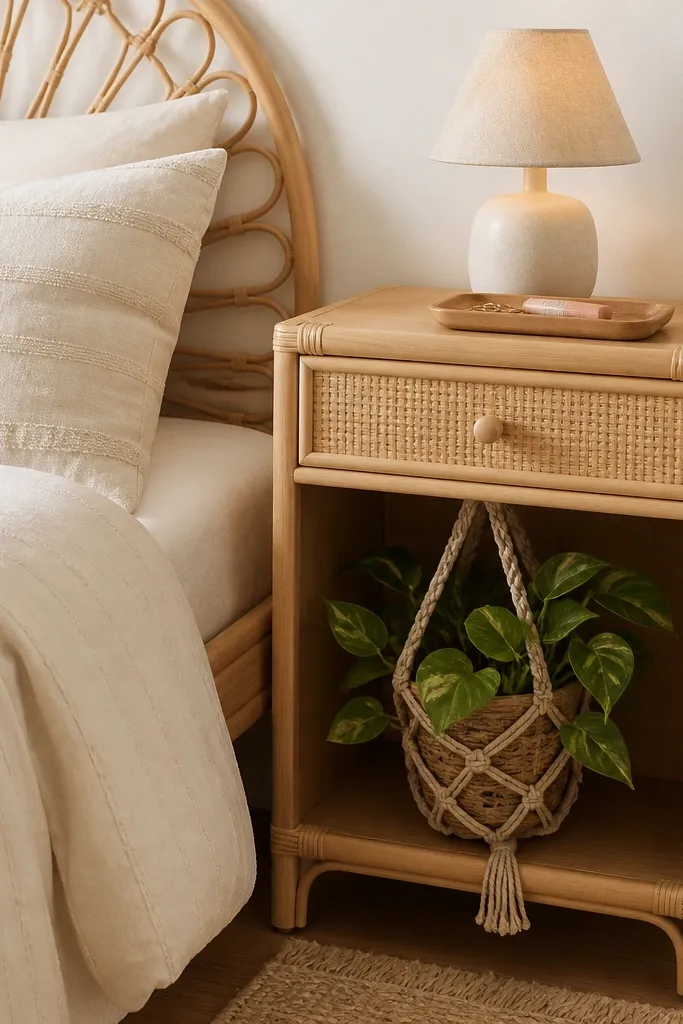
Start by choosing a cabinet nightstand with an open shelf at least 10 inches wide so the pot sits stably. Place a plant that fits the shelf footprint — a 6-8 inch pot for most nightstands — and keep the hanger length short so leaves don’t brush your lamp. Put the lamp on the cabinet top, then use a small catchall tray for tiny items so the top stays clean. If you need extra storage, put a slim fabric basket in the drawer for small cables and hair ties. Keep the plant centered on the shelf so it doesn’t look off-balance next to the bed pillow.
This is a cozy, lived-in look that still feels tidy because the cabinet gives you a real storage boundary. Rattan and woven textures look warm under 2700K light, and plants look like part of the material palette. I’ve done this with pothos and small peace lilies; both behave well when you keep the watering schedule consistent. If your room has brass or gold hardware, stick with warm metals and terracotta accents so everything looks like one family. The guiding idea is tactile layering: smooth drawer front, woven cabinet, then soft green on top.
AvoidAvoid pairing this with cool-toned gray bedding — it makes rattan look dingy instead of warm.
Good to knowWipe rattan dust weekly with a microfiber cloth; dust shows first on woven textures under lamp light.
5. Corner window plant nook with storage stool and fairy wall lights
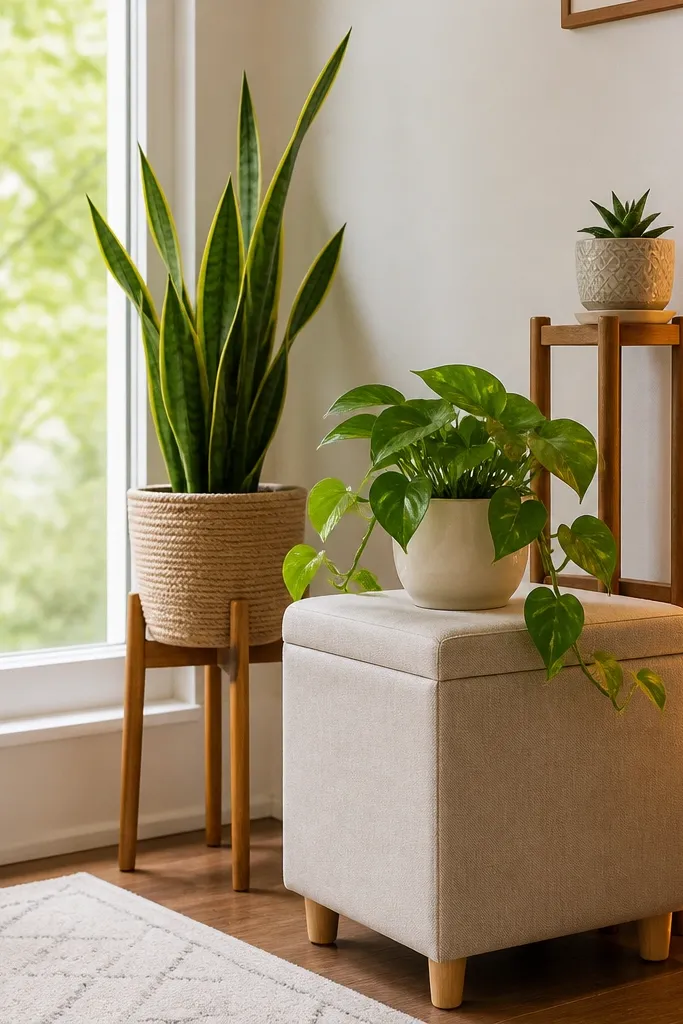
Start by placing your tallest plant on the floor stand right next to the wall, about 6 inches away from the window trim for airflow. Put the storage stool at a comfortable reach distance and set a medium plant on top, ideally a pothos or small monstera if the light is strong. Mount narrow shelves or use a wall ledge for a small succulent so it doesn’t compete with the larger plants. Add fairy lights along the wall edge at about 6-7 feet height so they frame the plants without going across your face when you sit up in bed. Finally, run the power cord behind the stool or along the baseboard with a cord clip.
This layout is for bedrooms where you actually have a usable corner. Plants in a corner look intentional because both walls give them a natural backdrop. The storage stool is the unsung hero — it holds blankets or books you reach for at night, so the nook stays tidy. Fairy lights can look cheap if they’re icy white, but warm white strands at low intensity look like a soft glow around the plants. If your bedding has a warm cream or beige tone, the corner glow makes the whole room feel calmer. The principle is “one zone”: treat the corner like a mini reading room with storage built in.
AvoidSkip placing fairy lights too low; it creates glare and makes the nook look like a party setup.
Good to knowUse warm white string lights and test the brightness at night before you commit. Too bright makes plants look washed out.
6. Under-bed storage drawers with a lighted plant shelf above
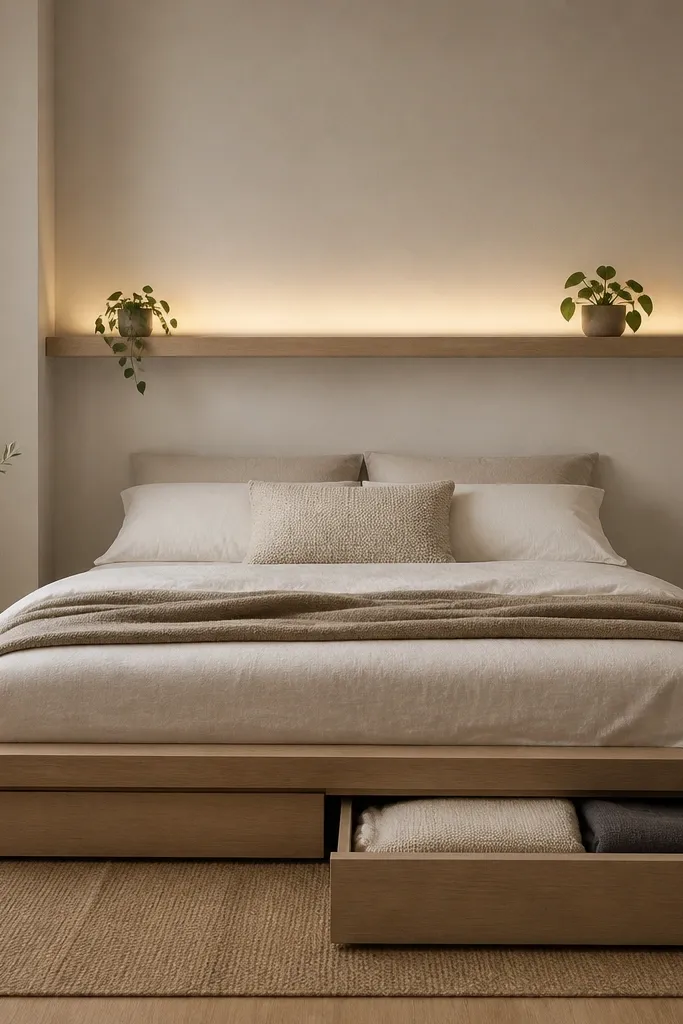
Start by measuring the under-bed clearance and buying drawers that slide easily — leave a 1/4 inch gap so they don’t scrape. Place the plant shelf above your bed at about 8-10 inches above the headboard height, so leaves don’t hit your pillows. Set one plant toward each side and keep spacing consistent for a calm look. Use a picture light or a warm plug-in LED strip aimed upward; test the angle so you don’t see hotspots. Keep bedding light and simple so the plants pop against the wall.
If your bedroom is small, under-bed storage is the cleanest win I’ve found. It removes the clutter that makes everything else look messy, and it frees visual space for a plant shelf above. The lighted shelf makes the plants the focal point even when the room is dark, and that prevents the “plants as decoration” problem. I like this with compact plants like spider plant or small jade because they don’t grow into the shelf area. The principle is vertical balance: storage hides below, plants and light live above.
AvoidSkip dark wall paint behind the shelf if you want the plants to look vibrant; shadows make them look flat.
Good to knowIf you use an LED strip, put it on a dimmer plug so you can lower brightness at night. It makes a huge difference for bedroom comfort.
7. Wall-mounted plant rail with hidden storage baskets
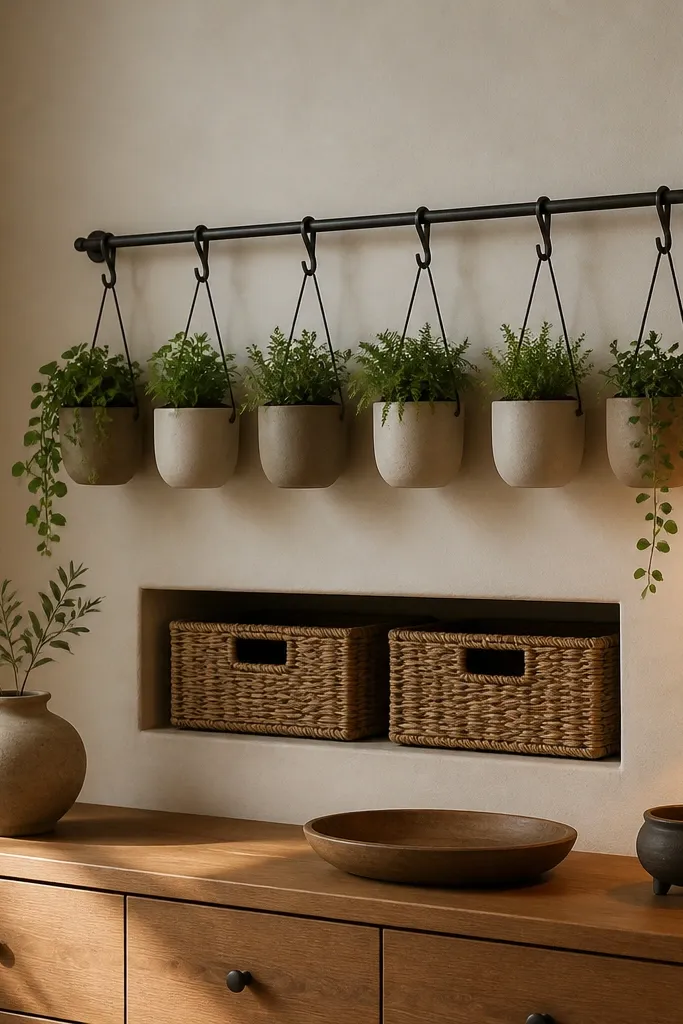
Start by installing the rail with the lowest pots about 12-14 inches above the top of the dresser so leaves don’t brush your face. Use pots that are the same size — 4 inches is a good starting point — to keep the visual line even. Place woven baskets in the niche so you can slide them out without moving plant pots. Hang the pendant light so it sits about 30-32 inches above the dresser surface and points downward. Finally, tuck the rail’s cord or power source behind the wall trim or into a small cord channel.
This is a great option when you want plants but you hate floor clutter and you don’t want shelves everywhere. A wall-mounted rail puts plants at a consistent height, which reads clean and intentional. The hidden baskets fix the practical issue: you can store hats, scarves, or extra linens right under the plants. I’ve used this with small trailing plants and herbs, but the best look comes from uniform pot sizes. Warm pendant light above the dresser makes hanging pots look glossy and healthy. The principle is symmetry: same spacing and same pot diameter for a tidy rhythm.
AvoidDon’t mix random pot sizes; the rail will make the unevenness look worse, not better.
Good to knowUse felt pads on basket edges so they glide smoothly and don’t scratch the niche. It keeps the storage looking new longer.
8. Twin bedside tables with matching storage planters and sconces
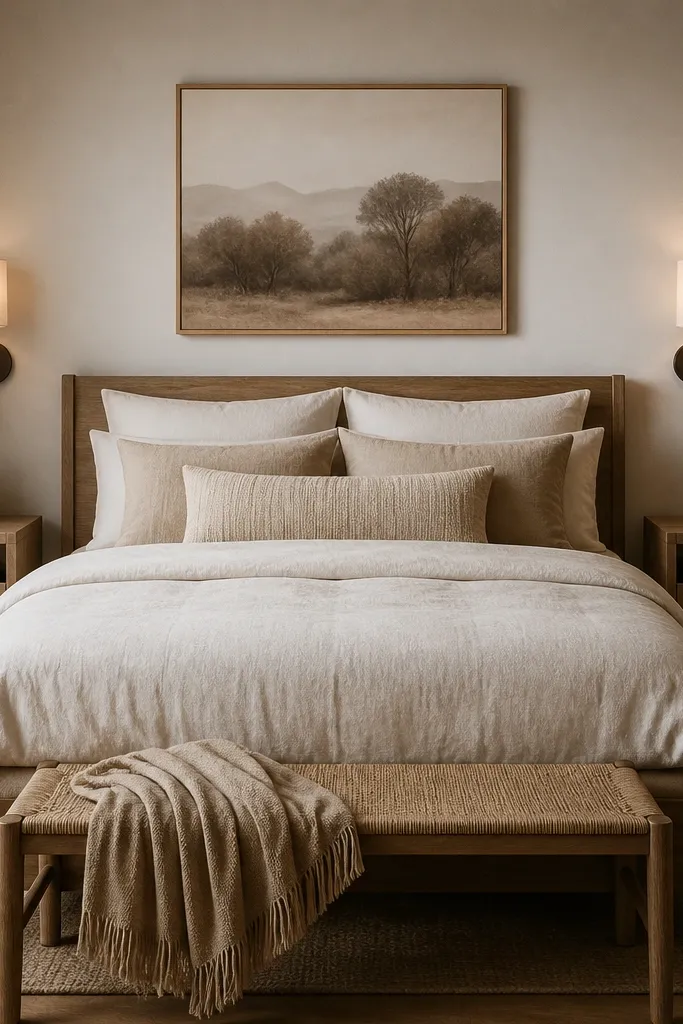
Start by selecting bedside tables with identical height, ideally within 1 inch of each other. Put the planter on the inside or front compartment so the pot sits secure — you want the rim flush with the box edge. Install wall sconces so the light is at eye level when you’re sitting up, around 42-48 inches from the floor. Place the pots with a saucer that fits the planter compartment footprint. Store small items in drawers below the planters so the top surfaces stay clear for the lamps.
This is the “balanced and calm” setup for bedrooms where you want your sleep area to look styled from both sides. Matching bedside tables create symmetry, and the storage planter boxes stop plants from turning into clutter. Upright plants like snake plant or small ZZ plant keep the look clean because they don’t sprawl onto bedding. Sconces add light without crowding the tabletop. If your bedding is patterned, keep the plant shapes simple so the room doesn’t feel busy. The principle is pair logic: one plant + one light per side, so the bed feels framed.
AvoidAvoid mixing tall plants with short sconces; it creates awkward shadows across the pillow.
Good to knowUse one plant type on both sides so the room looks intentional even if the plants grow at slightly different rates.
9. Dresser-top plant tower with a plug-in wall light behind
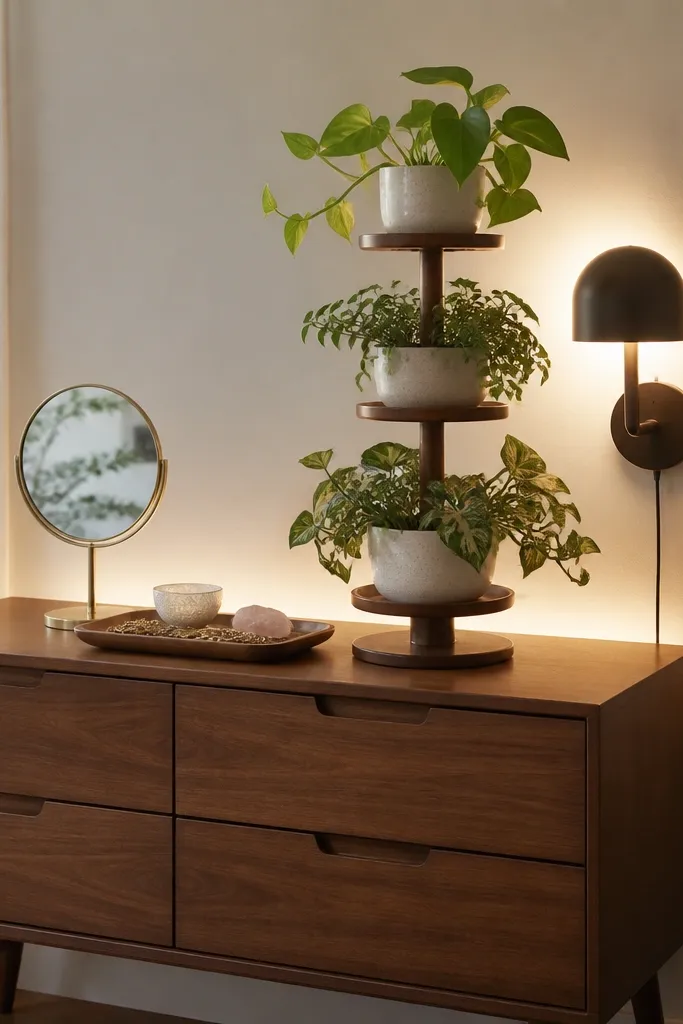
A dresser-top plant tower is a smart way to get multiple plants without spreading them across the room. Backlighting from behind makes leaves look layered and gives depth around the mirror. I’ve seen this work especially well in bedrooms with dark furniture, because warm wall lighting keeps everything from feeling too heavy. If you wear warmer-toned clothing or your walls are creamy, the glow makes the room feel warmer without adding more clutter. The principle is controlled height: the tower creates one vertical composition instead of five separate plant placements.
Start by choosing a plant tower with tiers that can hold 3-4 inch pots — too big and it becomes unstable. Place the tallest tier at the back of the dresser near the wall light, so the backlight hits the leaves first. Add two plants with different leaf textures, like a snake plant and a small pothos cutting, to avoid a flat look. Mount the plug-in wall light so it aims slightly upward at the tower, not straight into the room. Keep the jewelry tray on the dresser side opposite the plant tower so the surfaces don’t fight for attention.
Rotate the tower 1/4 turn every two weeks so plants grow evenly toward the light.
Skip placing the backlight too close to the mirror; it creates glare spots in photos.
10. Ceiling track spotlight with hanging planter and storage bench
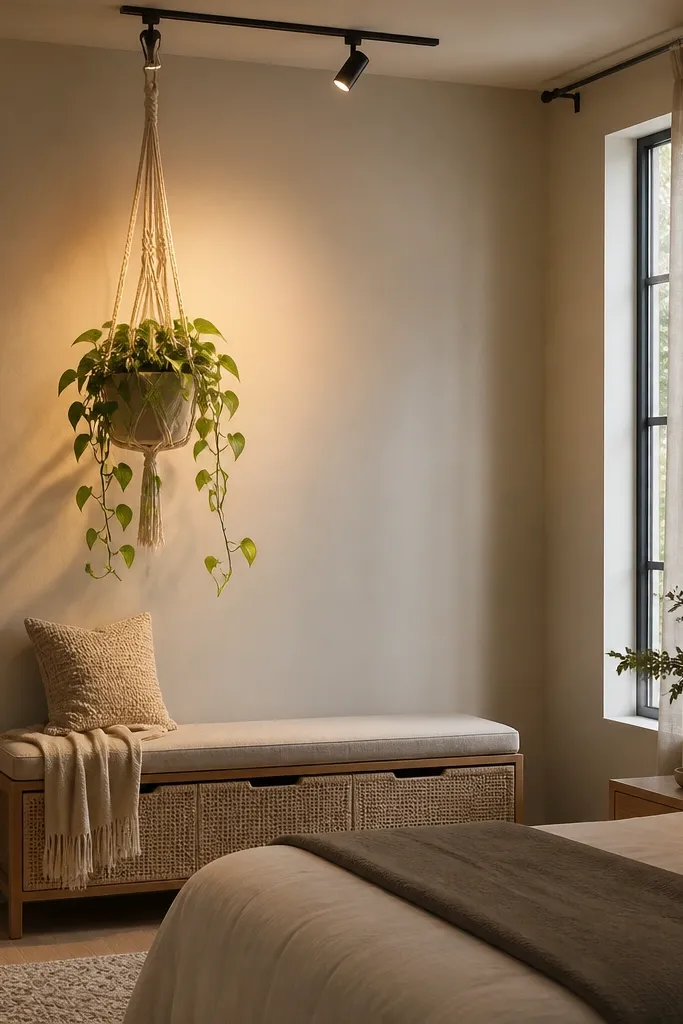
Start by placing the storage bench along the wall near the bed foot, leaving a clear 24-28 inches path to the door. Hang the macrame planter so the pot bottom is around 24-28 inches above the floor; that keeps leaves in frame but not in your headspace. Turn on the track lights and adjust angles until the wall behind the planter glows, not the ceiling. Add one small plant shelf above the bench only if you need storage for books — keep it minimal. Finally, hide the bench’s inside storage with linen baskets so it looks clean even when you open it.
Track lighting is one of the few ways to make plants look “gallery” without adding extra lamps. The hanging planter adds movement and softness, and the storage bench below gives you a place for blankets and shoes when you come in. I like macrame planters in natural beige with a warm spotlight because the fibers cast gentle shadows on the wall. If your bedroom has a lot of straight lines — like a platform bed — the hanging plant softens the geometry. The principle is directed light: you aim the light where you want attention, and everything else stays calmer.
AvoidDon’t aim spotlights directly at the ceiling if you want a cozy bedroom; it turns the room into a glare zone.
Good to knowUse warm bulbs at 2700K and keep the spotlight intensity moderate so the leaves don’t look washed out.
11. Bookcase headboard with plant shelf and recessed floor lamp
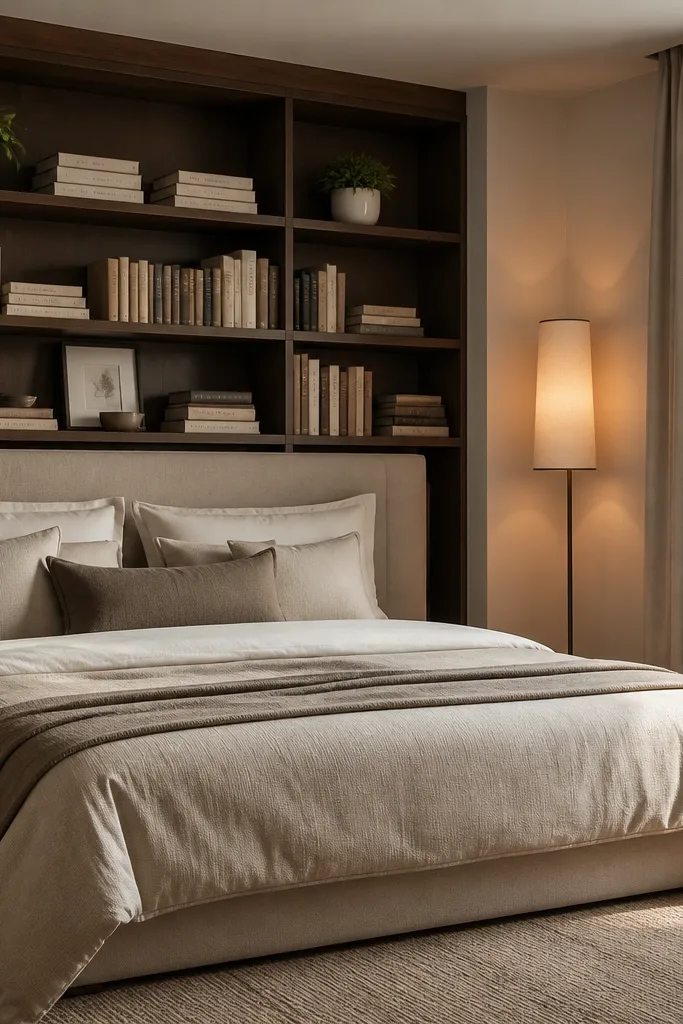
A bookcase headboard is great when you want storage you can reach from bed without getting up. Adding a plant shelf inside the headboard keeps the bedroom from feeling like an office bookshelf. I’ve done this with small pots and plants that stay compact, like pothos in a short container or a small ZZ plant. Warm floor lighting from the corner makes the books and plants look layered, not flat. If you have a narrow bedroom, this also prevents you from crowding the floor with extra furniture. The principle is “sleep-to-storage access”: everything you use at night is within arm’s reach.
Start by measuring the space behind your bed so the headboard depth doesn’t block your walkway — keep it under about 10 inches deep if the room is tight. Place plants on the top shelves of the headboard, not the very bottom, so leaves don’t snag your sheets. Keep books in two or three vertical stacks so the shelves look intentional. Use a floor lamp with a shade that points toward the wall, and place it in the corner where it can wash light across the headboard shelves. Add a small basket on the lowest shelf section for chargers and remotes.
Dust the plants and books together with a microfiber duster; doing them separately takes forever and you end up skipping one.
Avoid mixing big plant pots with books; the scale mismatch looks accidental.
12. Wardrobe cabinet with door planters and a bedside sconce strip
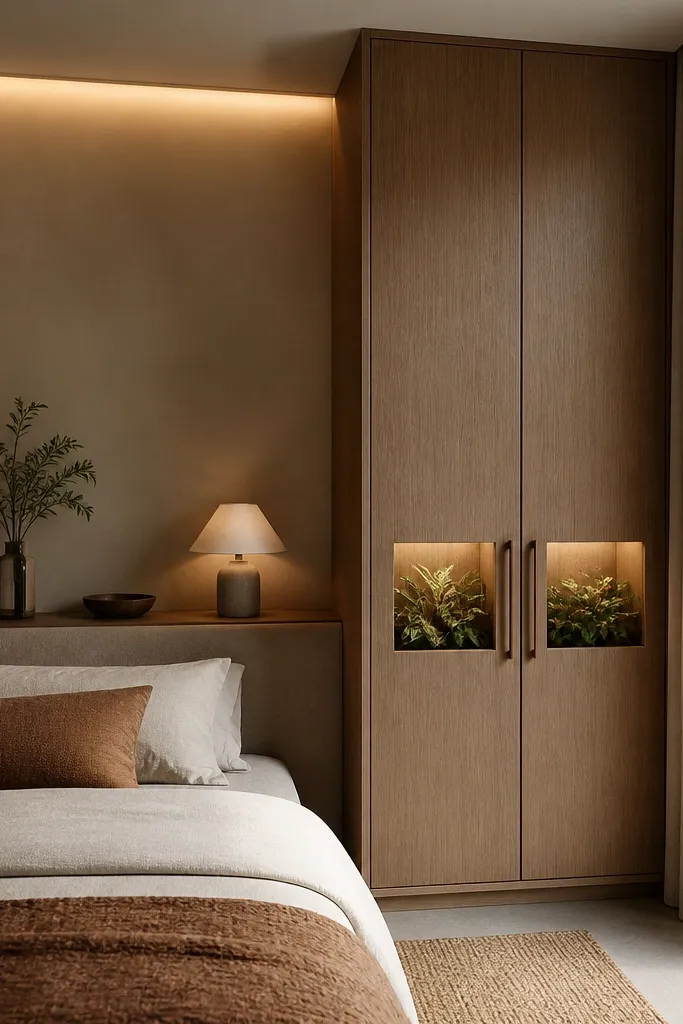
Start by choosing a cabinet with planter inserts that have drainage — if they don’t, you’ll end up with soggy mess and stains. Place the plants so they grow through the openings without hitting the door edge, and trim once a month for a clean silhouette. Install the sconce strip at about 20-24 inches above the floor so the light hits the cabinet surface. Keep the bedside surface minimal — one lamp and one tray maximum. Finally, use cabinet shelves for folded items and keep the top surface clear so the cabinet and plants look like one unit.
This is a clever storage-first approach for people who hate countertop clutter. Door planters hide the pot mess and keep the look clean because you only see leaves and planter openings. I’ve used this concept with pothos and small trailing plants because they look good framed by the cabinet doors. The sconce strip adds gentle wall light so the leaves glow when you turn in at night. If your bedroom has lots of clothing storage needs, this setup keeps plants from stealing floor space. The principle is containment: plants live inside furniture, not around it.
AvoidSkip planters that have no way to drain; water will ruin the cabinet finish.
Good to knowUse a drip tray inside the planter insert and check it weekly. It keeps the cabinet looking new.
13. Storage ottoman next to a reading chair with a floor plant and wall lights
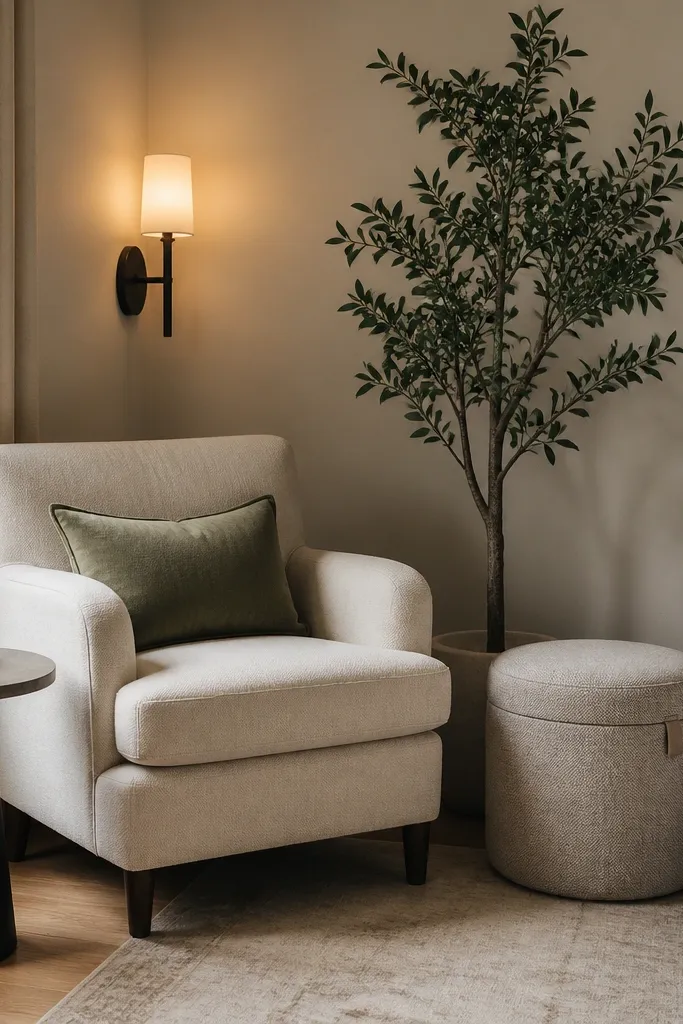
Start by placing the ottoman so it’s within 12 inches of the chair — close enough to reach without standing. Put the floor plant in a pot that matches your wood tones, like dark wood or black, and keep it 8-10 inches away from the wall to avoid dusty buildup. Mount wall lights so the bottom of the shade sits around 60-64 inches from the floor. Choose a plant that matches your window light, then rotate it monthly. Use a slim side table and keep only one item on it besides the plant — it keeps the corner from looking crowded.
This setup makes your bedroom feel like a place you actually want to stay in, not just sleep. The ottoman storage holds blankets, extra pillows, and game controllers — things that always end up on the floor. A tall plant behind the ottoman gives height and makes the corner feel complete. Wall lights at shoulder height are flattering because they light your face when you’re sitting and reading. If your skin tone is deeper, warm lighting makes the room feel softer and reduces harsh shadows. The principle is comfort layering: seating, hidden storage, then a plant that anchors the corner.
AvoidAvoid placing the plant too close to the chair; leaves will brush the chair arm and look messy.
Good to knowWipe leaves with a damp cloth every two weeks; dust makes wall-lit plants look dull.
14. Under-stair style storage wall with plants and a warm neon-style lamp
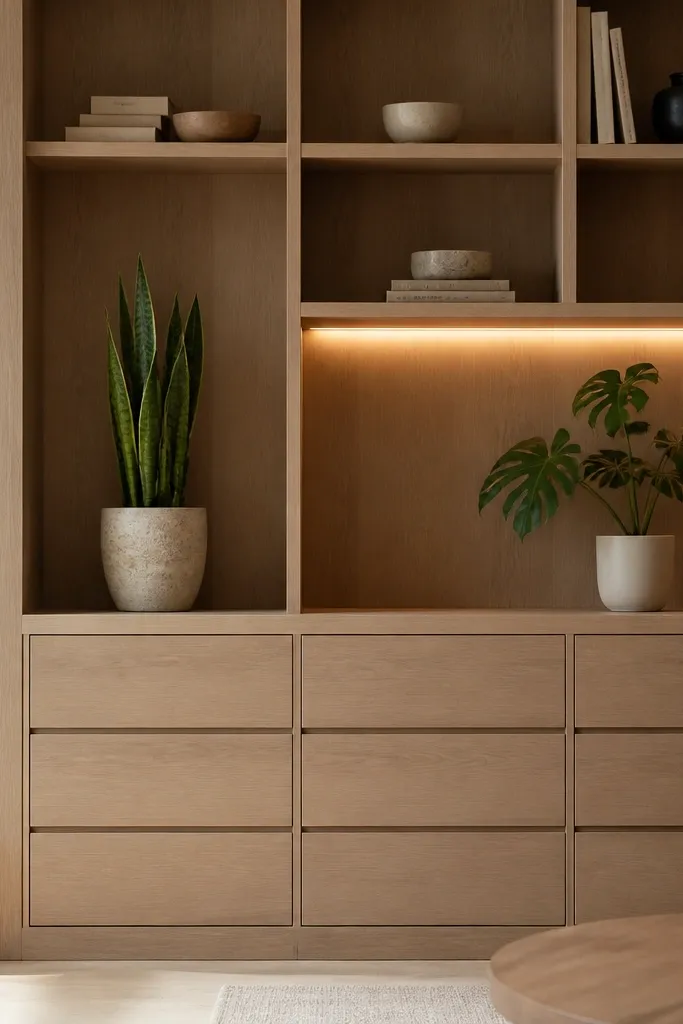
This idea works even if you don’t have stairs, because the “storage wall” concept is what matters. Open cubbies let you place plants like decor, while drawers keep everything else hidden. A warm LED strip along the shelf edge makes the plants look intentionally lit, especially at night when the rest of the room is dim. I like using a monstera only when you have enough light, because its leaves show more detail under warm glow. If your walls are a cooler white, the warm LED balances them and keeps the room from feeling sterile. The principle is controlled illumination: plants get a glow, clutter stays behind closed doors.
Start by choosing a storage wall or cabinet system with cubbies at least 12 inches wide and 10 inches deep so pots fit comfortably. Place the snake plant in the lower cubby and monstera in the higher cubby so you get depth. Run the warm LED strip along the shelf edge behind the cubbies; keep it behind a lip so you don’t see the diode points. Add one small tray in a drawer for everyday items like lotion and lip balm. Finally, match pot colors to your cabinet finish — matte whites with light cabinets, terracotta with warm wood.
Use a warm LED strip with a dimmer plug so you can lower it after bedtime. Bright strips look harsh in a bedroom.
Skip uncovered LED points facing the bed; it creates glare and makes the plants look flat.
15. Garment rack with shelf planters and a floor-wash lamp
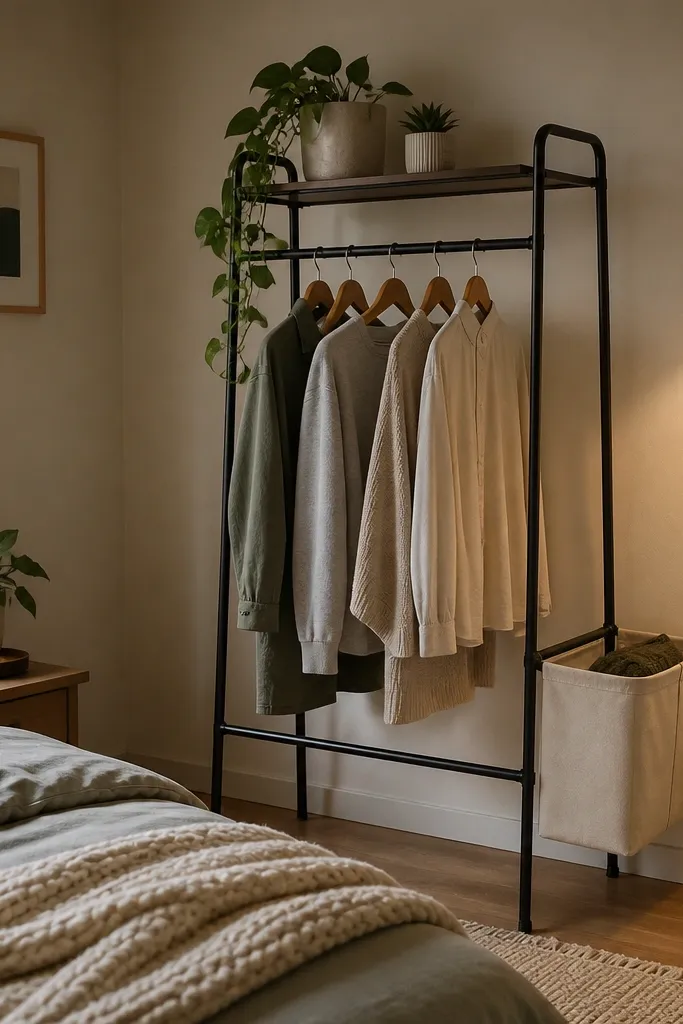
Start by placing the rack against a wall where it won’t block your path, leaving at least 30 inches for walking by the bed. Add shelf planters with pots no wider than 4-5 inches so they don’t crowd the rack. Place pothos at the front edge so vines spill downward and soften the structure. Use a floor lamp with a wide shade and aim it so the light washes the wall behind the rack. Add one hanging bin on the rack for folded tees or socks, and keep the shelf surface free of extra trinkets.
I’ve used this in bedrooms where the closet is full but the floor is still too crowded for extra furniture. A garment rack keeps clothes accessible while the shelf adds plant storage without taking up a dresser surface. The floor-wash lamp makes the wall glow and gives the shelf plants a soft spotlight effect. Pothos is ideal here because it drapes and hides the shelf edge, so the rack looks more styled than utilitarian. If your bedding is in muted tones like sage or oatmeal, the green drape looks calm rather than loud. The principle is “tool + decor”: make the rack do two jobs and keep the lighting flattering.
AvoidAvoid using a plant shelf that’s too small; cramped pots make the whole rack look like a storage hack.
Good to knowTrim pothos tips when vines reach the top of the bed pillow line; it keeps the drape intentional.
16. Mirrored dresser with plant shelf behind and warm halo lamp
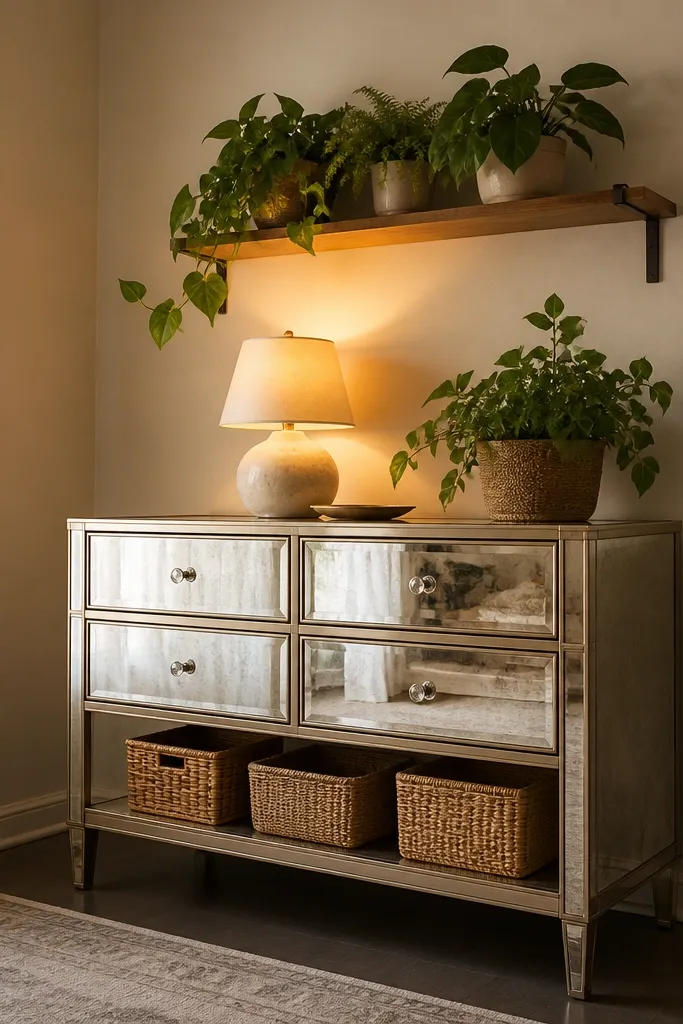
Start by placing the plant shelf so it sits 2-4 inches behind the dresser top line, not flush with the front edge. Use two plants maximum on the shelf to avoid a cluttered reflection; snake plant plus a small pothos is a solid combo. Add warm lighting behind the shelf so it creates a gentle reflection on the mirror, not a direct glare. Use storage baskets on the lower dresser area for scarves or extra skincare so the top stays clean. Finally, wipe the mirror and plant shelf weekly; smudges show instantly when you have a halo light.
Mirrors change bedrooms fast, and I like using them with storage plants lights because the light and leaves bounce around the room. The plant shelf behind the dresser keeps the leaves from crowding the top of the dresser, and the mirror makes the space feel deeper. A warm halo lamp behind the shelf gives you that soft glow without harsh shadows. This works especially well if your bedroom is narrow because reflections add width and keep corners from feeling empty. If you have warm undertones, mirrored surfaces and warm lighting make the room feel cozy. The principle is depth stacking: plants behind the mirror, light behind the plants, storage below the mirror line.
AvoidSkip placing too many plants on a mirrored surface; reflections multiply them and it looks chaotic.
Good to knowUse LED warm bulbs and a dimmer; mirror glare is the fastest way to ruin the cozy vibe.
17. Bamboo room divider with plant pockets and string sconces
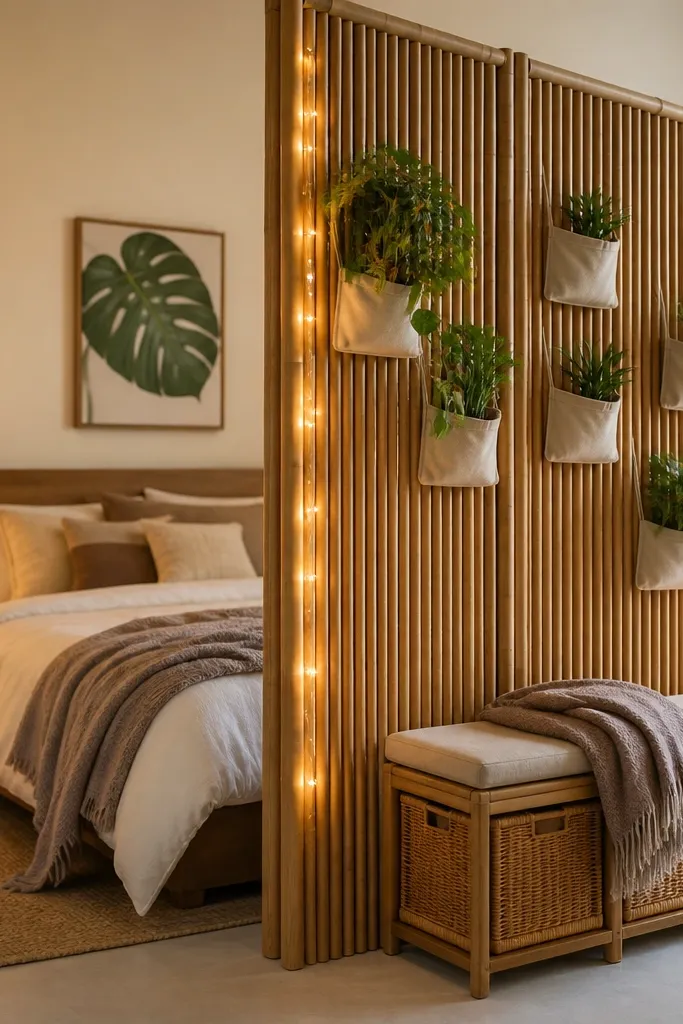
If your bedroom is open-plan or you want a separation between sleep and a work corner, a room divider gives you that boundary without building walls. Plant pockets on the divider keep plants upright and contained, so you don’t get soil mess on the floor. The string sconces along the divider edges make the plants look like part of the lighting design. I’ve used this in rooms with white walls and it instantly feels warmer because bamboo texture takes on the glow. If your style is minimalist, this still adds warmth because the divider gives structure and the plants add softness. The principle is zoning: plants and light live in the divider zone, storage lives in the bench behind it.
Start by placing the divider so it blocks sightlines from the door toward your bed, leaving 18-24 inches of access space. Hang plant pockets at two heights: one row around 24-28 inches and another around 40-44 inches. Choose low-maintenance plants that tolerate indoor conditions, like pothos cuttings in self-watering pockets. Add string sconces with warm white bulbs along the top edge of the divider, not across the front. Use a storage bench behind the divider for blankets so the divider doesn’t become the storage dump.
Water plants in the morning and keep a towel nearby; pockets dry faster but you still need to manage drips.
Don’t hang pockets too low; it makes the divider look crowded and the plants brush your legs.
18. Storage platform bed with built-in planter boxes and bedside fairy sconce
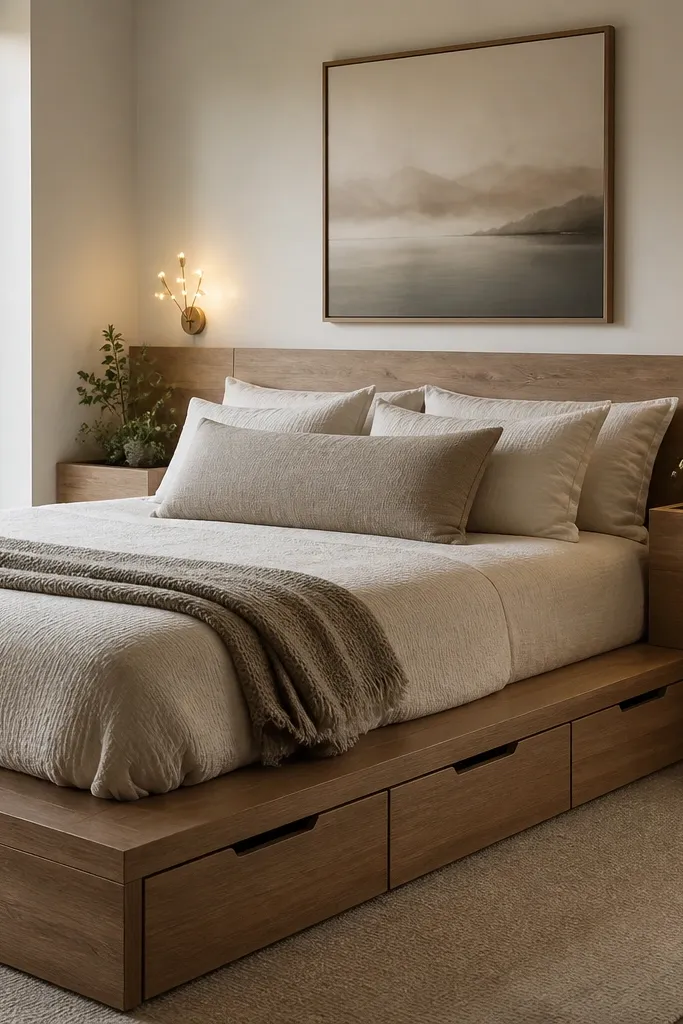
Start by opening the bed drawers and measuring the clearance your plants need; choose plants that won’t hit the side when drawers slide. Place one plant per side panel, centered vertically on the headboard panel. Keep the built-in boxes filled with a well-draining mix and saucers that fit the box opening. Install fairy sconces next to the bed at about 48-52 inches from the floor for a comfortable reading angle. Finish the look with one neutral throw folded at the end of the bed so the whole scene feels intentional.
A storage platform bed is the cleanest way to hide the daily mess because the storage is already part of the furniture. Adding planter boxes on the headboard side panels makes plants feel built-in rather than added later. Small plants like pothos or compact snake plant fit these boxes without overgrowing your bed area. The tiny warm fairy sconces give you the soft reading glow without a bulky bedside lamp. If you like a calm, hotel-like bedroom, this is the style that gives it. The principle is integration: plants and storage share the bed structure so nothing looks random.
AvoidAvoid using plants that grow fast and wide in built-in boxes; the overgrowth makes the bed look neglected.
Good to knowTrim pothos back to keep leaves inside the planter box line; it keeps the bed’s side panels looking crisp.
19. Dresser wall gallery with storage ledge and plant in a backlit jar
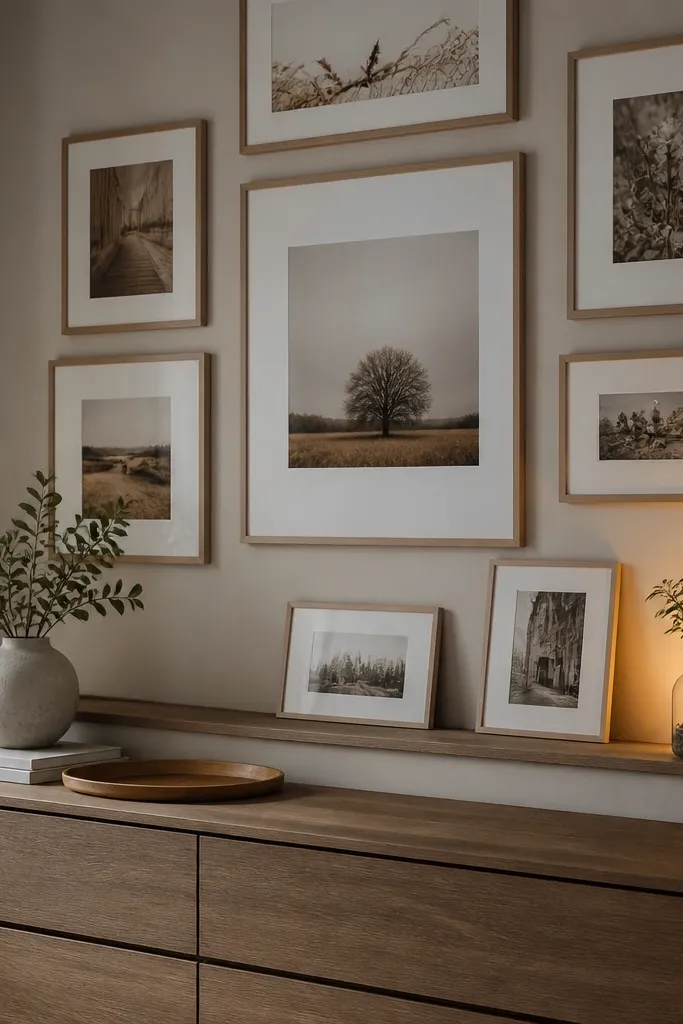
This is for bedrooms where your wall space is the problem. A storage ledge gives you a place to put everyday items like watches and lotion, and the plant jar adds a sculptural element that looks good even when it’s not full and leafy. Backlighting the jar makes small plants look intentional and gives a warm focal point. I’ve used this with small plants like baby pothos or compact moss setups that don’t require constant repotting. If your decor is more photo-gallery than furniture-heavy, this keeps the plant aligned with your wall style. The principle is “one statement plant”: a single glowing plant element beats a scattered bunch.
Start by choosing matching frames for the gallery — same color and similar thickness — so the wall doesn’t fight the jar planter. Place the storage ledge directly below eye level when standing, then set the jar planter on the far right so it balances the frames. Add a small warm light source behind or beside the jar, with the light turned off during placement so you can see the glow direction. Use the storage ledge for one tray only; keep the rest of the ledge empty. Finally, keep the jar planter’s plant small enough that leaves won’t reach the wall frames.
Use a timer plug for the jar light so it turns on for evening and off overnight, reducing the chance you forget it.
Skip cool white LED in a jar; it makes the plant look sickly and the wall look harsh.
20. Narrow hallway-style entry console by bedroom door with plant lights
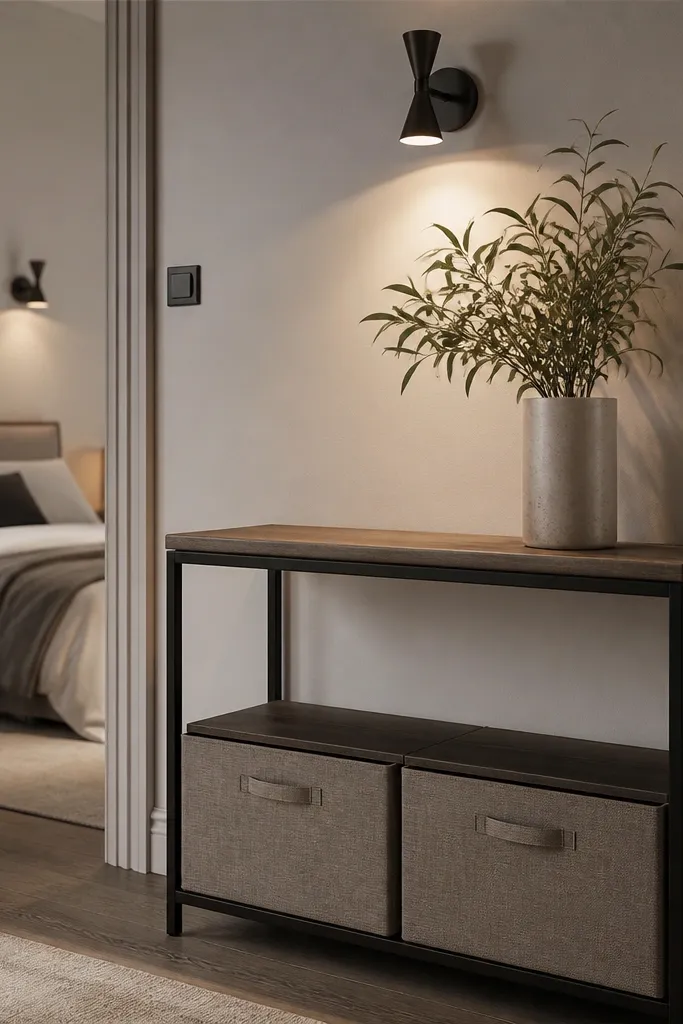
Start by choosing a console depth around 10-12 inches so it doesn’t block the door swing. Put a tall plant — snake plant or a small olive if you have sun — on the console with a saucer that fits your drawer clearance. Install two wall lights or one wall light above, aimed down so it lights the plant and the top surface without glare into the room. Use fabric drawers for shoes and bags, and keep the top clear except for the plant and one tray. Finally, route any power for the plant light behind the console and use cord clips along the wall.
Even if it’s a bedroom, the entry area matters because it controls what you bring in and where it lands. A narrow console with drawers stops bags from piling up in your bedroom and makes the room feel organized the moment you step inside. Adding a plant near the door gives you a “soft welcome” and also hides clutter because the plant creates a visual stop point. Warm wall lights make the leaves look deeper and keep the space from feeling like a hallway. If your bedroom door opens into a small space, this setup makes that space feel designed instead of awkward. The principle is flow: storage at the door, plants as the transition, lighting that flatters both.
AvoidAvoid placing a plant with wet soil directly over wood console finishes; water rings show up fast.
Good to knowMeasure door clearance in open position and leave at least 1 inch of space so the console never scrapes the door.