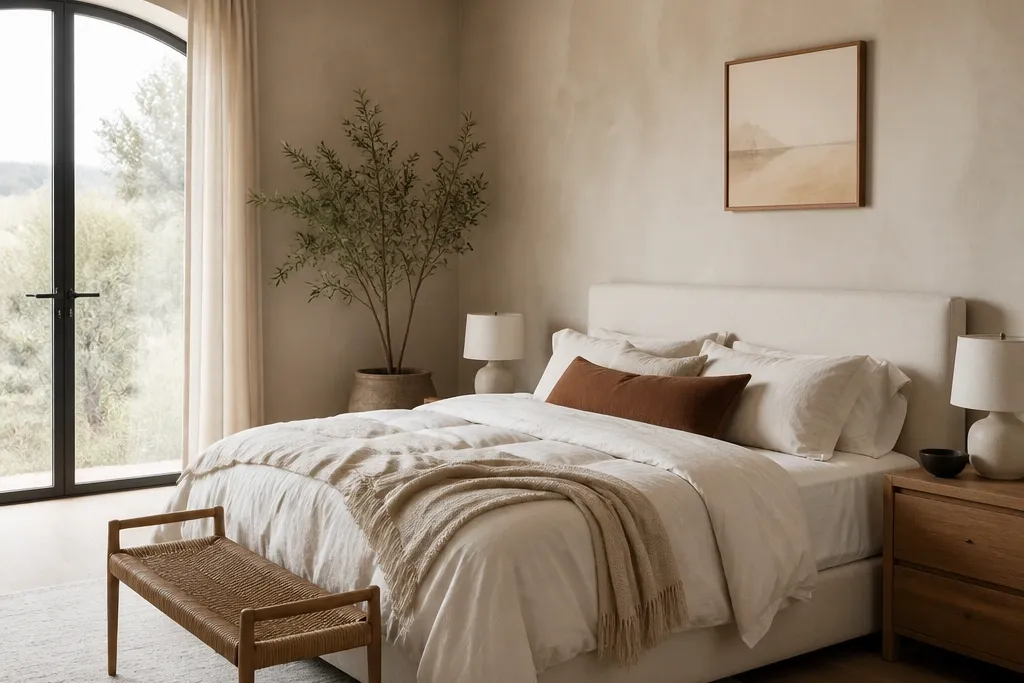
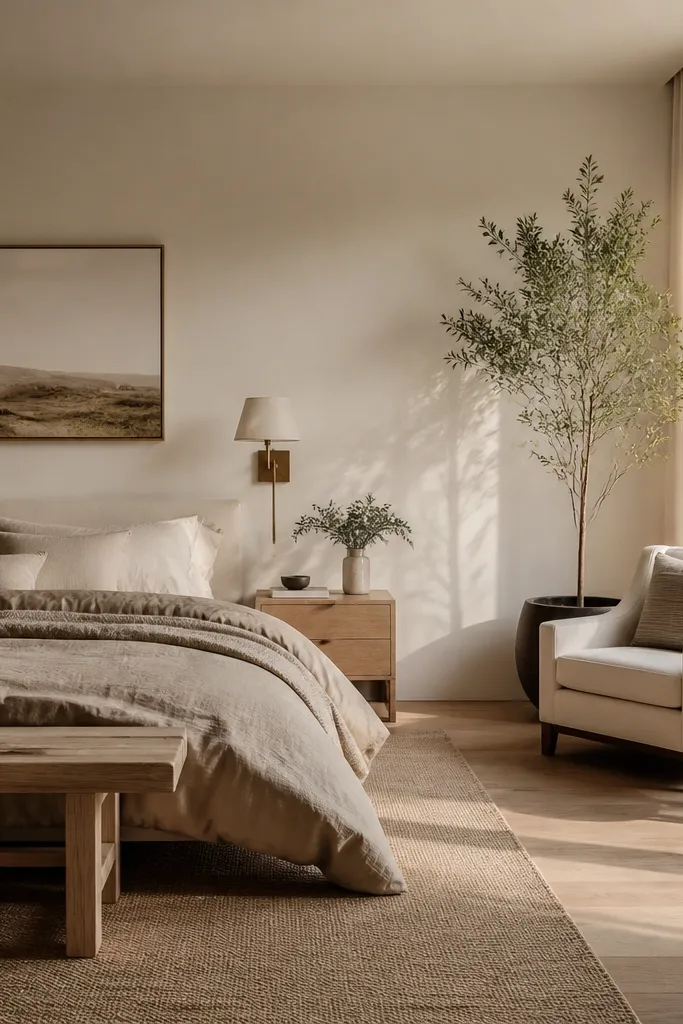
1. Warm off-white walls + oatmeal linen duvet set
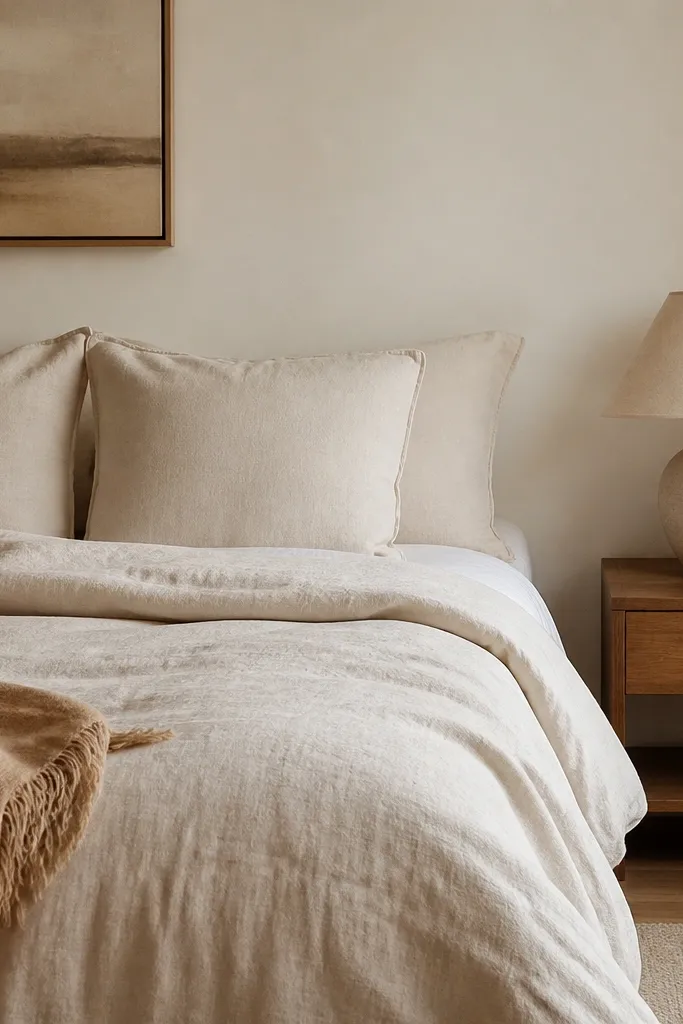
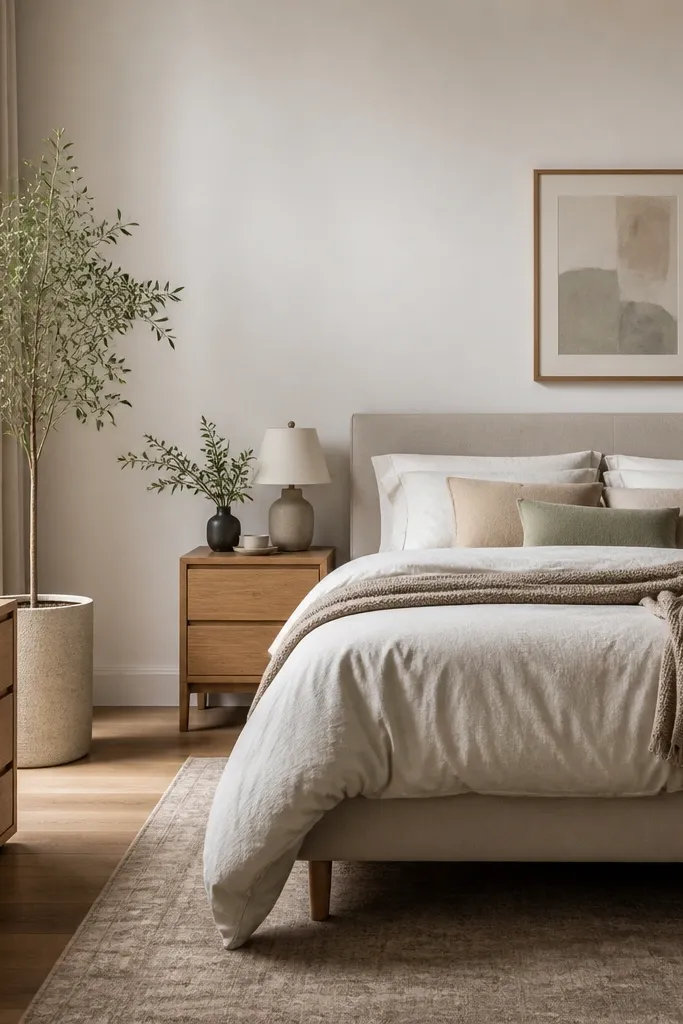
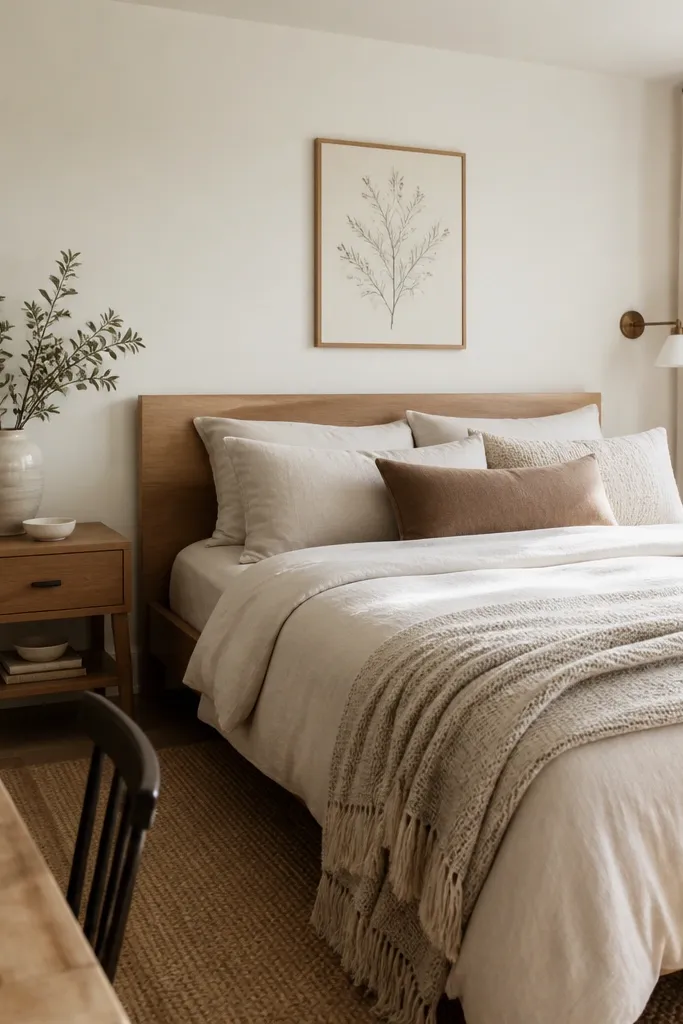
This setup looks expensive because linen texture reads custom even when the pieces are simple. Use a warm off-white wall (not gray) so the oatmeal duvet doesn’t look yellow or dull — I aim for a creamy white with a hint of warmth. Choose an oatmeal linen duvet with a natural slub and a matte finish; it catches light softly and hides small wrinkles. The bed stays neutral, so it flatters most skin tones and makes everyone look better in natural morning light. It also works in rooms with low ceiling height because the color stays light and consistent.
First, paint or select a warm off-white that looks good beside your existing wood tone. Then place the oatmeal linen duvet so it hangs evenly on both sides and the bottom edge lands just above the floor with a clean drape. Add two cream shams and one lumbar pillow in a similar cream, then fold a camel throw over the foot of the bed. Finish by styling one nightstand with a lamp that has a fabric shade in sand or oatmeal, not glossy white.
Buy a duvet with a heavier weight — thin linen looks cheap. If your duvet is too light, add a breathable insert so it puffs up like a hotel bed.
Avoid crisp white bedding against warm wood plus gray walls — it can look mismatched and harsh.
2. Floor-skimming sheer curtains with a hidden blackout roller
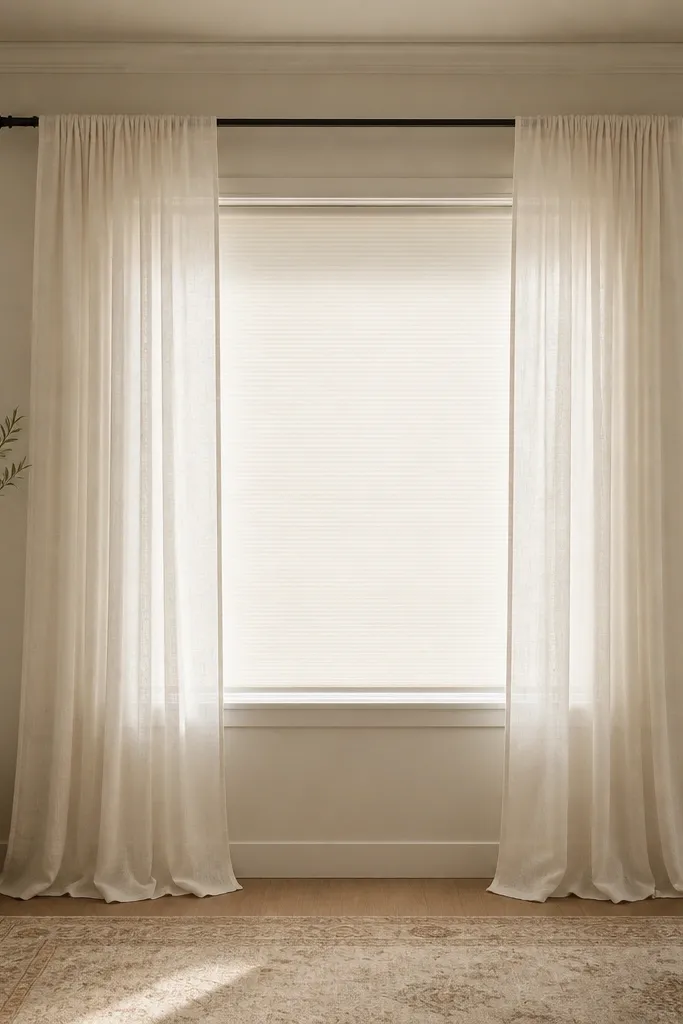
Sheers look luxe when they move and when the light is controlled. Hang white or soft ivory sheers that are semi-opaque — you want the room to glow at daybreak without showing every silhouette. A hidden blackout roller behind the sheers lets you keep the “expensive” airy look while still getting real sleep. This is especially flattering for small bedrooms because it adds brightness without making the window feel bigger by adding more furniture. It works great if your room faces a street and you need privacy.
First, measure the window and add 4 to 6 inches above the frame for the rod height. Then extend the rod past the sides by 5 to 7 inches so the curtains don’t cling to the glass edges. Use two panels per side if your window is wider than 36 inches; gather them so the pleats look full when closed. Finally, keep the sheers floor-skimming — aim for 1 to 2 inches of break above the floor or a tiny puddle.
Good to knowChoose sheers with a slight texture like cotton voile; smooth polyester can look plasticky under lamp light.
AvoidAvoid curtains that stop at the windowsill — that length makes the whole room feel shorter.
3. Black-framed mirror opposite the bed
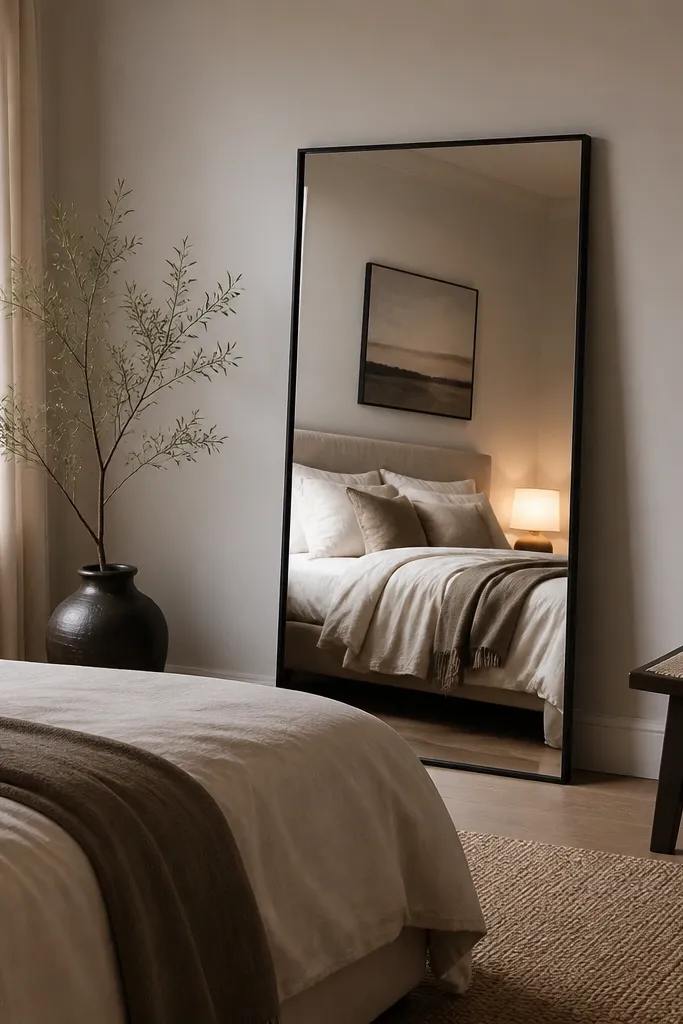
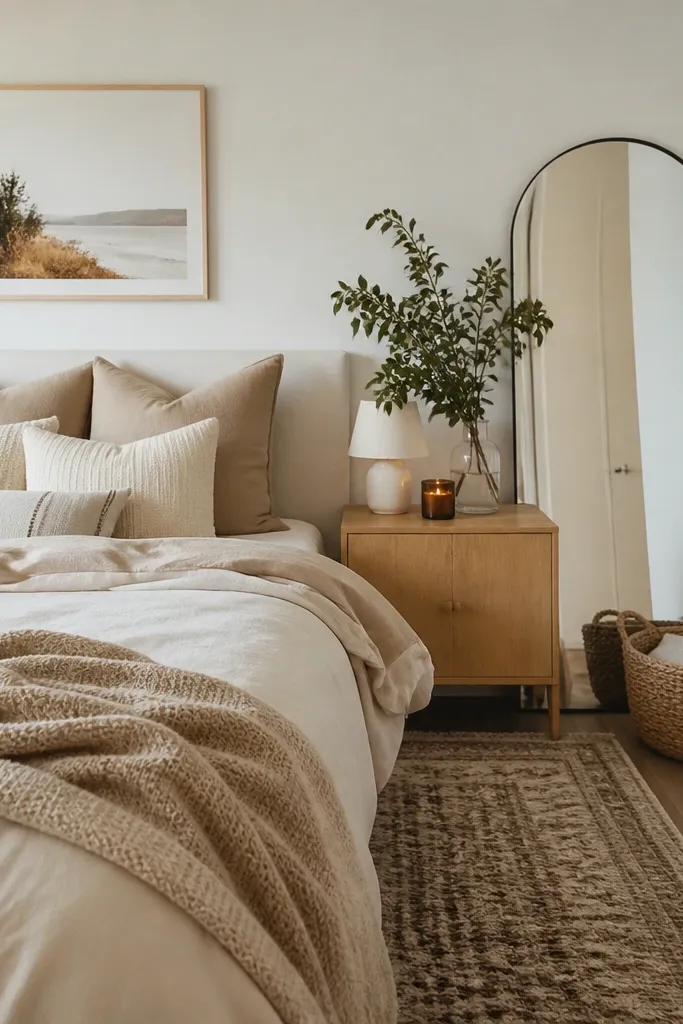
A mirror reads expensive when it’s tall, thin-framed, and placed so it reflects light instead of clutter. Put it opposite the bed so you get a calm reflection of your bedding and one lamp, not a jumble of laundry baskets. Black frames add a clean contrast to warm neutrals and look sharp with wood floors. This trick makes small bedrooms feel bigger and gives depth without adding furniture. It also flatters your morning look because it brings light back into the room.
First, pick a mirror height that hits around 60 to 70 inches from the floor for most small rooms. Then mount it or lean it securely so it doesn’t tilt; use wall anchors if you mount. Place it so it catches light from a bedside lamp or a window — do not aim it toward a messy corner. Keep the frame thin (under 1 inch) so it looks architectural, not bulky.
Wipe it with a microfiber cloth after you hang it — mirror smudges show up instantly and cheapen the look.
Avoid ornate frames and mismatched sizes — they fight the clean lines you’re trying to build.
4. One statement headboard in textured bouclé
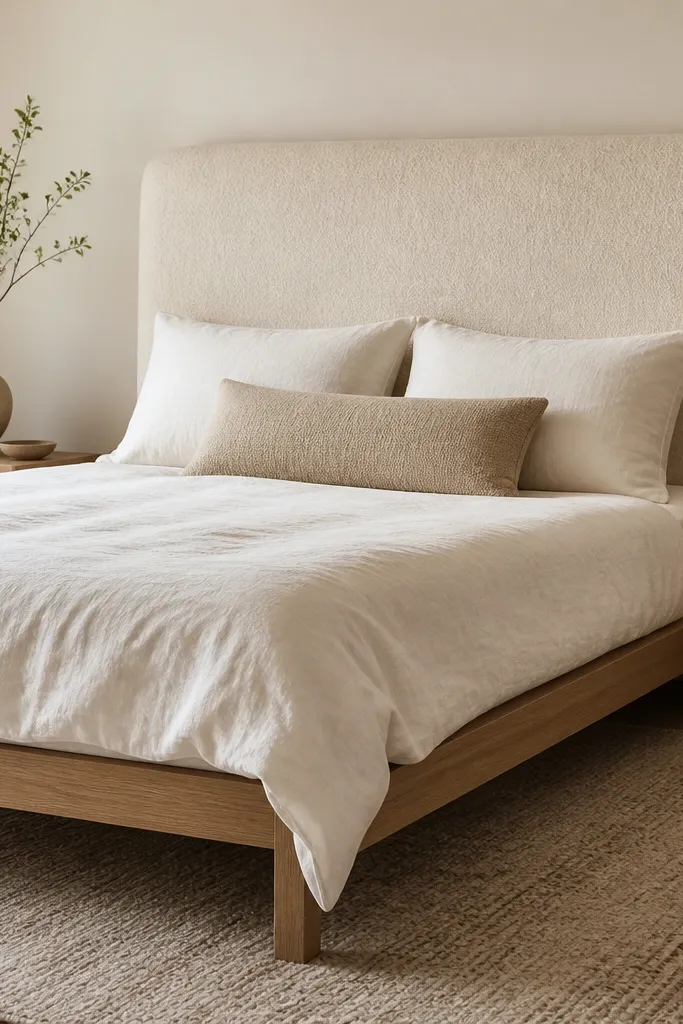
Bouclé looks costly because it has depth — not shine. Pick a headboard in warm cream or oat, not stark white, and keep the bed frame simple so the texture does the talking. This headboard style makes the whole room feel “designed” even when the rest is minimal. It’s flattering for people with warm or neutral undertones because the cream reads soft, not gray. In small rooms, the tall headboard also adds vertical focus, which helps the ceiling feel higher.
First, measure your wall behind the bed and choose a headboard width that covers at least the bed mattress width plus a little. Install so the bottom edge sits close to the top of the mattress, not floating too high. Keep the bedding tones tight: off-white sheets, cream duvet, sand throw. Place a rug so it extends 6 to 10 inches past the sides of the bed for a grounded look.
Add one small textured accent like a bouclé bench pillow or a knit throw to repeat the material.
Avoid shiny faux-leather headboards in small rooms — the glare reads cheap fast.
5. Narrow nightstands + wall-mounted plug-in sconces
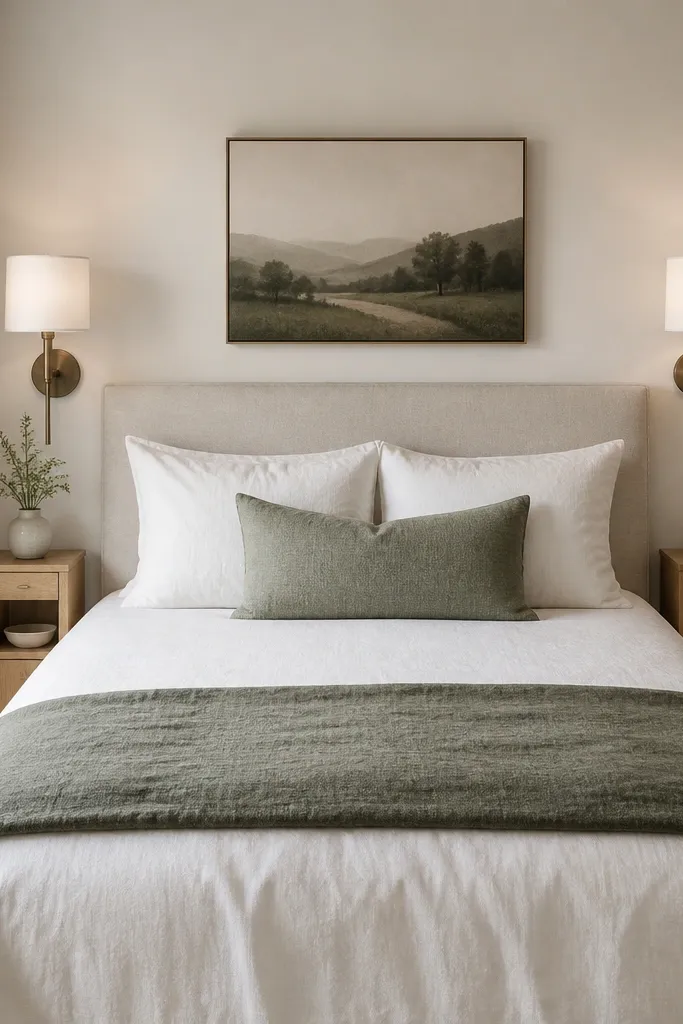
Nightstands look expensive when they’re slim and when the lighting sits at the right height. Narrow nightstands keep your floor clear, which makes the room feel larger and cleaner. Wall sconces add that hotel vibe because the light is closer to eye level than a lamp on a low surface. Choose plug-in sconces if you don’t want to run wiring — I’ve done this in rentals and it looks built-in. This setup is great for small bedrooms where you want storage but hate bulky furniture.
First, measure the space next to the bed and keep nightstands under 14 inches deep. Then center the sconces so the light hits the wall at about mattress height. Use fabric shades in oatmeal, not bright white, to keep the glow warm. Style the top with one tray or a single book stack — keep it to one item per side.
Good to knowUse warm bulbs at 2700K and dim them if you can. The difference between 3000K and 2700K is huge in small bedrooms.
AvoidAvoid stacking lots of tall décor on the nightstand — it blocks the sconce light and looks cluttered.
6. Monochrome sage bedding with white ceramic accents
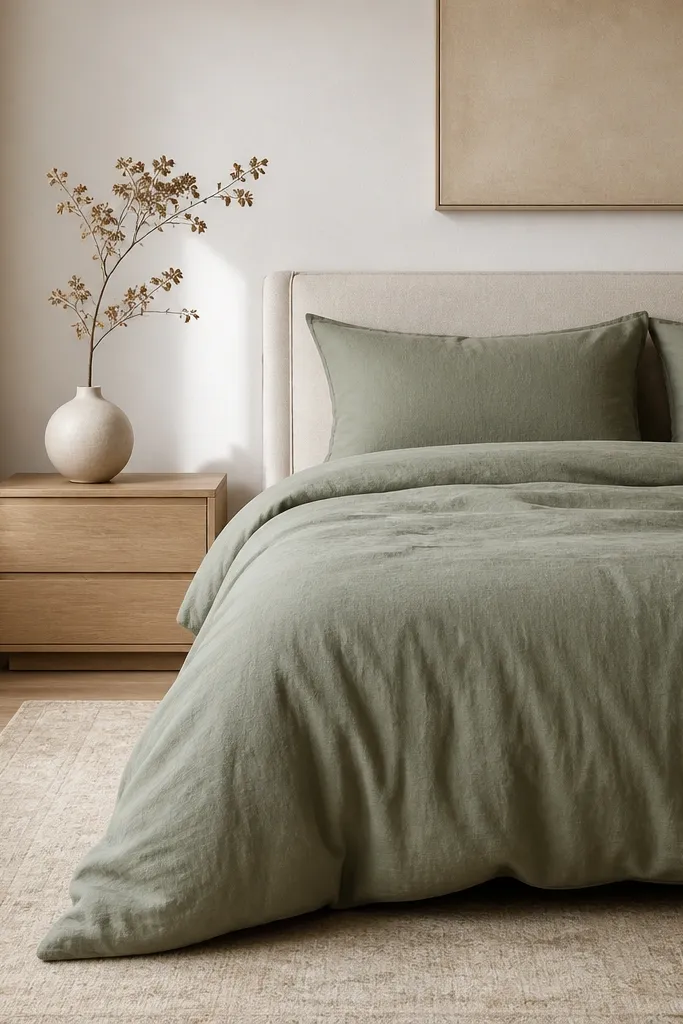
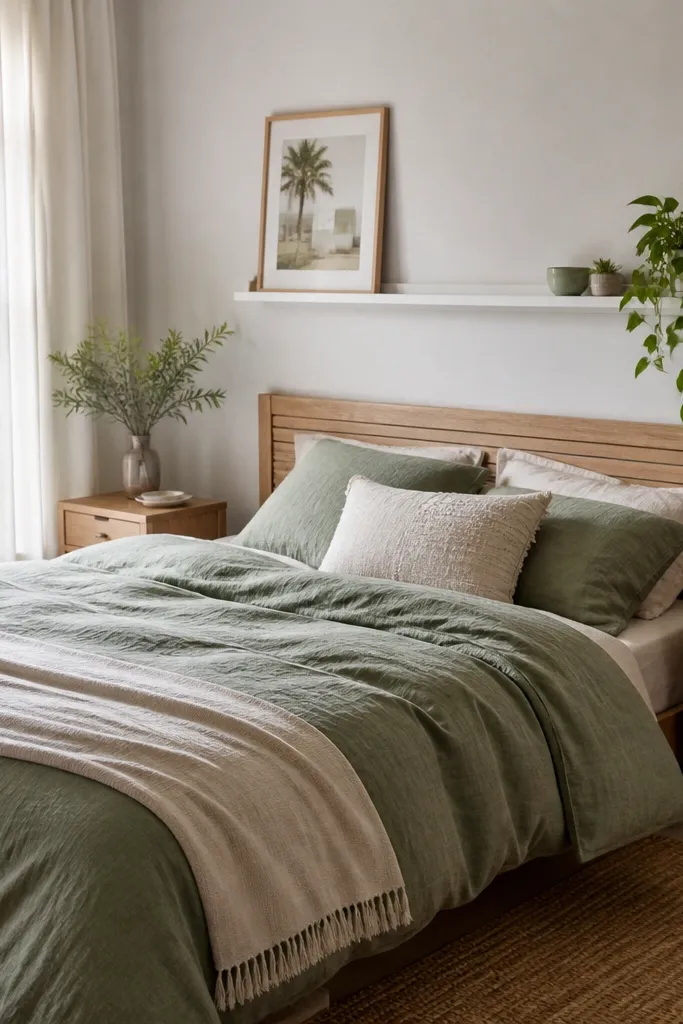
Monochrome works because it reduces visual noise. Sage green is soft enough to feel airy, and it looks expensive when you keep everything in the same color family. Use matte sage bedding with a cotton-linen blend so it doesn’t reflect harsh light. White ceramic accents add contrast without introducing another strong color. This combo is flattering on a wide range of skin tones and makes the room feel calm rather than dark. It’s one of the quickest ways to make a small room look styled with minimal pieces.
First, pick one sage shade and stick to it across duvet, shams, and a folded throw — no teal-sage mix. Then add a white ceramic vase or two small white planters on the nightstand. Choose a rug in light beige or warm cream with a subtle pattern or texture, not bold stripes. Keep framed art to one set in muted tones and hang it centered above the headboard.
If you have patterned curtains already, keep bedding monochrome — the room stays cohesive.
Avoid mixing sage with bright neon greens — it reads like you grabbed leftovers.
7. Rug that runs under the bed with a low geometric pattern
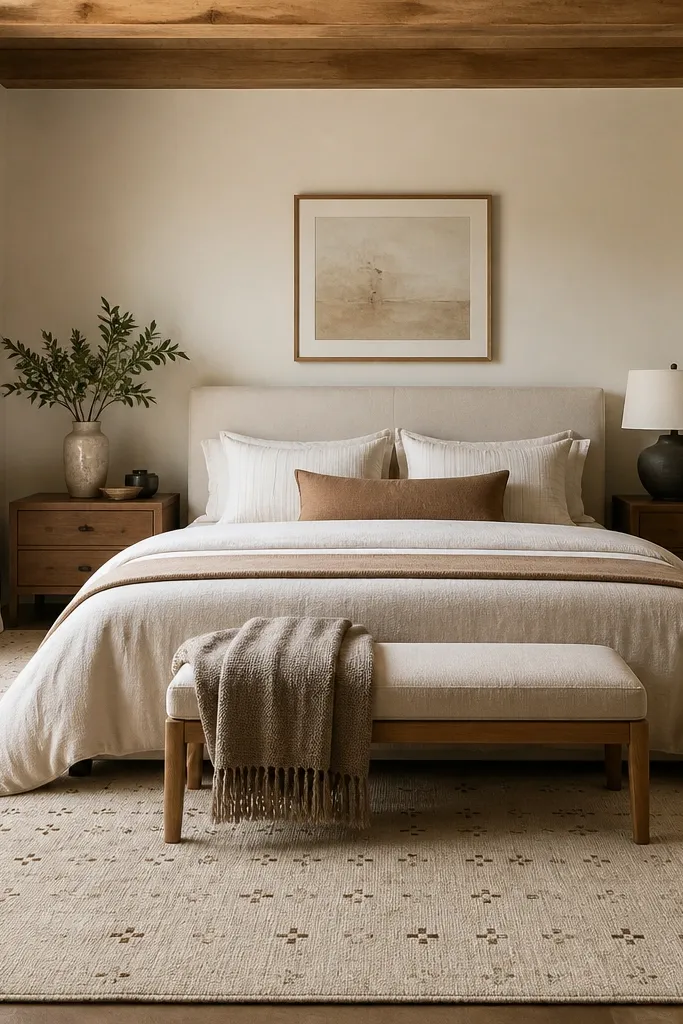
A small bedroom looks expensive when the rug anchors the bed and visually connects the floor. I like low-pile rugs with a small-scale geometric or micro pattern because they don’t overwhelm tight spaces. Warm cream grounds the room, and the subtle pattern gives depth without loud contrast. When the rug extends under the bed, the bed looks like it belongs there instead of floating. This is especially flattering if your walls are neutral because the rug becomes the texture element.
First, measure the bed footprint and choose a rug that goes at least 6 inches beyond the sides. Then position the rug so the pattern stays centered under the bed, not off to one side. If your room is narrow, keep the rug’s long edge aligned with the room’s length for a tidy look. Pair it with simple bedding in cream or light sand so the rug pattern stays the star.
Use rug gripper pads — they keep the rug from shifting and looking wrinkled, which kills the expensive look.
Avoid high-pile shag in small rooms — it visually shrinks the floor and traps dust.
8. Black metal bed frame with warm white bedding
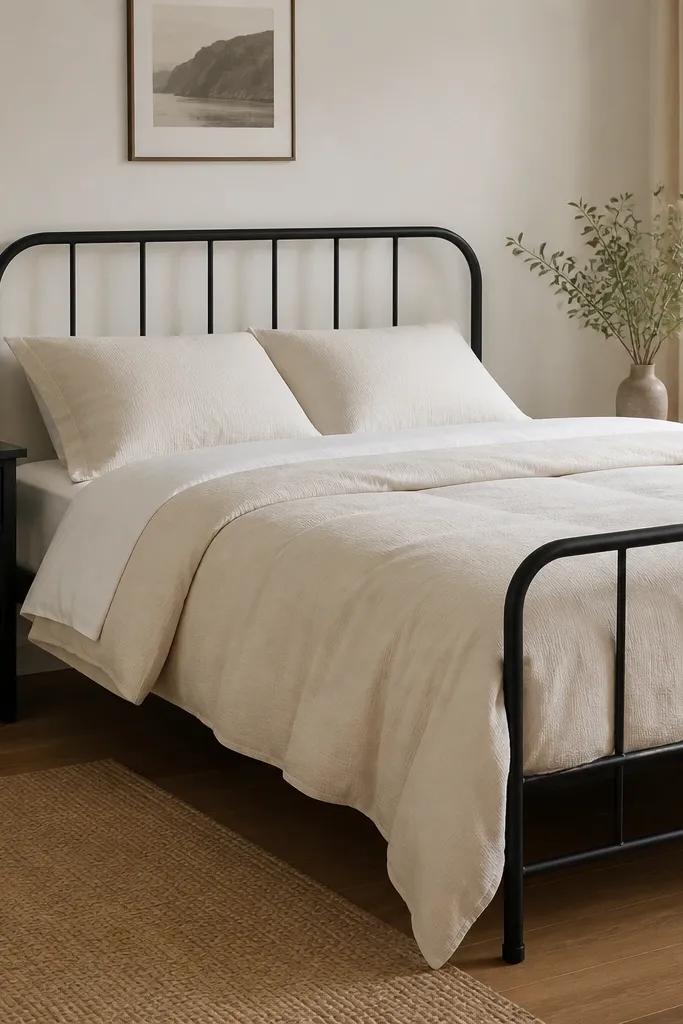
Thin black metal reads sharp and modern, and it looks expensive when the rest is warm and soft. The trick is to keep the metal lines delicate, not thick and chunky, so the room doesn’t feel heavy. Warm white bedding prevents the black from feeling cold. This combo flatters people with darker hair because the contrast makes features pop without looking harsh. In small bedrooms, the open metal base also makes the floor feel more visible.
First, choose a metal bed with a simple headboard and clean lines. Then dress the bed with a warm white duvet and add texture through a knit throw or a linen lumbar pillow. Keep nightstands in light wood or white so the black doesn’t dominate. Add one matte black accessory like a frame or lamp base to tie the metal together.
Hang art in black frames at the same height as the headboard midline for a built-in feel.
Avoid heavy patterned bedding with a black metal frame — it looks busy quickly.
9. Tall linen curtains in warm taupe
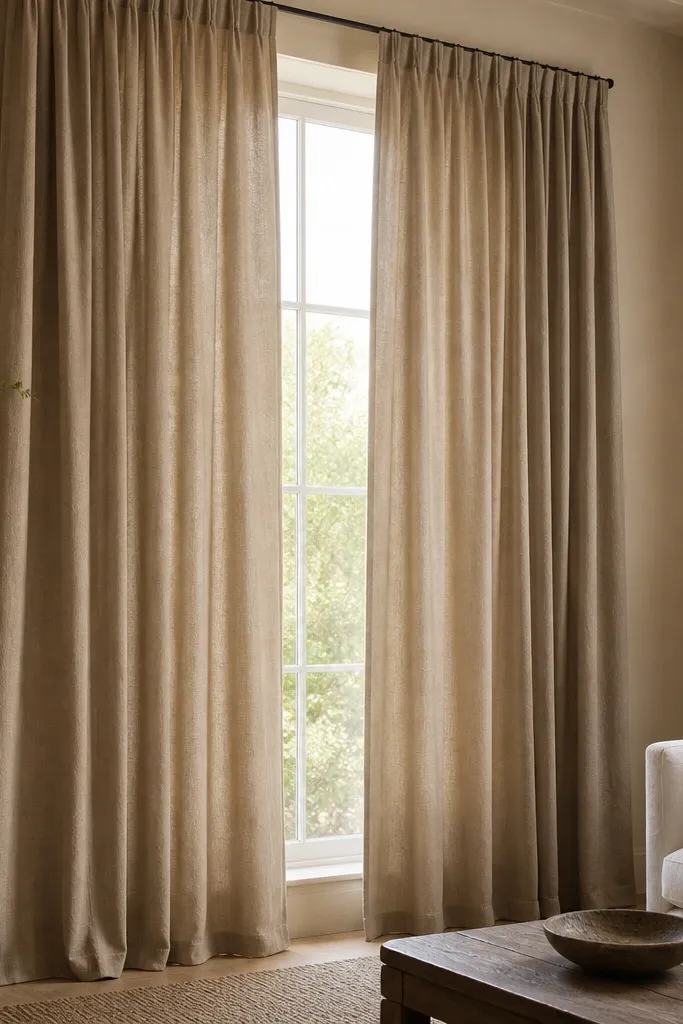
Linen curtains look expensive because they have weight and natural folds. Warm taupe adds depth but stays neutral, so it doesn’t shrink the room like dark drapes can. I like linen with a medium thickness — thin sheers can look flimsy, while very heavy drapes can feel bulky in small spaces. This choice makes the bedroom feel hotel-clean and calm, especially in rooms with beige or oak floors. It also flatters skin tones by creating a warm background around the bed.
First, mount the rod 5 inches above the window frame and extend it 6 inches past each side. Then hang two curtain panels per side if you want fuller folds — pull the fabric so it bunches naturally. Let the curtains skim the floor with a 1-inch break, not pooling. Pair them with a duvet in cream or oatmeal and keep wall art in muted neutrals.
Good to knowPress the curtains with a steamer before hanging — crisp folds read tailored.
AvoidAvoid curtains that are too short — they visually chop the height.
10. Textured wallpaper stripe on one wall behind the bed
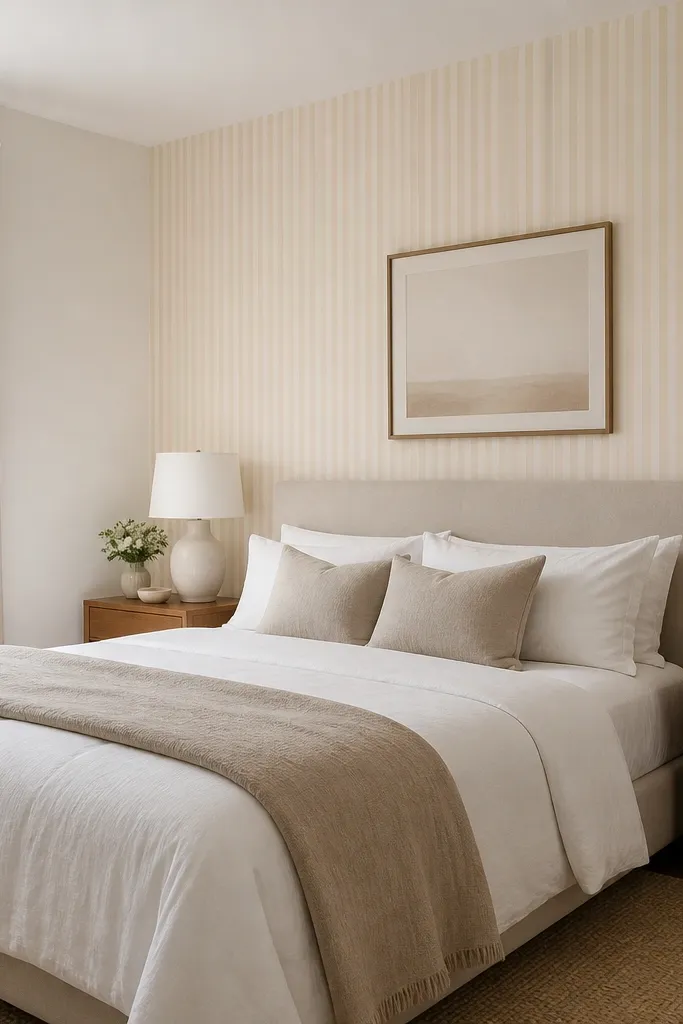
One textured accent wall makes a small bedroom feel designed because it gives the eye a focal point. Vertical stripes add height without needing tall furniture, which is exactly what you want in compact rooms. Keep the stripe subtle and tonal — warm cream and light beige — so it still feels calm. This works well if you have a plain bed and want the room to look more expensive without buying new furniture. It also flatters the bed area for photos and morning routines.
First, measure the wall behind the headboard and choose a stripe width you can live with up close — narrow stripes look more expensive. Install the wallpaper only on that one wall so the room stays breathable. Paint the other walls a warm off-white that matches the stripe’s light tone. Hang minimal art centered above the bed so the stripe becomes the main background texture.
Good to knowUse a matte paint on the other walls so the wallpaper texture doesn’t fight glare.
AvoidAvoid bold high-contrast stripes — they can make the room feel smaller.
11. White oak slat bed + chunky knit throw in cream
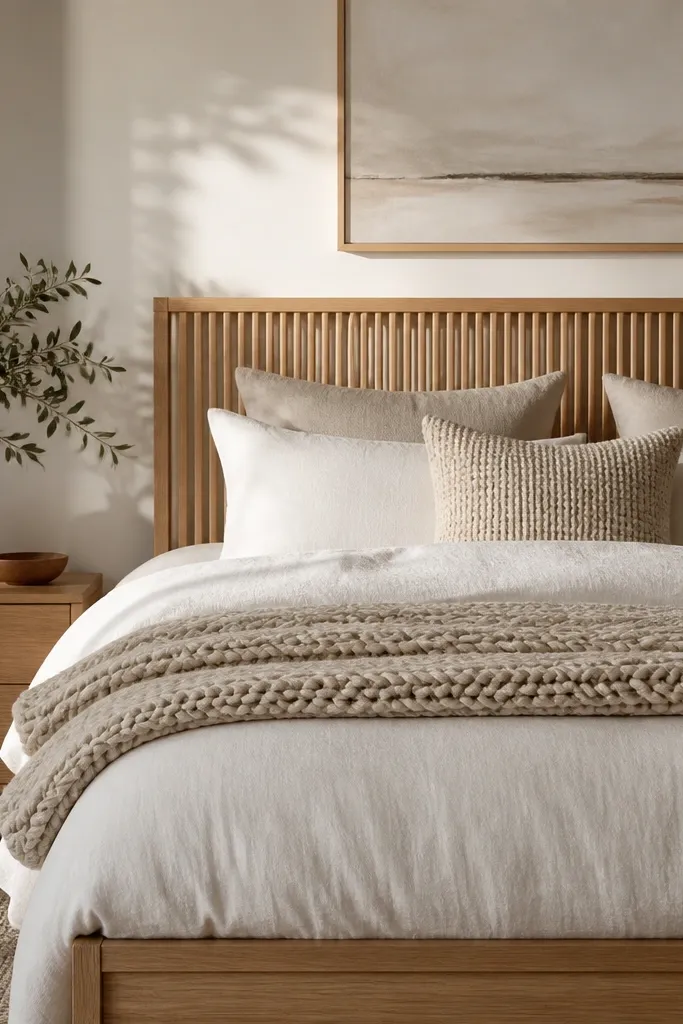
Wood slats look expensive when the finish is warm and matte, and when you pair them with heavy textiles. The slats add structure, and the chunky knit adds softness — that contrast reads high-end fast. Keep everything in cream, oat, and warm white so the wood stays the secondary star. This combination works for most skin tones because it creates a warm, flattering background. In small bedrooms, the open slats also avoid visual bulk.
First, pick a bed frame in white oak or a similar light warm wood with a clear matte finish. Then layer bedding: duvet in cream, shams in oat, and one lumbar in a waffle or textured cotton. Fold a chunky knit throw over the foot so it covers about one-third of the bed width. Style one nightstand with a low ceramic tray and a short lamp.
Good to knowShake out the knit throw before styling so it looks full, not compressed.
AvoidAvoid pairing slat beds with thin satin bedding — the textures clash and look off.
12. Small bedroom gallery wall in matching frames
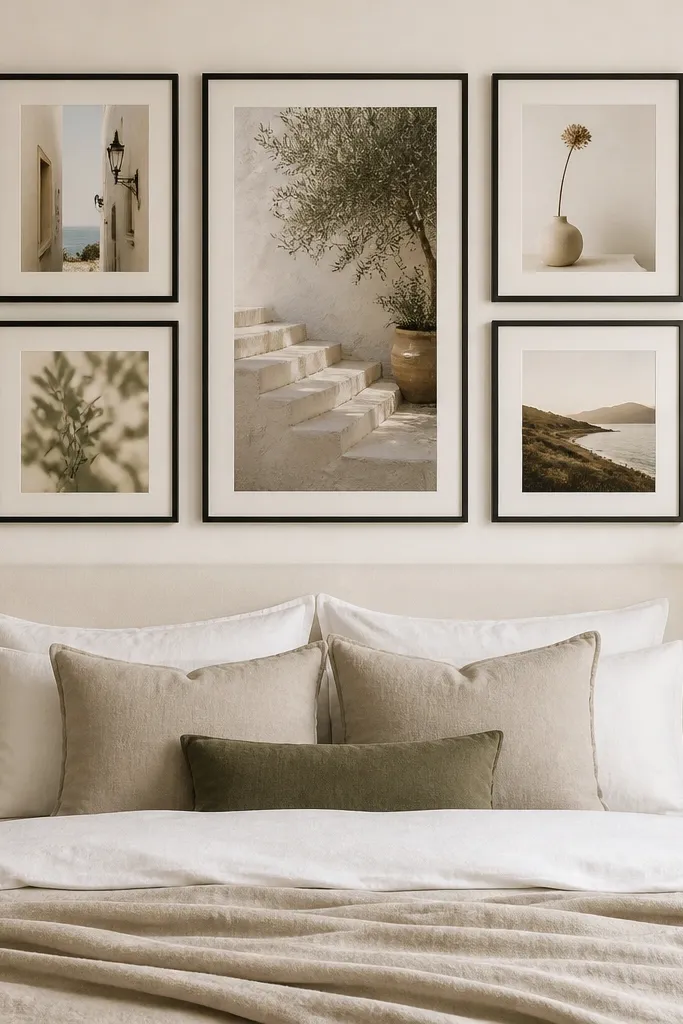
A matching-frame gallery looks expensive because it’s organized, not because the art is expensive. Keep frames the same color and thickness and choose prints with one shared palette. I like warm neutrals with one muted accent so the room stays cohesive. This setup is great for small bedrooms because it gives personality without adding furniture. It also makes the bed area feel intentional, especially when your room layout limits other décor.
First, decide on a grid size: 3 frames side-by-side or 5 frames in a tight rectangle. Measure the wall and mark the center above the bed, then build from the center outward. Keep frame sizes consistent and leave 2 to 3 inches between them. Choose prints that are mostly off-white and beige with one hint of sage or terracotta, then hang the bottom of the gallery about 6 to 8 inches above the top of the headboard.
Good to knowUse museum glass or a reflective-free option if you get glare from a window.
AvoidAvoid mixing frame widths and colors — the room looks like a collage you rushed.
13. Terra-cotta accent wall art + neutral bedding
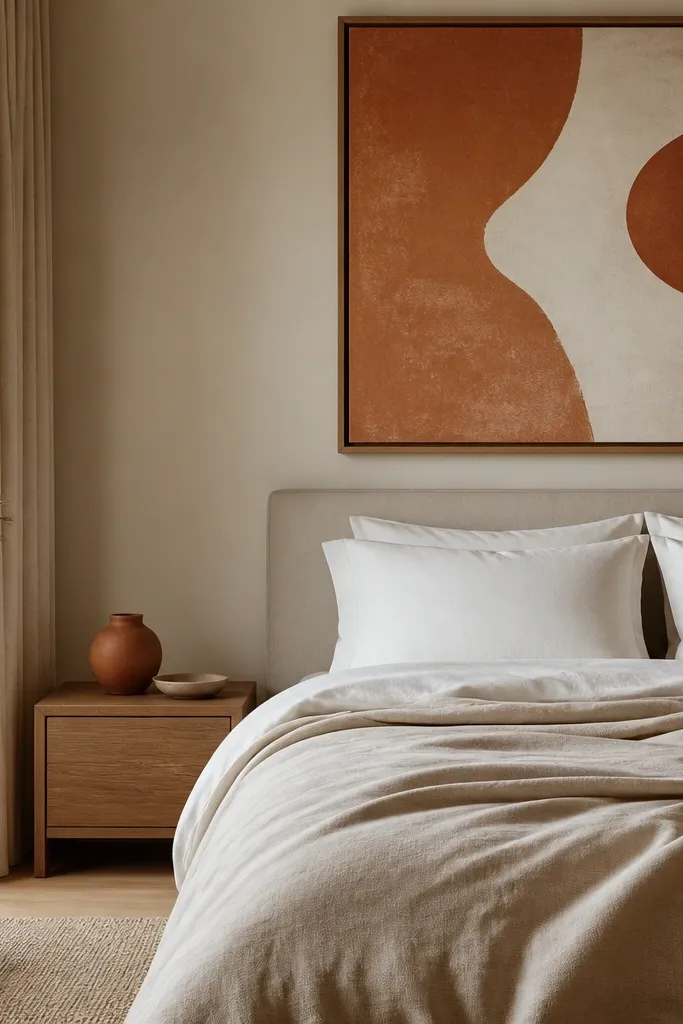
One warm accent color looks expensive when it’s repeated in a small number of places. Terra-cotta is perfect for small bedrooms because it adds warmth without making the room feel heavy. Keep bedding neutral — oatmeal, cream, warm white — so the accent art pops without turning into a theme. This also flatters warm skin tones and makes natural light look better. It’s an easy win if you don’t want to change curtains or flooring.
First, pick one large piece of art for above the bed so you don’t need multiple small frames. Match the terra-cotta tone to a throw pillow or vase — even a small repetition helps. Then keep your bedding palette tight: oatmeal duvet, cream shams, and a single terra-cotta accent pillow. Add one small terra-cotta object on the nightstand so the color feels intentional across the room.
Good to knowChoose art with a matte finish if possible; glossy prints show window glare.
AvoidAvoid adding multiple accent colors like teal, navy, and red at once.
14. Navy velvet pillow stack on a beige base
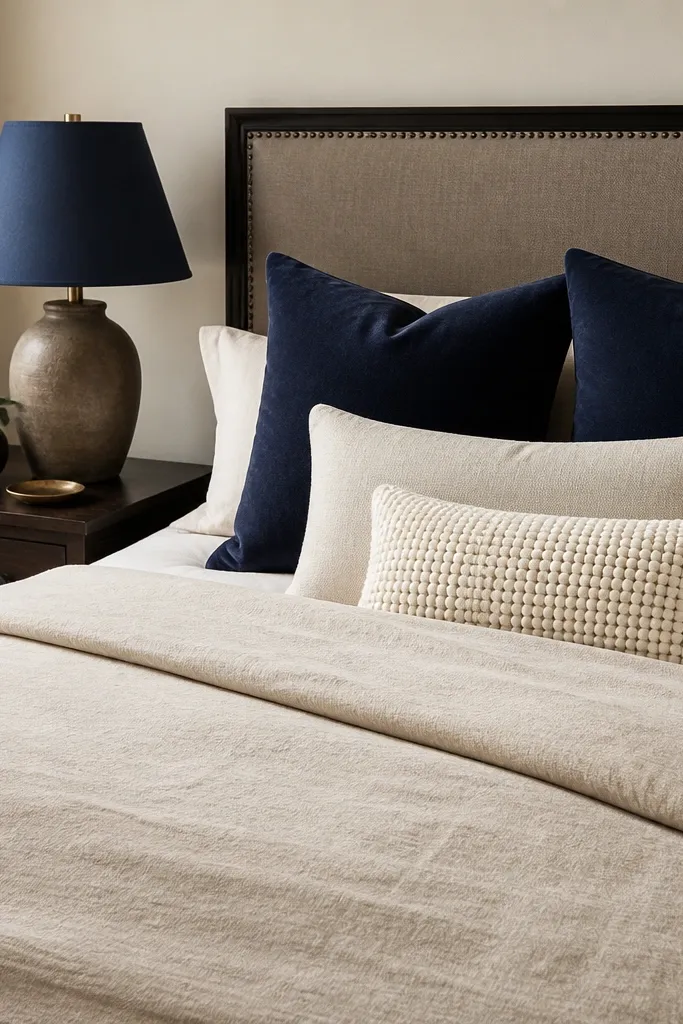
Velvet looks expensive because it has depth and a soft sheen, but it can go cheap if you scatter it everywhere. Use velvet only as an accent — a small stack of navy pillows on a beige duvet. The beige base keeps the room bright and makes the navy feel rich instead of dark. This palette flatters people with cooler undertones too because navy is clean and crisp. In small bedrooms, the color contrast adds drama without needing extra furniture.
First, pick a beige duvet and keep the sheet edge minimal so the bedding looks tailored. Then add two navy velvet square pillows and one cream linen lumbar to balance shine with matte texture. Style the stack centered slightly toward the headboard so it looks intentional. Choose a lamp shade in navy fabric and keep the lamp base simple in brass or black.
Press velvet gently with your hand steam — heat can crush the pile.
Avoid velvet curtains or huge velvet throws in tiny rooms; it can feel heavy.
15. Brass floor lamp + warm bulb near the reading chair
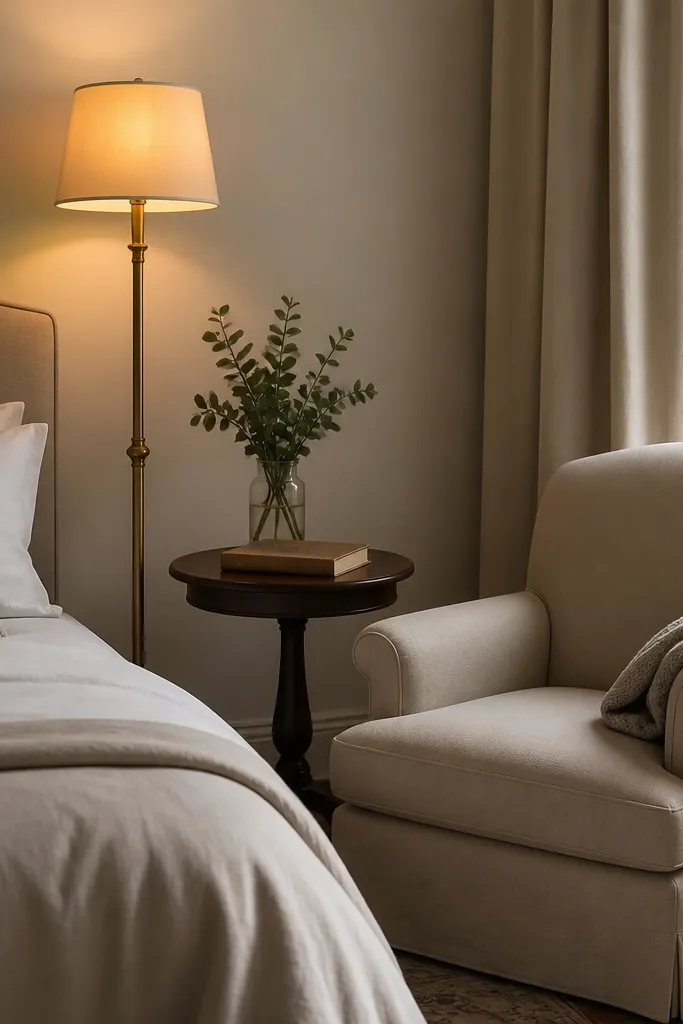
Lighting is where “expensive” shows up first. I’ve seen small rooms look more styled just by adding a floor lamp with a fabric shade and positioning it so it lights the wall, not just the bed. Brass reads warm and slightly formal, especially with off-white walls and cream bedding. A warm bulb at 2700K makes skin look better and reduces the bluish glare that makes rooms feel cheap. This is a great solution if you hate overhead light and only use bedside lamps.
First, choose a floor lamp with a slender stand and a fabric shade in sand, oatmeal, or light cream. Place it near the bed corner so the light washes the wall behind the headboard. Then set it so the shade bottom is roughly at eye level when you’re sitting. Add a small side table next to it and keep the surface uncluttered — one book and a candle holder is enough.
Use a dimmer bulb or plug-in dimmer so you can control the mood from day to night.
Avoid cool white LED bulbs in fabric lamps — they turn everything gray.
16. White ceiling + vertical paneling look with simple molding
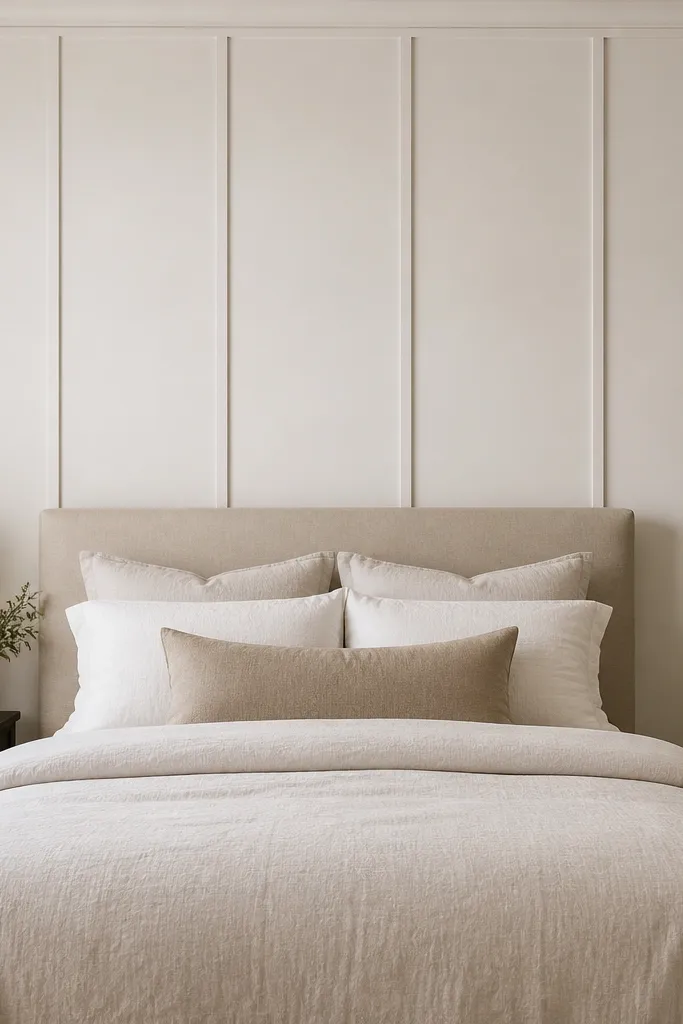
You don’t need wallpaper to get a high-end texture effect. Raised trim panels behind the bed create shadow lines that read like expensive millwork, and they also add vertical movement. Keep the trim the same color family as the wall so it looks architectural instead of DIY. This works best behind the headboard where your eyes naturally land. It flatters the whole room because it makes the bed wall feel intentional and finished. If your room is narrow, vertical lines help your ceiling feel taller.
First, measure the wall and plan 3 to 5 vertical panels depending on width, keeping them evenly spaced. Install thin molding strips and paint them in a matching off-white or warm white. Use a matte paint so the shadows look soft. Then hang your art centered above the headboard, or skip art and let the paneling carry the look.
Use painter’s tape to mark panel lines before installing so you don’t end up with crooked spacing.
Avoid shiny trim paint — it reflects light and makes the paneling look cheap.
17. Sleek upholstered storage bench at the foot
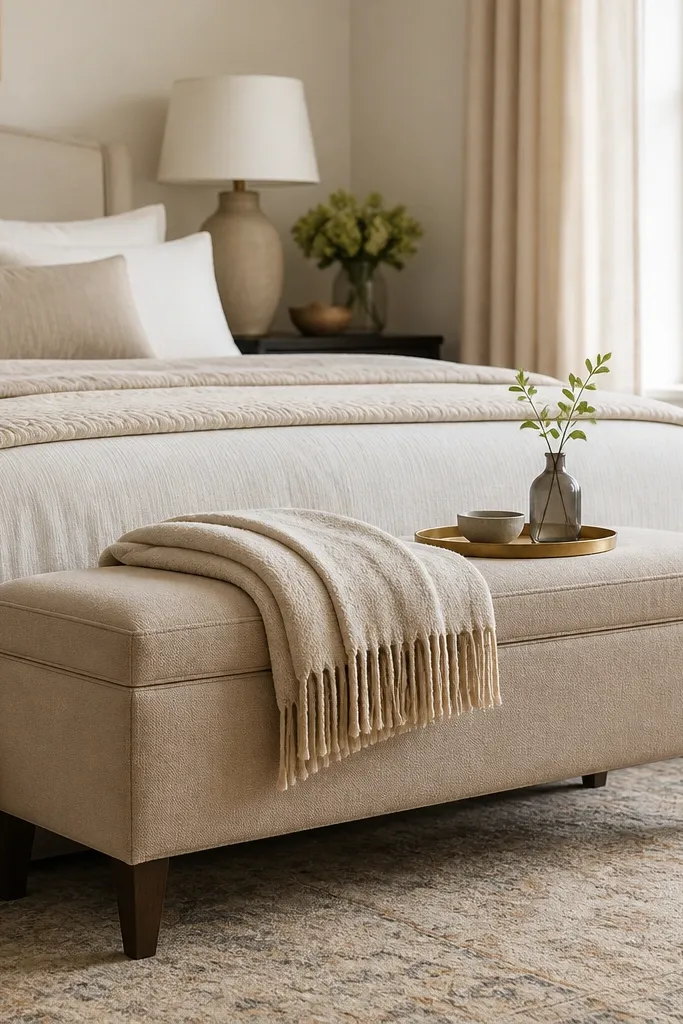
A storage bench makes the room look finished because it fills the visual space at the foot of the bed. Choose upholstery in a matte fabric like linen blend or performance fabric so it doesn’t shine. Clean seams and simple legs keep it from looking bulky. This piece helps small bedrooms because you hide extra blankets, which reduces clutter and keeps the room looking calm. It also flatters the bed by giving you a grounded horizontal element. If you have kids or guests, the storage part actually gets used.
First, measure the space at the foot and pick a bench length close to the bed width, but leave at least 18 inches of walkway clearance. Place the bench centered and keep it about 1 to 3 inches lower than the mattress top height. Add a folded throw on top so the bench looks styled instead of empty storage. Keep the color close to your duvet and use one accent in the throw or pillow.
Use a performance fabric if you have pets — it holds up and stays visually clean.
Avoid tufted benches in tiny rooms — deep buttons add visual weight.
18. Monochrome gray-brown with a camel throw and gold ring lamp
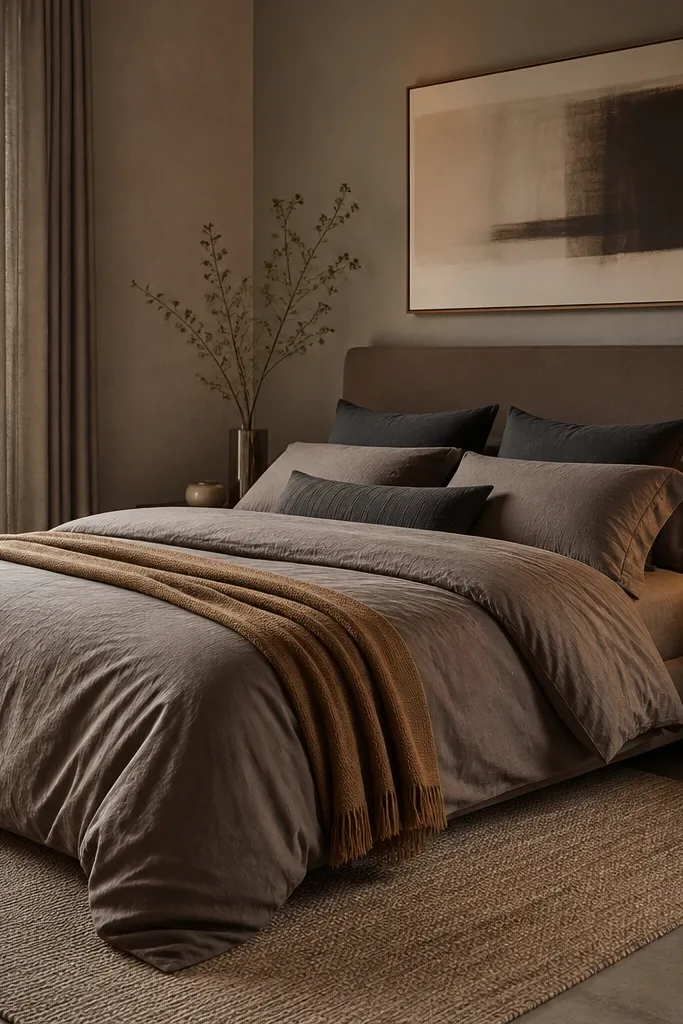
This is the “grown-up neutral” look that reads expensive when you keep the palette tight. Gray-brown sounds dull, but when you add a camel throw and warm lighting, it looks layered and intentional. The trick is to avoid multiple gray shades; pick one primary and stay there. Gold accents feel classy without being flashy if you use them in one place like a lamp ring or drawer pulls. This works especially well if your room has dark wood because the warm camel softens the contrast. It also looks good in photos because the tones are cohesive.
First, choose a taupe duvet and two pillows in one charcoal shade and one warm gray shade max. Add a camel throw folded over the foot and keep it matte, not shiny. Pick a rug in warm beige so the floor doesn’t turn cold. Use one gold accent — a ring lamp, a small mirror frame, or matching drawer hardware — then stop.
Good to knowIf your walls are cool gray, switch to warm beige bedding or the whole room will look flat.
AvoidAvoid pairing gray bedding with silver hardware everywhere — it reads mismatched.
19. Large headboard art rail with two slim sconces
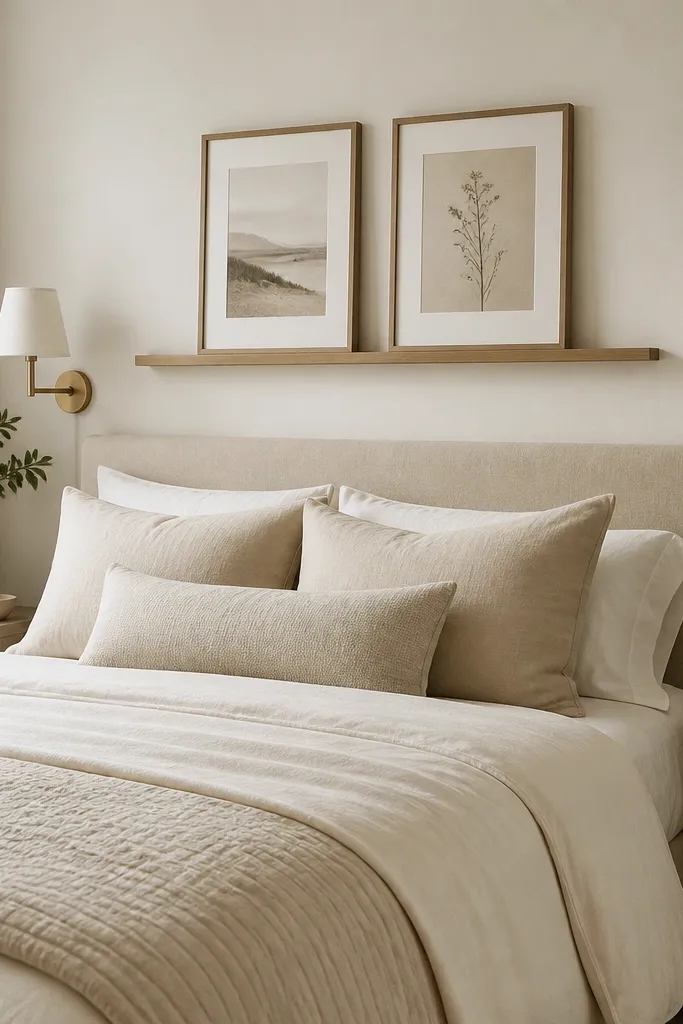
A headboard-centered art rail looks expensive because it lines everything up and gives you a built-in styling zone. Two slim sconces add symmetry, which makes small rooms feel balanced. This setup works best when your bed wall is narrow and you don’t have room for big furniture. Keep the frames similar in size and tone so the wall doesn’t become busy. The soft fabric shades keep the light flattering rather than harsh. It’s a strong option if you want a clean look but still want personality.
First, install an art rail or a simple ledge at a height that centers with the bed’s headboard. Then place two slim framed prints on the rail, evenly spaced. Mount the sconces so the light centers align with the outer edges of the headboard. Dress the bed with a cream duvet and one light texture pillow so the wall details stand out.
Use the same frame color for both prints and keep glass glare low if you get window light.
Avoid mixing frame orientations and sizes on a rail — it looks accidental.
20. Color-blocked duvet with one coordinating pillow
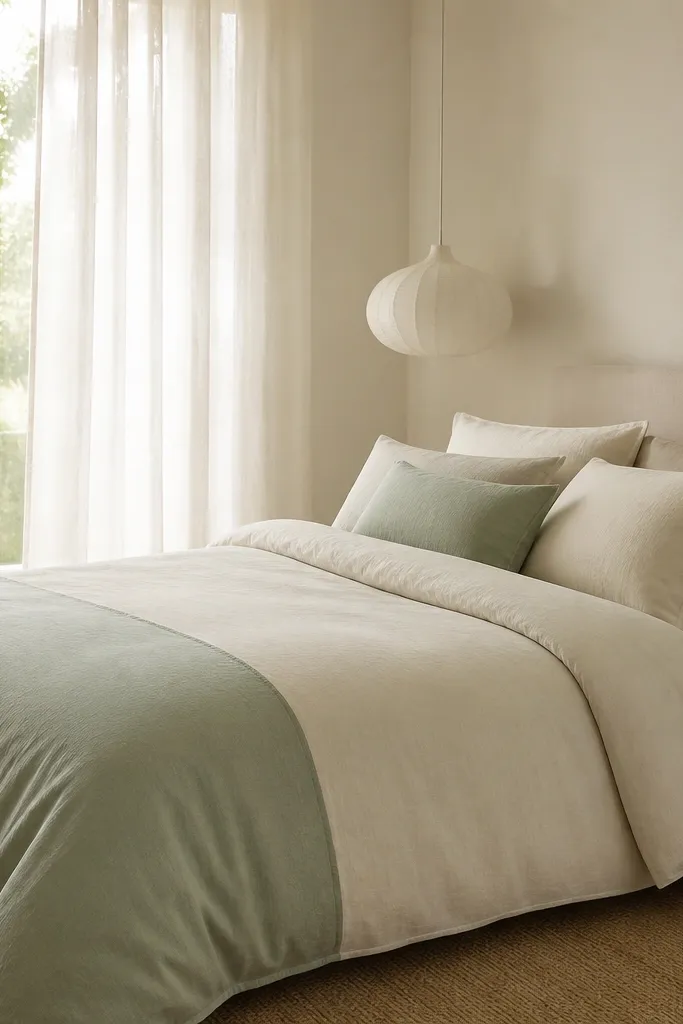
You get a designer look when you use one bold element and keep everything else quiet. A color-block duvet adds structure and pattern without filling the room with multiple prints. Choose a duvet where the colors are close in value — cream and sage — so it looks calm. Then repeat only one color through a single coordinating pillow or small object. This keeps the room feeling expensive and controlled, especially in small spaces where too many patterns fight each other. It also looks good on camera because the design is simple and centered.
First, pick a color-block duvet that includes your room’s accent color and a neutral base. Use solid shams in the neutral base and add one pillow that matches the colored panel exactly. Keep the throw solid and in the neutral tone so the duvet remains the focal point. Hang curtains in plain off-white or soft ivory so the pattern doesn’t compete with the window.
Good to knowIf your duvet has a strong panel, keep your art simple and tonal rather than adding another graphic print.
AvoidAvoid pairing a color-block duvet with striped curtains — the room starts to look busy.
21. Braided jute rug under bed with a thin cream runner
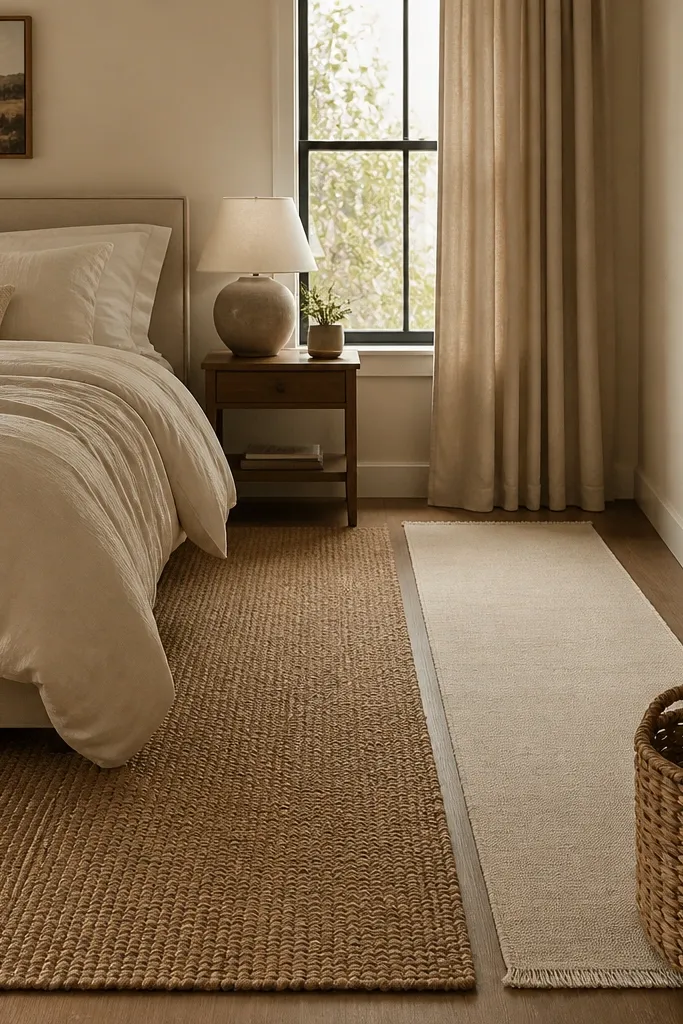
Natural fiber rugs look expensive when you keep them simple and layer them with one neutral. Jute has texture that reads high-end in warm rooms, especially under light bedding. The thin cream runner adds softness and protects the walkway area without adding another color theme. This setup is great for small bedrooms because it defines zones — bed zone and walk zone — without adding furniture. It also works for people with pets or kids because the jute texture hides minor wear better than smooth rugs. The natural look also flatters warm wood and brass.
First, choose a jute rug that fits under the bed so the edges don’t curl or look off-center. Then add a thin cream runner in the path area, leaving a small gap between runner and rug edge so they read layered. Keep bedding in oatmeal, cream, and warm white so the natural fiber looks intentional. Add one woven basket or rattan accessory to repeat the material, but keep it to one piece.
Use a rug pad under jute to stop sliding and reduce the rough feel underfoot.
Avoid mixing jute with bold red or blue accents; it makes the room look like a beach rental.
22. Matte black dresser with one long brass pull line
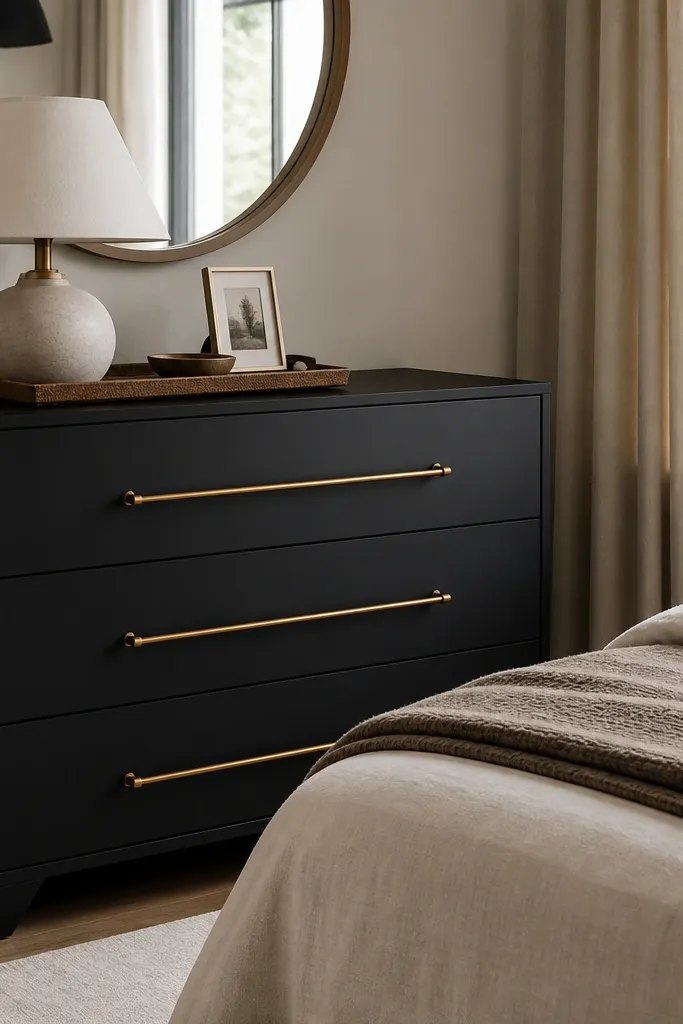
A matte black dresser looks expensive when it’s refined, not busy. The finish matters — matte black absorbs light and feels modern, while glossy black can look cheap. One long brass pull line adds a clean hardware detail that reads custom. Keep the top styling minimal: one tray, one lamp, one photo frame. This is great for small rooms because you get storage without clutter, and the dark dresser anchors the lighter bedding. It also creates contrast that makes your rug and curtains look brighter.
First, choose a dresser with clean drawer lines and avoid ornate carvings. If the dresser already has hardware, swap to long bar pulls in brass for a more expensive look. Style the top with a rectangular tray in light wood or marble, then place a lamp with a warm beige shade. Keep your framed photo or art small and centered, not scattered across the dresser.
Dust the top and drawers before styling; matte black shows fingerprints and dust more than you think.
Avoid cluttering the dresser with multiple tall items — black surfaces make clutter look heavier.
23. Bedside styling tray with one scent candle and one book
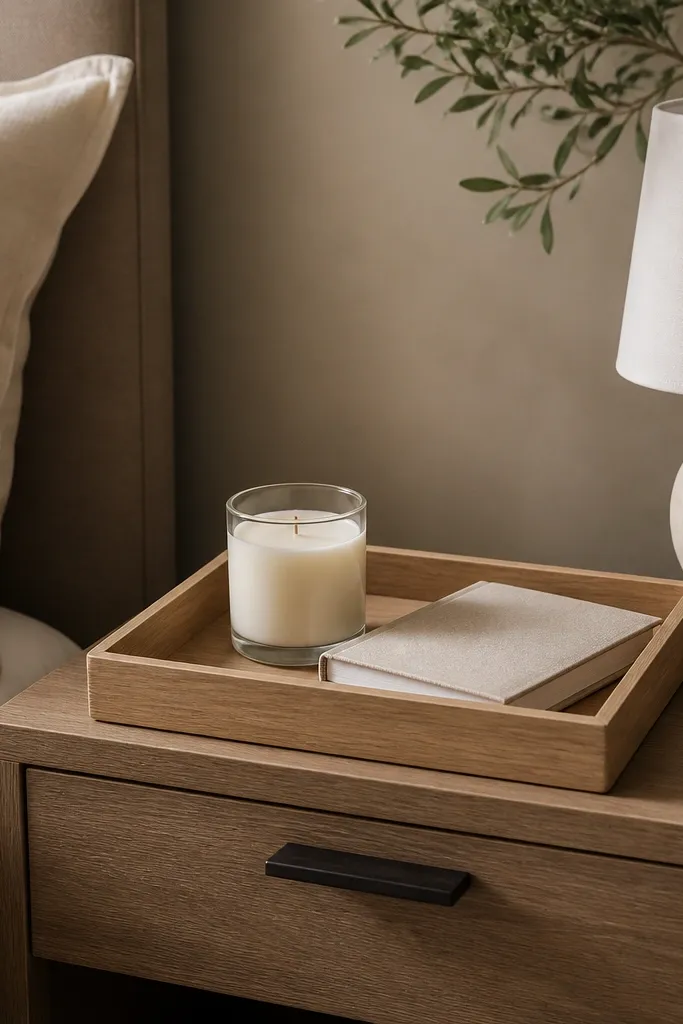
This is a simple trick that makes a small bedroom look designed every day. A styling tray creates a boundary, so your nightstand doesn’t turn into a random drop zone. Using just one candle and one book keeps the color palette tight and gives height variation without clutter. I like trays in light wood or matte ceramic because they look warm next to cream bedding. The effect is that your bedside becomes calm and intentional, which is what expensive rooms feel like. It also helps if you’re the type who changes décor often — the tray keeps everything consistent.
First, pick a tray size that covers about half the nightstand surface. Place it centered and put the candle in the back of the tray, then stack one book in the front corner. Add a lamp on the opposite side of the nightstand so the tray stays uncluttered. Repeat the same tray approach on both sides if you have space — symmetry sells the look.
Choose candle jars in cream, sand, or clear glass with a warm label tone.
Avoid mixing random objects like a hairbrush, receipts, and a tiny plant on the same surface.