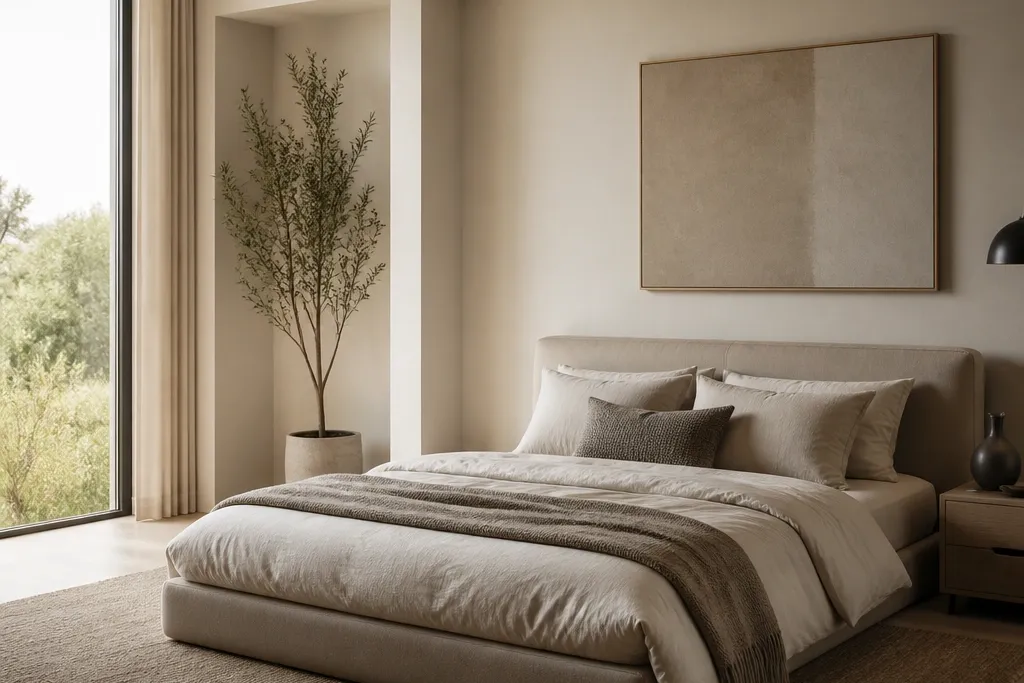
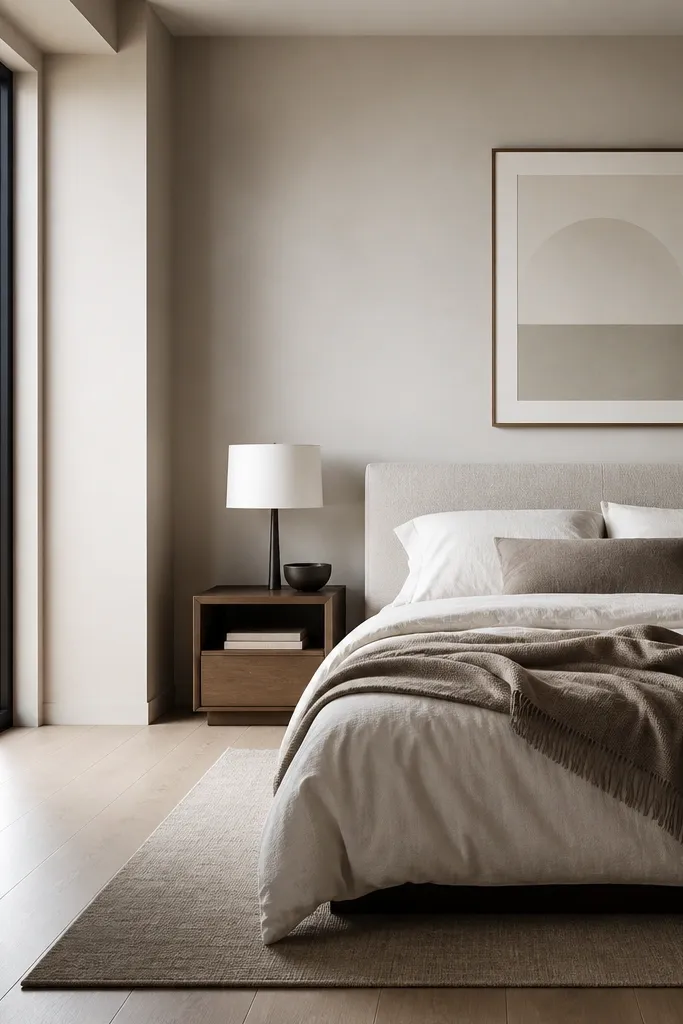
1. Warm White Linen Bed with Walnut Nightstands
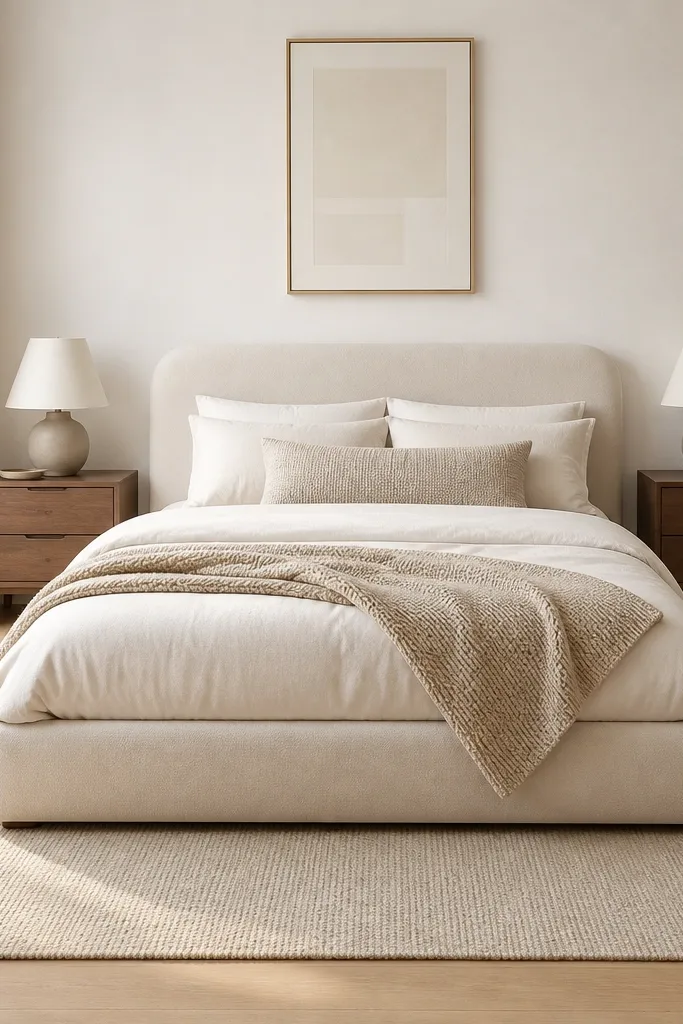
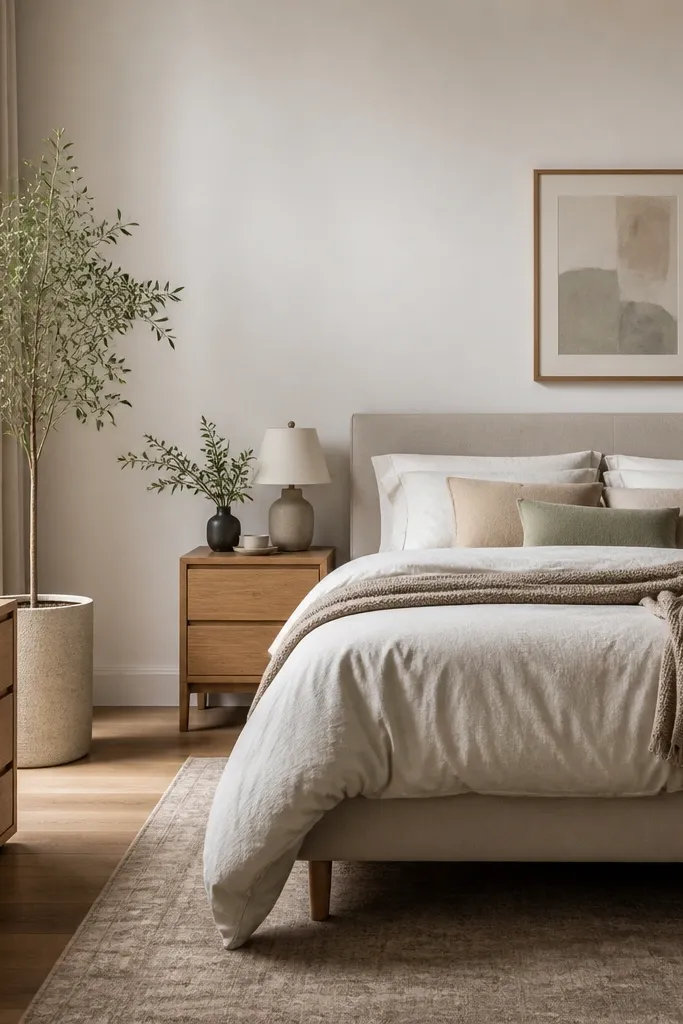
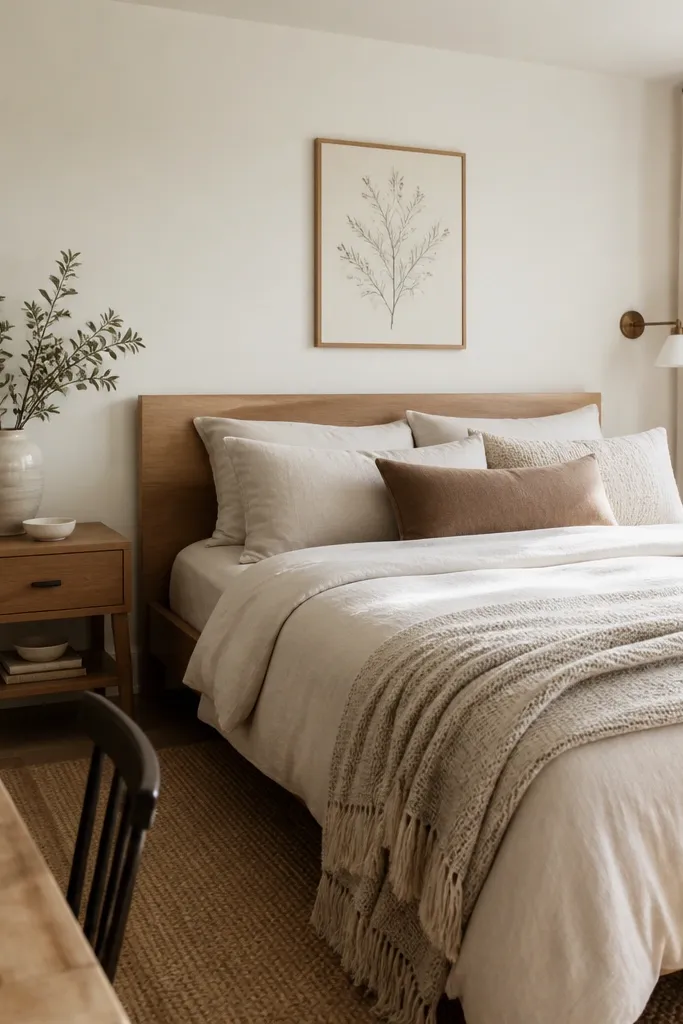
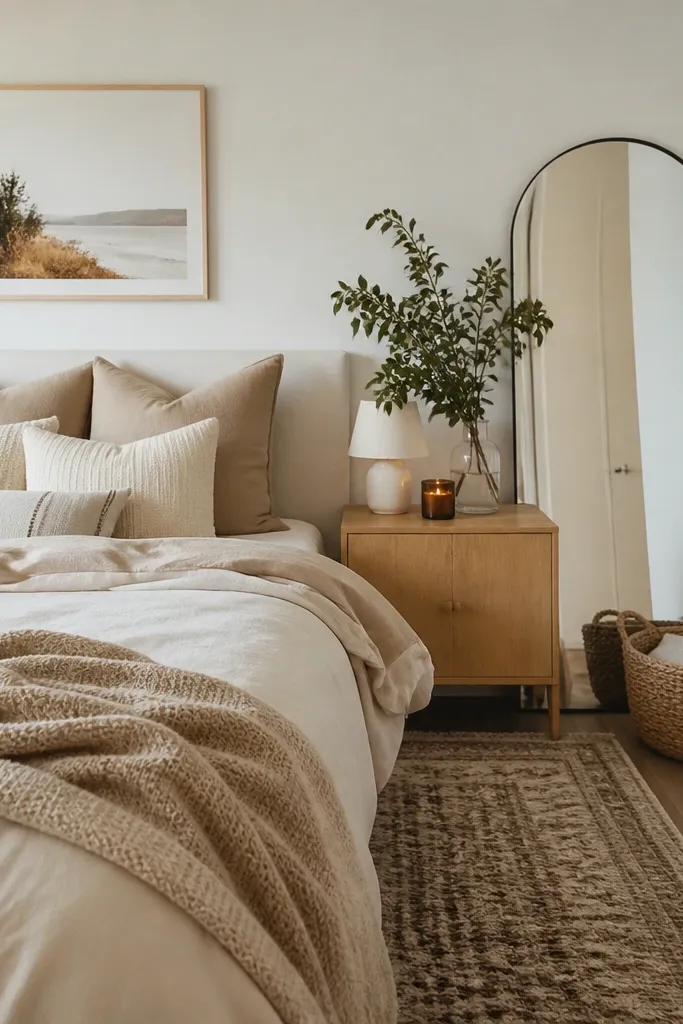
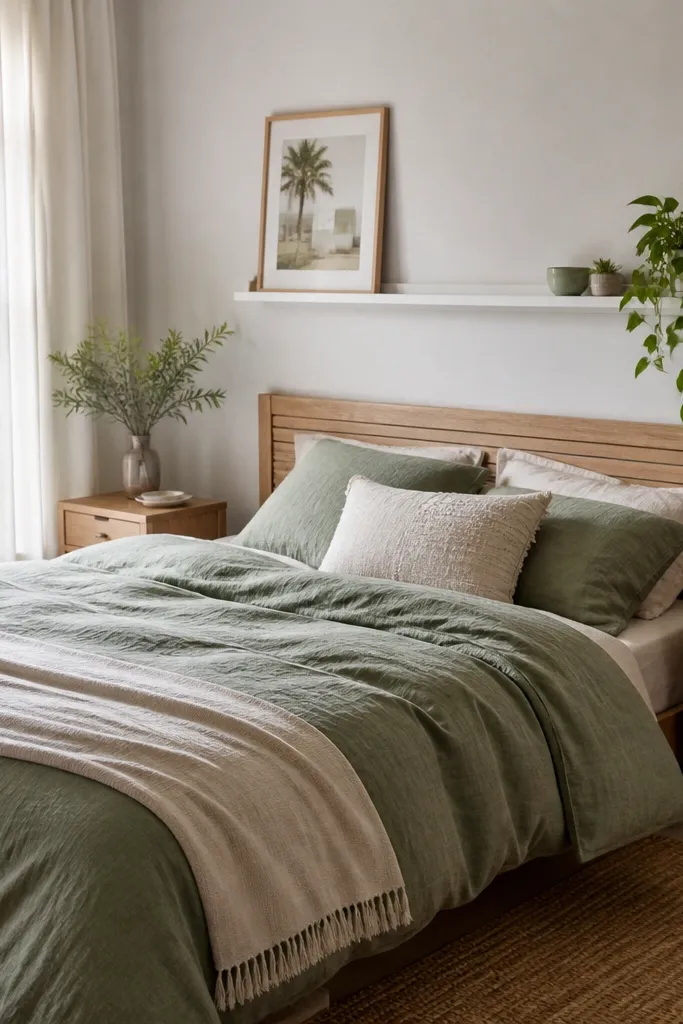
Start with a bed that sits low to the floor so the room feels calmer, not towering. Choose a duvet cover in cream or warm white, then add a fitted sheet in the same family so seams don’t show. Place an ivory rug so it extends about 8-12 inches beyond the sides of the bed and 12-16 inches past the foot. Mount or place the nightstands so their top aligns roughly with the bottom third of the pillow height — that keeps the visual line clean. Finish with one lamp per side and keep the lampshades in linen or linen-look fabric, not glossy satin.
This setup works because it makes the bed look like one continuous soft block. The warm-white linen upholstery catches light without looking shiny, and it hides small imperfections in the room. I pair it with walnut nightstands because walnut brings warmth without adding color noise — it reads expensive next to neutral fabric. If your skin tone runs warm (golden or olive), this palette makes you look brighter; if you’re cool-toned, it still works because the neutrals stay creamy, not yellow. The minimalist trick is symmetry with restraint: two matching nightstands, one lamp each, and bedding textures doing the talking.
AvoidAvoid mixing glossy white bedding with a matte linen bed — the contrast makes the room look mismatched.
Good to knowUse 2700K bulbs in every lamp. The whole room looks more “dreamy” with softer light instead of bright white.
2. Greige Walls with Blackened Steel Sconces
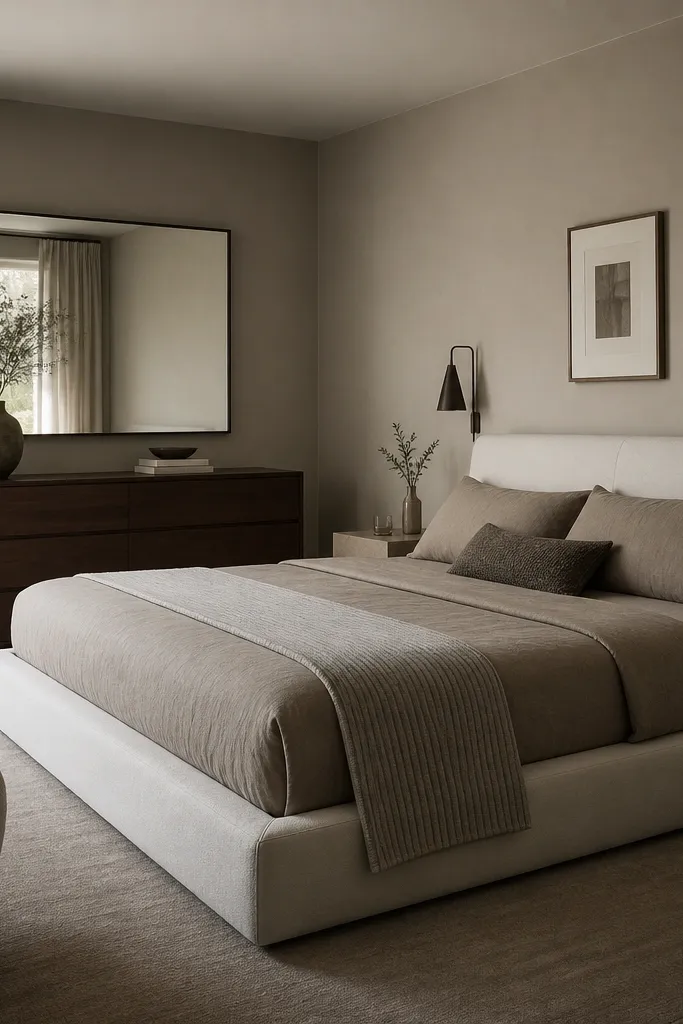
Greige makes a modern room interior bedroom minimalist look grown-up without turning gray-cold. The blackened steel sconces add a crisp line that frames the bed, so you don’t need a lot of decor to get a finished look. I like this for bedrooms where you want a slightly moody vibe but still want it airy — the greige keeps it soft. If your furniture is already dark, this palette makes it feel intentional instead of heavy. The styling principle is contrast through hardware finish: matte metal + soft textiles + clean wall color.
Paint or choose greige walls, then keep the bed in off-white or pale gray so the sconces stand out. Hang sconces at about 60-64 inches from the floor to the center of the fixture, and make sure both sides match height. Put a long runner or low-pile rug in taupe under the bed so the palette stays cohesive. Add a dresser that’s longer than it is tall, then place the mirror so its bottom edge sits about 6-8 inches above the dresser top. Keep bedside styling to one item each: a small tray or a single book stacked flat.
Dust the sconces and wipe the metal with a microfiber cloth before styling. Fingerprints ruin the matte look fast.
Skip bright white walls with black fixtures if the room gets warm sunlight — it can look harsh and uneven.
3. All-White Monochrome with Subtle Ribbed Texture
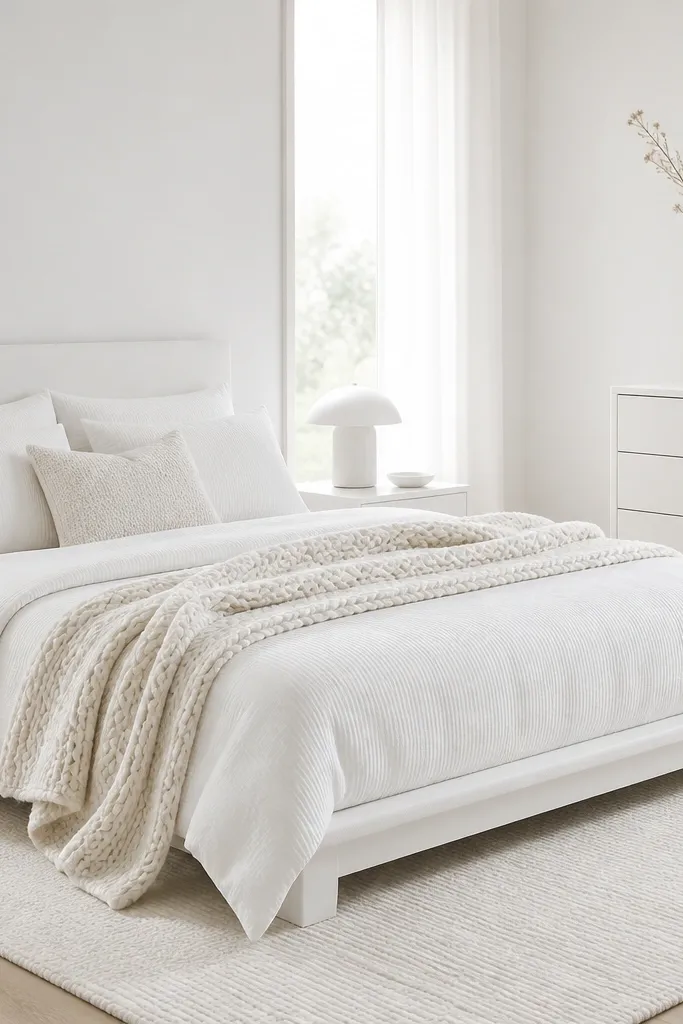
Choose a warm white bed frame and keep bedding within the same temperature range — warm white with warm white, not warm white with icy white. Layer a duvet cover with subtle ribbing, then add a knitted throw in a slightly thicker weave. Use a low-pile white or cream rug with a tight weave so it doesn’t look fluffy or messy. Keep the nightstands simple: white or natural wood, no glossy finishes. Style one tall vase with dried stems in off-white or pale beige so the dried texture adds interest without color pop.
Monochrome all-white can look luxe if you control texture. I’ve used ribbed duvet covers and woven throws because they create shadow lines, and those shadows make the room look expensive in daylight. This style flatters most skin tones because it avoids harsh color casts — your face looks natural. It’s especially good for small rooms because white walls and bed frames visually expand the space. The minimalist rule here is “one color, many surfaces,” meaning every major textile piece has a different texture, not a different color.
AvoidAvoid mixing different white temperatures (icy + warm). It makes the bed look dirty even when it’s clean.
Good to knowWash and tumble-dry bedding to remove stiffness. Crisp bedding looks great, but too-stiff fabric looks hotel-starched in a cheap way.
4. Stone-Tone Wallpaper Accent Behind the Headboard
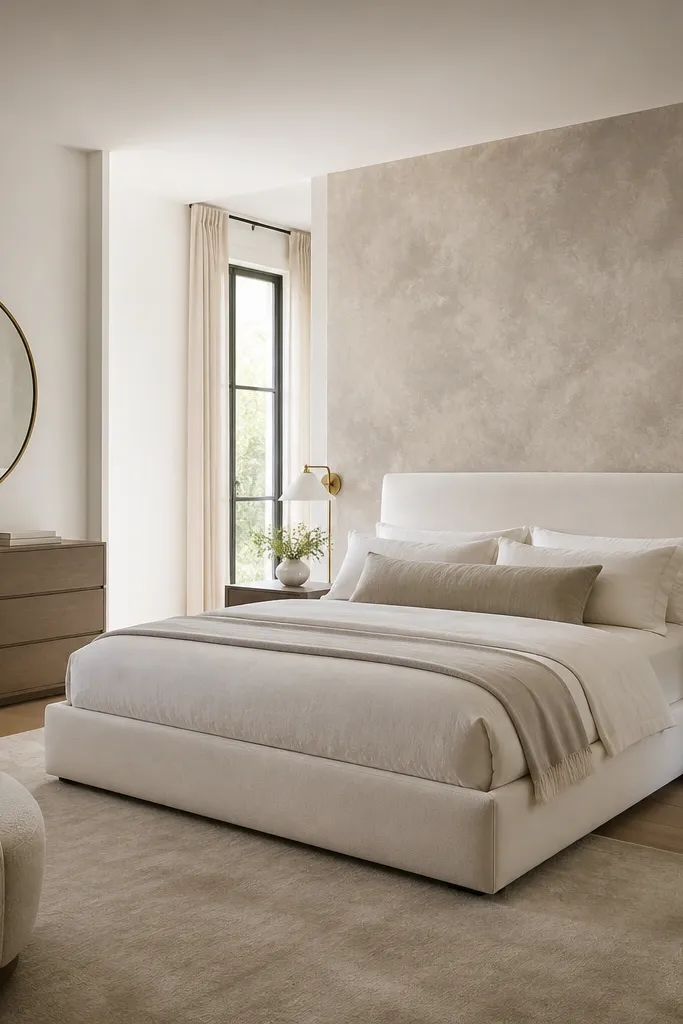
Measure the headboard width and apply wallpaper so it covers the wall directly behind it, then extend a few inches beyond each side for a framed effect. Keep the wallpaper height centered so the top edge lands around 6-10 inches above the top of the headboard. Paint surrounding walls in soft white to let the texture pop. Add a duvet in off-white and a throw in taupe or oatmeal, then keep wall decor minimal — one mirror or one piece of art, not two. Use blackout curtains in a light neutral so the wallpaper remains the star.
An accent wall works in minimalist rooms when it’s limited to the “headboard zone.” The stone-tone plaster-look wallpaper adds depth without cluttering the whole room, and it makes the bed feel like the focal point. I prefer this for bedrooms that need grounding because a plain wall can make the bed look like it’s floating. Warm gray and taupe also play nicely with both cool and warm woods. The styling principle is one textured surface at eye level, paired with calm solids elsewhere.
AvoidDon’t put a busy pattern wallpaper behind a headboard with a loud fabric. Keep the bed textiles plain.
Good to knowPress a seam tool or plastic smoothing tool firmly along edges. Loose seams show under bedside lamps.
5. Platform Bed with Built-In Drawer Storage
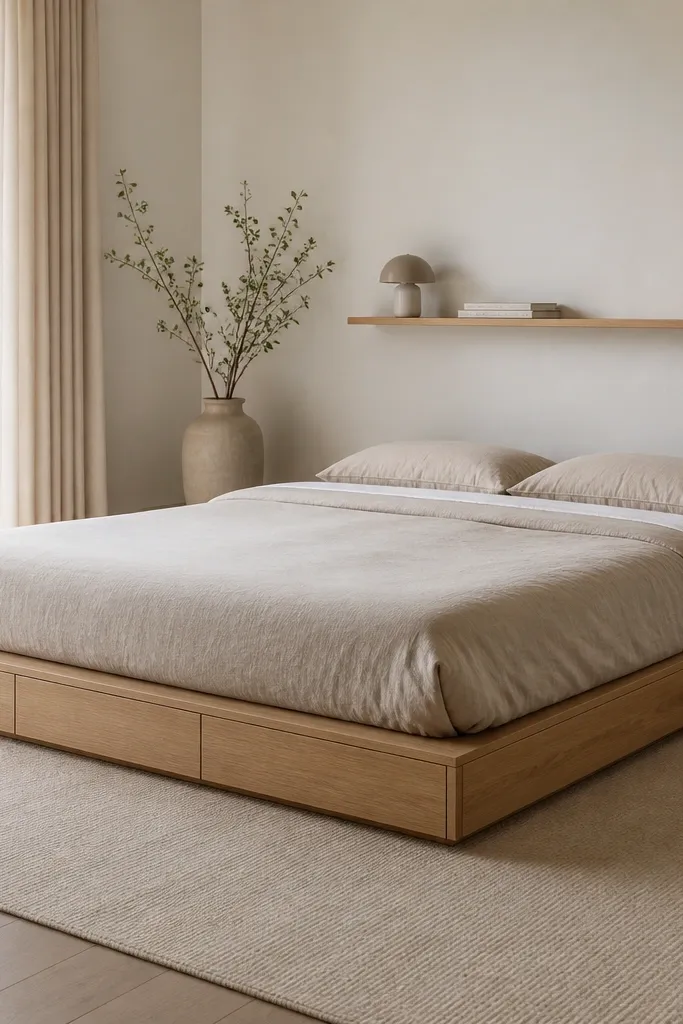
Pick a platform bed with drawers that match the bed’s finish, then keep drawer fronts clean and handle-free if possible. Use a duvet cover in beige or sand, and keep the fitted sheet tucked tight so you don’t see wrinkles at the edges. Place a rug that covers the front legs area so it anchors the bed, then leave clear walking space to the closet or door. Put only one slim nightstand or a floating shelf on each side — avoid wide side tables that steal the room’s breathing room. Style lamps with cords routed behind the nightstand so you don’t see hanging cables.
This is the most practical luxury idea I’ve used because it removes the “visual mess” that ruins minimalist rooms. When your extra linens, chargers, and spare throw blankets live in drawers, your surfaces stay calm. The light oak platform keeps it modern and makes the room feel brighter than dark wood storage. This setup suits bedrooms where you need storage but hate visible baskets. The styling principle is hiding the everyday items so the room reads like a hotel suite.
AvoidAvoid stacking decor on top of drawers. The hidden storage only works if surfaces stay empty.
Good to knowKeep one drawer for “bed only” items: extra pillowcases and a spare duvet cover. That keeps the rest of the room looking intentional.
6. Curtain-First Window Treatment in Oat Linen
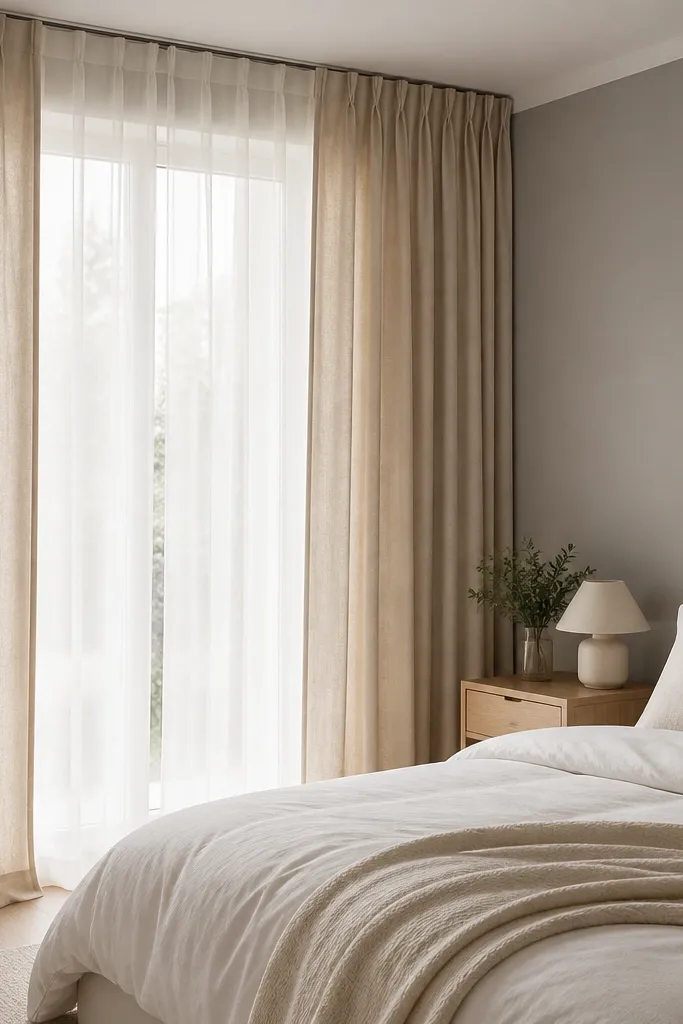
Measure from the floor to the underside of your near-ceiling rod, then add 1-2 inches for puddling if you want a relaxed look. Choose curtains in oat or oatmeal and ensure the panels are wide enough for gentle fullness — aim for 2x the window width in total fabric. Add a sheer layer behind the main panels if you want a soft glow at night. Keep curtain rings or hooks minimal and hidden so the folds look clean. Style the bed with a neutral duvet and a single textured throw so the curtains remain the strongest visual texture.
Window treatments change the whole read of a modern room interior bedroom minimalist setup because they control height and light. Oat linen-look curtains add texture without turning the room into farmhouse chaos. I like this in bedrooms that get strong afternoon sun because the sheer layer softens glare, and the main panels keep privacy. If you have a smaller window, hanging near the ceiling makes it look taller and the room feels larger. The minimalist win is simple: one curtain fabric, one rod line, and no cluttered valances.
AvoidSkip short curtains. A hem that stops above the floor makes the whole room look unfinished.
Good to knowIron or steam the curtains before hanging. Wrinkles make linen-look fabric look cheap fast.
7. Oversized Round Mirror Above a Low Dresser
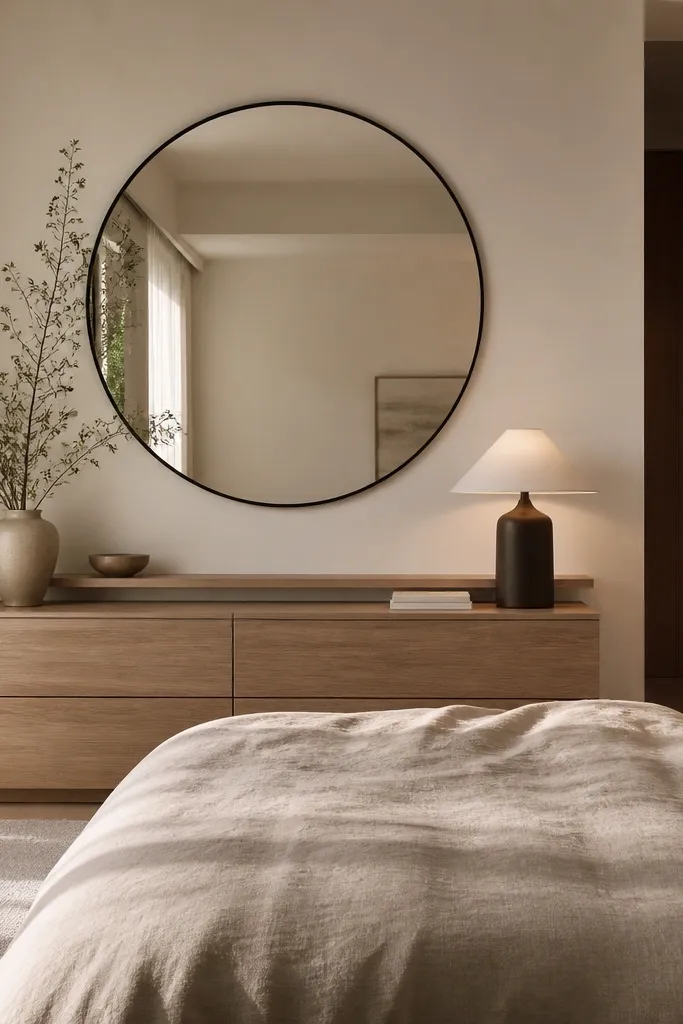
A large round mirror adds depth without adding clutter, which is the whole point of minimalist bedrooms. The round shape softens the straight lines of a bed and dresser, and it makes the room feel bigger by reflecting light. I’ve used this in rooms that feel dark because the mirror bounces daylight into the corners where you normally lose brightness. It also looks flattering because it creates a gentle highlight instead of harsh glare. The styling principle is one big reflective element, not a cluster of smaller frames.
Choose a mirror diameter about 30-36 inches for most bedrooms, then hang it so the center is around 60 inches from the floor. Keep the dresser height low — around 30-34 inches — so the mirror doesn’t dominate. Style the dresser with one slim tray and one object only, like a small ceramic dish or a minimal vase. Place the bed so the mirror doesn’t directly reflect the TV or clutter; angle it slightly if your hardware allows. Finish with a neutral rug that doesn’t have high-contrast pattern so the mirror reflection stays calm.
Clean the mirror edges with a vinegar-water mix and a lint-free cloth. Smudges show in reflected light.
Avoid tiny mirrors above a wide dresser. The scale mismatch makes it look like a decorative afterthought.
8. Textured Wool Rug in Mushroom Tone
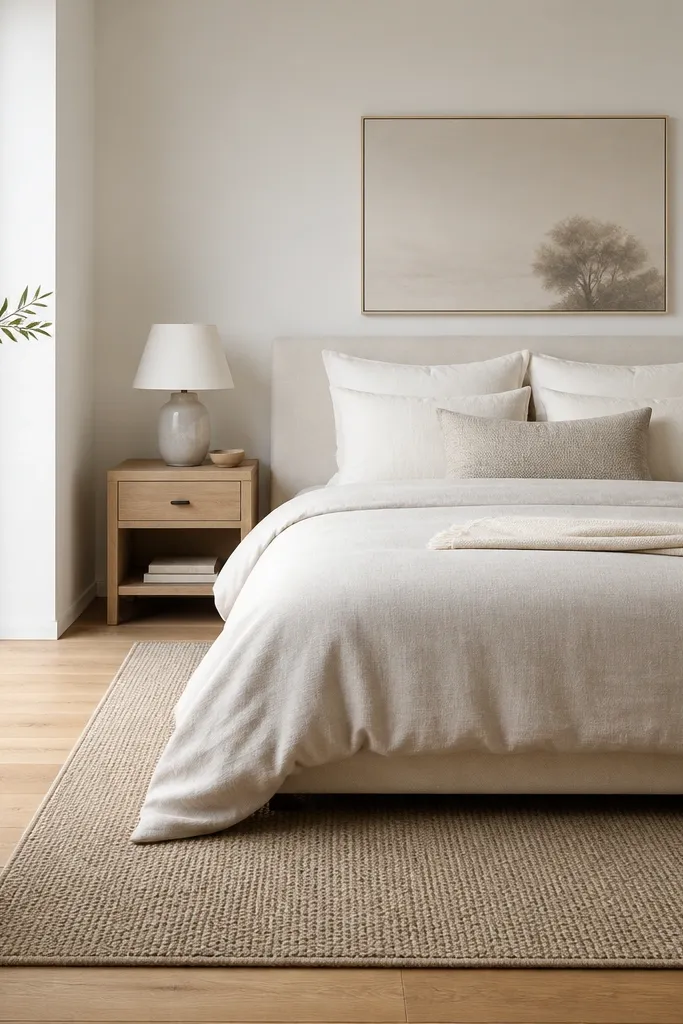
Pick a rug with a pile height around 0.25 to 0.5 inches and a subtle texture like loops or low weave. Size it so the front legs of the bed sit on the rug, with 8-12 inches showing beyond the sides. Choose mushroom, oat, or light taupe so it matches warm whites and greige bedding. Keep the bed linens simple and solid so the rug texture becomes the hero. Vacuum in two directions and rotate the rug every 6 months so it stays even.
A good rug is the easiest place to add luxury in a modern room interior bedroom minimalist setup. Mushroom wool looks cozy without turning the room into a cabin — it sits between beige and taupe, so it works with both warm and cool accents. I like wool because it has depth; it absorbs light so the bed looks calmer and more grounded. This flatters people who prefer soft neutrals and it also hides minor foot traffic marks better than thin synthetics. The principle is texture at floor level so your eye has something “rich” to land on besides furniture.
AvoidAvoid shiny low-quality rugs. They reflect light and make minimalist rooms look like a temporary rental.
Good to knowRun a rug pad underneath. It keeps the rug from sliding and stops the fibers from flattening.
9. Low-Profile Headboard with Fluted Fabric
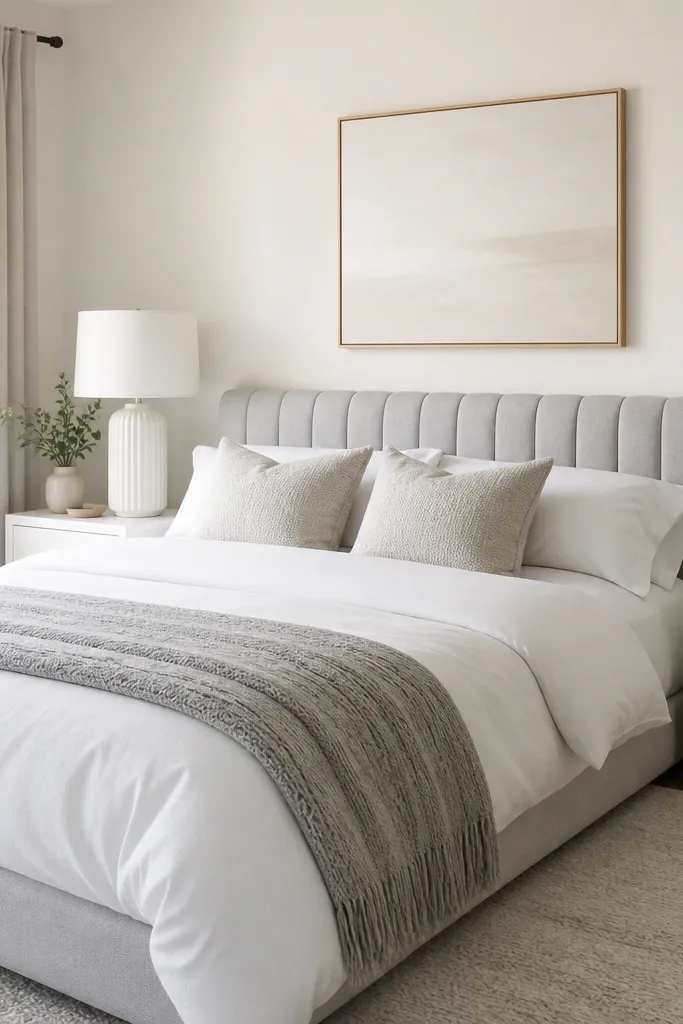
Select a low-profile headboard that sits about 18-24 inches above the bed frame, then center it with the mattress. Keep bedding in off-white or soft gray and add one throw with a knit or waffle texture. Place nightstands that are equal in height and width, ideally around 18-22 inches tall. Use lamps with ribbed ceramic bases or simple matte bases, but keep shades in linen-look fabric. Avoid adding extra wall art; instead, let the headboard texture do the work.
Fluting on a headboard gives you vertical texture without adding a pattern that spreads across the room. That matters in modern room interior bedroom minimalist spaces because the headboard is the tallest element, and you want its texture to look intentional up close. I’ve chosen light gray fluted fabric when the room has warm wood floors; it stays modern and doesn’t fight the warmth. This look is forgiving if you have a shorter wall or lower ceilings because the vertical flutes guide the eye up. The minimalist principle is one sculptural textile feature at the back of the bed.
AvoidSkip shiny velvet fluting. It reads dramatic in a cheap, reflective way under bedroom lighting.
Good to knowPress the headboard fabric with a steamer before styling. Fluting shows every crease.
10. Matte Black Floor Lamp with Linen Shade
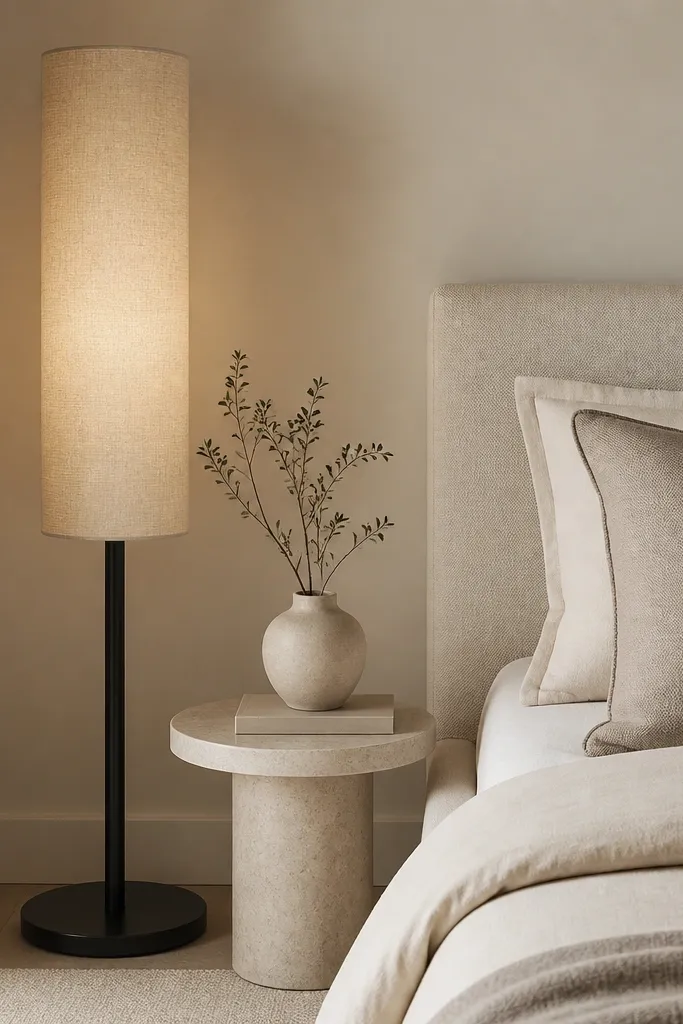
Place the lamp so the shade bottom lines up around the mid-height of your headboard pillows, roughly 18-24 inches above the bed top. Use a 2700K bulb and keep the lamp on the same side as your reading chair or the empty corner. Choose a linen shade in cream or warm white, and keep the base slim so it doesn’t clutter the floor. Add a small side table only if you need it, and style it with one book stacked flat plus a small tray. Keep the cord hidden with a cord cover painted to match the wall.
Lighting is where minimalist bedrooms either look calm or look unfinished. A matte black floor lamp adds a clean vertical line, and the linen shade softens the bulb glow so the room feels dreamy. I’ve used this when clients want a modern room interior bedroom minimalist look but don’t want wall sconces drilled into the wall. The matte finish hides fingerprints and doesn’t look shiny under lamps. This is flattering for most wardrobes and textiles because it doesn’t add color — it adds shape and shadow.
AvoidAvoid bright white plastic shades. They throw harsh light and ruin the soft minimalist vibe.
Good to knowAim the lamp slightly toward the wall instead of straight down. It adds a gentle ambient glow that looks expensive.
11. Single Statement Pendant Over the Bed
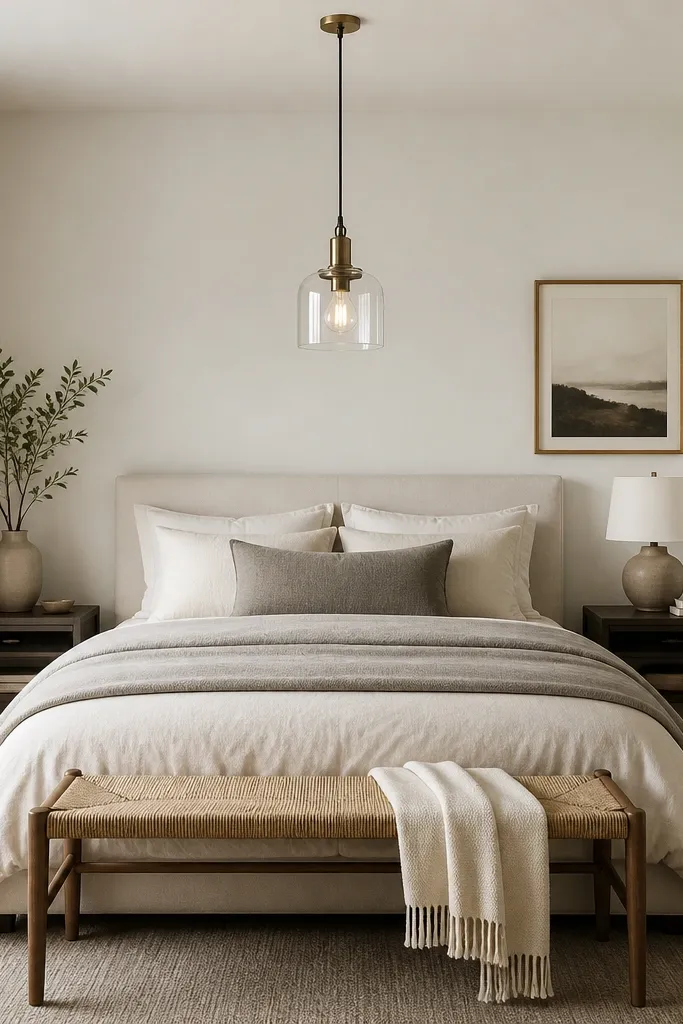
Hang the pendant so the bottom of the shade sits about 28-34 inches above the top of the mattress when the bed is made. Center it on the bed and measure carefully so it isn’t visually off. Choose a glass shade that diffuses light, not an open cage that shows the bulb. Keep the bed linens solid and add one textured throw to bring softness back. If you have nightstands, keep them minimal and avoid adding matching pendant-style lamps.
A pendant over the bed creates a focal point without adding a pile of decor. In minimalist rooms, that one overhead element gives you “designer energy” because the ceiling looks intentional. I’ve leaned toward brushed brass or antique bronze because it warms up cool grays and makes the room feel inviting. This works especially well if your bedroom has a clear ceiling line and you can keep the rest of the decor quiet. The principle is one statement shape, then silence everywhere else.
AvoidSkip pendants that hang too low. They interrupt your headboard line and feel cramped.
Good to knowUse a dimmer if you can. Bedroom light at full brightness kills the dreamy look.
12. Tone-on-Tone Bedding with Waffle Throw
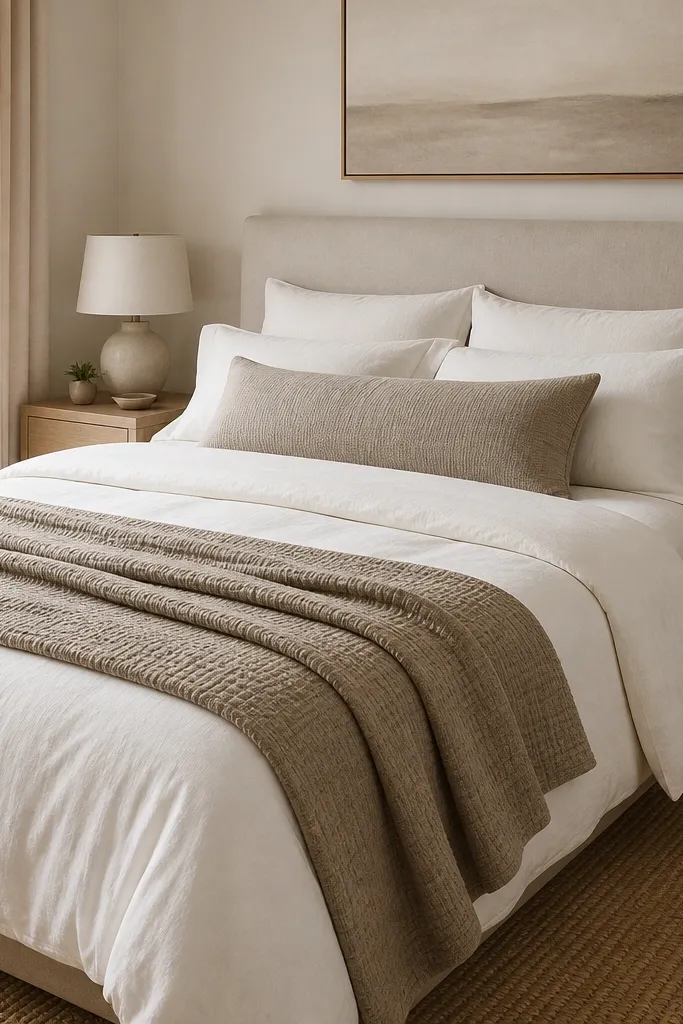
Pick a duvet cover in off-white or warm white, then choose pillowcases in the same temperature. Add a waffle throw in taupe, oatmeal, or sand so the texture becomes the contrast. Keep pillow count to two standard plus one lumbar if you like that look; too many pillows make it feel cluttered. Place a simple nightstand lamp with a linen shade to keep the bed lighting soft. Finish by smoothing the duvet and tucking it evenly at the sides so the bed looks tailored.
Tone-on-tone bedding looks expensive because it creates subtle contrast that your eye reads as depth. A waffle throw adds a bumpy texture that catches light at different angles, which makes the bed look styled even when you’re not adding extra accessories. I like this approach for modern room interior bedroom minimalist because it avoids busy patterns while still giving that layered, cozy feel. It flatters people who want a clean look but don’t want it to feel sterile. The minimalist principle is one base color family, then texture changes.
AvoidAvoid adding a patterned sheet set to a tone-on-tone duvet. It breaks the calm instantly.
Good to knowShake the throw out before styling. Waffle fabric shows clumps if it’s folded tight in transit.
13. Built-In Look with Floating Shelves and One Vase
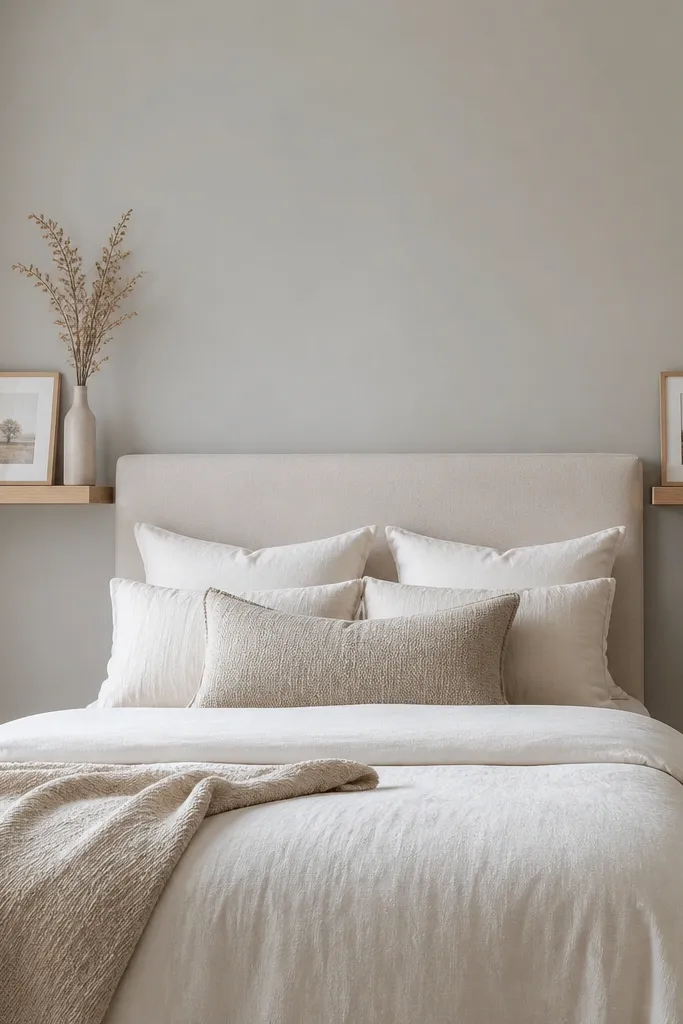
Mount shelves so the lower edge sits around 56-60 inches from the floor, depending on your headboard height. Keep shelf depth around 6-8 inches so items sit back and don’t look crowded. Style one side with a small frame and one side with a tall vase, or do both sides with one object each. Keep the vase stems long enough to reach about 1.5 times the height of the vase for a clean silhouette. Place a rug under the bed that matches your shelf color family so the wall and floor feel connected.
Floating shelves give you storage and styling without bulky furniture, which fits a modern room interior bedroom minimalist plan. When you keep only one or two objects up there, the wall stays quiet and the room feels intentional. I’ve used light oak shelves because they warm up cool paint colors and look clean next to neutral bedding. This setup works well for people who love decor but want it controlled. The principle is vertical organization and strict limits: fewer items, placed with spacing you can measure.
AvoidSkip crowded shelf stacks. Three small items look messy even if they’re neutral.
Good to knowUse painter’s tape to map object spacing before drilling. Shelf styling looks better when the gaps match.
14. Minimal Entry Console with Hidden Cable Plan
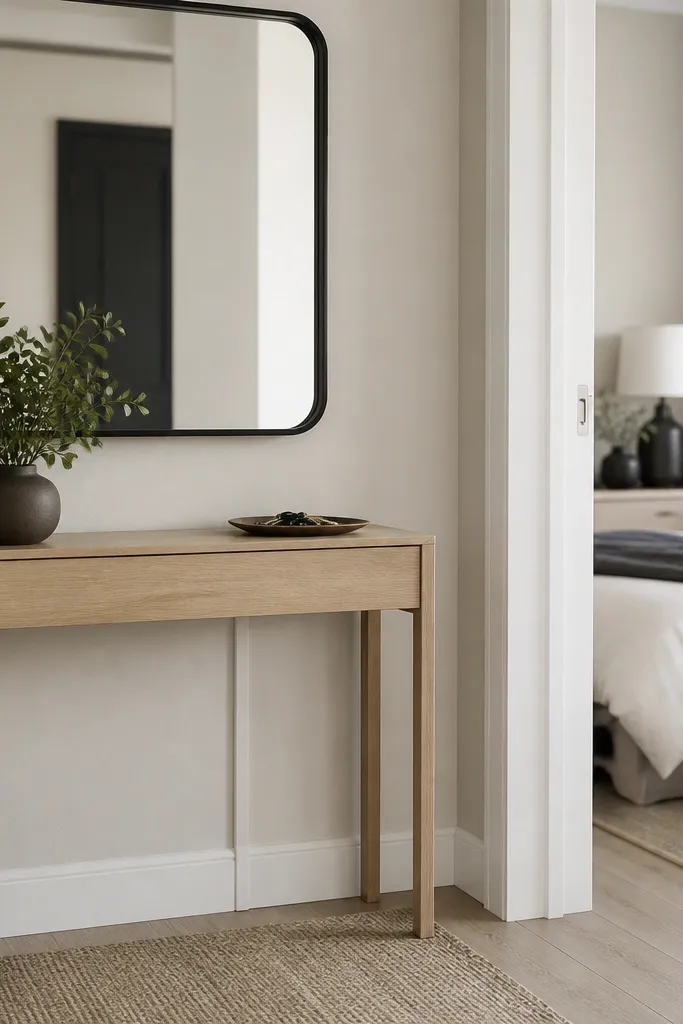
Choose a console that’s 12-16 inches deep and about 36-48 inches wide, so it fits without blocking the path. Mount the mirror so its center is around 60 inches from the floor to avoid a weird low reflection. Put one shallow tray for keys and one small object only, like a bud vase. Install a cord cover along the wall behind the console if you need a charger — keep it painted to match the wall. Keep the floor clear by using a thin mat or rug that doesn’t curl.
Even though your keyword is bedroom-focused, the entry directly affects how your bedroom feels because it sets the “arrive and unwind” mood. A slim console with hidden cable management keeps the visual noise out of your bedroom line of sight. I like white oak here because it matches most bedroom floors and looks warm against minimalist walls. This is great for apartments where the bedroom door opens straight into the entry. The minimalist principle is controlling the first 6 seconds of what you see when you walk in.
AvoidAvoid placing a tall lamp on a narrow console. It crowds the entry and makes the bedroom feel smaller.
Good to knowHang a hook rail under the mirror line for bags. It stops “bag stacking” that makes minimalist rooms fail.
15. Bedside Gallery Wall with One Large Piece
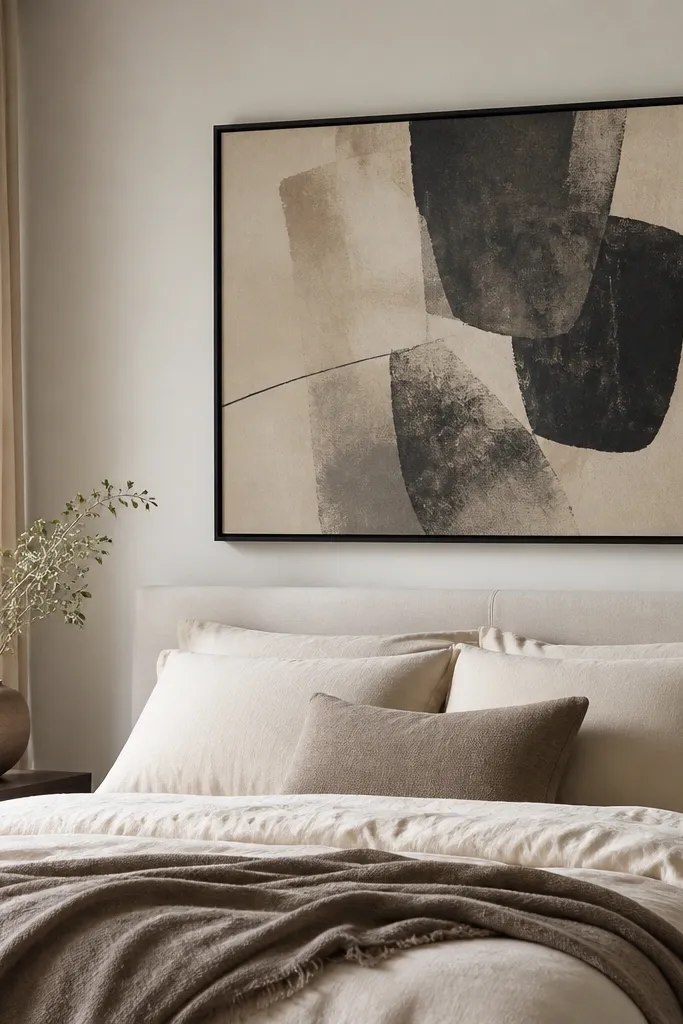
Minimalist bedrooms look finished when there’s one confident art piece, not a cluster. A single large print gives you scale and keeps the wall quiet, which is what modern room interior bedroom minimalist is really about. I choose art with mostly neutrals and one darker tone so it ties into hardware like black lamp bases or a dark dresser. This works for a wide range of skin tones and interiors because the art doesn’t cast bright color onto the room. The principle is scale control: one piece big enough to matter.
Pick an art size around 24x36 inches for queen beds, then center it above the headboard. Hang it so the bottom edge sits about 6-10 inches above the top of the headboard. Use a matte frame finish to avoid glare from bedside lamps. Keep bedding simple in off-white or light taupe, then add a throw that repeats one tone from the art, like charcoal or sand. Make sure your nightstands and lamps stay symmetrical so the art doesn’t feel random.
Use a level and measure from the floor, not from the headboard. Bedrooms skew more than people think.
Avoid hanging art too high. If it sits near the ceiling, it looks like a decor sticker.
16. Matte White Dresser with One Long Handle Line
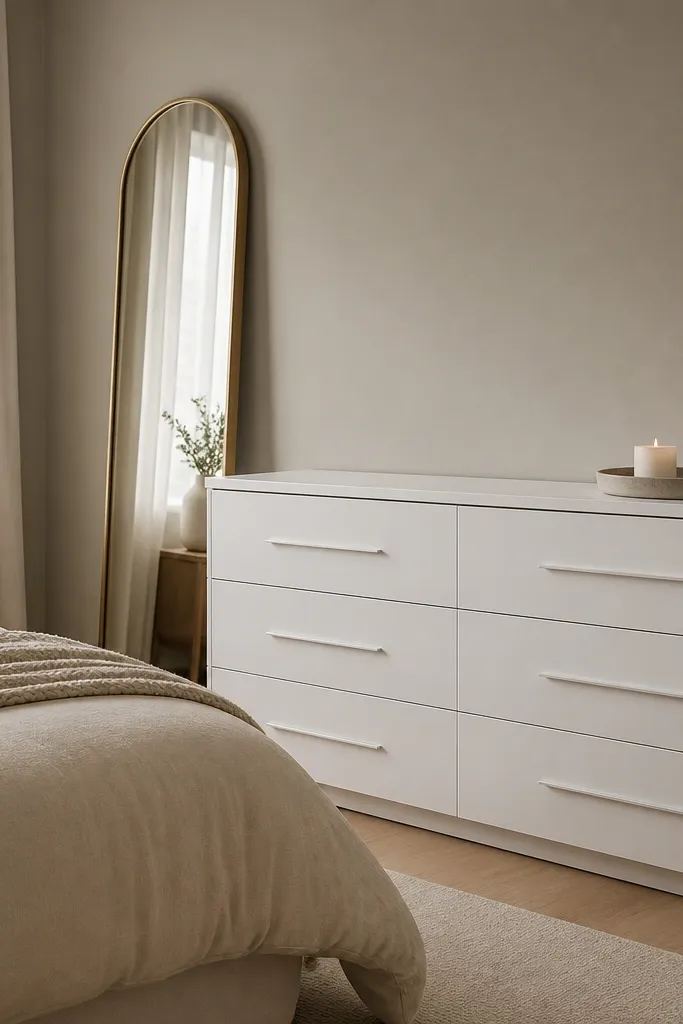
Choose a dresser with a matte finish and long horizontal pulls, not small knobs. Position it so it’s not fighting the bed line — ideally the dresser is on a perpendicular wall, with enough clearance to open drawers comfortably. Place a mirror nearby but not directly blocking the dresser face; a tall mirror on the side looks more intentional. Style the dresser with one round tray, one candle or one small plant, and nothing else. Match the candle color to your throw or rug — taupe, oatmeal, or warm gray.
This style works because it turns storage into a clean design element. Matte white with long, straight pulls creates a single visual rhythm, which is exactly what minimalist rooms need. I like it for bedrooms that already have warm wood floors because the matte finish doesn’t reflect light harshly. If you have a lot of small objects you can’t fully hide, the dresser top needs strict limits — one tray and one object. The principle is reduce hardware clutter and keep the surface “quiet.”
AvoidAvoid stacking baskets on top of the dresser. It looks like you ran out of storage space.
Good to knowWipe the dresser top with a slightly damp microfiber cloth before styling. Matte finishes show dust faster than glossy ones.
17. Black and White Minimal Bedding with a Single Textured Lumbar
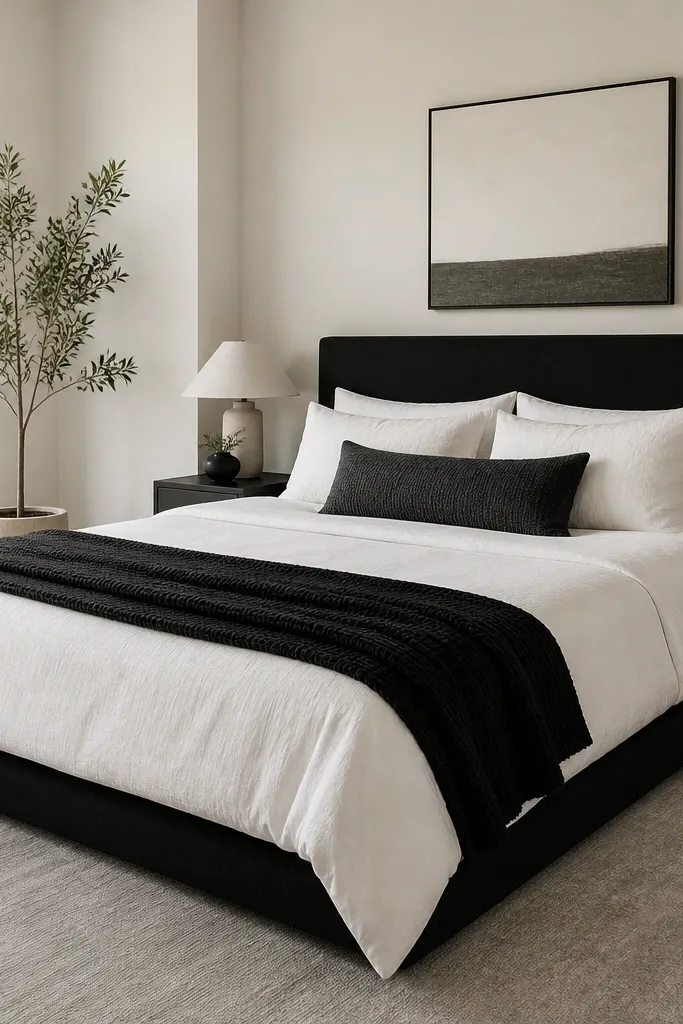
Use a white duvet cover with crisp edges and tuck it evenly. Add a black throw folded once at the foot so it shows texture but doesn’t take over. Choose one lumbar pillow in a tactile fabric like boucle and keep the rest of the pillows solid. If you have black metal lamps, match them to the bed frame for cohesion. Keep the rug in light gray or off-white so the contrast stays clean, not muddy.
A black-and-white bedroom looks sharp when you keep it strict. The textured lumbar is the only “pattern” or texture hero, so the room stays modern without feeling stark. I like this idea when your bedroom has lots of natural light because the whites stay crisp and the blacks look controlled. It also flatters people who prefer strong contrast, and it photographs well because the bed becomes the focal point. The minimalist principle is one dark element and one texture element, repeated in small ways only.
AvoidAvoid adding multiple black accessories with different finishes. Black metal + black plastic + black fabric can look chaotic.
Good to knowPress the throw fold so it stays in a sharp line. A sloppy fold makes black look messy.
18. One Low Bench at the Foot in Oat Boucle
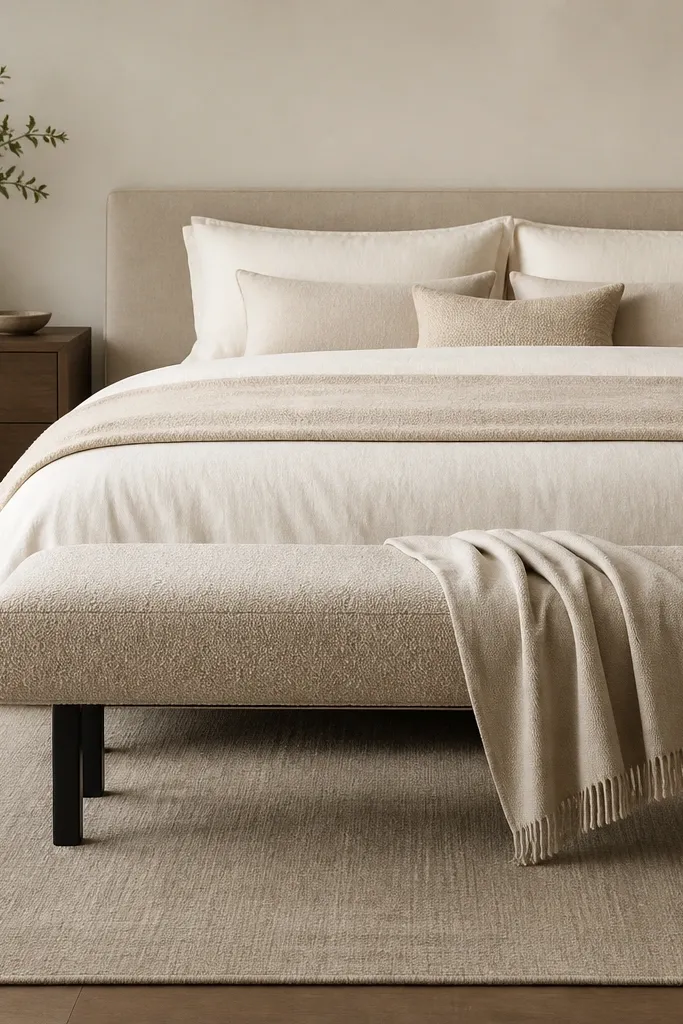
A bench at the foot adds luxury because it creates a “hotel” moment without adding clutter. Boucle in oat is soft and forgiving, and it adds a tactile surface that looks expensive even with simple styling. I like this for bedrooms where you want a slightly styled look but don’t want a lot of decor on the walls. It also works for people who get cold easily because the bench fabric invites you to add a throw without piling it on the bed. The principle is one additional seating object, placed low and centered for symmetry.
Choose a bench width that’s about the same as your bed width minus 4-6 inches, so it doesn’t look bulky. Place it centered at the foot, with the bench sitting on the rug so it anchors the whole area. Add one throw draped over the bench back, folded neatly so the boucle stays visible. Keep bedding simple and match the bench color family with the duvet or throw. If you use black accents, make the bench legs matte black to tie into lamp bases.
Vacuum boucle gently with a soft brush attachment. It keeps the pile even and prevents flattening.
Avoid benches that are too tall. If it rises above the pillow line, the room feels top-heavy.
19. Minimal Nightstand Stack with Clear Glass Tray
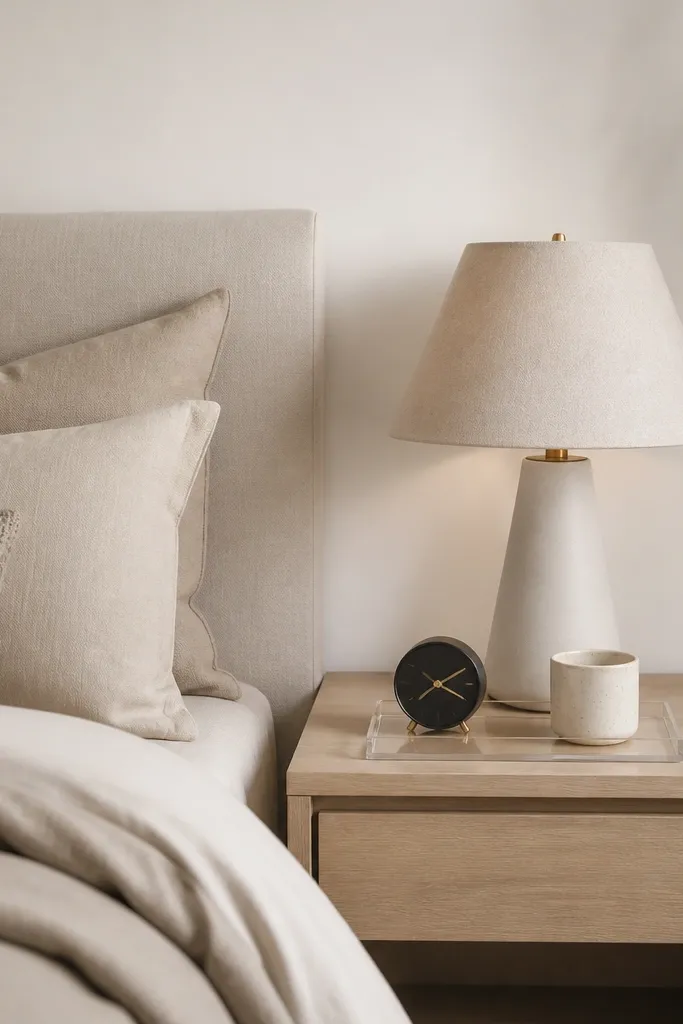
Pick a nightstand top size that fits one tray without crowding the lamp base; trays around 8-10 inches wide work well. Center the tray on the side opposite the lamp so the bed reads balanced. Put only functional items inside: a small clock and one cup or candle. Keep cords routed behind the nightstand and out of view so the tray stays clean. Finish by adding a single lamp and keeping the shade in linen-look so it matches the other soft textiles.
A clear glass tray keeps a minimalist bedside from looking empty but still prevents visual clutter. It’s one of the few “decor” tricks that doesn’t add color noise because glass disappears at a distance. I use this when the bedside surface tends to fill up with small items — remotes, chargers, lip balm — and the tray becomes the boundary. This works for both cool and warm palettes because the glass is neutral. The styling principle is contain, then repeat: one tray, one clock, one cup, and nothing else.
AvoidAvoid decorative trays with heavy patterns. They fight the minimalist lines and look busy.
Good to knowUse a damp microfiber and dry immediately. Glass streaks show under bedside light.
20. Full-Length Headboard Styling with Side-by-Side Matching Pillows
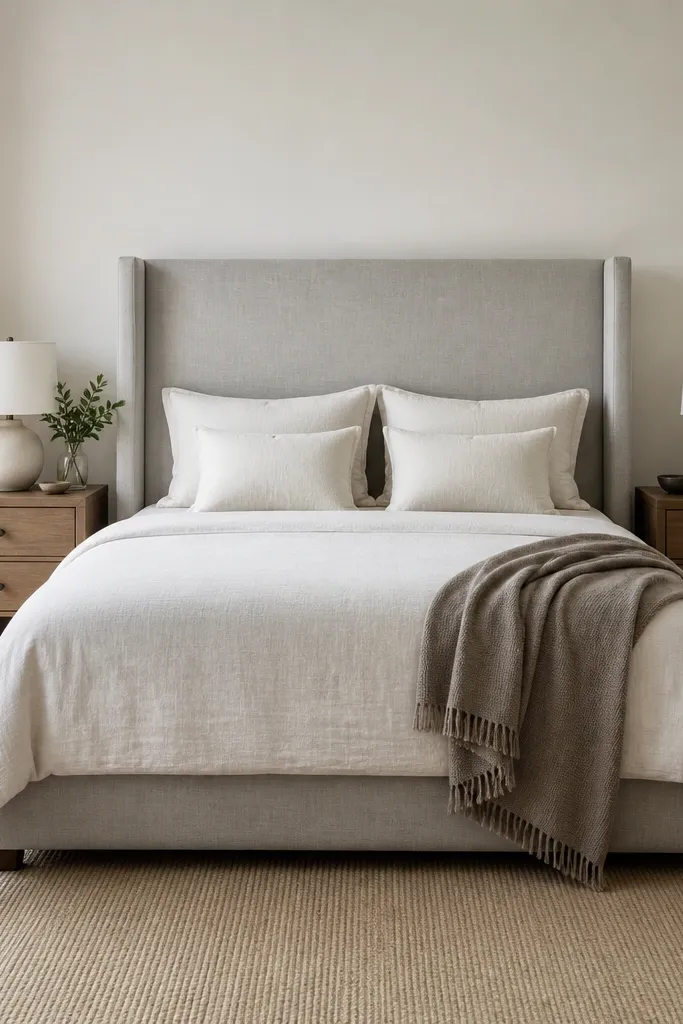
Choose a headboard tall enough that it reaches near the height of your upper pillows, usually 45-54 inches from the floor. Use pillowcases in the same fabric family and keep pillow sizes consistent on each side. Place two standard pillows against the headboard and add two smaller pillows stacked neatly so the edges line up. Add a single throw folded once and placed at the side, not spread across the whole front. Keep nightstands identical and use matching lamps so the bed area reads balanced from the doorway.
Tall headboards make modern room interior bedroom minimalist bedrooms feel intentional because they give vertical structure. When you style with matching pillows side-by-side, the look becomes calm and symmetrical, and the bed looks “made” even if you don’t add extra decor. I use this when clients want a luxurious look but hate busy patterns. It also works across skin tones because the palette stays neutral and doesn’t cast harsh color. The principle is consistent pillow scale and one throw placement instead of a spread of mixed sizes.
AvoidAvoid mixing pillow sizes randomly. Uneven stacking reads sloppy in minimalist rooms.
Good to knowTake 30 seconds to align pillow edges. That small alignment makes the bed look designer-made.