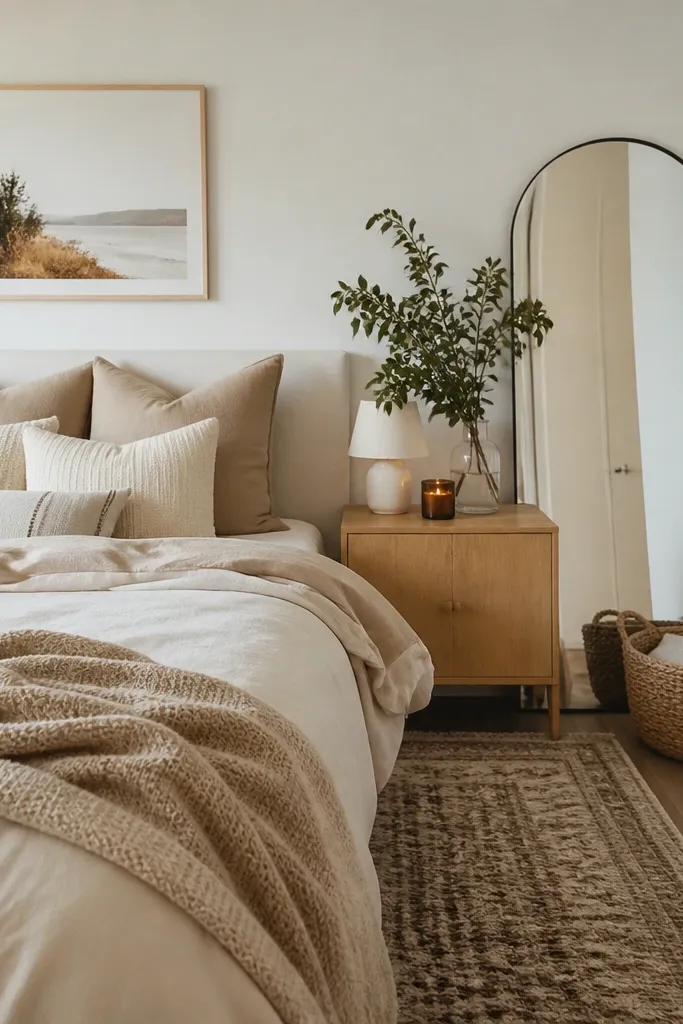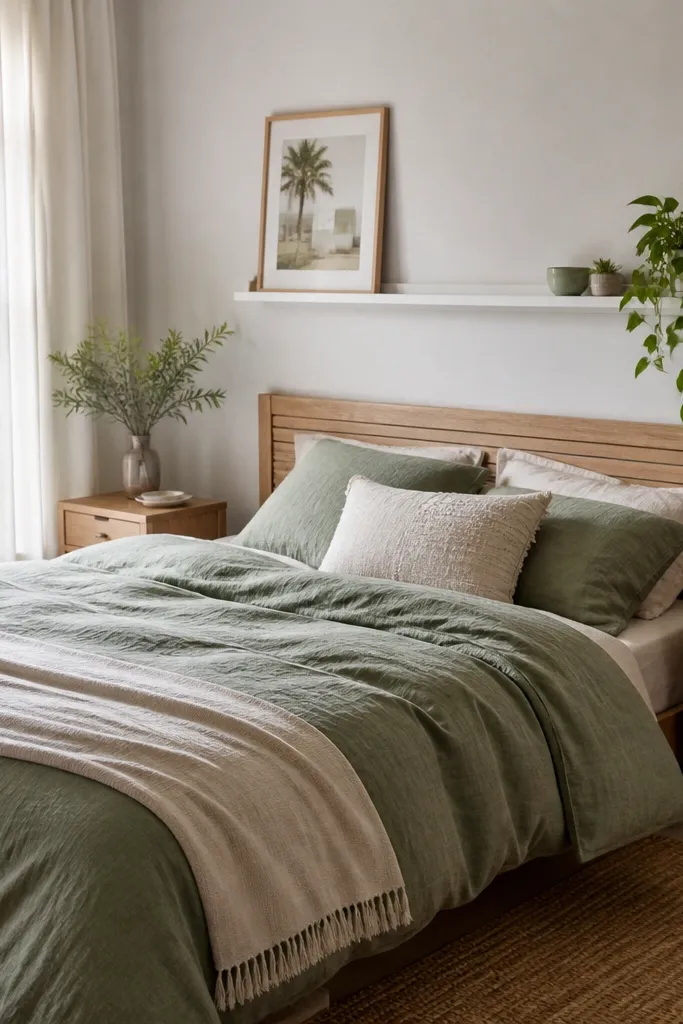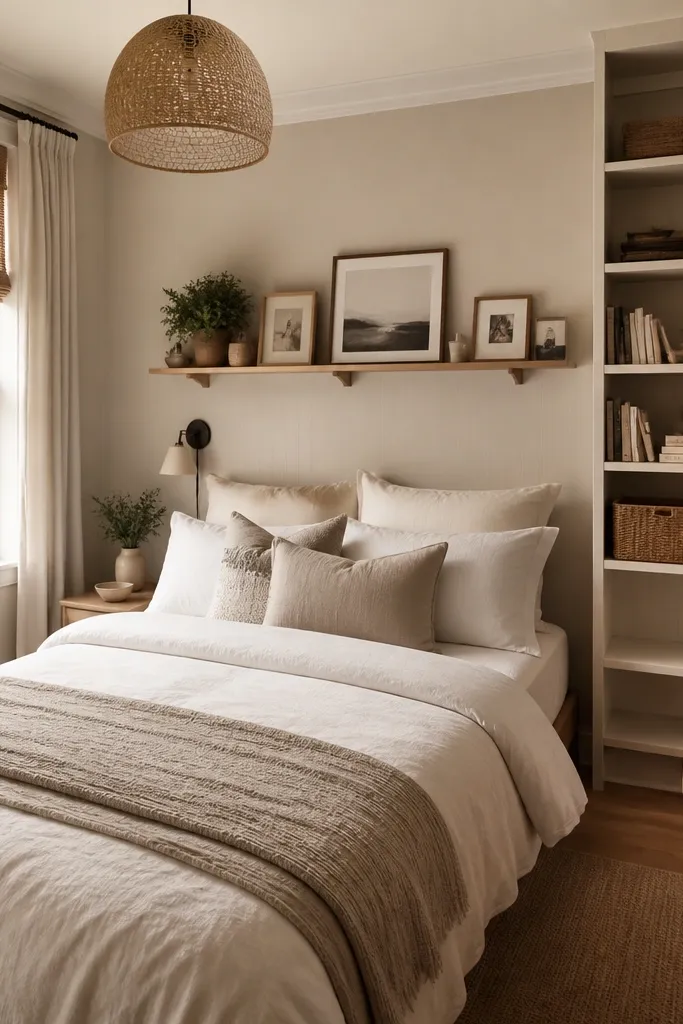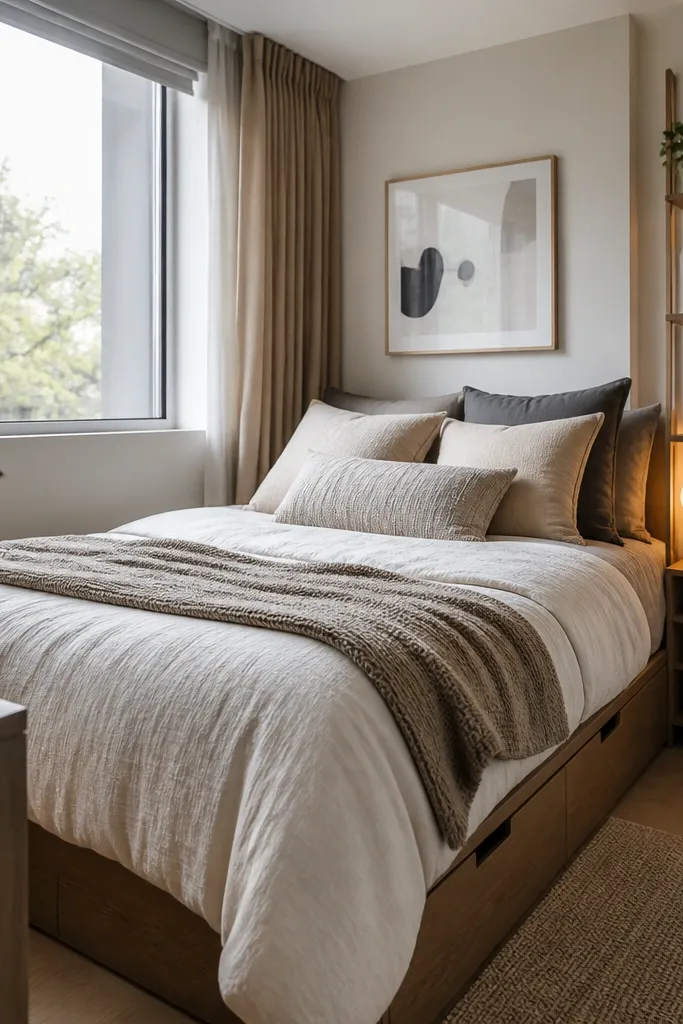
1. Velvet buttoned headboard in warm ivory
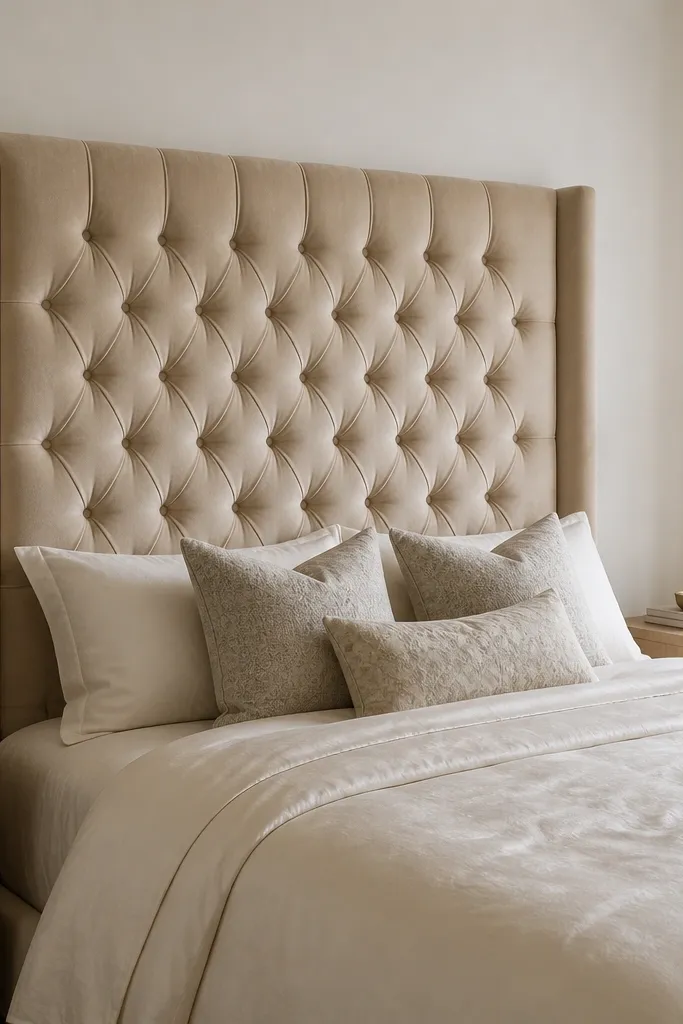
Start by centering the headboard on the wall behind the bed and mounting it so the top edge sits roughly 5-8 cm above your pillow height. Then build the bed: use an ivory or light sand fitted sheet, add a duvet cover in cream with a mild sheen, and finish with one textured throw in oatmeal or camel. Place two matching lamps with fabric shades so the light doesn’t reflect harshly off the velvet. Finally, keep the side tables at the same height and add one brass tray on each or on one side for symmetry.
This look works because tufting gives you structure and shadow, even when the rest of the room is simple. Warm ivory velvet reads expensive in Indian bedrooms because it doesn’t clash with golden wood tones, brass accents, or warm skin undertones like cool white does. Choose a headboard height that hits about mid-chest when you sit up — it makes the bed feel grand without needing a fancy frame. Pair it with bedding that has a slight satin finish so the light bounces softly off the fabric.
AvoidAvoid stark white velvet and glossy bedding together — it looks like a showroom instead of a home.
Good to knowIf your budget is tight, buy only the headboard and keep the rest neutral. The headboard does 70% of the luxury work.
2. Wall paneling behind the bed in warm oak strips
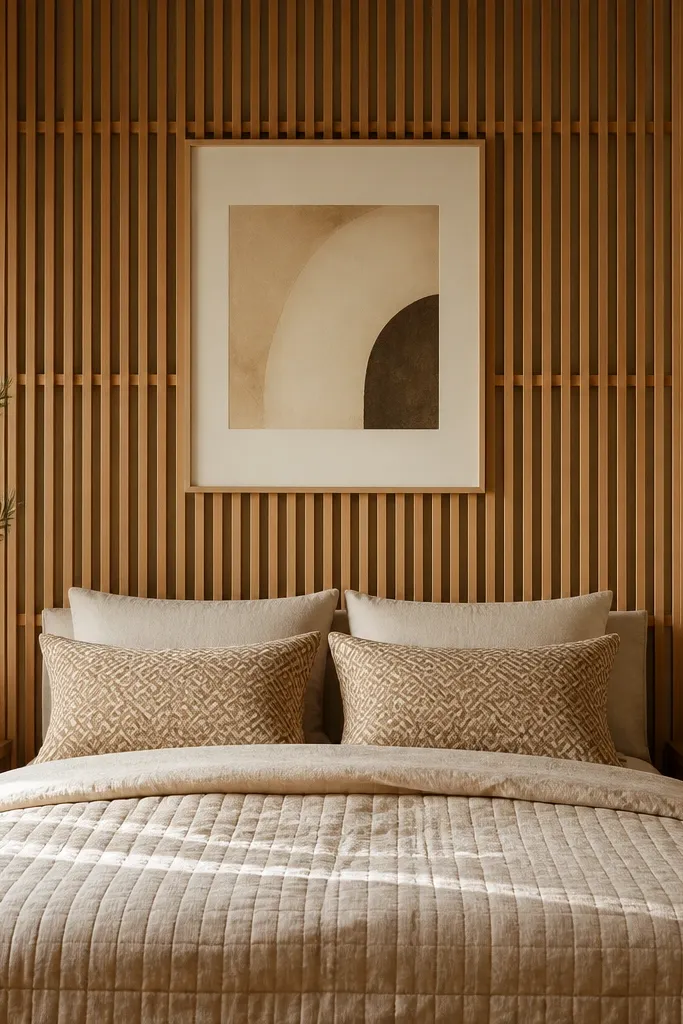
Measure the wall space behind the bed and install strips so the gap between strips stays consistent, usually 2-3 cm. Paint the surrounding wall in a matte warm white or keep it in a similar tone so the paneling doesn’t look pasted on. Mount the headboard or bed frame centered under the paneling and leave a small buffer of 5-10 cm above the headboard. Then style: add a neutral quilt, two plain cushions, and one patterned cushion with a small scale print to match the panel rhythm.
Wood strip paneling gives depth without needing heavy furniture. It looks high-end because the lines create a clean backdrop that photographs well and hides uneven wall texture. Warm oak works with Indian interiors because it blends with teak, sheesham, and walnut furniture commonly found in homes. If your room has beige or tan floors, this will look richer, not louder. Keep the bedding in sand, cocoa, or oatmeal so the wood stays the hero.
AvoidDon’t use shiny varnish on the strips if your room gets direct sun — it creates glare and kills the soft luxury feel.
Good to knowRun the strips only behind the headboard, not the whole wall. It keeps the look intentional and cheaper.
3. Crisp linen bedding in sand with a single charcoal runner
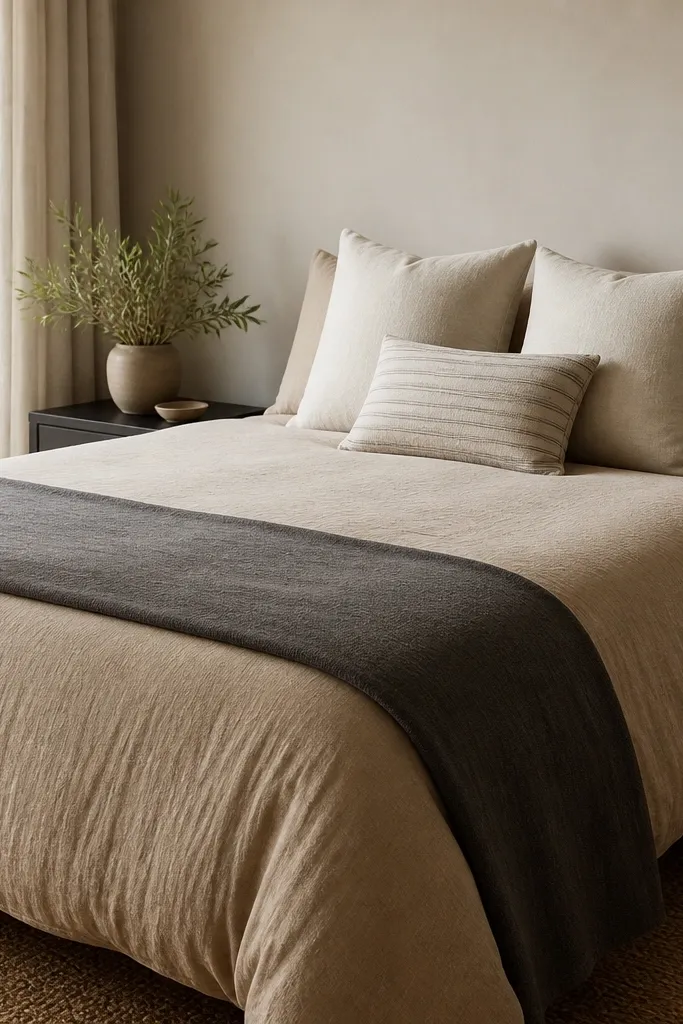
Start by choosing a linen duvet cover in sand or light beige with visible weave, not a smooth cotton sateen. Add two pillow shams that match the duvet and press the edges so they sit flat. Fold a charcoal runner or throw lengthwise and place it at the foot of the bed, centered. Finish with one textured cushion in oatmeal plus one cushion with a small stripe or micro pattern so the room gets movement without loud prints.
Linen reads premium because it has a natural texture and doesn’t look plastic under warm light. Sand linen gives you that calm, high-end hotel vibe, while a charcoal runner adds contrast without making the bed look chaotic. This combo works especially well in Indian homes where walls are often warm and floors are wood or tiles — the neutrals harmonize. It also suits different skin tones because the palette stays warm and soft rather than icy.
AvoidAvoid mixing too many colors in the bed — three neutrals max, then one dark accent.
Good to knowSteam the linen and tuck the duvet corners tightly. A crisp tuck makes linen look designer.
4. Handwoven jute rug with a low-pile border
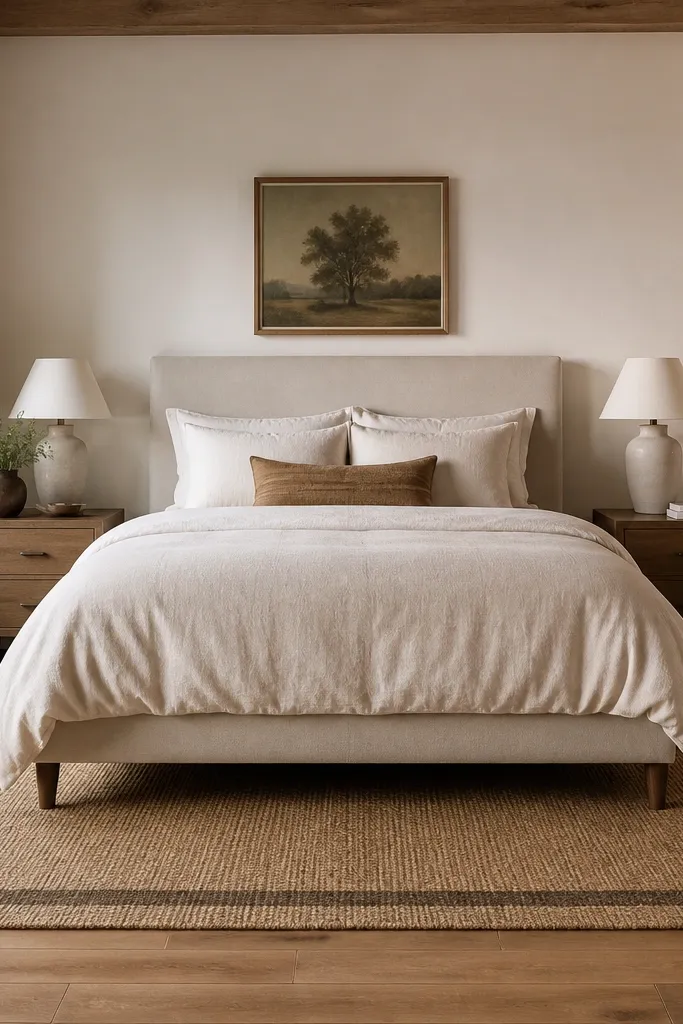
A handwoven jute rug looks expensive when it’s the right scale and has a border that frames the bed. Jute also works well in Indian weather because it feels breathable and doesn’t trap the “sticky” look that some synthetic rugs do. The low pile matters; it keeps the room from feeling cluttered and lets the bed look grounded. Pair it with warm neutrals and light wood so the rug reads like part of the architecture, not a random accessory.
Measure your bed width and choose a rug that leaves 20-30 cm of rug showing on both sides of the bed. Place the rug so it extends at least 60 cm beyond the foot — that’s the part people notice first when they enter the room. If you have a low ceiling, skip tall shag and stick to low pile or flat weave. Style with a simple bedside setup: one rug-friendly neutral basket for throws and a matching curtain color so the room stays cohesive.
Get a rug with a border that has only one or two tones. Too many colors makes jute look casual.
Avoid undersized rugs — the bed will float and the room will feel unfinished.
5. Brass and glass table lamps with warm 2700K bulbs
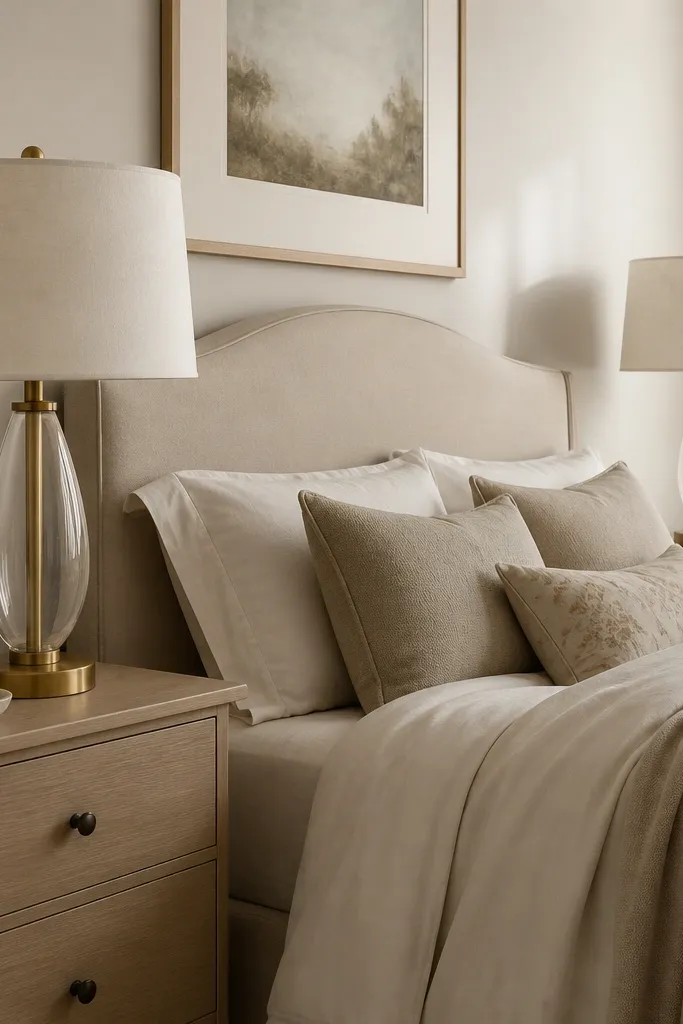
Lighting is where most “budget luxury” bedrooms fail. Brass-and-glass lamps look high-end because brass adds warmth and glass adds a subtle highlight that reads expensive in photos. The real secret is bulb temperature: 2700K makes neutrals look creamy instead of gray. With fabric shades, the light spreads and hides the harsh corners that make rooms look cheap. This setup also flatters most skin tones because it avoids blue-white glare on mirrors and skin.
Place lamps at the same height on both nightstands, aiming for the top of the shade to sit level with the upper pillow area. Use 2700K warm bulbs and keep wattage moderate so the light is soft, not glaring. Choose off-white or oatmeal fabric shades so the lamp doesn’t throw a strong yellow dot. Then coordinate: add one brass accent somewhere else like a picture frame corner or a small tray so the lamps don’t feel random.
If you can, use a dimmer switch. Even a small dim level makes the room feel like a hotel at night.
Avoid cool white bulbs (6500K) — they turn beige bedding into dull gray.
6. Mirrored dresser with a linen runner and gold handles
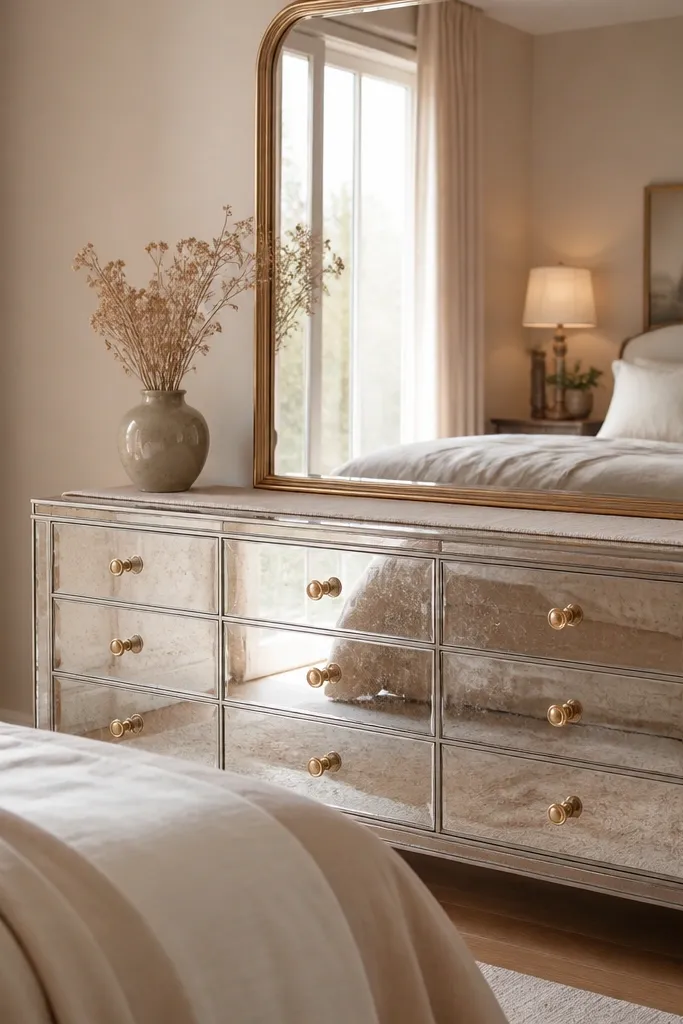
A mirrored dresser gives you instant depth and light bounce, which is why it looks luxury even with simple styling. In Indian bedrooms, it also helps if your room feels smaller — the mirror pulls light across the wall and makes the space feel bigger. Linen on top keeps it from looking too flashy; it softens the glassy surface. Choose warm gold handles or brass hardware so everything stays warm-toned with wooden furniture.
Pick a mirrored dresser with edges that aren’t too thick and handles in gold or brass tone. Wipe it down and style with a linen runner that’s about the same width as the dresser top, leaving 2-3 cm on each side. Add one tall element like a slim vase with dried pampas or local dried grasses, plus one small tray for fragrance bottles. Keep the rest of the dresser empty — luxury comes from negative space, not more objects.
Use a lint-free cloth before styling. Mirrored surfaces show dust and streaks instantly.
Avoid overcrowding the top — too many items make it look like a vanity cart.
7. Matte plaster finish wall with one framed art strip
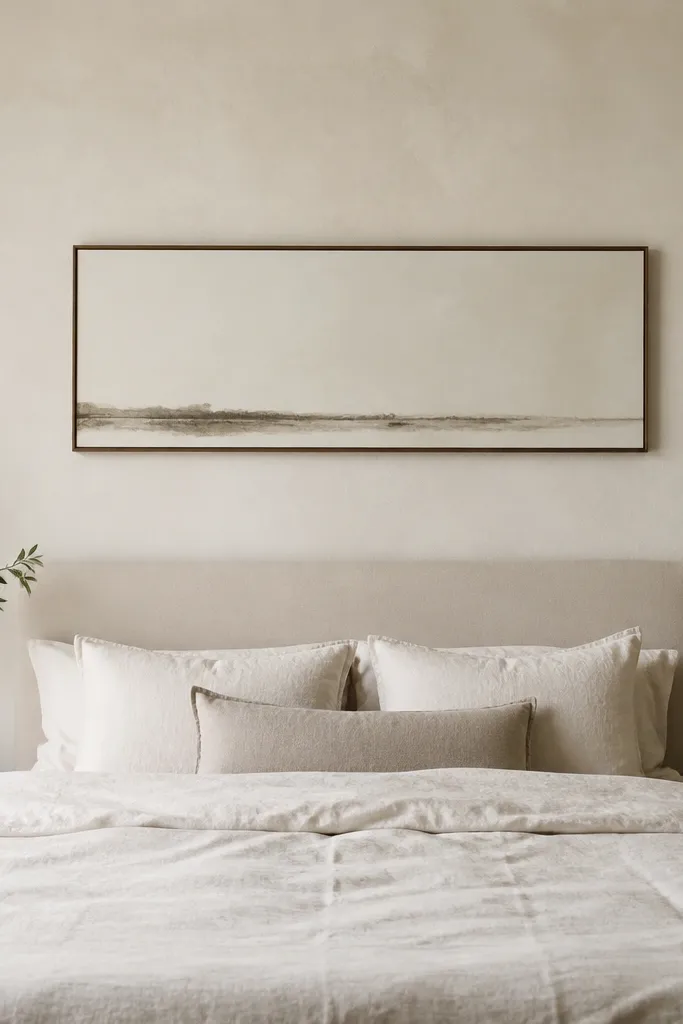
Paint or apply textured plaster finish in warm off-white, not pure white. Let it dry fully and check in daylight and at night under warm bulbs to see how it catches light. Mount one large frame or a horizontal art strip above the bed, keeping it centered with the headboard. Then hang curtains to reach the floor and choose a curtain color within the same family as the wall so the room feels pulled together.
Matte plaster-style paint or textured finish makes walls look expensive because it kills the flat, cheap look of standard emulsion. The key is keeping the art minimal: one centered strip or single large frame so the wall stays calm. This works in Indian homes because textured finishes hide minor wall imperfections that show through glossy paint. Pair it with soft textiles — cotton-linen blends, muted curtains, and a neutral rug — so the texture stays the star.
AvoidAvoid glossy wall paint — it reflects light and makes the room look sharp and less cozy.
Good to knowIf you use two frames, keep them the same size and same frame finish. Mismatch kills the luxury effect fast.
8. Curtains in crushed cotton with a 15 cm break on the floor
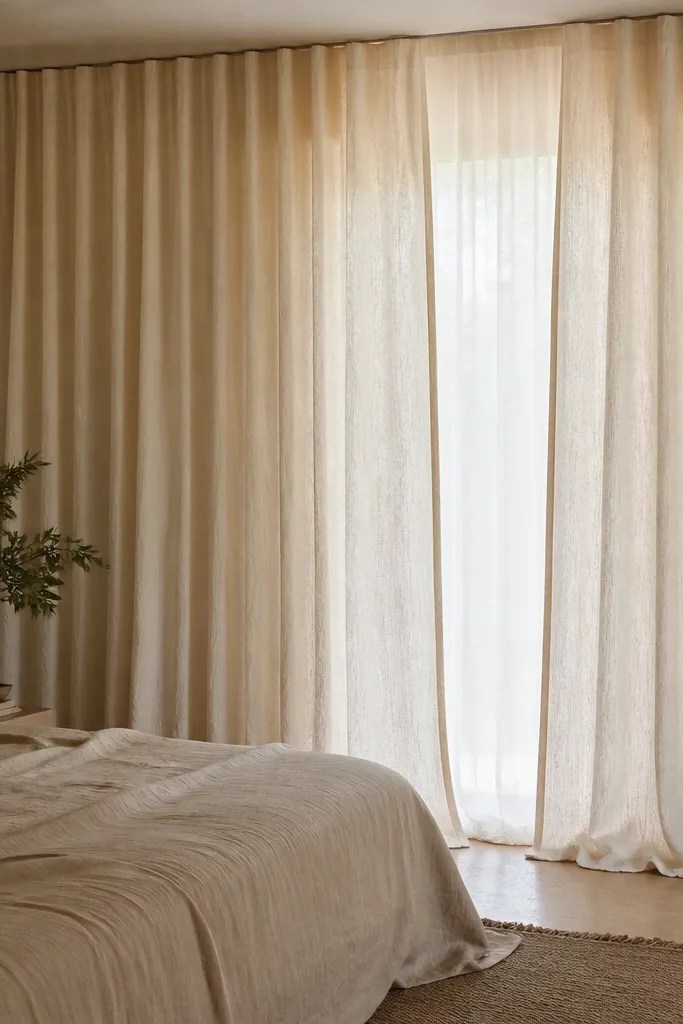
Install a ceiling-mounted track so the curtain starts above the window frame and makes the ceiling look taller. Choose crushed cotton and make the length so it leaves about 15 cm of break on the floor. Add curtain rings or hooks that glide smoothly so you can open and close without tugging. Style the bed near the window with a neutral quilt and one darker cushion so the curtains don’t carry all the visual weight.
Crushed cotton gives natural folds, so you don’t need heavy styling tricks. The luxury look comes from the curtain length and the way the fabric breaks on the floor — that small puddle makes the room feel tailored. In Indian bedrooms, this works beautifully because you often have large windows or balcony doors and you want privacy without blocking light. Pair these curtains with warm neutrals and brass accents so the room stays cohesive.
AvoidAvoid short curtains that stop at the window sill height. They make the whole room look unfinished.
Good to knowIron the top hem only. Don’t flatten the crushed texture — that’s the luxury texture.
9. Coordinated cushion stack in two sizes plus one lumbar

A cushion stack is where luxury becomes visible up close. The trick is restraint: two large square cushions, one medium, and one lumbar — no random scatter. Neutral tones with one subtle pattern look expensive because the textures do the work, not the colors. This arrangement suits most people because it’s visually balanced from the foot of the bed and looks good even when you sit up. It also works in Indian bedrooms with different pillow sizes because you can adjust the lumbar height.
Start with two large cushions in the closest matching color to your duvet. Add a third cushion slightly behind them, offset by 1-2 cm so you see edges and texture. Place the lumbar pillow in front, centered, with the pattern facing outward. Keep cushion covers in linen, cotton-linen, or a woven jacquard blend so the fabric has body and doesn’t collapse flat.
Use cushion inserts that are firm enough to hold a shape. Flat inserts make everything look cheap.
Avoid 7-8 cushions on the bed — the stack loses its clean, hotel-like structure.
10. Low-profile platform bed in dark walnut with a light upholstered headboard
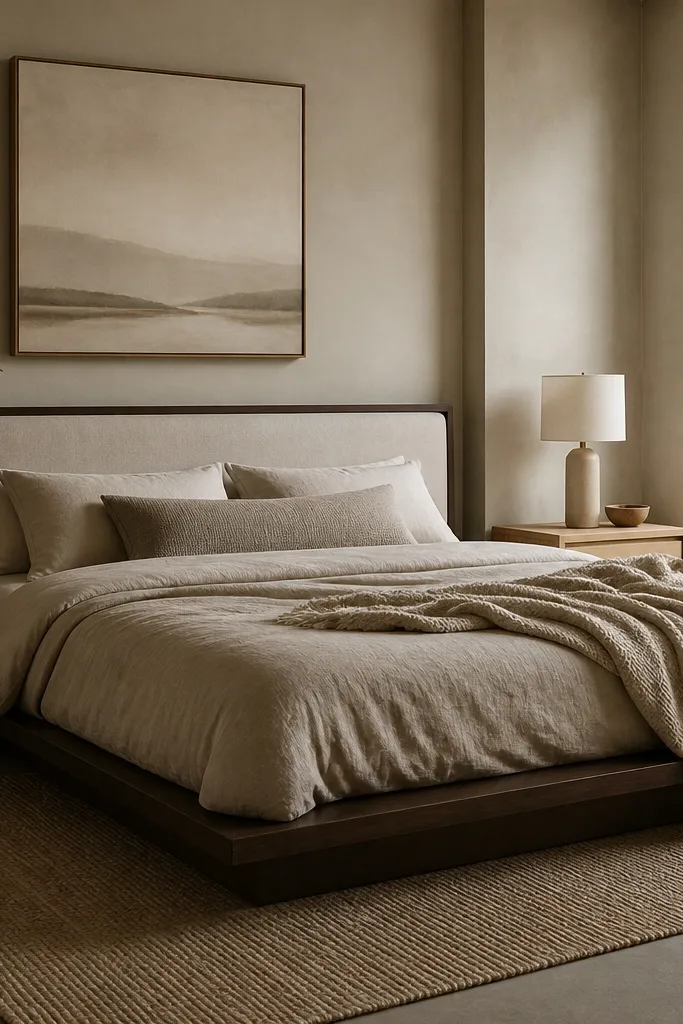
Dark walnut and a light upholstered headboard is a strong luxury combo because it creates contrast without harshness. The platform height also matters: low beds look grounded and modern, while still feeling substantial. This works in Indian bedrooms because many homes have warm floors and wooden furniture; walnut ties it together. Keep bedding light so the bed frame doesn’t visually dominate. The result looks high-end even if the room is modest in size.
Choose a platform bed with a frame height around 30-40 cm from floor to top of mattress. Pair it with a light headboard in oatmeal or warm beige fabric so the bed reads soft. Place the nightstands so their top surfaces line up with the underside of the pillow — even 2-3 cm difference shows. Add one textured throw in camel or taupe and keep the rest neutral.
If your room has beige walls, go one shade darker on the bed frame for contrast.
Avoid matching the bed frame and floor in the exact same tone. The room turns flat.
11. One statement chandelier or pendant above the bed area
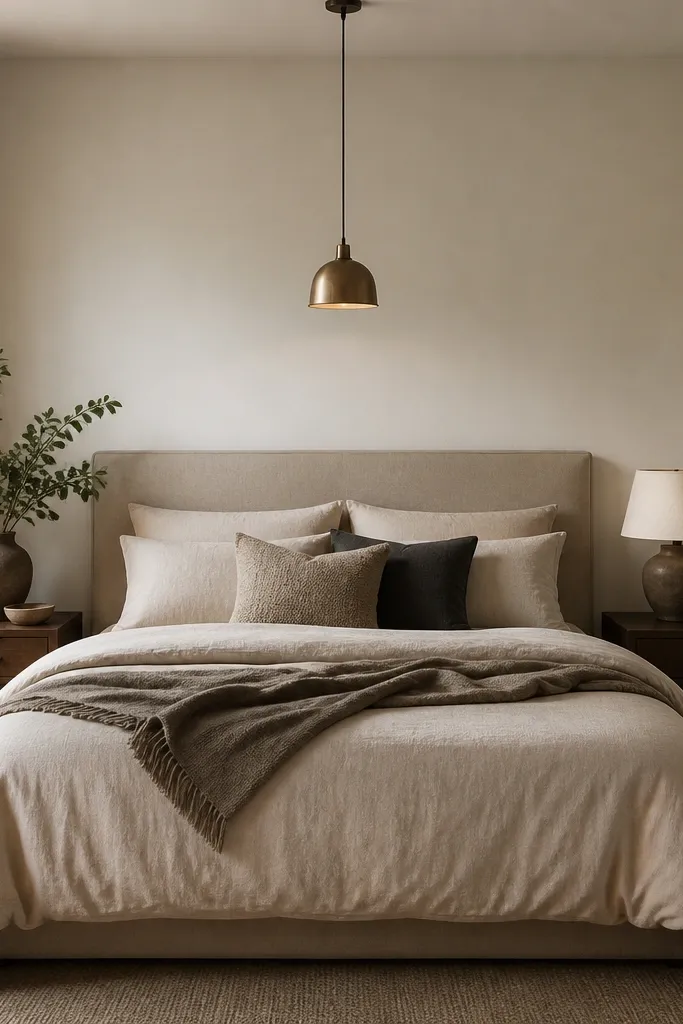
A single statement light makes a bedroom feel finished even when the furniture is simple. Hanging above the bed gives you a clear focal point and makes the room feel designed, not assembled. Choose a pendant with warm metal and a fabric or frosted shade so the light is gentle. This works well in Indian bedrooms where you might not have a ceiling chandelier — a pendant is easier to install and still reads upscale. It also photographs well because the light anchors the bed visually.
Hang the pendant so the bottom of the shade sits about 60-75 cm above the mattress surface. Keep the pendant centered to the bed so the room looks symmetrical. Use warm bulbs and test the brightness — you want soft glow, not bright spotlight. Then simplify the rest: keep nightstands clean and add only one brass accessory to avoid competing with the pendant.
Use a dimmable smart bulb if you can. The same fixture looks hotel-soft at night.
Avoid oversized pendant shades — they can make the ceiling feel lower and ruin the airy luxury feel.
12. Dark green accent chair corner with a textured throw
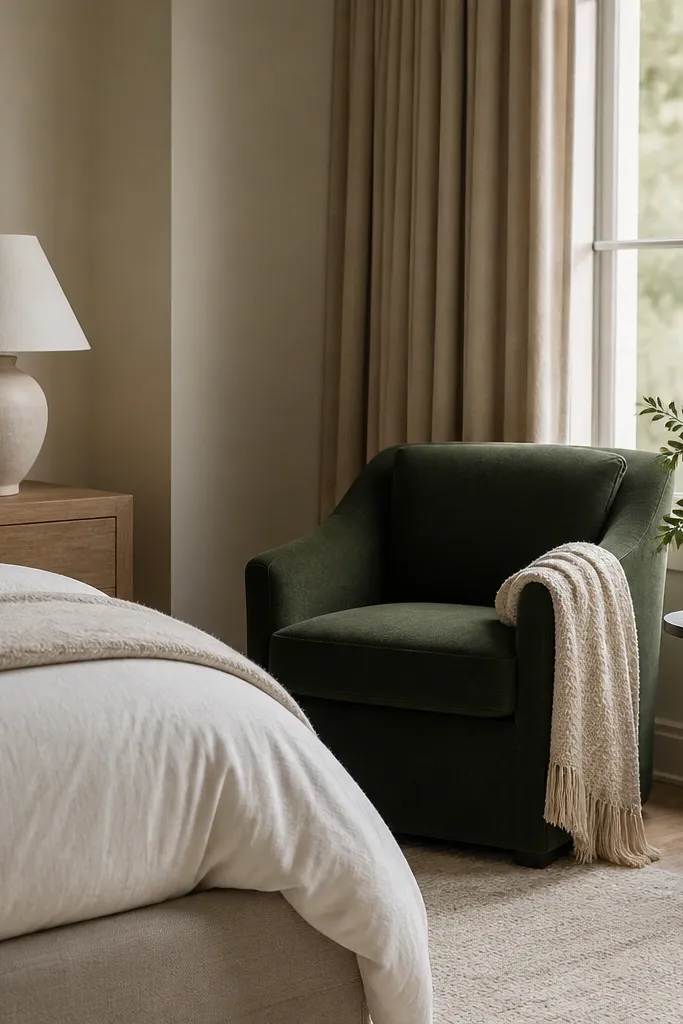
A single accent chair makes a bedroom feel like a suite because it adds a second seating zone. Dark green looks rich but doesn’t feel flashy, especially against cream walls and light wood. The textured throw is what keeps it from looking stiff or showroom-like. This corner works for anyone who actually sits in their bedroom — reading, getting ready, or styling hair. It also flatters warm undertones because green pairs well with gold jewelry and wood finishes.
Place the chair at an angle to the bed so it’s visible when you enter the room. Choose a chair in dark green velvet or thick cotton with a slightly structured back. Add a cream or oatmeal textured throw and one small cushion with a subtle weave. Put a compact side table beside it and add a warm lamp with a fabric shade so the corner feels cozy at night.
Keep the chair size proportional to the room. A compact chair looks more tailored than a bulky one.
Avoid bright emerald green with glossy bedding — the whole room becomes too loud.
13. Bedside gallery wall with matching frames and cream mats
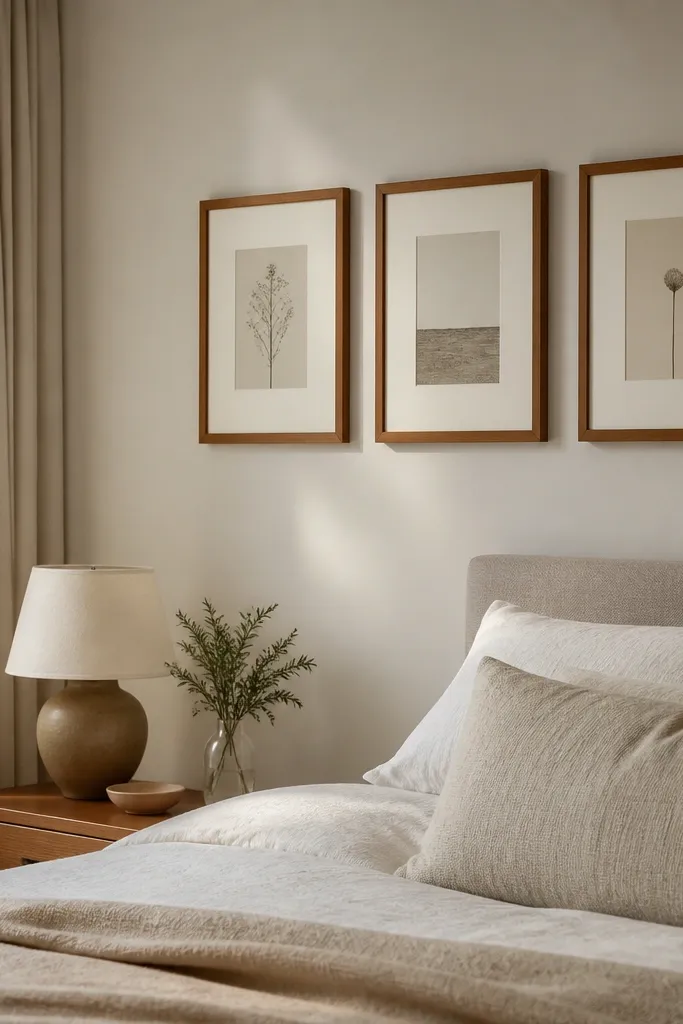
A tight, matching gallery wall makes the bedroom feel styled without adding bulky furniture. Cream mats soften the look and keep the art from looking harsh against warm walls. I like this when your bedroom has plain walls and you can’t do paneling or wallpaper. It also helps if you have a long wall near the bed — the art breaks the emptiness and creates a “designed” zone. Choose prints with muted tones so the room stays calm and luxury reads as restful.
Pick three frames with the same finish and same size for a clean grid. Use cream or warm white mats and keep the art sizes consistent. Hang the center frame at about eye level from the bed — roughly 120-130 cm from floor depending on your height and bed height. Then keep the bedding neutral and add one patterned cushion that matches one color from the prints so everything connects.
Use a paper template and measure spacing before drilling. Uneven gaps look cheap instantly.
Avoid mixing frame colors like black plus gold plus silver — it breaks the luxury feel.
14. Marble-look bedside tray table in cream veining
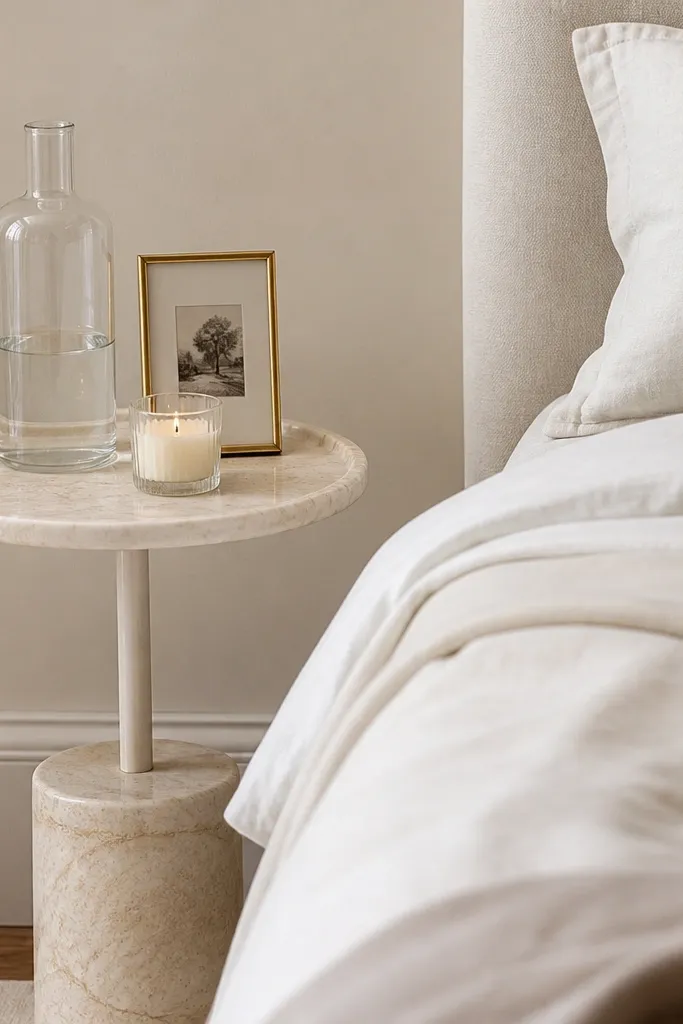
Choose a tray table with a cream base and thin veining, not chunky gray. Place it next to the bed so the tray top aligns near the bottom of your pillow when you sit. Style with one height element like a slim candle holder or bottle, plus one flat object like a brass frame or small dish. Keep the tray empty around the objects by at least 5 cm so it doesn’t look cluttered.
A marble-look surface reads high-end because it has natural-looking variation and a smooth finish that catches light. In Indian bedrooms, cream veining looks softer than stark white and pairs well with warm wood and brass. Using it as a tray table gives you function plus styling space without needing another bulky piece of furniture. It also looks good for different room sizes since the tray table can be pushed in or pulled out. The key is keeping the styling minimal so the surface looks intentional.
AvoidAvoid placing too many small items — it turns into a random clutter tray.
Good to knowWipe it with a dry microfiber cloth before styling. Marble-look surfaces show fingerprints quickly.
15. Printed wallpaper panel behind the bed in muted floral taupe
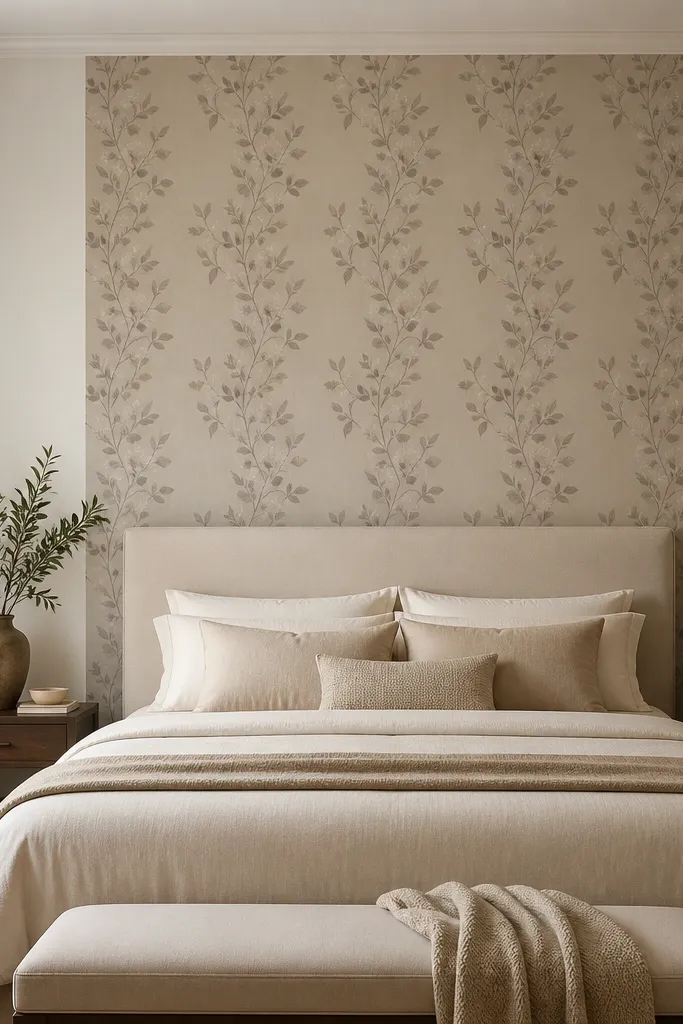
Wallpaper panels make a bedroom feel custom because they create a focal wall without needing full-room coverage. Muted floral in taupe looks luxury because it’s soft and blends into neutral palettes instead of shouting. This is a good choice for Indian bedrooms where you want pattern but still want the room to feel calm and breathable. Keep the rest of the decor plain so the panel stays the hero. When you sit up, the pattern frames you and makes the bed look like a designed centerpiece.
Measure the bed width and choose a panel area that spans about 20-30 cm wider than the headboard on both sides. Apply wallpaper only on the wall behind the headboard area and paint the surrounding wall in warm off-white. Center the pattern so the main motif sits at head height, not low near the mattress. Style the bed with solid beige or oatmeal bedding and one cushion that repeats a color from the wallpaper — usually taupe or a dusty brown.
Use a matte clear finish on the wallpaper only if the brand allows it. Gloss can make patterns look plasticky in sunlight.
Avoid loud bright florals with a dark duvet — the contrast becomes harsh and cheap-looking.