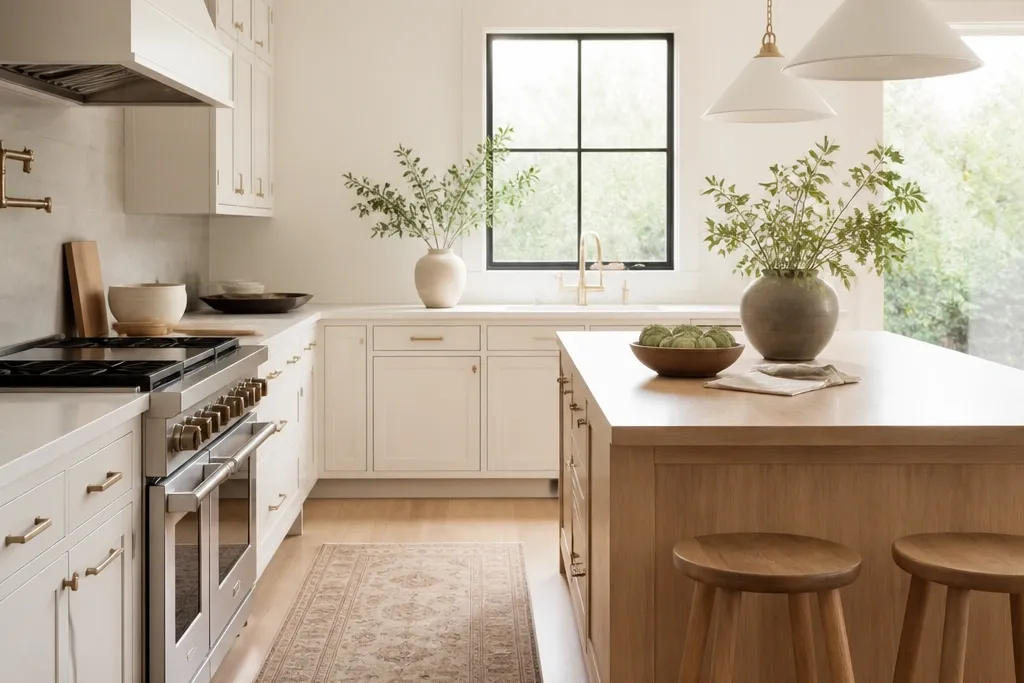
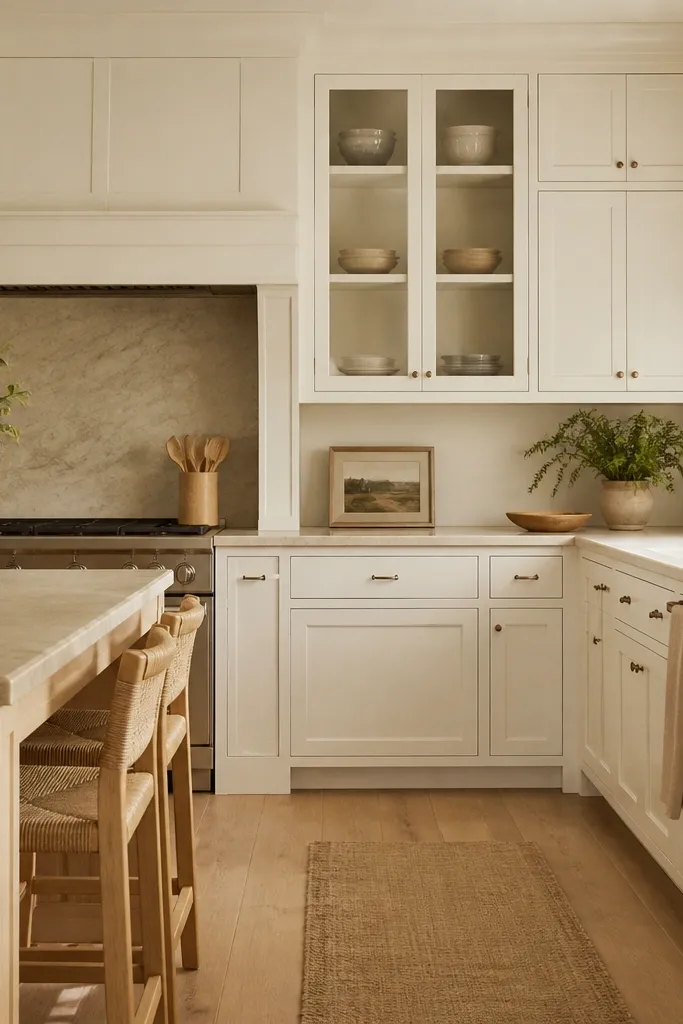
1. Honey white oak dining table with matte off-white cabinets
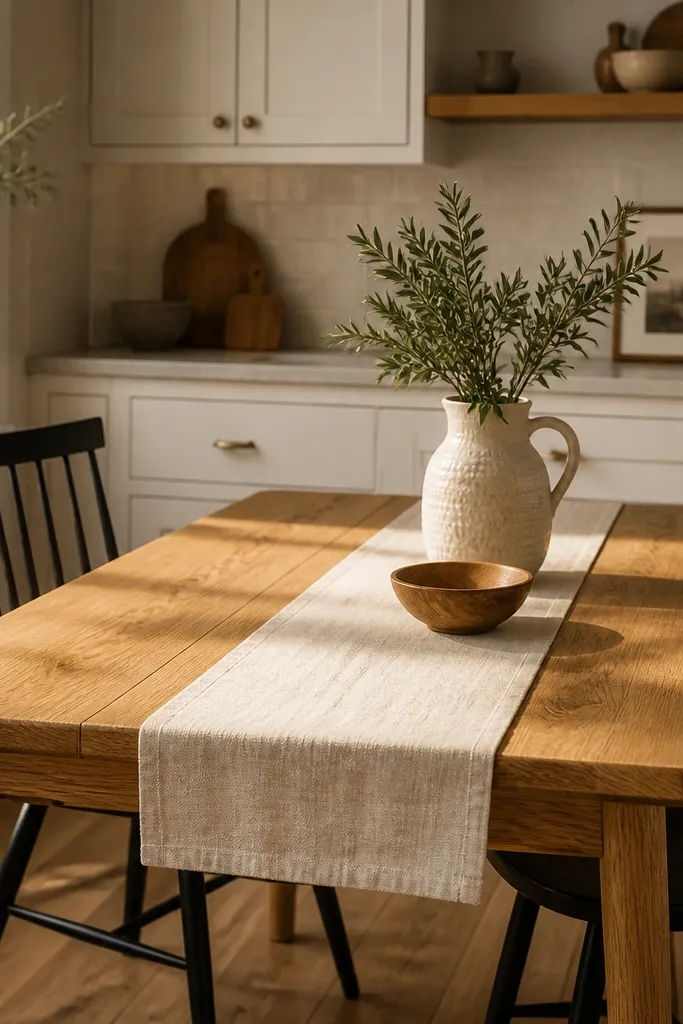
This look works because honey-toned white oak warms up matte off-white cabinets without turning the room yellow. I’ve used it in kitchens where the overhead lights are a little harsh — the matte cabinet finish cuts glare, while the oak’s golden undertone adds comfort. The dining chairs in black metal keep the white from feeling too sweet, especially around the edges of the table. It flatters most skin tones and decor styles because cream linens and warm oak sit in the same comfort zone as beige and tan undertones.
Start with the dining table first, since oak temperature sets the mood. Pick white oak with a honey or light caramel stain and a clear matte topcoat so the grain stays visible. Then choose an off-white cabinet color read in person — aim for “warm white” that looks like linen, not bright paper white. Finish by adding a cream linen runner and black metal chair accents so the room has a dark anchor near the seating height.
If your cabinets are very bright white, swap to oatmeal napkins and a warm ivory runner so the oak doesn’t look like it’s fighting the cabinets.
Avoid glossy white cabinet doors with honey oak — the reflections make everything feel colder and more “showroom” than cozy.
2. White oak open shelving with white cabinet lowers
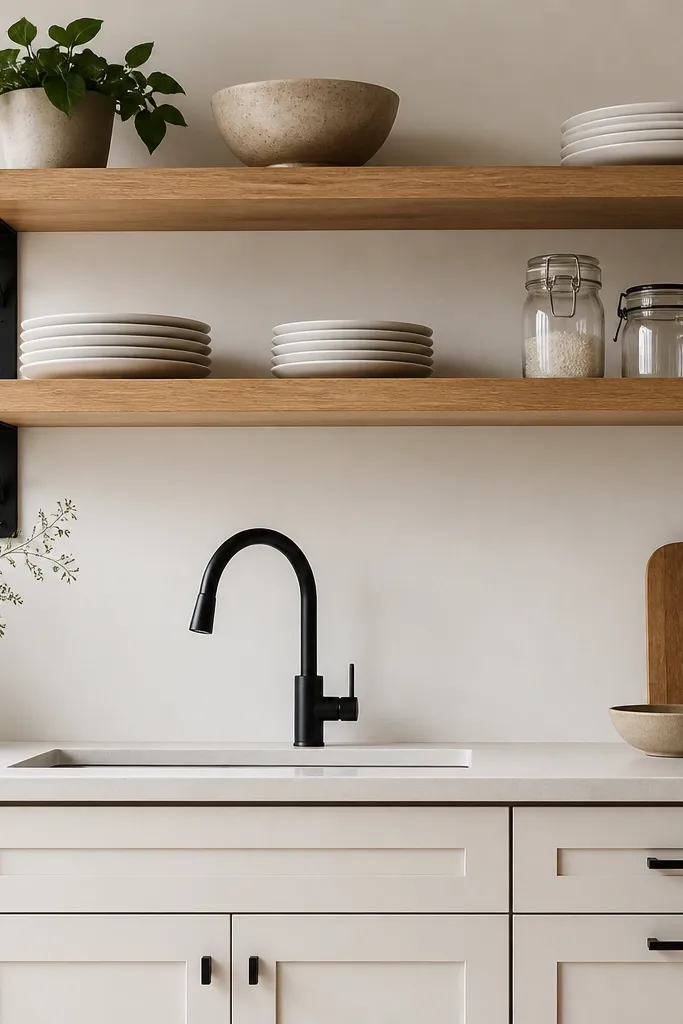
Open shelving is where white oak and white kitchen cabinets cozy really clicks for me because you control what the eye lands on. White cabinet lowers keep the room clean and bright, while oak shelves add warmth at eye level when you’re standing at the counter. I like this setup for people who cook a lot because it turns everyday dishes into decor without clutter piles. It also flatters smaller kitchens because the visual weight is distributed — shelves bring warmth upward, and the lower white keeps the floor area feeling open.
Start by installing oak shelves with a satin clear coat and a thickness around 3/4 inch so they look substantial, not flimsy. Use black metal brackets or matching hardware so the wood has a defined outline. Style with mostly white dishware, then add one warm-toned ceramic piece and one clear glass jar so you get contrast without color chaos. Keep the jar labels off or minimal; if labels look messy, remove them and use a small handwritten tag on brown kraft paper.
Place bowls and mugs slightly staggered — straight stacks look tidy but they read stiff instead of cozy.
Avoid overcrowding open shelves. If every shelf spot is filled, the oak warmth turns into clutter and the cabinets start to look busy.
3. Brass hardware and white oak cutting board wall display
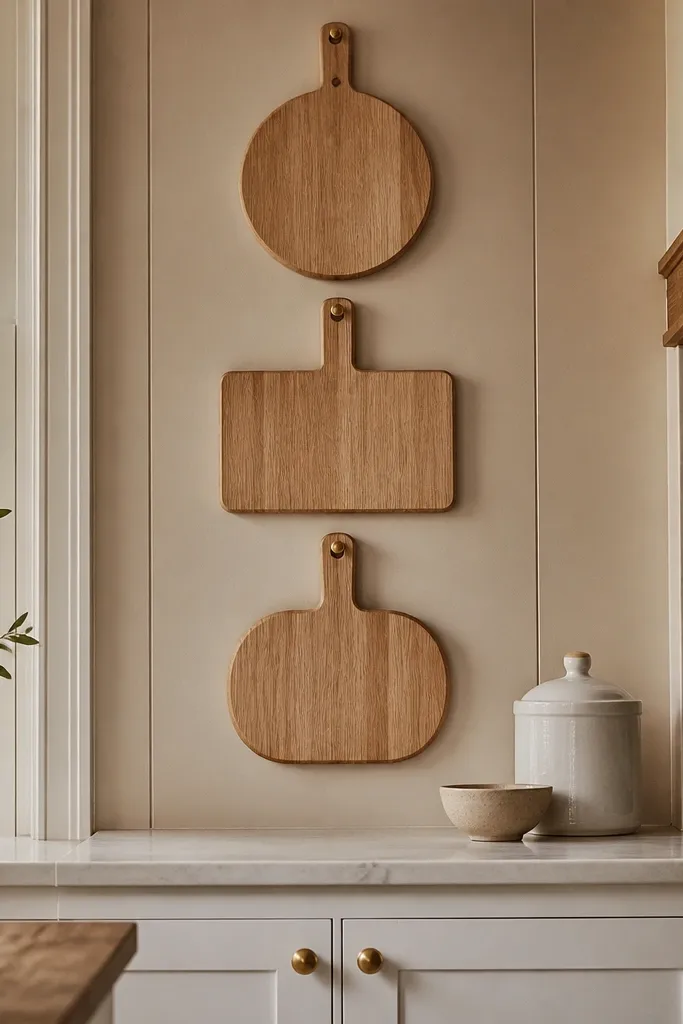
Brass with white oak is cozy in a specific way: it adds warmth that matches the oak’s undertone, and it doesn’t fight the white cabinets. I’ve done this in kitchens where the white cabinets felt too plain because the brass ties the wood and metal together. Cutting boards give you a functional display, and you’re also adding texture that looks good even when you’re not changing decor seasonally. This setup works well if you like a lived-in look but hate messy counters.
Start by swapping cabinet hardware to aged brass knobs or pulls — keep them in the same finish across the kitchen. Mount cutting boards vertically using simple wall hooks or a rail system, spacing them about 2 to 3 inches apart so the grain shows. Choose oak cutting boards with similar color temperature, then add one darker board for contrast. On the counter, keep the styling tight: one white canister, one small ceramic bowl, and leave the rest clear.
Wipe the boards with mineral oil once after you mount them so the grain looks even and doesn’t look dry or patchy.
Avoid mixing cool silver hardware with warm brass and honey oak. The metals will look like two separate kitchens.
4. Warm ivory curtains and white oak window trim
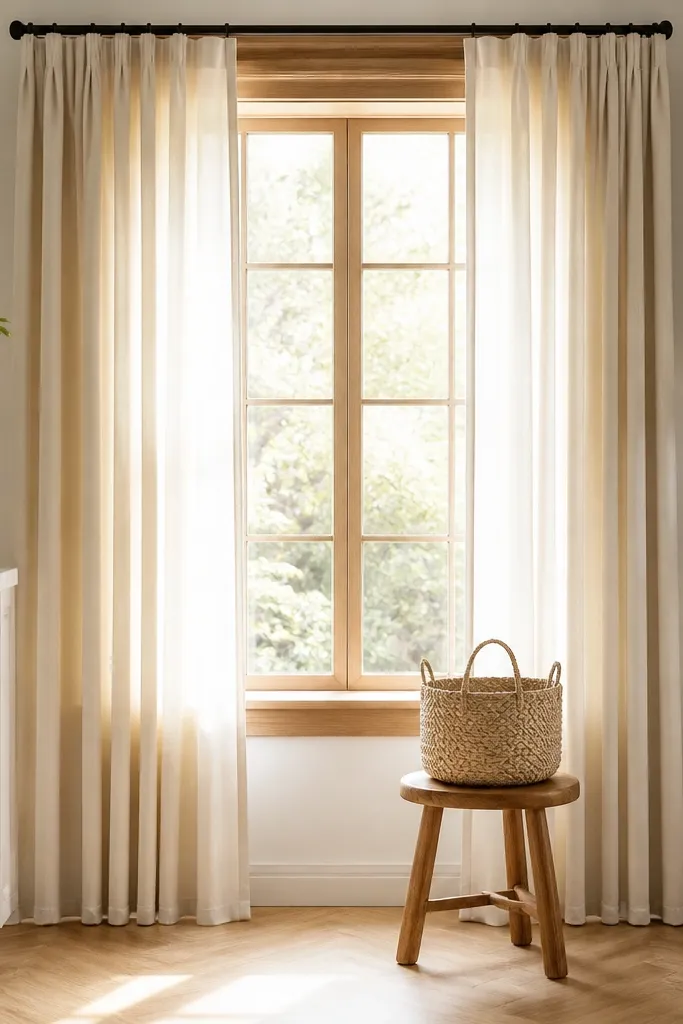
This look is cozy because it adds fabric warmth around the brightest area of the kitchen: the window. White oak trim gives you a continuous wood color that connects to the cabinetry, and warm ivory curtains soften the light so white cabinets don’t feel like they’re glowing too harshly. I like it in kitchens with large windows because the space can look “too clean” without textile softness. It also flatters people with warm skin tones and warm undertones in their home because ivory and honey oak sit comfortably together.
Start by choosing curtains in warm ivory or cream with a light texture like linen-blend, not shiny polyester. Hang them high and wide — mount the rod 4 to 6 inches above the window frame and extend the panels beyond the frame edges. Then repeat white oak in a visible trim detail or a nearby oak shelf so the warmth feels intentional. Keep the table or counter styling in one warm fabric color family: oatmeal runner, tan placemats, and a woven basket.
Press the curtain folds with steam and a low setting — crisp folds look expensive and they read cozy instead of wrinkled.
Avoid pure white curtains with warm oak. It creates a cold rectangle that makes the cabinets look harsher.
5. Charcoal runner on white cabinets with white oak legs
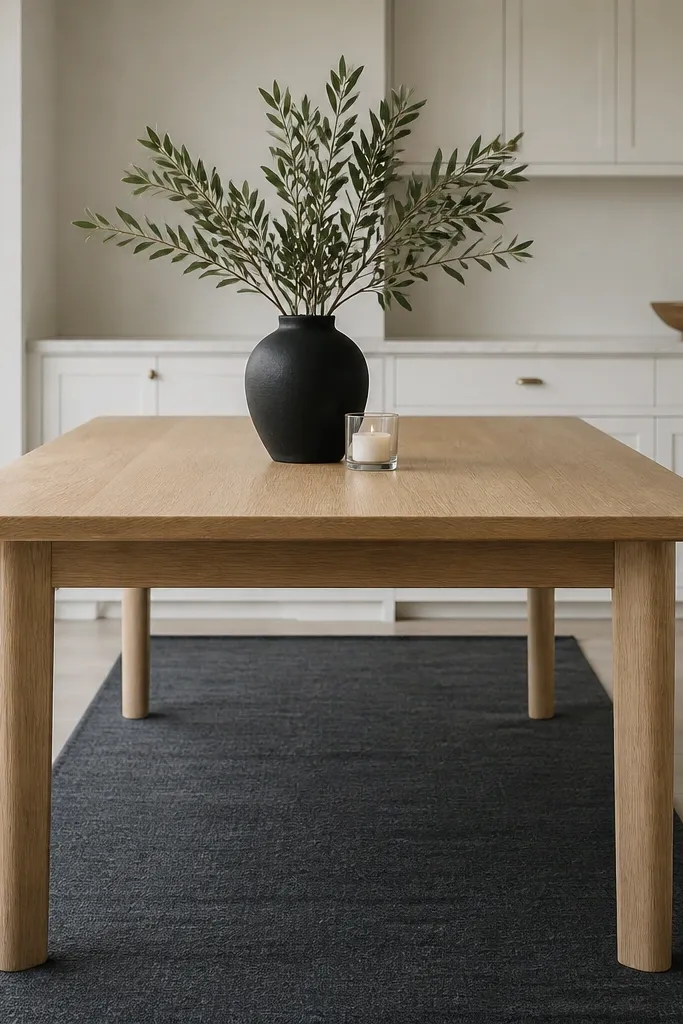
Dark textiles are the secret when you want white cabinets cozy without relying on a lot of color. Charcoal anchors the room and makes the oak look warmer, not dull. I use this when the kitchen gets lots of light and the white cabinetry starts to look flat. It’s also a great option for folks who want cozy but clean — charcoal feels modern and still soft when paired with linen. This combo flatters cooler skin tones too because the charcoal brings depth without turning everything beige.
Start by placing a charcoal runner that is 2 to 4 inches wider than the table’s center line so it reads intentional, not skimpy. Use a linen or cotton runner with a matte weave so it doesn’t look like a poly tablecloth. Then choose chairs or a bench with white oak legs so you get wood at floor level. Finish with one black metal or dark ceramic centerpiece and keep the rest of the tabletop mostly white and wood.
Good to knowAdd one warm light source — a 2700K bulb in a pendant — so charcoal doesn’t look cold at night.
AvoidAvoid a shiny satin runner. It reflects kitchen light and makes the whole dining area feel slick instead of cozy.
6. White oak bar cart with white cabinet backdrop
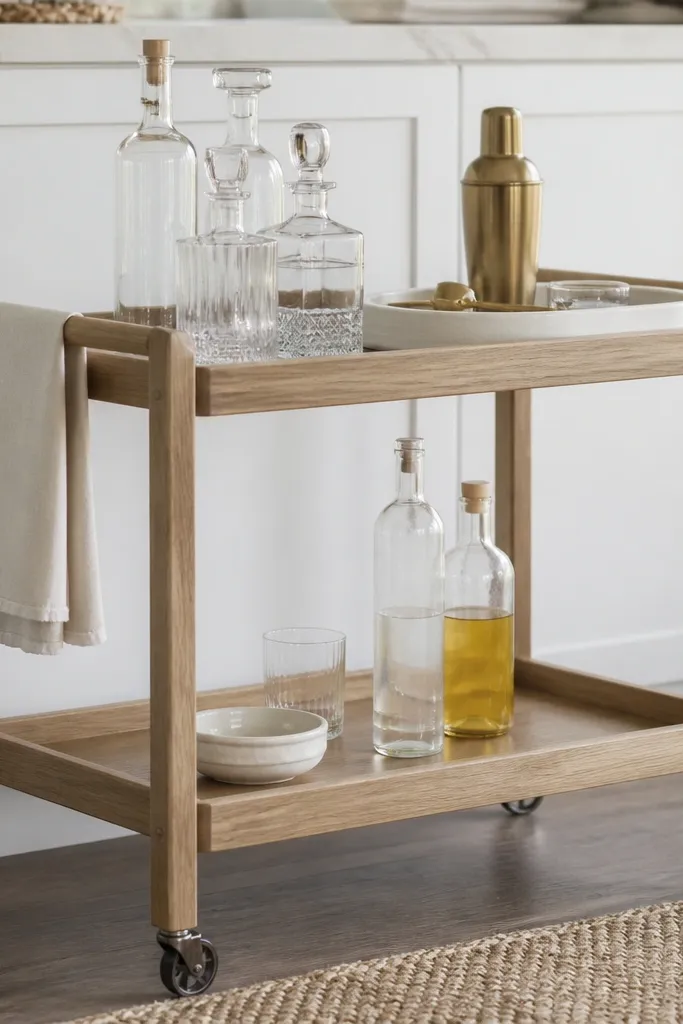
A bar cart is a cozy move because it adds “staging” to the kitchen without taking over the countertops. White cabinets keep the background bright and clean, while white oak brings warmth and texture in a tight footprint. I like this for small kitchens because a cart is movable — you can tuck it away when you’re hosting or leave it out for everyday use. It also flatters homes that already have a lot of stainless appliances since oak and brass soften that cool metal vibe.
Start with a bar cart that has visible oak shelves and a natural finish — avoid gray oak if your cabinets are warm creamy white. Then style with clear glass and white ceramic so you keep the palette tight: clear bottles, white tray, and one brass item. Add a folded cream towel and one small plant in a ceramic pot. Place the cart so it sits slightly off-center from a cabinet seam — symmetry can feel too formal for cozy.
Wipe down the oak with a damp cloth and dry it right away before staging; fingerprints show on oak and they ruin the warm look fast.
Avoid too many dark items on the cart. If everything is black or dark brown, the white cabinets stop feeling cozy and start feeling cluttered.
7. White oak floating ledge for mugs above white cabinets
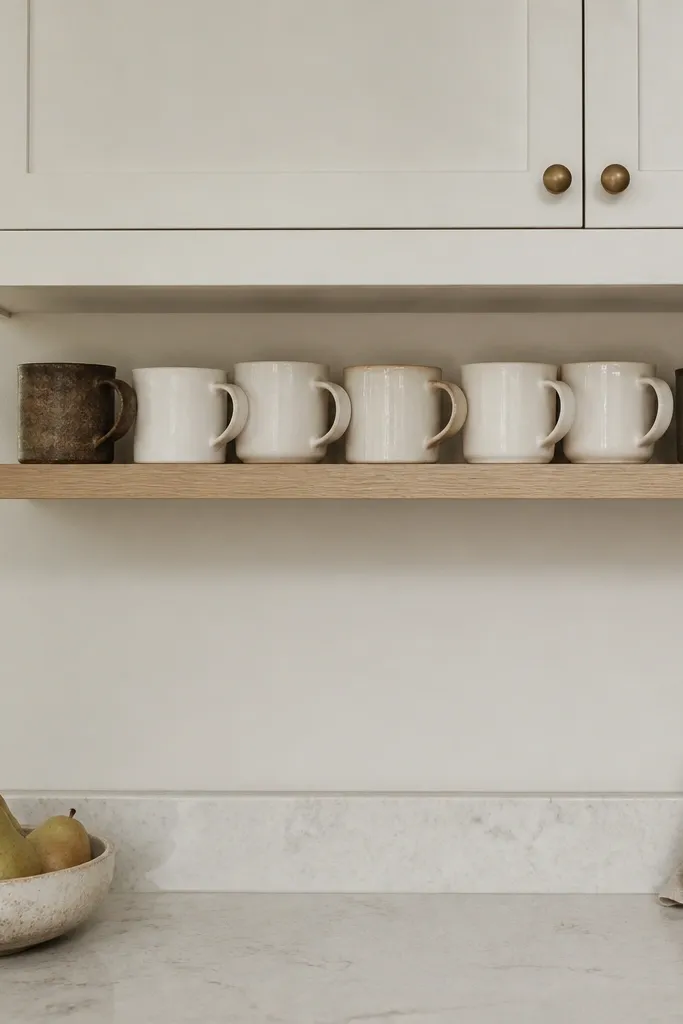
This setup makes the kitchen feel lived-in because mugs are a daily object, not decor you only pull out for guests. The white oak ledge keeps the warm wood look continuous, and it sits at the exact height your eyes check most often. I’ve used it in kitchens where people complained the space felt “empty” even when it was clean — the mug ledge adds warmth with minimal clutter. It flatters anyone who likes neutral styling because off-white mugs and warm oak look good together without needing color pops.
Start by installing a ledge that is wide enough for handle clearance — about 1.5 times the mug handle width. Use a satin white oak finish so it doesn’t glare under cabinet lights. Arrange mugs in a gentle arc or straight line, then add one darker mug as an end cap to stop the row from looking flat. Mount a small brass hook for a bar towel so the area feels functional, not just decorative.
Use mugs with similar rim thickness. The visual rhythm matters more than the mug color.
Avoid mixing warm oak with mismatched mug tones like stark white, bright red, and cool gray all in one row.
8. Natural white oak stool at the island with white linen seat cushion
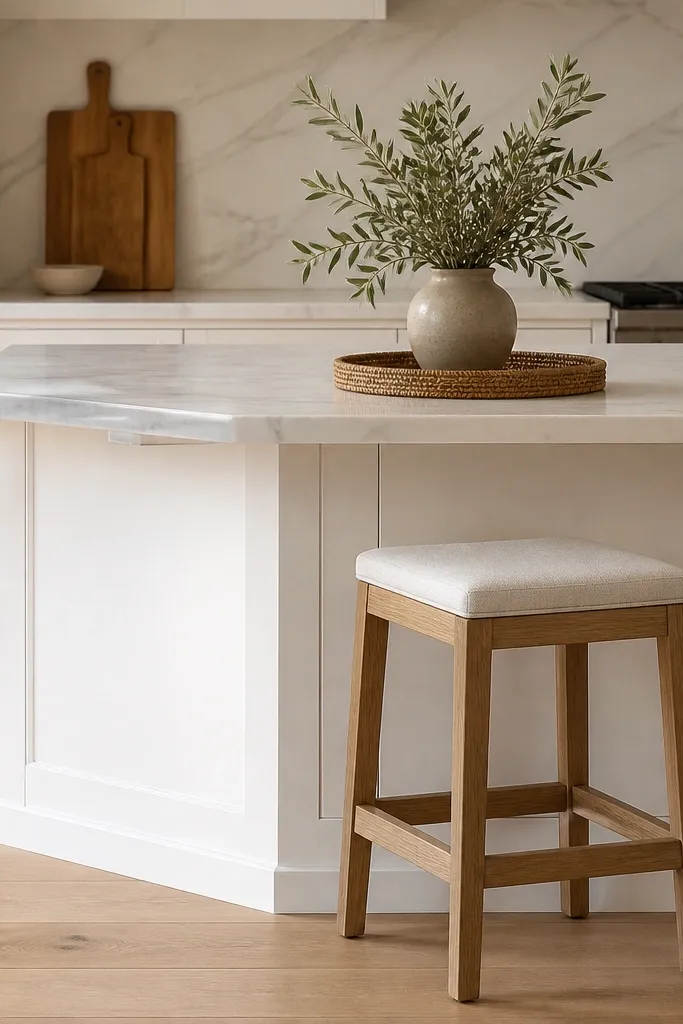
A stool is one of the fastest ways to make white oak and white kitchen cabinets cozy because it places the wood where your body meets the space. The white linen cushion adds softness and makes the seating feel inviting, not utilitarian. I like using backless stools with a cushion because it keeps sightlines open in smaller kitchens and still gives that cozy “linger here” vibe. This look is flattering for most home styles — farmhouse, modern, and transitional — because linen is a neutral that doesn’t fight other textures.
Start by choosing a stool with a natural or light oak finish and solid legs, not thin veneer. Add a white linen cushion with simple piping or a clean seam, and keep the cushion thickness around 1.5 to 2 inches so it looks plush without sagging. Place a warm oak cutting board on the counter near the island so the wood reads repeated. Style the island with one small ceramic tray and a single plant or candle — keep it minimal so the stool stays the focus.
Treat the linen cushion with a fabric protector before you use it daily so it resists kitchen splashes.
Avoid gray-beige upholstery with warm oak. It can make the whole island look dirty even when it’s clean.
9. White oak kitchen island top with white cabinet base and warm pendant light
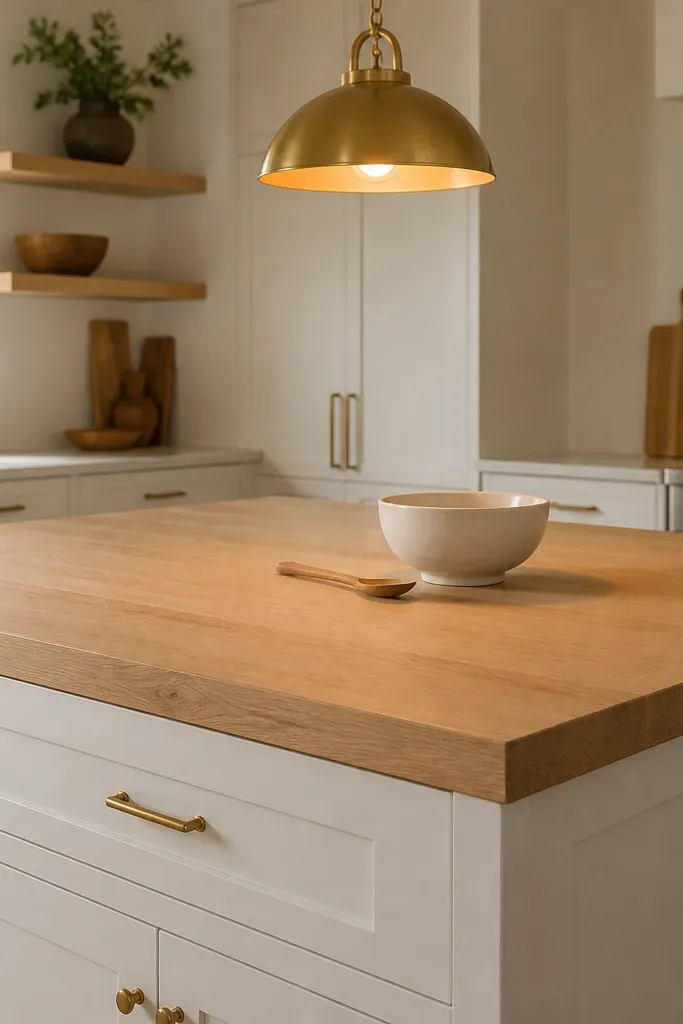
This is cozy because the island top is the “daily touchpoint” for cooking, chopping, and passing plates. When the island is white oak with a matte clear coat, it looks warm even in bright daylight, and it stops the white cabinets from feeling too exposed. I’ve done this layout in homes where the kitchen felt like a hallway because everything was white — the oak island changes the whole emotional temperature. It flatters people who like clean lines because oak grain adds warmth without turning the kitchen into a busy pattern party.
Start by choosing a white oak top with a matte or satin finish and sealed edges, not a glossy lacquer. Pair it with white cabinet doors in satin or matte so the sheen stays consistent. Hang a pendant with a warm bulb around 2700K and adjust the height so it sits about 30 to 34 inches above the tabletop. Style with one or two warm objects — a white bowl and a wooden spoon — and leave the rest of the counter clear.
If you have a lot of stainless appliances, pick brass pendant hardware so the metal doesn’t look cold against the white.
Avoid overhead lights at 4000K. The island oak will look dull and the white cabinets will look bluish.
10. White oak tray styling on white counters for a cozy coffee corner
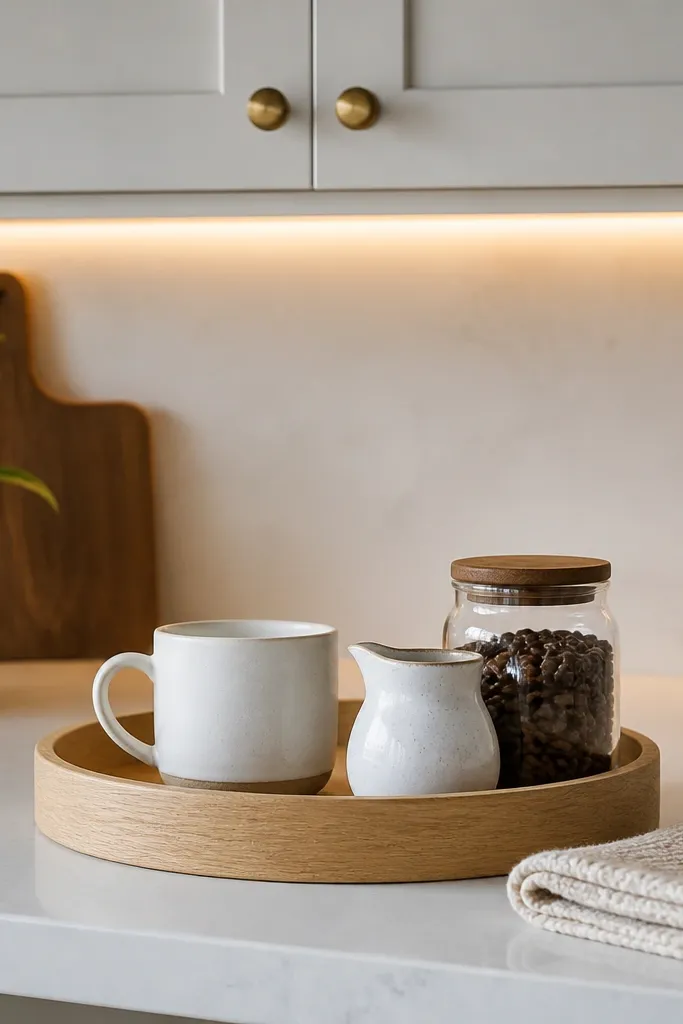
Coffee corners read cozy because they get used every day, and trays make the area feel intentional instead of scattered. White oak tray warmth balances the brightness of white cabinets, while the all-white mug and creamer keep the palette calm. I’ve had this exact setup in my own kitchen during busy seasons — it keeps the counter tidy because everything has a “home” on the tray. It also flatters small spaces because the tray visually groups items and prevents countertop chaos.
Start by using a white oak tray with a raised lip so items don’t slide when you bump it. Add a white mug and creamer in ceramic, then one glass jar or canister with minimal labeling. Place a folded cream towel next to the tray and keep the rest of the counter empty for contrast. Turn on under-cabinet lights and check how the oak looks at night — if it looks too orange, choose a lighter oak tray; if it looks too gray, choose a warmer undertone tray.
Good to knowUse a tray that’s about 2/3 the width of the counter section you’re styling so it looks grounded, not floating.
AvoidAvoid mixing wood tones that don’t match — dark walnut next to white oak reads random and stops the cozy effect.
11. White oak and white cabinets with olive accents for cozy warmth
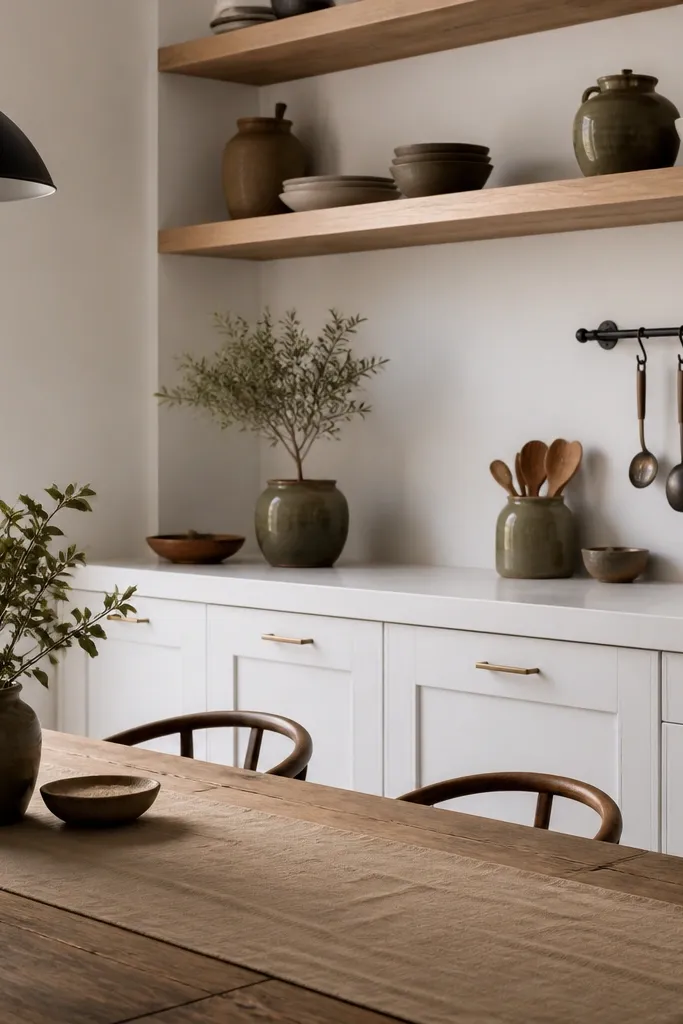
Olive is a cozy accent because it sits between green and brown, so it doesn’t clash with oak’s warmth. White cabinets keep the palette light, and the olive adds depth without turning the kitchen into a color-heavy room. I like this combination for people who want “cozy” but don’t want beige-only styling. It flatters most rooms because olive pairs with both brass and black hardware — your metal choice decides how modern or classic it feels.
Start by keeping the oak undertone consistent — if the oak is golden, pick olive that leans warm (sage-olive). If the oak is cooler, choose a slightly deeper olive with more gray. Style the counter with one olive bowl and one olive planter, then keep everything else white or neutral. Add a black iron utensil rack for contrast and use a beige runner on the dining table to connect the olive to the textiles.
Pick olive items with a matte finish. Glossy ceramics reflect light and can look slick instead of cozy.
Avoid bright neon green accessories. Olive should look like it belongs in cooking and herbs, not in a craft store.
12. Black iron hardware with white oak and warm white textiles
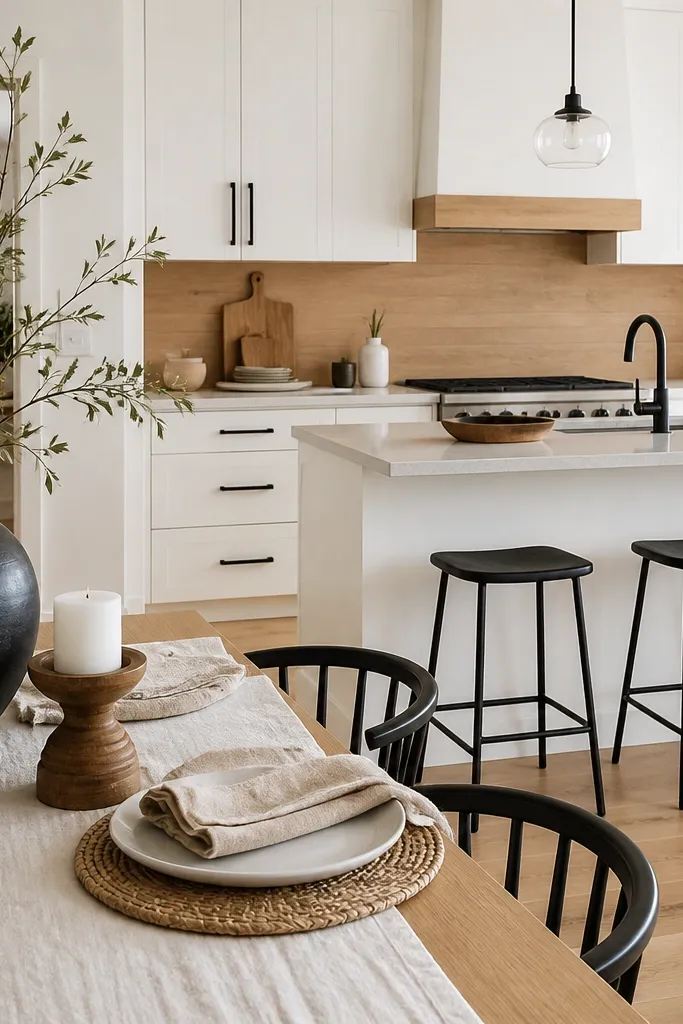
Black hardware makes white oak and white kitchen cabinets cozy because it gives the room a clear visual edge. White cabinets alone can feel too airy, and oak can still look pale if there’s nothing darker to frame it. Black pulls at cabinet height also make the kitchen feel intentional — you read the lines, then your eye lands on the oak warmth. This setup is great for people who like a clean look but still want softness from textiles. It flatters both cool and warm palettes because black is neutral and the warmth comes from wood and linen.
Start by matching your black hardware finish across pulls, faucet, and any lighting metal. Choose white oak elements with visible grain so the warmth reads clearly. Style the dining area with warm white linen (not bright white) and one tan material like jute or woven cotton. Place a wood candle holder or small oak cutting board near the dining spot to repeat the wood warmth outside the kitchen work zone.
Good to knowUse 2700K bulbs in pendants and under-cabinet lights. Black hardware looks best when the light is warm, not blue.
AvoidAvoid mixing black hardware with shiny chrome accents. Chrome makes the white look colder right away.
13. White oak backsplash slat accents with white subway tile
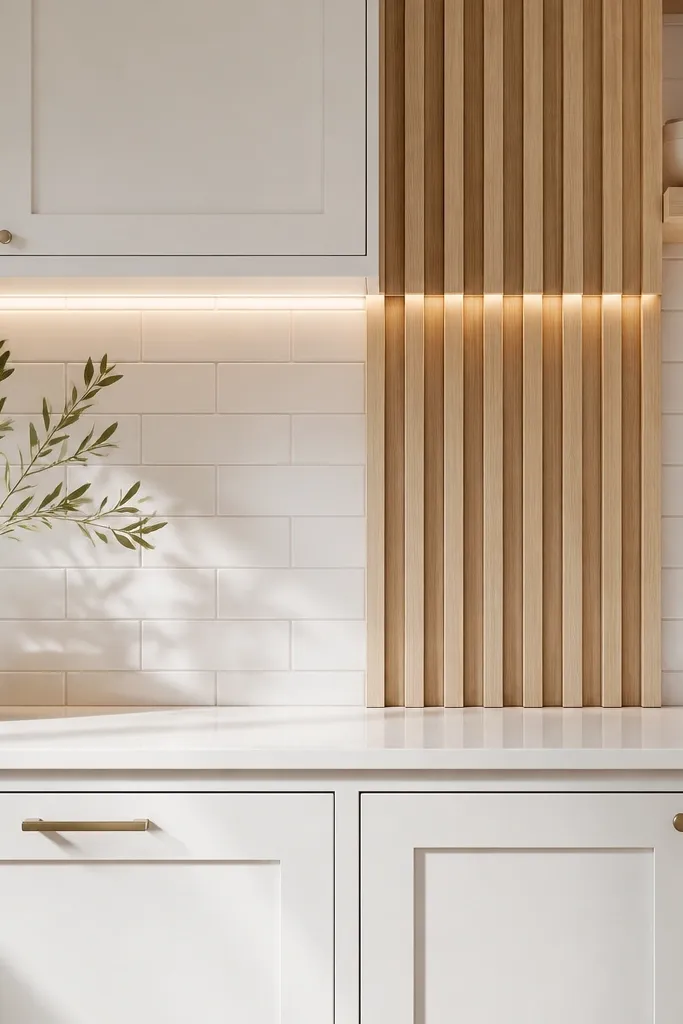
This look is cozy because it adds warmth exactly where kitchen light hits hardest — the backsplash zone. White subway tile keeps things bright and crisp, while vertical oak slats bring warmth and texture without adding clutter. I like it for people who want a traditional kitchen vibe but still want it to feel modern and clean. It also flatters small kitchens because slats add visual interest without taking up countertop space.
Start by choosing white subway tile in a warm white grout combination, not icy gray grout. Add oak slats in narrow strips — about 1 to 2 inches wide — and keep their spacing consistent for a calm pattern. Seal the oak properly for kitchen splashes so it doesn’t darken unevenly. Style the nearby counter with white containers and one small warm ceramic piece so the oak slats feel connected to the rest of the room.
Use a matte grout sealer after installation so the white stays clean while the oak keeps its warmth.
Avoid oak slats that are too dark or too gray. They make white subway tile look dingy instead of cozy.
14. Layered white oak and cream textures around the dining table
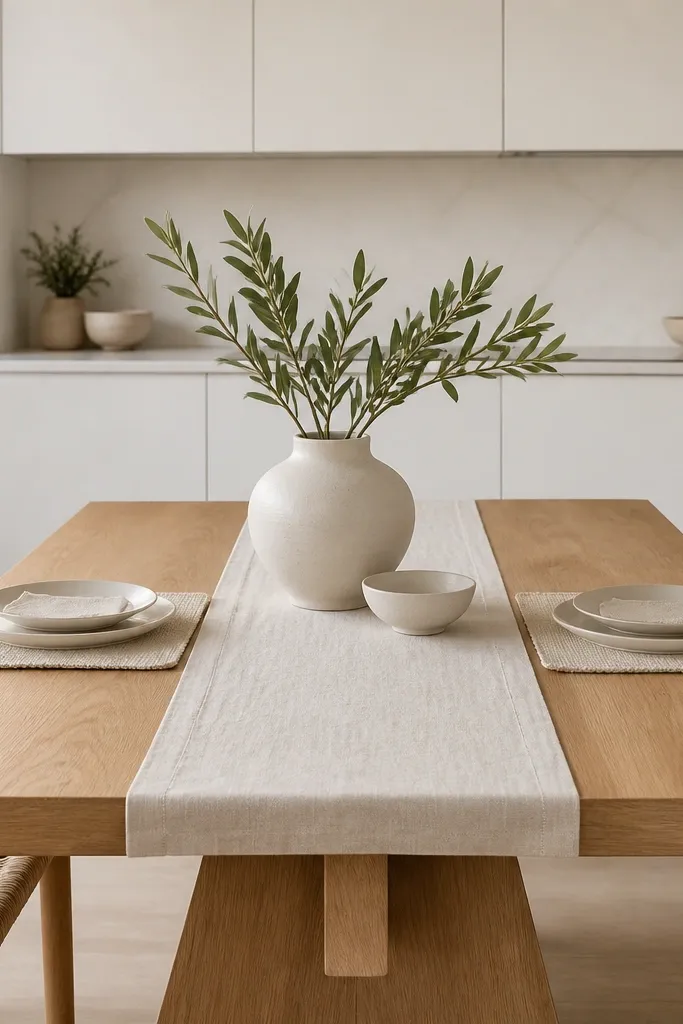
This is cozy because texture does the heavy lifting. White cabinets keep the background calm, and the oak table gives warmth at the center. Cream placemats and a warm white runner soften the look so the room feels welcoming even if you keep the color palette neutral. I use this when people want cozy but don’t want to add lots of decor objects. It flatters a wide range of styles because the textures — linen, woven, ceramic — read like real life.
Start by laying a table runner in warm white or cream that matches the undertone of your oak. Then place placemats in oatmeal or light sand, not bright white. Add a centerpiece in white ceramic or light stone, then bring in one woven element like a basket or woven chair cushion. Keep the centerpiece height low so it doesn’t block conversation and light. Finally, check where the daylight hits the table — if the runner looks too cool, switch to a warmer cream.
If your runner is thinner, add a second layer of placemats to give the table more visual weight.
Avoid mixing too many cream shades that are all different temperatures — it looks accidental instead of cozy.
15. White oak open pantry shelves with woven baskets and white jars
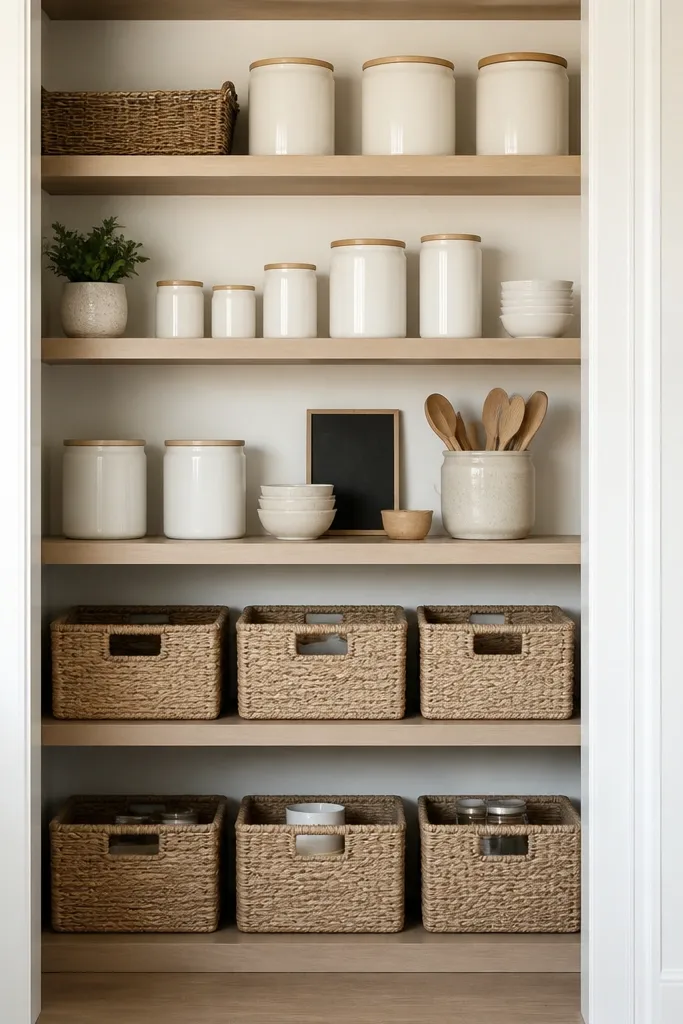
A pantry like this is cozy because it hides mess while still showing warmth. White jars keep the visual field clean, and woven baskets add that hand-held texture that makes spaces feel lived in. White oak shelves create a warm backbone so the pantry doesn’t look like a storage closet. I like it for families because it keeps ingredients organized and easy to grab when you’re mid-cook. It also flatters kitchens that already have a lot of stainless appliances since the baskets and oak soften the metal look.
Start by using woven baskets with a natural color, like light tan or honey straw, and place them on the bottom shelves. Add white jars above so dry goods look uniform and tidy. Use oak shelves with a satin finish so dust doesn’t look glaringly obvious. Add one small black element like a chalk label board or black jar lid accents so the white doesn’t feel flat. Keep the jar shapes consistent — wide-mouth jars look cozy, narrow jars look more formal.
Good to knowUse matching jar lids, even if jar bodies differ. That one repeat makes the pantry look designed.
AvoidAvoid clear plastic bins. They look temporary and they make white cabinets feel less cozy.
16. White oak and white kitchen cozy with a warm wood cutting board set
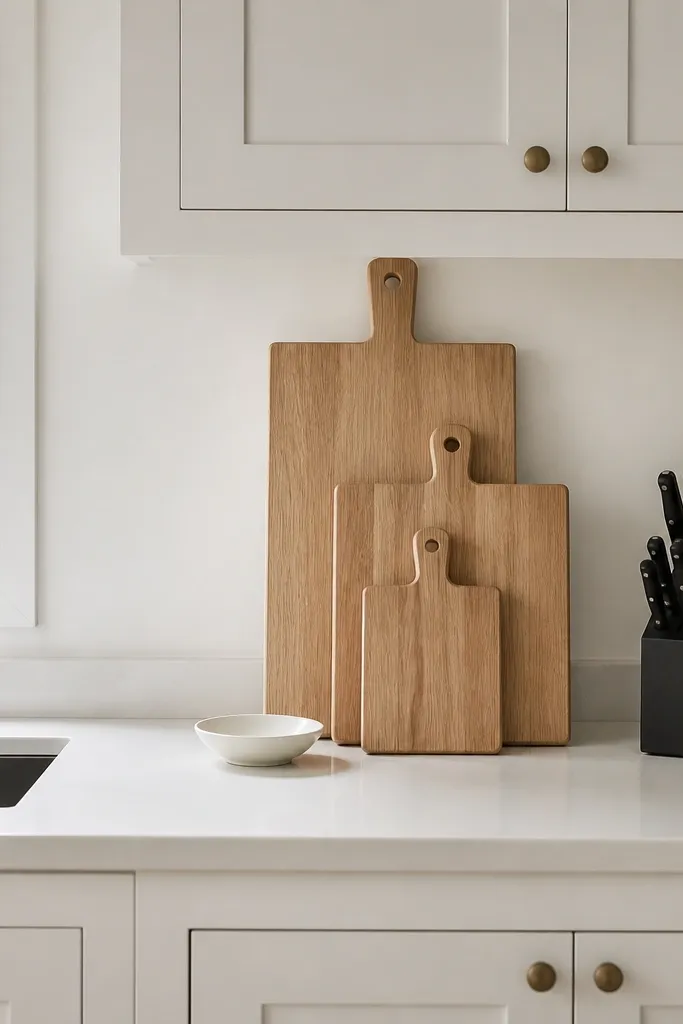
Cutting boards are the most practical way I know to make white oak and white kitchen cabinets cozy because they look good while you actually cook. When the boards are white oak with a consistent finish, they repeat the warm wood tone without adding random decor. The white countertop and cabinet backdrop keep the scene clean, and the boards add texture you can feel — smooth, warm grain under your hands. This look works especially well if your kitchen is bright and you want warmth that doesn’t depend on seasonal decor changes.
Start by choosing two or three cutting boards in the same oak family, varying only size. Keep one board flat for daily prep and prop the other upright near the sink or on the backsplash ledge. Use a satin mineral oil finish so the grain looks even and not blotchy. Add a white dish for salt or a small herb pot and keep the rest of the counter empty. If you have a knife block, pick one in black or dark walnut so it doesn’t compete with the oak.
Good to knowLet boards dry fully before you oil again. Oiling damp wood leads to uneven dark spots.
AvoidAvoid mixing oak and maple with different sheen levels. The mismatch makes the countertop styling look thrown together.
17. Off-white Roman shade with white oak shelf styling
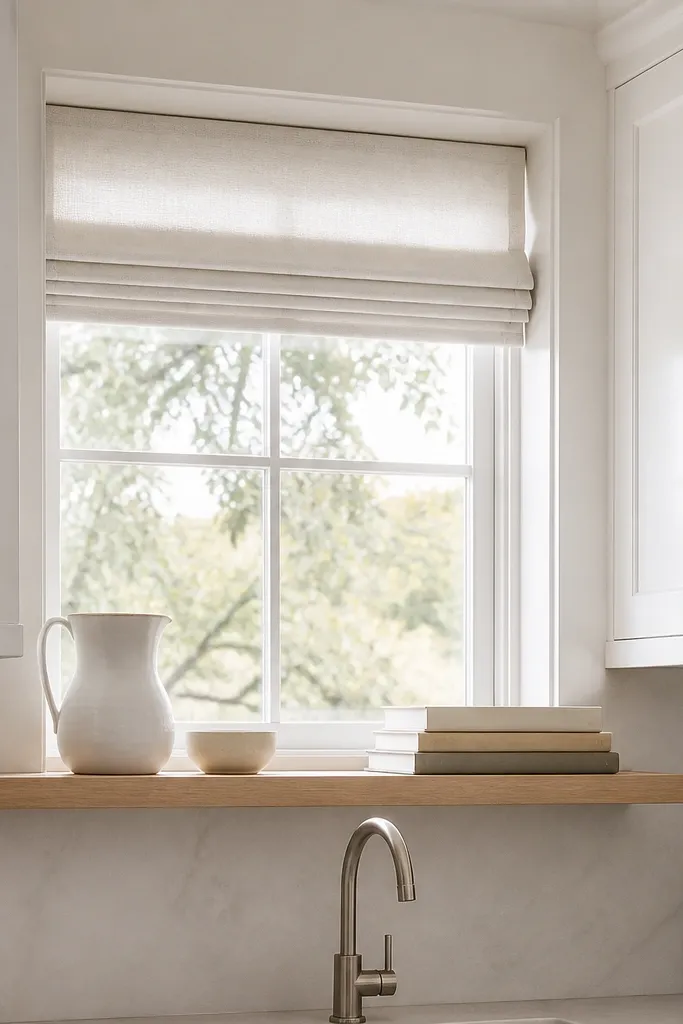
Roman shades make the kitchen feel cozy because they soften the window while keeping the shape tidy. Off-white fabric in a warm tone prevents the space from looking sterile against white cabinets. White oak shelf styling adds texture at counter height, so the warmth is present where you stand while prepping food. I like this look for people who want a clean, controlled style — Roman shades keep the fabric from bunching like curtains can. It flatters kitchens with both modern and classic elements because Roman shades read timeless, and oak keeps it warm.
Start by measuring the window and choosing a Roman shade in off-white or cream with a matte weave. Install it slightly above the window frame so it doesn’t create a hard border line. Style the oak shelf with one larger item like a ceramic pitcher, then smaller items in pairs (two bowls, two books). Leave one section of the shelf empty so the oak grain has breathing room. Keep your hardware and small metal items consistent — either all black or all warm metal.
Good to knowSteam the shade and pull it straight before you style the shelf. Wrinkles show more on Roman shades than on curtains.
AvoidAvoid sheer curtains with white cabinets if you want cozy. Sheers can make the room feel too exposed and bright.
18. Cream-and-oatmeal dish towels on white oven handle with oak accents
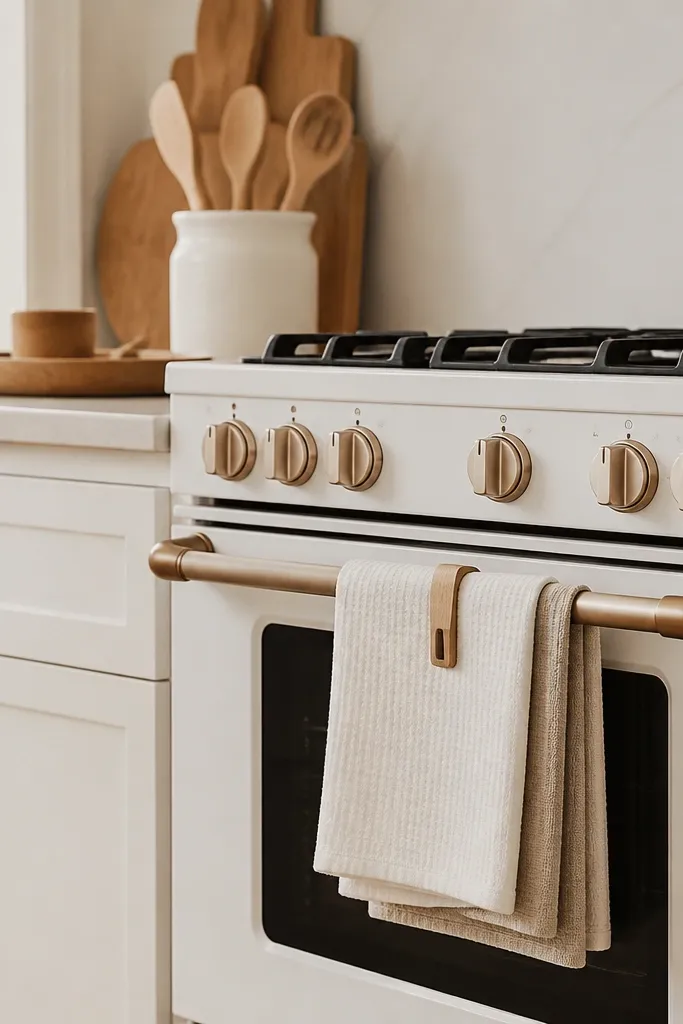
Small towel styling is the fastest way to get cozy without buying furniture. Cream and oatmeal towels add softness and a lived-in look that still reads clean when folded well. White cabinets keep everything bright, and the oak clip or oak utensil crock repeats the warmth so the towels don’t look like a random accent. I use this trick when the kitchen feels “too new” because it adds everyday texture — the kind you notice when you’re actually cooking. It flatters minimal kitchens because it adds warmth without adding color blocks.
Start by choosing dish towels in a warm cream or oatmeal with a linen or cotton-linen blend. Fold one towel into a clean rectangle and hang it on the oven handle area using a small hook or an oak clip. Place a white oak utensil crock or a small oak tray next to it so the wood repeats within arm’s reach. Keep the rest of the counter empty except for one white ceramic item so the towels stay the focal point. If you have a microwave, avoid stacking towels on top — it looks cluttered fast.
Add a second towel in a different weave, like waffle cotton, so the texture looks intentional even in neutral tones.
Avoid bright white towels with warm oak. The contrast makes the scene look like staging photos rather than a cozy kitchen.
19. White oak floating ledge above sink with white soap dispenser and brass
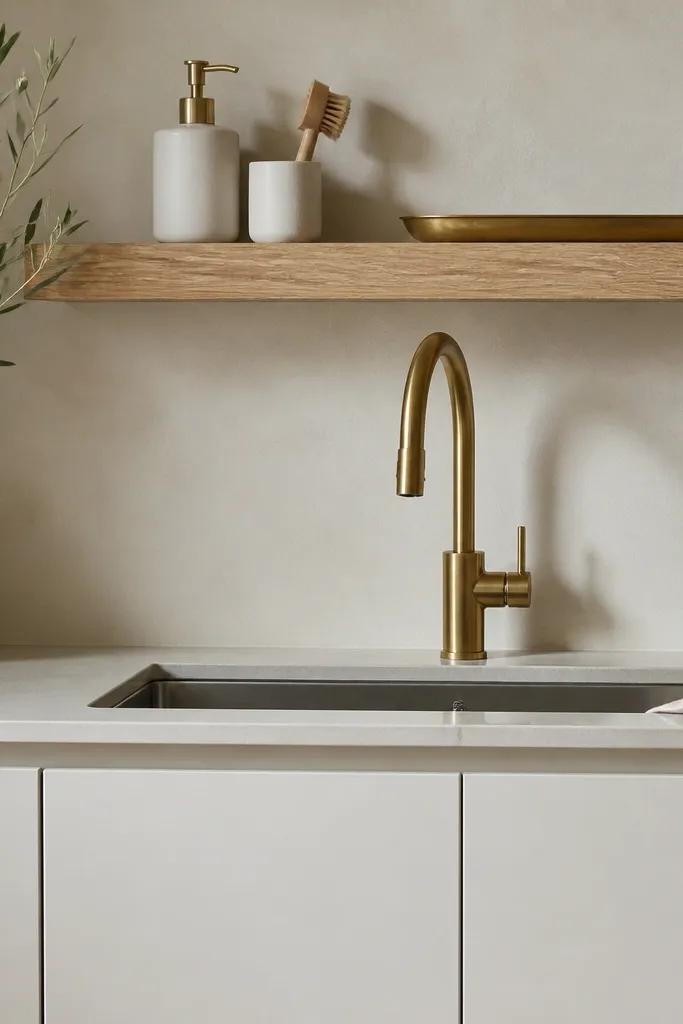
This look is cozy because it turns the sink area into a warm, polished station. White oak at the sink height looks natural since you’re already surrounded by water and daily tasks. The white soap dispenser and brush holder keep the area clean, and brass gives you a gentle warmth that matches oak. I like this for kitchens where the backsplash and sink zone feels like an afterthought — the ledge adds a focal point without adding clutter. It flatters modern kitchens too because the styling is minimal and the materials do the talking.
Start by installing a floating ledge in white oak with a satin clear coat so water splashes don’t make it look patchy. Place a white ceramic soap dispenser centered and add a white brush holder beside it, leaving a little space around both items. Add a small brass tray under a dish or a folded towel for visual grounding. Keep the backsplash area clear so the oak ledge reads as the star. If you have window light, check how the ledge looks at night — brass should glow, not reflect harshly.
Good to knowUse a soap dispenser with a slightly matte finish. Glossy bottles look cheap under kitchen lighting.
AvoidAvoid placing three or more items at the sink ledge. Too many small objects makes it feel messy even when it’s organized.