1. Warm Natural Rift Oak + Brushed Nickel Lines
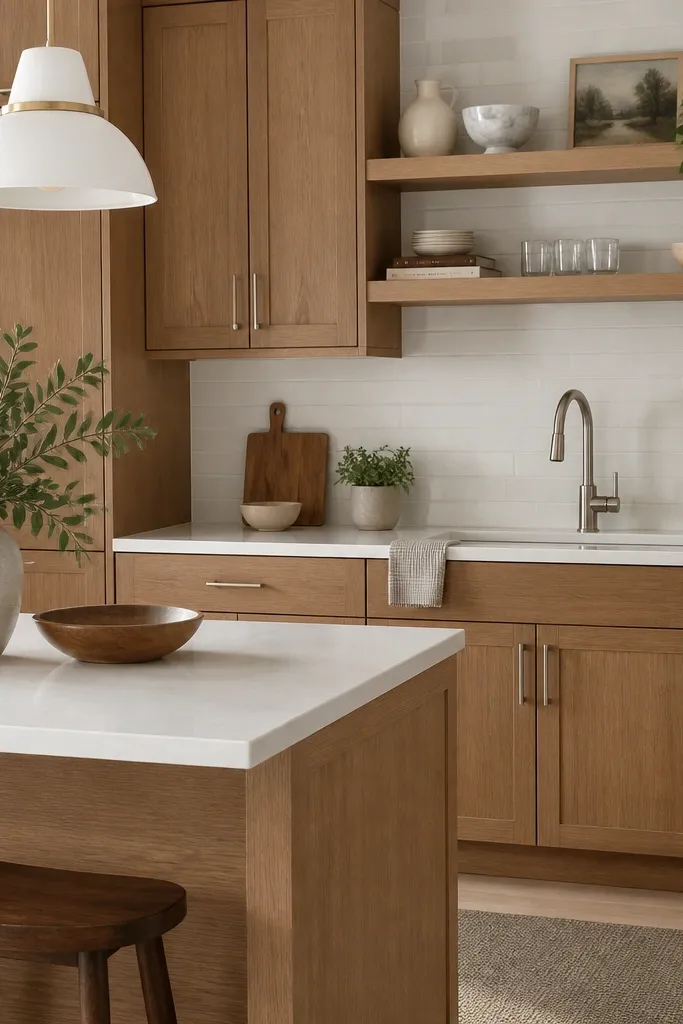
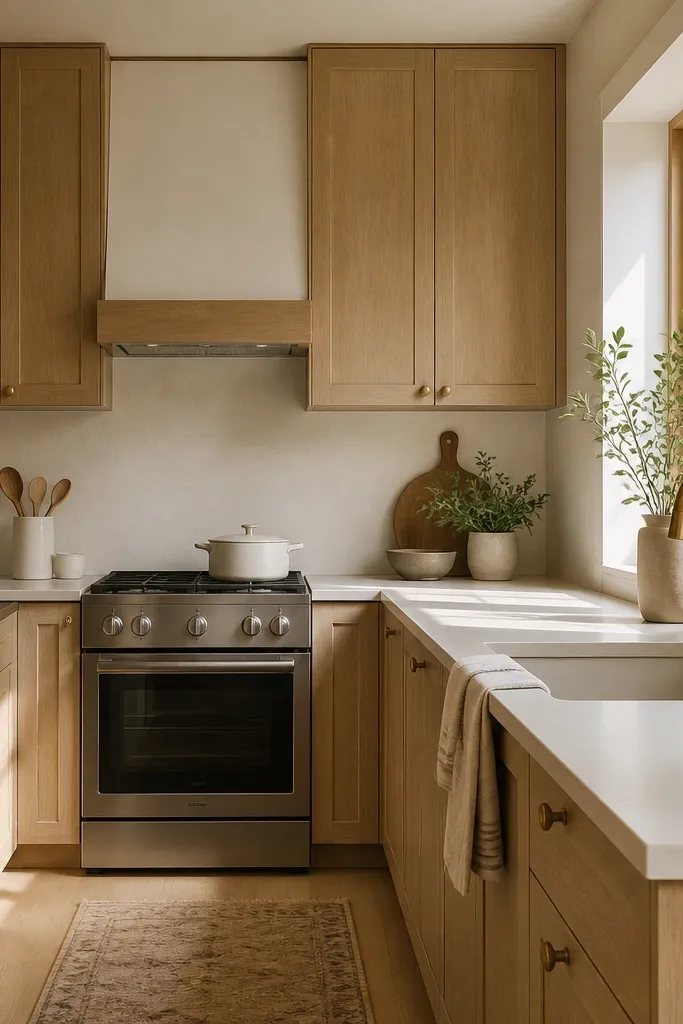
This look works because warm natural rift oak keeps the grain stripes clean while the brushed nickel adds a cool, modern edge. The matte finish makes the oak read “soft” instead of shiny, and it keeps the hardware from looking flashy. I’ve used this combo in kitchens with medium- to deep-skin tones of cabinetry lighting and it always looks grounded, not yellow. If your dining area has light wood floors or cream walls, the warm oak and cool metal balance each other. The styling principle is temperature pairing: warm wood + cool metal + white stone.
Good to knowBring two hardware samples to the cabinet shop — brushed nickel can look silver or taupe depending on the clear coat.
Start by choosing a warm natural stain on rift cut oak and finish it in matte or low-satin. Install mid-size brushed nickel bar pulls, about 5-6 inches long for drawers and 8-10 inches for doors. Pair with white quartz that has faint gray veining, not heavy gray streaks. Add a backsplash of small-format white subway tile with minimal grout contrast. Finally, set your dining pendants to 3000K so the oak stays honey-warm instead of turning orange.
AvoidSkipping grout color planning — dark grout can make the whole kitchen look harsher next to warm oak.
2. Light Whitewashed Rift Oak + Oil-Rubbed Bronze
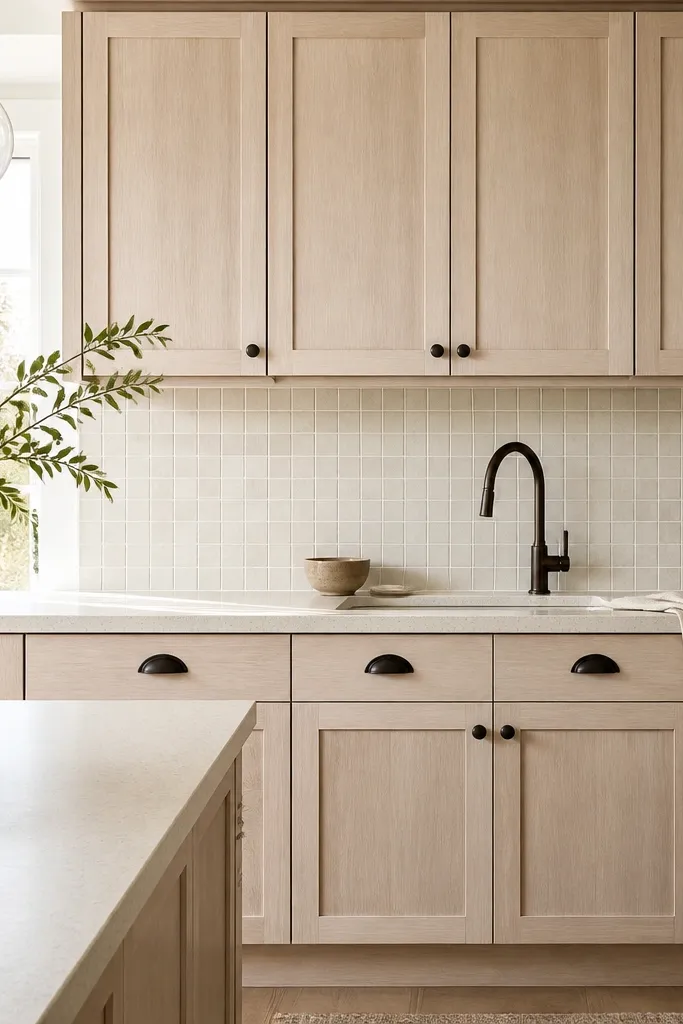
Light whitewashed rift oak is the “calm background” that still shows grain. The trick is that the whitewash has to be thin enough that you can still see the rift lines, otherwise it turns into flat painted wood. Oil-rubbed bronze adds depth without going jet black, so it looks good in kitchens that get afternoon sun. I’ve seen this pairing flatter homeowners who want a bright room but hate the look of gray-toned cabinets. The styling principle is softened contrast: pale wood + aged dark metal + creamy stone.
Order rift white oak in a light whitewash stain, then ask for a matte topcoat so the grain doesn’t look wet. Use bronze cup pulls sized around 1.25-1.5 inches in diameter for a shaker door. Choose an off-white countertop with small flecks so it doesn’t compete with the cabinet grain. Lay a backsplash in cream or warm white micro tiles with a grout color close to the tile. Finish with 2700K pendants or a warm chandelier over the dining table for a “resting” glow.
Test the whitewash sample in your kitchen’s actual wall color — it shifts based on how much yellow your paint has.
Going too dark with the whitewash — if the base oak shows through as brown, bronze hardware will look heavy.
3. Medium Honey Rift Oak + Polished Chrome for Shine
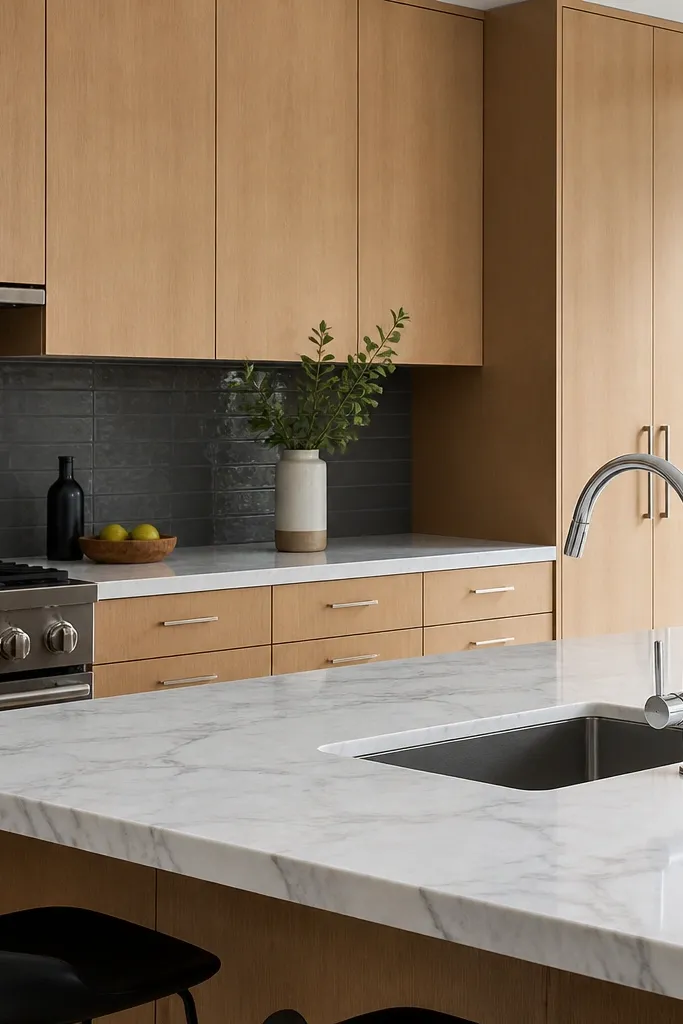
Medium honey rift oak brings warmth without drifting into orange. When you pair it with polished chrome, the room gets a “clean shine” effect that makes the grain look crisp. This works best in kitchens with a lot of natural light or white walls, because chrome reflects brightness and keeps the honey from feeling heavy. I’ve seen it work especially well for dining spaces with high ceilings and long sight lines — the sparkle from chrome helps the space feel larger. The styling principle here is brightness layering: glossy metal + light stone + satin sheen.
Good to knowWipe chrome hardware with a microfiber cloth right before guests — water spots show up fast on polished finishes.
Choose a medium honey stain on rift cut oak and keep the topcoat satin, not matte. Install polished chrome bar pulls that are slim and straight, about 6 inches for drawers and 10-12 inches for doors. Use a quartz countertop with crisp gray veining that reads cool next to the honey. Add a backsplash with a small amount of dark glass or smoked tile so the chrome has something to catch. Over the dining table, use a clear-glass pendant with a bright bulb set to 3500K for a sharper look.
AvoidPairing polished chrome with a warm-yellow countertop — the combo can look slightly dated.
4. Rift Oak Cabinets with Blackened Steel Hardware
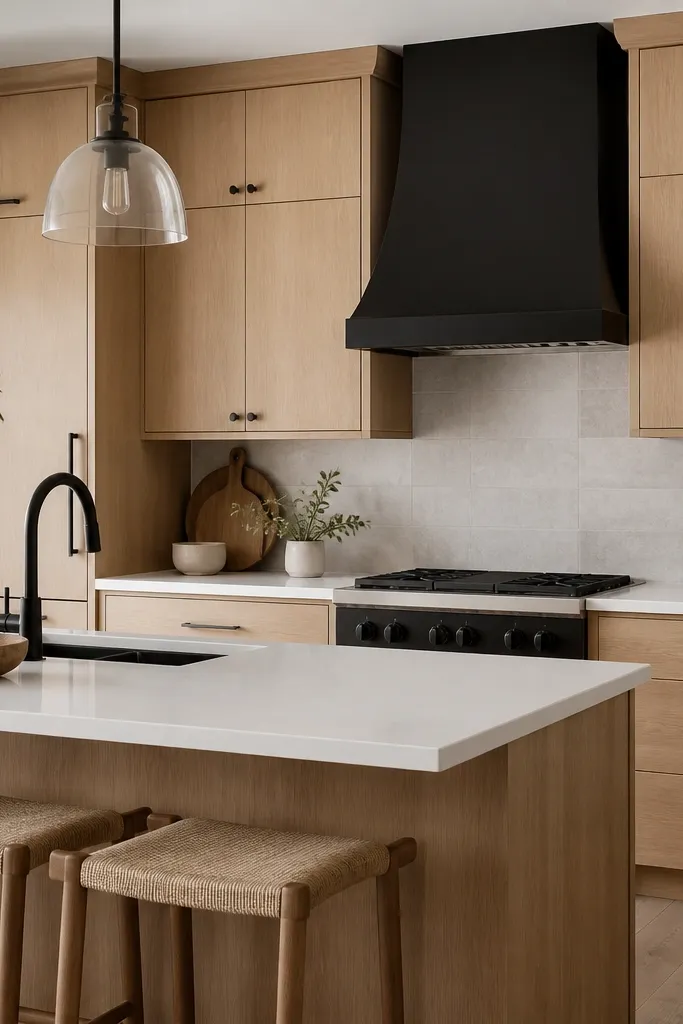
Blackened steel against rift white oak is a high-contrast look that still feels clean because the steel finish is slightly textured. Rift grain keeps the wood from looking chaotic, so the black hardware feels intentional, not random. I’ve used this in homes where the dining area has black picture frames or a dark bar cart — it ties the whole floor plan together. This flatters rooms with cool undertones, especially if your walls lean gray-blue. The styling principle is one-direction contrast: black hardware lines up with your grout lines and stone edges.
Start with rift white oak in a natural stain and matte topcoat. Use blackened steel bar pulls about 5 inches long for drawers and 9 inches for doors; match the finish on the faucet and hood trim. Pick white quartz with minimal gray movement so the black reads sharp. Choose a backsplash in light gray large-format tile with consistent grout thickness. Add dining chairs in light upholstery or natural woven fabric, and put a black metal pendant over the table.
Hold a black pull up to the cabinet sample in daylight — blackened steel ranges from charcoal to true black.
Using glossy black hardware with matte oak — the shine mismatch makes the kitchen look DIY.
5. Two-Tone Dining Nook: Rift Oak Base + Painted White Upper
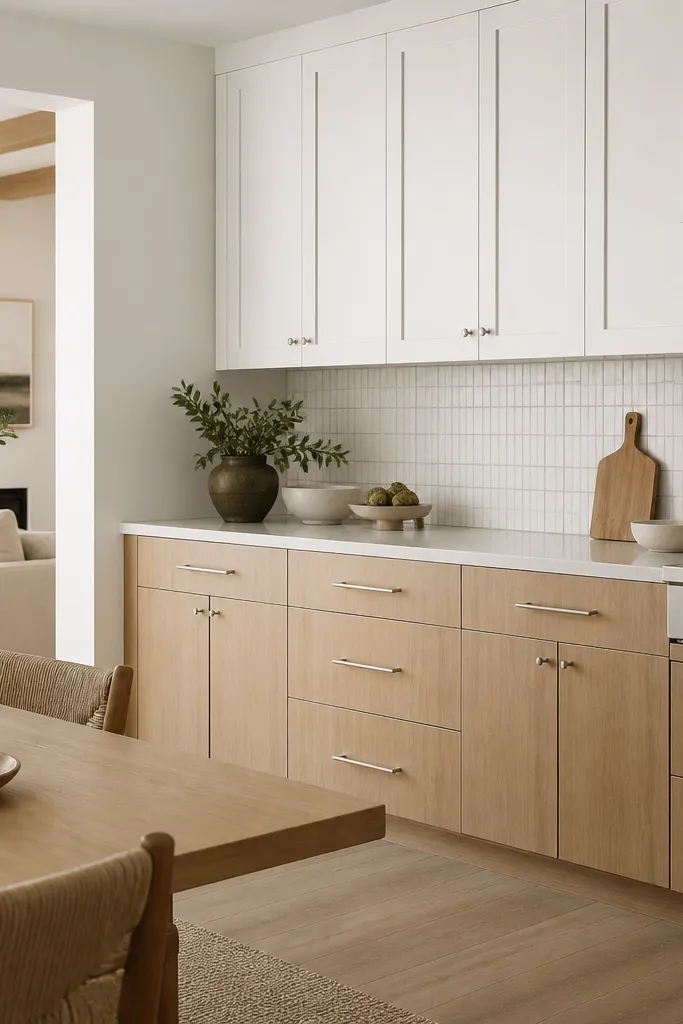
This is the look I use when the dining area needs visual lightness but you still want rift oak to be the star. The painted white uppers lift the ceiling line and keep the room from feeling wood-heavy. Rift oak bases ground the space, and the grain stripes become the pattern you notice when you walk in. It also flatters people who want a bright kitchen but hate the “all wood” look that can feel dark at night. The styling principle is vertical separation: wood below, painted white above.
Good to knowMeasure your cabinet heights and keep the switch line at eye level — it makes the two-tone feel designed, not accidental.
Order rift white oak for the base cabinets in a natural or light stain with a matte topcoat. Paint the uppers in a true soft white with a satin finish that matches your trim (not a stark bright white). Use brushed nickel pulls on the oak bases and small matching knobs on the painted uppers. Keep the countertop a single light surface so it doesn’t cut the color story. For the backsplash, use white tile with a grout color close to the painted upper tone. In the dining nook, hang pendants with white glass shades to echo the painted cabinets.
AvoidMixing warm oak with cool blue-white paint — it creates a weird tug-of-war every time you look up.
6. Rift Oak Cabinets + Creamy Beaded Subway Backsplash
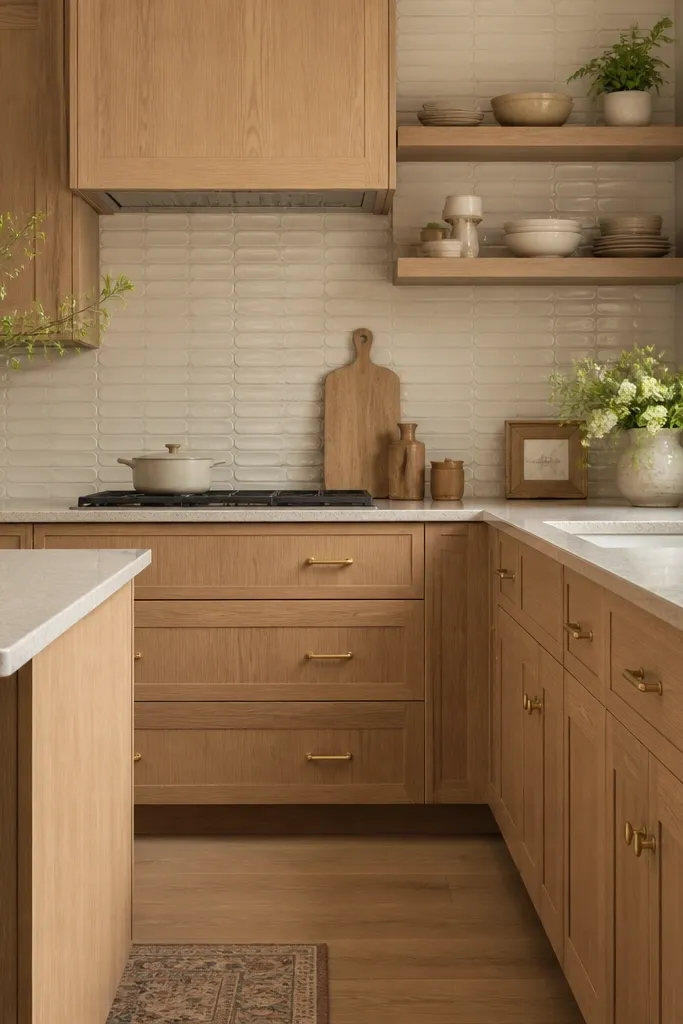
A beaded subway backsplash adds a tiny shadow line that makes rift oak look more dimensional. The key is the tile color — creamy, not bright white — so it blends with the warm grain instead of flattening it. Antique brass pulls bring a softer gold tone that looks great next to the oak’s honey undertone. This look flatters kitchens with warm walls or stained wood floors because it keeps everything in the same “sunlit” family. The styling principle is texture contrast: smooth oak grain + textured tile edges.
Good to knowAsk for sample tiles and compare them against your cabinet sample under the same bulb — “cream” varies a lot.
Choose rift white oak in warm natural stain with satin sheen so the grain catches light. Install antique brass pulls, about 7-9 inches for doors and 5-6 inches for drawers. Use a creamy beaded subway tile, and keep grout warm white or light cream. Select a countertop with subtle movement in beige or light taupe. Add a small runner or placemat in a warm neutral near the dining table so the brass doesn’t feel isolated. Set pendant bulbs to 3000K for a gentle glow on the tile beads.
AvoidUsing icy white grout — it can make the backsplash feel colder than the oak.
7. Rift Oak + Carrara-Style Marble Look Counter + Satin Black Faucet
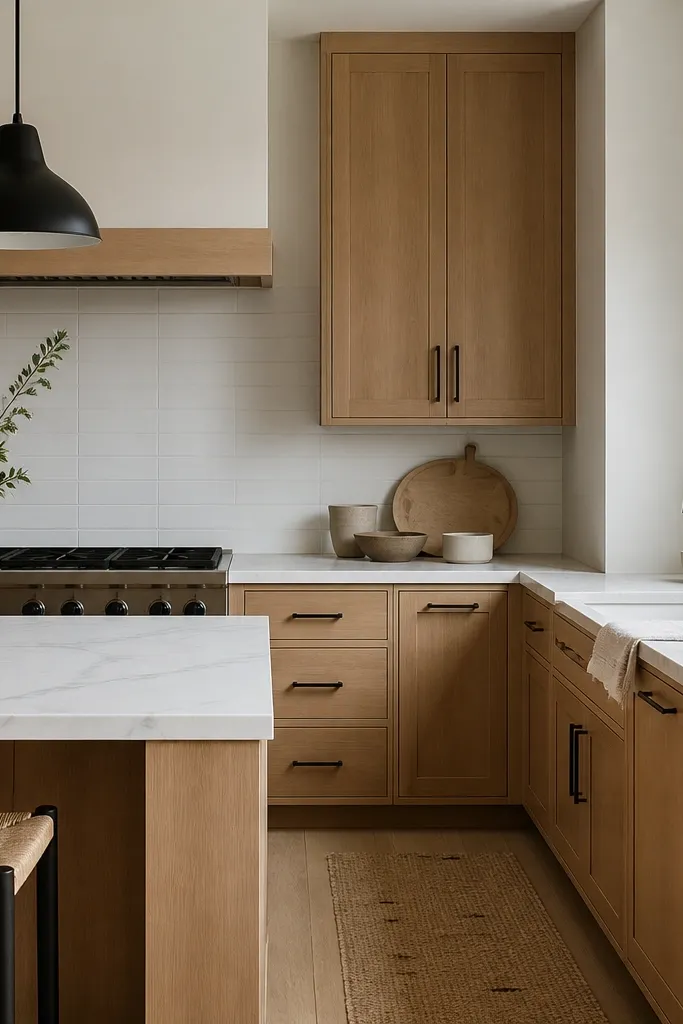
Carrara-style counters add crisp lines, and rift oak keeps the wood grain from fighting the veining. The result is a clean, upscale kitchen that doesn’t go gray-on-gray. Satin black hardware is the perfect middle ground between full black and brushed metal — it looks refined in photos and in real life. I’ve seen this combo work for homeowners who want a classic look without the all-white monotone. The styling principle is line coordination: gray veining + black accents + straight rift grain.
Good to knowUse a honed countertop finish if your kitchen gets bright overhead light — polished marble look can glare next to matte oak.
Start with rift white oak in natural stain and matte topcoat. Use satin black pulls around 5 inches for drawers and 9-10 inches for doors. Choose a countertop with thin, light gray veining and a polished or honed finish that matches your lighting. Keep the backsplash simple — white tile with light gray grout — so the countertop stays the hero. For dining, pick white or light-gray chairs with straight backs to echo the clean lines. Hang one centered pendant over the table with a black cord or black canopy.
AvoidOverdoing gray accents — too many gray items make rift oak look washed out.
8. Rift Oak Cabinets with Warm White Glass Tile Behind Stove
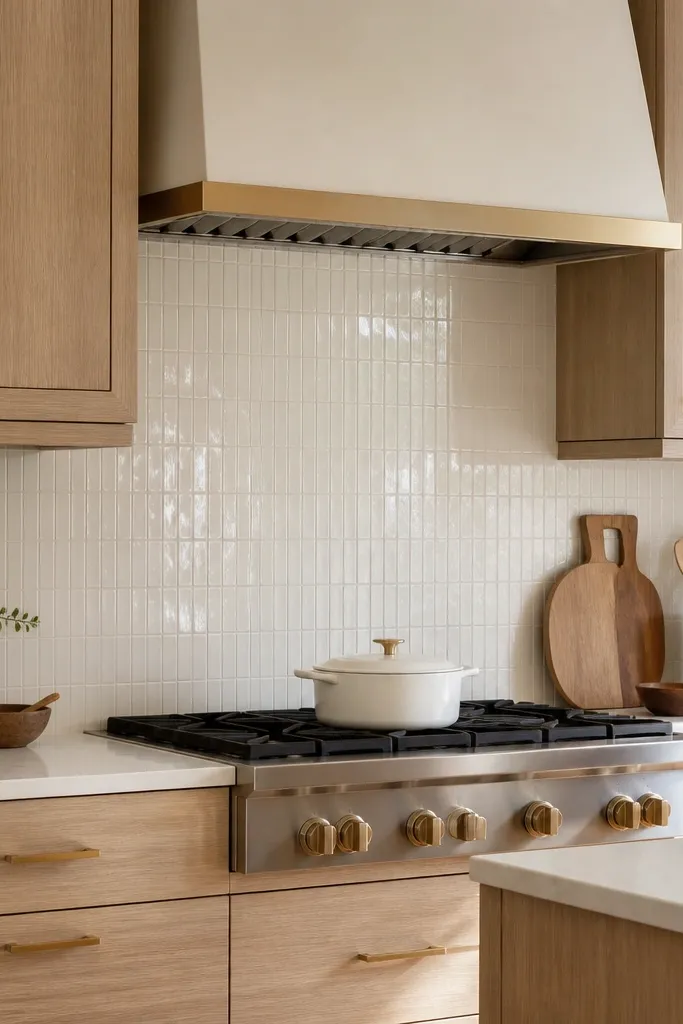
Warm white glass tile makes rift oak look smoother and more luminous because light bounces off the glass edges. This is one of my favorite tricks when the kitchen lighting is a bit flat — the backsplash adds sparkle without turning the room into chrome city. Brass hardware warms the whole palette and keeps the rift grain from reading too pale. This setup flatters kitchens that have stainless appliances and a dining area with warm-toned flooring. The styling principle is controlled glow: glass texture + warm metal + clean white stone.
Good to knowIf you can, bring your range hood finish sample — brass tone matters more than you think.
Choose rift white oak with a light natural stain and satin topcoat. Install warm brass pulls and knobs, sized so they don’t look bulky: 6-8 inches for doors depending on your cabinet width. Use warm white glass tile with a slight cream tint and consistent grout spacing. Keep the countertop white quartz with a soft, even pattern. Around the dining table, use woven placemats in natural tan and a warm white tablecloth or runner. Set your under-cabinet lights to 3000K for the most flattering glow on oak.
AvoidUsing cool gray glass tile — it makes rift oak look pale and a little sickly.
9. Rift Oak Cabinets + Oversized Recessed Panel Doors for Theater
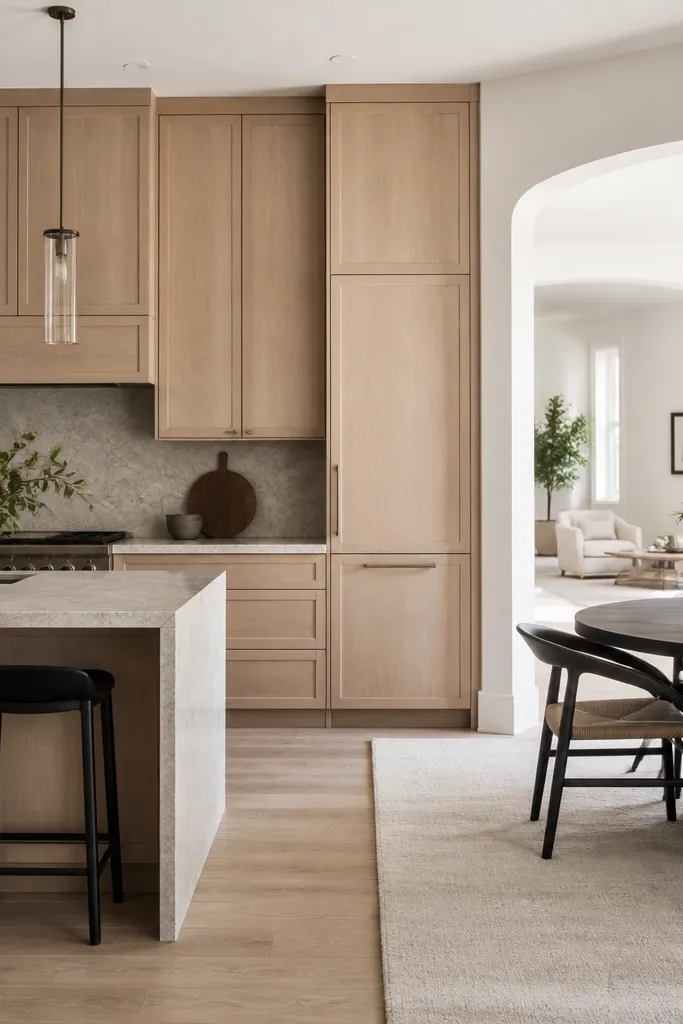
When you go with oversized recessed panel doors, the rift grain becomes a design line instead of a background texture. The deeper shadow insets make the oak look richer even with a light stain. Brushed nickel pulls stay understated, letting the cabinet geometry and grain do the talking. This works well for people with a dining table that’s visually bold — you can match that drama in the kitchen without adding more color. The styling principle is scale management: bigger door architecture needs slimmer hardware and clean countertops.
Choose rift white oak with a matte finish and a light natural stain so the recess shadows look crisp. Use long, slim bar pulls — about 9-11 inches for doors — and keep knobs off the front if you want that sleek look. Pair with a white countertop that has minimal movement. Install a backsplash that’s simple and flat, like large white tile with a thin grout line. Over the dining table, use a pendant with a warmer shade (linen or frosted glass) so the oak recesses don’t look gray. Add one or two black accents only, like a black chair leg or a black tray.
Stand back 8 feet and check the cabinet door spacing — oversized panels can look cramped if the reveals are too tight.
Putting heavy, chunky knobs on recessed panels — it breaks the clean shadow lines.
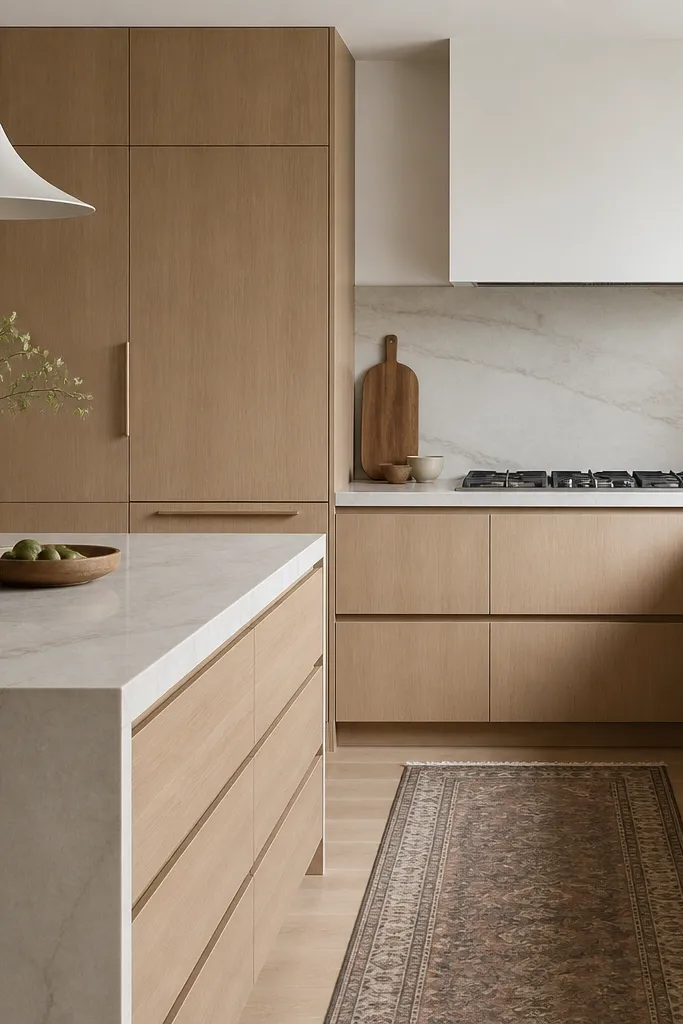
10. Rift Oak Cabinets + White Quartz Waterfall Island Edge
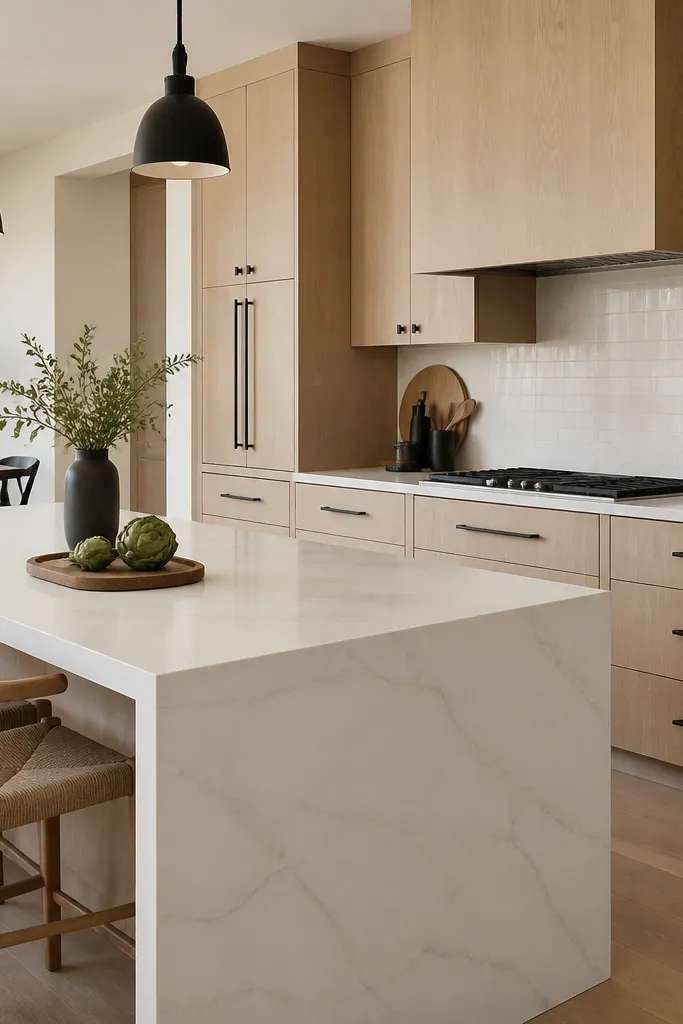
A waterfall island edge gives you a continuous white plane that makes rift oak look even calmer. The key is that the countertop has to be clean and bright, because waterfall edges reflect light and show every chip. Black hardware and black pendants add the “graphic” finish that rift oak needs if your kitchen has lots of white. This look flatters smaller kitchens because it creates one strong vertical surface that draws the eye. The styling principle is big-shape contrast: continuous white slab + straight wood grain.
Good to knowAsk for waterfall edges to be polished or softly eased — sharp edges can look cheap when they catch glare.
Use rift white oak in a natural stain with satin topcoat so the grain reads clearly under the waterfall’s brightness. Install black bar pulls in a simple straight profile, about 5-6 inches for drawers and 9-10 inches for doors. Choose white quartz with a subtle, uniform pattern so it doesn’t look cloudy next to oak. Keep backsplash white tile with matching grout to the countertop’s brightness. For dining, hang two black pendants with clear or frosted glass, spaced evenly over the table. Add simple black-and-white place settings so the contrast stays crisp.
AvoidChoosing a countertop with heavy gray veining — it competes with the cabinet grain.
11. Rift Oak Cabinets + Soft Sage Walls and Brass Hardware
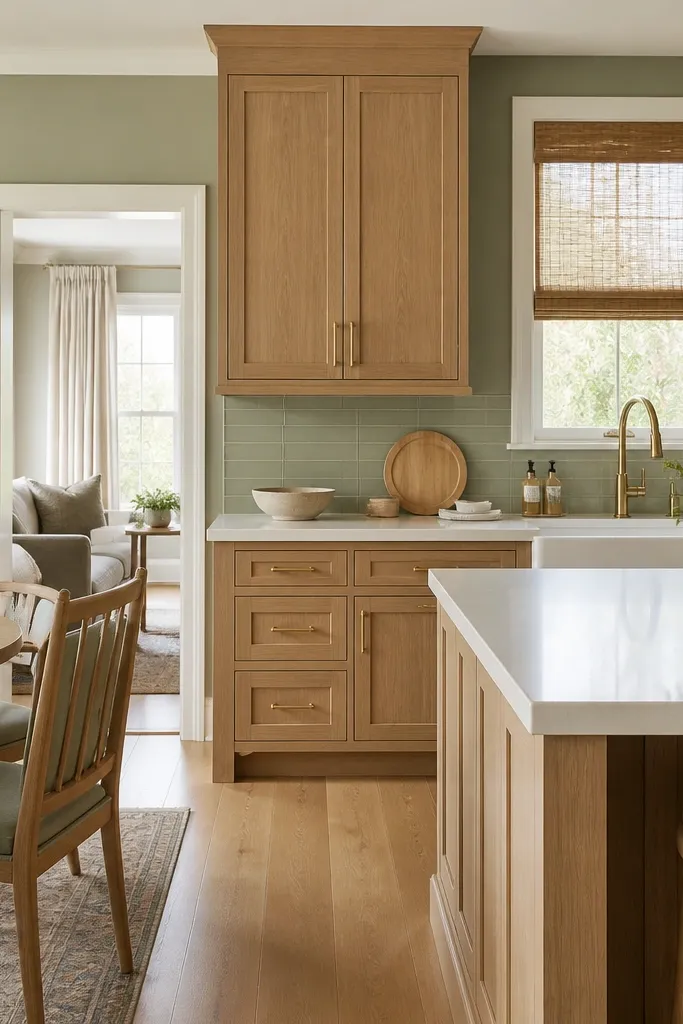
Soft sage walls make rift white oak look more modern and less “traditional wood.” Brass hardware ties the green tone to warm light, so the cabinets read cozy instead of pale. This is a great choice for people who want color but don’t want a loud backsplash or patterned floors. I’ve seen it work beautifully in kitchens where the dining chairs are upholstered in a muted tone. The styling principle is complementary tinting: green walls + warm metal + warm oak grain.
Good to knowTest sage paint under morning and evening light — some shades look gray after sunset next to oak.
Pick rift white oak in warm natural stain with satin sheen to keep the grain lively. Use unlacquered or lightly aged brass pulls — sized about 6-8 inches for doors and 5 inches for drawers. Choose white quartz with warm undertone, not icy white. Paint the walls a soft sage and keep trim in a creamy white. Add a backsplash in simple white tile with warm grout. In the dining area, use sage cushions or a runner and keep table decor to warm neutrals like ivory and tan.
AvoidPairing sage walls with silver hardware — it makes the room look mismatched and colder.
12. Rift Oak Cabinets + Dark Walnut Dining Table + Linen Shades
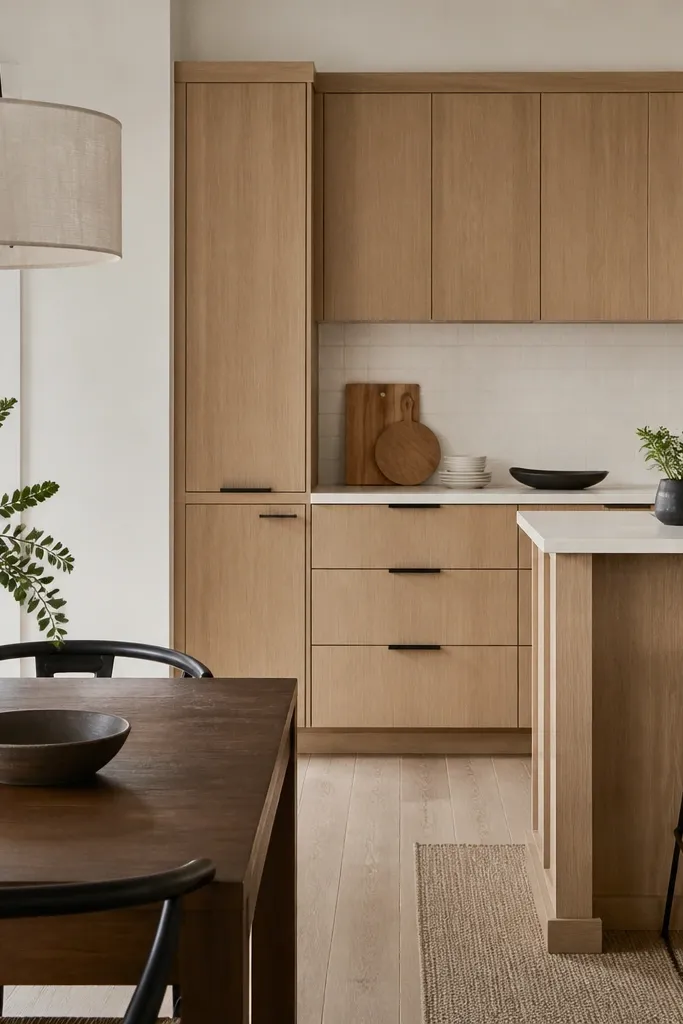
This look works when you want rift oak to feel airy but you still want warmth in the dining zone. The dark walnut table introduces a deeper wood tone, and rift oak’s straight grain keeps the overall pattern from turning into a busy mix. Linen pendant shades soften the contrast and hide harsh reflections from the oak’s matte finish. I’ve used this setup in open-plan homes where you can see the kitchen and dining from the same spot — it looks intentional without needing more color. The styling principle is wood-depth layering: light oak cabinets + darker wood dining + soft fabric light.
Choose rift white oak with a matte finish and light natural stain. Use black or dark hardware sparingly, like slim black pulls, to avoid competing with the walnut table. Keep countertops white with a warm undertone so the walnut doesn’t look red. Use a simple light backsplash so the wood tones can be the only “pattern.” In the dining area, pick a dark walnut table with a satin finish and linen drum or bell shades. Add placemats in natural flax and simple white plates to keep the look clean.
Match the pendant shade color to your dining chair fabric, not to the kitchen tile — it keeps the room cohesive.
Using high-gloss wood finishes everywhere — it makes the oak look dull by comparison.
13. Rift Oak Cabinets with Clear Glass Upper Doors
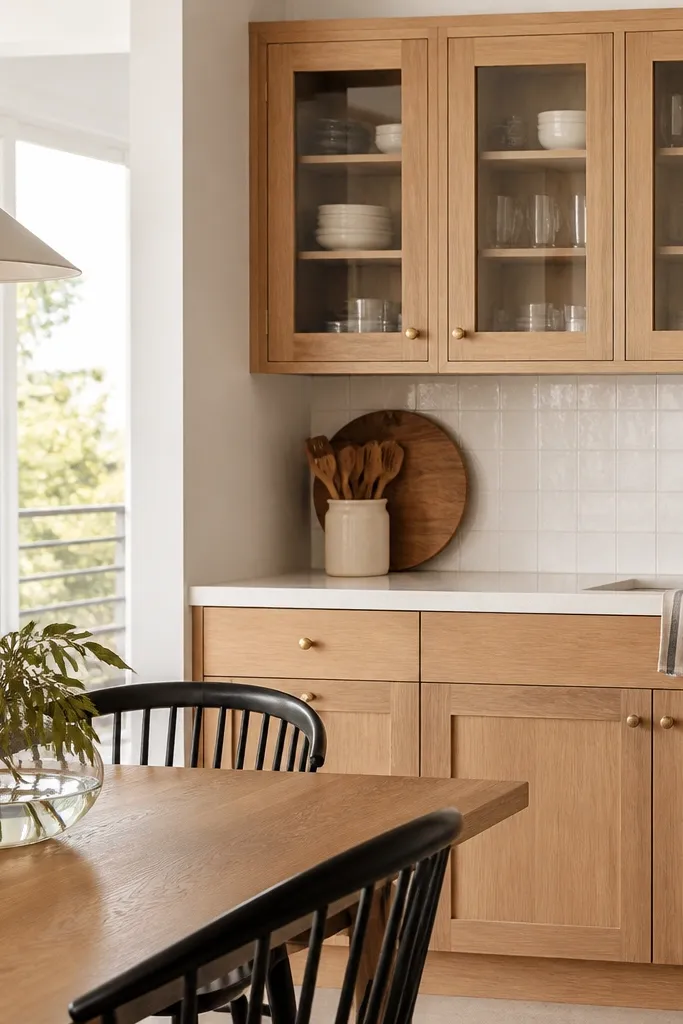
Clear glass upper doors let you show dishes without making the kitchen feel crowded. Rift oak behind the glass gives you a warm “backdrop” that makes white plates look crisp and ceramic pieces look intentional. Brass knobs add warmth, and the clear glass keeps the whole unit feeling light. This look flatters kitchens where you want storage but also want the dining area to feel open and airy. The styling principle is display control: show a few coordinated pieces, not a shelf full of random items.
Use rift white oak in a natural stain and matte topcoat for the solid lower cabinets. Add clear glass inserts on the uppers and use brass knobs or small brass pulls that match the faucet. Keep the shelves inside the glass doors to one or two heights so the display looks planned. Use a white countertop and a light backsplash with minimal pattern. Style the glass interior with white bowls stacked, plus one small ceramic vase in a neutral glaze. Over the dining table, choose a pendant with clear or frosted glass so it echoes the cabinet glass.
Use the same dish set in your glass cabinets that you set on the dining table — it makes the whole kitchen look designed.
Filling every shelf level — too much display turns clear glass into visual clutter.
14. Rift Oak Cabinets + Textured Ceramic Tile Backsplash in Ivory
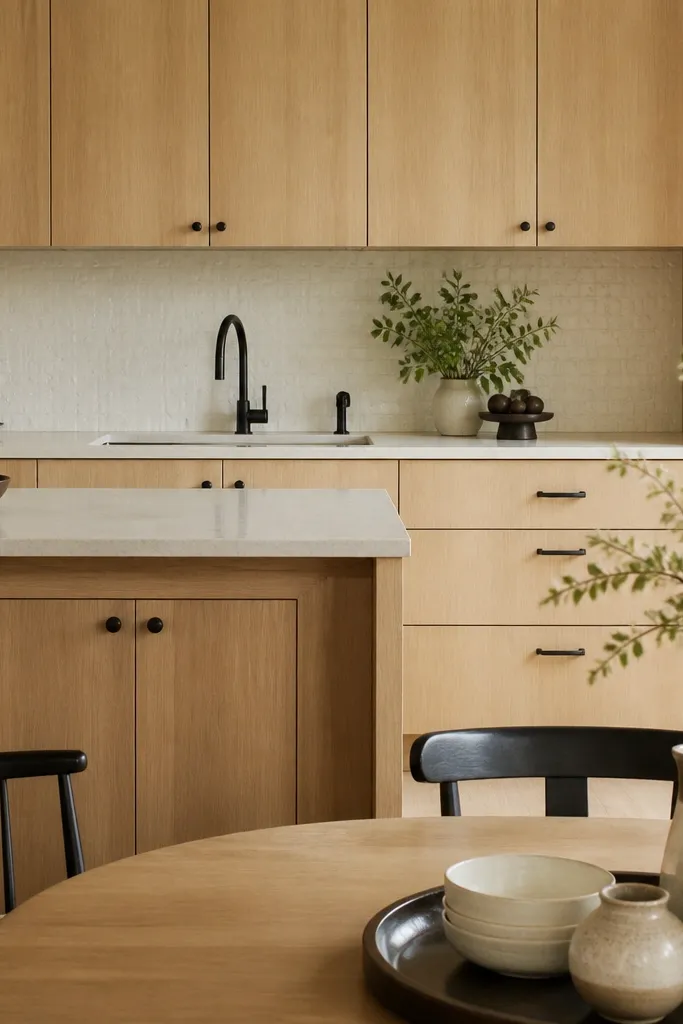
Textured ivory tile adds shadow and depth behind the rift oak, so the grain doesn’t look flat. The texture is subtle enough to stay elegant, but it gives the kitchen something to catch light when you’re walking by. Black hardware keeps the look modern and helps the texture read instead of disappearing. This is a good fit if your dining area has lots of neutral textiles and you want the kitchen to match that softness. The styling principle is micro-contrast: texture behind + straight wood grain + dark metal accents.
Choose rift white oak in a medium light natural stain with satin topcoat. Install matte black bar pulls about 5 inches for drawers and 9 inches for doors. Select textured ivory ceramic tiles and keep grout in warm white so it doesn’t look gray. Use a white countertop with a soft surface finish; avoid heavy glossy edges. Add a dining tray with ivory ceramics and a simple linen runner. Set the kitchen lights to 3000K so the ivory texture looks creamy, not yellow.
Run your backsplash sample next to the cabinet sample — if the tile texture looks too stark, your grout is too cool.
Using glossy tile with matte oak — it creates a mismatch that looks unfinished.
15. Rift Oak Cabinets + Matte Black Hardware + White Marble-Effect Counter
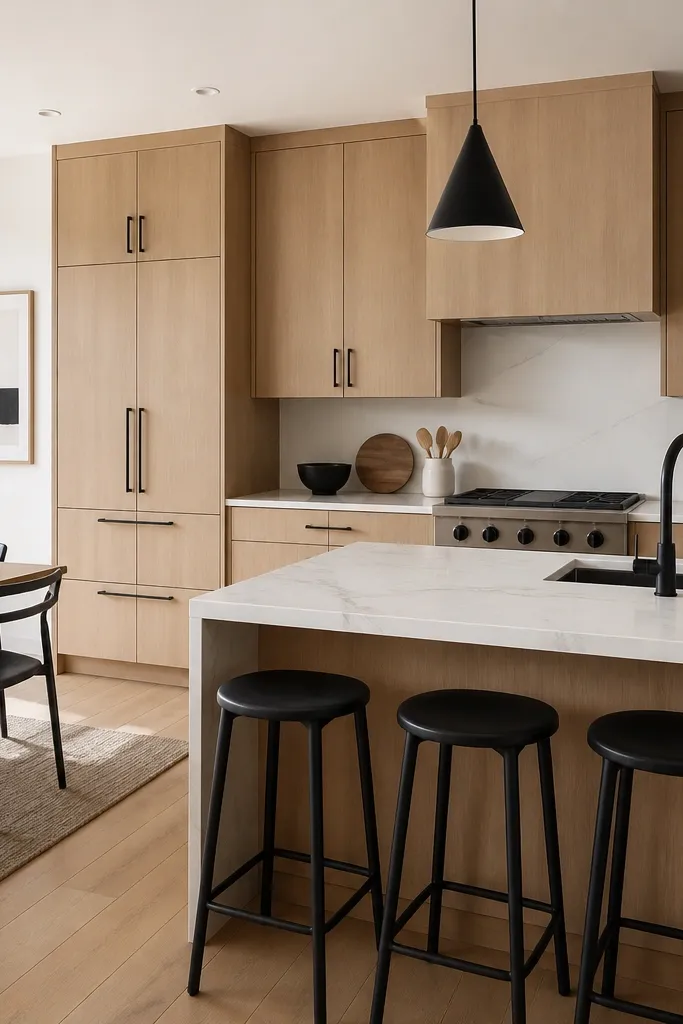
This look is crisp and clean, and it makes rift oak read more architectural. Matte black hardware is the anchor, while the marble-effect counter gives the movement that the rift grain doesn’t need to carry. I like it in kitchens where the dining chairs or window frames already have black elements — it keeps the whole space consistent. It also flatters people who want a modern look without going fully gray. The styling principle is controlled drama: one dramatic surface (counter) plus one dark accent (hardware).
Pick rift white oak with a light natural stain and matte topcoat. Install matte black hardware in a consistent profile: straight bar pulls with rounded ends, sized 8-10 inches for doors and 5-6 inches for drawers. Choose a white marble-effect countertop with thin gray veining and a honed or leathered finish to reduce glare. Keep the backsplash white and simple with warm gray grout. In the dining area, use black-framed chairs and a table centerpiece in white or clear glass. Use 2700K bulbs for a slightly softer contrast against the matte black.
If your marble-effect counter has thick gray, reduce hardware contrast by choosing charcoal instead of true black.
Mixing glossy black knobs with matte black pulls — it looks mismatched in a single glance.
16. Rift Oak Cabinets + Brass Cup Pulls + Speckled Off-White Counter
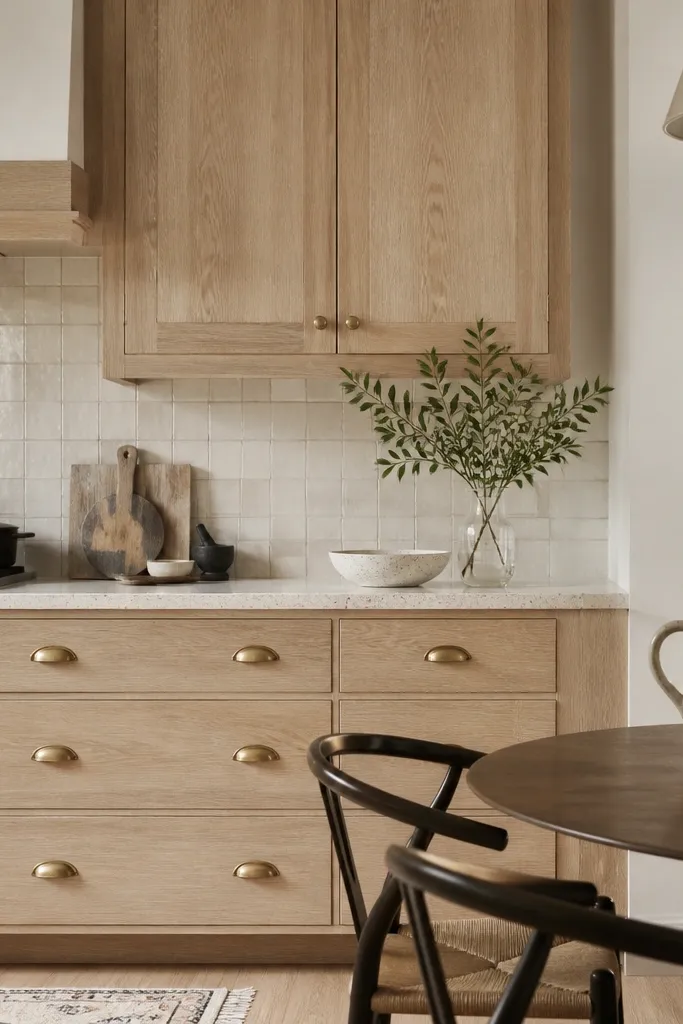
Speckled off-white counters look warm and forgiving when you’re living in the kitchen, and rift oak makes the speckles feel intentional instead of random. Brass cup pulls bring in a classic shape that looks good against the straight grain. This is my go-to look for families who cook a lot because it hides small stains and it doesn’t show every smudge like bright white counters can. The dining area ties in naturally when you repeat the speckle color in ceramics. The styling principle is texture repetition: speckled stone + textured tile + warm metal.
Good to knowCup pulls show hand oil less than polished bar pulls, so this look holds up well in busy kitchens.
Choose rift white oak in a natural or light honey stain with satin topcoat. Install brass cup pulls sized about 1.5-1.75 inches for doors and slightly smaller for drawers. Pick a countertop that is off-white with beige or tan flecks, not pure white. Use a cream tile backsplash and warm grout to keep everything cohesive. Add a simple brass tray on the dining table and use speckled ceramic pieces on it. Hang a warm glass pendant over the dining table at 3000K to make brass look smooth, not brassy.
AvoidChoosing a countertop that is too white — it makes the brass and oak look yellow.
17. Rift Oak Cabinets + Oversized Black Pendant Over Dining Table
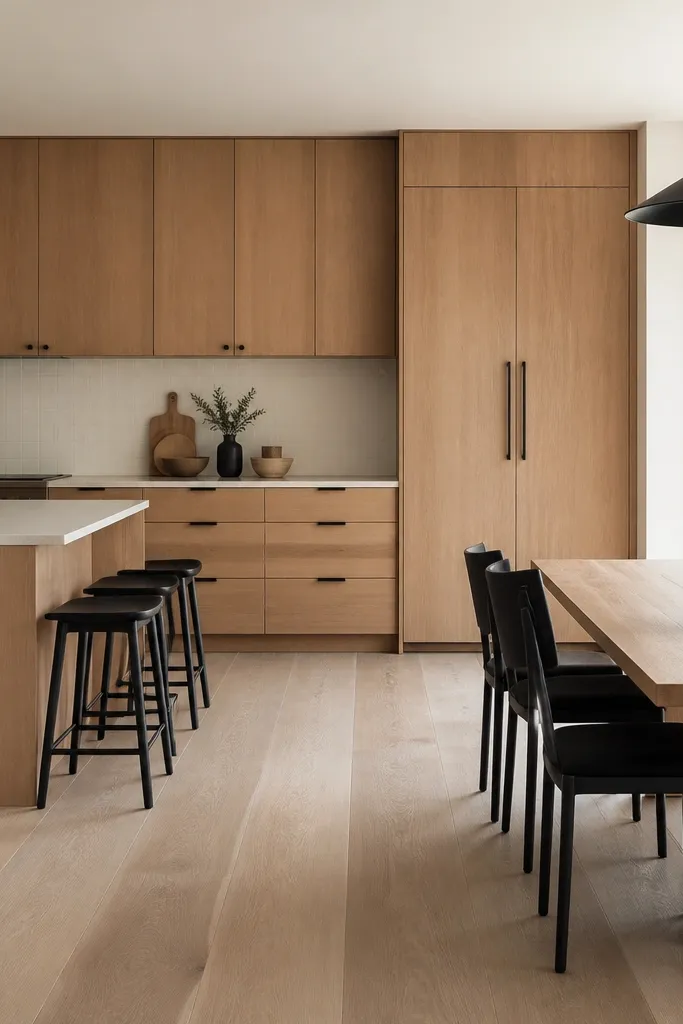
Cabinets don’t live alone — the dining pendant changes how your oak reads every night. An oversized black pendant creates a focal point that makes the rift grain look intentional and clean, especially with a matte cabinet finish. The black shade also reduces glare on the oak, so you don’t get that washed-out look when the overhead light is too bright. This look flatters kitchens where dining is visible from the kitchen and you want one strong “moment” without adding color. The styling principle is lighting dominance: one big dark light + matte wood + restrained hardware.
Choose rift white oak in a natural stain with matte topcoat. Use minimal hardware, like slim bar pulls in brushed nickel or blackened steel, so the pendant stays the hero. Keep the backsplash simple — white tile with light grout — and the countertop bright white quartz. Install under-cabinet lighting at 3000K to illuminate the wood grain without overpowering it. Over the dining table, hang one oversized pendant with a wide shade; center it carefully and keep it at a height that clears the table when seated. Add neutral dining textiles in ivory or oatmeal so the pendant doesn’t feel harsh.
Dimmer switches matter here — you want the pendant to control mood, not the overhead cans.
Hanging the pendant too high — it turns from focal point into ceiling clutter.
18. Rift Oak Cabinets + White Painted Wet Bar in Same Room
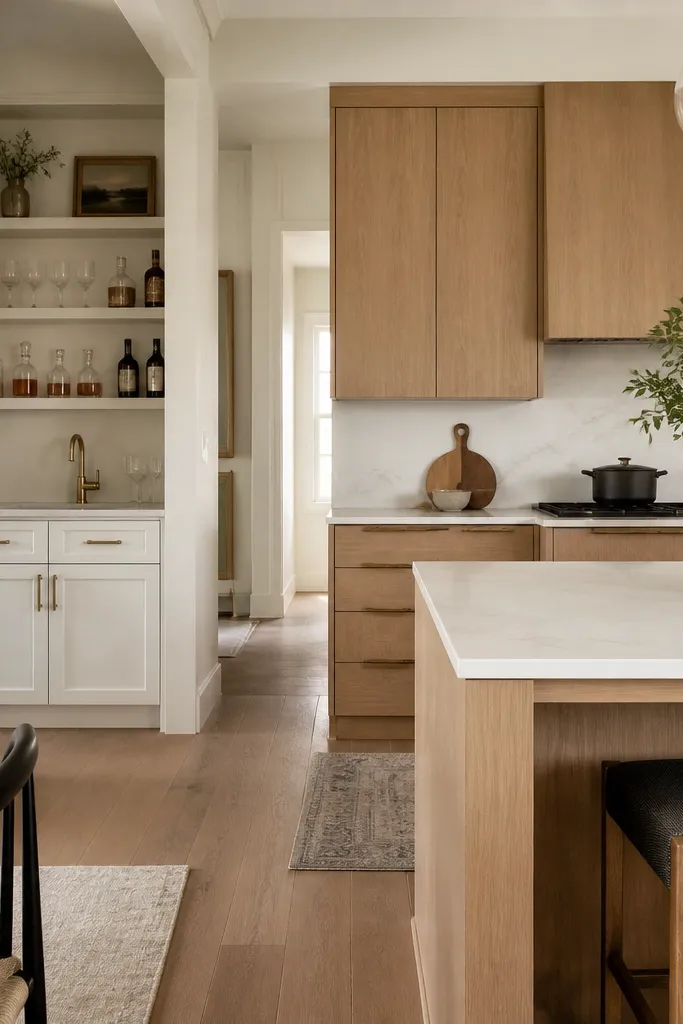
This look is what you build when the kitchen has rift oak but the dining area needs a lighter “pause” for entertaining. The white painted wet bar gives guests a place to look that isn’t wood, so the oak stays the warm anchor instead of taking over the whole room. Brass pulls on the wet bar connect it to the kitchen hardware, which makes the two zones feel planned. I’ve done this in open-concept homes where you can see both kitchen and bar from the dining table — it reads cohesive without matching everything. The styling principle is zone contrast: wood in one zone, painted white in the other.
Good to knowIf the wet bar has glass shelves, use the same oak or brass tone on the shelf supports so it doesn’t look like a separate project.
Use rift white oak cabinets in a natural stain with matte finish in the kitchen. Paint the wet bar cabinets a soft white with satin sheen and match your trim color. Choose the same brass tone for pulls across both zones, but keep the wet bar pulls slightly smaller so it feels more delicate. Use white quartz across both counters to avoid color splits. Keep backsplash consistent in the kitchen but you can use a different tile behind the bar if you keep the grout color warm. In the dining area, style the bar cart with clear glass, a brass tray, and white napkins so the palette stays tight.
AvoidUsing a different brass finish tone — bright yellow brass next to aged brass reads inconsistent.
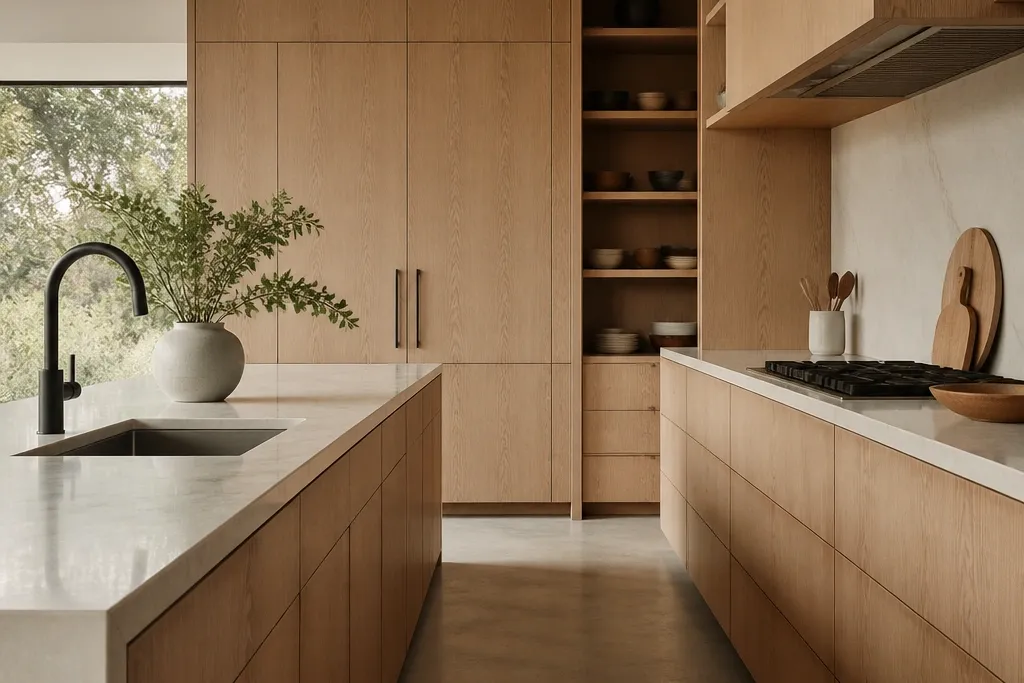
19. Rift Oak Cabinets + Floor-to-Ceiling Pantry with Matching Grain Direction
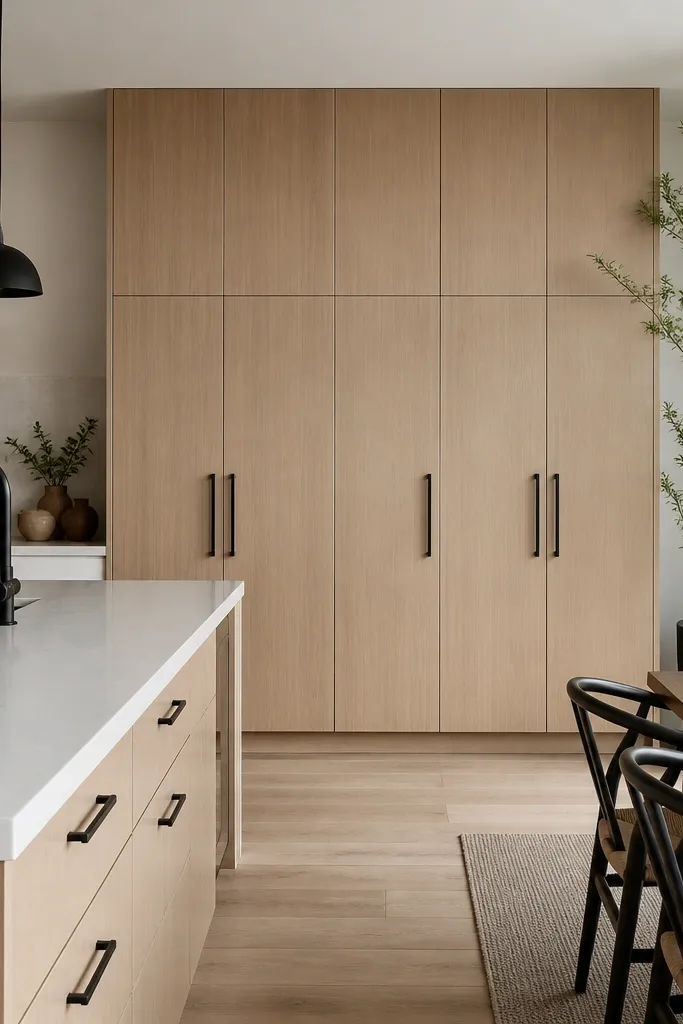
The pantry is where rift white oak either looks custom or looks like “just more cabinets.” When the grain direction matches and the rift lines continue from the base cabinets up the pantry doors, the wood reads like one continuous architectural material. Matte topcoat keeps it calm and hides minor fingerprints from constant use. Black pulls add a straight, graphic note that helps the tall pantry feel tidy, not bulky. This look flatters tall kitchens and people who want storage without cluttering the dining sight line. The styling principle is visual continuity: match grain and keep hardware consistent across heights.
Good to knowAsk your cabinet maker to align the door grain on each pantry leaf — the small alignment choices are what you notice first.
Order the pantry doors in the same rift white oak batch as your kitchen cabinets so the grain density looks similar. Choose matte topcoat and a light natural stain so the pantry doesn’t overpower the room. Install black pulls in the same style and size as the cabinet pulls — around 9-10 inches for pantry doors, depending on width. Use white quartz for the countertop and keep the backsplash simple to avoid competing patterns. If you have a dining table visible from the pantry side, place a tall plant or a vase in a neutral ceramic to soften the tall vertical line. Add under-cabinet and pantry light at 3000K so the grain stays warm.
AvoidMixing two different rift oak stains — the pantry will look like a different material.