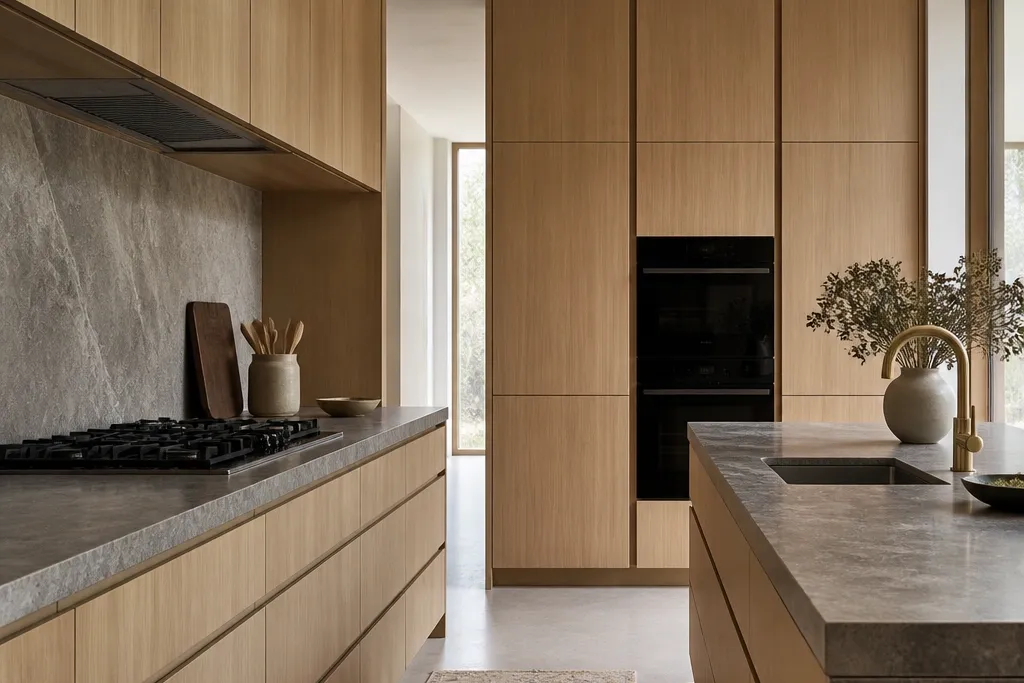
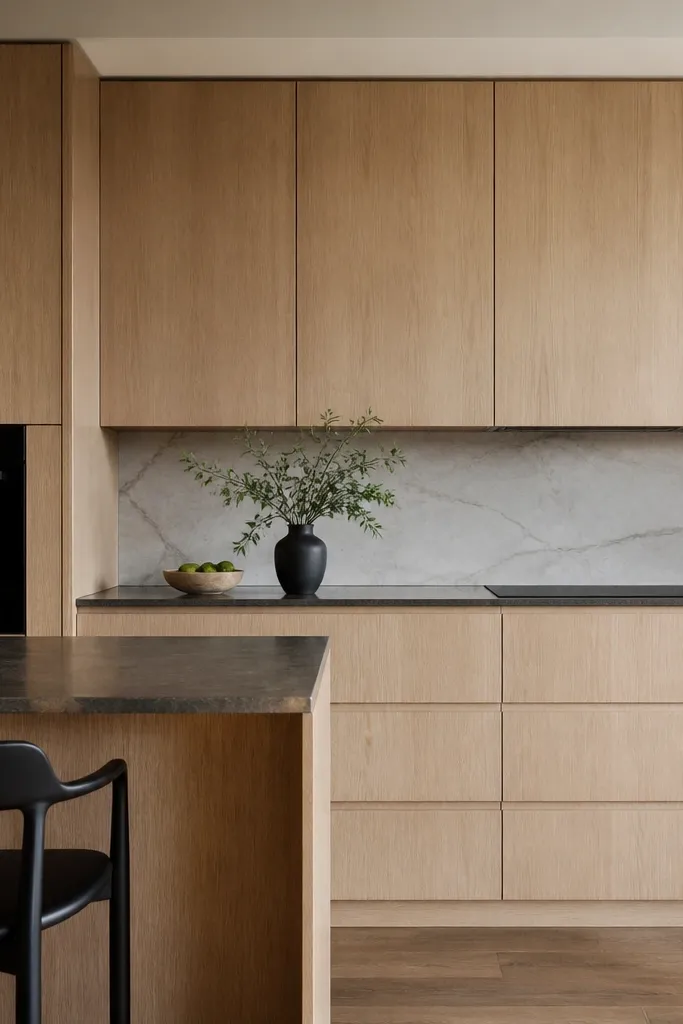
1. White shaker uppers with rift oak lower drawers
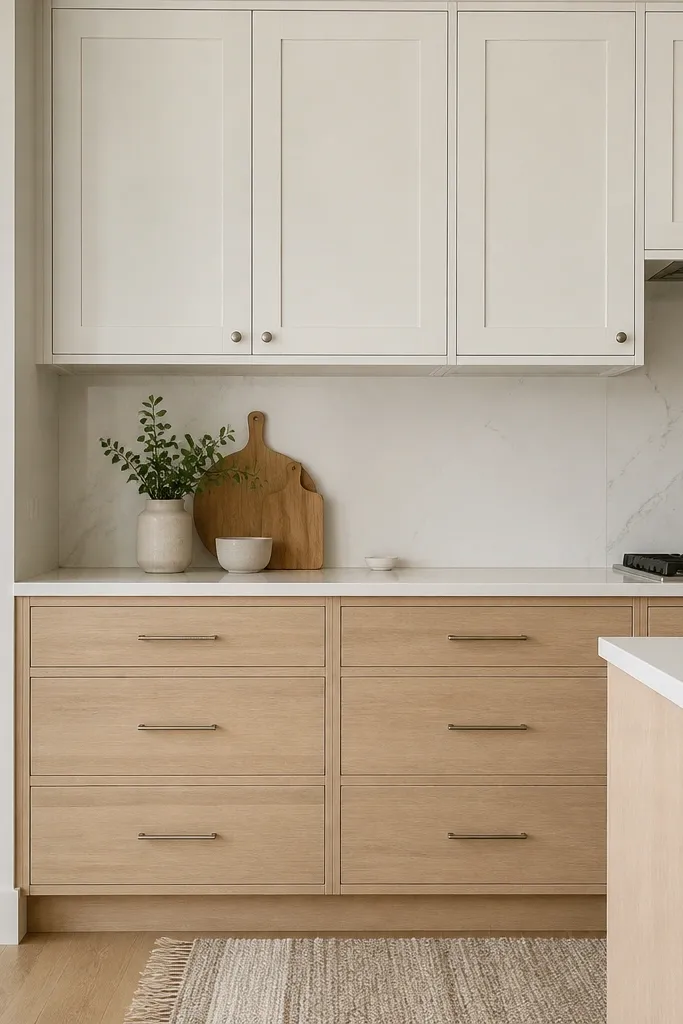
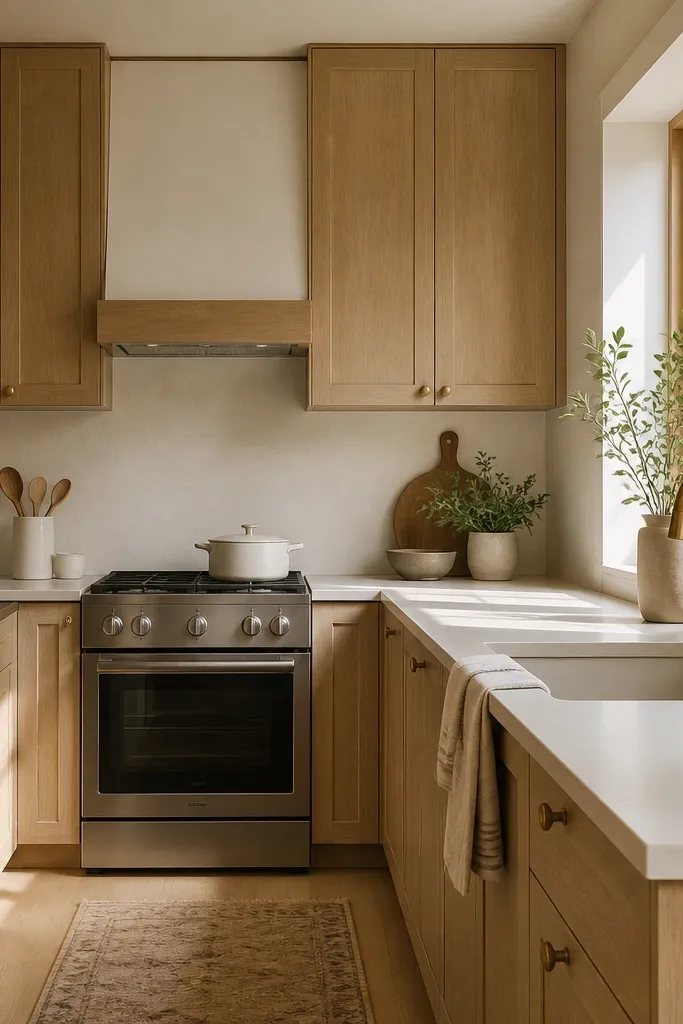
This layout works because it gives you the clean “white wall” effect above while the oak anchors the heavy storage below. The shaker door keeps the look grounded and familiar, and the pale rift oak keeps it from feeling too stark. I like it for kitchens where the dining area is visible, because the white upper band makes the room feel taller and the oak lower band ties into wood tones you’ll already have in chairs or floors. It flatters light skin tones and warm undertones in the room — the oak stays creamy instead of orange when the finish is soft-satin. The styling principle is horizontal balance: one strong white band, one warm oak band, and both share the same hardware finish.
Start by choosing shaker doors for all uppers in a true off-white (not bright blue-white). Then put rift white oak on the lower drawer cabinets only, keeping the drawer fronts full-height so the oak grain reads uninterrupted. Install brushed nickel bar pulls — place them centered, not too high, so drawers look proportioned. Finish with a white quartz countertop and a simple backsplash like 3x6 subway tile in bright white. Finally, hang pendant lights directly above the island so the oak grain stays evenly lit instead of shadowy.
Good to knowIf your kitchen gets morning sun, pick a slightly warmer off-white for the uppers so the oak doesn’t look washed out.
AvoidAvoid mixing oak uppers with white lowers in the same cabinet run — it often looks accidental and breaks the modern rhythm.
2. Flat-panel white cabinets with oak pantry walls
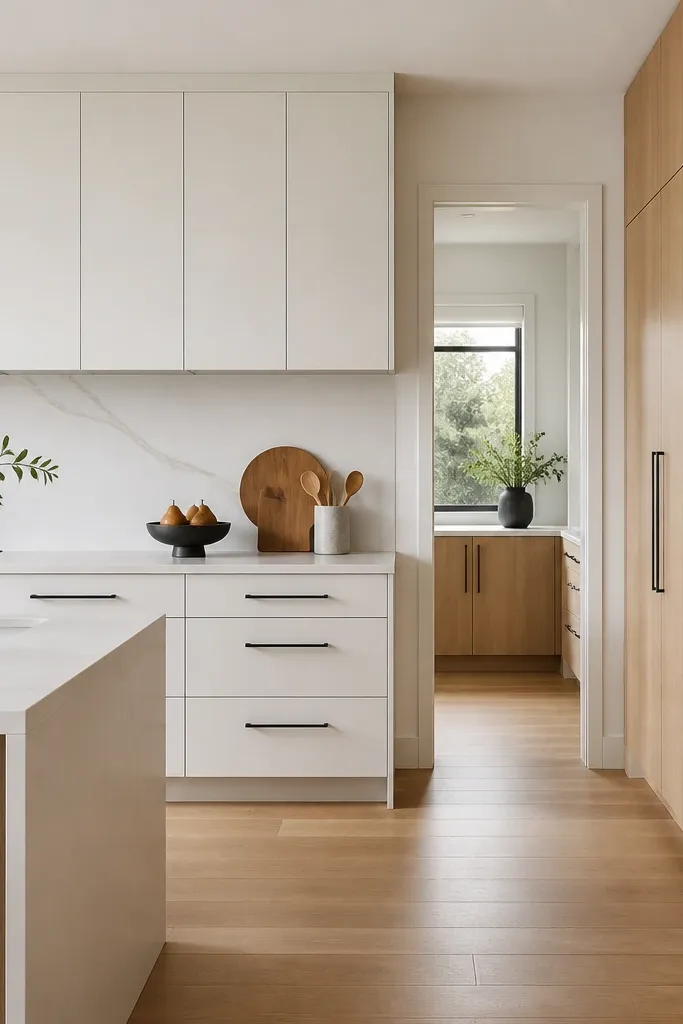
This is a modern look because the flat-panel doors read smooth and architectural, while the oak pantry wall adds warmth without clutter. I’ve used this when the kitchen has a tall pantry or a fridge wall — the oak gives that section personality and makes the rest feel cleaner by comparison. It flatters rooms with gray or cool-toned floors because the rift oak stays pale and doesn’t overwhelm. The key is keeping the oak to one dedicated feature wall so you don’t scatter the wood tones. The styling principle is contrast control: smooth white everywhere, one warm oak block that your eye can land on.
Start with flat-panel doors for all base and upper cabinets except the pantry surround. Build the pantry wall with rift white oak panels or full-height oak cabinets, and keep vertical grain aligned from top to bottom. Use black hardware for both white and oak so the contrast feels intentional. Choose a white quartz countertop with light veining and keep the backsplash minimal — a thin-profile tile or a simple slab look works. Then add a tall, simple hood or range wall detail in white so the pantry oak doesn’t compete with another focal point.
Good to knowRun recessed lighting along the perimeter so the oak panel wall gets even illumination and the grain looks silky.
AvoidDon’t add busy backsplash tile patterns — the flat-panel look gets overwhelmed fast.
3. All-white uppers and rift oak island with waterfall edge
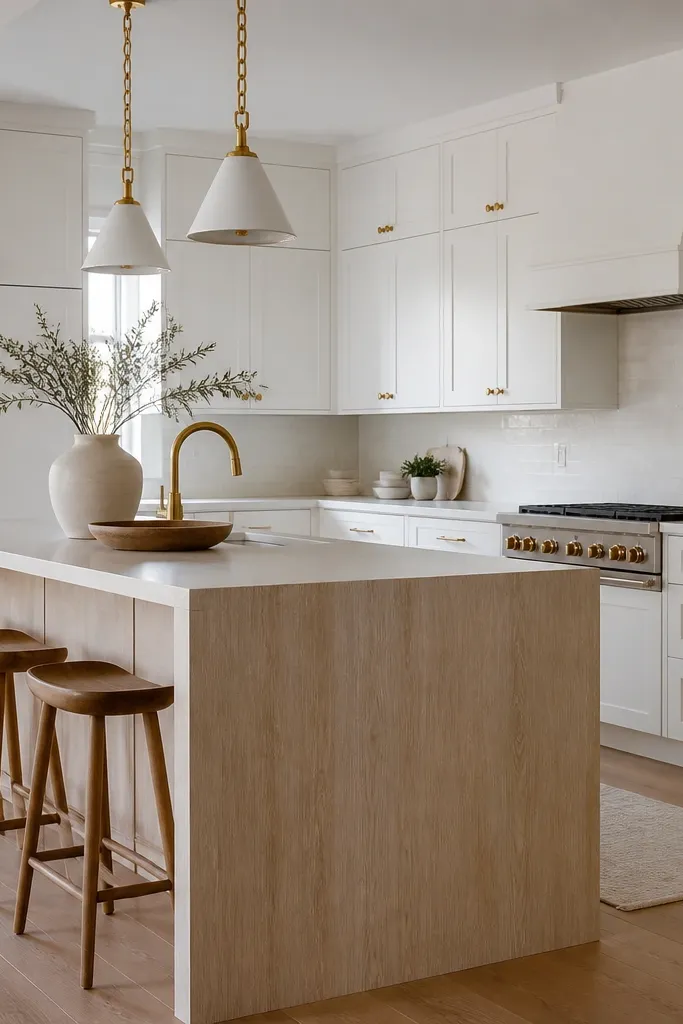
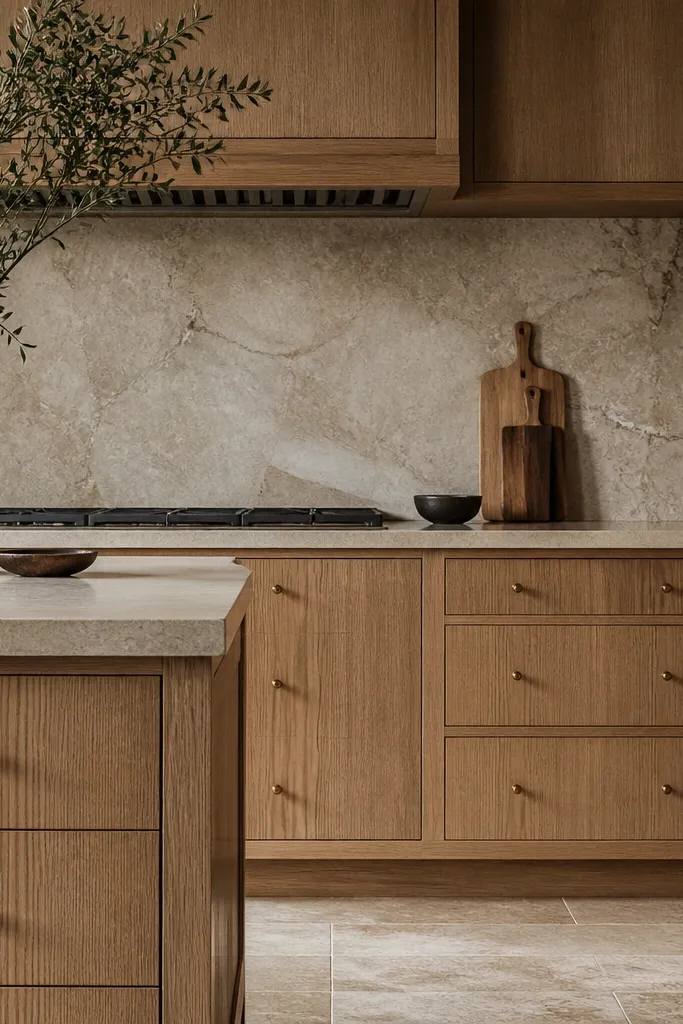
This combination is modern because the island becomes the warm sculptural element while the perimeter stays airy. I like it for open-plan homes where the dining table faces the island — the waterfall edge reads premium and makes the oak feel intentional, not like a random wood stain. The pale oak works especially well with warm lighting, because the grain looks honeyed without turning yellow. If you have medium to dark hair and warm skin tones in the household, this color balance looks flattering in candid photos — the room feels soft, not harsh. The styling principle is focus: let the island carry the warmth and keep everything else visually quiet.
Start with all-white shaker or flat-panel cabinets on the perimeter, keeping the finish matte so it doesn’t glare. Build the island in rift white oak and add a waterfall edge countertop detail with the same oak or a matching oak-faced panel. Use brushed brass hardware — place it consistently across drawers and doors, about 2.5 inches from the top rail and centered on drawers. Add a white backsplash that stops at the underside of the upper cabinets. Finally, choose bar stools with light wood legs and a warm neutral seat fabric to echo the island edge.
Good to knowMatch the island waterfall direction with your backsplash grout lines — the whole kitchen looks more aligned.
AvoidAvoid pairing waterfall oak with a dark countertop — the contrast can look heavy next to all-white cabinets.
4. Rift oak uppers with white base cabinets and black pulls
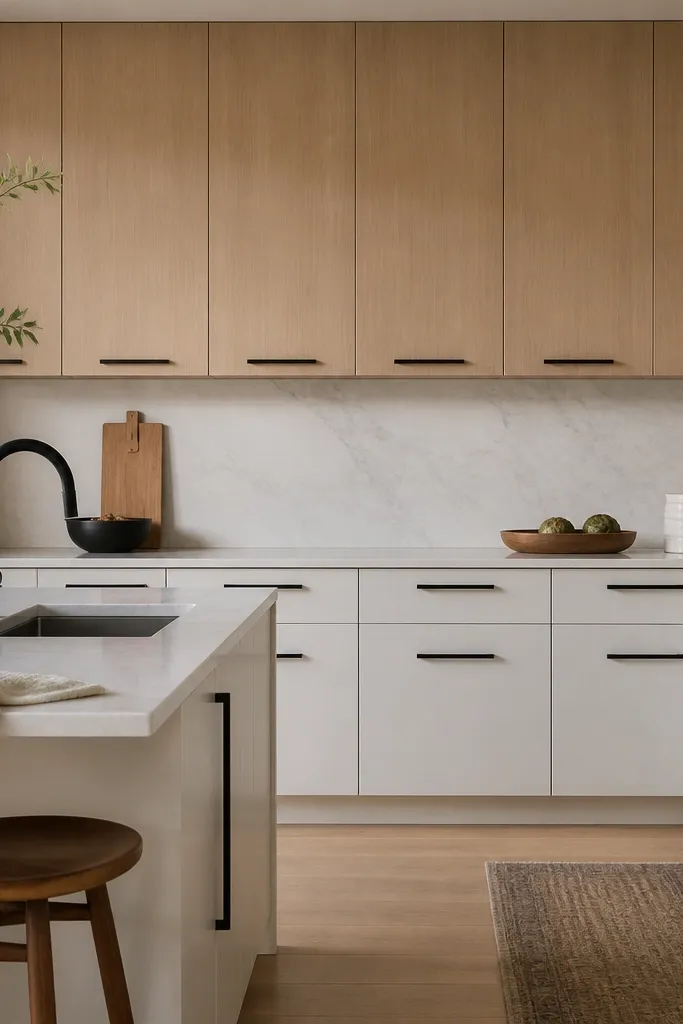
This is a strong modern choice because it reverses the usual “white on top” formula and still stays bright. The key is keeping the oak in the uppers where you get the lightest visual weight and the grain reads as a thin frame over your backsplash. White bases keep the floor-level storage from feeling too warm or heavy. I’ve used this in kitchens with low ceilings — the oak uppers add interest without making the room feel shorter. It flatters cool undertones in paint and flooring because the oak’s pale warmth balances the space. The styling principle is vertical framing: oak above, white below, and hardware ties both together.
Start with slab or flat-panel rift white oak doors for all uppers, keeping the reveal lines consistent. Choose a clean white cabinet finish for all bases, ideally matte or soft-satin. Install black bar pulls on both cabinet types so the eye doesn’t separate the sections. Use a white quartz countertop with a subtle, light gray veining and keep the backsplash to a simple vertical layout. Then add a light runner or dining rug with small beige or oak-toned flecks so the dining zone matches the oak uppers.
Good to knowIf your kitchen is north-facing, choose a slightly warmer rift oak finish so it doesn’t look gray at night.
AvoidDon’t use gold hardware with black pulls or mixed finishes — it makes the reversal look messy.
5. Two-tone perimeter with white center panels and oak end columns
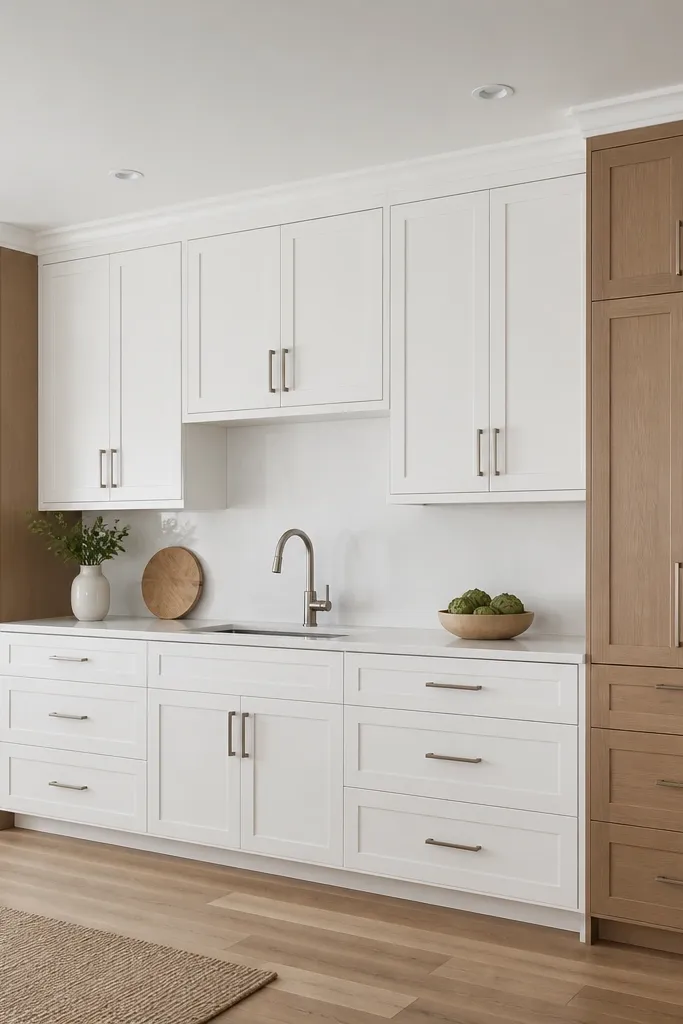
This design looks modern because it creates a clear composition: white does the heavy lifting in the middle, and oak only appears at the ends where your eye naturally lands. I like it when you have a window centered on the run or a fridge at one end — the oak columns visually “frame” the kitchen. The rift white oak stays pale and crisp, so it doesn’t darken the middle. This pairing is especially flattering in kitchens with light walls and medium floors because it keeps the center bright and lets the ends warm up the edges. The styling principle is framing: limit oak to column-like moments so it reads intentional.
Start by building a consistent cabinet run with white shaker doors in the center section. Add rift white oak only for end columns or tall cabinet stacks — keep those oak sections the same width on both sides if possible. Use the same brushed nickel pulls across all cabinets, even on the oak columns, so the hardware becomes the tie. Choose a white quartz countertop and a backsplash that matches the center color, like bright white tile. Finish with matching oak trim on the window or door casing so the oak columns feel part of the architecture.
Good to knowUse crown molding on the white cabinets but keep the oak columns clean — crown on oak often makes it feel too traditional.
AvoidAvoid putting oak on random single cabinets within the run — it breaks the framing effect.
6. White cabinets with oak glass-front upper corners
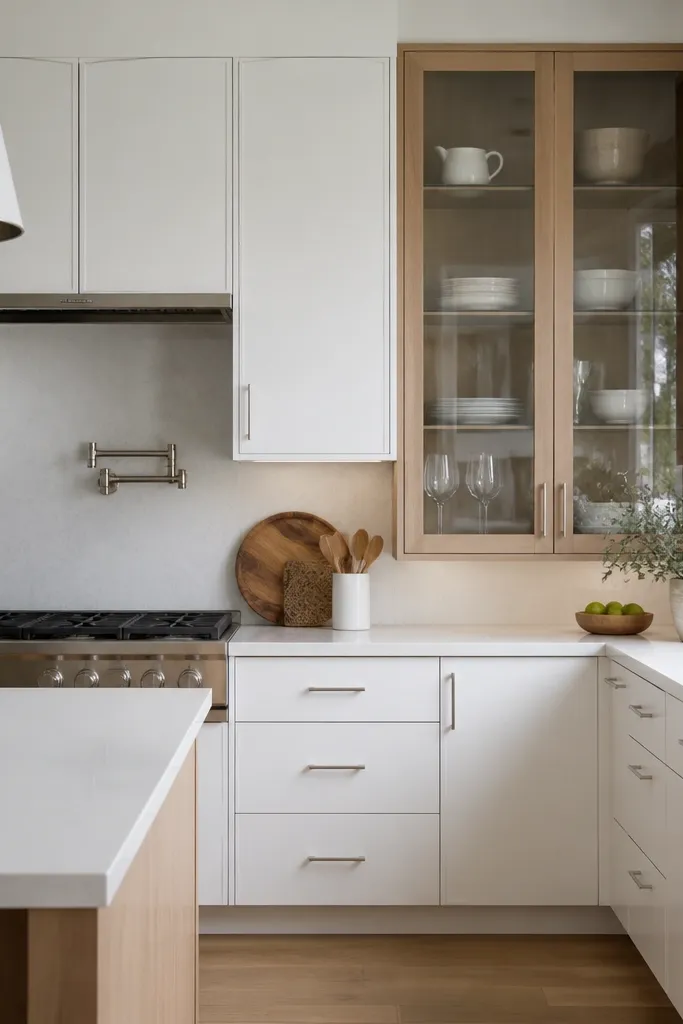
This look is modern because the glass-front corners add depth without turning the kitchen into a display room. Rift white oak frames keep the wood tone light and clean, and the glass makes the space feel less blocky. I’ve used this when the kitchen opens into a dining nook and you want a little visual texture that doesn’t add more cabinets. It flatters small kitchens because the glass reflects light and makes the upper section feel lighter. The styling principle is selective transparency: oak frames only where they create shape and light.
Start with white flat-panel uppers across the run, keeping the door lines straight and consistent. Replace just the corner uppers with rift white oak frames and glass doors — use clear glass or slightly smoked glass, not patterned. Add brushed nickel knobs or small pulls so the hardware stays delicate. Put a white quartz countertop below and keep the backsplash simple, like a thin white tile or a clean slab. Then style the glass with matching white dishes or a single row of clear canisters so the display looks calm.
Good to knowUse LED strip lighting inside the cabinet for corners — it makes the oak look creamy instead of flat.
AvoidAvoid mixing patterned glass with busy backsplash — the kitchen starts looking cluttered.
7. Rift oak uppers with white hood surround and matching trim
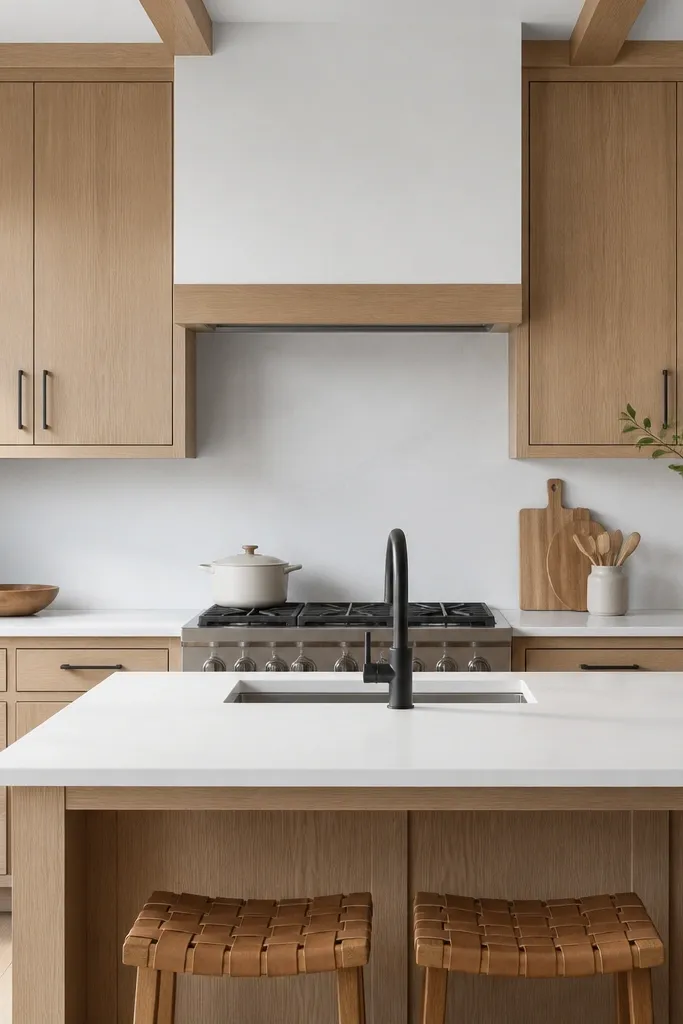
This combination is modern because it treats the hood like a designed focal point, not just a box. The oak uppers bring warmth and grain near eye level, while the white hood surround keeps the range area bright and clean. I like it when you have a statement hood — the white surround makes it look crisp, and the oak trim ties it back to the cabinets. It flatters kitchens with stainless appliances because the white hood area prevents the whole scene from going too “metal.” The styling principle is separation: white defines the hood shape, oak defines the cabinet warmth.
Start by installing rift white oak uppers in a flat-panel or shaker style, then paint or finish the hood surround in true white. Add oak trim pieces around the hood edges so the framing matches the cabinet tone. Use black bar pulls so the hardware echoes the hood’s modern lines. Choose a white quartz countertop and keep the backsplash light — 3x6 white tile laid straight works well. Finally, hang two matching pendants above the island with warm bulbs around 2700K so the oak reads creamy.
Keep the hood vent trim and cabinet trim in the same finish so the transitions look intentional.
Avoid using bronze hardware with black pulls elsewhere — it makes the hood area feel disconnected.
8. White shaker cabinets with rift oak ceiling-height pantry
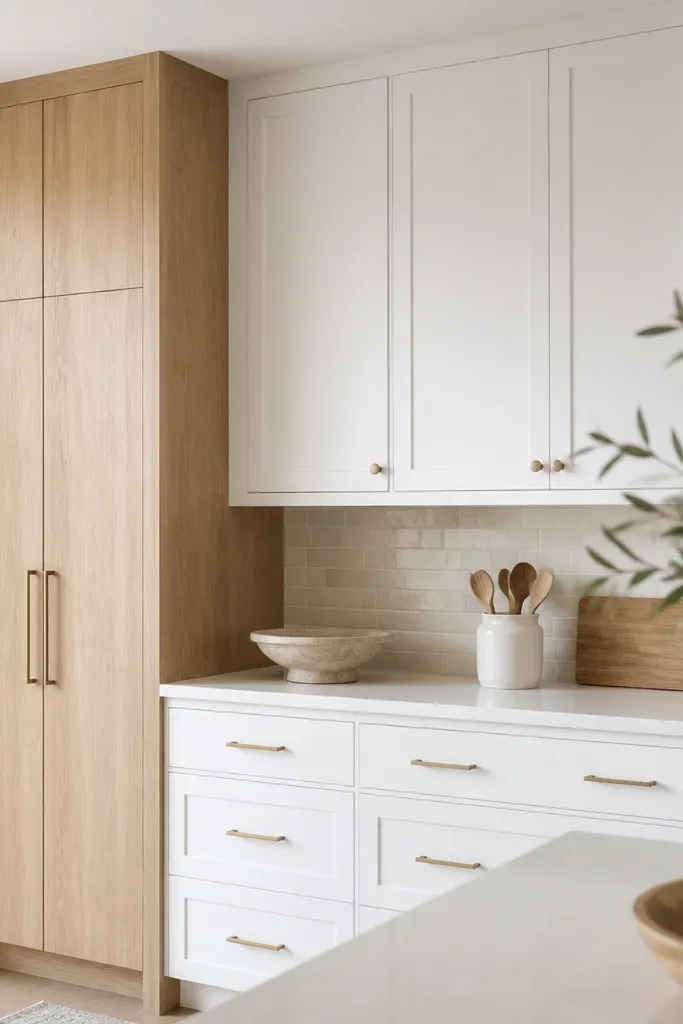
A ceiling-height pantry in rift white oak makes the whole kitchen feel pulled together because it adds height and a clear wood focal point. The white shaker cabinets keep everyday storage looking friendly, and the tall oak pantry adds drama without darkening the kitchen. I’ve used this in smaller kitchens where you need storage but don’t want the walls to feel heavy. The pale oak stays modern when the finish is matte and the grain is rift-sawn and evenly matched. The styling principle is vertical intention: create one tall oak element and keep the rest bright and consistent.
Start with white shaker doors for all base and upper cabinets, keeping the same door size proportions across the run. Build the pantry to the ceiling with rift white oak doors, and keep the paneling aligned across sections. Install simple pulls in brushed nickel — I like 5-inch bar pulls on tall doors for a clean scale. Use a white quartz countertop and a backsplash with light gray undertones so it doesn’t compete with the oak. Add a pantry light inside so the oak looks warm when you open it at night.
Good to knowIf your dining table is near the pantry wall, add a runner with light gray and oak tones to tie both zones.
AvoidAvoid tall oak pantries with glossy finish — they can look dated and show fingerprints.
9. Oak base cabinets with white upper cabinets and a white backsplash rail
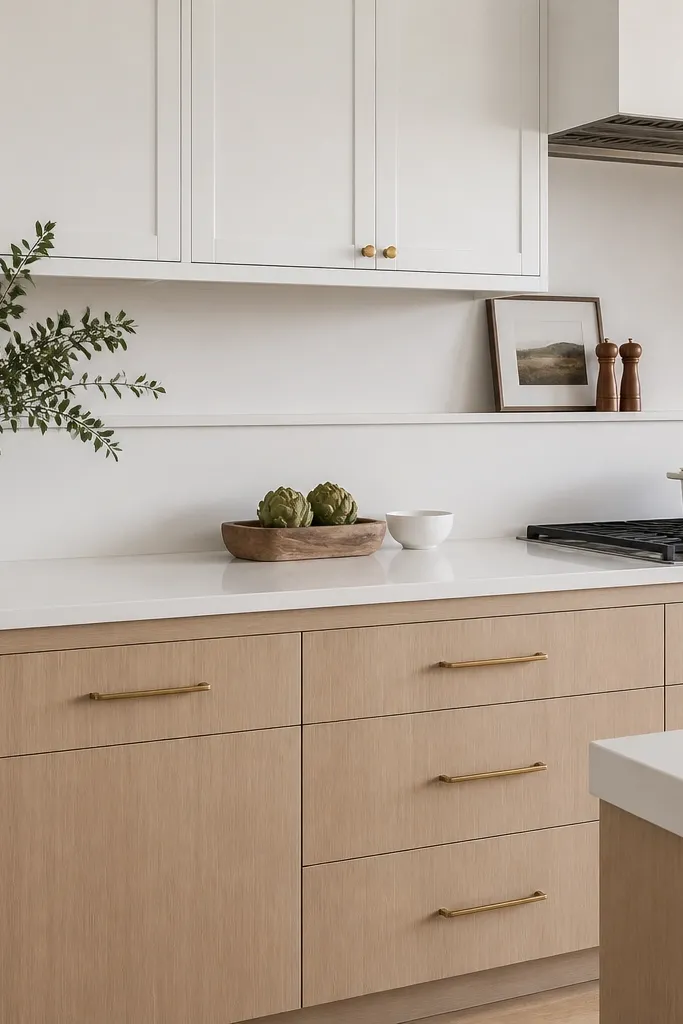
This look feels modern because the backsplash rail creates a clean line that separates storage from wall space. Oak bases warm the lower half, while white uppers keep the room bright and visually open. The rail detail makes the kitchen look designed even if the rest is simple, and it helps if your backsplash is plain tile — the rail adds structure. I like this for kitchens with dining chairs in light wood because it echoes the wood tone at table height. It flatters medium to dark flooring because the oak bases bring warmth up close to the floor, not only at the walls. The styling principle is line control: one horizontal rail to keep the two-tone mix crisp.
Start with rift white oak base cabinets in a shaker or flat-panel style, and keep the uppers white in the same door style to avoid visual mismatch. Add a countertop in white quartz with a simple edge profile, like a 1.25-inch straight edge. Install a thin white backsplash rail at the height where you’d normally see a tile border, then use simple subway tile up to that line or keep the wall mostly clean. Choose brushed brass hardware — keep it consistent across uppers and lowers. Finish with a white dining runner or placemats that repeat the rail color so the dining zone matches.
Use a level line for the rail and don’t eyeball it — if it’s off by even a few millimeters, the whole kitchen looks crooked.
Avoid mixing two-tone cabinets with a thick, busy tile border — it fights the rail detail.
10. White slab cabinets with rift oak microwave tower
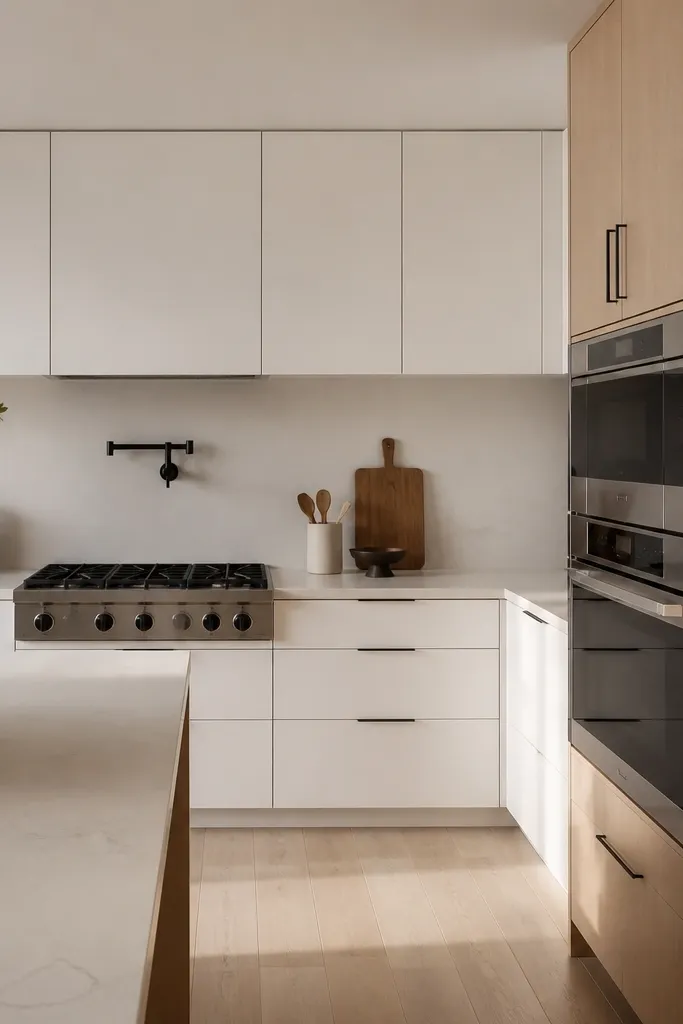
Microwave towers can look bulky, but rift white oak makes the tower feel like a built-in panel instead of an appliance box. White slab cabinets keep the rest sharp and modern, with no shaker lines to break the smooth look. I like this pairing when your kitchen has a lot of white surfaces already, like white countertops or a white tile backsplash — the oak tower adds the only warm element. It flatters people who like clean, minimal kitchens because it adds interest without clutter. The styling principle is single-feature warmth: one oak vertical tower gives you warmth where you need it most.
Start with white slab or flat-panel cabinets on both sides of the kitchen — keep door reveals tight so the look stays sleek. Build the microwave tower in rift white oak and match the finish across the tower doors and side panels. Use black hardware — I prefer recessed pulls or slim bar pulls so the slab doors stay uninterrupted. Choose a light countertop like honed quartz or a light stone with soft gray veining. Add a backsplash that’s either all-white tile or a simple slab — avoid strong patterning that competes with the tower grain.
Good to knowPut the microwave door hardware at the same height as adjacent drawer pulls so the tower reads aligned, not tacked on.
AvoidAvoid oak towers with contrasting wood stain — you’ll see the mismatch every time you open the microwave.
11. Rift oak cabinets with white inset paneling and warm lighting
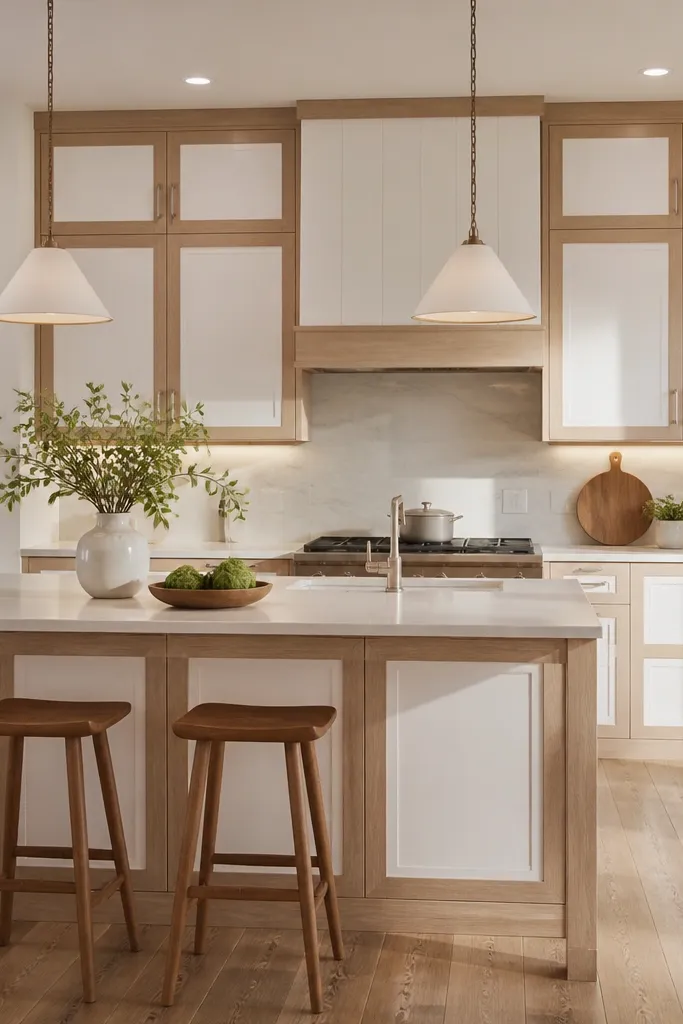
This is one of the cleanest ways to get rift oak and modern white together because the white is built into the door design, not just painted next to wood. The oak frames keep the kitchen warm and tactile, while the white inset centers keep it bright and architectural. I’ve seen this style look great in dining-adjacent kitchens because it adds pattern without being busy — your eye sees structure, not clutter. It flatters cooler paint colors because the white insets brighten the space, and the oak frames prevent it from feeling sterile. The styling principle is framed contrast: oak borders with white centers create a modern “window” look.
Start by choosing doors with inset panels in white — shaker-style insets or flat-panel insets both work, but keep the inset depth consistent across the kitchen. Use rift white oak for the frame rails and stiles, then keep the overall finish matte or soft-satin. Install brushed nickel pulls sized for the inset panel scale, usually 3 to 5 inches for doors and smaller for drawers. Pair with a white quartz countertop and a simple backsplash like a light gray-white marble-look tile. Finally, choose warm lighting around 2700K so the oak reads creamy instead of gray.
If you have white dining chairs, repeat the exact white tone from the cabinet in one small way like a table centerpiece or chair seat fabric.
Avoid mixing this framed style with heavy crown molding — it starts looking too traditional.
12. White cabinets with rift oak open shelving and concealed uppers
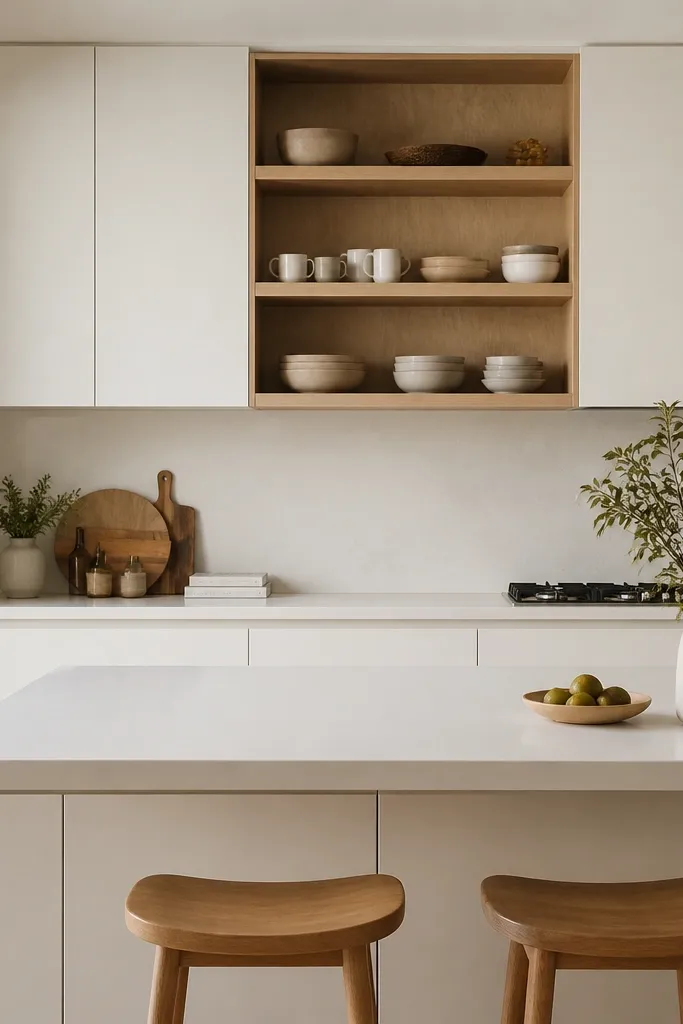
Open shelving can go wrong fast, but rift white oak makes it feel intentional because the grain reads clean and the shelf looks like a design element. White concealed uppers keep most of the wall storage visually quiet, so the open shelves don’t turn into clutter. I like this for kitchens where you want to display a few everyday pieces — the shelf becomes a daily-use vignette. It flatters small kitchens because the open section adds depth without adding more bulk. The styling principle is controlled display: keep shelving to one narrow zone and keep everything else behind doors.
Start with white upper cabinets in a simple flat-panel style. Add one rift white oak open shelving run, usually two shelves wide, set between solid cabinet frames so it looks built-in. Use matching oak shelf brackets or concealed brackets for a clean underside. Install white base cabinets or white drawers below so the open shelves don’t float against dark wood. Add a white quartz countertop and a backsplash with a light, smooth surface like large-format tile. Style the shelf with uniform-height items — I use stacked mugs on one side and a small tray on the other.
Good to knowUse a light-colored ceramic for the most-used items so the shelf stays bright even in the evening.
AvoidAvoid adding open shelves on multiple walls — it makes the kitchen feel like a showroom constantly.
13. White cabinets with oak spice drawers and matching dining wood tones
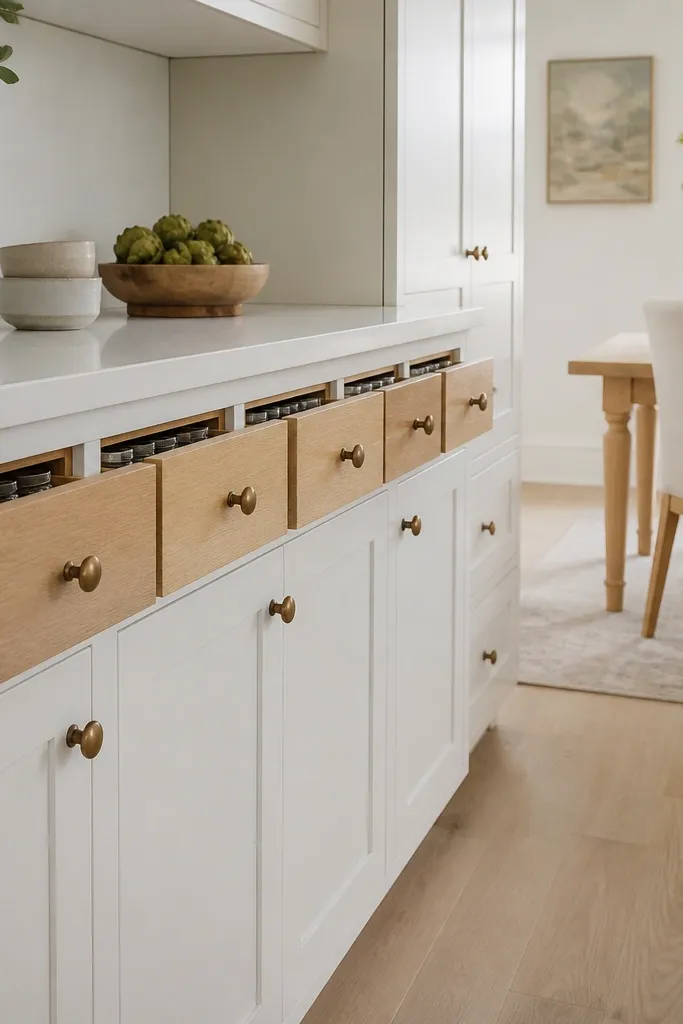
Spice drawers are one of those “small” decisions that makes the cabinet system look designed. Using rift white oak for the drawer fronts gives you a warm detail right at working height, which reads more modern than mixing oak only in big upper sections. In my experience, this is a great choice when your dining area has wood elements already, like chair legs or a sideboard — the oak drawer fronts create a repeated material that feels coordinated. It also helps if you cook often and want easy access without cluttering counters. The styling principle is functional contrast: warm oak where you interact most, and white where you want calm.
Start with white base cabinets in a flat-panel or shaker style, and keep the uppers white too for a clean background. Add rift white oak spice drawers as a dedicated drawer bank at counter height, usually three to four drawers deep with pull-out trays. Use small brushed nickel knobs or slim bar pulls, positioned consistently on every drawer. Choose a white quartz countertop and keep the backsplash simple and light. Then match the dining zone by using the same chair wood tone or a runner with oak-colored threads so the room reads connected.
Good to knowLabel the spice trays in black ink on white labels so the oak drawer fronts look crisp, not messy.
AvoidAvoid staining the spice drawers darker than the main oak — the difference shows every day.
14. Two-tone island base in rift oak with white surround cabinetry
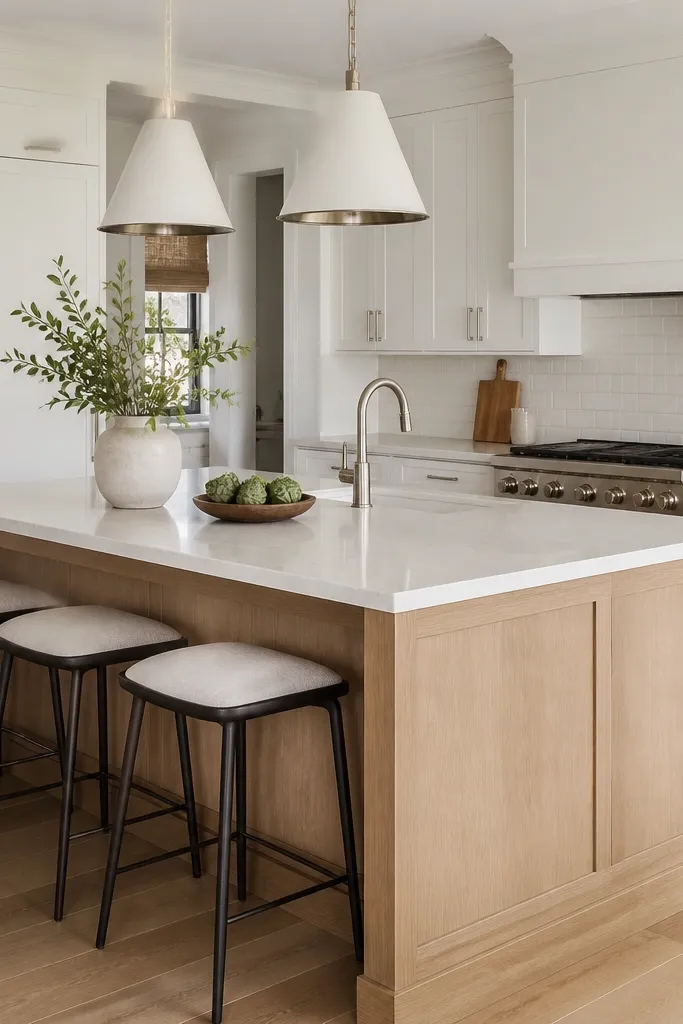
A two-tone island makes a kitchen feel modern because it creates a strong shape without needing extra design features. Rift white oak on the island base adds warmth and hides scuffs better than bright white paint. The white surround cabinetry keeps the perimeter light, so the island doesn’t feel heavy. I like this for kitchens where you want an island to feel like built architecture rather than a separate piece of furniture. It flatters most lighting setups because the oak is pale enough to stay bright under warm bulbs. The styling principle is separation by volume: oak only on the island’s vertical faces, white everywhere else.
Start with a white cabinet perimeter — uppers and bases in the same door style for consistency. Build the island base with rift white oak panels or drawer fronts, and keep the countertop white quartz so the top stays light. Use brushed nickel bar pulls on the island drawers and on the surrounding cabinets so everything feels like one set. Add a simple white subway backsplash with light grout for a clean backdrop. Then choose bar stools with light wood or metal legs in a similar tone to the hardware so the island shape stays crisp.
Good to knowUse a slightly thicker island overhang if you want the oak base to feel more substantial — it changes how the kitchen reads from the dining side.
AvoidAvoid oak on the island top if your backsplash is busy — the surfaces compete.
15. White cabinets with rift oak diagonal corner accents
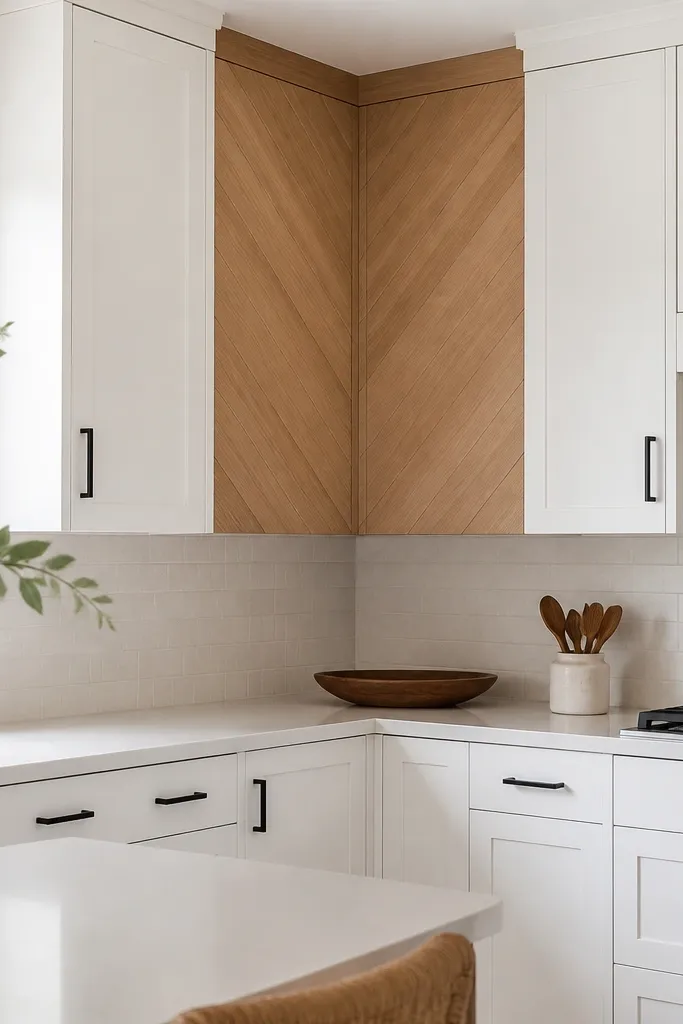
This one is subtle but it reads modern because it adds a geometric moment without turning the whole kitchen into a pattern party. Rift white oak diagonal corner accents catch light differently than flat white, so the corner feels designed instead of wasted space. I’ve used this when the kitchen has an awkward corner or you need an L-shape that still looks crisp. It flatters minimal dining spaces because the geometry adds interest at kitchen height without cluttering the dining line of sight. The styling principle is geometry: use oak for a single angled accent so it becomes a visual “hinge” between runs.
Start with white cabinets in a flat-panel door style across both walls. Add rift white oak diagonal corner panels only on the inside corner cabinet or corner filler — keep the diagonal shape consistent across the width. Install black hardware and keep spacing uniform so the diagonal accent remains the star. Choose a light backsplash like white tile with straight grout lines so your eyes aren’t fighting multiple patterns. Finish the look by adding a simple runner in a solid neutral so the corner geometry has room to breathe.
Good to knowMeasure the diagonal panel height against your backsplash to keep the angle visually centered — corners look wrong fast when they’re off.
AvoidAvoid adding more than one diagonal feature — two diagonals start reading busy.
16. Rift oak and white cabinets with a light gray stone countertop
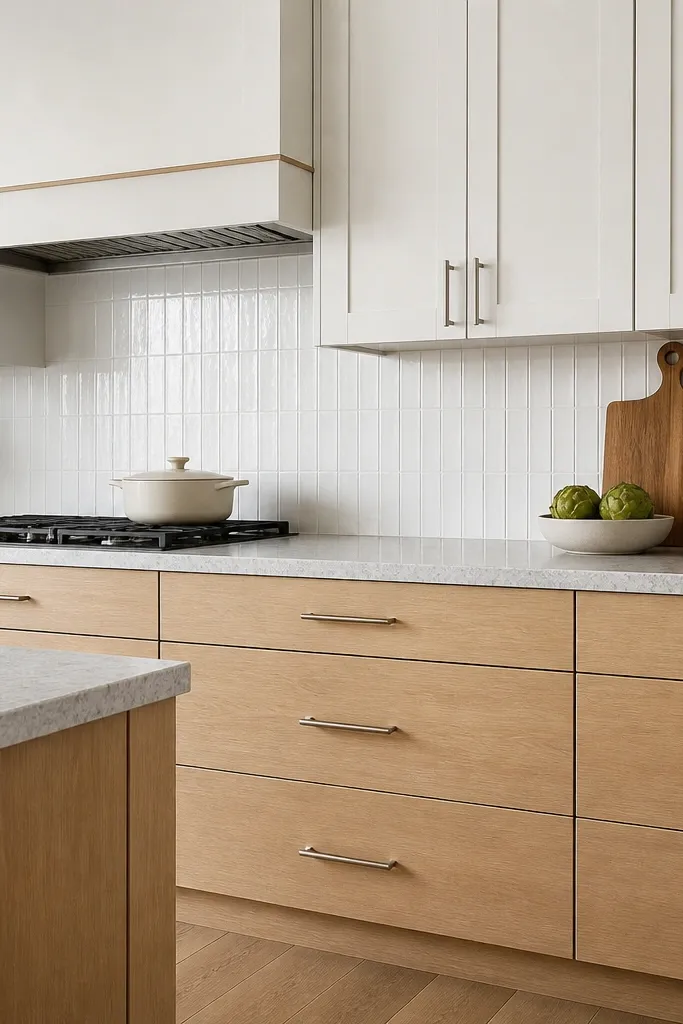
Using a light gray stone with rift oak and white cabinets keeps the modern look from feeling too warm or too cold. The gray acts like a buffer between the pale oak grain and the white paint, so the whole kitchen reads balanced. I’ve installed this combo in kitchens with white walls and stainless appliances, and it always looks “finished” because the countertop ties the metal tones to the wood. It flatters both cool and warm dining spaces because the stone is neutral and doesn’t shift color under different bulbs. The styling principle is temperature balancing: let gray countertop tone calm the contrast.
Start by choosing rift white oak for lower drawers and white for uppers in a shaker door style. Pick a light gray stone countertop with fine speckling so it doesn’t compete with cabinet grain. Use brushed nickel hardware for a consistent mid-tone metal. Keep the backsplash in bright white tile or a very light gray-white mix with minimal pattern. Then style the dining side with gray or white ceramics and one oak element, like a wooden tray, so the countertop color echoes in both zones.
Good to knowSeal the stone with a matte or low-sheen finish so it doesn’t reflect overhead lights harshly.
AvoidAvoid heavy dark veining in the countertop — it makes the oak look muddy.
17. White cabinets with rift oak breakfast bar back panel
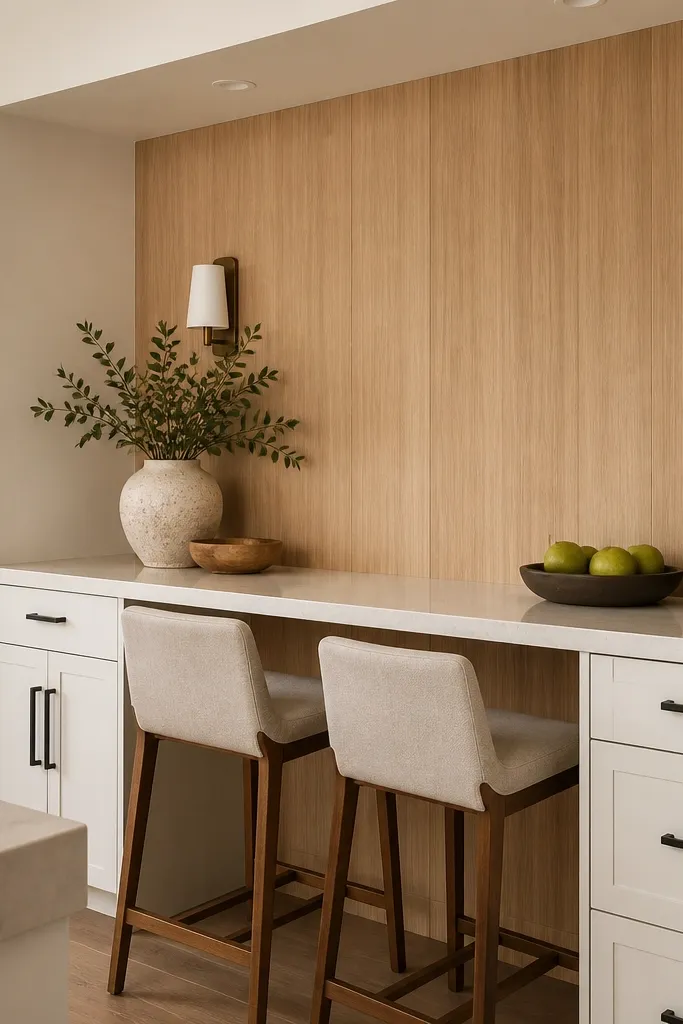
This design is modern because it puts oak where it creates depth behind seating, not just inside storage runs. The oak back panel gives the bar area a built-in feel and makes the seating wall look intentional from the dining side. I like it when you have a breakfast bar that’s visible from the dining table — the oak panel becomes a “photo moment” without needing decor. Rift white oak stays pale enough to keep the bar feeling open, even with warm lighting. The styling principle is background layering: a warm oak backdrop makes white cabinets look sharper.
Start with white cabinets for the breakfast bar base, keeping the door style flat-panel for a clean look. Add a rift white oak back panel behind the bar seating area, matching the same finish used on any oak drawers in the kitchen. Install black bar pulls and keep the pull alignment consistent across the bar base. Use a white quartz countertop and keep the backsplash light, like small-format white tile with light grout. Finally, add two matching pendant lights over the bar and choose bar stools with metal frames or light wood so the oak panel doesn’t fight the seating.
Good to knowUse a slim panel thickness for the oak backer — thick oak can overpower a breakfast bar wall quickly.
AvoidAvoid pairing this with a dark backsplash — the bar wall can start feeling heavy.
18. Rift white oak cabinets with white ceiling-height display boxes
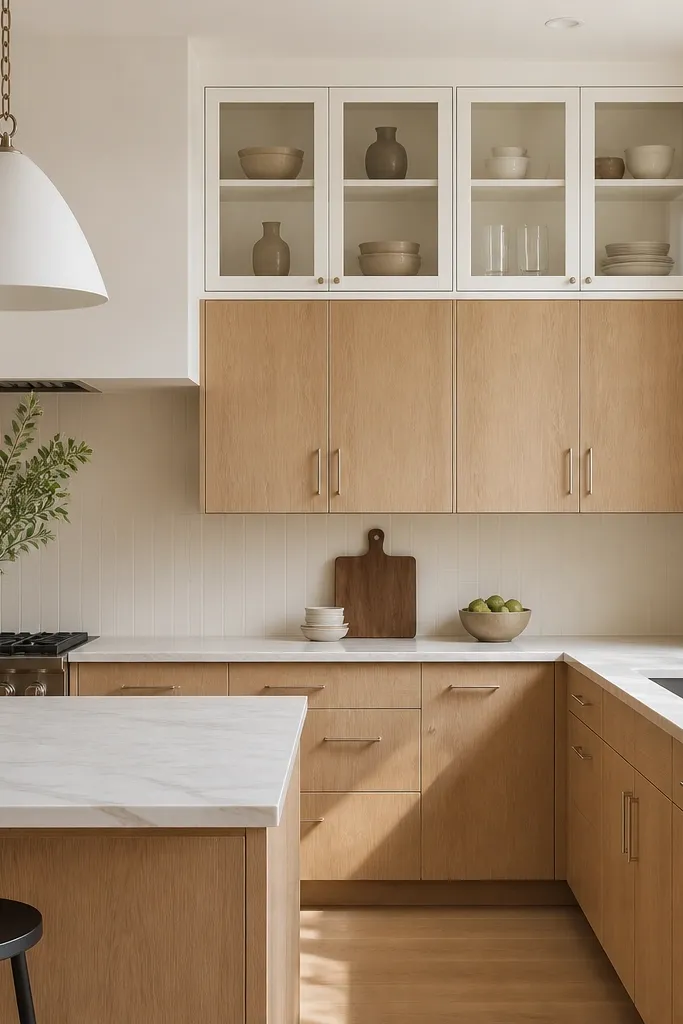
This is modern because the white display boxes create an airy vertical break in a mostly oak kitchen. Rift white oak can look too continuous if you cover every inch with wood, so the ceiling-height white sections stop the visual from feeling heavy. I’ve done this in kitchens where the floor is warm wood and the owner wants oak everywhere but still wants lightness. The white top zones reflect light and keep the room from feeling like a cabinet showroom. It flatters darker flooring because the white breaks the warmth at eye level. The styling principle is vertical pacing: oak for warmth, white for lift.
Start with rift white oak for the main cabinets, including base and most uppers, keeping the finish matte. Then build ceiling-height display boxes in white — flat-panel doors or open shelves with a white frame both work. Install brushed nickel hardware so the metal tone stays consistent across oak and white. Use a minimal backsplash in white or very light gray and keep it simple behind the display boxes. Finish with a white quartz countertop and a dining table runner that repeats the white frame tone so the display boxes feel connected to the rest of the home.
If you choose open display shelves, keep only one shelf line open — too many open levels makes the oak feel chaotic.
Avoid using glossy oak finish with high-contrast white boxes — it can look like two different kitchens.
19. White cabinets with rift oak toe-kick drawers and hidden trash
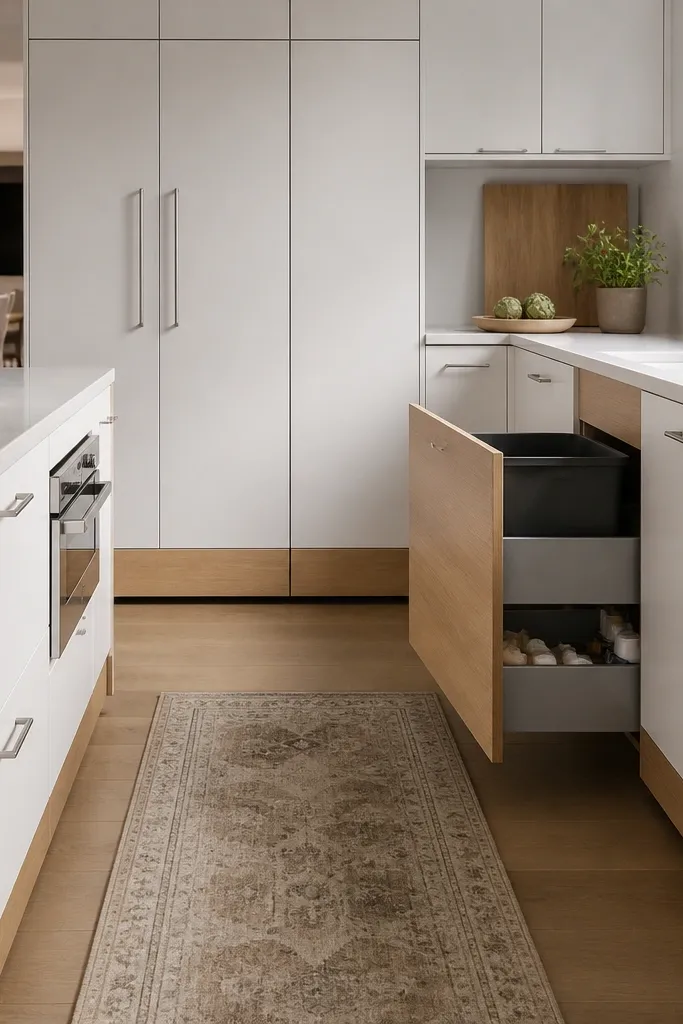
This is a practical modern upgrade that also makes the kitchen look sharper. Toe-kick drawers in rift white oak add warmth right at floor level, which is where the eye catches scuffs and daily use anyway. It keeps the visible cabinet fronts white and clean while still giving you functional organization. I’ve used this in family kitchens where people slam cabinet doors — the oak toe area hides wear better than paint. It flatters busy households because the kitchen stays visually calm even when you’re actively cooking. The styling principle is clean fronts with hidden function — oak shows up only where it helps daily life.
Start with white cabinets for all visible uppers and bases, and choose a simple door profile like shaker or flat-panel. Add toe-kick drawers in rift white oak at the lower front — plan for trash pull-outs and small utility items so they’re accessible without bending. Use brushed nickel hardware only on the toe drawers so the rest stays minimal. Pair with a white quartz countertop and a light backsplash tile that won’t show splatter. Finally, set your dining rug or runner in a neutral that hides everyday crumbs — I like light oatmeal tones with a tight weave.
Measure toe-kick drawer depth carefully — if the tray is too shallow, spices and small tools won’t fit and you’ll stop using it.
Avoid mixing different oak shades between toe-kick panels and any other oak cabinets — it reads as a separate trim piece.
20. White cabinets with rift oak hood surround and slim vertical fluting
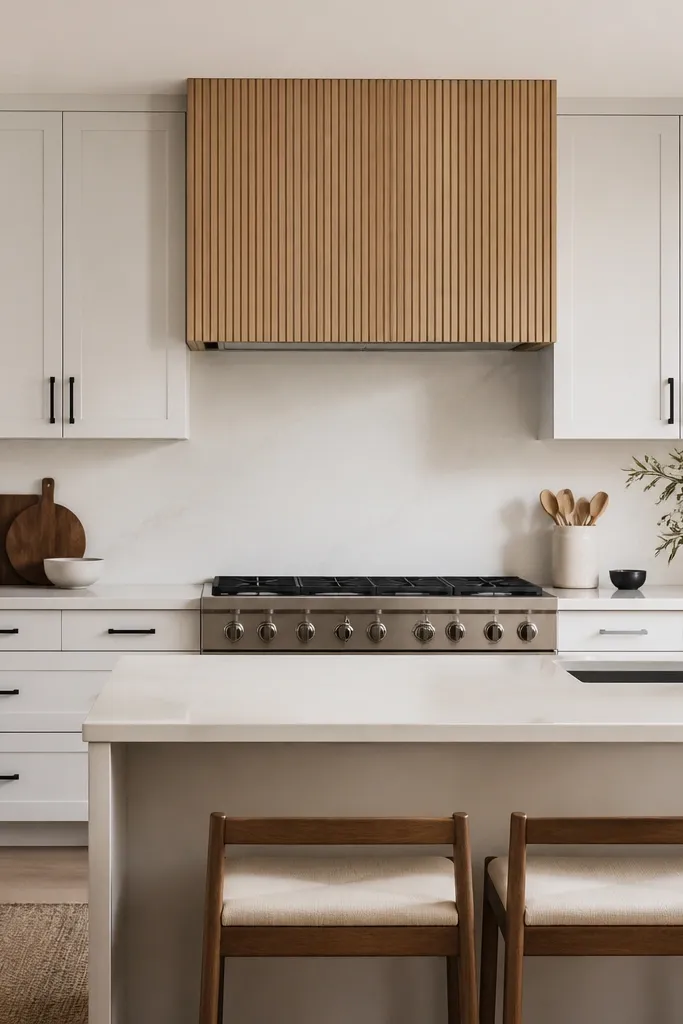
Fluted paneling is one of the quickest ways to make rift white oak feel modern instead of traditional. When you put it around the hood, it adds texture at the focal point while the rest of the kitchen stays clean in white. I like this in kitchens with a statement hood shape — it gives the hood a custom look without needing elaborate trim. The pale oak keeps the fluting from looking dark, and the white cabinets prevent the fluting from feeling heavy. This style flatters kitchens with black appliances because the black hardware and hood details connect visually. The styling principle is texture at one focal zone: oak fluting only where the eye rests.
Start with white flat-panel cabinets for the main perimeter to keep the texture from spreading. Build the hood surround in rift white oak with slim vertical fluting — keep the flutes narrow and evenly spaced so it looks architectural. Use black pulls and a black vent hood insert or trim to tie the metal tones together. Choose a white backsplash tile with a smooth surface so the fluting stays the main texture. Then add a simple dining table centerpiece in a neutral ceramic so the kitchen texture doesn’t get competing decor.
Use warm 2700K bulbs above the hood so the fluted oak lines look soft, not harsh.
Avoid thick, wide fluting — it can look old-school and overwhelms flat-panel white cabinets.