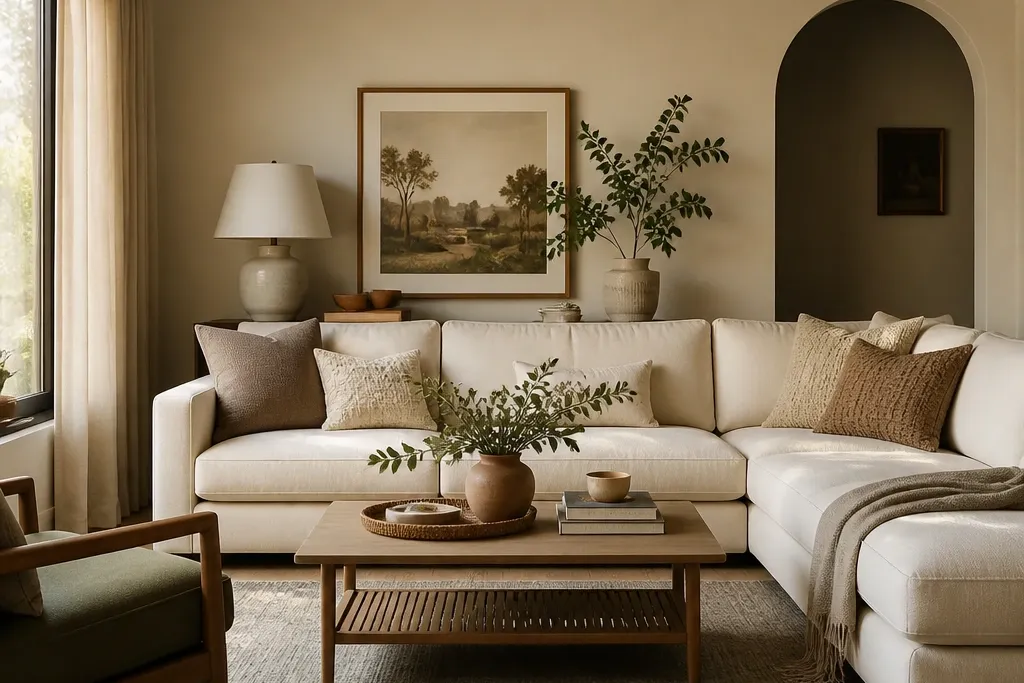
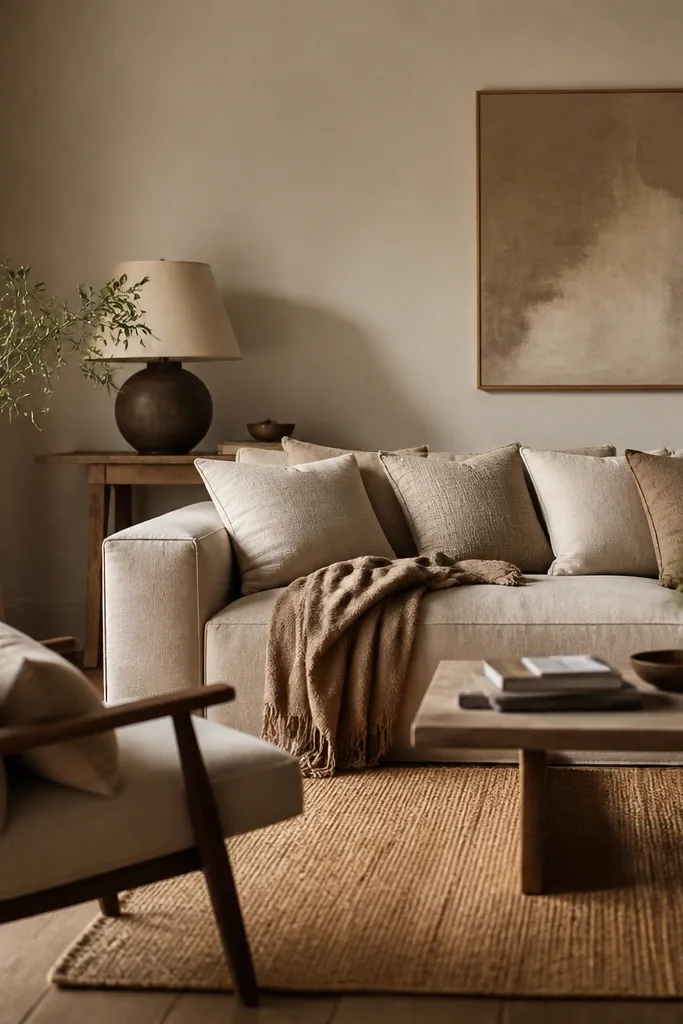
1. Oat sofa + cream boucle pillows
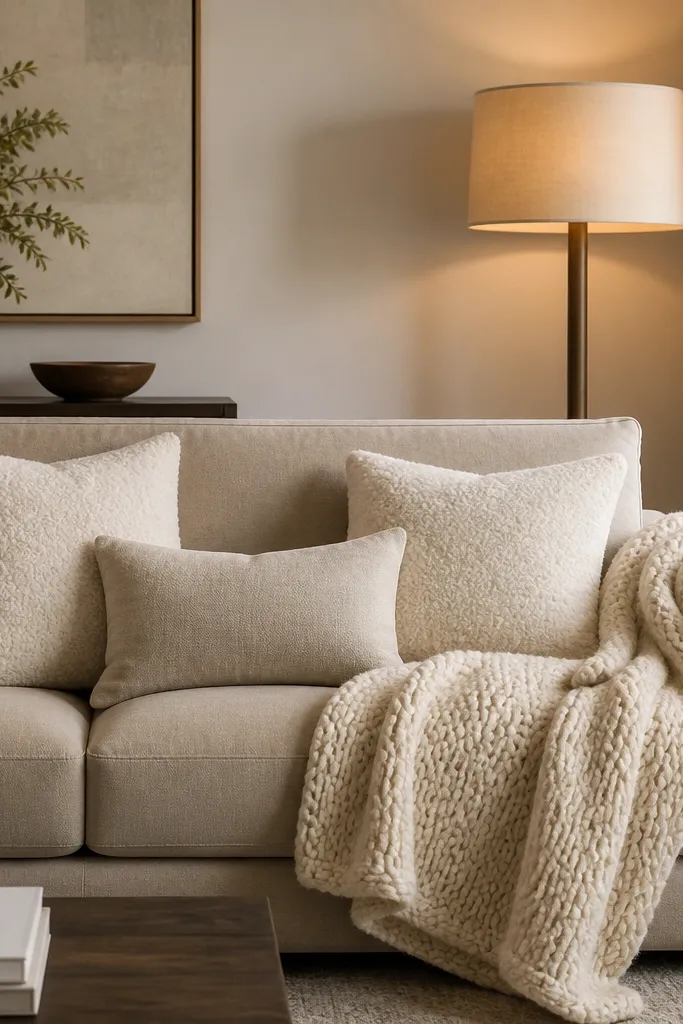
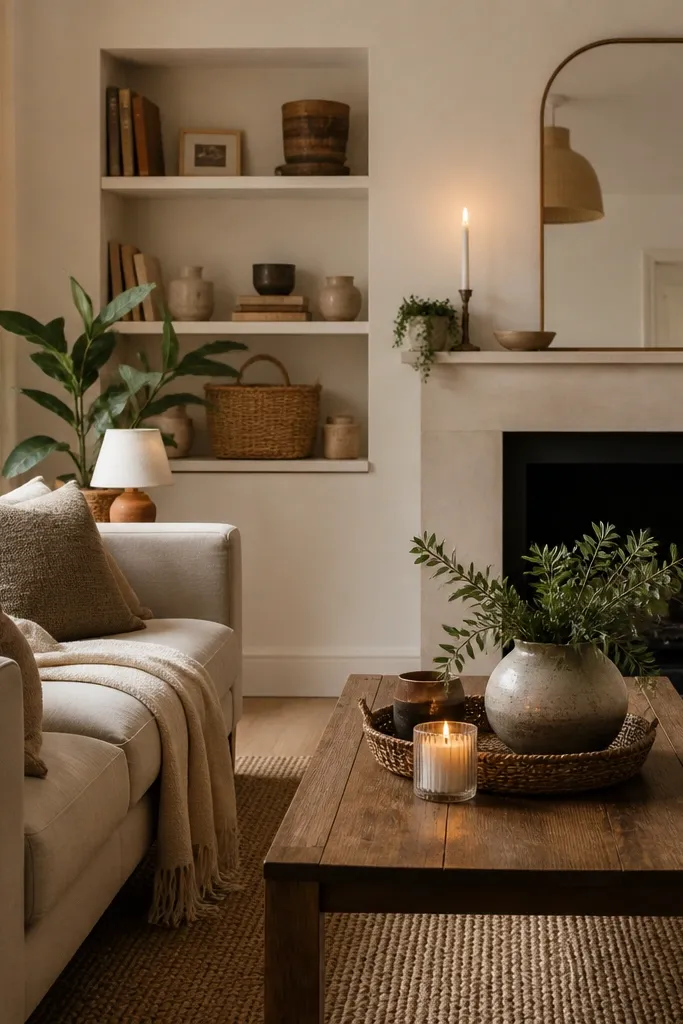
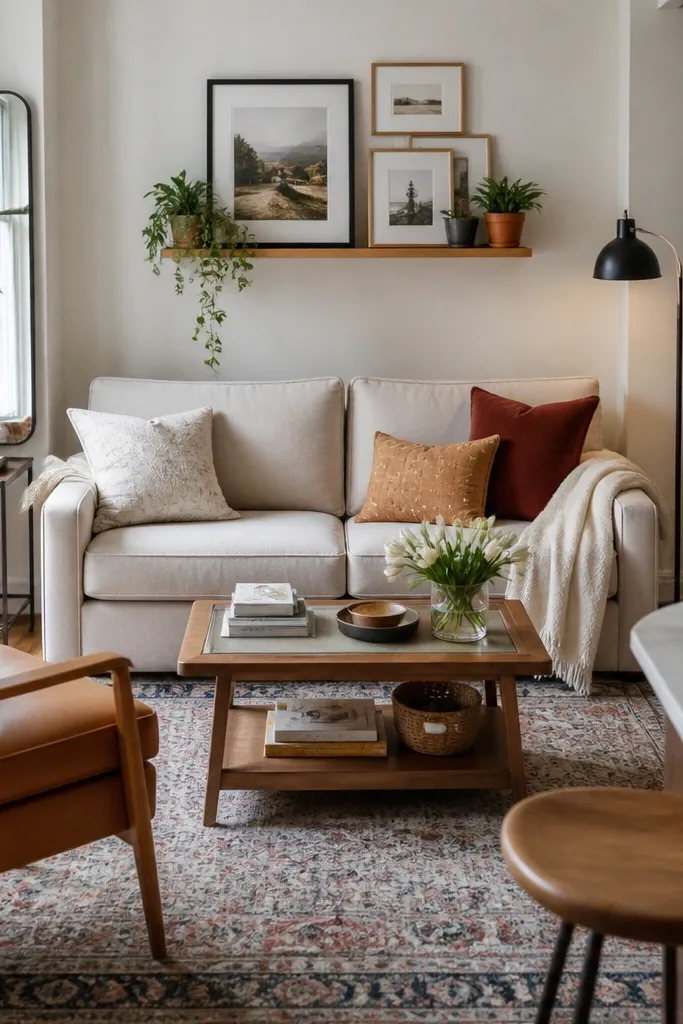
I reach for an oat sofa when I want cozy without turning the room into a beige box. Oat has a warm, slightly creamy base that plays nicely with cream boucle because both materials catch light differently. Boucle adds tiny highlights and a soft, pillowy look that reads inviting even in daylight. This setup flatters people who like a clean look but still want comfort — it’s also forgiving if you have pets because the texture hides minor wear. Keep the rest of the palette in the same family so the warmth stays consistent.
Start by placing your cream boucle pillows centered on the sofa, not stacked too high. Use two large pillows, then add one smaller accent pillow in a plain warm cotton for balance. Drape a chunky knit throw over one arm so it hangs at about halfway down the armrest. Add one warm-wood piece in the line of sight, like a walnut side table, and keep metal finishes in brushed brass or aged bronze. Finish with a floor lamp that uses a 2700K bulb so the cream reads creamy instead of yellow.
If your room gets lots of north light, add one extra woven item like a jute runner or wool throw to warm up the shadows.
Avoid cool-gray pillows with oat upholstery — the contrast makes the sofa look dull.
2. Warm greige rug + terracotta accents
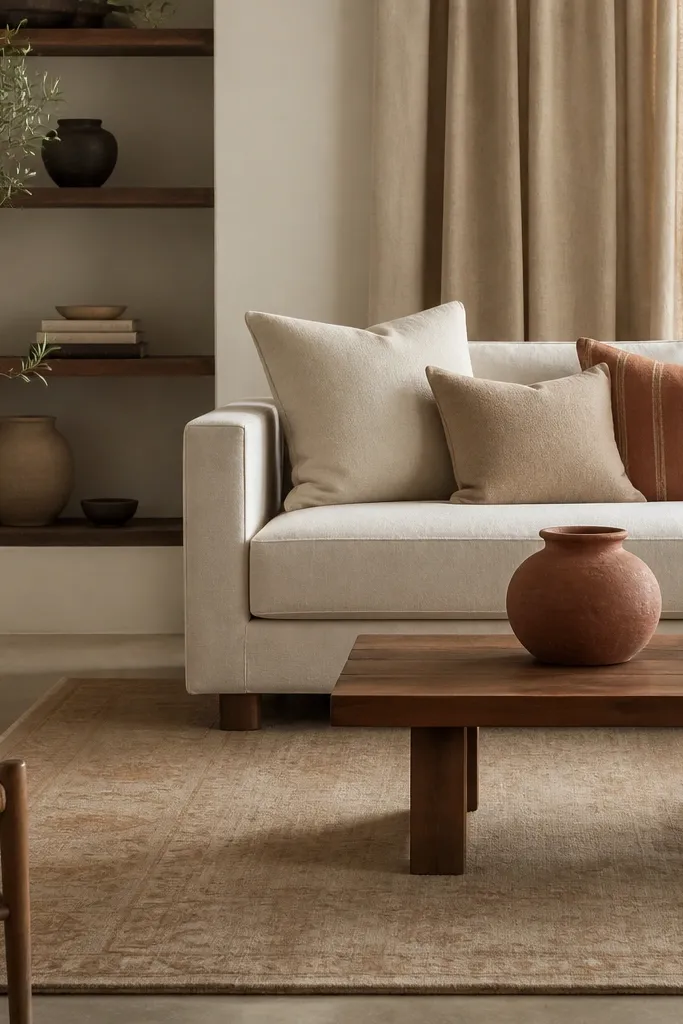
This is one of my favorite “warm neutral” combinations because terracotta adds heat without turning the room orange. A warm greige rug acts like an anchor — it grounds the space while staying light enough to keep it airy. The terracotta accents show up best in small, matte pieces like a ceramic vase or a striped pillow, because matte reads cozy instead of glossy. This works especially well if you have light wood floors and want the room to feel warmer without adding dark furniture. The key is using terracotta in muted, earthy tones rather than bright orange.
Lay the warm greige rug so it extends under the front legs of the sofa by at least 6 inches. Pick two pillow covers in oat and sand solids, then add one terracotta stripe pillow for the accent. Place a matte terracotta vase on the coffee table and keep the rest of the decor light — a pale tray or a small stack of books in cream covers. Hang or position linen curtains in an off-white that matches your rug undertone. Finally, set your lamp shade in a sandy beige so the terracotta pops without looking loud.
Good to knowUse terracotta only in fabric and ceramic, not in shiny metal, so it stays soft and cozy.
AvoidDon’t add multiple bright colors at once — terracotta needs room to breathe.
3. Cream linen curtains + warm white walls
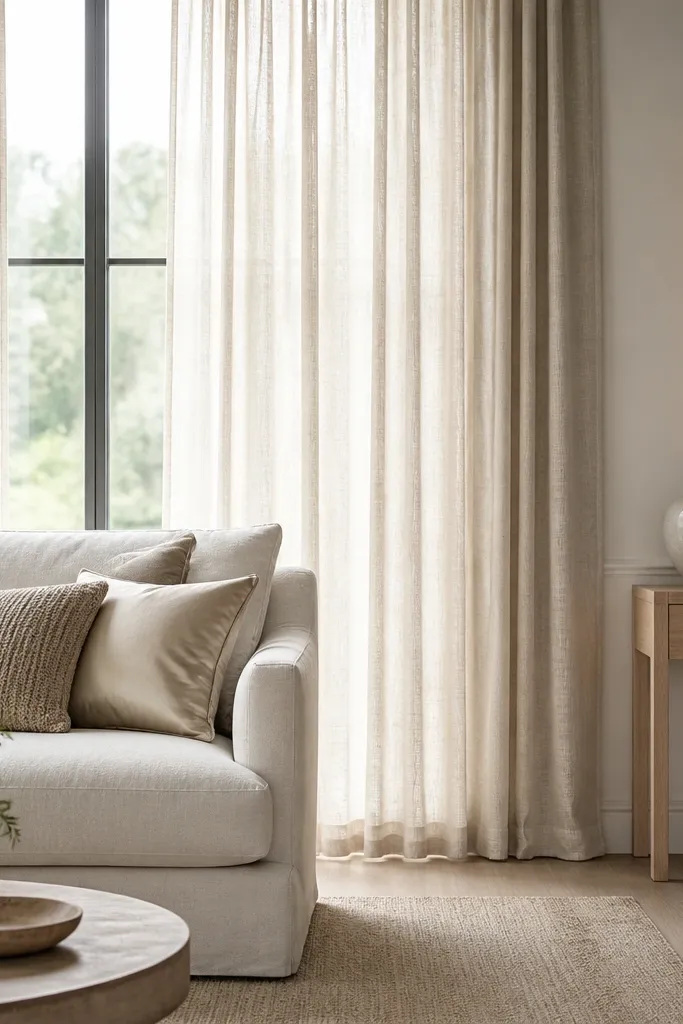
Linen curtains are the easiest way to make neutrals feel warm because they filter daylight instead of reflecting it. When you pair cream linen with warm white walls, the room avoids that sterile, blue-tinted look that makes neutrals feel cold. Linen also has visible texture, so the whole room reads layered even if you keep furniture simple. This works for almost any skin tone and decor style because cream linen is flattering in photos and in real life. It’s also great for homes where you can’t change paint — curtains do the heavy lifting.
Hang the curtains higher than the window trim — aim for 4 to 6 inches above the frame. Use a rod that’s slightly wider than the window so the folds start outside the corners. Choose curtains in cream linen with a slight slub, not a smooth blackout fabric. Style the sofa with one cream or sand pillow and one knit pillow in a slightly darker oat shade. Add a throw in warm ivory over the chaise or one side and keep your coffee table finish matte or satin.
Good to knowSteam the curtains and let them fall in natural folds; crisp, stiff curtains kill the cozy effect.
AvoidAvoid pure white curtains against warm neutrals — it creates a cold spotlight.
4. Walnut coffee table + caramel leather throw pillow
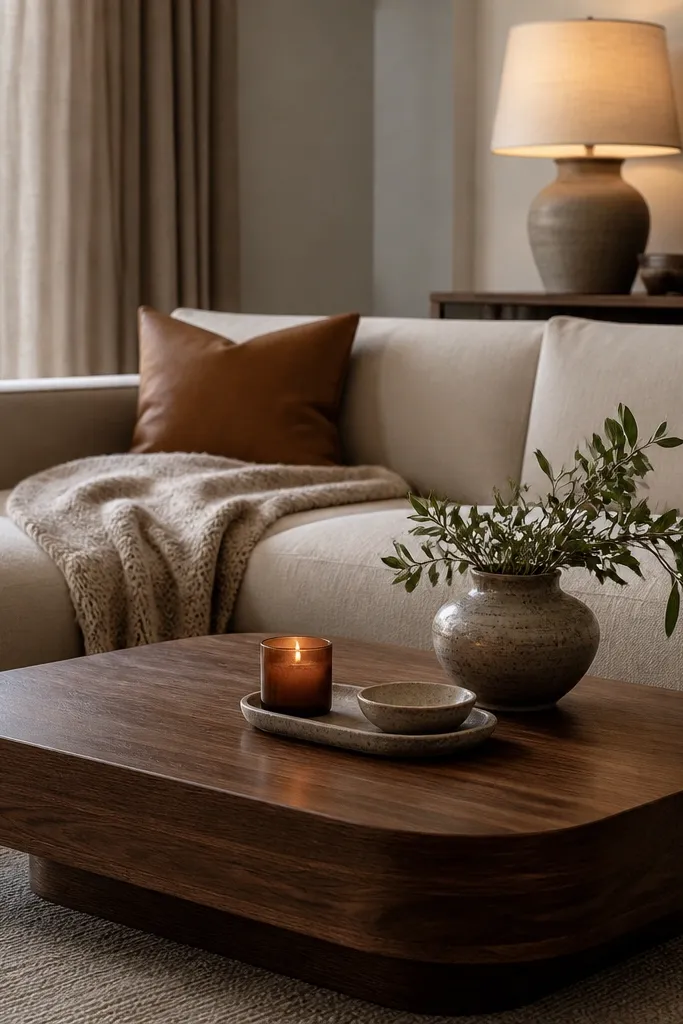
Warm neutrals need one slightly glossy or smooth element to keep them from looking flat. Caramel leather (even if it’s a pillow cover) adds that “real life” warmth because it catches light softly and adds visual depth. Walnut is also a warm undertone — it reads cozy alongside cream and oatmeal better than pale oak. This pairing looks especially good in rooms with darker floors because it balances the base without making the space heavy. If you like a lived-in look, leather does it without looking messy.
Start by placing the walnut coffee table centered with a little breathing room from the sofa — about 12 to 18 inches depending on your layout. Add the caramel leather pillow on one side of the sofa so it’s not competing with the center cushions. Layer an oatmeal woven throw over the opposite side arm for contrast. Put a matte candle jar and a ceramic dish on a tray so the leather doesn’t feel alone. Use warm bulbs and keep metal hardware in brass tones so the leather reads caramel, not reddish.
Wipe leather with a dry microfiber cloth every couple of weeks to keep it looking soft, not greasy.
Avoid pairing leather with very cool whites — the leather will look too red.
5. Chunky knit throw over a low, taupe sofa
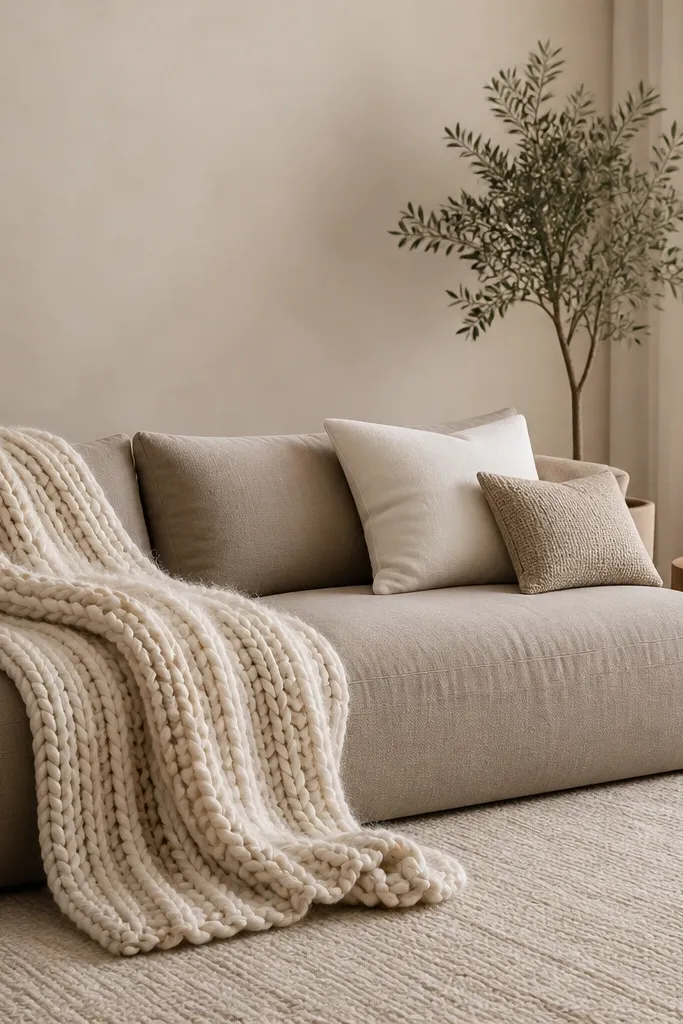
Chunky knit is the fastest route to cozy because it creates depth at a glance. A low taupe sofa gives you structure, then the knit adds “softness you can feel” without changing the room’s color story. Choose a throw that mixes ivory and oatmeal so it doesn’t look like a single, flat shade. This works for anyone with a more modern sofa shape because the knit rounds out the lines. It also photographs well because the yarn texture shows up even in low light.
Drape the throw so it covers most of one sofa side and falls about 10 to 14 inches onto the seat cushion. Add two pillows at the back and one smaller pillow in front so the knit has room to be the star. Keep the larger pillows in taupe and cream solids with subtle texture, like cotton canvas. Place the rug under the coffee table so the whole seating zone feels pulled together. Finish with a lamp that has a fabric shade and a warm bulb for a gentle glow.
Good to knowShake the knit throw out before styling; the fibers look fuller and less lumpy.
AvoidAvoid thin, scratchy-looking knit — it reads cheap and doesn’t drape.
6. Matte ceramic lamp base + linen shade
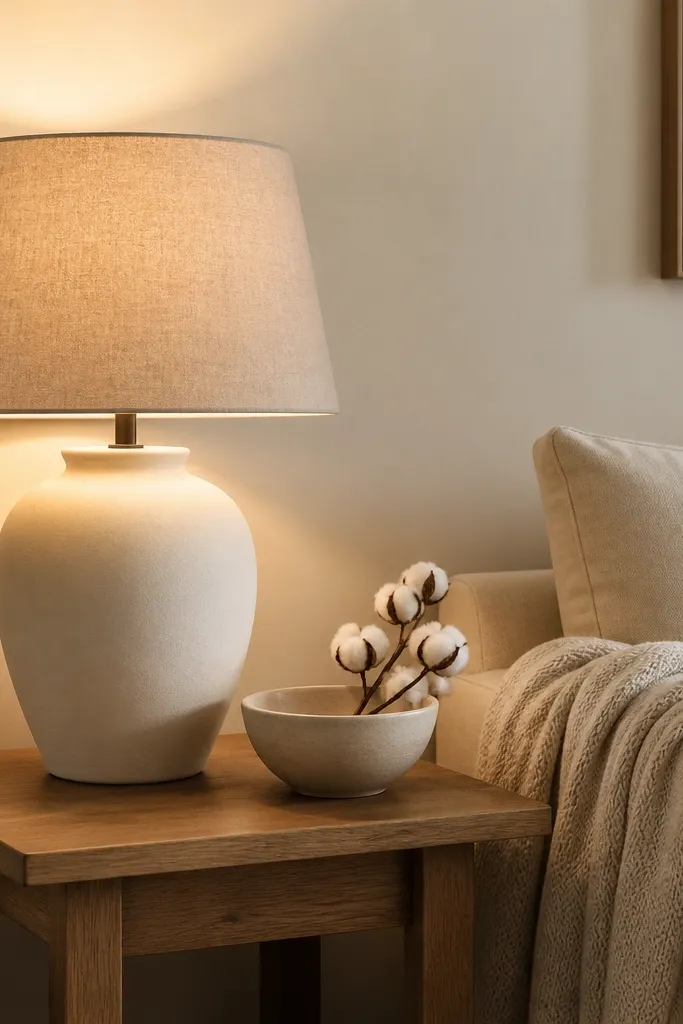
Warm neutrals look cozy when the light is controlled and the lamp materials are matte. A matte ceramic base keeps glare down, and a linen shade diffuses light so cream looks creamy instead of stark. This matters because neutral rooms often fail under harsh overhead lighting. When you use a lamp like this, the whole palette warms up, including your rug and pillows. It’s especially good if you have glossy floors or shiny tile, because matte lighting reduces reflections. You don’t need new furniture — you need better light quality and diffusion.
Place the lamp on a side table where it can light the sofa area, not just the corner. Choose a linen shade that is warm sand, not cool gray, and use a 2700K bulb. Keep the lamp base matte and in cream, oat, or light clay. Style the table with one small ceramic bowl and one plant in a muted pot, like terracotta or sand. If you have multiple lamps, match shades even if the bases differ.
Turn the lamp on at night and check for hotspots on the wall; if you see bright circles, change the bulb or shade thickness.
Avoid glossy lamp bases with shiny shades — they create harsh reflections.
7. Sisal rug + oatmeal sofa pillows
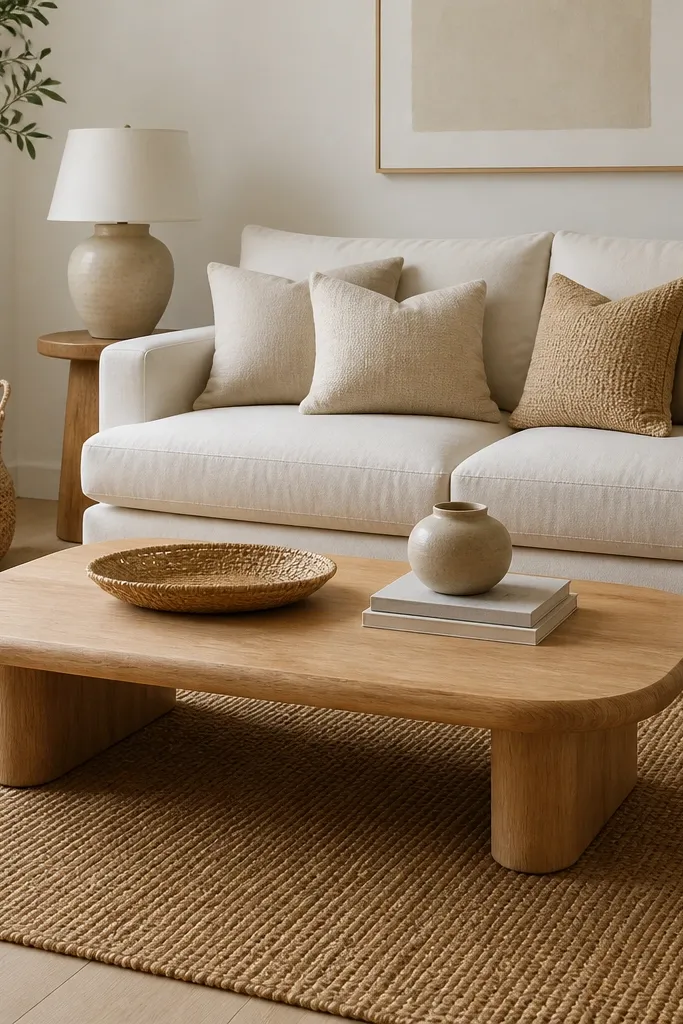
Natural fiber rugs add warmth even when the colors stay neutral. Sisal looks airy but it has enough texture to stop the room from feeling flat. When you pair it with oatmeal sofa pillows, you get the kind of cozy that feels grounded, not heavy. This combo works well in homes with lots of natural light because sisal texture catches it without looking shiny. It also suits people who want a casual, lived-in look without loud patterns. The key is keeping pillow colors within one warm family so the rug doesn’t clash.
Choose a sisal rug in a honey-oat tone and make sure it’s the right size so it sits fully under the seating area. Place your sofa so its front legs land on the rug, not on bare floor. Layer pillows in oatmeal and cream solids, then add one woven jute pillow for extra texture. Keep the coffee table light wood and add a woven basket for a practical cozy touch. Add a simple wall print in warm neutrals above the sofa so the room doesn’t feel empty.
Use a rug pad underneath to stop scratching noises and to keep the rug from shifting.
Avoid super-smooth “fake sisal” in cool beige — it looks plasticky next to real oatmeal.
8. Sand-toned striped pillows on a cream base
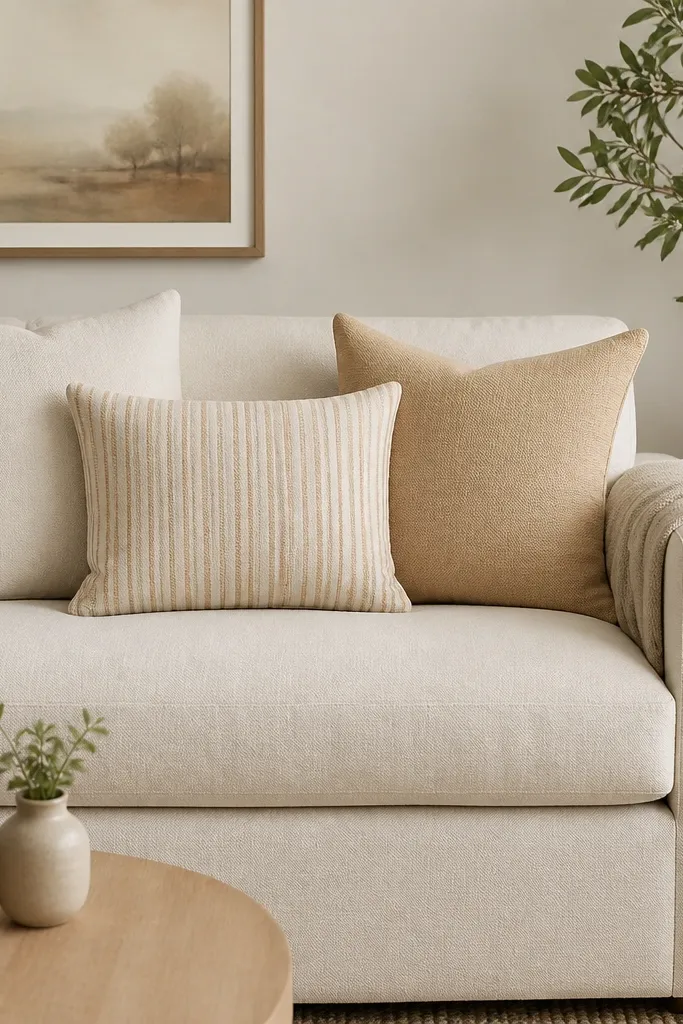
Stripes can stay cozy when the colors are warm and the stripe is fine enough to feel soft. I like a cream base sofa with sand-toned stripes because it adds movement without making the room feel busy. The warmth comes from the undertone: sand reads brownish, not grayish. This setup flatters small living rooms because fine stripes don’t visually expand the room in a harsh way. It also looks good for everyday living because stripes hide minor mess and lint better than solid whites.
Start with a cream or warm off-white sofa base. Add two solid pillows in cream and sand, then place the striped pillow in the center front so it’s the first thing you see. Keep the stripe scale thin — about the width of a pencil line — so it stays calm. Fold a warm ivory throw and drape it over one arm, letting it hang evenly. Finish with a rug in a warm solid or subtle pattern so the stripes don’t compete.
Good to knowIf your room feels too plain, add one more stripe element through a throw or curtain tie, not through more pillow colors.
AvoidAvoid black or charcoal stripes — they make the room feel colder than it looks.
9. Warm white slipcovered chair + mini gallery wall
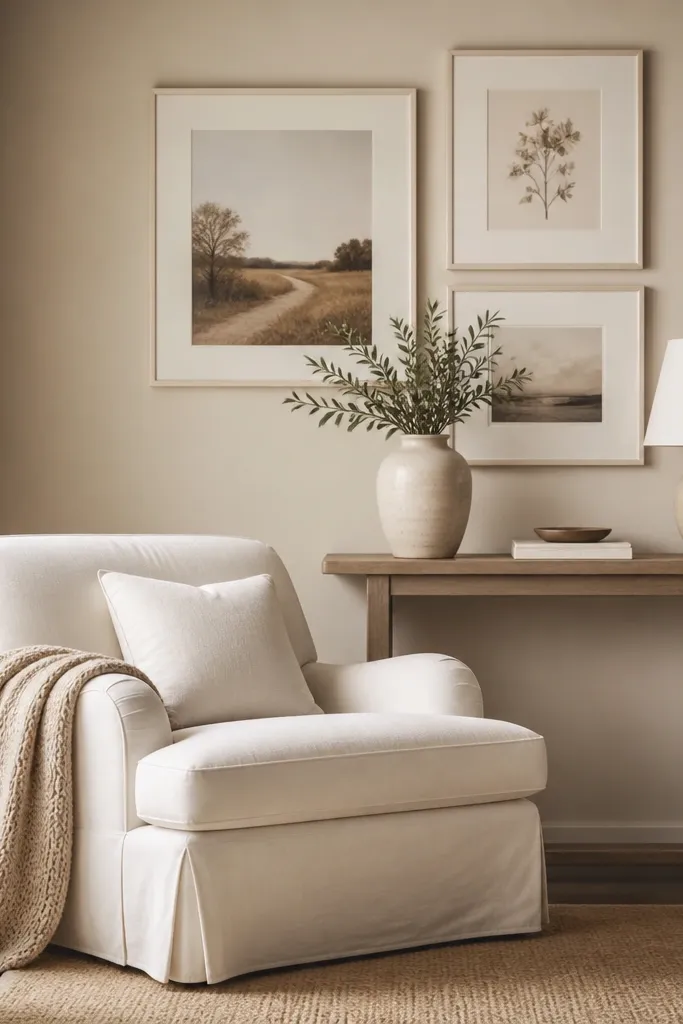
Slipcovered furniture makes neutrals feel cozy because it reads soft and tailored at the same time. A warm white chair adds brightness without the blue tint that sometimes comes with pure white fabrics. Then you can bring warmth back through a knit throw and warm-toned art. A mini gallery wall in off-white frames keeps the look intentional but still relaxed. This combination is great if your living room is missing “zones” — it gives you a reading corner without buying a whole second sofa.
Pick a warm white slipcovered chair with a fabric that isn’t too shiny, like cotton-linen blend. Add a knit throw in oatmeal over the arm so it drapes naturally, not tucked perfectly. Place a small console beside the chair and style it with a ceramic vase in cream or light clay plus a lamp. Hang three frames centered at eye height; use off-white or natural wood frames. Keep wall art colors in warm neutrals so the chair stays the brightest element.
Choose frames with matte glass or low-glare finish if you have bright windows — it prevents ugly reflections.
Avoid glossy white chair fabric — it looks like a rental when the light hits.
10. Taupe velvet curtains + oatmeal sofa
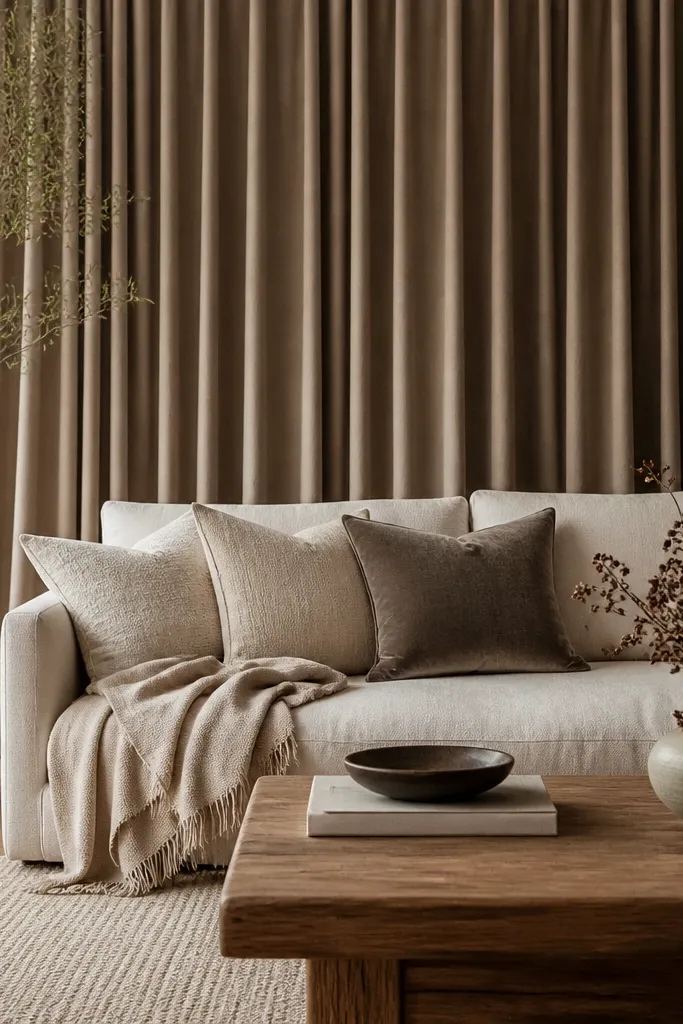
Velvet gives warm neutrals depth because it absorbs light instead of reflecting it. Taupe velvet curtains make the room feel more intimate, especially in evenings when you want a cocoon vibe. Pairing taupe velvet with an oatmeal sofa keeps the palette cohesive and stops velvet from turning too dark. I like velvet in rooms where you have big windows or lots of hard surfaces, because it softens everything visually. This is a great pick if your living room feels a little too “open plan” and you want a calmer, quieter corner.
Hang velvet curtains high and wide, with the rod extending 4 to 6 inches beyond the window edges. Choose velvet in taupe that leans warm, not gray. Let the curtains puddle slightly on the floor for a cozy look, around 1 to 2 inches. Style the sofa with oatmeal and cream pillows, then add one taupe velvet pillow so the curtains and sofa echo each other. Keep the throw in wool or thick knit and add a warm wood coffee table to balance the softness.
Good to knowVacuum velvet with a soft brush attachment and go in the direction of the nap to keep it looking full.
AvoidAvoid thin velour substitutes — they look shiny and cheap next to real velvet.
11. Faux fur throw + warm wood shelving
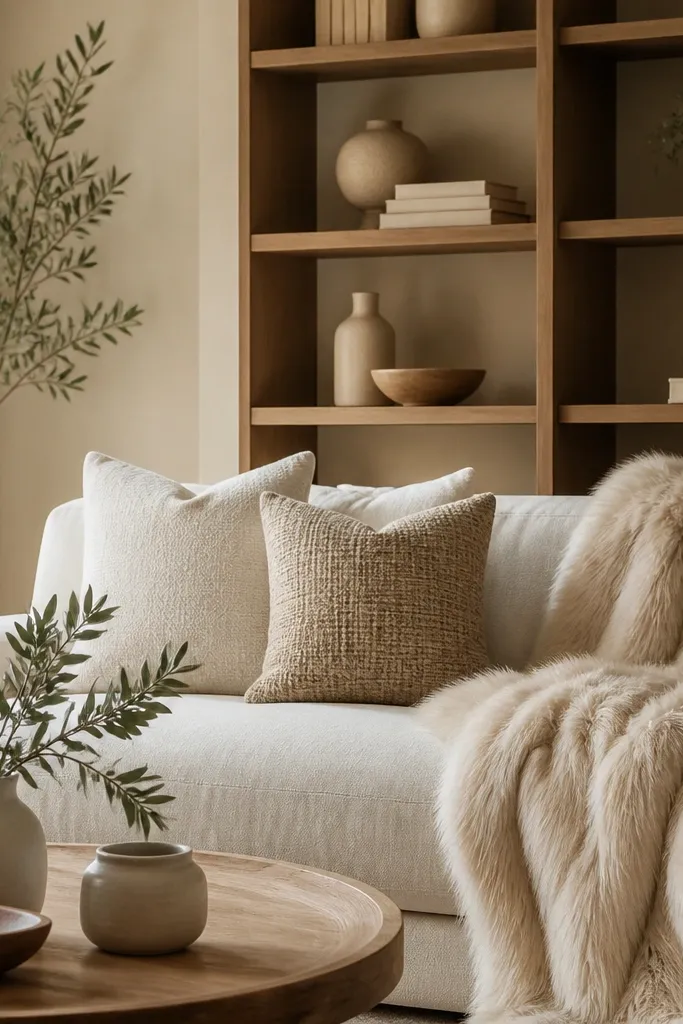
Faux fur is the instant comfort hack for neutral rooms. When you drape a light beige faux fur throw over the sofa, it adds a different kind of softness than knit or linen — it looks plush in daylight and cozy at night. Warm wood shelving keeps everything from feeling too soft or too pale. This combo works best in living rooms that need a “finished” feeling because shelving gives you vertical structure, and the fur gives you comfort. It’s also friendly for people who like neutral but want the space to feel like a hug, not a showroom.
Mount or place warm wood shelving so it’s visible from the sofa, then style it with a few objects that share warm undertones. Use 2 to 3 ceramic items in cream or light clay, one plant in a terracotta pot, and a book stack with cream or oatmeal covers. Drape faux fur over the sofa arm so it hangs down about 8 to 12 inches. Add woven pillows in jute or cotton for contrast, and keep the rest of the palette in cream, sand, and oatmeal. Place a lamp nearby so the fur catches gentle light without glare.
Brush the faux fur lightly with a soft pet brush so it looks even and fluffy.
Avoid placing faux fur in a room with only smooth surfaces — it will look random instead of intentional.
12. Natural linen bedding-style cushions on a sectional
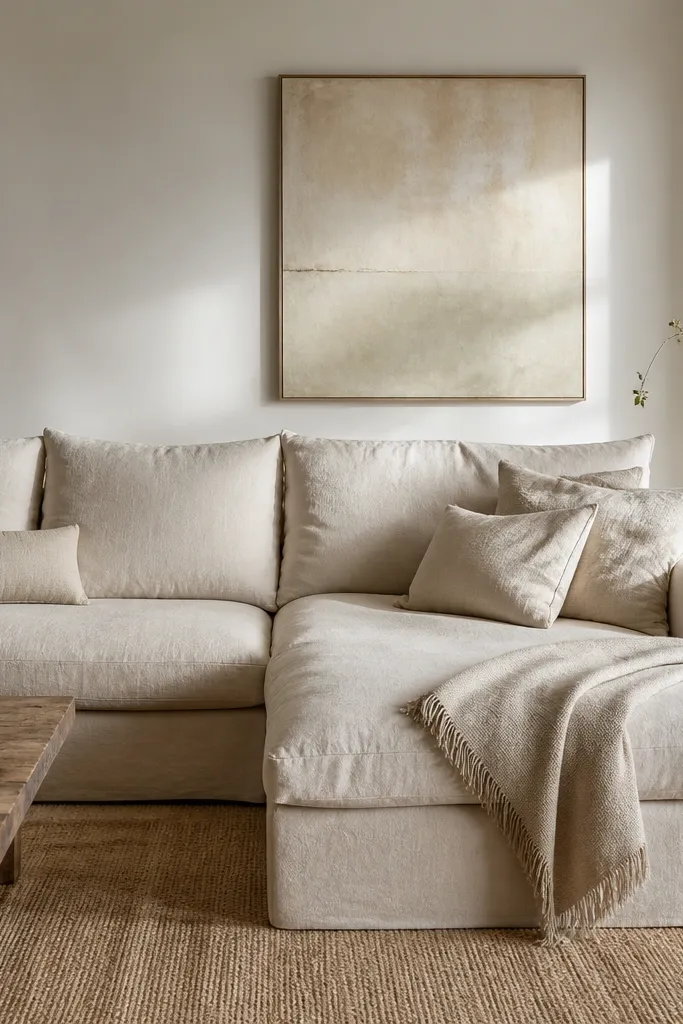
Loose, linen-style cushions make a living room feel like you actually live there. When the cushions have that subtle wrinkled texture, the room looks casual and warm instead of staged. I like cream and oat linen because they create a soft, breathable look that works with sectionals where you see a lot of fabric. This is flattering for rooms that feel too tidy or too new — it adds warmth through texture and relaxation. It also hides small imperfections better than smooth, shiny cushions.
Start by choosing cushion covers in natural linen or a linen-look fabric, not a slick polyester. Place two larger cushions in cream and one in oat on the visible side of the sectional. Add smaller lumbar pillows in sand, then keep one wool throw folded and placed on the chaise. Use a rug with a subtle texture so the linen doesn’t float. Keep decor minimal — one ceramic piece and one framed print — so the fabric texture stays the focus.
Good to knowAfter washing, let linen covers air-dry and slightly crumple; that natural texture reads expensive.
AvoidAvoid perfectly smooth, glossy cushion covers — they kill the cozy lived-in feel.
13. Warm neutral monochrome with different pile heights
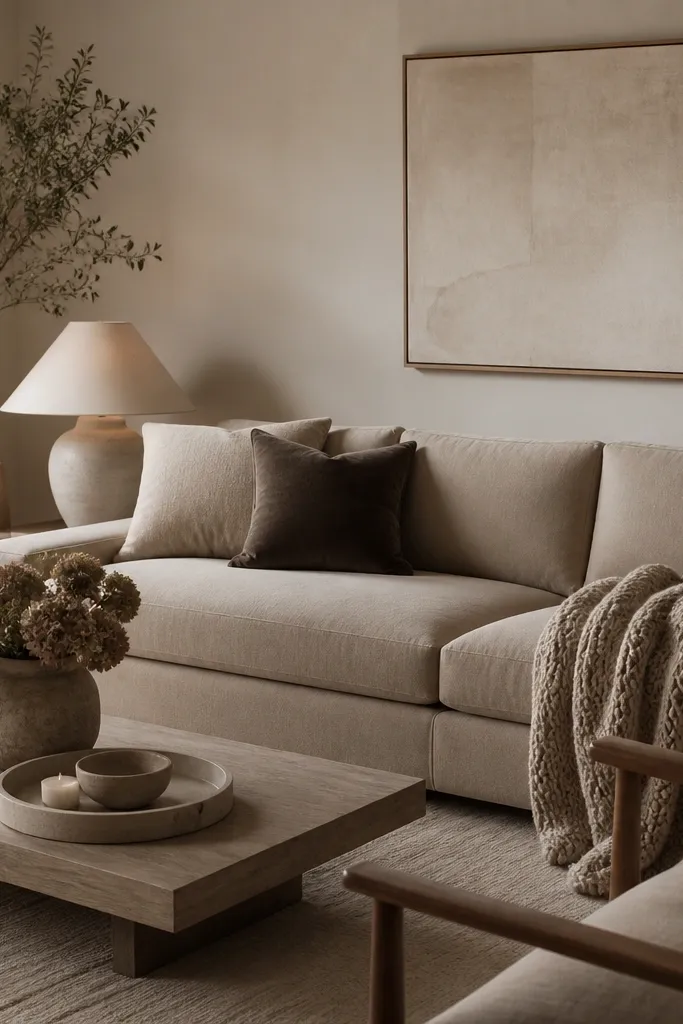
Monochrome can look cozy when you vary pile height and surface finish. Warm greige on the sofa gives you the base, then you add a chunky knit throw, a velvet-touch pillow, and a rug with a different texture so the room doesn’t blur together. This approach is great when you want a calm look but your eye keeps catching “wrong” colors. The warm undertone keeps everything friendly, while the texture differences make the room feel layered. I’ve used this in small rooms where too many colors made it feel busy.
Pick one main color, like warm greige, and match undertones across sofa, rug, and biggest pillows. Choose a rug with a low pile for a clean base, then add a chunky knit throw in cream or ivory. Add one velvet or suede-touch pillow cover in a slightly darker greige so the pile shows depth. Keep your wall art and curtains in off-white to avoid breaking the monochrome. Style with one matte ceramic tray and one small wood object so the finishes stay consistent.
Hold your pillows side by side in daylight; if they look like the exact same shade, swap one for a different finish instead of a new color.
Avoid mixing warm and cool undertones in monochrome — the whole room will look off even if the colors seem close.
14. Oyster shell wall decor + warm brass candle holders
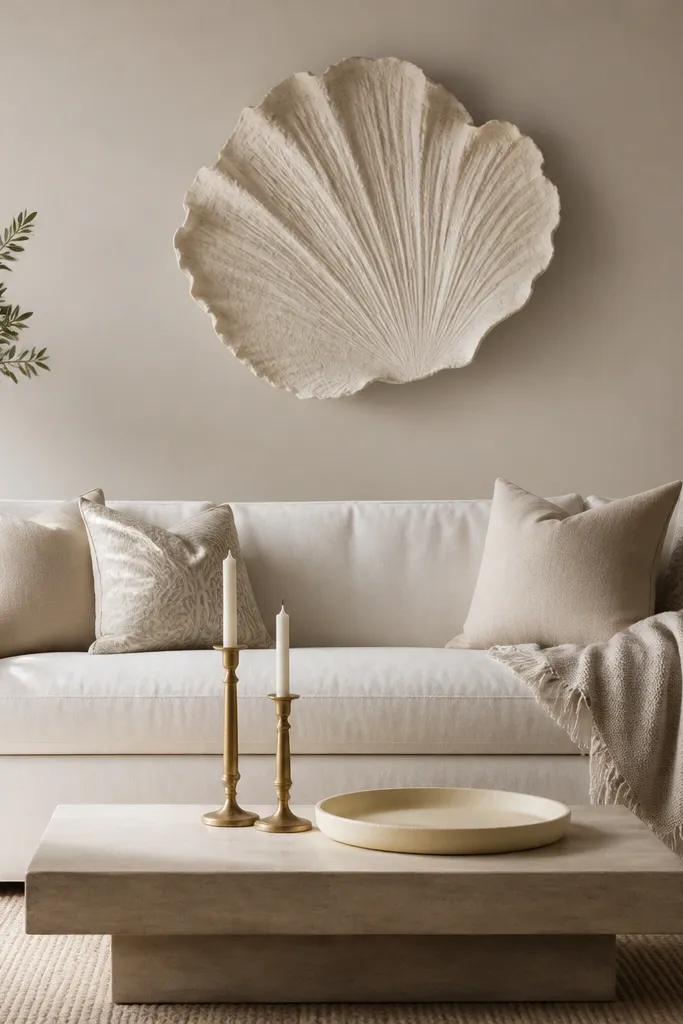
Small reflective accents can work in a cozy neutral room if they’re warm and controlled. Oyster-shell tones are creamy with a hint of soft beige and they add a gentle glow without turning the space glossy. Warm brass candle holders do the same — they catch light at the edges and make the room feel cared for. I like using candle holders because they look styled even when you’re not lighting them. This works well in rooms where you want warmth without adding more furniture. The trick is to keep the reflective pieces limited so the textiles stay the main comfort.
Hang your oyster-shell-toned wall decor centered above the sofa at about 60 inches from the floor to the middle of the piece. Choose pillows in cream and sand solids, plus one pillow with a subtle oyster pattern so it echoes the wall. Drape an oatmeal throw over the arm and keep it slightly messy — the ends should look soft, not tucked. Place a matte cream tray on the coffee table and set two warm brass candle holders on it. Add one small ceramic dish near the tray so the brass doesn’t feel alone.
Use unscented candles with a creamy wax color; colored wax makes neutrals look tired.
Avoid chrome or silver candle holders — they turn warm neutrals cold.
15. Warm neutral sectional with layered floor lamp and side table
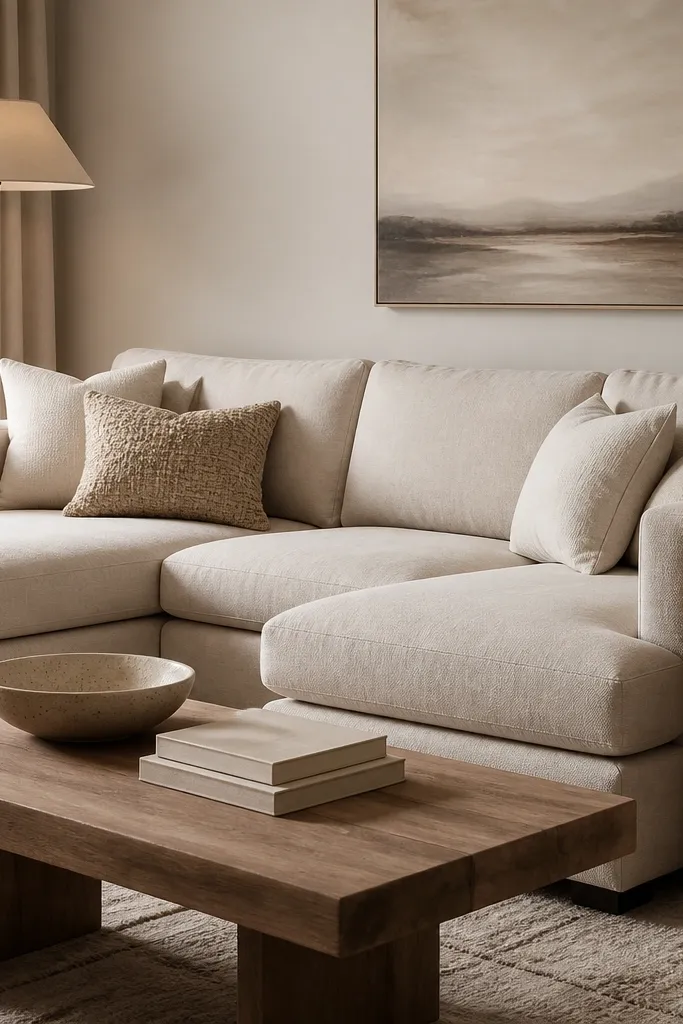
Cozy warm neutrals need light from more than one height. A floor lamp next to the sectional fills the room without making shadows harsh, and a table lamp adds a softer, closer glow for the seating zone. When you use warm beige shades and warm bulbs, the oatmeal sofa reads inviting instead of flat. This setup is great for living rooms with limited overhead lighting or a window that throws strong shadows at night. It also makes neutral decor feel intentional because the room has depth — not just color. I’ve used this exact lighting layering when guests comment that the room feels “soft” even though nothing is bright.
Place the floor lamp so the light hits the back wall or the side of the sectional, not directly into your eyes. Choose a beige drum shade and use a 2700K bulb. Put a table lamp on the opposite side table with the same shade color family. Style pillows in cream and oat, then add one woven pillow for texture variation. Keep the coffee table simple: a ceramic bowl, a tray, and a stack of books that match the warm neutral palette. Finally, adjust lamp positions until shadows behind the cushions look gentle, not sharp.
Good to knowUse a dimmer if you can; warm neutrals look best at lower light levels, not full brightness.
AvoidAvoid one single bright lamp; it creates one hot spot and makes the rest of the room feel dull.