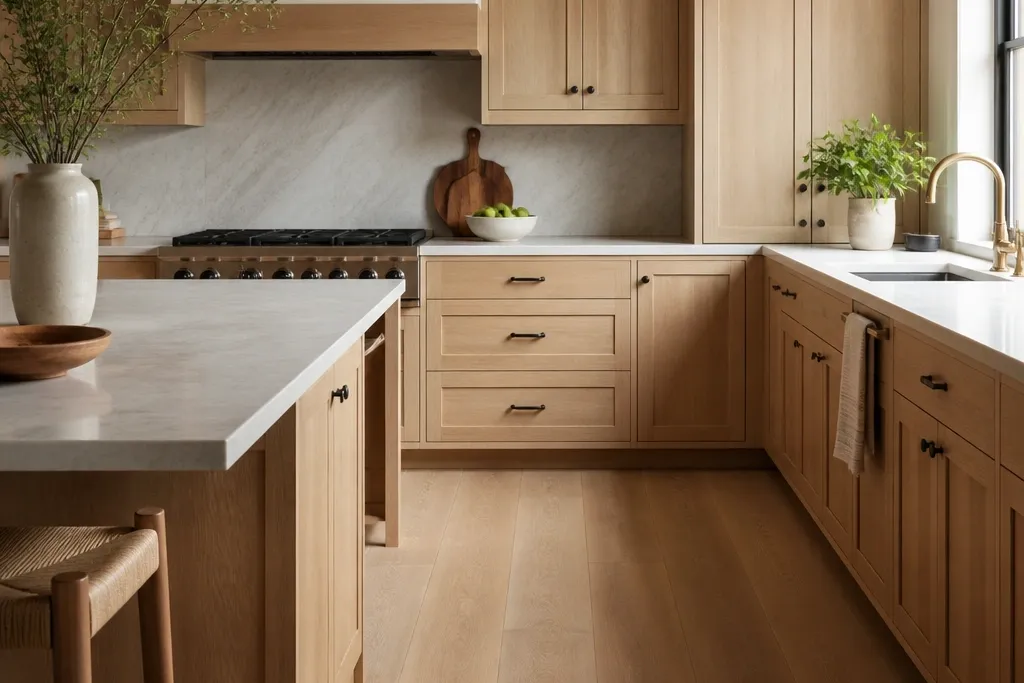
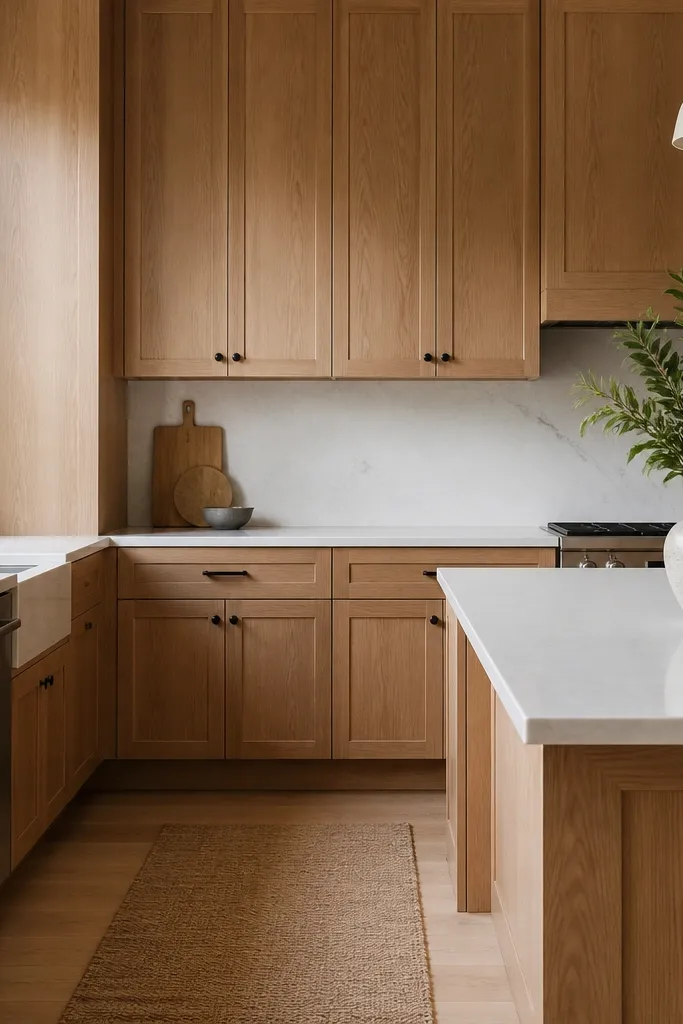
1. Satin natural oak with full-height shaker doors
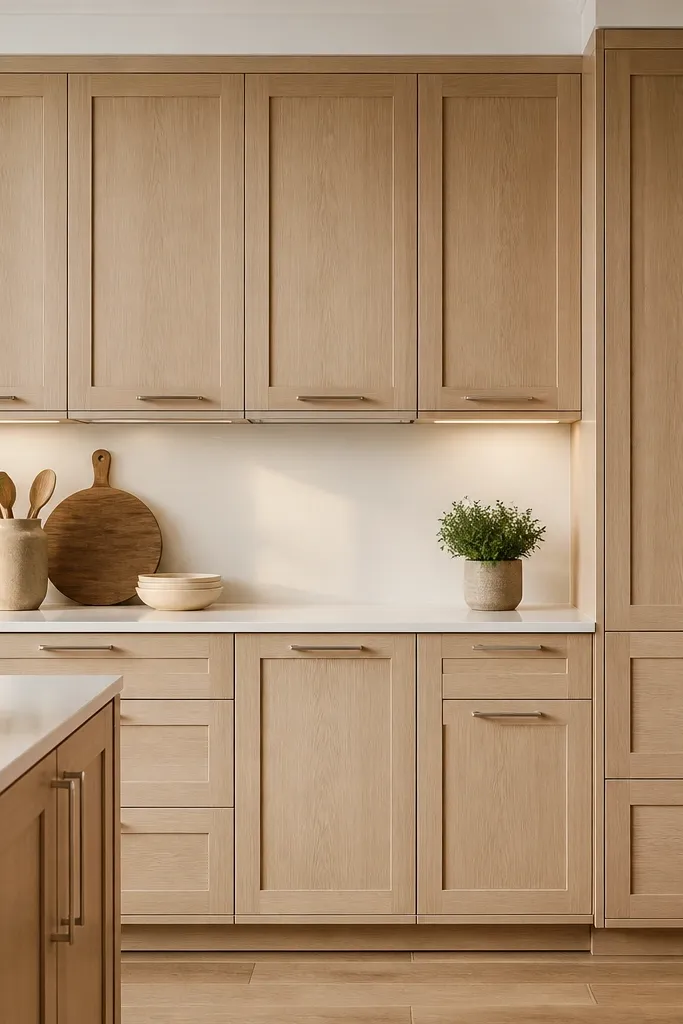
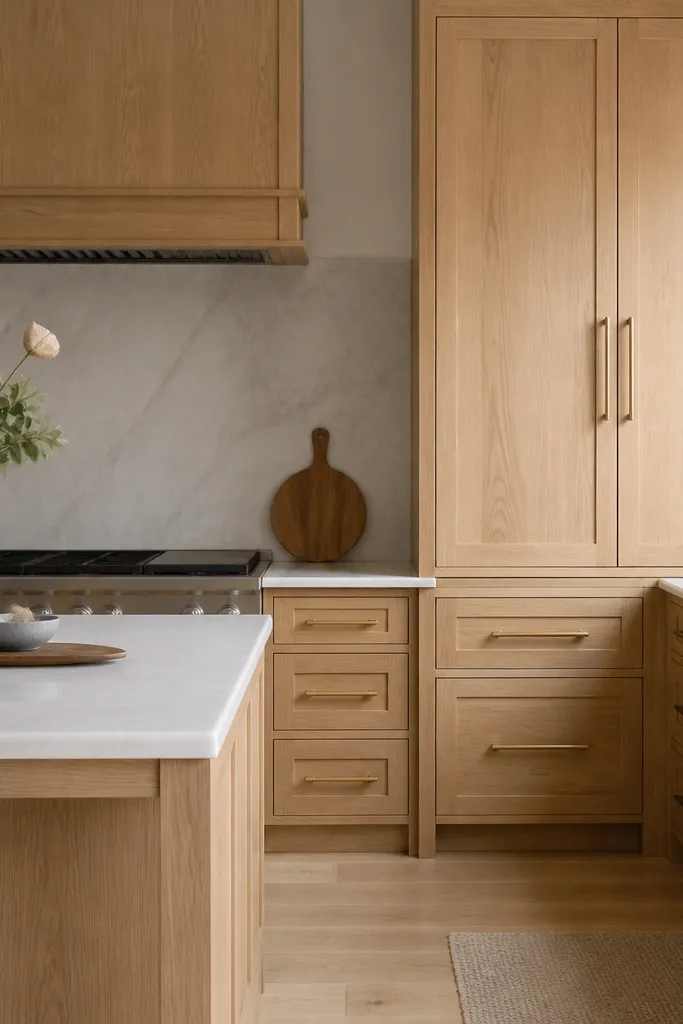
This look works because shaker doors give you straight visual lines while the satin oak keeps the grain readable without glare. I’ve installed this exact combo in a narrow kitchen where tall cabinets made the room feel less cramped. The oak stays neutral against bright white quartz, so the kitchen reads clean instead of “rustic.” It flatters kitchens with medium to cool lighting, and it’s especially flattering if your walls are off-white with a gray or greige tint.
Start by ordering shaker doors with a consistent grain direction, then choose a satin clear coat rather than a high-gloss topcoat. Pair your counters with white quartz that has thin, soft gray veining so the oak stays the star. Install brushed nickel bar pulls at about 5 inches center-to-center for uppers and 6 to 7 inches for lowers, matching the cabinet height. Add a slim 3-inch backsplash in white subway tile or a smooth slab, and finish with a light paint that’s not too warm.
Good to knowUse under-cabinet LED strips set to 3000K for that “morning kitchen” warmth without making the oak go honey.
AvoidAvoid pairing natural oak with shiny brass hardware and a warm yellow wall paint — the whole kitchen can read orange.
2. Vertical oak panel uppers over flat-front lowers
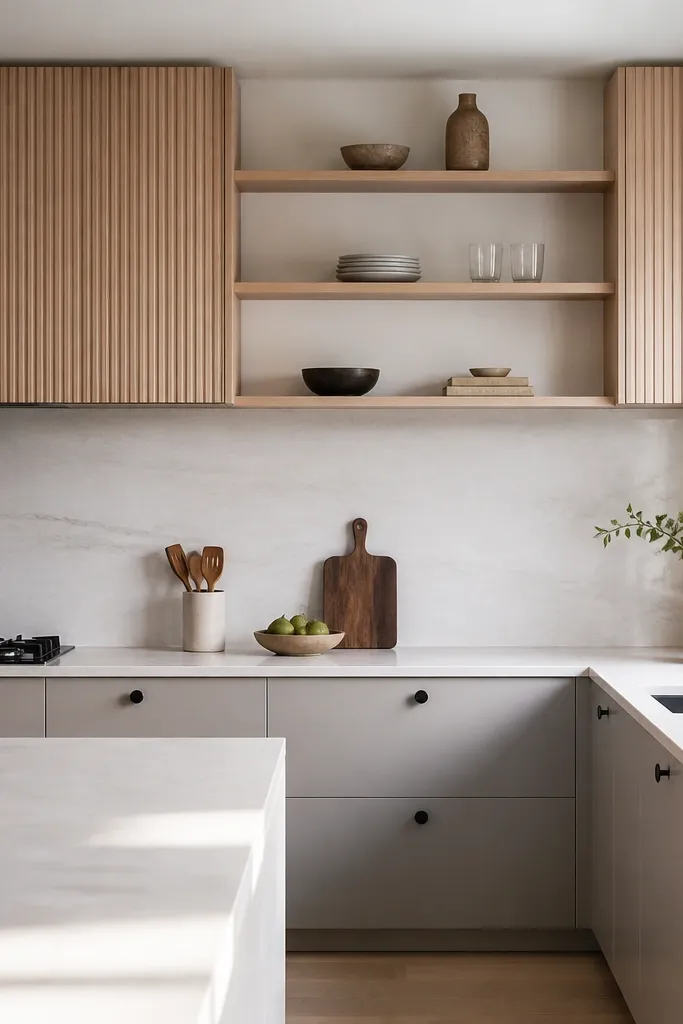
Vertical panels create height and movement, and that matters when you want “beautiful” without adding complicated trim. I like this mix because flat-front lowers keep the base calm, so the uppers can do the styling. The oak grain in vertical panels looks more intentional, especially with a clear, low-stain finish. This setup flatters compact kitchens and anyone who wants modern lines but still wants warmth.
Begin with vertical panel uppers and keep the stain light — ask for a sample that looks close to pale straw, not honey. Choose flat-front lowers in the same oak so the transition feels planned. Use a warm white countertop with a creamy base to keep the vertical grain from looking too stark. Put matte black hardware only on the lowers (knobs or short pulls) and leave the uppers hardware-free if you can manage a handleless reveal. Finish the backsplash with a smooth slab in light gray or white to keep the look crisp.
If your ceiling is 8 feet or less, add recessed shelf lighting under the uppers — it makes the vertical panels look taller.
Don’t add crown molding here unless you keep it simple; heavy trim fights the clean vertical lines.
3. Natural oak cabinets with a soapstone-style dark counter
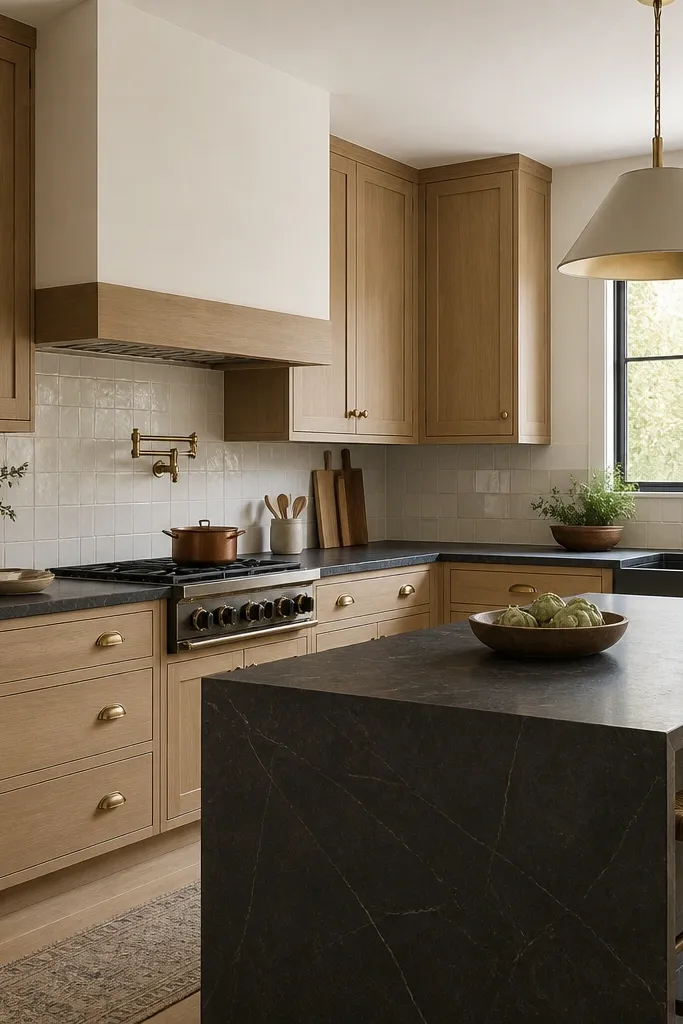
Dark counters make pale oak look richer and more dimensional, and I’ve seen this combo calm down kitchens that feel too bright. The oak stays light, but the charcoal surface adds depth so the room doesn’t feel washed out. A soapstone-style surface also has a soft, low-gloss look that pairs well with oak grain. This is flattering if you have warm skin tones in the household or you want a “cozy modern” vibe without going fully rustic.
Start by choosing a natural oak finish that stays neutral, not yellow — aim for a clear coat that reads “white oak” in daylight. Pair it with a charcoal slab with subtle movement, like soapstone or a dark honed quartz. Install aged brass pulls that are slim and slightly rounded, placed evenly across doors. Use a cream backsplash tile with grout that matches (light warm gray grout works). Finish with a matte black faucet and light woven runner on the floor.
Good to knowUse a backsplash grout color that matches the countertop’s undertone so the contrast looks intentional, not accidental.
AvoidAvoid high-gloss dark counters; they reflect overhead lights and can make oak look blotchy.
4. Oak cabinets with glazed white upper doors
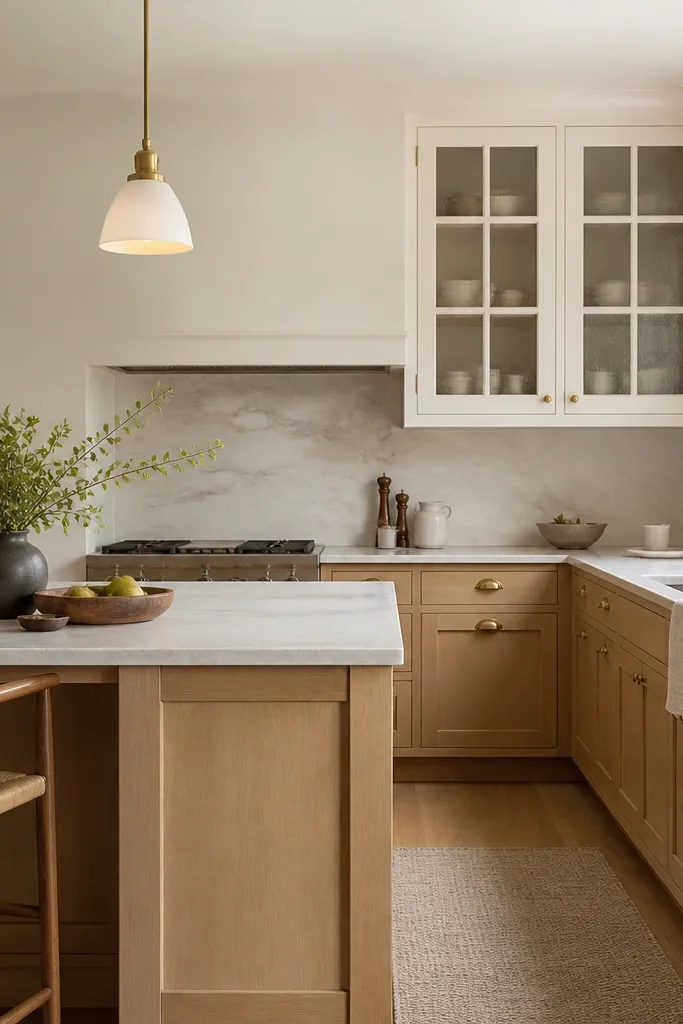
This is the “best of both worlds” look: oak warmth on the base, white brightness up top. The glazed doors keep the oak from taking over, and the white upper read makes ceilings feel taller. I like it in homes where the kitchen opens to a living room because the white upper doors visually connect to other white elements. It flatters kitchens with lower natural light since the upper area stays airy and bright.
Choose shaker bases in natural white oak with a satin finish, then order upper cabinets as shaker with glass inserts. Use a glazed white paint finish for the uppers that has a creamy undertone, not blue-white. Install antique brass cup pulls on the base doors and use a simple frame pull on the glass doors if needed. Keep the backsplash simple — I’ve used a 4-inch white tile with soft gray grout. Add warm white lighting (2700K to 3000K) so the oak doesn’t turn gray.
Good to knowKeep glass inserts lightly frosted; clear glass shows dust and makes the kitchen look messy fast.
AvoidAvoid dark stain on the oak if you’re already using white uppers — the contrast can feel heavy.
5. Oak cabinets with a light gray veined quartz and chrome hardware
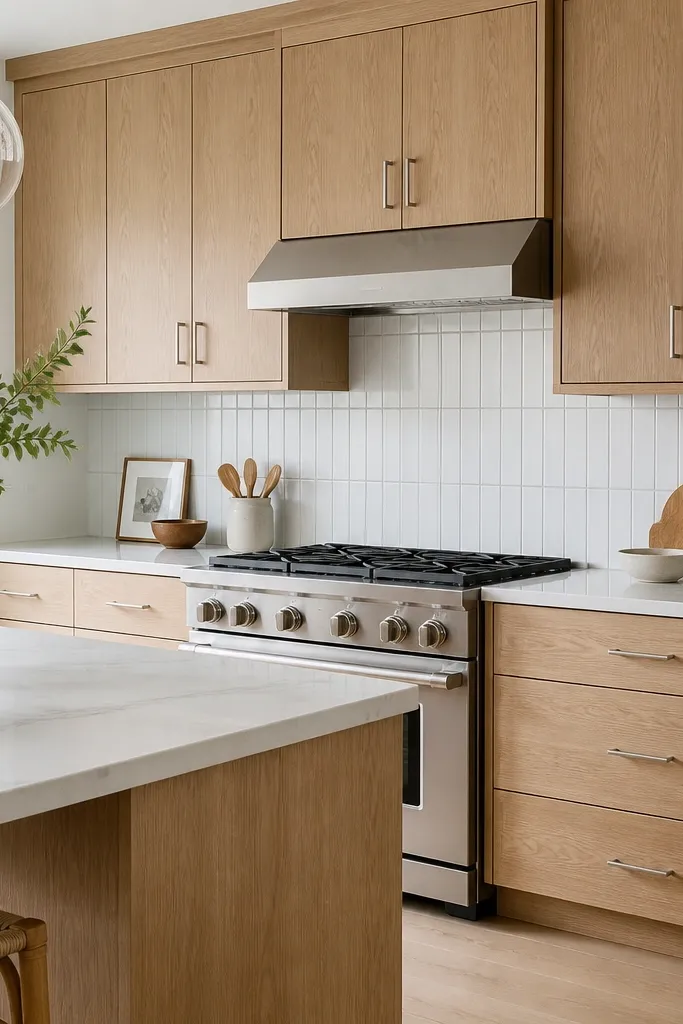
This combo reads crisp because chrome hardware adds a cool highlight and the quartz veining gives structure. I’ve used it in kitchens with clean modern flooring and it looks intentional instead of “random mix.” The natural oak stays neutral when the finish is clear and not too warm. It’s a good fit for people who like a clean, airy kitchen and don’t want the warmth to tip into rustic.
Pick a clear, low-stain oak finish and keep door sheen at satin. Choose quartz with thin gray movement, not thick dramatic veins. Install chrome bar pulls at consistent height: about 3 inches down from the top rail on uppers and centered on lowers. Keep the backsplash grout on the cooler side — light gray grout looks better than warm gray. Finish with a simple chrome faucet and a white roller shade for light control.
Good to knowWipe a cabinet sample under both daylight and 2700K bulbs before you commit — the undertone shift shows up fast.
AvoidDon’t pair chrome with a honey-stained oak; the mismatch makes everything look dated.
6. Natural oak cabinets with butcher block island and linen accents
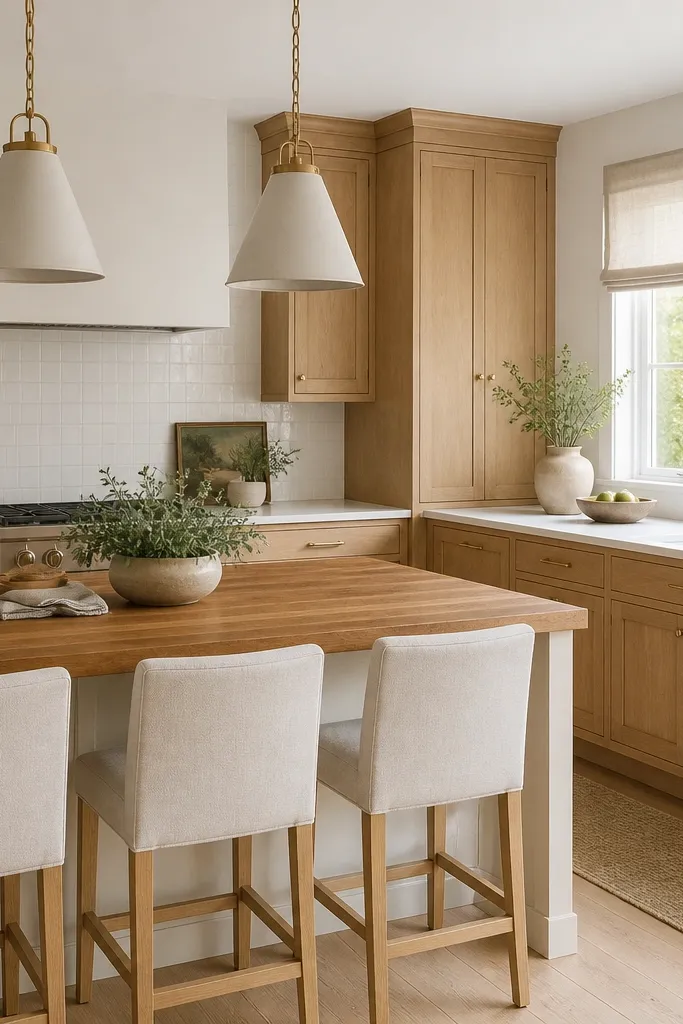
Butcher block adds warmth without turning the whole kitchen orange, and oak already gives you that wood-on-wood harmony. I like this look because it feels lived-in, not staged — the linen and light wood tones hide fingerprints and smudges better on the overall palette. The butcher block also helps if your oak finish is very light; it grounds the contrast. It flatters casual households and anyone who wants a kitchen that looks good even when it’s busy.
Choose natural oak cabinets in satin with a clear coat so the grain stays pale. Install a butcher block island top with a matte finish — I prefer 1.5-inch thick tops with rounded edges. Use warm bronze pulls on the island base only, then keep the perimeter hardware slightly lighter so it doesn’t look heavy. Add a white tile backsplash with minimal pattern. Style with two linen accessories: roman shade and a runner or bar towels, keeping them in a warm oatmeal tone.
Good to knowOil the butcher block with food-safe mineral oil and then buff with a clean cloth before it goes in — the surface should feel dry, not slick.
AvoidAvoid mixing butcher block with very dark oak stain; it turns the kitchen into one flat brown.
7. Oak cabinets with rift-sawn grain look and matte black hardware
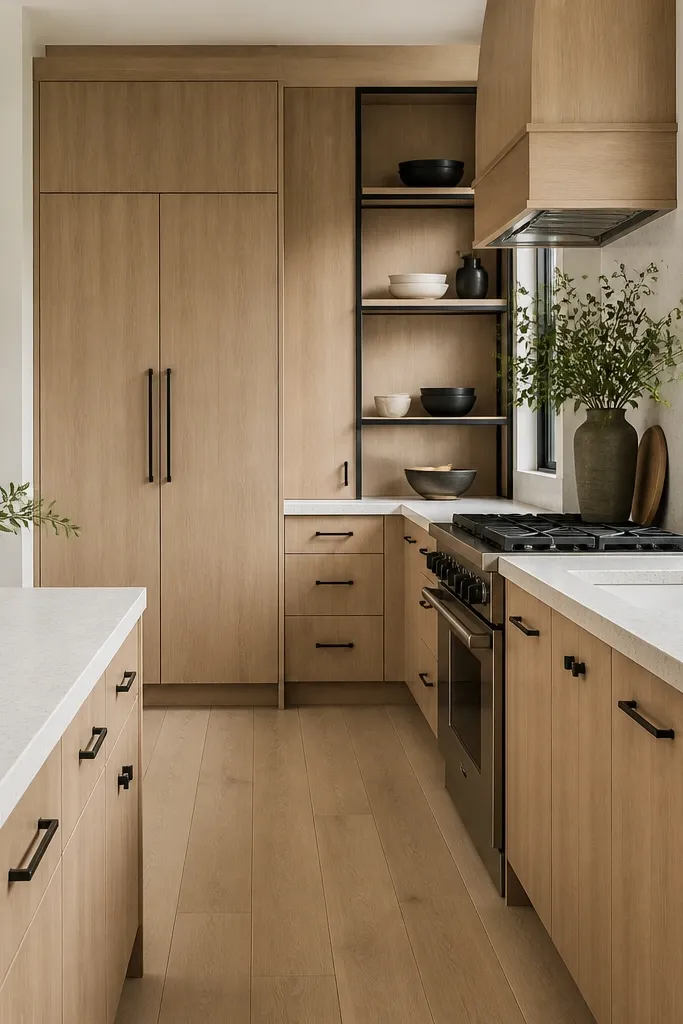
That straight, tight grain reads modern, and the matte black hardware gives you a clean contrast point. I’ve used this when the rest of the kitchen is already modern — stainless, black window frames, or matte black lighting. Natural oak keeps the room from feeling cold, and the black hardware makes the cabinets look sharply designed. This flatters people who like a high-contrast look but still want the warmth of real wood.
Order doors described as rift-sawn or with straight grain layout, and request a finish sample in satin. Choose a white countertop with subtle gray flecks so the cabinet grain stays the focus. Use matte black pulls sized around 5 inches for uppers and 6 inches for lowers. Keep backsplash simple — a large-format white tile or a smooth white slab with minimal grout lines. Add one black element under cabinet lighting, like a black power outlet cover or a black faucet.
Good to knowUse a magnetic stud finder to plan pull placement so every handle lines up across doors and drawers — misalignment screams “cheap install.”
AvoidAvoid mixing matte black hardware with warm brass accents elsewhere; it makes the palette feel split.
8. Natural oak cabinets with arched glass display uppers
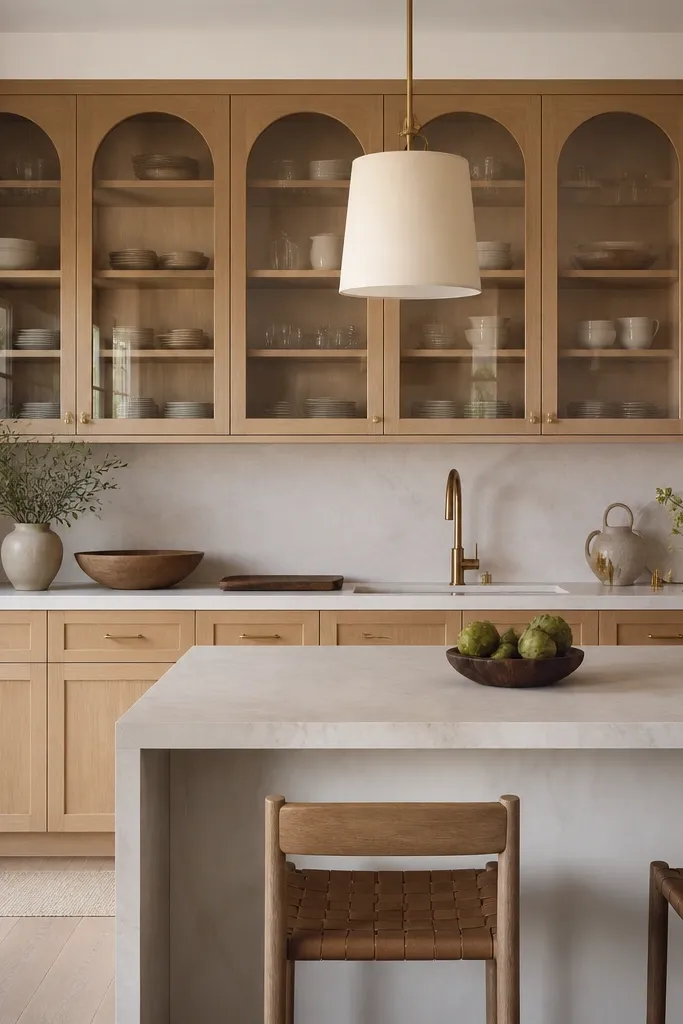
Arched glass adds softness and a little drama, and it makes oak look more furniture-like. I like it for kitchens that feel too boxy because the arch breaks up the straight lines. The natural oak warms the glass area, and the display makes everyday dishes look intentional. This is flattering if you have a formal dining area nearby or you want the kitchen to feel like a place you actually host.
Choose oak shaker bases in satin and keep the stain light so the arch doesn’t look heavy. Order arched glass uppers with a lightly tinted glass or frosted glass to hide dish clutter. Use brushed brass pulls on the base doors and keep the display hardware minimal — slim pulls or no pulls if you can. Pair with a white countertop and a backsplash that has a gentle texture like small mosaic or a subtle matte tile. Style the display with matching cups or a stack of white bowls so the glass looks curated.
Good to knowInstall clear LED strip lights inside the display cabinets — the glass looks better and dishes look brighter.
AvoidAvoid fully clear glass unless you’re ready to wipe it daily; fingerprints show instantly.
9. Oak cabinets with chamfered shaker edges and warm white walls
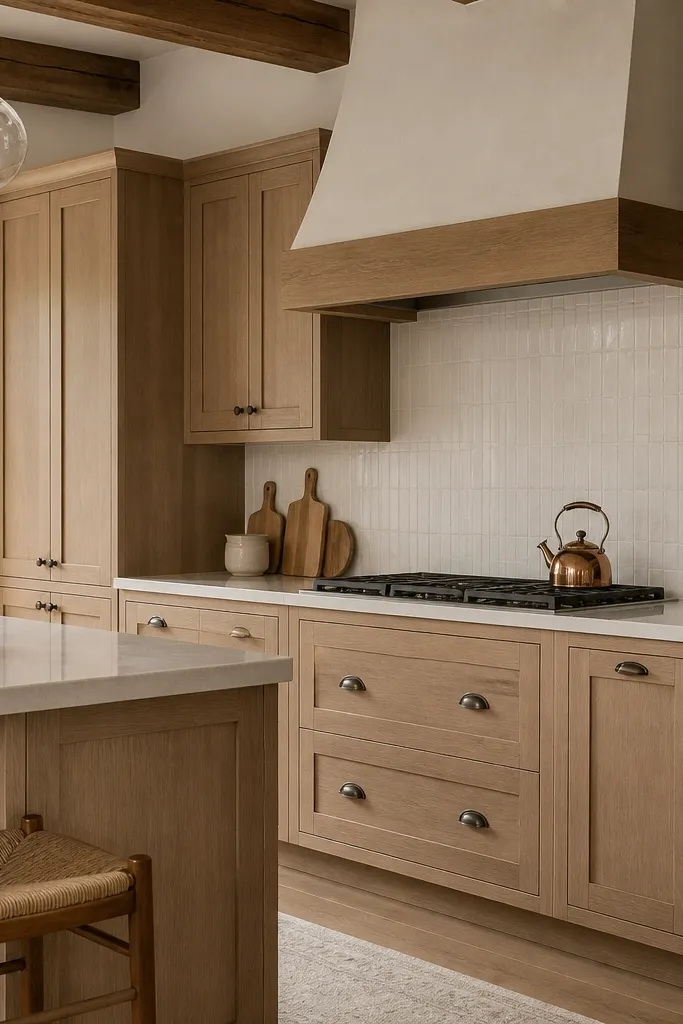
Chamfered shaker edges look higher-end because you get shadow lines without extra trim. I’ve seen this style make oak look more “built-in” even in older homes. Warm white walls keep the oak from looking too pale or gray, and the creamy quartz adds a soft, comforting contrast. This is flattering for people who like cozy kitchens and don’t want stark modern lines.
Pick chamfered shaker doors in natural white oak with a satin finish, then match the oak tone to your walls using a paint sample next to the cabinet sample. Choose creamy white quartz with minimal veining. Use aged bronze pulls and knobs that are about 1 inch diameter for knobs. Keep backsplash white but use a slightly textured tile so the kitchen isn’t flat. Finish with a light wood runner and a warm-toned pendant shade.
Stand back 8 feet from the kitchen and check shadows on cabinet edges; if the chamfer is too subtle, it won’t read in real life.
Avoid bright cool white walls with warm oak — the walls and cabinets fight each other.
10. Natural oak cabinets with integrated vertical pulls
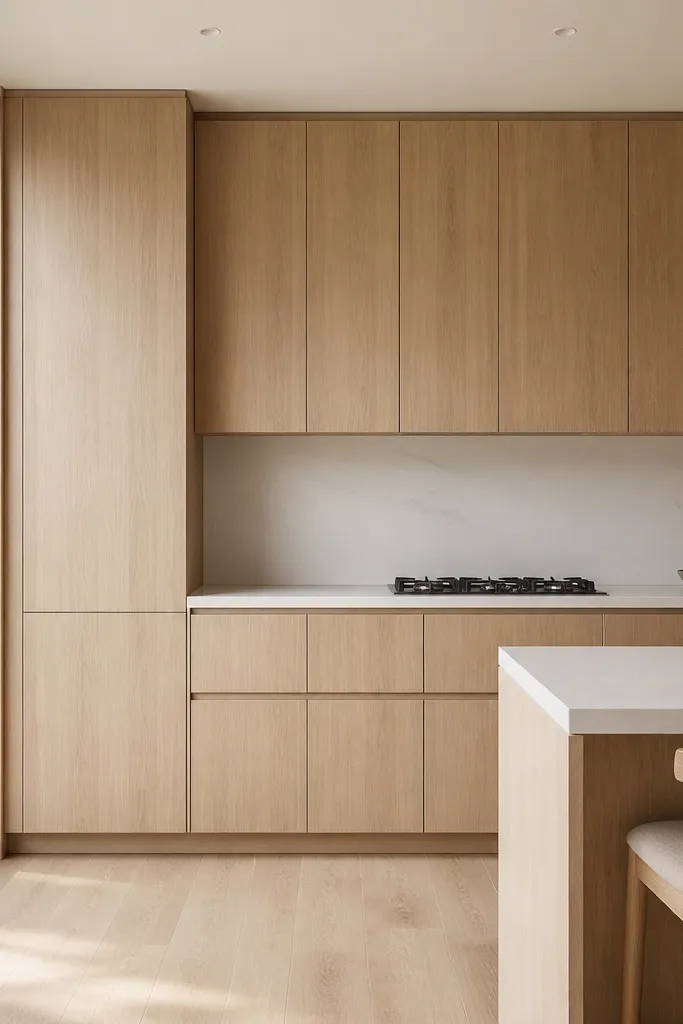
Integrated pulls make the cabinet face look like a single piece, and that’s where natural oak can look really beautiful. The grain becomes the decoration, not the hardware. I’ve installed this in kitchens with small kids because there’s less hardware to catch on sleeves. It flatters modern spaces and people who hate cluttered lines.
Choose slab-like doors with integrated pull grooves or rails and keep the oak finish satin. Select a countertop with a smooth, matte surface so the minimal cabinet face doesn’t reflect glare. Use a backsplash slab with a straight edge and keep grout lines thin if you’re tiling. Plan the handle placement so drawers have a consistent vertical pull line. Style the counters with one repeated item — like a matching canister set — so the clean cabinet face stays the star.
Good to knowIf you hate fingerprints, wipe a test door with a microfiber cloth and dish soap water; integrated pulls show smudges differently than knobs.
AvoidAvoid high-gloss integrated pulls; they show wear fast and look shiny where you touch.
11. Oak cabinets with glass subway backsplash and brass pendants
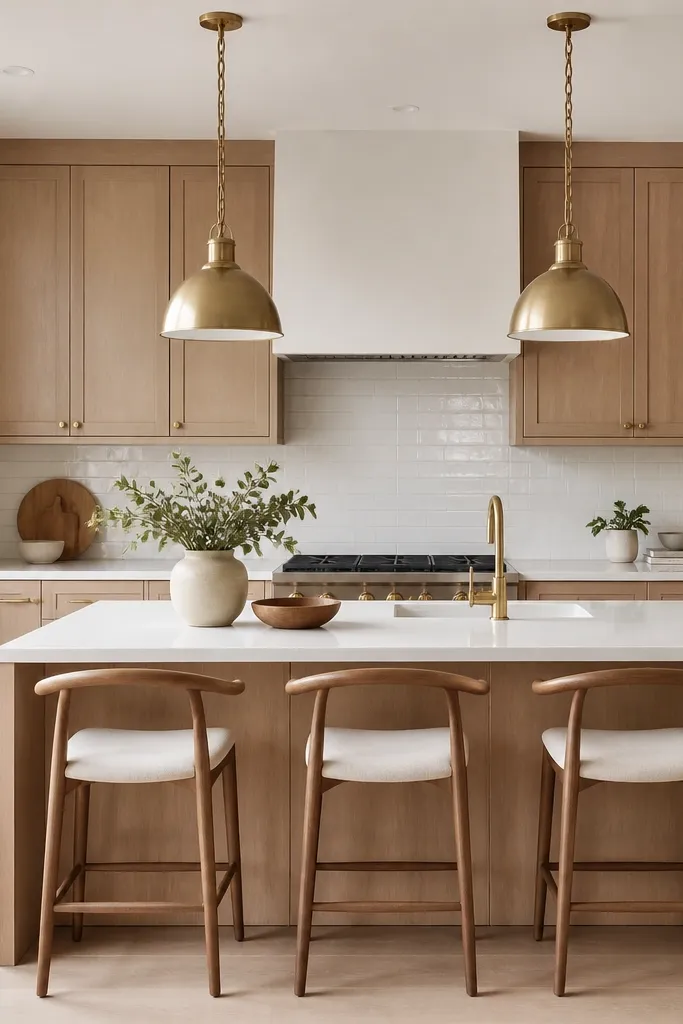
Glossy glass backsplash tiles catch light and make the oak look more dimensional. When you pair that with brass pendants and warm brass hardware, the kitchen reads “intentional warm” instead of “random wood.” I’ve seen this work especially well in kitchens that are brighter at daytime but need cozy evening lighting. It flatters people who like a little sparkle and want the oak to feel richer without staining it darker.
Start with natural oak cabinets in satin clear coat and keep the stain light. Choose glossy white glass subway tile with a slight curve and install it with bright white grout. Use brass pendants with warm bulbs (2700K) and brass pulls or knobs that match the pendant finish. Pick a warm white countertop with subtle cream tone so the backsplash doesn’t look too icy. Add a pale wood floor or a light neutral rug to keep the palette cohesive.
Good to knowUse a grout sealer after installation — glossy glass shows dirty grout lines immediately.
AvoidAvoid mixing glossy tile with matte black hardware; the contrast can look harsh next to pale oak.
12. Natural oak cabinets with white ceiling and soft gray walls
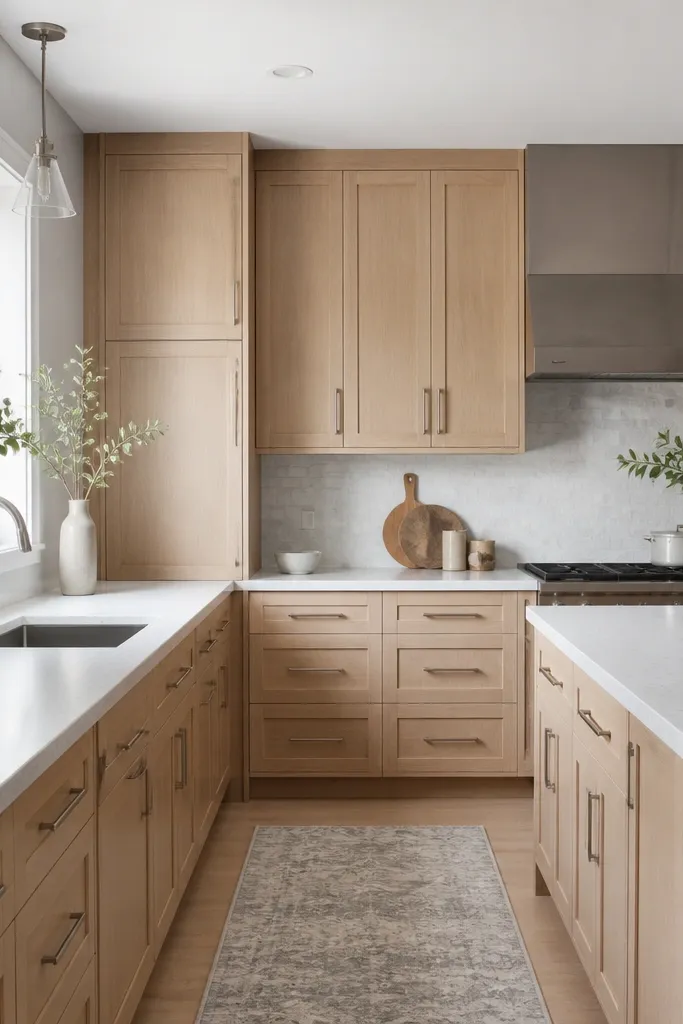
This is a “clean and calm” look where the oak warms the gray without overpowering it. I like it because white ceiling plus soft gray walls makes the cabinet color read true, not tinted. The brushed nickel hardware keeps the tone consistent and stops the oak from looking yellow. It’s flattering for people who want a modern kitchen but still want wood warmth underfoot and on the walls.
Choose satin natural oak cabinets and pair them with white quartz that has tiny, subtle flecks rather than bold veining. Use brushed nickel hardware and keep pull sizes consistent: about 5 inches on upper doors and 6 to 7 inches on drawers. Paint walls a soft gray with a slight greige undertone so it doesn’t clash with oak. Install a backsplash in white tile or a smooth white slab with light gray grout. Add a light gray runner and a couple of neutral ceramics to avoid visual noise.
If your gray paint has a green undertone, swap to a slightly warmer gray — it affects how oak reads in shadow.
Avoid cool blue-gray walls; they can make the oak look washed out.
13. Oak cabinets with a light limestone backsplash
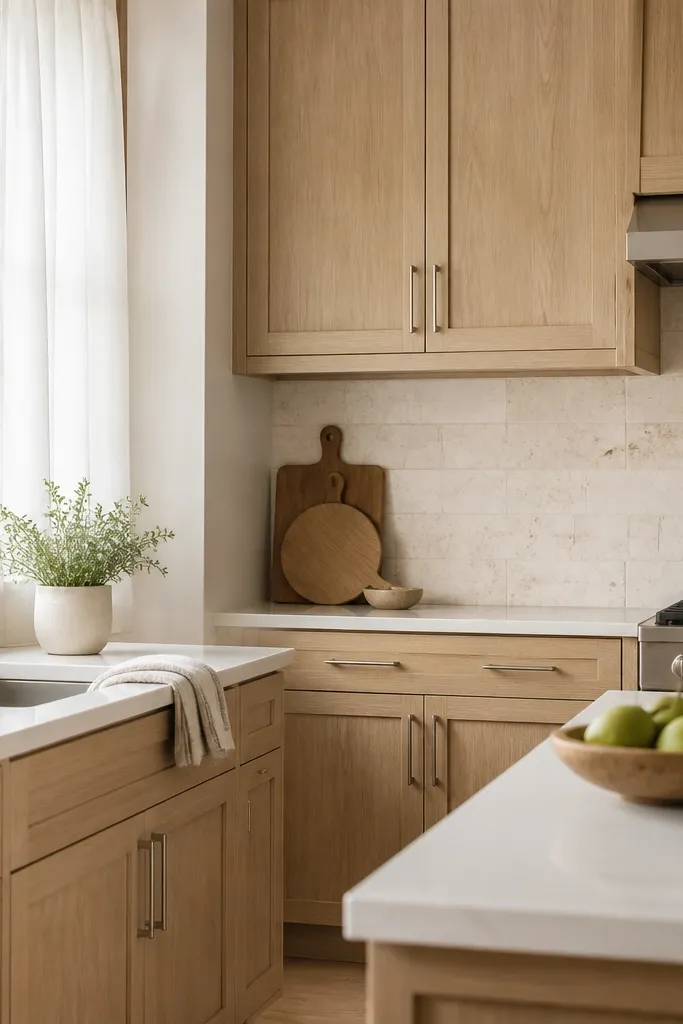
Limestone texture makes natural oak feel more like a material story, not just a color choice. I’ve used this in kitchens where the floor is also natural stone or travertine, and the whole palette clicks. The matte stone absorbs glare, so the oak grain stays soft and believable. This is flattering for kitchens that need more warmth but you don’t want the look to become “farmhouse.”
Start with natural white oak cabinets in satin and keep the finish clear enough that you can see the grain. Choose a white quartz countertop with minimal veining so limestone texture has room to breathe. Install brushed nickel pulls and keep them slim so they don’t compete with stone. Use limestone-look backsplash tile in a large format (like 12x24) to reduce grout lines. Add a light grout color that matches the limestone base — sand or warm white grout looks best.
Seal limestone-look tile if it’s real limestone; water spots show fast around sinks.
Avoid shiny stone backsplashes with oak if you have overhead lighting — glare makes the grain look uneven.
14. Natural oak cabinets with white tile herringbone and black faucet
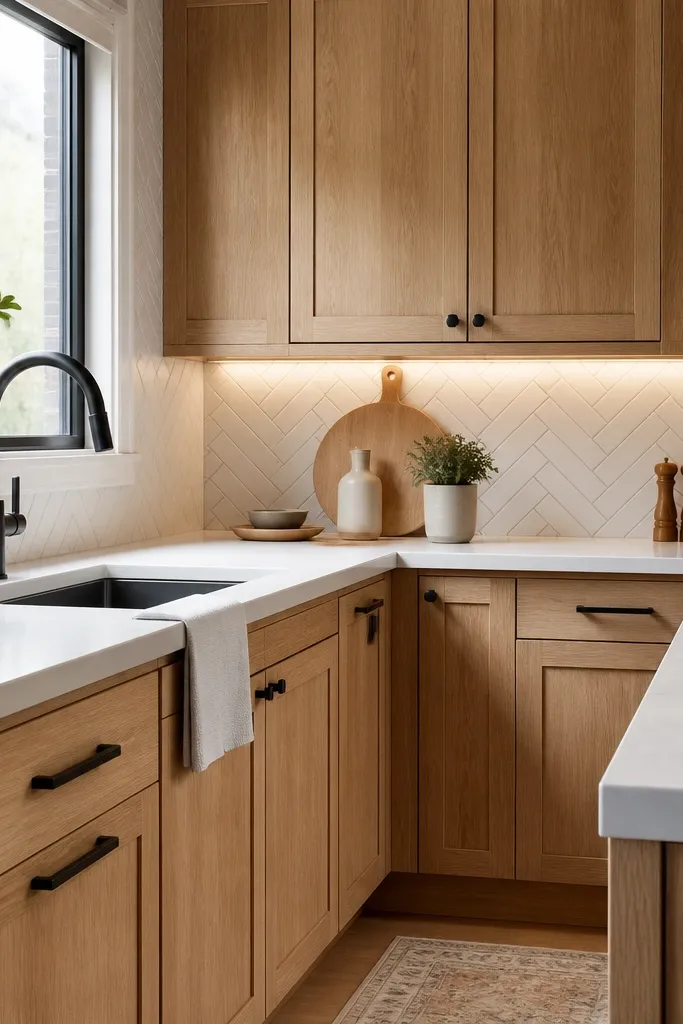
Herringbone adds pattern without becoming busy, and it makes pale oak look styled. The black faucet gives you a dark anchor so the kitchen doesn’t feel all one light color. I like this in kitchens with white walls and bright counters because the pattern gives the eye a place to land. It’s flattering for small kitchens too, since the herringbone lines add motion and the black fixtures add definition.
Pick natural oak cabinets in satin, then choose a white herringbone tile with consistent grout lines. Use light gray grout so the pattern stays clean next to oak. Install dark hardware in a matte finish and keep the pulls about 5 to 6 inches depending on door size. Add a matte black faucet and match it with a black soap dispenser. Keep your countertop simple and white so the backsplash pattern stays the only strong pattern in the kitchen.
Good to knowDry-lay a few herringbone rows before installing to keep the pattern perfectly centered around the sink.
AvoidAvoid thick, high-contrast grout colors; it turns the herringbone into a bold stripe that looks cheap.
15. Oak cabinets with a two-tone finish: natural uppers, warmer oak lowers
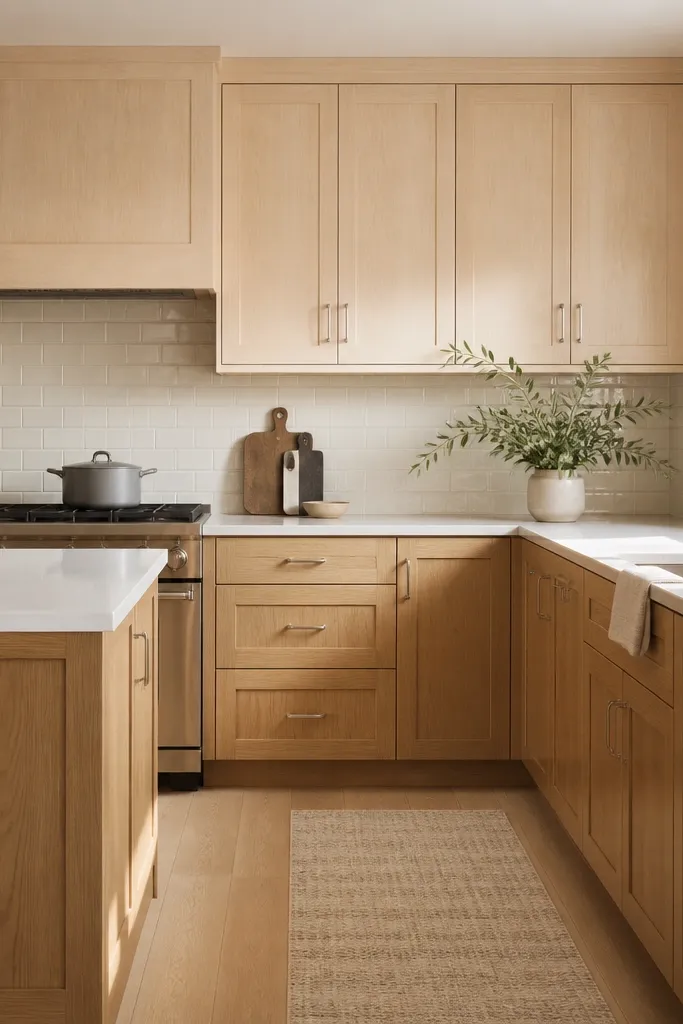
Two-tone oak is one of the few ways to make “natural white oak kitchen cabinets beautiful” look custom without changing cabinet styles. The pale uppers lift the room, and the warmer lowers ground it. I’ve done this in open-plan spaces where the kitchen needs to look distinct from the living area. It flatters kitchens with long sight lines because the color shift gives your eye a natural break.
Order uppers with a lighter clear finish and lowers with a slightly warmer stain — the difference should be subtle, like a half-step on the color wheel. Keep both finishes satin so they don’t look like two different cabinet companies. Use brushed nickel hardware on both so the metal ties the tones together. Pair with a white countertop that has a warm undertone, and choose a creamy subway backsplash rather than bright white. Add warm lighting (3000K) so the warmer lowers don’t look orange.
Good to knowBring home physical door samples and hold them against your wall paint in the evening — the two-tone effect is strongest under real light.
AvoidAvoid high-contrast two-tone where lowers are dark walnut; it can overpower the “natural” vibe.
16. Natural oak cabinets with open shelving and matching oak corbels
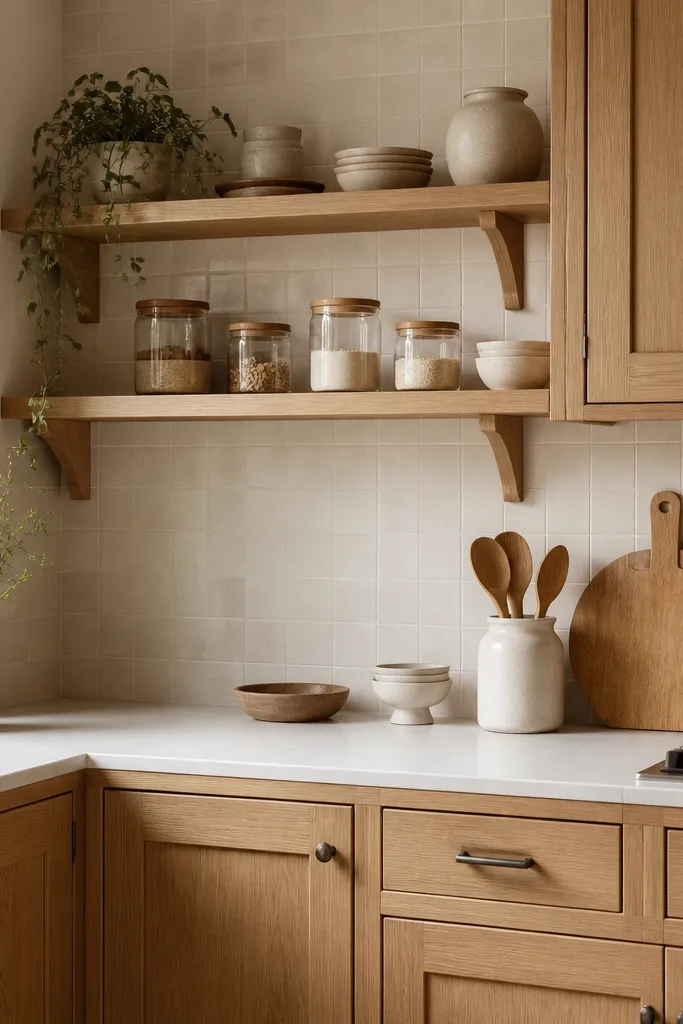
Open shelving makes oak feel lighter, and it lets you style the kitchen without adding more cabinet clutter. I like this layout when you want a “beautiful” kitchen that still feels usable day-to-day. Matching corbels in the same oak keep the shelves from looking like an afterthought. This flatters kitchens with enough wall space to breathe and anyone who likes to display a few everyday items instead of hiding everything.
Start by choosing which uppers go open — I usually do the sections above the coffee station and one run near the dining doorway. Keep the shelf depth around 10 to 11 inches so items don’t look cramped. Use the same natural oak topcoat on shelves as your cabinet doors for a consistent sheen. Add a simple backsplash in matte white to keep the shelves from competing. Style with 2 to 3 jar heights, one cutting board, and a small tray — don’t fill every inch.
Good to knowPaint or finish the shelf underside the same color as the cabinet interior, so the shadows look intentional.
AvoidAvoid leaving shelves empty; blank open shelves read like unfinished construction.
17. Oak cabinets with a farmhouse apron front sink and white uppers
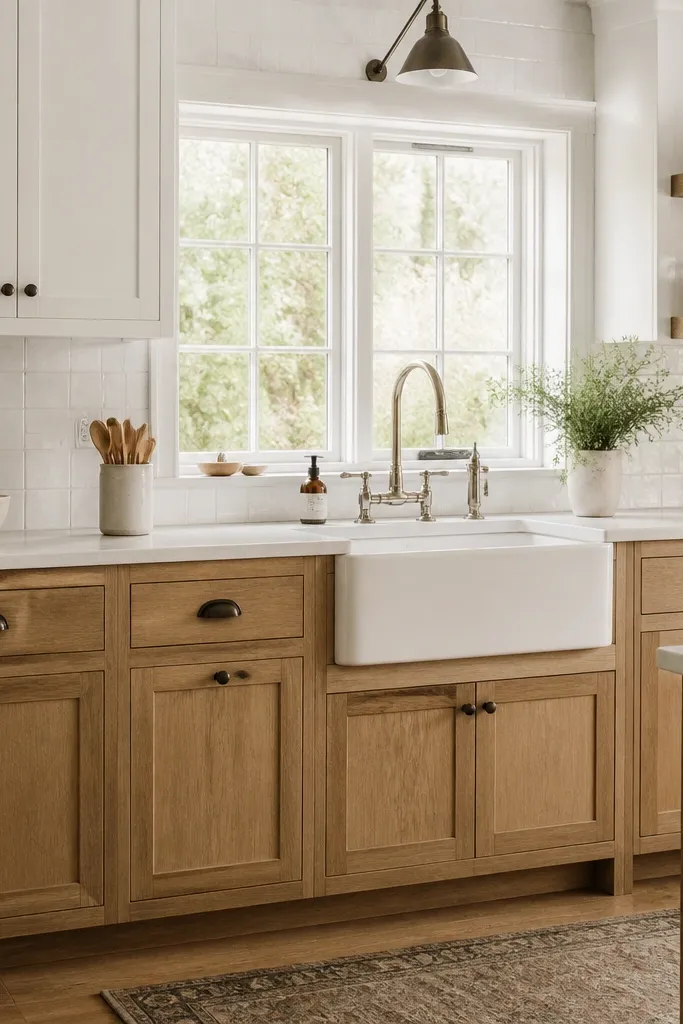
This look is cozy without going heavy, because the white uppers keep the upper half airy and the oak stays grounded below. I’ve used it in older homes where the kitchen needed warmth but the architecture already had character. The apron-front sink gives you a focal point, and the aged bronze hardware ties it together. It’s flattering for kitchens where you want a lived-in feel and you like warm, forgiving neutrals.
Choose natural white oak shaker bases in satin and order white uppers in a creamy matte paint. Install an apron-front sink in white with a matte faucet finish that matches your hardware (aged bronze or bronze). Use aged bronze pulls on the oak bases and keep the white upper hardware smaller and lighter. Select a backsplash tile that isn’t glossy — a slightly textured white tile looks more expensive next to oak. Add a warm wood element like a leaning board or a wooden utensil crock on the counter.
Keep the grout line consistent and light; dark grout makes farmhouse kitchens look dingy fast.
Avoid painting the uppers bright blue-white; it clashes with natural oak undertones.
18. Natural oak cabinets with a pale green ceramic backsplash
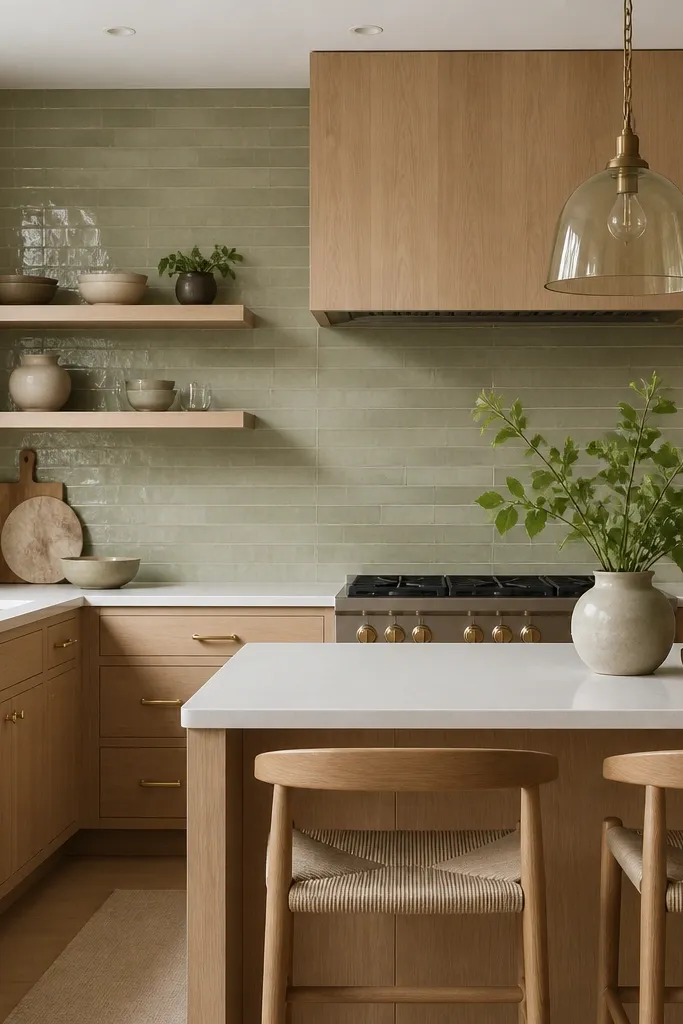
A pale green backsplash makes natural oak look fresher, not older. I’ve done this combo in kitchens that feel sterile with all-white surfaces, and the green adds a soft, calming color that doesn’t fight the wood grain. The key is choosing a green that leans gray or sage, not minty neon. It’s flattering for people who want “beautiful” color without turning the kitchen into a trend set.
Start with natural white oak cabinets in satin — keep the oak finish neutral so it doesn’t clash with green. Choose a white countertop with warm undertones, then pick pale green ceramic tile that has subtle variation and a matte finish. Install brushed brass hardware and keep the brass finish consistent with any lighting. Use light warm grout so the green stays soft. Add one green accessory like a ceramic vase or matching canisters so the backsplash feels connected.
Good to knowHold a small tile sample next to your cabinet sample in daylight; sage greens look different under warm bulbs.
AvoidAvoid bright mint green; it makes oak look yellow and the whole kitchen feels off.
19. Natural oak cabinets with a black-and-white patterned runner and brass accents
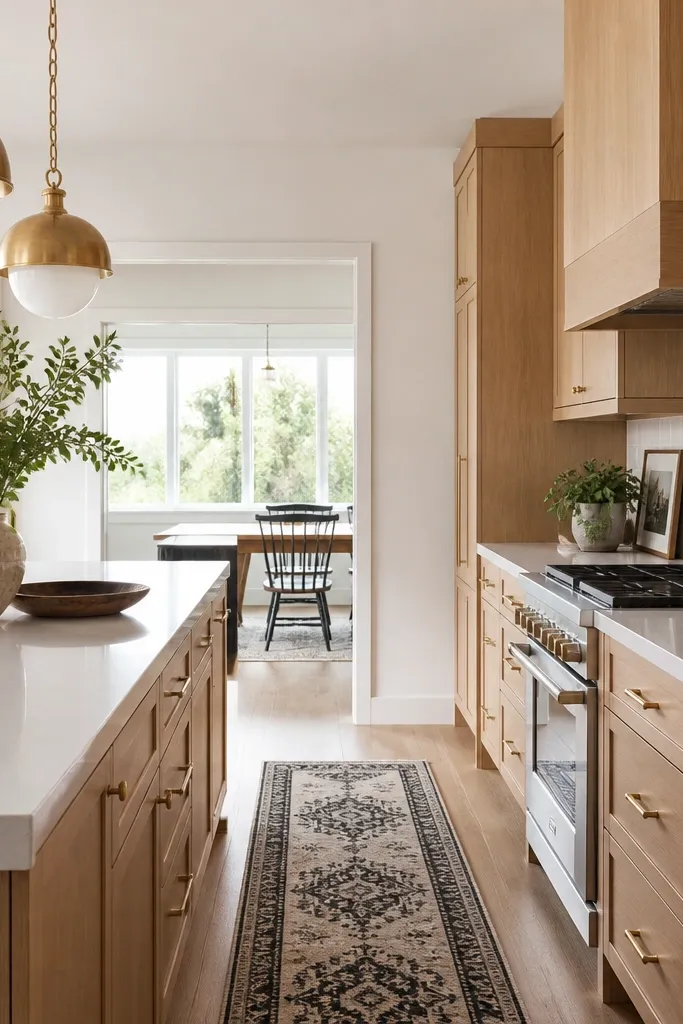
You don’t need a fancy backsplash to make oak cabinets look styled. In my own kitchens, the floor and lighting do a lot of the heavy lifting, and a black-and-white runner adds contrast that makes the pale oak look intentional. Brass hardware adds warmth but stays controlled, especially with a satin cabinet finish. This look flatters kitchens with neutral walls and simple counters because the runner brings personality where you actually see it every day.
Pick natural white oak cabinets with satin finish and a clear coat so the grain stays pale. Choose brushed brass pulls and knobs that are small to medium size, not oversized. Keep the backsplash plain: white subway tile or a smooth white slab. Install a warm pendant light above the island, then add a black-and-white patterned runner that has white dominating so it doesn’t darken the room. Style the counter with two brass items max, like a utensil crock and a small tray.
Good to knowPick a runner pattern where the white is warm, not blue-white. It keeps the oak from looking gray.
AvoidAvoid heavy black rugs that cover most of the floor; they make light oak look pale and washed out.
20. Natural oak cabinets with a tall pantry wall and slim trim
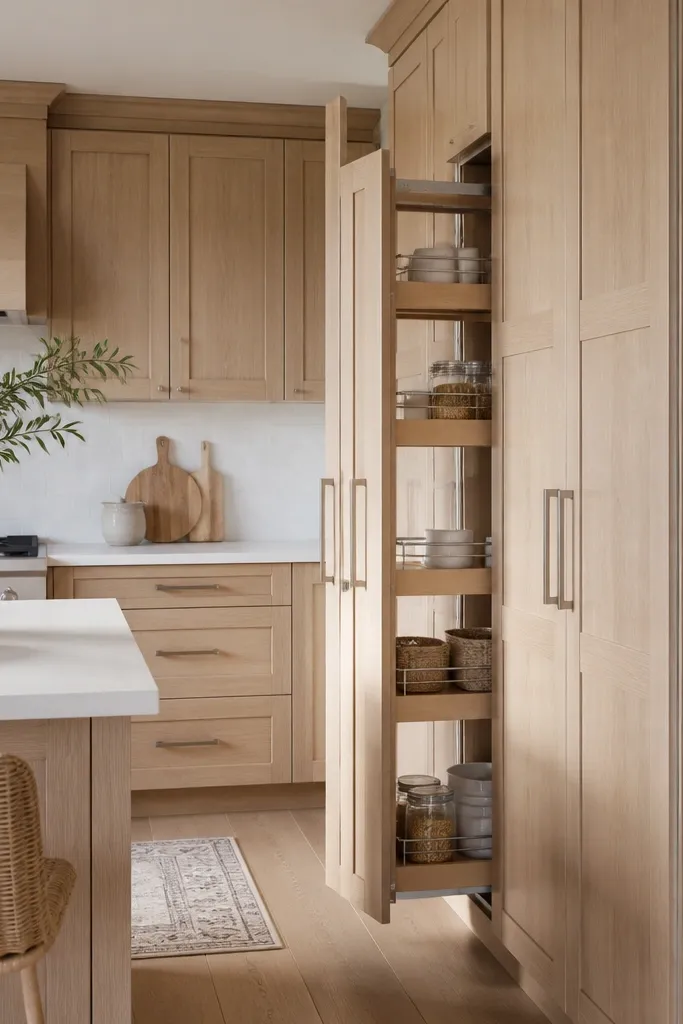
A tall pantry wall makes a kitchen look built-in, and oak makes it feel warm instead of institutional. The slim trim keeps the lines crisp, so the pantry doesn’t look chunky. I like this layout when the kitchen has awkward angles or you want storage without adding more visual bulk. It flatters narrow kitchens because vertical organization pulls the eye up.
Design your pantry run first so the doors align with your cabinet base and countertop height. Use shaker pantry doors in natural white oak with satin finish and keep trim slim. Install brushed nickel hardware in a consistent size across the pantry and lowers. Add interior organization like pull-out shelves and a spice pull-out so the pantry actually gets used. Pair with a simple backsplash and a white countertop so the pantry wall stays the focus.
Plan a 1/8-inch reveal consistency between doors; even a small mismatch shows up on tall pantry runs.
Avoid mixing pantry door styles with the rest of the cabinets; it makes the kitchen look pieced together.