1. 45-degree lamp glow with a cream shade
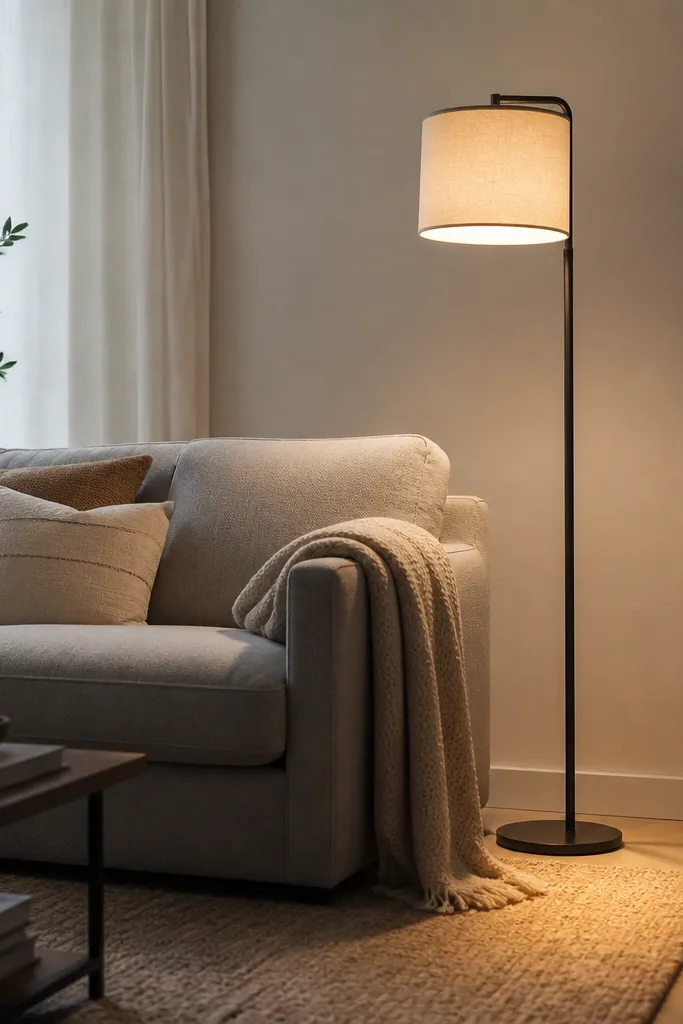
This setup works because warm light lands on surfaces instead of bouncing off a shiny ceiling. Use a floor or table lamp with a cream fabric shade that is matte, not glossy, and fit a 2700K warm bulb. I like this look most when your sofa is light grey or navy, because the cream shade softens the edges and makes the room feel calmer at night. It also flatters cooler skin tones and cool undertone rooms since cream reads warm without turning orange. The styling principle is simple: one dominant light source plus one textured landing spot.
Good to knowIf your room has high glare floors, wipe the glass/lampshade with a dry microfiber cloth so the light stays soft.
Start by placing the lamp 18-24 inches from the sofa side, angled so the light hits the rug and the front edge of the coffee table. Add a throw in oatmeal or ivory, draped so it falls about 10-12 inches past the cushion seam. Then style cushions in two sizes: one 20x20 inch square and one 12x20 inch lumbar in the same colour family, like cream with a subtle stripe or boucle. Finally, keep the coffee table surface mostly clear — one tray and one book stack — so the lamp glow feels intentional, not cluttered.
AvoidAvoid using a cool-white bulb (4000K) — it makes the cosy plan look like an office.
2. Rug-first cosy zone with a 6x9 anchor
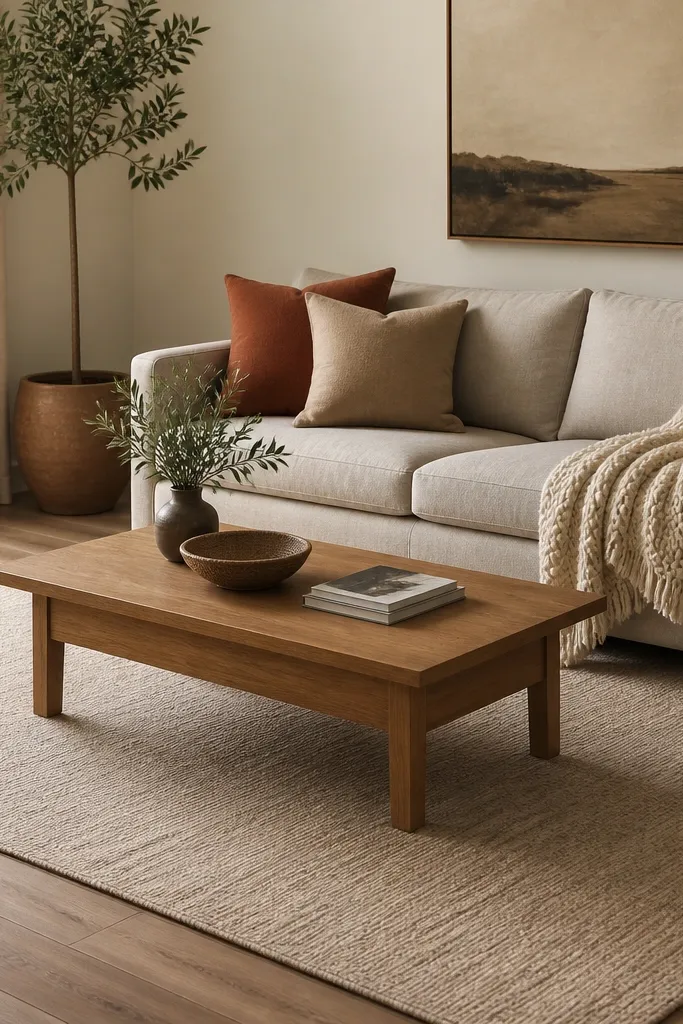
A rug-first plan is the fastest way I’ve found to make an apartment living room feel instantly lived-in. If your space allows it, a 6x9 rug creates a clear “landing area” where the coffee table and sofa feel connected. Warm beige with a low-contrast pattern hides wear and makes the room feel forgiving. This look is especially flattering for small rooms with light walls because the rug adds warmth without shrinking the space. The principle is grounding: when your furniture sits on the same textile, everything looks more put together.
Good to knowIf you’re between sizes, choose the larger rug. A too-small rug makes the room look unfinished.
Start by measuring your coffee table width and make sure the rug extends at least 8-12 inches beyond it on each side. Place the sofa so the front legs touch the rug — even if the back legs float, the room still reads anchored. Add a throw that matches the rug’s base tone and choose cushions with one accent colour like terracotta or rust. Style one side of the coffee table with a shallow tray and a second item like a small candle jar, then leave the other side mostly empty.
AvoidAvoid rug pile that’s too shaggy on a low sofa — it traps crumbs and looks messy fast.
3. Two-tone cushion rhythm (20x20 + 18x18)
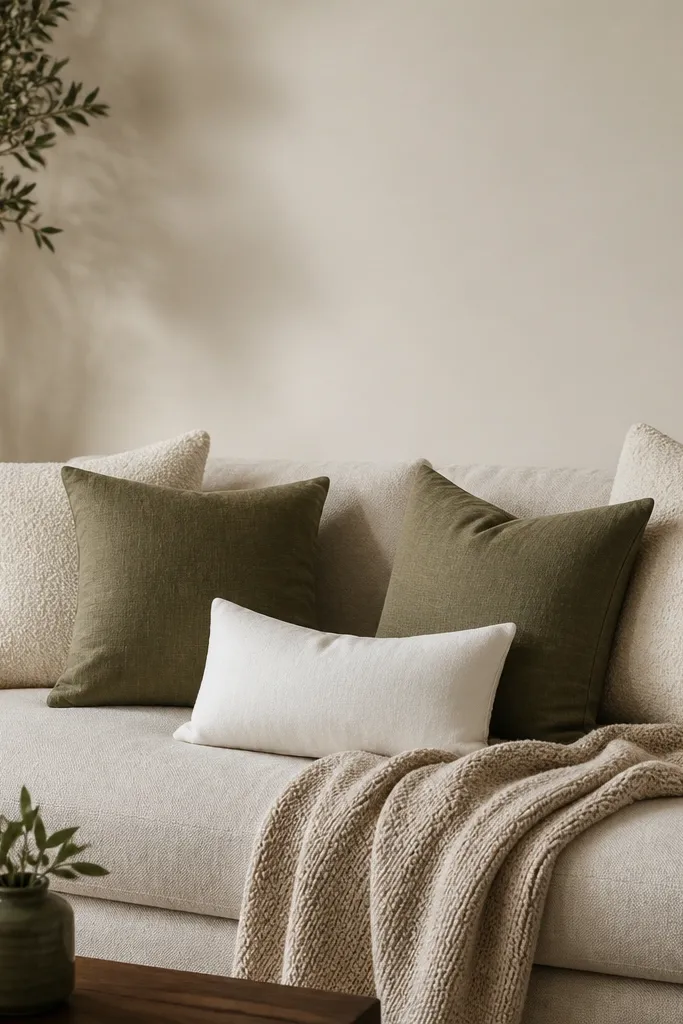
Cushions are the quickest place to create cosy without buying furniture. I use a simple rhythm: two larger squares and two smaller squares, all in the same two colour tones. Cream boucle plus olive linen looks expensive because the textures catch light differently, even in small rooms. This combo flatters both warm and cool undertone interiors — cream brings warmth, olive adds depth. The principle is repetition: same sizes and two textures create order, even when you’re using different fabrics.
Start by buying covers or mixing cushions in two tones only: one light base (cream, oatmeal, or warm white) and one darker accent (olive, charcoal, or clay). Arrange two 20x20 cushions at the back, then place two 18x18 in front slightly overlapping. Add a knit throw folded once and draped over the sofa arm so it shows knit texture, not just colour. Keep patterns minimal — if you use a stripe, keep it subtle and let the boucle do the heavy lifting.
Press your cushion covers with a handheld steamer for 30 seconds before styling. Creases make everything look cheaper.
Skip random sizes. A mix of 16x16, 22x22, and 12x18 reads like you grabbed whatever was clean.
4. Shearling throw on the sofa arm
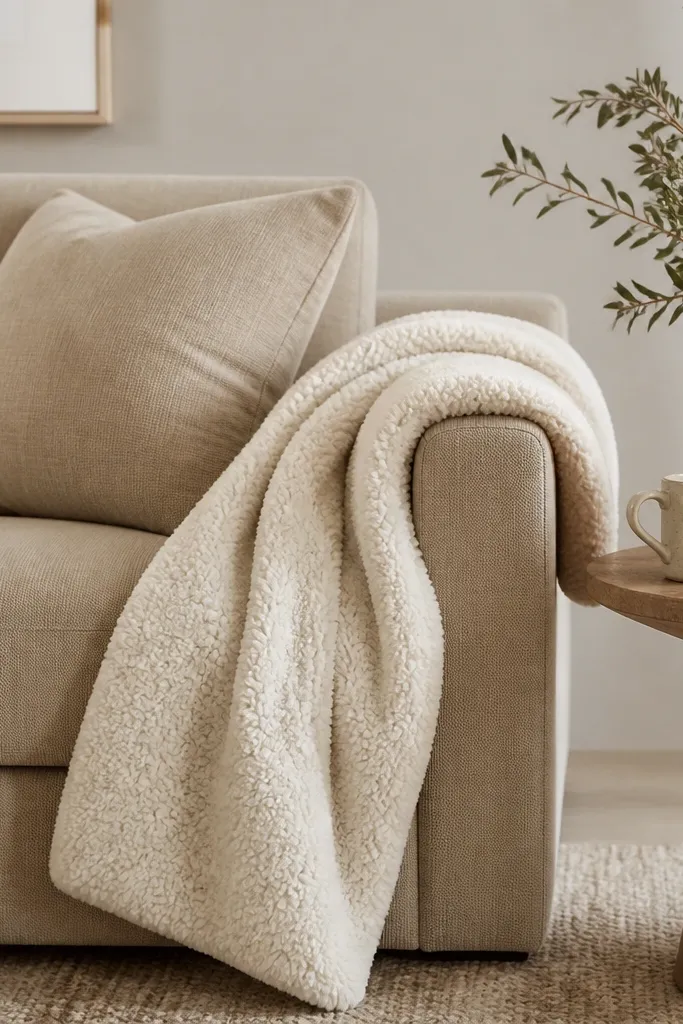
Faux shearling (or a very thick short-pile throw) makes a living room feel cosy because it adds a “touch” texture you can see. I like placing it on the sofa arm, not spread across the whole seat, because it frames the sofa and keeps the look tidy. Pair it with smooth materials like a cotton cushion cover or a linen cushion so the room doesn’t feel fuzzy everywhere. This works beautifully in apartments with neutral walls and light floors because the white pile brightens the space without needing extra colour. The principle is one obvious softness — the rest stays calmer.
Start by choosing a throw with short, dense pile so it doesn’t look flat. Drape it over one arm so about a third of the throw hangs down, roughly 10 inches. Add one cushion that’s a smooth matte fabric (linen or cotton in warm white) and keep the other cushion in a muted shade like oat or taupe. Put one small item on the side table — a candle in a glass jar — and keep the rest of the tabletop bare.
Use a lint roller on the throw once a week. Shearling texture shows dust fast.
Avoid a throw that’s too long and covers the seat fully — it makes the sofa look heavy and messy.
5. Olive + terracotta wall colour plan (paint or art)
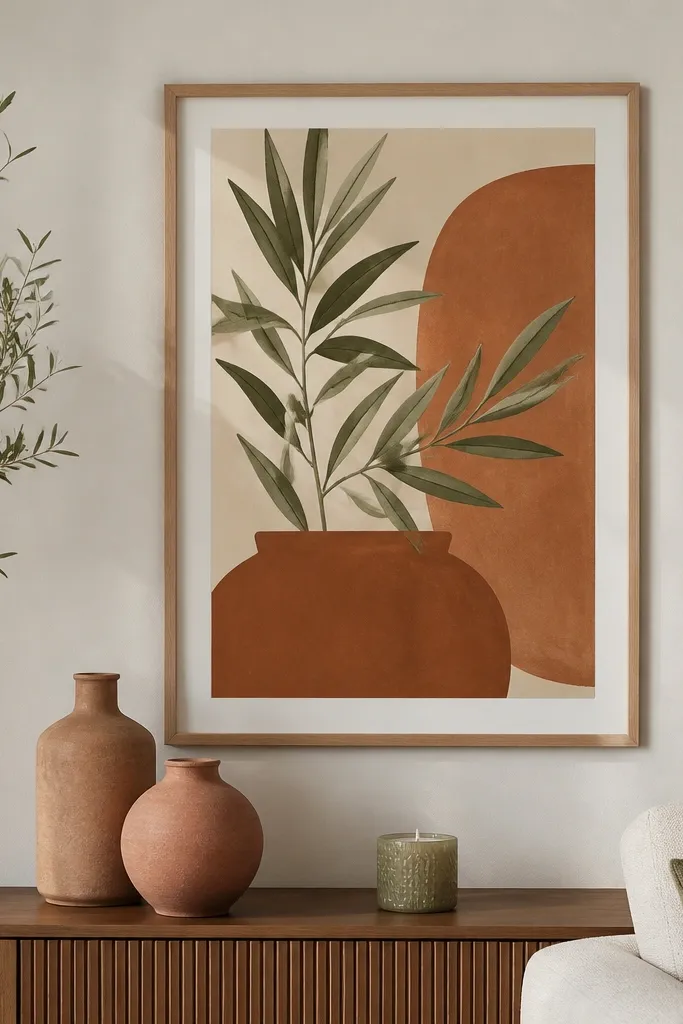
You don’t need to paint your whole apartment to get cosy colour warmth. Olive and terracotta make a room feel grounded because olive reads natural and terracotta reads like clay — both feel warm in indoor lighting. I use this palette when the room has grey floors or cool white walls, because the colours bring instant softness. It also flatters people who wear gold jewellery since the tones echo that warmth. The principle is one accent colour pair, repeated in small items and art.
Good to knowIf you can’t change art, shop for a terracotta lamp base or a terracotta ceramic tray — it brings the same warmth.
Start with a warm white base — paint if you can, or keep walls as-is and lean on art. Choose one large piece that includes both olive and terracotta, sized so it spans 60-70% of the empty wall width above the sofa. On the console, place two items only: one matte terracotta vase and one sage/olive ceramic candle holder. Add a throw or cushion with a terracotta thread count so the colour connects to the art.
AvoidAvoid bright red or neon terracotta. It turns cosy into “holiday decor” quickly.
6. Mirrors for depth with a slim black frame
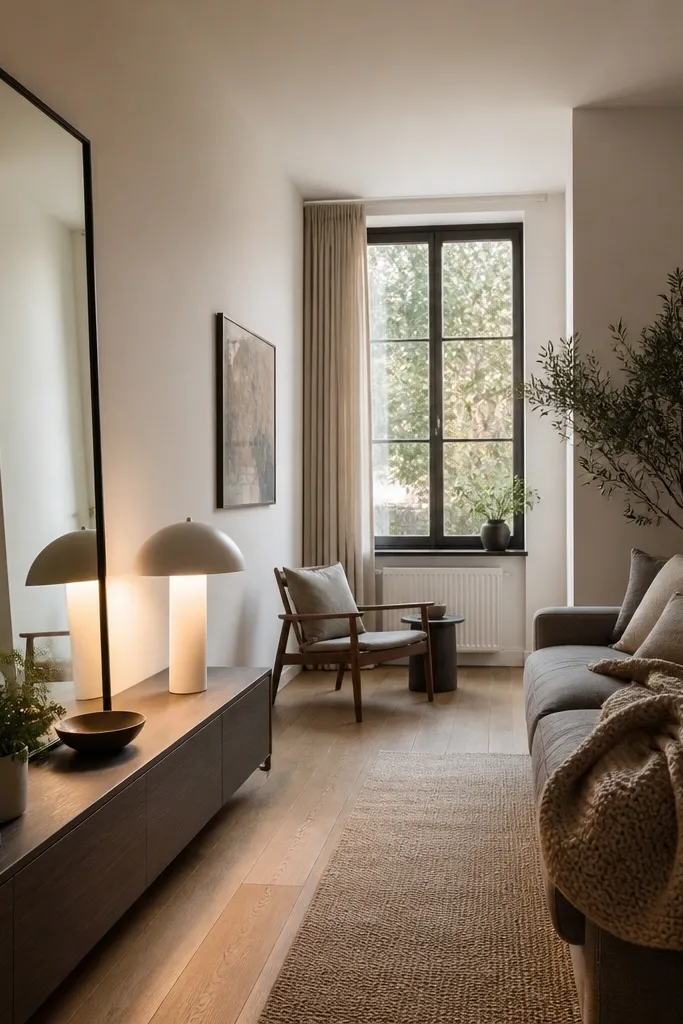
A mirror helps cosy apartment living rooms because it multiplies warm light and makes the room feel less shut-in. I like a slim black frame because it keeps the look crisp while still feeling warm when lit from the side. This works best in narrow apartments where you’re fighting “wall to wall” tightness. It also flatters dark furniture setups because the mirror adds contrast without adding clutter. The principle is light bounce: you’re not decorating the wall, you’re extending the light.
Start by placing the mirror so it reflects your lamp or window light, not the TV or a blank corner. Aim for a vertical mirror height that’s about the same height as the sofa back, or taller. Keep the console styling minimal: one plant in a ceramic pot and one tray with a candle. If you mount it, hang it so the bottom edge sits about 4-6 inches above the console surface.
Test with your lamp on. If the reflection feels harsh, tilt the mirror a few degrees or choose a warmer bulb.
Avoid ornate gold mirrors with thick moulding — they can look heavy in small rooms.
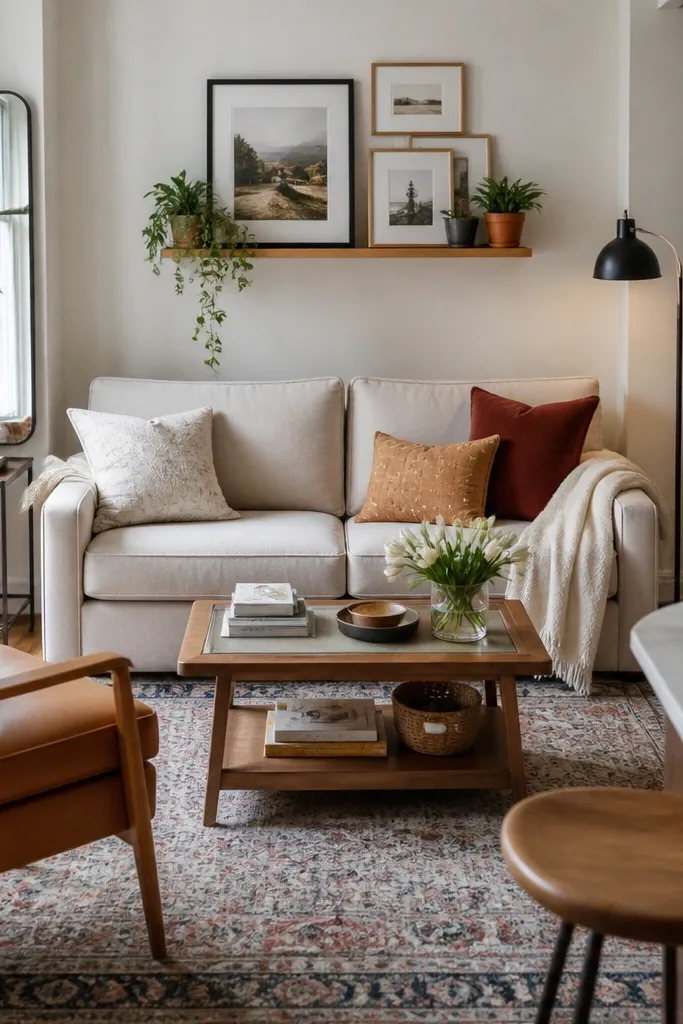
7. Coffee table styling with a 3-item rule
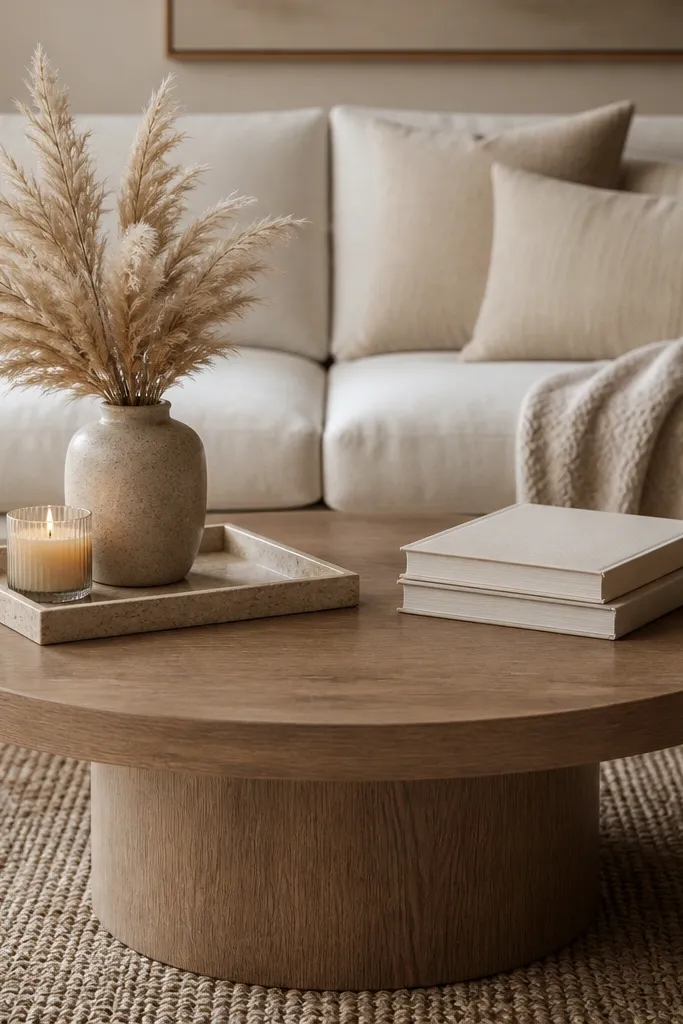
Cosy rooms feel lived-in, but they don’t look chaotic. My rule for coffee tables is three items max, because more than that turns “cozy” into “I’m cleaning around stuff.” Round tables and wood finishes also soften the room, especially when you keep the colour palette warm. This setup is forgiving for apartments because it hides mess — you can move items into a tray while you’re tidying. The principle is surface control: one tray creates order and makes the room look styled even when you’re busy.
Good to knowChoose books with neutral covers. One loud spine ruins the cosy effect faster than you’d think.
Start by clearing the table completely. Place a tray first — rectangular for a rectangular table, round for a round table. Add a vase or bowl in matte ceramic, then stack two books with spines facing inward so the colours stay consistent. Put the candle on the tray, not loose on the table edge, and leave a small empty space near one corner so the table looks breathable.
AvoidSkip random loose decor like a single coaster and a random mug — it reads like leftovers.
8. Curtains that touch the floor and skim the radiator
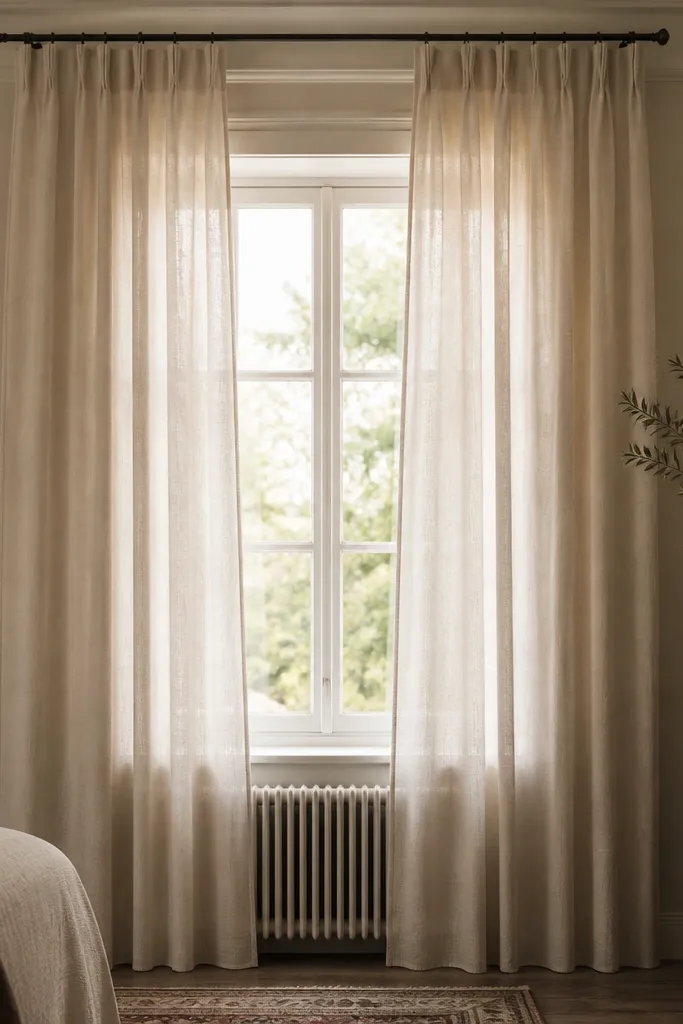
Curtains change the whole feel of an apartment living room because they frame the light. Floor-length linen in warm cream looks cosy because it has visible texture and doesn’t look shiny. I mount the rod 4-6 inches above the window and extend it 6-8 inches past each side so the window looks wider. This is especially helpful if your apartment has small windows or a radiator under the sill. The principle is height: when curtains start higher and fall longer, the room looks bigger and warmer.
Start by measuring from the rod to the floor and add 1 inch for a gentle break on the floor. Choose linen or a linen-blend that feels matte and weighs enough to hang without clinging. Hang the curtains so they cover the radiator area but don’t pool — you want a light skim. Use curtain rings in a matching colour and steam the folds so they fall straight. Finish with one small floor lamp near the window to make the fabric glow at night.
If your curtains look flat, steam them after hanging and pull them apart at the seams to open the folds.
Avoid sheer-only curtains. They can look pretty but they don’t give the cosy framing effect at night.
9. Reading nook chair with a small round side table
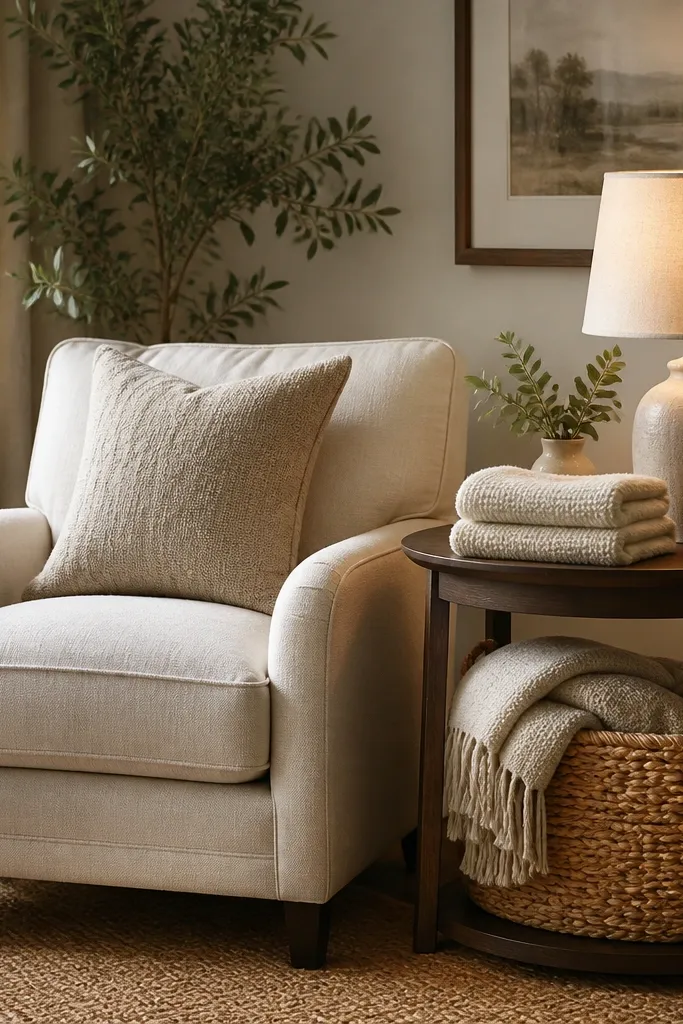
A reading nook makes cosy feel real because it gives you a place to be. I like an armchair in oatmeal or light camel because it hides everyday wear and looks soft in lamplight. Add a small round side table so you can fit a lamp without blocking traffic. This setup works in apartments where the living room also doubles as a work area, because you get a dedicated calm spot. The principle is function plus comfort: the chair isn’t decoration, it’s your routine.
Good to knowPut a battery candle in the basket at night. It makes the corner feel cosy even when you’re not using the lamp.
Start by choosing a chair with a seat height around 18-19 inches if you want it easy for getting up. Place it 10-18 inches away from a wall or bookshelf for airflow and light movement. Add a small round side table with a diameter around 14-18 inches, then put the lamp on that table — warm bulb, fabric shade. Layer a knit throw on the chair back and place one woven basket under the side table for blankets. Keep the floor around the chair clear except for the rug edge so it feels open.
AvoidAvoid a chair that’s too deep — it looks loungey but it’s hard to sit upright for long.
10. Wall gallery with one big anchor and 4 small frames
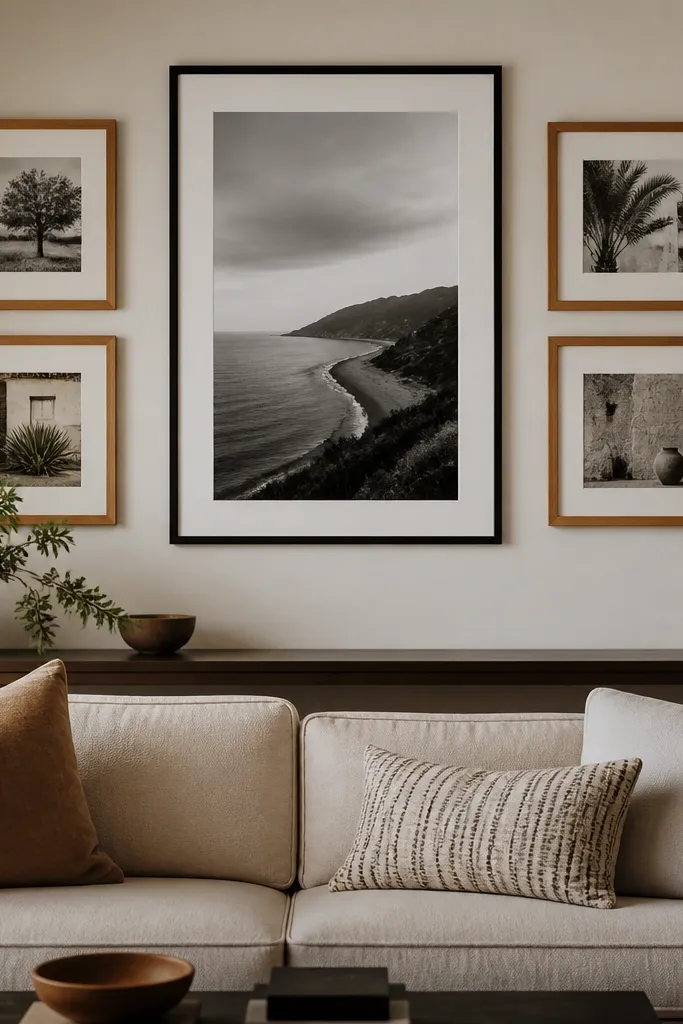
Gallery walls can go cosy or cluttered fast, and I’ve learned to use the “one anchor” approach. One big piece creates order, while four smaller frames add personality without overwhelming the wall. I prefer frames in warm wood or matte black because they look good against warm whites and don’t scream for attention. This works best when your sofa is against a wall and you need something to fill vertical space. The principle is spacing: consistent gaps make it look curated, not random.
Good to knowPrint your frames in the exact size on paper and tape them first. It saves you from crooked spacing.
Start by hanging the big frame first at eye level, centered over the sofa. Use four smaller frames around it with equal spacing — I aim for about 2-3 inches between frame edges. Choose art with a warm neutral base and one accent colour that matches your cushions or throw. If you have a console below, keep the frames slightly higher so the console doesn’t feel crowded. Use painter’s tape to mock it up on the wall before you drill anything.
AvoidSkip mixed frame finishes in large numbers. Two finishes max looks intentional.
11. Closed storage sideboard to kill visual clutter
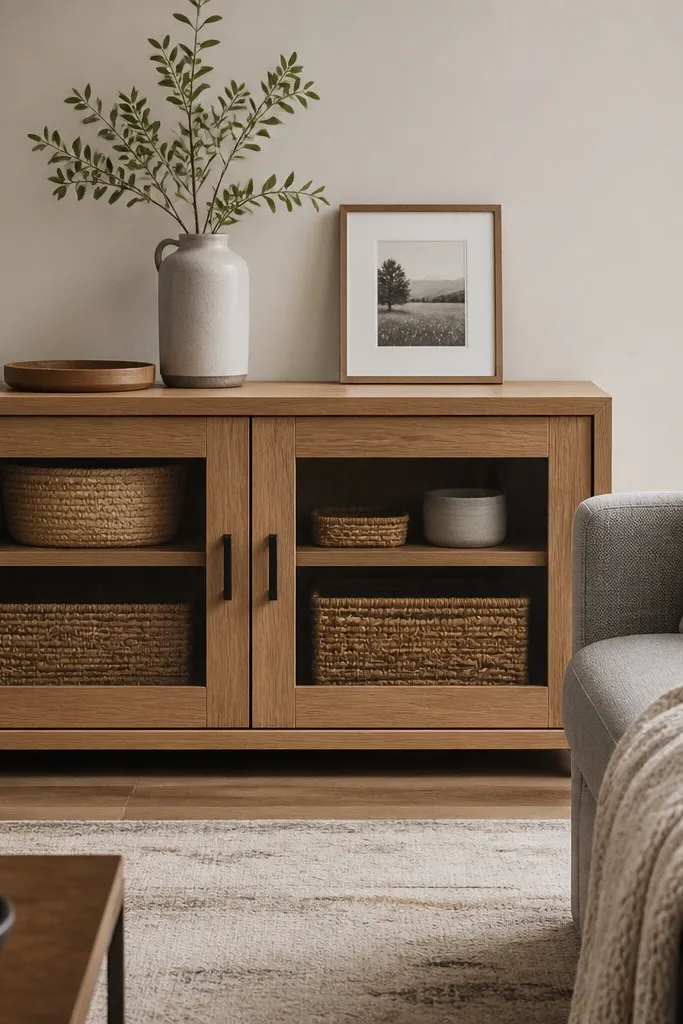
Cozy apartment living rooms look best when your mess has somewhere to go. Closed storage matters because it hides everyday items like remotes, chargers, and extra throws that otherwise spill onto surfaces. Warm oak with matte doors reads cosy and doesn’t reflect harsh light. This setup is great for people who live in the room, eat there, and still want it to look tidy. The principle is concealment: if you can close it, you can keep the room looking warm.
Start by measuring the wall space and choosing a sideboard depth around 16-20 inches so it doesn’t crowd the walkway. Place it behind or beside the sofa, leaving at least 30 inches of walking space in front. Add baskets inside for categories: one for blankets, one for board games, one for cables. On top, keep it to a tray plus one plant or vase, and leave the rest empty. Style your sofa with cushions and a throw, then put the extras into the sideboard immediately.
Label baskets with a small strip of masking tape on the inside rim so you can find things fast.
Avoid open shelving with random items. It looks like storage, not cosy decor.
12. Navy sofa + warm white knit throw combo
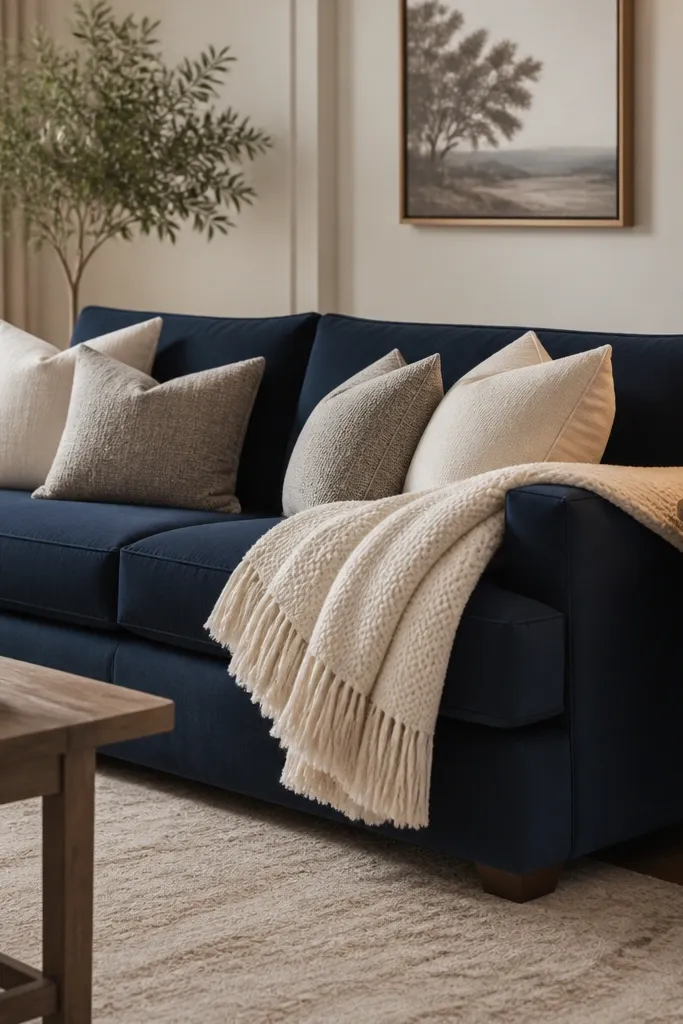
A navy sofa can look dramatic and a little cold, and the fix is warm textiles. A warm white knit throw adds softness and contrast without turning the room bright. I pair navy with cream, oatmeal, and light greige because it keeps the room from feeling too dark. This combo flatters medium to deep skin tones in warm lighting and looks great with gold or brass accessories. The principle is contrast with restraint: dark base, warm soft layers.
Good to knowWash your knit throw before styling if it has any factory smell. Clean texture looks richer under warm light.
Start by placing the throw on the sofa so it drapes over one arm and the front edge of one seat cushion. Fold it once first so it looks thick, not thin. Use two cushions: one cream with a chunky knit texture and one light grey or oat with a simple weave. Add a light beige rug so the navy doesn’t swallow the floor. Finish with a brass or wood lamp and a ceramic candle holder in off-white.
AvoidAvoid adding too many navy pillows. Two to three max keeps it cosy instead of heavy.
13. Terracotta plant pot and a real leafy corner
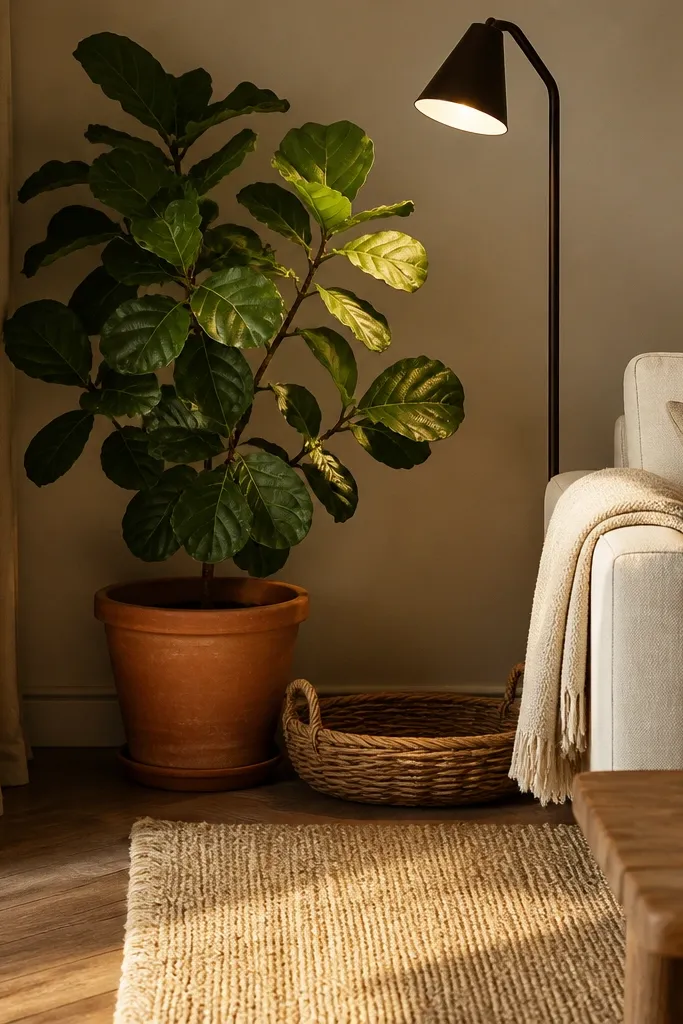
Plants make a living room feel cosy because they add life and soften corners that would otherwise look empty. I love terracotta pots in cosy apartment rooms because they echo warm clay tones and look good in both daylight and lamp glow. Choose a leafy plant with medium-size leaves so it reads full without taking over the room. This is a flattering look for light walls and neutral floors because it adds warmth without needing bright decor. The principle is a single green “anchor” with one matching warm material like terracotta.
Start by picking a plant that fits your light: if your window is bright, go for a fiddle leaf or rubber plant; if it’s medium light, choose a pothos or a snake plant with trailing leaves. Place it in a terracotta pot that’s 2-4 inches wider than the current nursery pot. Add a woven basket or a simple plant stand to lift it slightly off the floor. Style the surrounding area with one small lamp and a throw on the sofa, and keep the coffee table clear so the plant becomes the visual focus.
Wipe leaves with a damp cloth once a month. Dust dulls the colour and kills the cosy feel.
Avoid a tiny pot on a large rug. The plant looks like an afterthought.
14. Warm wood + matte black mix in one small set
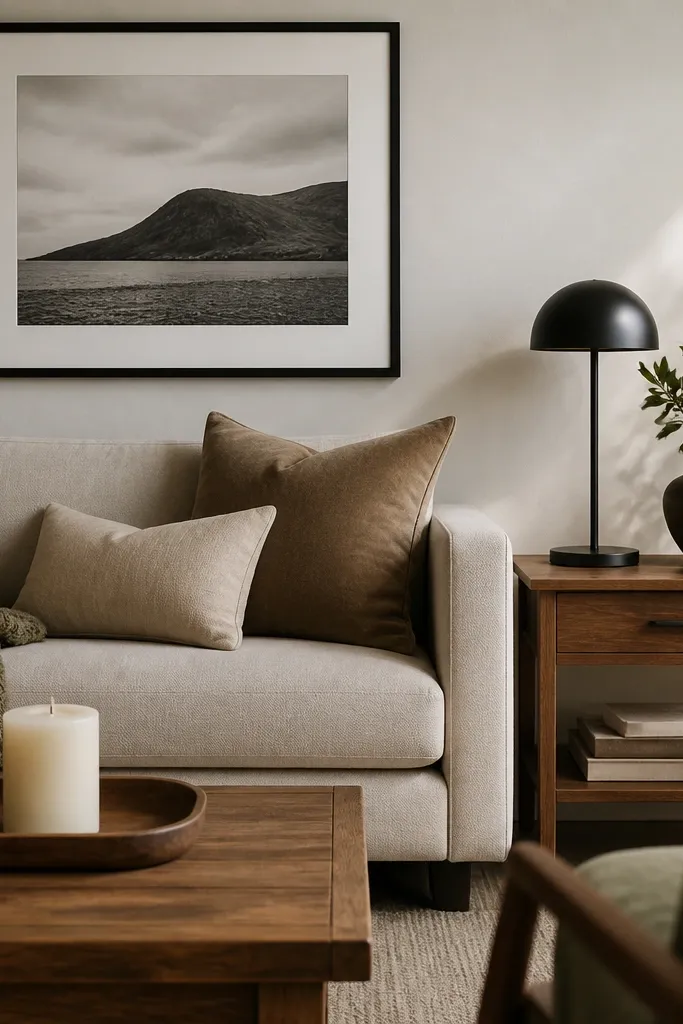
Mixing warm wood and matte black makes a small living room feel styled without adding more colour. The wood brings warmth and softness, while matte black adds definition to lamp shades, frames, and table legs. I use this combo when the room is mostly neutrals, because it gives contrast that reads intentional in photos and in real life. It also flatters people who like darker accessories like watches or black frames, since the room doesn’t look disconnected. The principle is limited mixing: pick one black item family and repeat it twice.
Good to knowIf your wood is very orange, choose black with a softer finish (matte or charcoal) instead of glossy black.
Start with one main wood piece you already have or want — a coffee table, side table, or shelf. Add one matte black item like a lamp with a non-shiny shade or a black picture frame. Repeat the black once more with a small tray, a candle holder, or a slim clock on the coffee table. Keep the textiles warm: cream or oatmeal throw, cushions in beige or soft grey. Leave one surface mostly empty so the black accents look sharp, not cluttered.
AvoidAvoid mixing multiple metal colours like gold, chrome, and black in one room. It feels messy fast.
15. Kitchen-dining-to-living continuity with one shared colour
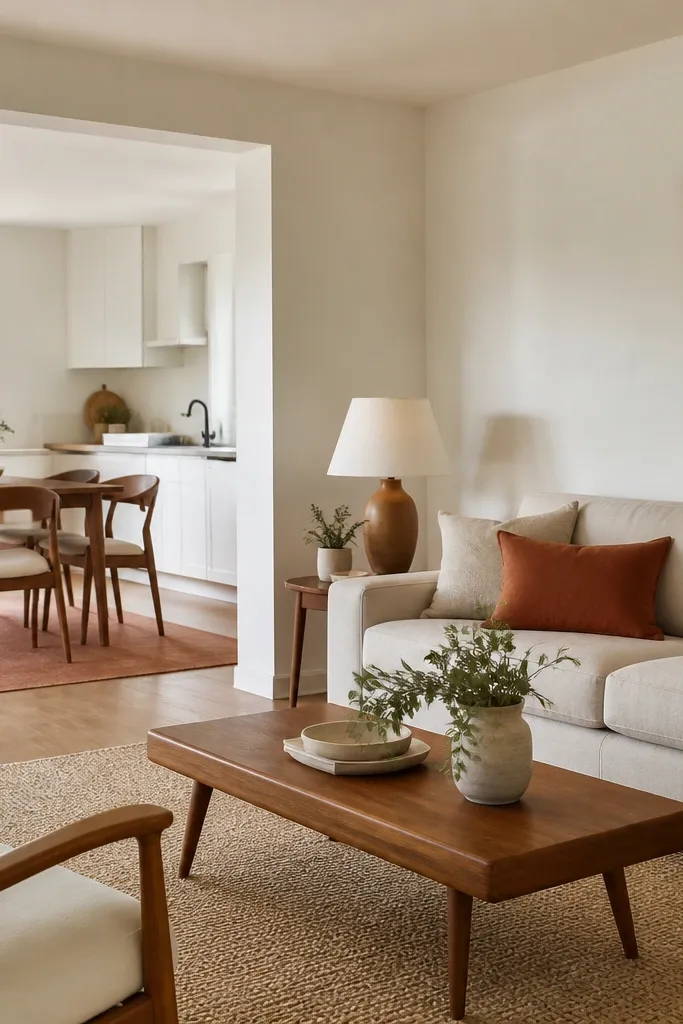
In open-plan apartments, the living room can feel less cosy because it’s visually competing with the kitchen. The fix is continuity: repeat one colour and one material across the dining and living zones. I’ve used a shared terracotta accent (cushion, tray, or small vase) plus warm wood to tie the spaces together without making everything matchy. This works especially well in studios and one-bedrooms where people move between cooking, eating, and lounging. The principle is visual stitching: your eye reads the apartment as one calm place.
Start by choosing one connection point you can repeat, like terracotta. Add it in two places in the living room: a cushion and a ceramic tray on the coffee table, both in the same shade family. Match one wood tone to the dining area, even if it’s just the lamp base or side table. Keep the rug in a neutral warm beige so it doesn’t fight the dining rug or floor colour. Finally, place a small basket near the sofa for dining throw items like napkins or coasters so the transition feels smooth.
Take a photo of your space from the doorway. If your living room looks disconnected, it’s usually missing one repeated colour.
Avoid using two different accent colours in the living room if your kitchen already has a strong one.