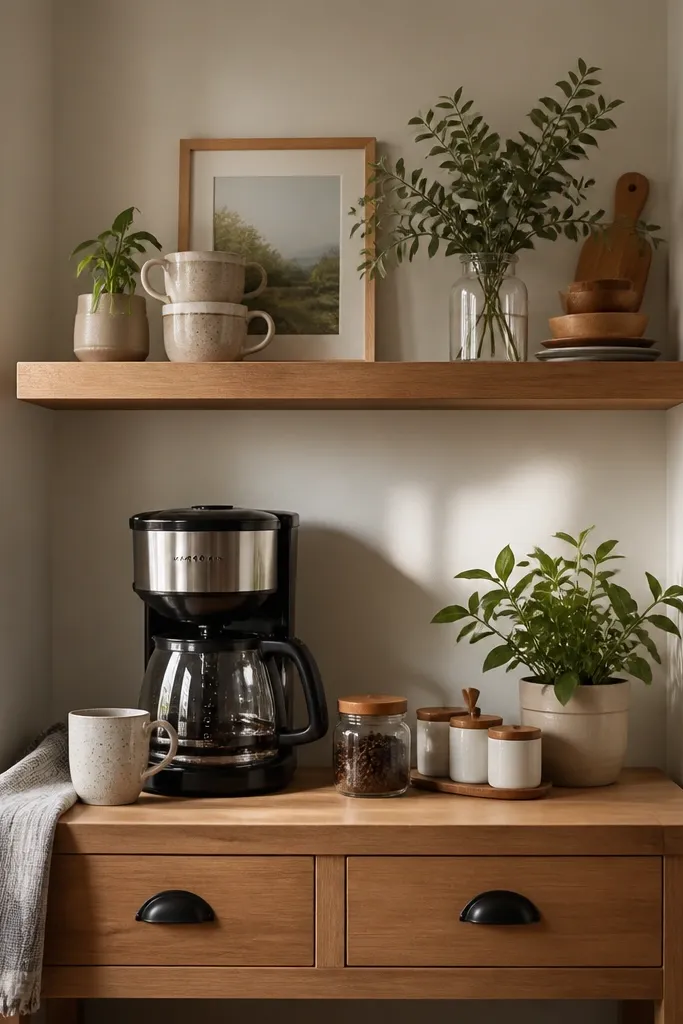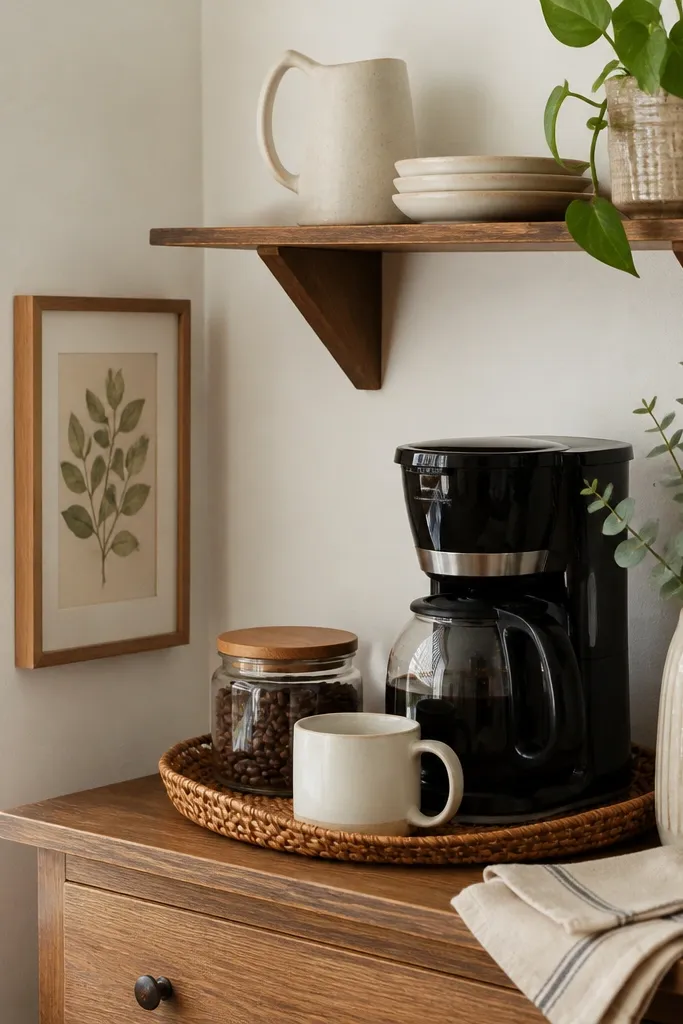
1. The 3-Shelf Corner Ladder with Matching Canisters
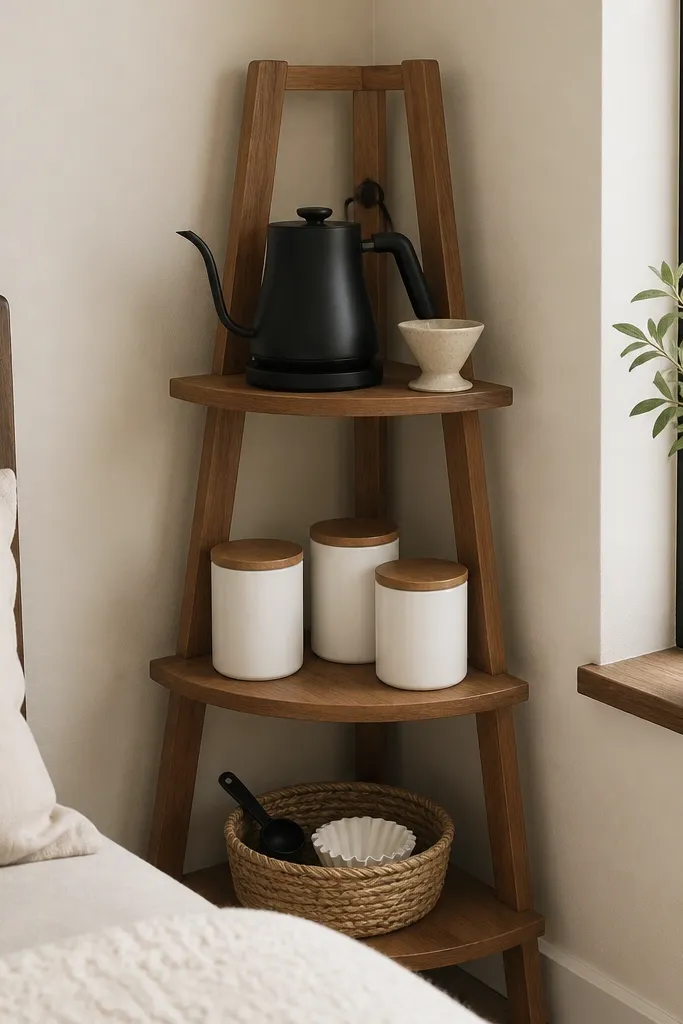
This setup works because a ladder silhouette turns dead corner space into a vertical display. The three shelves create a clear rhythm: hot water tools up top, daily coffee ingredients in the middle, and storage on the bottom. I like it in bedrooms with light wood floors because the ladder wood warms up the room. It also flatters small spaces because you’re not adding a bulky cabinet face — the ladder reads airy but still holds everything.
Start by placing the ladder so the middle shelf lands around 42 inches from the floor. Line the middle shelf with a tray or simply space the canisters so the labels face forward. Put your kettle and pour-over gear on the top shelf with a heat-safe mat under the kettle base. Finish by using a woven basket on the bottom shelf for scoops, filters, and extra sweeteners so loose packets don’t show.
Paint the ladder legs the same color as your bed frame hardware if you want it to look built-in.
Don’t mix canister colors and lid styles; mismatched sets make the corner look like a temporary stash.
2. Slim Corner Cabinet with a Built-In Tray Top
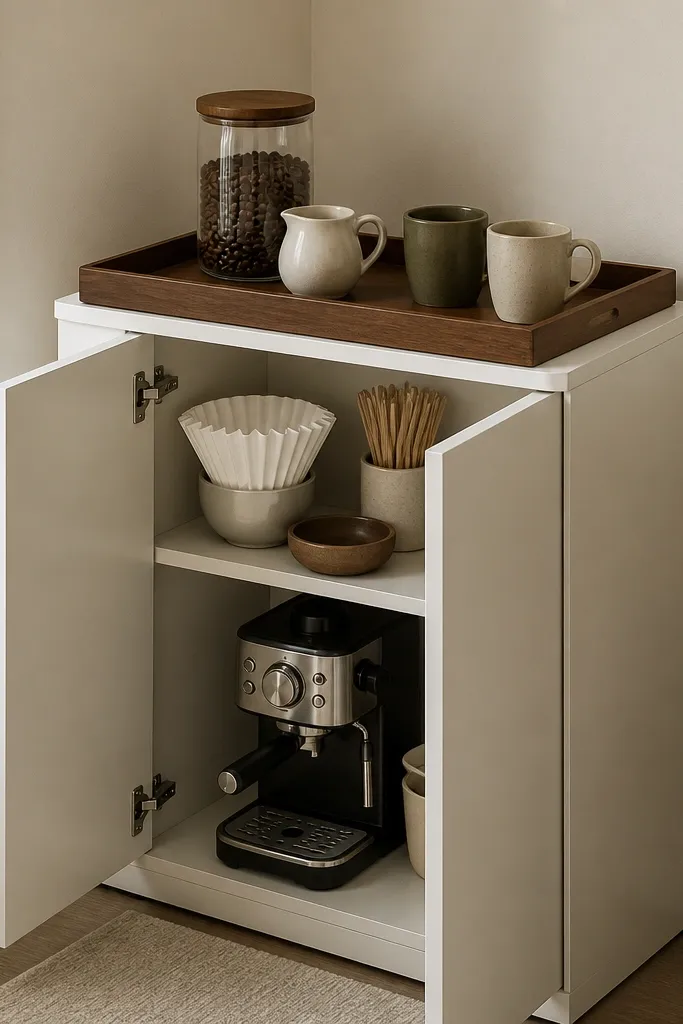
A slim cabinet is the fastest route to a clean-looking coffee corner because doors hide the clutter that always accumulates. The tray top also creates a boundary line so everything stays within a defined area. I’ve used this in bedrooms where the corner is visible from the bed — the closed doors keep the coffee bar from looking messy. It’s great for anyone who wants the corner to look styled even when the coffee routine is mid-chaos.
Choose a cabinet depth of about 12 to 15 inches so it doesn’t steal walkway space. Add or place a tray that covers most of the top surface, leaving a small gap behind for a wall outlet. Arrange mugs on the tray first, then add your daily items like jar, creamer, and sugar in a second row. Inside, use small bins or baskets by category: filters on one side, stir sticks and sweeteners in the other.
Put a small adhesive cable clip behind the tray so the machine cord tucks out of sight.
Don’t leave the cabinet top empty except for the machine; a tray arrangement is what makes it look intentional.
3. Rolling Bar Cart That Matches Your Nightstand
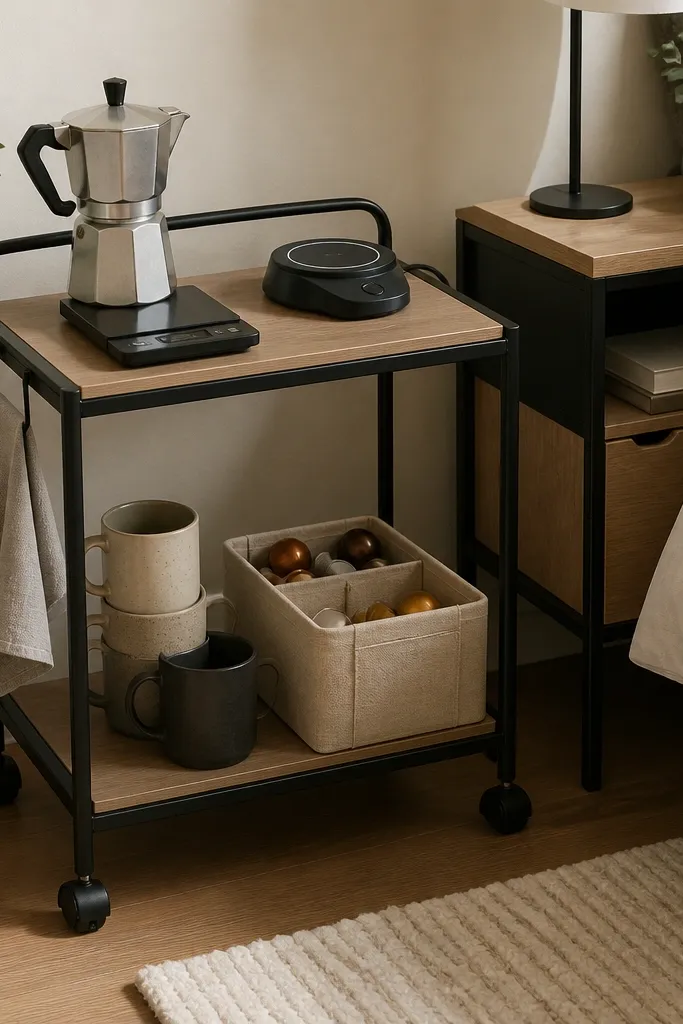
A bar cart is my go-to for apartments and small bedrooms because it can move when you need the space. The trick is matching it to your nightstand finish so it doesn’t look like extra furniture. I like black metal plus light wood because it stays neutral and pairs with most bedding colors. This corner idea also works well for people who like switching between brewing methods — you can swap items on the top shelf without reorganizing everything.
Pick a cart with shelves at two useful heights: one around 32 to 34 inches for daily brewing items, and one around 20 to 22 inches for storage. Move it into the corner and leave 2 to 3 inches of clearance from the wall for cords and a towel hook. Put your kettle or moka pot on the top shelf with a small mat underneath. Store mugs upright in the bottom shelf bin, and keep pods or filters in a lidded container so the color doesn’t scatter visually.
Wipe the shelves with a damp microfiber cloth before styling so fingerprints don’t show on the metal.
Don’t use a cart with wobbly wheels; the whole setup looks sloppy when it shifts during use.
4. Wall Shelf Rail with Pegboard Side Panel
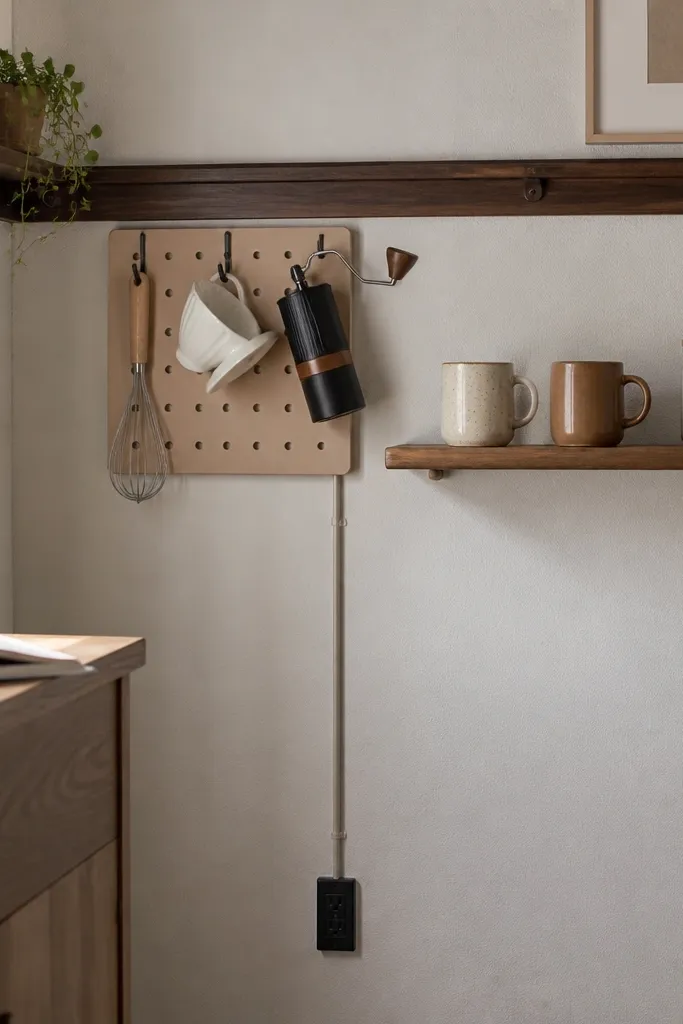
This is the corner-bar idea for people who hate wasted floor space. A wall shelf rail keeps the coffee look neat and gives you hanging options for tools that normally clutter counters. I’ve done this in rooms where the corner is narrow but the wall is clear — it turns that awkward angle into a functional station. The pegboard side panel adds texture and makes the tools look like decor instead of clutter.
Mount a shelf rail so the shelf surface lands around 44 inches from the floor. Install the pegboard panel on the adjacent wall so hooks face outward, not into the corner gap. Hang your grinder, dripper, and whisk with the heaviest items on the lowest hooks. Put your mug pair and a small canister on the floating shelf, then run the machine cord through a slim cord cover to a wall outlet.
Use hooks with the same finish across the pegboard so the wall looks cohesive.
Don’t hang everything at eye level; leave space so the wall doesn’t look crowded.
5. Corner Window Sill Coffee Station (No Counter Mess)
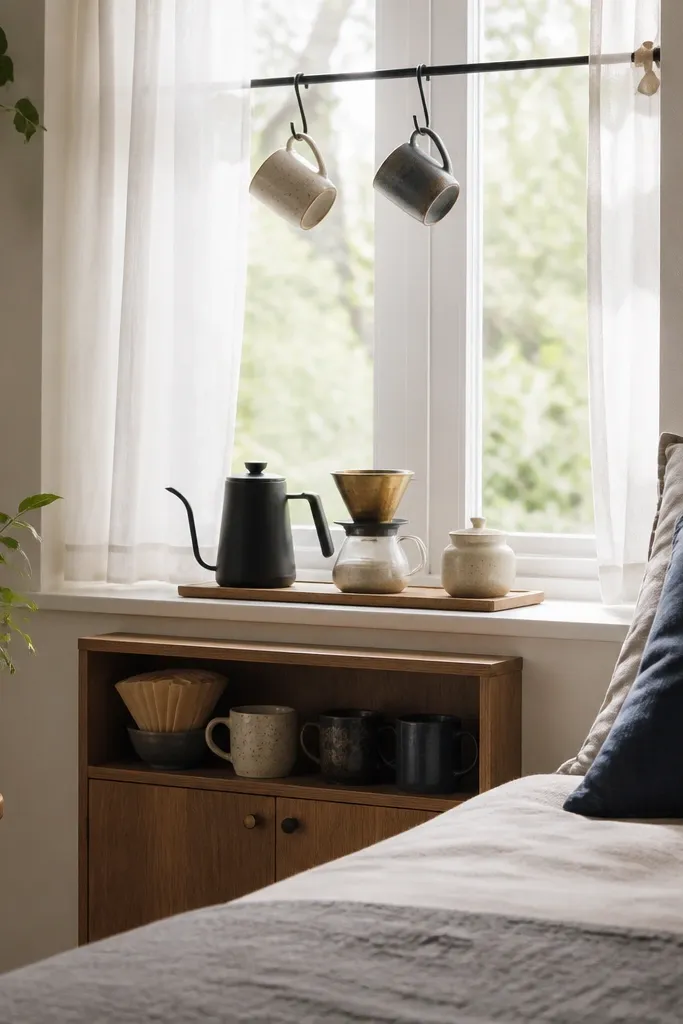
If your bedroom corner has a window, the sill is already a natural “display line.” This setup looks airy because the light hits the glass and ceramic pieces, and it keeps the coffee items from spreading across the room. I like it for mornings because the window light makes the station feel calmer, not heavy. It also helps if you have small kids or a pet — you can keep the mess in a closed cabinet under the sill.
Choose a tray that fits the sill depth with about 1 inch of clearance on each side. Place heat-safe items first: kettle base on a silicone mat, dripper on a stand, then jar and sugar. Hang mugs on a rail under the curtain rod so they’re within reach but still off the sill. Store filters and backup coffee in the cabinet below, using a small divider tray so everything stays upright.
Good to knowUse a clear glass jar for beans if your window gets direct sun — it looks crisp and you can rotate stock easily.
AvoidDon’t place paper filters loose on the sill; they curl and look messy fast.
6. Two-Part Countertop Look with IKEA-Style Wall Unit and Stool
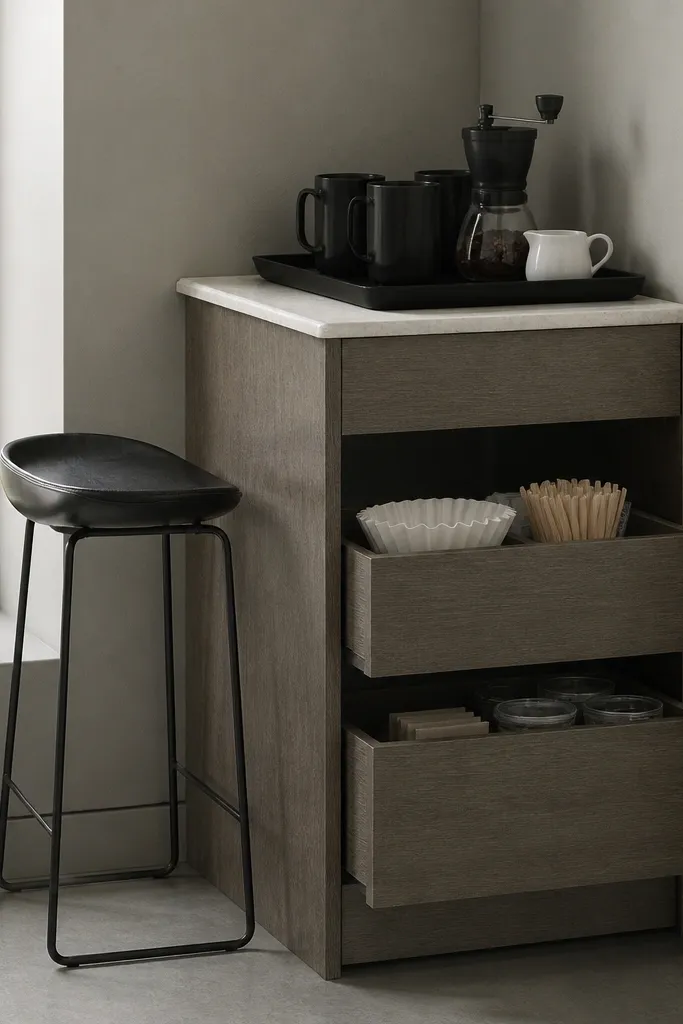
This idea mimics a real café counter without adding a full bar table. The stool makes the corner feel intentional, and the wall unit keeps everything in one compact footprint. I’ve used this in bedrooms where the corner is wide enough for a small seating moment but not enough for a big dresser. It flatters people who like to sit while they make coffee — you’re not standing in a tight path.
Mount or place the wall unit so the top surface is around 34 to 36 inches high, then tuck the stool so it sits flush when not in use. Use a black or dark brown tray on the top to create a strong contrast against light walls. Arrange mugs side-by-side, then place grinder and coffee tools in a single back row. Install pull-out bins inside for filters and sweeteners so you can restock quickly without opening multiple containers.
Add a small felt pad to the stool legs; it keeps the stool from scraping when you pull it out.
Don’t stack items on both sides of the tray; one clean face looks better than a full 360 display.
7. Fabric-Front Corner Storage Bench with Coffee Tray Insert
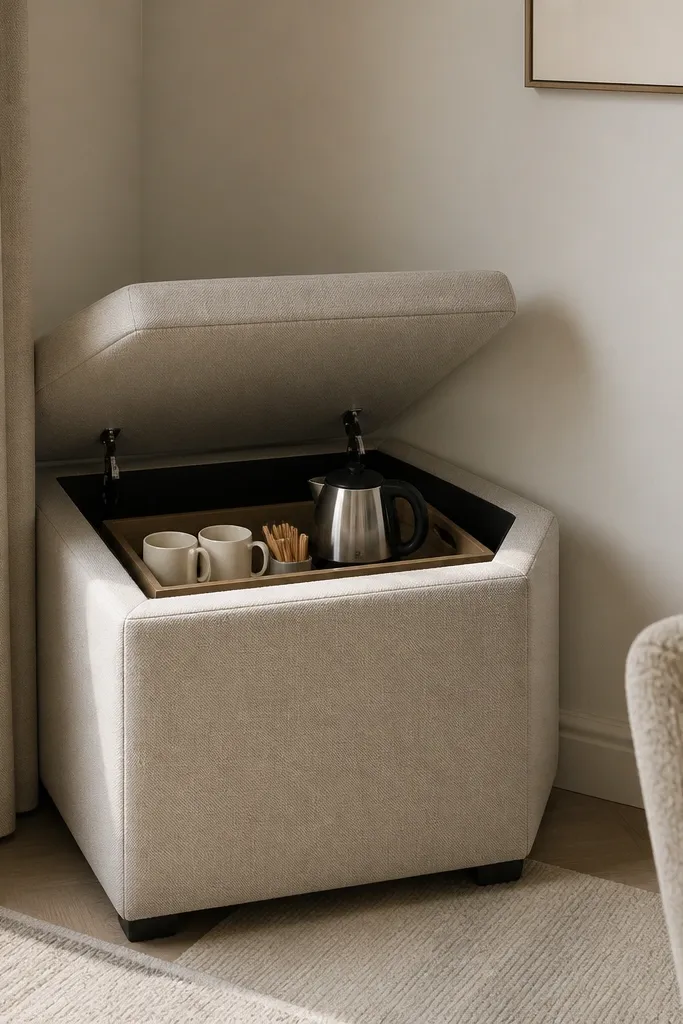
A bench is a smart choice when you want the coffee corner to disappear when you’re not using it. The fabric front softens the space and makes the station feel more like part of the bedroom than separate furniture. I like this for bedrooms with warm neutrals because beige linen plus white ceramics looks calm and clean. It’s also great if you share the room with someone who doesn’t want coffee tools visible all day.
Pick a bench that fits the corner with a top width that lets the tray sit centered, leaving 2 to 3 inches of breathing room. Use a removable tray that matches the tray insert shape, then build your coffee layout on top: kettle on one side, mugs in the middle, sugar and creamer on the other. Store backup pods, filters, and extra mugs inside the bench under the tray. Add a small hook or pocket for a tea towel on the side of the bench if your sink is far.
Choose a tray with raised edges so spills don’t run into the bench fabric.
Don’t use a bench with deep, open storage; loose items look messy the second you lift the lid.
8. Corner Floating Desk Shelf with Under-Shelf Mug Hooks
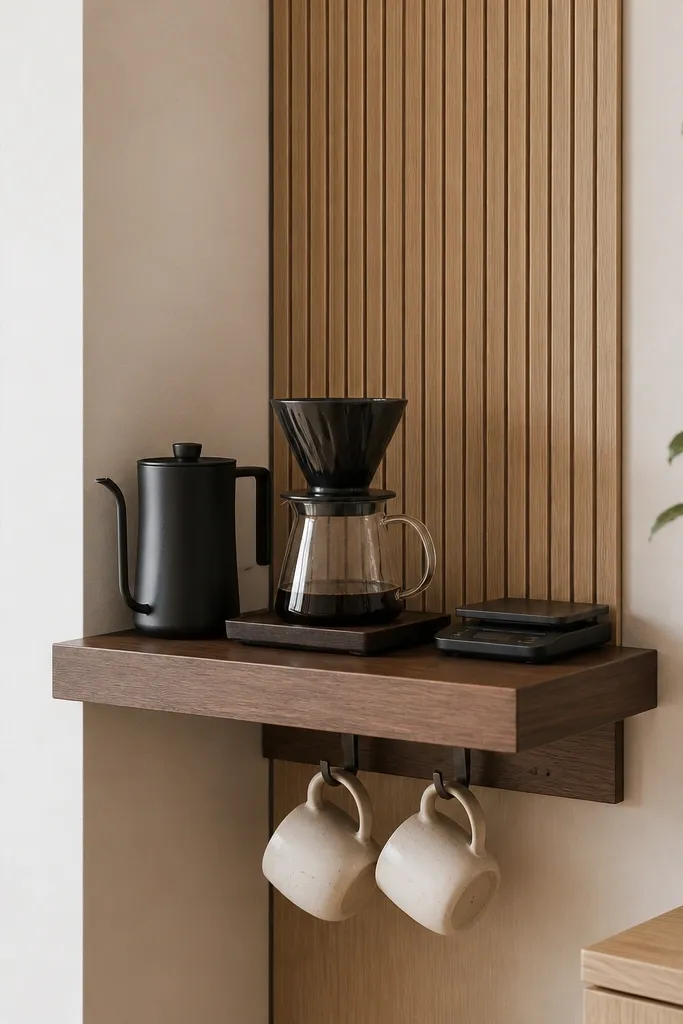
This one is for people who love a clean wall look. A floating shelf keeps the coffee area off counters and makes the corner feel larger because there’s no bulky furniture in the room. Mug hooks under the shelf are the difference between a tidy corner and a pile of mugs on laundry days. I like it for small bedrooms with minimal decor where you want the coffee station to look like part of the wall.
Mount the shelf so the top surface is about 43 to 45 inches off the floor. Add mug hooks underneath at a height that lets you grab mugs without stretching — roughly 12 to 14 inches below the shelf underside. Place a heat mat or silicone pad on the back edge for any kettle or brewer. Style with a tray that holds your jar and daily sugar items, then keep anything else inside a small cabinet or basket out of view.
Good to knowUse two hooks, not four, if the room is super small; it keeps the wall from looking crowded.
AvoidDon’t mount the shelf too low; mugs hit your knees and the whole setup stops feeling convenient.
9. Black Marble-Look Tray Table with Two Mugs and a Grinder Stand
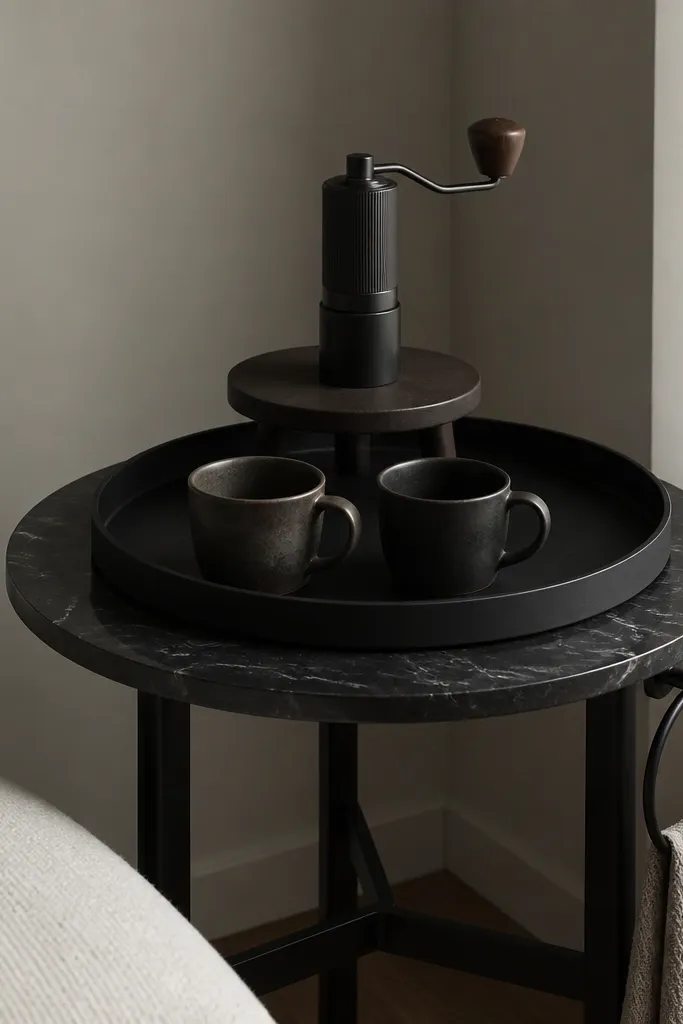
This is the “one small object, big impact” approach. A round table in the corner gives you a surface without corners fighting your room layout, and the marble-look top makes the coffee items look styled even when you use simple pieces. I recommend it when your bedroom has dark bedding or black frames because the tray and table match the room instead of looking like an extra add-on. It’s also good for solo coffee drinkers because the setup stays minimal.
Choose a side table with a top diameter around 18 to 22 inches so it fits the corner but still feels stable. Put a large tray on top so it covers at least 70% of the surface. Arrange mugs at the front edge, then place the grinder stand slightly back and centered. Add one jar and one creamer, then keep everything else in a small lidded container in a nearby cabinet or drawer.
Wipe the tray underside and table top weekly; the marble-look finish shows dust in a way matte finishes hide.
Don’t add four different coffee gadgets at once; the tray needs breathing room.
10. Pegboard Corner Shelf with Baskets for Pods and Filters
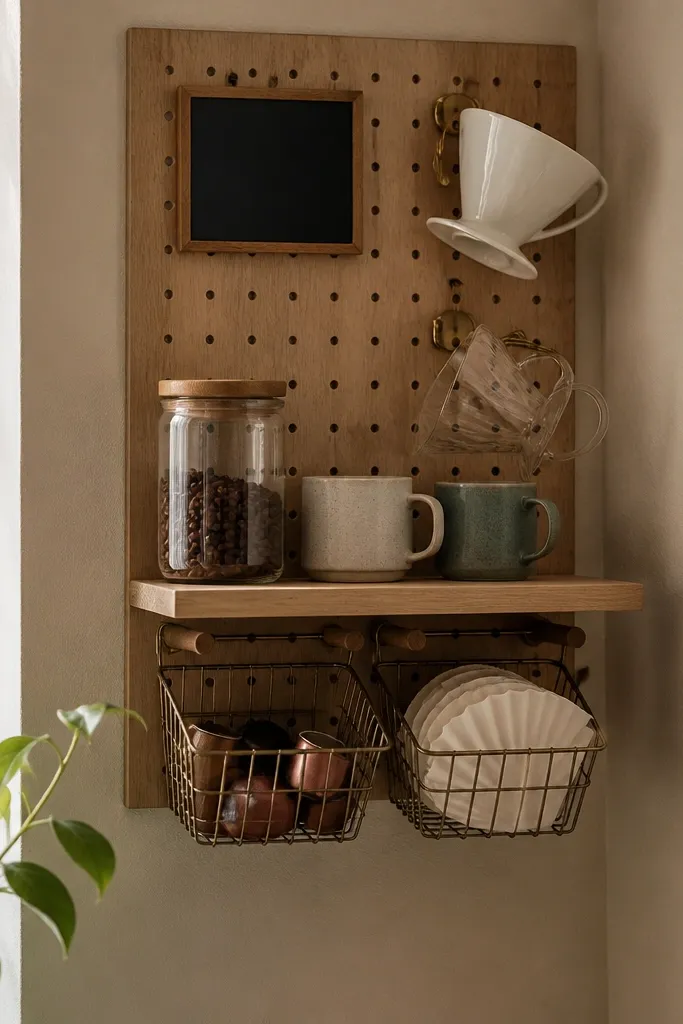
Pegboard corners look organized because you’re turning storage into a grid. The wire baskets are key — they let you see what you need without spilling. I like this when your coffee routine includes pods and filters at the same time, because you can separate them visually. The chalkboard label makes the corner feel lived-in, not showroom perfect, and that matters in bedrooms where the station gets daily use.
Mount the pegboard so the shelf surface lands around 40 to 44 inches from the floor. Hang wire baskets at different heights: filters slightly higher, pods lower so you don’t dig. Put your daily jar and mugs on the shelf, and hang your dripper and pour-over cone on hooks beside it. Use one small shelf for tools, not multiple — the fewer ledges you add, the cleaner it looks.
Paint the pegboard the same color as the wall trim if you want it to blend, then keep baskets and hooks in one metal finish.
Don’t put loose packets directly on hooks; they slide and look careless.
11. Corner Bookshelf with Closed Doors for Coffee Gear
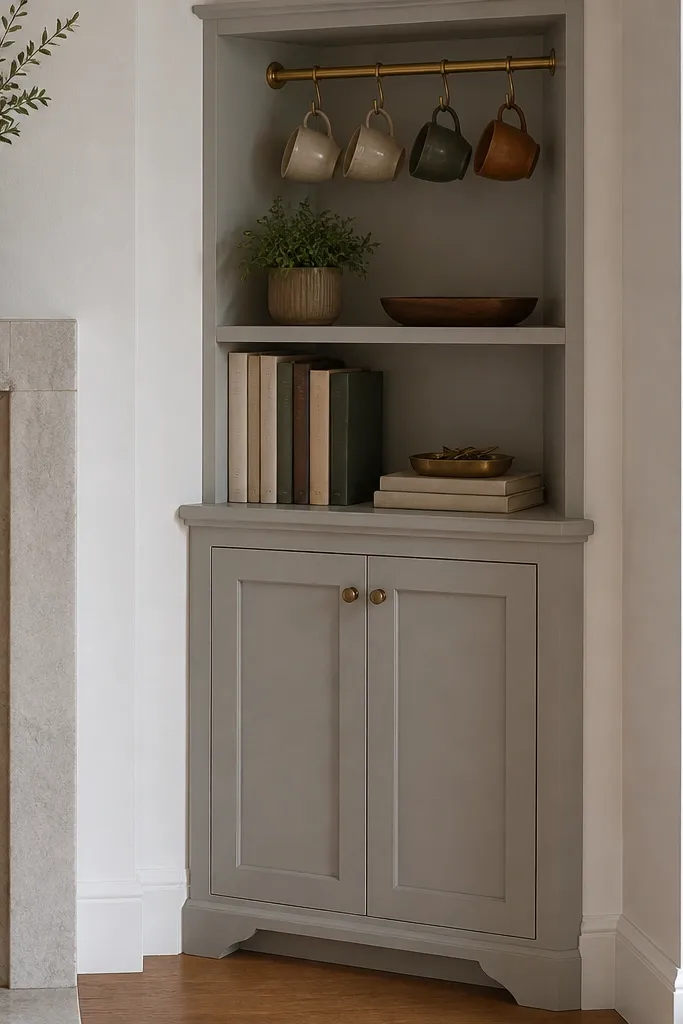
This idea looks good because it mixes display and concealment in one piece. Open shelves give you height for decor, while closed doors stop the coffee gear from looking cluttered. I like it when your bedroom already has books or framed prints, because the coffee corner blends into existing styling. It also works for couples if you label one shelf for each person’s mugs or beans.
Choose a corner bookshelf with closed doors at least 20 inches wide so you can hide a machine or a stack of supplies. Install a mug rail or hooks under the top shelf so mugs don’t sit randomly on the open ledge. Style the open shelf with one tray and two or three items max — jar, creamer, and one decorative piece. Use labeled bins inside the closed section for filters, stir sticks, and backup pods, so restocking is quick.
Keep the open shelf items matte and the coffee tools clean; glossy items reflect light and can look messy if fingerprints show.
Don’t cram the open shelf with mugs and gadgets; open shelving is where corners start to look like storage.
12. Kitchen-Style Corner Wall Niches with Magnetic Strip
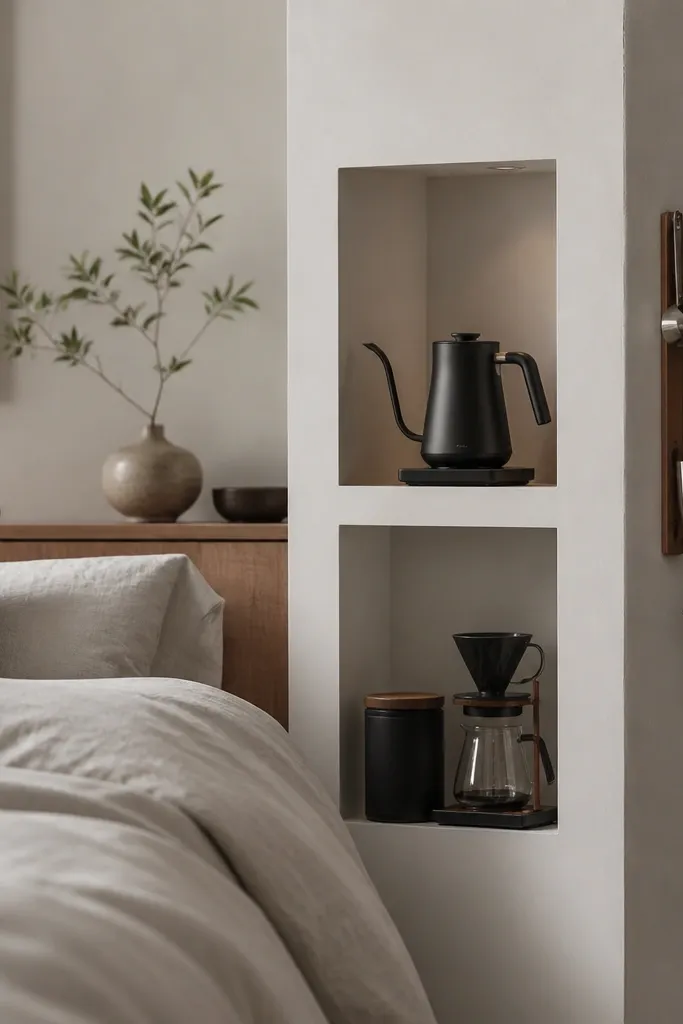
Recessed niches make the coffee corner look built-in, even when you’re working with a small footprint. A magnetic strip is a clean way to store metal tools without adding more shelves or hooks. I used this setup in a room where the corner had a plain wall and no existing furniture — the niches gave the wall a purpose. It’s especially good if you hate clutter because the tools stay in fixed spots.
Mark the niche heights first: place the lower niche around 34 to 36 inches so you can reach without bending, and the upper niche around 48 inches for kettle and jars. Add a heat-safe mat in the upper niche where the kettle sits. Mount a magnetic strip on the side panel so scoops and frothers hang vertically and don’t crowd the niche shelf. Style the niches with neutral ceramics and one metal element so the corner looks intentional.
Use a small lip on the niche shelf or a raised edge tray so drips don’t fall into the wall cavity.
Don’t put items in niches with no wipeable surface; coffee splashes happen and you need easy cleanup.
13. Corner Coffee Station with a Narrow Drop-Leaf Table
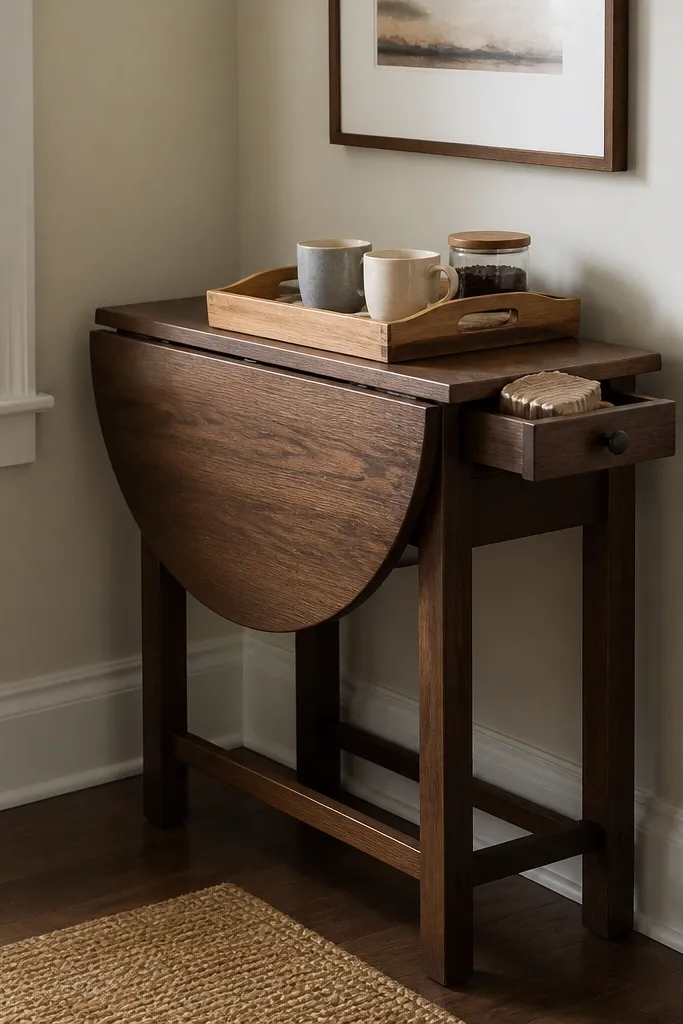
A drop-leaf table is the smartest small-room move when you need the corner to be empty later. When the leaf is closed, the station disappears and the bedroom feels bigger. When you open it, you get a real surface for brewing without using your nightstand or dresser. I recommend this for bedrooms where you also need space for a plant stand, laundry hamper, or a reading chair.
Choose a table width that fits the corner gap — look for something around 20 to 26 inches closed. Mount a small tray or silicone mat on the open surface so you can wipe it in seconds. Put mugs and a jar on the side closest to the wall so the open edge stays clear for cups. Store filters and stir sticks in the drawer or a slim bin under the table, and keep the kettle on a heat mat so the surface doesn’t stain.
Attach a small felt bumper to the leaf edge so it doesn’t clack against the frame.
Don’t use a glossy tabletop; coffee drips and fingerprints show immediately in morning light.
14. Corner Coffee Wall Cabinet with Glass Door and Fabric Liner
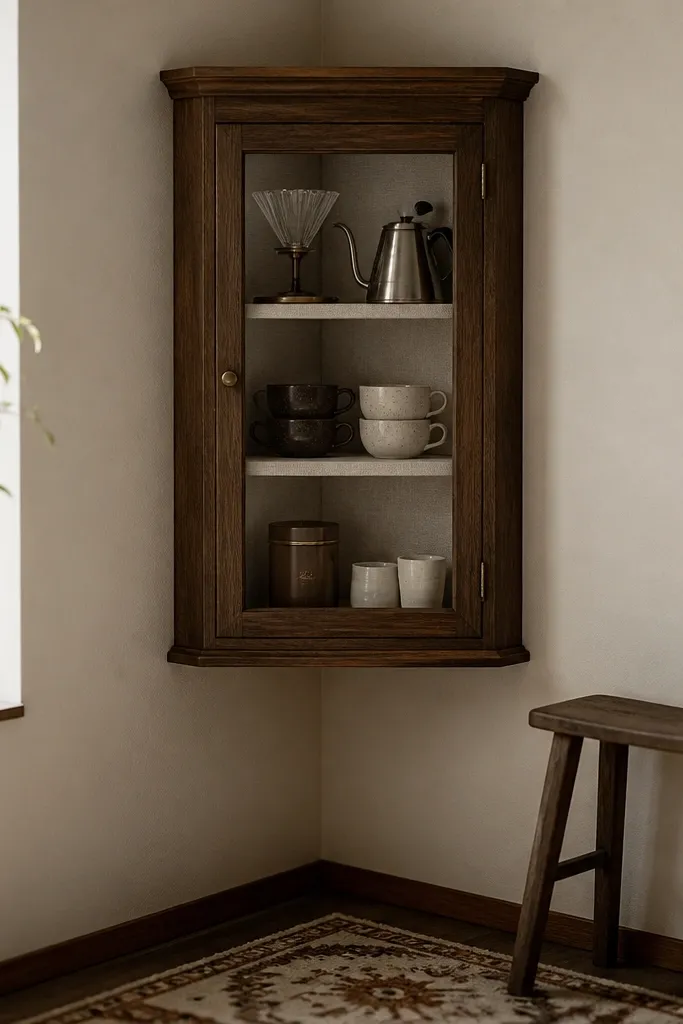
Glass-door cabinets look pretty because you can see the coffee tools, but the fabric liner keeps the inside from looking like random supplies. This is a great option when you want the corner to look like decor, not like a utilitarian station. I like this in bedrooms with soft textiles because the fabric inside matches the room vibe. It’s also helpful for people who forget to put things away — you’re training yourself to store everything inside one cabinet.
Mount the cabinet so the bottom shelf is around 45 inches high. Place a fabric liner in a light neutral and smooth it flat so it doesn’t bunch behind items. Inside, build the arrangement in layers: pour-over tools on the top shelf, mugs stacked on the middle, and backup supplies like filters in a small tin or box. Keep the outside counter clear or use it only for one tray so the glass cabinet becomes the star.
Use one fabric color and one metal finish for tins so the cabinet reads cohesive.
Don’t overfill the cabinet; glass shows gaps unevenly and crowded shelves look chaotic.
15. Corner Coffee Bar on a Narrow Console with One Drawer Organizer
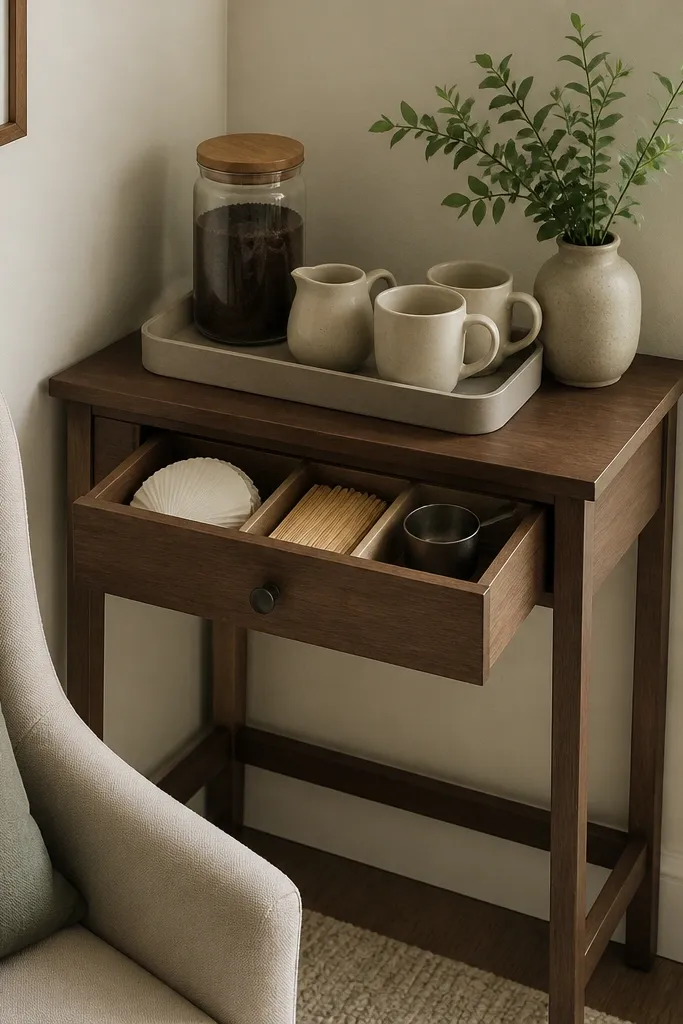
A narrow console gives you a stable base without eating much floor space, and the single drawer is where the corner stays tidy. I like this when your bedroom has a chair nearby, because the coffee bar feels like a mini station for slow mornings. The drawer organizer keeps the small items from spreading across the top surface. It also flatters rooms where you want the coffee corner to look like regular furniture, not a DIY wall hack.
Pick a console depth around 10 to 12 inches and place it so you have at least 24 inches of clearance in the main walking path. Put a large tray on top that leaves a small margin around the edges. Arrange mugs on the front half, then put jar and creamer in the back half. In the drawer, use one divider tray for filters and stir sticks plus a small cup for scoops. Keep the top free of loose packets by storing them in the drawer.
Good to knowLine the drawer with a thin non-slip mat so containers don’t slide when you open it.
AvoidDon’t store tall bottles on the top; they force you to over-style and the corner looks busy.