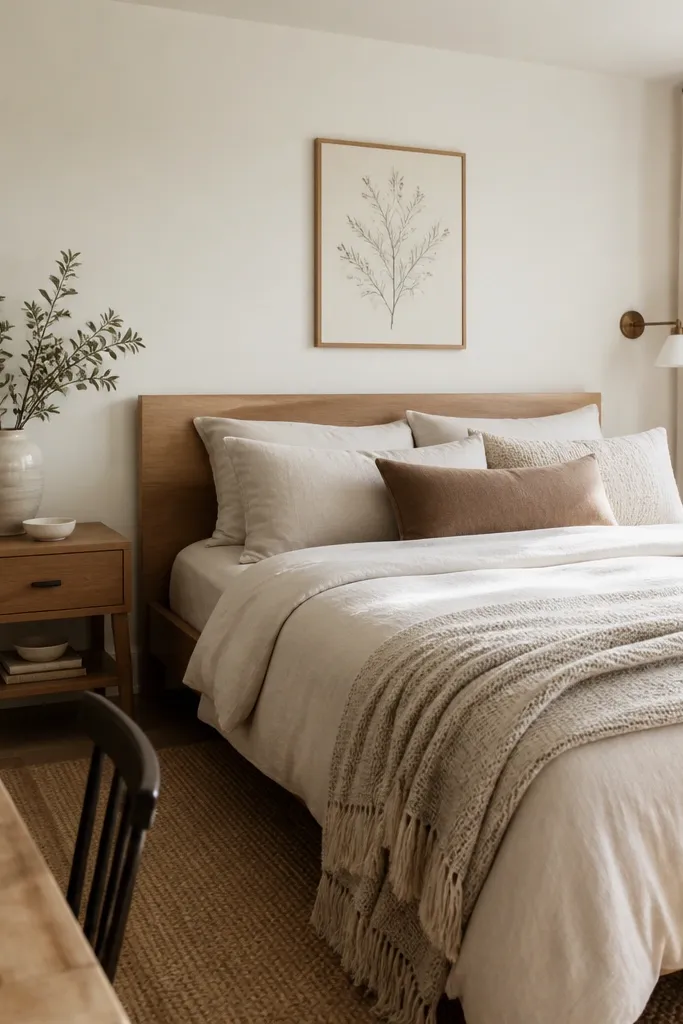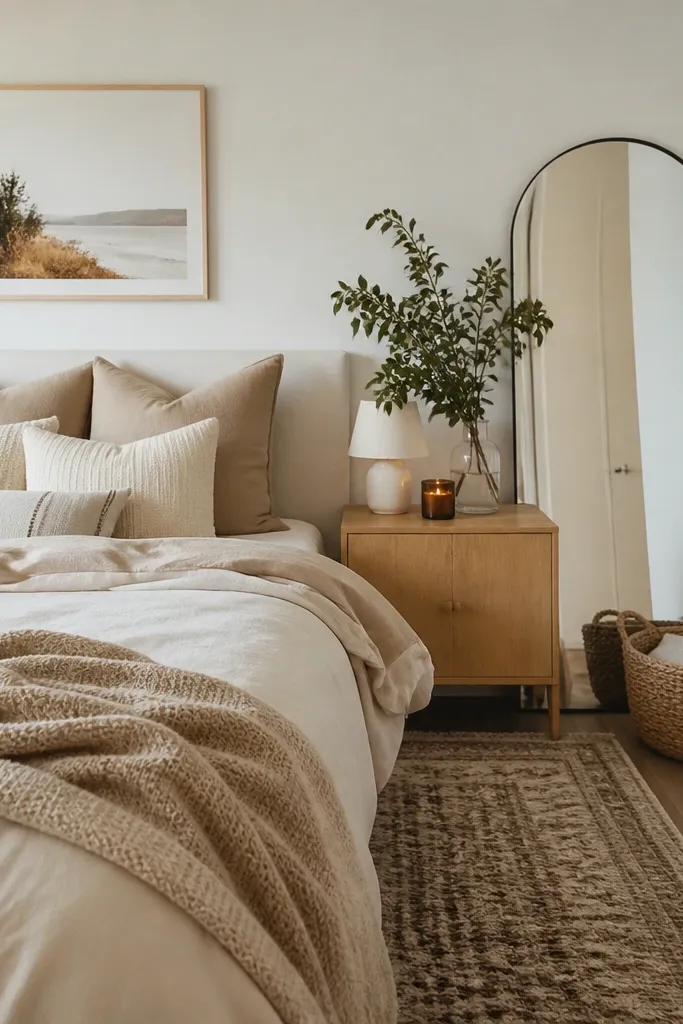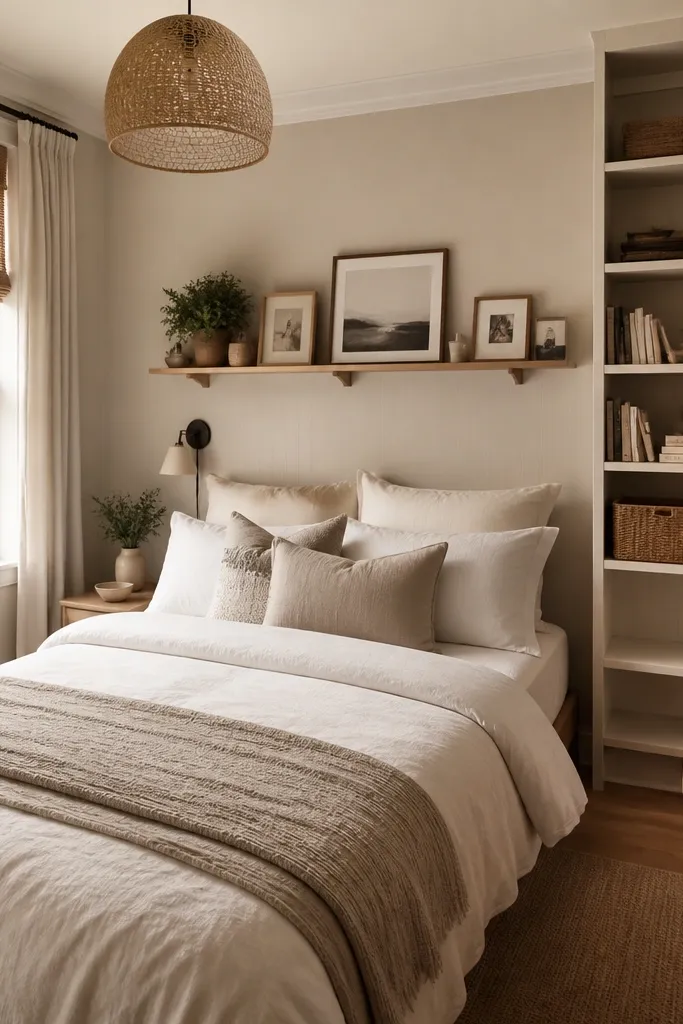


1. Crisp Duvet + Cotton-Linen Blend Pillow Covers
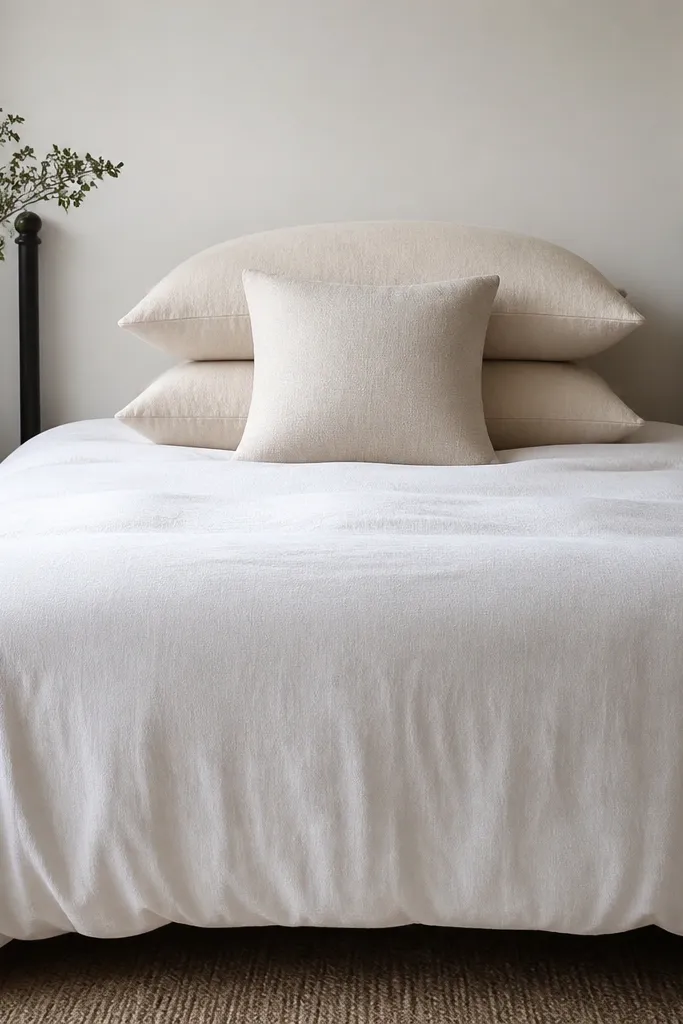
I like this setup because it stays neat even when you do a half-bed tuck. Go for a duvet cover in solid white, warm ivory, or greige with a matte finish — shiny fabric shows every wrinkle. Pillow covers in a cotton-linen blend add texture without the “crumpled linen” look that screams high-maintenance. This combo flatters most skin tones because it throws soft, neutral light back into the room, and it works for both cool and warm color palettes. If you’re short on time, the trick is to keep your pillow colors within two tones — it reads intentional even when the bed isn’t perfectly smoothed.
Start by buying a duvet cover that matches your comforter size exactly, then plan for a 2-3 inch overhang on the sides. Insert a duvet insert that’s a little oversized so it fills the corners and doesn’t collapse. Next, place two larger pillows in the back, then one smaller sham in front centered — that stacking order makes the bed look styled in one glance. Finally, add one throw only on one side of the bed so you’re not constantly moving it back and forth. Keep the bed skirt simple or skip it if your frame covers the gap; the cleaner the bottom line, the easier it is to keep tidy.
Good to knowWash duvet covers in cold, tumble low, and pull them out slightly damp — they smooth into shape fast. A fabric-safe spray on pillow covers helps them repel everyday smudges.
2. Wipe-Clean Performance Velvet Headboard
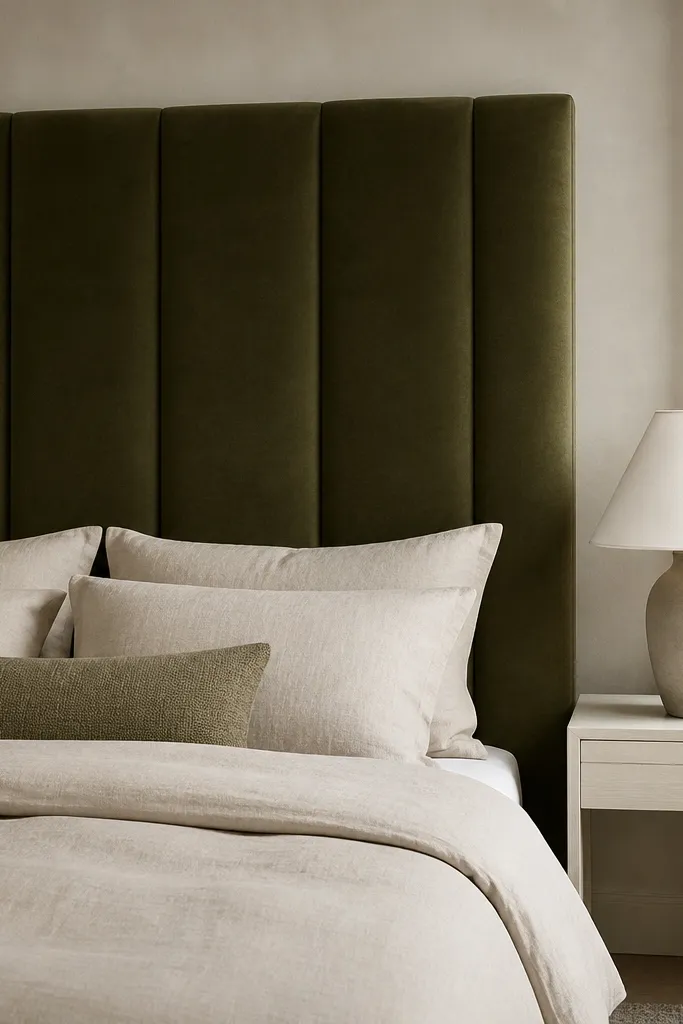
A headboard is where bedrooms look finished, and performance velvet is the easiest version I’ve tried. The deep olive color hides tiny scuffs and doesn’t show dust like light fabric does. I’ve lived with this finish in a busy household where kids brush past the wall; it wipes down without leaving shiny patches. Pair it with a light duvet in oatmeal or warm sand so the headboard becomes the focal point instead of the whole room fighting for attention. This works especially well if you have a cooler-toned room — olive adds warmth without going red or orange.
Choose a headboard height that reaches about 8-10 inches above your pillow top. Keep the frame and legs simple so the upholstery stays the hero. Install it against the wall first, then style the bedding: one solid duvet, two neutral pillows, and no busy patterns at the headboard edge. Add a bedside lamp with a linen or cotton shade so the velvet doesn’t look too heavy. If your room is small, keep the wall color light (off-white) so the headboard reads grounded instead of bulky.
Good to knowUse a microfiber cloth with warm water for quick cleanups — don’t soak the velvet. Avoid harsh sprays; a damp cloth does the job.
3. Short-Pile Oatmeal Rug With Flat Border
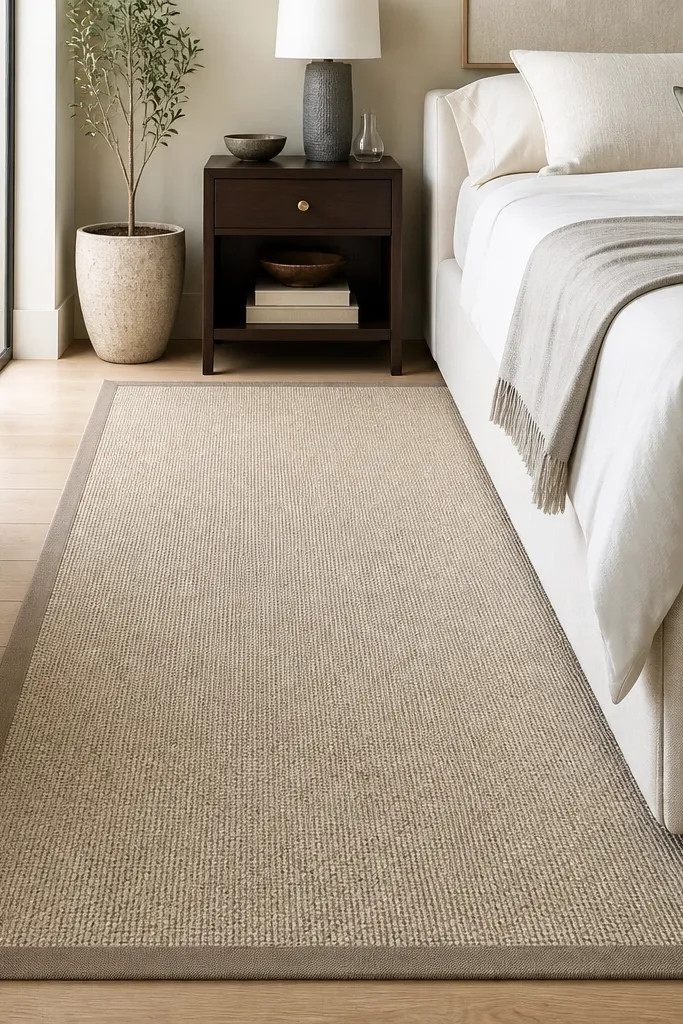
A short-pile rug is my go-to for low maintenance room interior bedroom easy care because it doesn’t trap crumbs and it’s easier to vacuum edge-to-edge. Oatmeal with a flat border hides the tiny stuff: lint, sock fuzz, and the occasional dust trail from under the bed. I like a border because it frames the room and makes the rug look “designed,” even if you don’t keep it perfectly straight every day. This color also helps rooms that get harsh morning sun; it doesn’t glare like pure white. If you have light floors, this rug anchors the bed without darkening the whole space.
Measure your bed footprint first and aim for at least 8-12 inches of rug showing on each side. Lay the rug so the border runs parallel to the bed frame — straighten it before you add any furniture. Vacuum in lines, not circles, because short pile shows swirl tracks less when you follow direction. If you have pets, choose a rug with a low loop pile and a dense backing — it doesn’t shed as quickly. Add a rug pad that prevents slipping; it makes daily stepping feel stable and keeps the rug from creeping.
Good to knowFor spills, blot immediately and use a little warm water with a drop of dish soap on a cloth. Don’t scrub — short pile still shows “cleaning rings.”
4. Black Metal Bed Frame + Light Wood Nightstands
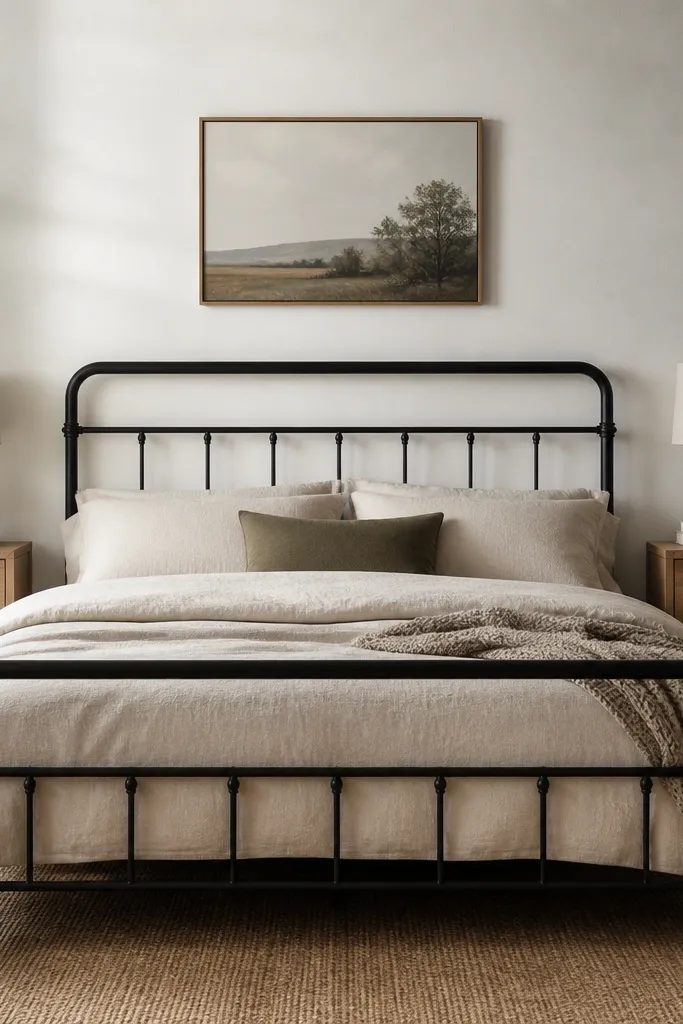
This combo looks sharp with minimal styling because the structure does the work. Black metal has clean edges and doesn’t show wear like painted wood can. Light wood nightstands bring warmth and make the room feel livable instead of cold. I’ve used this pairing in small rooms where you can’t afford heavy furniture; the metal frame keeps sightlines open, so the bedroom doesn’t feel boxed in. If your skin tone runs warm, the oak reads flattering next to neutral bedding. If you’re cool-toned, the light wood softens the palette without adding yellow.
Pick a bed frame with a matte finish and a headboard that matches your pillow height. Choose nightstands with drawers or closed shelves so you can hide charging cords and random lip balm. Place the nightstands so the top surface aligns — even a 1-inch mismatch looks sloppy when you’re not constantly tidying. Style each top with one lamp and one small item only: a book stack plus a tray, or a single candle holder. Keep the trays the same metal finish on both sides for visual calm.
Good to knowWipe metal with a dry microfiber cloth first, then a barely damp cloth — it prevents streaks. Keep cords behind the drawer lip by using a small adhesive cable clip.
5. Machine-Washable Roman Shade in Solid Linen Weave
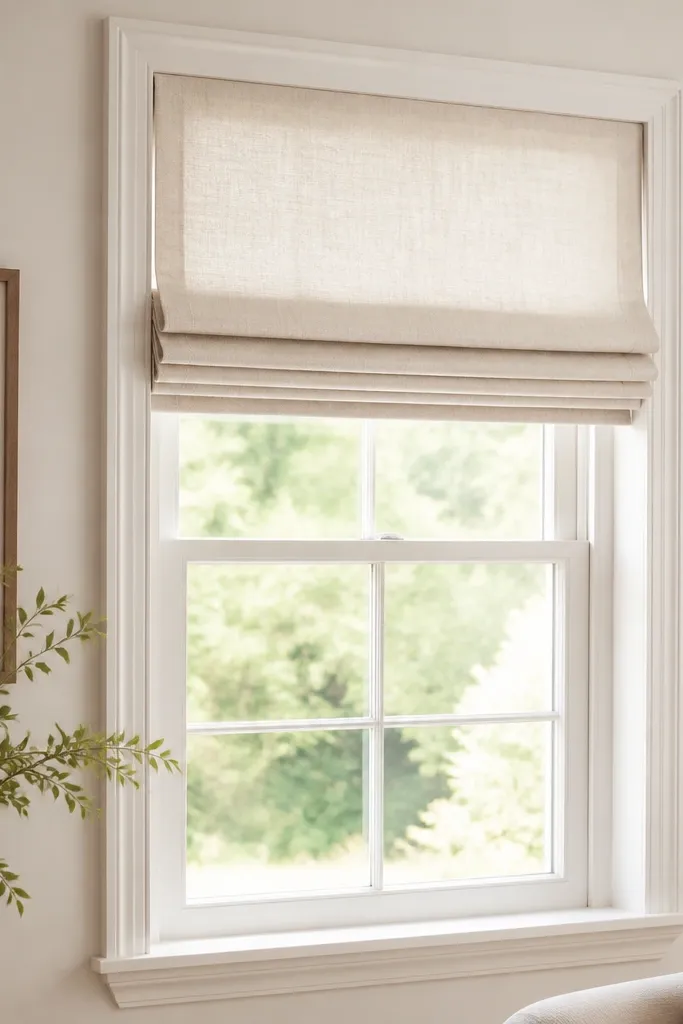
Roman shades are the easiest window treatment I’ve installed because they don’t drag and they don’t collect floor-level dust. When you choose a solid linen weave in off-white, you get texture without busy patterns that hide smudges poorly. I picked a machine-washable fabric once for an apartment with greasy kitchen smells drifting upstairs, and the shade stayed fresh with regular wash cycles. This looks good in both bright and dim rooms because it reflects light softly. It also flatters bedrooms with beige, gray, or green walls because the weave sits between them.
Measure the inside mount width and height exactly, then choose a shade that matches your window so you don’t get gaps where dust builds. Install the mounting brackets first, then hang the shade and test the lift cord and stop position. Keep the shade color one shade warmer than your wall so it reads intentional. For styling, skip extra valances; the roman folds are the decoration. If you need privacy, choose a fabric with a blackout or lined option so you don’t add heavy curtains.
Use a lint roller before washing so you don’t grind dust into the fibers. Air-dry flat for the crispest folds.
6. One Statement Mirror Above a Dresser
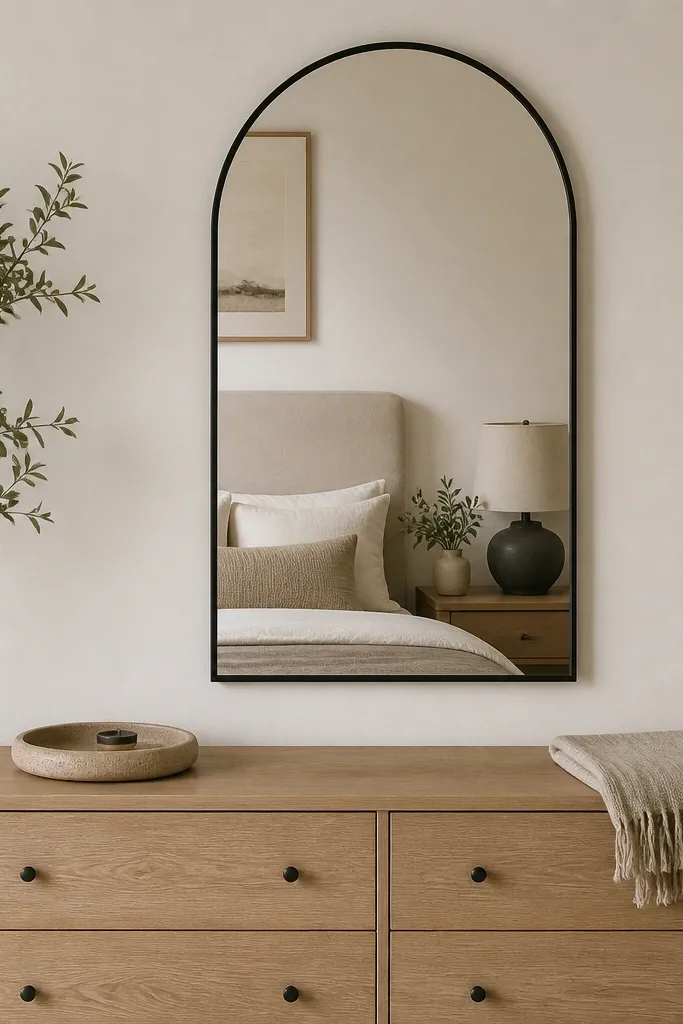
A mirror is the fastest way to make a bedroom look styled without adding more clutter. I like a thin black frame because it echoes metal bed frames and doesn’t overwhelm small rooms. The arched shape softens corners and makes the room feel more collected, even when you only own a few decor pieces. When it reflects your bed, it doubles the “clean” look because both the bed and the mirror surface feel intentional. This works for almost any skin tone and lighting situation because the frame is neutral and the reflective surface spreads light across the wall.
Hang the mirror so the bottom edge sits about 6-8 inches above the dresser top — that gap keeps it from looking like it’s stuck on. Center it over the middle drawer so the geometry feels calm. Style the dresser with one tray only: put a small candle or a diffuser on it and keep everything else in a drawer. Add a single folded throw at the side, not draped across the front. If your dresser is long, don’t add two decor clusters; one cluster looks cleaner and is easier to reset.
Wipe the mirror with a glass cloth and a tiny bit of vinegar-water for streak-free results. Keep it dusted weekly so it doesn’t turn cloudy.
7. Bedside Lamps With Pull-Cord Switches
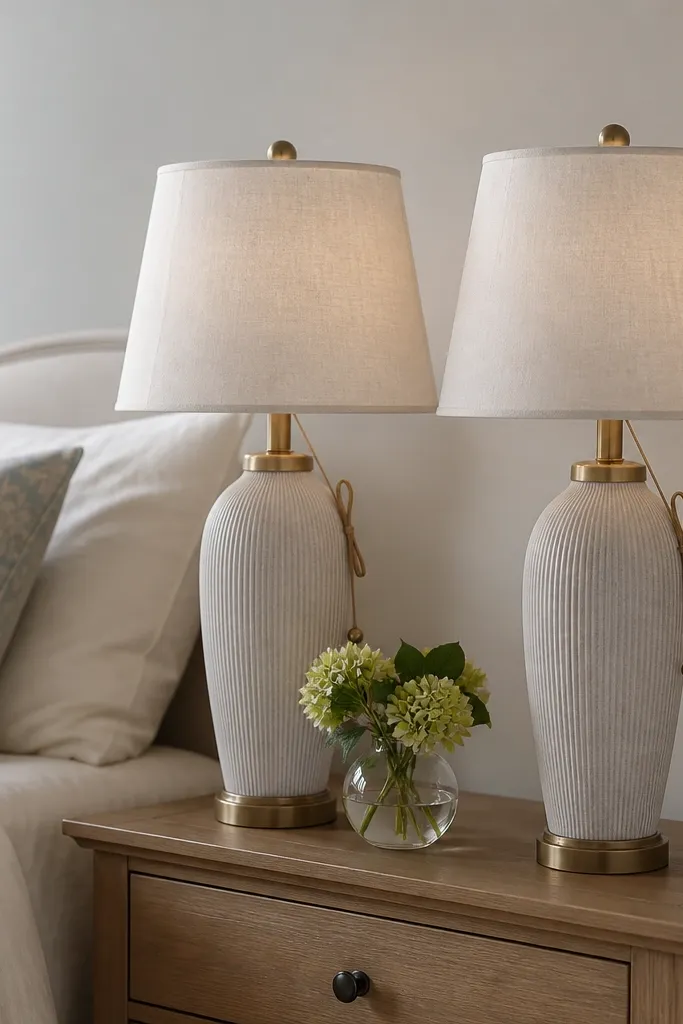
This is a small thing, but it changes daily life in a way that makes the room feel easier to live in. Pull-cord switches mean you don’t reach behind furniture or hunt for a wall switch with your phone light. That keeps your bedside area from turning into a messy charging zone. I’ve used this in bedrooms where people keep bumping cords; pull cords make the mess predictable and contained. Pair the lamps with neutral shades so they don’t fight your bedding colors. The fabric shade also hides the bulb glare that can make a room look “unfinished.”
Pick lamps with shades that are about 10-12 inches tall and wide enough to cover the bulb without looking tiny. Position each lamp so the shade center lines up with the bedside table center — it reads symmetrical. Route the cords along the back corner of the table, then secure them with a small adhesive cable clip underneath the tabletop edge. Choose a warm bulb around 2700K so the room doesn’t look harsh at night. Keep a matching finish on both lamps — black, brushed nickel, or matte brass — so the bedside doesn’t look random.
Good to knowUse a smart plug only if you want it, but keep the lamp switch accessible. If you hate cords, wrap extra cord length under the base with a twist tie.
8. Closed Nightstand Storage With Matching Bins
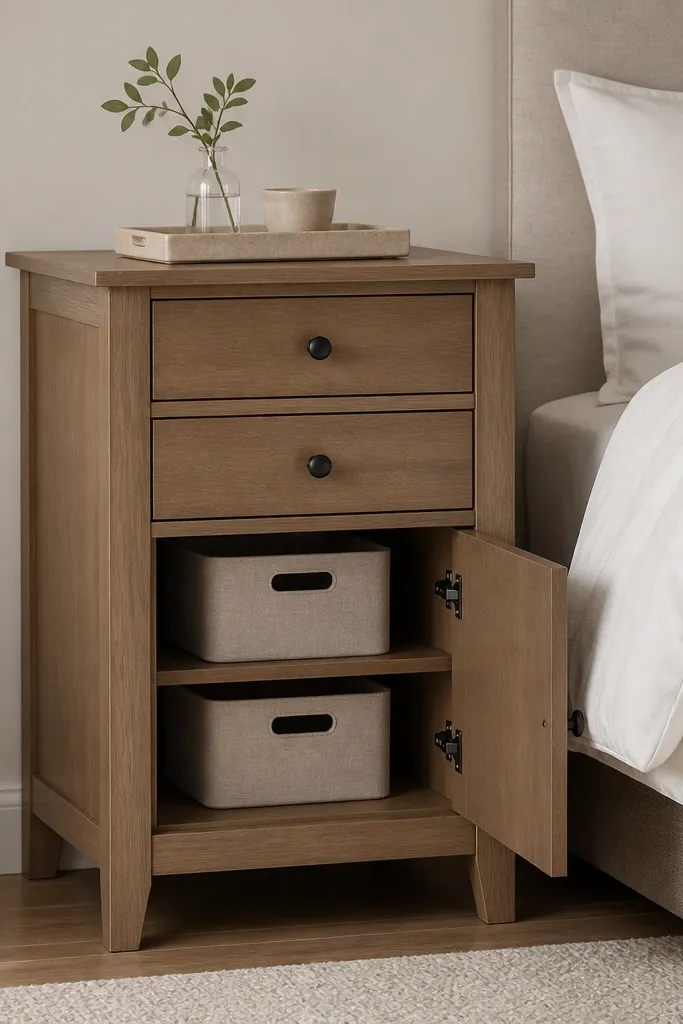
You can’t style a low maintenance bedroom if the nightstand is a catch-all. Closed storage plus matching bins is the setup I keep using because it looks calm even when you’re tired. I prefer linen-look bins in neutral tones because they hide small clutter without adding extra visual texture. The bins also make it easy to do a 2-minute reset: pull one bin out, dump it in its drawer, and you’re done. This works for people who have skin-care routines, hair tools, or stacks of paperback books, because everything has a home. The room stays “bedroom clean” instead of “storage drawer exploded.”
Measure the inside drawer dimensions and buy bins that fit those exact measurements. Label is optional, but matching sizes help you keep the system consistent. Put the most-used items in the top drawer bin and save seasonal stuff for the lower drawer. Keep the nightstand top minimal: lamp, tray, and one small item. If your dresser is visible from the bed, use the same bin color there too so the whole room looks like one plan.
Use a small microfiber pouch for daily items like lip balm and hand cream. It stops tiny bottles from clinking around and making the drawer messy.
9. Wool-Look Throw Blanket in One Color Family
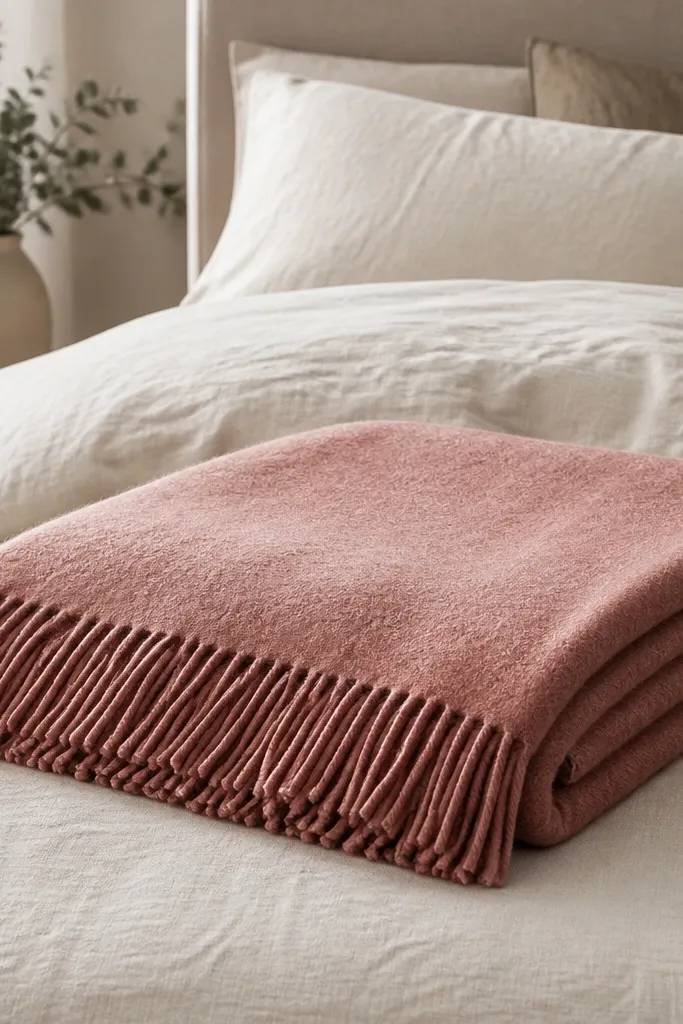
A throw blanket is decoration, but it’s also a daily reset tool. When you fold it the same way every time, your bed looks finished even if the rest of the room is a little messy. Wool-look acrylic blends are easier to care for than real wool for most households; they don’t shed onto the rug as much and they resist wrinkles better. Dusty rose or muted terracotta works with cream, oatmeal, and warm gray bedding without looking loud. This is especially flattering if your room lighting is warm — the throw adds color without turning the room orange.
Choose a throw that’s about 1/3 the length of your bed width so it doesn’t hang too far. Fold it into thirds, then place it at the foot with the fringe edge facing outward. Keep the color within the same family as your pillow covers — for example, cream pillows with dusty rose throw. Add one small coordinating accent, like a matching pillow or a ceramic vase, so the throw doesn’t look random. Avoid multiple throw colors; one is enough for a low maintenance bedroom.
Good to knowShake the throw out once a week before you fold it back — it stops lint from building. Store it in a basket with a lid if you have pets.
10. Textured Wallpaper Accent Behind the Bed
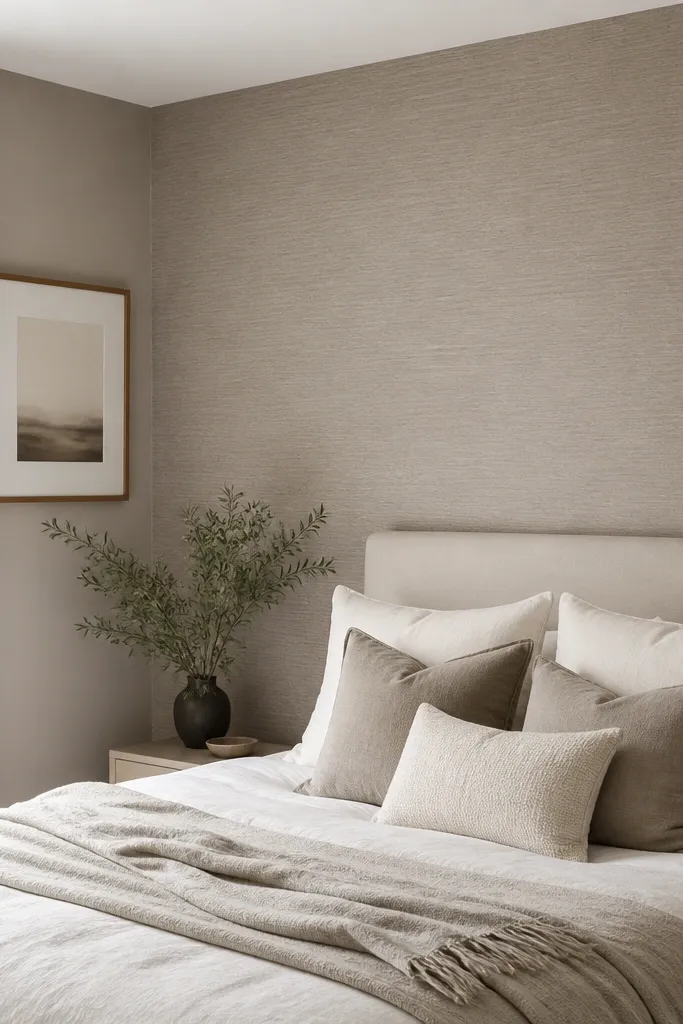
A single textured wall behind the bed makes the room feel designed without adding more objects. I’ve used peel-and-stick wallpaper in rentals and it holds up better than paint touch-ups when you bump the wall with luggage or laundry baskets. The taupe texture hides small scuffs and light fingerprints better than smooth paint. It also makes bedding look richer because the surface adds depth. This works for both cool and warm rooms since taupe sits in the middle and doesn’t clash with neutrals. If you’re tired of dusting framed art, this is your “one and done” texture move.
Pick a texture that looks like subtle plaster or linen — avoid heavy 3D patterns that trap dust. Clean the wall with a gentle cleaner and let it dry fully before applying. Start the first strip perfectly level — use a laser or a simple spirit level — then line up the pattern for each next strip. Trim edges with a sharp craft knife and a metal straightedge for clean cuts. Style the rest of the room with simple shapes: one mirror, one lamp pair, and bedding in solid colors so the texture stays the hero.
Plan your first panel carefully and don’t stretch it — textured wallpaper looks best when it sits flat. Use smoothing tools and work from center outward.
11. Dresser Layout With a Single Long Tray Zone
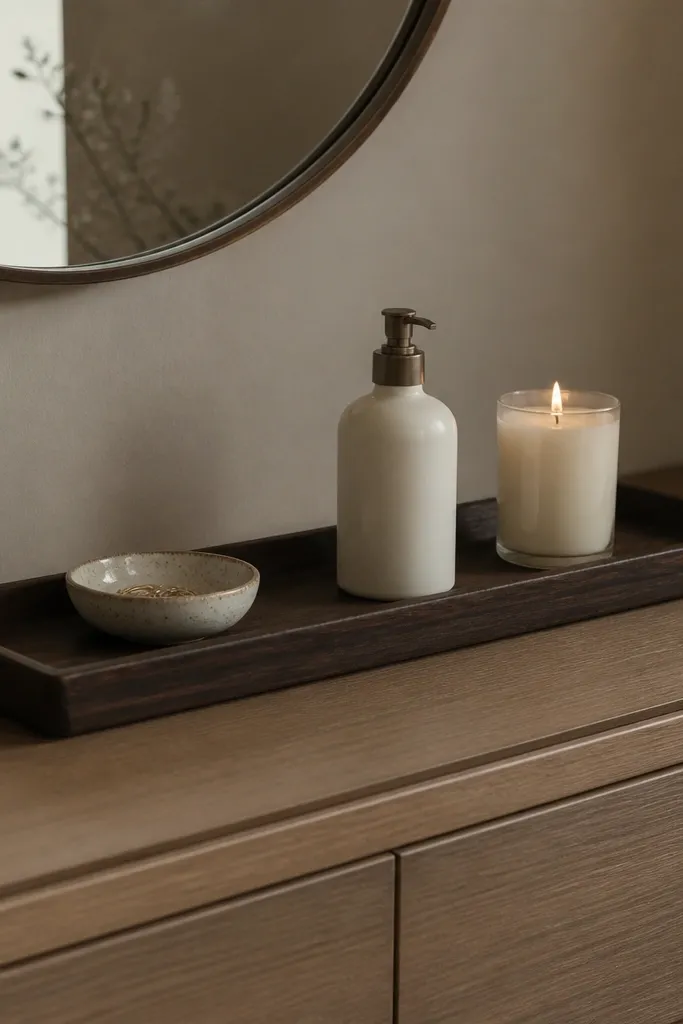
A single long tray zone is how I keep dressers from looking cluttered. It creates one “surface story” so you’re not constantly redistributing items across the whole top. Dark wood or matte black trays hide water rings from cups and soap bottles, which is a real life saver in bathrooms-adjacent bedrooms. I like placing the tray slightly off-center toward the side you use most, because it feels natural and still looks balanced. This layout looks good with any color palette as long as the tray finish repeats something in the room — like a black lamp base or metal bed frame.
Choose a tray that’s about 70% of the dresser top width so it doesn’t look swallowed. Place it centered on the dresser, then set only three items on it: one daily bottle, one small dish, and one light source like a candle. Keep items off the front edge so you don’t see them when you walk in. Use a small hook or a drawer organizer for cords and chargers so they never land on the dresser top. If you have a second surface like a mirror shelf, keep that empty or use one vertical item only.
Good to knowUse felt pads under bottles and a coaster under candles. It prevents tiny scratches that make furniture look worn.
12. Neutral Sheer + Blackout Panel Combo
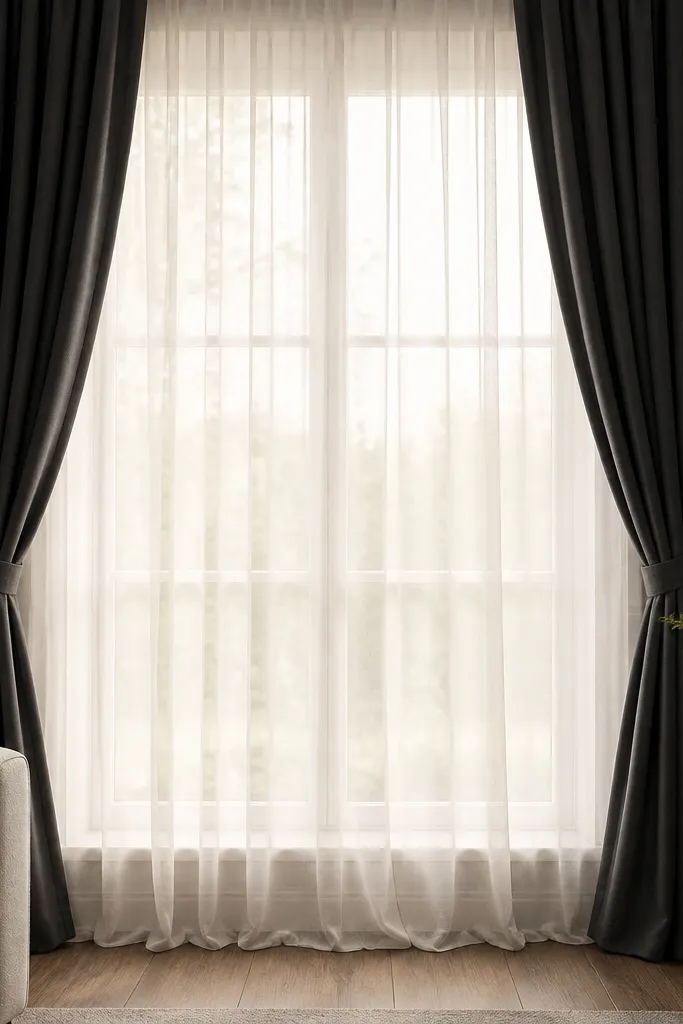
This combo gives you two looks without buying two sets of curtains. Sheers in warm white soften daylight and make the room feel airy, while charcoal blackout panels keep the bedroom usable for naps and early mornings. The dark panels also hide minor stains better than light ones, which matters if you cook nearby or have kids. I like this for bedrooms that face east; the sheers tame the harsh morning glare. The contrast between sheer and blackout is visually clean and reads intentional even when the panels aren’t perfectly symmetrical.
Hang the sheer first on a tension rod or a separate track so it doesn’t tangle with the blackout. Then install blackout panels on a second rod or track, with the panel width wide enough to overlap in the center. Choose a sheer fabric with a tight weave so it doesn’t turn see-through in a weird way. For the blackout panels, aim for floor length with a light break on the floor — too long drags and collects dust. Tiebacks should be simple and easy to use; if you hate them, skip tiebacks and use magnets.
Good to knowWash sheers on a gentle cycle and line-dry — they look crisp without a steam session. Use curtain rings on the rod so opening and closing stays smooth.
13. Linen-Look Shower-Style Runner for Entry View
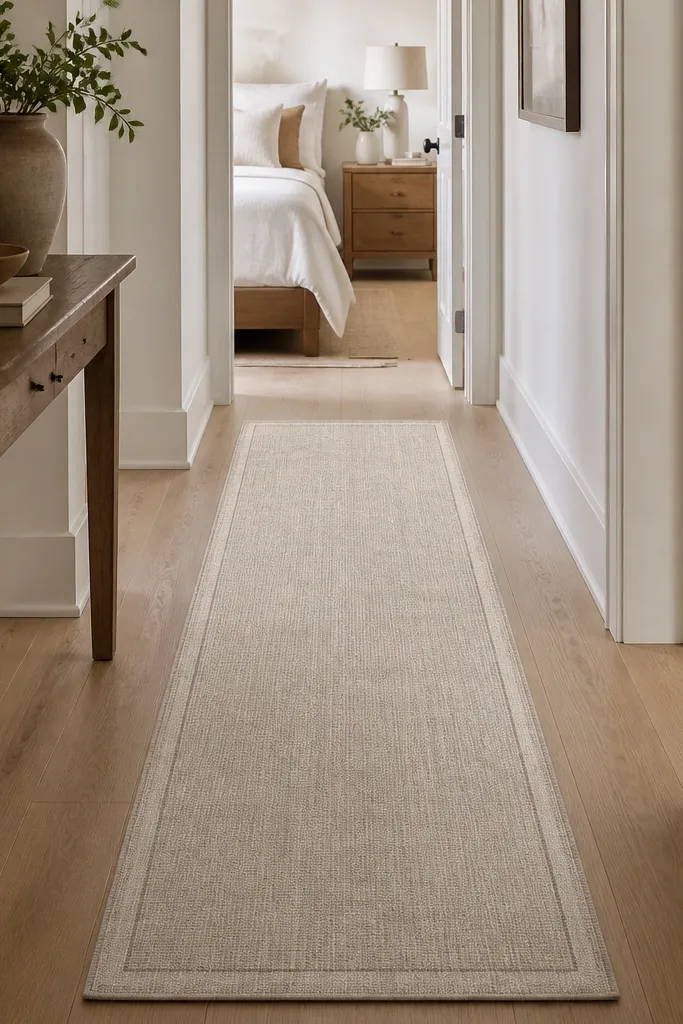
Even if you’re decorating a bedroom, the entry view changes how the bedroom feels. A narrow low-pile runner keeps dirt and sock fuzz from tracking onto the bedroom rug, and it makes the whole space look more cared for. I like linen-look finishes because they hide everyday grime better than flat gray, and they don’t show every footprint like high-contrast patterns. If you have a door that opens directly into the bedroom, this runner is your first “clean signal.” It’s also easy to vacuum and quick to spot clean. This idea works best in small apartments where you see the floor from the doorway.
Measure the entry path length and leave at least 6 inches of clear walking space around the runner edges. Choose a runner with a low pile or flatweave so it doesn’t catch on shoes. Place it so the border aligns with the hallway walls, then trim is optional — just buy the right size. Vacuum once a week using the edge tool, then spot clean with a damp cloth for small marks. Keep the runner color in the same family as your bedroom rug so the transition looks smooth.
Keep a small spray bottle of carpet cleaner in the hall closet. A quick blot prevents marks from setting.
14. Bedside Wall Sconces With Plug-In Cord Hiding
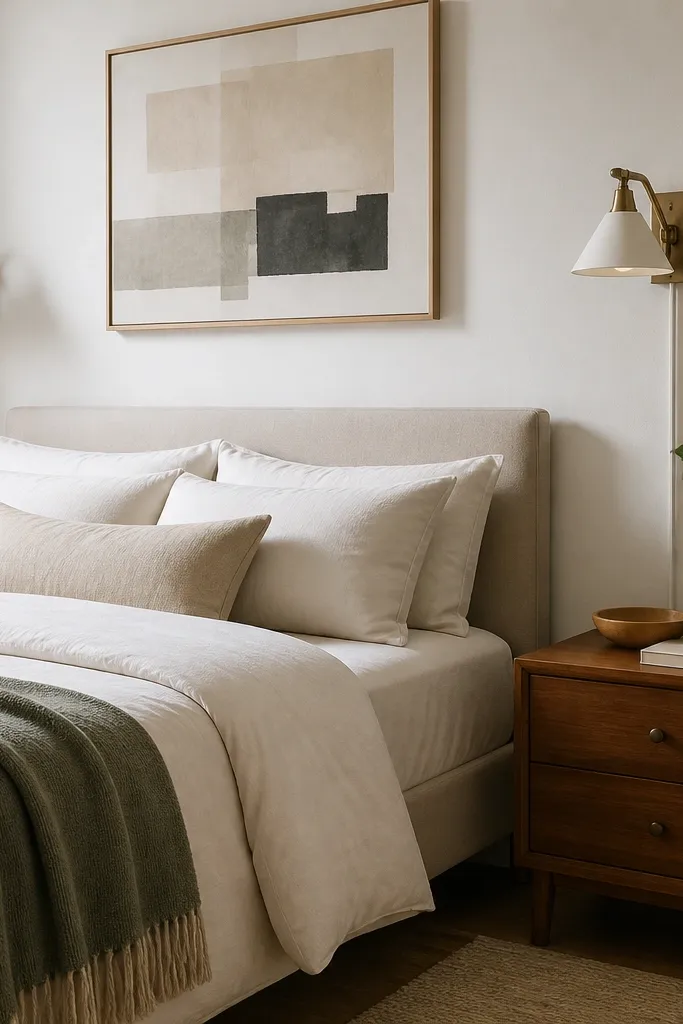
Plug-in sconces look built-in, and they remove the bedside lamp clutter. I used this in a bedroom where the nightstands were too small for lamps, and it made the room feel taller and cleaner. Choose sconces with fabric or paper shades for softness, and mount them at the same height on both sides of the bed. The cord-hiding part matters; if cords hang visibly, the whole thing looks cheap fast. This setup is flattering in rooms with reading habits because the light is closer to face height and you can avoid ceiling light glare. Warm bulbs keep skin tones looking natural.
Mount sconces so the center of the shade sits roughly at eye level when you’re sitting up in bed. Use a level and mark both sides before drilling. Run the plug cords down behind a slim cord channel or along the wall edge where it disappears behind the nightstand. Choose sconces with a switch on the cord so you don’t reach into the wall each time. Style the bedside surface with just one small item each side — a book or a tray — since the sconces already give you visual weight.
Good to knowUse 2700K bulbs and check brightness in the evening before you commit. If you hate the glare, choose frosted shades.
15. Gallery Wall in One Frame Size

A gallery wall can be low maintenance if it’s controlled. I use one frame size and one matte finish so dusting is quick and the wall looks organized even when you skip rearranging for months. Go for prints in neutral tones — cream, taupe, soft gray — and limit yourself to two textures: line art and one photo with a soft blur. This works because the wall doesn’t fight the bed as a focal point. If your bedroom gets a lot of sunlight, matte frames reduce glare compared to glossy glass. It’s also friendly for beginners because you don’t need perfect art spacing to get a clean look.
Pick three or four frames and keep them identical in size, then lay them out on the floor before hanging. Mark the center point on the wall, then measure from the center outward so gaps stay even. Hang the gallery so the bottom edge sits around 60-66 inches from the floor, then adjust based on your bed height and how it’s seen from the doorway. Use spacers or a simple template so each frame has equal vertical spacing. Keep the content simple: one larger print in the middle and smaller ones flanking it.
Good to knowWipe frames with a dry microfiber cloth monthly. Use picture-hanging strips only if your wall is smooth and stable.
16. Monochrome Bedding With a Patterned Pillow Accent

Monochrome bedding looks put together even when you’re not ironing or fussing. The trick is to keep the base in two to three shades and add only one patterned element so the room doesn’t look busy. I love a subtle geometric pillow accent because it reads stylish in photos, but it doesn’t demand constant matching. Choose fabrics with similar sheen levels; if one pillow is shiny and another is matte, the room looks mismatched. This setup works for almost everyone because gray tones can lean cool or warm depending on the undertone. It’s also easy to maintain because you can wash most covers together.
Pick a duvet in a solid neutral like warm gray or off-white. Choose two solid pillows in the same color family, then add one patterned pillow in charcoal. Keep the sizes consistent: two standard pillows and one square accent. Arrange them so the patterned pillow sits upright in the center or slightly forward. If you want a throw, choose a solid throw in the darkest tone — it anchors the bed without adding more patterns. Wash all covers together using the same cycle so fading stays even.
Good to knowBuy extra pillow covers before you commit — patterns fade at different rates, and swapping one cover keeps the set looking consistent.
17. Matte White Walls + One Warm Wood Element
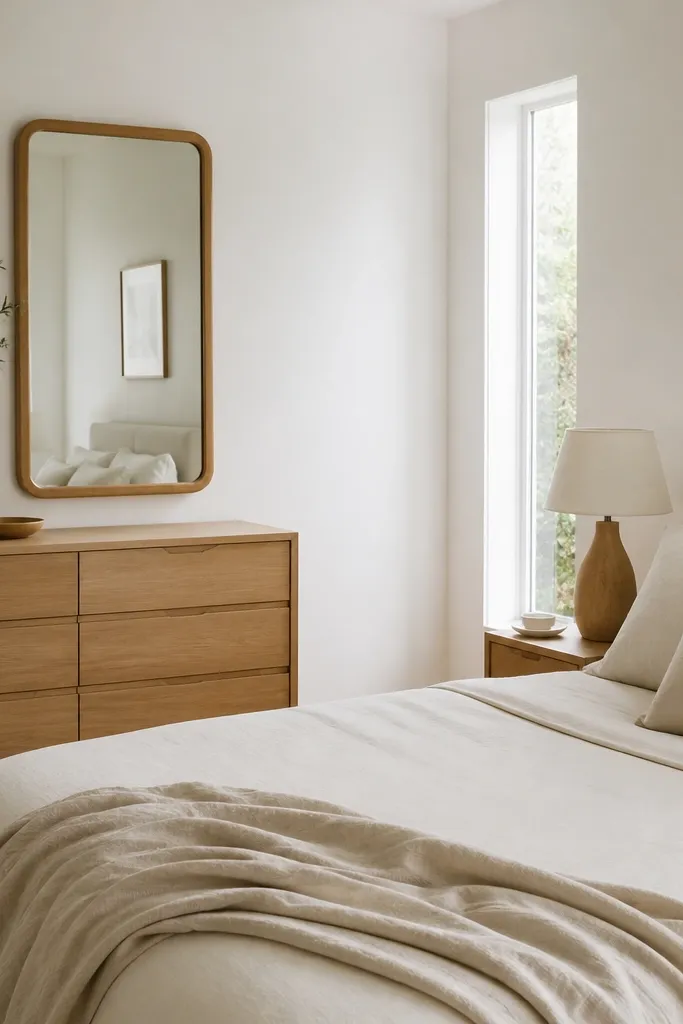
Matte white walls make bedrooms look clean longer because they don’t show scuffs the way glossy paint does. Then you add one warm wood element so the room doesn’t feel sterile. I’ve tested this in rooms where people hated clutter and wanted a calm look; the simplicity makes mess less obvious. Keep the wood piece singular: a dresser, a mirror frame, or a lamp base. When you repeat the wood tone once, everything else can stay neutral and easy. This works for people who want a calm bedroom that still feels warm, especially if they don’t want bold colors.
Paint or choose a wall color that is truly matte, not eggshell. If you can’t repaint, use a wall-safe matte contact film for small areas behind decor. Add one warm wood item in a clear finish — oak, ash, or light walnut. Match the wood tone to your flooring if possible, then keep bedding in cream, oatmeal, or soft gray. Style surfaces with one or two objects only, and keep metal finishes consistent with the one wood element. The goal is to have clear visual “anchors” so the room doesn’t rely on constant decor changes.
Good to knowUse washable wall paint or a wall marker-safe finish if you have kids — wipe marks off without redoing the whole wall.
18. Performance Faux Leather Storage Bench at the Foot
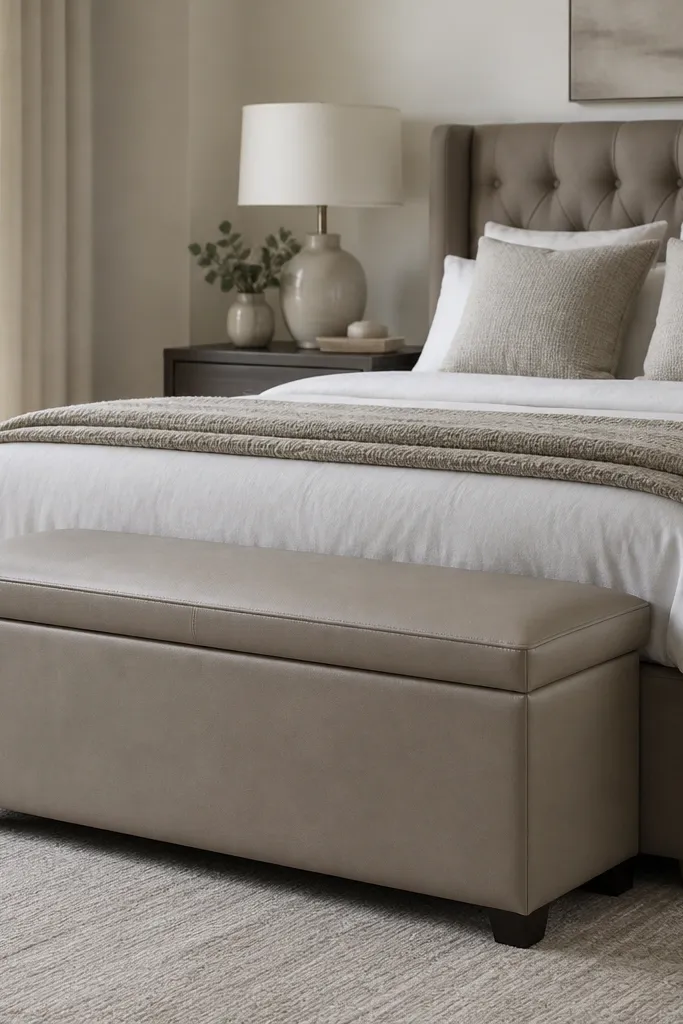
A storage bench is the easiest way to keep bedroom floors clear, and faux leather makes it low maintenance because it wipes clean. I used one in a guest room where people drop bags and shoes — the bench holds everything without the fabric looking worn. Light taupe hides scuffs better than white and looks soft next to cream bedding. This is flattering in bedrooms with muted palettes because the bench adds a little structure without feeling heavy. If your room gets humid, faux leather also doesn’t absorb odors like some upholstered fabrics.
Choose a bench width that matches the space between bed legs and leaves at least 18 inches of clear walkway around it. Place it centered at the foot so it looks intentional, then keep the top either empty or with a folded throw. Use the hinged top for blankets, extra pillows, or a small hamper bag. Style the bench sides with nothing — the clean lines are the look. If you have a patterned rug, keep the bench color solid so it doesn’t clash. Keep the throw color in the same family as your pillow covers.
Good to knowWipe with a damp microfiber cloth after dusty days. For scuffs, use a soft eraser cloth made for faux leather or a tiny bit of baby wipe — test first on a hidden spot.
19. Bathroom-Style Shower Curtain As Bedroom Window Panel
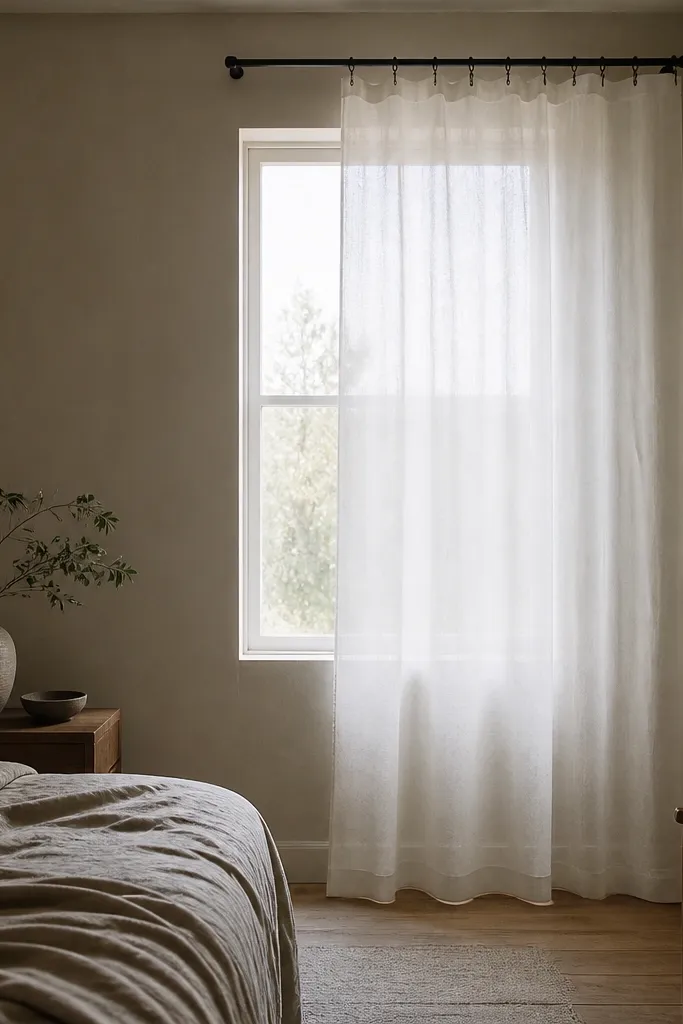
This is the hack I used in a rental bedroom when I needed privacy fast and didn’t want to buy custom curtains. Shower-curtain-style panels are easy to wash, they hang straight, and they don’t absorb odors the way some fabric does. Choose a smooth, lightly textured fabric in warm white or pale sand so it doesn’t look plastic. It gives you privacy while still letting daylight through, which keeps the room from feeling dark. This works great for entry-level bedrooms where you want a clean look without a heavy curtain routine. It also flatters small rooms because it adds light instead of blocking it.
Measure your window height and buy a panel that’s long enough to hit the floor with a slight break, not a puddle. Hang with curtain rings so the panel glides and you don’t fight stuck fabric. Keep it simple: one panel on its own if you don’t need full blackout, or pair it with a separate blackout panel. Wash before first use to remove factory stiffness, then hang to dry for minimal wrinkles. Style the rest of the room with neutrals so the window treatment doesn’t feel like a temporary fix.
Good to knowIf the panel twists after washing, hang it immediately and tug it straight once — it usually settles within a day.