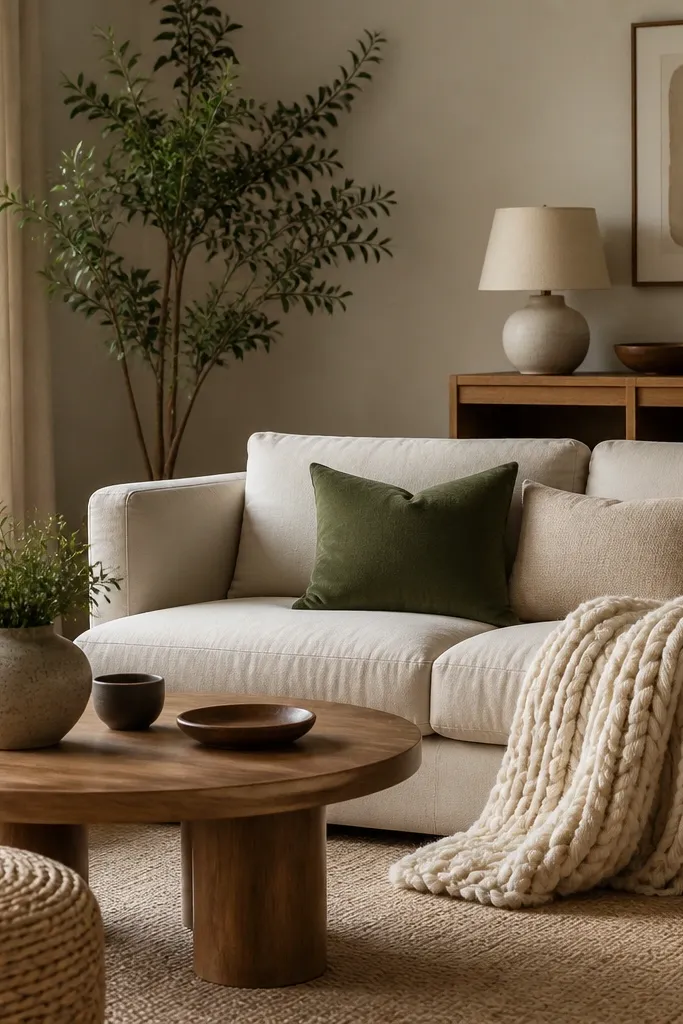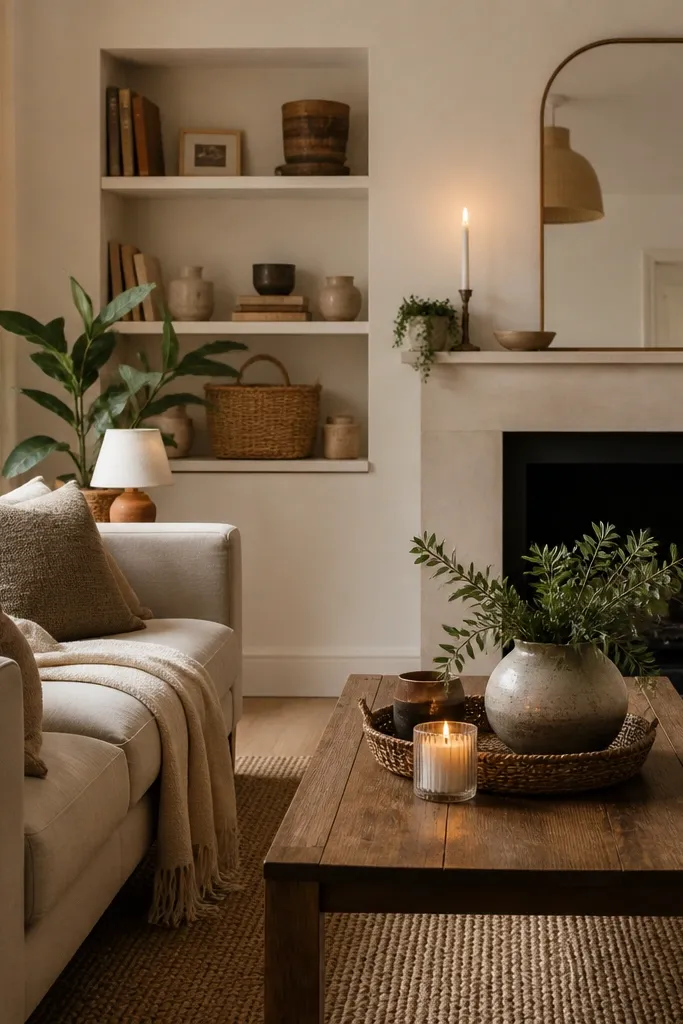
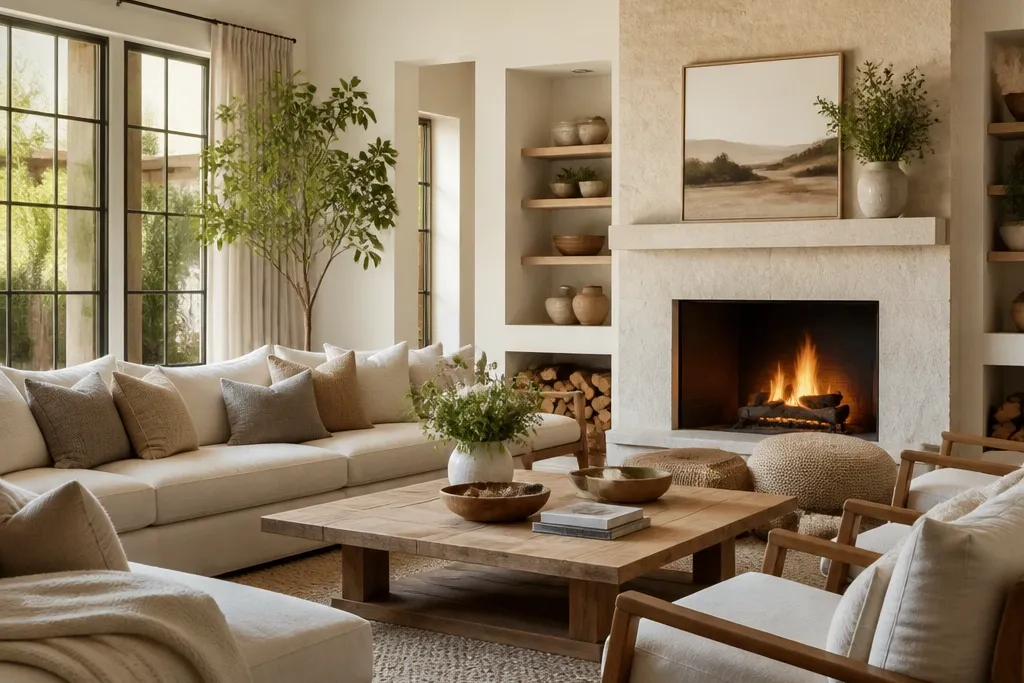
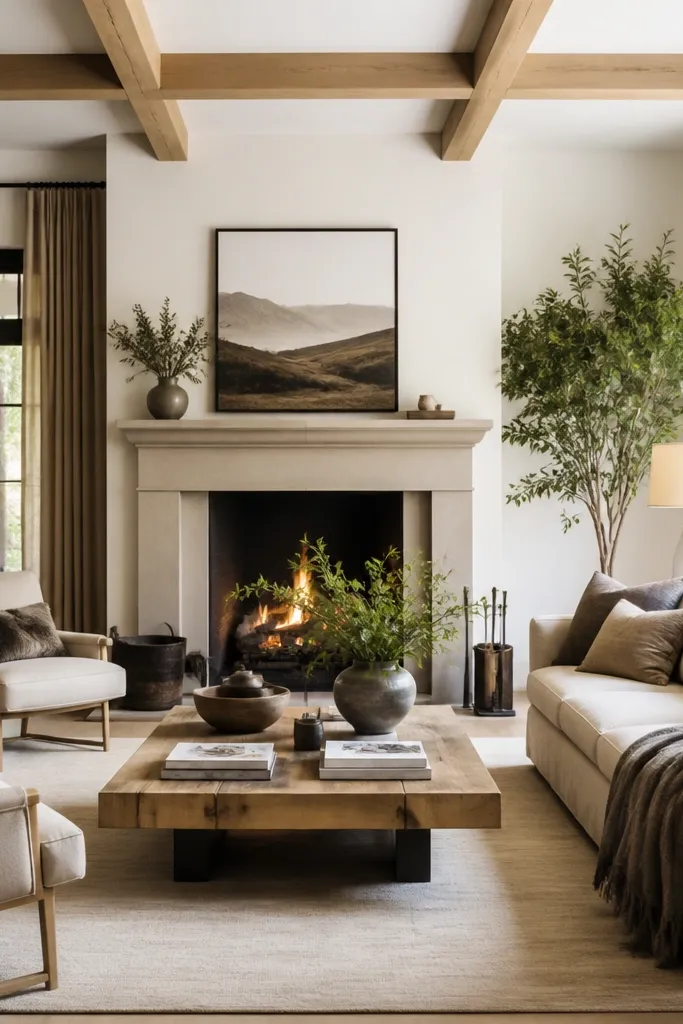
1. Chunky Oat Knit Sofa Throw + Warm White Layered Lighting
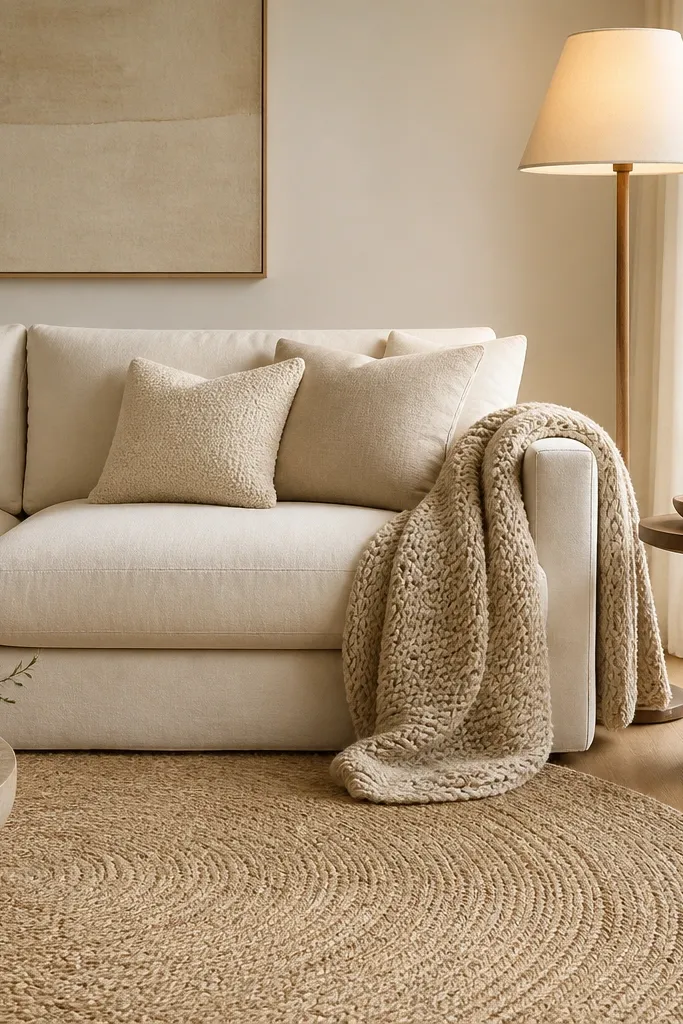
This setup works because the room gets warmth from texture, not just color. The oat knit looks thick enough to feel wintery, but the cream sofa keeps it bright so it doesn’t feel heavy. I pair it with two cushion covers — one bouclé for softness you can see and feel, one linen for a slightly crisp surface that keeps the look from going flat. For most skin tones, warm white lighting makes undertones look even and healthy, especially in the evening. The styling principle is contrast in texture: rough knit next to smooth linen, plus a warm shaded lamp to keep shadows soft.
Good to knowUse a 2700K bulb in every lamp for that cosy “golden hour” glow, then keep the throw in a lighter knit for summer months.
Start by laying a chunky throw over the sofa arm so it falls in a clean fold, not a random heap. Add two cushions: one bouclé cover sized slightly larger than the other so you get a gentle height difference, then place them where you naturally rest your back. Put a tall floor lamp to the side of the seating, not behind it, with a fabric shade so the light pools on the rug. Finish with a small tray in light oak or walnut on the side table and add one lamp base item like a ceramic dish in sand or cream.
AvoidDon’t use a shiny polyester throw — it looks slick and breaks the cosy texture layering.
2. Forest Green Accent Wall + Cream Curtains That Touch the Floor
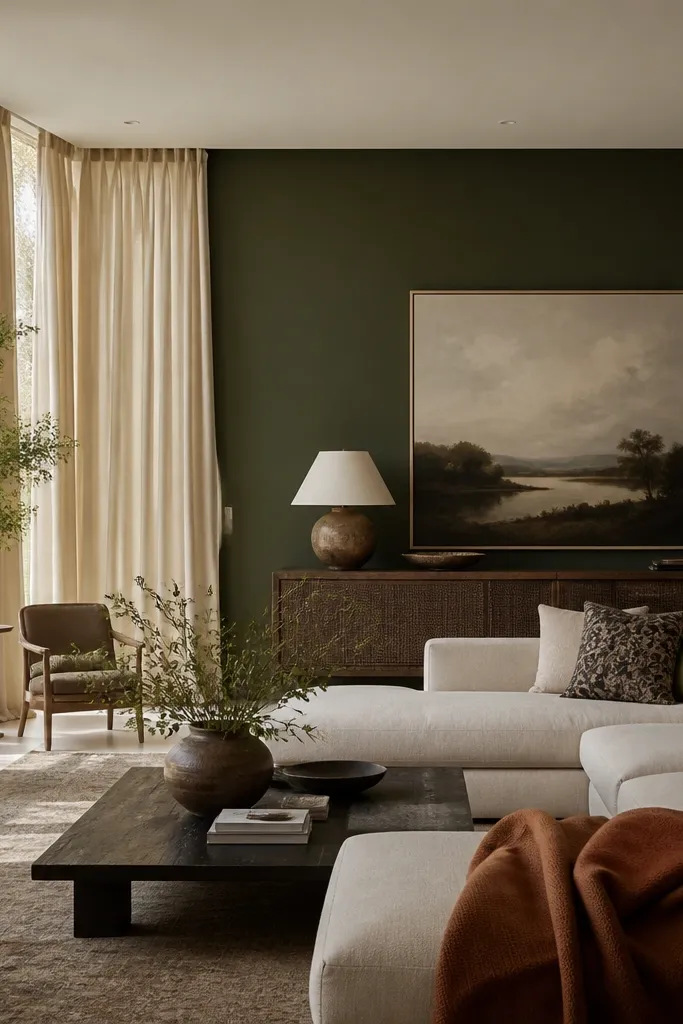
Deep forest green gives instant cosy depth in a large room, and it still reads classy year round when you balance it with light textiles. The trick is letting the cream curtains go all the way to the floor so the eye gets a soft vertical line — that’s what makes the room feel wrapped. I like rust as the secondary color because it warms the green without turning the room orange. If your home has cooler undertones in the wood or floors, this combo corrects it quickly. The styling principle is warm contrast: dark wall + light fabric + one warm accent to keep everything from feeling flat.
Start by centering your seating so the sofa faces the accent wall, then hang the curtains from a ceiling-height rod or track for height. Choose a cream curtain fabric with weight — look for medium to thick linen or a cotton-linen blend — and let it touch the floor with a small break. Add a rust throw folded over the sofa chaise or the corner of the sectional, not draped across the middle. Layer cushions in cream and one small-scale pattern that pulls a bit of green or rust, then hang a large art piece above the console to stop the negative space.
If you don’t want to paint, use removable wallpaper panels behind the sofa and keep the curtain length the same for the same effect.
Don’t hang curtains too short — the room instantly looks unfinished and less cosy.
3. Two-Zone Seating With a Large Round Rug and Low Coffee Table
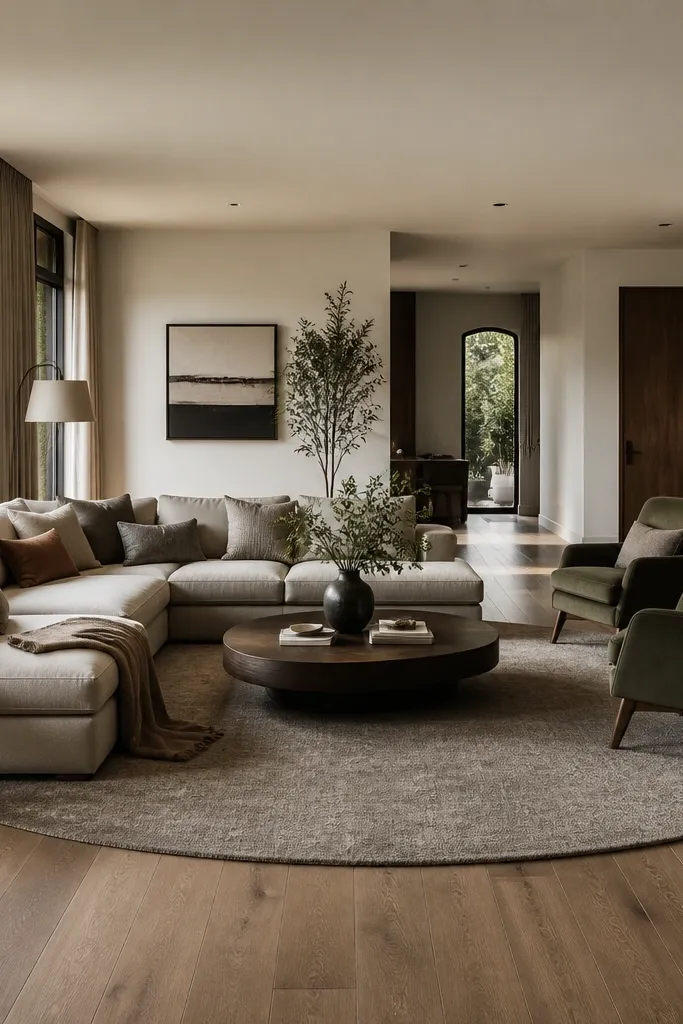
In big rooms, cosy fails when everything sits in one straight line. Two-zone seating makes the space feel like multiple comfortable moments, even if the room is huge. A large round rug reduces harsh geometry and makes the eye move gently across the room. The low coffee table keeps sightlines open so the space feels airy, while the rug and cushions keep it soft. This setup flatters people who like to curl up: you get a clear “snuggle area” near the chairs and another for watching from the sofa. The principle is zoning with soft shapes — round rug, low table, and cushions that build a natural focal point.
Start by placing the round rug so it sits centered between the sofa and the armchairs, with the front legs of each seating piece on the rug. Choose a low coffee table that leaves room to reach — about 14 to 16 inches tall — and keep it narrow enough to not block walking paths. Add a throw on the sofa arm and one on the armchair seat so both zones feel inviting. Style with two heights: a taller floor lamp in one corner and a small stack of books with a ceramic candle holder on the coffee table.
Walk the room barefoot once it’s staged — if you can’t move around without stepping awkwardly, your zones are too tight.
Don’t pick a tiny rug — it makes the cosy bits look stuck and separate.
4. Tonal Beige Sectional With Mocha Leather Accent Chair
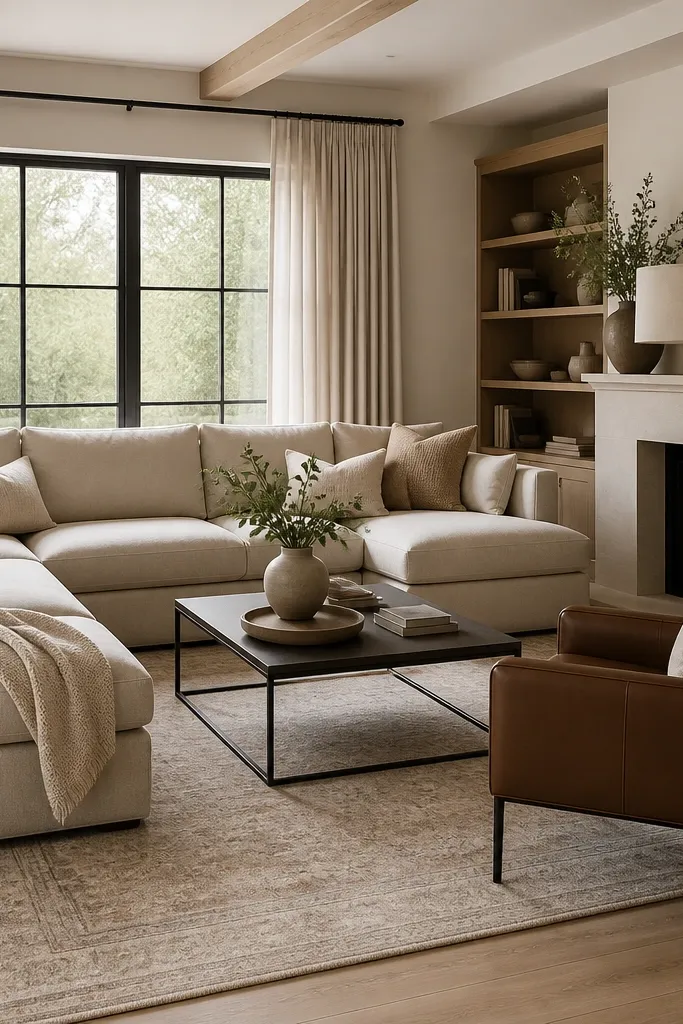
Tonal beige can look bland in a large space unless you add a contrast you can feel. The mocha leather chair gives that contrast in both shine and firmness, which balances the softness of the sectional and cushions. I like this combo because it’s forgiving for different skin tones in photos and in real life — warm neutrals with leather warmth look flattering. The cushions in oatmeal and sand keep the room cosy without needing loud color. The styling principle is softness plus structure: plush textiles meet a firmer, darker piece so the room feels “put together” even when it’s relaxed.
Good to knowIf your leather is very dark, use a lighter cushion cover so the chair doesn’t steal the whole room at night.
Start with the sectional as your base and keep cushions in a tight palette: oatmeal, cream, and sand. Add one chair in mocha leather at an angle so it frames the seating area rather than lining up straight. Put the rug under the front legs and extend it enough that the chair legs sit on it too. Style the chair with a small wool throw folded over the arm and a slim side table for a lamp with a linen shade. Finish with a single darker accent like a black picture frame or a charcoal vase to connect the leather to the rest of the room.
AvoidDon’t add five different beige shades — it turns into beige-on-beige noise.
5. Rust and Clay Cushion Mix on a Cream Sofa
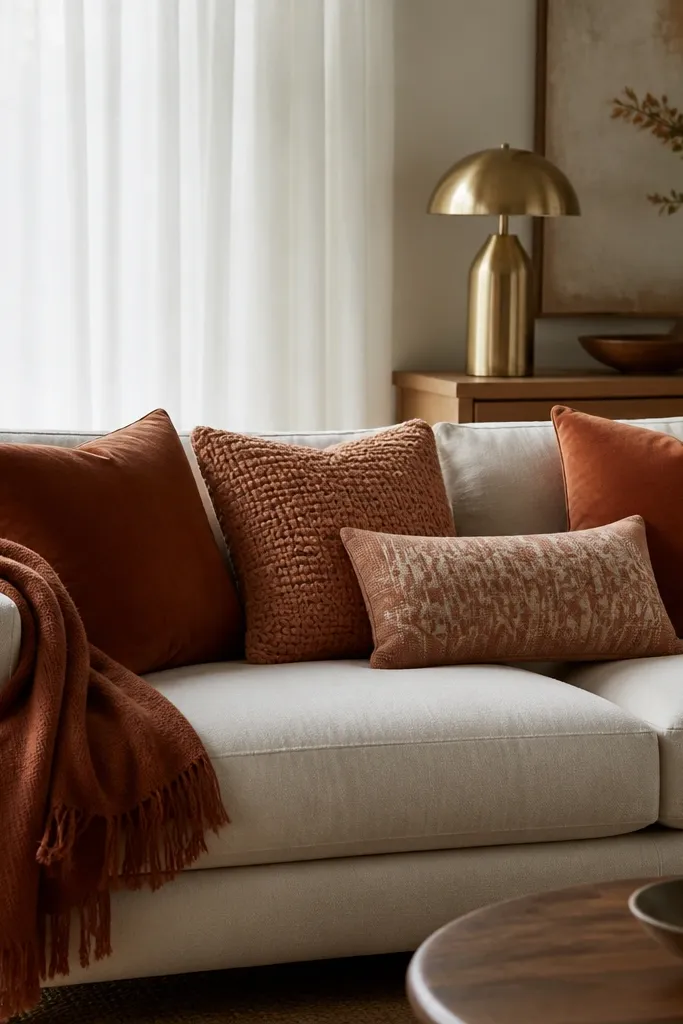
Rust and clay look cosy year round because they sit between warm and earthy. Cream keeps it bright, while velvet and knit bring the winter feel without needing heavy blankets everywhere. This is the combo I use when a room feels too clean or too new — the textures make it feel lived-in. It also flatters warmer undertones nicely and makes neutral undertones look warmer under indoor lighting. The principle is to pick one warm family (rust/clay) and repeat it across materials, not just color.
Good to knowPress cushion covers flat after washing or swapping them — wrinkled velvet makes the whole room look tired.
Start by choosing a cream sofa or chair base, then limit the palette to three tones: cream, rust, and clay. Arrange cushions in a pyramid: back row with two larger cushions, front row with one smaller knit and one small geometric. Fold a rust throw over the arm so it drapes in a straight edge, not a loose tangle. Add a warm brass lamp with a shade that reads off-white, and place it close enough to cast a soft pool of light on the cushions. If you have a coffee table, add a tray in light wood with a small ceramic vase in clay.
AvoidDon’t mix bright orange with rust — it shifts the vibe from cosy to loud.
6. Oversized Gallery Wall Above a Sofa With Warm Wood Frames
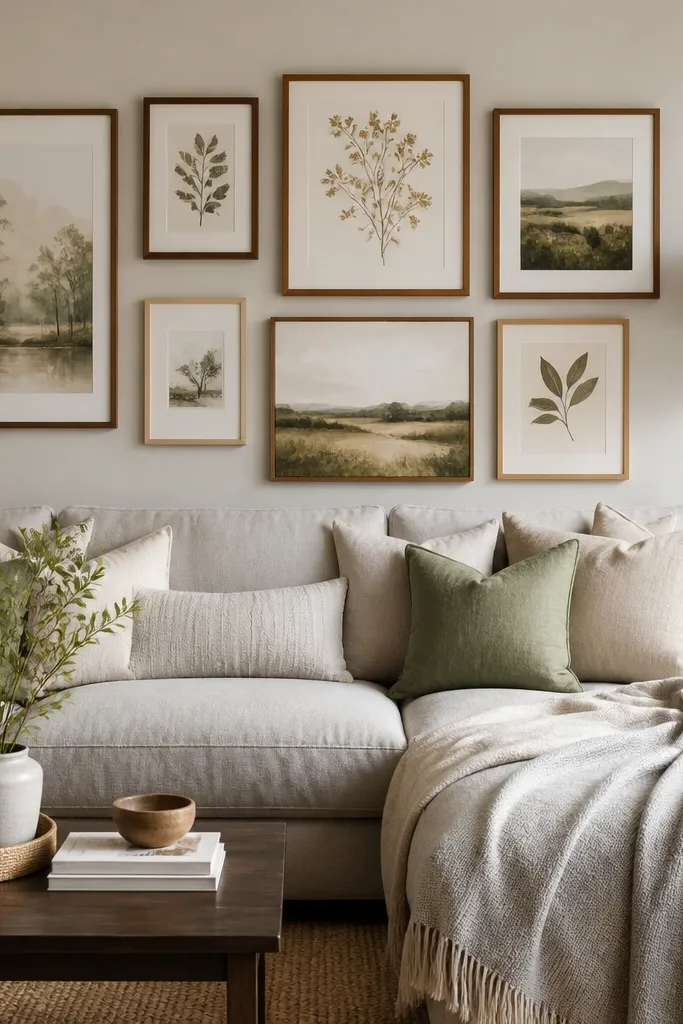
When a living room is big, empty wall space kills the cosy feeling. A gallery wall fixes that by giving the eye somewhere to rest, and warm wood frames keep it from feeling cold. I’ve done this in rentals and owner homes — the difference in warmth comes from frame material and mat color, not from the art itself. Use cream mats or off-white paper so it blends with your cushion colors. This works for just about any skin tone in the room because warm frames and warm lighting reflect light back onto people’s faces. The principle is visual weight: add weight above the sofa so the room feels anchored from top to bottom.
Start by choosing 6 to 8 frames and matching the frame finish — warm oak or walnut — with consistent mat colors. Lay everything out on the floor first, then measure the total width of the cluster and center it over the sofa. Use a mix of sizes but keep the spacing between frames even, around 2 to 3 inches. Style the sofa with a cream or light grey throw and cushions that pull one color from the art, like sage or muted green. Place a tall lamp on the opposite side of the gallery wall so the light grazes the frames.
Use painter’s tape on the wall for a full day before hanging — you’ll spot if the height feels off immediately.
Don’t hang prints too high — if the bottom of the cluster sits above head height, the room feels formal, not cosy.
7. Sheer + Heavy Curtain Combo for Summer-to-Winter Comfort
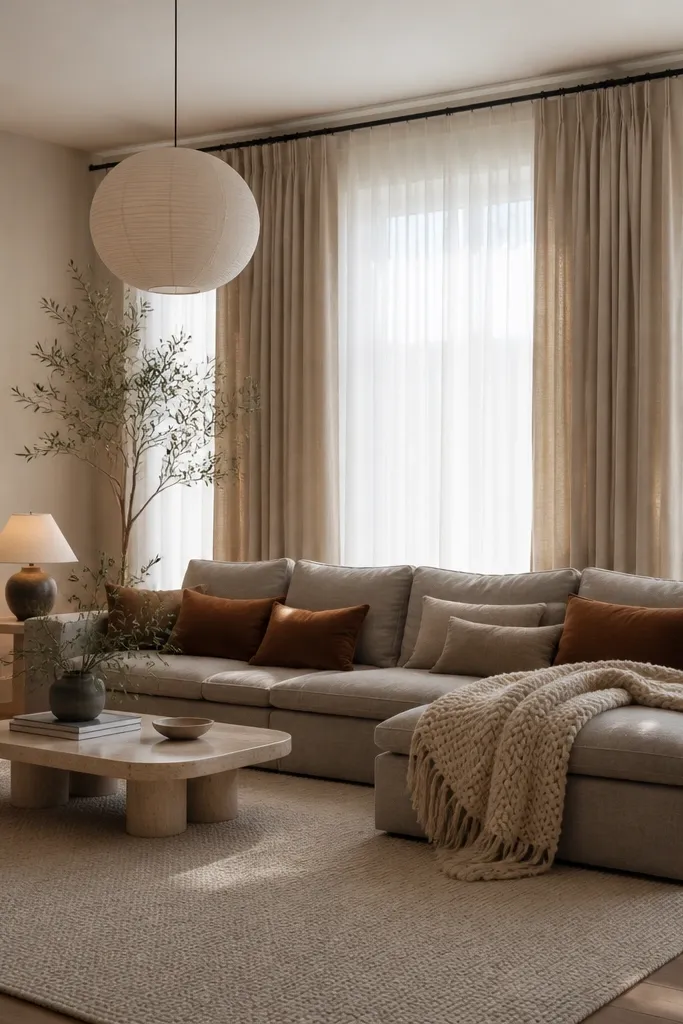
This is how you get cosy without committing to one season. The sheer layer keeps daylight soft in summer, while the heavy drapes add weight and warmth when you close them in winter. In a large room, the curtain stack is one of the few elements that can cover a big visual space quickly, so it changes the mood more than people expect. If you have bright sunlight, the sheer diffuses it so the room doesn’t look harsh. The styling principle is seasonal flexibility: two layers let you control brightness and softness at the same time.
Good to knowIf your curtains look flat, steam them and check the fold direction — it changes how the fabric catches light.
Start by hanging sheer panels on a rod inside or behind the main curtain rod so they move separately. Choose heavy curtains in oatmeal, cream, or warm taupe with a weighted hem; aim for a length that touches the floor and just barely puddles. Add a wool or textured rug in front of the sofa to match the drape weight. Style the sofa with a throw in a warm neutral and cushions in two textures: one smooth cotton-linen and one knit or bouclé. Finish with warm bulbs and a lamp shade that’s not reflective so the room feels soft after dark.
AvoidDon’t use sheer-only curtains — the room feels bright but not wrapped at night.
8. Wool Rug in Warm Grey With Leather Coasters on the Table
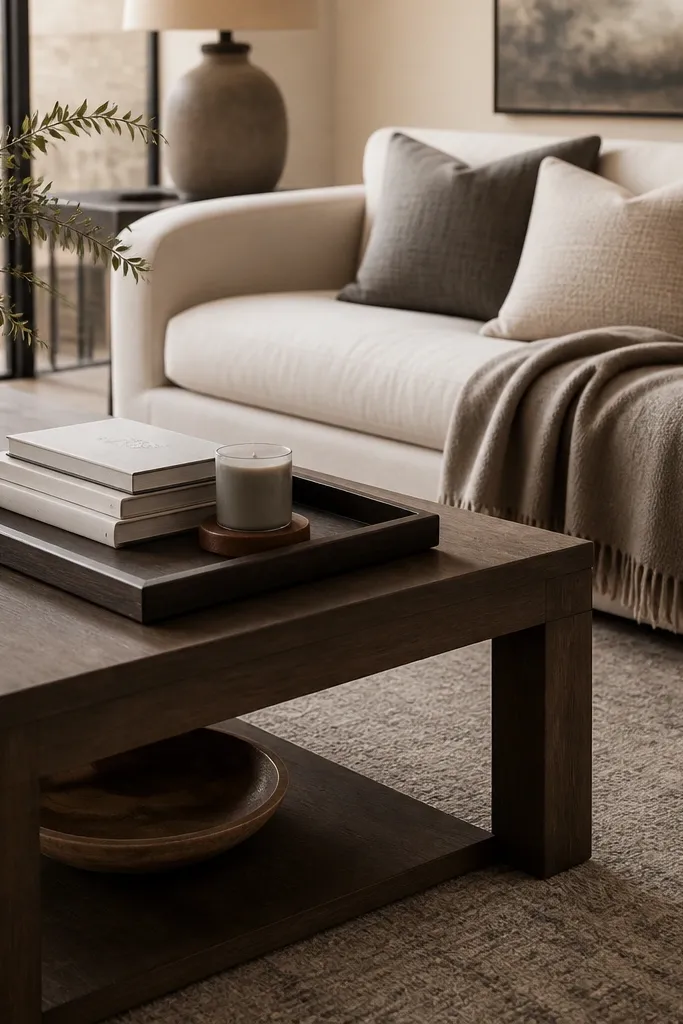
A wool rug is the fastest way I know to make a large room feel cosy because your feet feel it first. Warm grey keeps the room airy, and the subtle pattern prevents it from looking flat or dusty. Leather coasters and a leather tray add a grounded texture that matches the rug’s natural feel. This looks great in homes with lighter wood floors because it adds warmth without turning the room too dark. The principle is tactile continuity: rug texture, tabletop accents, and cushions all echo each other so the room feels cohesive.
Good to knowRotate the rug every season — it evens out wear and keeps pile direction looking even under light.
Start by choosing a wool rug with a warm undertone, not cool grey. Place it so the front legs of your sofa and one chair sit on it; extend the rug enough that you can step onto it when you come from the hallway. Use a dark wood coffee table and add a tray with a leather coaster under the candle or drink. Style the sofa with a taupe throw and cushions that match the rug’s undertone — oatmeal and warm grey work well together. Keep one accent metal tone consistent, like brass on the lamp or cabinet hardware.
AvoidDon’t pair cool charcoal decor with a warm grey rug — the undertones fight.
9. Corner Reading Nook With Tall Floor Lamp and Ottoman
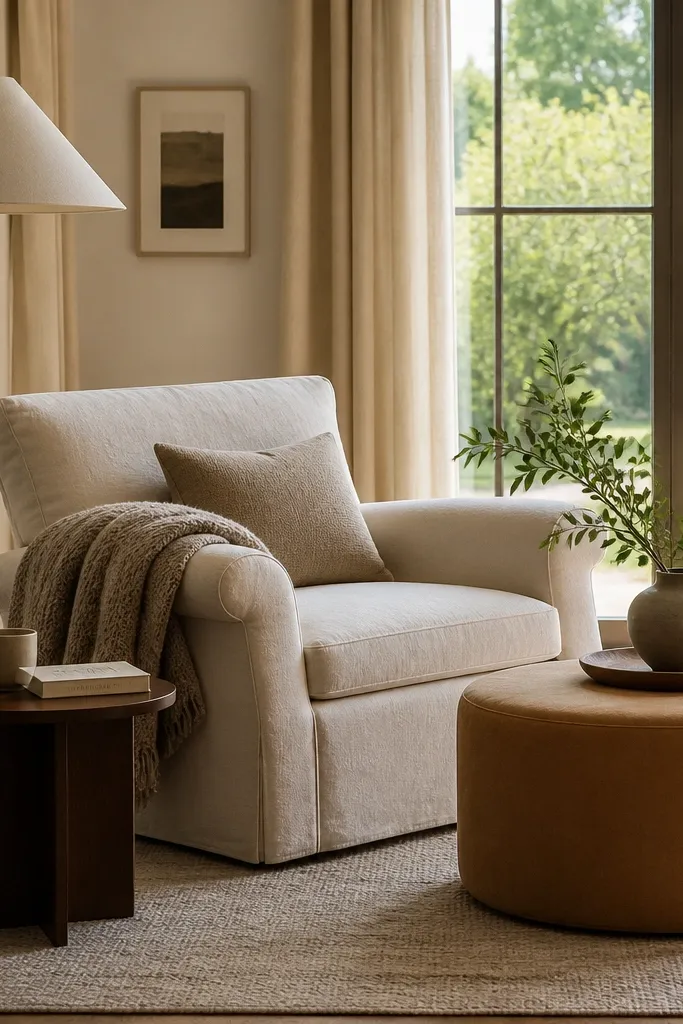
Cozy in a large room is easiest when you create a “purpose corner.” A reading nook makes the space feel intentional, and the tall lamp gives you direct light for late nights. The ottoman matters because it turns the chair into a full rest zone — legs up, shoulders down. I’ve found that camel ottomans look flattering in many lighting conditions because they sit between tan and caramel. Choose a chair fabric that looks soft even in daylight — cotton velvet or tightly woven linen blends. The principle is comfort geometry: chair + ottoman + focused lighting in one tight cluster.
Start by placing the chair near the edge of the main seating area so it doesn’t block traffic. Add the ottoman directly in front of the chair so it lines up with the seat height. Use a tall floor lamp with a linen shade and aim the light slightly toward the chair, not straight at the wall. Layer a chunky throw over the chair arm and add one cushion with a slightly deeper color like olive or rust. Place a small rug under the chair and ottoman so the nook feels separate from the rest of the room.
Use a dimmer switch on the lamp if you can — cosy feels better when light can drop without going dark.
Don’t put the lamp behind the chair — you lose the reading glow and the corner looks dim.
10. Black Metal + Cream Textiles for a Modern Cosy Look
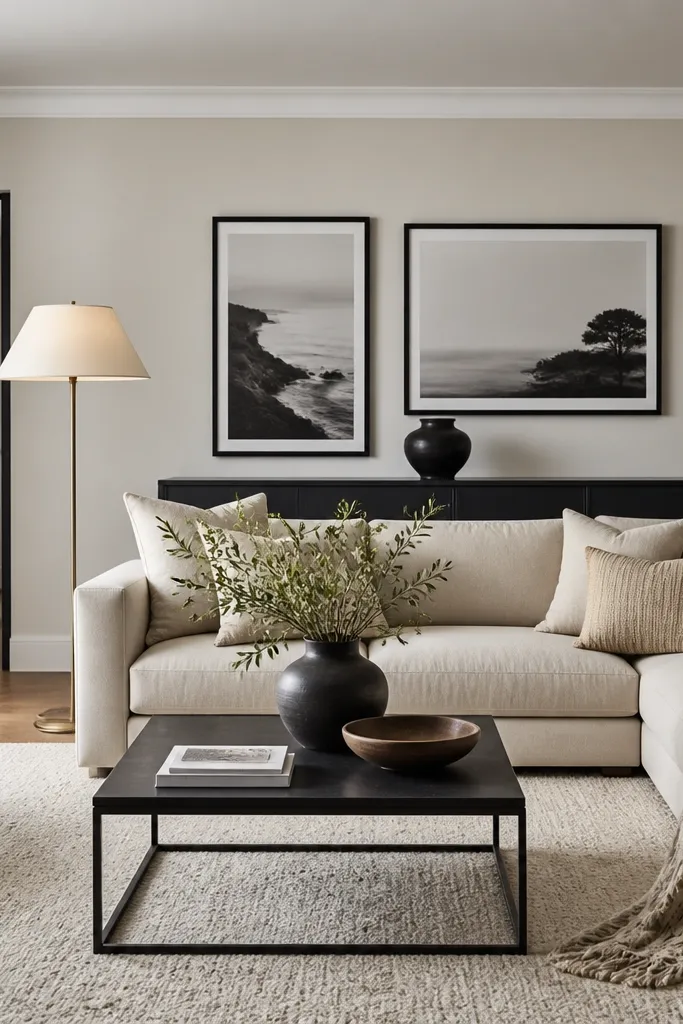
Black metal can make a room feel sharp, but it also helps cosy because it creates crisp lines for the eye to follow. Pairing it with cream textiles and warm light stops the black from looking harsh. I use this when the room has modern features like large windows or sleek shelving — cosy needs softness to balance the clean look. The cream base makes skin tones look warmer, especially under 2700K light. The principle is contrast control: sharp frame elements + soft fabrics + warm bulbs.
Start with a cream sofa or large cushions, then add black metal pieces in two spots: coffee table and one lamp frame or wall art. Choose an off-white rug with texture so it doesn’t look like flat vinyl. Add a cream throw and cushions in one warm tone like oatmeal, plus one accent cushion in muted olive or clay. Style the console with a black ceramic vase and one small stack of books, then keep the art frames all the same finish — matte or satin. Make sure the lamp shade is fabric, not glass, so the light spreads gently.
Use black in small doses first — if you go too heavy with black, the room stops reading cosy.
Don’t pair black metal with cool blue lighting — it turns the whole room icy.
11. Caramel Leather Plus Linen Cushions on a Light Sofa
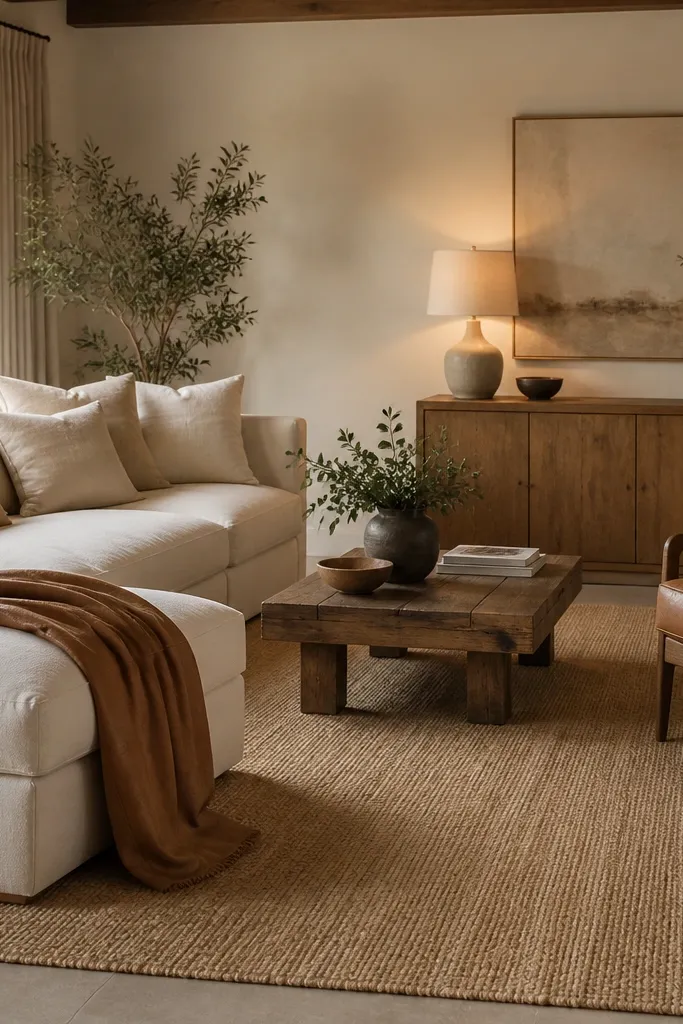
Caramel leather reads cosy because it has warmth and depth, and it looks better as it ages. In a large living room, leather also gives you a stronger visual anchor than another fabric chair. I love linen cushions beside leather because linen feels airy but still soft, so the room doesn’t get heavy. This combo flatters warmer undertones and looks great with light wood floors. The principle is “warm anchor + airy softness”: leather grounds the room, linen keeps it breathable.
Good to knowIf the leather is shiny, buff it lightly and keep the lamp shade close so the shine looks controlled.
Start with a light sofa and add one leather chair or a leather ottoman so the warm material shows up in a clear spot. Draping a caramel throw over the chaise gives texture without adding clutter. Choose linen cushion covers in natural, cream, and one muted accent like olive or sage. Place a sisal or jute-style rug large enough for the front legs of the sofa to sit on it. Finish with a wooden side table and a lamp in a fabric shade, then add a simple ceramic bowl in caramel or cream.
AvoidDon’t mix leather with too many shiny surfaces like chrome accessories — it turns the look sharp.
12. Navy + Oat Cushions With a Big Knit Pouf
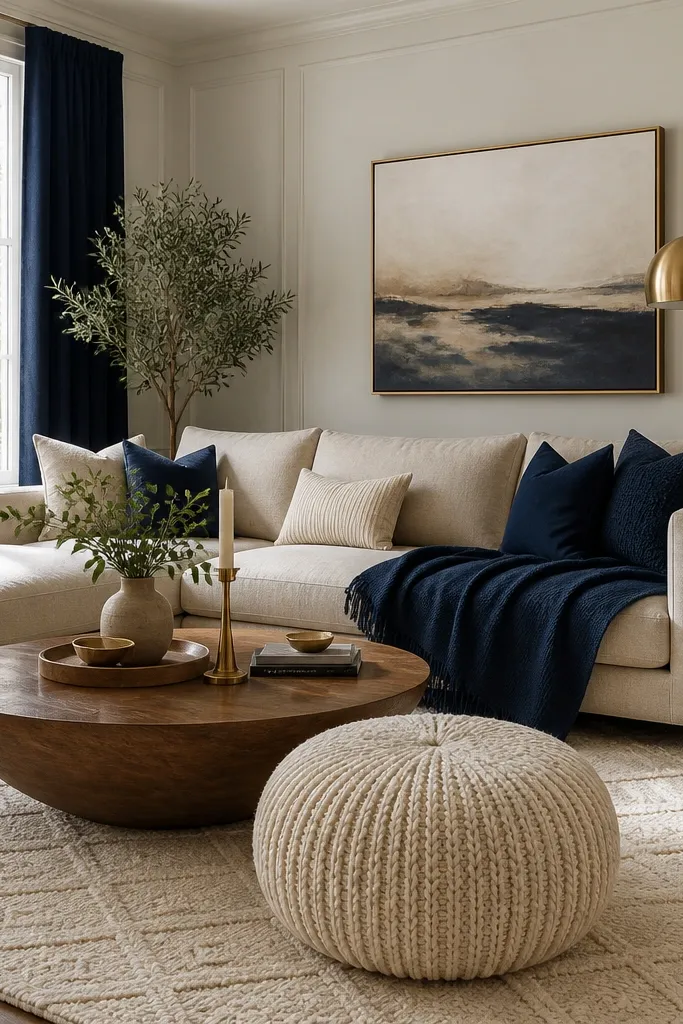
Navy makes a room feel cosy because it holds depth, and oat keeps it from feeling dark. A knit pouf adds instant comfort for lounging and makes the room feel like you can land anywhere. I like this combo when a room has white walls and light floors — navy gives definition without needing a full accent wall. It also works well for people who want cosy but still clean-looking, because the colors stay restrained. The principle is grounded contrast: deep color in textiles plus soft, chunky pieces you can sit on.
Start with an oat or cream sofa and add two navy cushions plus one cushion in a lighter oat tone so the navy doesn’t take over. Place a large knit pouf in cream in front of the sofa, centered so it connects to the seating. Add a navy throw folded over the sofa arm with a neat edge. Use navy curtains or a navy panel behind the seating to frame the look, then keep the rug cream and textured. Put a gold-toned lamp base on the side and keep the shade off-white so the gold doesn’t look brassy.
Use one navy item that’s matte (throw or curtains) and one that’s textured (knit cushion) so the navy stays cosy, not flat.
Don’t add too many patterns at once — navy + many prints can feel busy in large rooms.
13. Layered Curtains With a Fabric Valance Look (Without the Bulk)
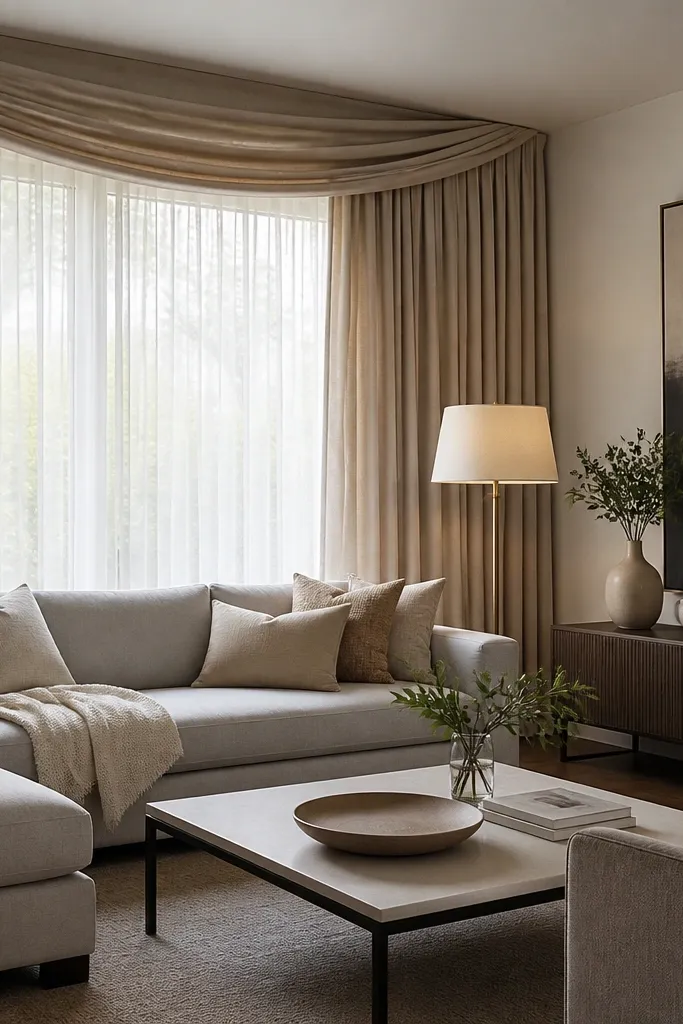
That valance look can make a room feel tailored and cosy, but bulky top treatments can eat light in large windows. The version I like uses layering and drape, not stiff hardware. It makes the top of the window look finished while keeping the middle of the curtain soft and movable. This works especially well for large rooms because you get a “designed” feel at the highest visual point. The principle is finishing the top edge so the rest of the room looks intentional and warm.
Start with a sheer panel and a heavier curtain panel in warm white or oat. Hang them so the heavier panel is the main layer, then use a third fabric strip or a slightly gathered top drape effect using your curtain’s fullness. Keep the top drape subtle — it should look like fabric folds, not a thick band. Style the sofa with a cream throw and cushions in oat and light beige, then place a warm lamp near the seating to make the curtains glow at night. Add one large art piece above the console to balance the visual weight of the window.
Steam the top folds and let them hang overnight — the drape looks better the next day than right after hanging.
Don’t use stiff pelmets — they make big windows feel boxed off.
14. Oversized Mirror Opposite Seating for Cosy Light Bounce
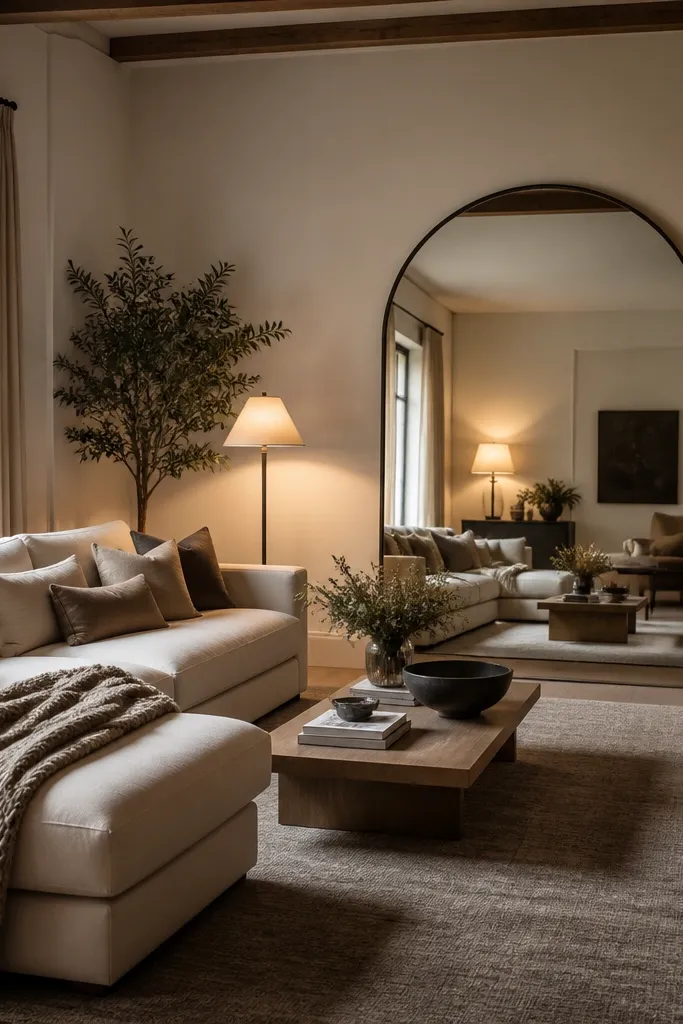
In large rooms, cosy can disappear because light doesn’t land where you relax. An oversized mirror bounces warm lamp glow across the seating zone, making the room feel softer without adding more fixtures. I like arched or rounded mirrors because they echo the softness of cushions and throws. This works well in rooms with one bright window and one dim corner, because the mirror fills in that dimness. It also flatters different skin tones by keeping light warm and evenly distributed. The principle is light control: reflect warm light to create a cosy “second glow.”
Good to knowTest it at night: turn on your lamps and sit on the sofa to see where the reflection lands before you commit.
Start by placing the mirror so it reflects your main lamp or a warm light source, not a dark wall. Use an arched or rounded frame in black matte or warm wood, then hang it high enough that it doesn’t block sightlines from the sofa. Choose a rug that grounds the seating and keep cushion colors warm — cream, taupe, and oatmeal. Add one chunky throw and arrange cushions with slight spacing so the mirror reflection shows dimension. Finish with a small console styling on the side table: a ceramic lamp base or a tray with a candle.
AvoidDon’t place the mirror opposite a TV or bright glare point — it creates harsh reflections.
15. Walnut Console Styling With Two Low Stools and a Tray
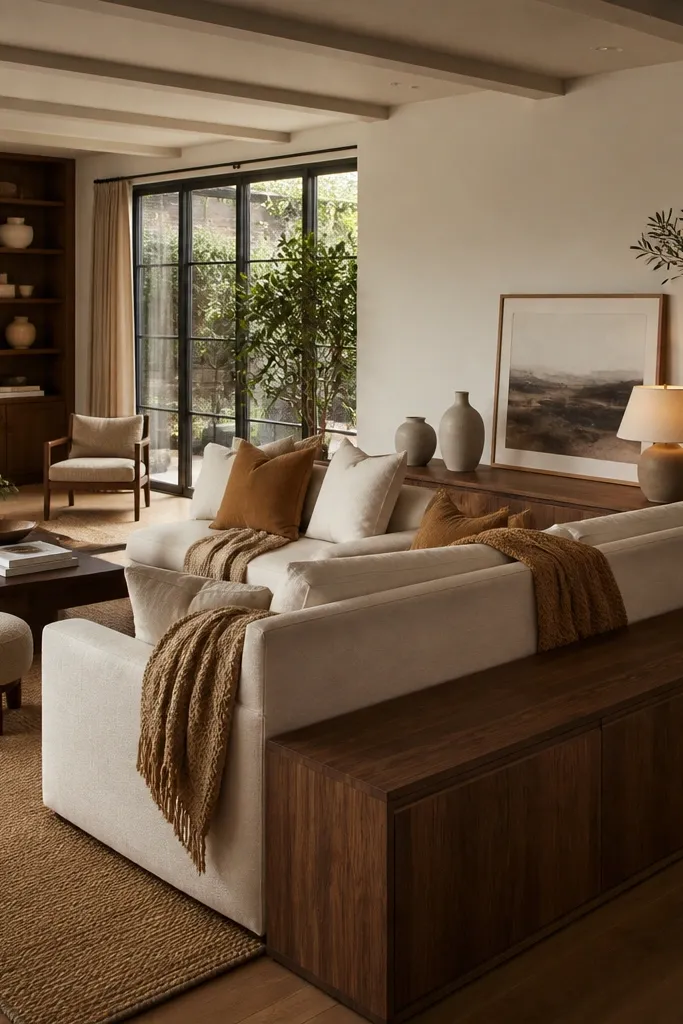
Cosy isn’t only what you sit on. The surfaces around your seating change how the room feels when you look up from the sofa. A walnut console adds warmth and a place for controlled styling, and the two low stools create extra lounging spots without adding bulky chairs. I like this for large rooms because it brings the middle of the room together visually; the coffee table doesn’t feel isolated. Warm ceramics and wood also look good in mixed lighting, so the room stays inviting. The principle is “controlled clutter”: fewer items, placed lower and warmer, so the room feels settled.
Start by placing the console behind or near the sofa so it anchors the wall visually. Add two low stools on either side of the seating area, slightly angled toward the coffee table for easy use. Keep the rug large enough to cover the front legs of sofa and stools. Style the console with just three items: one lamp, two ceramic pieces of different heights, and one framed print. On the coffee table, use a single tray with a candle and a small stack of books; keep everything matte so it doesn’t reflect harshly.
Use a tray size that fits your candle footprint with 2 inches of breathing room — it looks intentional instead of random.
Don’t cram the console with many small decor objects — large rooms need breathing space.
16. Sage Green Throw + Cream Sheepskin-Style Accent Rug
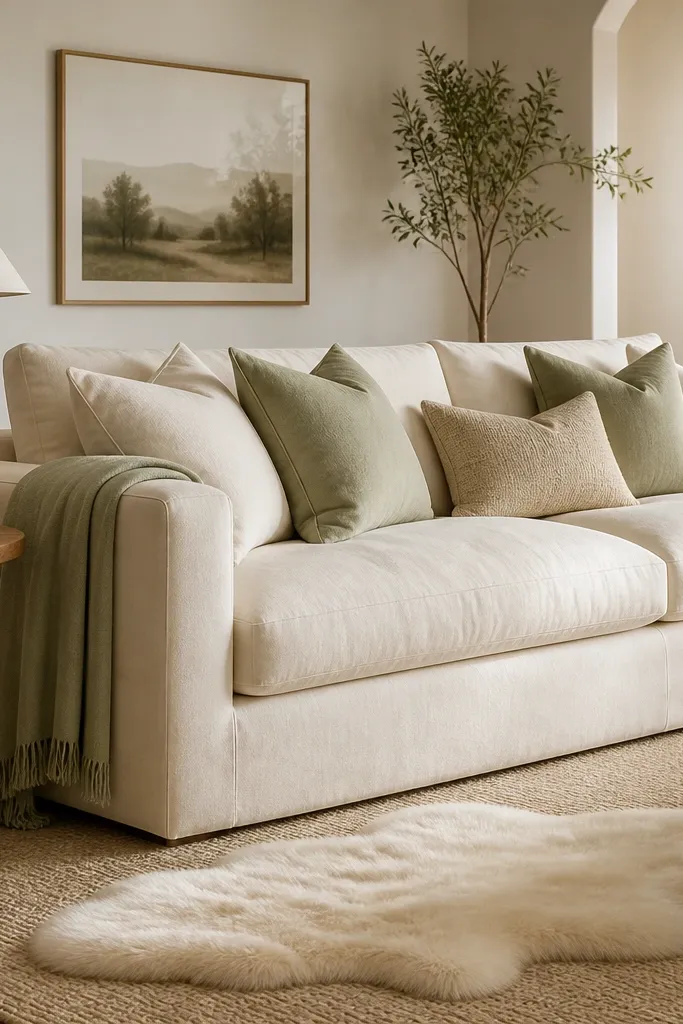
Sheepskin-style accents make rooms feel cosy because they add a soft, high-pile texture you can see from across the room. Sage green gives a calm, lived-in feel that works in both summer and winter, especially when paired with cream. I use this when a room feels too smooth — like everything is cotton or plain wood — because the faux hide adds a tactile “invitation.” This combo is also forgiving if your floors are cool-toned, because the cream pile warms the space. The principle is tactile contrast: smooth textiles plus a fur-like texture spot.
Good to knowBrush faux hide with a soft pet brush in one direction before styling — it keeps the pile looking plush instead of flat.
Start by placing a larger neutral rug under the seating, then add a small cream sheepskin-style rug in the main landing zone in front of the sofa. Fold a sage throw over the sofa arm so the color shows without covering the whole seat. Add cushions in cream and one sage cushion with a subtle texture like ribbed knit or linen. Put a warm wood side table next to the sofa with a lamp that has an off-white fabric shade. Keep wall decor minimal but warm, like one framed print in muted sage and cream.
AvoidDon’t place the hide under a chair wheel or in a high-traffic path — it wears quickly.
17. Monochrome Textures With a Single Gold Detail
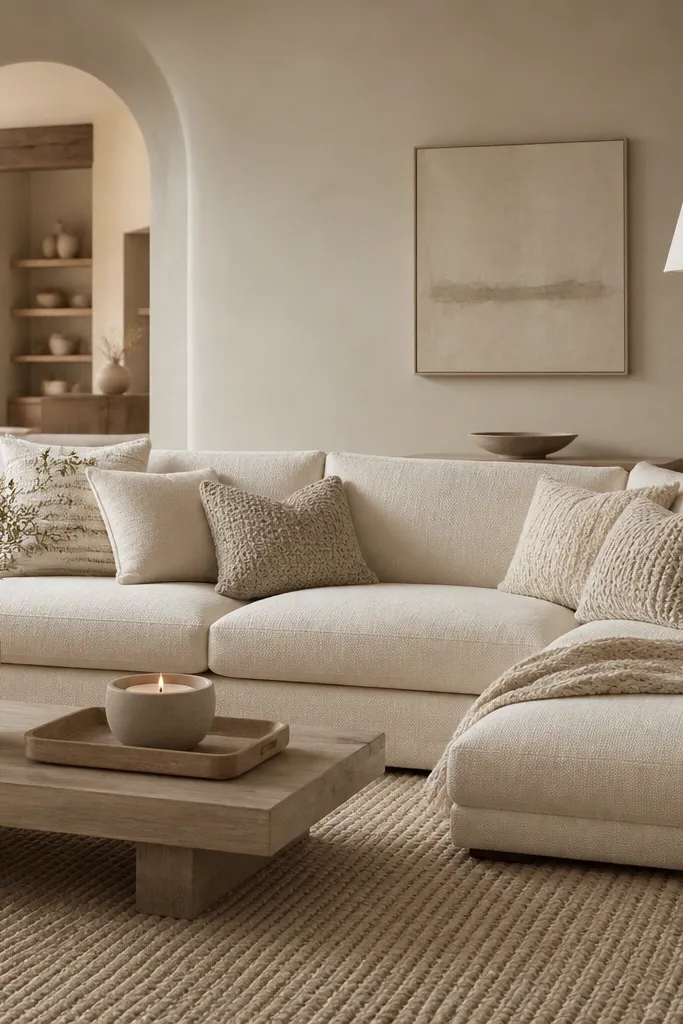
This is my go-to when I want cosy without color decisions dragging on. Monochrome works because texture still reads richly, even when colors are similar. The single gold detail prevents the room from looking washed out — it catches warm light and gives the eye a focal point. This setup flatters almost everyone because warm neutrals are forgiving under indoor lighting, and you don’t get harsh color casts. The principle is texture-led design with one controlled metallic highlight.
Good to knowIf your monochrome looks flat, add one deeper neutral cushion in caramel or warm taupe to create depth.
Start with a cream or light taupe base sofa and choose cushion covers in three textures: bouclé, knit, and linen. Arrange them so the highest texture is in the back row and the flatter linen is in front. Add a throw in oatmeal knit folded over the arm with a clean edge. Place a textured rug in warm beige so the floor doesn’t look bare. Add one gold item — lamp base, mirror frame, or a small picture frame — and keep the rest matte to avoid competing shine.
AvoidDon’t add multiple metallic finishes — silver next to gold makes the room feel messy.
18. Patterned Rug That Still Feels Soft With Solid Cushions
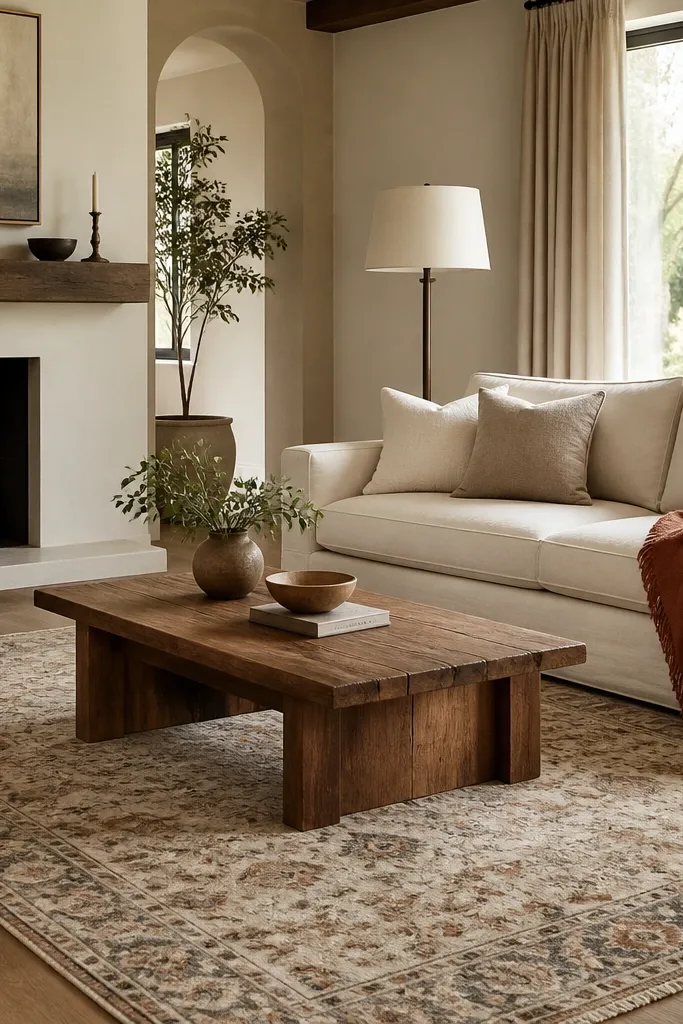
A patterned rug can feel cosy when you keep everything else calm. The reason this works in large rooms is that the rug brings movement without forcing you to add more patterns. Solid cushions let the pattern read clearly, and the rust throw repeats a color from the rug so the room feels connected. I’ve used this when people worry patterned rugs will look busy — the trick is muted tones and a small, controlled pattern scale. The principle is pattern moderation: one hero pattern, solid supporting textiles.
Start by selecting a rug with muted colors and a pattern scale that isn’t too large. Place it so it sits under the front legs of the sofa and chairs. Keep cushions solid in colors pulled from the rug: oatmeal and light taupe are safe and cosy. Add a rust throw folded over the sofa arm and let it fall in a straight line. Style the coffee table with a plain tray and one candle; avoid adding patterned objects on top so the rug stays the star.
Match one cushion cover color to one of the smallest rug tones so the room feels intentionally tied together.
Don’t combine a large rug pattern with multiple cushion prints — it looks cramped even when the room is big.
19. Tall Bookshelf Styling With Cozy Lighting Inside
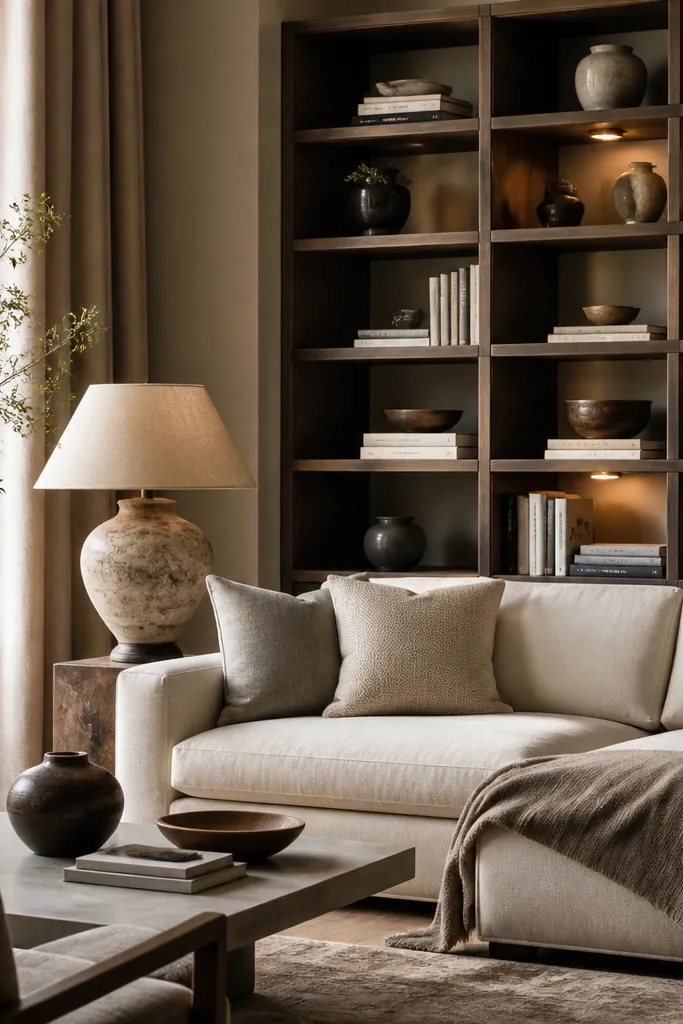
Open shelving can make a large room feel cluttered, and that kills cosy. The fix is lighting and spacing — warm LEDs inside the shelf and a consistent styling rhythm. I’ve done this in rooms where the shelf looked empty or messy; adding warm light makes the shelf feel like a designed feature, not storage. The cream and oatmeal textiles keep it soft, while the shelf gives vertical structure. This also flatters people in photos because the warm interior light adds gentle highlights. The principle is cozy architecture: vertical storage plus warm light and deliberate spacing.
Good to knowUse the same color for jar lids or ceramics on the shelf — it makes the whole arrangement look calmer.
Start by styling the shelf with a clear pattern: group books in sets of 3 or 4 and leave visible gaps between groups. Add ceramic jars or small planters in cream, taupe, or warm grey — keep finishes matte. Install warm LED strip lights inside the shelf so they glow upward on the back panel. Place the sofa facing the shelf and add a taupe throw over the arm. Use cushions in oatmeal and soft grey, then add one tall floor lamp nearby so the lighting matches the warm shelf glow.
AvoidDon’t fill every shelf gap — the negative space is what keeps it cosy.
20. Peachy Beige Walls With Textured Plaster Effect + Warm Neutrals
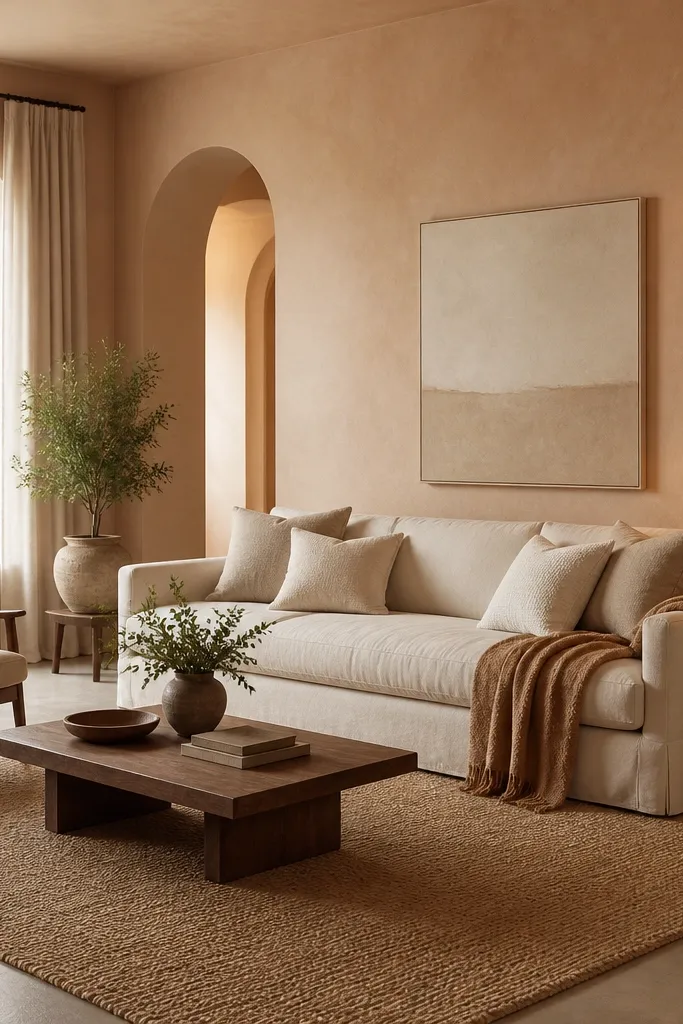
Paint can make a room cosy, but texture makes it feel lived-in. Peachy beige with a subtle plaster effect adds warmth without turning the room orange, and it hides scuffs better than flat paint. Pair that with cream and caramel textiles and the room looks soft even when it’s plain. I like this for people who want cosy but don’t want obvious holiday colors or heavy dark palettes. Under warm lamps, the wall texture creates gentle shadows that make the whole room feel deeper. The principle is “warm backdrop + soft textiles”: the wall gives depth, the fabrics do the comfort work.
Start by choosing a warm peachy beige paint and ask for a textured plaster finish or a paint technique that gives micro texture, not thick lumps. Keep your sofa in cream or light beige so it doesn’t fight the wall. Add a caramel throw folded over one arm and cushions in oatmeal and warm white with a mix of knit and linen. Lay a natural fiber rug large enough to anchor the seating area. Add a brass floor lamp with a fabric shade and keep other metals minimal so everything reads warm and cohesive.
Test the wall color in the room at night with lamps on — peachy beige can look different after sunset.
Don’t pair textured walls with glossy furniture finishes — the room can look visually noisy.