1. Two-Rug Layer for Instant Room Width
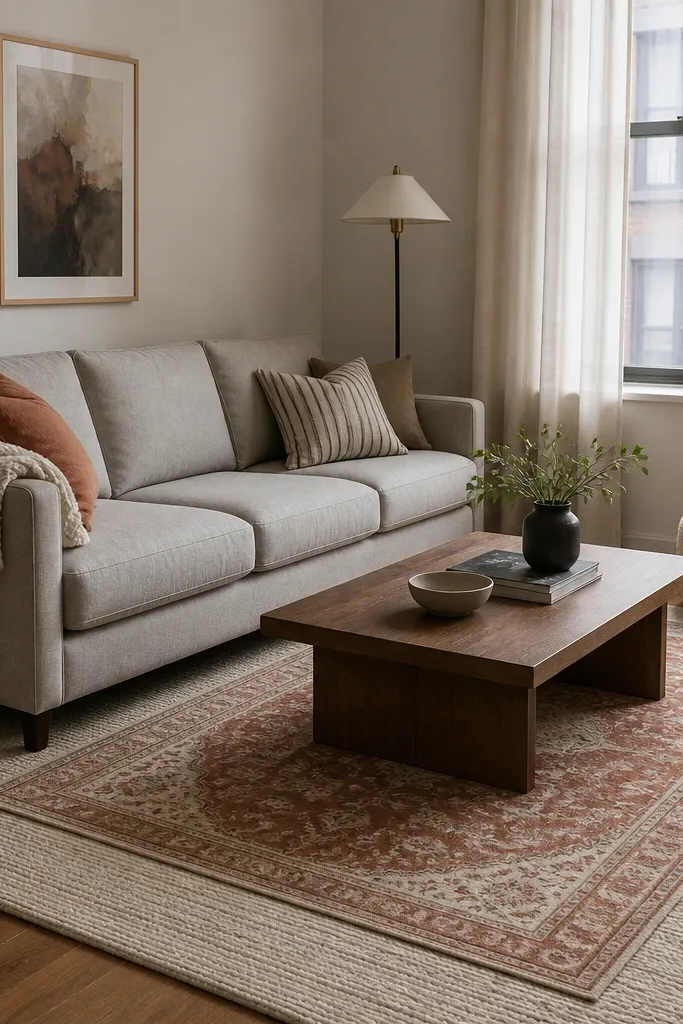
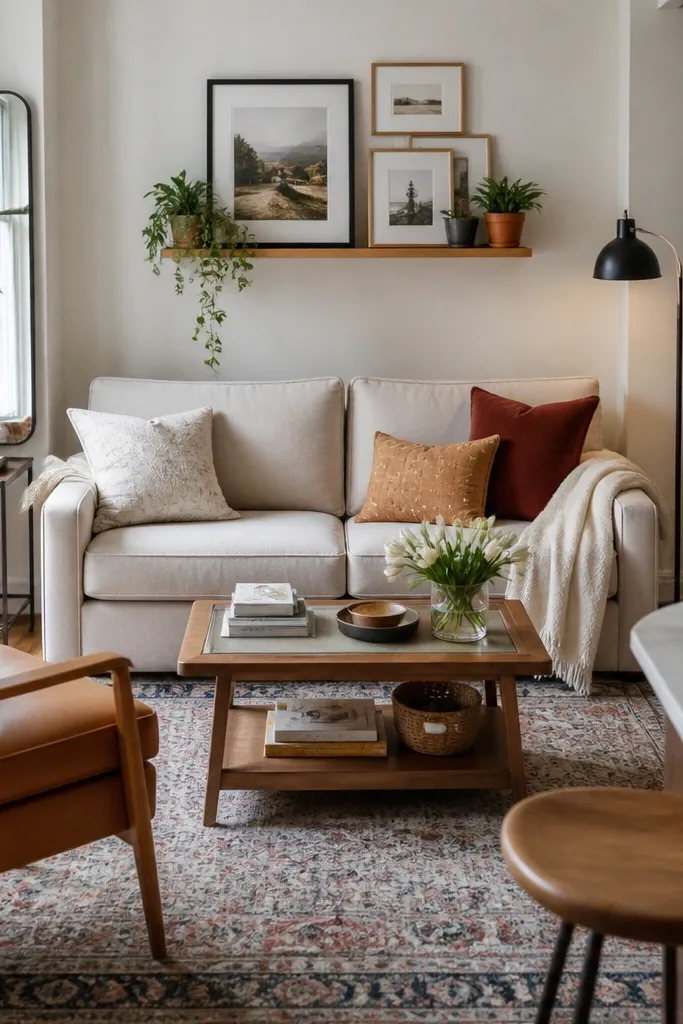
This setup works because it creates a “floor shape” without one heavy, oversized rug. Start with a flatweave cream rug (thin pile) for lightness, then add a smaller patterned rug on top for warmth. The rust tones add comfort against cool greys, and the overlap makes the seating area feel intentional. I’ve used this with small sofas and it flatters both narrow spaces and low ceilings because the eye moves across the room instead of getting stuck on one rectangle.
Start by placing the cream flatweave rug so the front legs of the sofa and one chair sit on it. Then set the second rug so it’s centered under the coffee table, with about 15-25 cm of overlap around the table edges. Keep the second rug’s dominant colour either rust, terracotta, or olive so the warmth feels consistent. Finish by adding a throw in a similar colour family and a tray on the coffee table to stop the centre from looking empty.
If your rugs slide, tape the corners with double-sided rug tape under the overlap — it stays put for months.
Avoid using two rugs with the same exact pattern density; it makes the floor look noisy and cheap.
2. Boucle Throw + One Matching Cushion Set
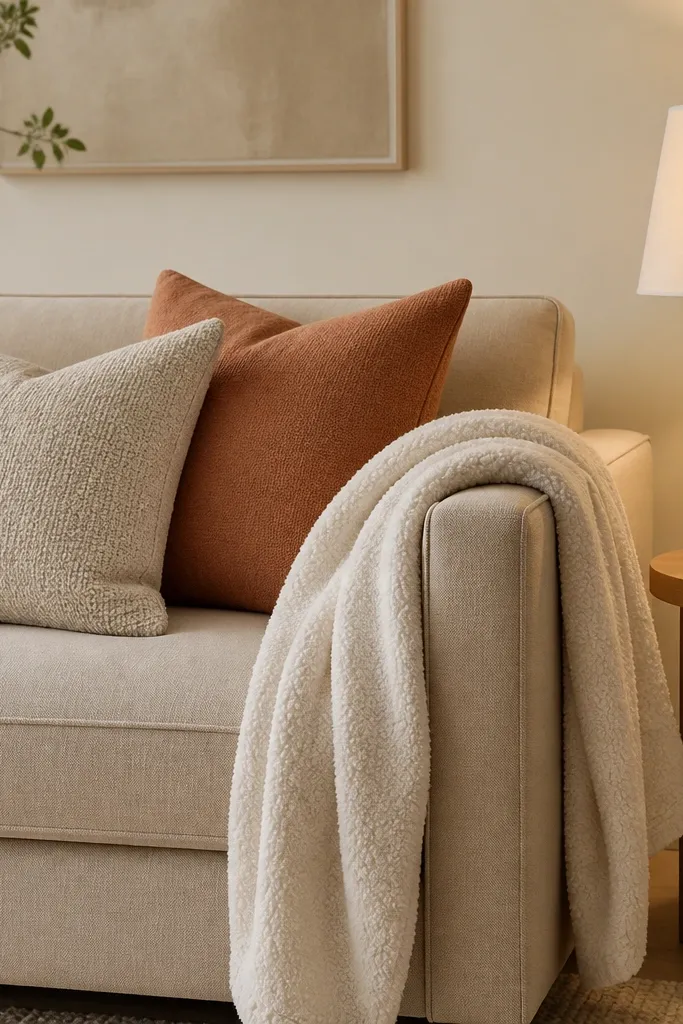
Boucle looks cosy because it catches light in tiny highlights, even when it’s dim. Pair it with one knit cushion and one solid-toned cushion so the texture doesn’t fight itself. This combination flatters most skin tones when you sit nearby, because warm creams and terracotta read friendly rather than harsh. I’ve done this in flats with grey walls and it turns the whole corner warmer without adding extra furniture.
Start by choosing one boucle throw size that reaches past the sofa arm by about 10-15 cm. Drape it over the arm, not the back, so your eye hits texture at shoulder height. Add two cushions: one knit (oatmeal) and one solid terracotta, both with covers that feel thick (zip closure helps). Place the lamp on the side table and aim the light slightly upward to bounce warmth off the wall behind.
Shake the throw once and fluff the cushions — boucle looks better when it has shape.
Avoid thin, shiny polyester throws; they look static and make the room feel colder.
3. Corner Lamp Triangle Lighting
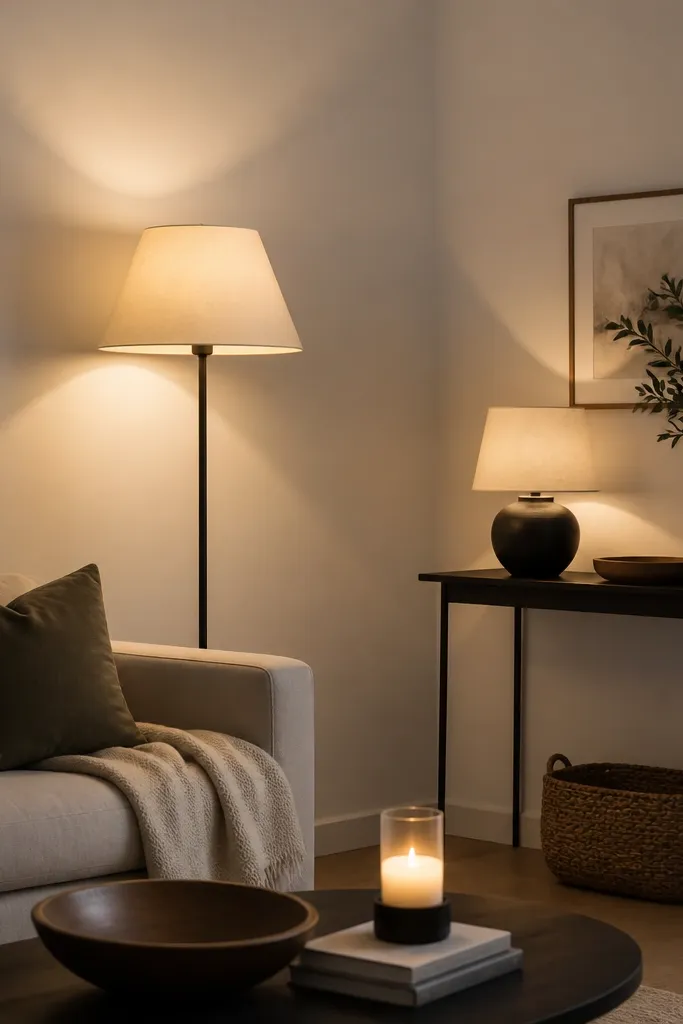
Start by keeping the ceiling light off and using warm bulbs around 2700K. Place a floor lamp so it lights the back half of the sofa, then add a small table lamp that points toward the wall behind your seating. Finish with a low candle-style LED or a small lamp on the coffee table so the centre has glow. Keep shades in linen or paper so the light diffuses, not spotlights.
Dark corners are what make a flat feel less cosy, even when the furniture is nice. A triangle of light fixes that by spreading brightness instead of one harsh overhead bulb. I’ve done this in rooms where the only ceiling light was too cold — adding two lamps changed the mood instantly. This works for everyone because it reduces shadow pooling near the floor and around the sofa, which is where people notice “drafty” vibes.
AvoidAvoid mixing 4000K bulbs with warm ones; the room looks yellow in patches.
Good to knowUse dimmers if you can; bright cosy is a different look than warm cosy.
4. Curtains with Tension Rods, Not Cheap Blinds
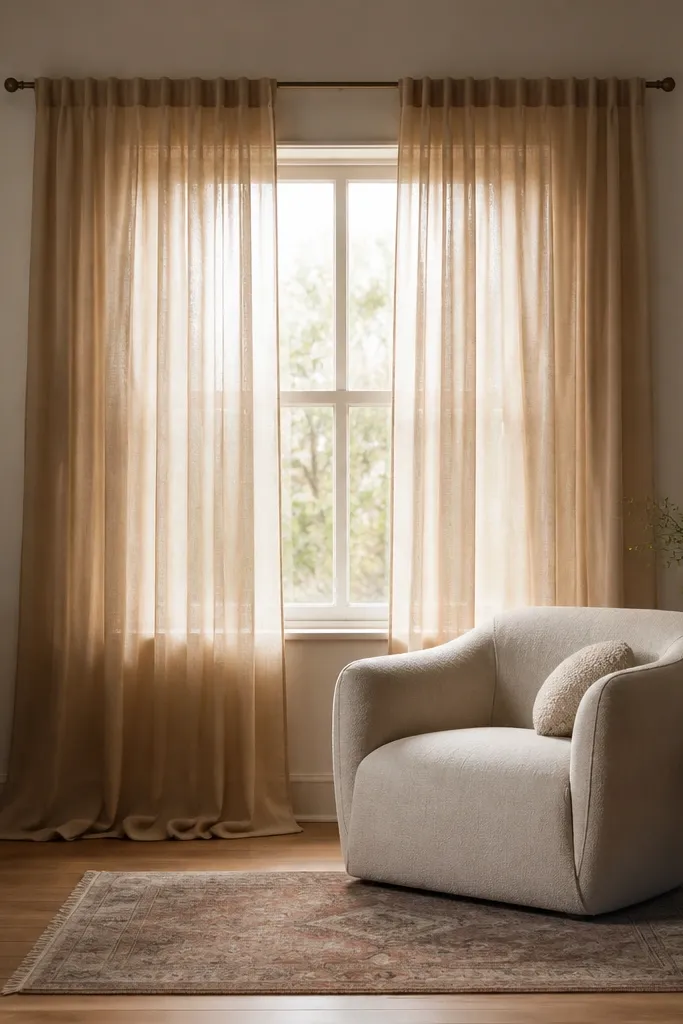
Start by measuring from the top of the window frame to where you want the curtain hem. Aim for the hem to land 1-2 cm above the floor or lightly puddle. Hang the rod 10-15 cm above the window and extend it 10-20 cm wider on each side to avoid a narrow, boxed look. Use curtain rings or clips that glide smoothly so the fabric falls in folds rather than clinging to the rail.
Curtains make a room feel wrapped, and tension rods let you do it even in rentals. The key is length and fullness, not fancy hardware. I choose a warm neutral curtain in cotton-linen blend so it holds shape but still moves softly. This is the easiest cosy win for flats because it fixes the “unfinished” feeling around windows, which is where cold air and harsh light often show up.
AvoidAvoid curtains that stop at the sill; they make the room feel smaller and unfinished.
Good to knowIf your curtains look flat, steam them and pull them into even folds before you step back.
5. Coffee Table Tray and Two Textures
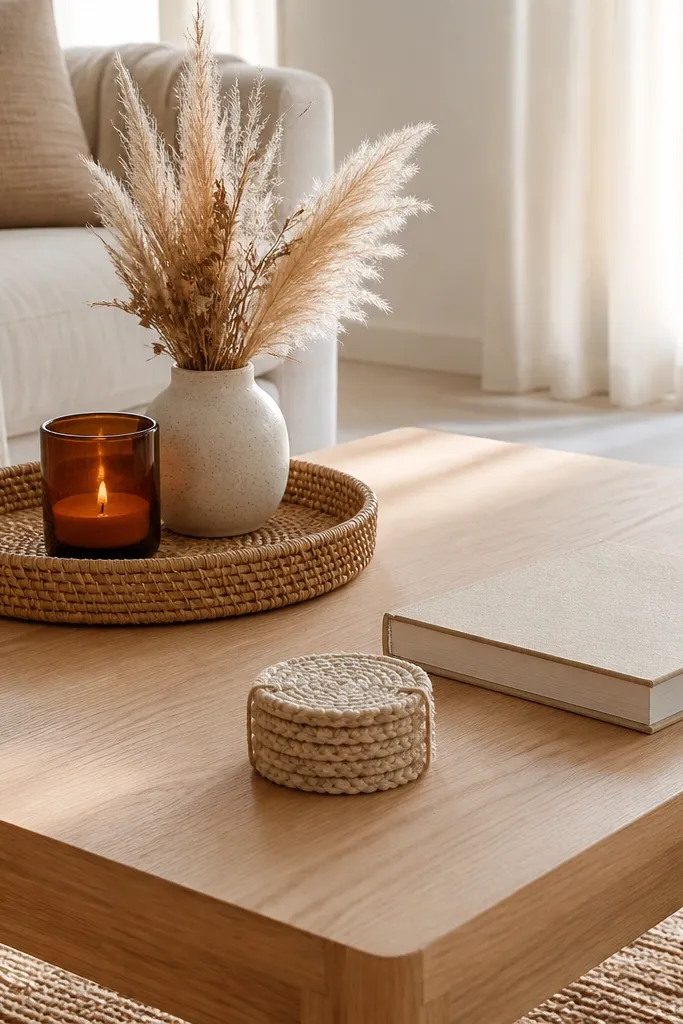
A cosy living room looks styled because it has a focal point, not because it has lots of items. A tray groups small pieces into one “moment,” and texture does the work: rattan for warmth and ceramic/glass for glow. I like this with light wood tables because the rattan echoes the natural tones. It flatters any colour palette and works well in small flats where open surfaces can make the room feel messy.
Start by clearing the coffee table and choosing one tray that’s about two-thirds the table width. Place a candle holder or small lamp on one side of the tray, then add a vase or small bowl on the other. Add one book (hardcover, neutral cover) next to the tray, not under it. Finish with coasters and keep the tray height low enough that it doesn’t block your view across the sofa.
Swap the dried grass for fresh eucalyptus on weekends if you want a more alive feel.
Avoid adding more than two main items on the tray; it turns into clutter fast.
6. Wall Art in a Warm Grid
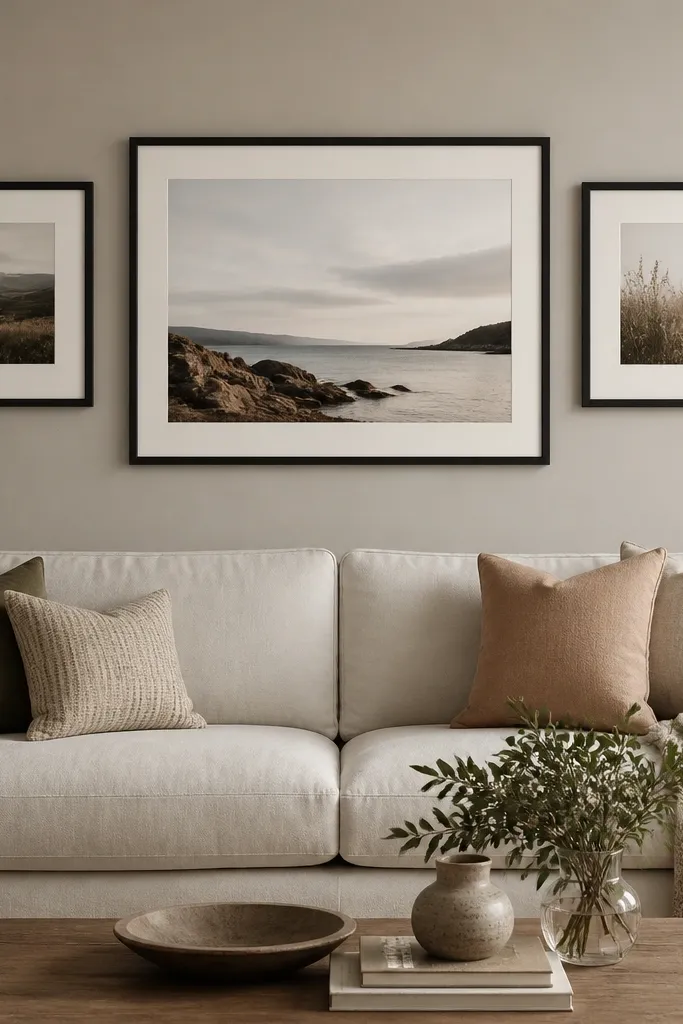
Wall art makes the room feel finished and stops the eye from searching for “what’s missing.” A warm grid is more forgiving than a random scatter, especially in rentals where you can’t drill everywhere. I use matte black frames with off-white mats because they look crisp without feeling cold. This works for small flats because it focuses attention upward and keeps the seating area feeling styled, even when you keep furniture minimal.
Start by picking one large piece that sits roughly at eye level when you’re on the sofa. Then place two smaller frames to the left and right so the top edges line up. Use off-white mats so the prints don’t blend into the wall colour. Lay everything out on the floor first and measure the spacing — aim for 6-8 cm between frames so it looks intentional.
If your wall is pale, choose prints with at least one warm tone like terracotta or ochre so it reads cosy in low light.
Avoid frames with glossy fronts; they reflect lamps and look messy on camera.
7. Narrow Console for the 'Cozy Landing'
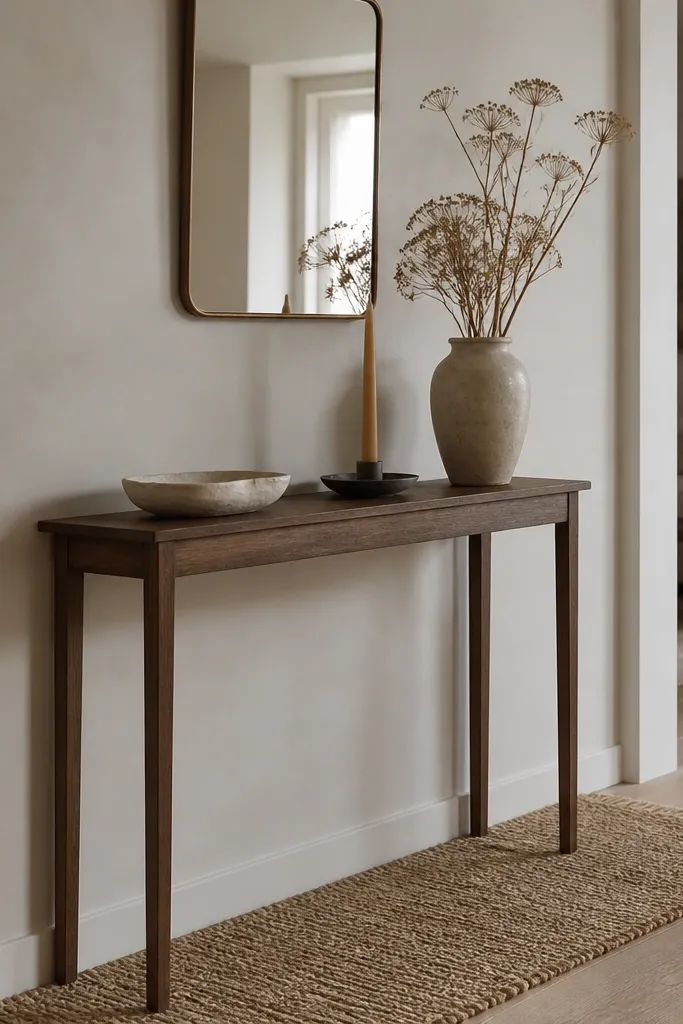
In flats, you need one place where the room feels “collected.” A narrow console gives you that landing spot without eating floor space, and a runner adds softness under it. I’ve used this in hall-adjacent living rooms where the entrance spills into the lounge. The mirror bounces warm light and makes the wall feel wider, while the ceramic and wood keep it grounded.
Start by choosing a console that’s no wider than 35 cm so you can still walk past comfortably. Place it against the wall and add a woven runner that’s about the console length plus 10-15 cm on each end. Put a mirror above the console if you have space for it; otherwise use a large framed print. Style with one tray, one tall candle or vase, and one small object that’s around the same height as the candle base.
Keep the console clutter to three items total — I’ve seen four turn into chaos in small flats.
Avoid a mirror too small; it looks like a sticker and doesn’t bounce light properly.
8. Knit Pouf as Extra Seating
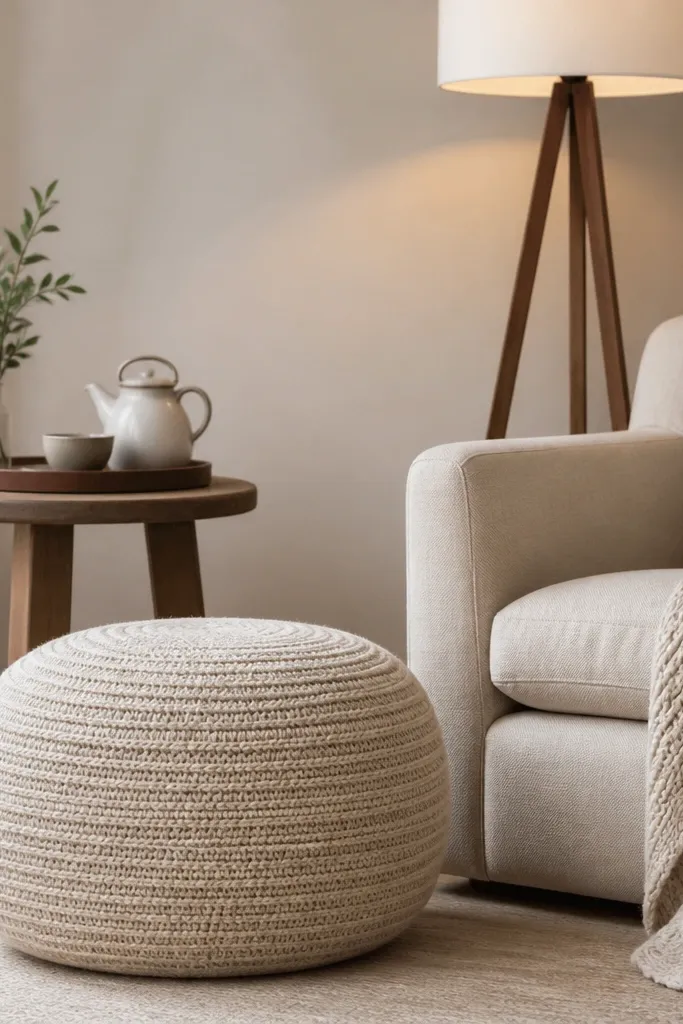
Start by placing the pouf where you already naturally sit, usually beside a chair or at the foot of the sofa. Choose a pouf height around 35-40 cm so it feels usable as a seat. Add a small throw or cushion on the nearby chair arm so the knit texture repeats. Put a floor lamp close enough that the pouf shadow is soft — that glow is the cosy effect.
A pouf makes a living room feel cosy because it adds a casual, sit-anywhere option. Knit textures look warm even when they’re light in colour, and they soften the straight lines of flat furniture. This is great for small flats because it replaces a bulky extra chair and still gives you somewhere to put your feet. It also looks good with most skin tones and outfits because the oat and cream palette blends without pulling attention away from you.
AvoidAvoid poufs with hard legs or shiny fabric; they look temporary and cheap.
Good to knowIf the pouf cover is removable, wash it once and let it air dry flat — it keeps the knit from getting stretched.
9. Sheer + Blockout Curtains Combo
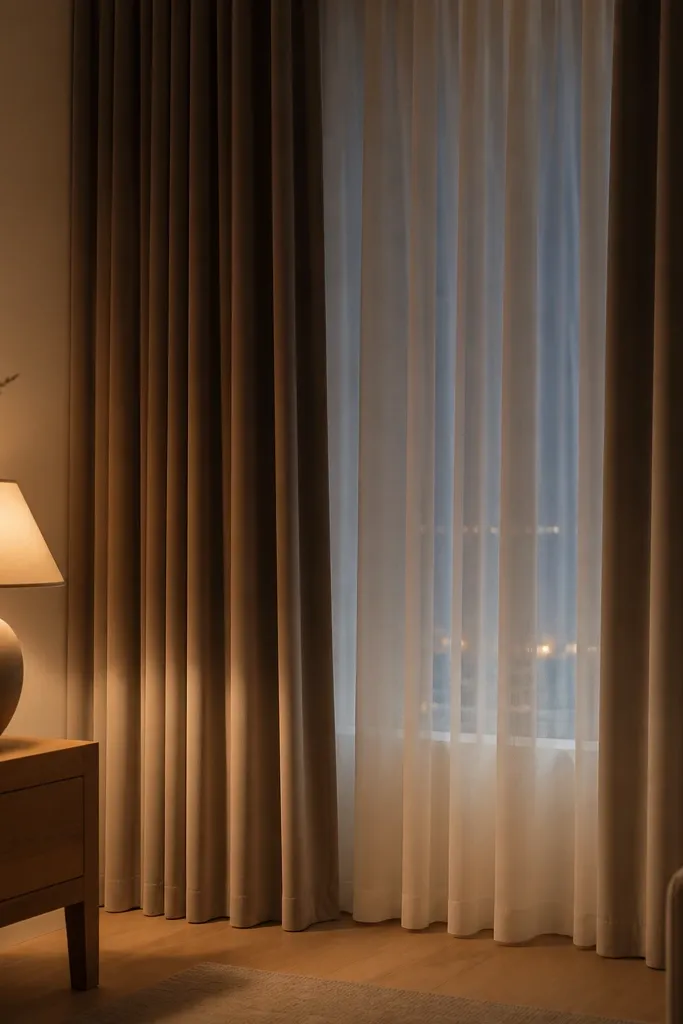
Start by hanging sheers on a separate rod or using a double-rail system so they can move independently. Choose blockout curtains in a warm grey, cream, or deep olive — keep them matte. Install the rods 10-15 cm above the window so the ceiling looks higher. At night, pull the sheers slightly to one side and leave the blockouts partially open to create a warm glow without full glare.
Layering sheers with blockouts gives you cosy control. In the evening, blockouts stop the cold light from outside, while sheers soften the edges so your room looks gentle, not dark. I’ve used this in flats facing busy streets where outside light bounces in — the combo makes the living room feel calm fast. It flatters any colour scheme because the sheers keep the room bright, and the blockouts add depth.
AvoidAvoid mixing curtain lengths; mismatched hems make the room feel uneven and unfinished.
Good to knowUse the same warm bulb temperature in every lamp so the curtain colours stay consistent.
10. Rattan + Ceramic Plant Corner
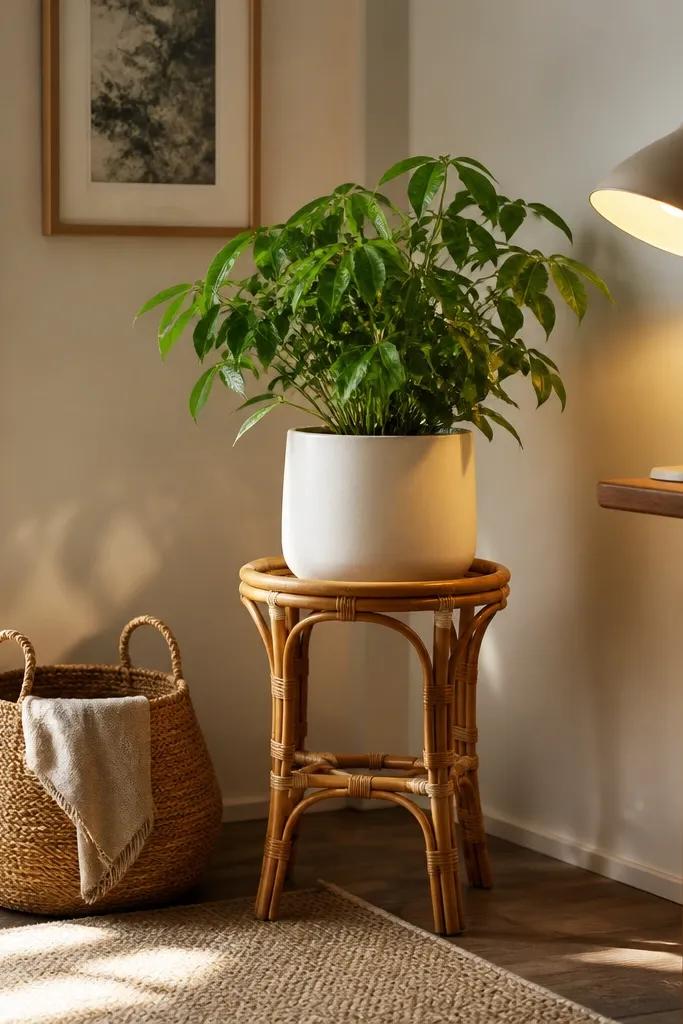
Plants make a room feel lived-in, but the styling matters. Rattan plant stands and baskets bring warmth and texture, while ceramic pots look grounded and not plastic. I like this corner because it turns a spare corner into a “soft landing” instead of dead space. The green plant adds life around warm neutrals and looks good with both light and medium skin tones when you sit nearby.
Start by placing a rattan stand next to a wall corner, not in the middle of the room. Choose a ceramic pot in cream, sand, or soft terracotta so it matches your cosy base. Add one woven basket at floor level to catch blankets or extra throws. Turn the plant slightly toward the sofa and aim one lamp at a 30-45 degree angle so leaves catch warm light.
Wipe the ceramic pot with a dry cloth before you style; it keeps it looking fresh.
Avoid a black plastic pot showing above the rim; it reads cheap in warm lamp light.
11. Throw Blanket 'Sofa Arm Rule'
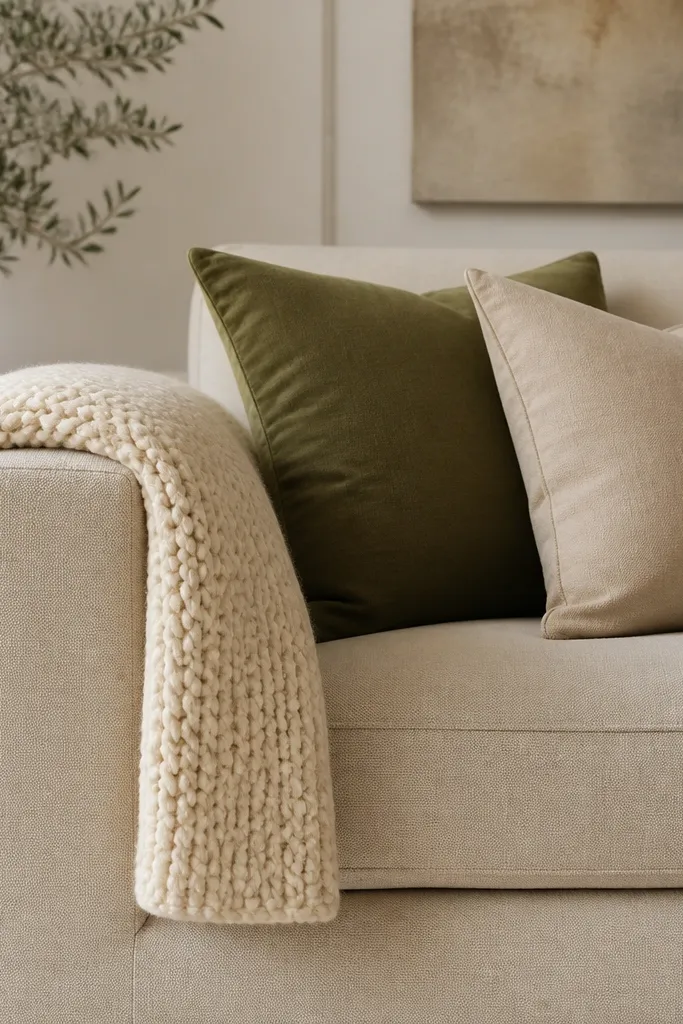
Start by folding the throw into thirds so it sits flat and doesn’t spill over the whole sofa. Drape it over the arm so the fold line sits just above the cushion seam. Choose the throw colour from your base palette — cream with olive cushions is my most reliable combo. Then keep cushion covers to two colours max and add one small accent in the same family as the throw.
This is my favourite cosy trick because it looks styled even when you’re rushing. The sofa arm is the spot your eye naturally lands on when you walk in, and a clean fold makes the blanket look intentional. Chunky knits look warm in real life, not just in photos, because the fabric has weight and shape. It flatters the room by adding a soft “frame” around your seating without adding extra furniture.
AvoidAvoid throwing it across the back randomly; it looks like a spare blanket, not design.
Good to knowIf the blanket keeps sliding, attach two fabric ties under the fold to the cushion cover seam.
12. Low Bookshelf Styling with Vertical Spacing
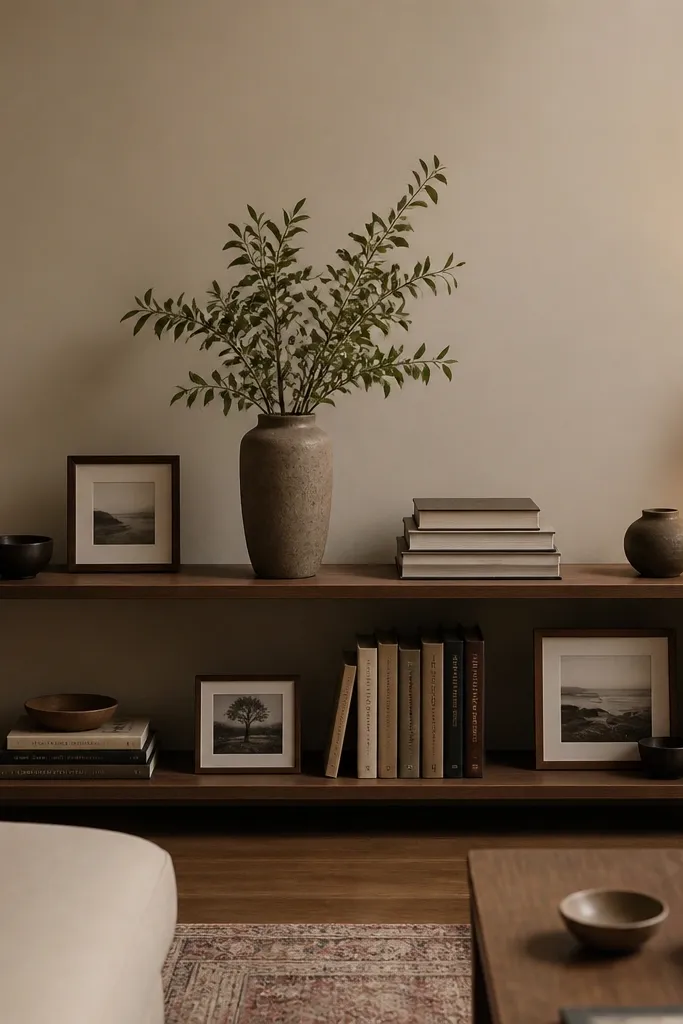
Start by clearing the shelf fully and sorting items into three groups: books, photo frames, and “one-off” decor. Stack books vertically so spines create a colour gradient, then leave a gap so the shelf breathes. Place a taller vase or candle holder on the top shelf, and keep small items clustered in one corner. Turn on a side lamp next to the shelf and position it so light hits the objects from the side, not straight on.
Shelving can make a flat feel cosy or cluttered. The difference is vertical spacing and repeating materials, not buying more stuff. I use books as texture, then add one ceramic vessel and one framed photo so it looks personal but controlled. This works especially well if your living room has open-plan dining, because it gives the whole area a consistent rhythm. Warm lamp light makes the ceramics glow, which is the cosy effect you want.
AvoidAvoid filling every inch of shelf space; a few empty gaps make it look expensive.
Good to knowWrap one stack of books with a thin fabric ribbon in a matching colour — it makes the shelf look designed.
13. Matte Paint Touch-Up Zone for Warmth
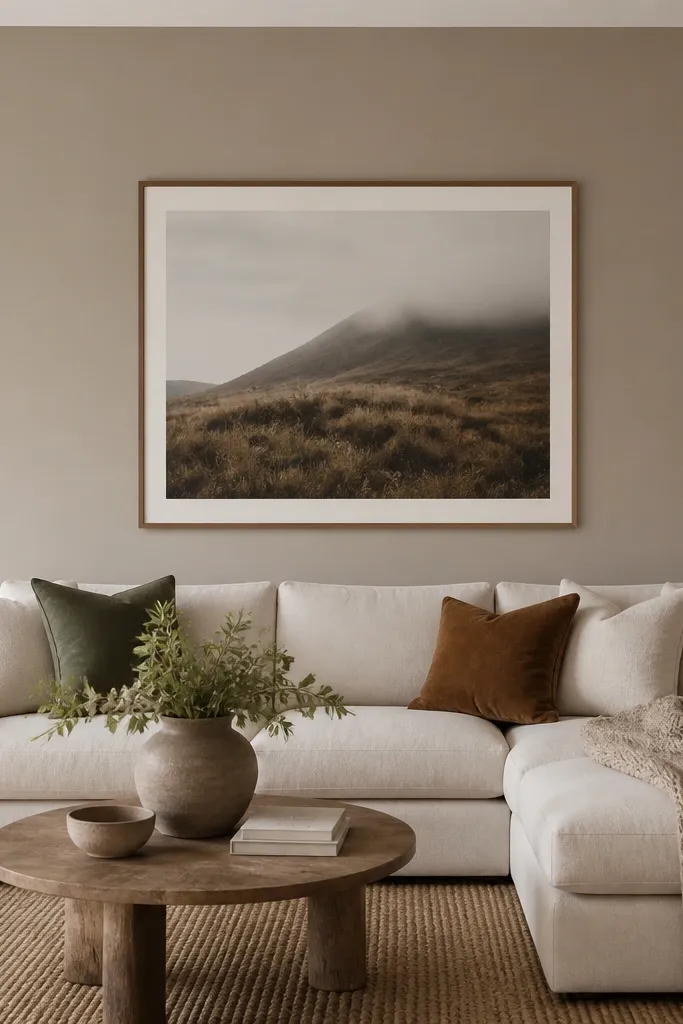
Even in budget setups, wall tone changes everything. If you have a patchy wall or a slightly grey wall that reflects light harshly, a matte warm greige touch-up makes the room feel softer at night. I’ve done this when landlords wouldn’t allow full painting — you paint only the area behind the sofa and around the art so it visually reads as one calm background. This flatters both bright and dim spaces because matte finishes reduce glare and make lamps look warmer.
Start by cleaning the section with a damp cloth and let it dry fully. Use a matte interior paint in a warm greige close to your existing wall tone, and roll it with a 10 cm roller for control. Feather the edges so you don’t see a hard line where the new paint ends. Let it cure for a full day before hanging anything, then place a large art piece centered so the repaired zone disappears behind the focal point.
Use test pots and paint two small patches next to your lamp — the right tone is the one that looks warm under lamp light.
Avoid glossy or eggshell paint for this touch-up; it reflects and makes the wall look patchy.
14. Corner Gallery Shelf with Removable Hooks
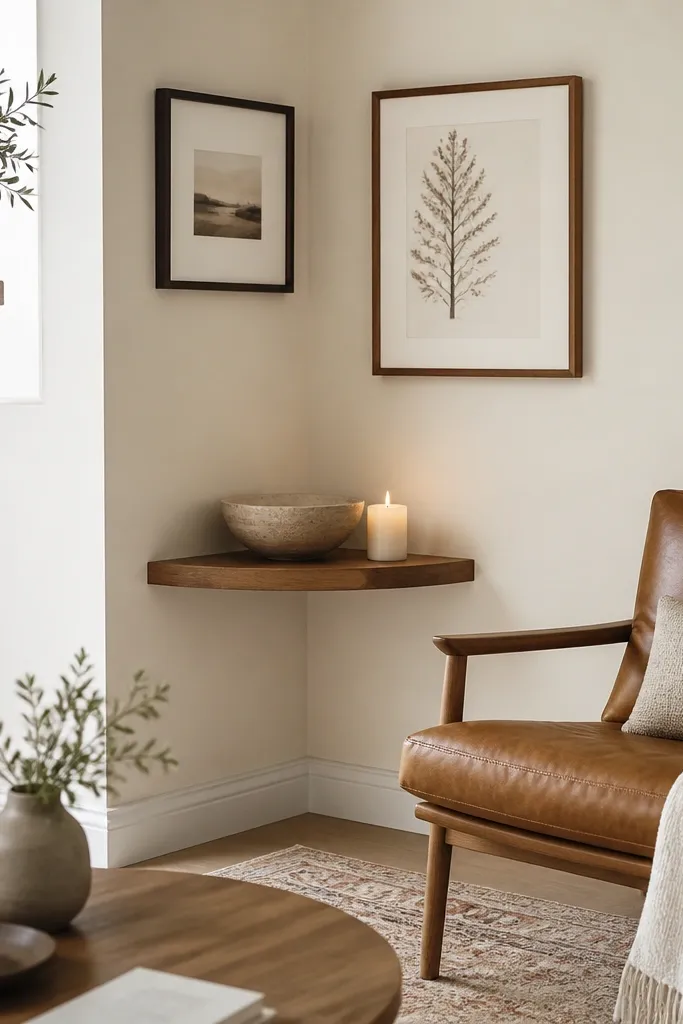
If you rent, you still need height and texture on the walls. A small shelf plus framed prints gives you a layered look without drilling into multiple spots. I like this corner because it adds cosy “activity” where the eye goes when you’re sitting — near your shoulder height. Ceramic and candle light create warmth, and the removable hooks keep it flexible if you move flats.
Start by installing one small shelf at about 140-150 cm from the floor so it sits around eye level when you’re on the sofa. Place a ceramic bowl and a candle on the shelf, keeping the candle on the far side so it doesn’t block the print. Hang two small frames above using removable hooks, spaced so their centres line up with the shelf edges. Keep the frame colours consistent — matte black or warm wood both work — and choose prints with one warm accent colour.
Add a small felt pad under the candle holder so it doesn’t wobble when you light it.
Avoid mixing too many frame sizes; it looks like you grabbed whatever fit.
15. Dining-Lounge Divider with a Woven Runner
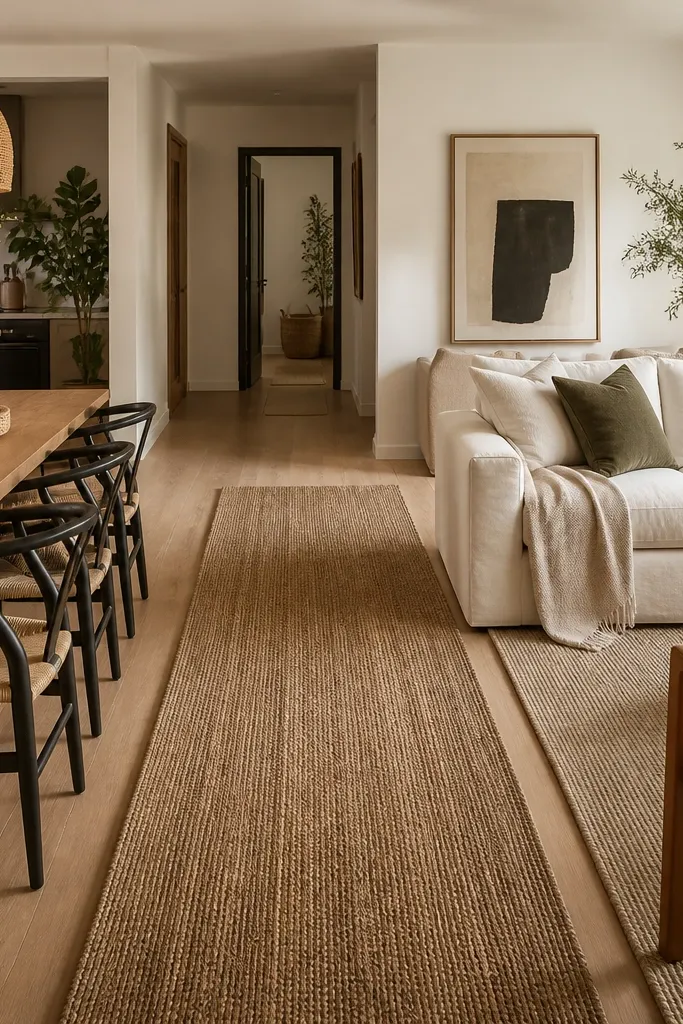
Open-plan flats often feel messy because you’re seeing two zones at once. A woven runner helps you separate the lounge from the dining area without building walls, and it adds texture that reads cosy under warm lighting. I’ve used this when I couldn’t add a full second rug — it still gives you boundaries. It flatters small layouts because it keeps the path visible and makes the room feel guided rather than crowded.
Start by measuring the walkway from one side of the room to the other and choose a runner that fits with a few centimeters of clearance. Place the runner so it runs through the space where people naturally walk, not under furniture wheels. Style the lounge side with a throw and lamp, and keep the dining side brighter so the zones feel different. If you have a low coffee table, make sure it doesn’t block the runner line when you sit.
Choose a runner with warm tones like camel, ochre, or muted red so it matches cosy textiles.
Avoid placing the runner at an angle if your room is already tight — it makes the space look smaller.
16. TV Wall Softening with a Fabric Screen
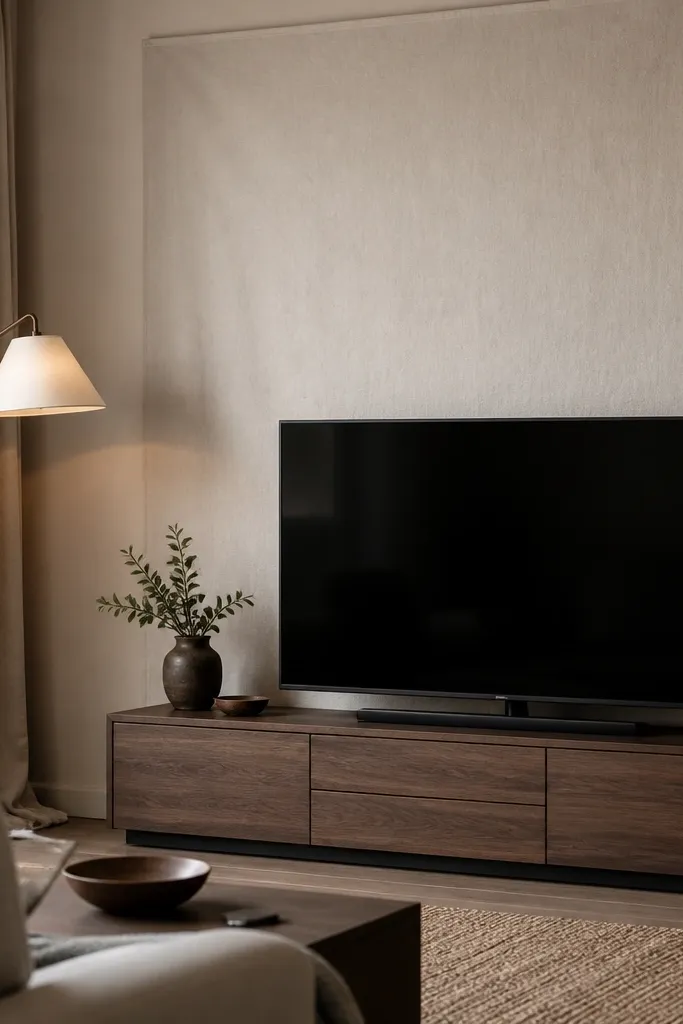
A TV wall can look harsh because it’s flat and glossy, especially when the rest of your room is soft. Adding a fabric backdrop makes the wall feel warmer and reduces the contrast between the screen and the furniture. I did this in a rental where the wall was plain and grey — the fabric made the area feel like a designed corner, not a tech zone. It works for all room sizes because it adds softness without taking up floor space.
Start by choosing warm oatmeal or sand fabric with a matte finish, like cotton or linen blend. Attach it using removable clips or a tension frame so it looks smooth, not wrinkled. Keep the fabric width a little wider than the TV and extend it down to cover the stand area by a few centimeters. Place a lamp on the side of the TV wall so light hits the fabric, not the screen, and add one textured item on the stand like a chunky knit basket.
If the fabric wrinkles, steam it and hang it overnight — it keeps the look clean.
Avoid shiny satin backdrops; they reflect light and make the TV wall look cheap.
17. Budget Statement Mirror Over a Sideboard
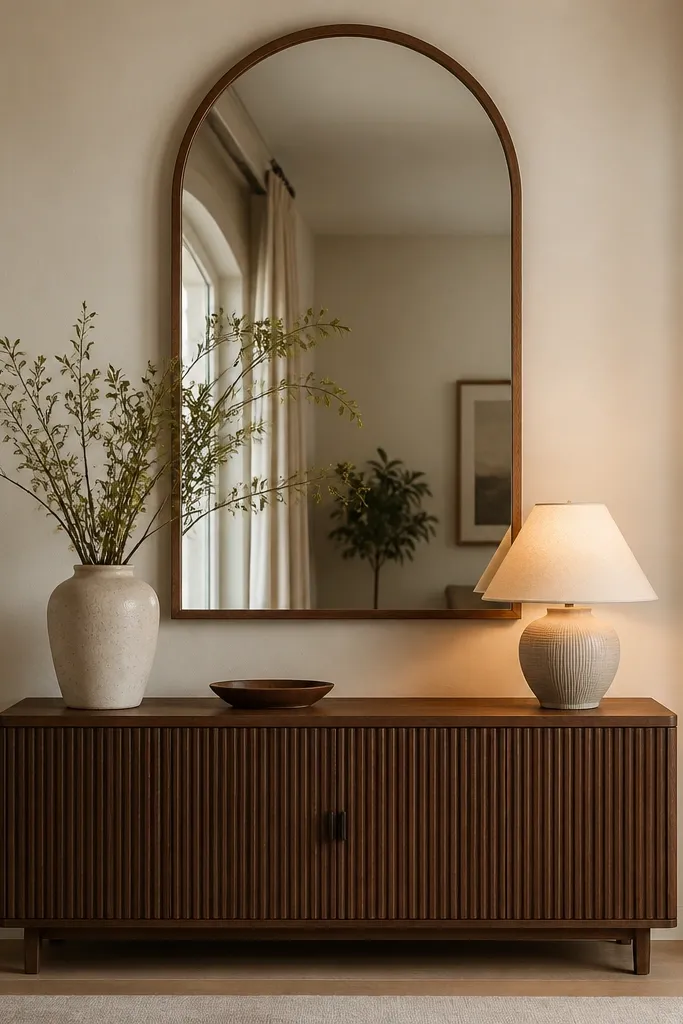
Start by choosing a mirror height that reaches at least to the top of your sideboard, not a tiny tabletop mirror. Hang it so the centre is around 150-160 cm from the floor. Place a lamp on the sideboard and angle it slightly toward the mirror so it bounces warm light back into the room. Style the sideboard with one tray, one vase, and one small candle so the mirror doesn’t reflect clutter.
A mirror makes a flat feel cosier when it’s tall and warm-framed. The warmth matters because a cold metal frame can make the room look sharper instead of softer. I’ve used an arched mirror over a sideboard in small lounges and it instantly brightens corners, especially when paired with a lamp angled toward it. It flatters narrow rooms by adding depth and it looks good from the sofa as well as when you walk in.
AvoidAvoid placing the mirror too close to the ceiling; it can make the wall feel chopped.
Good to knowWipe the mirror with a dry microfiber cloth right before guests — it stops streaks in warm light.
18. Thick Knit Rug Runner Under the Sofa
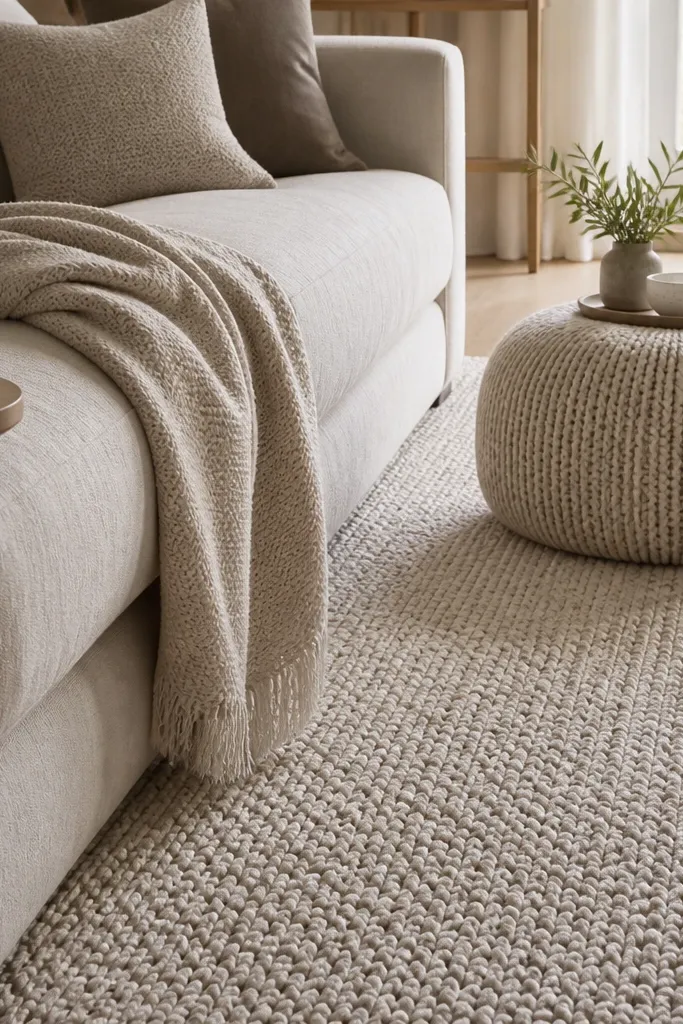
Start by choosing a runner with a thickness that feels cushioned, not a flat mat. Place it so the front legs of the sofa sit on it and the runner extends 20-30 cm beyond the sofa edge. Add a footstool or small chair on the runner to complete the seating zone. Match the throw or cushion cover to the runner’s base tone so the texture repeats without needing extra colours.
If you want cosy without going full rug, a knit-look runner under the sofa front gives warmth where you notice it. It also softens the sound in flats with hard floors, which is a real comfort factor at night. I’ve used this in rooms with laminate flooring and it instantly made the space feel less echo-y. The oatmeal tone works with warm bulbs and grey or beige walls, and it makes the seating area feel anchored.
AvoidAvoid thin rugs that look like doormats; they don’t create warmth underfoot.
Good to knowIf the runner curls at the edges, weight it overnight with books to flatten it.
19. Sofa Cushion Layout for a 'Made' Look
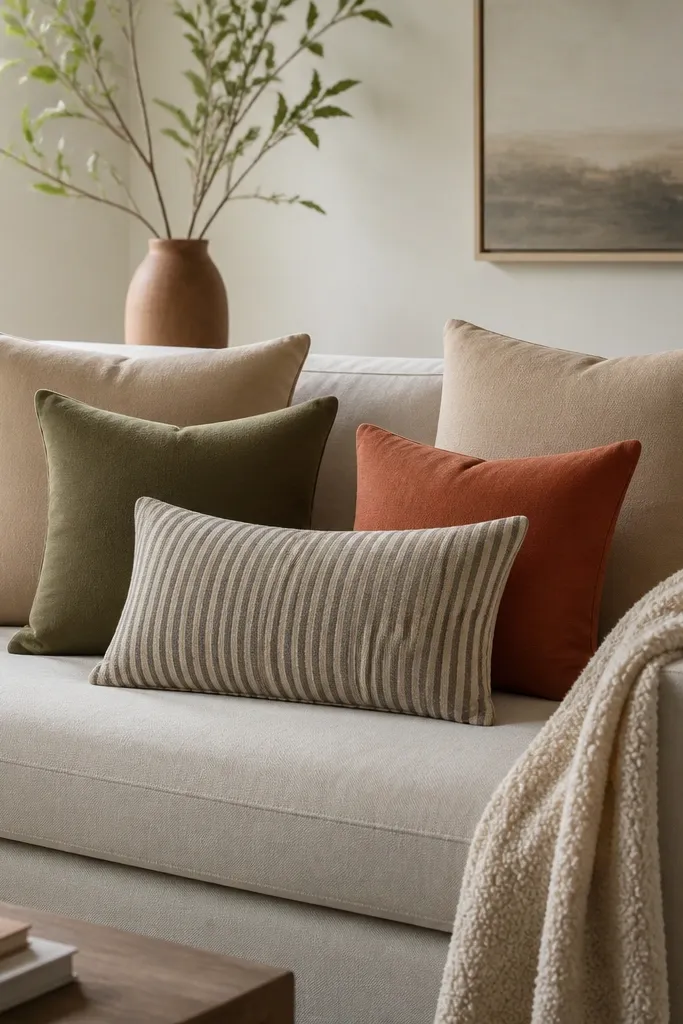
Cushions are the fastest way to make a living room look intentional. The cosy part comes from variety in size and texture, but the neatness comes from a set layout you repeat every day. I use two large squares as the base, then layer in two smaller accent cushions to add warmth. This works on most body types and seating styles because cushions hold their shape and give your back a comfortable height while you watch TV or read.
Start by placing two large square cushions upright at the back of the sofa. Add one lumbar cushion in the middle, then place two smaller cushions on each side or slightly angled toward the centre. Keep the colour palette to one warm base and one accent family so it doesn’t look chaotic. Finish by draping the boucle throw over the arm and keeping the front edge clear for a clean line.
Fluff cushions daily for ten seconds; the difference shows immediately in the room’s look.
20. Hanging Light with Warm Shade and Low Bulb
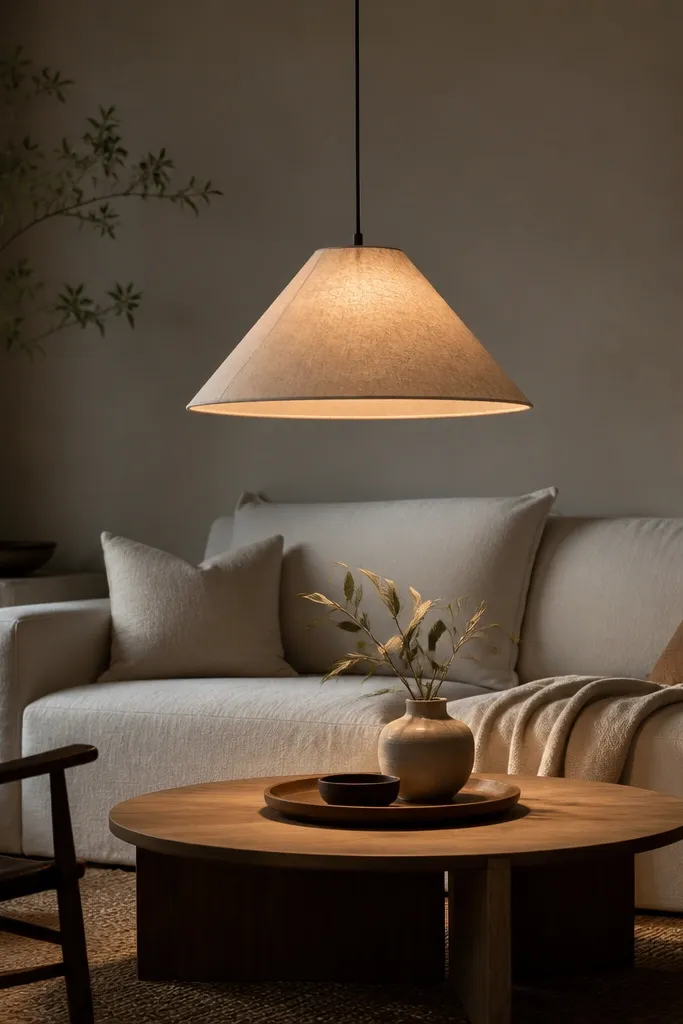
Start by choosing a linen or fabric shade and a warm bulb around 2700K. Hang it low enough that the light pool covers the coffee table area, usually with the shade bottom around 45-55 cm above the table. Add a dimmer or smart plug so you can control brightness. Pair it with a floor lamp in the opposite corner so shadows soften instead of stacking in one direction.
Overhead light can feel harsh in flats, but a warm pendant gives you cosy focus. A linen shade diffuses the bulb and makes the light look like it’s coming from the room, not from a ceiling fixture. I like placing it so it lights the seating area rather than the ceiling, especially in rooms with low ceilings. This gives a flattering glow for evenings and keeps the rest of the room dimmer, which is where cosy happens.
AvoidAvoid uncovered bulbs or chrome shades; they glare and look sharp, not cosy.
Good to knowIf the pendant makes the room look too bright, swap to a slightly lower-watt bulb and rely on floor light for the corners.